PRESENTATION
SUBJECT – RESEARCH AND
PUBLICATION ETHICS
GUIDED BY
Dr GARGI PARASHAR
SUBMITTED BY
BHAVANA KUMARI
What is OPEN ACCESS?
free, immediate,
unrestricted, online
access to peer-reviewed
research and scholarly
work
sharable (with attribution)
and fewer copyright and
licensing restrictions
Open Access is
• Applicable to journals, books, data
• Free to readers
• But, is NOT free to produce
– Costs still need to be covered
– Author’s may have to pay (APC)
• Available to ALL
– Getting out from behind paywalls
– Getting out from behind institutional
subscriptions
• Is peer reviewed (it should be)
• Authors retain copyright
– or at least use rights
Why is Open Access important?
• Principle:
making research freely available to everyone
supports a greater global exchange of knowledge
• Traditional publishing is expensive, outmoded,
exploitative.
• Move from a for-profit business model to a
cost recovery model.
• Research funded with public $$ should be
available to the public.
Benefits to you
• OA articles are easy to find with web search tools
• readers citations
– Don’t believe me about the citations, check this out http://opcit.eprints.org/oacitation-
biblio.html
• People who don’t have access to university
libraries can read your work
– students, practitioners, independent researchers, citizen scientists, researchers in developing
countries
• Retain control of your academic property
And, you might not have a choice
Mandated access
Tri-Council funded research in peer-reviewed
journal articles MUST be made open access
within 12 month
– Publishing in an open access journal
– Or archiving in a repository
(not now as a student, but in your career after
graduation)
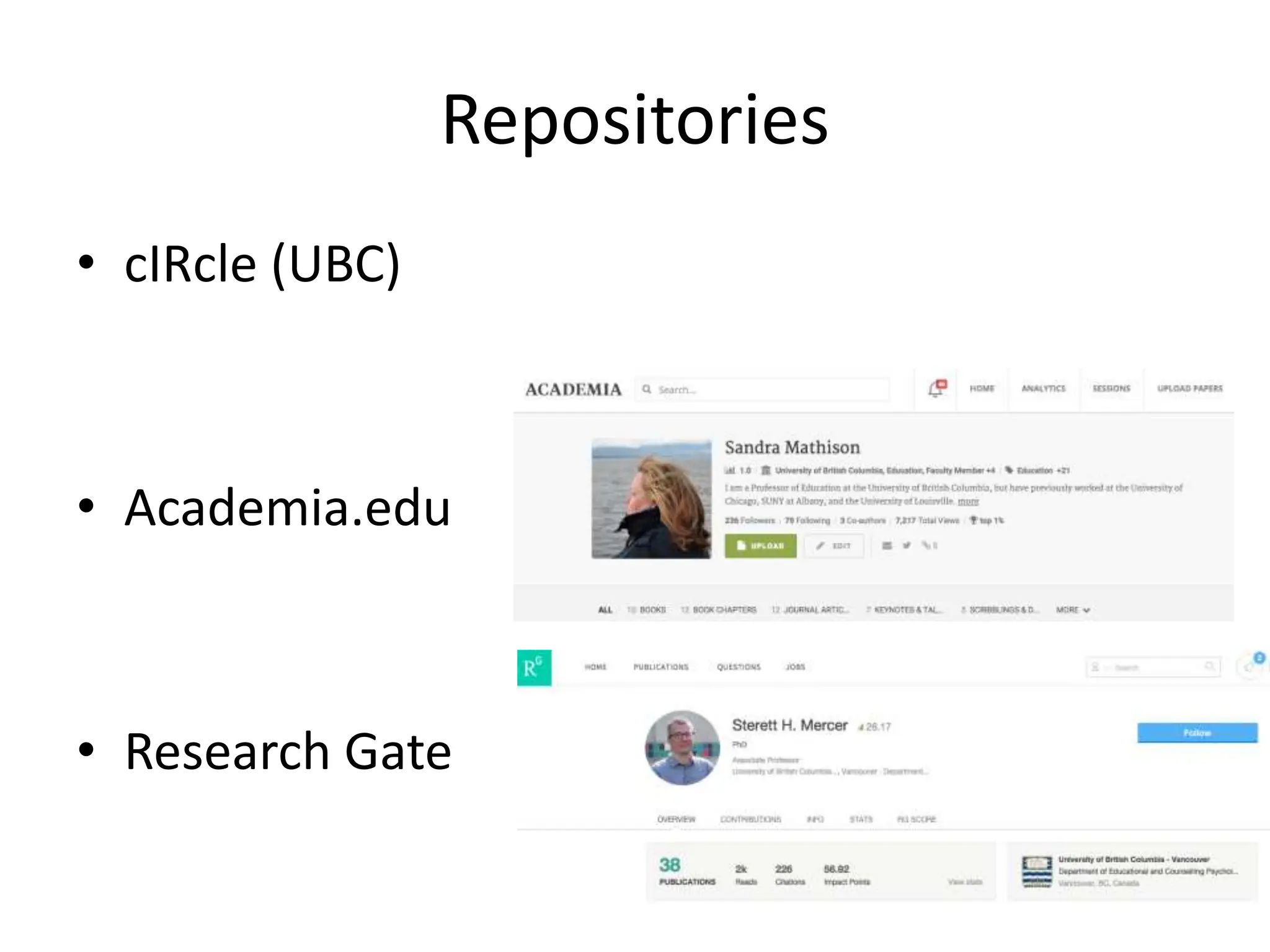
Repositories
• cIRcle (UBC)
• Academia.edu
• Research Gate
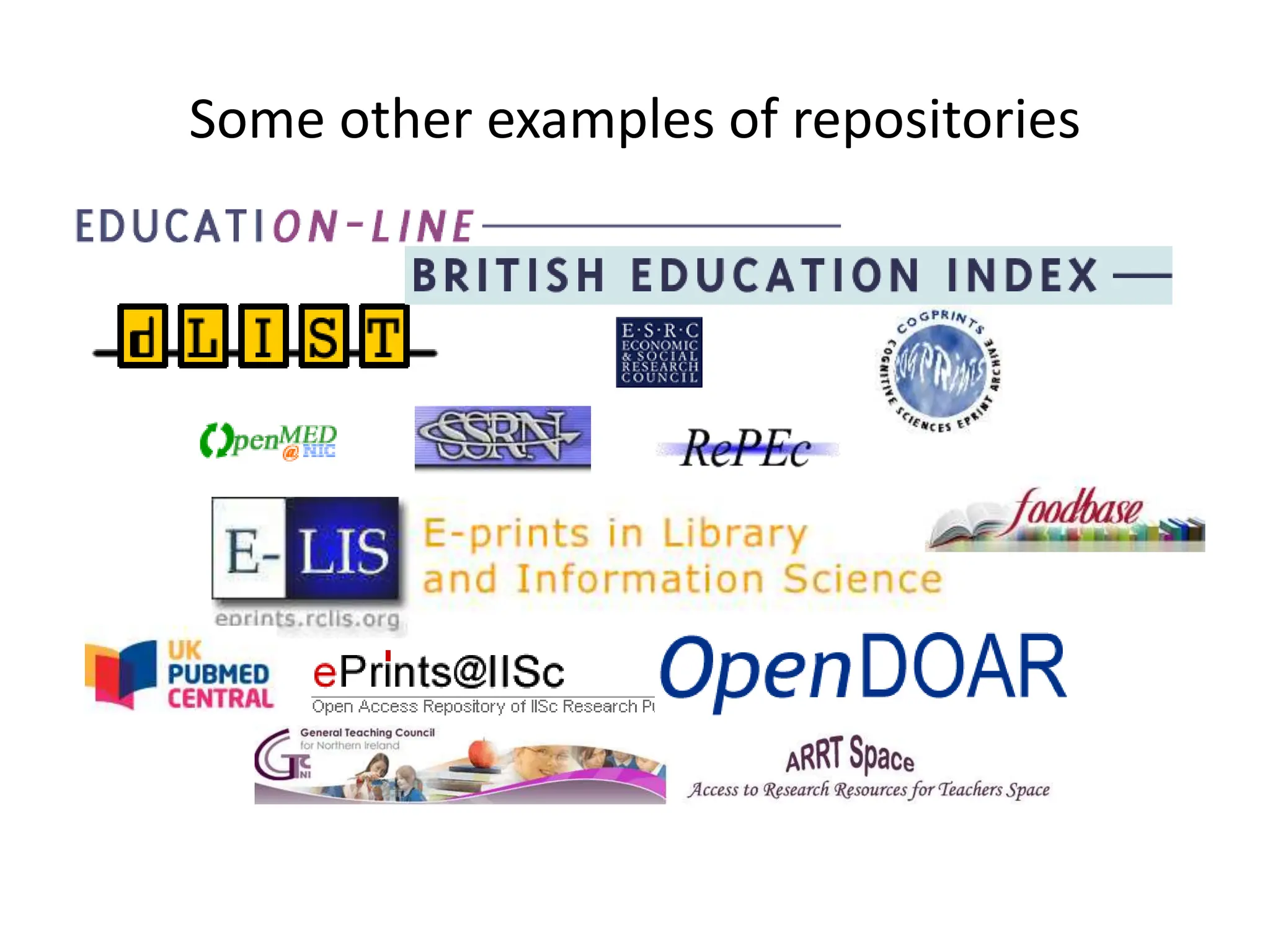
Some other examples of repositories
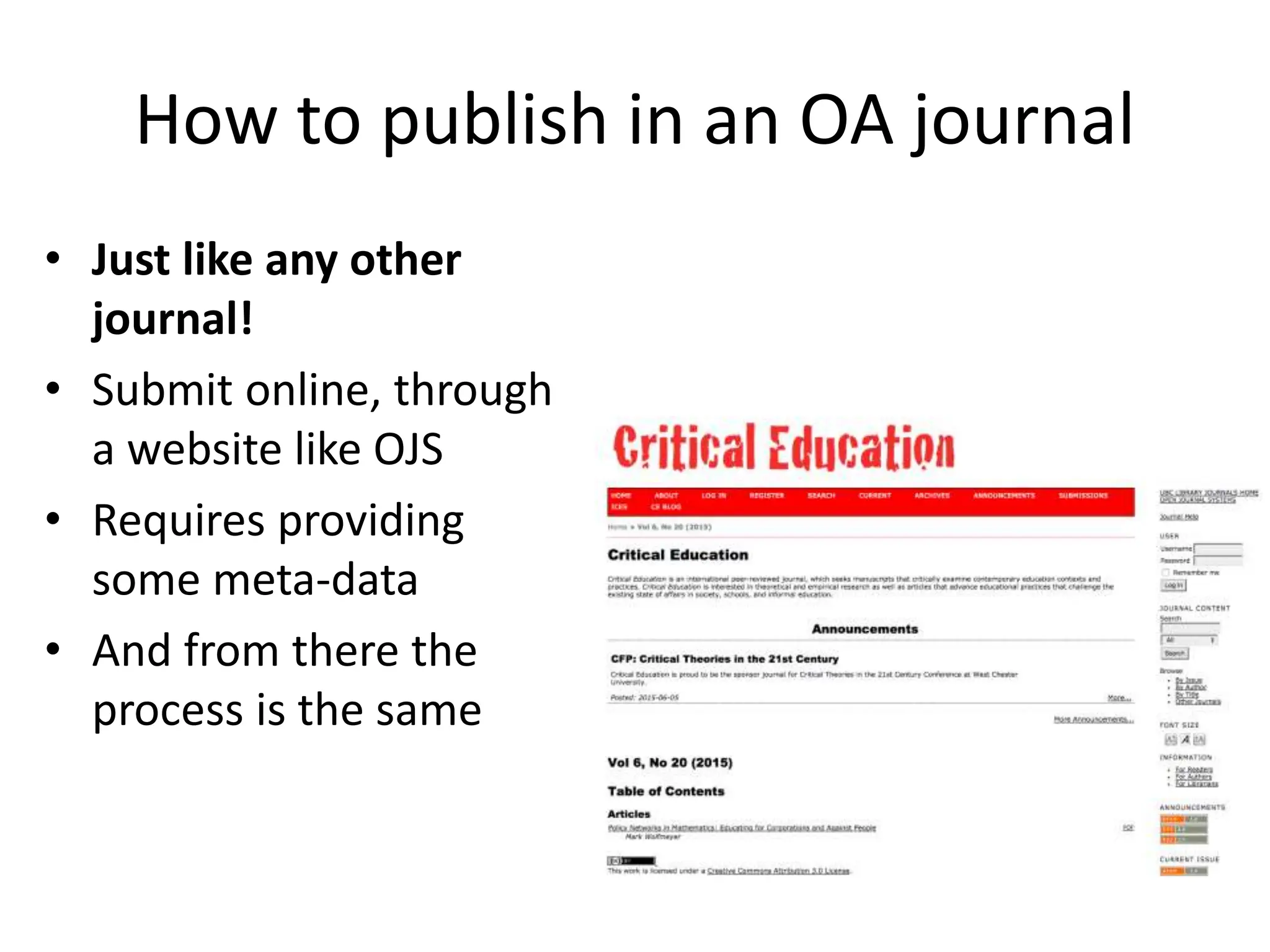
How to publish in an OA journal
• Just like any other
journal!
• Submit online, through
a website like OJS
• Requires providing
some meta-data
• And from there the
process is the same
OA Journal Publishing
• Gold Open Access – publish in a (non-
subscription) journal, pay APC and article is
immediately available
• Hybrid Open Access – “pay to publish” and
article is available through journal website
• Green Open Access – two versions:
– Self archive after embargo (12 – 48 months)
– Publish in a journal and article is immediately
available, no cost to author
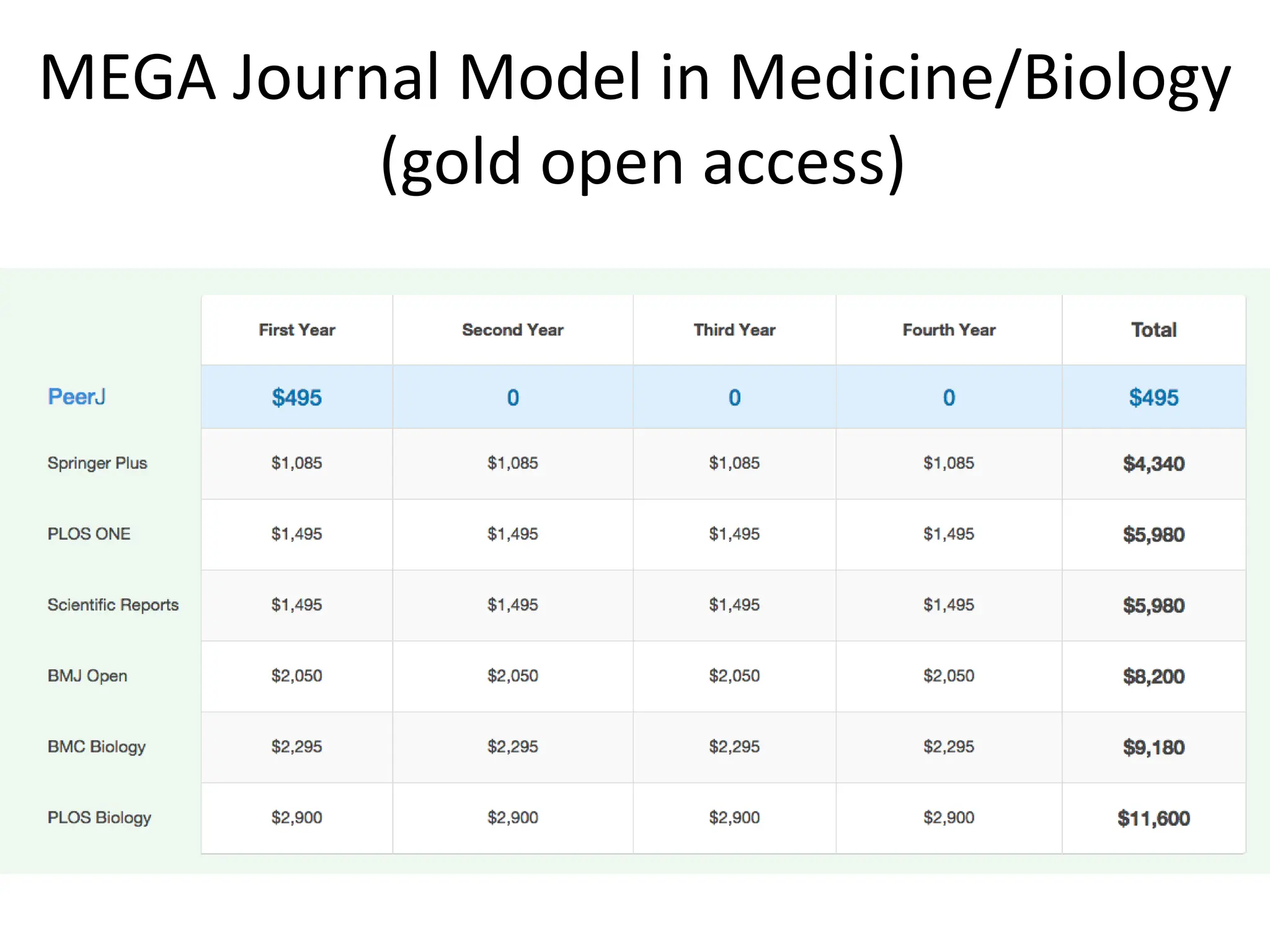
MEGA Journal Model in Medicine/Biology
(gold open access)
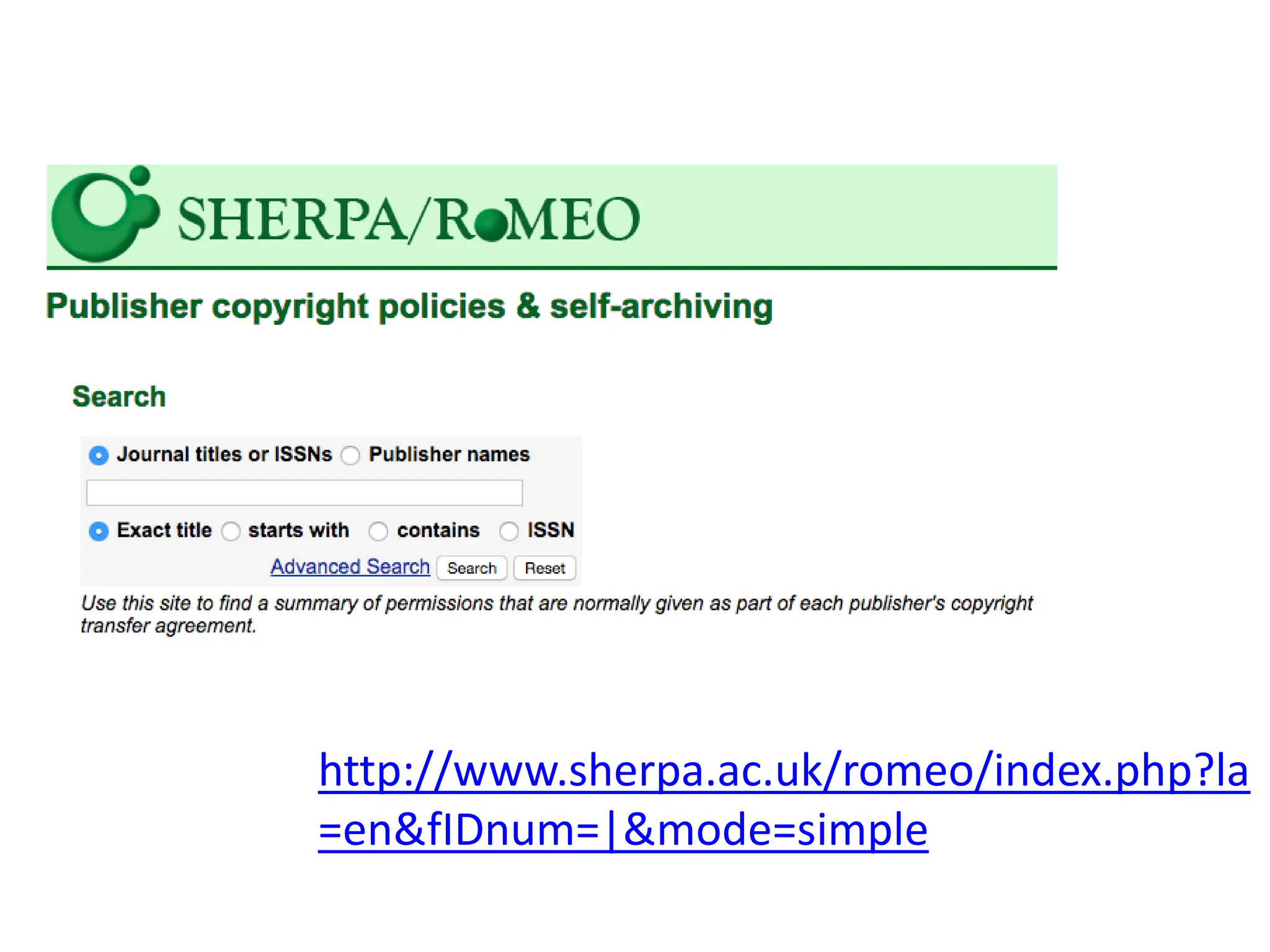
Wait, there is lots of info about open access journals…
http://www.sherpa.ac.uk/romeo/index.php?la
=en&fIDnum=|&mode=simple
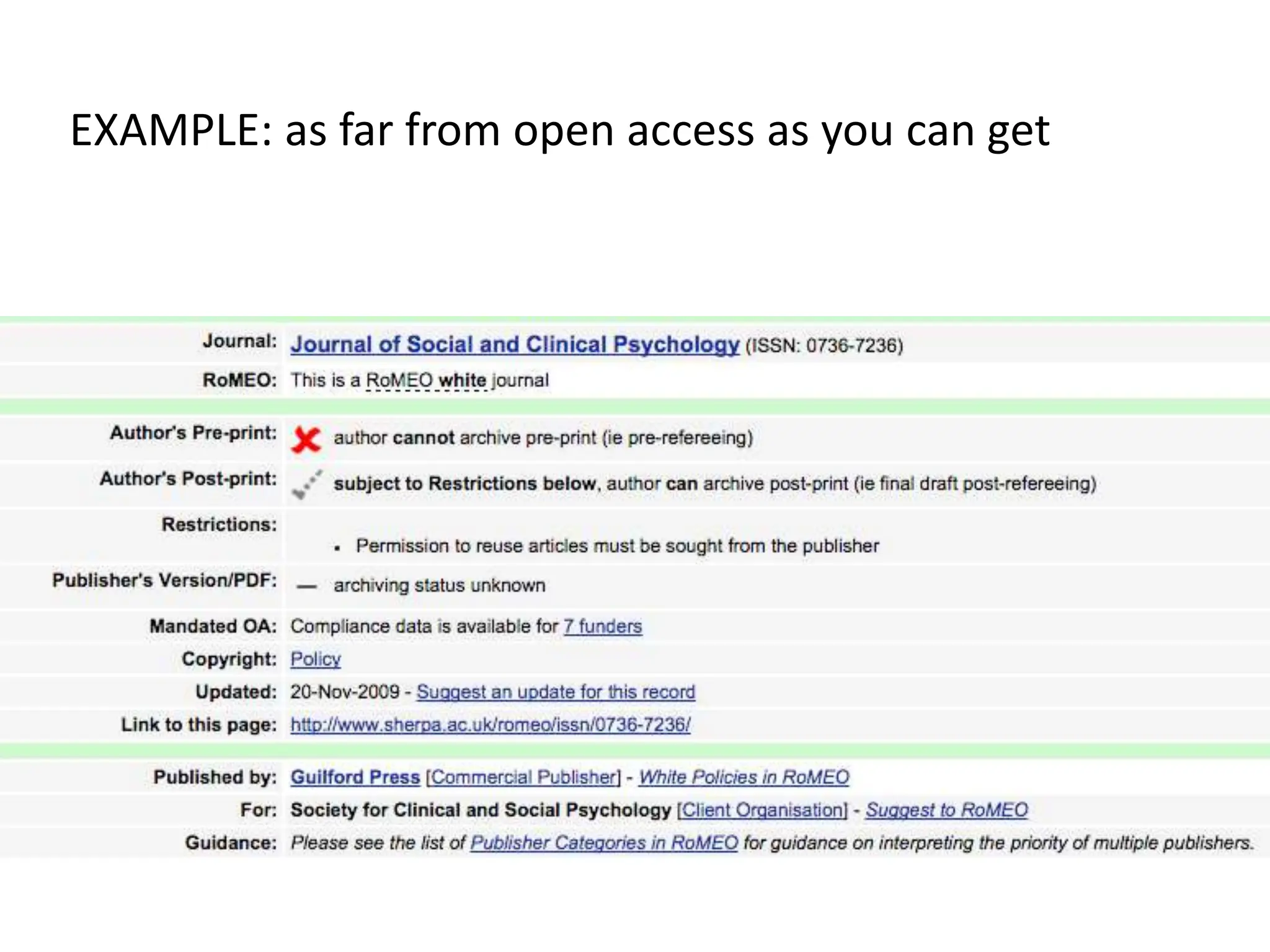
EXAMPLE: as far from open access as you can get
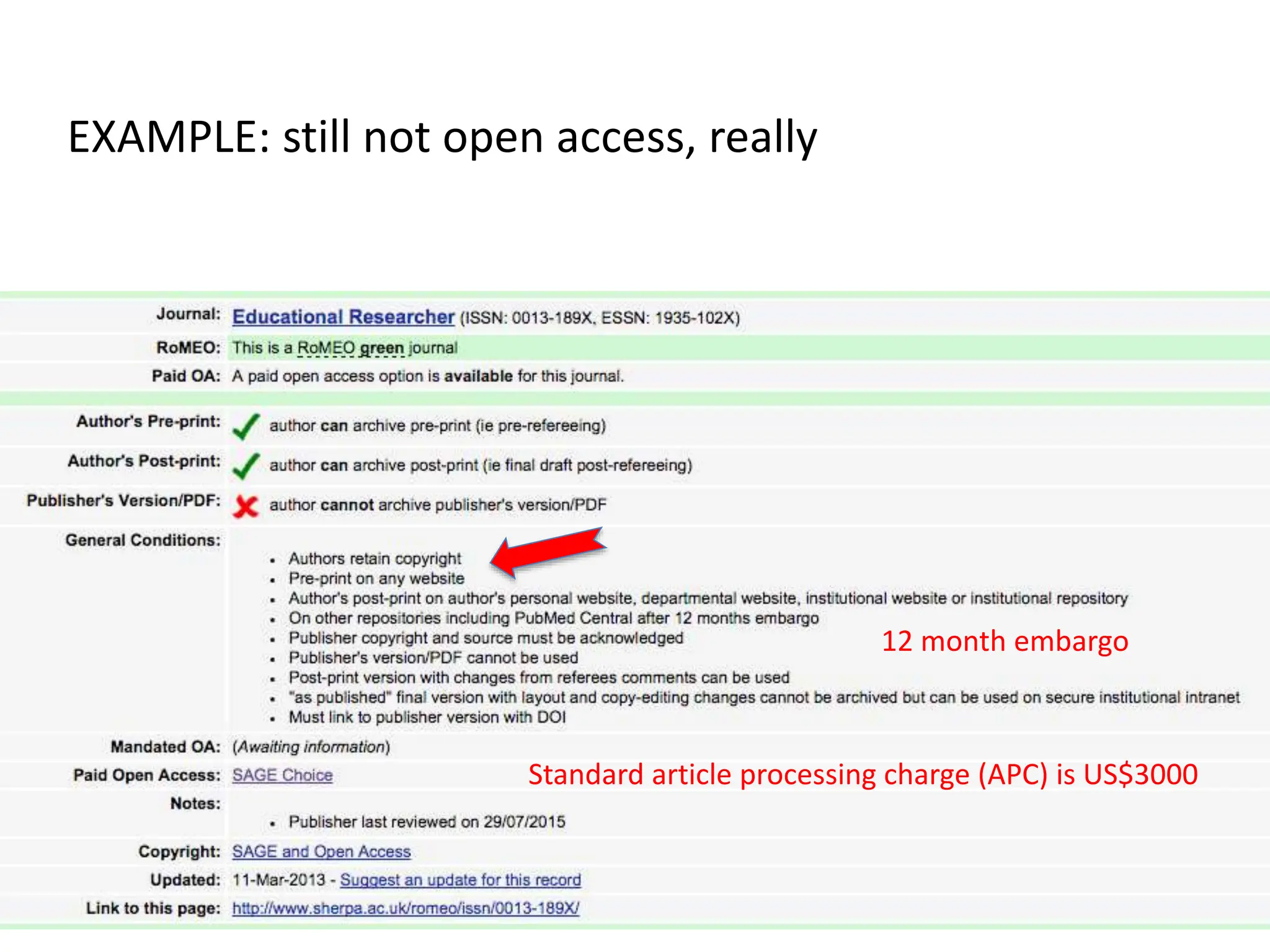
Standard article processing charge (APC) is US$3000
12 month embargo
EXAMPLE: still not open access, really
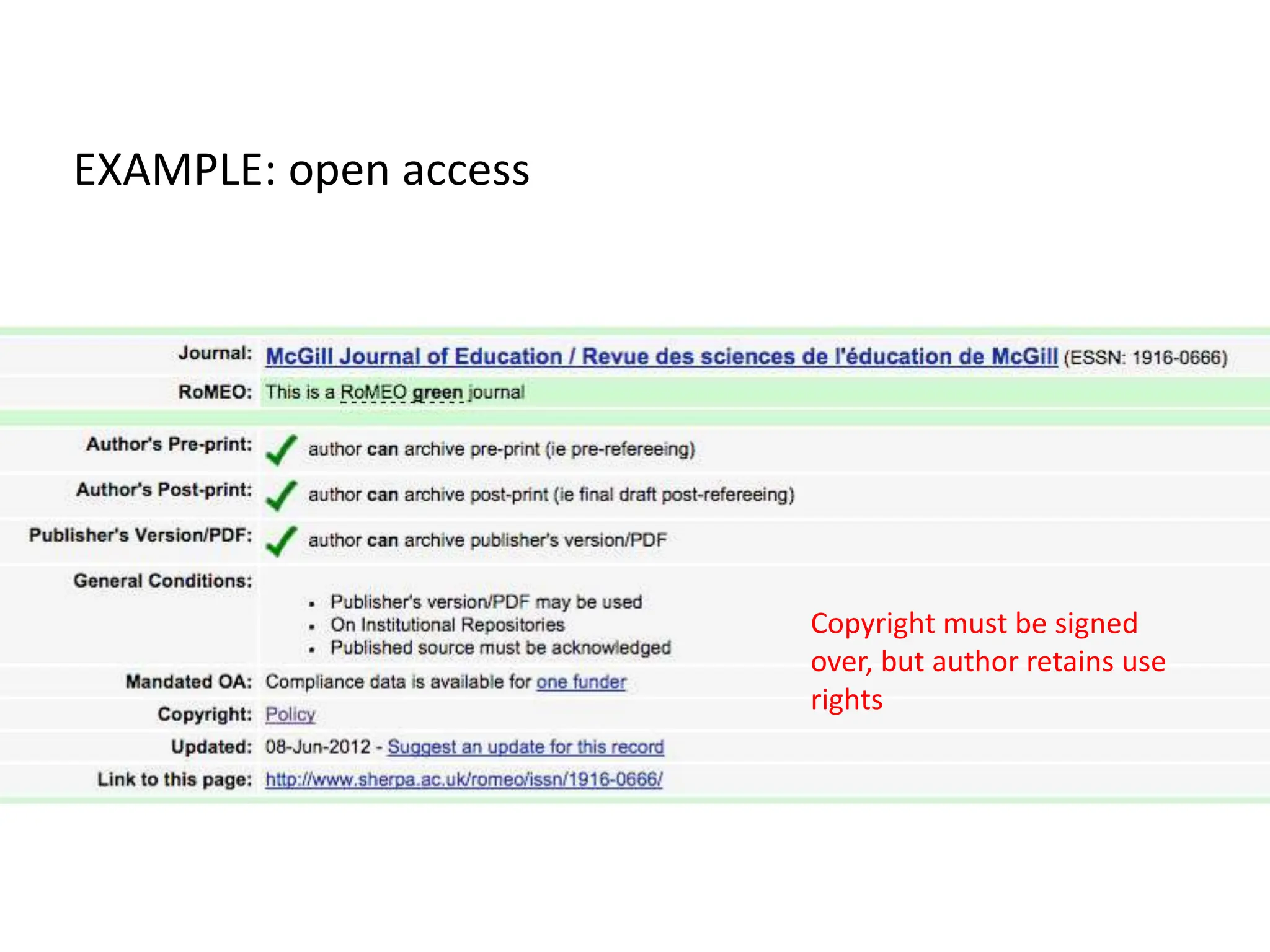
EXAMPLE: open access
Copyright must be signed
over, but author retains use
rights
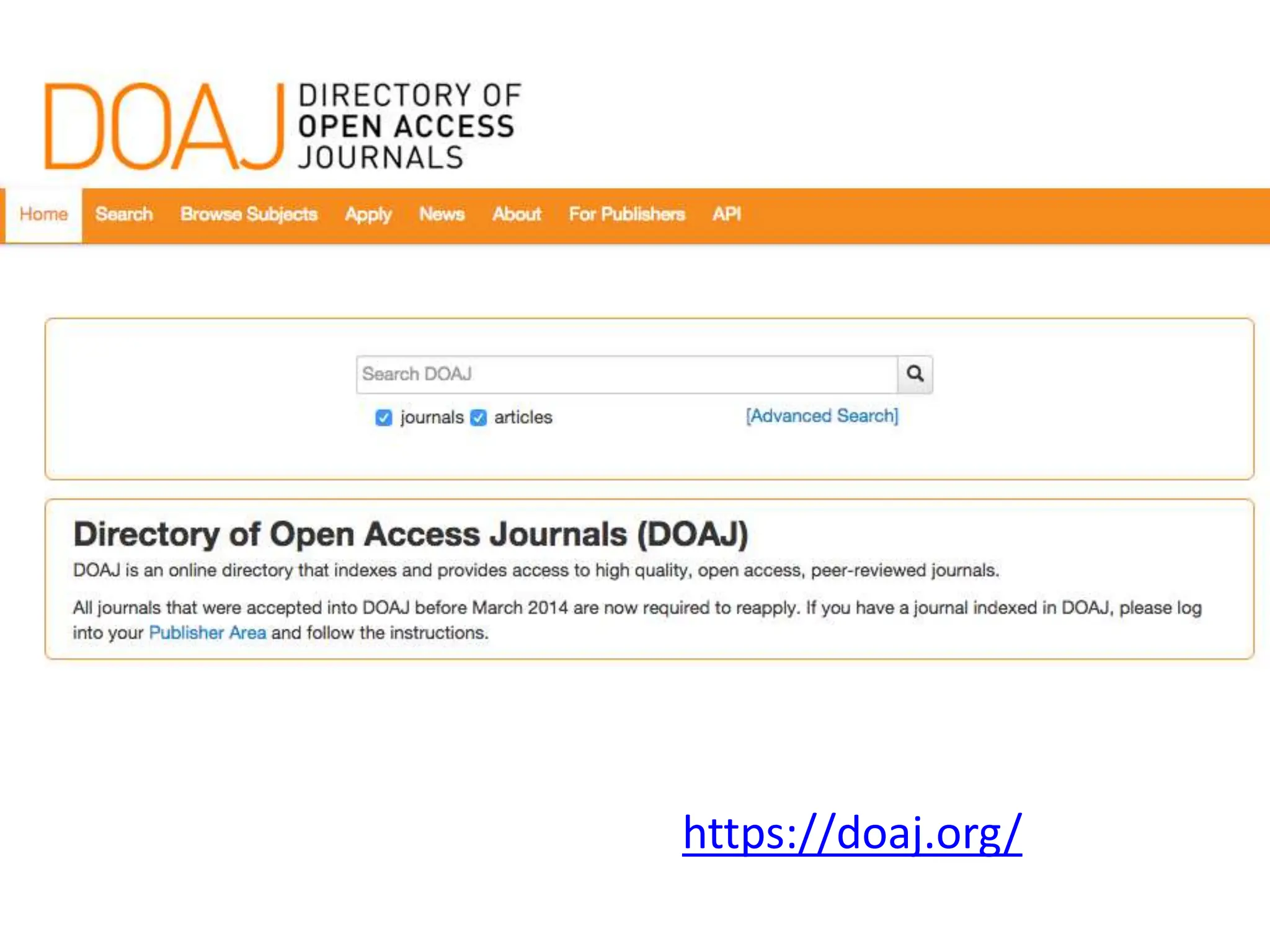
https://doaj.org/
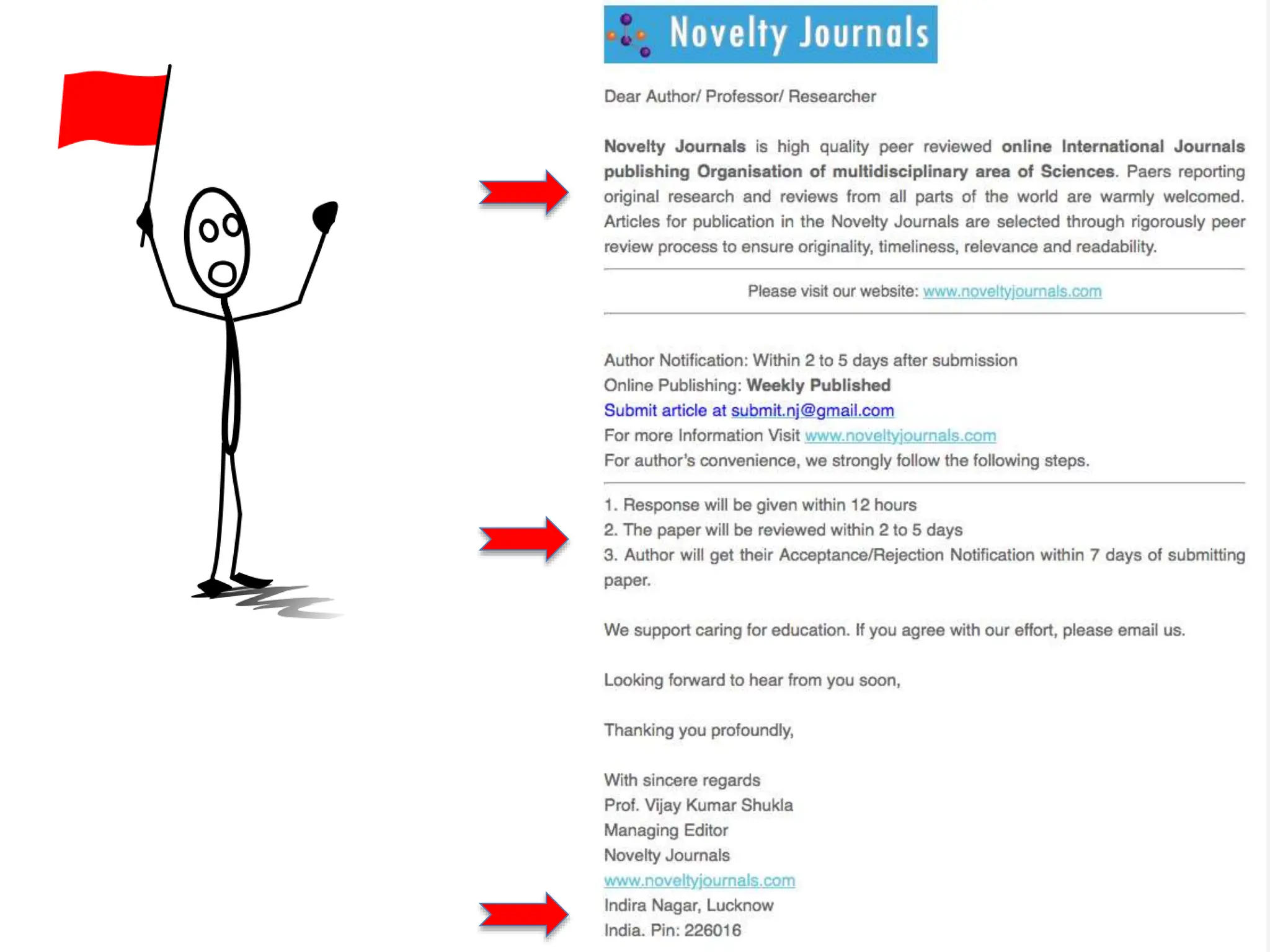
Liars & Scammers:
give open access a bad name
HINTS
• Same editor, many
journals
• No editorial board
• Unrealistic turnaround
time
• Vague mission
• Poor grammar
• Unclear about APC
CHECK IT OUT
• Google it
• Ask a colleague
• Search the UBC Library
• Check it out
– SHERPA/Romeo
– DOAJ
– Scholarly Open Access
Benefits of OA
 freely available material becomes more accessible and
discoverable worldwide
 leads to greater visibility and impact of research
including increased citations
 ensures publicly funded work is available to all
 For users open access is barrier-free and payment-free
providing access to information they need
Challenges
While Open access is good for enabling research and improving productivity, it
also brings challenges to the various stakeholders involved in the process. For
example:
• Lack of awareness of open access publishing;
• Dearth of cross linked e-libraries;
• Inadequate information and communication technology infrastructure;
•
• Inadequate and epileptic power supply;
• Inadequate funding of research institutions; and
• Inhibiting copyright protection regime
Challenges…
• Many funding organizations and governments that provide research grants to investigators
wish to have this research published OA
• Universities - want to ensure that the research they produce is showcased to the world and
their researchers are promoted so they will bring in new funding contracts, build their expertise
and ultimately enhance the institution's reputation.
• Publishers want to maximize the visibility of their journals and ensure the widest readership
possible, but need this to happen in an economically sustainable way to ensure their journals
survive.
• Librarians are now managing both subscription and OA content and are a vital point for other
stakeholders to consult on the developing journal landscape. Often this involves the challenge
of administering policy and approach to open-access across their institution.
• Finally, and most importantly the researchers themselves want their research to be available to
others and to enable the widest recognition of their work, but they also need to consider all of
the policies that the other stakeholders have developed.

Open_Access_Publishing (1).pptx

  • 1.
    PRESENTATION SUBJECT – RESEARCHAND PUBLICATION ETHICS GUIDED BY Dr GARGI PARASHAR SUBMITTED BY BHAVANA KUMARI
  • 2.
    What is OPENACCESS? free, immediate, unrestricted, online access to peer-reviewed research and scholarly work sharable (with attribution) and fewer copyright and licensing restrictions
  • 3.
    Open Access is •Applicable to journals, books, data • Free to readers • But, is NOT free to produce – Costs still need to be covered – Author’s may have to pay (APC) • Available to ALL – Getting out from behind paywalls – Getting out from behind institutional subscriptions • Is peer reviewed (it should be) • Authors retain copyright – or at least use rights
  • 4.
    Why is OpenAccess important? • Principle: making research freely available to everyone supports a greater global exchange of knowledge • Traditional publishing is expensive, outmoded, exploitative. • Move from a for-profit business model to a cost recovery model. • Research funded with public $$ should be available to the public.
  • 5.
    Benefits to you •OA articles are easy to find with web search tools • readers citations – Don’t believe me about the citations, check this out http://opcit.eprints.org/oacitation- biblio.html • People who don’t have access to university libraries can read your work – students, practitioners, independent researchers, citizen scientists, researchers in developing countries • Retain control of your academic property
  • 6.
    And, you mightnot have a choice Mandated access Tri-Council funded research in peer-reviewed journal articles MUST be made open access within 12 month – Publishing in an open access journal – Or archiving in a repository (not now as a student, but in your career after graduation)
  • 7.
    Repositories • cIRcle (UBC) •Academia.edu • Research Gate
  • 8.
    Some other examplesof repositories
  • 9.
    How to publishin an OA journal • Just like any other journal! • Submit online, through a website like OJS • Requires providing some meta-data • And from there the process is the same
  • 10.
    OA Journal Publishing •Gold Open Access – publish in a (non- subscription) journal, pay APC and article is immediately available • Hybrid Open Access – “pay to publish” and article is available through journal website • Green Open Access – two versions: – Self archive after embargo (12 – 48 months) – Publish in a journal and article is immediately available, no cost to author
  • 11.
    MEGA Journal Modelin Medicine/Biology (gold open access)
  • 12.
    Wait, there islots of info about open access journals…
  • 13.
  • 14.
    EXAMPLE: as farfrom open access as you can get
  • 15.
    Standard article processingcharge (APC) is US$3000 12 month embargo EXAMPLE: still not open access, really
  • 16.
    EXAMPLE: open access Copyrightmust be signed over, but author retains use rights
  • 17.
  • 18.
    Liars & Scammers: giveopen access a bad name HINTS • Same editor, many journals • No editorial board • Unrealistic turnaround time • Vague mission • Poor grammar • Unclear about APC CHECK IT OUT • Google it • Ask a colleague • Search the UBC Library • Check it out – SHERPA/Romeo – DOAJ – Scholarly Open Access
  • 20.
    Benefits of OA freely available material becomes more accessible and discoverable worldwide  leads to greater visibility and impact of research including increased citations  ensures publicly funded work is available to all  For users open access is barrier-free and payment-free providing access to information they need
  • 21.
    Challenges While Open accessis good for enabling research and improving productivity, it also brings challenges to the various stakeholders involved in the process. For example: • Lack of awareness of open access publishing; • Dearth of cross linked e-libraries; • Inadequate information and communication technology infrastructure; • • Inadequate and epileptic power supply; • Inadequate funding of research institutions; and • Inhibiting copyright protection regime
  • 22.
    Challenges… • Many fundingorganizations and governments that provide research grants to investigators wish to have this research published OA • Universities - want to ensure that the research they produce is showcased to the world and their researchers are promoted so they will bring in new funding contracts, build their expertise and ultimately enhance the institution's reputation. • Publishers want to maximize the visibility of their journals and ensure the widest readership possible, but need this to happen in an economically sustainable way to ensure their journals survive. • Librarians are now managing both subscription and OA content and are a vital point for other stakeholders to consult on the developing journal landscape. Often this involves the challenge of administering policy and approach to open-access across their institution. • Finally, and most importantly the researchers themselves want their research to be available to others and to enable the widest recognition of their work, but they also need to consider all of the policies that the other stakeholders have developed.