Sponsored 
by 
ShowCycle
Pat 
Pathade 
has 
built 
his 
career 
and 
two 
companies 
based 
on 
the 
philosophy 
of 
the 
open-­‐source 
so7ware 
movement. 
Outside 
of 
the 
mee;ngs 
industry, 
open-­‐ 
source 
ini;a;ves 
are 
huge, 
programmers 
are 
prolific, 
and 
companies 
are 
profitable. 
Inside 
the 
industry, 
there 
is 
li@le 
to 
no 
support, 
and 
nothing 
that 
could 
be 
characterized 
as 
a 
movement. 
Pathade 
is 
working 
to 
change 
that 
scenario, 
one 
solu;on 
at 
a 
;me.
Open 
Source 
is 
a 
framework 
for 
programmers 
to 
build 
so7ware 
itera;vely 
and 
collabora;vely 
with 
the 
understanding 
that 
their 
code 
will 
be 
shared. 
The 
resul;ng 
so7ware 
becomes 
the 
building 
blocks 
(Drupal 
and 
Linux 
are 
two 
examples) 
for 
new 
product 
offshoots 
that 
can 
be 
brought 
to 
market 
much 
more 
quickly 
and 
inexpensively. 
Par;cipants 
form 
communi;es 
around 
their 
efforts 
to 
support 
developers, 
collec;vely 
solve 
problems, 
and 
share 
updates.
There 
was 
a 
;me 
when 
open-­‐source 
prac;ces 
were 
frowned 
upon. 
In 
the 
past, 
says 
Pathade, 
even 
Fortune-­‐500 
companies 
cau;oned 
customers 
against 
using 
so7ware 
that 
was 
built 
on 
open-­‐source 
code 
because 
they 
believed 
it 
to 
be 
a 
threat 
to 
their 
own 
proprietary 
offerings 
and 
because 
much 
of 
the 
early 
open-­‐source 
products 
were 
unstable 
and 
unsupported.
That 
belief 
has 
largely 
disappeared. 
“There’s 
been 
a 
drama;c 
shi7 
toward 
accep;ng 
open-­‐source 
so7ware. 
The 
no;on 
of 
hiding 
behind 
proprietary 
code 
is 
gone 
and 
an 
industry 
of 
open-­‐source 
service 
providers 
has 
emerged,” 
Pathade 
explains. 
As 
a 
result, 
there 
are 
hundreds 
of 
companies 
being 
built 
using 
open-­‐source 
code, 
including 
Dropbox, 
Salesforce, 
and 
Twi@er 
—all 
big 
names 
with 
millions 
of 
users 
and 
strong 
mone;za;on 
models.
Despite 
the 
poten;al 
to 
drive 
the 
cost 
of 
event 
so7ware 
down 
and 
push 
the 
envelope 
on 
innova;on, 
the 
mee;ngs 
and 
trade 
show 
industry 
has 
been 
slow 
to 
embrace 
open-­‐source 
ini;a;ves. 
There 
is 
no 
open-­‐source 
community 
to 
create 
the 
building 
blocks, 
support 
development, 
or 
provide 
financial 
support. 
Event 
technology 
is 
s;ll 
dominated 
by 
legacy 
plaUorm 
providers 
in 
registra;on 
and 
event 
management, 
for 
example, 
with 
li@le 
incen;ve 
to 
reveal 
their 
code 
to 
third-­‐party 
developers.
In 
lieu 
of 
a 
community 
to 
drive 
open 
source 
within 
the 
mee;ngs 
industry 
(event 
organizers 
aren’t 
leading 
the 
charge 
either), 
Pathade 
leverages 
the 
communi;es 
that 
have 
emerged 
outside 
the 
industry. 
Through 
his 
companies, 
he 
uses 
non-­‐event-­‐specific 
open-­‐source 
plaUorms, 
such 
as 
Drupal 
and 
Salesforce, 
to 
address 
event-­‐ 
industry 
challenges, 
including 
data 
integra;on 
across 
disparate 
legacy 
systems, 
web 
site 
op;miza;on, 
and 
most 
recently, 
trade 
show 
sales 
produc;vity.
Pathade 
believes 
one 
huge 
opportunity 
that 
can 
be 
developed 
through 
open-­‐source 
strategies 
is 
in 
the 
data 
field. 
“The 
industry’s 
data 
is 
not 
perfectly 
organized. 
[Registra;on 
records, 
exhibitor 
profiles, 
and 
contact 
records] 
can 
be 
standardized 
so 
they 
can 
be 
used 
by 
mul;ple 
organiza;ons. 
Data 
can 
be 
contributed 
by 
groups 
and 
anonymized 
so 
that 
trends 
can 
be 
observed 
and 
shared 
with 
everyone. 
Open 
Government 
and 
Open 
City 
ini;a;ves 
are 
two 
examples 
of 
what 
is 
possible,” 
he 
explains.
For 
any 
true 
benefits 
to 
be 
realized 
in 
the 
event 
industry, 
Pathade 
says, 
leading 
industry 
organiza;ons 
have 
to 
come 
together. 
“Founda;ons 
that 
are 
serious 
can 
put 
together 
a 
task 
force 
and 
sponsor 
some 
ac;vi;es, 
such 
as 
an 
IT 
internship 
in 
open-­‐source 
methodologies. 
Organiza;ons 
can 
donate 
employees’ 
;me 
to 
work 
on 
projects,” 
he 
suggests. 
Un;l 
then, 
he 
will 
con;nue 
to 
evangelize 
open 
source 
and 
develop 
solu;ons 
with 
the 
tools 
that 
are 
available. 
He 
may 
be 
an 
army 
of 
one 
now, 
but 
every 
movement 
starts 
somewhere.
The Event Industry’s Evangelist of Open Source

The Event Industry’s Evangelist of Open Source

  • 1.
  • 2.
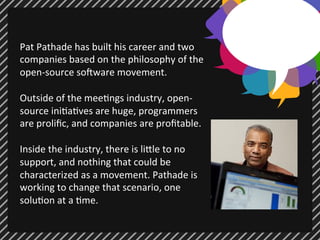
    Pat Pathade has built his career and two companies based on the philosophy of the open-­‐source so7ware movement. Outside of the mee;ngs industry, open-­‐ source ini;a;ves are huge, programmers are prolific, and companies are profitable. Inside the industry, there is li@le to no support, and nothing that could be characterized as a movement. Pathade is working to change that scenario, one solu;on at a ;me.
  • 3.
    Open Source is a framework for programmers to build so7ware itera;vely and collabora;vely with the understanding that their code will be shared. The resul;ng so7ware becomes the building blocks (Drupal and Linux are two examples) for new product offshoots that can be brought to market much more quickly and inexpensively. Par;cipants form communi;es around their efforts to support developers, collec;vely solve problems, and share updates.
  • 4.
    There was a ;me when open-­‐source prac;ces were frowned upon. In the past, says Pathade, even Fortune-­‐500 companies cau;oned customers against using so7ware that was built on open-­‐source code because they believed it to be a threat to their own proprietary offerings and because much of the early open-­‐source products were unstable and unsupported.
  • 5.
    That belief has largely disappeared. “There’s been a drama;c shi7 toward accep;ng open-­‐source so7ware. The no;on of hiding behind proprietary code is gone and an industry of open-­‐source service providers has emerged,” Pathade explains. As a result, there are hundreds of companies being built using open-­‐source code, including Dropbox, Salesforce, and Twi@er —all big names with millions of users and strong mone;za;on models.
  • 6.
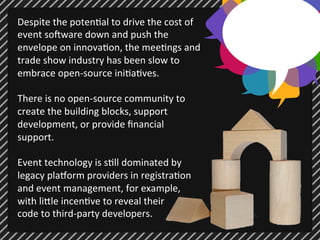
    Despite the poten;al to drive the cost of event so7ware down and push the envelope on innova;on, the mee;ngs and trade show industry has been slow to embrace open-­‐source ini;a;ves. There is no open-­‐source community to create the building blocks, support development, or provide financial support. Event technology is s;ll dominated by legacy plaUorm providers in registra;on and event management, for example, with li@le incen;ve to reveal their code to third-­‐party developers.
  • 7.
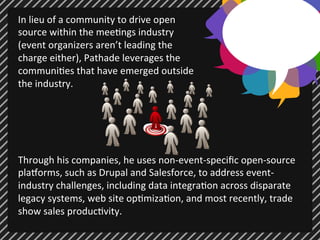
    In lieu of a community to drive open source within the mee;ngs industry (event organizers aren’t leading the charge either), Pathade leverages the communi;es that have emerged outside the industry. Through his companies, he uses non-­‐event-­‐specific open-­‐source plaUorms, such as Drupal and Salesforce, to address event-­‐ industry challenges, including data integra;on across disparate legacy systems, web site op;miza;on, and most recently, trade show sales produc;vity.
  • 8.
    Pathade believes one huge opportunity that can be developed through open-­‐source strategies is in the data field. “The industry’s data is not perfectly organized. [Registra;on records, exhibitor profiles, and contact records] can be standardized so they can be used by mul;ple organiza;ons. Data can be contributed by groups and anonymized so that trends can be observed and shared with everyone. Open Government and Open City ini;a;ves are two examples of what is possible,” he explains.
  • 9.
    For any true benefits to be realized in the event industry, Pathade says, leading industry organiza;ons have to come together. “Founda;ons that are serious can put together a task force and sponsor some ac;vi;es, such as an IT internship in open-­‐source methodologies. Organiza;ons can donate employees’ ;me to work on projects,” he suggests. Un;l then, he will con;nue to evangelize open source and develop solu;ons with the tools that are available. He may be an army of one now, but every movement starts somewhere.