
Brussels Briefing n. 31
Geography of food: reconnecting with origin in the food
system
15th May 2013
http://brusselsbriefings.net
Promoting agrobiodiversity: leveraging GI potential
in the use of underutilised species
Stefano Padulosi, Bioversity International
Leveraging Geographical Indications potentials to
enhance the use of underutilized species
Stefano Padulosi, Bioversity International
15 June 2013
3
Neglected and Underutilized Species (NUS)
• Nutritional value appreciated by people
• Hardiness, good adaptability, versatility in use
• Rich associated food culture and traditions
• Poor economic competitiveness with commodity crops
• Lack of improved varieties & enhanced cultivation practices
• Drudgery in value addition
• Disorganized or non-existent market chains
• Perception of being “food of the poor”
• Cultivated and utilized relying on Indigenous Knowledge (IK)
• Scarcely represented in ex situ collections
4
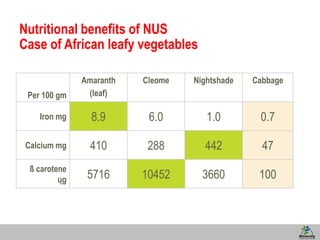
Nutritional benefits of NUS
Case of African leafy vegetables
Per 100 gm
Amaranth
(leaf)
Cleome Nightshade Cabbage
Iron mg 8.9 6.0 1.0 0.7
Calcium mg 410 288 442 47
ß carotene
ųg 5716 10452 3660 100
5
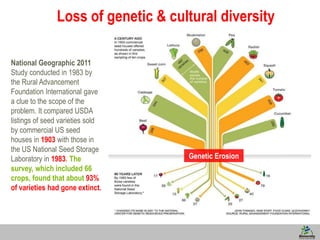
National Geographic 2011
Study conducted in 1983 by
the Rural Advancement
Foundation International gave
a clue to the scope of the
problem. It compared USDA
listings of seed varieties sold
by commercial US seed
houses in 1903 with those in
the US National Seed Storage
Laboratory in 1983. The
survey, which included 66
crops, found that about 93%
of varieties had gone extinct.
GENETIC EROSION
Loss of genetic & cultural diversity
Genetic Erosion
6
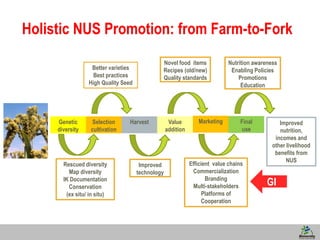
Improved
nutrition,
incomes and
other livelihood
benefits from
NUS
Holistic NUS Promotion: from Farm-to-Fork
Genetic
diversity
Selection
cultivation
Harvest Value
addition
Marketing Final
use
Rescued diversity
Map diversity
IK Documentation
Conservation
(ex situ/ in situ)
Better varieties
Best practices
High Quality Seed
Improved
technology
Novel food items
Recipes (old/new)
Quality standards
Efficient value chains
Commercialization
Branding
Multi-stakeholders
Platforms of
Cooperation
Nutrition awareness
Enabling Policies
Promotions
Education
GI
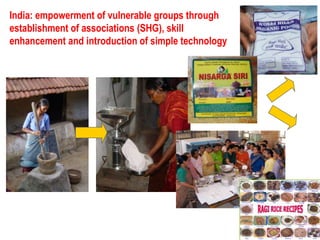
India: empowerment of vulnerable groups through
establishment of associations (SHG), skill
enhancement and introduction of simple technology
8
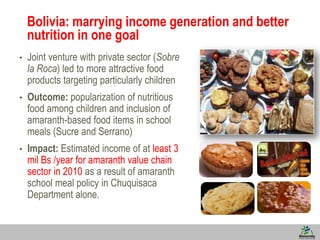
Bolivia: marrying income generation and better
nutrition in one goal
• Joint venture with private sector (Sobre
la Roca) led to more attractive food
products targeting particularly children
• Outcome: popularization of nutritious
food among children and inclusion of
amaranth-based food items in school
meals (Sucre and Serrano)
• Impact: Estimated income of at least 3
mil Bs /year for amaranth value chain
sector in 2010 as a result of amaranth
school meal policy in Chuquisaca
Department alone.
10
Role of GI in promoting underutilized
species
GI utilize traditional practices and endemic resources
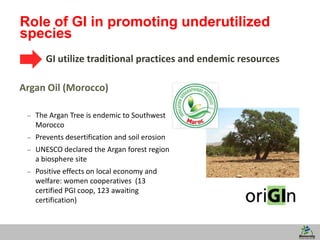
Argan Oil (Morocco)
– The Argan Tree is endemic to Southwest
Morocco
– Prevents desertification and soil erosion
– UNESCO declared the Argan forest region
a biosphere site
– Positive effects on local economy and
welfare: women cooperatives (13
certified PGI coop, 123 awaiting
certification)
11
Role of GI in promoting underutilized
varieties of major crops
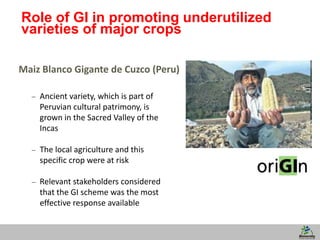
Maiz Blanco Gigante de Cuzco (Peru)
– Ancient variety, which is part of
Peruvian cultural patrimony, is
grown in the Sacred Valley of the
Incas
– The local agriculture and this
specific crop were at risk
– Relevant stakeholders considered
that the GI scheme was the most
effective response available
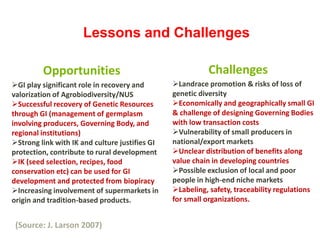
Lessons and Challenges
GI play significant role in recovery and
valorization of Agrobiodiversity/NUS
Successful recovery of Genetic Resources
through GI (management of germplasm
involving producers, Governing Body, and
regional institutions)
Strong link with IK and culture justifies GI
protection, contribute to rural development
IK (seed selection, recipes, food
conservation etc) can be used for GI
development and protected from biopiracy
Increasing involvement of supermarkets in
origin and tradition-based products.
Opportunities
Landrace promotion & risks of loss of
genetic diversity
Economically and geographically small GI
& challenge of designing Governing Bodies
with low transaction costs
Vulnerability of small producers in
national/export markets
Unclear distribution of benefits along
value chain in developing countries
Possible exclusion of local and poor
people in high-end niche markets
Labeling, safety, traceability regulations
for small organizations.
Challenges
(Source: J. Larson 2007)
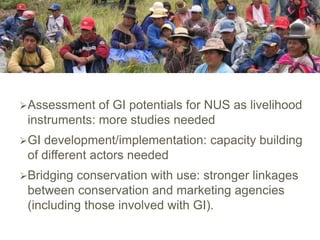
The way forward
Assessment of GI potentials for NUS as livelihood
instruments: more studies needed
GI development/implementation: capacity building
of different actors needed
Bridging conservation with use: stronger linkages
between conservation and marketing agencies
(including those involved with GI).
15
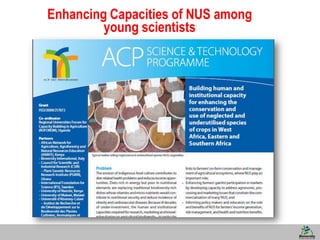
Enhancing Capacities of NUS among
young scientists
www.bioversityinternational.org
Thank you

Promoting agrobiodiversity: leveraging GI potentials in the use of underutilized species

  • 1.
    Brussels Briefing n.31 Geography of food: reconnecting with origin in the food system 15th May 2013 http://brusselsbriefings.net Promoting agrobiodiversity: leveraging GI potential in the use of underutilised species Stefano Padulosi, Bioversity International
  • 2.
    Leveraging Geographical Indicationspotentials to enhance the use of underutilized species Stefano Padulosi, Bioversity International 15 June 2013
  • 3.
    3 Neglected and UnderutilizedSpecies (NUS) • Nutritional value appreciated by people • Hardiness, good adaptability, versatility in use • Rich associated food culture and traditions • Poor economic competitiveness with commodity crops • Lack of improved varieties & enhanced cultivation practices • Drudgery in value addition • Disorganized or non-existent market chains • Perception of being “food of the poor” • Cultivated and utilized relying on Indigenous Knowledge (IK) • Scarcely represented in ex situ collections
  • 4.
    4 Nutritional benefits ofNUS Case of African leafy vegetables Per 100 gm Amaranth (leaf) Cleome Nightshade Cabbage Iron mg 8.9 6.0 1.0 0.7 Calcium mg 410 288 442 47 ß carotene ųg 5716 10452 3660 100
  • 5.
    5 National Geographic 2011 Studyconducted in 1983 by the Rural Advancement Foundation International gave a clue to the scope of the problem. It compared USDA listings of seed varieties sold by commercial US seed houses in 1903 with those in the US National Seed Storage Laboratory in 1983. The survey, which included 66 crops, found that about 93% of varieties had gone extinct. GENETIC EROSION Loss of genetic & cultural diversity Genetic Erosion
  • 6.
    6 Improved nutrition, incomes and other livelihood benefitsfrom NUS Holistic NUS Promotion: from Farm-to-Fork Genetic diversity Selection cultivation Harvest Value addition Marketing Final use Rescued diversity Map diversity IK Documentation Conservation (ex situ/ in situ) Better varieties Best practices High Quality Seed Improved technology Novel food items Recipes (old/new) Quality standards Efficient value chains Commercialization Branding Multi-stakeholders Platforms of Cooperation Nutrition awareness Enabling Policies Promotions Education GI
  • 7.
    India: empowerment ofvulnerable groups through establishment of associations (SHG), skill enhancement and introduction of simple technology
  • 8.
    8 Bolivia: marrying incomegeneration and better nutrition in one goal • Joint venture with private sector (Sobre la Roca) led to more attractive food products targeting particularly children • Outcome: popularization of nutritious food among children and inclusion of amaranth-based food items in school meals (Sucre and Serrano) • Impact: Estimated income of at least 3 mil Bs /year for amaranth value chain sector in 2010 as a result of amaranth school meal policy in Chuquisaca Department alone.
  • 10.
    10 Role of GIin promoting underutilized species GI utilize traditional practices and endemic resources Argan Oil (Morocco) – The Argan Tree is endemic to Southwest Morocco – Prevents desertification and soil erosion – UNESCO declared the Argan forest region a biosphere site – Positive effects on local economy and welfare: women cooperatives (13 certified PGI coop, 123 awaiting certification)
  • 11.
    11 Role of GIin promoting underutilized varieties of major crops Maiz Blanco Gigante de Cuzco (Peru) – Ancient variety, which is part of Peruvian cultural patrimony, is grown in the Sacred Valley of the Incas – The local agriculture and this specific crop were at risk – Relevant stakeholders considered that the GI scheme was the most effective response available
  • 12.
    Lessons and Challenges GIplay significant role in recovery and valorization of Agrobiodiversity/NUS Successful recovery of Genetic Resources through GI (management of germplasm involving producers, Governing Body, and regional institutions) Strong link with IK and culture justifies GI protection, contribute to rural development IK (seed selection, recipes, food conservation etc) can be used for GI development and protected from biopiracy Increasing involvement of supermarkets in origin and tradition-based products. Opportunities Landrace promotion & risks of loss of genetic diversity Economically and geographically small GI & challenge of designing Governing Bodies with low transaction costs Vulnerability of small producers in national/export markets Unclear distribution of benefits along value chain in developing countries Possible exclusion of local and poor people in high-end niche markets Labeling, safety, traceability regulations for small organizations. Challenges (Source: J. Larson 2007)
  • 13.
  • 14.
    Assessment of GIpotentials for NUS as livelihood instruments: more studies needed GI development/implementation: capacity building of different actors needed Bridging conservation with use: stronger linkages between conservation and marketing agencies (including those involved with GI).
  • 15.
    15 Enhancing Capacities ofNUS among young scientists
  • 16.

Editor's Notes

  • #3 To change the photo, go to the slide masterView>Slide master
  • #9 NUS are nutritious crops and people know that: leveraging on this perception help boosting their markets..Education on NUS and nutrition/health important at school level..
  • #16 EU-ACP Project 2009-2013: The project is implemented by the Regional Universities Forum for Capacity Building in Agriculture (RUFORUM), in partnership with the African Network for Agriculture, Agroforestry and Natural Resources Education (ANAFE), Bioversity International, IRDCAM (Institut de Recherché et de Développmentsur la Biodiversité des PlantesCultivées, Aromatiques et Médicinales) in Benin,Council for Scientific and Industrial Research in Ghana, University of Malawi, and University of Nairobi, Kenya. This type of work needs to be further promoted to reach out more and more countries in order to strengthen national capacities in addressing NUS research effectively. Universities need to also embed NUS-related themes in their curricula and inter-University synergy (e.g. agriculture, nutrition and economics) need to be promoted.