Reducing Food Losses and Waste
Reducing Food Losses and
Waste in Asian Countries for
Improved Food Security and
Agri-food Chain Efficiency
Rosa S. Rolle, Ph.D
Senior Agro-Industries and Post-harvest Officer
FAO Regional Office for Asia and the Pacific
Rosa.Rolle@fao.org
Save Food Asia-Pacific Campaign
– Raise awareness and draw attention to the high levels of food
losses and the growing problem of food waste across Asia and the
Pacific Region.
– Promote partnerships, and advocate for strategic approaches and
actions to reduce food losses and waste and increase sustainable
consumption in the region.
– Launched on 28 August 2013 during a High Level Multi-stakeholder
Consultation, convened in Bangkok.
A Regional Campaign that seeks to:
“With the Save Food Asia-
Pacific Campaign, we
pledge to work together
and create regional and
national multi-stakeholder
networks toward reducing
food losses along the supply
chain and fight the growing
problem of food waste.”
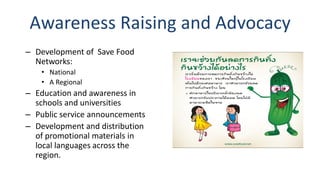
Awareness Raising and Advocacy
– Development of Save Food
Networks:
• National
• A Regional
– Education and awareness in
schools and universities
– Public service announcements
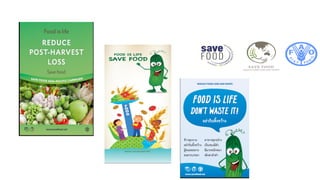
– Development and distribution
of promotional materials in
local languages across the
region.
Countries
• Launched in Mongolia, Thailand
• To be launched in:
– SAARC countries (Afghanistan, Bangladesh,
Bhutan, India, Maldives, Nepal, Pakistan, and Sri
Lanka)
– ASEAN countries - Indonesia, Malaysia, Viet Nam,
Singapore, Laos
Wa
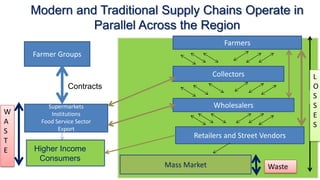
Modern and Traditional Supply Chains Operate in
Parallel Across the Region
Farmer Groups
Supermarkets
Institutions
Food Service Sector
Export
Farmers
Collectors
Wholesalers
Retailers and Street Vendors
Mass Market
Higher Income
Consumers
Contracts
L
O
S
S
E
S
W
A
S
T
E
Waste
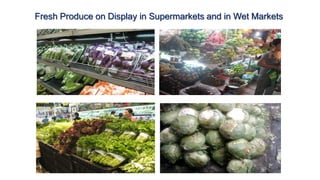
Fresh Produce on Display in Supermarkets and in Wet Markets
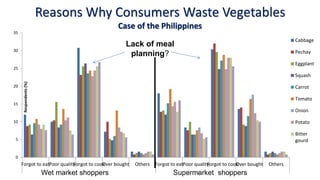
Reasons Why Consumers Waste Vegetables
Case of the Philippines
0
5
10
15
20
25
30
35
Forgot to eatPoor qualityForgot to cookOver bought Others Forgot to eatPoor qualityForgot to cookOver bought Others
Wet market shoppers Supermarket shoppers
Respondents(%)
Cabbage
Pechay
Eggplant
Squash
Carrot
Tomato
Onion
Potato
Bitter
gourd
Lack of meal
planning?
Wet market shoppers Supermarket shoppers
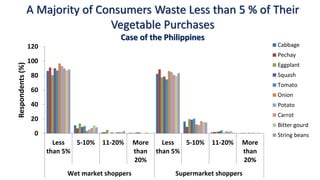
A Majority of Consumers Waste Less than 5 % of Their
Vegetable Purchases
Case of the Philippines
0
20
40
60
80
100
120
Less
than 5%
5-10% 11-20% More
than
20%
Less
than 5%
5-10% 11-20% More
than
20%
Wet market shoppers Supermarket shoppers
Respondents(%)
Cabbage
Pechay
Eggplant
Squash
Tomato
Onion
Potato
Carrot
Bitter gourd
String beans
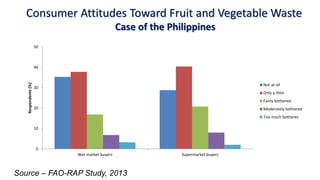
Consumer Attitudes Toward Fruit and Vegetable Waste
Case of the Philippines
0
10
20
30
40
50
Wet market buyers Supermarket buyers
Respondents(%)
Not at all
Only a little
Fairly bothered
Moderately bothered
Too much botheres
Source – FAO-RAP Study, 2013
CAPACITY BUILDING TO REDUCE POST-
HARVEST LOSS IN GMS COUNTRIES
FUNDED UNDER THE FAO TECHNICAL COOPERATION PROGRAMME (TCP)
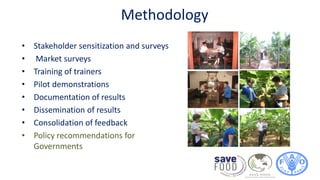
Methodology
• Stakeholder sensitization and surveys
• Market surveys
• Training of trainers
• Pilot demonstrations
• Documentation of results
• Dissemination of results
• Consolidation of feedback
• Policy recommendations for
Governments
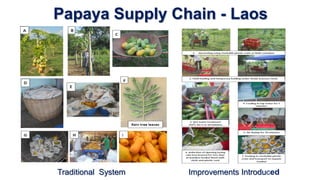
Traditional System Improvements Introduced
Papaya Supply Chain - Laos
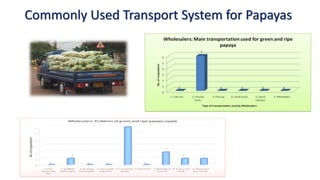
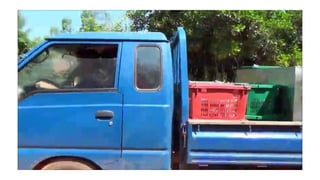
Commonly Used Transport System for Papayas
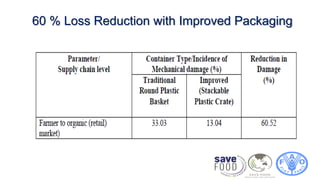
60 % Loss Reduction with Improved Packaging
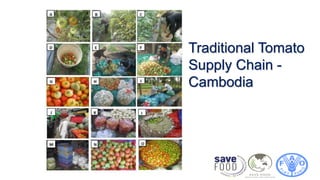
Traditional Tomato
Supply Chain -
Cambodia
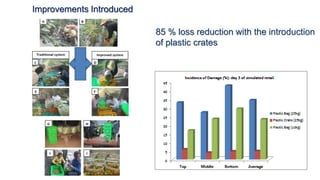
Improvements Introduced
85 % loss reduction with the introduction
of plastic crates
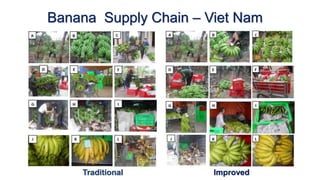
Banana Supply Chain – Viet Nam
Traditional Improved
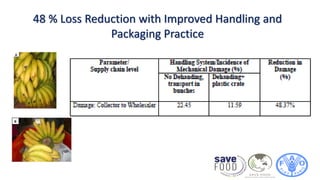
48 % Loss Reduction with Improved Handling and
Packaging Practice
Issues
• No reward for quality in mass markets.
• Access to finance to procure crates.
• Proper management and maintenance of plastic
crates.
• Widespread adoption of improved practice will
hinge greatly on an improved enabling
environment
– policy brief under development.
Requirement
(Billion USD)
%
Primary crop production 1,684 57
Downstream support services
• Cold and dry storage
• Rural and wholesale markets
• First stage processing
1266
305
280
682
42.9
24
22.2
58.8
Cumulative Investment Requirements
for East Asia - 2005/07 to 20501
1Source: Capital Requirements for Agriculture in Developing Countries to 2050. FAO Rome (2009)
(All numbers are in 2009 US$ values)
Thank you
www.savefood.net

Reducing Food Losses and Waste in Asian Countries for Improved Food Security and Agri-food Chain Efficiency

  • 1.
    Reducing Food Lossesand Waste Reducing Food Losses and Waste in Asian Countries for Improved Food Security and Agri-food Chain Efficiency Rosa S. Rolle, Ph.D Senior Agro-Industries and Post-harvest Officer FAO Regional Office for Asia and the Pacific Rosa.Rolle@fao.org
  • 2.
    Save Food Asia-PacificCampaign – Raise awareness and draw attention to the high levels of food losses and the growing problem of food waste across Asia and the Pacific Region. – Promote partnerships, and advocate for strategic approaches and actions to reduce food losses and waste and increase sustainable consumption in the region. – Launched on 28 August 2013 during a High Level Multi-stakeholder Consultation, convened in Bangkok. A Regional Campaign that seeks to:
  • 3.
    “With the SaveFood Asia- Pacific Campaign, we pledge to work together and create regional and national multi-stakeholder networks toward reducing food losses along the supply chain and fight the growing problem of food waste.”
  • 4.
    Awareness Raising andAdvocacy – Development of Save Food Networks: • National • A Regional – Education and awareness in schools and universities – Public service announcements – Development and distribution of promotional materials in local languages across the region.
  • 6.
    Countries • Launched inMongolia, Thailand • To be launched in: – SAARC countries (Afghanistan, Bangladesh, Bhutan, India, Maldives, Nepal, Pakistan, and Sri Lanka) – ASEAN countries - Indonesia, Malaysia, Viet Nam, Singapore, Laos
  • 7.
    Wa Modern and TraditionalSupply Chains Operate in Parallel Across the Region Farmer Groups Supermarkets Institutions Food Service Sector Export Farmers Collectors Wholesalers Retailers and Street Vendors Mass Market Higher Income Consumers Contracts L O S S E S W A S T E Waste
  • 8.
    Fresh Produce onDisplay in Supermarkets and in Wet Markets
  • 9.
    Reasons Why ConsumersWaste Vegetables Case of the Philippines 0 5 10 15 20 25 30 35 Forgot to eatPoor qualityForgot to cookOver bought Others Forgot to eatPoor qualityForgot to cookOver bought Others Wet market shoppers Supermarket shoppers Respondents(%) Cabbage Pechay Eggplant Squash Carrot Tomato Onion Potato Bitter gourd Lack of meal planning? Wet market shoppers Supermarket shoppers
  • 10.
    A Majority ofConsumers Waste Less than 5 % of Their Vegetable Purchases Case of the Philippines 0 20 40 60 80 100 120 Less than 5% 5-10% 11-20% More than 20% Less than 5% 5-10% 11-20% More than 20% Wet market shoppers Supermarket shoppers Respondents(%) Cabbage Pechay Eggplant Squash Tomato Onion Potato Carrot Bitter gourd String beans
  • 11.
    Consumer Attitudes TowardFruit and Vegetable Waste Case of the Philippines 0 10 20 30 40 50 Wet market buyers Supermarket buyers Respondents(%) Not at all Only a little Fairly bothered Moderately bothered Too much botheres Source – FAO-RAP Study, 2013
  • 12.
    CAPACITY BUILDING TOREDUCE POST- HARVEST LOSS IN GMS COUNTRIES FUNDED UNDER THE FAO TECHNICAL COOPERATION PROGRAMME (TCP)
  • 13.
    Methodology • Stakeholder sensitizationand surveys • Market surveys • Training of trainers • Pilot demonstrations • Documentation of results • Dissemination of results • Consolidation of feedback • Policy recommendations for Governments
  • 14.
    Traditional System ImprovementsIntroduced Papaya Supply Chain - Laos
  • 15.
    Commonly Used TransportSystem for Papayas
  • 17.
    60 % LossReduction with Improved Packaging
  • 18.
  • 19.
    Improvements Introduced 85 %loss reduction with the introduction of plastic crates
  • 20.
    Banana Supply Chain– Viet Nam Traditional Improved
  • 21.
    48 % LossReduction with Improved Handling and Packaging Practice
  • 22.
    Issues • No rewardfor quality in mass markets. • Access to finance to procure crates. • Proper management and maintenance of plastic crates. • Widespread adoption of improved practice will hinge greatly on an improved enabling environment – policy brief under development.
  • 23.
    Requirement (Billion USD) % Primary cropproduction 1,684 57 Downstream support services • Cold and dry storage • Rural and wholesale markets • First stage processing 1266 305 280 682 42.9 24 22.2 58.8 Cumulative Investment Requirements for East Asia - 2005/07 to 20501 1Source: Capital Requirements for Agriculture in Developing Countries to 2050. FAO Rome (2009) (All numbers are in 2009 US$ values) Thank you www.savefood.net