Online Communities - What are they & How to get involved Frank Arrigo [email_address] http://blogs.msdn.com/frankarr Group Manager, Technical Communities Developer & Platform Evangelism
Agenda What is an Online Community  What is a blog  Why is it important  How can you get started Tips to help
Definition:  online communities A  virtual community  is a  group  of people communicating or interacting with each other by means of information technologies, typically the  Internet , rather than face to face. Virtual communities are also known as  online communities  or  mediated communities . http://en.wikipedia.org/wiki/Online_communities
Definition: Blog A  blog  is a  website  for which an individual or a group frequently generates text,  photographs ,  video ,  audio files , and/or links, typically (but not always) on a daily basis. The term is a shortened form of  weblog .  Authoring a blog, maintaining a blog or adding an article to an existing blog is called "blogging". Individual articles on a blog are called "blog posts," "posts," or "entries".  The person who posts these entries is called a "blogger".  http://en.wikipedia.org/wiki/Blog
Blog basics A blog is typically made up of the following components: Title  - main title of the post Body  - main content of the post Trackback  - links back from other sites Comments  - comments added by readers Category  - category the post is labeled with (can be one or more) Permalink  - the URL of the full, individual article Post Date  - date: time the post was published http://en.wikipedia.org/wiki/Blog
How are Blogs different? A blog provides many advantages over a standard web page, including these: It allows for easy creation of new pages: new data is entered into a simple form (usually with the title, the category, and the body of the article) and then submitted. Automated templates take care of adding the article to the home page, creating the new full article page (Permalink), and adding the article to the appropriate date- or category-based archive.  It allows for easy filtering of content for various presentations - by date, category, author, or other attributes.  It (usually) allows the administrator to invite and add other authors, whose permissions and access are easily managed.  http://en.wikipedia.org/wiki/Blog
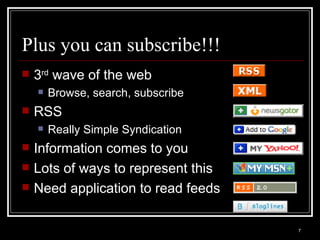
Plus you can subscribe!!! 3 rd  wave of the web Browse, search, subscribe RSS  Really Simple Syndication Information comes to you Lots of ways to represent this Need application to read feeds
Why is this important?
It’s all about having a conversation
Case Study : Learn Dog Venture by former MSFTee, Mike Seyfang Mission  Help kids through recognition How Join lots of dots All happening online http://www.learndog.com   http://learndog.typepad.com/learndogpup/ http://spaces.msn.com/members/mikese/ http://www.flickr.com/photos/mikeblogs/friends/
So, what has been the result? Personal support through connections via personal blog Growing community of supporters around the learndogpup blog (including advisory board) Connections to professional development support networks (e.g. the edTechTalk community) A 'loud/strong' voice that has achieved a high level of PR exposure for free (local, national press, 7news TV)
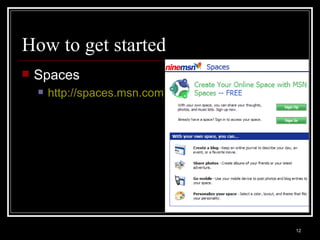
How to get started Spaces http://spaces.msn.com
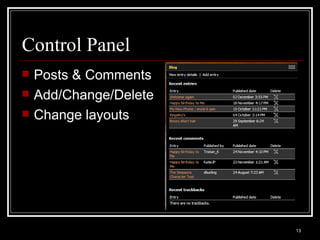
Control Panel Posts & Comments Add/Change/Delete Change layouts
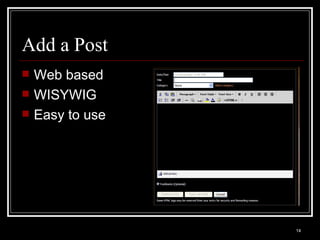
Add a Post Web based WISYWIG Easy to use
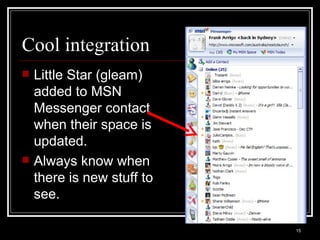
Cool integration Little Star (gleam) added to MSN Messenger contact when their space is updated.  Always know when there is new stuff to see.
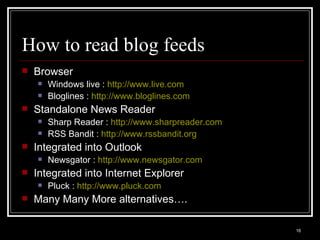
How to read blog feeds Browser Windows live :  http://www.live.com Bloglines :  http:// www.bloglines.com Standalone News Reader Sharp Reader :  http://www.sharpreader.com   RSS Bandit :  http://www.rssbandit.org   Integrated into Outlook Newsgator :  http:// www.newsgator.com Integrated into Internet Explorer Pluck :  http://www.pluck.com Many Many More alternatives….
Some tips
Building Relationships on Your Blog Don’t scoff at small audience size… Suppose you knew Steve Ballmer read your blog? What if Bill Gates did? Steven Levy from Newsweek? The CEO or CTO of your best customer? Consider the relationships real
Promoting Your Blog Find blogs you like and subscribe – and read the blog rolls of those bloggers until you have 25-50 you feel you’d want to read every week Comment on their stuff and only if relevant, link back to yours
See what’s the blogosphere saying Blog search tools Technorati :  http://www.technorati.com   Feedster :  http://www.feedster.com   Pubsub :  http://www.pubsub.com   General search tools ninemsn :  http:// search.ninemsn.com   Google :  http://blogsearch.google.com
Building Momentum Study techniques for getting more readers – aim for 40 influencers Figuring out how to get them to talk about you How to use other people’s comments Using your referrer log to find people who want to engage with you
Blog Credibility Real person, not FLOG (Fake Blog) You are judged by the conversations you keep Link to and praise others, even enemies The only comments you delete are porn and spam
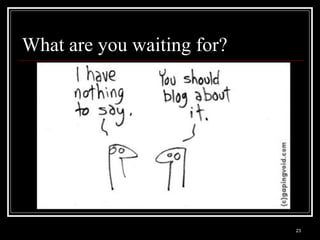
What are you waiting for?
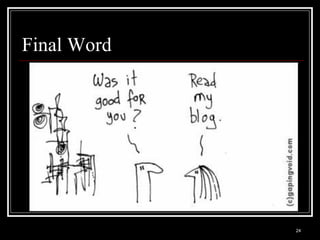
Final Word
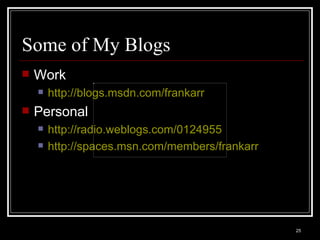
Some of My Blogs Work http://blogs.msdn.com/frankarr Personal http://radio.weblogs.com/0124955   http:// spaces.msn.com/members/frankarr
© 2005 Microsoft Corporation. All rights reserved. This presentation is for informational purposes only. MICROSOFT MAKES NO WARRANTIES, EXPRESS OR IMPLIED, IN THIS SUMMARY.

Online Communities – What are they & How

  • 1.
    Online Communities -What are they & How to get involved Frank Arrigo [email_address] http://blogs.msdn.com/frankarr Group Manager, Technical Communities Developer & Platform Evangelism
  • 2.
    Agenda What isan Online Community What is a blog Why is it important How can you get started Tips to help
  • 3.
    Definition: onlinecommunities A virtual community is a group of people communicating or interacting with each other by means of information technologies, typically the Internet , rather than face to face. Virtual communities are also known as online communities or mediated communities . http://en.wikipedia.org/wiki/Online_communities
  • 4.
    Definition: Blog A blog is a website for which an individual or a group frequently generates text, photographs , video , audio files , and/or links, typically (but not always) on a daily basis. The term is a shortened form of weblog . Authoring a blog, maintaining a blog or adding an article to an existing blog is called "blogging". Individual articles on a blog are called "blog posts," "posts," or "entries". The person who posts these entries is called a "blogger". http://en.wikipedia.org/wiki/Blog
  • 5.
    Blog basics Ablog is typically made up of the following components: Title - main title of the post Body - main content of the post Trackback - links back from other sites Comments - comments added by readers Category - category the post is labeled with (can be one or more) Permalink - the URL of the full, individual article Post Date - date: time the post was published http://en.wikipedia.org/wiki/Blog
  • 6.
    How are Blogsdifferent? A blog provides many advantages over a standard web page, including these: It allows for easy creation of new pages: new data is entered into a simple form (usually with the title, the category, and the body of the article) and then submitted. Automated templates take care of adding the article to the home page, creating the new full article page (Permalink), and adding the article to the appropriate date- or category-based archive. It allows for easy filtering of content for various presentations - by date, category, author, or other attributes. It (usually) allows the administrator to invite and add other authors, whose permissions and access are easily managed. http://en.wikipedia.org/wiki/Blog
  • 7.
    Plus you cansubscribe!!! 3 rd wave of the web Browse, search, subscribe RSS Really Simple Syndication Information comes to you Lots of ways to represent this Need application to read feeds
  • 8.
    Why is thisimportant?
  • 9.
    It’s all abouthaving a conversation
  • 10.
    Case Study :Learn Dog Venture by former MSFTee, Mike Seyfang Mission Help kids through recognition How Join lots of dots All happening online http://www.learndog.com http://learndog.typepad.com/learndogpup/ http://spaces.msn.com/members/mikese/ http://www.flickr.com/photos/mikeblogs/friends/
  • 11.
    So, what hasbeen the result? Personal support through connections via personal blog Growing community of supporters around the learndogpup blog (including advisory board) Connections to professional development support networks (e.g. the edTechTalk community) A 'loud/strong' voice that has achieved a high level of PR exposure for free (local, national press, 7news TV)
  • 12.
    How to getstarted Spaces http://spaces.msn.com
  • 13.
    Control Panel Posts& Comments Add/Change/Delete Change layouts
  • 14.
    Add a PostWeb based WISYWIG Easy to use
  • 15.
    Cool integration LittleStar (gleam) added to MSN Messenger contact when their space is updated. Always know when there is new stuff to see.
  • 16.
    How to readblog feeds Browser Windows live : http://www.live.com Bloglines : http:// www.bloglines.com Standalone News Reader Sharp Reader : http://www.sharpreader.com RSS Bandit : http://www.rssbandit.org Integrated into Outlook Newsgator : http:// www.newsgator.com Integrated into Internet Explorer Pluck : http://www.pluck.com Many Many More alternatives….
  • 17.
  • 18.
    Building Relationships onYour Blog Don’t scoff at small audience size… Suppose you knew Steve Ballmer read your blog? What if Bill Gates did? Steven Levy from Newsweek? The CEO or CTO of your best customer? Consider the relationships real
  • 19.
    Promoting Your BlogFind blogs you like and subscribe – and read the blog rolls of those bloggers until you have 25-50 you feel you’d want to read every week Comment on their stuff and only if relevant, link back to yours
  • 20.
    See what’s theblogosphere saying Blog search tools Technorati : http://www.technorati.com Feedster : http://www.feedster.com Pubsub : http://www.pubsub.com General search tools ninemsn : http:// search.ninemsn.com Google : http://blogsearch.google.com
  • 21.
    Building Momentum Studytechniques for getting more readers – aim for 40 influencers Figuring out how to get them to talk about you How to use other people’s comments Using your referrer log to find people who want to engage with you
  • 22.
    Blog Credibility Realperson, not FLOG (Fake Blog) You are judged by the conversations you keep Link to and praise others, even enemies The only comments you delete are porn and spam
  • 23.
    What are youwaiting for?
  • 24.
  • 25.
    Some of MyBlogs Work http://blogs.msdn.com/frankarr Personal http://radio.weblogs.com/0124955 http:// spaces.msn.com/members/frankarr
  • 26.
    © 2005 MicrosoftCorporation. All rights reserved. This presentation is for informational purposes only. MICROSOFT MAKES NO WARRANTIES, EXPRESS OR IMPLIED, IN THIS SUMMARY.