#OMLTA2014
Jacques Cool
100% of the ideas expressed here are a
direct result of my frequent interactions
with awesome educators from my PLN
(personal learning network). In today’s
world, I could not do this any other way.
 Society
 School
 Student as learner
 Teacher as learner
 Ourself
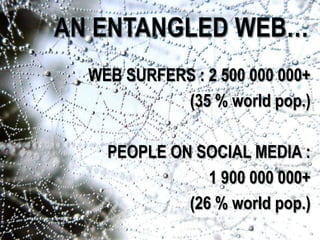
WEB SURFERS : 2 500 000 000+
(35 % world pop.)
PEOPLE ON SOCIAL MEDIA :
1 900 000 000+
(26 % world pop.)
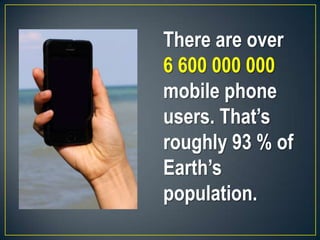
There are over
6 600 000 000
mobile phone
users. That’s
roughly 93 % of
Earth’s
population.
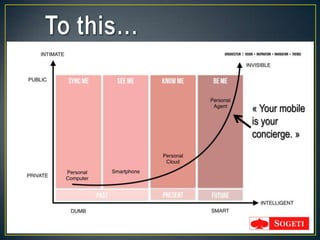
From this…
« Your mobile
is your
concierge. »
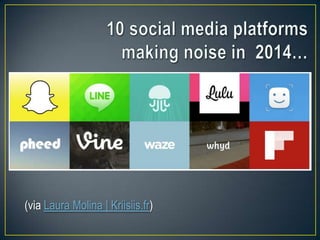
(via Laura Molina | Kriisiis.fr)
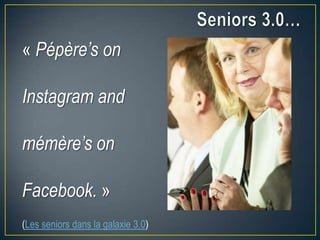
« Pépère’s on
Instagram and
mémère’s on
Facebook. »
(Les seniors dans la galaxie 3.0)
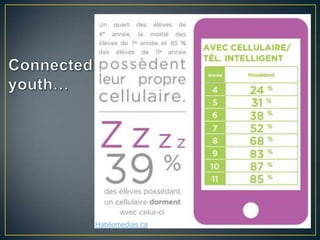
Habilomedias.ca
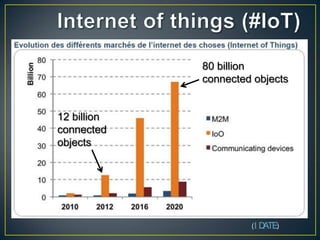
(I DATE)
80 billion
connected objects
12 billion
connected
objects
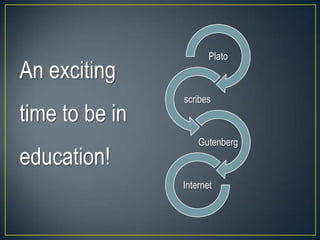
Plato
scribes
Gutenberg
Internet
An exciting
time to be in
education!
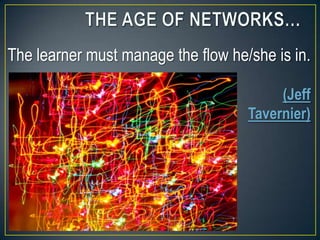
The learner must manage the flow he/she is in.
(Jeff
Tavernier)
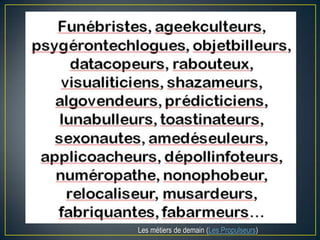
Les métiers de demain (Les Propulseurs)
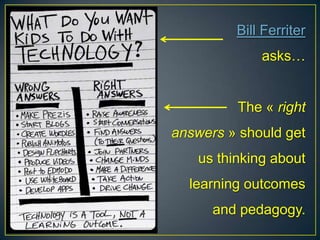
Bill Ferriter
asks…
The « right
answers » should get
us thinking about
learning outcomes
and pedagogy.
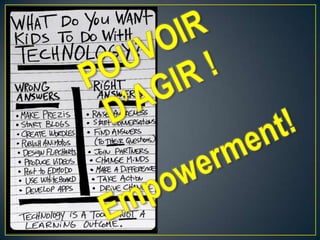
…empowerment
to take flight!
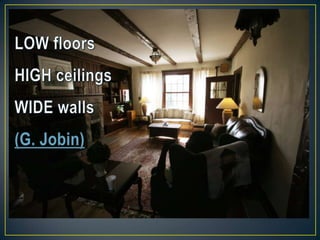
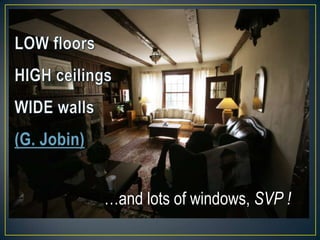
…and lots of windows, SVP !
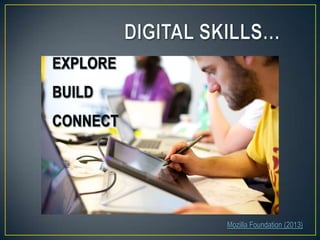
Mozilla Foundation (2013)
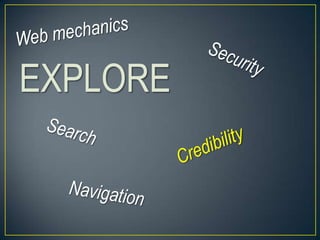
EXPLORE
EXPLORE
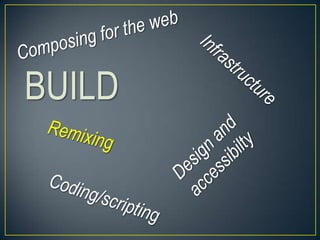
BUILD
BUILD
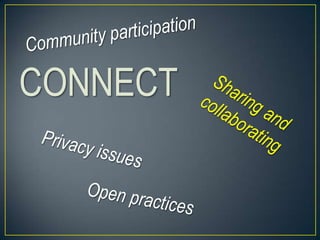
CONNECT
CONNECT
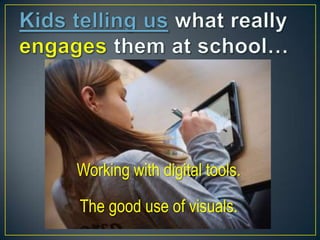
Working with digital tools.
The good use of visuals.
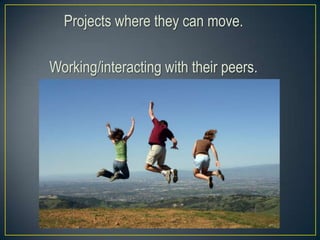
Projects where they can move.
Working/interacting with their peers.
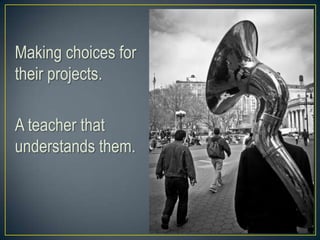
Making choices for
their projects.
A teacher that
understands them.
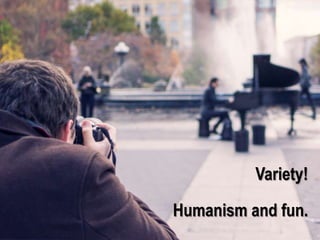
Variety!
Humanism and fun.
Linking their projects/work
to real-world issues.
A teacher passionate
about his/her
profession.
Beaverton High School
ALL of its social media strategy
is managed by the kids!
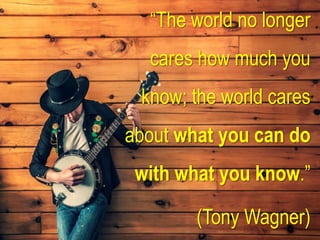
“The world no longer
cares how much you
know; the world cares
about what you can do
with what you know.”
(Tony Wagner)
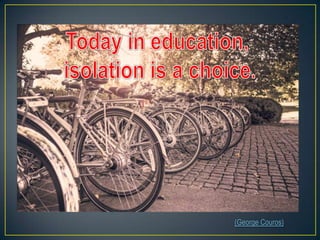
(George Couros)
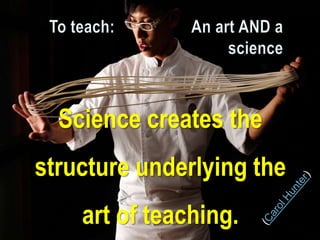
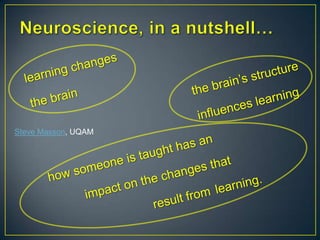
Science creates the
structure underlying the
art of teaching.
Steve Masson, UQAM
OK, what roadmap to
transform my
practice?
‘We all start out ugly.’
(Ed Catmull, Pixar)
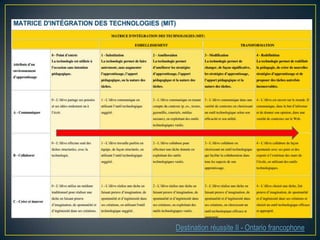
Destination réussite II - Ontario francophone
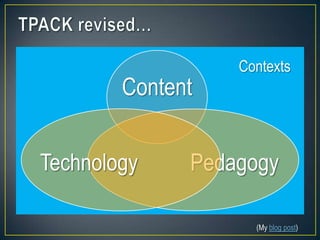
Content
PedagogyTechnology
(My blog post)
Contexts
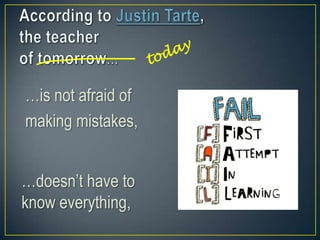
…doesn’t have to
know everything,
…is not afraid of
making mistakes,
…doesn’t need someone
to plan, organize and
lead all professional
development,
…doesn’t just think of
teaching content,
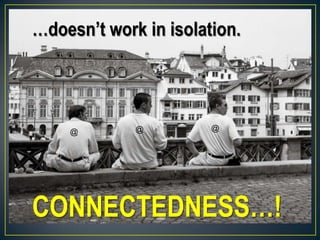
…doesn’t work in isolation.
CONNECTEDNESS…!
@@@
…doesn’t see technology as a trending fad,
…makes sure
that what was
done in the past
doesn’t get in
the way of what
can be done
ahead.
A teacher is first
of all a learner.
As described, teaching in
today’s world is one of the
most complex professions.
« Technology in education is
useful only insofar as it
extends our own humanity. »
(TeachThought.com)
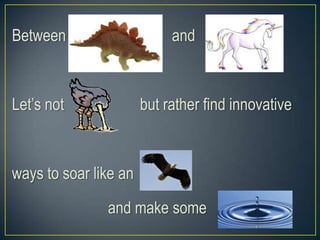
Between and
Let’s not but rather find innovative
ways to soar like an
and make some
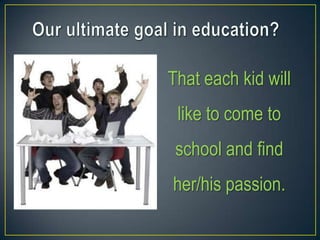
That each kid will
like to come to
school and find
her/his passion.
Let’s all be agents
of change!
MERCI !!
Keynote blog post: http://zecool.com
A Diigo list of cool references:
https://www.diigo.com/list/zecool/OMLTA/32gpicgk9
Slides can be downloaded at: slideshare link
Credits for images: link

From demystification to learner engagement: Doing education differently

Editor's Notes

  • #2 Fromdemystification to learner engagement: Doingeducationdifferently
  • #6 Il y a 2 484 915 152 d’internautes (sur un peu plus de 7 milliards d’habitants). Cela représente un taux de pénétration de 35%.Il y a 1 856 680 860 utilisateurs actifs des réseaux sociaux, soit un taux de pénétration de 26%.Il y a 6 572 950 124 utilisateurs de téléphones mobiles, soit un taux de pénétration de 93%.13% des internautes sont en Europe de l’Ouest, 11% en Amérique du Nord, 30% dans l’Ouest de l’Asie.10% des utilisateurs des médias sociaux sont en Europe de l’Ouest, 11% en Amérique du Nord, 37% dans l’Ouest de l’Asie.Le taux de pénétration d’Internet en Europe de l’Ouest est de 78%, contre 81% en Amérique du Nord et seulement 48% en Asie de l’Ouest.C’est Facebook qui compte le plus d’utilisateurs, avec 1, 184 milliards, devant QQ (816 millions) et QZone (632 millions)
  • #27 NavigationWeb MechanicsSearchCredibilitySecurity
  • #29 Composing for the webRemixingDesign and AccessibilityCoding/scriptingInfrastructure
  • #31 Sharing and CollaboratingCommunity ParticipationPrivacyOpen Practices
  • #33 http://www.edutopia.org/blog/student-engagement-stories-heather-wolpert-gawron
  • #45 Les sciences (neurosciences) sont la fondation d’où sont érigés les murs de la créativité pédagogique.Science (cognitive, neuroscience) is the foundationfromwhich the walls of pedagogicalcreativity are raised.
  • #58 …makes surethatwhatwasdone in the pastdoesn’tget in the way of whatcanbedoneahead.