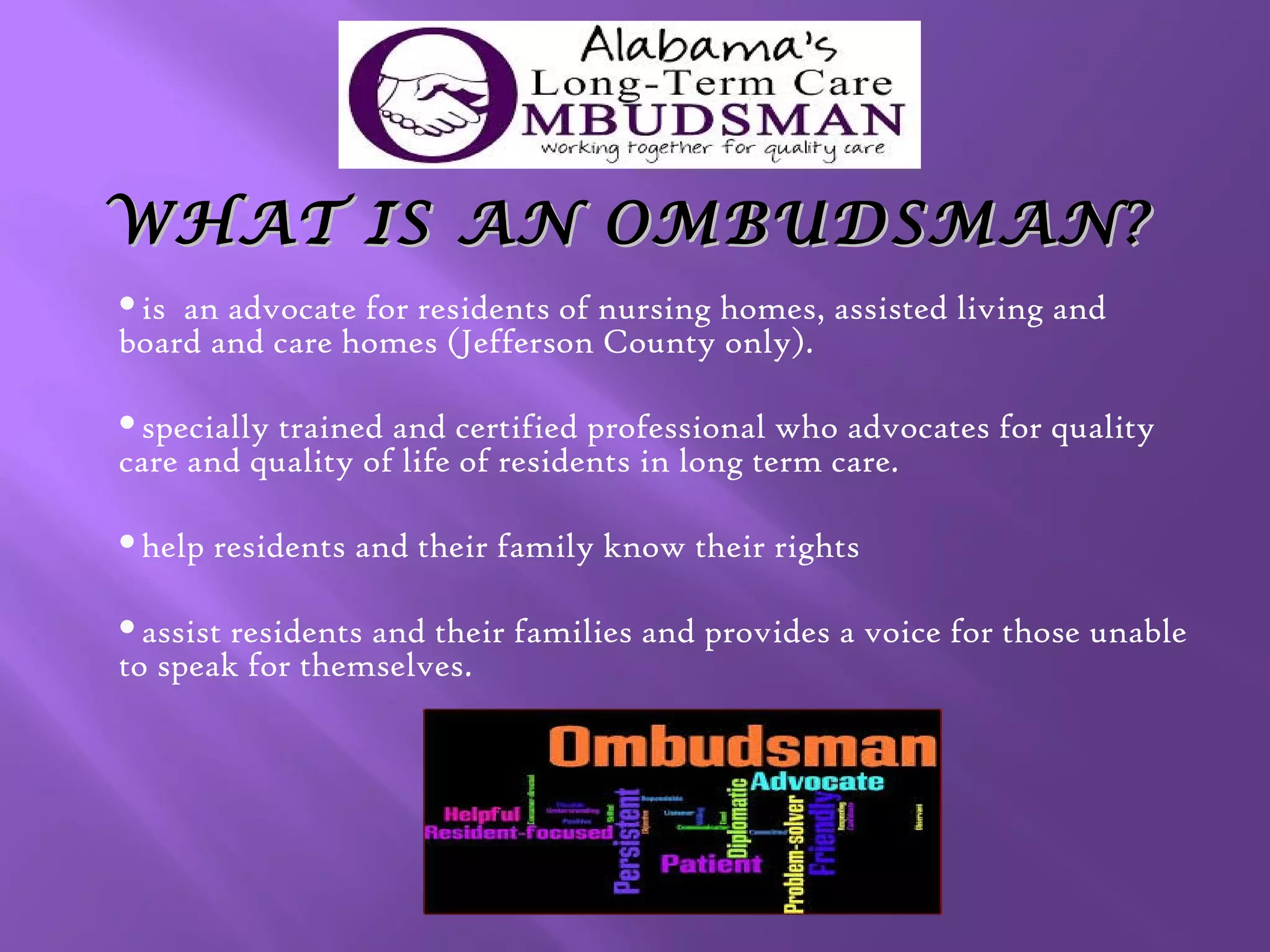
WHAT IS AN OMBUDSMAN?
is

an advocate for residents of nursing homes, assisted living and
board and care homes (Jefferson County only).
specially

trained and certified professional who advocates for quality
care and quality of life of residents in long term care.
help

residents and their family know their rights

assist

residents and their families and provides a voice for those unable
to speak for themselves.
WHAT DOES AN OMBUDSMAN
DO?
Investigates

and resolve complaints (highest priority)
Visit each facility to evaluate conditions
Ensure that residents are receiving the legal, financial, social
rehabilitative and other services to which they are entitled.
Act as a mediator between residents, family members and facility
staff
Educate residents, families and facility staff about residents’ rights
Provide information to the public about long term care
issues/concerns
Assist with the establishment of resident and family councils in
facilities
Represents resident interests before state and federal government by
working to change laws, regulations and policies that effect those who
live in long-term care facilities
Educate consumers and long-term care providers about residents'
rights and good care practices
Promotes community involvement through volunteer opportunities
Provides information to the public on nursing homes and other longterm care facilities and services, residents' rights and legislative and
policy issues
Who Can Use The
Ombudsman?
Anyone including :
residents, employees of long-term care facilities,
or their friends and family.
What Concerns Does An
Ombudsman Address?










Violation of residents’ rights or dignity
Physical, verbal or mental abuse, deprivation of
services necessary to maintain residents’ physical
and mental health, or unreasonable confinement
Poor quality of care such as, inadequate personal
hygiene and slow response to requests for assistance
Improper transfer or discharge of resident
Inappropriate use of chemical and physical
restraints
Any resident concern about quality of life
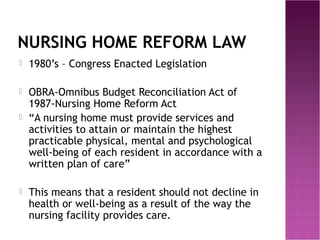
NURSING HOME REFORM LAW


1980’s – Congress Enacted Legislation



OBRA-Omnibus Budget Reconciliation Act of
1987-Nursing Home Reform Act
“A nursing home must provide services and
activities to attain or maintain the highest
practicable physical, mental and psychological
well-being of each resident in accordance with a
written plan of care”





This means that a resident should not decline in
health or well-being as a result of the way the
nursing facility provides care.
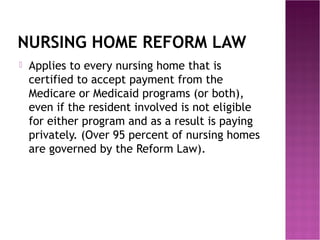
NURSING HOME REFORM LAW


Applies to every nursing home that is
certified to accept payment from the
Medicare or Medicaid programs (or both),
even if the resident involved is not eligible
for either program and as a result is paying
privately. (Over 95 percent of nursing homes
are governed by the Reform Law).
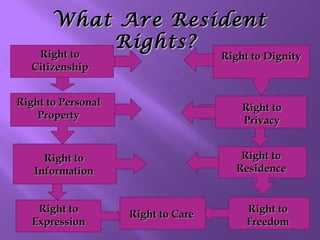
What Are Resident
Rights?
Right to

Right to
Citizenship

Right to Dignity

Right to Personal
Property

Right to
Privacy
Right to
Residence

Right to
Information
Right to
Expression

Right to Care

Right to
Freedom
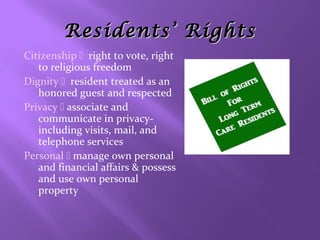
Residents’ Rights
Citizenship right to vote, right
to religious freedom
Dignity resident treated as an
honored guest and respected
Privacy  associate and
communicate in privacyincluding visits, mail, and
telephone services
Personal  manage own personal
and financial affairs & possess
and use own personal
property


Residents’ Rights
Cont’d








Right to information  residents have the
right to information including the
regulations of the home and cost of services
rendered. Also the right to participate in
decisions about any treatment, including
the right to refuse treatment
Right to freedom residents have the right
to be free mental, physical or verbal and
chemical and physical restraints, unless
ordered by their physician
Right to care  residents have the right to
equal care, treatment and services and be
free from discrimination
Right of residence resident has the right
to live at the home unless there violation of
publicized regulations. May not be
discharged without timely and proper
notification to both the resident and the
family or guardian.
Right of expression exercise of rights
including the right to file complaints and
grievances without fear or reprisal.


What Can Be
Investigated?
Complaints may be about the facility, its

employees, provider public or private agencies,
guardians, or anyone who is in a position to
threaten or interfere with the rights, health,
safety or welfare of a resident.
How Do I File A Concern
or Complaint?


You may file a complaint in writing, by phone
or in person.
 Contact your local or state Ombudsman at
1-800-AGELINE
(243-5463)
Do I Have to Give My Name?
No, however it is better if we are able to
contact you for more information and
everything is kept confidential unless
complainant or the resident gives us
permission.
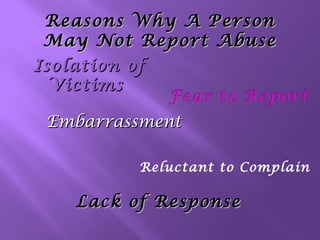
Reasons Why A Person
May Not Report Abuse
Isolation of
Victims
Embarrassment
Reluctant to Complain

Lack of Response
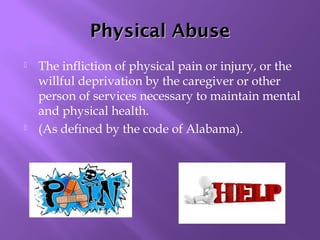
Physical Abuse




The infliction of physical pain or injury, or the
willful deprivation by the caregiver or other
person of services necessary to maintain mental
and physical health.
(As defined by the code of Alabama).
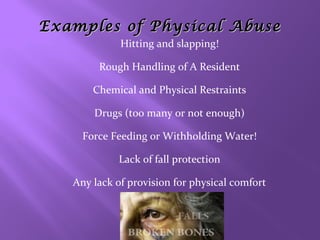
Examples of Physical Abuse
Hitting and slapping!
Rough Handling of A Resident
Chemical and Physical Restraints
Drugs (too many or not enough)
Force Feeding or Withholding Water!
Lack of fall protection
Any lack of provision for physical comfort
Examples of Abuse
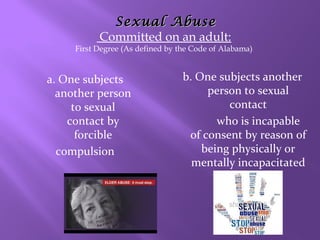
Sexual Abuse
Committed on an adult:

First Degree (As defined by the Code of Alabama)

a. One subjects
another person
to sexual
contact by
forcible
compulsion

b. One subjects another
person to sexual
contact
who is incapable
of consent by reason of
being physically or
mentally incapacitated
NEGLECT
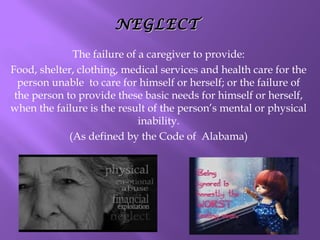
The failure of a caregiver to provide:
Food, shelter, clothing, medical services and health care for the
person unable to care for himself or herself; or the failure of
the person to provide these basic needs for himself or herself,
when the failure is the result of the person’s mental or physical
inability.
(As defined by the Code of Alabama)
RED FLAGS

A person may be suffering from neglect if;
Dirty, smell of feces and or urine or other health and safety
hazards or present in their living environment
They have rashes, sores, or lice on their body
They inadequately clothes
Malnourished, dehydrated, unusual weight loss
Incorrect body positioning
Accident or injury of unknown origin, falls, improper
handling
Verbal Abuse


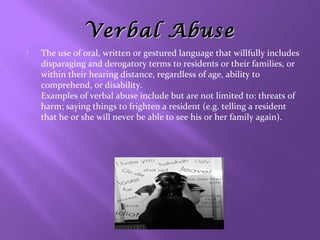
The use of oral, written or gestured language that willfully includes
disparaging and derogatory terms to residents or their families, or
within their hearing distance, regardless of age, ability to
comprehend, or disability.
Examples of verbal abuse include but are not limited to: threats of
harm; saying things to frighten a resident (e.g. telling a resident
that he or she will never be able to see his or her family again).
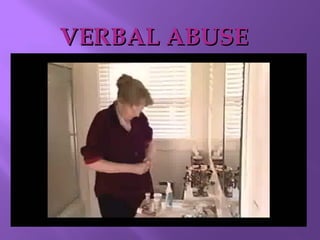
VERBAL ABUSE
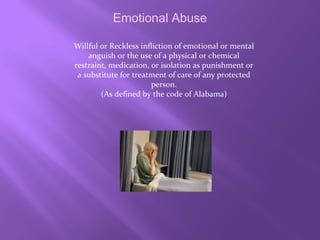
Emotional Abuse
Willful or Reckless infliction of emotional or mental
anguish or the use of a physical or chemical
restraint, medication, or isolation as punishment or
a substitute for treatment of care of any protected
person.
(As defined by the code of Alabama)
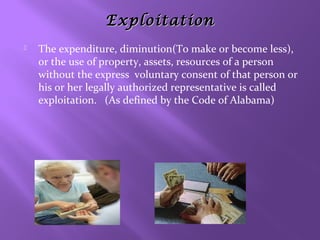
Exploitation


The expenditure, diminution(To make or become less),
or the use of property, assets, resources of a person
without the express voluntary consent of that person or
his or her legally authorized representative is called
exploitation. (As defined by the Code of Alabama)
News

a.

b.



Elder Justice and Advocacy
Alabama Interagency Council for the Prevention
of Elder Abuse
Elder Abuse Tool Kit
New Law
Protecting Alabama Elder’s Act passed in
August, 2013
Report Abuse
You may contact:
State Abuse Hotline 1-800-458-7214
Dept of Public Health Complaint Hotline
(1-800-356-9596 or
Local Law Enforcement
1-877-425-2243

Old show

  • 1.
    WHAT IS ANOMBUDSMAN? is an advocate for residents of nursing homes, assisted living and board and care homes (Jefferson County only). specially trained and certified professional who advocates for quality care and quality of life of residents in long term care. help residents and their family know their rights assist residents and their families and provides a voice for those unable to speak for themselves.
  • 2.
    WHAT DOES ANOMBUDSMAN DO? Investigates and resolve complaints (highest priority) Visit each facility to evaluate conditions Ensure that residents are receiving the legal, financial, social rehabilitative and other services to which they are entitled. Act as a mediator between residents, family members and facility staff Educate residents, families and facility staff about residents’ rights Provide information to the public about long term care issues/concerns Assist with the establishment of resident and family councils in facilities Represents resident interests before state and federal government by working to change laws, regulations and policies that effect those who live in long-term care facilities Educate consumers and long-term care providers about residents' rights and good care practices Promotes community involvement through volunteer opportunities Provides information to the public on nursing homes and other longterm care facilities and services, residents' rights and legislative and policy issues
  • 3.
    Who Can UseThe Ombudsman? Anyone including : residents, employees of long-term care facilities, or their friends and family.
  • 4.
    What Concerns DoesAn Ombudsman Address?       Violation of residents’ rights or dignity Physical, verbal or mental abuse, deprivation of services necessary to maintain residents’ physical and mental health, or unreasonable confinement Poor quality of care such as, inadequate personal hygiene and slow response to requests for assistance Improper transfer or discharge of resident Inappropriate use of chemical and physical restraints Any resident concern about quality of life
  • 5.
    NURSING HOME REFORMLAW  1980’s – Congress Enacted Legislation  OBRA-Omnibus Budget Reconciliation Act of 1987-Nursing Home Reform Act “A nursing home must provide services and activities to attain or maintain the highest practicable physical, mental and psychological well-being of each resident in accordance with a written plan of care”   This means that a resident should not decline in health or well-being as a result of the way the nursing facility provides care.
  • 6.
    NURSING HOME REFORMLAW  Applies to every nursing home that is certified to accept payment from the Medicare or Medicaid programs (or both), even if the resident involved is not eligible for either program and as a result is paying privately. (Over 95 percent of nursing homes are governed by the Reform Law).
  • 7.
    What Are Resident Rights? Rightto Right to Citizenship Right to Dignity Right to Personal Property Right to Privacy Right to Residence Right to Information Right to Expression Right to Care Right to Freedom
  • 8.
    Residents’ Rights Citizenship rightto vote, right to religious freedom Dignity resident treated as an honored guest and respected Privacy  associate and communicate in privacyincluding visits, mail, and telephone services Personal  manage own personal and financial affairs & possess and use own personal property
  • 9.
     Residents’ Rights Cont’d     Right toinformation  residents have the right to information including the regulations of the home and cost of services rendered. Also the right to participate in decisions about any treatment, including the right to refuse treatment Right to freedom residents have the right to be free mental, physical or verbal and chemical and physical restraints, unless ordered by their physician Right to care  residents have the right to equal care, treatment and services and be free from discrimination Right of residence resident has the right to live at the home unless there violation of publicized regulations. May not be discharged without timely and proper notification to both the resident and the family or guardian. Right of expression exercise of rights including the right to file complaints and grievances without fear or reprisal.
  • 10.
     What Can Be Investigated? Complaintsmay be about the facility, its employees, provider public or private agencies, guardians, or anyone who is in a position to threaten or interfere with the rights, health, safety or welfare of a resident.
  • 11.
    How Do IFile A Concern or Complaint?  You may file a complaint in writing, by phone or in person.  Contact your local or state Ombudsman at 1-800-AGELINE (243-5463)
  • 12.
    Do I Haveto Give My Name? No, however it is better if we are able to contact you for more information and everything is kept confidential unless complainant or the resident gives us permission.
  • 15.
    Reasons Why APerson May Not Report Abuse Isolation of Victims Embarrassment Reluctant to Complain Lack of Response
  • 16.
    Physical Abuse   The inflictionof physical pain or injury, or the willful deprivation by the caregiver or other person of services necessary to maintain mental and physical health. (As defined by the code of Alabama).
  • 17.
    Examples of PhysicalAbuse Hitting and slapping! Rough Handling of A Resident Chemical and Physical Restraints Drugs (too many or not enough) Force Feeding or Withholding Water! Lack of fall protection Any lack of provision for physical comfort
  • 18.
  • 21.
    Sexual Abuse Committed onan adult: First Degree (As defined by the Code of Alabama) a. One subjects another person to sexual contact by forcible compulsion b. One subjects another person to sexual contact who is incapable of consent by reason of being physically or mentally incapacitated
  • 23.
    NEGLECT The failure ofa caregiver to provide: Food, shelter, clothing, medical services and health care for the person unable to care for himself or herself; or the failure of the person to provide these basic needs for himself or herself, when the failure is the result of the person’s mental or physical inability. (As defined by the Code of Alabama)
  • 24.
    RED FLAGS A personmay be suffering from neglect if; Dirty, smell of feces and or urine or other health and safety hazards or present in their living environment They have rashes, sores, or lice on their body They inadequately clothes Malnourished, dehydrated, unusual weight loss Incorrect body positioning Accident or injury of unknown origin, falls, improper handling
  • 25.
    Verbal Abuse  The useof oral, written or gestured language that willfully includes disparaging and derogatory terms to residents or their families, or within their hearing distance, regardless of age, ability to comprehend, or disability. Examples of verbal abuse include but are not limited to: threats of harm; saying things to frighten a resident (e.g. telling a resident that he or she will never be able to see his or her family again).
  • 26.
  • 27.
    Emotional Abuse Willful orReckless infliction of emotional or mental anguish or the use of a physical or chemical restraint, medication, or isolation as punishment or a substitute for treatment of care of any protected person. (As defined by the code of Alabama)
  • 28.
    Exploitation  The expenditure, diminution(Tomake or become less), or the use of property, assets, resources of a person without the express voluntary consent of that person or his or her legally authorized representative is called exploitation. (As defined by the Code of Alabama)
  • 30.
    News  a. b.  Elder Justice andAdvocacy Alabama Interagency Council for the Prevention of Elder Abuse Elder Abuse Tool Kit New Law Protecting Alabama Elder’s Act passed in August, 2013
  • 31.
    Report Abuse You maycontact: State Abuse Hotline 1-800-458-7214 Dept of Public Health Complaint Hotline (1-800-356-9596 or Local Law Enforcement 1-877-425-2243

Editor's Notes