Oceanography
in the
Private Sector
Michael Tomlinson
Where can I find jobs in oceanography
outside of academia?
 Private Consulting Firms (today’s topic)
 Not-for-profit Organizations
 Federal Agencies (e.g., NOAA, MMS, USGS,
USFWS)
 Department of Defense (Navy)
 Interstate and State Agencies
 Regional Agencies
 County and/or City Agencies
What type of private sector projects
would require oceanographic expertise?
 Pure Research
 Applied Research
 Environmental Assessments
 Physical and Numerical Model Support
 Feasibility Studies
 Siting Studies (e.g., ocean outfalls)
 Environmental Permitting
 Habitat Restoration
Who would be the typical clients in the
private sector?
 Industry (e.g., marinas, power, oil, mining, other
consultants)
 Trade and Non-profit Organizations (e.g., API)
 Federal Agencies (e.g., NOAA, MMS, DoD)
 State Agencies (e.g., Departments of Health or
the Environment)
 Regional Agencies
 City and County Agencies (e.g., ports, WWTPs)
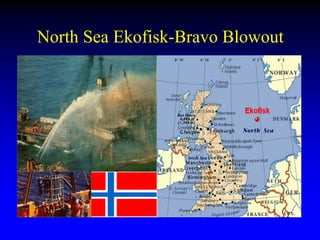
North Sea Ekofisk-Bravo Blowout
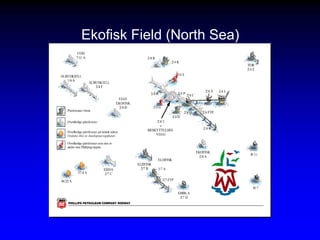
Ekofisk Field (North Sea)
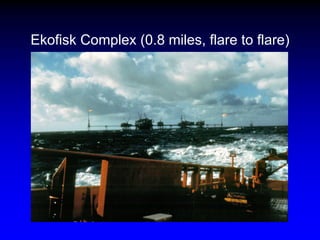
Ekofisk Complex (0.8 miles, flare to flare)
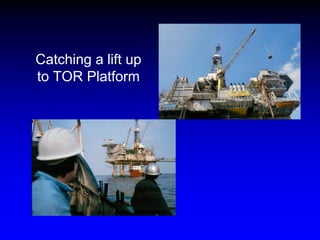
Catching a lift up
to TOR Platform
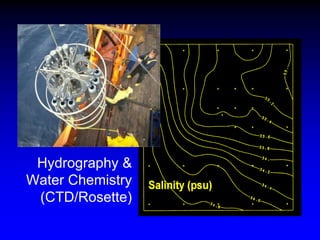
Hydrography &
Water Chemistry
(CTD/Rosette)
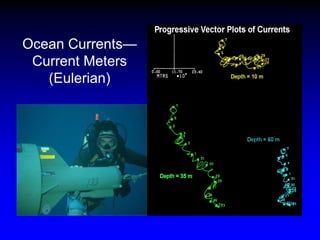
Ocean Currents—
Current Meters
(Eulerian)
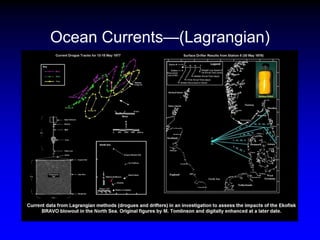
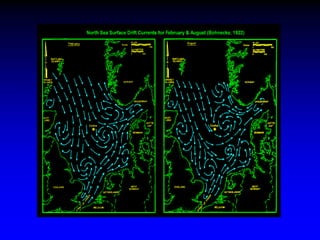
Ocean Currents—(Lagrangian)
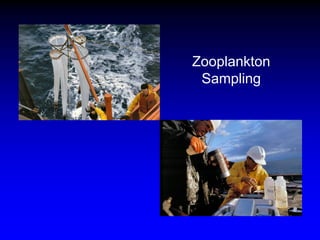
Zooplankton
Sampling
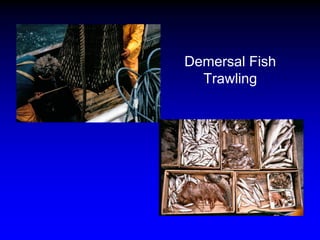
Demersal Fish
Trawling
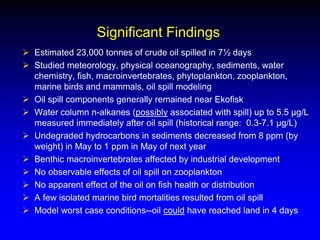
Significant Findings
 Estimated 23,000 tonnes of crude oil spilled in 7½ days
 Studied meteorology, physical oceanography, sediments, water
chemistry, fish, macroinvertebrates, phytoplankton, zooplankton,
marine birds and mammals, oil spill modeling
 Oil spill components generally remained near Ekofisk
 Water column n-alkanes (possibly associated with spill) up to 5.5 µg/L
measured immediately after oil spill (historical range: 0.3-7.1 µg/L)
 Undegraded hydrocarbons in sediments decreased from 8 ppm (by
weight) in May to 1 ppm in May of next year
 Benthic macroinvertebrates affected by industrial development
 No observable effects of oil spill on zooplankton
 No apparent effect of the oil on fish health or distribution
 A few isolated marine bird mortalities resulted from oil spill
 Model worst case conditions--oil could have reached land in 4 days
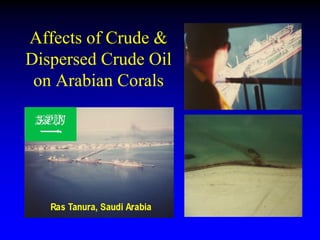
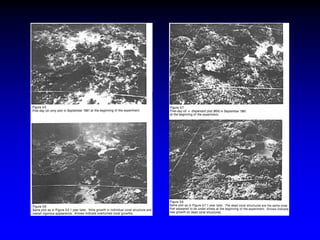
Affects of Crude &
Dispersed Crude Oil
on Arabian Corals
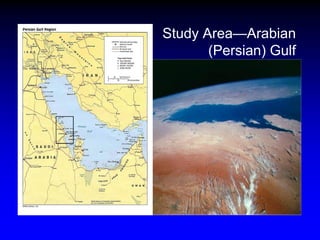
Study Area—Arabian
(Persian) Gulf
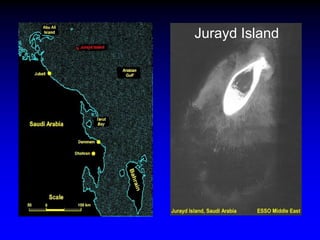
Jurayd Island
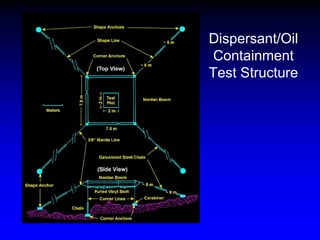
Dispersant/Oil
Containment
Test Structure
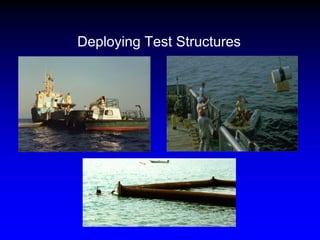
Deploying Test Structures
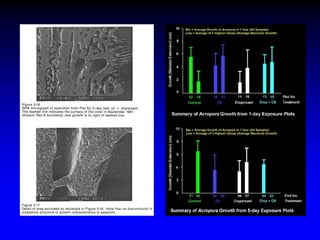
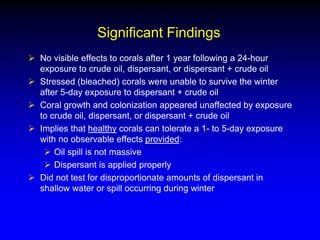
Significant Findings
 No visible effects to corals after 1 year following a 24-hour
exposure to crude oil, dispersant, or dispersant + crude oil
 Stressed (bleached) corals were unable to survive the winter
after 5-day exposure to dispersant + crude oil
 Coral growth and colonization appeared unaffected by exposure
to crude oil, dispersant, or dispersant + crude oil
 Implies that healthy corals can tolerate a 1- to 5-day exposure
with no observable effects provided:
 Oil spill is not massive
 Dispersant is applied properly
 Did not test for disproportionate amounts of dispersant in
shallow water or spill occurring during winter
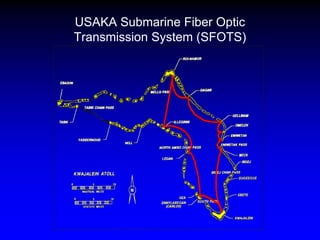
U.S. Army Kwajalein Atoll
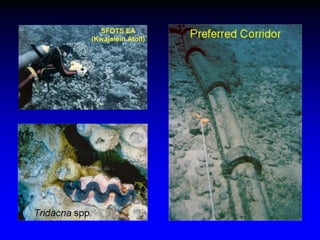
SFOTS Environmental Assessment
USAKA Submarine Fiber Optic
Transmission System (SFOTS)
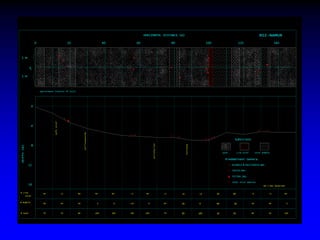
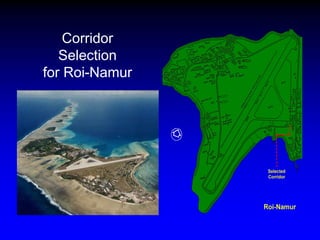
Corridor
Selection
for Roi-Namur
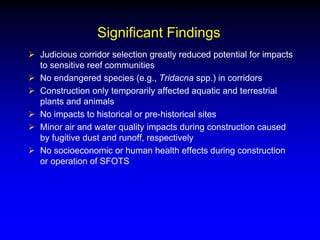
Significant Findings
 Judicious corridor selection greatly reduced potential for impacts
to sensitive reef communities
 No endangered species (e.g., Tridacna spp.) in corridors
 Construction only temporarily affected aquatic and terrestrial
plants and animals
 No impacts to historical or pre-historical sites
 Minor air and water quality impacts during construction caused
by fugitive dust and runoff, respectively
 No socioeconomic or human health effects during construction
or operation of SFOTS
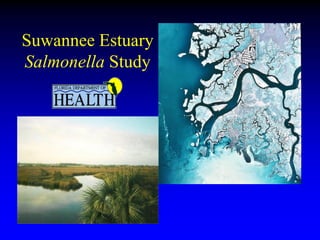
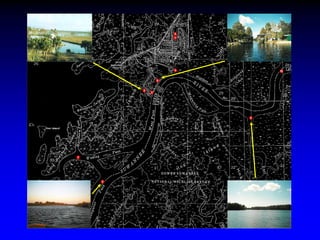
Suwannee Estuary
Salmonella Study
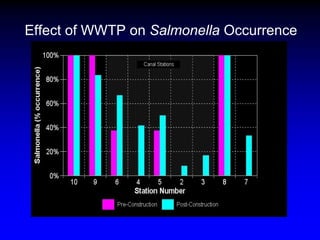
Effect of WWTP on Salmonella Occurrence
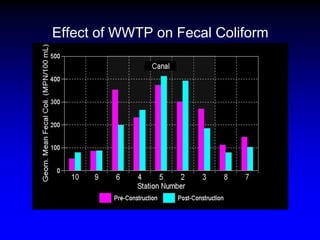
Effect of WWTP on Fecal Coliform
Climatic Differences Between
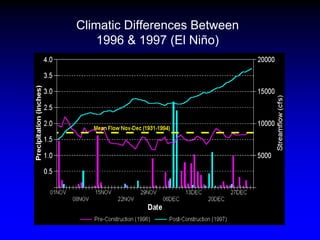
1996 & 1997 (El Niño)
Significant Findings
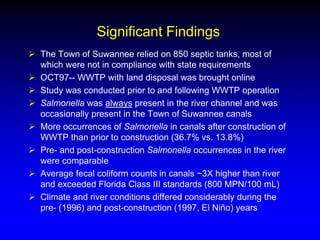
 The Town of Suwannee relied on 850 septic tanks, most of
which were not in compliance with state requirements
 OCT97-- WWTP with land disposal was brought online
 Study was conducted prior to and following WWTP operation
 Salmonella was always present in the river channel and was
occasionally present in the Town of Suwannee canals
 More occurrences of Salmonella in canals after construction of
WWTP than prior to construction (36.7% vs. 13.8%)
 Pre- and post-construction Salmonella occurrences in the river
were comparable
 Average fecal coliform counts in canals ~3X higher than river
and exceeded Florida Class III standards (800 MPN/100 mL)
 Climate and river conditions differed considerably during the
pre- (1996) and post-construction (1997, El Niño) years
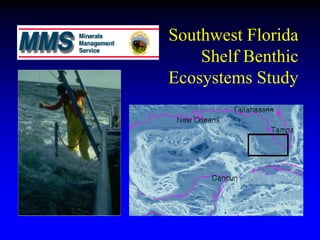
Southwest Florida
Shelf Benthic
Ecosystems Study
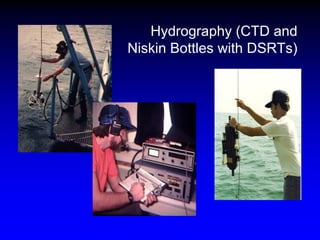
Hydrography (CTD and
Niskin Bottles with DSRTs)
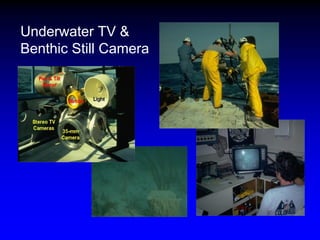
Underwater TV &
Benthic Still Camera
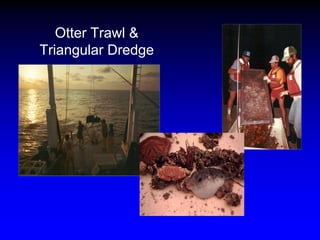
Otter Trawl &
Triangular Dredge
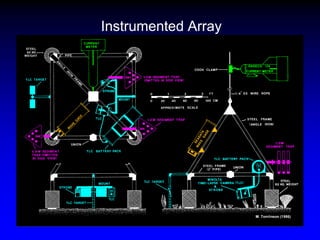
Instrumented Array
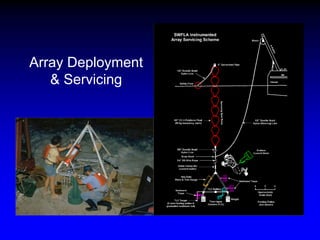
Array Deployment
& Servicing
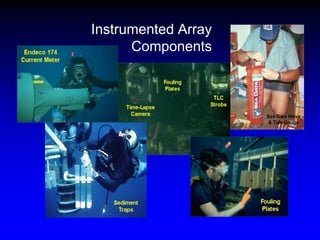
Instrumented Array
Components
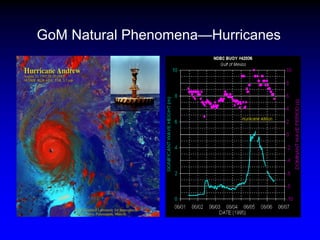
GoM Natural Phenomena—Hurricanes
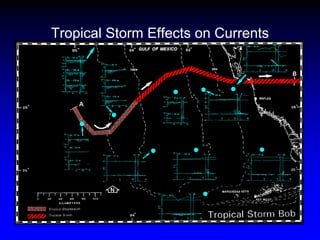
Tropical Storm Effects on Currents
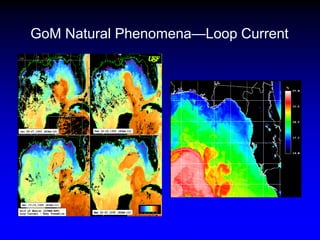
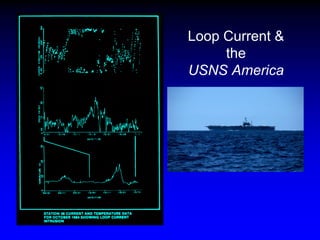
GoM Natural Phenomena—Loop Current
Loop Current &
the
USNS America
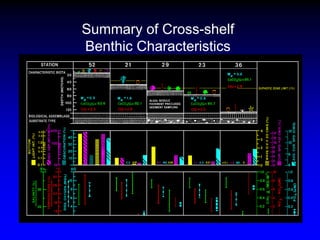
Summary of Cross-shelf
Benthic Characteristics
Significant Findings
 Sediment hydrocarbons primarily terrigenous and marine biogenic
Sediment hydrocarbons in deeper water attributed to pelagic tars
transported by Loop Current
 Loop Current dominates circulation on shelf—can double current
speeds and reverse directions, cause upwelling, & cause a 2-4 ºC
temperature rise
 Hurricanes affect near-surface currents & increase sediment
resuspension
 Soft-bottom infauna composition (primarily polychaetes) controlled by:
1) depth & 2) sediments
 Live-bottom communities cover 30% of the shelf; distribution
controlled by substrate type, sediment deposition, & light
 Thin, transitory sands over hard substrate favor gorgonians, algae,
antipatharians, large sponges, scleractinian corals
 Many demersal fish favor areas of low relief to areas with no relief
 15 valued ecosystem components (VECs) modeled to assess impacts
 Created matrix summarizing oil & gas development impacts to VECs
What skills are especially valuable in
the private sector?
 Ability to write well & quickly
 Ability to organize, schedule, & meet deadlines
 Resourceful, flexible, & not too specialized
 Ability to manage projects & keep them on-
schedule and on-budget
 Proficiency with some type of word processing,
spreadsheet, & graphics software
 Proficiency with other software (e.g., GIS,
presentation software, mathematical or modeling
software)
What degree is required and will a
PhD price me out of the market?
 Depending on your responsibilities, your degree
could range from an AA to a PhD.
 I would recommend an MS but much can be
done with a BS as evidenced by my 22 years in
consulting.
 No, a PhD does not price you out of the market.
Many firms are looking for PhDs, especially to
manage projects.
What are the advantages &
disadvantages of working in the
private sector?
Advantages
 Exciting
 Good pay
 A lot of travel
 Independence
 Variety
Disadvantages
 Long hours
 Tight deadlines
 Too much travel
 Not much time to
keep abreast in your
field
Will my integrity be compromised?
 In a reputable firm (most are reputable)—NO! If
you lose your credibility you lose your
customers.
 Your reports, while they may be prepared for a
private client, are usually reviewed (&
scrutinized) by government agencies & the
public.
 Often agency and public reviews of consultant
documents are more comprehensive & rigorous
than reviews required for refereed journals.
Will I ever work with a university?
 If you are smart, you will; universities can be
valuable resources.
 Universities can provide very specialized
experts consulting firms cannot afford to hire.
 Some services provided by universities (boats,
laboratory analyses, etc.) are less expensive
than the private sector.
 Universities can provide cutting-edge
technology.
 Often university faculty are perceived as experts
in their specialized field (and they often are).
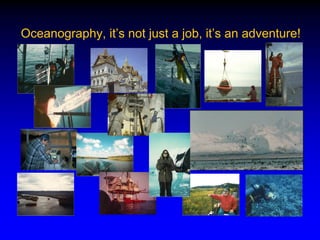
Oceanography, it’s not just a job, it’s an adventure!

Oceanography in the Private Sector (M Tomlinson)

  • 1.
  • 2.
    Where can Ifind jobs in oceanography outside of academia?  Private Consulting Firms (today’s topic)  Not-for-profit Organizations  Federal Agencies (e.g., NOAA, MMS, USGS, USFWS)  Department of Defense (Navy)  Interstate and State Agencies  Regional Agencies  County and/or City Agencies
  • 3.
    What type ofprivate sector projects would require oceanographic expertise?  Pure Research  Applied Research  Environmental Assessments  Physical and Numerical Model Support  Feasibility Studies  Siting Studies (e.g., ocean outfalls)  Environmental Permitting  Habitat Restoration
  • 4.
    Who would bethe typical clients in the private sector?  Industry (e.g., marinas, power, oil, mining, other consultants)  Trade and Non-profit Organizations (e.g., API)  Federal Agencies (e.g., NOAA, MMS, DoD)  State Agencies (e.g., Departments of Health or the Environment)  Regional Agencies  City and County Agencies (e.g., ports, WWTPs)
  • 5.
  • 6.
  • 7.
    Ekofisk Complex (0.8miles, flare to flare)
  • 8.
    Catching a liftup to TOR Platform
  • 9.
  • 10.
  • 11.
  • 13.
  • 14.
  • 15.
    Significant Findings  Estimated23,000 tonnes of crude oil spilled in 7½ days  Studied meteorology, physical oceanography, sediments, water chemistry, fish, macroinvertebrates, phytoplankton, zooplankton, marine birds and mammals, oil spill modeling  Oil spill components generally remained near Ekofisk  Water column n-alkanes (possibly associated with spill) up to 5.5 µg/L measured immediately after oil spill (historical range: 0.3-7.1 µg/L)  Undegraded hydrocarbons in sediments decreased from 8 ppm (by weight) in May to 1 ppm in May of next year  Benthic macroinvertebrates affected by industrial development  No observable effects of oil spill on zooplankton  No apparent effect of the oil on fish health or distribution  A few isolated marine bird mortalities resulted from oil spill  Model worst case conditions--oil could have reached land in 4 days
  • 16.
    Affects of Crude& Dispersed Crude Oil on Arabian Corals
  • 17.
  • 18.
  • 19.
  • 20.
  • 23.
    Significant Findings  Novisible effects to corals after 1 year following a 24-hour exposure to crude oil, dispersant, or dispersant + crude oil  Stressed (bleached) corals were unable to survive the winter after 5-day exposure to dispersant + crude oil  Coral growth and colonization appeared unaffected by exposure to crude oil, dispersant, or dispersant + crude oil  Implies that healthy corals can tolerate a 1- to 5-day exposure with no observable effects provided:  Oil spill is not massive  Dispersant is applied properly  Did not test for disproportionate amounts of dispersant in shallow water or spill occurring during winter
  • 24.
    U.S. Army KwajaleinAtoll SFOTS Environmental Assessment
  • 25.
    USAKA Submarine FiberOptic Transmission System (SFOTS)
  • 28.
  • 29.
    Significant Findings  Judiciouscorridor selection greatly reduced potential for impacts to sensitive reef communities  No endangered species (e.g., Tridacna spp.) in corridors  Construction only temporarily affected aquatic and terrestrial plants and animals  No impacts to historical or pre-historical sites  Minor air and water quality impacts during construction caused by fugitive dust and runoff, respectively  No socioeconomic or human health effects during construction or operation of SFOTS
  • 30.
  • 32.
    Effect of WWTPon Salmonella Occurrence
  • 33.
    Effect of WWTPon Fecal Coliform
  • 34.
  • 35.
    Significant Findings  TheTown of Suwannee relied on 850 septic tanks, most of which were not in compliance with state requirements  OCT97-- WWTP with land disposal was brought online  Study was conducted prior to and following WWTP operation  Salmonella was always present in the river channel and was occasionally present in the Town of Suwannee canals  More occurrences of Salmonella in canals after construction of WWTP than prior to construction (36.7% vs. 13.8%)  Pre- and post-construction Salmonella occurrences in the river were comparable  Average fecal coliform counts in canals ~3X higher than river and exceeded Florida Class III standards (800 MPN/100 mL)  Climate and river conditions differed considerably during the pre- (1996) and post-construction (1997, El Niño) years
  • 36.
  • 37.
    Hydrography (CTD and NiskinBottles with DSRTs)
  • 38.
  • 39.
  • 40.
  • 41.
  • 42.
  • 43.
  • 44.
  • 45.
  • 46.
  • 47.
  • 48.
    Significant Findings  Sedimenthydrocarbons primarily terrigenous and marine biogenic Sediment hydrocarbons in deeper water attributed to pelagic tars transported by Loop Current  Loop Current dominates circulation on shelf—can double current speeds and reverse directions, cause upwelling, & cause a 2-4 ºC temperature rise  Hurricanes affect near-surface currents & increase sediment resuspension  Soft-bottom infauna composition (primarily polychaetes) controlled by: 1) depth & 2) sediments  Live-bottom communities cover 30% of the shelf; distribution controlled by substrate type, sediment deposition, & light  Thin, transitory sands over hard substrate favor gorgonians, algae, antipatharians, large sponges, scleractinian corals  Many demersal fish favor areas of low relief to areas with no relief  15 valued ecosystem components (VECs) modeled to assess impacts  Created matrix summarizing oil & gas development impacts to VECs
  • 49.
    What skills areespecially valuable in the private sector?  Ability to write well & quickly  Ability to organize, schedule, & meet deadlines  Resourceful, flexible, & not too specialized  Ability to manage projects & keep them on- schedule and on-budget  Proficiency with some type of word processing, spreadsheet, & graphics software  Proficiency with other software (e.g., GIS, presentation software, mathematical or modeling software)
  • 50.
    What degree isrequired and will a PhD price me out of the market?  Depending on your responsibilities, your degree could range from an AA to a PhD.  I would recommend an MS but much can be done with a BS as evidenced by my 22 years in consulting.  No, a PhD does not price you out of the market. Many firms are looking for PhDs, especially to manage projects.
  • 51.
    What are theadvantages & disadvantages of working in the private sector? Advantages  Exciting  Good pay  A lot of travel  Independence  Variety Disadvantages  Long hours  Tight deadlines  Too much travel  Not much time to keep abreast in your field
  • 52.
    Will my integritybe compromised?  In a reputable firm (most are reputable)—NO! If you lose your credibility you lose your customers.  Your reports, while they may be prepared for a private client, are usually reviewed (& scrutinized) by government agencies & the public.  Often agency and public reviews of consultant documents are more comprehensive & rigorous than reviews required for refereed journals.
  • 53.
    Will I everwork with a university?  If you are smart, you will; universities can be valuable resources.  Universities can provide very specialized experts consulting firms cannot afford to hire.  Some services provided by universities (boats, laboratory analyses, etc.) are less expensive than the private sector.  Universities can provide cutting-edge technology.  Often university faculty are perceived as experts in their specialized field (and they often are).
  • 54.
    Oceanography, it’s notjust a job, it’s an adventure!