BY
Sumitra.Melinamani
Lecturer
St.Luke college ofnursing,SHRIRAMPUR
Definition
“Occupational health is health science
which is related to human work,
workplace and work environment”.
OBJECTIVE
• Occupational health is the safety of
workers in all occupations from
injuries and diseases and to improve
the health status of the workers.
ACCORDING TO W.H.O AND
ILO
Care and improve the physical, mental
and social well being of workers
Prevent hindrances to health
Protect the workers
Provision of healthy environment
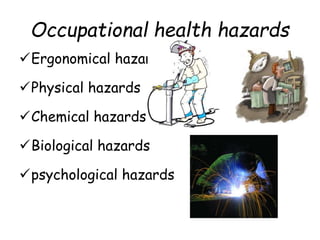
Occupational health hazards
Ergonomical hazards
Physical hazards
Chemical hazards
Biological hazards
psychological hazards
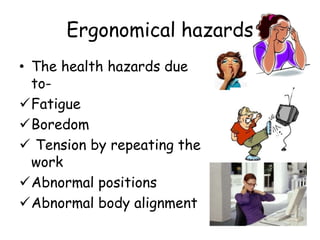
Ergonomical hazards
• The health hazards due
to-
Fatigue
Boredom
 Tension by repeating the
work
Abnormal positions
Abnormal body alignment
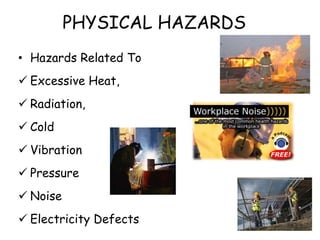
PHYSICAL HAZARDS
• Hazards Related To
 Excessive Heat,
 Radiation,
 Cold
 Vibration
 Pressure
 Noise
 Electricity Defects
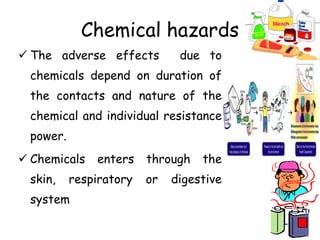
Chemical hazards
 The adverse effects due to
chemicals depend on duration of
the contacts and nature of the
chemical and individual resistance
power.
 Chemicals enters through the
skin, respiratory or digestive
system
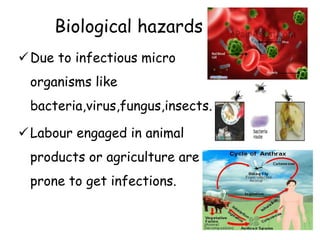
Biological hazards
Due to infectious micro
organisms like
bacteria,virus,fungus,insects.
Labour engaged in animal
products or agriculture are
prone to get infections.
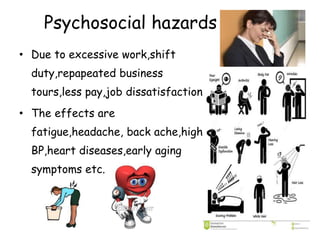
Psychosocial hazards
• Due to excessive work,shift
duty,repapeated business
tours,less pay,job dissatisfaction
• The effects are
fatigue,headache, back ache,high
BP,heart diseases,early aging
symptoms etc.
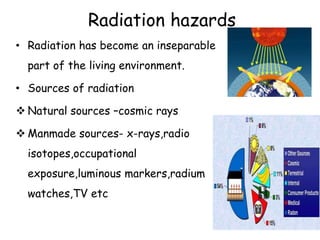
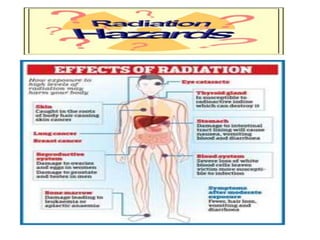
Radiation hazards
• Radiation has become an inseparable
part of the living environment.
• Sources of radiation
 Natural sources –cosmic rays
 Manmade sources- x-rays,radio
isotopes,occupational
exposure,luminous markers,radium
watches,TV etc
Types of radiation
• Ionising
radiations:alpha,beta,gamma,x-
rays,neutrons
• Non-ionisngradiations:
ultraviolet,microwaves
Occupational health
Occupational health

Occupational health

  • 1.
  • 2.
    Definition “Occupational health ishealth science which is related to human work, workplace and work environment”.
  • 3.
    OBJECTIVE • Occupational healthis the safety of workers in all occupations from injuries and diseases and to improve the health status of the workers.
  • 4.
    ACCORDING TO W.H.OAND ILO Care and improve the physical, mental and social well being of workers Prevent hindrances to health Protect the workers Provision of healthy environment
  • 5.
    Occupational health hazards Ergonomicalhazards Physical hazards Chemical hazards Biological hazards psychological hazards
  • 6.
    Ergonomical hazards • Thehealth hazards due to- Fatigue Boredom  Tension by repeating the work Abnormal positions Abnormal body alignment
  • 7.
    PHYSICAL HAZARDS • HazardsRelated To  Excessive Heat,  Radiation,  Cold  Vibration  Pressure  Noise  Electricity Defects
  • 8.
    Chemical hazards  Theadverse effects due to chemicals depend on duration of the contacts and nature of the chemical and individual resistance power.  Chemicals enters through the skin, respiratory or digestive system
  • 9.
    Biological hazards Due toinfectious micro organisms like bacteria,virus,fungus,insects. Labour engaged in animal products or agriculture are prone to get infections.
  • 10.
    Psychosocial hazards • Dueto excessive work,shift duty,repapeated business tours,less pay,job dissatisfaction • The effects are fatigue,headache, back ache,high BP,heart diseases,early aging symptoms etc.
  • 11.
    Radiation hazards • Radiationhas become an inseparable part of the living environment. • Sources of radiation  Natural sources –cosmic rays  Manmade sources- x-rays,radio isotopes,occupational exposure,luminous markers,radium watches,TV etc
  • 12.
    Types of radiation •Ionising radiations:alpha,beta,gamma,x- rays,neutrons • Non-ionisngradiations: ultraviolet,microwaves