Kim Richards
 EDF 2085 Diversity for
       Educators
       Dr. Qadri
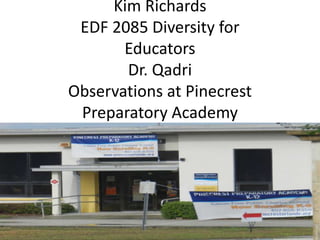
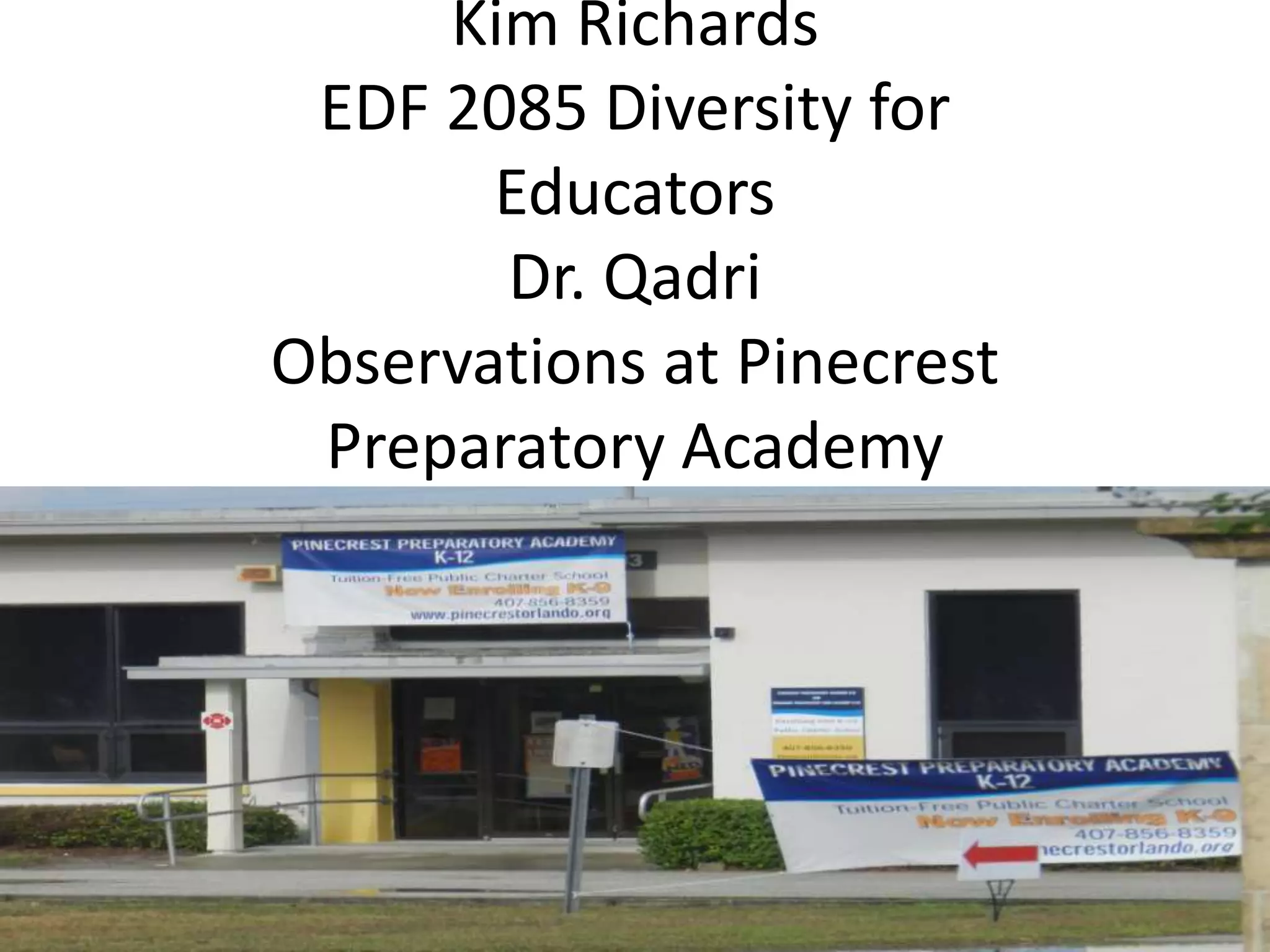
Observations at Pinecrest
 Preparatory Academy
Cultural/Faith Diversity


Many of the students are of a Christian background. Some of these include Catholics,
Seventh Day Adventist, Charismatic (Pentecostal) and Jehovah Witness.
ESOL


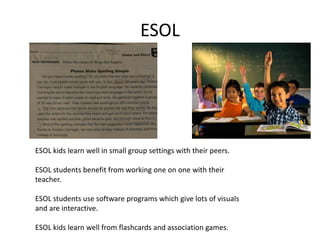
ESOL kids learn well in small group settings with their peers.

ESOL students benefit from working one on one with their
teacher.

ESOL students use software programs which give lots of visuals
and are interactive.

ESOL kids learn well from flashcards and association games.
Exceptional Education (IEP)


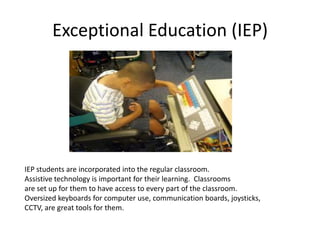
IEP students are incorporated into the regular classroom.
Assistive technology is important for their learning. Classrooms
are set up for them to have access to every part of the classroom.
Oversized keyboards for computer use, communication boards, joysticks,
CCTV, are great tools for them.
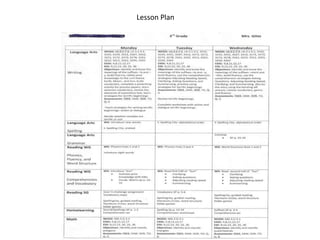
Lesson Plan


Lesson Plan
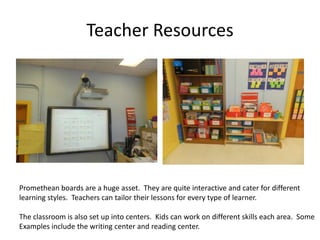
Teacher Resources


Promethean boards are a huge asset. They are quite interactive and cater for different
learning styles. Teachers can tailor their lessons for every type of learner.

The classroom is also set up into centers. Kids can work on different skills each area. Some
Examples include the writing center and reading center.
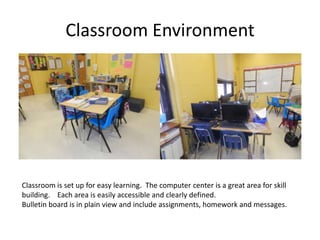
Classroom Environment


Classroom is set up for easy learning. The computer center is a great area for skill
building. Each area is easily accessible and clearly defined.
Bulletin board is in plain view and include assignments, homework and messages.
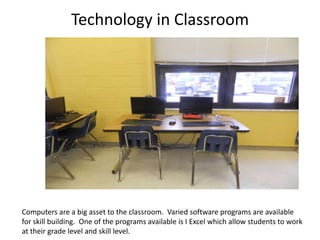
Technology in Classroom


Computers are a big asset to the classroom. Varied software programs are available
for skill building. One of the programs available is I Excel which allow students to work
at their grade level and skill level.
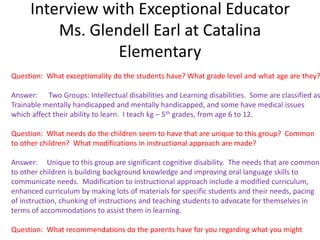
Interview with Exceptional Educator
         Ms. Glendell Earl at Catalina
                 Elementary
Question: What exceptionality do the students have? What grade level and what age are they?

Answer: Two Groups: Intellectual disabilities and Learning disabilities. Some are classified as
Trainable mentally handicapped and mentally handicapped, and some have medical issues
which affect their ability to learn. I teach kg – 5th grades, from age 6 to 12.

Question: What needs do the children seem to have that are unique to this group? Common
to other children? What modifications in instructional approach are made?

Answer: Unique to this group are significant cognitive disability. The needs that are common
to other children is building background knowledge and improving oral language skills to
communicate needs. Modification to instructional approach include a modified curriculum,
enhanced curriculum by making lots of materials for specific students and their needs, pacing
of instruction, chunking of instructions and teaching students to advocate for themselves in
terms of accommodations to assist them in learning.

Question: What recommendations do the parents have for you regarding what you might
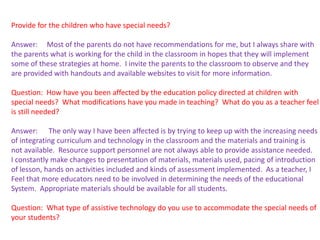
Provide for the children who have special needs?

Answer: Most of the parents do not have recommendations for me, but I always share with
the parents what is working for the child in the classroom in hopes that they will implement
some of these strategies at home. I invite the parents to the classroom to observe and they
are provided with handouts and available websites to visit for more information.

Question: How have you been affected by the education policy directed at children with
special needs? What modifications have you made in teaching? What do you as a teacher feel
is still needed?

Answer: The only way I have been affected is by trying to keep up with the increasing needs
of integrating curriculum and technology in the classroom and the materials and training is
not available. Resource support personnel are not always able to provide assistance needed.
I constantly make changes to presentation of materials, materials used, pacing of introduction
of lesson, hands on activities included and kinds of assessment implemented. As a teacher, I
Feel that more educators need to be involved in determining the needs of the educational
System. Appropriate materials should be available for all students.

Question: What type of assistive technology do you use to accommodate the special needs of
your students?
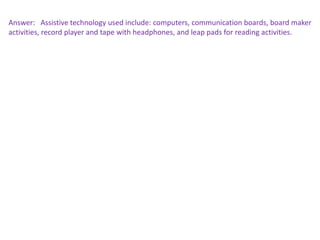
Answer: Assistive technology used include: computers, communication boards, board maker
activities, record player and tape with headphones, and leap pads for reading activities.
Observations

Observations

  • 1.
    Kim Richards EDF2085 Diversity for Educators Dr. Qadri Observations at Pinecrest Preparatory Academy
  • 2.
    Cultural/Faith Diversity Many ofthe students are of a Christian background. Some of these include Catholics, Seventh Day Adventist, Charismatic (Pentecostal) and Jehovah Witness.
  • 3.
    ESOL ESOL kids learnwell in small group settings with their peers. ESOL students benefit from working one on one with their teacher. ESOL students use software programs which give lots of visuals and are interactive. ESOL kids learn well from flashcards and association games.
  • 4.
    Exceptional Education (IEP) IEPstudents are incorporated into the regular classroom. Assistive technology is important for their learning. Classrooms are set up for them to have access to every part of the classroom. Oversized keyboards for computer use, communication boards, joysticks, CCTV, are great tools for them.
  • 5.
  • 6.
    Teacher Resources Promethean boardsare a huge asset. They are quite interactive and cater for different learning styles. Teachers can tailor their lessons for every type of learner. The classroom is also set up into centers. Kids can work on different skills each area. Some Examples include the writing center and reading center.
  • 7.
    Classroom Environment Classroom isset up for easy learning. The computer center is a great area for skill building. Each area is easily accessible and clearly defined. Bulletin board is in plain view and include assignments, homework and messages.
  • 8.
    Technology in Classroom Computersare a big asset to the classroom. Varied software programs are available for skill building. One of the programs available is I Excel which allow students to work at their grade level and skill level.
  • 9.
    Interview with ExceptionalEducator Ms. Glendell Earl at Catalina Elementary Question: What exceptionality do the students have? What grade level and what age are they? Answer: Two Groups: Intellectual disabilities and Learning disabilities. Some are classified as Trainable mentally handicapped and mentally handicapped, and some have medical issues which affect their ability to learn. I teach kg – 5th grades, from age 6 to 12. Question: What needs do the children seem to have that are unique to this group? Common to other children? What modifications in instructional approach are made? Answer: Unique to this group are significant cognitive disability. The needs that are common to other children is building background knowledge and improving oral language skills to communicate needs. Modification to instructional approach include a modified curriculum, enhanced curriculum by making lots of materials for specific students and their needs, pacing of instruction, chunking of instructions and teaching students to advocate for themselves in terms of accommodations to assist them in learning. Question: What recommendations do the parents have for you regarding what you might
  • 10.
    Provide for thechildren who have special needs? Answer: Most of the parents do not have recommendations for me, but I always share with the parents what is working for the child in the classroom in hopes that they will implement some of these strategies at home. I invite the parents to the classroom to observe and they are provided with handouts and available websites to visit for more information. Question: How have you been affected by the education policy directed at children with special needs? What modifications have you made in teaching? What do you as a teacher feel is still needed? Answer: The only way I have been affected is by trying to keep up with the increasing needs of integrating curriculum and technology in the classroom and the materials and training is not available. Resource support personnel are not always able to provide assistance needed. I constantly make changes to presentation of materials, materials used, pacing of introduction of lesson, hands on activities included and kinds of assessment implemented. As a teacher, I Feel that more educators need to be involved in determining the needs of the educational System. Appropriate materials should be available for all students. Question: What type of assistive technology do you use to accommodate the special needs of your students?
  • 11.
    Answer: Assistive technologyused include: computers, communication boards, board maker activities, record player and tape with headphones, and leap pads for reading activities.