INTRODUCTION
• OBOR stands for “One Belt One Road”.
• It is a combination of the Silk road economic belt (SREB) and the 21st century maritime silk route .
• This initiative was introduced by Xi Jinping in the year 2013
• Approximately 70 countries have joined together for this initiative excluding India.
• It involves developing a lot of infrastructure mostly around transport and energy such as roads ,
bridges, gas stations and power plants .
• Approximate budget for this project is 8 trillion $.
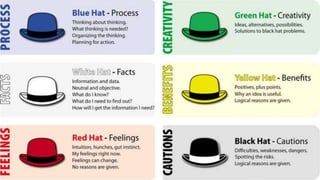
WHITE HAT
It focuses on
Facts
Objectives
Information
Facts:
 Approximately 70 countries.
 60% of worlds population.
 40% of worlds wealth .
 Connectivity and cooperation between Asian ,African, European countries
with china.
Objectives:
These are the objectives of china behind the OBOR initiative
 Boost its GDP.
 Develop international clout.
 Capacity will be channelized.
 Yuan’s usage.
 Regional disparities.
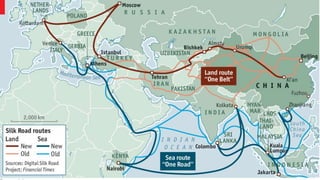
Six economic corridors and one maritime route have been proposed under the
OBOR:
 1. New Eurasian Land Bridge. (connect Western China to Western Russia)
 2. China – Mongolia – Russia Corridor (North China to Eastern Russia via
Mongolia)
 3. China – Central Asia – West Asia Corridor (Western China to Turkey via
Central and West Asia
 4. China – Indochina Peninsula Corridor (Southern China to Singapore via Indo-
China)
 5. China – Pakistan Corridor (South Western China to and through Pakistan)
 6. Bangladesh – China – India – Myanmar Corridor (Southern China to India via
Bangladesh and Myanmar)
 7. Maritime Silk Road connecting Coastal China to the Mediterranean via
Singapore-Malaysia, the Indian Ocean, the Arabian Sea and the Strait of Hormuz.
YELLOW HAT - BENEFITS
 The yellow hat
 It focuses on benefits and positives
Benefits of other countries
involved
 It could bridge the infrastructural deficit in
developing countries like Afghanistan and Pakistan.
 Increased Investment
 Increased trade
 The countries involved can see a boost in their GDP.
Benefits to India
 The OBOR project will open more links of trade between
india and other countries
 India will get more access to more business in an
environment which promote friendly reforms.
 China has the financial capital, technology to accelerate
development in the developing countries and India also
need resources and funds for its own development.
 Regional transport, energy security and blue economy are
key to OBOR initiative which will be helpful for India.
The Red Hat
Red Hat talks about “Feelings”
It includes intuition, hunches and gut instinct
of people which can change at any point of
time.
Feelings
With context to India
• India- A difficulty in China’s way for One Belt One Road (OBOR)
• India didn’t attend the major summit in May organised by China in
Beijing around its ambitious Belt and Road Initiative
• Felt that a set of criteria must be followed by initiatives like OBOR
• Could give Pakistan’s occupation a degree of legitimacy in Pakistan
occupies Kashmir (PoK)
• It would invite a third country (China) which goes against India’s
stand in the bilateral issue between India and Pakistan
Risk of OBOR
• The risks of OBOR surround its potential
economic failure.
• A soft power push back by some African
governments and populations.
• There are lot of Risks and it completely
depends on Russia and Future
technologies
• America First” movement carried out by
Donald Trump in United State.
• “Make in India” movement by Narendra
Modi.
Problems of OBOR
 Spending spree worth an estimated $1 trillion.
 China’s projects were poorly managed.
 Little in the way of returns to investors.
 China’s overseas infrastructure forays stress on
the geopolitical values, rather than the
economic values of the project.
 Lack of real economic benefit in the areas
where the projects are built.
GREEN HAT
It focuses on creativity, out of the box thinking and
coming up with the solutions by generating ideas.
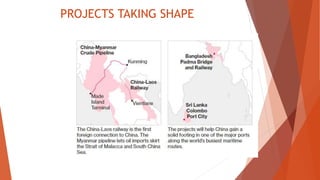
PROJECTS TAKING SHAPE
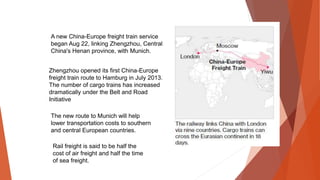
The new route to Munich will help
lower transportation costs to southern
and central European countries.
A new China-Europe freight train service
began Aug 22, linking Zhengzhou, Central
China's Henan province, with Munich.
Zhengzhou opened its first China-Europe
freight train route to Hamburg in July 2013.
The number of cargo trains has increased
dramatically under the Belt and Road
Initiative
Rail freight is said to be half the
cost of air freight and half the time
of sea freight.
IMPACTS
 Flexibility and Expansion
 Initiative rather than Strategy
 Development in disguise
 Issues on territorial integrity and security
 Infrastructural Technology advancement.
 Improving the transport network and trade facilitation
 Attracting more Investment and creating demand overseas.
BELT ROAD FORUM
 Hosted by Beijing on 14th and 15th May, 2017
 6 of India’s neighbours attended the summit and signed 20
infrastructure deals with China
 29 foreign heads – more than 130 countries & 70
international organisations
 China – benefit from the construction – carried on by
Chinese construction firms
INDIA OPPOSES OBOR
 Main reason – CPEC
 Refused to attend the 1st Belt and Road Summit
 Security Impact
https://www.youtube.com/watch?v=a-wzM23rpCs
OBOR

OBOR

  • 2.
    INTRODUCTION • OBOR standsfor “One Belt One Road”. • It is a combination of the Silk road economic belt (SREB) and the 21st century maritime silk route . • This initiative was introduced by Xi Jinping in the year 2013 • Approximately 70 countries have joined together for this initiative excluding India. • It involves developing a lot of infrastructure mostly around transport and energy such as roads , bridges, gas stations and power plants . • Approximate budget for this project is 8 trillion $.
  • 5.
    WHITE HAT It focuseson Facts Objectives Information
  • 6.
    Facts:  Approximately 70countries.  60% of worlds population.  40% of worlds wealth .  Connectivity and cooperation between Asian ,African, European countries with china. Objectives: These are the objectives of china behind the OBOR initiative  Boost its GDP.  Develop international clout.  Capacity will be channelized.  Yuan’s usage.  Regional disparities.
  • 7.
    Six economic corridorsand one maritime route have been proposed under the OBOR:  1. New Eurasian Land Bridge. (connect Western China to Western Russia)  2. China – Mongolia – Russia Corridor (North China to Eastern Russia via Mongolia)  3. China – Central Asia – West Asia Corridor (Western China to Turkey via Central and West Asia  4. China – Indochina Peninsula Corridor (Southern China to Singapore via Indo- China)  5. China – Pakistan Corridor (South Western China to and through Pakistan)  6. Bangladesh – China – India – Myanmar Corridor (Southern China to India via Bangladesh and Myanmar)  7. Maritime Silk Road connecting Coastal China to the Mediterranean via Singapore-Malaysia, the Indian Ocean, the Arabian Sea and the Strait of Hormuz.
  • 8.
    YELLOW HAT -BENEFITS  The yellow hat  It focuses on benefits and positives
  • 9.
    Benefits of othercountries involved  It could bridge the infrastructural deficit in developing countries like Afghanistan and Pakistan.  Increased Investment  Increased trade  The countries involved can see a boost in their GDP.
  • 10.
    Benefits to India The OBOR project will open more links of trade between india and other countries  India will get more access to more business in an environment which promote friendly reforms.  China has the financial capital, technology to accelerate development in the developing countries and India also need resources and funds for its own development.  Regional transport, energy security and blue economy are key to OBOR initiative which will be helpful for India.
  • 11.
    The Red Hat RedHat talks about “Feelings” It includes intuition, hunches and gut instinct of people which can change at any point of time.
  • 12.
    Feelings With context toIndia • India- A difficulty in China’s way for One Belt One Road (OBOR) • India didn’t attend the major summit in May organised by China in Beijing around its ambitious Belt and Road Initiative • Felt that a set of criteria must be followed by initiatives like OBOR • Could give Pakistan’s occupation a degree of legitimacy in Pakistan occupies Kashmir (PoK) • It would invite a third country (China) which goes against India’s stand in the bilateral issue between India and Pakistan
  • 14.
    Risk of OBOR •The risks of OBOR surround its potential economic failure. • A soft power push back by some African governments and populations. • There are lot of Risks and it completely depends on Russia and Future technologies • America First” movement carried out by Donald Trump in United State. • “Make in India” movement by Narendra Modi.
  • 15.
    Problems of OBOR Spending spree worth an estimated $1 trillion.  China’s projects were poorly managed.  Little in the way of returns to investors.  China’s overseas infrastructure forays stress on the geopolitical values, rather than the economic values of the project.  Lack of real economic benefit in the areas where the projects are built.
  • 16.
    GREEN HAT It focuseson creativity, out of the box thinking and coming up with the solutions by generating ideas.
  • 17.
  • 18.
    The new routeto Munich will help lower transportation costs to southern and central European countries. A new China-Europe freight train service began Aug 22, linking Zhengzhou, Central China's Henan province, with Munich. Zhengzhou opened its first China-Europe freight train route to Hamburg in July 2013. The number of cargo trains has increased dramatically under the Belt and Road Initiative Rail freight is said to be half the cost of air freight and half the time of sea freight.
  • 19.
    IMPACTS  Flexibility andExpansion  Initiative rather than Strategy  Development in disguise  Issues on territorial integrity and security  Infrastructural Technology advancement.  Improving the transport network and trade facilitation  Attracting more Investment and creating demand overseas.
  • 21.
    BELT ROAD FORUM Hosted by Beijing on 14th and 15th May, 2017  6 of India’s neighbours attended the summit and signed 20 infrastructure deals with China  29 foreign heads – more than 130 countries & 70 international organisations  China – benefit from the construction – carried on by Chinese construction firms
  • 22.
    INDIA OPPOSES OBOR Main reason – CPEC  Refused to attend the 1st Belt and Road Summit  Security Impact https://www.youtube.com/watch?v=a-wzM23rpCs