Allen County Horticulture Publication                          ACH-173
                    Landscaping with Native Plants
                   Written by: Mindy R. Bireley, Urban Forestry Intern
                   4001 Crescent Ave., Fort Wayne, Indiana 46815-4590
                   260-481-6826 http://www2.ces.purdue.edu/ces/allen
Native plants are attractive, hardy and once established require less maintenance than
traditional landscapes. Using native plants benefits the grower and the environment. Because
native plant species are adapted to the local climate they may only require watering in times of
severe drought-if at all. Once established, the need to apply pesticides and fertilizers are also
decreased significantly. With the absence of watering, fertilizing and pesticide application the
grower will have time to enjoy their to enjoy their beautifully landscape and a few extra
dollars!
Native flowers, grasses, shrubs and trees also serve as a natural habitat for birds, butterflies
and beneficial insects. Native plants species can be incorporated into any The list below gives
selected native plant species for Midwest landscapes. This list certainly does not include every
species, however it does give a starting point for creating a beautiful, native landscape.
                            Helpful Hints for Native Plantings

Keep High-Maintenance areas Close to the Home
By keeping traditional flower, vegetable and herb gardens near the home you will increase the
amount of wildlife within the native landscape.
Get to Know Your Land
Before beginning a native landscape, examine your site. Take note of the soil type; is it sandy
or clay? It is also a good idea to have the soil tested to find out the whether it is acidic or
alkaline. Exposure of slopes to sun and wind is an important factor to be aware of also. Notice
areas with poor drainage, this might be a good area to place to plant wetland species.
Inventory the Plants already in Existence, add Native Plants to Attract Wildlife
Take an inventory of the plants that already exist in your landscape-do not be afraid to remove
plants that are not native! Removal does not necessarily mean destroying the plants, but
possibly moving them to another location. When attracting wild life it is best to stick with
natives. Birds and other wildlife spread the seeds of fruit they eat making them responsible for
the spread of invasive s well as native species!
Plant in Groups
Try layering plants, beginning with groundcovers to flowers and on to shrubs and trees. This is
most attractive to eye, not to mention wildlife. Remember to leave ample room for the mature
size of each plant. Overcrowding can be unsightly and cause extra work.

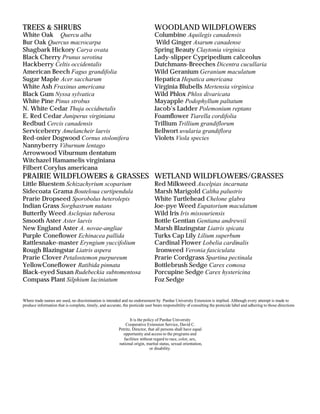
Native Plant List
TREES & SHRUBS                                                                  WOODLAND WILDFLOWERS
White Oak Quercu alba                                                           Columbine Aquilegis canadensis
Bur Oak Quercus macrocarpa                                                       Wild Ginger Asarum canadense
Shagbark Hickory Carya ovata                                                    Spring Beauty Claytonia virginica
Black Cherry Prunus serotina                                                    Lady-slipper Cypripedium calceolus
Hackberry Celtis occidentalis                                                   Dutchmans-Breeches Dicentra cucullaria
American Beech Fagus grandifolia                                                Wild Geranium Geranium maculatum
Sugar Maple Acer saccharum                                                      Hepatica Hepatica americana
White Ash Fraxinus americana                                                    Virginia Blubells Mertensia virginica
Black Gum Nyssa sylvatica                                                       Wild Phlox Phlox divaricata
White Pine Pinus strobus                                                        Mayapple Podophyllum paltatum
N. White Cedar Thuja occidnetalis                                               Jacob’s Ladder Polemonium reptans
E. Red Cedar Juniperus virginiana                                               Foamflower Tiarella cordifolia
Redbud Cercis canadensis                                                        Trillium Trillium grandiflorum
Serviceberry Amelancheir laevis                                                 Bellwort uvularia grandiflora
Red-osier Dogwood Cornus stolonifera                                            Violets Viola species
Nannyberry Viburnum lentago
Arrowwood Viburnum dentatum
Witchazel Hamamelis virginiana
Filbert Corylus americana
PRAIRIE WILDFLOWERS & GRASSES WETLAND WILDFLOWERS/GRASSES
Little Bluestem Schizachyrium scoparium                                         Red Milkweed Ascelpias incarnata
Sidecoata Grama Bouteloua curtipendula                                          Marsh Marigold Caltha palustris
Prarie Dropseed Sporobolus heterolepis                                          White Turtlehead Chelone glabra
Indian Grass Sorghastrum nutans                                                 Joe-pye Weed Eupatorium maculatum
Butterfly Weed Asclepias tuberosa                                               Wild Iris Iris missouriensis
Smooth Aster Aster laevis                                                       Bottle Gentian Gentiana andrewsii
New England Aster A. novae-angliae                                              Marsh Blazingstar Liatris spicata
Purple Coneflower Echinacea pallida                                             Turks Cap Lily Lilium superbum
Rattlesnake-master Eryngium yuccifolium                                         Cardinal Flower Lobelia cardinalis
Rough Blazingstar Liatris aspera                                                 Ironweed Veronia fasciculata
Prarie Clover Petalostemon purpureum                                            Prarie Cordgrass Spartina pectinala
YellowConeflower Ratibida pinnata                                               Bottlebrush Sedge Carex comosa
Black-eyed Susan Rudebeckia subtomentosa                                        Porcupine Sedge Carex hystericina
Compass Plant Silphium laciniatum                                               Foz Sedge


Where trade names are used, no discrimination is intended and no endorsement by Purdue University Extension is implied. Although every attempt is made to
produce information that is complete, timely, and accurate, the pesticide user bears responsibility of consulting the pesticide label and adhering to those directions


                                                                 It is the policy of Purdue University
                                                              Cooperative Extension Service, David C.
                                                          Petritz, Director, that all persons shall have equal
                                                            opportunity and access to the programs and
                                                             facilities without regard to race, color, sex,
                                                          national origin, marital status, sexual orientation,
                                                                               or disability.

Landscaping with Native Plants - Purdue University, Indiana

  • 1.
    Allen County HorticulturePublication ACH-173 Landscaping with Native Plants Written by: Mindy R. Bireley, Urban Forestry Intern 4001 Crescent Ave., Fort Wayne, Indiana 46815-4590 260-481-6826 http://www2.ces.purdue.edu/ces/allen Native plants are attractive, hardy and once established require less maintenance than traditional landscapes. Using native plants benefits the grower and the environment. Because native plant species are adapted to the local climate they may only require watering in times of severe drought-if at all. Once established, the need to apply pesticides and fertilizers are also decreased significantly. With the absence of watering, fertilizing and pesticide application the grower will have time to enjoy their to enjoy their beautifully landscape and a few extra dollars! Native flowers, grasses, shrubs and trees also serve as a natural habitat for birds, butterflies and beneficial insects. Native plants species can be incorporated into any The list below gives selected native plant species for Midwest landscapes. This list certainly does not include every species, however it does give a starting point for creating a beautiful, native landscape. Helpful Hints for Native Plantings Keep High-Maintenance areas Close to the Home By keeping traditional flower, vegetable and herb gardens near the home you will increase the amount of wildlife within the native landscape. Get to Know Your Land Before beginning a native landscape, examine your site. Take note of the soil type; is it sandy or clay? It is also a good idea to have the soil tested to find out the whether it is acidic or alkaline. Exposure of slopes to sun and wind is an important factor to be aware of also. Notice areas with poor drainage, this might be a good area to place to plant wetland species. Inventory the Plants already in Existence, add Native Plants to Attract Wildlife Take an inventory of the plants that already exist in your landscape-do not be afraid to remove plants that are not native! Removal does not necessarily mean destroying the plants, but possibly moving them to another location. When attracting wild life it is best to stick with natives. Birds and other wildlife spread the seeds of fruit they eat making them responsible for the spread of invasive s well as native species! Plant in Groups Try layering plants, beginning with groundcovers to flowers and on to shrubs and trees. This is most attractive to eye, not to mention wildlife. Remember to leave ample room for the mature size of each plant. Overcrowding can be unsightly and cause extra work. Native Plant List
  • 2.
    TREES & SHRUBS WOODLAND WILDFLOWERS White Oak Quercu alba Columbine Aquilegis canadensis Bur Oak Quercus macrocarpa Wild Ginger Asarum canadense Shagbark Hickory Carya ovata Spring Beauty Claytonia virginica Black Cherry Prunus serotina Lady-slipper Cypripedium calceolus Hackberry Celtis occidentalis Dutchmans-Breeches Dicentra cucullaria American Beech Fagus grandifolia Wild Geranium Geranium maculatum Sugar Maple Acer saccharum Hepatica Hepatica americana White Ash Fraxinus americana Virginia Blubells Mertensia virginica Black Gum Nyssa sylvatica Wild Phlox Phlox divaricata White Pine Pinus strobus Mayapple Podophyllum paltatum N. White Cedar Thuja occidnetalis Jacob’s Ladder Polemonium reptans E. Red Cedar Juniperus virginiana Foamflower Tiarella cordifolia Redbud Cercis canadensis Trillium Trillium grandiflorum Serviceberry Amelancheir laevis Bellwort uvularia grandiflora Red-osier Dogwood Cornus stolonifera Violets Viola species Nannyberry Viburnum lentago Arrowwood Viburnum dentatum Witchazel Hamamelis virginiana Filbert Corylus americana PRAIRIE WILDFLOWERS & GRASSES WETLAND WILDFLOWERS/GRASSES Little Bluestem Schizachyrium scoparium Red Milkweed Ascelpias incarnata Sidecoata Grama Bouteloua curtipendula Marsh Marigold Caltha palustris Prarie Dropseed Sporobolus heterolepis White Turtlehead Chelone glabra Indian Grass Sorghastrum nutans Joe-pye Weed Eupatorium maculatum Butterfly Weed Asclepias tuberosa Wild Iris Iris missouriensis Smooth Aster Aster laevis Bottle Gentian Gentiana andrewsii New England Aster A. novae-angliae Marsh Blazingstar Liatris spicata Purple Coneflower Echinacea pallida Turks Cap Lily Lilium superbum Rattlesnake-master Eryngium yuccifolium Cardinal Flower Lobelia cardinalis Rough Blazingstar Liatris aspera Ironweed Veronia fasciculata Prarie Clover Petalostemon purpureum Prarie Cordgrass Spartina pectinala YellowConeflower Ratibida pinnata Bottlebrush Sedge Carex comosa Black-eyed Susan Rudebeckia subtomentosa Porcupine Sedge Carex hystericina Compass Plant Silphium laciniatum Foz Sedge Where trade names are used, no discrimination is intended and no endorsement by Purdue University Extension is implied. Although every attempt is made to produce information that is complete, timely, and accurate, the pesticide user bears responsibility of consulting the pesticide label and adhering to those directions It is the policy of Purdue University Cooperative Extension Service, David C. Petritz, Director, that all persons shall have equal opportunity and access to the programs and facilities without regard to race, color, sex, national origin, marital status, sexual orientation, or disability.