Water-Wise Plants
                           …suitable for the Willamette Valley
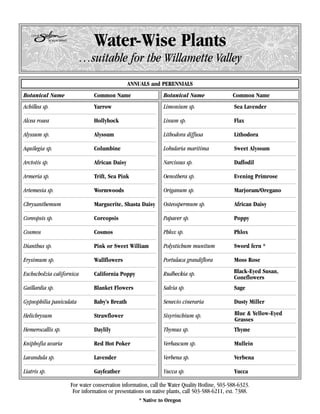
                                              ANNUALS and PERENNIALS
Botanical Name                Common Name                     Botanical Name                 Common Name
Achillea sp.                  Yarrow                          Limonium sp.                    Sea Lavender

Alcea rosea                   Hollyhock                       Linum sp.                       Flax

Alyssum sp.                   Alyssum                         Lithodora diffusa               Lithodora

Aquilegia sp.                 Columbine                       Lobularia maritima              Sweet Alyssum

Arctotis sp.                  African Daisy                   Narcissus sp.                   Daffodil

Armeria sp.                   Trift, Sea Pink                 Oenothera sp.                   Evening Primrose

Artemesia sp.                 Wormwoods                       Origanum sp.                    Marjoram/Oregano

Chrysanthemum                 Marguerite, Shasta Daisy        Osteospermum sp.                African Daisy

Coreopsis sp.                 Coreopsis                       Papaver sp.                     Poppy

Cosmos                        Cosmos                          Phlox sp.                       Phlox

Dianthus sp.                  Pink or Sweet William           Polystichum munitum             Sword fern *

Erysimum sp.                  Wallflowers                     Portulaca grandiflora           Moss Rose

Eschscholzia californica      California Poppy                Rudbeckia sp.                   Black-Eyed Susan,
                                                                                              Coneflowers
Gaillardia sp.                Blanket Flowers                 Salvia sp.                      Sage

Gypsophilia paniculata        Baby’s Breath                   Senecio cineraria               Dusty Miller

Helichrysum                   Strawflower                     Sisyrinchium sp.                Blue & Yellow-Eyed
                                                                                              Grasses
Hemerocallis sp.              Daylily                         Thymus sp.                      Thyme

Kniphofia uvaria              Red Hot Poker                   Verbascum sp.                   Mullein

Lavandula sp.                 Lavender                        Verbena sp.                     Verbena

Liatris sp.                   Gayfeather                      Yucca sp.                       Yucca

                    For water conservation information, call the Water Quality Hotline, 503-588-6323.
                     For information or presentations on native plants, call 503-588-6211, ext. 7388.
                                                   * Native to Oregon
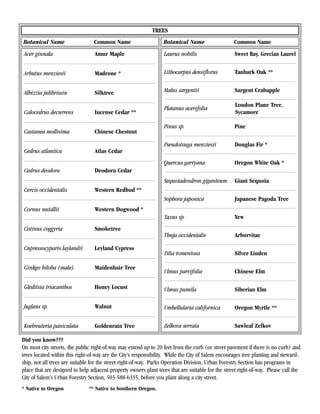
TREES
Botanical Name                   Common Name                      Botanical Name                   Common Name
 Acer ginnala                     Amur Maple                      Laurus nobilis                    Sweet Bay, Grecian Laurel


 Arbutus menziesii                Madrone *                       Lithocarpus densiflorus           Tanbark Oak **


 Albizzia julibrissin             Silktree                        Malus sargentii                   Sargent Crabapple

                                                                                                    London Plane Tree,
                                                                  Platanus acerifolia
 Calocedrus decurrens             Incense Cedar **                                                  Sycamore

                                                                  Pinus sp.                         Pine
 Castanea mollisima               Chinese Chestnut

                                                                  Pseudotsuga menziesii             Douglas Fir *
 Cedrus atlantica                 Atlas Cedar
                                                                  Quercus garryana.                 Oregon White Oak *
 Cedrus deodora                   Deodora Cedar
                                                                  Sequoiadendron giganteum          Giant Sequoia
 Cercis occidentalis              Western Redbud **
                                                                  Sophora japonica                  Japanese Pagoda Tree
 Cornus nutallii                  Western Dogwood *
                                                                  Taxus sp.                         Yew
 Cotinus coggyria                 Smoketree
                                                                  Thuja occidentalis                Arborvitae

 Cupressocyparis laylandii        Leyland Cypress
                                                                  Tilia tomentosa                   Silver Linden

 Ginkgo biloba (male)             Maidenhair Tree
                                                                  Ulmus parvifolia                  Chinese Elm

 Gleditsia triacanthos            Honey Locust                    Ulmus pumila                      Siberian Elm

 Juglans sp.                      Walnut                          Umbellularia californica          Oregon Myrtle **

 Koelreuteria paniculata          Goldenrain Tree                 Zelkova serrata                   Sawleaf Zelkov

Did you know???
On most city streets, the public right-of-way may extend up to 20 feet from the curb (or street pavement if there is no curb) and
trees located within this right-of-way are the City’s responsibility. While the City of Salem encourages tree planting and steward-
ship, not all trees are suitable for the street right-of-way. Parks Operation Division, Urban Forestry Section has programs in
place that are designed to help adjacent property owners plant trees that are suitable for the street right-of-way. Please call the
City of Salem’s Urban Forestry Section, 503-588-6335, before you plant along a city street.
* Native to Oregon             ** Native to Southern Oregon.
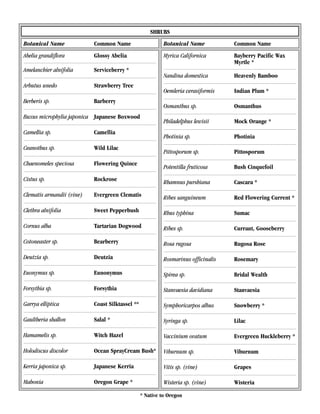
SHRUBS
Botanical Name             Common Name                     Botanical Name           Common Name
Abelia grandiflora         Glossy Abelia                   Myrica Californica       Bayberry Pacific Wax
                                                                                    Myrtle *
Amelanchier alnifolia      Serviceberry *
                                                           Nandina domestica        Heavenly Bamboo
Arbutus unedo              Strawberry Tree
                                                           Oemleria cerasiformis    Indian Plum *
Berberis sp.               Barberry
                                                           Osmanthus sp.            Osmanthus
Buxus microphylia japonica Japanese Boxwood
                                                           Philadelphus lewisii     Mock Orange *
Camellia sp.               Camellia
                                                           Photinia sp.             Photinia
Ceanothus sp.              Wild Lilac
                                                           Pittosporum sp.          Pittosporum
Chaenomeles speciosa       Flowering Quince
                                                           Potentilla fruticosa     Bush Cinquefoil
Cistus sp.                 Rockrose                        Rhamnus purshiana        Cascara *
Clematis armandii (vine)   Evergreen Clematis              Ribes sanguineum         Red Flowering Current *

Clethra alnifolia          Sweet Pepperbush                Rhus typhina             Sumac

Cornus alba                Tartarian Dogwood               Ribes sp.                Currant, Gooseberry

Cotoneaster sp.            Bearberry                       Rosa rugosa              Rugosa Rose

Deutzia sp.                Deutzia                         Rosmarinus officinalis   Rosemary

Euonymus sp.               Eunonymus                       Spirea sp.               Bridal Wealth

Forsythia sp.              Forsythia                       Stanvaesia davidiana     Stanvaesia

Garrya elliptica           Coast Silktassel **             Symphoricarpos albus     Snowberry *

Gaultheria shallon         Salal *                         Syringa sp.              Lilac

Hamamelis sp.              Witch Hazel                     Vaccinium ovatum         Evergreen Huckleberry *

Holodiscus discolor        Ocean SprayCream Bush*          Viburnum sp.             Viburnum

Kerria japonica sp.        Japanese Kerria                 Vitis sp. (vine)         Grapes

Mahonia                    Oregon Grape *                  Wisteria sp. (vine)      Wisteria

                                                 * Native to Oregon
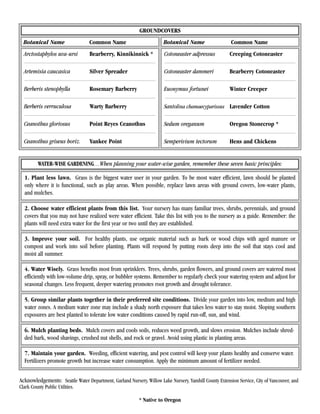
GROUNDCOVERS
  Botanical Name                  Common Name                          Botanical Name                   Common Name
  Arctostaphylos uva-ursi         Bearberry, Kinnikinnick *            Cotoneaster adpressus            Creeping Cotoneaster

  Artemisia caucasica             Silver Spreader                      Cotoneaster dammeri              Bearberry Cotoneaster

  Berberis stenophylla            Rosemary Barberry                    Euonymus fortunei                Winter Creeper

  Berberis verruculosa            Warty Barberry                       Santolina chamaecyparissus Lavender Cotton

  Ceanothus gloriosus             Point Reyes Ceanothus                Sedum oreganum                   Oregon Stonecrop *

  Ceanothus griseus horiz.        Yankee Point                         Semperivium tectorum             Hens and Chickens


         WATER-WISE GARDENING…When planning your water-wise garden, remember these seven basic principles:

  1. Plant less lawn. Grass is the biggest water user in your garden. To be most water efficient, lawn should be planted
  only where it is functional, such as play areas. When possible, replace lawn areas with ground covers, low-water plants,
  and mulches.

  2. Choose water efficient plants from this list. Your nursery has many familiar trees, shrubs, perennials, and ground
  covers that you may not have realized were water efficient. Take this list with you to the nursery as a guide. Remember: the
  plants will need extra water for the first year or two until they are established.

  3. Improve your soil. For healthy plants, use organic material such as bark or wood chips with aged manure or
  compost and work into soil before planting. Plants will respond by putting roots deep into the soil that stays cool and
  moist all summer.

  4. Water Wisely. Grass benefits most from sprinklers. Trees, shrubs, garden flowers, and ground covers are watered most
  efficiently with low-volume drip, spray, or bubbler systems. Remember to regularly check your watering system and adjust for
  seasonal changes. Less frequent, deeper watering promotes root growth and drought tolerance.

  5. Group similar plants together in their preferred site conditions. Divide your garden into low, medium and high
  water zones. A medium water zone may include a shady north exposure that takes less water to stay moist. Sloping southern
  exposures are best planted to tolerate low water conditions caused by rapid run-off, sun, and wind.

  6. Mulch planting beds. Mulch covers and cools soils, reduces weed growth, and slows erosion. Mulches include shred-
  ded bark, wood shavings, crushed nut shells, and rock or gravel. Avoid using plastic in planting areas.

  7. Maintain your garden. Weeding, efficient watering, and pest control will keep your plants healthy and conserve water.
  Fertilizers promote growth but increase water consumption. Apply the minimum amount of fertilizer needed.


Acknowledgements: Seattle Water Department, Garland Nursery, Willow Lake Nursery, Yamhill County Extension Service, City of Vancouver, and
Clark County Public Utilities.

                                                           * Native to Oregon

Water-Wise Plants suitable for the Willamette Valley, Oregon

  • 1.
    Water-Wise Plants …suitable for the Willamette Valley ANNUALS and PERENNIALS Botanical Name Common Name Botanical Name Common Name Achillea sp. Yarrow Limonium sp. Sea Lavender Alcea rosea Hollyhock Linum sp. Flax Alyssum sp. Alyssum Lithodora diffusa Lithodora Aquilegia sp. Columbine Lobularia maritima Sweet Alyssum Arctotis sp. African Daisy Narcissus sp. Daffodil Armeria sp. Trift, Sea Pink Oenothera sp. Evening Primrose Artemesia sp. Wormwoods Origanum sp. Marjoram/Oregano Chrysanthemum Marguerite, Shasta Daisy Osteospermum sp. African Daisy Coreopsis sp. Coreopsis Papaver sp. Poppy Cosmos Cosmos Phlox sp. Phlox Dianthus sp. Pink or Sweet William Polystichum munitum Sword fern * Erysimum sp. Wallflowers Portulaca grandiflora Moss Rose Eschscholzia californica California Poppy Rudbeckia sp. Black-Eyed Susan, Coneflowers Gaillardia sp. Blanket Flowers Salvia sp. Sage Gypsophilia paniculata Baby’s Breath Senecio cineraria Dusty Miller Helichrysum Strawflower Sisyrinchium sp. Blue & Yellow-Eyed Grasses Hemerocallis sp. Daylily Thymus sp. Thyme Kniphofia uvaria Red Hot Poker Verbascum sp. Mullein Lavandula sp. Lavender Verbena sp. Verbena Liatris sp. Gayfeather Yucca sp. Yucca For water conservation information, call the Water Quality Hotline, 503-588-6323. For information or presentations on native plants, call 503-588-6211, ext. 7388. * Native to Oregon
  • 2.
    TREES Botanical Name Common Name Botanical Name Common Name Acer ginnala Amur Maple Laurus nobilis Sweet Bay, Grecian Laurel Arbutus menziesii Madrone * Lithocarpus densiflorus Tanbark Oak ** Albizzia julibrissin Silktree Malus sargentii Sargent Crabapple London Plane Tree, Platanus acerifolia Calocedrus decurrens Incense Cedar ** Sycamore Pinus sp. Pine Castanea mollisima Chinese Chestnut Pseudotsuga menziesii Douglas Fir * Cedrus atlantica Atlas Cedar Quercus garryana. Oregon White Oak * Cedrus deodora Deodora Cedar Sequoiadendron giganteum Giant Sequoia Cercis occidentalis Western Redbud ** Sophora japonica Japanese Pagoda Tree Cornus nutallii Western Dogwood * Taxus sp. Yew Cotinus coggyria Smoketree Thuja occidentalis Arborvitae Cupressocyparis laylandii Leyland Cypress Tilia tomentosa Silver Linden Ginkgo biloba (male) Maidenhair Tree Ulmus parvifolia Chinese Elm Gleditsia triacanthos Honey Locust Ulmus pumila Siberian Elm Juglans sp. Walnut Umbellularia californica Oregon Myrtle ** Koelreuteria paniculata Goldenrain Tree Zelkova serrata Sawleaf Zelkov Did you know??? On most city streets, the public right-of-way may extend up to 20 feet from the curb (or street pavement if there is no curb) and trees located within this right-of-way are the City’s responsibility. While the City of Salem encourages tree planting and steward- ship, not all trees are suitable for the street right-of-way. Parks Operation Division, Urban Forestry Section has programs in place that are designed to help adjacent property owners plant trees that are suitable for the street right-of-way. Please call the City of Salem’s Urban Forestry Section, 503-588-6335, before you plant along a city street. * Native to Oregon ** Native to Southern Oregon.
  • 3.
    SHRUBS Botanical Name Common Name Botanical Name Common Name Abelia grandiflora Glossy Abelia Myrica Californica Bayberry Pacific Wax Myrtle * Amelanchier alnifolia Serviceberry * Nandina domestica Heavenly Bamboo Arbutus unedo Strawberry Tree Oemleria cerasiformis Indian Plum * Berberis sp. Barberry Osmanthus sp. Osmanthus Buxus microphylia japonica Japanese Boxwood Philadelphus lewisii Mock Orange * Camellia sp. Camellia Photinia sp. Photinia Ceanothus sp. Wild Lilac Pittosporum sp. Pittosporum Chaenomeles speciosa Flowering Quince Potentilla fruticosa Bush Cinquefoil Cistus sp. Rockrose Rhamnus purshiana Cascara * Clematis armandii (vine) Evergreen Clematis Ribes sanguineum Red Flowering Current * Clethra alnifolia Sweet Pepperbush Rhus typhina Sumac Cornus alba Tartarian Dogwood Ribes sp. Currant, Gooseberry Cotoneaster sp. Bearberry Rosa rugosa Rugosa Rose Deutzia sp. Deutzia Rosmarinus officinalis Rosemary Euonymus sp. Eunonymus Spirea sp. Bridal Wealth Forsythia sp. Forsythia Stanvaesia davidiana Stanvaesia Garrya elliptica Coast Silktassel ** Symphoricarpos albus Snowberry * Gaultheria shallon Salal * Syringa sp. Lilac Hamamelis sp. Witch Hazel Vaccinium ovatum Evergreen Huckleberry * Holodiscus discolor Ocean SprayCream Bush* Viburnum sp. Viburnum Kerria japonica sp. Japanese Kerria Vitis sp. (vine) Grapes Mahonia Oregon Grape * Wisteria sp. (vine) Wisteria * Native to Oregon
  • 4.
    GROUNDCOVERS BotanicalName Common Name Botanical Name Common Name Arctostaphylos uva-ursi Bearberry, Kinnikinnick * Cotoneaster adpressus Creeping Cotoneaster Artemisia caucasica Silver Spreader Cotoneaster dammeri Bearberry Cotoneaster Berberis stenophylla Rosemary Barberry Euonymus fortunei Winter Creeper Berberis verruculosa Warty Barberry Santolina chamaecyparissus Lavender Cotton Ceanothus gloriosus Point Reyes Ceanothus Sedum oreganum Oregon Stonecrop * Ceanothus griseus horiz. Yankee Point Semperivium tectorum Hens and Chickens WATER-WISE GARDENING…When planning your water-wise garden, remember these seven basic principles: 1. Plant less lawn. Grass is the biggest water user in your garden. To be most water efficient, lawn should be planted only where it is functional, such as play areas. When possible, replace lawn areas with ground covers, low-water plants, and mulches. 2. Choose water efficient plants from this list. Your nursery has many familiar trees, shrubs, perennials, and ground covers that you may not have realized were water efficient. Take this list with you to the nursery as a guide. Remember: the plants will need extra water for the first year or two until they are established. 3. Improve your soil. For healthy plants, use organic material such as bark or wood chips with aged manure or compost and work into soil before planting. Plants will respond by putting roots deep into the soil that stays cool and moist all summer. 4. Water Wisely. Grass benefits most from sprinklers. Trees, shrubs, garden flowers, and ground covers are watered most efficiently with low-volume drip, spray, or bubbler systems. Remember to regularly check your watering system and adjust for seasonal changes. Less frequent, deeper watering promotes root growth and drought tolerance. 5. Group similar plants together in their preferred site conditions. Divide your garden into low, medium and high water zones. A medium water zone may include a shady north exposure that takes less water to stay moist. Sloping southern exposures are best planted to tolerate low water conditions caused by rapid run-off, sun, and wind. 6. Mulch planting beds. Mulch covers and cools soils, reduces weed growth, and slows erosion. Mulches include shred- ded bark, wood shavings, crushed nut shells, and rock or gravel. Avoid using plastic in planting areas. 7. Maintain your garden. Weeding, efficient watering, and pest control will keep your plants healthy and conserve water. Fertilizers promote growth but increase water consumption. Apply the minimum amount of fertilizer needed. Acknowledgements: Seattle Water Department, Garland Nursery, Willow Lake Nursery, Yamhill County Extension Service, City of Vancouver, and Clark County Public Utilities. * Native to Oregon