A. OBSERVATION 
(Taking Notice) – 
is a complete and accurate 
awareness by an individual 
of his surroundings and 
encompasses the use of all 
of our major senses to 
register and recognize its 
operational and/or 
intelligence significance.
B. DESCRIPTION – is the actual 
and factual reporting of one’s 
own observations an account 
which explains what they are or 
what they look like.
THREE (3) PSYCHOLOGICAL 
PROCESSES FOR ACCURATE 
OBSERVATION 
A. ATTENTION – consists of the 
psychological process involved in 
becoming aware of a fact (aware of the 
existence of a fact).
B. PERCEPTION – consists of the 
psychological process involved in 
understanding this fact of awareness. 
= through understanding (smell of a flower, you can guess the name of the 
flower)
C. REPORT – used in two (2) senses. 
1. The first in the psychological process 
involved in the identifying by name in 
one’s own mind some facts which have been 
perceived. 
2. Report – narration of what you 
perceived/identified.
THREE (3) TYPES OF ATTENTION 
A. INVOLUNTARY (least reliable) 
– you have no control and it 
requires no effort. 
B. VOLUNTARY ATTENTION 
- this type 
is more reliable but not nearly as 
dependable as habitual. = assume that someone is required to listen to a lecture concerning a 
subject in which he is not interested.
C. HABITUAL ATTENTION 
- an attention 
which is distinguished by little effort with a 
maximum of control 
- most reliable 
THREE (3) TYPES OF ATTENTION 
= a student who is interested to a certain subject.
FACTORS THAT INFLUENCES 
ATTENTION 
1. SIZE (normal to abnormal size) 
2. CHANGE (from silence to noise) 
3. REPETITION (shots is fired in every one minute) 
4. STRIKING QUALITY (to attract attention – wearing 
of clothes) 
5. INTEREST (interest in some objects – sexy 
women) 
6.ORGANIC CONDITION (organic condition of the 
observer)
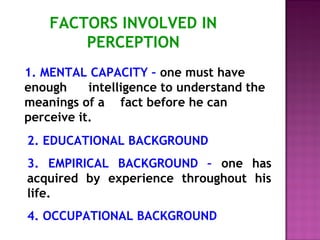
FACTORS INVOLVED IN 
PERCEPTION 
1. MENTAL CAPACITY – one must have 
enough intelligence to understand the 
meanings of a fact before he can 
perceive it. 
2. EDUCATIONAL BACKGROUND 
3. EMPIRICAL BACKGROUND – one has 
acquired by experience throughout his 
life. 
4. OCCUPATIONAL BACKGROUND
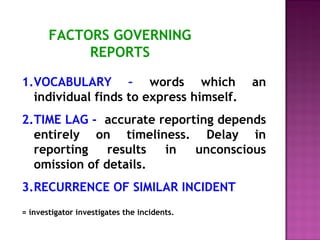
FACTORS GOVERNING 
REPORTS 
1.VOCABULARY – words which an 
individual finds to express himself. 
2.TIME LAG - accurate reporting depends 
entirely on timeliness. Delay in 
reporting results in unconscious 
omission of details. 
3.RECURRENCE OF SIMILAR INCIDENT 
= investigator investigates the incidents.
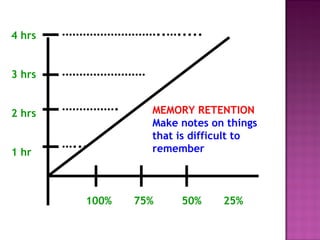
………………………..…..... 
MEMORY RETENTION 
Make notes on things 
that is difficult to 
remember 
4 hrs 
3 hrs 
2 hrs 
1 hr 
…………………… 
……………. 
…... 
100% 75% 50% 25%
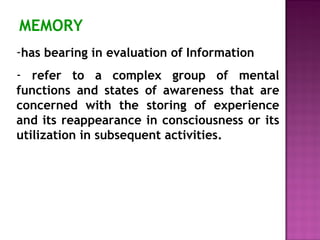
MEMORY 
-has bearing in evaluation of Information 
- refer to a complex group of mental 
functions and states of awareness that are 
concerned with the storing of experience 
and its reappearance in consciousness or its 
utilization in subsequent activities.
MEMORY 
1. Sensory – that of learning repetition 
(relating to the Physical Senses) 
2. Intellectual – involving ability of a person 
to think and understand ideas and 
information (higher evaluation) 
3. Storing Information – systematic filing 
4. Recollection – returning to conscious 
memory that which has been stored. 
Types of: 
Functions of:
How recollection may be brought about: 
1.Recall– a process of reproducing a past 
experience 
2.Recognition – process of identifying 
perception as having been experience at 
some time in the past. 
One of the most important fundamentals of memory and 
memory training must be the creation of interest. 
Object itself and the interest aroused by this object are of 
great importance to memory
Means of Reception: 
1. Eye – Minded 
2. Ear – Minded 
3. Motor - Minded 
Motor – involves touch, smell and taste
TEST YOURSELF 
1.You must intend (or what) to remember 
2.Develop the confidence to remember – 
do not let your memory remain 
dormant 
3.Carefully observe and concentrate all 
your attention on the subject to be 
remembered. 
4.Develop the strongest possible motive 
for remembering any particular fact.
5. Try to understand clearly the 
meaning of 
which is to be remembered. 
6. You must be able to visualize, when 
possible, the fact to be remembered. 
7. Remember by repetition – a good 
policy to over learn allowing the 
memory trace or impressions the 
chance to “set”. 
8. Remember everything new by 
connecting with something that you 
already know.
BASIC RULES OF ASSOCIATION 
(Aristotle and Aquinas) 
1. Law of Similarity 
2. Law of Contrast (difference) 
3. Law of Propinquity – implies the nearness 
of place, time or some other relationship.

Observation Discription Identification (ODEX)

  • 1.
    A. OBSERVATION (TakingNotice) – is a complete and accurate awareness by an individual of his surroundings and encompasses the use of all of our major senses to register and recognize its operational and/or intelligence significance.
  • 2.
    B. DESCRIPTION –is the actual and factual reporting of one’s own observations an account which explains what they are or what they look like.
  • 3.
    THREE (3) PSYCHOLOGICAL PROCESSES FOR ACCURATE OBSERVATION A. ATTENTION – consists of the psychological process involved in becoming aware of a fact (aware of the existence of a fact).
  • 4.
    B. PERCEPTION –consists of the psychological process involved in understanding this fact of awareness. = through understanding (smell of a flower, you can guess the name of the flower)
  • 5.
    C. REPORT –used in two (2) senses. 1. The first in the psychological process involved in the identifying by name in one’s own mind some facts which have been perceived. 2. Report – narration of what you perceived/identified.
  • 6.
    THREE (3) TYPESOF ATTENTION A. INVOLUNTARY (least reliable) – you have no control and it requires no effort. B. VOLUNTARY ATTENTION - this type is more reliable but not nearly as dependable as habitual. = assume that someone is required to listen to a lecture concerning a subject in which he is not interested.
  • 7.
    C. HABITUAL ATTENTION - an attention which is distinguished by little effort with a maximum of control - most reliable THREE (3) TYPES OF ATTENTION = a student who is interested to a certain subject.
  • 8.
    FACTORS THAT INFLUENCES ATTENTION 1. SIZE (normal to abnormal size) 2. CHANGE (from silence to noise) 3. REPETITION (shots is fired in every one minute) 4. STRIKING QUALITY (to attract attention – wearing of clothes) 5. INTEREST (interest in some objects – sexy women) 6.ORGANIC CONDITION (organic condition of the observer)
  • 9.
    FACTORS INVOLVED IN PERCEPTION 1. MENTAL CAPACITY – one must have enough intelligence to understand the meanings of a fact before he can perceive it. 2. EDUCATIONAL BACKGROUND 3. EMPIRICAL BACKGROUND – one has acquired by experience throughout his life. 4. OCCUPATIONAL BACKGROUND
  • 10.
    FACTORS GOVERNING REPORTS 1.VOCABULARY – words which an individual finds to express himself. 2.TIME LAG - accurate reporting depends entirely on timeliness. Delay in reporting results in unconscious omission of details. 3.RECURRENCE OF SIMILAR INCIDENT = investigator investigates the incidents.
  • 11.
    ………………………..…..... MEMORY RETENTION Make notes on things that is difficult to remember 4 hrs 3 hrs 2 hrs 1 hr …………………… ……………. …... 100% 75% 50% 25%
  • 12.
    MEMORY -has bearingin evaluation of Information - refer to a complex group of mental functions and states of awareness that are concerned with the storing of experience and its reappearance in consciousness or its utilization in subsequent activities.
  • 13.
    MEMORY 1. Sensory– that of learning repetition (relating to the Physical Senses) 2. Intellectual – involving ability of a person to think and understand ideas and information (higher evaluation) 3. Storing Information – systematic filing 4. Recollection – returning to conscious memory that which has been stored. Types of: Functions of:
  • 14.
    How recollection maybe brought about: 1.Recall– a process of reproducing a past experience 2.Recognition – process of identifying perception as having been experience at some time in the past. One of the most important fundamentals of memory and memory training must be the creation of interest. Object itself and the interest aroused by this object are of great importance to memory
  • 15.
    Means of Reception: 1. Eye – Minded 2. Ear – Minded 3. Motor - Minded Motor – involves touch, smell and taste
  • 16.
    TEST YOURSELF 1.Youmust intend (or what) to remember 2.Develop the confidence to remember – do not let your memory remain dormant 3.Carefully observe and concentrate all your attention on the subject to be remembered. 4.Develop the strongest possible motive for remembering any particular fact.
  • 17.
    5. Try tounderstand clearly the meaning of which is to be remembered. 6. You must be able to visualize, when possible, the fact to be remembered. 7. Remember by repetition – a good policy to over learn allowing the memory trace or impressions the chance to “set”. 8. Remember everything new by connecting with something that you already know.
  • 18.
    BASIC RULES OFASSOCIATION (Aristotle and Aquinas) 1. Law of Similarity 2. Law of Contrast (difference) 3. Law of Propinquity – implies the nearness of place, time or some other relationship.