
Nutrition
Nutrition is the science that interprets
the interaction of nutrition and other
substances in food in relation to
maintenance, growth, reproduction,
health and disease of an organism.
Autotrophic nutrition means that simple inorganic substance
are taken in and used to synthesise organic molecules.
Energy is needed to achieve this. In photo-
autotrophic nutrition light is the energy source.
In most instances the light source is solar energy,
the process being photosynthesis.
Heterotrophic nutrition is nutrition obtained
by digesting organic compounds. Animals,
fungi, many prokaryotes and protoctists are
unable to synthesize organic compounds to
use as food. They are known
as heterotrophs.
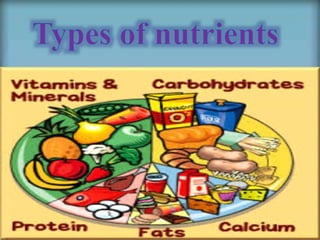
The main nutrients are proteins,
carbohydrates, fats, vitamins and
minerals. Each nutrient has a
different purpose.
Nutrients are the nutritional components in foods
that an organism utilizes to survive and grow.
Macronutrients provide the bulk energy for an
organism's metabolic system to function, while
micronutrients provide the necessary cofactors for
metabolism to be carried out.
Proteins are essential nutrients for the human
body.[1] They are one of the building blocks of body
tissue, and can also serve as a fuel source. As a fuel,
proteins contain 4 kcal per gram, just
like carbohydrates and unlike lipids, which contain 9 kcal
per gram. The most important aspect and defining
characteristic of protein from a nutritional standpoint is
its amino acid composition.
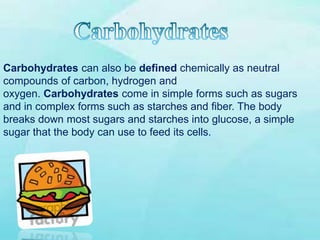
Carbohydrates can also be defined chemically as neutral
compounds of carbon, hydrogen and
oxygen. Carbohydrates come in simple forms such as sugars
and in complex forms such as starches and fiber. The body
breaks down most sugars and starches into glucose, a simple
sugar that the body can use to feed its cells.
Fat is a major source of energy in the diet. Dietary fat
contains ninecalories per gram, which is more than twice the
number provided by carbohydrates or protein. Due to its high
caloric content, the chance of becoming obese increases with
a high intake of fat.
Some fat is essential to proper body function. Fat fillsadipose
tissue that helps to insulate the body. Fat helps the body
absorb certain vitamins.
A vitamin is an organic compound and a vital nutrient
that an organism requires in limited amounts. An
organic chemical compound is called a vitamin when
the organism cannot synthesize the compound in
sufficient quantities, and must be obtained through
the diet; thus, the term "vitamin" is conditional upon
the circumstances and the particular organism.
A mineral is a naturally occurring substance that is solid and
inorganic representable by a chemical formula, usually abiogenic,
and has an ordered atomic structure. It is different from a rock,
which can be an aggregate of minerals or non-minerals and does
not have a specific chemical composition. The exact definition of
a mineral is under debate, especially with respect to the
requirement a valid species be abiogenic, and to a lesser extent
with regard to it having an ordered atomic structure.
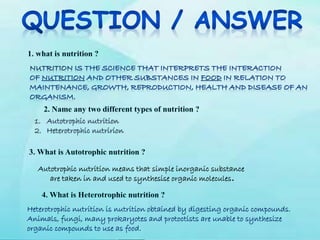
Autotrophic nutrition means that simple inorganic substance
are taken in and used to synthesise organic molecules.
Heterotrophic nutrition is nutrition obtained by digesting organic compounds.
Animals, fungi, many prokaryotes and protoctists are unable to synthesize
organic compounds to use as food.
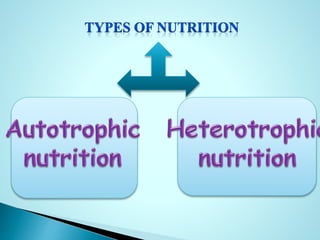
1. Autotrophic nutrition
2. Heterotrophic nutririon
Nutrients

Nutrients

  • 3.
    Nutrition Nutrition is thescience that interprets the interaction of nutrition and other substances in food in relation to maintenance, growth, reproduction, health and disease of an organism.
  • 5.
    Autotrophic nutrition meansthat simple inorganic substance are taken in and used to synthesise organic molecules. Energy is needed to achieve this. In photo- autotrophic nutrition light is the energy source. In most instances the light source is solar energy, the process being photosynthesis.
  • 6.
    Heterotrophic nutrition isnutrition obtained by digesting organic compounds. Animals, fungi, many prokaryotes and protoctists are unable to synthesize organic compounds to use as food. They are known as heterotrophs.
  • 7.
    The main nutrientsare proteins, carbohydrates, fats, vitamins and minerals. Each nutrient has a different purpose. Nutrients are the nutritional components in foods that an organism utilizes to survive and grow. Macronutrients provide the bulk energy for an organism's metabolic system to function, while micronutrients provide the necessary cofactors for metabolism to be carried out.
  • 9.
    Proteins are essentialnutrients for the human body.[1] They are one of the building blocks of body tissue, and can also serve as a fuel source. As a fuel, proteins contain 4 kcal per gram, just like carbohydrates and unlike lipids, which contain 9 kcal per gram. The most important aspect and defining characteristic of protein from a nutritional standpoint is its amino acid composition.
  • 10.
    Carbohydrates can alsobe defined chemically as neutral compounds of carbon, hydrogen and oxygen. Carbohydrates come in simple forms such as sugars and in complex forms such as starches and fiber. The body breaks down most sugars and starches into glucose, a simple sugar that the body can use to feed its cells.
  • 11.
    Fat is amajor source of energy in the diet. Dietary fat contains ninecalories per gram, which is more than twice the number provided by carbohydrates or protein. Due to its high caloric content, the chance of becoming obese increases with a high intake of fat. Some fat is essential to proper body function. Fat fillsadipose tissue that helps to insulate the body. Fat helps the body absorb certain vitamins.
  • 12.
    A vitamin isan organic compound and a vital nutrient that an organism requires in limited amounts. An organic chemical compound is called a vitamin when the organism cannot synthesize the compound in sufficient quantities, and must be obtained through the diet; thus, the term "vitamin" is conditional upon the circumstances and the particular organism.
  • 13.
    A mineral isa naturally occurring substance that is solid and inorganic representable by a chemical formula, usually abiogenic, and has an ordered atomic structure. It is different from a rock, which can be an aggregate of minerals or non-minerals and does not have a specific chemical composition. The exact definition of a mineral is under debate, especially with respect to the requirement a valid species be abiogenic, and to a lesser extent with regard to it having an ordered atomic structure.
  • 14.
    Autotrophic nutrition meansthat simple inorganic substance are taken in and used to synthesise organic molecules. Heterotrophic nutrition is nutrition obtained by digesting organic compounds. Animals, fungi, many prokaryotes and protoctists are unable to synthesize organic compounds to use as food. 1. Autotrophic nutrition 2. Heterotrophic nutririon