NURSING PROCESS
STAGES OF AN INTERVIEW
An interview has three major stages:
1. The opening or introduction
2. The body or development
3. The closing
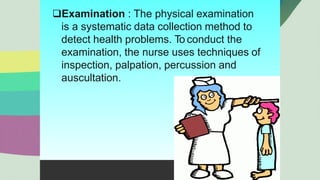
Examination : The physical examination
is a systematic data collection method to
detect health problems. To conduct the
examination, the nurse uses techniques of
inspection, palpation, percussion and
auscultation.
Organization of data
The nurse uses a format that
organizes the assessment data
systematically. This is often referred to as
nursing health history or nursing
assessment form.
Validation of data
The information gathered during the
assessment is “double-checked” or verified
to confirm that it is accurate and complete.
Validation of data
The information gathered during the
assessment is “double-checked” or verified
to confirm that it is accurate and complete.
DIAGNOSIS
• Diagnosis is the second phase of the
nursing process. In this phase, nurses use
critical thinking skills to interpret assessment
data to identify client problems.
• North American Nursing Diagnosis
Association (NANDA) define or refine
nursing diagnosis.
Definition
• The official NANDA definition of a nursing
diagnosis is:
“a clinical judgment concerning a human
response to health conditions/life processes,
or a vulnerability for that response, by an
individual, family, group, or community.”
Status of the Nursing Diagnosis
The status of nursing diagnosis are actual,
health promotion and risk.
1. An actual diagnosis is a client problem
that is present at the time of the nursing
assessment.
2. A health promotion diagnosis relates to
clients’ preparedness to improve their
health condition.
• A risk nursing diagnosis is a clinical
judgement that a problem does not exist,
but the presence of risk factors indicates
that a problem may develop if adequate
care is not given.
Components of a NANDA Nursing
Diagnosis
A nursing diagnosis has three components:
(1) The problem and its definition
(2) The etiology
(3) The defining characteristics.
1. The problem statement describes the
client’s health problem.
2. The etiology component of a nursing
diagnosis identifies causes of the health
problem.
3. Defining characteristics are the cluster
of signs and symptoms that indicate the
presence of health problem.
Formulating Diagnostic Statements
The basic three-part nursing diagnosis
statement is called the PES format and
includes the following:
1.Problem (P): statement of the client’s
health problem (NANDA label)
2. Etiology (E): causes of the health problem
3.Signs and symptoms (S): defining
characteristics manifested by the client.
Acute pain related
to abdominal
surgery as
evidenced by patient
discomfort and
pain scale.
Problem Etiology Signs and
symptoms
Pain Surgery of
abdomen
Pain scale
and
discomfort of
patient
Continued…..
NURSING PROCESS

NURSING PROCESS

  • 1.
  • 2.
    STAGES OF ANINTERVIEW An interview has three major stages: 1. The opening or introduction 2. The body or development 3. The closing
  • 3.
    Examination : Thephysical examination is a systematic data collection method to detect health problems. To conduct the examination, the nurse uses techniques of inspection, palpation, percussion and auscultation.
  • 4.
    Organization of data Thenurse uses a format that organizes the assessment data systematically. This is often referred to as nursing health history or nursing assessment form.
  • 5.
    Validation of data Theinformation gathered during the assessment is “double-checked” or verified to confirm that it is accurate and complete.
  • 6.
    Validation of data Theinformation gathered during the assessment is “double-checked” or verified to confirm that it is accurate and complete.
  • 7.
  • 9.
    • Diagnosis isthe second phase of the nursing process. In this phase, nurses use critical thinking skills to interpret assessment data to identify client problems. • North American Nursing Diagnosis Association (NANDA) define or refine nursing diagnosis.
  • 10.
    Definition • The officialNANDA definition of a nursing diagnosis is: “a clinical judgment concerning a human response to health conditions/life processes, or a vulnerability for that response, by an individual, family, group, or community.”
  • 11.
    Status of theNursing Diagnosis The status of nursing diagnosis are actual, health promotion and risk. 1. An actual diagnosis is a client problem that is present at the time of the nursing assessment. 2. A health promotion diagnosis relates to clients’ preparedness to improve their health condition.
  • 12.
    • A risknursing diagnosis is a clinical judgement that a problem does not exist, but the presence of risk factors indicates that a problem may develop if adequate care is not given.
  • 13.
    Components of aNANDA Nursing Diagnosis A nursing diagnosis has three components: (1) The problem and its definition (2) The etiology (3) The defining characteristics.
  • 14.
    1. The problemstatement describes the client’s health problem. 2. The etiology component of a nursing diagnosis identifies causes of the health problem. 3. Defining characteristics are the cluster of signs and symptoms that indicate the presence of health problem.
  • 15.
    Formulating Diagnostic Statements Thebasic three-part nursing diagnosis statement is called the PES format and includes the following: 1.Problem (P): statement of the client’s health problem (NANDA label) 2. Etiology (E): causes of the health problem 3.Signs and symptoms (S): defining characteristics manifested by the client.
  • 16.
    Acute pain related toabdominal surgery as evidenced by patient discomfort and pain scale. Problem Etiology Signs and symptoms Pain Surgery of abdomen Pain scale and discomfort of patient
  • 17.