Culturally Competent
Teaching Presentation
Cuban Heritage
By: Jennifer Panzarella RN, BSN
Goals
Cultural considerations will discussed, and the learner
will be able to:
1. Identify Cuban characteristics based on an overview of
the heritage.
1. Identify the role of the family structure, function and
processes as related to the Cuban culture.
3. Identify common health risks and health care practices
for this population.
3. Identify communication techniques for the health care
provider in order to improve adherence to treatment
goals.
Introduction to the
Cuban Heritage
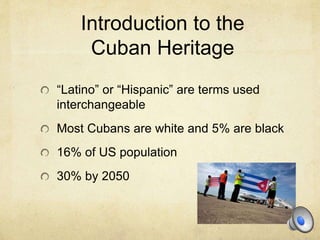
“Latino” or “Hispanic” are terms used
interchangeable
Most Cubans are white and 5% are black
16% of US population
30% by 2050
Overview of the
Cuba
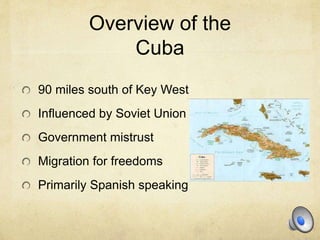
90 miles south of Key West
Influenced by Soviet Union
Government mistrust
Migration for freedoms
Primarily Spanish speaking
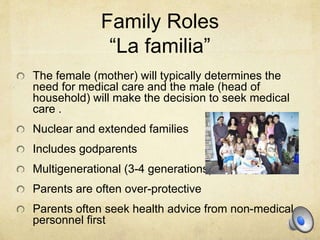
Family Roles
“La familia”
The female (mother) will typically determines the
need for medical care and the male (head of
household) will make the decision to seek medical
care .
Nuclear and extended families
Includes godparents
Multigenerational (3-4 generations)
Parents are often over-protective
Parents often seek health advice from non-medical
personnel first
Advice for health care providers…
Gender roles should be respected
Parental decision should be respected
Egalitarian decision-making prevails in the U.S.
Verbal consent from family and next of kin
Extended family for discharge needs
Spirituality
85% Roman Catholic
15% Protestants, Jews and African Cuban
Santeria believers
Important role in daily lives
Belief in a higher power
Rituals and chants
Death Rituals
Openly expressed
Large family gatherings
Candles (use battery operated in health care
facilities)
Ceremonial Gestures
Clergy
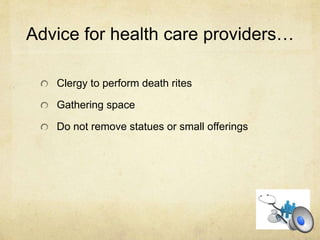
Advice for health care providers…
Clergy to perform death rites
Gathering space
Do not remove statues or small offerings
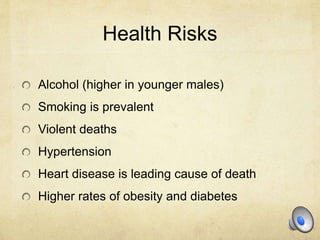
Health Risks
Alcohol (higher in younger males)
Smoking is prevalent
Violent deaths
Hypertension
Heart disease is leading cause of death
Higher rates of obesity and diabetes
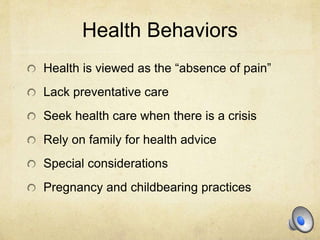
Health Behaviors
Health is viewed as the “absence of pain”
Lack preventative care
Seek health care when there is a crisis
Rely on family for health advice
Special considerations
Pregnancy and childbearing practices
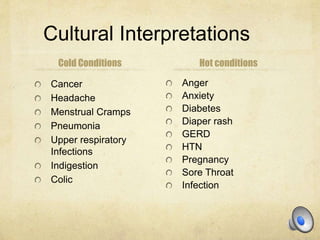
Cultural Interpretations
Cold Conditions
Cancer
Headache
Menstrual Cramps
Pneumonia
Upper respiratory
Infections
Indigestion
Colic
Hot conditions
Anger
Anxiety
Diabetes
Diaper rash
GERD
HTN
Pregnancy
Sore Throat
Infection
Nutrition
Purpose of meal preparation
Staples are root crops, plantains, and grains
Prepare foods with olive oil, garlic, tomato sauce, vinegar,
wine, and spices
Marinate meats in citrus juices
Lack fiber
Lack leafy greens
Coffee is strong and bitter
Lactose intolerance is common
Meal times
Being overweight is a positive attribute
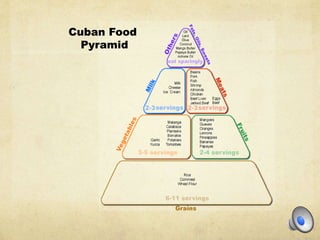
Cuban Food
Pyramid
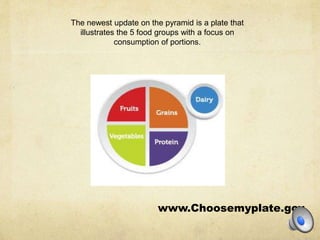
www.Choosemyplate.gov
The newest update on the pyramid is a plate that
illustrates the 5 food groups with a focus on
consumption of portions.
Advice for health care
providers…
Assess food preparations and flavorings
Determine customs
Caloric intake
Meal times
Counseled on acceptable weights
Incorporate preferred foods
Alcohol consumption
Common Health Care
Practices
Older women provide home remedies using teas, fruits, and
vegetables. They also create remedies using a combination of
items:
Stomach aches – anise tea
Cough – Lemon and honey tea
Elevated BP – grapefruit and garlic
Sore throat – salt water
Heartburn – baking soda, lemon and water
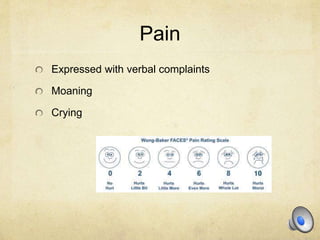
Pain
Expressed with verbal complaints
Moaning
Crying
Advice for health care
providers…
Need to assess level of acculturation
Preventative care
Include family
Determine medicinal products
Determine resources
Determine folk healers and treatments
Barriers Contributing to
Non-Compliance
Language
Lack of insurance
Cultural beliefs
Immigration
Mistrust
Literacy
Poverty
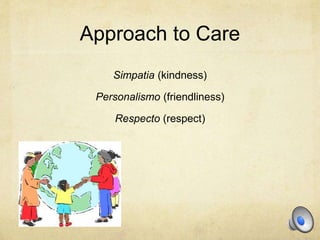
Approach to Care
Simpatia (kindness)
Personalismo (friendliness)
Respecto (respect)
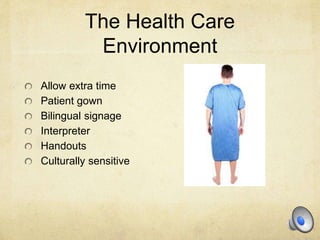
The Health Care
Environment
Allow extra time
Patient gown
Bilingual signage
Interpreter
Handouts
Culturally sensitive
Case Study
Robert is 48 with Type II DM, hypertension, and has a BMI of
35. He was given two prescriptions for medications at the last
visit. They also discussed dietary changes and an exercise
program at his last visit. He has been noncompliant even
though he agreed to medications and verbalized that he
understood the instructions from his last appointment. At this
visit there is a telephone interpreter available.
The Interview
LEARN
LISTEN and understand the patients perspectives.
EXPLAIN and clarify the perceived problems
ACKNOWLEDGE and discuss
RECOMMEND treatment
NEGOTIATE and come to agreement
Interview questions
What do you call your problem?
What do you think caused the problem?
Why do you think it started?
How severe do you perceive your illness to be?
What are your fears?
What are the results that you hope to obtain?
What do you believe your treatment should be?
Therapeutic Communication
Techniques
Open-ended questions
General lead questions
Restate
Clarify
Reflect
Validation
Findings
Evaluation
“Teach back or “Show me”
 Assess literacy
 Assess language
 Handouts
 Repeat instructions
 Increase understanding
References
Cultural Competency Series: Framework for Cross-cultural Health Care.
(2007). National Center for cultural Competence. Retrieved from:
http://clinicians.org/images/upload/cultural_competence.pdf
Junckett, G. (2013 January 1). Caring for Latino Patients. American Family
Physician. Volume 87 (1): 48-54. Retrieved from:
http://www.aafp.org/afp/2013/0101/p48.html
Peterson-Iyer, K. (n.d.). Culturally Competent Care for Latino Patients.
Markkula Center of Applied Ethics. Retrieved from:
Purnell, L. (2014). Guide to Culturally Competent Health Care. (3rd Edition).
F.A. Davis Company. Philadelphia, PA.
https://www.scu.edu/ethics/focus-
areas/bioethics/resources/culturally-competent-care/culturally-
competent-care-for-latino-patients/

Cuban Culture Teaching Presentation

  • 1.
    Culturally Competent Teaching Presentation CubanHeritage By: Jennifer Panzarella RN, BSN
  • 2.
    Goals Cultural considerations willdiscussed, and the learner will be able to: 1. Identify Cuban characteristics based on an overview of the heritage. 1. Identify the role of the family structure, function and processes as related to the Cuban culture. 3. Identify common health risks and health care practices for this population. 3. Identify communication techniques for the health care provider in order to improve adherence to treatment goals.
  • 3.
    Introduction to the CubanHeritage “Latino” or “Hispanic” are terms used interchangeable Most Cubans are white and 5% are black 16% of US population 30% by 2050
  • 4.
    Overview of the Cuba 90miles south of Key West Influenced by Soviet Union Government mistrust Migration for freedoms Primarily Spanish speaking
  • 5.
    Family Roles “La familia” Thefemale (mother) will typically determines the need for medical care and the male (head of household) will make the decision to seek medical care . Nuclear and extended families Includes godparents Multigenerational (3-4 generations) Parents are often over-protective Parents often seek health advice from non-medical personnel first
  • 6.
    Advice for healthcare providers… Gender roles should be respected Parental decision should be respected Egalitarian decision-making prevails in the U.S. Verbal consent from family and next of kin Extended family for discharge needs
  • 7.
    Spirituality 85% Roman Catholic 15%Protestants, Jews and African Cuban Santeria believers Important role in daily lives Belief in a higher power Rituals and chants
  • 8.
    Death Rituals Openly expressed Largefamily gatherings Candles (use battery operated in health care facilities) Ceremonial Gestures Clergy
  • 9.
    Advice for healthcare providers… Clergy to perform death rites Gathering space Do not remove statues or small offerings
  • 10.
    Health Risks Alcohol (higherin younger males) Smoking is prevalent Violent deaths Hypertension Heart disease is leading cause of death Higher rates of obesity and diabetes
  • 11.
    Health Behaviors Health isviewed as the “absence of pain” Lack preventative care Seek health care when there is a crisis Rely on family for health advice Special considerations Pregnancy and childbearing practices
  • 12.
    Cultural Interpretations Cold Conditions Cancer Headache MenstrualCramps Pneumonia Upper respiratory Infections Indigestion Colic Hot conditions Anger Anxiety Diabetes Diaper rash GERD HTN Pregnancy Sore Throat Infection
  • 13.
    Nutrition Purpose of mealpreparation Staples are root crops, plantains, and grains Prepare foods with olive oil, garlic, tomato sauce, vinegar, wine, and spices Marinate meats in citrus juices Lack fiber Lack leafy greens Coffee is strong and bitter Lactose intolerance is common Meal times Being overweight is a positive attribute
  • 14.
  • 15.
    www.Choosemyplate.gov The newest updateon the pyramid is a plate that illustrates the 5 food groups with a focus on consumption of portions.
  • 16.
    Advice for healthcare providers… Assess food preparations and flavorings Determine customs Caloric intake Meal times Counseled on acceptable weights Incorporate preferred foods Alcohol consumption
  • 17.
    Common Health Care Practices Olderwomen provide home remedies using teas, fruits, and vegetables. They also create remedies using a combination of items: Stomach aches – anise tea Cough – Lemon and honey tea Elevated BP – grapefruit and garlic Sore throat – salt water Heartburn – baking soda, lemon and water
  • 18.
    Pain Expressed with verbalcomplaints Moaning Crying
  • 19.
    Advice for healthcare providers… Need to assess level of acculturation Preventative care Include family Determine medicinal products Determine resources Determine folk healers and treatments
  • 20.
    Barriers Contributing to Non-Compliance Language Lackof insurance Cultural beliefs Immigration Mistrust Literacy Poverty
  • 21.
    Approach to Care Simpatia(kindness) Personalismo (friendliness) Respecto (respect)
  • 22.
    The Health Care Environment Allowextra time Patient gown Bilingual signage Interpreter Handouts Culturally sensitive
  • 23.
    Case Study Robert is48 with Type II DM, hypertension, and has a BMI of 35. He was given two prescriptions for medications at the last visit. They also discussed dietary changes and an exercise program at his last visit. He has been noncompliant even though he agreed to medications and verbalized that he understood the instructions from his last appointment. At this visit there is a telephone interpreter available.
  • 24.
  • 25.
    LEARN LISTEN and understandthe patients perspectives. EXPLAIN and clarify the perceived problems ACKNOWLEDGE and discuss RECOMMEND treatment NEGOTIATE and come to agreement
  • 26.
    Interview questions What doyou call your problem? What do you think caused the problem? Why do you think it started? How severe do you perceive your illness to be? What are your fears? What are the results that you hope to obtain? What do you believe your treatment should be?
  • 27.
    Therapeutic Communication Techniques Open-ended questions Generallead questions Restate Clarify Reflect Validation
  • 28.
  • 29.
    Evaluation “Teach back or“Show me”  Assess literacy  Assess language  Handouts  Repeat instructions  Increase understanding
  • 30.
    References Cultural Competency Series:Framework for Cross-cultural Health Care. (2007). National Center for cultural Competence. Retrieved from: http://clinicians.org/images/upload/cultural_competence.pdf Junckett, G. (2013 January 1). Caring for Latino Patients. American Family Physician. Volume 87 (1): 48-54. Retrieved from: http://www.aafp.org/afp/2013/0101/p48.html Peterson-Iyer, K. (n.d.). Culturally Competent Care for Latino Patients. Markkula Center of Applied Ethics. Retrieved from: Purnell, L. (2014). Guide to Culturally Competent Health Care. (3rd Edition). F.A. Davis Company. Philadelphia, PA. https://www.scu.edu/ethics/focus- areas/bioethics/resources/culturally-competent-care/culturally- competent-care-for-latino-patients/