Net Promoter Score®:
Science or Pseudoscience?
Daniel Kinal - @dktpm
Product Anonymous – Sep 2019
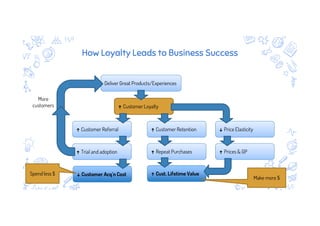
How Loyalty Leads to Business Success
Deliver Great Products/Experiences
↑ Trial and adoption
↓ Customer Acq’n Cost
↑ Customer Referral
↑ Customer Loyalty
More
customers
↑ Customer Retention
↑ Repeat Purchases
↑ Cust. Lifetime Value
↓ Price Elasticity
↑ Prices & GP
Make more $
Spend less $
That Question Again
How likely is it that you would recommend
[Company X] to a friend or colleague?
0 1 2 3 4 5 6 7 8 9 10
Not at all
likely
Extremely
likelyNeutral
Detractors Passives Promoters
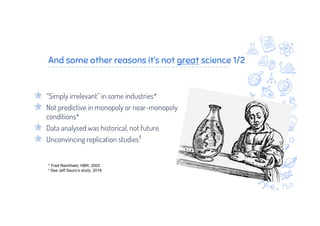
And some other reasons it’s not great science 1/2
“Simply irrelevant” in some industries*
Not predictive in monopoly or near-monopoly
conditions*
Data analysed was historical, not future.
Unconvincing replication studies†
* Fred Reichheld, HBR, 2003
† See Jeff Sauro’s study, 2018
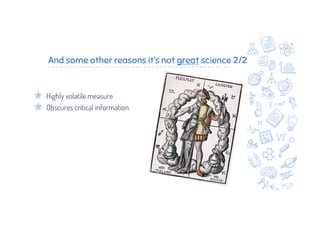
And some other reasons it’s not great science 2/2
Highly volatile measure
Obscures critical information
Some compelling qualities of the NPS
Cheap
Fast
Simple
Accepted
How to make NPS as valuable as possible
Measure brand or “full product experience” rather than
feature or interaction
Measure longitudinally and conduct trend rather than
point-in-time analysis
Keep it as scientific as you can
(randomisation, third-party research)
Compare your NPS to direct competitors
Remember what you are measuring (loyalty and
propensity to evangelise, not product satisfaction)
Analyse qualitative feedback and NPS makeup
But... ask yourself and your stakeholders:
Is loyalty a significant contributor to
our product’s success?
Is word of mouth important?
Are friends/colleagues going to be key
influencers or customers?
Is repeat purchase important?
Will loyalty reduce price elasticity?
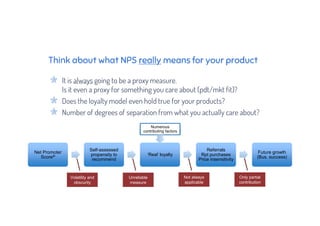
Think about what NPS really means for your product
It is always going to be a proxy measure.
Is it even a proxy for something you care about (pdt/mkt fit)?
Does the loyalty model even hold true for your products?
Number of degrees of separation from what you actually care about?
Net Promoter
Score®
Net Promoter
Score®
Self-assessed
propensity to
recommend
Self-assessed
propensity to
recommend
‘Real’ loyalty‘Real’ loyalty
Referrals
Rpt purchases
Price insensitivity
Referrals
Rpt purchases
Price insensitivity
Future growth
(Bus. success)
Future growth
(Bus. success)
Only partial
contribution
Not always
applicable
Unreliable
measure
Volatility and
obscurity
Numerous
contributing factors
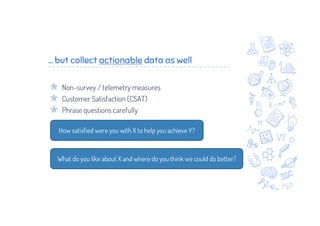
... but collect actionable data as well
Non-survey / telemetry measures
Customer Satisfaction (CSAT)
Phrase questions carefully
How satisfied were you with X to help you achieve Y?
What do you like about X and where do you think we could do better?
Some best practice tips
Don’t focus on a single number
Mean, median, mode, SD, % Satisfied, % Unsatisfied
Align with goals to determine your ‘north star’
Treasure verbatims and analyse them
Try to understand why

NPS (Net Promoter Score) - Science or Pseudoscience

  • 1.
    Net Promoter Score®: Scienceor Pseudoscience? Daniel Kinal - @dktpm Product Anonymous – Sep 2019
  • 2.
    How Loyalty Leadsto Business Success Deliver Great Products/Experiences ↑ Trial and adoption ↓ Customer Acq’n Cost ↑ Customer Referral ↑ Customer Loyalty More customers ↑ Customer Retention ↑ Repeat Purchases ↑ Cust. Lifetime Value ↓ Price Elasticity ↑ Prices & GP Make more $ Spend less $
  • 3.
    That Question Again Howlikely is it that you would recommend [Company X] to a friend or colleague? 0 1 2 3 4 5 6 7 8 9 10 Not at all likely Extremely likelyNeutral Detractors Passives Promoters
  • 4.
    And some otherreasons it’s not great science 1/2 “Simply irrelevant” in some industries* Not predictive in monopoly or near-monopoly conditions* Data analysed was historical, not future. Unconvincing replication studies† * Fred Reichheld, HBR, 2003 † See Jeff Sauro’s study, 2018
  • 5.
    And some otherreasons it’s not great science 2/2 Highly volatile measure Obscures critical information
  • 6.
    Some compelling qualitiesof the NPS Cheap Fast Simple Accepted
  • 7.
    How to makeNPS as valuable as possible Measure brand or “full product experience” rather than feature or interaction Measure longitudinally and conduct trend rather than point-in-time analysis Keep it as scientific as you can (randomisation, third-party research) Compare your NPS to direct competitors Remember what you are measuring (loyalty and propensity to evangelise, not product satisfaction) Analyse qualitative feedback and NPS makeup
  • 8.
    But... ask yourselfand your stakeholders: Is loyalty a significant contributor to our product’s success? Is word of mouth important? Are friends/colleagues going to be key influencers or customers? Is repeat purchase important? Will loyalty reduce price elasticity?
  • 9.
    Think about whatNPS really means for your product It is always going to be a proxy measure. Is it even a proxy for something you care about (pdt/mkt fit)? Does the loyalty model even hold true for your products? Number of degrees of separation from what you actually care about? Net Promoter Score® Net Promoter Score® Self-assessed propensity to recommend Self-assessed propensity to recommend ‘Real’ loyalty‘Real’ loyalty Referrals Rpt purchases Price insensitivity Referrals Rpt purchases Price insensitivity Future growth (Bus. success) Future growth (Bus. success) Only partial contribution Not always applicable Unreliable measure Volatility and obscurity Numerous contributing factors
  • 10.
    ... but collectactionable data as well Non-survey / telemetry measures Customer Satisfaction (CSAT) Phrase questions carefully How satisfied were you with X to help you achieve Y? What do you like about X and where do you think we could do better?
  • 11.
    Some best practicetips Don’t focus on a single number Mean, median, mode, SD, % Satisfied, % Unsatisfied Align with goals to determine your ‘north star’ Treasure verbatims and analyse them Try to understand why