Normalizing Flow
2020.06.24
kimjj.geek@gmail.com
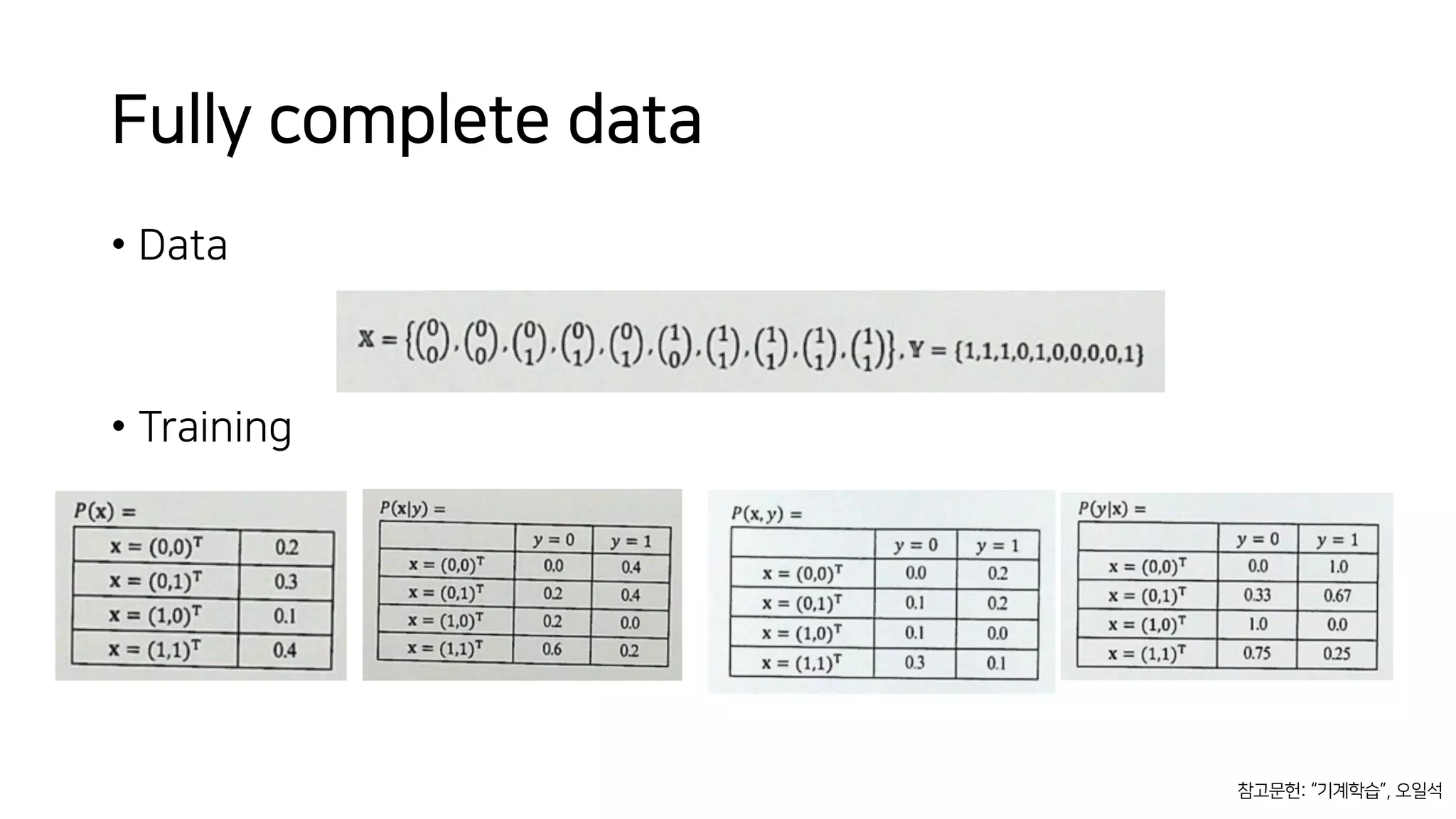
Fully complete data
• Data
• Training
참고문헌: “기계학습”, 오일석
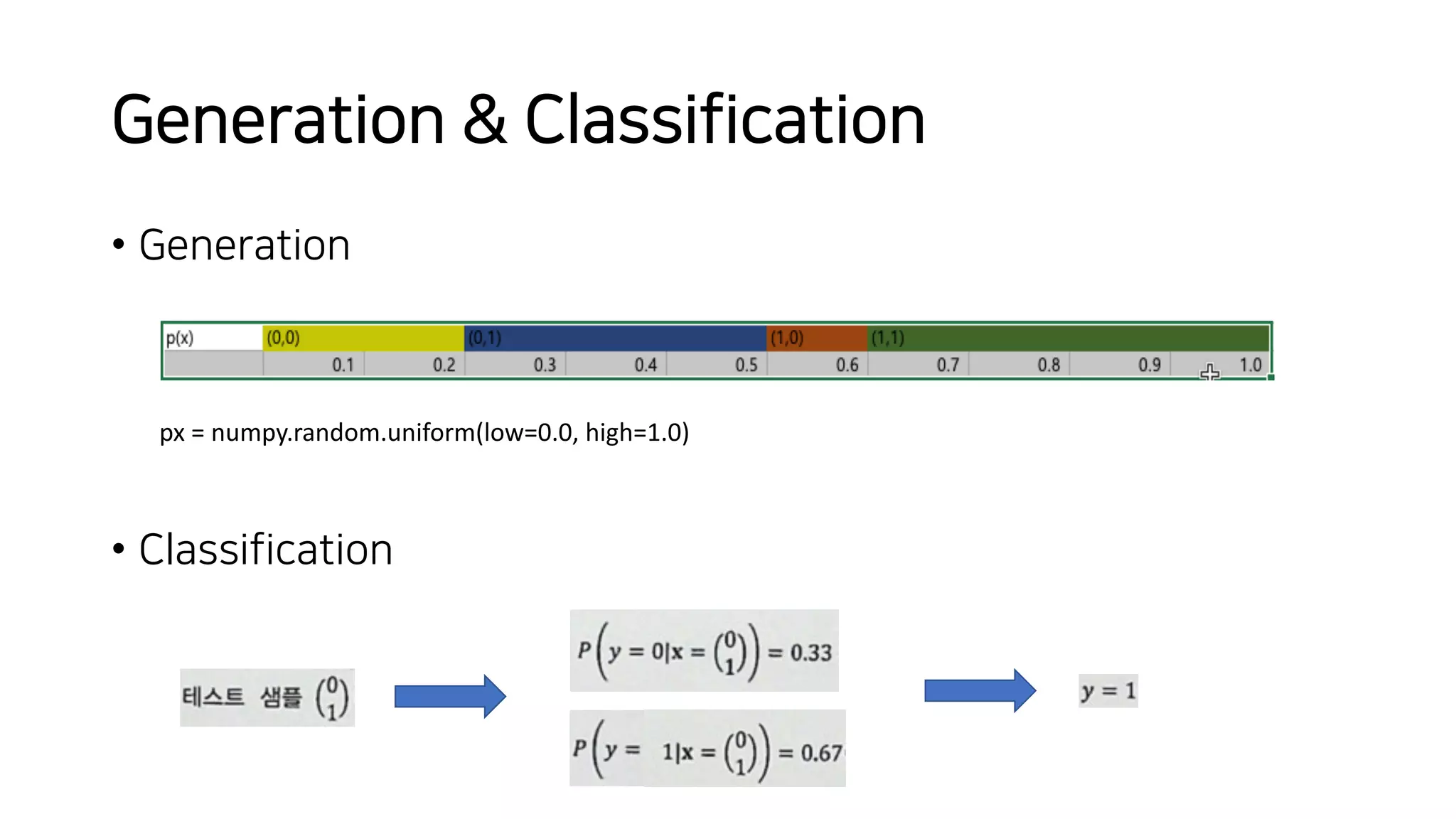
Generation & Classification
• Generation
• Classification
px = numpy.random.uniform(low=0.0, high=1.0)
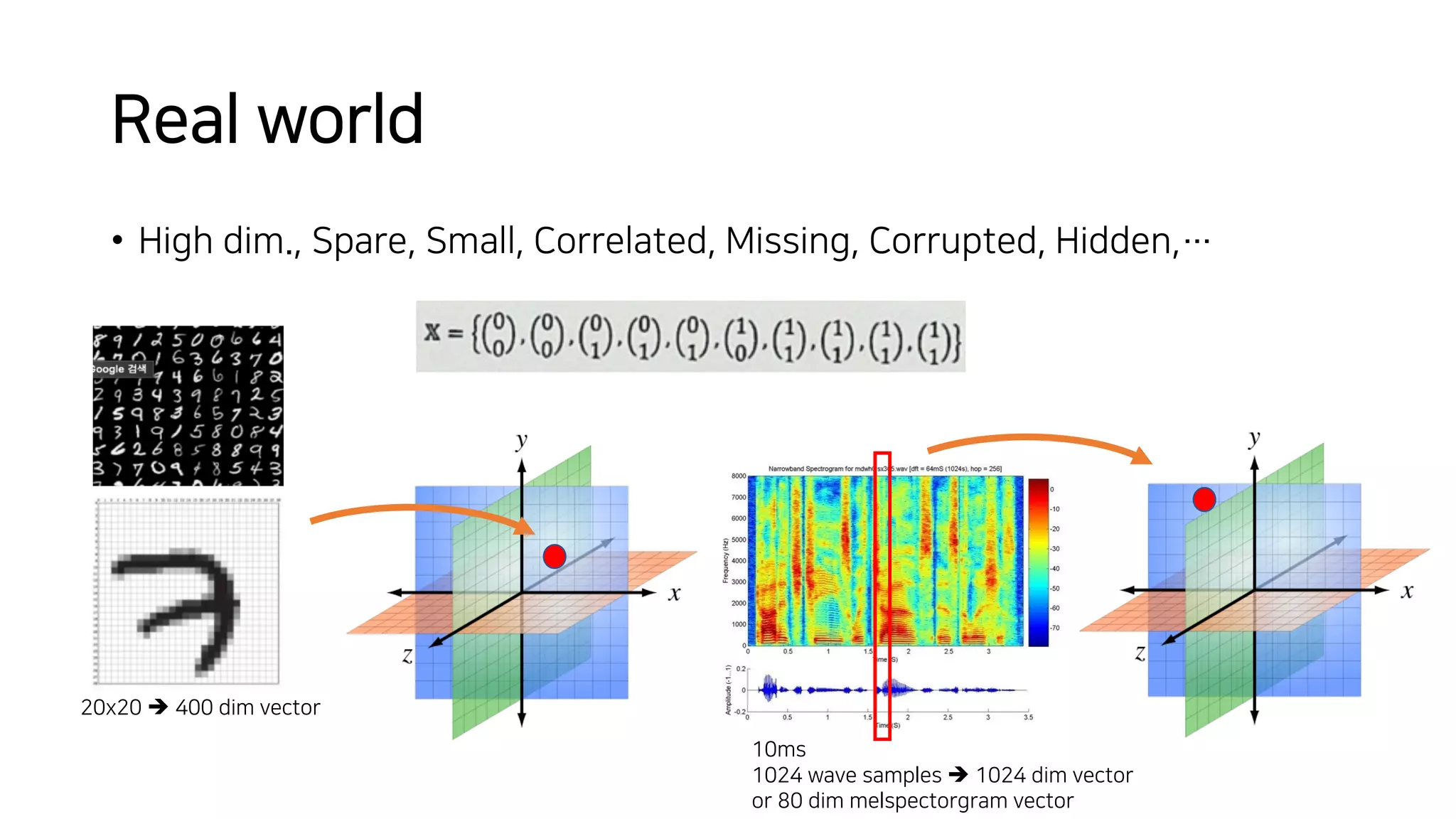
Real world
• High dim., Spare, Small, Correlated, Missing, Corrupted, Hidden,…
20x20 è 400 dim vector
10ms
1024 wave samples è 1024 dim vector
or 80 dim melspectorgram vector
Real world
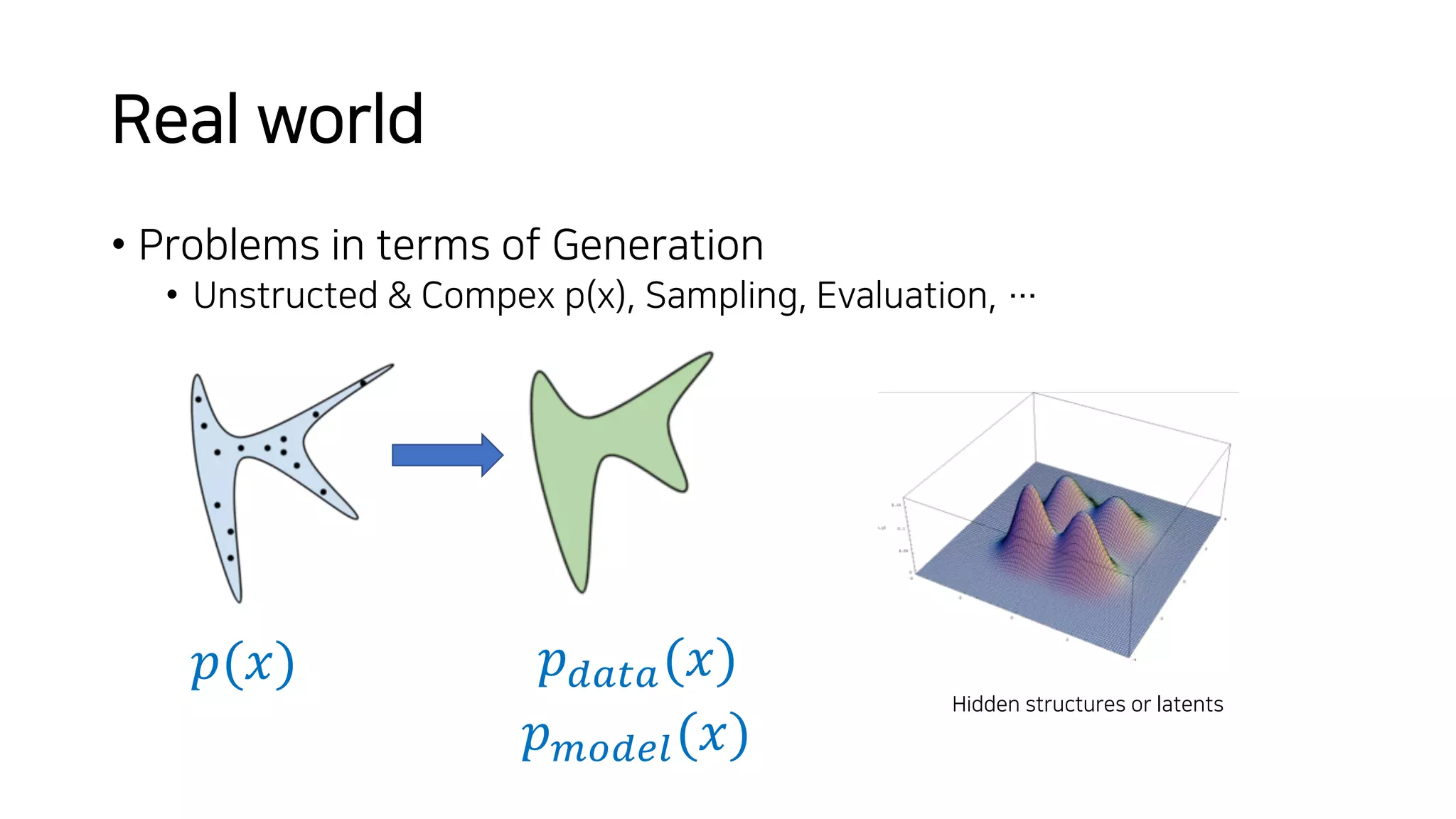
• Problems in terms of Generation
• Unstructed & Compex p(x), Sampling, Evaluation, …
𝑝!"#"(𝑥)𝑝(𝑥)
Hidden structures or latents
𝑝$%!&'(𝑥)
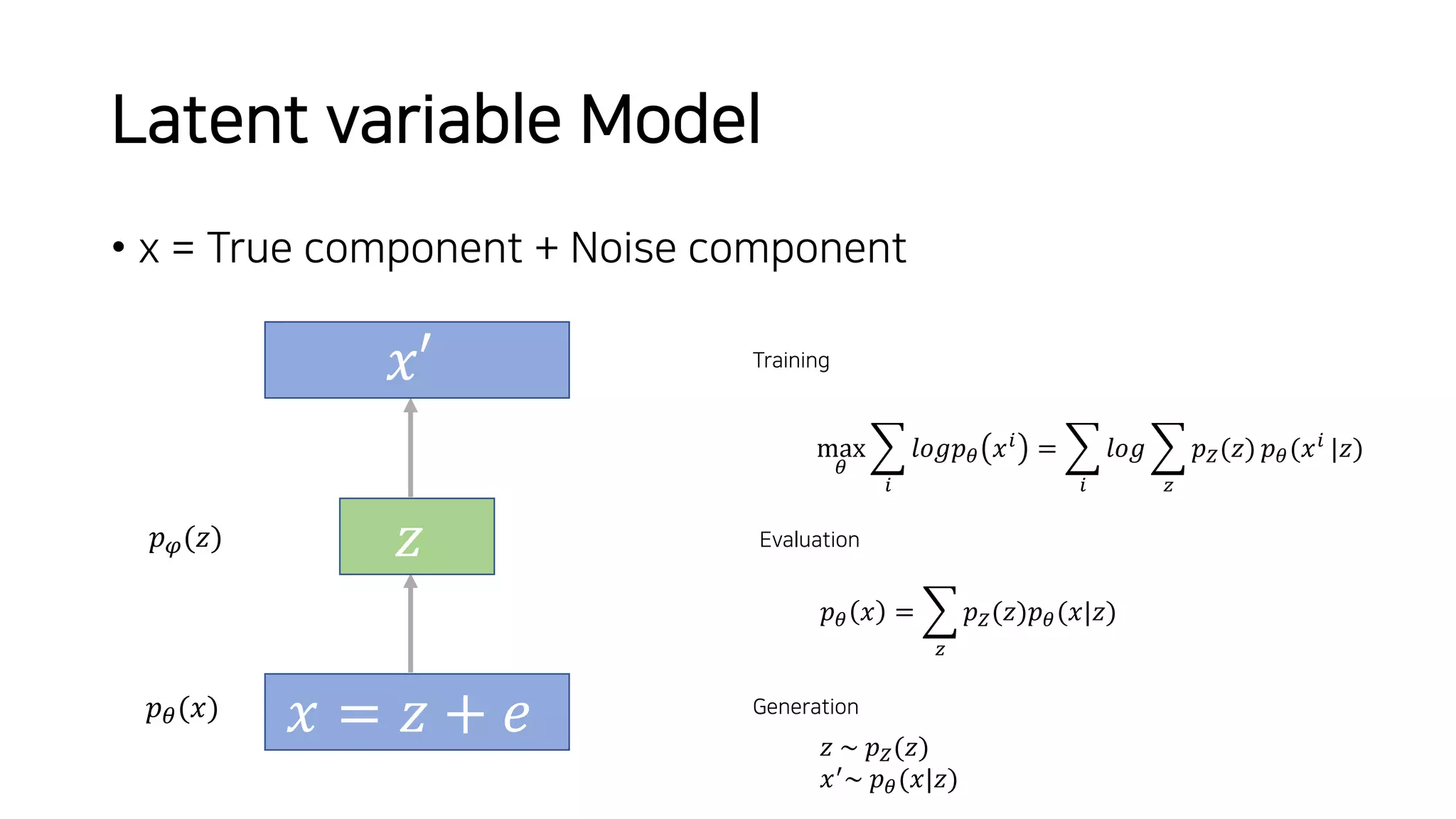
Latent variable Model
• x = True component + Noise component
𝑝!(𝑥)
𝑧
𝑥′
𝑥 = 𝑧 + 𝑒
Training
max
!
$
"
𝑙𝑜𝑔𝑝! 𝑥"
= $
"
𝑙𝑜𝑔 $
#
𝑝$(𝑧) 𝑝!(𝑥"
|𝑧)
Evaluation
𝑝! 𝑥 = $
#
𝑝$(𝑧)𝑝!(𝑥|𝑧)
Generation
𝑧 ~ 𝑝$(𝑧)
𝑥%~ 𝑝!(𝑥|𝑧)
𝑝"(𝑧)
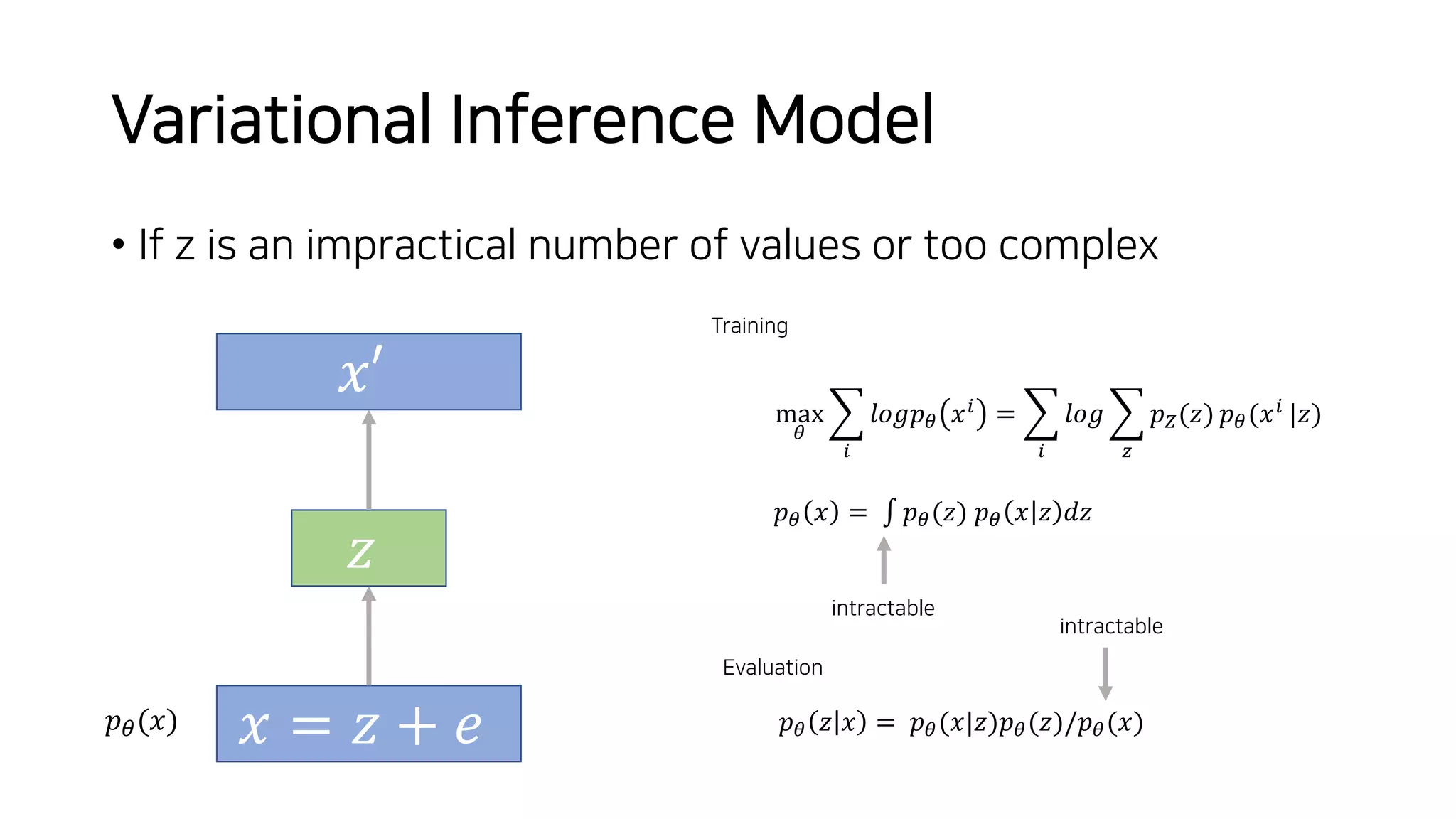
Variational Inference Model
• If z is an impractical number of values or too complex
𝑧
𝑥′
𝑥 = 𝑧 + 𝑒𝑝!(𝑥)
Training
max
!
$
"
𝑙𝑜𝑔𝑝! 𝑥" = $
"
𝑙𝑜𝑔 $
#
𝑝$(𝑧) 𝑝!(𝑥" |𝑧)
𝑝! 𝑥 = ∫ 𝑝!(𝑧) 𝑝! 𝑥 𝑧 𝑑𝑧
intractable
Evaluation
𝑝! 𝑧 𝑥 = 𝑝!(𝑥|𝑧)𝑝!(𝑧)/𝑝!(𝑥)
intractable
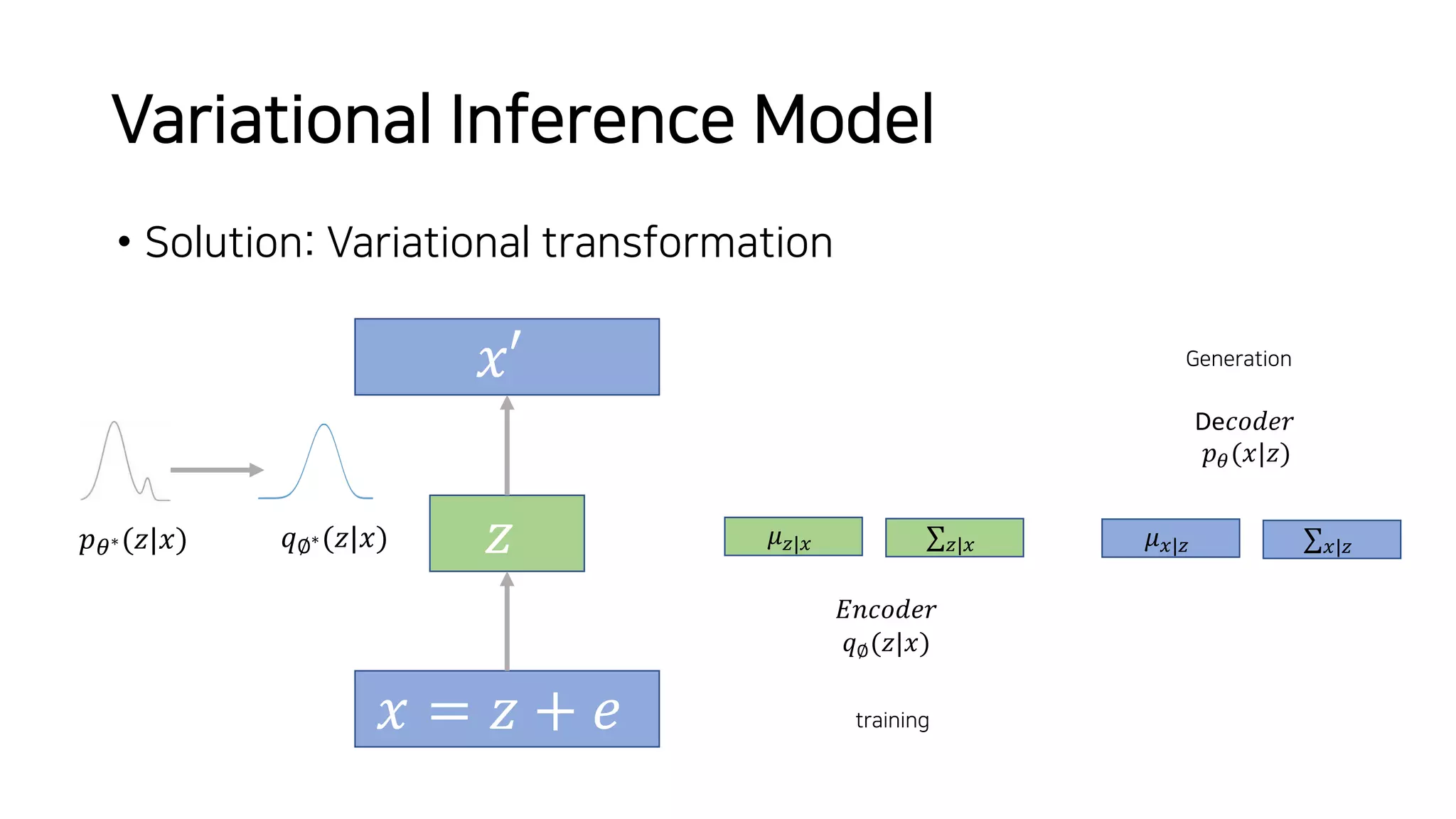
Variational Inference Model
• Solution: Variational transformation
𝑧
𝑥′
𝑥 = 𝑧 + 𝑒
𝑝!∗(𝑧|𝑥) 𝑞∅∗(𝑧|𝑥)
𝐸𝑛𝑐𝑜𝑑𝑒𝑟
𝑞∅(𝑧|𝑥)
𝜇#|( ∑#|(
training
𝜇(|# ∑(|#
De𝑐𝑜𝑑𝑒𝑟
𝑝!(𝑥|𝑧)
Generation
Probability Density Transformation Model
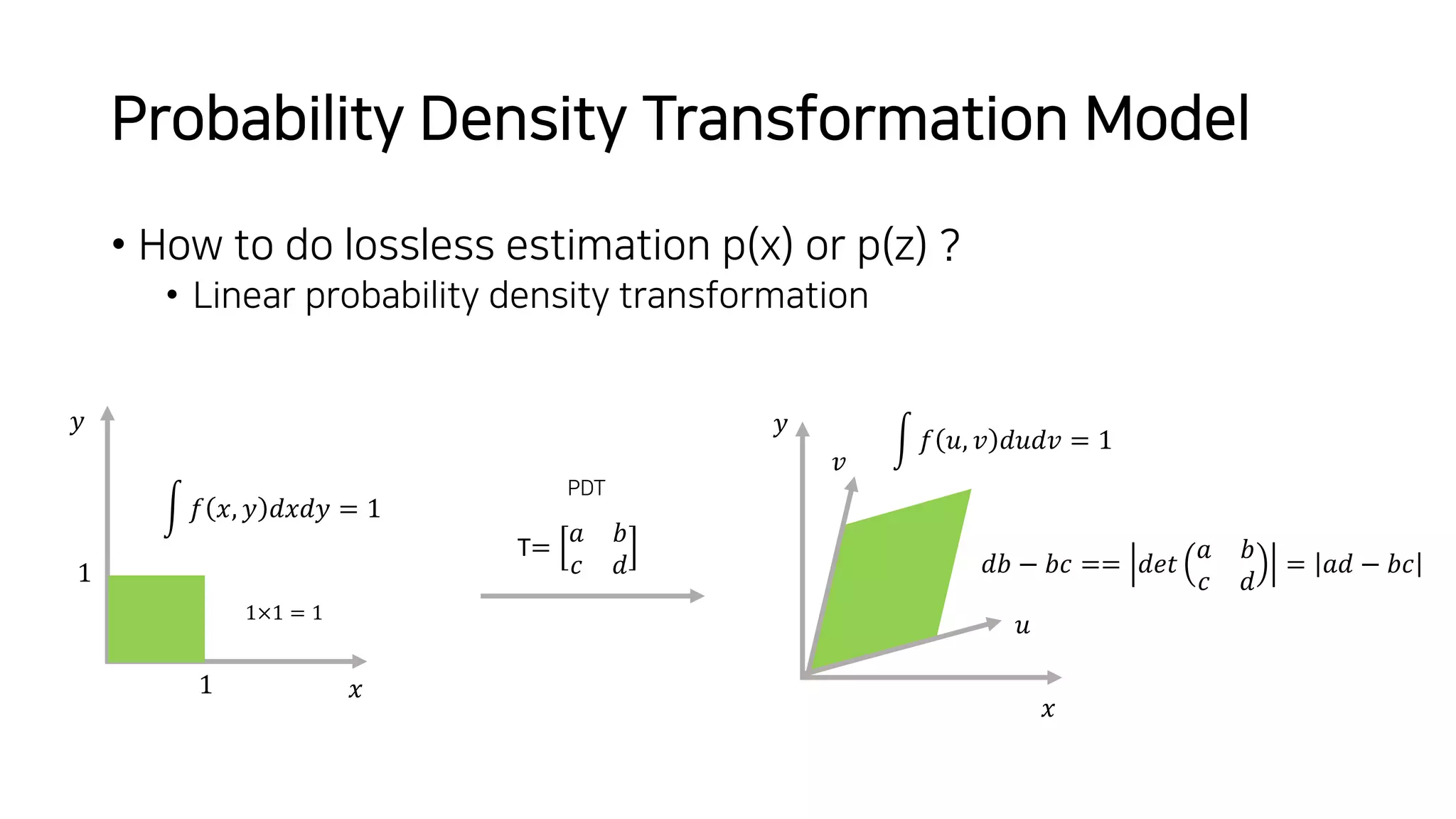
• How to do lossless estimation p(x) or p(z) ?
• Linear probability density transformation
𝑥
𝑦
1
1
= 𝑓 𝑥, 𝑦 𝑑𝑥𝑑𝑦 = 1
T=
𝑎 𝑏
𝑐 𝑑
PDT
𝑣
𝑢
= 𝑓 𝑢, 𝑣 𝑑𝑢𝑑𝑣 = 1
1×1 = 1
𝑑𝑏 − 𝑏𝑐 == 𝑑𝑒𝑡
𝑎 𝑏
𝑐 𝑑
= 𝑎𝑑 − 𝑏𝑐
𝑦
𝑥
Probability Density Transformation Model
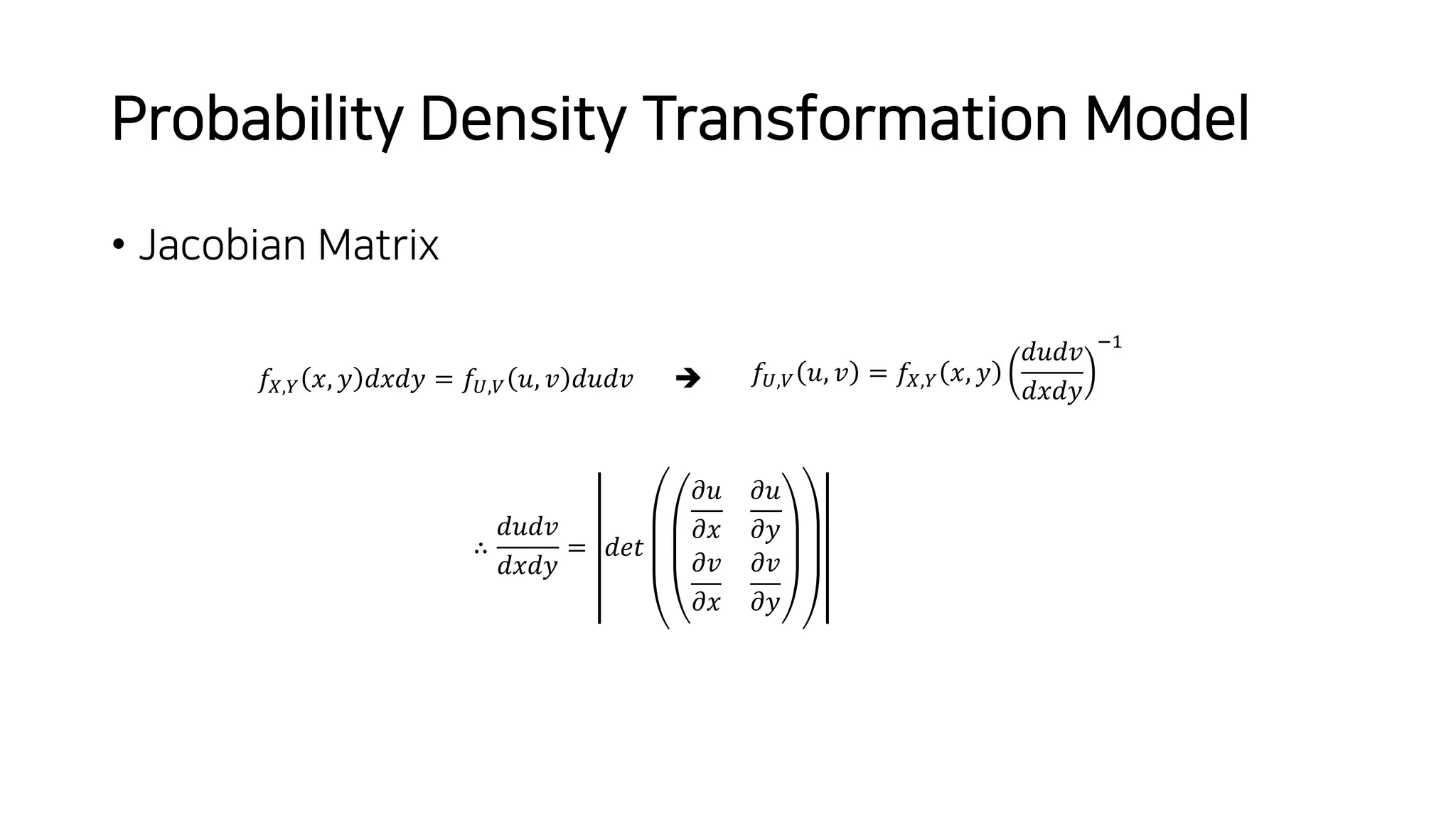
• Jacobian Matrix
𝑓),+ 𝑥, 𝑦 𝑑𝑥𝑑𝑦 = 𝑓,,- 𝑢, 𝑣 𝑑𝑢𝑑𝑣 è 𝑓,,- 𝑢, 𝑣 = 𝑓),+ 𝑥, 𝑦
𝑑𝑢𝑑𝑣
𝑑𝑥𝑑𝑦
./
∴
𝑑𝑢𝑑𝑣
𝑑𝑥𝑑𝑦
= 𝑑𝑒𝑡
𝜕𝑢
𝜕𝑥
𝜕𝑢
𝜕𝑦
𝜕𝑣
𝜕𝑥
𝜕𝑣
𝜕𝑦
Probability Density transformation Model
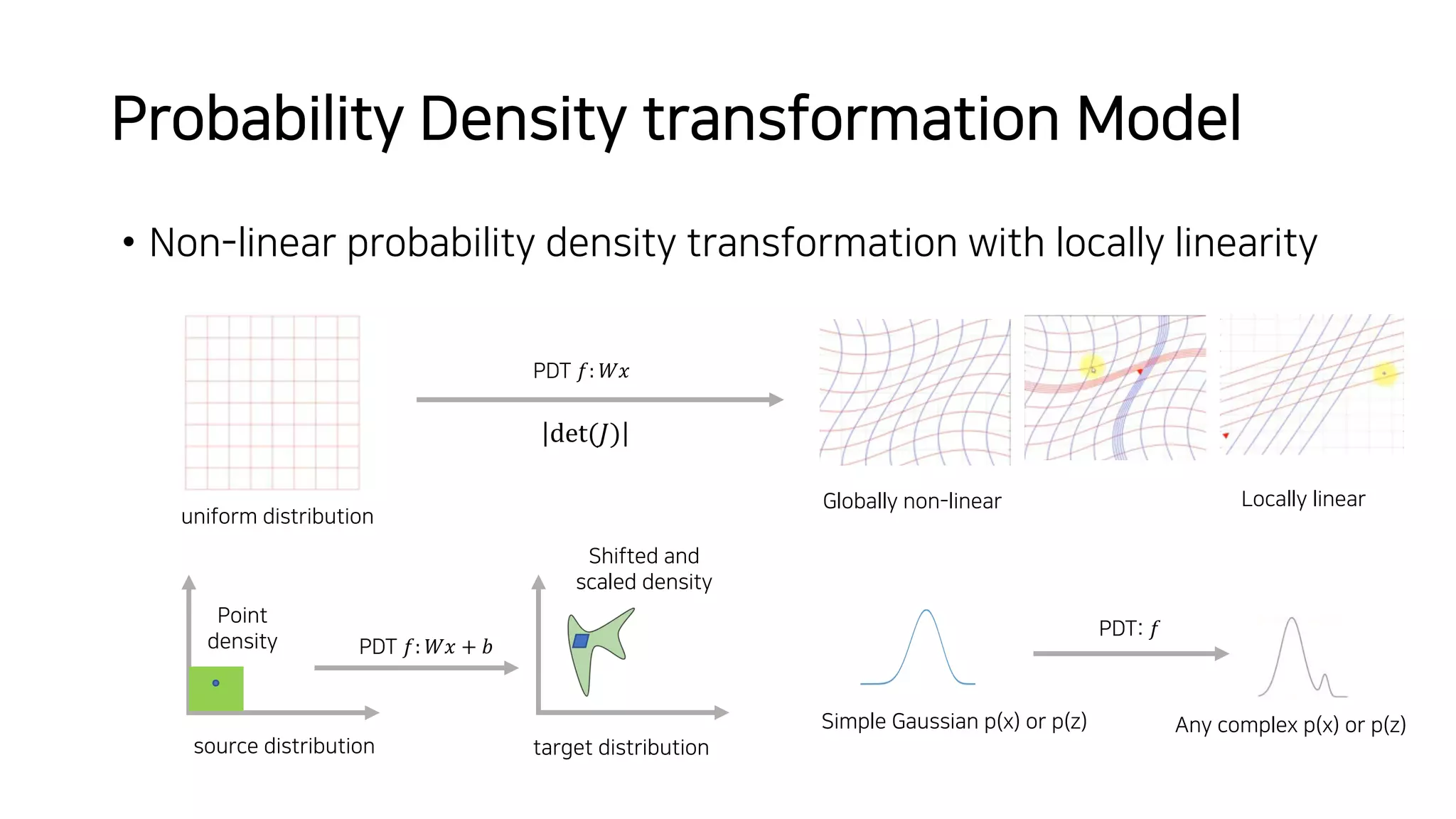
• Non-linear probability density transformation with locally linearity
source distribution
Point
density
target distribution
Globally non-linear Locally linear
uniform distribution
Simple Gaussian p(x) or p(z) Any complex p(x) or p(z)
PDT: 𝑓
PDT 𝑓: 𝑊𝑥 + 𝑏
Shifted and
scaled density
PDT 𝑓: 𝑊𝑥
det(𝐽)
Probability Density Transformation Model
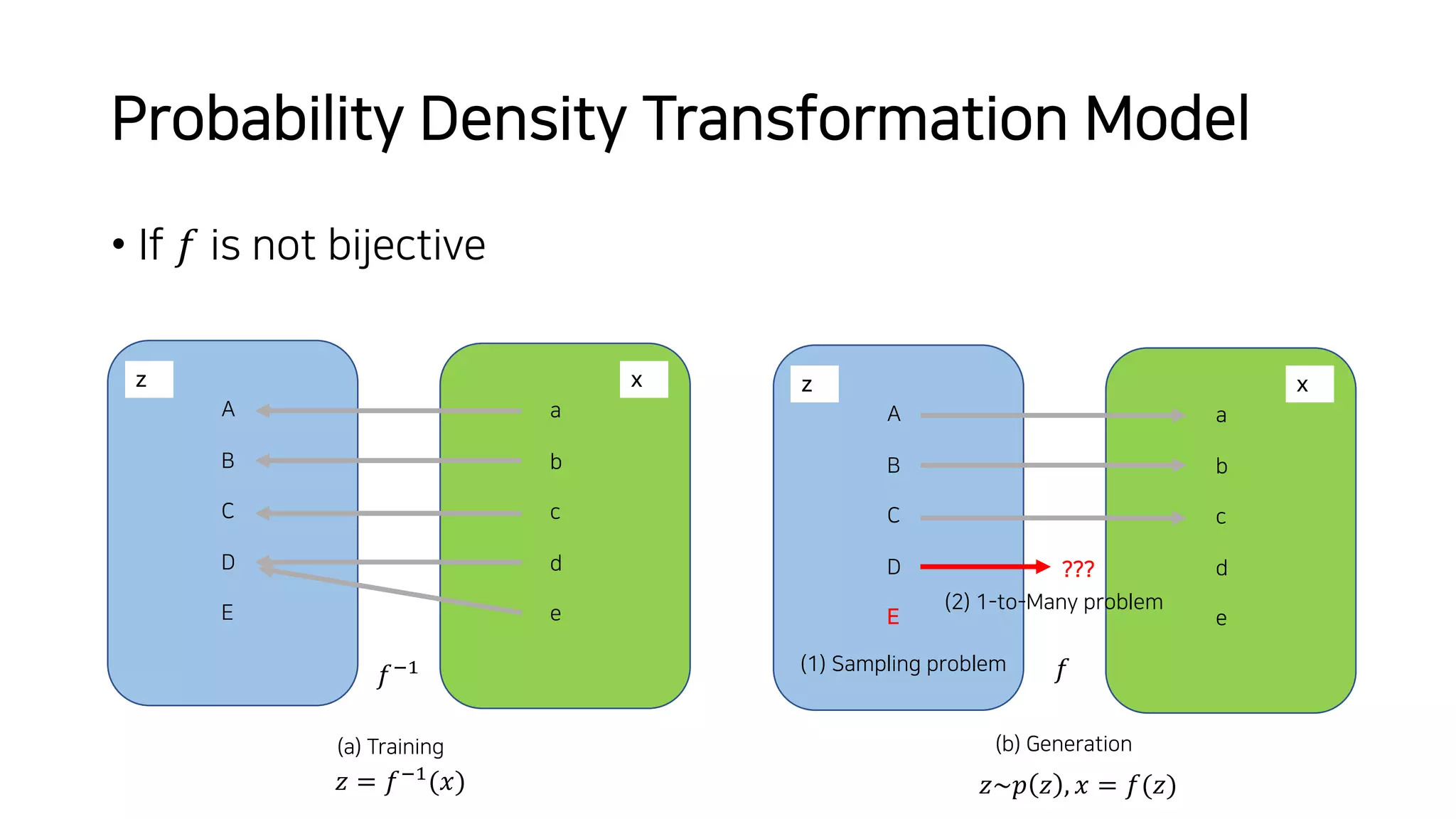
• If 𝑓 is not bijective
A
B
C
D
E
a
b
c
d
e
z x
𝑓
(b) Generation
A
B
C
D
E
a
b
c
d
e
z x
𝑓./
(a) Training
???
𝑧 = 𝑓./
(𝑥) 𝑧~𝑝 𝑧 , 𝑥 = 𝑓(𝑧)
(2) 1-to-Many problem
(1) Sampling problem
Probability Density Transformation Model
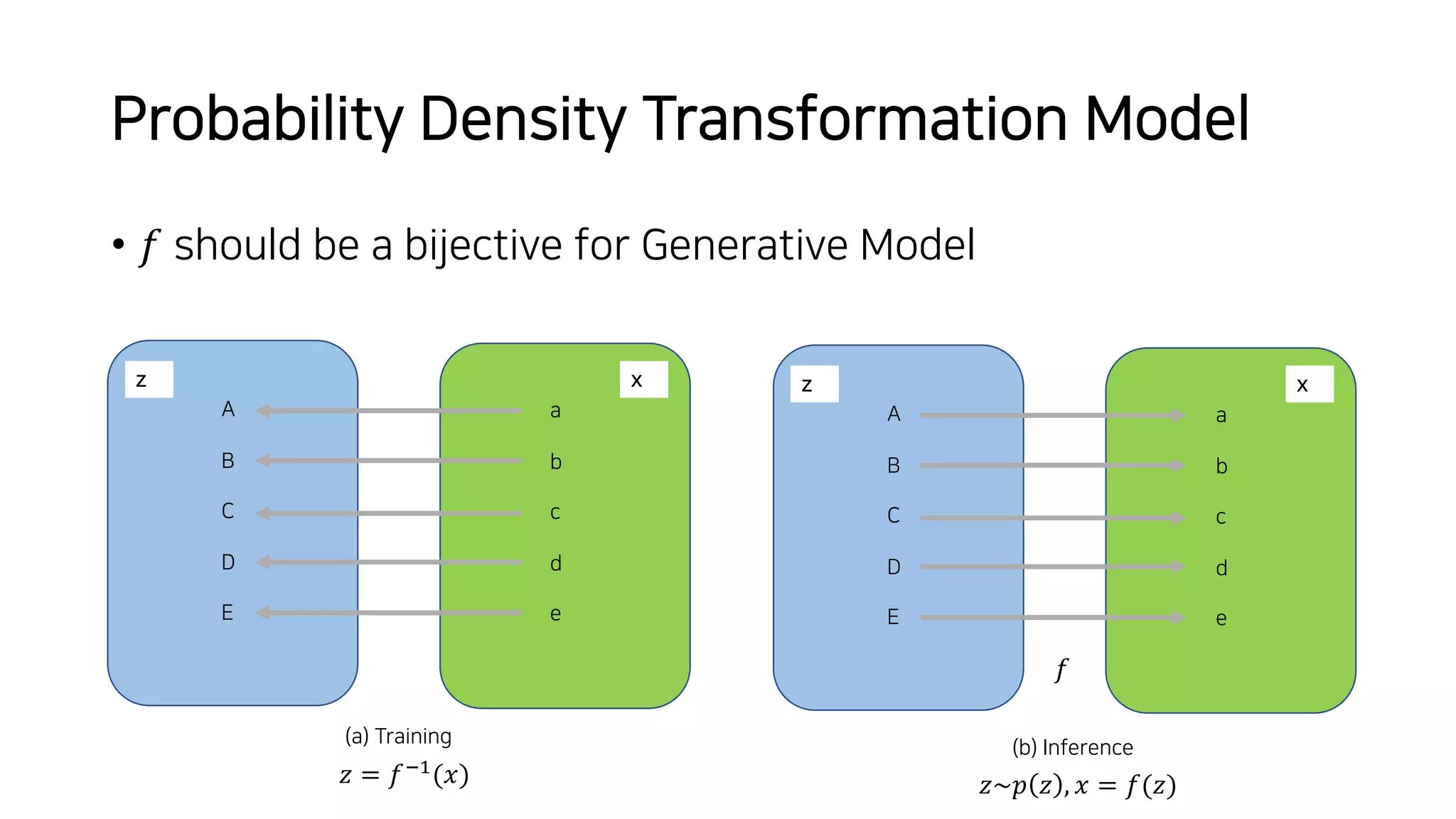
• 𝑓 should be a bijective for Generative Model
A
B
C
D
E
a
b
c
d
e
z x
𝑓
(b) Inference
A
B
C
D
E
a
b
c
d
e
z x
𝑧 = 𝑓./(𝑥)
(a) Training
𝑧~𝑝 𝑧 , 𝑥 = 𝑓(𝑧)
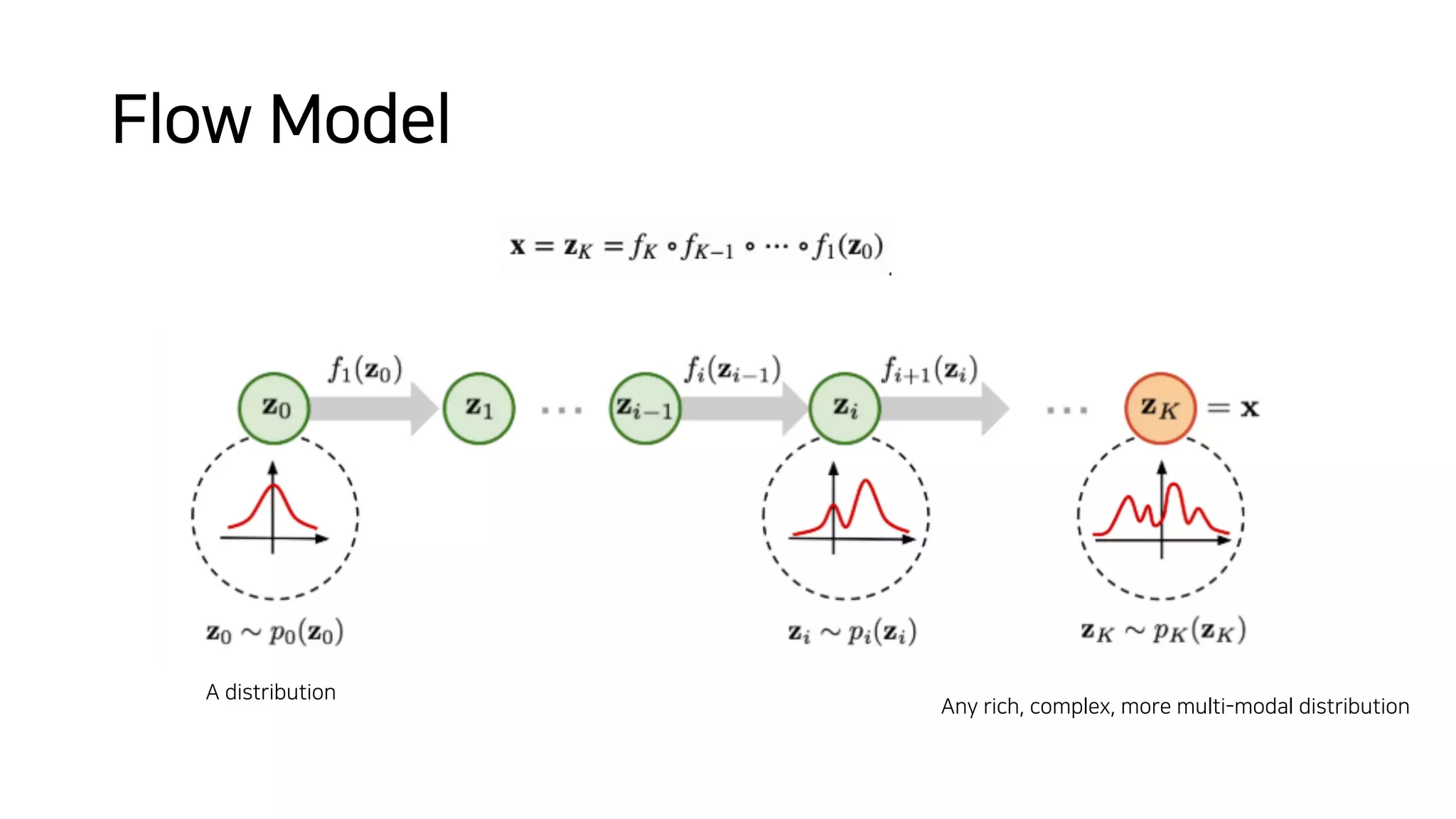
Flow Model
A distribution
Any rich, complex, more multi-modal distribution
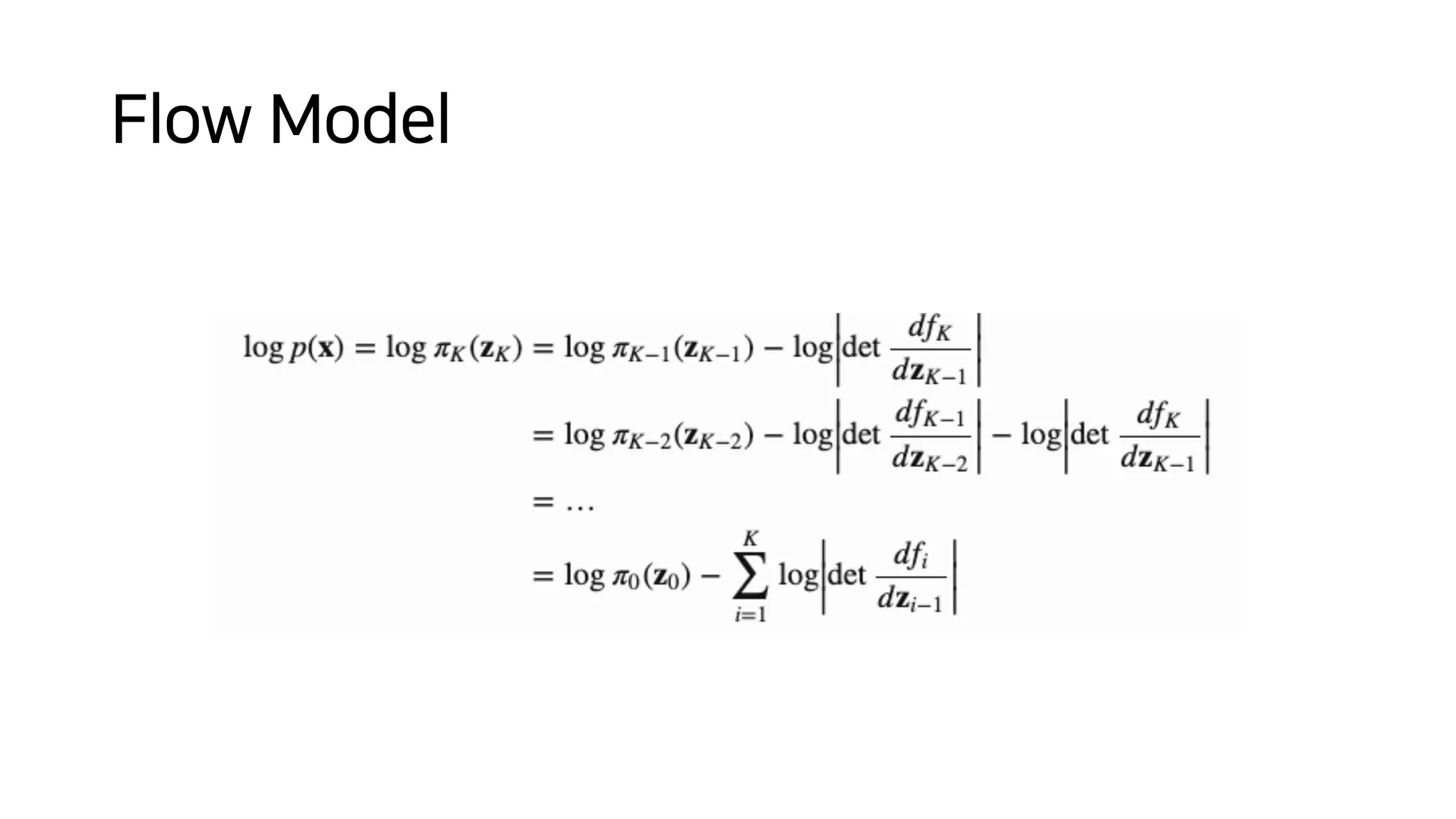
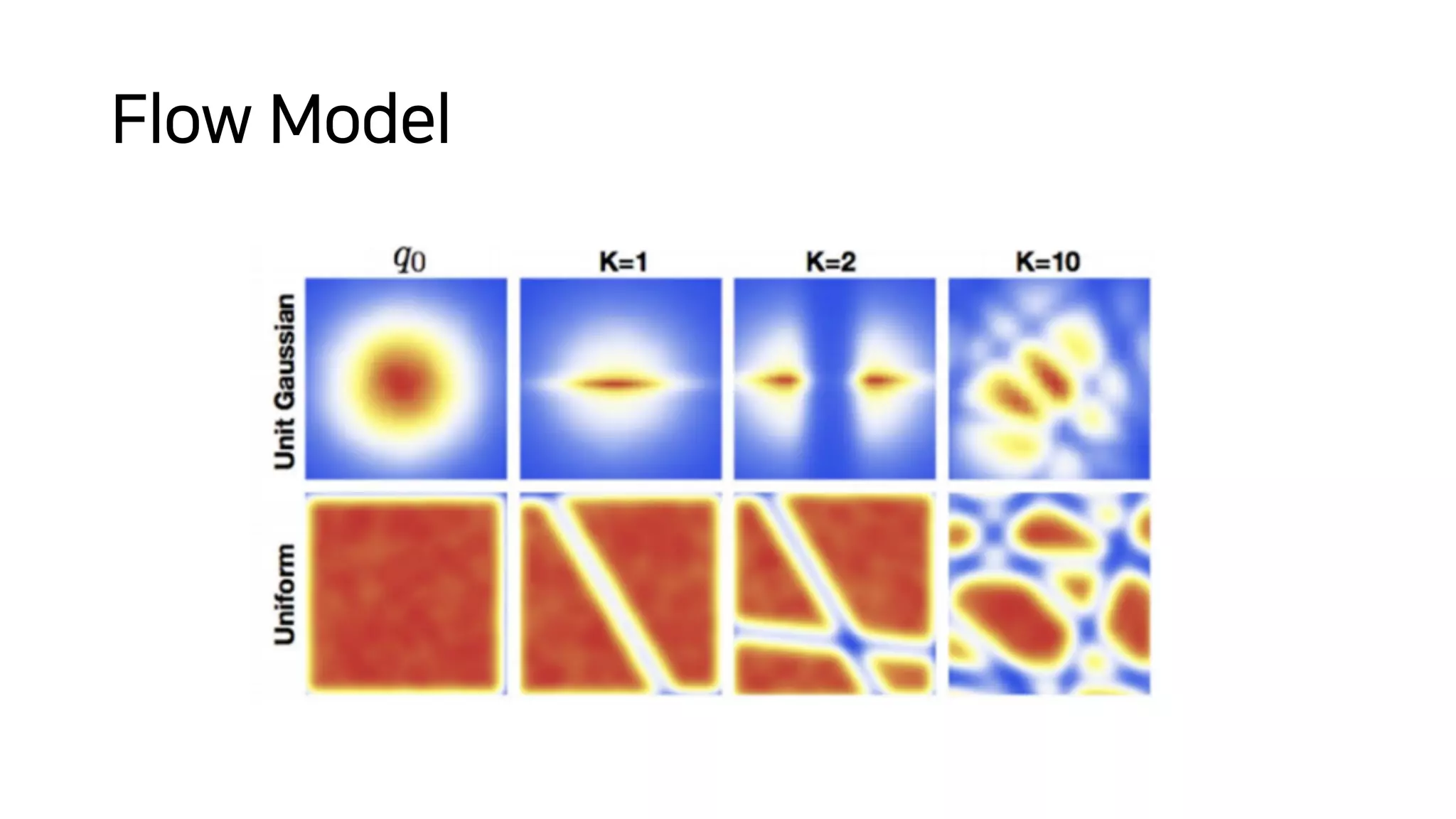
Flow Model
Flow Model
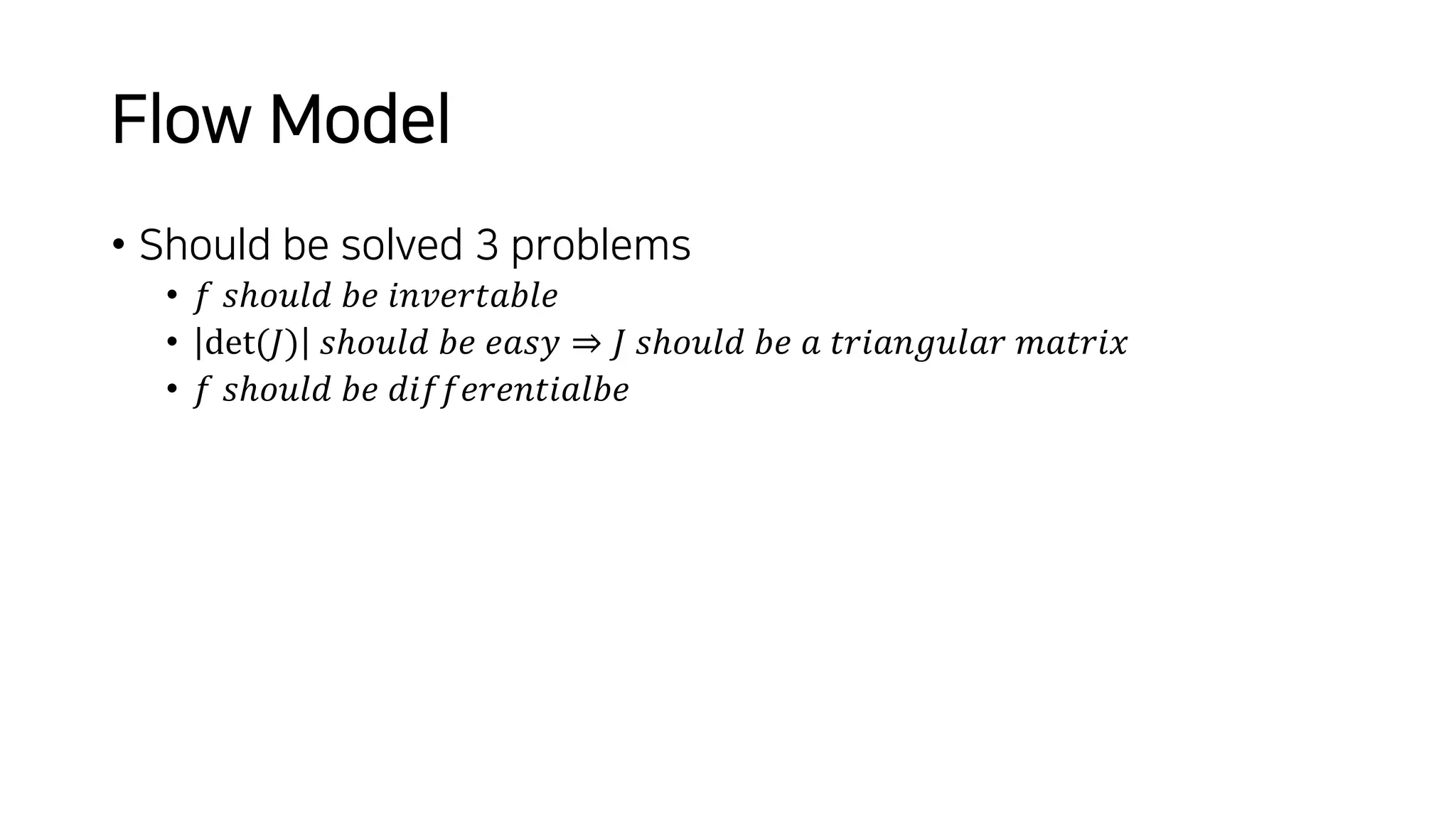
• Should be solved 3 problems
• 𝑓 𝑠ℎ𝑜𝑢𝑙𝑑 𝑏𝑒 𝑖𝑛𝑣𝑒𝑟𝑡𝑎𝑏𝑙𝑒
• det(𝐽) 𝑠ℎ𝑜𝑢𝑙𝑑 𝑏𝑒 𝑒𝑎𝑠𝑦 ⇒ 𝐽 𝑠ℎ𝑜𝑢𝑙𝑑 𝑏𝑒 𝑎 𝑡𝑟𝑖𝑎𝑛𝑔𝑢𝑙𝑎𝑟 𝑚𝑎𝑡𝑟𝑖𝑥
• 𝑓 𝑠ℎ𝑜𝑢𝑙𝑑 𝑏𝑒 𝑑𝑖𝑓𝑓𝑒𝑟𝑒𝑛𝑡𝑖𝑎𝑙𝑏𝑒
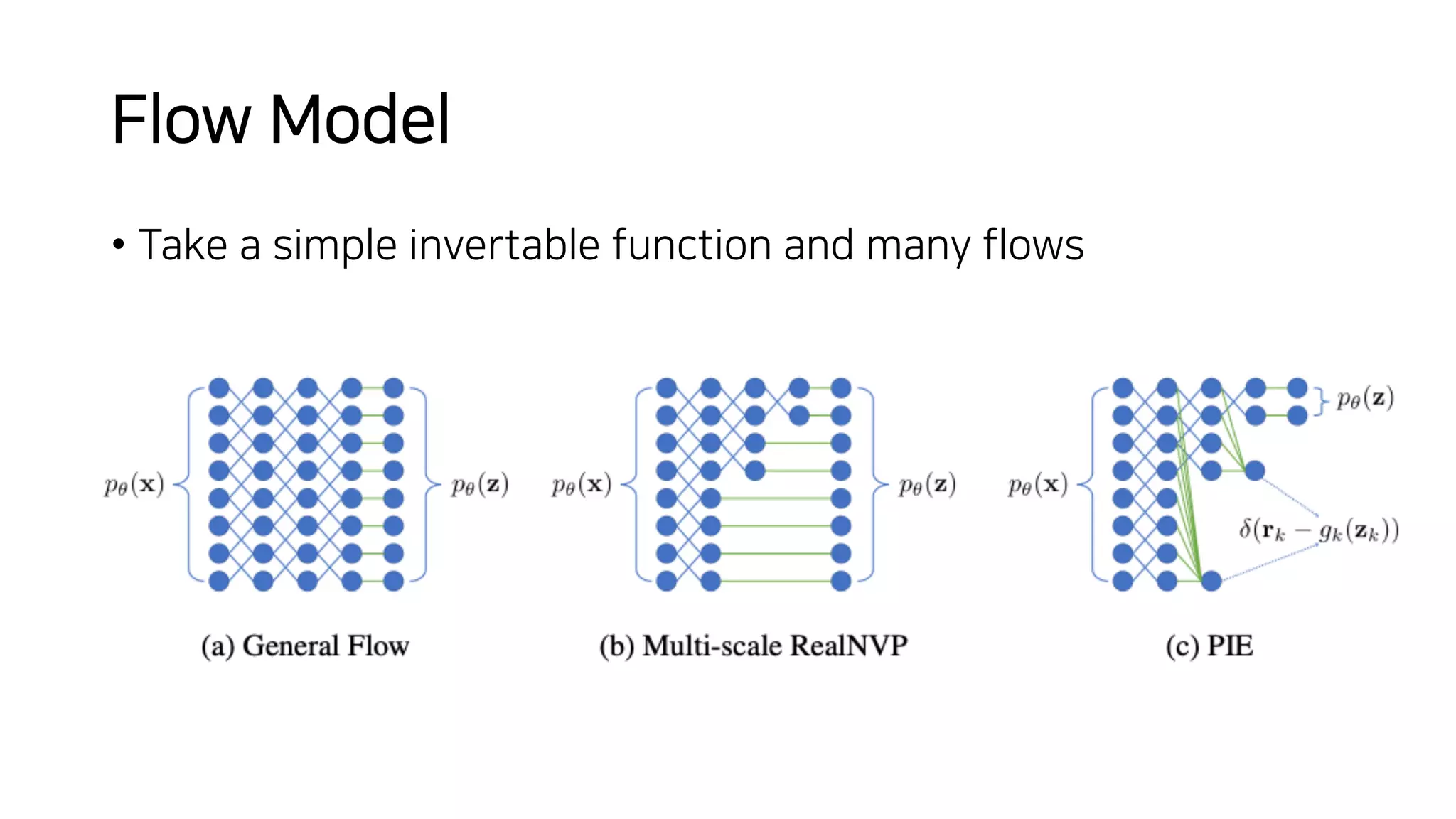
Flow Model
• Take a simple invertable function and many flows
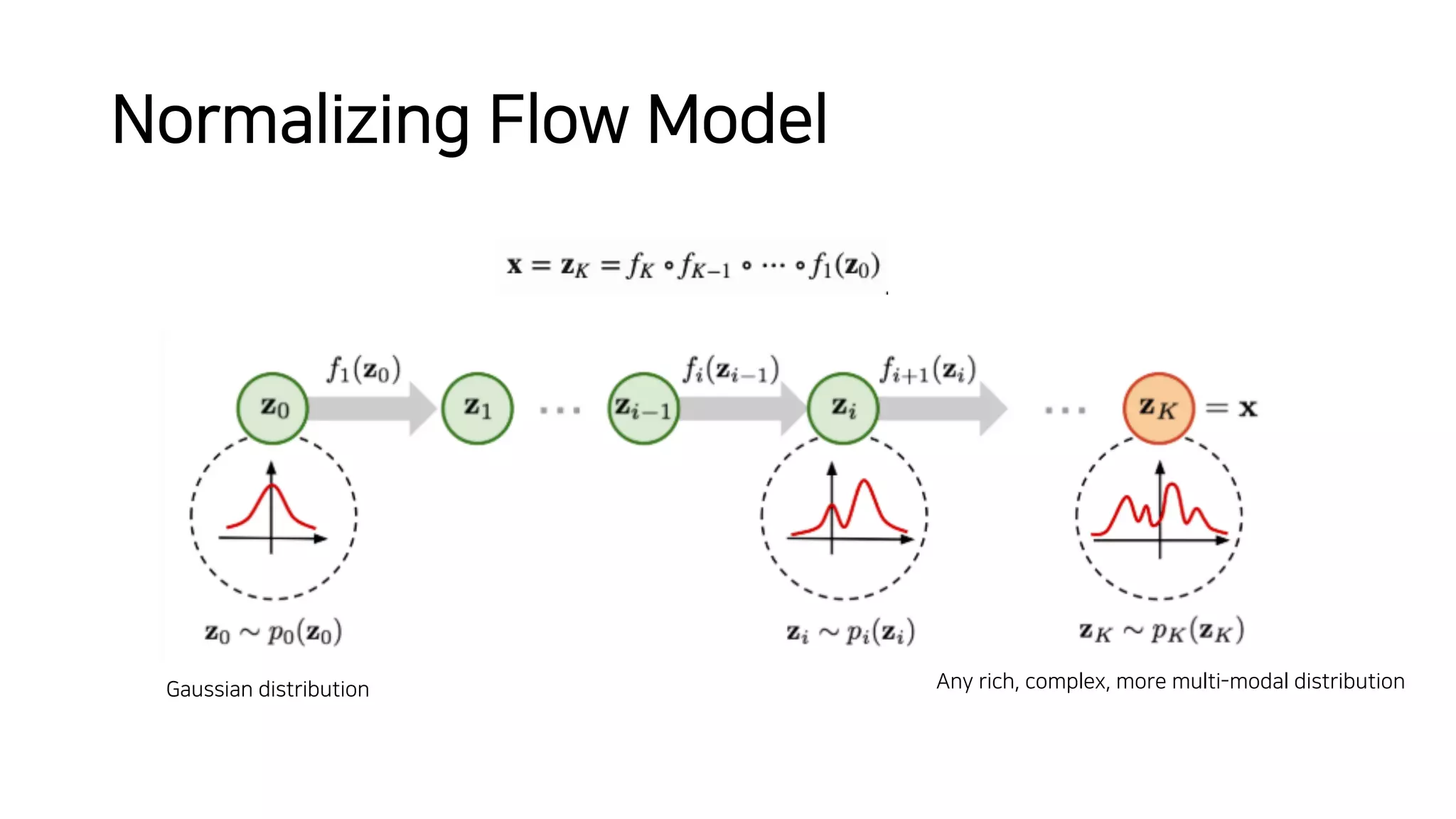
Normalizing Flow Model
Gaussian distribution Any rich, complex, more multi-modal distribution
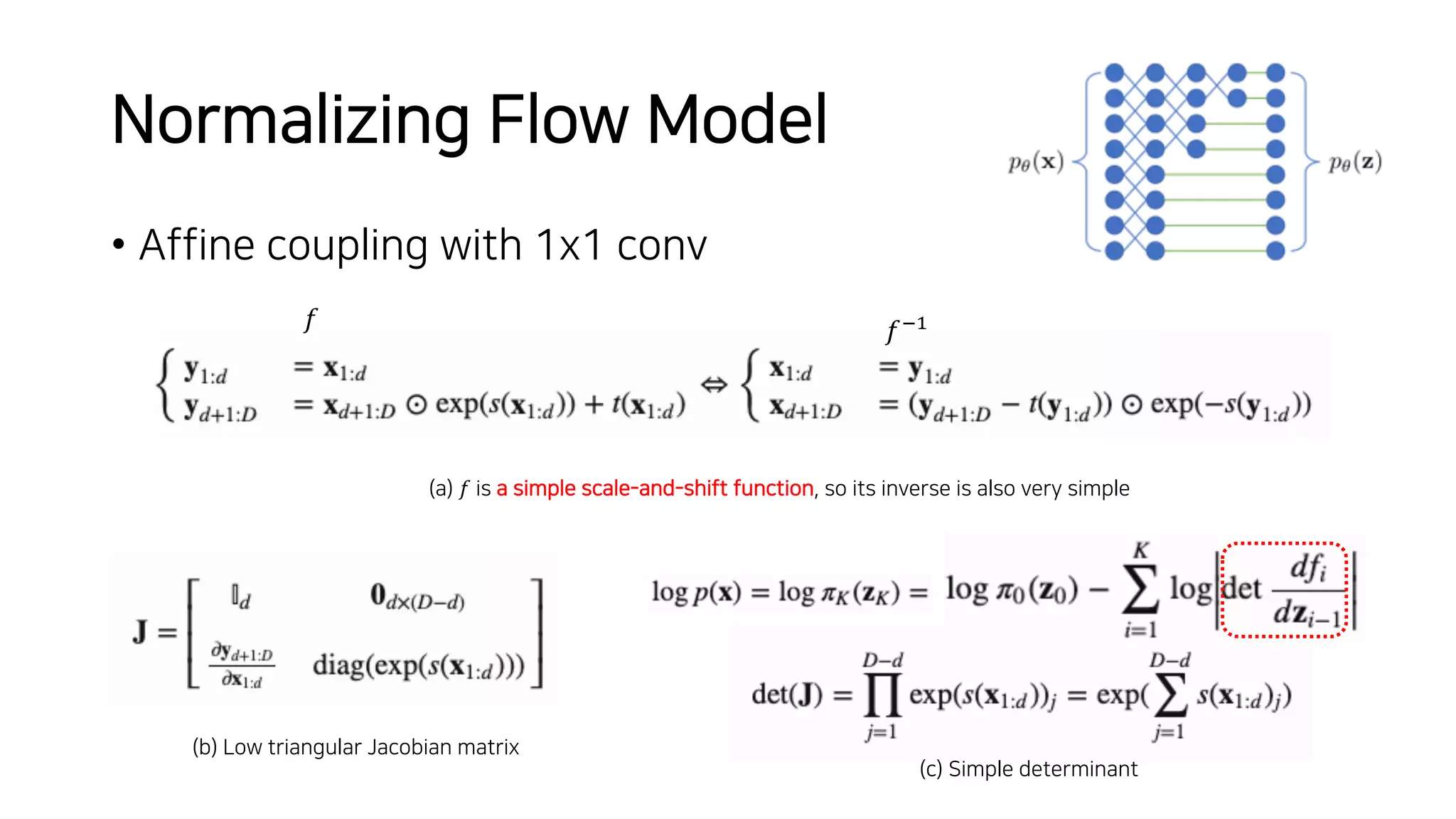
Normalizing Flow Model
• Affine coupling with 1x1 conv
𝑓 𝑓./
(a) 𝑓 is a simple scale-and-shift function, so its inverse is also very simple
(b) Low triangular Jacobian matrix
(c) Simple determinant
Flow Model
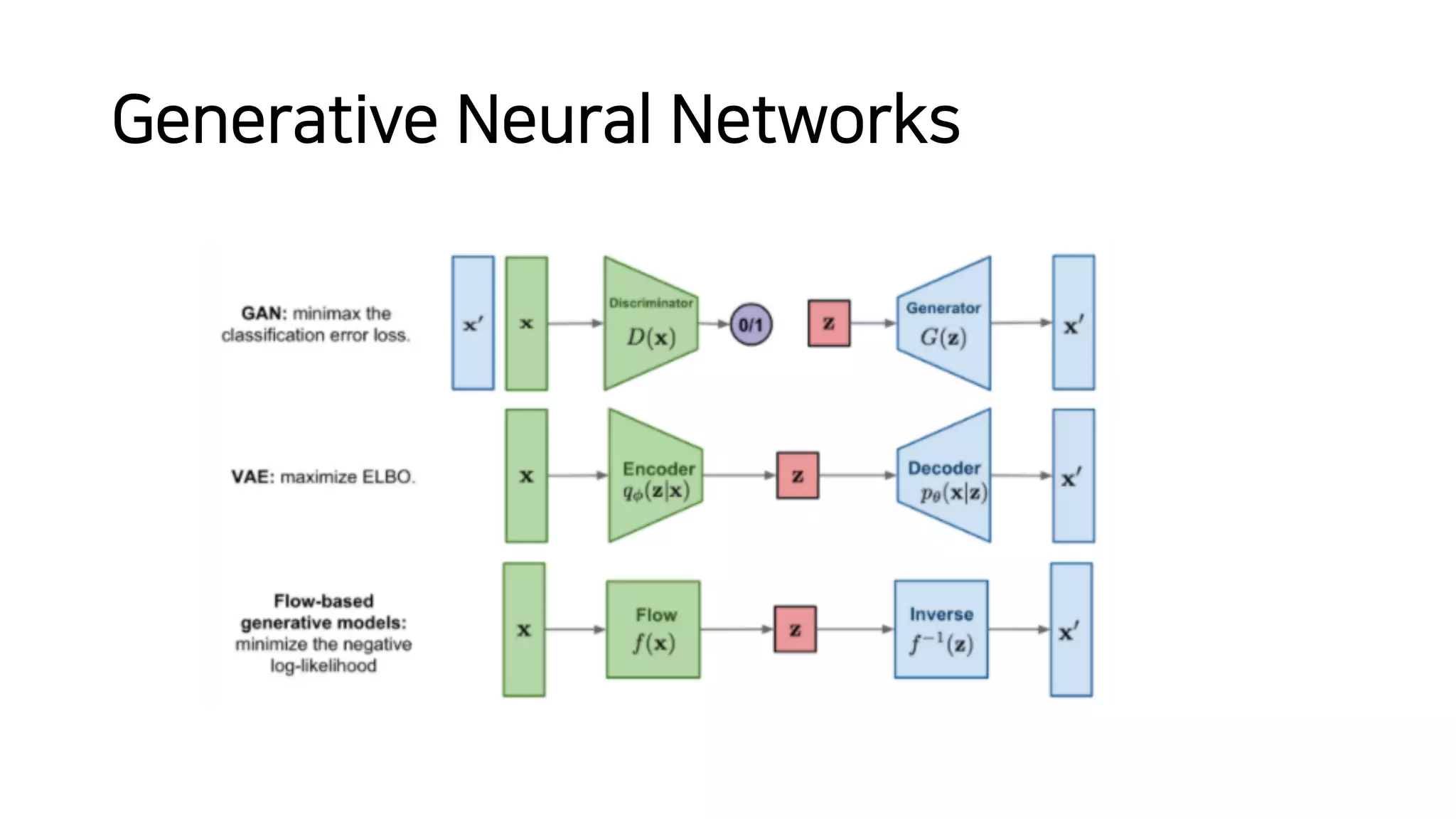
Generative Neural Networks

Normalizing flow

  • 1.
  • 2.
    Fully complete data •Data • Training 참고문헌: “기계학습”, 오일석
  • 3.
    Generation & Classification •Generation • Classification px = numpy.random.uniform(low=0.0, high=1.0)
  • 4.
    Real world • Highdim., Spare, Small, Correlated, Missing, Corrupted, Hidden,… 20x20 è 400 dim vector 10ms 1024 wave samples è 1024 dim vector or 80 dim melspectorgram vector
  • 5.
    Real world • Problemsin terms of Generation • Unstructed & Compex p(x), Sampling, Evaluation, … 𝑝!"#"(𝑥)𝑝(𝑥) Hidden structures or latents 𝑝$%!&'(𝑥)
  • 6.
    Latent variable Model •x = True component + Noise component 𝑝!(𝑥) 𝑧 𝑥′ 𝑥 = 𝑧 + 𝑒 Training max ! $ " 𝑙𝑜𝑔𝑝! 𝑥" = $ " 𝑙𝑜𝑔 $ # 𝑝$(𝑧) 𝑝!(𝑥" |𝑧) Evaluation 𝑝! 𝑥 = $ # 𝑝$(𝑧)𝑝!(𝑥|𝑧) Generation 𝑧 ~ 𝑝$(𝑧) 𝑥%~ 𝑝!(𝑥|𝑧) 𝑝"(𝑧)
  • 7.
    Variational Inference Model •If z is an impractical number of values or too complex 𝑧 𝑥′ 𝑥 = 𝑧 + 𝑒𝑝!(𝑥) Training max ! $ " 𝑙𝑜𝑔𝑝! 𝑥" = $ " 𝑙𝑜𝑔 $ # 𝑝$(𝑧) 𝑝!(𝑥" |𝑧) 𝑝! 𝑥 = ∫ 𝑝!(𝑧) 𝑝! 𝑥 𝑧 𝑑𝑧 intractable Evaluation 𝑝! 𝑧 𝑥 = 𝑝!(𝑥|𝑧)𝑝!(𝑧)/𝑝!(𝑥) intractable
  • 8.
    Variational Inference Model •Solution: Variational transformation 𝑧 𝑥′ 𝑥 = 𝑧 + 𝑒 𝑝!∗(𝑧|𝑥) 𝑞∅∗(𝑧|𝑥) 𝐸𝑛𝑐𝑜𝑑𝑒𝑟 𝑞∅(𝑧|𝑥) 𝜇#|( ∑#|( training 𝜇(|# ∑(|# De𝑐𝑜𝑑𝑒𝑟 𝑝!(𝑥|𝑧) Generation
  • 9.
    Probability Density TransformationModel • How to do lossless estimation p(x) or p(z) ? • Linear probability density transformation 𝑥 𝑦 1 1 = 𝑓 𝑥, 𝑦 𝑑𝑥𝑑𝑦 = 1 T= 𝑎 𝑏 𝑐 𝑑 PDT 𝑣 𝑢 = 𝑓 𝑢, 𝑣 𝑑𝑢𝑑𝑣 = 1 1×1 = 1 𝑑𝑏 − 𝑏𝑐 == 𝑑𝑒𝑡 𝑎 𝑏 𝑐 𝑑 = 𝑎𝑑 − 𝑏𝑐 𝑦 𝑥
  • 10.
    Probability Density TransformationModel • Jacobian Matrix 𝑓),+ 𝑥, 𝑦 𝑑𝑥𝑑𝑦 = 𝑓,,- 𝑢, 𝑣 𝑑𝑢𝑑𝑣 è 𝑓,,- 𝑢, 𝑣 = 𝑓),+ 𝑥, 𝑦 𝑑𝑢𝑑𝑣 𝑑𝑥𝑑𝑦 ./ ∴ 𝑑𝑢𝑑𝑣 𝑑𝑥𝑑𝑦 = 𝑑𝑒𝑡 𝜕𝑢 𝜕𝑥 𝜕𝑢 𝜕𝑦 𝜕𝑣 𝜕𝑥 𝜕𝑣 𝜕𝑦
  • 11.
    Probability Density transformationModel • Non-linear probability density transformation with locally linearity source distribution Point density target distribution Globally non-linear Locally linear uniform distribution Simple Gaussian p(x) or p(z) Any complex p(x) or p(z) PDT: 𝑓 PDT 𝑓: 𝑊𝑥 + 𝑏 Shifted and scaled density PDT 𝑓: 𝑊𝑥 det(𝐽)
  • 12.
    Probability Density TransformationModel • If 𝑓 is not bijective A B C D E a b c d e z x 𝑓 (b) Generation A B C D E a b c d e z x 𝑓./ (a) Training ??? 𝑧 = 𝑓./ (𝑥) 𝑧~𝑝 𝑧 , 𝑥 = 𝑓(𝑧) (2) 1-to-Many problem (1) Sampling problem
  • 13.
    Probability Density TransformationModel • 𝑓 should be a bijective for Generative Model A B C D E a b c d e z x 𝑓 (b) Inference A B C D E a b c d e z x 𝑧 = 𝑓./(𝑥) (a) Training 𝑧~𝑝 𝑧 , 𝑥 = 𝑓(𝑧)
  • 14.
    Flow Model A distribution Anyrich, complex, more multi-modal distribution
  • 15.
  • 16.
    Flow Model • Shouldbe solved 3 problems • 𝑓 𝑠ℎ𝑜𝑢𝑙𝑑 𝑏𝑒 𝑖𝑛𝑣𝑒𝑟𝑡𝑎𝑏𝑙𝑒 • det(𝐽) 𝑠ℎ𝑜𝑢𝑙𝑑 𝑏𝑒 𝑒𝑎𝑠𝑦 ⇒ 𝐽 𝑠ℎ𝑜𝑢𝑙𝑑 𝑏𝑒 𝑎 𝑡𝑟𝑖𝑎𝑛𝑔𝑢𝑙𝑎𝑟 𝑚𝑎𝑡𝑟𝑖𝑥 • 𝑓 𝑠ℎ𝑜𝑢𝑙𝑑 𝑏𝑒 𝑑𝑖𝑓𝑓𝑒𝑟𝑒𝑛𝑡𝑖𝑎𝑙𝑏𝑒
  • 17.
    Flow Model • Takea simple invertable function and many flows
  • 18.
    Normalizing Flow Model Gaussiandistribution Any rich, complex, more multi-modal distribution
  • 19.
    Normalizing Flow Model •Affine coupling with 1x1 conv 𝑓 𝑓./ (a) 𝑓 is a simple scale-and-shift function, so its inverse is also very simple (b) Low triangular Jacobian matrix (c) Simple determinant
  • 20.
  • 21.