Download to read offline
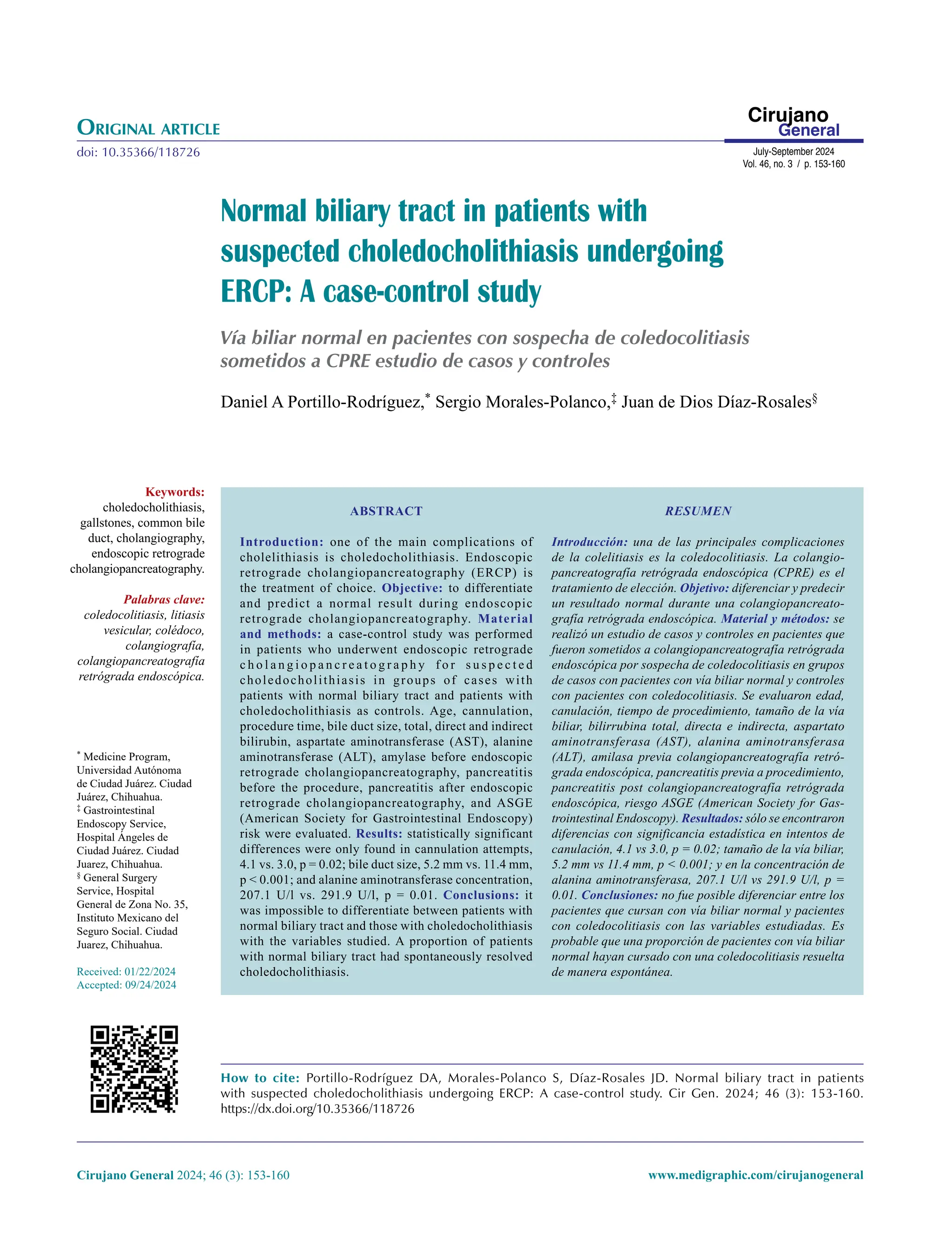
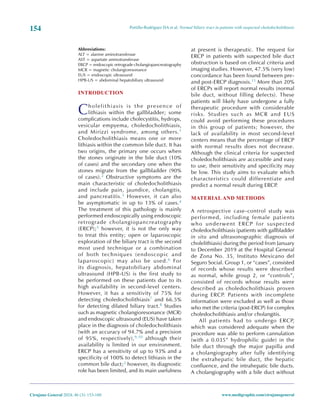

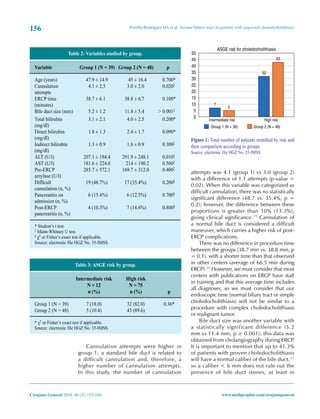


Introduction: one of the main complications of cholelithiasis is choledocholithiasis. Endoscopic retrograde cholangiopancreatography (ERCP) is the treatment of choice. Objective: to differentiate and predict a normal result during endoscopic retrograde cholangiopancreatography. Material and methods: a case-control study was performed in patients who underwent endoscopic retrograde c h o l a n g i o p a n c r e a t o g r a p h y f o r s u s p e c t e d choledocholithiasis in groups of cases with patients with normal biliary tract and patients with choledocholithiasis as controls. Age, cannulation, procedure time, bile duct size, total, direct and indirect bilirubin, aspartate aminotransferase (AST), alanine aminotransferase (ALT), amylase before endoscopic retrograde cholangiopancreatography, pancreatitis before the procedure, pancreatitis after endoscopic retrograde cholangiopancreatography, and ASGE (American Society for Gastrointestinal Endoscopy) risk were evaluated. Results: statistically significant differences were only found in cannulation attempts, 4.1 vs. 3.0, p = 0.02; bile duct size, 5.2 mm vs. 11.4 mm, p < 0.001; and alanine aminotransferase concentration, 207.1 U/l vs. 291.9 U/l, p = 0.01. Conclusions: it was impossible to differentiate between patients with normal biliary tract and those with choledocholithiasis with the variables studied. A proportion of patients with normal biliary tract had spontaneously resolved choledocholithiasis.


![Surgery cholangitis[1]](https://cdn.slidesharecdn.com/ss_thumbnails/surgery-cholangitis1-120601032247-phpapp01-thumbnail.jpg?width=640&height=640&fit=bounds)


