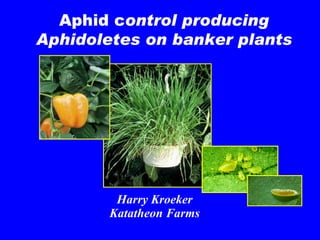
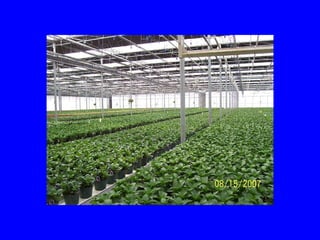
Aphid c ontrol producing A phidoletes on banker plants Harry Kroeker Katatheon Farms
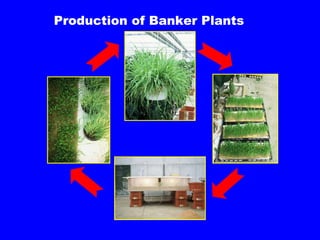
Production of Banker Plants
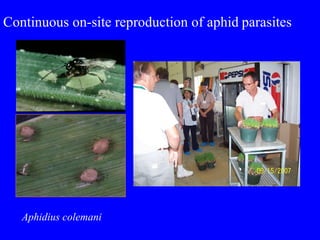
Continuous on-site reproduction of aphid   parasites Aphidius colemani
 
 
Guardian Plants In 2005, we began research on plants that could serve as natural enemy habitat. In the process, we learned that there are plants that can both pull pests and support their natural enemies Indicator and trap plants pull pests Habitat and banker plants support natural enemy reproduction The term Guardian Plant includes all these functions
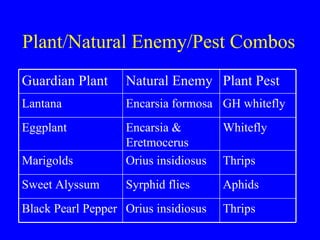
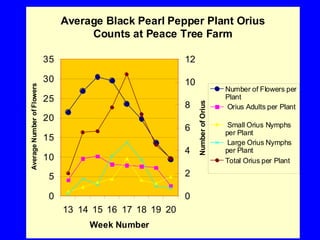
Plant/Natural Enemy/Pest Combos Thrips Orius insidiosus Black Pearl Pepper Aphids Syrphid flies Sweet Alyssum Thrips Orius insidiosus Marigolds Whitefly Encarsia & Eretmocerus Eggplant GH whitefly Encarsia formosa Lantana Plant Pest Natural Enemy Guardian Plant
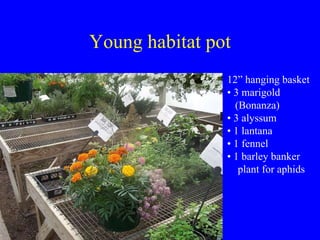
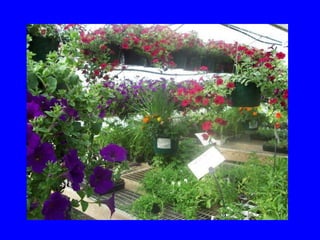
Young habitat pot 12” hanging basket •  3 marigold    (Bonanza) •  3 alyssum •  1 lantana •  1 fennel •  1 barley banker   plant for aphids
 
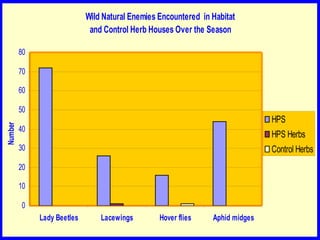
The Habitat Baskets supported both native & introduced natural enemies   Native naturally occurring natural enemies Natural enemies produced on-site by active efforts of grower Natural enemies purchased by grower and released
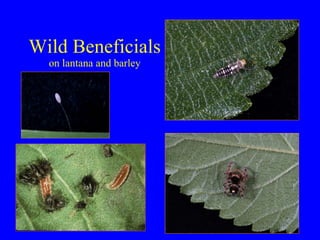
Wild Beneficials  on lantana and barley
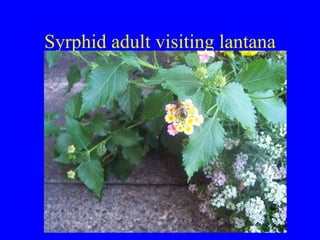
Syrphid adult visiting lantana
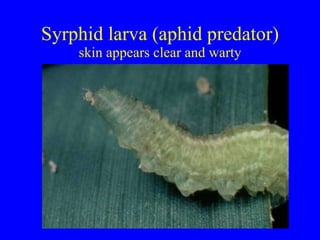
Syrphid larva (aphid predator) skin appears clear and warty
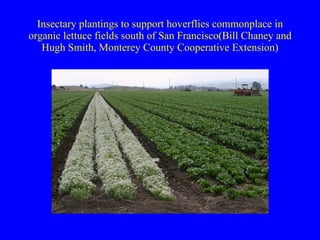
Insectary plantings to support hoverflies commonplace in organic lettuce fields south of San Francisco(Bill Chaney and Hugh Smith, Monterey County Cooperative Extension)
 
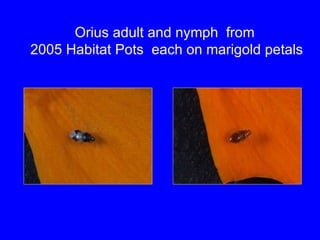
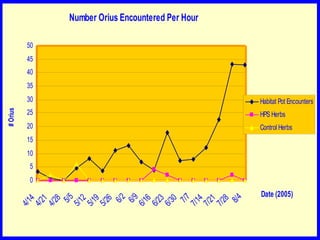
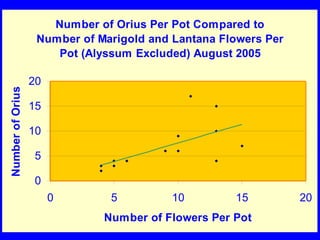
Orius adult and nymph  from  2005 Habitat Pots  each on marigold petals


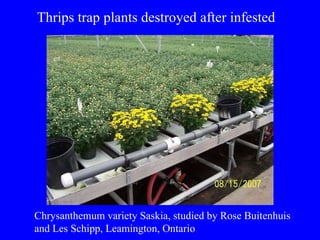
Thrips trap plants destroyed after infested Chrysanthemum variety Saskia, studied by Rose Buitenhuis  and Les Schipp, Leamington, Ontario
 
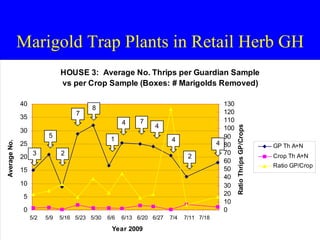
Marigold Trap Plants in Retail Herb GH
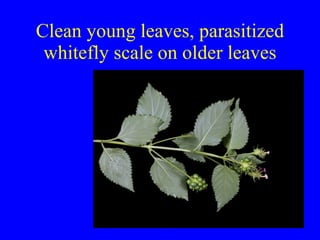
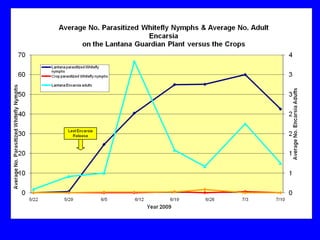
Clean young leaves, parasitized whitefly scale on older leaves
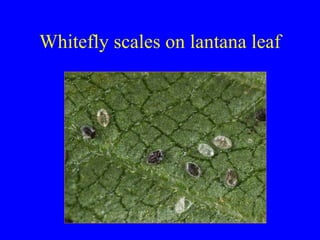
Whitefly scales on lantana leaf
 
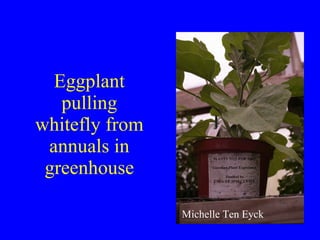
Eggplant pulling whitefly from annuals in greenhouse Michelle Ten Eyck
 
 
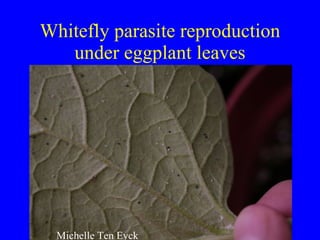
Whitefly parasite reproduction under eggplant leaves Michelle Ten Eyck
Benefits Save time detecting pests, beneficials Produce natural enemies and assure yourself a steady supply no matter what the shipping situation is Cut shipping costs Ideally, this will be an efficient way to evaluate pest/natural enemy balance
Challenges Labor for care in special watering and grooming “ Alternate” pests: eggplant is also likely to harbor aphids, spider mites and thrips, marigolds: spider mites and whiteflies Wilted or unhealthy plants may “shed” pests to surrounding plants
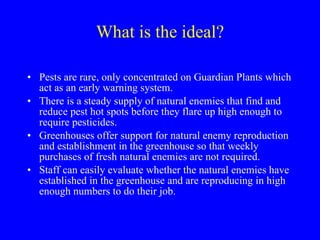
What is the ideal? Pests are rare, only concentrated on Guardian Plants which act as an early warning system.  There is a steady supply of natural enemies that find and reduce pest hot spots before they flare up high enough to require pesticides.  Greenhouses offer support for natural enemy reproduction and establishment in the greenhouse so that weekly purchases of fresh natural enemies are not required. Staff can easily evaluate whether the natural enemies have established in the greenhouse and are reproducing in high enough numbers to do their job.
 
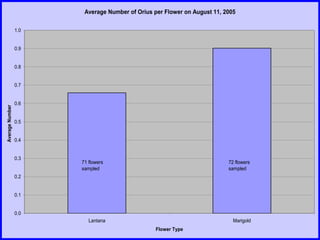
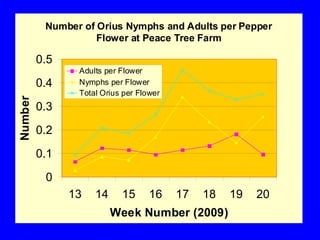
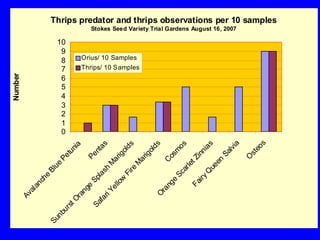
Orius nearly 1.8 times as frequent as thrips. A maximum of 2 Orius observed per sample with an average of 1 Orius per 3 samples No thrips observed on Pentas, Cosmos, Sunburst Orange Splash, Zinnias, Salvia. No Orius observed on Petunias. No thrips occurred in one of the flowers that had an Orius.
Please Join Us Discover and evaluate Guardian Plants Contribute to Guardian Plant Database Contact carolg@ipmlabs.com
Acknowledgements Anna Luczynski, consultant and Katatheon Farms Mark Yadon, Mischler’s Florist and Greenhouse Reenie Sandsted and Cathy Kessler, Bakers Acres of N. Lansing  USDA Northeast Sustainable Agriculture Research and Education Grants ONE05-03, ONE06-056 and ONE07-071 Joe Ogrodnick, NYS Agricultural Experiment Station Dr. Kevin Zippel, Michelle Ten Eyck, and Dr. Sally Newman NE IPM Center Grants  3376-IPM-USDA-2103 & 3613 IPML-USDA-8446 Margaret Skinner and Cheryl Frank, University of Vermont Joe Volpe and Lloyd Traven, Peace Tree Farm, Kintnersville, PA

Plant Health Care for Interior - Glenister

  • 1.
  • 2.
    Aphid c ontrolproducing A phidoletes on banker plants Harry Kroeker Katatheon Farms
  • 3.
  • 4.
    Continuous on-site reproductionof aphid parasites Aphidius colemani
  • 5.
  • 6.
  • 7.
    Guardian Plants In2005, we began research on plants that could serve as natural enemy habitat. In the process, we learned that there are plants that can both pull pests and support their natural enemies Indicator and trap plants pull pests Habitat and banker plants support natural enemy reproduction The term Guardian Plant includes all these functions
  • 8.
    Plant/Natural Enemy/Pest CombosThrips Orius insidiosus Black Pearl Pepper Aphids Syrphid flies Sweet Alyssum Thrips Orius insidiosus Marigolds Whitefly Encarsia & Eretmocerus Eggplant GH whitefly Encarsia formosa Lantana Plant Pest Natural Enemy Guardian Plant
  • 9.
    Young habitat pot12” hanging basket • 3 marigold (Bonanza) • 3 alyssum • 1 lantana • 1 fennel • 1 barley banker plant for aphids
  • 10.
  • 11.
    The Habitat Basketssupported both native & introduced natural enemies Native naturally occurring natural enemies Natural enemies produced on-site by active efforts of grower Natural enemies purchased by grower and released
  • 12.
    Wild Beneficials on lantana and barley
  • 13.
  • 14.
    Syrphid larva (aphidpredator) skin appears clear and warty
  • 15.
    Insectary plantings tosupport hoverflies commonplace in organic lettuce fields south of San Francisco(Bill Chaney and Hugh Smith, Monterey County Cooperative Extension)
  • 16.
  • 17.
    Orius adult andnymph from 2005 Habitat Pots each on marigold petals
  • 18.
  • 19.
  • 20.
  • 21.
  • 22.
  • 23.
  • 24.
    Thrips trap plantsdestroyed after infested Chrysanthemum variety Saskia, studied by Rose Buitenhuis and Les Schipp, Leamington, Ontario
  • 25.
  • 26.
    Marigold Trap Plantsin Retail Herb GH
  • 27.
    Clean young leaves,parasitized whitefly scale on older leaves
  • 28.
    Whitefly scales onlantana leaf
  • 29.
  • 30.
    Eggplant pulling whiteflyfrom annuals in greenhouse Michelle Ten Eyck
  • 31.
  • 32.
  • 33.
    Whitefly parasite reproductionunder eggplant leaves Michelle Ten Eyck
  • 34.
    Benefits Save timedetecting pests, beneficials Produce natural enemies and assure yourself a steady supply no matter what the shipping situation is Cut shipping costs Ideally, this will be an efficient way to evaluate pest/natural enemy balance
  • 35.
    Challenges Labor forcare in special watering and grooming “ Alternate” pests: eggplant is also likely to harbor aphids, spider mites and thrips, marigolds: spider mites and whiteflies Wilted or unhealthy plants may “shed” pests to surrounding plants
  • 36.
    What is theideal? Pests are rare, only concentrated on Guardian Plants which act as an early warning system. There is a steady supply of natural enemies that find and reduce pest hot spots before they flare up high enough to require pesticides. Greenhouses offer support for natural enemy reproduction and establishment in the greenhouse so that weekly purchases of fresh natural enemies are not required. Staff can easily evaluate whether the natural enemies have established in the greenhouse and are reproducing in high enough numbers to do their job.
  • 37.
  • 38.
    Orius nearly 1.8times as frequent as thrips. A maximum of 2 Orius observed per sample with an average of 1 Orius per 3 samples No thrips observed on Pentas, Cosmos, Sunburst Orange Splash, Zinnias, Salvia. No Orius observed on Petunias. No thrips occurred in one of the flowers that had an Orius.
  • 39.
    Please Join UsDiscover and evaluate Guardian Plants Contribute to Guardian Plant Database Contact carolg@ipmlabs.com
  • 40.
    Acknowledgements Anna Luczynski,consultant and Katatheon Farms Mark Yadon, Mischler’s Florist and Greenhouse Reenie Sandsted and Cathy Kessler, Bakers Acres of N. Lansing USDA Northeast Sustainable Agriculture Research and Education Grants ONE05-03, ONE06-056 and ONE07-071 Joe Ogrodnick, NYS Agricultural Experiment Station Dr. Kevin Zippel, Michelle Ten Eyck, and Dr. Sally Newman NE IPM Center Grants 3376-IPM-USDA-2103 & 3613 IPML-USDA-8446 Margaret Skinner and Cheryl Frank, University of Vermont Joe Volpe and Lloyd Traven, Peace Tree Farm, Kintnersville, PA

Editor's Notes

  • #3 I prepared this presentation for the grower and he presented it at IPM days at Kwnatlen. He is one of most innovated growers when biocontrol is concerned. You may remember him from IOBC conference – you visited his greenhouse.
  • #4 This is how he produced his banker plants. He seeded rye inside the greenhouse using rockwool as a media. When rye was about 2 inches long he poted it and moved into the box where he infested it with the grain aphid (see Aphids part2). The box was made of a wooden frame covered with a breathable white fabric and had a light inside. When grain aphids established on the rye he moved the pots into the greenhouse.
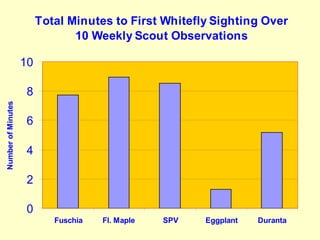
  • #32 Here the time to first detection of whitefly is totaled over 10 weekly observations.
  • #33 We are really interested to see if the plants adjacent to the eggplants have more or fewer whitefly than plants that are farther away from the eggplants. You can see here that the adjacent poinsettias normally have fewer whitefly. This seems to indicate that the eggplants are pulling the whiteflies away from the poinsettias near them.