BILL NEWLAND
bill@utterclarity.co.uk
@UtterClarity
billnewland
NO ONIONS, NO TIERS
AN INTRODUCTION TO VERTICAL SLICE ARCHITECTURE
DISCLAIMER
This talk is not about microservices.
Any resemblance to microservices living or
departed are purely coincidental.
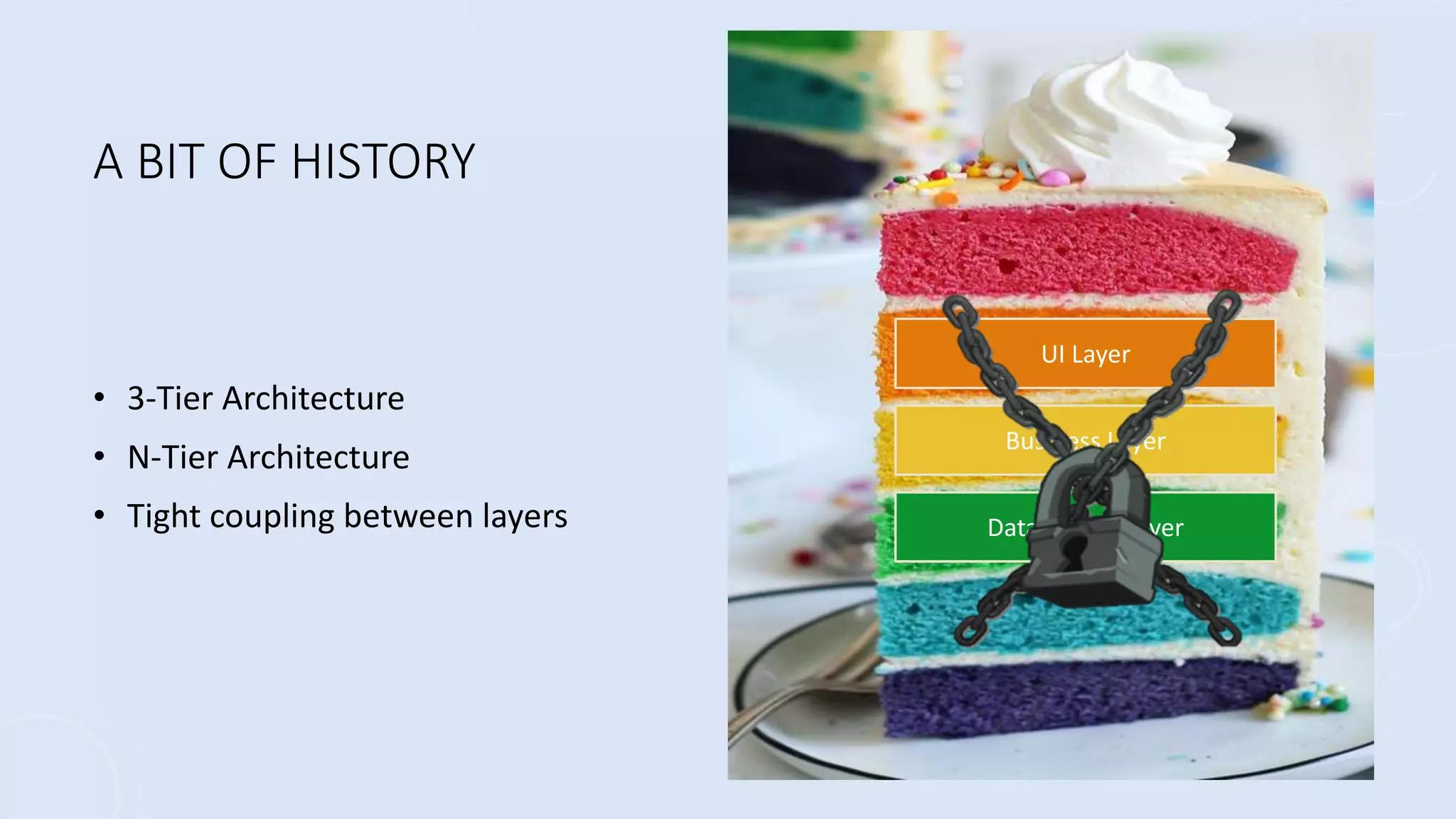
Database
Data Access Layer
UI Layer
Business Layer
A BIT OF HISTORY
• 3-Tier Architecture
• N-Tier Architecture
• Tight coupling between layers
UI
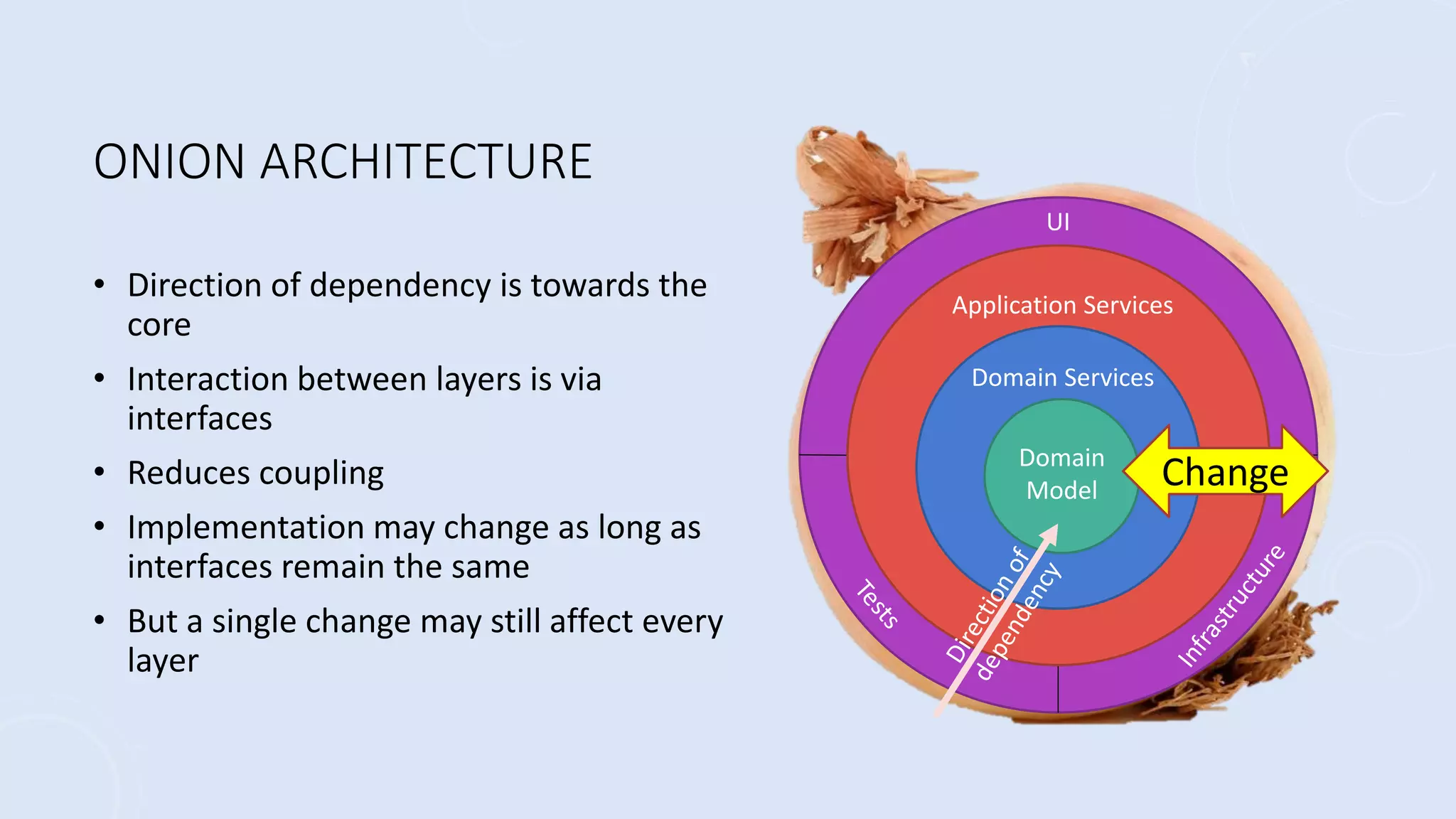
ONION ARCHITECTURE
• Direction of dependency is towards the
core
• Interaction between layers is via
interfaces
• Reduces coupling
• Implementation may change as long as
interfaces remain the same
• But a single change may still affect every
layer
Application Services
Domain Services
Domain
Model Change
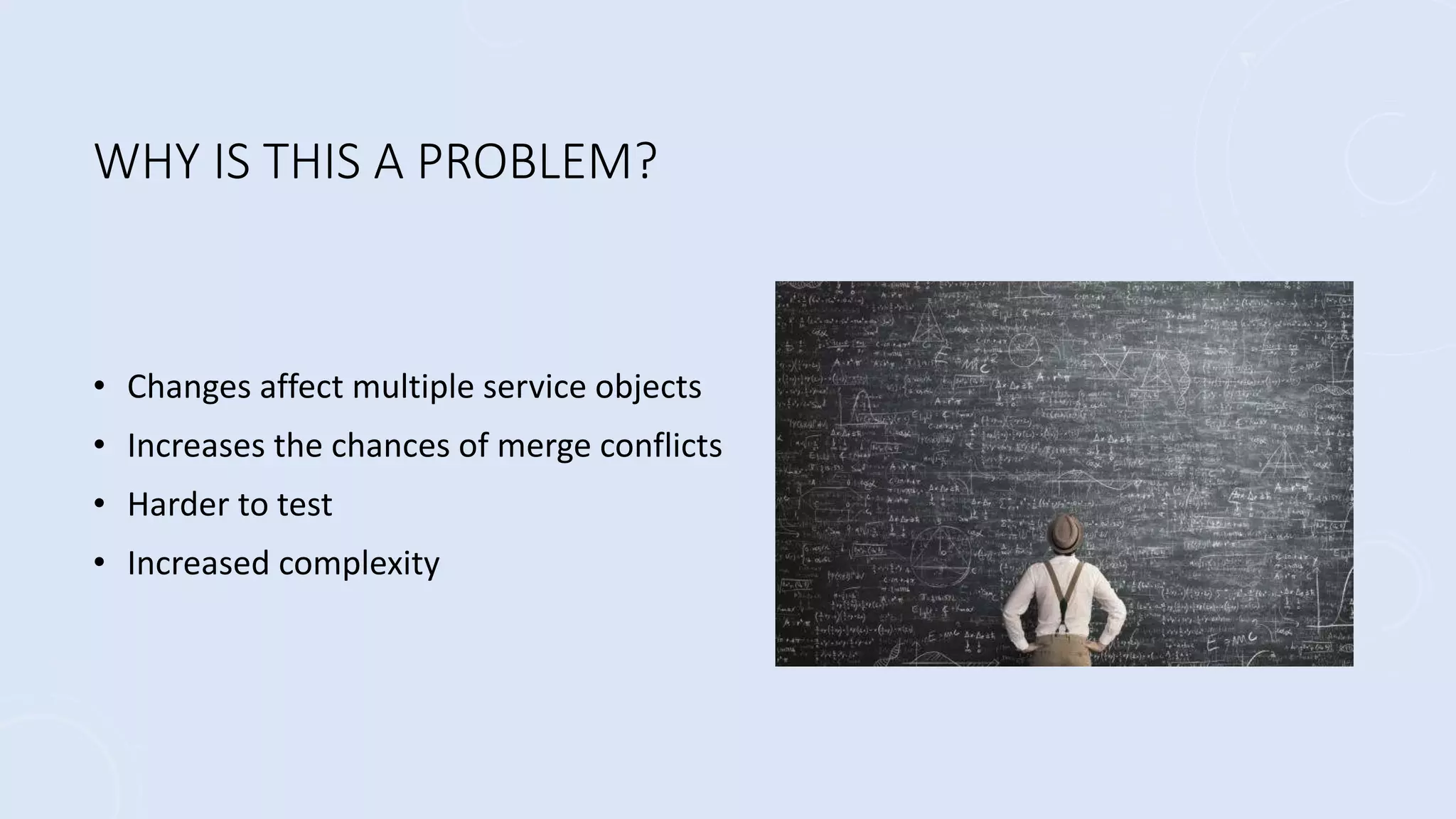
WHY IS THIS A PROBLEM?
• Changes affect multiple service objects
• Increases the chances of merge conflicts
• Harder to test
• Increased complexity
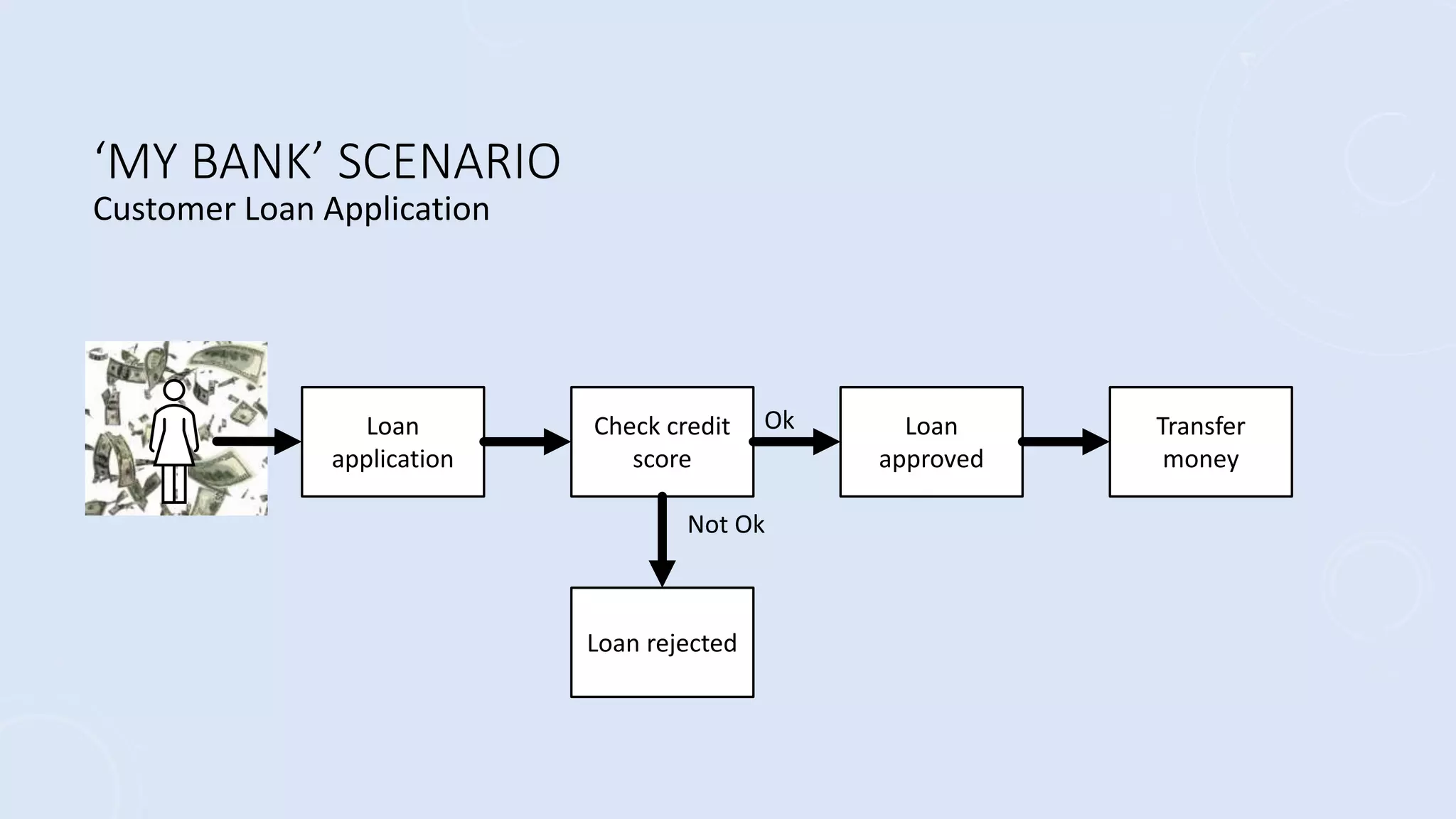
‘MY BANK’ SCENARIO
Customer Loan Application
Loan
application
Check credit
score
Loan rejected
Loan
approved
Transfer
money
Ok
Not Ok
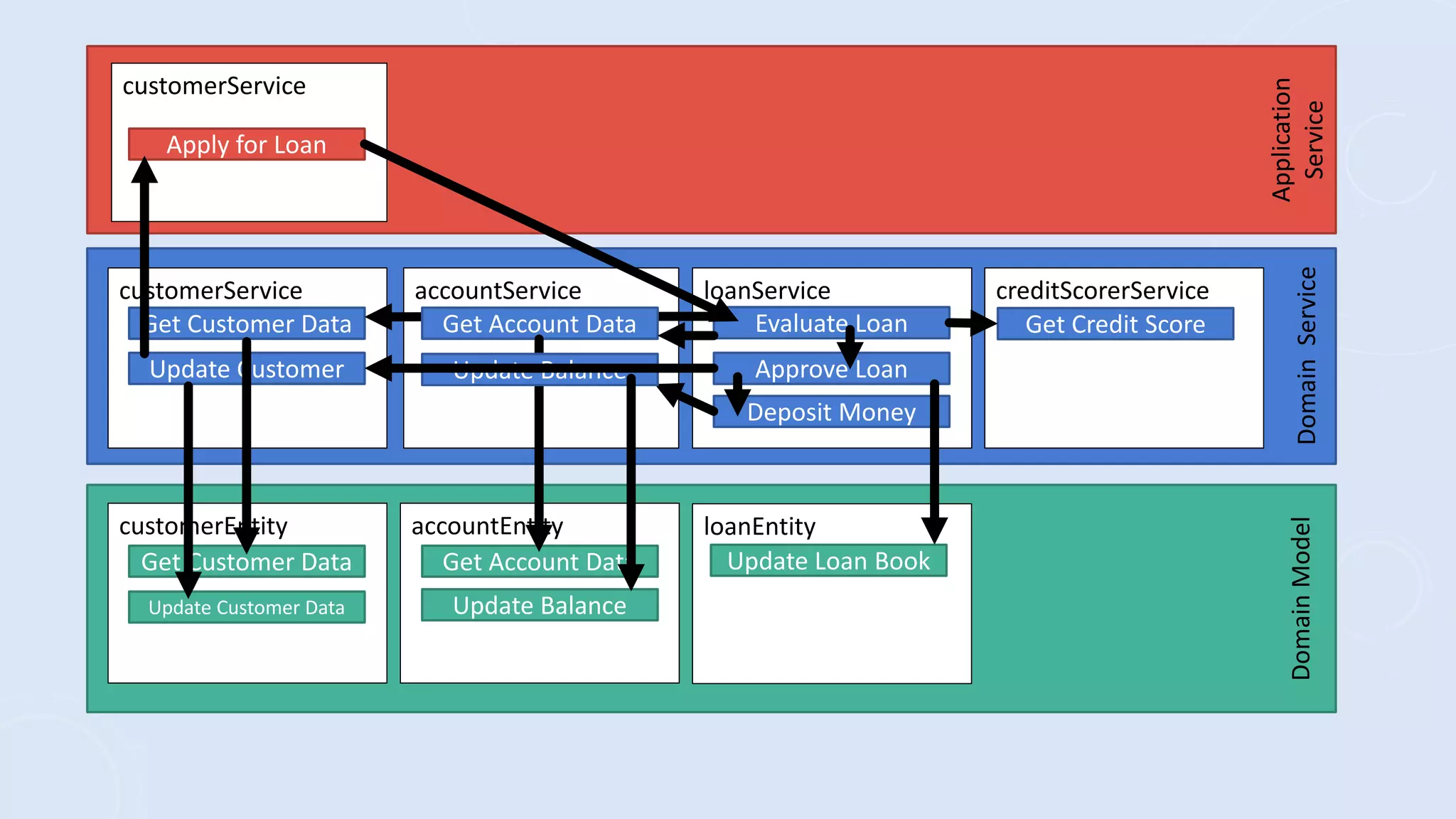
customerService
customerService accountService loanService
customerEntity accountEntity loanEntity
Apply for Loan
Get Customer Data
Get Customer Data Get Account Data
Evaluate Loan
Update Loan Book
Approve Loan
creditScorerService
Get Credit Score
Deposit Money
Update Balance
Update Customer
Get Account Data
Update Balance
Application
Service
Domain
Service
Domain
Model
Update Customer Data
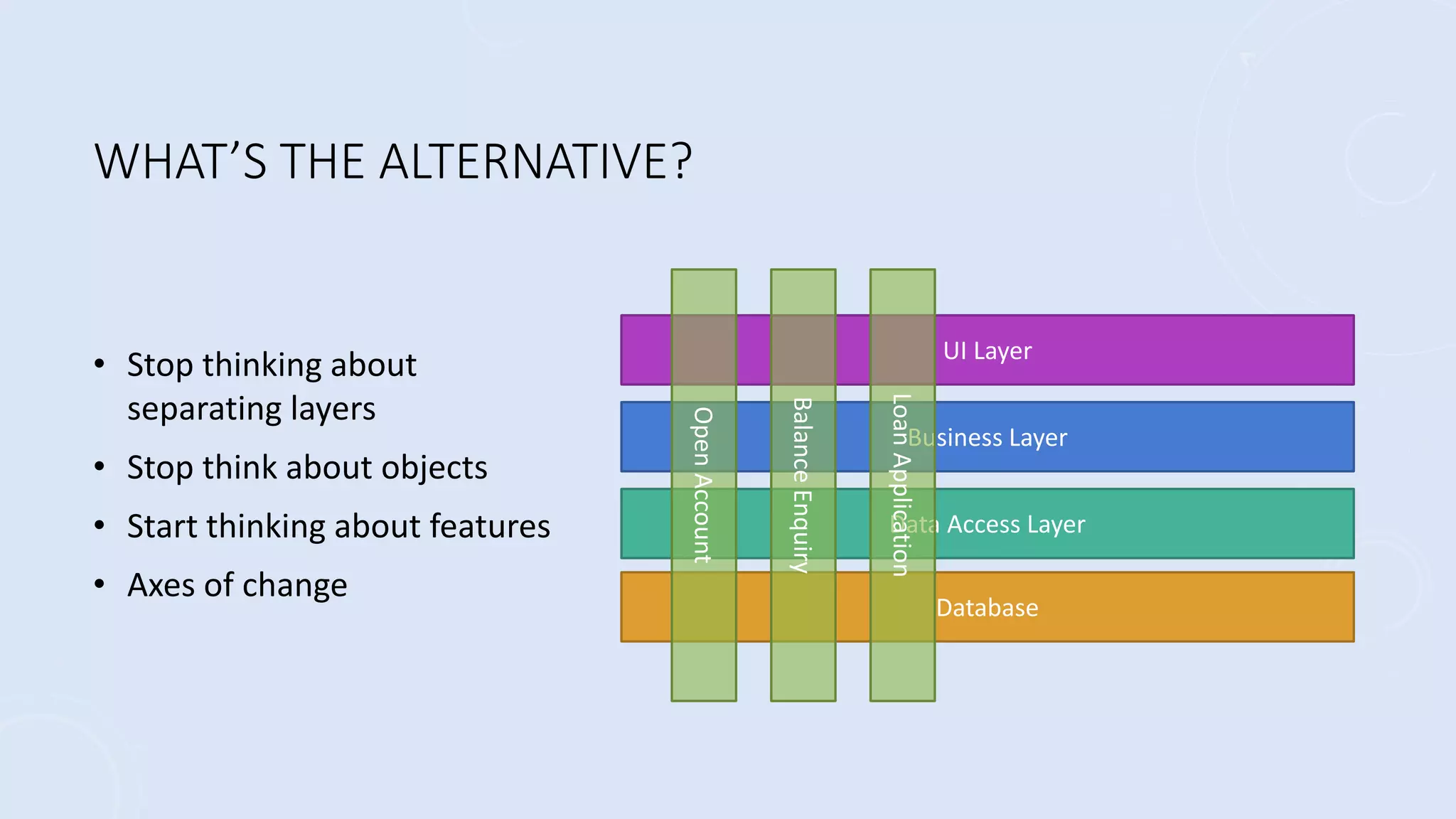
WHAT’S THE ALTERNATIVE?
• Stop thinking about
separating layers
• Stop think about objects
• Start thinking about features
• Axes of change
UI Layer
Business Layer
Data Access Layer
Database
Open
Account
Balance
Enquiry
Loan
Application
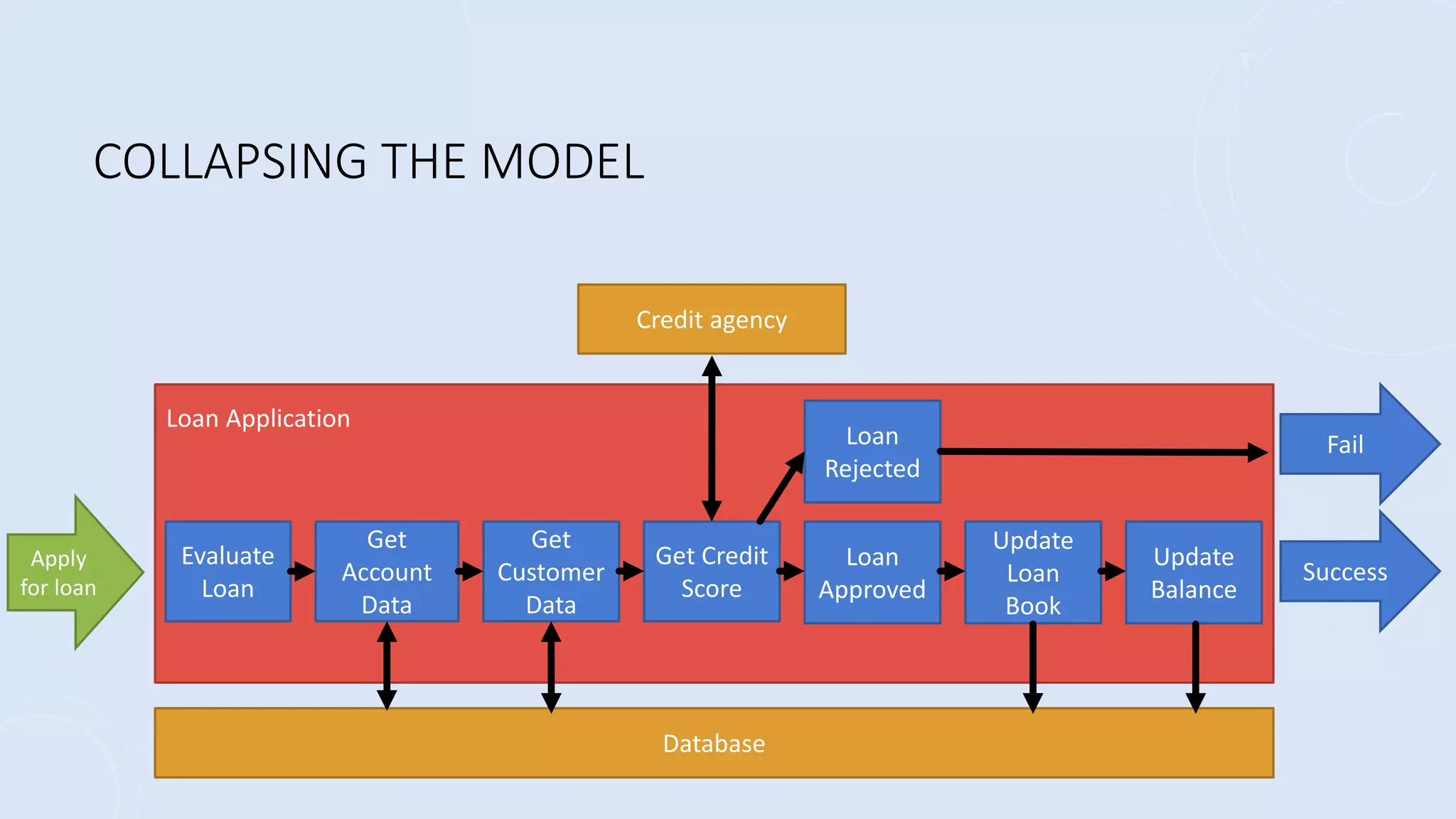
Loan Application
COLLAPSING THE MODEL
Get
Customer
Data
Evaluate
Loan
Loan
Approved
Get Credit
Score
Update
Loan
Book
Get
Account
Data
Update
Balance
Database
Credit agency
Apply
for loan
Success
Loan
Rejected
Fail
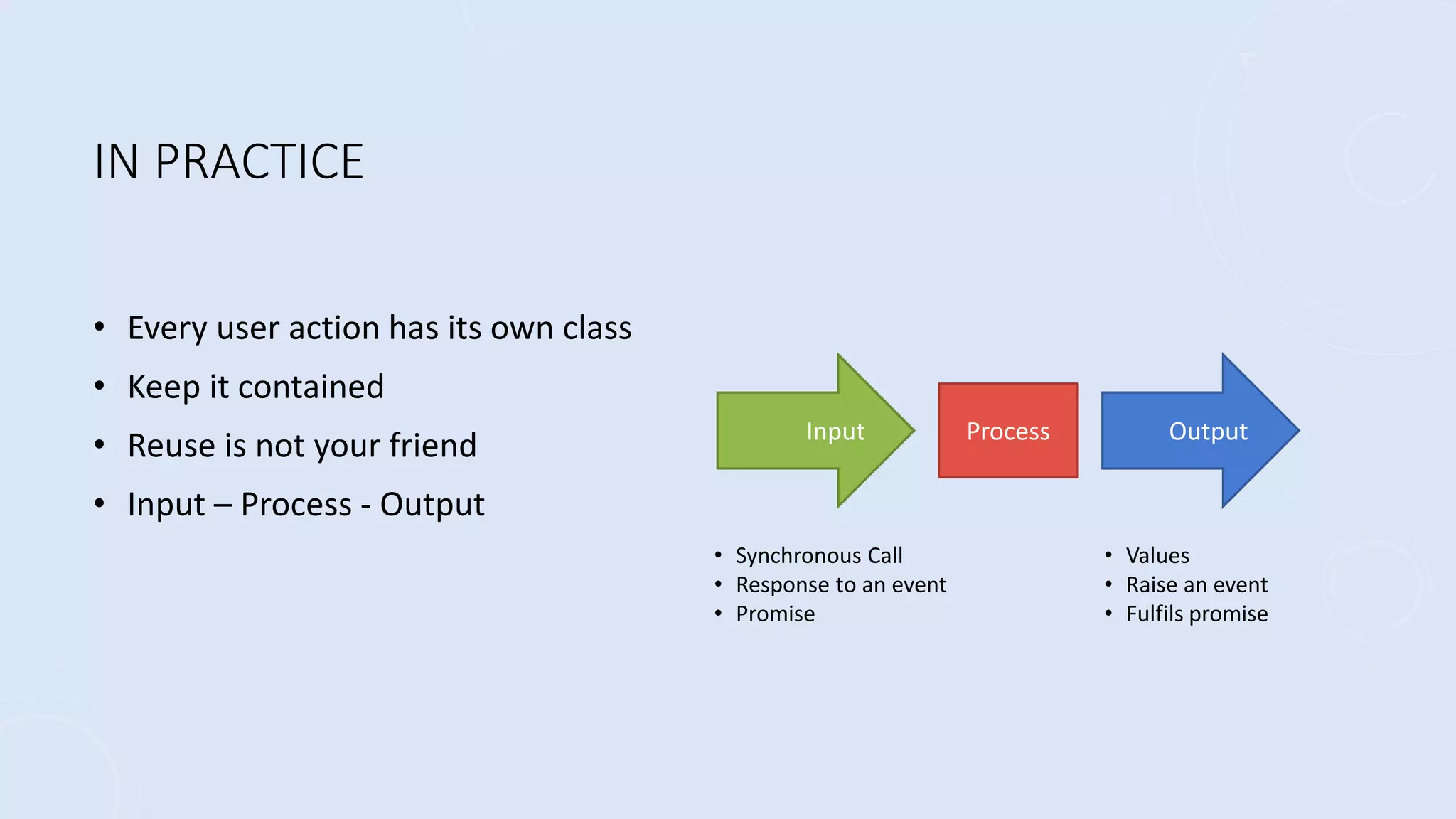
IN PRACTICE
• Every user action has its own class
• Keep it contained
• Reuse is not your friend
• Input – Process - Output
Input Output
Process
• Synchronous Call
• Response to an event
• Promise
• Values
• Raise an event
• Fulfils promise
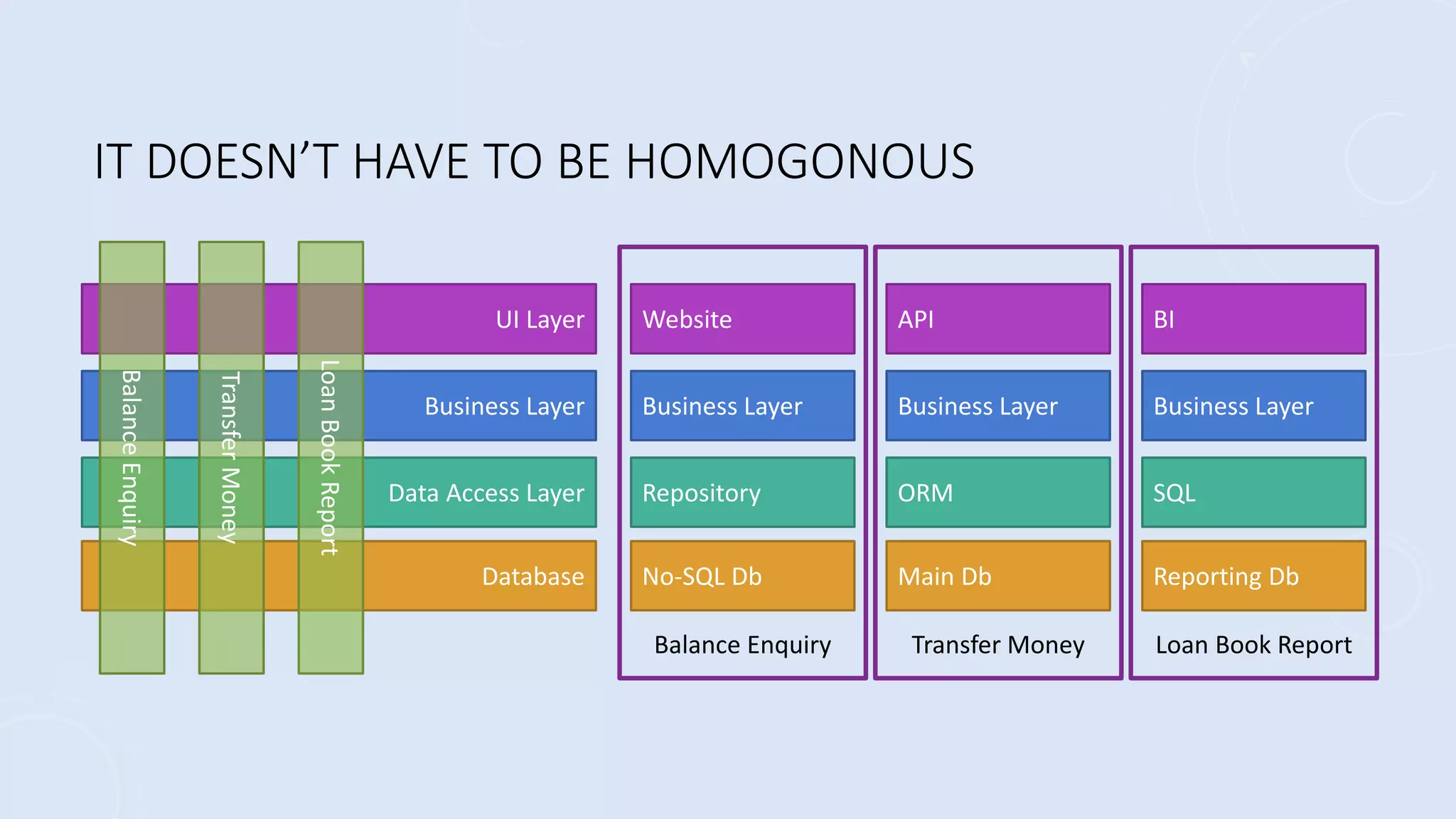
IT DOESN’T HAVE TO BE HOMOGONOUS
UI Layer
Business Layer
Data Access Layer
Database
Balance
Enquiry
Transfer
Money
Loan
Book
Report Website
Business Layer
Repository
No-SQL Db
Balance Enquiry
API
Business Layer
ORM
Main Db
Transfer Money
BI
Business Layer
SQL
Reporting Db
Loan Book Report
https://mybank.co.uk
…
…
…
…
…
…
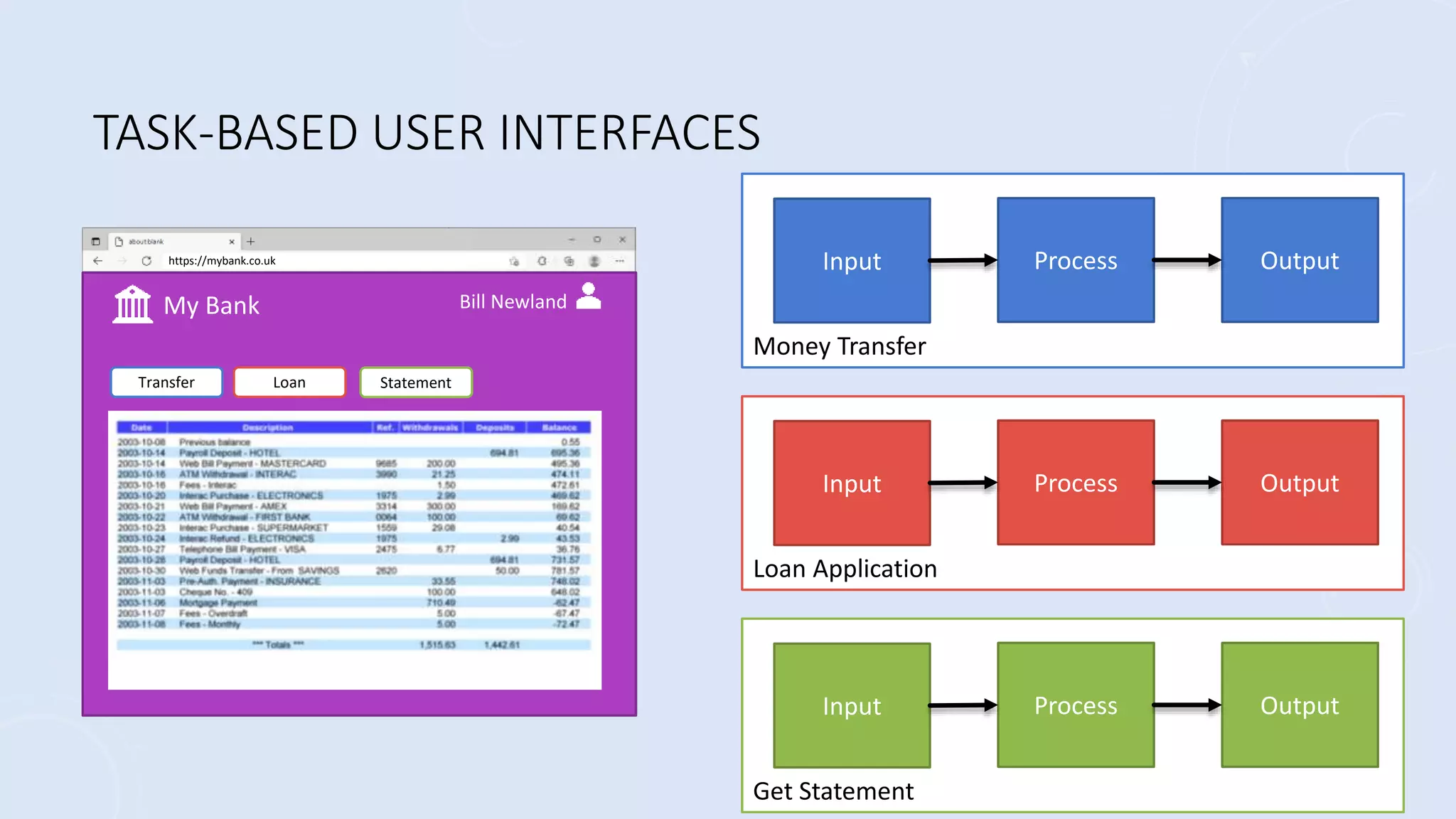
My Bank Bill Newland
Money Transfer
Input Process Output
Loan Application
Input Process Output
Get Statement
Input Process Output
TASK-BASED USER INTERFACES
Transfer Loan Statement
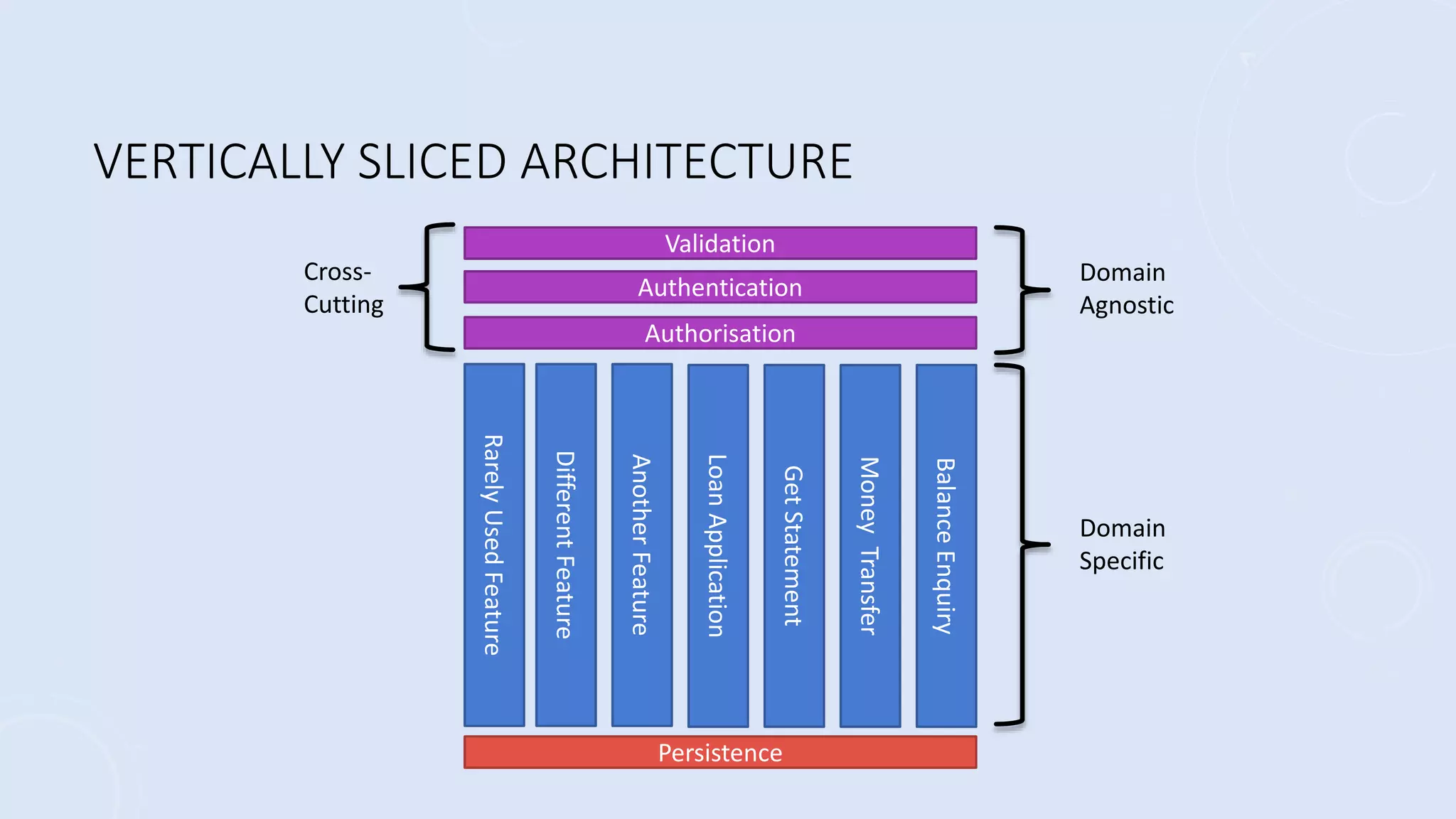
VERTICALLY SLICED ARCHITECTURE
Validation
Authentication
Authorisation
Rarely
Used
Feature
Different
Feature
Another
Feature
Loan
Application
Get
Statement
Money
Transfer
Balance
Enquiry
Persistence
Domain
Agnostic
Domain
Specific
Cross-
Cutting
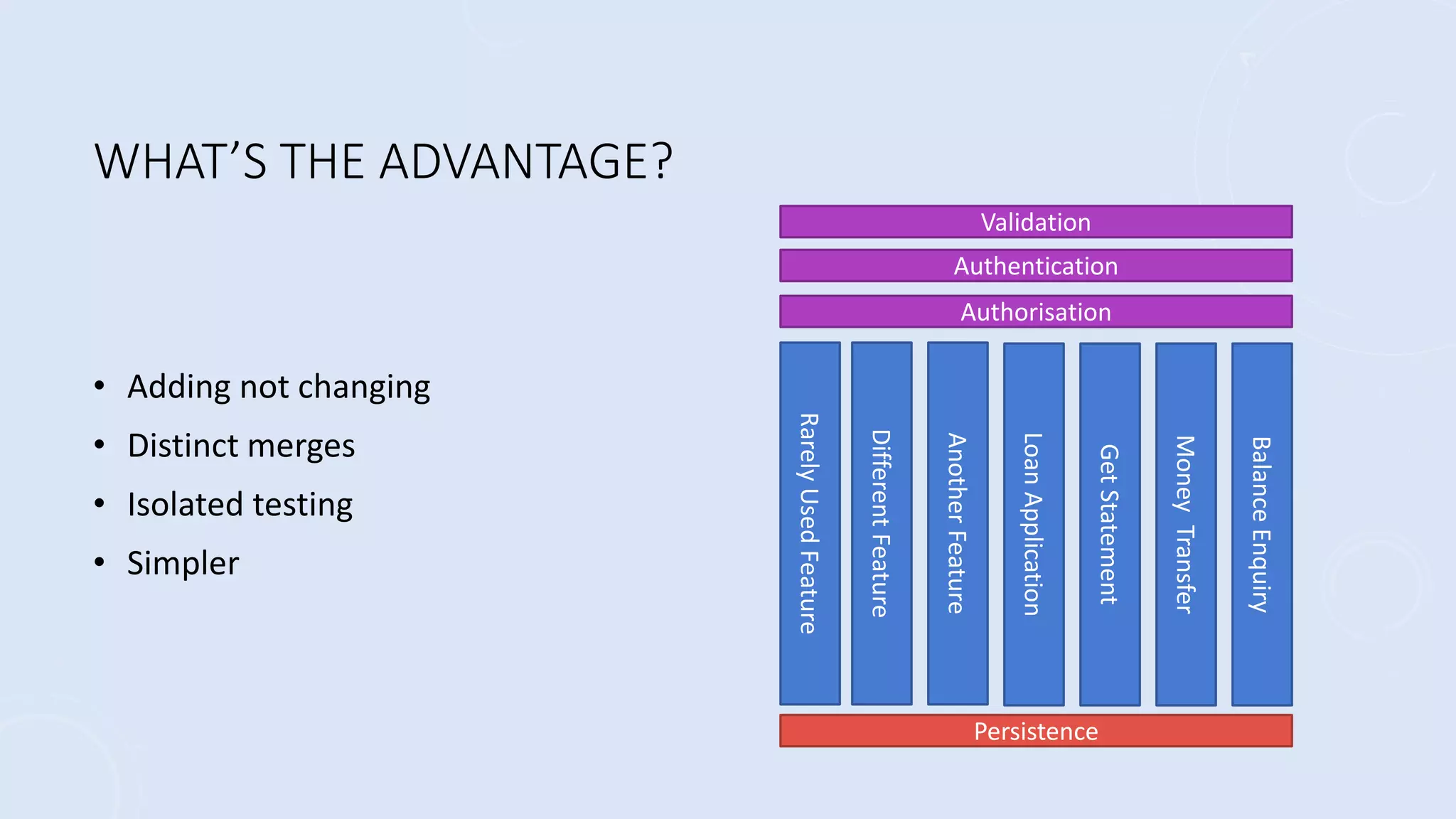
WHAT’S THE ADVANTAGE?
• Adding not changing
• Distinct merges
• Isolated testing
• Simpler
Validation
Authentication
Authorisation
Rarely
Used
Feature
Different
Feature
Another
Feature
Loan
Application
Get
Statement
Money
Transfer
Balance
Enquiry
Persistence
QUESTIONS?
BILL NEWLAND
bill@utterclarity.co.uk
@UtterClarity
billnewland
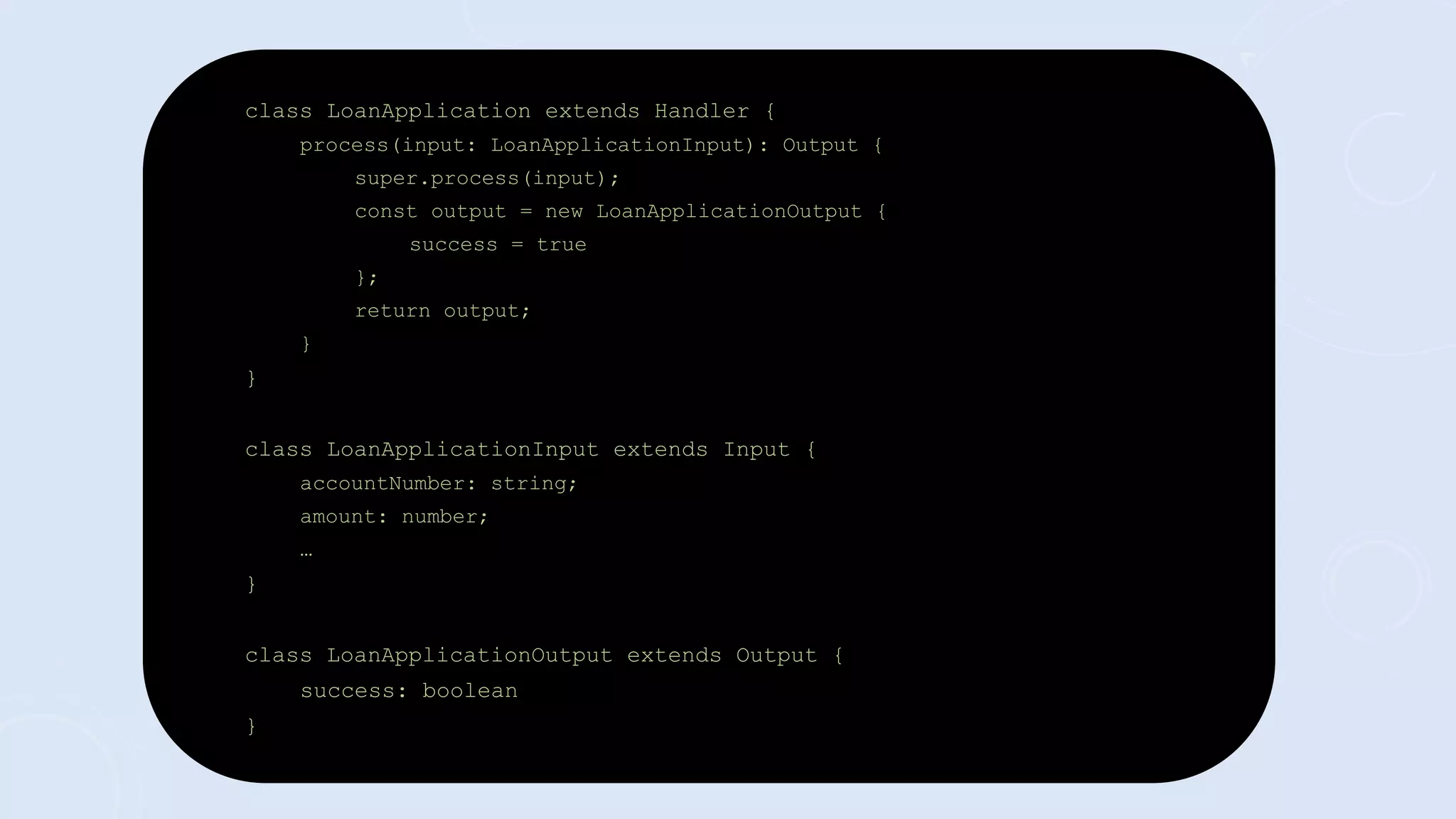
class LoanApplication extends Handler {
process(input: LoanApplicationInput): Output {
super.process(input);
const output = new LoanApplicationOutput {
success = true
};
return output;
}
}
class LoanApplicationInput extends Input {
accountNumber: string;
amount: number;
…
}
class LoanApplicationOutput extends Output {
success: boolean
}
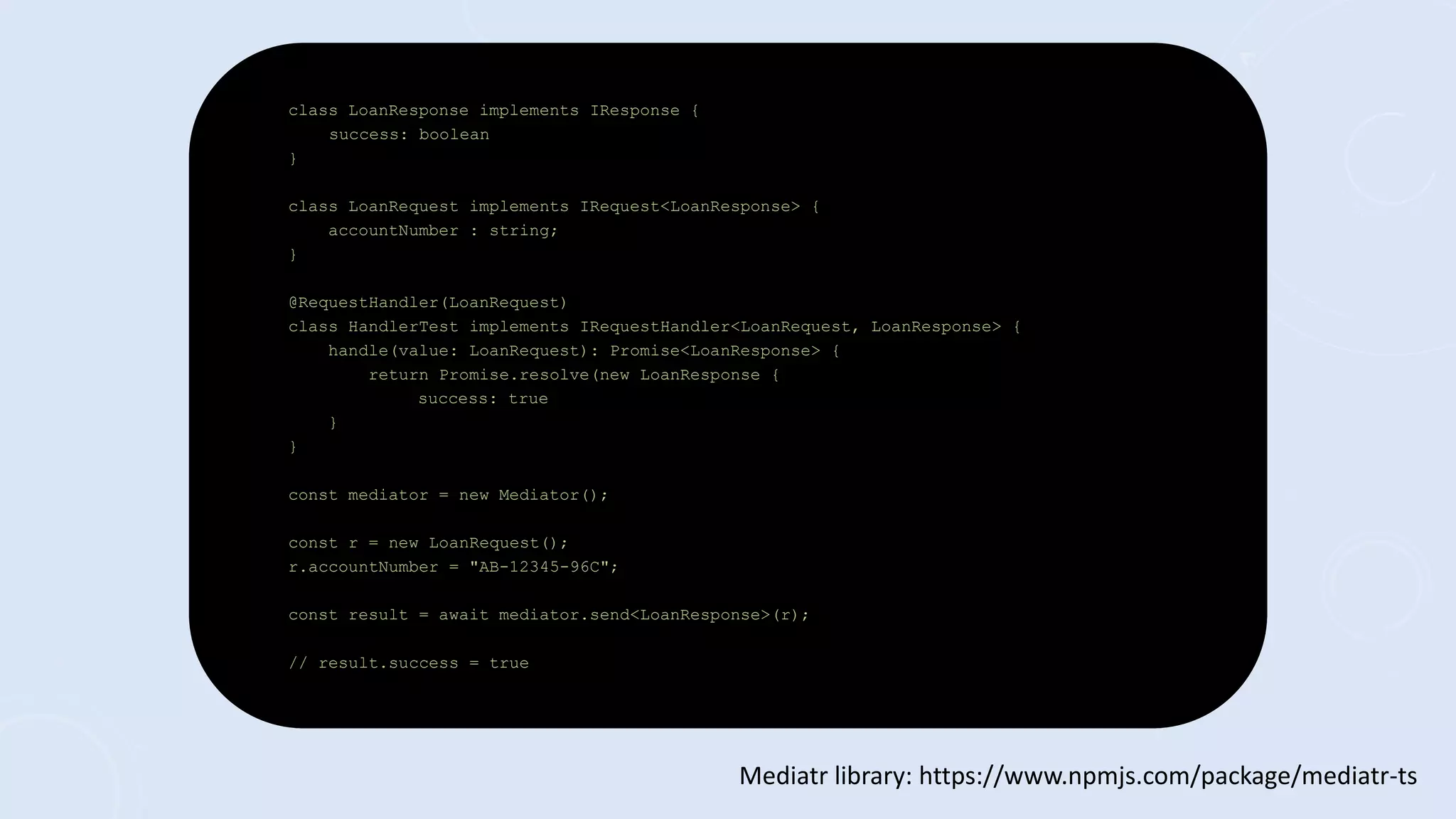
class LoanResponse implements IResponse {
success: boolean
}
class LoanRequest implements IRequest<LoanResponse> {
accountNumber : string;
}
@RequestHandler(LoanRequest)
class HandlerTest implements IRequestHandler<LoanRequest, LoanResponse> {
handle(value: LoanRequest): Promise<LoanResponse> {
return Promise.resolve(new LoanResponse {
success: true
}
}
const mediator = new Mediator();
const r = new LoanRequest();
r.accountNumber = "AB-12345-96C";
const result = await mediator.send<LoanResponse>(r);
// result.success = true
Mediatr library: https://www.npmjs.com/package/mediatr-ts

No Onions, No Tiers - An Introduction to Vertical Slice Architecture by Bill Newland

  • 1.
  • 2.
    NO ONIONS, NOTIERS AN INTRODUCTION TO VERTICAL SLICE ARCHITECTURE DISCLAIMER This talk is not about microservices. Any resemblance to microservices living or departed are purely coincidental.
  • 3.
    Database Data Access Layer UILayer Business Layer A BIT OF HISTORY • 3-Tier Architecture • N-Tier Architecture • Tight coupling between layers
  • 4.
    UI ONION ARCHITECTURE • Directionof dependency is towards the core • Interaction between layers is via interfaces • Reduces coupling • Implementation may change as long as interfaces remain the same • But a single change may still affect every layer Application Services Domain Services Domain Model Change
  • 5.
    WHY IS THISA PROBLEM? • Changes affect multiple service objects • Increases the chances of merge conflicts • Harder to test • Increased complexity
  • 6.
    ‘MY BANK’ SCENARIO CustomerLoan Application Loan application Check credit score Loan rejected Loan approved Transfer money Ok Not Ok
  • 7.
    customerService customerService accountService loanService customerEntityaccountEntity loanEntity Apply for Loan Get Customer Data Get Customer Data Get Account Data Evaluate Loan Update Loan Book Approve Loan creditScorerService Get Credit Score Deposit Money Update Balance Update Customer Get Account Data Update Balance Application Service Domain Service Domain Model Update Customer Data
  • 8.
    WHAT’S THE ALTERNATIVE? •Stop thinking about separating layers • Stop think about objects • Start thinking about features • Axes of change UI Layer Business Layer Data Access Layer Database Open Account Balance Enquiry Loan Application
  • 9.
    Loan Application COLLAPSING THEMODEL Get Customer Data Evaluate Loan Loan Approved Get Credit Score Update Loan Book Get Account Data Update Balance Database Credit agency Apply for loan Success Loan Rejected Fail
  • 10.
    IN PRACTICE • Everyuser action has its own class • Keep it contained • Reuse is not your friend • Input – Process - Output Input Output Process • Synchronous Call • Response to an event • Promise • Values • Raise an event • Fulfils promise
  • 11.
    IT DOESN’T HAVETO BE HOMOGONOUS UI Layer Business Layer Data Access Layer Database Balance Enquiry Transfer Money Loan Book Report Website Business Layer Repository No-SQL Db Balance Enquiry API Business Layer ORM Main Db Transfer Money BI Business Layer SQL Reporting Db Loan Book Report
  • 12.
    https://mybank.co.uk … … … … … … My Bank BillNewland Money Transfer Input Process Output Loan Application Input Process Output Get Statement Input Process Output TASK-BASED USER INTERFACES Transfer Loan Statement
  • 13.
  • 14.
    WHAT’S THE ADVANTAGE? •Adding not changing • Distinct merges • Isolated testing • Simpler Validation Authentication Authorisation Rarely Used Feature Different Feature Another Feature Loan Application Get Statement Money Transfer Balance Enquiry Persistence
  • 15.
  • 16.
  • 17.
    class LoanApplication extendsHandler { process(input: LoanApplicationInput): Output { super.process(input); const output = new LoanApplicationOutput { success = true }; return output; } } class LoanApplicationInput extends Input { accountNumber: string; amount: number; … } class LoanApplicationOutput extends Output { success: boolean }
  • 18.
    class LoanResponse implementsIResponse { success: boolean } class LoanRequest implements IRequest<LoanResponse> { accountNumber : string; } @RequestHandler(LoanRequest) class HandlerTest implements IRequestHandler<LoanRequest, LoanResponse> { handle(value: LoanRequest): Promise<LoanResponse> { return Promise.resolve(new LoanResponse { success: true } } const mediator = new Mediator(); const r = new LoanRequest(); r.accountNumber = "AB-12345-96C"; const result = await mediator.send<LoanResponse>(r); // result.success = true Mediatr library: https://www.npmjs.com/package/mediatr-ts

Editor's Notes

  • #3 Time check: 2
  • #4 Time check: 3 minutes
  • #5 Time check: 5
  • #6 Time check: 7
  • #7 Time check: 9
  • #8 Time check: 11
  • #10 Time check: 13 Axes of change: Single Responsibility Principle (see SOLID) advocates that each component of a well-structured software system should have only one reason to change
  • #11 Time check: 15
  • #12 Time check: 17
  • #13 Time check: 20
  • #14 Time check: 22
  • #15 Time check: 24
  • #16 Time check: 27
  • #17 Time check: 30