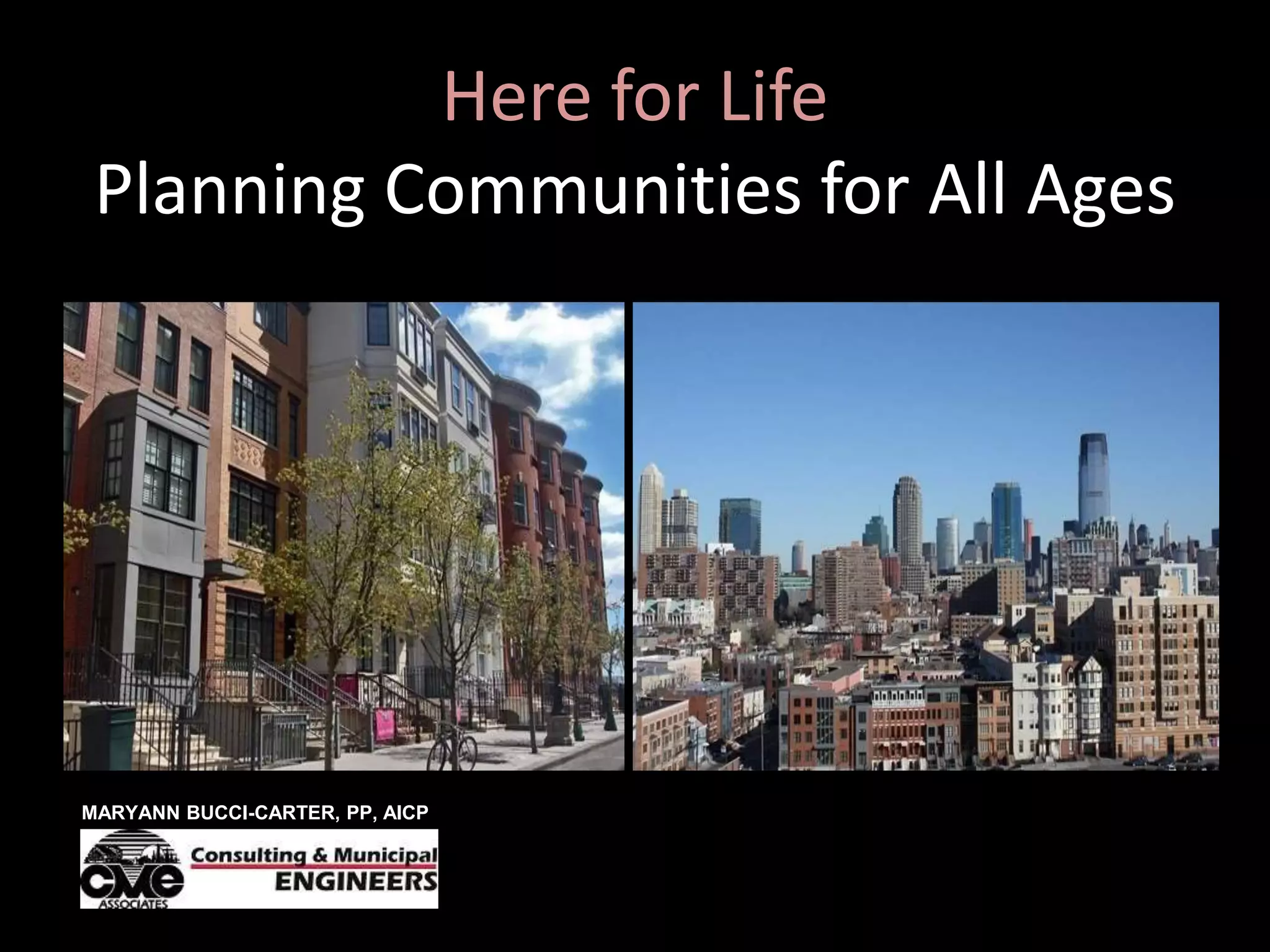
Here for Life
Planning Communities for All Ages
MARYANN BUCCI-CARTER, PP, AICP
Smart Growth
An approach to development that encourages:
• Mix of building types
• Mix of uses
• Diverse housing
• Transportation options
• Development within existing neighborhoods
• Community engagement.
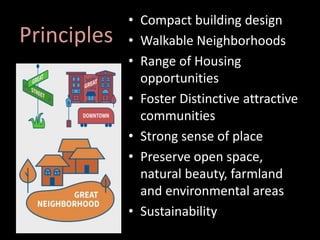
Principles
• Compact building design
• Walkable Neighborhoods
• Range of Housing
opportunities
• Foster Distinctive attractive
communities
• Strong sense of place
• Preserve open space,
natural beauty, farmland
and environmental areas
• Sustainability
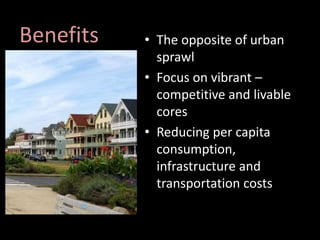
Benefits • The opposite of urban
sprawl
• Focus on vibrant –
competitive and livable
cores
• Reducing per capita
consumption,
infrastructure and
transportation costs
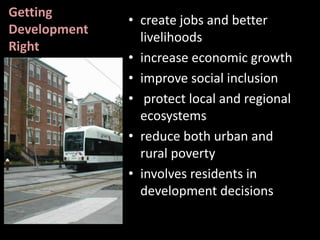
Getting
Development
Right
• create jobs and better
livelihoods
• increase economic growth
• improve social inclusion
• protect local and regional
ecosystems
• reduce both urban and
rural poverty
• involves residents in
development decisions
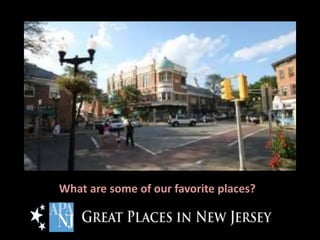
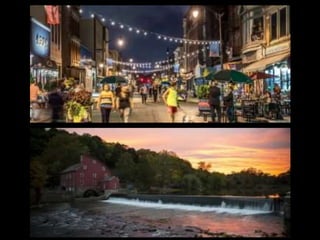
What are some of our favorite places?
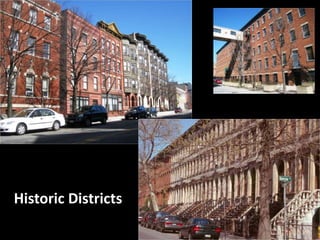
Historic Districts
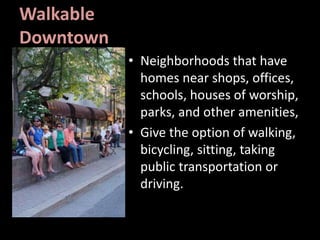
Walkable
Downtown
• Neighborhoods that have
homes near shops, offices,
schools, houses of worship,
parks, and other amenities,
• Give the option of walking,
bicycling, sitting, taking
public transportation or
driving.
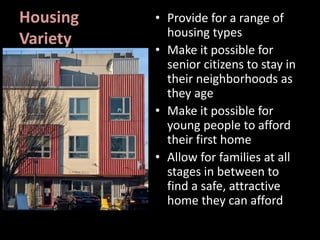
Housing
Variety
• Provide for a range of
housing types
• Make it possible for
senior citizens to stay in
their neighborhoods as
they age
• Make it possible for
young people to afford
their first home
• Allow for families at all
stages in between to
find a safe, attractive
home they can afford
New Urbanism: Defined
Planning and development approach based on the
principles of how cities and towns had been built for
the last several centuries:
• Walkable blocks and streets,
• Housing and shopping in close proximity,
• Accessible public spaces.
• Focus on human-scaled planning and design
• Build places people love
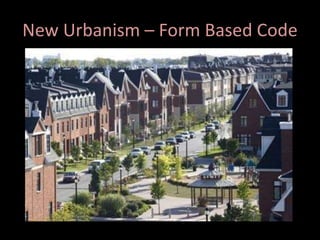
New Urbanism – Form Based Code
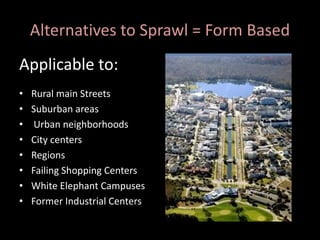
Alternatives to Sprawl = Form Based
Applicable to:
• Rural main Streets
• Suburban areas
• Urban neighborhoods
• City centers
• Regions
• Failing Shopping Centers
• White Elephant Campuses
• Former Industrial Centers
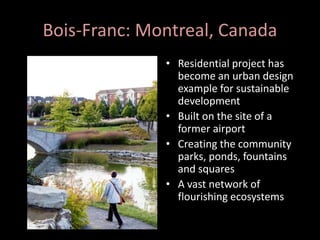
Bois-Franc: Montreal, Canada
• Residential project has
become an urban design
example for sustainable
development
• Built on the site of a
former airport
• Creating the community
parks, ponds, fountains
and squares
• A vast network of
flourishing ecosystems
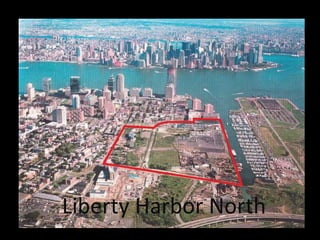
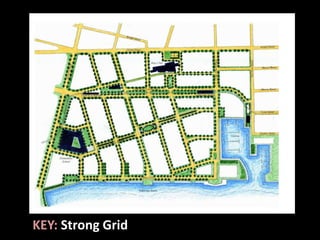
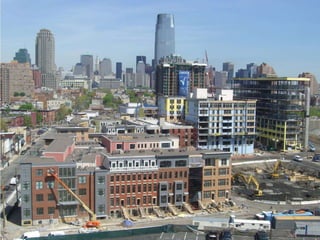
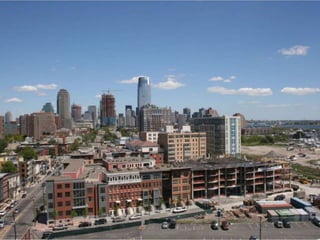
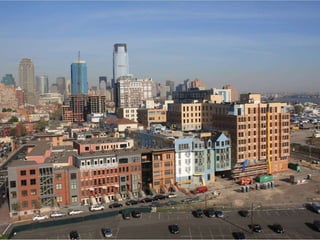
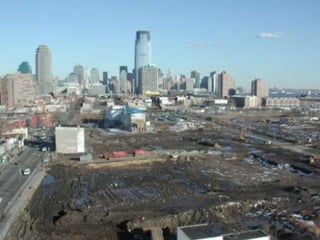
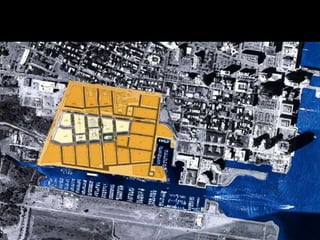
Liberty Harbor North
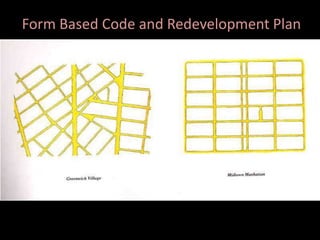
Form Based Code and Redevelopment Plan
KEY: Strong Grid
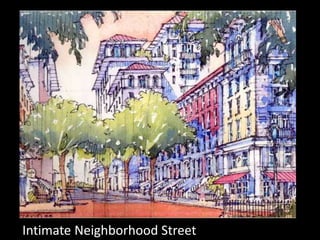
Intimate Neighborhood Street
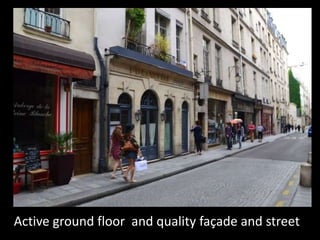
Active ground floor and quality façade and street
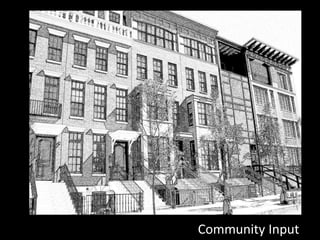
Community Input
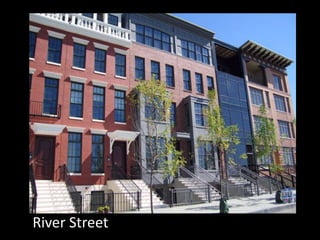
River Street
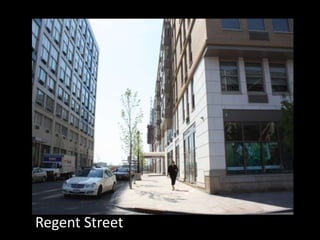
Regent Street
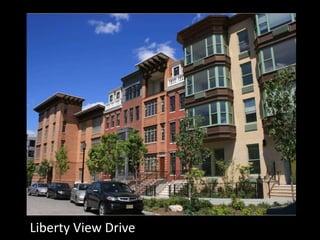
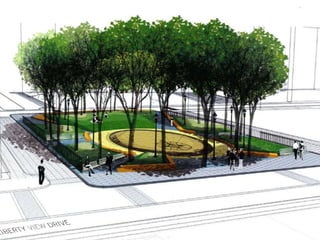
Liberty View Drive
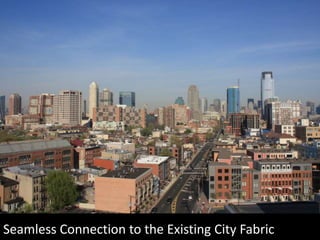
Seamless Connection to the Existing City Fabric
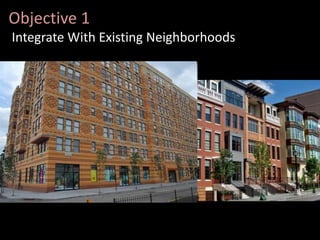
Objective 1
Integrate With Existing Neighborhoods
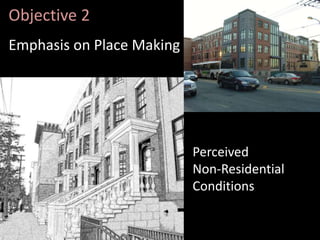
Objective 2
Emphasis on Place Making and Walk ability
Perceived
Non-Residential
Conditions
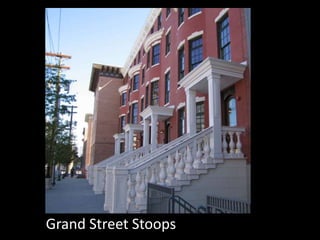
Grand Street Stoops
Objective 3
Integrate with existing Neighborhoods
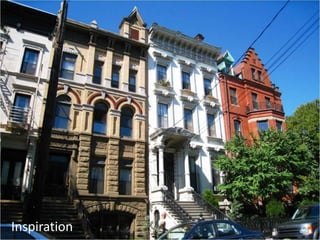
Inspiration
Objective 3
Enable Maximum Community Vitality
Keep uses general and inclusive
Residential Lodging Office Retail Civic
 Prohibit specific uses that are not wanted
Require restaurants and retail where wanted
Permit everything everywhere
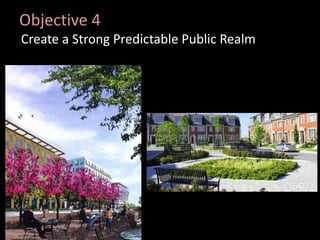
Objective 4
Create a Strong Predictable Public Realm
Objective 5
Activated street and high quality
architecture
Objective 6 - Key
Make it look like it was not planned
Follow the rules of prior centuries…
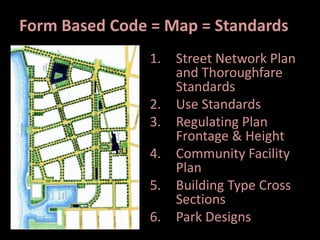
Form Based Code = Map = Standards
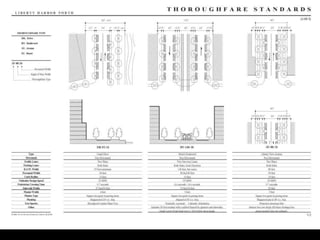
1. Street Network Plan
and Thoroughfare
Standards
2. Use Standards
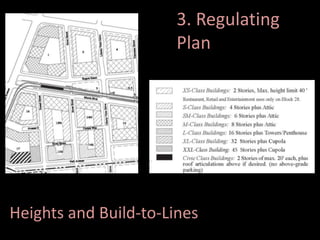
3. Regulating Plan
Frontage & Height
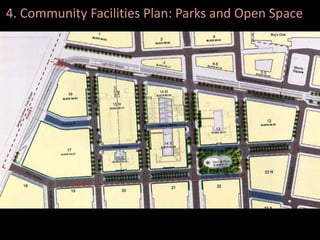
4. Community Facility
Plan
5. Building Type Cross
Sections
6. Park Designs
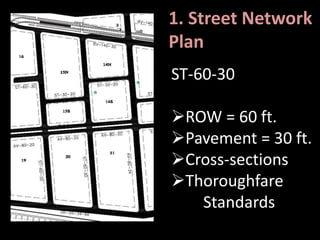
1. Street Network
Plan
ST-60-30
ROW = 60 ft.
Pavement = 30 ft.
Cross-sections
Thoroughfare
Standards
2. Residential Use: Defined
Premises available for long-term human
habitation by means of ownership and
rental, but excluding short-term letting of less
than a month's duration.
Examples: houses, row houses, apartments,
condominiums, Artisan Live/Work space,
assisted living facilities, adult communities, etc.
3. Regulating
Plan
Heights and Build-to-Lines
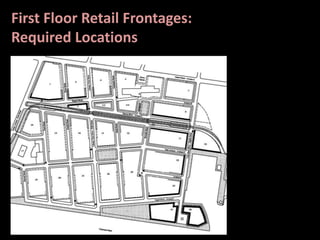
First Floor Retail Frontages:
Required Locations
4. Community Facilities Plan: Parks and Open Space
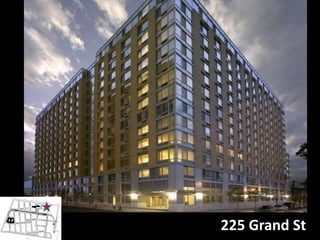
225 Grand St
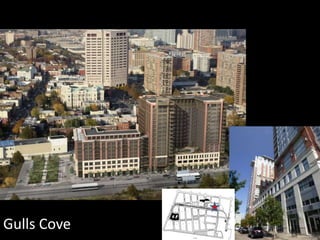
Gulls Cove
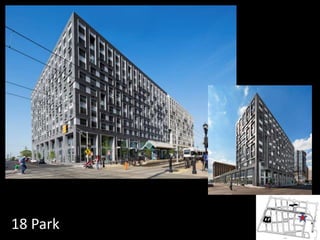
18 Park
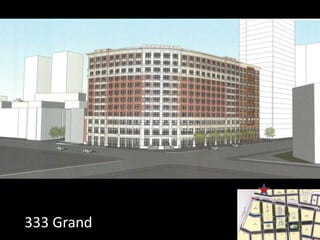
333 Grand
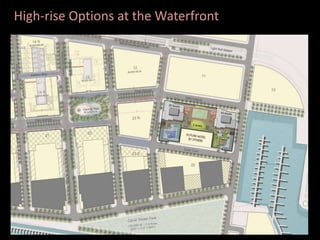
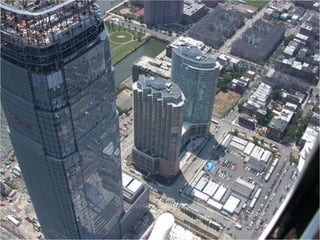
High-rise Options at the Waterfront
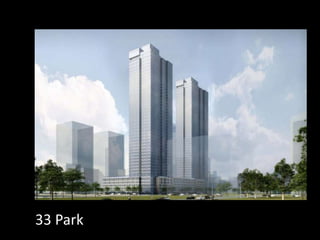
33 Park
33 Park
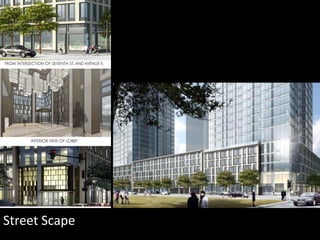
Street Scape
Form Based Code
Benefits
Maximizes
• Use mix
• Residential mix
• Market flexibility
• Creativity by design
professionals
• Allows for shared
infrastructure costs
Maintains
• Sense of place
• Vibrant livable
neighborhoods
• Neighborhood integration
• Walkable friendly streets
• Sociable by design
• Certainty of outcome
Smart Growth
Planning Communities For All
Ages
Use the tools
and
achieve the goals
Thank You

NJ Redevelopment Forum 2020 - Bucci-Carter