Reclaiming Flood Storage during
        Redevelopment


               Geoffrey M. Goll, P.E.
                    Vice President
                Princeton Hydro, LLC
               www.PrincetonHydro.com
Floodplain Environments

Flood Control has been the mantra for NJ for over 250 years


Just like most disasters, flooding can be
devastating………………
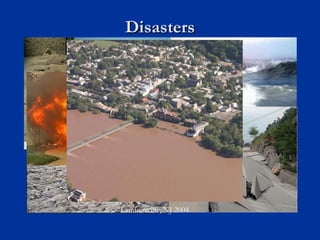
Disasters


Lambertville, NJ 2004
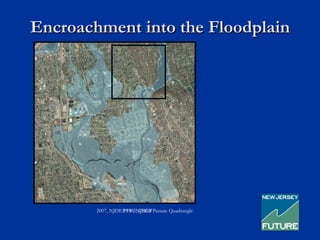
Encroachment into the Floodplain


        2007, NJDEP 1905, USGS Passaic Quadrangle
                  1930, NJDEP
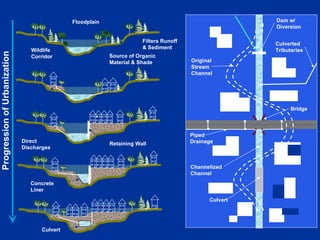
Urban Stream Evolution Model
                                                  Floodplain                                                Dam w/
                                                                                                            Diversion

                                                                           Filters Runoff
                                                                                                            Culverted
                                                                           & Sediment
                                 Wildlife                                                                   Tributaries
Progression of Urbanization


                                 Corridor                      Source of Organic
                                                               Material & Shade             Original
                                                                                            Stream
                                                                                            Channel


                                 Fill
                                                                                                                 Bridge


                                                                                            Piped
                              Direct                           Retaining Wall               Drainage
                              Discharges


                                                                                            Channelized
                                                                                            Channel
                                 Concrete
                                 Liner
                                                                                                  Culvert


                                        Culvert
Passaic River Basin Example of Encroachment

    Between 1985 and 1995, nearly 300 acres of forest turned
    to urban land—a trend repeated between 1995 and 2002,
                 and again from 2002 to 2007.1


1. NJDEP, Report to the Governor: Recommendations of the Passaic River Basin
Flood Advisory Commission, January 2011
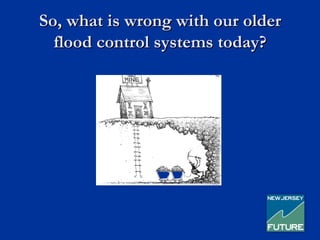
So, what is wrong with our older
  flood control systems today?
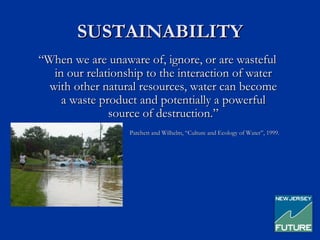
SUSTAINABILITY
“When we are unaware of, ignore, or are wasteful
   in our relationship to the interaction of water
  with other natural resources, water can become
     a waste product and potentially a powerful
               source of destruction.”
                   Patchett and Wilhelm, “Culture and Ecology of Water”, 1999.
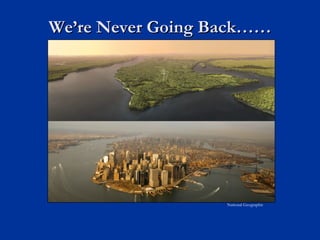
We’re Never Going Back……


                   National Geographic
…..but, we can mitigate the impacts
     to ourselves over time….

  …..as long as the process starts
   now and is steady over time.
SUSTAINABILITY

        and

Green Infrastructure
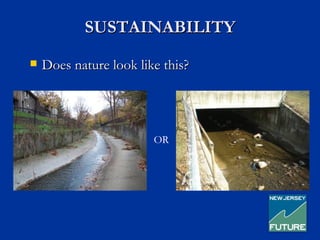
SUSTAINABILITY
   Does nature look like this?


                        OR
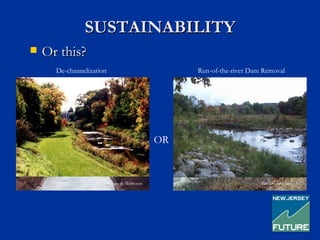
SUSTAINABILITY
   Or this?
      De-channelization                           Run-of-the-river Dam Removal


                                             OR


                          Milone & McBroom                            Princeton Hydro
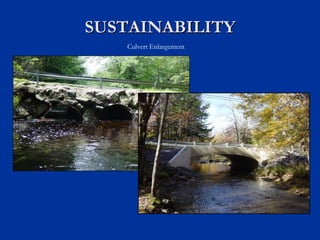
SUSTAINABILITY
   Culvert Enlargement
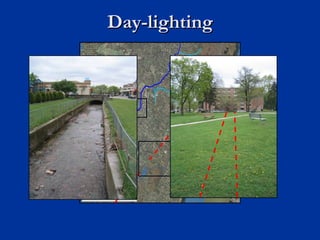
Stream Day-lighting
       and
 De-channelization

Depot Park, Englewood, NJ
Day-lighting
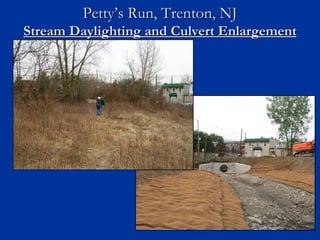
Petty’s Run, Trenton, NJ
Stream Daylighting and Culvert Enlargement
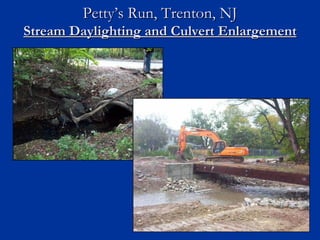
Petty’s Run, Trenton, NJ
Stream Daylighting and Culvert Enlargement
How do we get there?
   This is a marathon, not a race. Need to plan for the next 50
    years, but it is essential to start now. Create a plan and set the
    example for the next generation….Start a pilot project.


   Municipalities need to actively take advantage of grants over
    time. Opportunities with Federal and State agencies… USACE ,
    FEMA, NOAA, NRCS, NJDEP.
        Buyouts (first priority)
        Floodplain Restoration
        Raising of structures (last priority)
Final Words

 “ASCE does not support the development or
significant redevelopment of communities below
    sea level or in high-risk, flood-prone areas
     because such development is inherently
unsustainable and puts the public at unnecessary
         risk for loss of life and property.”
                    ASCE, Adopted by the Board of Direction on April 24, 2007
Thank you.

 Geoffrey M. Goll, P.E.
     Vice President
 Princeton Hydro, LLC
www.PrincetonHydro.com

NJ Future Forum 2012 Flooding Goll

  • 1.
    Reclaiming Flood Storageduring Redevelopment Geoffrey M. Goll, P.E. Vice President Princeton Hydro, LLC www.PrincetonHydro.com
  • 2.
    Floodplain Environments Flood Controlhas been the mantra for NJ for over 250 years Just like most disasters, flooding can be devastating………………
  • 3.
  • 4.
    Encroachment into theFloodplain 2007, NJDEP 1905, USGS Passaic Quadrangle 1930, NJDEP
  • 5.
    Urban Stream EvolutionModel Floodplain Dam w/ Diversion Filters Runoff Culverted & Sediment Wildlife Tributaries Progression of Urbanization Corridor Source of Organic Material & Shade Original Stream Channel Fill Bridge Piped Direct Retaining Wall Drainage Discharges Channelized Channel Concrete Liner Culvert Culvert
  • 6.
    Passaic River BasinExample of Encroachment Between 1985 and 1995, nearly 300 acres of forest turned to urban land—a trend repeated between 1995 and 2002, and again from 2002 to 2007.1 1. NJDEP, Report to the Governor: Recommendations of the Passaic River Basin Flood Advisory Commission, January 2011
  • 7.
    So, what iswrong with our older flood control systems today?
  • 8.
    SUSTAINABILITY “When we areunaware of, ignore, or are wasteful in our relationship to the interaction of water with other natural resources, water can become a waste product and potentially a powerful source of destruction.” Patchett and Wilhelm, “Culture and Ecology of Water”, 1999.
  • 9.
    We’re Never GoingBack…… National Geographic
  • 10.
    …..but, we canmitigate the impacts to ourselves over time…. …..as long as the process starts now and is steady over time.
  • 11.
    SUSTAINABILITY and Green Infrastructure
  • 12.
    SUSTAINABILITY  Does nature look like this? OR
  • 13.
    SUSTAINABILITY  Or this? De-channelization Run-of-the-river Dam Removal OR Milone & McBroom Princeton Hydro
  • 14.
    SUSTAINABILITY Culvert Enlargement
  • 15.
    Stream Day-lighting and De-channelization Depot Park, Englewood, NJ
  • 16.
  • 17.
    Petty’s Run, Trenton,NJ Stream Daylighting and Culvert Enlargement
  • 18.
    Petty’s Run, Trenton,NJ Stream Daylighting and Culvert Enlargement
  • 19.
    How do weget there?  This is a marathon, not a race. Need to plan for the next 50 years, but it is essential to start now. Create a plan and set the example for the next generation….Start a pilot project.  Municipalities need to actively take advantage of grants over time. Opportunities with Federal and State agencies… USACE , FEMA, NOAA, NRCS, NJDEP.  Buyouts (first priority)  Floodplain Restoration  Raising of structures (last priority)
  • 20.
    Final Words “ASCEdoes not support the development or significant redevelopment of communities below sea level or in high-risk, flood-prone areas because such development is inherently unsustainable and puts the public at unnecessary risk for loss of life and property.” ASCE, Adopted by the Board of Direction on April 24, 2007
  • 21.
    Thank you. GeoffreyM. Goll, P.E. Vice President Princeton Hydro, LLC www.PrincetonHydro.com

Editor's Notes

  • #3 Encroachment into flood prone areas throughout the State; Culverting streams Levee Systems in coastal and back bay areas on the Atlantic Ocean and Hudson and Delaware River Estuaries.
  • #5 Man has used waterways for industry for centuries. Ports Mills Transportation routes (canals, intermodal) As industry grew, so did populations around these industrial centers. Low lying areas were the last to be developed; but were developed to accommodate the masses. Diminishing available uplands and cheap lowlands, pushed other development into the floodplain.
  • #6 Urban Stream Evolution Model
  • #7 They are aging and in need of repair. They are not sustainable. They are not working anymore.
  • #8 They are aging and in need of repair. They are not sustainable. They are not working anymore.
  • #11 We are not talking about large scale needs. What we are talking about is the reduction of smaller nuisance flooding (1 to10 year events)….and hopefully over time an accumulation of projects to reduce larger scale floods. Keep in mind: development, pre-stormwater management, generally occurred over a 50 year period.
  • #12 Projects with little maintenance required…. Looking at what happens in the natural environment. Understanding hydrology, hydraulics, AND fluvial geomorphic process. Understanding ecological and riparian functions. Treating streams and floodplains as areas that can be enjoyed, not concreted and shut off from the public.