2009 Institute for Staff Development Students Today, Leaders Tomorrow Biotechnical Engineering
Introduction Session Objectives My Background Overview of Biotechnical Engineering Industry Trends New Technologies Background and Skill Sets for Success Closing, Q&A 2009 Institute for Staff Development Students Today, Leaders Tomorrow
Session Objectives Trends/changes in the Biotechnical Engineering Industry National, global, and technological trends affecting the industry Employability, education, and skill sets required for a career in Biotechnical Engineering 2009 Institute for Staff Development Students Today, Leaders Tomorrow
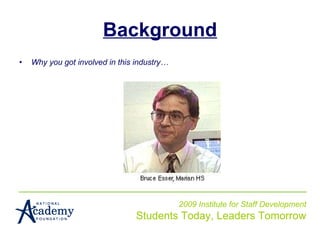
Background Why you got involved in this industry… 2009 Institute for Staff Development Students Today, Leaders Tomorrow
Consumer Products
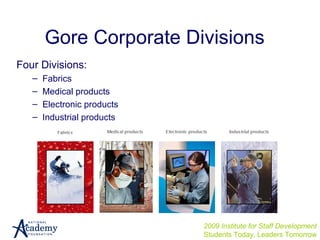
2009 Institute for Staff Development Students Today, Leaders Tomorrow Gore Corporate Divisions Four Divisions: Fabrics Medical products Electronic products Industrial products Medical products Electronic products Fabrics Industrial products
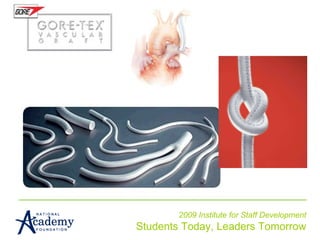
2009 Institute for Staff Development Students Today, Leaders Tomorrow Medical Products Division Product Focus:  Surgically implanted and interventional products Material Focus: ePTFE as best biocompatible material, and enabling technologies Market Focus:  Vascular disease, general and thoracic surgery, hernia repair, and stroke Customer Focus:  Vascular surgeon, general surgeons, interventional radiologists & cardiologists
Background Engineer with W.L. Gore & Associates Medical Products Division Attended Marquette University, Biomedical Engineering B.S. Biomechanical Engineering M.S. Biomechanics / Biomaterials 2009 Institute for Staff Development Students Today, Leaders Tomorrow
What is Biotechnical Engineering? Also known as… Biomedical Engineering Bioengineering Biomechanical Engineering Bioelectrical Engineering Biocomputing 2009 Institute for Staff Development Students Today, Leaders Tomorrow
What is Biotechnical Engineering? Combination of biology, medicine, and engineering to solve medical and health related problems. Increasing demand for cost-effective medical products will boost the demand for biomedical engineers 2009 Institute for Staff Development Students Today, Leaders Tomorrow
What does a Biomedical Engineer Do? Uses math, physics and engineering expertise to analyze and solve problems in biology and medicine.  Works with other health care professionals including physicians, nurses, therapists and technicians.   2009 Institute for Staff Development Students Today, Leaders Tomorrow
2009 Institute for Staff Development Students Today, Leaders Tomorrow Careers in Biomedical Engineering Medical device companies Research and Development Manufacturing Engineering Quality Assurance Marketing/Sales Regulatory Affairs Private testing laboratories Underwriter’s Laboratories ECRI
Careers in Biomedical Engineering Government Research Laboratories (Los Alamos) Regulatory Agencies (FDA) Military (Air Force, Navy, Army) Public Health Service NASA Peace Corps (NGO) 2009 Institute for Staff Development Students Today, Leaders Tomorrow
Careers in Biomedical Engineering Hospitals Clinical Engineering Laboratory Manager (Catheter, Radiology, etc.) Consulting  Healthcare consulting (Accenture) Design (IDEO) Academia Research Teaching 2009 Institute for Staff Development Students Today, Leaders Tomorrow
Careers in Biomedical Engineering Non-traditional fields: Technical writing Sales training Teaching Patent law Medicine 2009 Institute for Staff Development Students Today, Leaders Tomorrow
2009 Institute for Staff Development Students Today, Leaders Tomorrow Comparisons Between  Academic and Industrial R&D intellectual curiosity publications more basic research need to obtain grants involved in initial phases less urgency flexibility profitability product introductions more applied research funding available involved in entire project “ time is money” higher pay Academia Industry
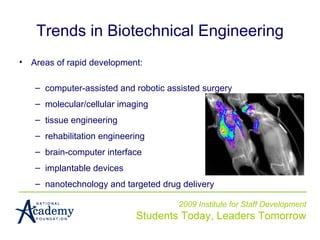
2009 Institute for Staff Development Students Today, Leaders Tomorrow Trends in Biotechnical Engineering Areas of rapid development: computer-assisted and robotic assisted surgery molecular/cellular imaging tissue engineering  rehabilitation engineering  brain-computer interface implantable devices nanotechnology and targeted drug delivery
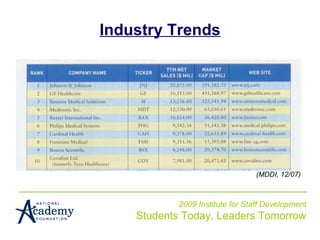
Industry Trends 2009 Institute for Staff Development Students Today, Leaders Tomorrow (MDDI, 12/07)
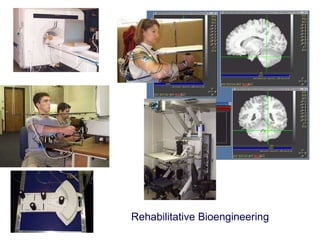
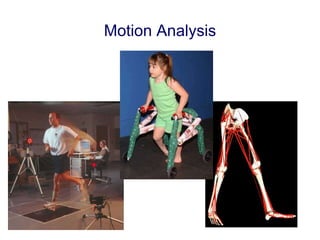
2009 Institute for Staff Development Students Today, Leaders Tomorrow Rehabilitation – Biotechnical Engineering Prosthetic devices Robotics Home health devices and tele-rehabilitation Gait/Motion Analysis
Rehabilitative Bioengineering
Motion Analysis
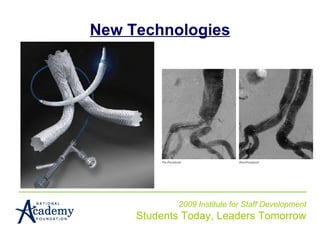
New Technologies 2009 Institute for Staff Development Students Today, Leaders Tomorrow
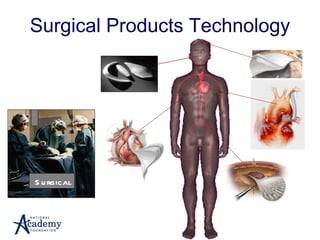
Surgical Products Technology Surgical
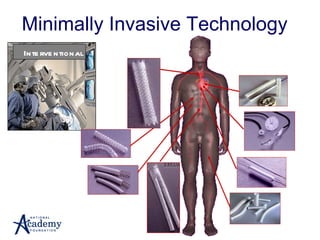
Minimally Invasive Technology Interventional
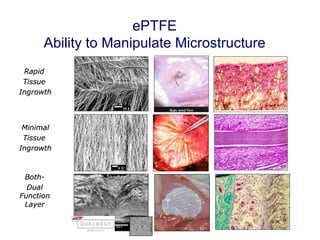
ePTFE Ability to Manipulate Microstructure Rapid  Tissue  Ingrowth Minimal Tissue  Ingrowth Both- Dual Function Layer DLMC F P
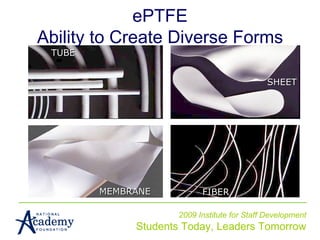
ePTFE Ability to Create Diverse Forms 2009 Institute for Staff Development Students Today, Leaders Tomorrow MEMBRANE FIBER SHEET TUBE
2009 Institute for Staff Development Students Today, Leaders Tomorrow
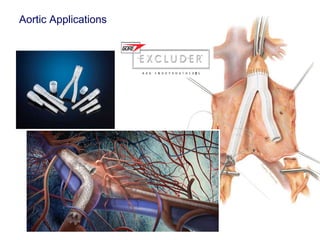
Aortic Applications
2009 Institute for Staff Development Students Today, Leaders Tomorrow
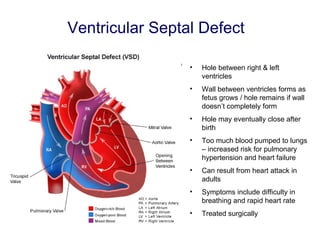
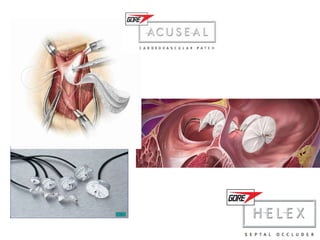
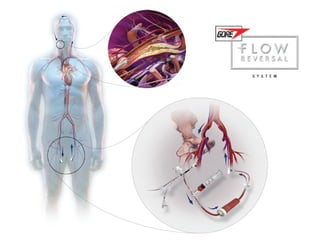
Add info from Gore website Ventricular Septal Defect Hole between right & left ventricles Wall between ventricles forms as fetus grows / hole remains if wall doesn’t completely form Hole may eventually close after birth Too much blood pumped to lungs – increased risk for pulmonary hypertension and heart failure Can result from heart attack in adults Symptoms include difficulty in breathing and rapid heart rate Treated surgically
 
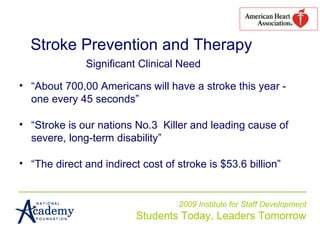
2009 Institute for Staff Development Students Today, Leaders Tomorrow Stroke Prevention and Therapy   Significant Clinical Need “ About 700,00 Americans will have a stroke this year - one every 45 seconds” “ Stroke is our nations No.3  Killer and leading cause of severe, long-term disability” “ The direct and indirect cost of stroke is $53.6 billion”
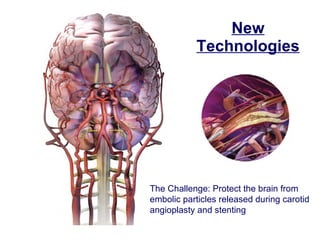
New Technologies The Challenge: Protect the brain from embolic particles released during carotid angioplasty and stenting
 
New Technologies – Emerging Areas 2009 Institute for Staff Development Students Today, Leaders Tomorrow Computer assisted surgery (MIS) Cellular and tissue engineering Nanotechnology Rehabilitation and orthopedics
Background and Skill Sets for Success Skills:  You should be a biomedical engineer if you… Like to solve problems Like math, science and technology Want to improve healthcare  Want to have many career options after completing your college degree 2009 Institute for Staff Development Students Today, Leaders Tomorrow
Education Typical Admissions Requirements Solid background in mathematics and science Algebra, Geometry, Trigonometry, Calculus Biology, Chemistry, Physics English, Social Studies, Humanities Engineers should be creative, inquisitive, analytical, and detail oriented. Able to work as part of a team  Communication skills are increasingly important Funding available for engineering 2009 Institute for Staff Development Students Today, Leaders Tomorrow
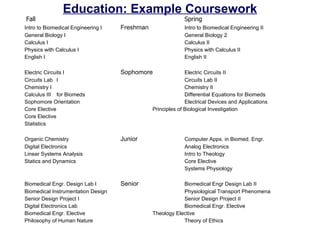
Education: Example Coursework Fall Spring Intro to Biomedical Engineering I Freshman   Intro to Biomedical Engineering II General Biology I General Biology 2 Calculus I Calculus II Physics with Calculus I Physics with Calculus II English I English II Electric Circuits I Sophomore Electric Circuits II Circuits Lab I Circuits Lab II  Chemistry I Chemistry II Calculus III for Biomeds Differential Equations for Biomeds Sophomore Orientation Electrical Devices and Applications Core Elective Principles of Biological Investigation  Core Elective Statistics Organic Chemistry   Junior Computer Apps. in Biomed. Engr. Digital Electronics Analog Electronics Linear Systems Analysis Intro to Theology Statics and Dynamics Core Elective Systems Physiology Biomedical Engr. Design Lab I Senior Biomedical Engr Design Lab II Biomedical Instrumentation Design Physiological Transport Phenomena Senior Design Project I Senior Design Project II Digital Electronics Lab Biomedical Engr. Elective Biomedical Engr. Elective Theology Elective Philosophy of Human Nature  Theory of Ethics
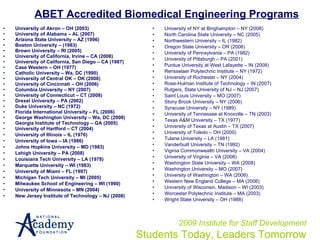
ABET Accredited Biomedical Engineering Programs University of Akron – OH (2003) University of Alabama – AL (2007) Arizona State University – AZ (1996) Boston University – (1983) Brown University – RI (2005) University of California, Irvine – CA (2008) University of California, San Diego – CA (1987) Case Western – OH (1977) Catholic University – Wa, DC (1990)  University of Central OK – OK (2008) University of Cincinnati – OH (2006) Columbia University – NY (2007) University of Connecticut – CT (2008) Drexel University – PA (2002) Duke University – NC (1972)  Florida International University – FL (2006) George Washington University – Wa, DC (2008) Georgia Institute of Technology – GA (2005) University of Hartford – CT (2004) University of Illinois – IL (1976) University of Iowa – IA (1986) Johns Hopkins University – MD (1983) Lehigh University – PA (2008) Louisiana Tech University – LA (1978) Marquette University – WI (1983) University of Miami – FL (1997) Michigan Tech University – MI (2005) Milwaukee School of Engineering – WI (1990) University of Minnesota – MN (2004) New Jersey Institute of Technology – NJ (2008) 2009 Institute for Staff Development Students Today, Leaders Tomorrow University of NY at Binghampton – NY (2008) North Carolina State University – NC (2005) Northwestern University – IL (1982) Oregon State University – OR (2006) University of Pennsylvania – PA (1982) University of Pittsburgh – PA (2001) Purdue University at West Lafayette – IN (2008) Rensselaer Polytechnic Institute – NY (1972) University of Rochester – NY (2004) Rose-Hulman Institute of Technology – IN (2007) Rutgers, State University of NJ – NJ (2007) Saint Louis University – MO (2007) Stony Brook University – NY (2006) Syracuse University – NY (1989) University of Tennessee at Knoxville – TN (2003) Texas A&M University – TX (1977) University of Texas at Austin – TX (2007) University of Toledo – OH (2000) Tulane University – LA (1981) Vanderbuilt University – TN (1992) Viginia Commonwealth University – VA (2004) University of Virginia – VA (2008) Washington State University – WA (2008) Washington University – MO (2007) University of Washington – WA (2008) Western New England College – MA (2006) University of Wisconsin, Madison – WI (2003) Worcester Polytechnic Institute – MA (2003) Wright State University – OH (1988)
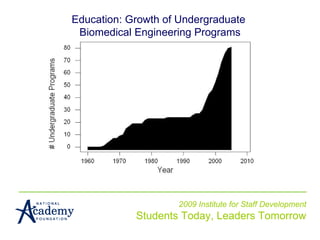
2009 Institute for Staff Development Students Today, Leaders Tomorrow Education: Growth of Undergraduate  Biomedical Engineering Programs
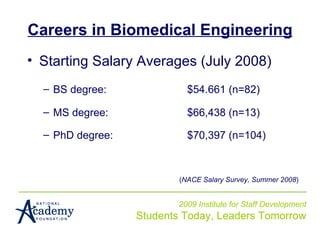
Careers in Biomedical Engineering 2009 Institute for Staff Development Students Today, Leaders Tomorrow Starting Salary Averages (July 2008) BS degree: $54.661 (n=82)  MS degree: $66,438 (n=13) PhD degree: $70,397 (n=104) ( NACE Salary Survey, Summer 2008 )
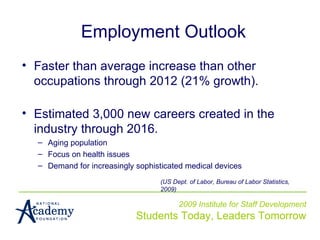
2009 Institute for Staff Development Students Today, Leaders Tomorrow Employment Outlook Faster than average increase than other occupations through 2012 (21% growth). Estimated 3,000 new careers created in the industry through 2016. Aging population  Focus on health issues  Demand for increasingly sophisticated medical devices (US Dept. of Labor, Bureau of Labor Statistics, 2009)
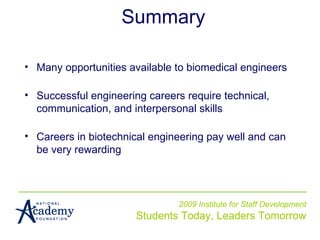
2009 Institute for Staff Development Students Today, Leaders Tomorrow Summary Many opportunities available to biomedical engineers Successful engineering careers require technical, communication, and interpersonal skills Careers in biotechnical engineering pay well and can be very rewarding
Closing Final Questions Session Evaluation 2009 Institute for Staff Development Students Today, Leaders Tomorrow

Nina easley biotechnical engineering

  • 1.
    2009 Institute forStaff Development Students Today, Leaders Tomorrow Biotechnical Engineering
  • 2.
    Introduction Session ObjectivesMy Background Overview of Biotechnical Engineering Industry Trends New Technologies Background and Skill Sets for Success Closing, Q&A 2009 Institute for Staff Development Students Today, Leaders Tomorrow
  • 3.
    Session Objectives Trends/changesin the Biotechnical Engineering Industry National, global, and technological trends affecting the industry Employability, education, and skill sets required for a career in Biotechnical Engineering 2009 Institute for Staff Development Students Today, Leaders Tomorrow
  • 4.
    Background Why yougot involved in this industry… 2009 Institute for Staff Development Students Today, Leaders Tomorrow
  • 5.
  • 6.
    2009 Institute forStaff Development Students Today, Leaders Tomorrow Gore Corporate Divisions Four Divisions: Fabrics Medical products Electronic products Industrial products Medical products Electronic products Fabrics Industrial products
  • 7.
    2009 Institute forStaff Development Students Today, Leaders Tomorrow Medical Products Division Product Focus: Surgically implanted and interventional products Material Focus: ePTFE as best biocompatible material, and enabling technologies Market Focus: Vascular disease, general and thoracic surgery, hernia repair, and stroke Customer Focus: Vascular surgeon, general surgeons, interventional radiologists & cardiologists
  • 8.
    Background Engineer withW.L. Gore & Associates Medical Products Division Attended Marquette University, Biomedical Engineering B.S. Biomechanical Engineering M.S. Biomechanics / Biomaterials 2009 Institute for Staff Development Students Today, Leaders Tomorrow
  • 9.
    What is BiotechnicalEngineering? Also known as… Biomedical Engineering Bioengineering Biomechanical Engineering Bioelectrical Engineering Biocomputing 2009 Institute for Staff Development Students Today, Leaders Tomorrow
  • 10.
    What is BiotechnicalEngineering? Combination of biology, medicine, and engineering to solve medical and health related problems. Increasing demand for cost-effective medical products will boost the demand for biomedical engineers 2009 Institute for Staff Development Students Today, Leaders Tomorrow
  • 11.
    What does aBiomedical Engineer Do? Uses math, physics and engineering expertise to analyze and solve problems in biology and medicine. Works with other health care professionals including physicians, nurses, therapists and technicians. 2009 Institute for Staff Development Students Today, Leaders Tomorrow
  • 12.
    2009 Institute forStaff Development Students Today, Leaders Tomorrow Careers in Biomedical Engineering Medical device companies Research and Development Manufacturing Engineering Quality Assurance Marketing/Sales Regulatory Affairs Private testing laboratories Underwriter’s Laboratories ECRI
  • 13.
    Careers in BiomedicalEngineering Government Research Laboratories (Los Alamos) Regulatory Agencies (FDA) Military (Air Force, Navy, Army) Public Health Service NASA Peace Corps (NGO) 2009 Institute for Staff Development Students Today, Leaders Tomorrow
  • 14.
    Careers in BiomedicalEngineering Hospitals Clinical Engineering Laboratory Manager (Catheter, Radiology, etc.) Consulting Healthcare consulting (Accenture) Design (IDEO) Academia Research Teaching 2009 Institute for Staff Development Students Today, Leaders Tomorrow
  • 15.
    Careers in BiomedicalEngineering Non-traditional fields: Technical writing Sales training Teaching Patent law Medicine 2009 Institute for Staff Development Students Today, Leaders Tomorrow
  • 16.
    2009 Institute forStaff Development Students Today, Leaders Tomorrow Comparisons Between Academic and Industrial R&D intellectual curiosity publications more basic research need to obtain grants involved in initial phases less urgency flexibility profitability product introductions more applied research funding available involved in entire project “ time is money” higher pay Academia Industry
  • 17.
    2009 Institute forStaff Development Students Today, Leaders Tomorrow Trends in Biotechnical Engineering Areas of rapid development: computer-assisted and robotic assisted surgery molecular/cellular imaging tissue engineering rehabilitation engineering brain-computer interface implantable devices nanotechnology and targeted drug delivery
  • 18.
    Industry Trends 2009Institute for Staff Development Students Today, Leaders Tomorrow (MDDI, 12/07)
  • 19.
    2009 Institute forStaff Development Students Today, Leaders Tomorrow Rehabilitation – Biotechnical Engineering Prosthetic devices Robotics Home health devices and tele-rehabilitation Gait/Motion Analysis
  • 20.
  • 21.
  • 22.
    New Technologies 2009Institute for Staff Development Students Today, Leaders Tomorrow
  • 23.
  • 24.
  • 25.
    ePTFE Ability toManipulate Microstructure Rapid Tissue Ingrowth Minimal Tissue Ingrowth Both- Dual Function Layer DLMC F P
  • 26.
    ePTFE Ability toCreate Diverse Forms 2009 Institute for Staff Development Students Today, Leaders Tomorrow MEMBRANE FIBER SHEET TUBE
  • 27.
    2009 Institute forStaff Development Students Today, Leaders Tomorrow
  • 28.
  • 29.
    2009 Institute forStaff Development Students Today, Leaders Tomorrow
  • 30.
    Add info fromGore website Ventricular Septal Defect Hole between right & left ventricles Wall between ventricles forms as fetus grows / hole remains if wall doesn’t completely form Hole may eventually close after birth Too much blood pumped to lungs – increased risk for pulmonary hypertension and heart failure Can result from heart attack in adults Symptoms include difficulty in breathing and rapid heart rate Treated surgically
  • 31.
  • 32.
    2009 Institute forStaff Development Students Today, Leaders Tomorrow Stroke Prevention and Therapy Significant Clinical Need “ About 700,00 Americans will have a stroke this year - one every 45 seconds” “ Stroke is our nations No.3 Killer and leading cause of severe, long-term disability” “ The direct and indirect cost of stroke is $53.6 billion”
  • 33.
    New Technologies TheChallenge: Protect the brain from embolic particles released during carotid angioplasty and stenting
  • 34.
  • 35.
    New Technologies –Emerging Areas 2009 Institute for Staff Development Students Today, Leaders Tomorrow Computer assisted surgery (MIS) Cellular and tissue engineering Nanotechnology Rehabilitation and orthopedics
  • 36.
    Background and SkillSets for Success Skills: You should be a biomedical engineer if you… Like to solve problems Like math, science and technology Want to improve healthcare Want to have many career options after completing your college degree 2009 Institute for Staff Development Students Today, Leaders Tomorrow
  • 37.
    Education Typical AdmissionsRequirements Solid background in mathematics and science Algebra, Geometry, Trigonometry, Calculus Biology, Chemistry, Physics English, Social Studies, Humanities Engineers should be creative, inquisitive, analytical, and detail oriented. Able to work as part of a team Communication skills are increasingly important Funding available for engineering 2009 Institute for Staff Development Students Today, Leaders Tomorrow
  • 38.
    Education: Example CourseworkFall Spring Intro to Biomedical Engineering I Freshman Intro to Biomedical Engineering II General Biology I General Biology 2 Calculus I Calculus II Physics with Calculus I Physics with Calculus II English I English II Electric Circuits I Sophomore Electric Circuits II Circuits Lab I Circuits Lab II Chemistry I Chemistry II Calculus III for Biomeds Differential Equations for Biomeds Sophomore Orientation Electrical Devices and Applications Core Elective Principles of Biological Investigation Core Elective Statistics Organic Chemistry Junior Computer Apps. in Biomed. Engr. Digital Electronics Analog Electronics Linear Systems Analysis Intro to Theology Statics and Dynamics Core Elective Systems Physiology Biomedical Engr. Design Lab I Senior Biomedical Engr Design Lab II Biomedical Instrumentation Design Physiological Transport Phenomena Senior Design Project I Senior Design Project II Digital Electronics Lab Biomedical Engr. Elective Biomedical Engr. Elective Theology Elective Philosophy of Human Nature Theory of Ethics
  • 39.
    ABET Accredited BiomedicalEngineering Programs University of Akron – OH (2003) University of Alabama – AL (2007) Arizona State University – AZ (1996) Boston University – (1983) Brown University – RI (2005) University of California, Irvine – CA (2008) University of California, San Diego – CA (1987) Case Western – OH (1977) Catholic University – Wa, DC (1990) University of Central OK – OK (2008) University of Cincinnati – OH (2006) Columbia University – NY (2007) University of Connecticut – CT (2008) Drexel University – PA (2002) Duke University – NC (1972) Florida International University – FL (2006) George Washington University – Wa, DC (2008) Georgia Institute of Technology – GA (2005) University of Hartford – CT (2004) University of Illinois – IL (1976) University of Iowa – IA (1986) Johns Hopkins University – MD (1983) Lehigh University – PA (2008) Louisiana Tech University – LA (1978) Marquette University – WI (1983) University of Miami – FL (1997) Michigan Tech University – MI (2005) Milwaukee School of Engineering – WI (1990) University of Minnesota – MN (2004) New Jersey Institute of Technology – NJ (2008) 2009 Institute for Staff Development Students Today, Leaders Tomorrow University of NY at Binghampton – NY (2008) North Carolina State University – NC (2005) Northwestern University – IL (1982) Oregon State University – OR (2006) University of Pennsylvania – PA (1982) University of Pittsburgh – PA (2001) Purdue University at West Lafayette – IN (2008) Rensselaer Polytechnic Institute – NY (1972) University of Rochester – NY (2004) Rose-Hulman Institute of Technology – IN (2007) Rutgers, State University of NJ – NJ (2007) Saint Louis University – MO (2007) Stony Brook University – NY (2006) Syracuse University – NY (1989) University of Tennessee at Knoxville – TN (2003) Texas A&M University – TX (1977) University of Texas at Austin – TX (2007) University of Toledo – OH (2000) Tulane University – LA (1981) Vanderbuilt University – TN (1992) Viginia Commonwealth University – VA (2004) University of Virginia – VA (2008) Washington State University – WA (2008) Washington University – MO (2007) University of Washington – WA (2008) Western New England College – MA (2006) University of Wisconsin, Madison – WI (2003) Worcester Polytechnic Institute – MA (2003) Wright State University – OH (1988)
  • 40.
    2009 Institute forStaff Development Students Today, Leaders Tomorrow Education: Growth of Undergraduate Biomedical Engineering Programs
  • 41.
    Careers in BiomedicalEngineering 2009 Institute for Staff Development Students Today, Leaders Tomorrow Starting Salary Averages (July 2008) BS degree: $54.661 (n=82) MS degree: $66,438 (n=13) PhD degree: $70,397 (n=104) ( NACE Salary Survey, Summer 2008 )
  • 42.
    2009 Institute forStaff Development Students Today, Leaders Tomorrow Employment Outlook Faster than average increase than other occupations through 2012 (21% growth). Estimated 3,000 new careers created in the industry through 2016. Aging population Focus on health issues Demand for increasingly sophisticated medical devices (US Dept. of Labor, Bureau of Labor Statistics, 2009)
  • 43.
    2009 Institute forStaff Development Students Today, Leaders Tomorrow Summary Many opportunities available to biomedical engineers Successful engineering careers require technical, communication, and interpersonal skills Careers in biotechnical engineering pay well and can be very rewarding
  • 44.
    Closing Final QuestionsSession Evaluation 2009 Institute for Staff Development Students Today, Leaders Tomorrow

Editor's Notes

  • #44 In 2005, ABET formally changed its name from the “Accreditation Board for Engineering and Technology” to ABET, Inc. This allows the organization to continue its activities under the name that represents leadership and quality in accreditation for the public while reflecting its broadening into additional areas of technical education. - ABET.org
  • #45 In 2005, ABET formally changed its name from the “Accreditation Board for Engineering and Technology” to ABET, Inc. This allows the organization to continue its activities under the name that represents leadership and quality in accreditation for the public while reflecting its broadening into additional areas of technical education. - ABET.org