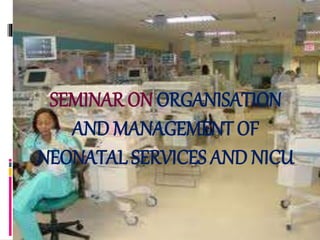
SEMINAR ON ORGANISATION
AND MANAGEMENT OF
NEONATAL SERVICES AND NICU
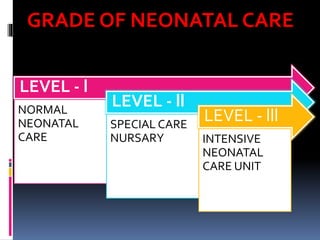
GRADE OF NEONATAL CARE
LEVEL - l
NORMAL
NEONATAL
CARE
LEVEL - ll
SPECIAL CARE
NURSARY
LEVEL - lll
INTENSIVE
NEONATAL
CARE UNIT
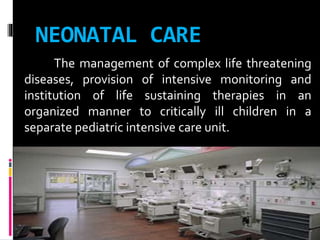
NEONATAL CARE
The management of complex life threatening
diseases, provision of intensive monitoring and
institution of life sustaining therapies in an
organized manner to critically ill children in a
separate pediatric intensive care unit.
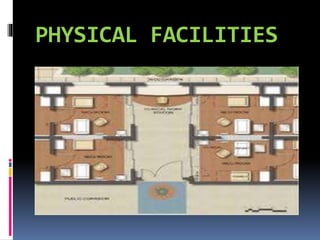
PHYSICAL FACILITIES
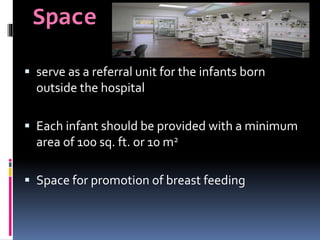
Space
 serve as a referral unit for the infants born
outside the hospital
 Each infant should be provided with a minimum
area of 100 sq. ft. or 10 m2
 Space for promotion of breast feeding
Location
 located as close possible to the labor rooms and
obstetric operation theatre
 should not be located on the top floor
 brightness and provide ultra violate rays to
augment asepsis.
Baby Care Area
 Areas and rooms for inborn or intramural babies,
 Examination area
 Mother’s area for breast feeding and expression
of breast milk
 Nurses station and charting area.
Hand Washing
And Gowning Room
 Should be located at the entrance.
 self closing doors.
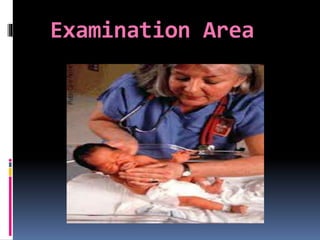
Examination Area
Mother Area
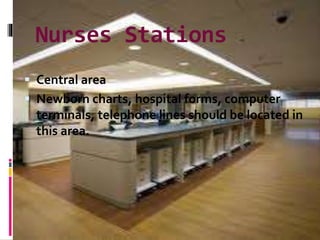
Nurses Stations
 Central area
 Newborn charts, hospital forms, computer
terminals, telephone lines should be located in
this area.
Clean Utility and Soiled
Utility Holding Rooms
 Stocking clean utility items and sterile
disposables, and for disposal of dirty linen and
contaminated disposables.
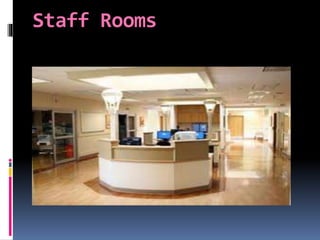
Staff Rooms
VENTILATION
 Effective air ventilation of nursery
 Provision of exhaust fan
 Do not use chemical air disinfection and
ultraviolet lamps
LIGHTING
 Well illuminated and painted while or slightly off
 Cool white fluorescent tubes
 The number and exact location of fixtures can be
worked out taking into account size of the
nursery, height of ceiling, and availability or
otherwise of sunlight.
ENVIRONMENTAL TEMPERATURE
AND HUMIDITY
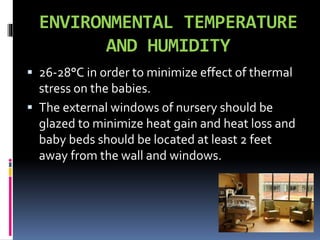
 26-28°C in order to minimize effect of thermal
stress on the babies.
 The external windows of nursery should be
glazed to minimize heat gain and heat loss and
baby beds should be located at least 2 feet
away from the wall and windows.
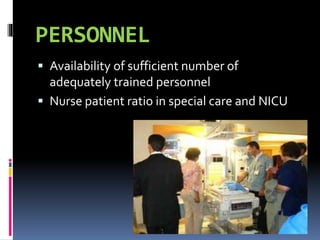
PERSONNEL
 Availability of sufficient number of
adequately trained personnel
 Nurse patient ratio in special care and NICU
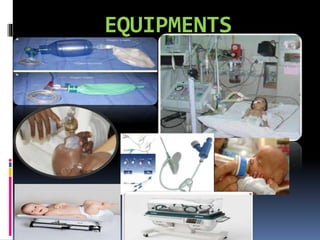
EQUIPMENTS
MANAGEMENT OF NURSING CARE
1. Assessment
2. Monitoring physiological data
3. Safety measures
4. Respiratory support
5. Thermoregulation
6. Protection from infection
7. Hydration
8. Nutrition
9. Feeding resistance
10. Skin care
Conti..
11. Administration of medication
12. Developmental outcome
13. Facilitating parent-infant relationship
14. Discharge planning and home care
15. Neonatal loss
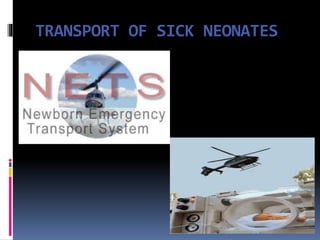
TRANSPORT OF SICK NEONATES
MCQS
 1. Level 1 Care includes
 A. Basic care following delivery
 B. Special newborn care
 C.Ventilator care
 D. Intensive care
 2. Level III care includes
 A. Basic care following delivery
 B. Sub special newborn care
 C.Ventilator care
 D. Intensive care
3. Each infant should be provided with a
minimum area of …………. sq. ft
A. 50
B. 100
C. 150
D. 200
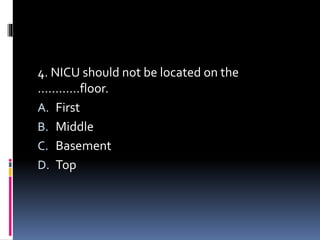
4. NICU should not be located on the
…………floor.
A. First
B. Middle
C. Basement
D. Top
5. Unplanned acute transfer of mother is called
as ……………….transfer.
A. Ex utero
B. With utero
C. In utero
D. None of above
Nicu ppt

Nicu ppt

  • 1.
    SEMINAR ON ORGANISATION ANDMANAGEMENT OF NEONATAL SERVICES AND NICU
  • 2.
    GRADE OF NEONATALCARE LEVEL - l NORMAL NEONATAL CARE LEVEL - ll SPECIAL CARE NURSARY LEVEL - lll INTENSIVE NEONATAL CARE UNIT
  • 3.
    NEONATAL CARE The managementof complex life threatening diseases, provision of intensive monitoring and institution of life sustaining therapies in an organized manner to critically ill children in a separate pediatric intensive care unit.
  • 4.
  • 5.
    Space  serve asa referral unit for the infants born outside the hospital  Each infant should be provided with a minimum area of 100 sq. ft. or 10 m2  Space for promotion of breast feeding
  • 6.
    Location  located asclose possible to the labor rooms and obstetric operation theatre  should not be located on the top floor  brightness and provide ultra violate rays to augment asepsis.
  • 7.
    Baby Care Area Areas and rooms for inborn or intramural babies,  Examination area  Mother’s area for breast feeding and expression of breast milk  Nurses station and charting area.
  • 8.
    Hand Washing And GowningRoom  Should be located at the entrance.  self closing doors.
  • 9.
  • 10.
  • 11.
    Nurses Stations  Centralarea  Newborn charts, hospital forms, computer terminals, telephone lines should be located in this area.
  • 12.
    Clean Utility andSoiled Utility Holding Rooms  Stocking clean utility items and sterile disposables, and for disposal of dirty linen and contaminated disposables.
  • 13.
  • 14.
    VENTILATION  Effective airventilation of nursery  Provision of exhaust fan  Do not use chemical air disinfection and ultraviolet lamps
  • 15.
    LIGHTING  Well illuminatedand painted while or slightly off  Cool white fluorescent tubes  The number and exact location of fixtures can be worked out taking into account size of the nursery, height of ceiling, and availability or otherwise of sunlight.
  • 16.
    ENVIRONMENTAL TEMPERATURE AND HUMIDITY 26-28°C in order to minimize effect of thermal stress on the babies.  The external windows of nursery should be glazed to minimize heat gain and heat loss and baby beds should be located at least 2 feet away from the wall and windows.
  • 17.
    PERSONNEL  Availability ofsufficient number of adequately trained personnel  Nurse patient ratio in special care and NICU
  • 18.
  • 19.
    MANAGEMENT OF NURSINGCARE 1. Assessment 2. Monitoring physiological data 3. Safety measures 4. Respiratory support 5. Thermoregulation 6. Protection from infection 7. Hydration 8. Nutrition 9. Feeding resistance 10. Skin care
  • 20.
    Conti.. 11. Administration ofmedication 12. Developmental outcome 13. Facilitating parent-infant relationship 14. Discharge planning and home care 15. Neonatal loss
  • 21.
  • 22.
    MCQS  1. Level1 Care includes  A. Basic care following delivery  B. Special newborn care  C.Ventilator care  D. Intensive care
  • 23.
     2. LevelIII care includes  A. Basic care following delivery  B. Sub special newborn care  C.Ventilator care  D. Intensive care
  • 24.
    3. Each infantshould be provided with a minimum area of …………. sq. ft A. 50 B. 100 C. 150 D. 200
  • 25.
    4. NICU shouldnot be located on the …………floor. A. First B. Middle C. Basement D. Top
  • 26.
    5. Unplanned acutetransfer of mother is called as ……………….transfer. A. Ex utero B. With utero C. In utero D. None of above