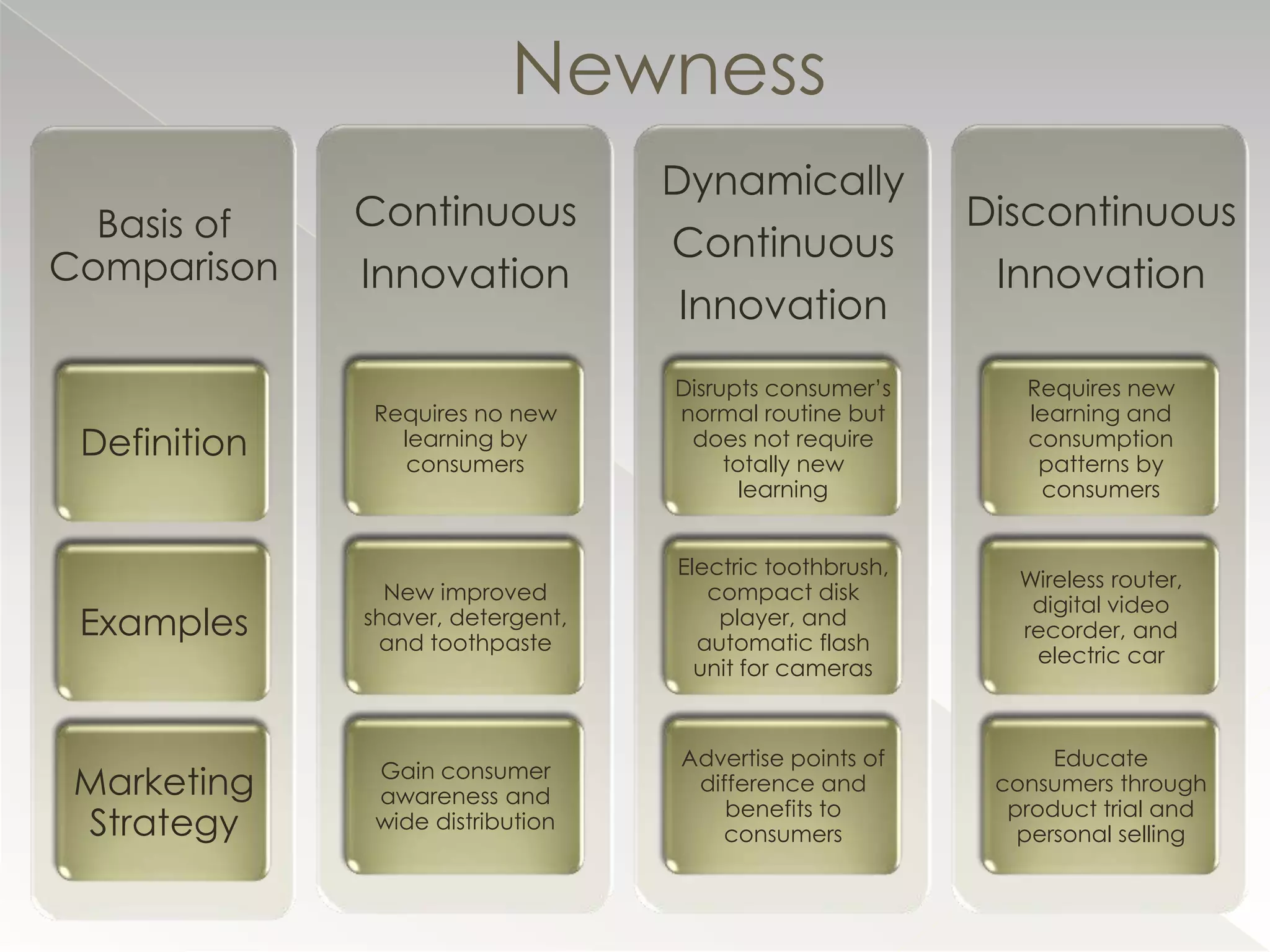
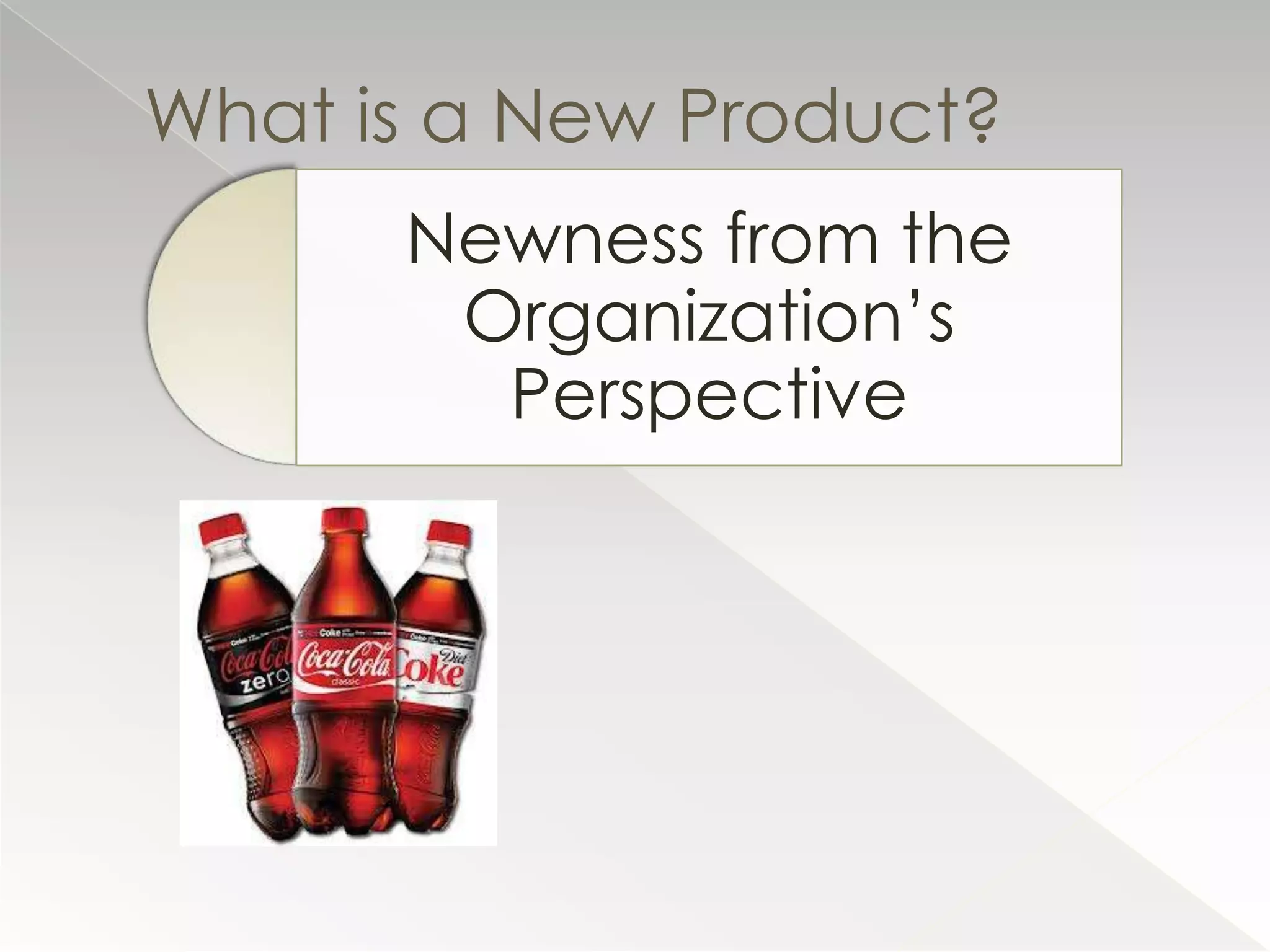
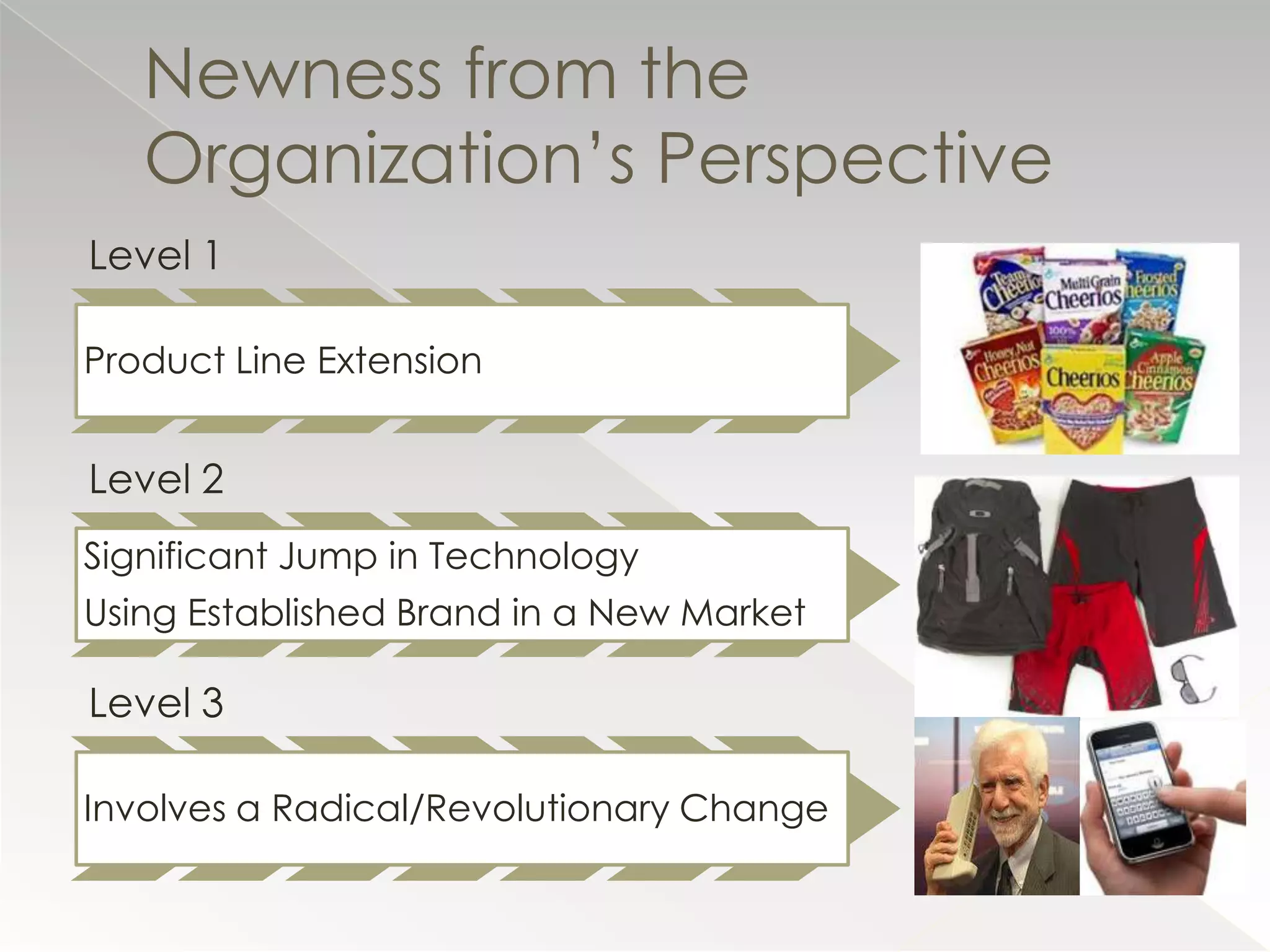
New products can be defined as continuous, discontinuous, or disruptive innovation from the consumer's perspective. Continuous innovation requires little new learning, while discontinuous innovation requires new learning but not new behaviors. Disruptive innovation disrupts normal routines and requires new consumption patterns. Examples include electric toothbrushes (continuous), CD players (discontinuous), and electric cars (disruptive). Marketing strategies differ based on the newness - continuous innovation focuses on benefits, while discontinuous requires education. Internally, newness ranges from product line extensions to revolutionary changes.



![[Case Study] Launching Innocent + Developing a new product for the teeth whit...](https://cdn.slidesharecdn.com/ss_thumbnails/itp800casestudy1112-160624125006-thumbnail.jpg?width=640&height=640&fit=bounds)
![[Young marketers elite 2] Assignment 10.1Brand innovation - Oanh Ngọc Hà](https://cdn.slidesharecdn.com/ss_thumbnails/youngmarketerselite2-assignment10-150508050215-lva1-app6892-thumbnail.jpg?width=640&height=640&fit=bounds)


