






This is my
fifth
Opticon.
no.
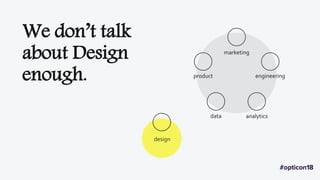
We don’t talk
about Design
enough.
data analytics
product engineering
marketing
design
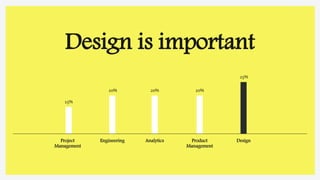
Design is important
DesignEngineeringProject
Management
Product
Management
25%
20%
15%
20%
Analytics
20%
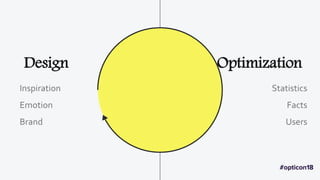
OptimizationDesign
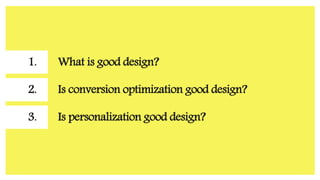
1. What is good design?
2. Is conversion optimization good design?
3. Is personalization good design?
What is
good design?
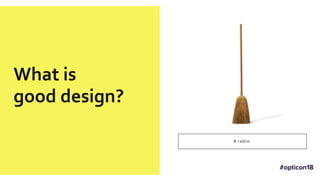
1958 2001
A broom.A chair.A record player.A radio.
What is
good design?
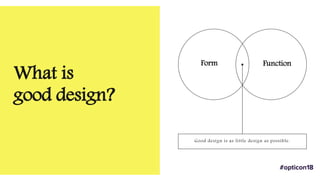
Form Function
Good design is as little design as possible.
What is
good design?
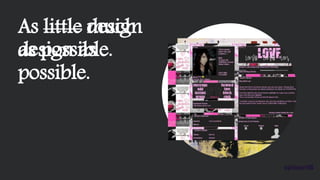
As little much
design as
possible.
As little design
as possible.
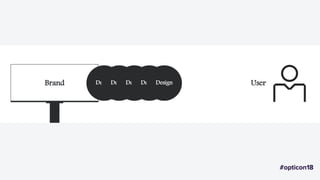
But that was so 90s.
User Experience Design Human Centered DesignProduct Design
DesignDesignDesignDesignDesign UserBrand
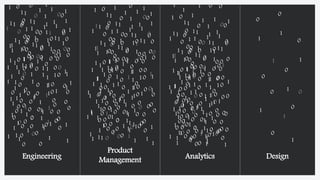
Product
ManagementEngineering Analytics Design
1 0
0
1
01 0
0
1
1
0
1
1
1
0
1
1
1
1
1
1
0
0
0
0
1 0
0
0
1
0
1 0
0
0
1
0
1
1 1
0
1
1
1
1
1
1
0
0
0
0
0
1 0
0
0
1
0
1 0
1
01
0
1
1
1
0
1
1
1
1 1
1
0 0
0
0
1 0
0
1
0
0
1
0
0
1
0
1
01 0
0
0
1
0
1
1
1
0
1
1
1
1
1
1
0
0
0
0
0
1 0
1
0
0
1
0
1
0
1
1
0
1
1
1
0
1
1
1
1
1
1
0
0
0
1 0
0
1
01 0
0
1
0
1
0
1
1
0
1
1
1
1
1
0
0
0
1 0
1 1 1
11
0
0
1
1
1
1
1
1
0
0
1 0
1
0
0
1
01 0
0
1
0
1
1
1
1
0
0
0
1 0
1 1
11
01
1
1 1
1
0
0
0
1
0
0
1
01 0
0
0
1
1
1
1
0
0
0
0
1
1 0
0
1
0 0
0
1
1
0
1
1
1
0
1
1
1
1
0
0
0
0
0
1 0
1
0
0
1
01 0
0
1
0
1
0
1
1
1
1
1
1
1
1
1
0
0
0
0
1 0
1
0
0
1
1 0
0
1
1
0
1
1
1
0
1
1
1
1
0
0
0
0
0
1
0
0
1
01 0
0
1
0
1
0
1
1
1
0
1
1
1
1
0
0
0
0
1 0
1 1 1
11
0
0
1
1
1
1
1
0
1
0
0
1
01 0
0
1
0
1
1
1
1
0
0
1 1 1
11
0
0
1
1
1 1
1
0
0
1 0
1
0
0
1
01 0
1
1
1
1 1
1
0
0
0
1 1 1 0
0
1
0
1 0
0
1
0
0
1
1 1
0
1
1
1
0
0
0
0
0
1 0
0
1
01 0
0
0
1
0
1
1
1
0
1
1
1
0
0
0
1 0
1
0
0
1
01 0
0
0
1
1
1
1
0
1
1
1
1
0
0
0
0
1 0
1
0
0
1
0
1 0
0
0
1
1
1
0
1
1
1
1
0
0
0
1 0
1
0
0
1
01 0
0
1
0
1
0
1
1
1
0
1
1
1
1
1
0
0
0
0
1 0
1 1 1
11
0
0
1
1
1
1
0
0
1 0
0
0
1
01
1
0
1
1
1 1
1 0
1 1 1
0
1
1
1 1
1
0
0
0
0
0
1
01 0 0
1
1
1 1
1 0
0
1 1
1
01
0
1
0
1
00
1 0010 1
1
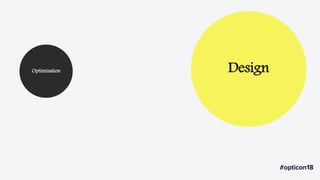
DesignOptimization
Let me erase the line.
Optimization Design
Evidence-based Design
Today evidence-based design is defined by
Wikipedia as:
Evidence-based Design
"Evidence-based design is a process for the conscientious, explicit, and
judicious use of current best evidence from research and practice in making
critical decisions, together with an informed client, about the design of each
individual and unique project".
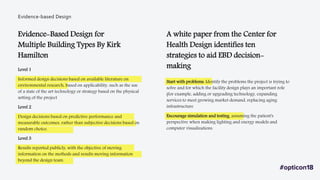
Level 1
Informed design decisions based on available literature on
environmental research, based on applicability, such as the use
of a state of the art technology or strategy based on the physical
setting of the project
Level 2
Design decisions based on predictive performance and
measurable outcomes, rather than subjective decisions based on
random choice.
Level 3
Results reported publicly, with the objective of moving
information on the methods and results moving information
beyond the design team.
Evidence-Based Design for
Multiple Building Types By Kirk
Hamilton
Start with problems. Identify the problems the project is trying to
solve and for which the facility design plays an important role
(for example, adding or upgrading technology, expanding
services to meet growing market demand, replacing aging
infrastructure
Encourage simulation and testing, assuming the patient's
perspective when making lighting and energy models and
computer visualizations.
A white paper from the Center for
Health Design identifies ten
strategies to aid EBD decision-
making
Evidence-based Design
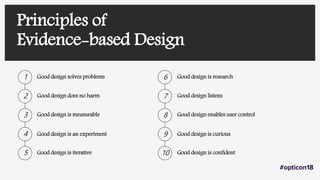
Principles of
Evidence-based Design
Good design solves problems1
4 Good design is an experiment
5 Good design is iterative
3 Good design is measurable
Good design is research6
Good design is curious9
Good design is confident10
Good design listens7
Good design enables user control8
2 Good design does no harm
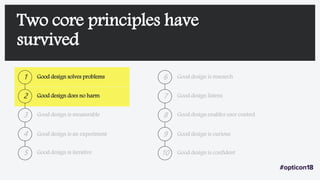
Two core principles have
survived
Good design solves problems1
2 Good design does no harm
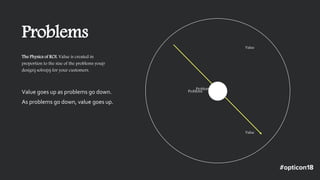
Problems
The Physics of ROI. Value is created in
proportion to the size of the problems you(r
design) solve(s) for your customers.
Value goes up as problems go down.
As problems go down, value goes up.
Value
Problems
Value
Problems
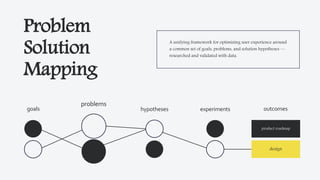
Problem
Solution
Mapping
A unifying framework for optimizing user experience around
a common set of goals, problems, and solution hypotheses —
researched and validated with data.
problems
goals
product roadmap
design
hypotheses experiments outcomes
Wolverine Worldwide
Clean Cart (but not too clean)
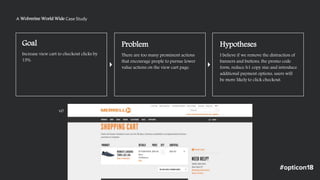
Goal
Increase view cart to checkout clicks by
15%.
Problem
There are too many prominent actions
that encourage people to pursue lower
value actions on the view cart page.
Hypotheses
I believe if we remove the distraction of
banners and buttons, the promo code
form, reduce h1 copy size and introduce
additional payment options, users will
be more likely to click checkout.
A Wolverine World Wide Case Study
v0
v1v0
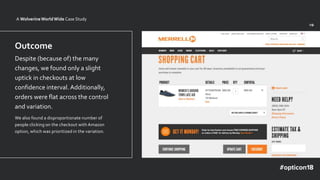
Outcome
Despite (because of) the many
changes, we found only a slight
uptick in checkouts at low
confidence interval.Additionally,
orders were flat across the control
and variation.
We also found a disproportionate number of
people clicking on the checkout with Amazon
option, which was prioritized in the variation.
A WolverineWorldWide Case Study
v1
A WolverineWorldWide Case Study
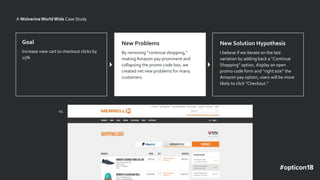
Goal
Increase view cart to checkout clicks by
15%
Problem
The CTAs on the cart are
distracting.
New Solution Hypothesis
I believe if we iterate on the last
variation by adding back a “Continue
Shopping” option, display an open
promo code form and “right size” the
Amazon pay option, users will be more
likely to click “Checkout.”
New Problems
By removing “continue shopping,”
makingAmazon pay prominent and
collapsing the promo code box, we
created net new problems for many
customers.
v1.1v1
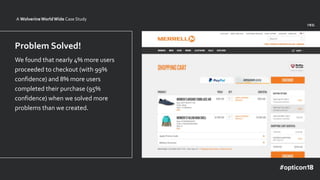
Problem Solved!
We found that nearly 4% more users
proceeded to checkout (with 99%
confidence) and 8% more users
completed their purchase (95%
confidence) when we solved more
problems than we created.
A WolverineWorldWide Case Study
Is Conversion Optimization good
design?
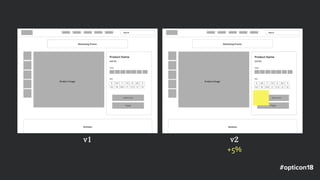
v1 v2
v1 v2
+5%
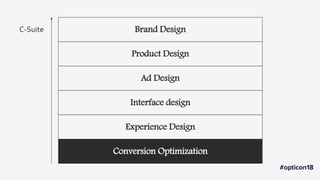
Brand Design
Product Design
Ad Design
Interface design
Experience Design
Conversion Optimization
C-Suite
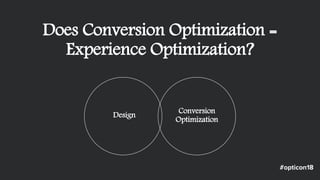
Does Conversion Optimization =
Experience Optimization?
Design
Conversion
Optimization
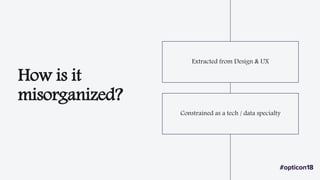
How is it
misorganized?
Extracted from Design & UX
Constrained as a tech / data specialty
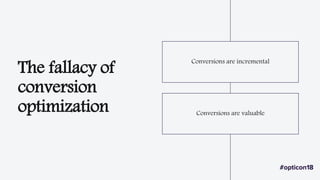
The fallacy of
conversion
optimization
Conversions are incremental
Conversions are valuable
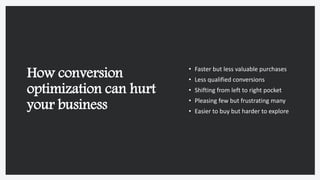
How conversion
optimization can hurt
your business
• Faster but less valuable purchases
• Less qualified conversions
• Shifting from left to right pocket
• Pleasing few but frustrating many
• Easier to buy but harder to explore
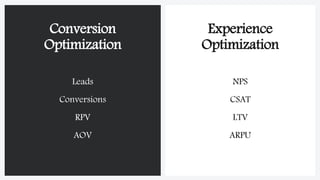
Experience
Optimization
Leads
Conversions
RPV
AOV
NPS
CSAT
LTV
ARPU
Conversion
Optimization
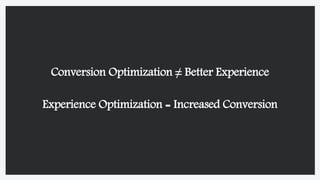
Conversion Optimization ≠ Better Experience
Experience Optimization = Increased Conversion
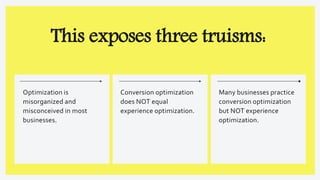
This exposes three truisms:
Optimization is
misorganized and
misconceived in most
businesses.
Many businesses practice
conversion optimization
but NOT experience
optimization.
Conversion optimization
does NOT equal
experience optimization.
Personalization
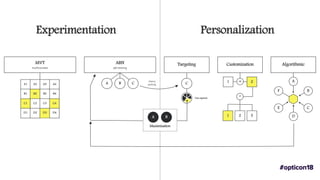
Experimentation Personalization
Maximization
A B C 2
MVT ABN Targeting Customization Algorithmic
multivariate a/b testing
cherry
picking
User segment
or
A
1
?
B
C
D
E
F
C
B
A1 A2 A3 A4
B1 B2 B3 B4
C1 C2 C3 C4
D1 D2 D3 D4
21 3
A
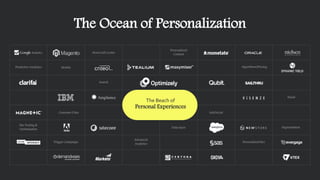
The Ocean of Personalization
The Beach of
Personal Experiences
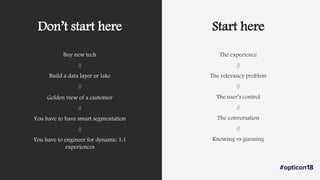
Don’t start here Start here
Buy new tech
//
Build a data layer or lake
//
Golden view of a customer
//
You have to have smart segmentation
//
You have to engineer for dynamic 1:1
experiences
The experience
//
The relevancy problem
//
The user’s control
//
The conversation
//
Knowing vs guessing
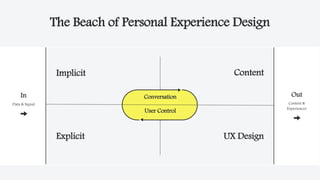
The Beach of Personal Experience Design
User Control
Conversation
Implicit
Explicit
Content
UX Design
Data & Signal
In
Content &
Experiences
Out
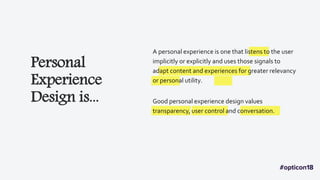
Personal
Experience
Design is...
A personal experience is one that listens to the user
implicitly or explicitly and uses those signals to
adapt content and experiences for greater relevancy
or personal utility.
Good personal experience design values
transparency, user control and conversation.
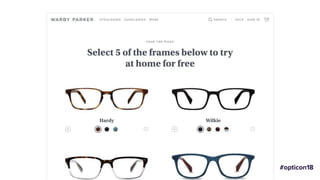
Guessing vs Knowing
A Warby Parker Example
Bringing it all back home
Conversion
Optimization is a
constrained concept.
Experience Optimization creates
value by solving Problems MOST
Worth Solving.
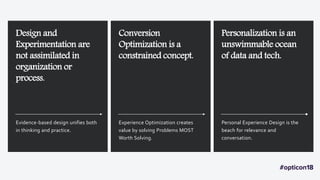
Design and
Experimentation are
not assimilated in
organization or
process.
Evidence-based design unifies both
in thinking and practice..
Conversion
Optimization is a
constrained concept.
Experience Optimization creates
value by solving Problems MOST
Worth Solving.
Personalization is an
unswimmable ocean
of data and tech.
Personal Experience Design is the
beach for relevance and
conversation.
Design and
Experimentation are
not assimilated in
organization or
process.
Evidence-based design unifies both
in thinking and practice.
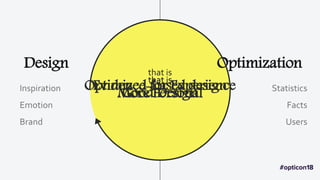
OptimizationDesign that is
Evidence-based design
that is
Optimized for Experience
that is
Good Design
that is
More Personal
Thank You!
New Principles for Digital Experiences That Perform

New Principles for Digital Experiences That Perform

  • 3.
  • 4.
    We don’t talk aboutDesign enough. data analytics product engineering marketing design
  • 5.
  • 6.
  • 7.
    1. What isgood design? 2. Is conversion optimization good design? 3. Is personalization good design?
  • 8.
  • 9.
    1958 2001 A broom.Achair.A record player.A radio. What is good design?
  • 10.
    Form Function Good designis as little design as possible. What is good design?
  • 11.
    As little much designas possible. As little design as possible.
  • 12.
    But that wasso 90s. User Experience Design Human Centered DesignProduct Design
  • 13.
  • 14.
    Product ManagementEngineering Analytics Design 10 0 1 01 0 0 1 1 0 1 1 1 0 1 1 1 1 1 1 0 0 0 0 1 0 0 0 1 0 1 0 0 0 1 0 1 1 1 0 1 1 1 1 1 1 0 0 0 0 0 1 0 0 0 1 0 1 0 1 01 0 1 1 1 0 1 1 1 1 1 1 0 0 0 0 1 0 0 1 0 0 1 0 0 1 0 1 01 0 0 0 1 0 1 1 1 0 1 1 1 1 1 1 0 0 0 0 0 1 0 1 0 0 1 0 1 0 1 1 0 1 1 1 0 1 1 1 1 1 1 0 0 0 1 0 0 1 01 0 0 1 0 1 0 1 1 0 1 1 1 1 1 0 0 0 1 0 1 1 1 11 0 0 1 1 1 1 1 1 0 0 1 0 1 0 0 1 01 0 0 1 0 1 1 1 1 0 0 0 1 0 1 1 11 01 1 1 1 1 0 0 0 1 0 0 1 01 0 0 0 1 1 1 1 0 0 0 0 1 1 0 0 1 0 0 0 1 1 0 1 1 1 0 1 1 1 1 0 0 0 0 0 1 0 1 0 0 1 01 0 0 1 0 1 0 1 1 1 1 1 1 1 1 1 0 0 0 0 1 0 1 0 0 1 1 0 0 1 1 0 1 1 1 0 1 1 1 1 0 0 0 0 0 1 0 0 1 01 0 0 1 0 1 0 1 1 1 0 1 1 1 1 0 0 0 0 1 0 1 1 1 11 0 0 1 1 1 1 1 0 1 0 0 1 01 0 0 1 0 1 1 1 1 0 0 1 1 1 11 0 0 1 1 1 1 1 0 0 1 0 1 0 0 1 01 0 1 1 1 1 1 1 0 0 0 1 1 1 0 0 1 0 1 0 0 1 0 0 1 1 1 0 1 1 1 0 0 0 0 0 1 0 0 1 01 0 0 0 1 0 1 1 1 0 1 1 1 0 0 0 1 0 1 0 0 1 01 0 0 0 1 1 1 1 0 1 1 1 1 0 0 0 0 1 0 1 0 0 1 0 1 0 0 0 1 1 1 0 1 1 1 1 0 0 0 1 0 1 0 0 1 01 0 0 1 0 1 0 1 1 1 0 1 1 1 1 1 0 0 0 0 1 0 1 1 1 11 0 0 1 1 1 1 0 0 1 0 0 0 1 01 1 0 1 1 1 1 1 0 1 1 1 0 1 1 1 1 1 0 0 0 0 0 1 01 0 0 1 1 1 1 1 0 0 1 1 1 01 0 1 0 1 00 1 0010 1 1
  • 15.
  • 16.
    Let me erasethe line. Optimization Design
  • 17.
  • 18.
    Today evidence-based designis defined by Wikipedia as: Evidence-based Design "Evidence-based design is a process for the conscientious, explicit, and judicious use of current best evidence from research and practice in making critical decisions, together with an informed client, about the design of each individual and unique project".
  • 19.
    Level 1 Informed designdecisions based on available literature on environmental research, based on applicability, such as the use of a state of the art technology or strategy based on the physical setting of the project Level 2 Design decisions based on predictive performance and measurable outcomes, rather than subjective decisions based on random choice. Level 3 Results reported publicly, with the objective of moving information on the methods and results moving information beyond the design team. Evidence-Based Design for Multiple Building Types By Kirk Hamilton Start with problems. Identify the problems the project is trying to solve and for which the facility design plays an important role (for example, adding or upgrading technology, expanding services to meet growing market demand, replacing aging infrastructure Encourage simulation and testing, assuming the patient's perspective when making lighting and energy models and computer visualizations. A white paper from the Center for Health Design identifies ten strategies to aid EBD decision- making Evidence-based Design
  • 20.
    Principles of Evidence-based Design Gooddesign solves problems1 4 Good design is an experiment 5 Good design is iterative 3 Good design is measurable Good design is research6 Good design is curious9 Good design is confident10 Good design listens7 Good design enables user control8 2 Good design does no harm
  • 21.
    Two core principleshave survived Good design solves problems1 2 Good design does no harm
  • 22.
    Problems The Physics ofROI. Value is created in proportion to the size of the problems you(r design) solve(s) for your customers. Value goes up as problems go down. As problems go down, value goes up. Value Problems Value Problems
  • 23.
    Problem Solution Mapping A unifying frameworkfor optimizing user experience around a common set of goals, problems, and solution hypotheses — researched and validated with data. problems goals product roadmap design hypotheses experiments outcomes
  • 24.
    Wolverine Worldwide Clean Cart(but not too clean)
  • 25.
    Goal Increase view cartto checkout clicks by 15%. Problem There are too many prominent actions that encourage people to pursue lower value actions on the view cart page. Hypotheses I believe if we remove the distraction of banners and buttons, the promo code form, reduce h1 copy size and introduce additional payment options, users will be more likely to click checkout. A Wolverine World Wide Case Study v0
  • 26.
    v1v0 Outcome Despite (because of)the many changes, we found only a slight uptick in checkouts at low confidence interval.Additionally, orders were flat across the control and variation. We also found a disproportionate number of people clicking on the checkout with Amazon option, which was prioritized in the variation. A WolverineWorldWide Case Study
  • 27.
    v1 A WolverineWorldWide CaseStudy Goal Increase view cart to checkout clicks by 15% Problem The CTAs on the cart are distracting. New Solution Hypothesis I believe if we iterate on the last variation by adding back a “Continue Shopping” option, display an open promo code form and “right size” the Amazon pay option, users will be more likely to click “Checkout.” New Problems By removing “continue shopping,” makingAmazon pay prominent and collapsing the promo code box, we created net new problems for many customers.
  • 28.
    v1.1v1 Problem Solved! We foundthat nearly 4% more users proceeded to checkout (with 99% confidence) and 8% more users completed their purchase (95% confidence) when we solved more problems than we created. A WolverineWorldWide Case Study
  • 29.
  • 30.
  • 31.
    Brand Design Product Design AdDesign Interface design Experience Design Conversion Optimization C-Suite
  • 32.
    Does Conversion Optimization= Experience Optimization? Design Conversion Optimization
  • 33.
    How is it misorganized? Extractedfrom Design & UX Constrained as a tech / data specialty
  • 34.
    The fallacy of conversion optimization Conversionsare incremental Conversions are valuable
  • 35.
    How conversion optimization canhurt your business • Faster but less valuable purchases • Less qualified conversions • Shifting from left to right pocket • Pleasing few but frustrating many • Easier to buy but harder to explore
  • 36.
  • 37.
    Conversion Optimization ≠Better Experience Experience Optimization = Increased Conversion
  • 38.
    This exposes threetruisms: Optimization is misorganized and misconceived in most businesses. Many businesses practice conversion optimization but NOT experience optimization. Conversion optimization does NOT equal experience optimization.
  • 39.
  • 40.
    Experimentation Personalization Maximization A BC 2 MVT ABN Targeting Customization Algorithmic multivariate a/b testing cherry picking User segment or A 1 ? B C D E F C B A1 A2 A3 A4 B1 B2 B3 B4 C1 C2 C3 C4 D1 D2 D3 D4 21 3 A
  • 41.
    The Ocean ofPersonalization The Beach of Personal Experiences
  • 42.
    Don’t start hereStart here Buy new tech // Build a data layer or lake // Golden view of a customer // You have to have smart segmentation // You have to engineer for dynamic 1:1 experiences The experience // The relevancy problem // The user’s control // The conversation // Knowing vs guessing
  • 43.
    The Beach ofPersonal Experience Design User Control Conversation Implicit Explicit Content UX Design Data & Signal In Content & Experiences Out
  • 44.
    Personal Experience Design is... A personalexperience is one that listens to the user implicitly or explicitly and uses those signals to adapt content and experiences for greater relevancy or personal utility. Good personal experience design values transparency, user control and conversation.
  • 45.
    Guessing vs Knowing AWarby Parker Example
  • 47.
    Bringing it allback home
  • 48.
    Conversion Optimization is a constrainedconcept. Experience Optimization creates value by solving Problems MOST Worth Solving. Design and Experimentation are not assimilated in organization or process. Evidence-based design unifies both in thinking and practice.. Conversion Optimization is a constrained concept. Experience Optimization creates value by solving Problems MOST Worth Solving. Personalization is an unswimmable ocean of data and tech. Personal Experience Design is the beach for relevance and conversation. Design and Experimentation are not assimilated in organization or process. Evidence-based design unifies both in thinking and practice.
  • 49.
    OptimizationDesign that is Evidence-baseddesign that is Optimized for Experience that is Good Design that is More Personal
  • 50.