
New Methodologies for Researching News Discussion on TwitterAxel Bruns and Jean BurgessARC Centre of Excellence for Creative Industries and InnovationQueensland University of TechnologyBrisbane, Australiaa.bruns / je.burgess@qut.edu.au@snurb_dot_info / @jeanburgesshttp://mappingonlinepublics.net/
Why Twitter?Researching  news discussion on Twitter:Significant world-wide social network~200 million users (but how many active?)Varied range of uses: from phatic communication to emergency coordinationFlat and open network structure: non-reciprocal following, public profiles by defaultCommonly used in the coverage and discussion of breaking news events and ongoing storiesGood API for data journalism
Twitter and the NewsKey news-related uses of Twitter:First-hand news reports:Emergency landing in the Hudson; Abbottabad raid; storms, earthquakes, tsunamisContinuing news discussion:Information sharing (gatewatching); commentary; story curation through hashtags‘Ambient’ news coverage (Hermida; Burns):Early indicator of breaking stories; trending topics, themes, URLs, etc. Tool for sourcing, tracking, finding stories
#hashtags on TwitterHashtag =‘#’ + alphanumeric characters: Automatic tracking & aggregation of a topic, represented with a hyperlinkOriginally a (lead) user innovation, later integrated into platformSimple, adaptive and generativeCan coordinate, render visible, and constitute publics
#hashtag PublicsPublics: Attend to matters of shared concern with some level of co-awarenessVaried in intensity and temporalityEmergent, constituted via discourse & affect #hashtag publics:Not all hashtags constitute publics; Twitter doesn’t ‘contain’ publicsWhat are the various patterns in the dynamics of different hashtag-based publics?What might account for these differences?
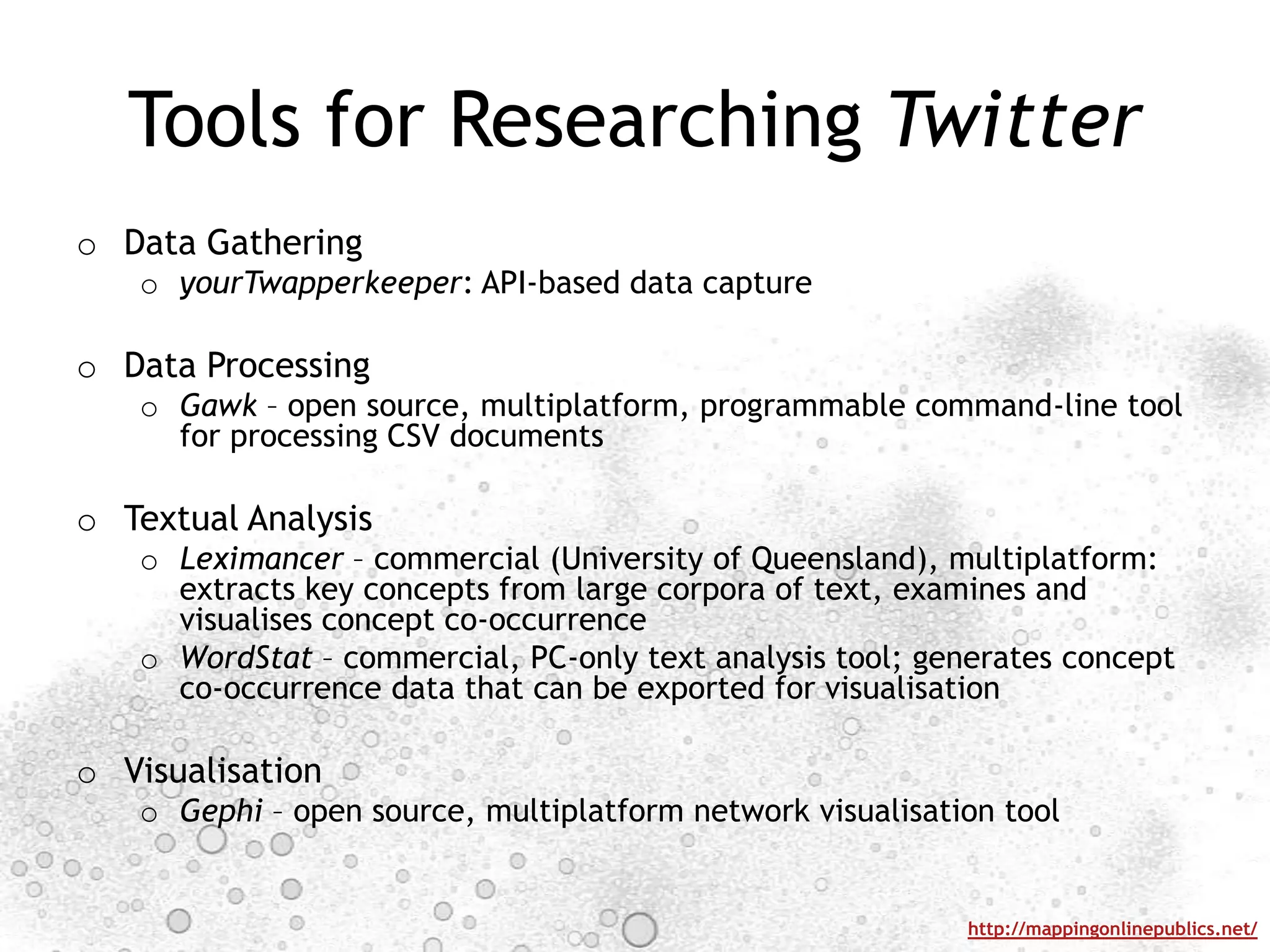
Data GatheringyourTwapperkeeper: API-based data captureData ProcessingGawk – open source, multiplatform, programmable command-line tool for processing CSV documentsTextual AnalysisLeximancer – commercial (University of Queensland), multiplatform: extracts key concepts from large corpora of text, examines and visualises concept co-occurrenceWordStat – commercial, PC-only text analysis tool; generates concept co-occurrence data that can be exported for visualisationVisualisationGephi – open source, multiplatform network visualisation toolTools for Researching Twitter
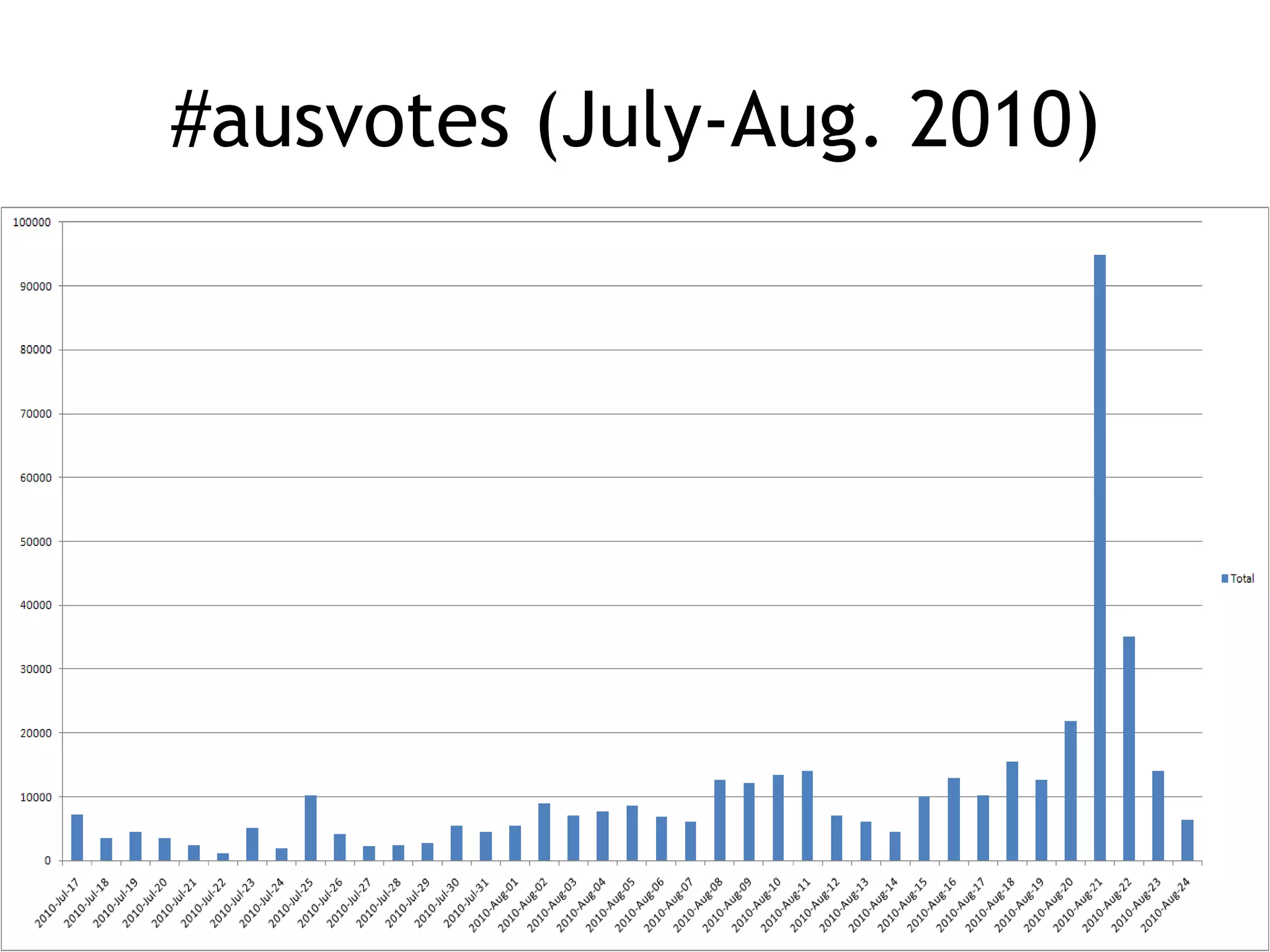
#ausvotes (July-Aug. 2010)
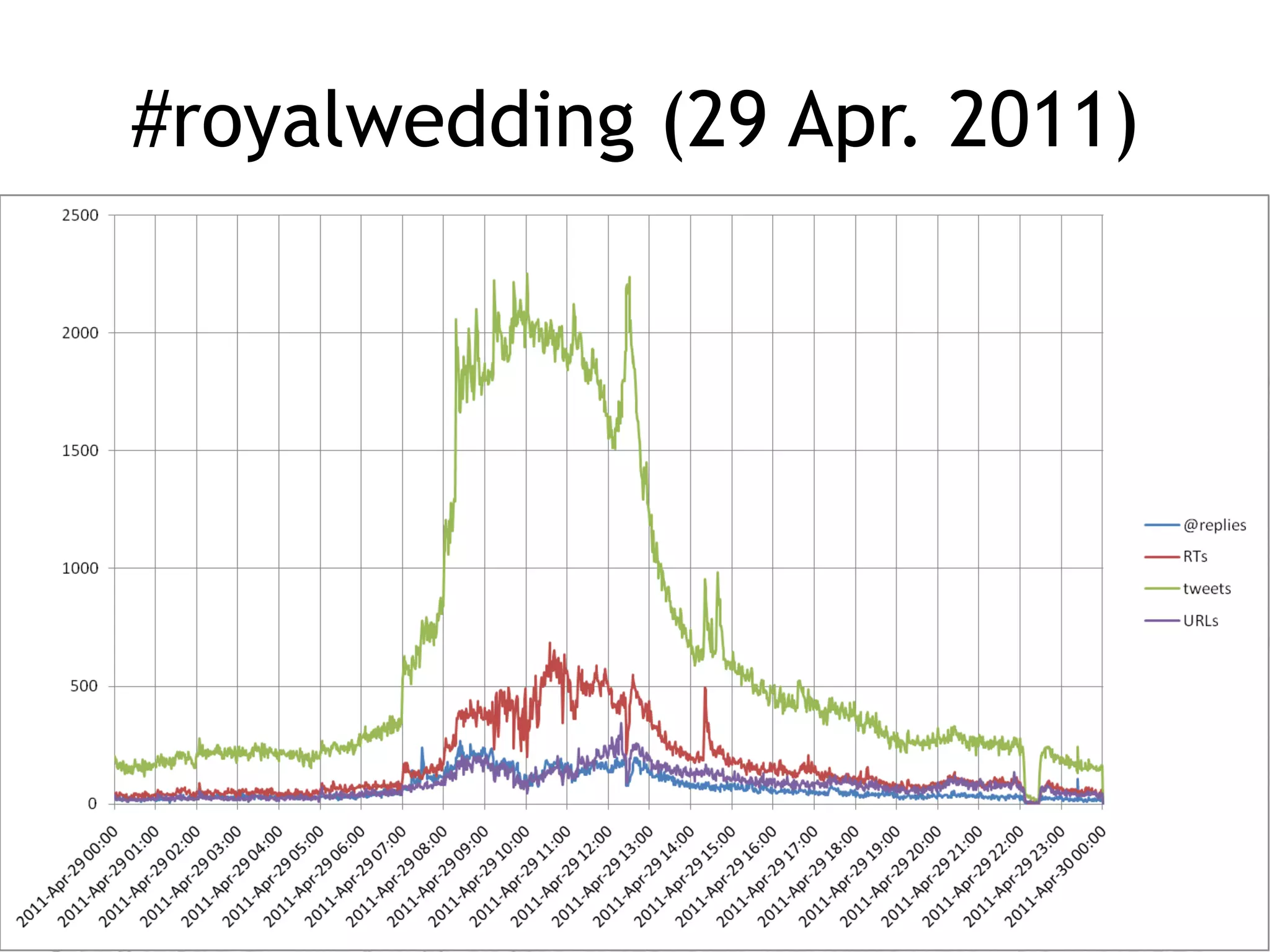
#royalwedding (29 Apr. 2011)
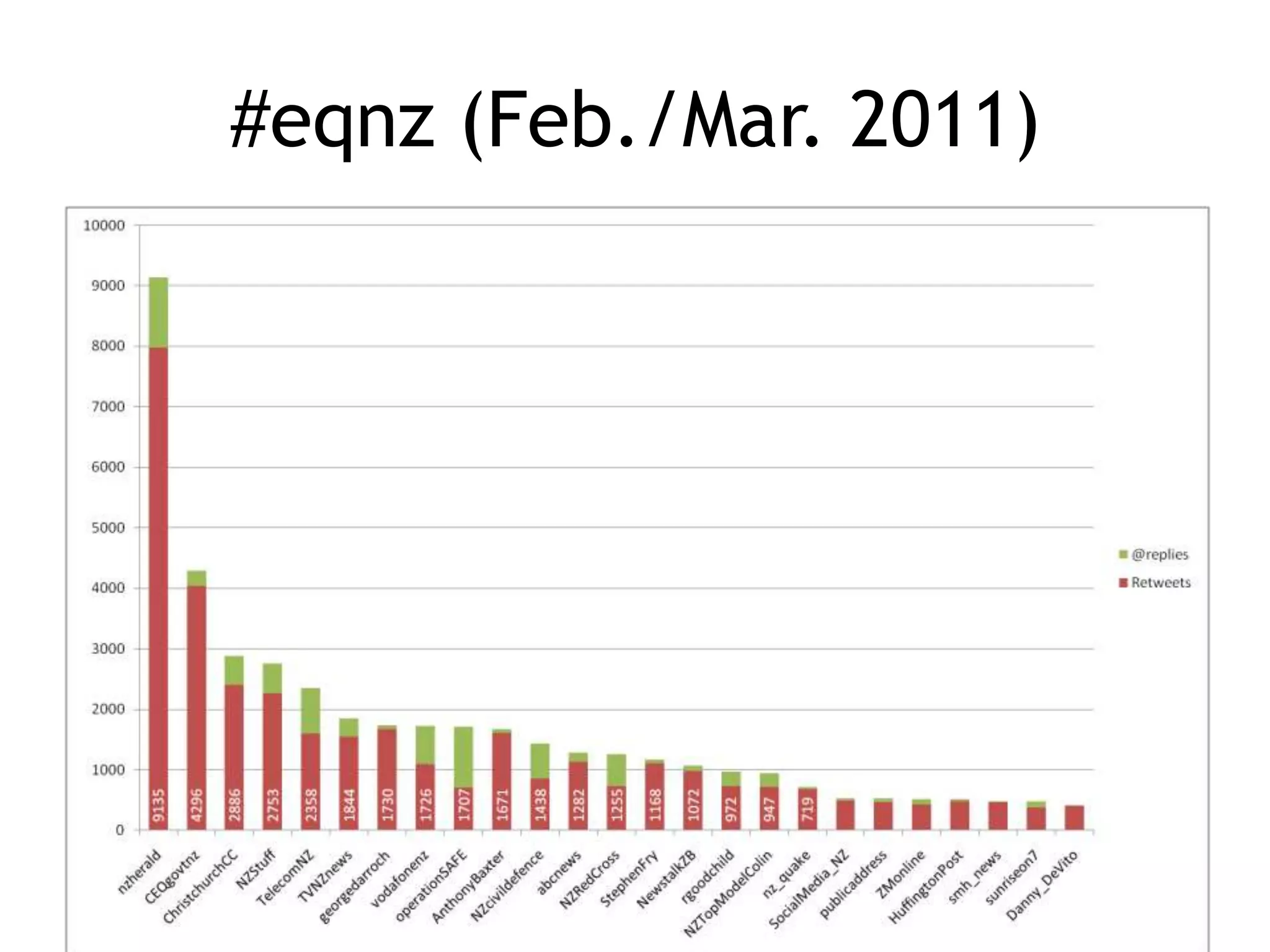
#eqnz (Feb./Mar. 2011)
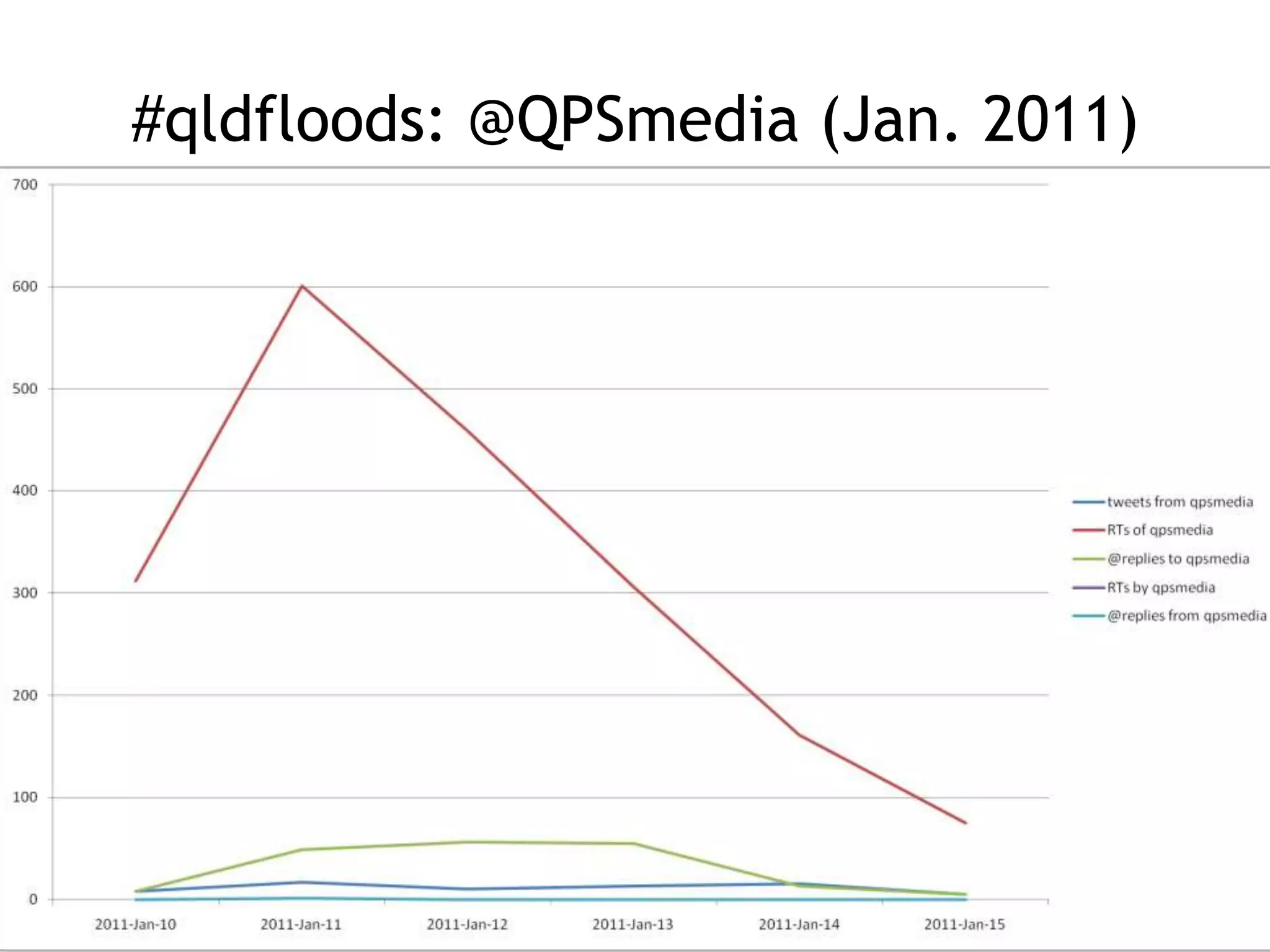
#qldfloods: @QPSmedia (Jan. 2011)
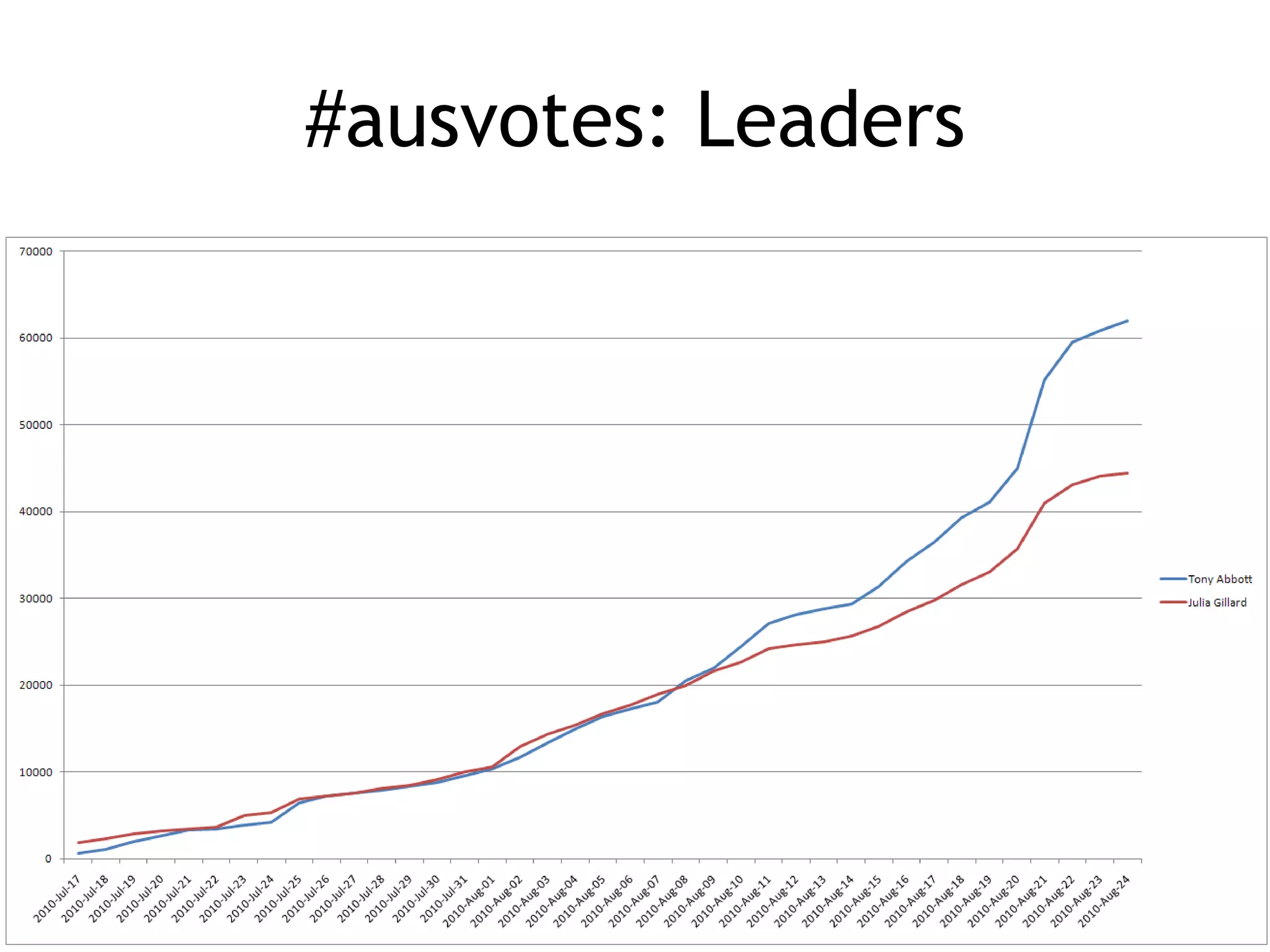
#ausvotes: Leaders
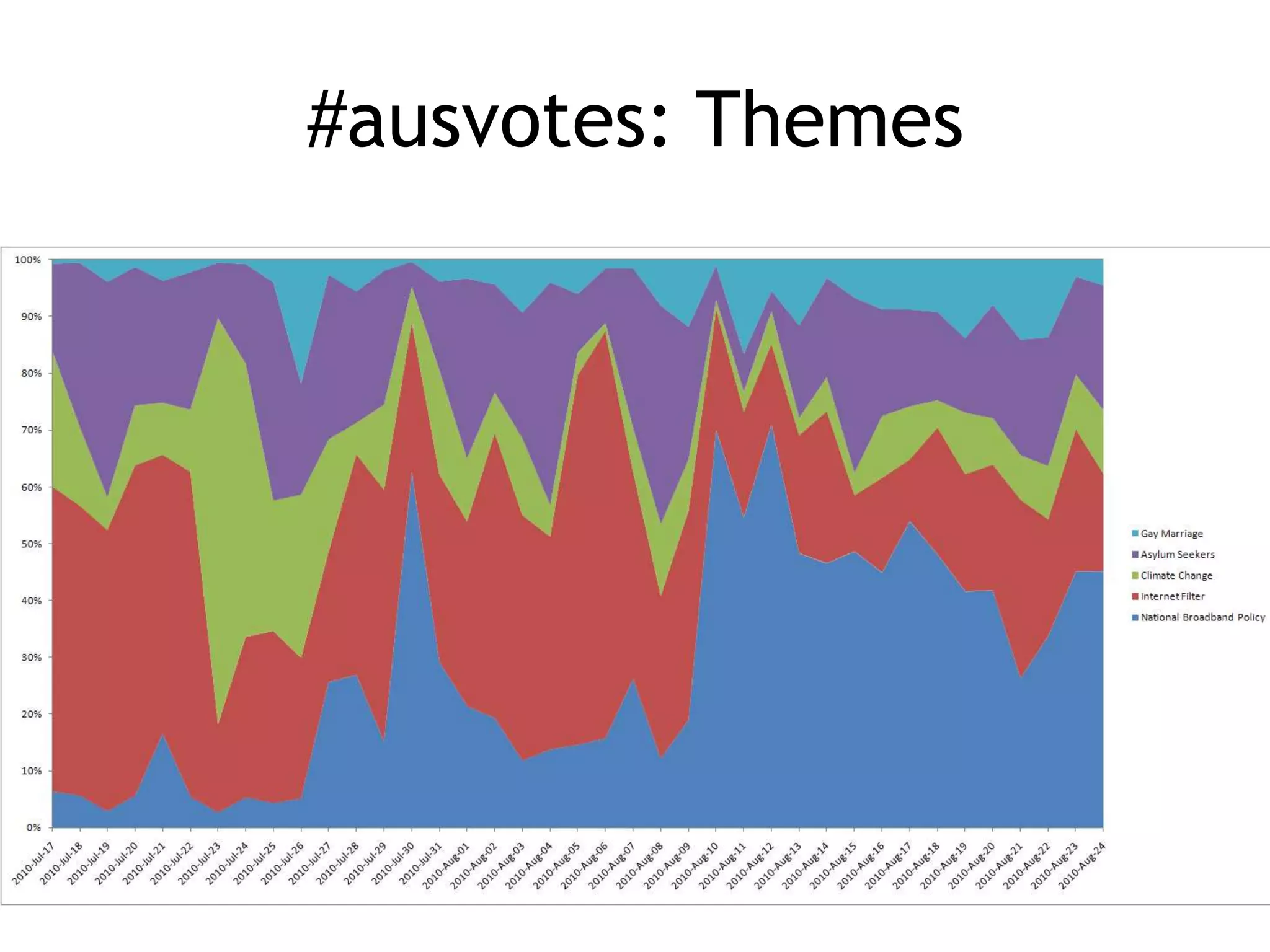
#ausvotes: Themes
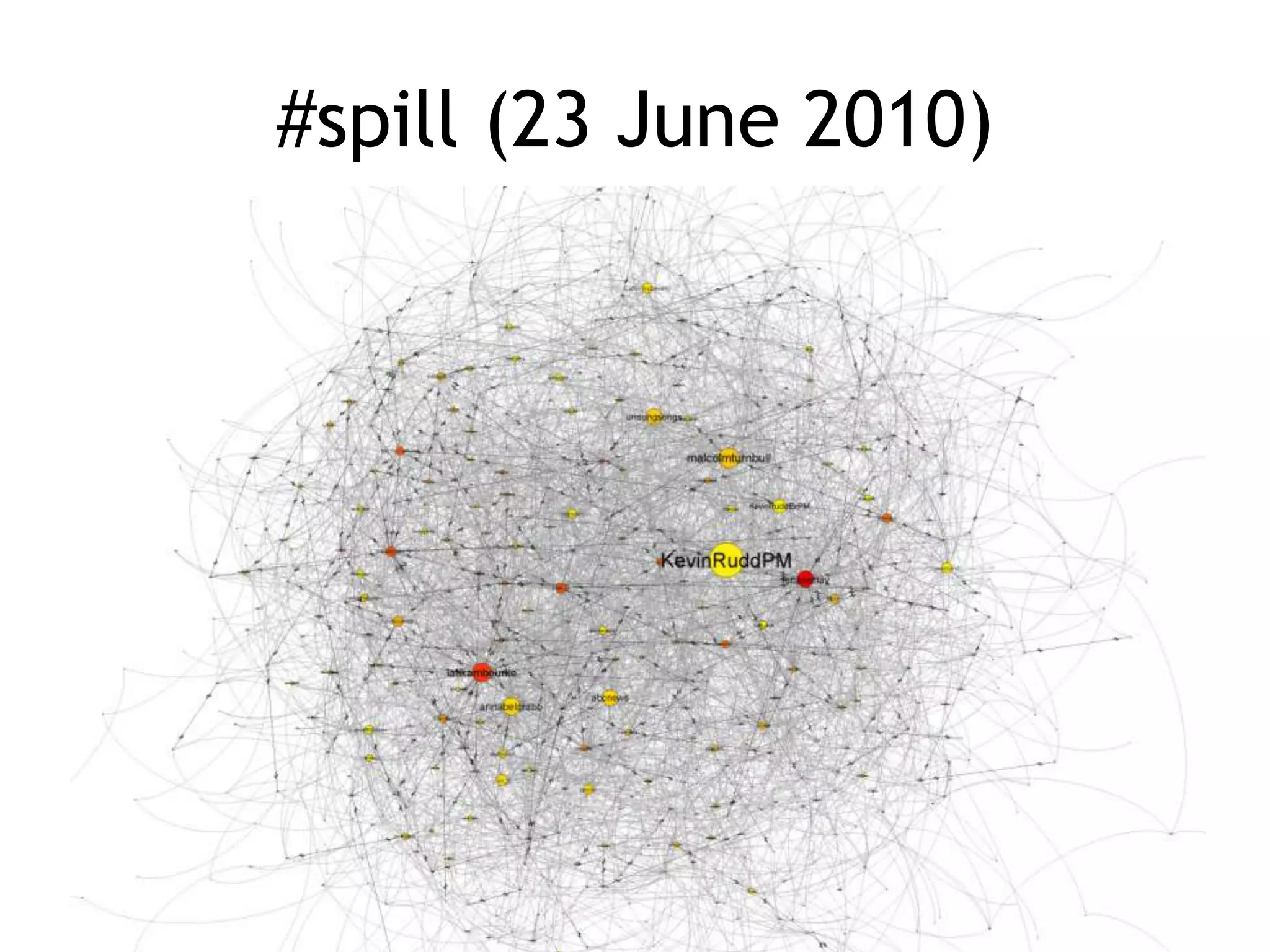
#spill (23 June 2010)
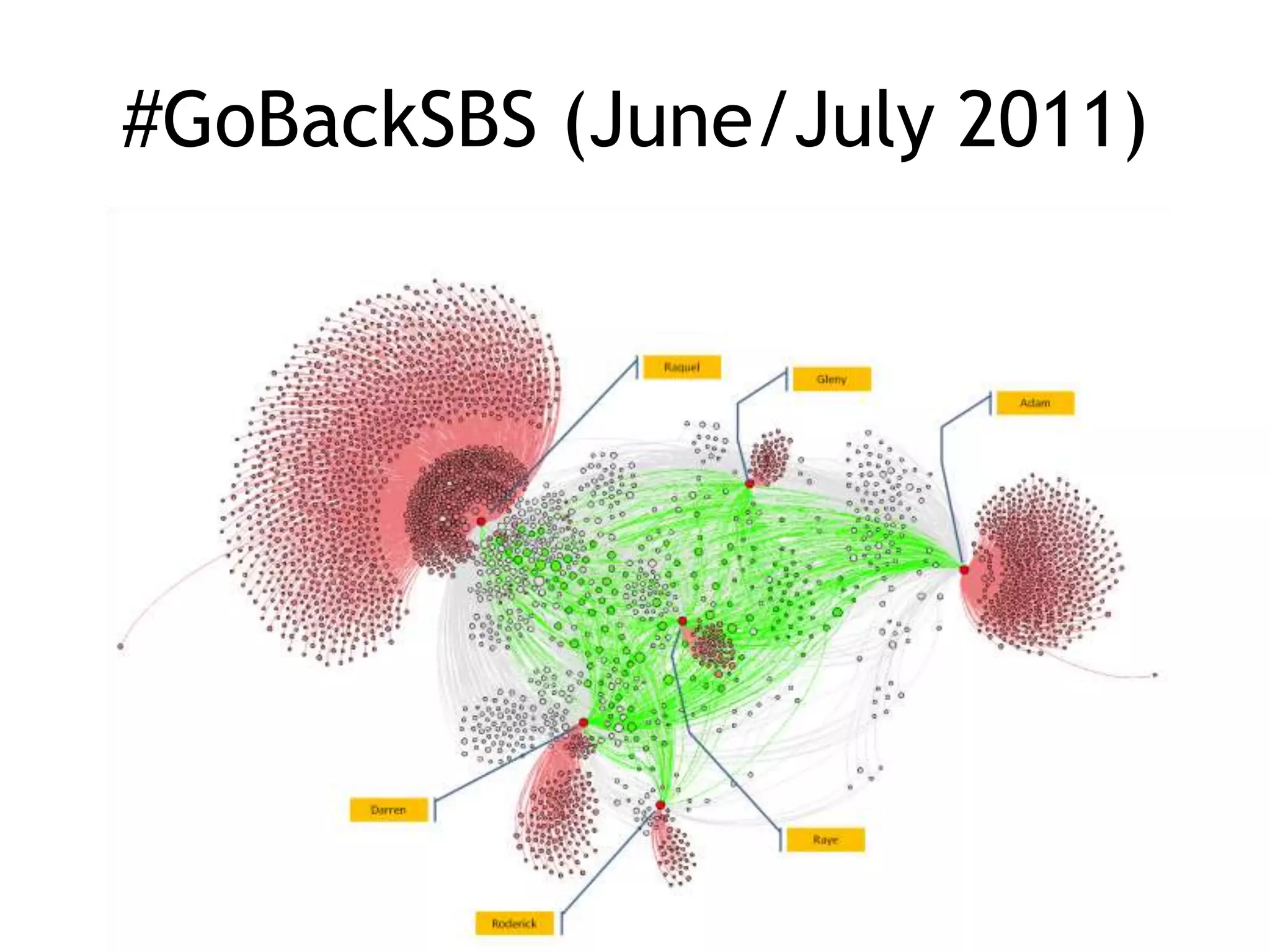
#GoBackSBS (June/July 2011)
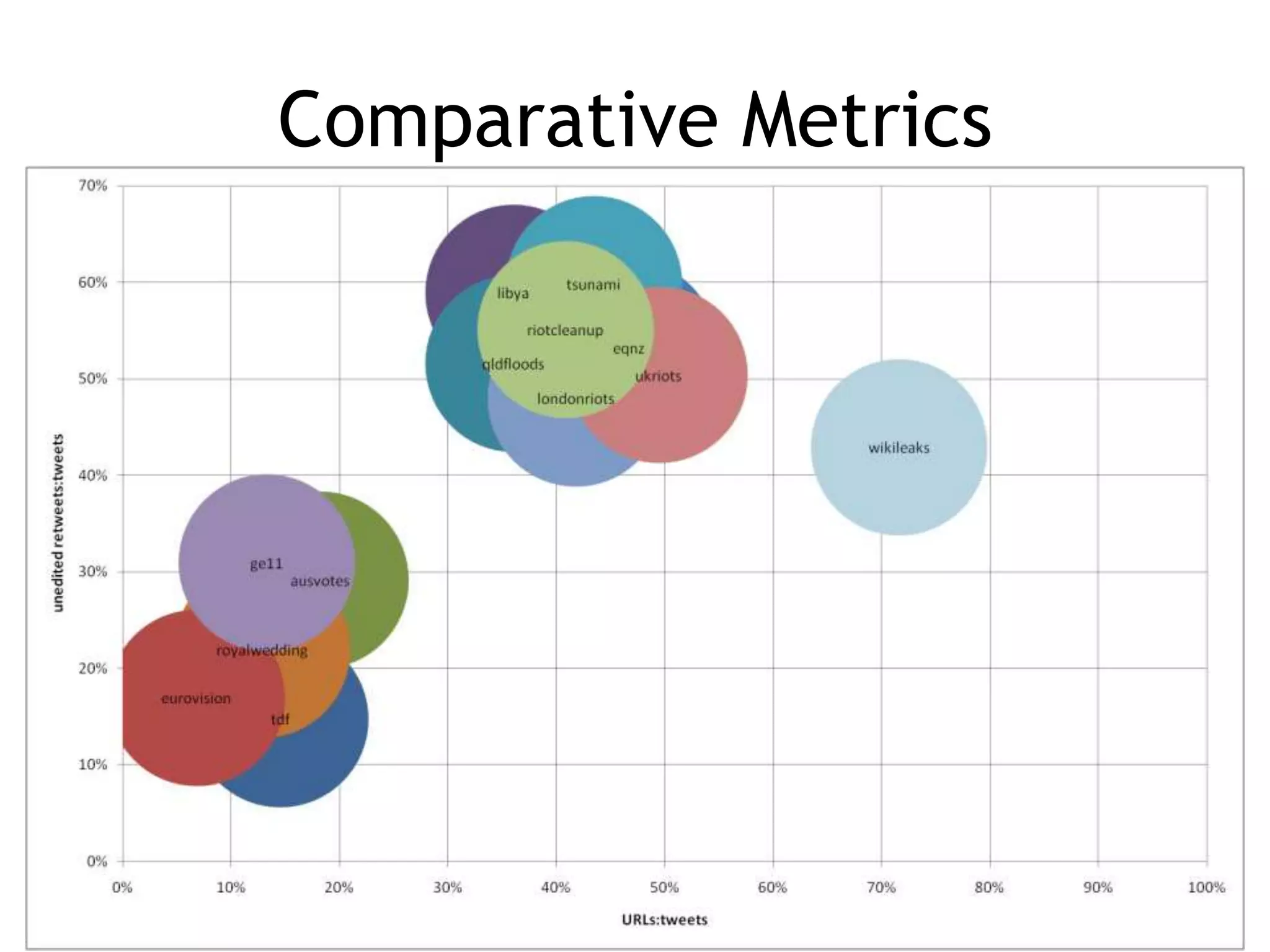
Comparative Metrics
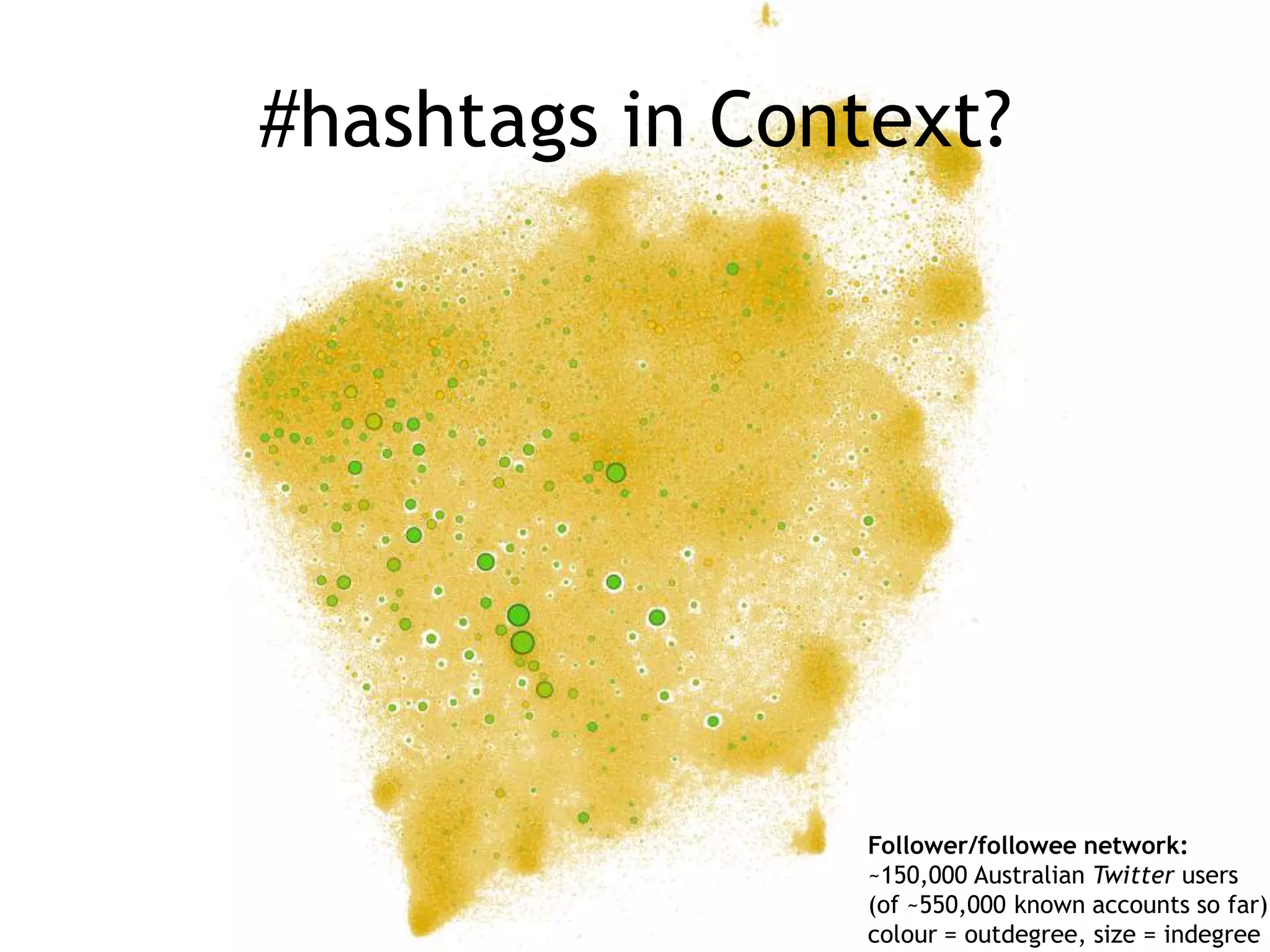
#hashtags in Context?Follower/followee network:~150,000 Australian Twitter users(of ~550,000 known accounts so far) colour = outdegree, size = indegree
Data Journalism (Research) beyond TwitterData journalism is a growing fieldData journalism research necessary to inform both journalism theory and practiceTwitter is a key news space now, and needs to be further researchedOther social media may come to replace it, but many methods will remain similarPotential to generate new insights well beyond journalism itself: popular sentiment and interests, communication, culture, …Many tools available, but more methods work necessary!
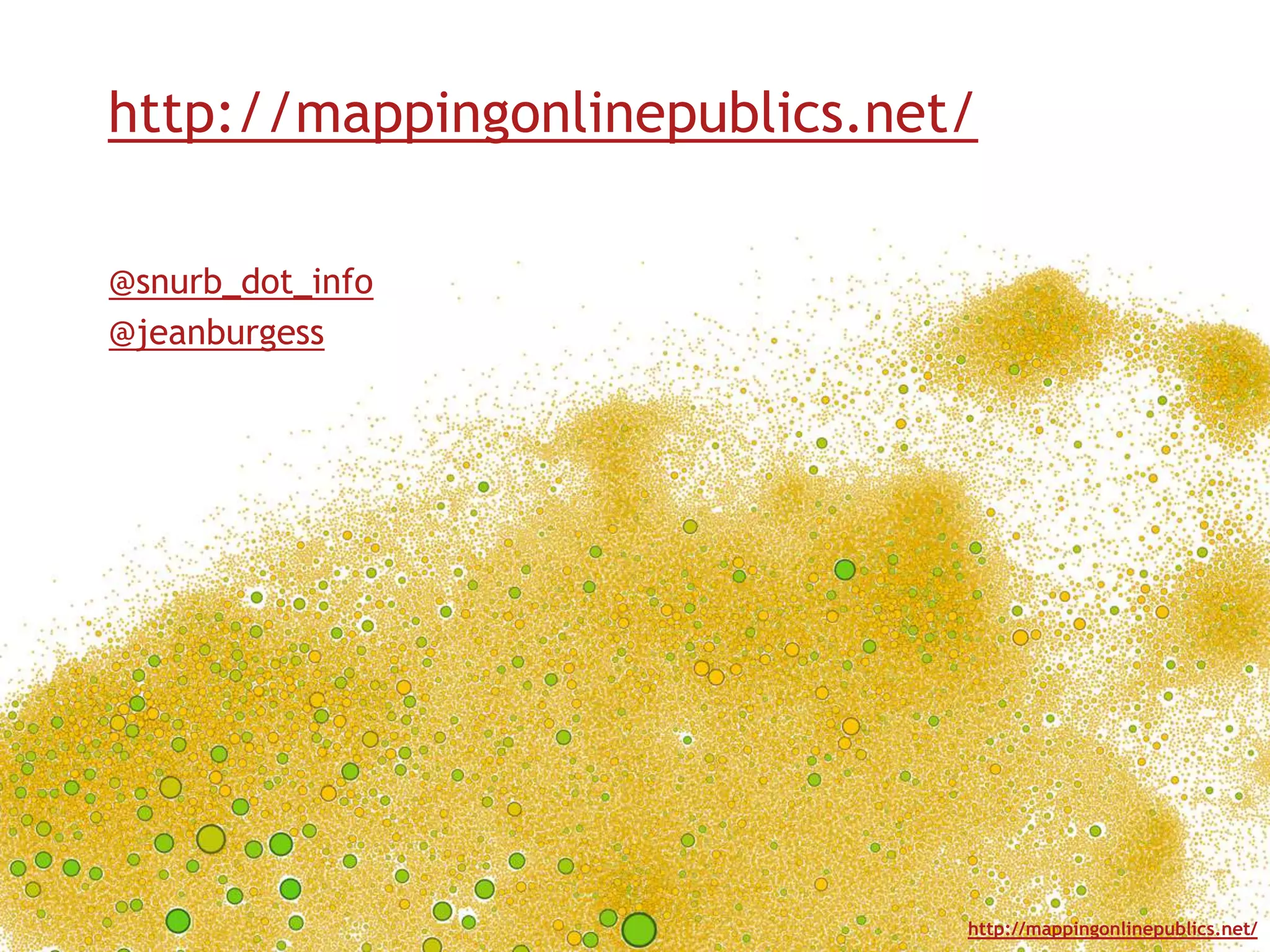
http://mappingonlinepublics.net/@snurb_dot_info@jeanburgess

New Methodologies for Researching News Discussion on Twitter

  • 1.
    New Methodologies forResearching News Discussion on TwitterAxel Bruns and Jean BurgessARC Centre of Excellence for Creative Industries and InnovationQueensland University of TechnologyBrisbane, Australiaa.bruns / je.burgess@qut.edu.au@snurb_dot_info / @jeanburgesshttp://mappingonlinepublics.net/
  • 2.
    Why Twitter?Researching news discussion on Twitter:Significant world-wide social network~200 million users (but how many active?)Varied range of uses: from phatic communication to emergency coordinationFlat and open network structure: non-reciprocal following, public profiles by defaultCommonly used in the coverage and discussion of breaking news events and ongoing storiesGood API for data journalism
  • 3.
    Twitter and theNewsKey news-related uses of Twitter:First-hand news reports:Emergency landing in the Hudson; Abbottabad raid; storms, earthquakes, tsunamisContinuing news discussion:Information sharing (gatewatching); commentary; story curation through hashtags‘Ambient’ news coverage (Hermida; Burns):Early indicator of breaking stories; trending topics, themes, URLs, etc. Tool for sourcing, tracking, finding stories
  • 4.
    #hashtags on TwitterHashtag=‘#’ + alphanumeric characters: Automatic tracking & aggregation of a topic, represented with a hyperlinkOriginally a (lead) user innovation, later integrated into platformSimple, adaptive and generativeCan coordinate, render visible, and constitute publics
  • 5.
    #hashtag PublicsPublics: Attendto matters of shared concern with some level of co-awarenessVaried in intensity and temporalityEmergent, constituted via discourse & affect #hashtag publics:Not all hashtags constitute publics; Twitter doesn’t ‘contain’ publicsWhat are the various patterns in the dynamics of different hashtag-based publics?What might account for these differences?
  • 6.
    Data GatheringyourTwapperkeeper: API-baseddata captureData ProcessingGawk – open source, multiplatform, programmable command-line tool for processing CSV documentsTextual AnalysisLeximancer – commercial (University of Queensland), multiplatform: extracts key concepts from large corpora of text, examines and visualises concept co-occurrenceWordStat – commercial, PC-only text analysis tool; generates concept co-occurrence data that can be exported for visualisationVisualisationGephi – open source, multiplatform network visualisation toolTools for Researching Twitter
  • 7.
  • 8.
  • 9.
  • 10.
  • 11.
  • 12.
  • 13.
  • 14.
  • 15.
  • 16.
    #hashtags in Context?Follower/followeenetwork:~150,000 Australian Twitter users(of ~550,000 known accounts so far) colour = outdegree, size = indegree
  • 17.
    Data Journalism (Research)beyond TwitterData journalism is a growing fieldData journalism research necessary to inform both journalism theory and practiceTwitter is a key news space now, and needs to be further researchedOther social media may come to replace it, but many methods will remain similarPotential to generate new insights well beyond journalism itself: popular sentiment and interests, communication, culture, …Many tools available, but more methods work necessary!
  • 18.