Shell’s Oil Wars In Nigeria: The Case
of Ecocide and Rights of Nature.
International Rights of Nature, Paris, Dec 4-5, 2015
Godwin Uyi Ojo, PhD, Political Ecologist, Executive
Director, ERA/FoEN
1. Impact of Shell’s Oil Extraction: The ND: Crime
Scene of Ecocide
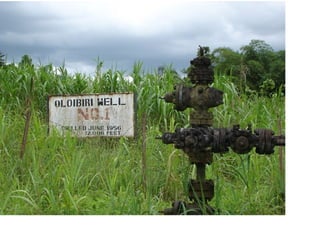
• The Niger Delta has been in perpetual state of violent
resource conflicts & oil wars since oil discovered in 1956.
• Oil boom resulted in oil doom: Manifestations of
oil-dependency; Resource curse syndrome with
over US$600 billion in oil revenue with little or
nothing to show for it (Watts, 2008).
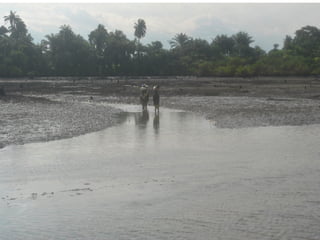
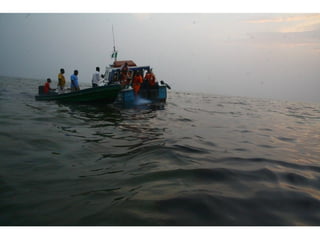
• Frequent oil spills over 10,000 sites which equals one
Valdez per annual (about 500,000 litres per year).
• UNEP report 2011: hydrocarbons found in soil over the
depth of 5 metres and water pollution contaminated with
benzene 900 times above WHO standards.
• ND, crime scene of ecocide.
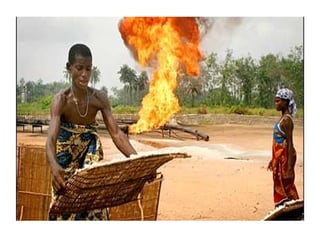
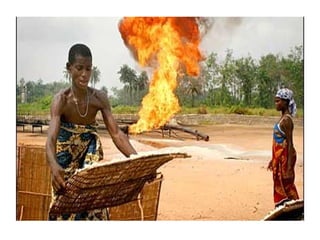
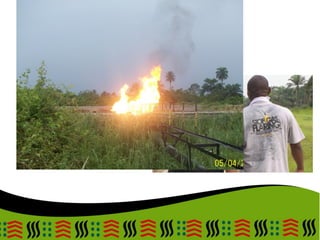
Gas FlaringGas Flaring
Continues UnabatedContinues Unabated
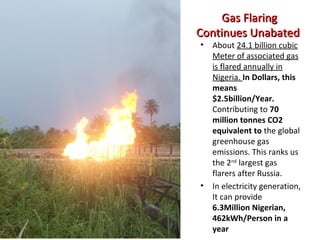
• About 24.1 billion cubic
Meter of associated gas
is flared annually in
Nigeria. In Dollars, this
means
$2.5billion/Year.
Contributing to 70
million tonnes CO2
equivalent to the global
greenhouse gas
emissions. This ranks us
the 2nd
largest gas
flarers after Russia.
• In electricity generation,
It can provide
6.3Million Nigerian,
462kWh/Person in a
year
 
Three Propositions 
2.1.Notions of Energy Security
• Differing perceptions about energy security b/w 
developed and developing countries demonstrates  
CONFLICT OF DEVELOPMENT, & promotes ecocide.
• Developed countries, energy security means the continuous 
flow of natural resources which often means militarization of 
sites of extraction so that resources get to the international 
market unhindered. –Oil Corporations externalize production 
costs to third parties while human rights violations and 
environmental degradation are rife. 
• Developing countries, energy security means dispossession, 
poverty, violence, ecocide and crime against humanity that 
are increasing at the sites of extraction.
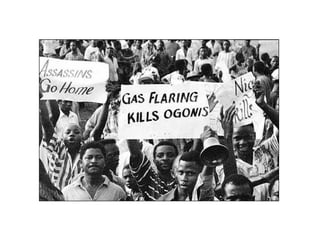
2.2. Peaceful Protests, Military 
Might, & Corporate Nemesis
• Community Protest and State repression, 
oppression, detention, killings resulted in over 
2,000 deaths, others in self-exile (Okonta and 
Douglas, 2001). 
• Ken is arrested along with 8 others, tried by a 
kangaroo tribunal and then hanged (killing of 
activists who resist oil Corporations).
2.3. Environmental Injustice and
Corporate Nemesis
• These pains, misery, denials, killings, and
injustices have been internalized and played
back as a form of Corporate backlash and
manifestations in Corporate Nemesis:
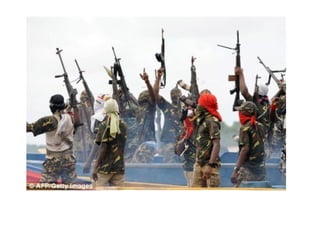
• Increased violence, oil theft, kidnapping of oil
workers, and blow out of oil facilities.
• The Niger Delta is a crime scene:
• Companies and CEOs who persistently take decisions
leading to the harm of Nature and death of people
consistently over a period of time is liable for ecocide
• Tribunal will now decide the sentence & remediation
2.4. Legacy of KSW: LOIS
• Since 1993, Shell remained expelled from Ogoni
with over 28,000 barrels of crude oil saved.
• With the avoidance of potential carbon emissions into
the atmosphere by the non-extraction, the Ogonis
deserves fair and adequate compensation from the UN
Green Climate Fund for LOIS.
• Transition from fossil fuel to alternative sources
that are in harmony with Nature: Leave the oil in
the Soil, Coal in the Hole, & Tar sands in the sand
• Energy Democracy where communities are co-
producers and distributors of energy.
New Cases - Niger delta - Godwin Ojo

New Cases - Niger delta - Godwin Ojo

  • 1.
    Shell’s Oil WarsIn Nigeria: The Case of Ecocide and Rights of Nature. International Rights of Nature, Paris, Dec 4-5, 2015 Godwin Uyi Ojo, PhD, Political Ecologist, Executive Director, ERA/FoEN
  • 2.
    1. Impact ofShell’s Oil Extraction: The ND: Crime Scene of Ecocide • The Niger Delta has been in perpetual state of violent resource conflicts & oil wars since oil discovered in 1956. • Oil boom resulted in oil doom: Manifestations of oil-dependency; Resource curse syndrome with over US$600 billion in oil revenue with little or nothing to show for it (Watts, 2008). • Frequent oil spills over 10,000 sites which equals one Valdez per annual (about 500,000 litres per year). • UNEP report 2011: hydrocarbons found in soil over the depth of 5 metres and water pollution contaminated with benzene 900 times above WHO standards. • ND, crime scene of ecocide.
  • 4.
    Gas FlaringGas Flaring ContinuesUnabatedContinues Unabated • About 24.1 billion cubic Meter of associated gas is flared annually in Nigeria. In Dollars, this means $2.5billion/Year. Contributing to 70 million tonnes CO2 equivalent to the global greenhouse gas emissions. This ranks us the 2nd largest gas flarers after Russia. • In electricity generation, It can provide 6.3Million Nigerian, 462kWh/Person in a year
  • 7.
      Three Propositions  2.1.Notions of EnergySecurity • Differing perceptions about energy security b/w  developed and developing countries demonstrates   CONFLICT OF DEVELOPMENT, & promotes ecocide. • Developed countries, energy security means the continuous  flow of natural resources which often means militarization of  sites of extraction so that resources get to the international  market unhindered. –Oil Corporations externalize production  costs to third parties while human rights violations and  environmental degradation are rife.  • Developing countries, energy security means dispossession,  poverty, violence, ecocide and crime against humanity that  are increasing at the sites of extraction.
  • 8.
  • 9.
    2.3. Environmental Injusticeand Corporate Nemesis • These pains, misery, denials, killings, and injustices have been internalized and played back as a form of Corporate backlash and manifestations in Corporate Nemesis: • Increased violence, oil theft, kidnapping of oil workers, and blow out of oil facilities. • The Niger Delta is a crime scene: • Companies and CEOs who persistently take decisions leading to the harm of Nature and death of people consistently over a period of time is liable for ecocide • Tribunal will now decide the sentence & remediation
  • 10.
    2.4. Legacy ofKSW: LOIS • Since 1993, Shell remained expelled from Ogoni with over 28,000 barrels of crude oil saved. • With the avoidance of potential carbon emissions into the atmosphere by the non-extraction, the Ogonis deserves fair and adequate compensation from the UN Green Climate Fund for LOIS. • Transition from fossil fuel to alternative sources that are in harmony with Nature: Leave the oil in the Soil, Coal in the Hole, & Tar sands in the sand • Energy Democracy where communities are co- producers and distributors of energy.