Network Attacks
In today's digital world, it is more important than ever to protect your data
from network attacks. This presentation will cover common types of
attacks, how they work, signs to watch out for and prevention methods.
Types of Network Attacks
1 Malware
Software designed to infiltrate or damage a computer system.
2 Phishing
Deceptive emails and websites attempting to trick users into revealing sensitive
information.
3 Man-in-the-Middle
Where an attacker intercepts communications between two parties without their
knowledge.
4 Distributed Denial-of-Service (DDoS)
When many systems flood a network server with traffic causing it to become
overloaded and unavailable to users.
How Network Attacks Work
Accessing a Vulnerability
Cybercriminals search for
vulnerabilities like outdated software
or a weak password to access your
network.
Exploiting the
Vulnerability
The attacker then exploits the
vulnerability to gain unauthorized
access to your network.
Causing Harm
Once inside, the attacker can steal
sensitive data, bring down your entire
network or place malware for future
attacks.
Signs of a Network Attack
Unusual Activity
If you notice unusual or suspicious activity
such as repeated failed login attempts, do
not ignore it.
Slow Network
Sluggish networks, even after
troubleshooting, can be a sign of a network
attack or malware.
Locked Out
Users getting locked out of the system or
unable to access certain files can be a
warning sign of a compromised network.
Nothing to See
Attackers can be invisible to network
scanning tools. Use multiple tools and
methods for better results.
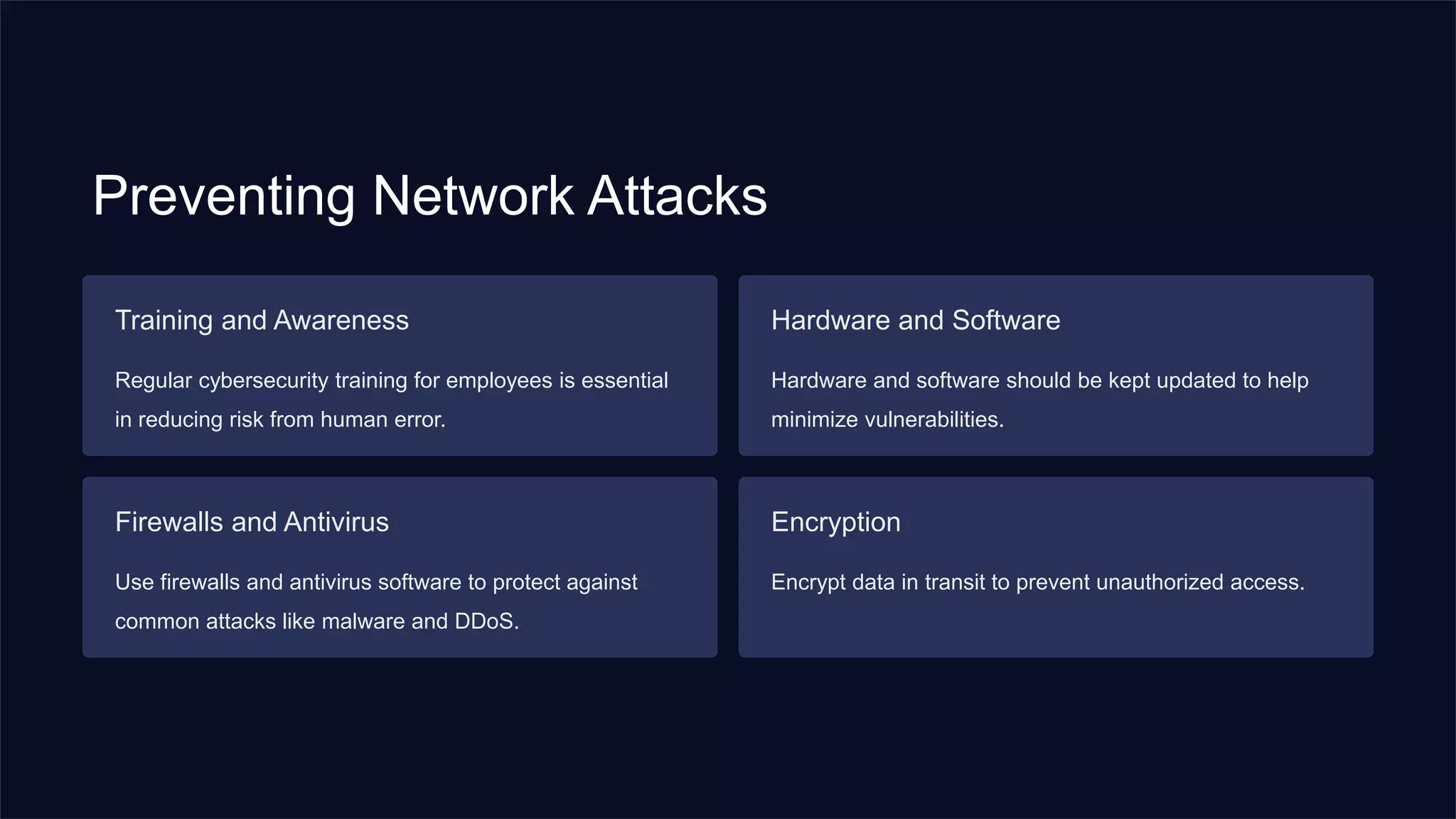
Preventing Network Attacks
Training and Awareness
Regular cybersecurity training for employees is essential
in reducing risk from human error.
Hardware and Software
Hardware and software should be kept updated to help
minimize vulnerabilities.
Firewalls and Antivirus
Use firewalls and antivirus software to protect against
common attacks like malware and DDoS.
Encryption
Encrypt data in transit to prevent unauthorized access.
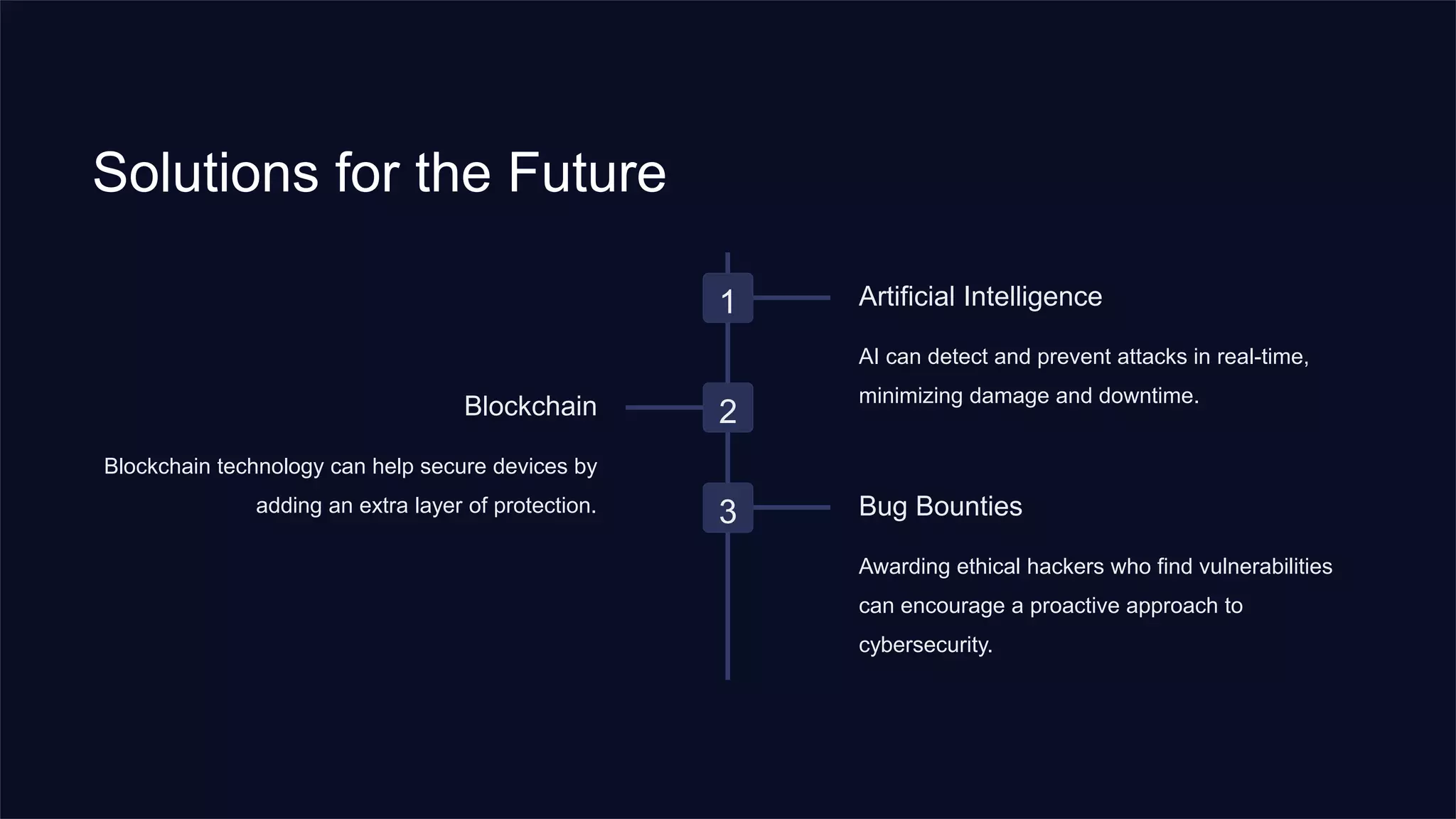
Solutions for the Future
1 Artificial Intelligence
AI can detect and prevent attacks in real-time,
minimizing damage and downtime.
2
Blockchain
Blockchain technology can help secure devices by
adding an extra layer of protection. 3 Bug Bounties
Awarding ethical hackers who find vulnerabilities
can encourage a proactive approach to
cybersecurity.
To know more , visit
here

Network Attacks

  • 1.
    Network Attacks In today'sdigital world, it is more important than ever to protect your data from network attacks. This presentation will cover common types of attacks, how they work, signs to watch out for and prevention methods.
  • 2.
    Types of NetworkAttacks 1 Malware Software designed to infiltrate or damage a computer system. 2 Phishing Deceptive emails and websites attempting to trick users into revealing sensitive information. 3 Man-in-the-Middle Where an attacker intercepts communications between two parties without their knowledge. 4 Distributed Denial-of-Service (DDoS) When many systems flood a network server with traffic causing it to become overloaded and unavailable to users.
  • 3.
    How Network AttacksWork Accessing a Vulnerability Cybercriminals search for vulnerabilities like outdated software or a weak password to access your network. Exploiting the Vulnerability The attacker then exploits the vulnerability to gain unauthorized access to your network. Causing Harm Once inside, the attacker can steal sensitive data, bring down your entire network or place malware for future attacks.
  • 4.
    Signs of aNetwork Attack Unusual Activity If you notice unusual or suspicious activity such as repeated failed login attempts, do not ignore it. Slow Network Sluggish networks, even after troubleshooting, can be a sign of a network attack or malware. Locked Out Users getting locked out of the system or unable to access certain files can be a warning sign of a compromised network. Nothing to See Attackers can be invisible to network scanning tools. Use multiple tools and methods for better results.
  • 5.
    Preventing Network Attacks Trainingand Awareness Regular cybersecurity training for employees is essential in reducing risk from human error. Hardware and Software Hardware and software should be kept updated to help minimize vulnerabilities. Firewalls and Antivirus Use firewalls and antivirus software to protect against common attacks like malware and DDoS. Encryption Encrypt data in transit to prevent unauthorized access.
  • 6.
    Solutions for theFuture 1 Artificial Intelligence AI can detect and prevent attacks in real-time, minimizing damage and downtime. 2 Blockchain Blockchain technology can help secure devices by adding an extra layer of protection. 3 Bug Bounties Awarding ethical hackers who find vulnerabilities can encourage a proactive approach to cybersecurity.
  • 7.
    To know more, visit here