
Net Metering in California:
Fair Credit for Solar Power
April 24, 2013
The Vote Solar Initiative
About Vote Solar:
We work for all types of solar power
We work at the state level
We work with policymakers
We work with local advocates
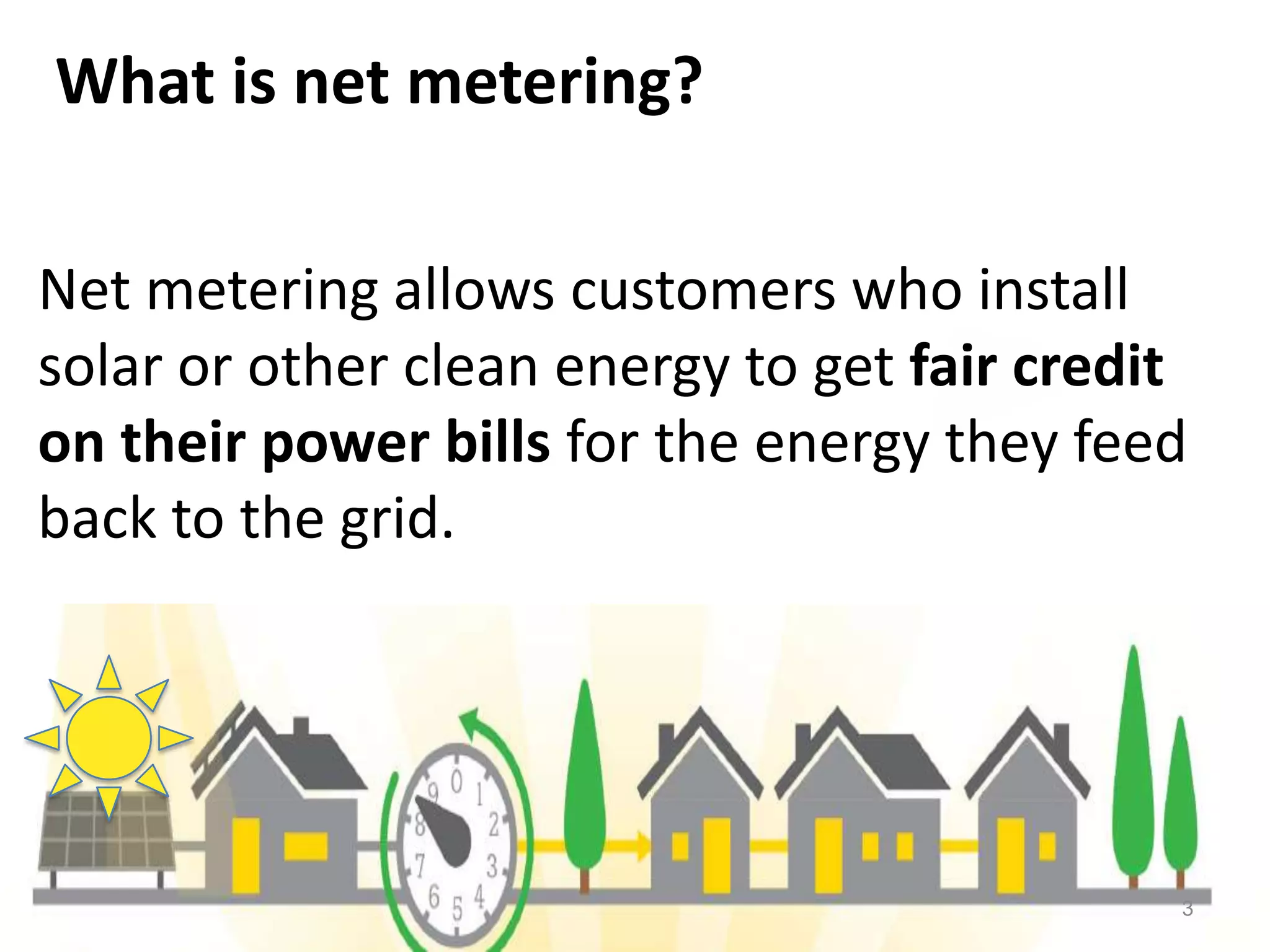
What is net metering?
Net metering allows customers who install
solar or other clean energy to get fair credit
on their power bills for the energy they feed
back to the grid.
3
Net metering has been a key driver
of California’s solar success
• Over 140,000 systems installed = three
large polluting power plants avoided
• Cost of solar panels has dropped 80%
in 5 years
4
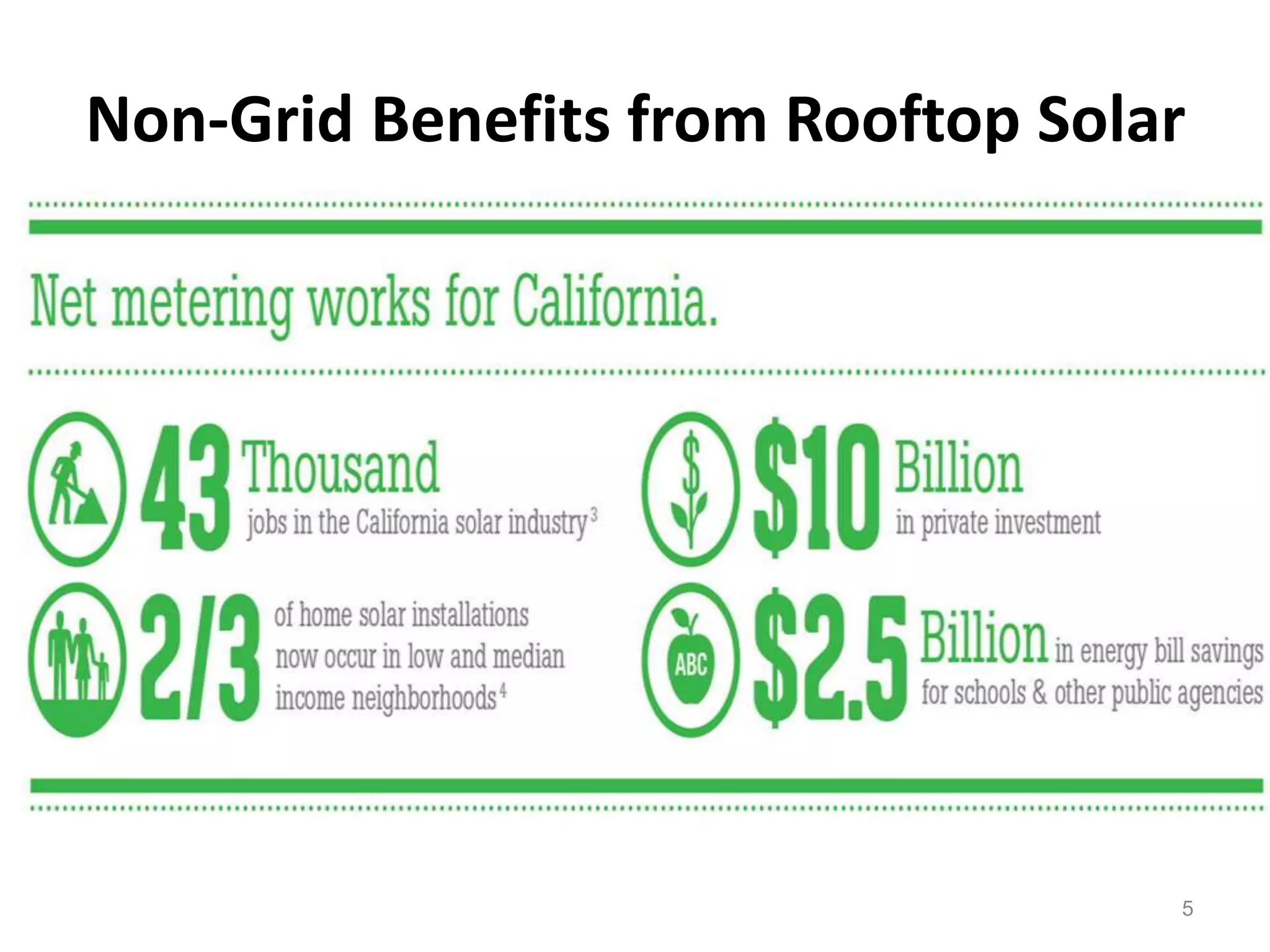
Non-Grid Benefits from Rooftop Solar
5
6
Why the Controversy Over
Net Metering?
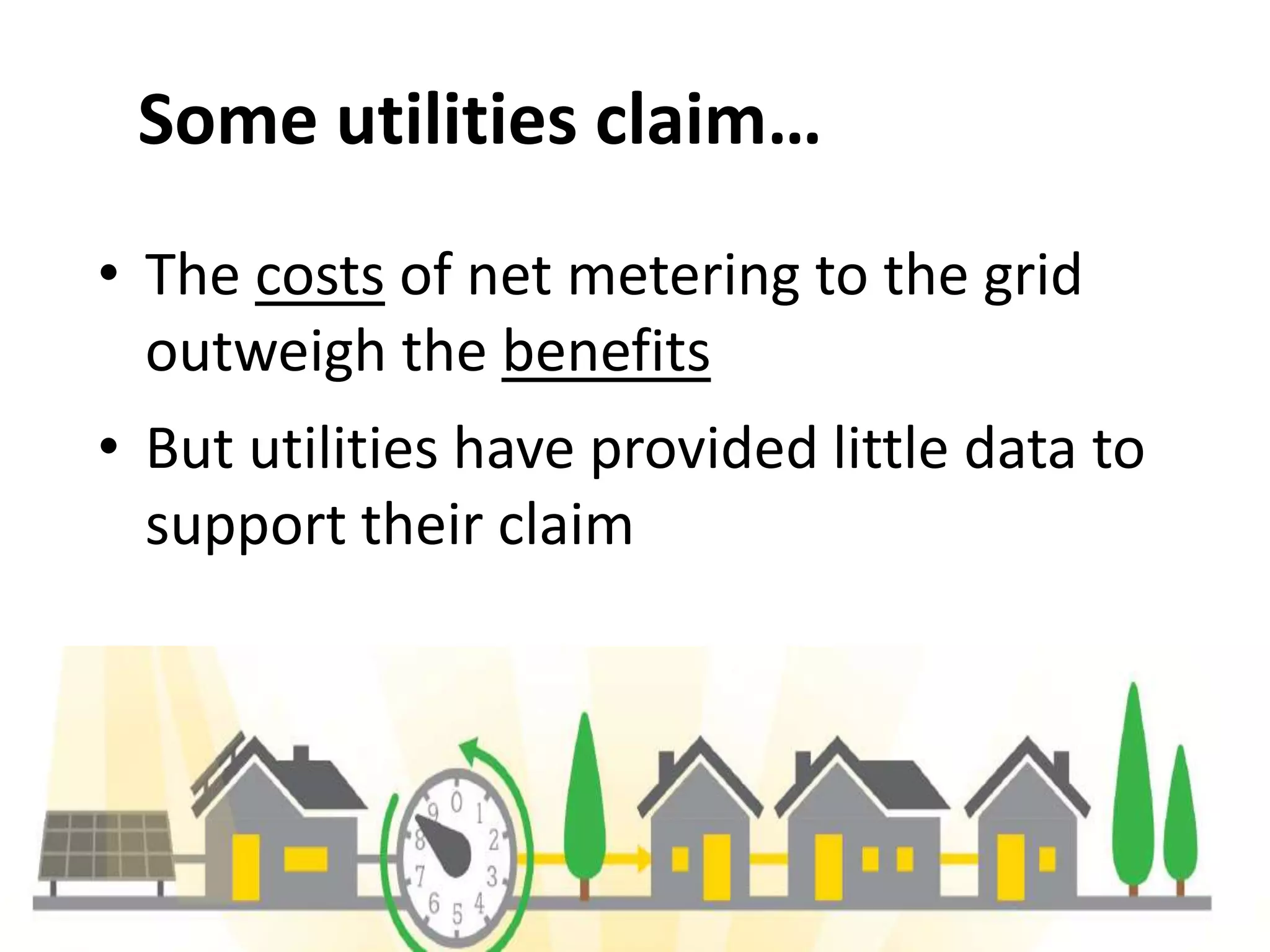
Some utilities claim…
• The costs of net metering to the grid
outweigh the benefits
• But utilities have provided little data to
support their claim
8
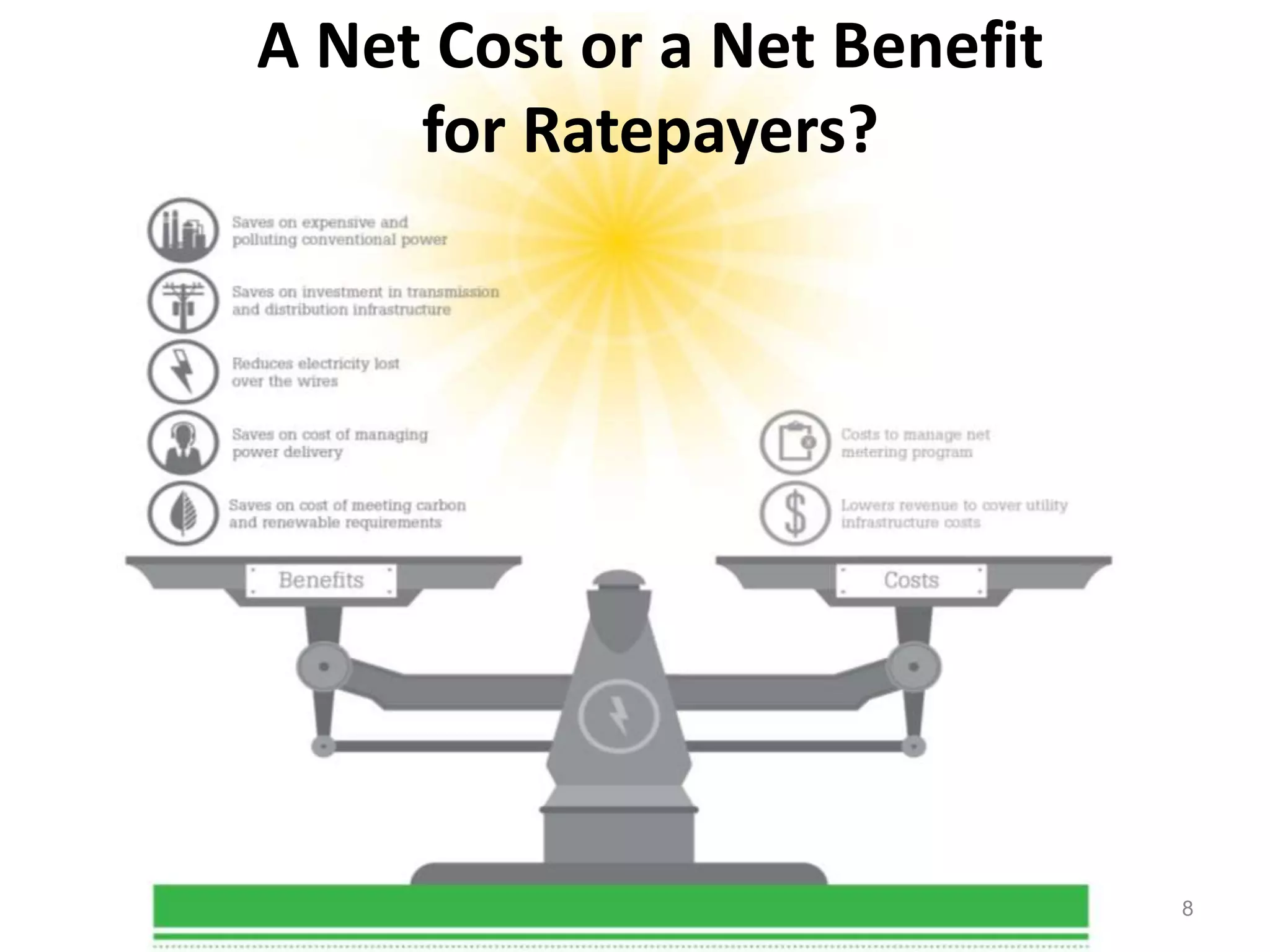
A Net Cost or a Net Benefit
for Ratepayers?
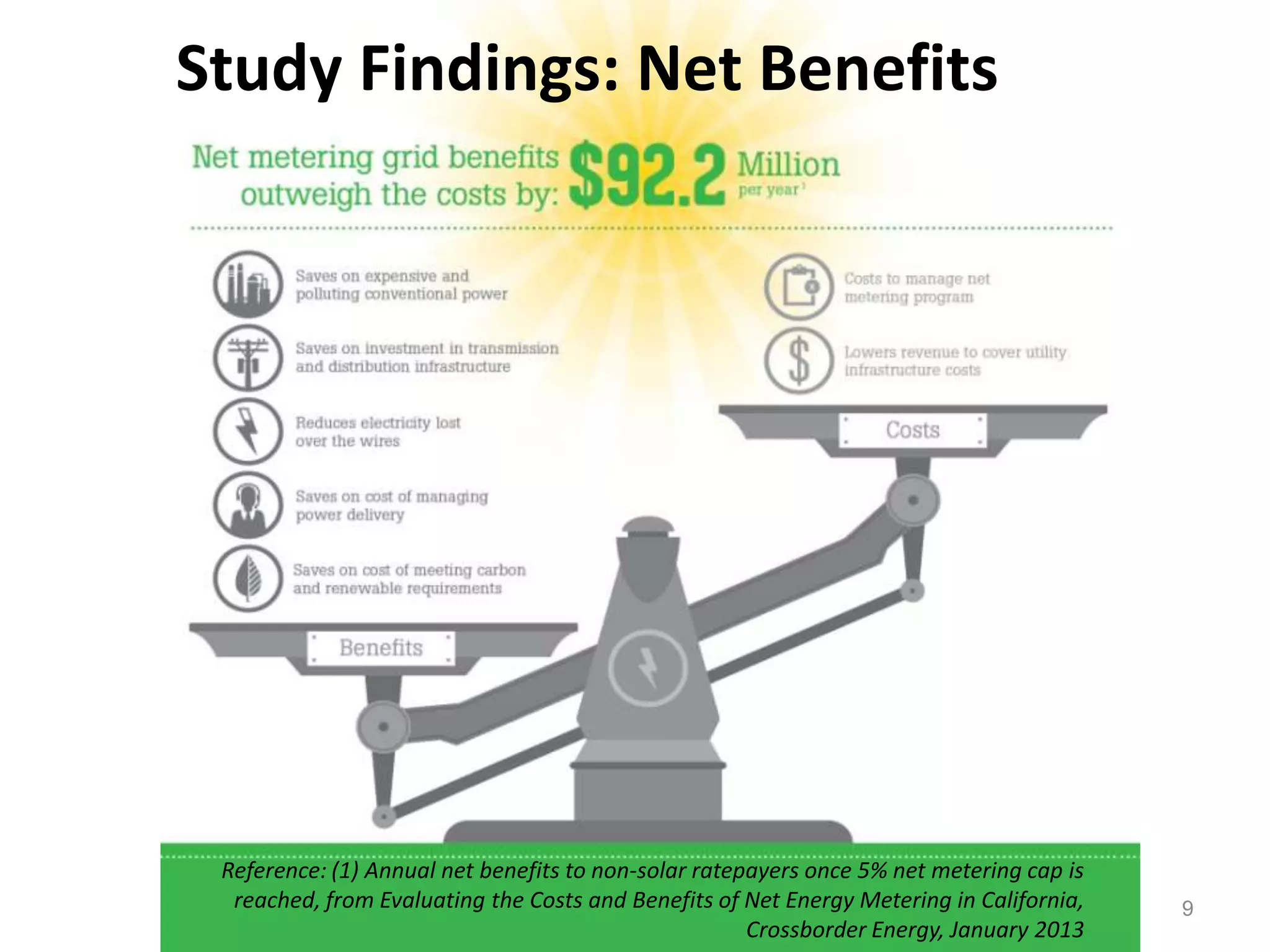
Study Findings: Net Benefits
9
Reference: (1) Annual net benefits to non-solar ratepayers once 5% net metering cap is
reached, from Evaluating the Costs and Benefits of Net Energy Metering in California,
Crossborder Energy, January 2013
Further Study Conclusions
• Net metering is cost-effective for the 3 CA IOUs
 A small net cost in the PG&E residential
market is outweighed by…
 …small net benefits in the SCE and SDG&E
residential markets
 Net metering for commercial customers
produces significant net benefits
• Rate design has significant impacts on net
metering economics
10
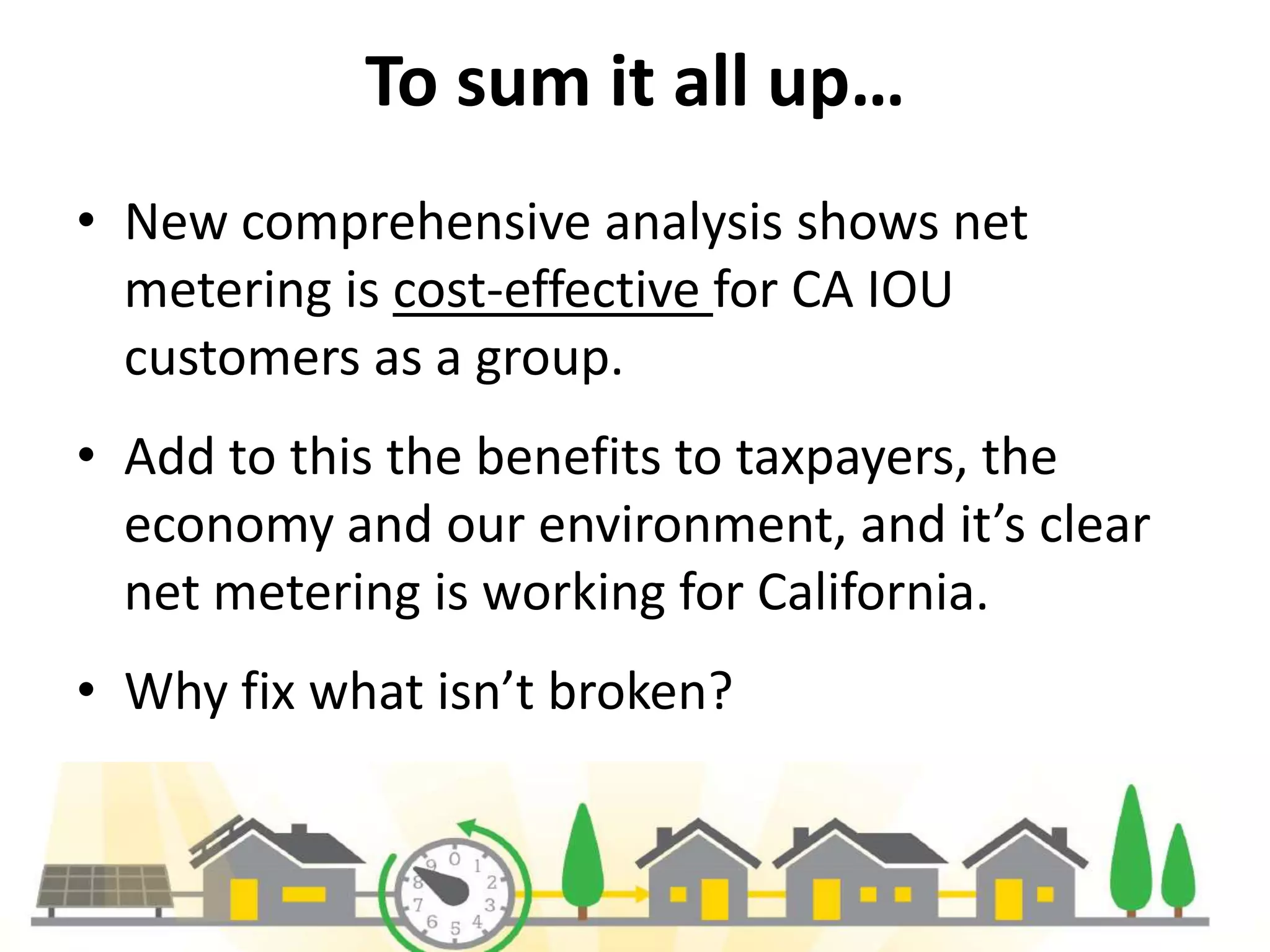
To sum it all up…
• New comprehensive analysis shows net
metering is cost-effective for CA IOU
customers as a group.
• Add to this the benefits to taxpayers, the
economy and our environment, and it’s clear
net metering is working for California.
• Why fix what isn’t broken?
11
Thanks for listening.
Susannah Churchill, Solar Policy Advocate
(415) 817-5065
susannah@votesolar.org
Crossborder Energy CA Net Metering Cost-Benefit Study
& Summary Fact Sheet Available at:
http://votesolar.org/resources-impacts-of-net-metering-
in-california/
Additional Slides
13
Common Errors in Utility Calculations
of Net Metering Impacts
• Account for only avoided cost of conventional generation, leaving
out all the other utility cost savings created by net metered solar,
including avoided transmission and distribution investments,
avoided line losses, and avoided environmental compliance costs
• Assume that all NEM customers get bill credits at the highest rate
tier, when many in fact get billed at lower tiers– results in an
overstatement of average bill credits by up to 40%
• Count the impacts of all net metered system output, instead of only
the generation that gets exported to the grid– but like energy
efficiency, solar power that’s used onsite places no burden on the
utility system
14
Crossborder Energy Study:
Additional Data
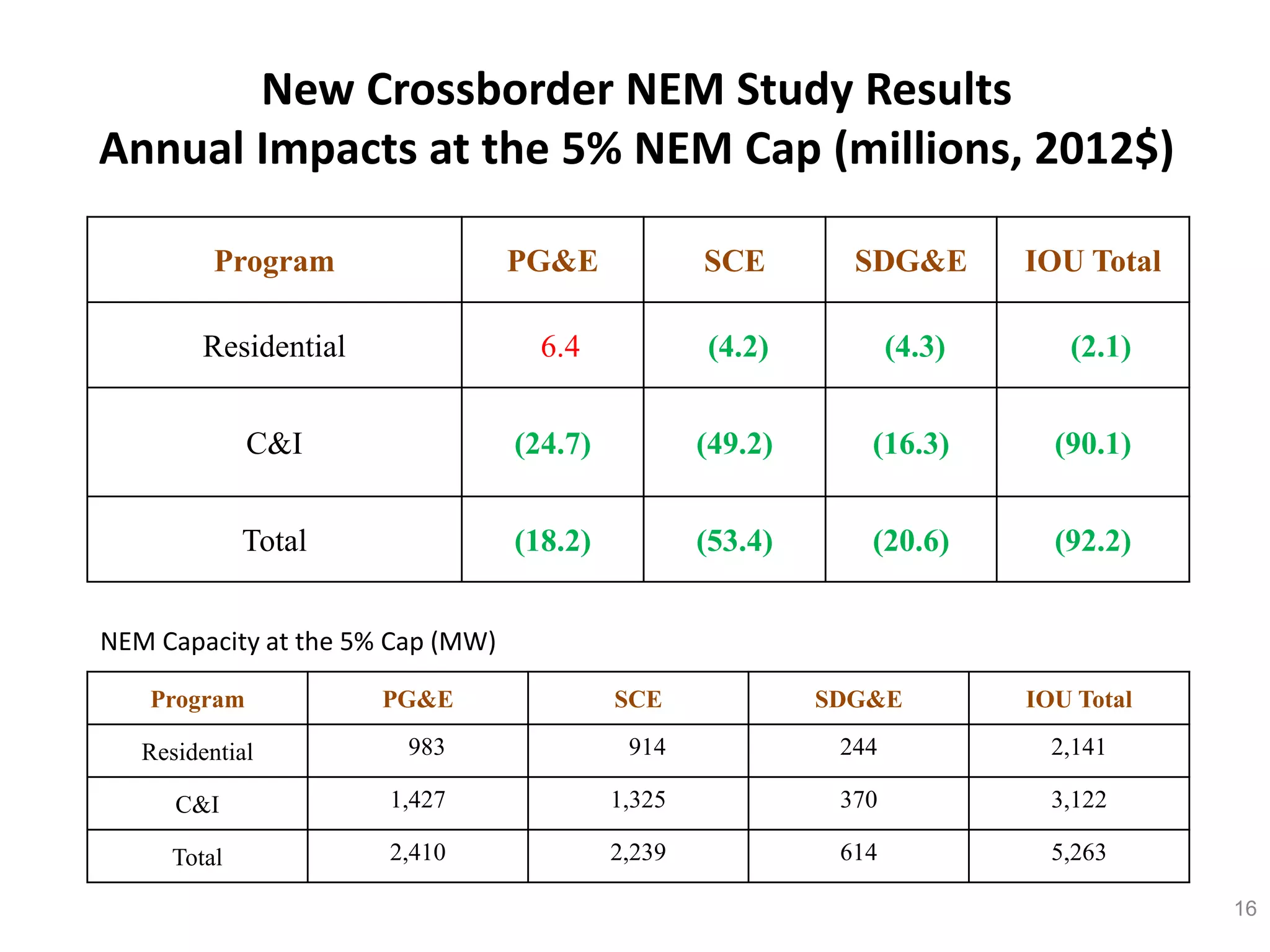
New Crossborder NEM Study Results
Annual Impacts at the 5% NEM Cap (millions, 2012$)
NEM Capacity at the 5% Cap (MW)
Program PG&E SCE SDG&E IOU Total
Residential 6.4 (4.2) (4.3) (2.1)
C&I (24.7) (49.2) (16.3) (90.1)
Total (18.2) (53.4) (20.6) (92.2)
16
Program PG&E SCE SDG&E IOU Total
Residential 983 914 244 2,141
C&I 1,427 1,325 370 3,122
Total 2,410 2,239 614 5,263
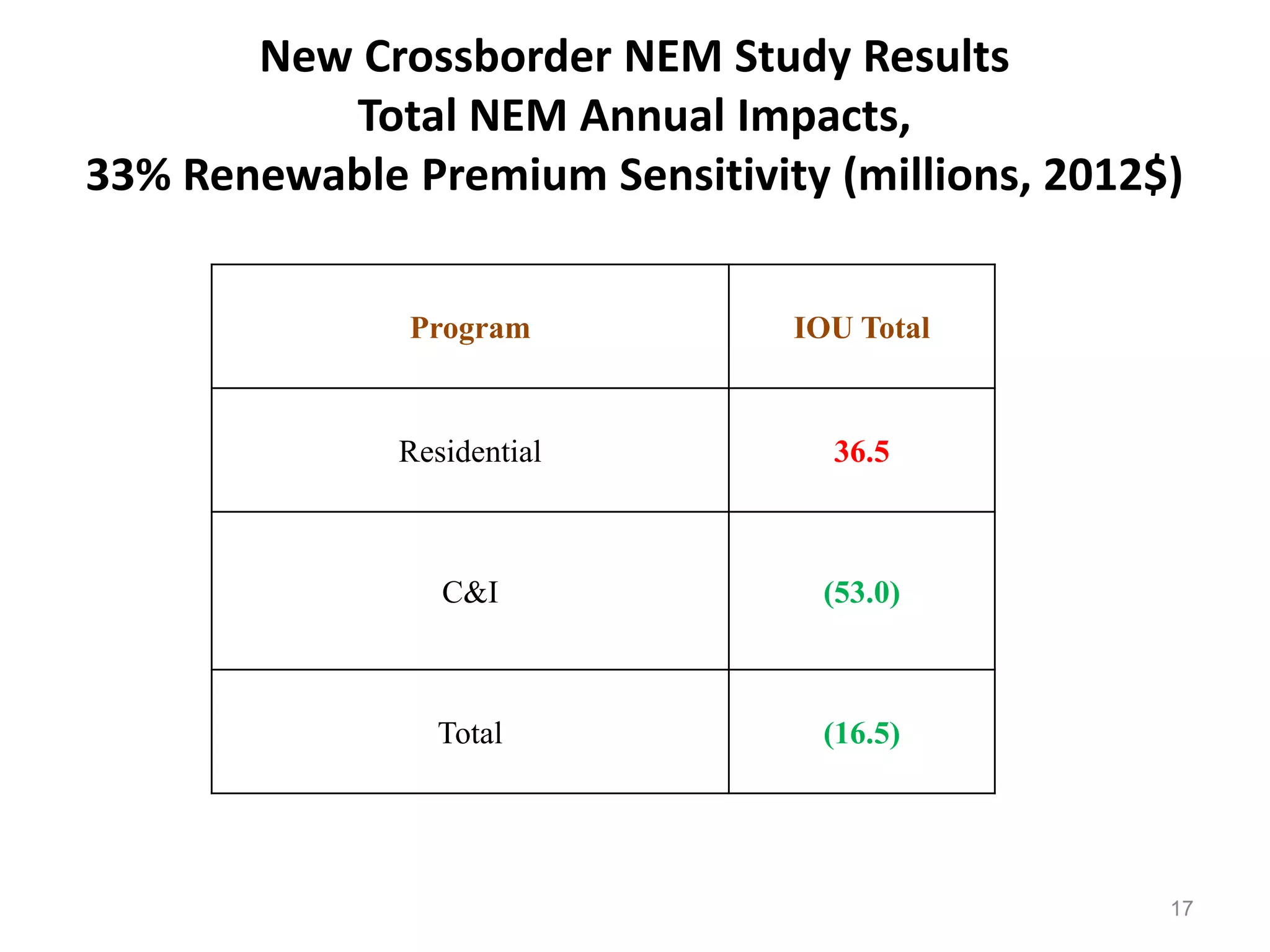
New Crossborder NEM Study Results
Total NEM Annual Impacts,
33% Renewable Premium Sensitivity (millions, 2012$)
Program IOU Total
Residential 36.5
C&I (53.0)
Total (16.5)
17

Net metering -- Vote Solar presentation by Susannah Churchill

  • 1.
    Net Metering inCalifornia: Fair Credit for Solar Power April 24, 2013 The Vote Solar Initiative
  • 2.
    About Vote Solar: Wework for all types of solar power We work at the state level We work with policymakers We work with local advocates
  • 3.
    What is netmetering? Net metering allows customers who install solar or other clean energy to get fair credit on their power bills for the energy they feed back to the grid. 3
  • 4.
    Net metering hasbeen a key driver of California’s solar success • Over 140,000 systems installed = three large polluting power plants avoided • Cost of solar panels has dropped 80% in 5 years 4
  • 5.
    Non-Grid Benefits fromRooftop Solar 5
  • 6.
    6 Why the ControversyOver Net Metering?
  • 7.
    Some utilities claim… •The costs of net metering to the grid outweigh the benefits • But utilities have provided little data to support their claim
  • 8.
    8 A Net Costor a Net Benefit for Ratepayers?
  • 9.
    Study Findings: NetBenefits 9 Reference: (1) Annual net benefits to non-solar ratepayers once 5% net metering cap is reached, from Evaluating the Costs and Benefits of Net Energy Metering in California, Crossborder Energy, January 2013
  • 10.
    Further Study Conclusions •Net metering is cost-effective for the 3 CA IOUs  A small net cost in the PG&E residential market is outweighed by…  …small net benefits in the SCE and SDG&E residential markets  Net metering for commercial customers produces significant net benefits • Rate design has significant impacts on net metering economics 10
  • 11.
    To sum itall up… • New comprehensive analysis shows net metering is cost-effective for CA IOU customers as a group. • Add to this the benefits to taxpayers, the economy and our environment, and it’s clear net metering is working for California. • Why fix what isn’t broken? 11
  • 12.
    Thanks for listening. SusannahChurchill, Solar Policy Advocate (415) 817-5065 susannah@votesolar.org Crossborder Energy CA Net Metering Cost-Benefit Study & Summary Fact Sheet Available at: http://votesolar.org/resources-impacts-of-net-metering- in-california/
  • 13.
  • 14.
    Common Errors inUtility Calculations of Net Metering Impacts • Account for only avoided cost of conventional generation, leaving out all the other utility cost savings created by net metered solar, including avoided transmission and distribution investments, avoided line losses, and avoided environmental compliance costs • Assume that all NEM customers get bill credits at the highest rate tier, when many in fact get billed at lower tiers– results in an overstatement of average bill credits by up to 40% • Count the impacts of all net metered system output, instead of only the generation that gets exported to the grid– but like energy efficiency, solar power that’s used onsite places no burden on the utility system 14
  • 15.
  • 16.
    New Crossborder NEMStudy Results Annual Impacts at the 5% NEM Cap (millions, 2012$) NEM Capacity at the 5% Cap (MW) Program PG&E SCE SDG&E IOU Total Residential 6.4 (4.2) (4.3) (2.1) C&I (24.7) (49.2) (16.3) (90.1) Total (18.2) (53.4) (20.6) (92.2) 16 Program PG&E SCE SDG&E IOU Total Residential 983 914 244 2,141 C&I 1,427 1,325 370 3,122 Total 2,410 2,239 614 5,263
  • 17.
    New Crossborder NEMStudy Results Total NEM Annual Impacts, 33% Renewable Premium Sensitivity (millions, 2012$) Program IOU Total Residential 36.5 C&I (53.0) Total (16.5) 17