SOLAR 101
TOPICS BEING COVERED
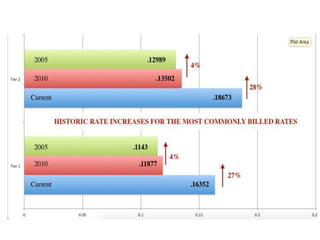
• PG&E Historic Rate Increases & What the Future
Looks Like
• Your Billing With Solar – How It Works
• NEM 1.0 and the 5% CAP
• STANDARD Panels vs. HIGH Efficiency Panels
• Guarantee vs. Warranty: What every consumer
should know
• Options to “Go Solar” – PPA, Lease, Purchase
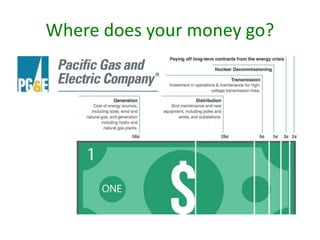
Where does your money go?
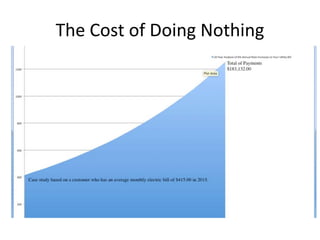
The Cost of Doing Nothing
NEM 1.0
NEM 2.0
New solar customers will not be able to sign up for net metering under the
current structure after the total amount of net-metered solar output reaches
5% of a utility's aggregate customer peak demand, or July 1, 2017, at the
latest.
Based on the pace of solar installations for each of the state's largest utilities,
it appears that Southern California Edison will continue NEM 1.0 through
June 2017, Pacific Gas & Electric will at least be close to that date and San
Diego Gas & Electric will reach its cap somewhere between December 2015
and April 2016.
Net-energy metering (NEM) has been a cornerstone of the California solar market since 1996. It allows a
solar customer's meter to spin backward, giving customers credit at full retail rates when they are feeding
power into the electric grid. Customers pay only for their net usage of electricity from the utility.
Under state legislation passed in 2013 (A.B.327), the current net-metering rules for solar customers will
end soon. The California Public Utilities Commission (CPUC) is reviewing the rules to determine if the new
version of net metering (known as NEM 2.0) should be the same as the current structure or if changes
need to be made. The commission has a deadline to create the new rules by December of this year. It
issued a memo on Jan. 23 updating the scope and timeline of the proceeding.
Since the proceeding began last summer, most of the debate has been around building a model that will
measure how much revenue utilities lose when people go solar. This "public tool" will be used to evaluate
different proposals for NEM 2.0. A beta version of the model will be released in February, with a final
version available in the second quarter of the year.
With all the debate focused on the yardstick, parties have not yet put their proposals formally on the
table. However, it is clear that solar advocates want to continue with net metering unchanged and
utilities want to scrap net metering altogether in favor of a feed-in tariff at wholesale rates. Under a feed-
in tariff, power from solar panels is fed directly into the grid and all of the power used by the building
comes from the grid, rather than using the solar panels to power the building and exporting only the
surplus or importing the shortfall.
Solar companies are concerned that a feed-in tariff at low rates would kill the market for new solar
installations. Under a CPUC decision last year, existing solar customers will stay on the current net-
metering rules for 20 years.
Standard vs High Efficiency
• Most manufactures are now making 2 tiers
• H.E. around 19.5% to 21.4% efficiency
• Standard has now become 15% - 17.5%
• Cost are around 20% Higher for the more
efficient panel
• Retail prices for standard .77and UP
• Retail for H.E. .95 and up
SOLAR FINANCING OPTIONS
Solar customers have multiple options when financing their solar energy systems:
• Home Equity Loans - Many customers go through their commercial lenders to finance their solar energy systems,
and home equity loans have been the most common method for homeowners to purchase their solar systems. To
find out more about home equity loans, you can contact your local providers, though many solar contractors have
partnerships with existing lenders.
• Power Purchase Agreements - Under a "PPA," a third party owns and maintains the customer solar system, selling
the kilowatt-hours back to the customer. Thus, customers who opt for a solar PPAtypically have low capital costs
and pay only for the electricity their solar systems generate. Both SolarTech and the Rahus Institute offer helpful
guides and additional information on solar PPAs.
• Solar Leases - By leasing a solar system, customers can get the benefits of owning a solar system without the
capital costs. Solar customers opting for solar leases simply rent the solar system from a company as they would
any other home appliance while earning the benefits from the electricity the system produces. Solar leases are
attractive options for home or business owners that plan to at their business or office for less than five years. For
more reading, Mother Jones Magazine has an excellent February 2010 article titled: "If You Can't Afford to Buy a
PV System, Consider Renting One".
• Property Assessed Clean Energy (PACE) - Solar customers likewise may have the option to finance their solar
systems through their local governments. Local governments can create property tax finance districts to issue
loans for energy efficiency and renewable energy such as solar PV systems. PACE allows local governments to
provide low-cost, 20-year loans to eligible property owners seeking to install these technologies. The solar
customer then pays more on the annual property tax bill to repay the loan. The loans are permanently fixed to real
property, so that residents need not worry about their system's break-even point and can pass the loan payments
on to subsequent buyers of the property. Renewable Funding offers helpful additional information about PACE,
and presently PACE programs are in place in the following communities:
Thank you for coming!!

Solar Energy Forum

  • 1.
  • 2.
    TOPICS BEING COVERED •PG&E Historic Rate Increases & What the Future Looks Like • Your Billing With Solar – How It Works • NEM 1.0 and the 5% CAP • STANDARD Panels vs. HIGH Efficiency Panels • Guarantee vs. Warranty: What every consumer should know • Options to “Go Solar” – PPA, Lease, Purchase
  • 4.
    Where does yourmoney go?
  • 5.
    The Cost ofDoing Nothing
  • 6.
  • 7.
    NEM 2.0 New solarcustomers will not be able to sign up for net metering under the current structure after the total amount of net-metered solar output reaches 5% of a utility's aggregate customer peak demand, or July 1, 2017, at the latest. Based on the pace of solar installations for each of the state's largest utilities, it appears that Southern California Edison will continue NEM 1.0 through June 2017, Pacific Gas & Electric will at least be close to that date and San Diego Gas & Electric will reach its cap somewhere between December 2015 and April 2016.
  • 8.
    Net-energy metering (NEM)has been a cornerstone of the California solar market since 1996. It allows a solar customer's meter to spin backward, giving customers credit at full retail rates when they are feeding power into the electric grid. Customers pay only for their net usage of electricity from the utility. Under state legislation passed in 2013 (A.B.327), the current net-metering rules for solar customers will end soon. The California Public Utilities Commission (CPUC) is reviewing the rules to determine if the new version of net metering (known as NEM 2.0) should be the same as the current structure or if changes need to be made. The commission has a deadline to create the new rules by December of this year. It issued a memo on Jan. 23 updating the scope and timeline of the proceeding. Since the proceeding began last summer, most of the debate has been around building a model that will measure how much revenue utilities lose when people go solar. This "public tool" will be used to evaluate different proposals for NEM 2.0. A beta version of the model will be released in February, with a final version available in the second quarter of the year. With all the debate focused on the yardstick, parties have not yet put their proposals formally on the table. However, it is clear that solar advocates want to continue with net metering unchanged and utilities want to scrap net metering altogether in favor of a feed-in tariff at wholesale rates. Under a feed- in tariff, power from solar panels is fed directly into the grid and all of the power used by the building comes from the grid, rather than using the solar panels to power the building and exporting only the surplus or importing the shortfall. Solar companies are concerned that a feed-in tariff at low rates would kill the market for new solar installations. Under a CPUC decision last year, existing solar customers will stay on the current net- metering rules for 20 years.
  • 9.
    Standard vs HighEfficiency • Most manufactures are now making 2 tiers • H.E. around 19.5% to 21.4% efficiency • Standard has now become 15% - 17.5% • Cost are around 20% Higher for the more efficient panel • Retail prices for standard .77and UP • Retail for H.E. .95 and up
  • 10.
    SOLAR FINANCING OPTIONS Solarcustomers have multiple options when financing their solar energy systems: • Home Equity Loans - Many customers go through their commercial lenders to finance their solar energy systems, and home equity loans have been the most common method for homeowners to purchase their solar systems. To find out more about home equity loans, you can contact your local providers, though many solar contractors have partnerships with existing lenders. • Power Purchase Agreements - Under a "PPA," a third party owns and maintains the customer solar system, selling the kilowatt-hours back to the customer. Thus, customers who opt for a solar PPAtypically have low capital costs and pay only for the electricity their solar systems generate. Both SolarTech and the Rahus Institute offer helpful guides and additional information on solar PPAs. • Solar Leases - By leasing a solar system, customers can get the benefits of owning a solar system without the capital costs. Solar customers opting for solar leases simply rent the solar system from a company as they would any other home appliance while earning the benefits from the electricity the system produces. Solar leases are attractive options for home or business owners that plan to at their business or office for less than five years. For more reading, Mother Jones Magazine has an excellent February 2010 article titled: "If You Can't Afford to Buy a PV System, Consider Renting One". • Property Assessed Clean Energy (PACE) - Solar customers likewise may have the option to finance their solar systems through their local governments. Local governments can create property tax finance districts to issue loans for energy efficiency and renewable energy such as solar PV systems. PACE allows local governments to provide low-cost, 20-year loans to eligible property owners seeking to install these technologies. The solar customer then pays more on the annual property tax bill to repay the loan. The loans are permanently fixed to real property, so that residents need not worry about their system's break-even point and can pass the loan payments on to subsequent buyers of the property. Renewable Funding offers helpful additional information about PACE, and presently PACE programs are in place in the following communities:
  • 11.
    Thank you forcoming!!