PROPERTIES OF
SYNAPTIC TRANSMISSION
Presented By:
Dr. Syed Muhammad Shabbir Ali (PT)
DPT, MSPT* (Gold Medalist)
Trainee Medical Officer (KMU)
Research Assistant (University Of Shiefield & Melbourne)
SYNAPSE:
Definition:
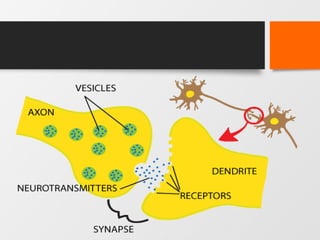
Synapse is the junction between
two communicating neurons.
Classification:
1. Anatomical classification
2. Functional classification
1. Anatomical classification:
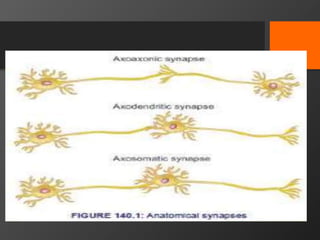
• Synapse is formed by axon of one neuron
ending on the cell body, dendrite or axon of
the next neuron.
• axodendritic, axosomatic, and axoaxonic
synapses.
2. Functional classification:
i. Electrical synapse
ii. Chemical synapse
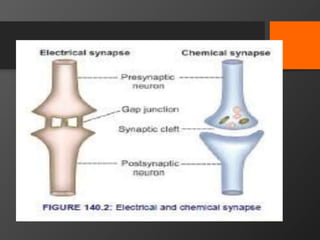
i. Electrical synapse:
In this type of synapse the
physiological continuity between presynaptic
and postsynaptic neurons is provided by gap
junction between the two neurons.
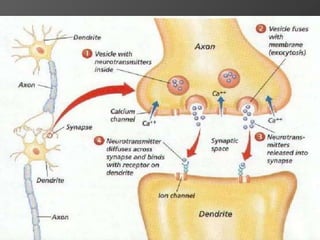
• ii. Chemical synapse:
It is the junction between two fibers,
through which the signals are transmitted by the
release neurotransmitter.
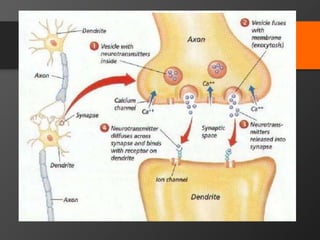
SYNAPTIC TRANSMISSION:
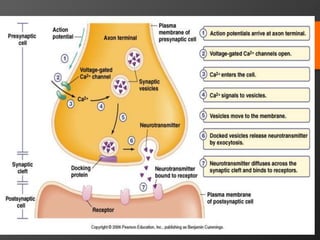
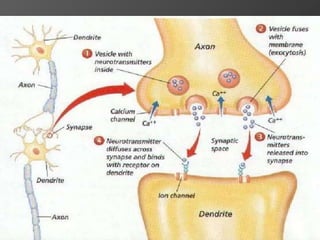
The process by which the impulse in
the presynaptic neuron is transmitted
across the synaptic cleft to the
postsynaptic neuron is called synaptic
transmission.
PROPERTIES OF SYNAPTIC
TRANSMISSION:
• One way conduction at chemical
synapses
• Synaptic delay
• Fatigue of synaptic transmission
• Summation
• Electrical property
One way conduction at chemical
synapses :
• One way conduction means the impulses
are transmitted only in one direction
(from presynaptic neuron to
postsynaptic neuron).
Synaptic delay:
• It is a short delay (0.5 ms) that occurs during
the transmission of impulses through the
synapse. It is due to the time taken for:
• i. Release of neurotransmitter
• ii. Diffusion of neurotransmitter from axon
terminal to postsynaptic membrane
• iii. Action of neurotransmitter on the receptor
Fatigue of synaptic
transmission:
• During continuous muscular activity, synapse
becomes fatigue. Fatigue of synapse is due to
the depletion of neurotransmitter substance,
acetylcholine. Depletion of ach occurs because
of two factors:
• i. soon after the action, ach is destroyed by
acetylcholinesterase
• ii. Due to continuous action, new ach is not
synthesized
Summation:
• Summation is the fusion of effects or increase
in the excitatory postsynaptic potential in
postsynaptic neuron.
• Summation is of two types:
• i. Spatial summation
• ii. Temporal summation
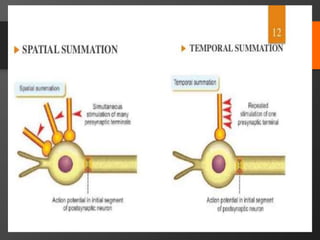
i. Spatial summation:
Spatial summation occurs when many
presynaptic terminals are stimulated
simultaneously.
ii. Temporal summation:
Temporal summation occurs when one
presynaptic terminal is stimulated
repeatedly.
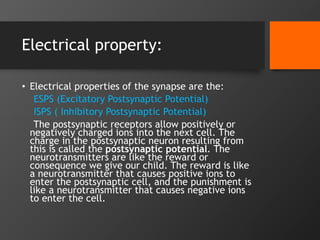
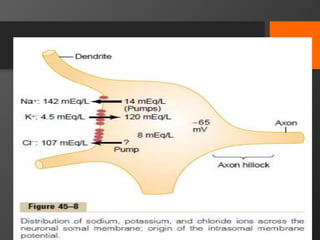
Electrical property:
• Electrical properties of the synapse are the:
ESPS (Excitatory Postsynaptic Potential)
ISPS ( Inhibitory Postsynaptic Potential)
The postsynaptic receptors allow positively or
negatively charged ions into the next cell. The
charge in the postsynaptic neuron resulting from
this is called the postsynaptic potential. The
neurotransmitters are like the reward or
consequence we give our child. The reward is like
a neurotransmitter that causes positive ions to
enter the postsynaptic cell, and the punishment is
like a neurotransmitter that causes negative ions
to enter the cell.
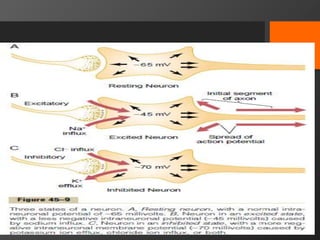
ESPS (Excitatory Postsynaptic
Potential):
• Excitatory postsynaptic potential(EPSP) is
a postsynaptic potential that makes the post
synaptic neuron more likely to fire an
action potential. It is a depolarizing graded
potential of the postsynaptic membrane.
ISPS ( Inhibitory Postsynaptic
Potential):
• If the post synaptic potential makes the
postsynaptic neuron more negative, it is called
an inhibitory postsynaptic potential.
• ISPS is a hyperpolarizing graded potential of
the postsynaptic membrane.
Effect of Acidosis or Alkalosis
on Synaptic Transmission:
• Alkalosis greatly increases neuronal
excitability. For example, a rise in arterial
blood pH 7.8 to 8.0 often causes cerebral
epileptic seizures because of increased
excitability of some or all of the cerebral
neurons
• Acidosis greatly depresses neuronal activity; a
fall in pH from 7.4 to below 7.0 usually causes
a comatose state.
Effect of Hypoxia on Synaptic
Transmission:
• Neuronal excitability is also highly dependent
on an adequate supply of oxygen. Cessation of
oxygen for only a few seconds can cause
complete inexcitability of some neurons.
Effect of Drugs on Synaptic
Transmission:
• Caffeine, theophylline, and theobromine,
Strychnine increase excitability of neurons.
• Anesthetic drugs decrease excitability of
neurons.
Nervous system lec 2.pptx

Nervous system lec 2.pptx

  • 1.
    PROPERTIES OF SYNAPTIC TRANSMISSION PresentedBy: Dr. Syed Muhammad Shabbir Ali (PT) DPT, MSPT* (Gold Medalist) Trainee Medical Officer (KMU) Research Assistant (University Of Shiefield & Melbourne)
  • 2.
    SYNAPSE: Definition: Synapse is thejunction between two communicating neurons. Classification: 1. Anatomical classification 2. Functional classification
  • 4.
    1. Anatomical classification: •Synapse is formed by axon of one neuron ending on the cell body, dendrite or axon of the next neuron. • axodendritic, axosomatic, and axoaxonic synapses.
  • 6.
    2. Functional classification: i.Electrical synapse ii. Chemical synapse i. Electrical synapse: In this type of synapse the physiological continuity between presynaptic and postsynaptic neurons is provided by gap junction between the two neurons.
  • 8.
    • ii. Chemicalsynapse: It is the junction between two fibers, through which the signals are transmitted by the release neurotransmitter.
  • 9.
    SYNAPTIC TRANSMISSION: The processby which the impulse in the presynaptic neuron is transmitted across the synaptic cleft to the postsynaptic neuron is called synaptic transmission.
  • 12.
    PROPERTIES OF SYNAPTIC TRANSMISSION: •One way conduction at chemical synapses • Synaptic delay • Fatigue of synaptic transmission • Summation • Electrical property
  • 13.
    One way conductionat chemical synapses : • One way conduction means the impulses are transmitted only in one direction (from presynaptic neuron to postsynaptic neuron).
  • 14.
    Synaptic delay: • Itis a short delay (0.5 ms) that occurs during the transmission of impulses through the synapse. It is due to the time taken for: • i. Release of neurotransmitter • ii. Diffusion of neurotransmitter from axon terminal to postsynaptic membrane • iii. Action of neurotransmitter on the receptor
  • 16.
    Fatigue of synaptic transmission: •During continuous muscular activity, synapse becomes fatigue. Fatigue of synapse is due to the depletion of neurotransmitter substance, acetylcholine. Depletion of ach occurs because of two factors: • i. soon after the action, ach is destroyed by acetylcholinesterase • ii. Due to continuous action, new ach is not synthesized
  • 17.
    Summation: • Summation isthe fusion of effects or increase in the excitatory postsynaptic potential in postsynaptic neuron. • Summation is of two types: • i. Spatial summation • ii. Temporal summation
  • 19.
    i. Spatial summation: Spatialsummation occurs when many presynaptic terminals are stimulated simultaneously. ii. Temporal summation: Temporal summation occurs when one presynaptic terminal is stimulated repeatedly.
  • 20.
    Electrical property: • Electricalproperties of the synapse are the: ESPS (Excitatory Postsynaptic Potential) ISPS ( Inhibitory Postsynaptic Potential) The postsynaptic receptors allow positively or negatively charged ions into the next cell. The charge in the postsynaptic neuron resulting from this is called the postsynaptic potential. The neurotransmitters are like the reward or consequence we give our child. The reward is like a neurotransmitter that causes positive ions to enter the postsynaptic cell, and the punishment is like a neurotransmitter that causes negative ions to enter the cell.
  • 24.
    ESPS (Excitatory Postsynaptic Potential): •Excitatory postsynaptic potential(EPSP) is a postsynaptic potential that makes the post synaptic neuron more likely to fire an action potential. It is a depolarizing graded potential of the postsynaptic membrane.
  • 25.
    ISPS ( InhibitoryPostsynaptic Potential): • If the post synaptic potential makes the postsynaptic neuron more negative, it is called an inhibitory postsynaptic potential. • ISPS is a hyperpolarizing graded potential of the postsynaptic membrane.
  • 26.
    Effect of Acidosisor Alkalosis on Synaptic Transmission: • Alkalosis greatly increases neuronal excitability. For example, a rise in arterial blood pH 7.8 to 8.0 often causes cerebral epileptic seizures because of increased excitability of some or all of the cerebral neurons • Acidosis greatly depresses neuronal activity; a fall in pH from 7.4 to below 7.0 usually causes a comatose state.
  • 27.
    Effect of Hypoxiaon Synaptic Transmission: • Neuronal excitability is also highly dependent on an adequate supply of oxygen. Cessation of oxygen for only a few seconds can cause complete inexcitability of some neurons.
  • 28.
    Effect of Drugson Synaptic Transmission: • Caffeine, theophylline, and theobromine, Strychnine increase excitability of neurons. • Anesthetic drugs decrease excitability of neurons.

Editor's Notes

  • #7 Basis of mode of impulse transmission
  • #26 Significance of synaptic inhibition