NEONATAL SKIN RASHES
SINGI
Outline
• Vascular skin lesions
• pigmented skin lesions
• Vesicopustular skin lesions
• Febrile skin lesions
introduction
• Rashes are common in newborn, and they can be source of significant
source of parental concern
• Most of them are transient and benign, some of them require work
up
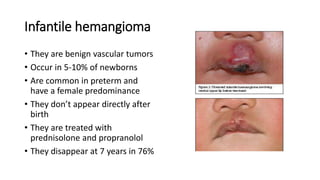
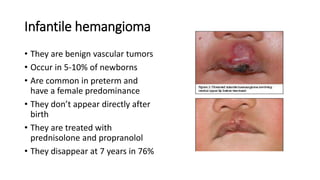
Infantile hemangioma
• They are benign vascular tumors
• Occur in 5-10% of newborns
• Are common in preterm and
have a female predominance
• They don’t appear directly after
birth
• They are treated with
prednisolone and propranolol
• They disappear at 7 years in 76%
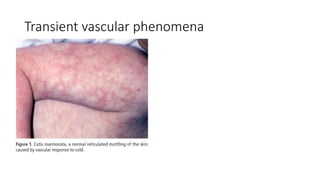
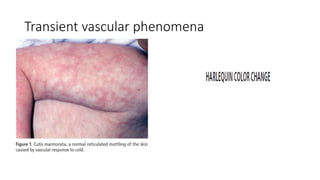
Transient vascular phenomena
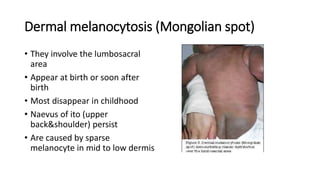
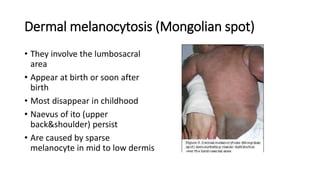
Dermal melanocytosis (Mongolian spot)
• They involve the lumbosacral
area
• Appear at birth or soon after
birth
• Most disappear in childhood
• Naevus of ito (upper
back&shoulder) persist
• Are caused by sparse
melanocyte in mid to low dermis
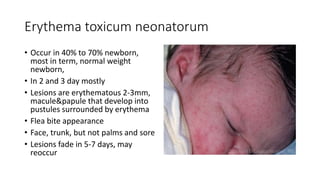
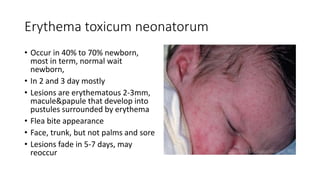
Erythema toxicum neonatorum
• Occur in 40% to 70% newborn,
most in term, normal weight
newborn,
• In 2 and 3 day mostly
• Lesions are erythematous 2-3mm,
macule&papule that develop into
pustules surrounded by erythema
• Flea bite appearance
• Face, trunk, but not palms and sore
• Lesions fade in 5-7 days, may
reoccur
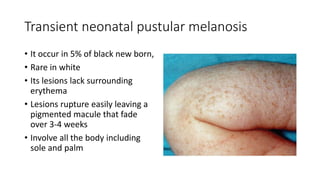
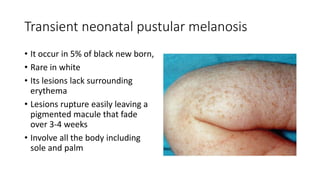
Transient neonatal pustular melanosis
• It occur in 5% of black new born,
• Rare in white
• Its lesions lack surrounding
erythema
• Lesions rupture easily leaving a
pigmented macule that fade
over 3-4 weeks
• Involve all the body including
sole and palm
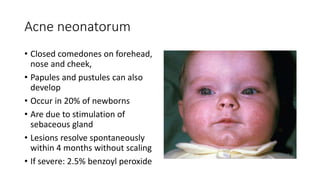
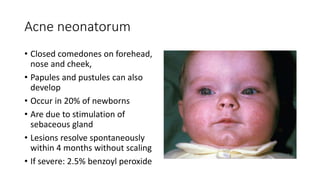
Acne neonatorum
• Closed comedones on forehead,
nose and cheek,
• Papules and pustules can also
develop
• Occur in 20% of newborns
• Are due to stimulation of
sebaceous gland
• Lesions resolve spontaneously
within 4 months without scaling
• If severe: 2.5% benzoyl peroxide
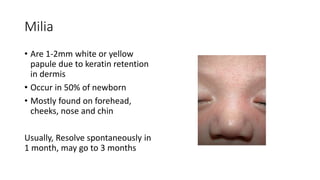
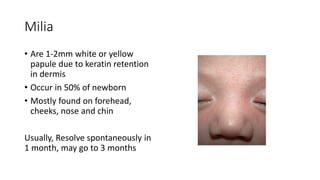
Milia
• Are 1-2mm white or yellow
papule due to keratin retention
in dermis
• Occur in 50% of newborn
• Mostly found on forehead,
cheeks, nose and chin
Usually, Resolve spontaneously in
1 month, may go to 3 months
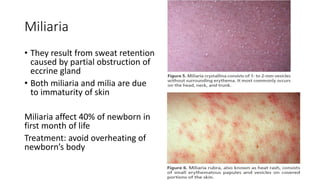
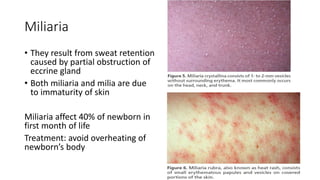
Miliaria
• They result from sweat retention
caused by partial obstruction of
eccrine gland
• Both miliaria and milia are due
to immaturity of skin
Miliaria affect 40% of newborn in
first month of life
Treatment: avoid overheating of
newborn’s body
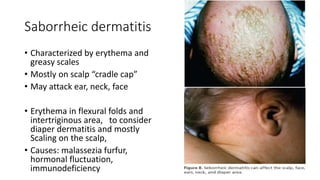
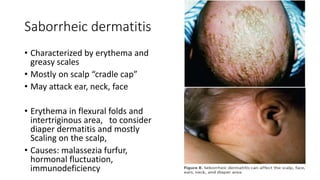
Saborrheic dermatitis
• Characterized by erythema and
greasy scales
• Mostly on scalp “cradle cap”
• May attack ear, neck, face
• Erythema in flexural folds and
intertriginous area, to consider
diaper dermatitis and mostly
Scaling on the scalp,
• Causes: malassezia furfur,
hormonal fluctuation,
immunodeficiency
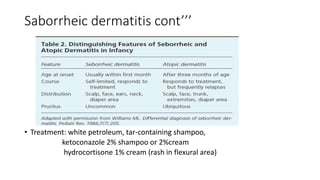
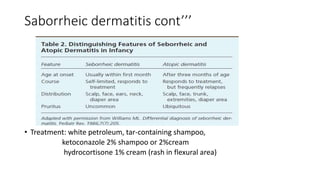
Saborrheic dermatitis cont’’’
• Treatment: white petroleum, tar-containing shampoo,
ketoconazole 2% shampoo or 2%cream
hydrocortisone 1% cream (rash in flexural area)
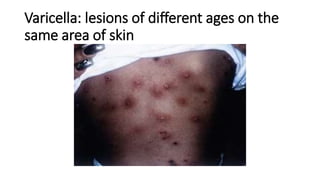
Varicella
• The rash typically lasts 12 to 21 days.
• Patients remain contagious until the last lesion has completely
crusted over.
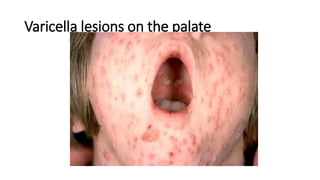
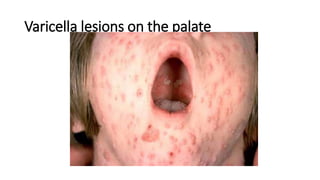
Varicella lesions on the palate
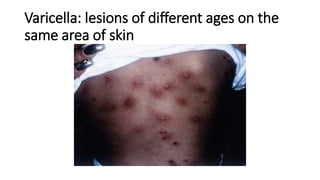
Varicella: lesions of different ages on the
same area of ​​skin
HERPES ZOSTER
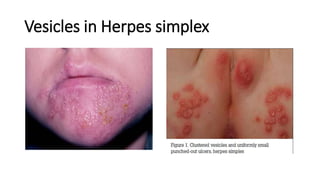
• Herpes simplex type 1 (HSV-1)
• cold sores
• fever blisters
• Herpes simplex type 2 (HSV-2)
• genital herpes
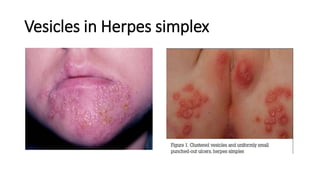
Vesicles in Herpes simplex
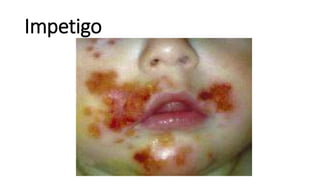
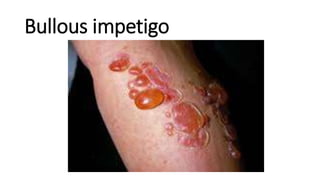
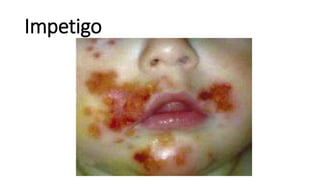
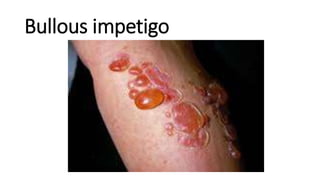
IMPETIGO
• Caused by Streptococcus pyogenes
or Staphylococcus aureus.
• Impetigo presents with pustules
Impetigo
Bullous impetigo
Take home message
• Infants who are sick looking with vesicopustular rashes should be
tested for bacterial, viral and fungal infection
• Acne neonatorum usually resolve within 4 months, in severe cases we
can use 2.5% benzoyl peroxide to fasten the resolution
• Miliaria rubra respond to prevention of overheating by: cool bath, air
conditioning, removal of excess clothing
• Infantile seborrheic dermatitis usually respond to conservative
treatment by petrolatum, tar-containing shampoo,
• Topic Anti-fungal and mild corticosteroids are used in resistant cases.
Reference
• American family physician, Vol 77, No.1, Jan 1,2008
• Notes of prof Muganga
• Australia Family physician ,Vol 41,No.5, May 2012
NEONATAL SKIN RASHES
SINGI
Outline
• Vascular skin lesions
• pigmented skin lesions
• Vesico pustular skin lesions
• Febrile skin lesions
introduction
• Rashes are common in newborn, and they can be source of significant
source of parental concern
• Most of them are transient and benign, some of them require work
up
Infantile hemangioma
• They are benign vascular tumors
• Occur in 5-10% of newborns
• Are common in preterm and
have a female predominance
• They don’t appear directly after
birth
• They are treated with
prednisolone and propranolol
• They disappear at 7 years in 76%
Transient vascular phenomena
Dermal melanocytosis (Mongolian spot)
• They involve the lumbosacral
area
• Appear at birth or soon after
birth
• Most disappear in childhood
• Naevus of ito (upper
back&shoulder) persist
• Are caused by sparse
melanocyte in mid to low dermis
Erythema toxicum neonatorum
• Occur in 40% to 70% newborn,
most in term, normal wait
newborn,
• In 2 and 3 day mostly
• Lesions are erythematous 2-3mm,
macule&papule that develop into
pustules surrounded by erythema
• Flea bite appearance
• Face, trunk, but not palms and sore
• Lesions fade in 5-7 days, may
reoccur
Transient neonatal pustular melanosis
• It occur in 5% of black new born,
• Rare in white
• Its lesions lack surrounding
erythema
• Lesions rupture easily leaving a
pigmented macule that fade
over 3-4 weeks
• Involve all the body including
sole and palm
Acne neonatorum
• Closed comedones on forehead,
nose and cheek,
• Papules and pustules can also
develop
• Occur in 20% of newborns
• Are due to stimulation of
sebaceous gland
• Lesions resolve spontaneously
within 4 months without scaling
• If severe: 2.5% benzoyl peroxide
Milia
• Are 1-2mm white or yellow
papule due to keratin retention
in dermis
• Occur in 50% of newborn
• Mostly found on forehead,
cheeks, nose and chin
Usually, Resolve spontaneously in
1 month, may go to 3 months
Miliaria
• They result from sweat retention
caused by partial obstruction of
eccrine gland
• Both miliaria and milia are due
to immaturity of skin
Miliaria affect 40% of newborn in
first month of life
Treatment: avoid overheating of
newborn’s body
Saborrheic dermatitis
• Characterized by erythema and
greasy scales
• Mostly on scalp “cradle cap”
• May attack ear, neck, face
• Erythema in flexural folds and
intertriginous area, to consider
diaper dermatitis and mostly
Scaling on the scalp,
• Causes: malassezia furfur,
hormonal fluctuation,
immunodeficiency
Saborrheic dermatitis cont’’’
• Treatment: white petroleum, tar-containing shampoo,
ketoconazole 2% shampoo or 2%cream
hydrocortisone 1% cream (rash in flexural area)
Varicella
• The rash typically lasts 12 to 21 days.
• Patients remain contagious until the last lesion has completely
crusted over.
Varicella lesions on the palate
Varicella: lesions of different ages on the
same area of ​​skin
HERPES ZOSTER
• Herpes simplex type 1 (HSV-1)
• cold sores
• fever blisters
• Herpes simplex type 2 (HSV-2)
• genital herpes
Vesicles in Herpes simplex
IMPETIGO
• Caused by Streptococcus pyogenes
or Staphylococcus aureus.
• Impetigo presents with pustules
Impetigo
Bullous impetigo
Take home message
• Infants who are sick looking with vesicopustular rashes should be
tested for bacterial, viral and fungal infection
• Acne neonatorum usually resolve within 4 months, in severe cases we
can use 2.5% benzoyl peroxide to fasten the resolution
• Miliaria rubra respond to prevention of overheating by: cool bath, air
conditioning, removal of excess clothing
• Infantile seborrheic dermatitis usually respond to conservative
treatment by petrolatum, tar-containing shampoo,
• Topic Anti-fungal and mild corticosteroids are used in resistant cases.
Reference
• American family physician, Vol 77, No.1, Jan 1,2008
• Notes of prof Muganga
• Australia Family physician ,Vol 41,No.5, May 2012

Neonatal skin rashes

  • 1.
  • 2.
    Outline • Vascular skinlesions • pigmented skin lesions • Vesicopustular skin lesions • Febrile skin lesions
  • 3.
    introduction • Rashes arecommon in newborn, and they can be source of significant source of parental concern • Most of them are transient and benign, some of them require work up
  • 4.
    Infantile hemangioma • Theyare benign vascular tumors • Occur in 5-10% of newborns • Are common in preterm and have a female predominance • They don’t appear directly after birth • They are treated with prednisolone and propranolol • They disappear at 7 years in 76%
  • 5.
  • 6.
    Dermal melanocytosis (Mongolianspot) • They involve the lumbosacral area • Appear at birth or soon after birth • Most disappear in childhood • Naevus of ito (upper back&shoulder) persist • Are caused by sparse melanocyte in mid to low dermis
  • 7.
    Erythema toxicum neonatorum •Occur in 40% to 70% newborn, most in term, normal weight newborn, • In 2 and 3 day mostly • Lesions are erythematous 2-3mm, macule&papule that develop into pustules surrounded by erythema • Flea bite appearance • Face, trunk, but not palms and sore • Lesions fade in 5-7 days, may reoccur
  • 8.
    Transient neonatal pustularmelanosis • It occur in 5% of black new born, • Rare in white • Its lesions lack surrounding erythema • Lesions rupture easily leaving a pigmented macule that fade over 3-4 weeks • Involve all the body including sole and palm
  • 9.
    Acne neonatorum • Closedcomedones on forehead, nose and cheek, • Papules and pustules can also develop • Occur in 20% of newborns • Are due to stimulation of sebaceous gland • Lesions resolve spontaneously within 4 months without scaling • If severe: 2.5% benzoyl peroxide
  • 10.
    Milia • Are 1-2mmwhite or yellow papule due to keratin retention in dermis • Occur in 50% of newborn • Mostly found on forehead, cheeks, nose and chin Usually, Resolve spontaneously in 1 month, may go to 3 months
  • 11.
    Miliaria • They resultfrom sweat retention caused by partial obstruction of eccrine gland • Both miliaria and milia are due to immaturity of skin Miliaria affect 40% of newborn in first month of life Treatment: avoid overheating of newborn’s body
  • 12.
    Saborrheic dermatitis • Characterizedby erythema and greasy scales • Mostly on scalp “cradle cap” • May attack ear, neck, face • Erythema in flexural folds and intertriginous area, to consider diaper dermatitis and mostly Scaling on the scalp, • Causes: malassezia furfur, hormonal fluctuation, immunodeficiency
  • 13.
    Saborrheic dermatitis cont’’’ •Treatment: white petroleum, tar-containing shampoo, ketoconazole 2% shampoo or 2%cream hydrocortisone 1% cream (rash in flexural area)
  • 14.
    Varicella • The rashtypically lasts 12 to 21 days. • Patients remain contagious until the last lesion has completely crusted over.
  • 15.
  • 16.
    Varicella: lesions ofdifferent ages on the same area of ​​skin
  • 17.
    HERPES ZOSTER • Herpessimplex type 1 (HSV-1) • cold sores • fever blisters • Herpes simplex type 2 (HSV-2) • genital herpes
  • 18.
  • 19.
    IMPETIGO • Caused byStreptococcus pyogenes or Staphylococcus aureus. • Impetigo presents with pustules
  • 20.
  • 21.
  • 22.
    Take home message •Infants who are sick looking with vesicopustular rashes should be tested for bacterial, viral and fungal infection • Acne neonatorum usually resolve within 4 months, in severe cases we can use 2.5% benzoyl peroxide to fasten the resolution • Miliaria rubra respond to prevention of overheating by: cool bath, air conditioning, removal of excess clothing • Infantile seborrheic dermatitis usually respond to conservative treatment by petrolatum, tar-containing shampoo, • Topic Anti-fungal and mild corticosteroids are used in resistant cases.
  • 23.
    Reference • American familyphysician, Vol 77, No.1, Jan 1,2008 • Notes of prof Muganga • Australia Family physician ,Vol 41,No.5, May 2012
  • 24.
  • 25.
    Outline • Vascular skinlesions • pigmented skin lesions • Vesico pustular skin lesions • Febrile skin lesions
  • 26.
    introduction • Rashes arecommon in newborn, and they can be source of significant source of parental concern • Most of them are transient and benign, some of them require work up
  • 27.
    Infantile hemangioma • Theyare benign vascular tumors • Occur in 5-10% of newborns • Are common in preterm and have a female predominance • They don’t appear directly after birth • They are treated with prednisolone and propranolol • They disappear at 7 years in 76%
  • 28.
  • 29.
    Dermal melanocytosis (Mongolianspot) • They involve the lumbosacral area • Appear at birth or soon after birth • Most disappear in childhood • Naevus of ito (upper back&shoulder) persist • Are caused by sparse melanocyte in mid to low dermis
  • 30.
    Erythema toxicum neonatorum •Occur in 40% to 70% newborn, most in term, normal wait newborn, • In 2 and 3 day mostly • Lesions are erythematous 2-3mm, macule&papule that develop into pustules surrounded by erythema • Flea bite appearance • Face, trunk, but not palms and sore • Lesions fade in 5-7 days, may reoccur
  • 31.
    Transient neonatal pustularmelanosis • It occur in 5% of black new born, • Rare in white • Its lesions lack surrounding erythema • Lesions rupture easily leaving a pigmented macule that fade over 3-4 weeks • Involve all the body including sole and palm
  • 32.
    Acne neonatorum • Closedcomedones on forehead, nose and cheek, • Papules and pustules can also develop • Occur in 20% of newborns • Are due to stimulation of sebaceous gland • Lesions resolve spontaneously within 4 months without scaling • If severe: 2.5% benzoyl peroxide
  • 33.
    Milia • Are 1-2mmwhite or yellow papule due to keratin retention in dermis • Occur in 50% of newborn • Mostly found on forehead, cheeks, nose and chin Usually, Resolve spontaneously in 1 month, may go to 3 months
  • 34.
    Miliaria • They resultfrom sweat retention caused by partial obstruction of eccrine gland • Both miliaria and milia are due to immaturity of skin Miliaria affect 40% of newborn in first month of life Treatment: avoid overheating of newborn’s body
  • 35.
    Saborrheic dermatitis • Characterizedby erythema and greasy scales • Mostly on scalp “cradle cap” • May attack ear, neck, face • Erythema in flexural folds and intertriginous area, to consider diaper dermatitis and mostly Scaling on the scalp, • Causes: malassezia furfur, hormonal fluctuation, immunodeficiency
  • 36.
    Saborrheic dermatitis cont’’’ •Treatment: white petroleum, tar-containing shampoo, ketoconazole 2% shampoo or 2%cream hydrocortisone 1% cream (rash in flexural area)
  • 37.
    Varicella • The rashtypically lasts 12 to 21 days. • Patients remain contagious until the last lesion has completely crusted over.
  • 38.
  • 39.
    Varicella: lesions ofdifferent ages on the same area of ​​skin
  • 40.
    HERPES ZOSTER • Herpessimplex type 1 (HSV-1) • cold sores • fever blisters • Herpes simplex type 2 (HSV-2) • genital herpes
  • 41.
  • 42.
    IMPETIGO • Caused byStreptococcus pyogenes or Staphylococcus aureus. • Impetigo presents with pustules
  • 43.
  • 44.
  • 45.
    Take home message •Infants who are sick looking with vesicopustular rashes should be tested for bacterial, viral and fungal infection • Acne neonatorum usually resolve within 4 months, in severe cases we can use 2.5% benzoyl peroxide to fasten the resolution • Miliaria rubra respond to prevention of overheating by: cool bath, air conditioning, removal of excess clothing • Infantile seborrheic dermatitis usually respond to conservative treatment by petrolatum, tar-containing shampoo, • Topic Anti-fungal and mild corticosteroids are used in resistant cases.
  • 46.
    Reference • American familyphysician, Vol 77, No.1, Jan 1,2008 • Notes of prof Muganga • Australia Family physician ,Vol 41,No.5, May 2012

Editor's Notes

  • #18 cold sores , fever blisters = boutons de chaleur
  • #19 Boutons de fievre (“cold sores”) due to Herpes
  • #41 cold sores , fever blisters = boutons de chaleur
  • #42 Boutons de fievre (“cold sores”) due to Herpes