


By Swaraj Mishra
Negotiation is possible only when the out 
group is perceived both as interested in 
peace and as reasonable. 
It involves continuous interaction and 
dialogue between the groups in order to find 
a solution with maximum advantage to 
both(win-win situation).
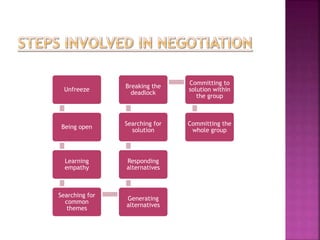
Unfreeze 
Being open 
Learning 
empathy 
Searching for 
common 
themes 
Breaking the 
deadlock 
Searching for 
solution 
Responding 
alternatives 
Generating 
alternatives 
Committing to 
solution within 
the group 
Committing the 
whole group
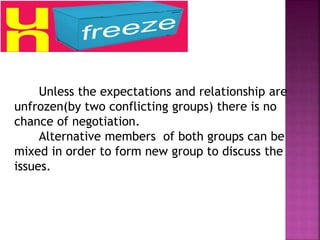
Unless the expectations and relationship are 
unfrozen(by two conflicting groups) there is no 
chance of negotiation. 
Alternative members of both groups can be 
mixed in order to form new group to discuss the 
issues.
Group members should be open to each 
other and can give different points of view or 
alternatives without fear.
Group members may see only their own 
points of view but can gain empathy for other 
by sharing their concerns or goals.
Groups involved in a conflict may be helped 
to search common goals or other areas of overlap 
by listing their expectations, goals etc..
When the goal is clear for groups they can 
generate alternation for resolving some of the 
issues.
Study and respond to the alternatives .Every 
effort should be made to See issues in a positive 
and problem solving way.
Alternatives have to be explored in depth by 
small groups with all consensus on solution and then 
report is given to the larger groups. Because points of 
view from both the parties are reflected in the new 
groups. So they should be innovative to solve the 
issues.
sometimes both parties are so emotionally 
involved that they can not move towards a solution 
by themselves. In such case a 3rd party having 
Experiences may be brought in to solve the issues.
After the solutions are generated by the 
smaller group, the groups can debate and consider 
these solutions and committee to some of these. 
All doubts must be resolved or must be put aside 
at this point.
At the last step of the process groups 
accept the solutions jointly and make a 
commitment to implement it. 
further arrangements are also made to 
solve the remaining issues.
Prevention is better than cure. 
Two easy steps to prevent 
conflicts. 
 Whenever problems arise, everyone must be 
involved in finding alternative solutions. 
 Focus on team building.
Understanding Organizational Behavior 
Author-Proff. Udai Pareek
Negotiation process from the book Understanding Organizational Behavior

Negotiation process from the book Understanding Organizational Behavior

  • 1.
  • 2.
    Negotiation is possibleonly when the out group is perceived both as interested in peace and as reasonable. It involves continuous interaction and dialogue between the groups in order to find a solution with maximum advantage to both(win-win situation).
  • 3.
    Unfreeze Being open Learning empathy Searching for common themes Breaking the deadlock Searching for solution Responding alternatives Generating alternatives Committing to solution within the group Committing the whole group
  • 4.
    Unless the expectationsand relationship are unfrozen(by two conflicting groups) there is no chance of negotiation. Alternative members of both groups can be mixed in order to form new group to discuss the issues.
  • 5.
    Group members shouldbe open to each other and can give different points of view or alternatives without fear.
  • 6.
    Group members maysee only their own points of view but can gain empathy for other by sharing their concerns or goals.
  • 7.
    Groups involved ina conflict may be helped to search common goals or other areas of overlap by listing their expectations, goals etc..
  • 8.
    When the goalis clear for groups they can generate alternation for resolving some of the issues.
  • 9.
    Study and respondto the alternatives .Every effort should be made to See issues in a positive and problem solving way.
  • 10.
    Alternatives have tobe explored in depth by small groups with all consensus on solution and then report is given to the larger groups. Because points of view from both the parties are reflected in the new groups. So they should be innovative to solve the issues.
  • 11.
    sometimes both partiesare so emotionally involved that they can not move towards a solution by themselves. In such case a 3rd party having Experiences may be brought in to solve the issues.
  • 12.
    After the solutionsare generated by the smaller group, the groups can debate and consider these solutions and committee to some of these. All doubts must be resolved or must be put aside at this point.
  • 13.
    At the laststep of the process groups accept the solutions jointly and make a commitment to implement it. further arrangements are also made to solve the remaining issues.
  • 14.
    Prevention is betterthan cure. Two easy steps to prevent conflicts.  Whenever problems arise, everyone must be involved in finding alternative solutions.  Focus on team building.
  • 15.
    Understanding Organizational Behavior Author-Proff. Udai Pareek