Economic benefits
of healthy fisheries


aniol.esteban@neweconomics.org
rupert.crilly@neweconomics.org
www.neweconomics.org
One key message

“Restoring fish stocks is good for
UK/EU economy”
Can the EU/UK meet fish demand from its
own waters?

What would be the revenue/jobs gains if
EU stocks were at sustainable levels?

How much would it cost to get there?
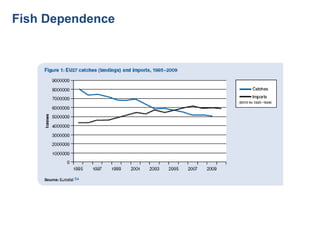
Fish Dependence

Compares fish production vs
consumption.

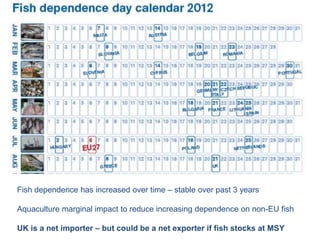
Estimates at when in the year calendar
a country starts depending on fish from
non-EU waters.

Fish production (supply): EU catch + Aquaculture

Fish Consumption (demand): Total catch + Aquac. + Imports – Exports

Self-sufficiency: Supply / Demand
Fish Dependence
Fish dependence has increased over time – stable over past 3 years

Aquaculture marginal impact to reduce increasing dependence on non-EU fish

UK is a net importer – but could be a net exporter if fish stocks at MSY
What are the economic gains of
   fish stock restoration?

(i.e. How much are we losing by keeping EU
            stocks overfished?)
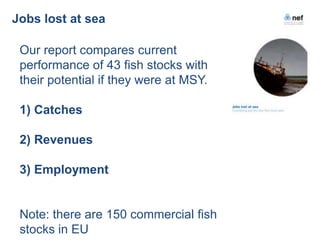
Jobs lost at sea

 Our report compares current
 performance of 43 fish stocks with
 their potential if they were at MSY.

 1) Catches

 2) Revenues

 3) Employment


 Note: there are 150 commercial fish
 stocks in EU
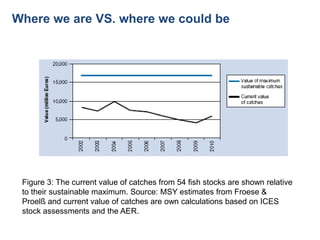
Where we are VS. where we could be


 Figure 3: The current value of catches from 54 fish stocks are shown relative
 to their sustainable maximum. Source: MSY estimates from Froese &
 Proelß and current value of catches are own calculations based on ICES
 stock assessments and the AER.
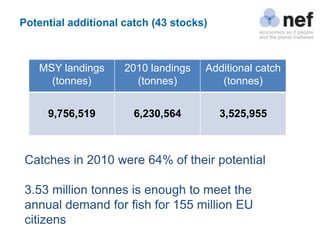
Potential additional catch (43 stocks)


   MSY landings      2010 landings   Additional catch
     (tonnes)          (tonnes)         (tonnes)


     9,756,519         6,230,564         3,525,955


 Catches in 2010 were 64% of their potential

 3.53 million tonnes is enough to meet the
 annual demand for fish for 155 million EU
 citizens
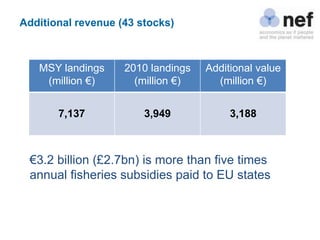
Additional revenue (43 stocks)


   MSY landings     2010 landings   Additional value
    (million €)       (million €)     (million €)


       7,137            3,949            3,188


 €3.2 billion (£2.7bn) is more than five times
 annual fisheries subsidies paid to EU states
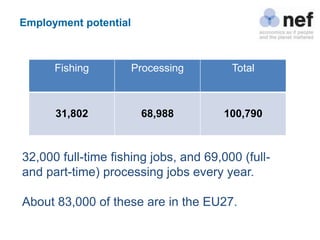
Employment potential


      Fishing          Processing       Total


      31,802            68,988         100,790


32,000 full-time fishing jobs, and 69,000 (full-
and part-time) processing jobs every year.

About 83,000 of these are in the EU27.
With every passing year that our
stocks remain overfished we are
losing out on 2.7 billion pounds
and the potential to support
100,000 jobs.
How can we halt this drain? and
   how much would it cost?
No Catch Investment

Profitability of restoring fish stocks

Recovery time for EU “overfished” fish
stocks

Benefits of doing so (i.e. Like Jobs
Lost at Sea)

Investment needed to compensate
fishermen for “forgone” revenues
during the moratoria period.
How long to MSY?

Most stocks would
be rebuilt within 5
years
No Catch Investment


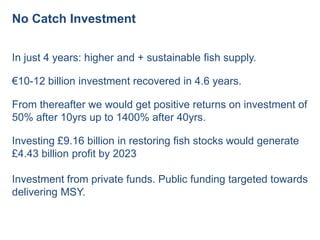
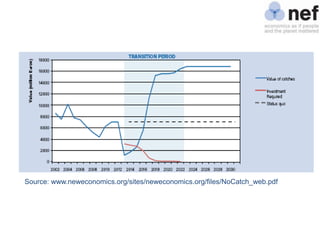
In just 4 years: higher and + sustainable fish supply.

€10-12 billion investment recovered in 4.6 years.

From thereafter we would get positive returns on investment of
50% after 10yrs up to 1400% after 40yrs.

Investing £9.16 billion in restoring fish stocks would generate
£4.43 billion profit by 2023

Investment from private funds. Public funding targeted towards
delivering MSY.
Source: www.neweconomics.org/sites/neweconomics.org/files/NoCatch_web.pdf
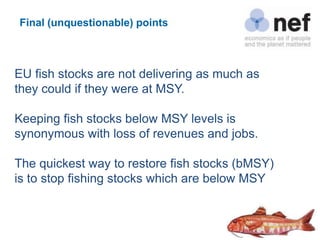
Final (unquestionable) points


EU fish stocks are not delivering as much as
they could if they were at MSY.

Keeping fish stocks below MSY levels is
synonymous with loss of revenues and jobs.

The quickest way to restore fish stocks (bMSY)
is to stop fishing stocks which are below MSY
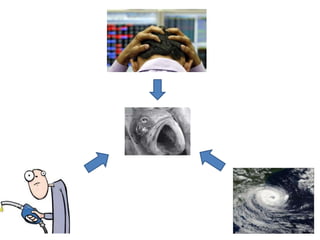
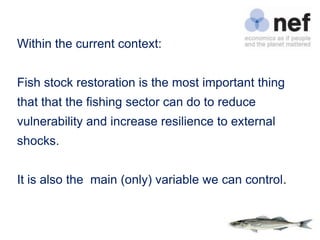
Within the current context:


Fish stock restoration is the most important thing
that that the fishing sector can do to reduce
vulnerability and increase resilience to external
shocks.


It is also the main (only) variable we can control.
THANK YOU


Reports available at: ww.neweconomics.org


Email: aniol.esteban@neweconomics.org
      rupert.crilly@neweconomics.org

Nef fisheries

  • 1.
    Economic benefits of healthyfisheries aniol.esteban@neweconomics.org rupert.crilly@neweconomics.org www.neweconomics.org
  • 2.
    One key message “Restoringfish stocks is good for UK/EU economy”
  • 3.
    Can the EU/UKmeet fish demand from its own waters? What would be the revenue/jobs gains if EU stocks were at sustainable levels? How much would it cost to get there?
  • 4.
    Fish Dependence Compares fishproduction vs consumption. Estimates at when in the year calendar a country starts depending on fish from non-EU waters. Fish production (supply): EU catch + Aquaculture Fish Consumption (demand): Total catch + Aquac. + Imports – Exports Self-sufficiency: Supply / Demand
  • 5.
  • 6.
    Fish dependence hasincreased over time – stable over past 3 years Aquaculture marginal impact to reduce increasing dependence on non-EU fish UK is a net importer – but could be a net exporter if fish stocks at MSY
  • 7.
    What are theeconomic gains of fish stock restoration? (i.e. How much are we losing by keeping EU stocks overfished?)
  • 8.
    Jobs lost atsea Our report compares current performance of 43 fish stocks with their potential if they were at MSY. 1) Catches 2) Revenues 3) Employment Note: there are 150 commercial fish stocks in EU
  • 9.
    Where we areVS. where we could be Figure 3: The current value of catches from 54 fish stocks are shown relative to their sustainable maximum. Source: MSY estimates from Froese & Proelß and current value of catches are own calculations based on ICES stock assessments and the AER.
  • 10.
    Potential additional catch(43 stocks) MSY landings 2010 landings Additional catch (tonnes) (tonnes) (tonnes) 9,756,519 6,230,564 3,525,955 Catches in 2010 were 64% of their potential 3.53 million tonnes is enough to meet the annual demand for fish for 155 million EU citizens
  • 11.
    Additional revenue (43stocks) MSY landings 2010 landings Additional value (million €) (million €) (million €) 7,137 3,949 3,188 €3.2 billion (£2.7bn) is more than five times annual fisheries subsidies paid to EU states
  • 12.
    Employment potential Fishing Processing Total 31,802 68,988 100,790 32,000 full-time fishing jobs, and 69,000 (full- and part-time) processing jobs every year. About 83,000 of these are in the EU27.
  • 13.
    With every passingyear that our stocks remain overfished we are losing out on 2.7 billion pounds and the potential to support 100,000 jobs.
  • 14.
    How can wehalt this drain? and how much would it cost?
  • 15.
    No Catch Investment Profitabilityof restoring fish stocks Recovery time for EU “overfished” fish stocks Benefits of doing so (i.e. Like Jobs Lost at Sea) Investment needed to compensate fishermen for “forgone” revenues during the moratoria period.
  • 16.
    How long toMSY? Most stocks would be rebuilt within 5 years
  • 17.
    No Catch Investment Injust 4 years: higher and + sustainable fish supply. €10-12 billion investment recovered in 4.6 years. From thereafter we would get positive returns on investment of 50% after 10yrs up to 1400% after 40yrs. Investing £9.16 billion in restoring fish stocks would generate £4.43 billion profit by 2023 Investment from private funds. Public funding targeted towards delivering MSY.
  • 18.
  • 19.
    Final (unquestionable) points EUfish stocks are not delivering as much as they could if they were at MSY. Keeping fish stocks below MSY levels is synonymous with loss of revenues and jobs. The quickest way to restore fish stocks (bMSY) is to stop fishing stocks which are below MSY
  • 21.
    Within the currentcontext: Fish stock restoration is the most important thing that that the fishing sector can do to reduce vulnerability and increase resilience to external shocks. It is also the main (only) variable we can control.
  • 22.
    THANK YOU Reports availableat: ww.neweconomics.org Email: aniol.esteban@neweconomics.org rupert.crilly@neweconomics.org