Download as PDF, PPTX


![Introduction Proposed Solution Evaluation Conclusions
Signatures as the Detection Mechanism
1 if( IsDebuggerPresent ()){
2 evade ()
Code 2: C code
1 mov eax , [fs:0x30]
2 mov eax , [eax+0x2]
3 jne 0 <evade >
Code 3: ASM code
1 64 8b 04 25 30 00 00
2 67 8b 40 02
3 75 e1
Code 4: Instructions Bytes
Near-memory & In-Memory Detection of Fileless Malware 16 / 23 MEMSYS’20](https://image.slidesharecdn.com/slides-210322181927/85/Near-memory-In-Memory-Detection-of-Fileless-Malware-16-320.jpg)
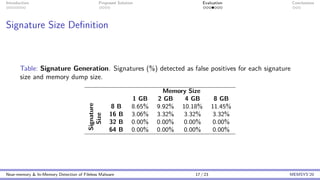
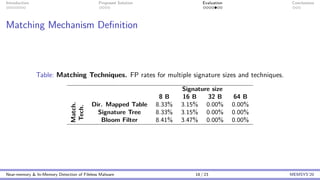
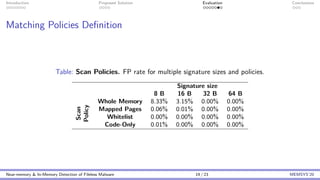
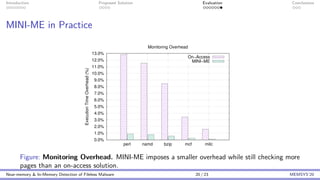
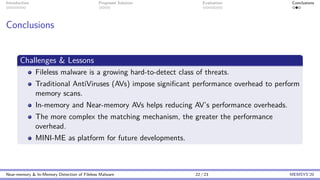

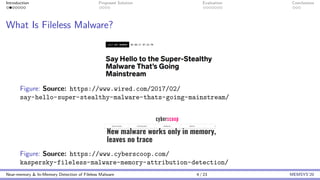
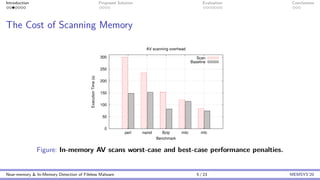
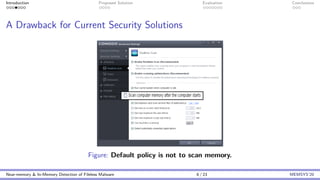
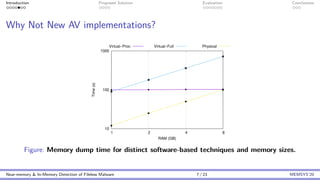
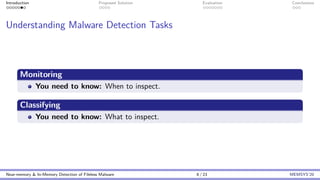
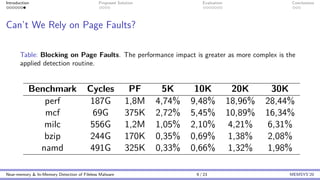
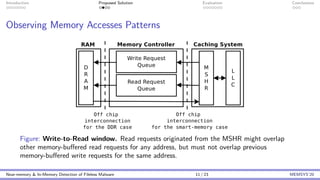
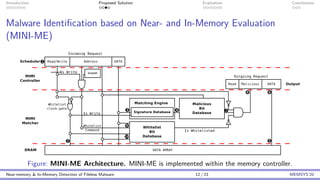
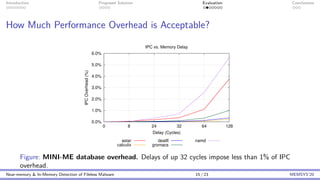
This document discusses the challenges and proposed solutions for detecting fileless malware, emphasizing the limitations of traditional antivirus solutions that often impose significant performance overhead during memory scans. It introduces the 'mini-me' architecture for near-memory and in-memory malware detection, which aims to reduce overhead while improving detection capability. The conclusions highlight the importance of balancing detection performance with system efficiency as fileless malware continues to be a challenging threat.


![[Texas A&M University] Research @ Botacin's Lab](https://cdn.slidesharecdn.com/ss_thumbnails/botacin-lab-240920190235-94bd3543-thumbnail.jpg?width=640&height=640&fit=bounds)


![[HackInTheBOx] All You Always Wanted to Know About Antiviruses](https://cdn.slidesharecdn.com/ss_thumbnails/hitbavreverseshortened-230420130020-8bfcf452-thumbnail.jpg?width=640&height=640&fit=bounds)


