GIS in Higher Education:
Realities and Opportunities
Timothy LeDoux (Westfield State University)
Carsten Braun (Westfield State University)
Jon Caris (Smith College)
Aaron D’Amario (Hatch Mott MacDonald)
Question 1
What is the most important GIS skill (or tool) that you
use in your daily work as a GIS professional?
Question 2
How/where did you learn this particular skill (or tool)?
During my Associate’s degree
During my Bachelor’s degree
In graduate school
Commercial training course(s)
On my own in my spare time
On my own on the job
From a colleague or friend
I can’t remember!
Other (please specify):
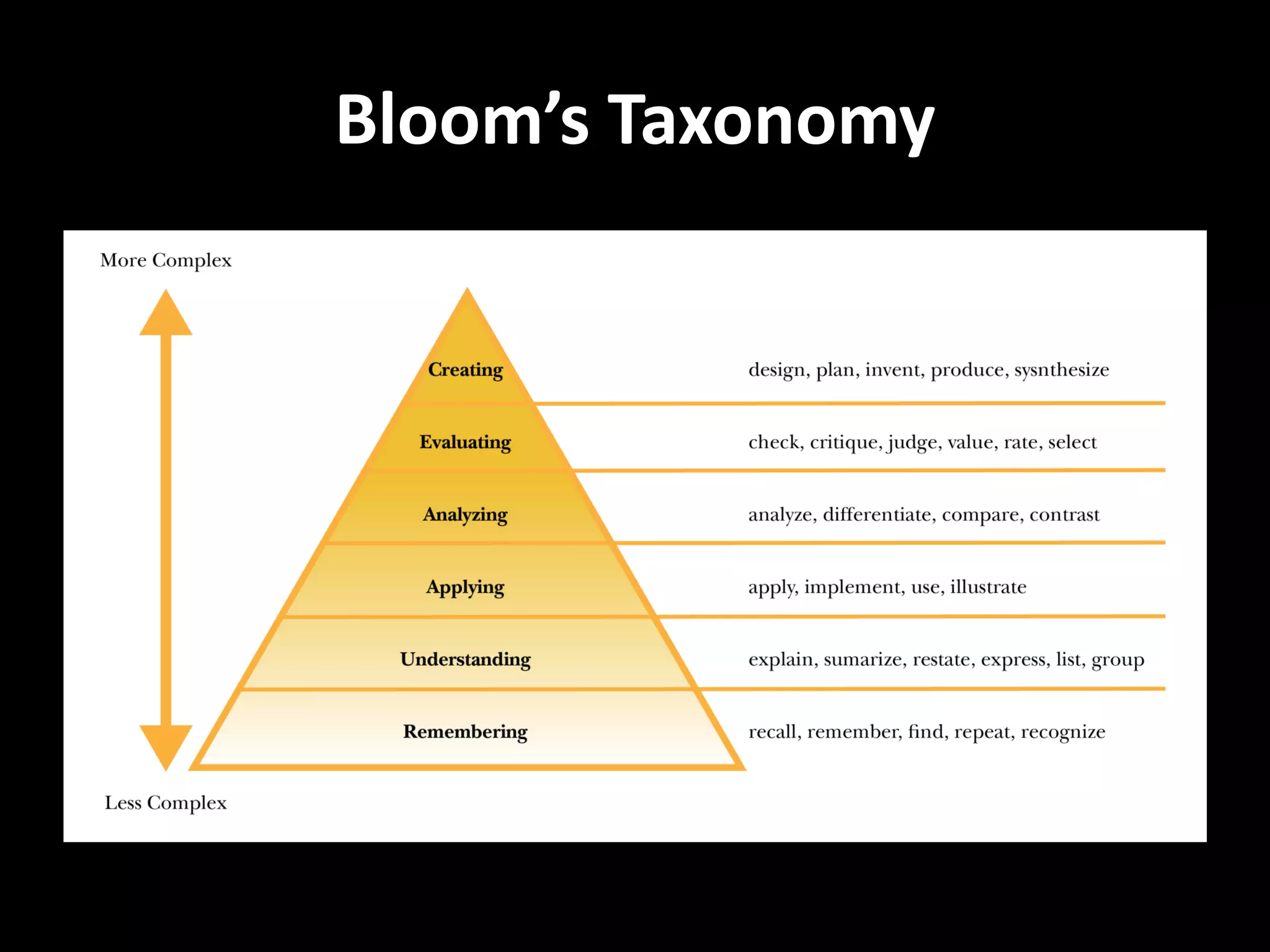
Bloom’s Taxonomy
Geospatial Technology
Competency Model
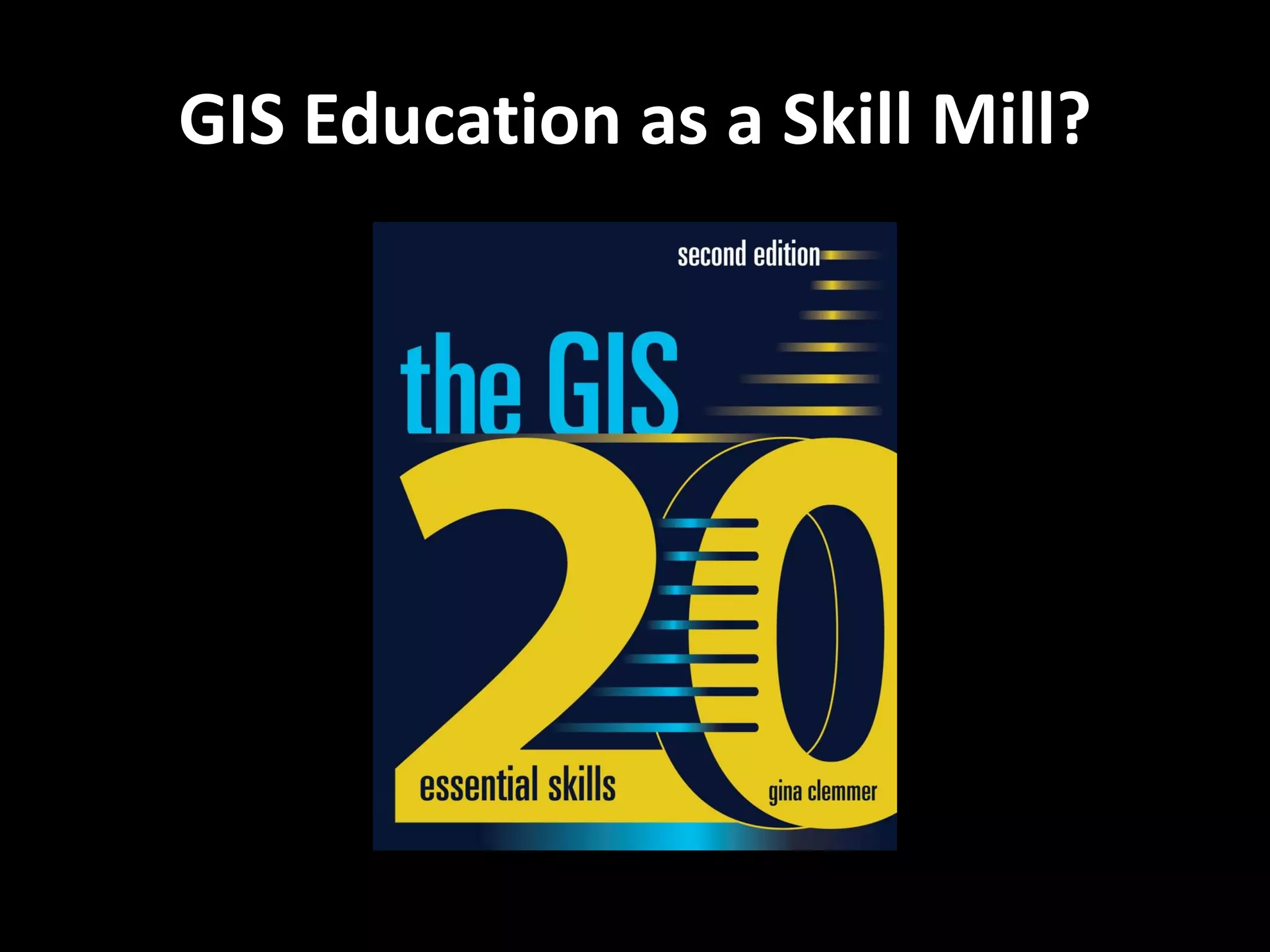
GIS Education as a Skill Mill?
GIS At Westfield State
GIS Minor (18 hours)
Required GIS Courses (12 hours)
GARP 0243 Introduction to Remote Sensing
GARP 0244 Introduction to Geographic Information Systems
GARP 0344 Advanced Geographic Information Systems
One of the following:
GARP 0246 Quantitative Methods for Social and Physical Science or
CRJU 0313 Quantitative Methods in Criminal Justice* or
ECON/FINC 0305 Introduction to Econometric Methods* or
ENVS 0330 Data Analysis* or
MGMT 0250 Quantitative Approaches to Business Decisions*
Plus two of the following (6 hours)
BIOL 0204 GIS Applications for Natural Sciences*
CAIS 0117 Introduction to Computer Programming (BASIC)
CAIS 0212 Visual Programming Concepts
CRJU 0359 GIS Applications in Crime Analysis*
GARP 0317 Special Topics in GIS
GARP 0343 Advanced Remote Sensing*
GARP 0350 Internship in GIS
GARP 0399 Independent Studies in GIS
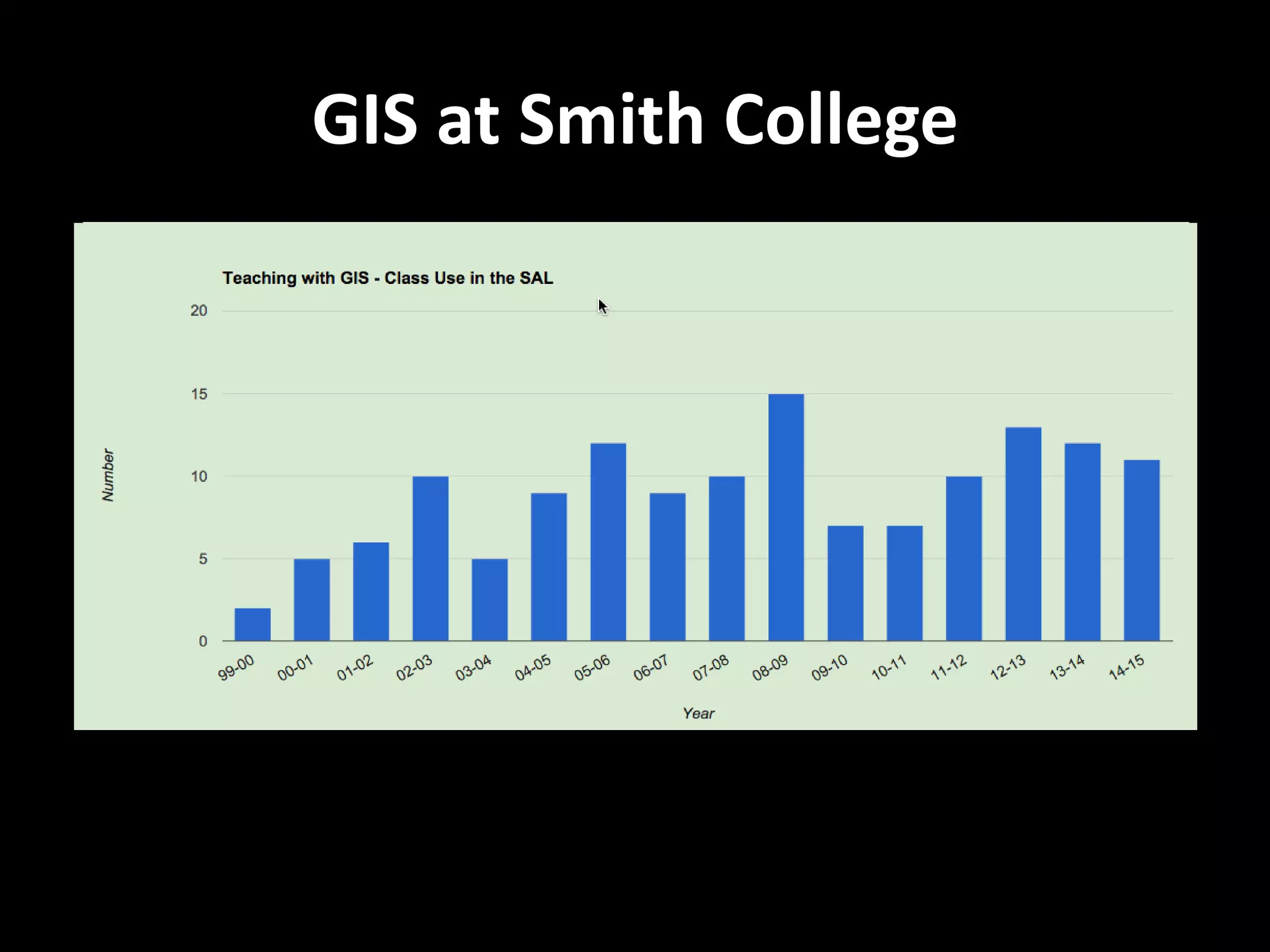
GIS at Smith College
• Teach with GIS Model
• Spatial Analysis Lab
– Part of Environmental Science & Policy
• Over 40 unique classes since 2000
• All 4 Divisions
• Average 5-6 classes per semester
• Averaging ~ 300 student interactions per year
GIS at Smith College
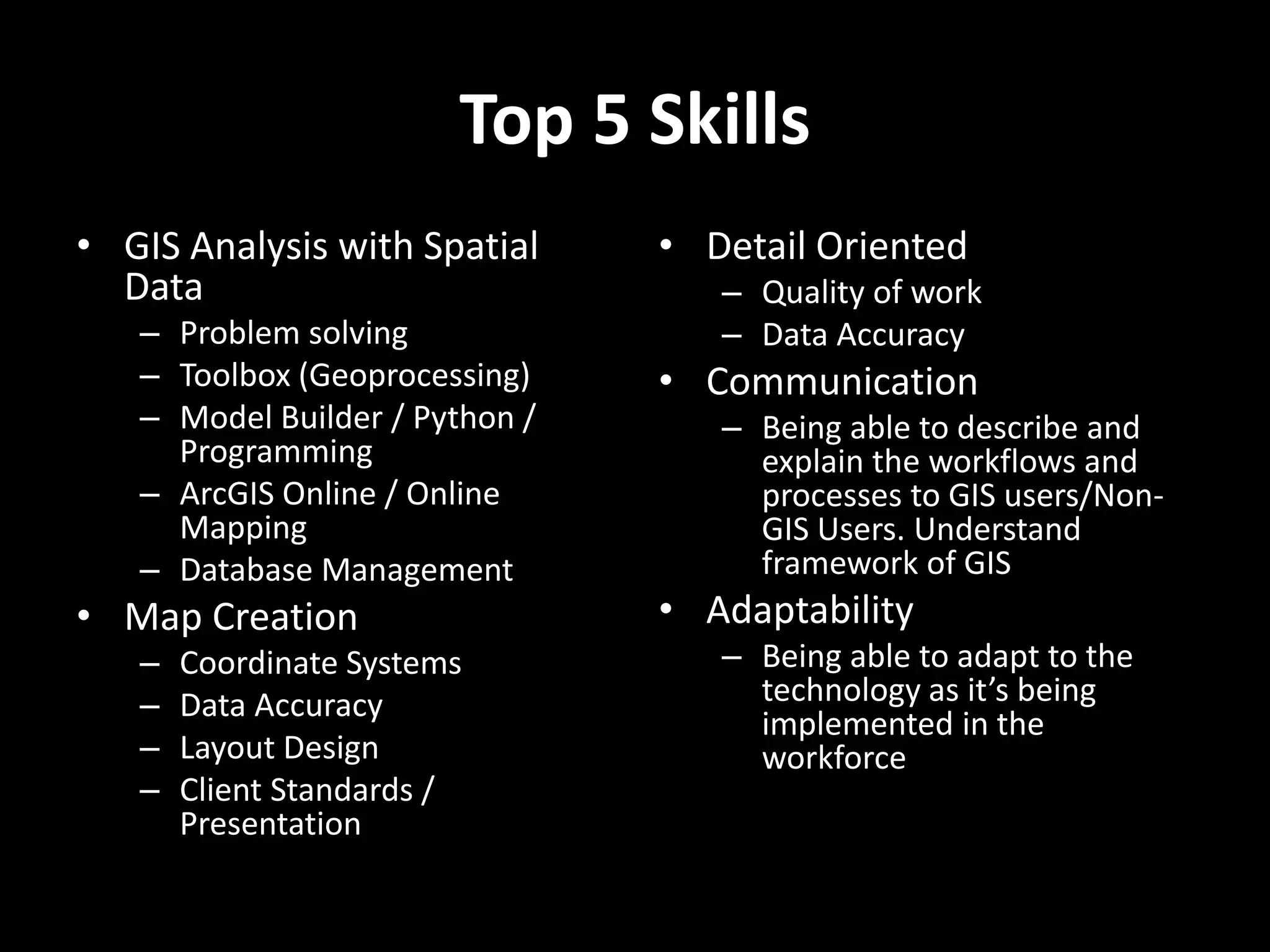
Top 5 Skills
• GIS Analysis with Spatial
Data
– Problem solving
– Toolbox (Geoprocessing)
– Model Builder / Python /
Programming
– ArcGIS Online / Online
Mapping
– Database Management
• Map Creation
– Coordinate Systems
– Data Accuracy
– Layout Design
– Client Standards /
Presentation
• Detail Oriented
– Quality of work
– Data Accuracy
• Communication
– Being able to describe and
explain the workflows and
processes to GIS users/Non-
GIS Users. Understand
framework of GIS
• Adaptability
– Being able to adapt to the
technology as it’s being
implemented in the
workforce
Greatest Challenge
• Coursework vs. Real world
– Coursework
• Provides the framework of GIS
• Gears for students to understand capabilities of the
application
• Generic examples are usually demonstrated
– Real world
• Specific real-life problems to solve
– Use the framework from the coursework learned to adapt to
the situation.
– Specific processes for specific problems
Summary and Wrap-Up

GIS in Higher Education: Realities and Opportunities

  • 1.
    GIS in HigherEducation: Realities and Opportunities Timothy LeDoux (Westfield State University) Carsten Braun (Westfield State University) Jon Caris (Smith College) Aaron D’Amario (Hatch Mott MacDonald)
  • 2.
    Question 1 What isthe most important GIS skill (or tool) that you use in your daily work as a GIS professional?
  • 3.
    Question 2 How/where didyou learn this particular skill (or tool)? During my Associate’s degree During my Bachelor’s degree In graduate school Commercial training course(s) On my own in my spare time On my own on the job From a colleague or friend I can’t remember! Other (please specify):
  • 4.
  • 5.
  • 6.
    GIS Education asa Skill Mill?
  • 7.
    GIS At WestfieldState GIS Minor (18 hours) Required GIS Courses (12 hours) GARP 0243 Introduction to Remote Sensing GARP 0244 Introduction to Geographic Information Systems GARP 0344 Advanced Geographic Information Systems One of the following: GARP 0246 Quantitative Methods for Social and Physical Science or CRJU 0313 Quantitative Methods in Criminal Justice* or ECON/FINC 0305 Introduction to Econometric Methods* or ENVS 0330 Data Analysis* or MGMT 0250 Quantitative Approaches to Business Decisions* Plus two of the following (6 hours) BIOL 0204 GIS Applications for Natural Sciences* CAIS 0117 Introduction to Computer Programming (BASIC) CAIS 0212 Visual Programming Concepts CRJU 0359 GIS Applications in Crime Analysis* GARP 0317 Special Topics in GIS GARP 0343 Advanced Remote Sensing* GARP 0350 Internship in GIS GARP 0399 Independent Studies in GIS
  • 8.
    GIS at SmithCollege • Teach with GIS Model • Spatial Analysis Lab – Part of Environmental Science & Policy • Over 40 unique classes since 2000 • All 4 Divisions • Average 5-6 classes per semester • Averaging ~ 300 student interactions per year
  • 9.
    GIS at SmithCollege
  • 10.
    Top 5 Skills •GIS Analysis with Spatial Data – Problem solving – Toolbox (Geoprocessing) – Model Builder / Python / Programming – ArcGIS Online / Online Mapping – Database Management • Map Creation – Coordinate Systems – Data Accuracy – Layout Design – Client Standards / Presentation • Detail Oriented – Quality of work – Data Accuracy • Communication – Being able to describe and explain the workflows and processes to GIS users/Non- GIS Users. Understand framework of GIS • Adaptability – Being able to adapt to the technology as it’s being implemented in the workforce
  • 11.
    Greatest Challenge • Courseworkvs. Real world – Coursework • Provides the framework of GIS • Gears for students to understand capabilities of the application • Generic examples are usually demonstrated – Real world • Specific real-life problems to solve – Use the framework from the coursework learned to adapt to the situation. – Specific processes for specific problems
  • 12.