Push & Pull

 DSpace integration with Moodle2:
Integrating the NDLR with Moodle2
   Catherine Bruen – NDLR Manager
   Mark Melia – Enovation Solutions
Agenda
•   BACKGROUND & RATIONALE
•   What is DSpace?
•   Why integrate Moodle with DSpace
•   How do we integrate
•   Next steps - Sligo IT trial
•   How to integrate NDLR with your Moodle
NDLR provides a medium through which to interact and
  collaborate nationally in a community involved in the
  teaching of your subject area.
• Can save you time by using or repurposing existing material
• Is legal to use
• Can be integrated into your own courses without significant
  effort
• Is contextually relevant to Irish HE
• Is developed by you or your peers in other institutions
• The NDLR actively supports the dissemination of your
  research and teaching discipline through the repository but
  also through its training and events
10 things you can do with the NDLR
                   service
1. Find and share learning resources for your teaching
2. Get in touch with other academics in your subject area
3. See what initiatives are taking place in Higher Education
4. Present your teaching experiences and research to a national
   audience
5. View the NDLR national funded digital resource projects
6. Join a SMART Community of Practice
7. Get support and help developing learning resources for your
   subject
8. Find out about national events and training
9. Know your rights – copyright and IP
10.Funding opportunities and NDLR Publications
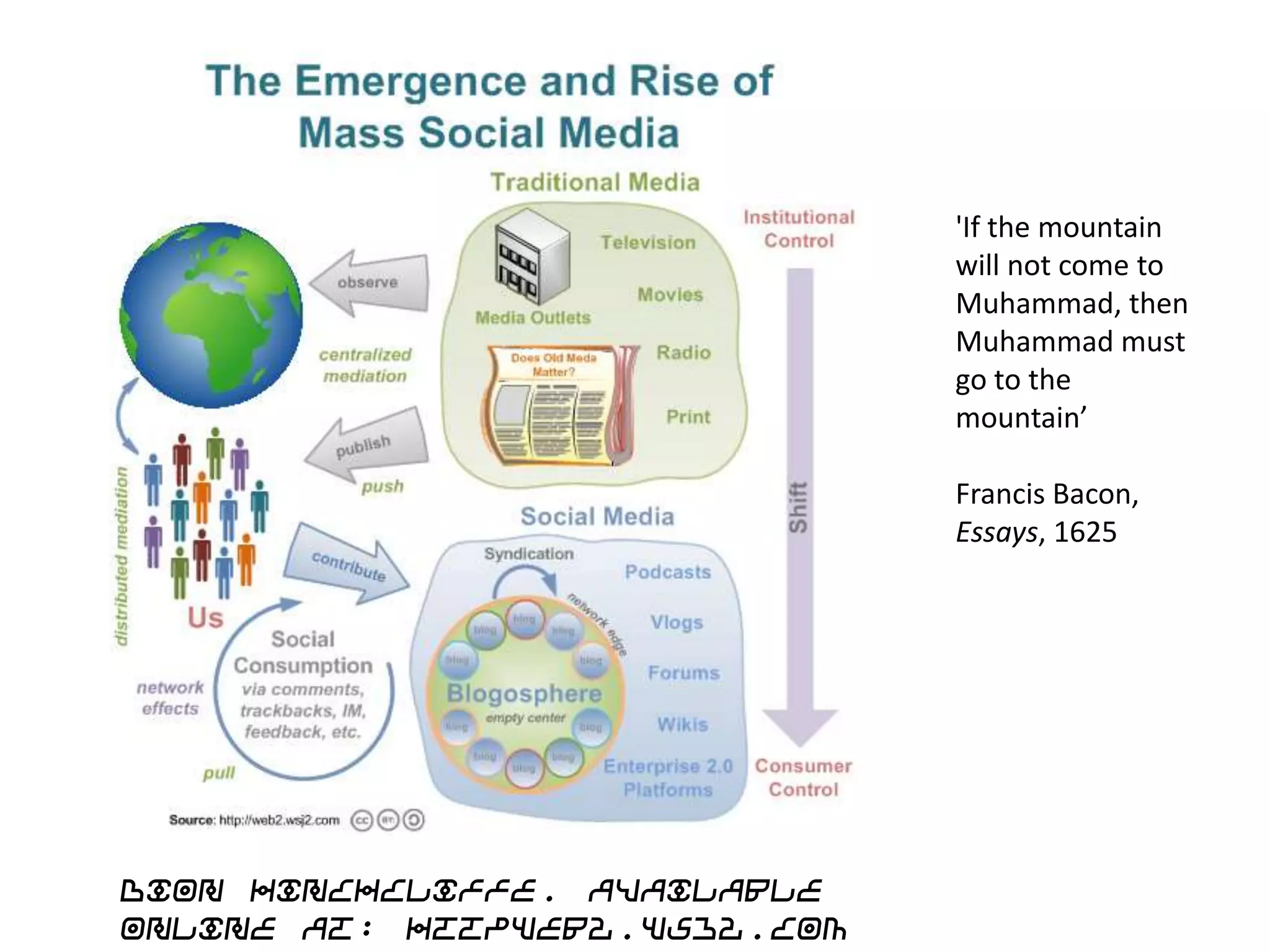
'If the mountain
                               will not come to
                               Muhammad, then
                               Muhammad must
                               go to the
                               mountain’

                               Francis Bacon,
                               Essays, 1625


Dion Hinchcliffe. Available
online at: httpweb2.wsj2.com
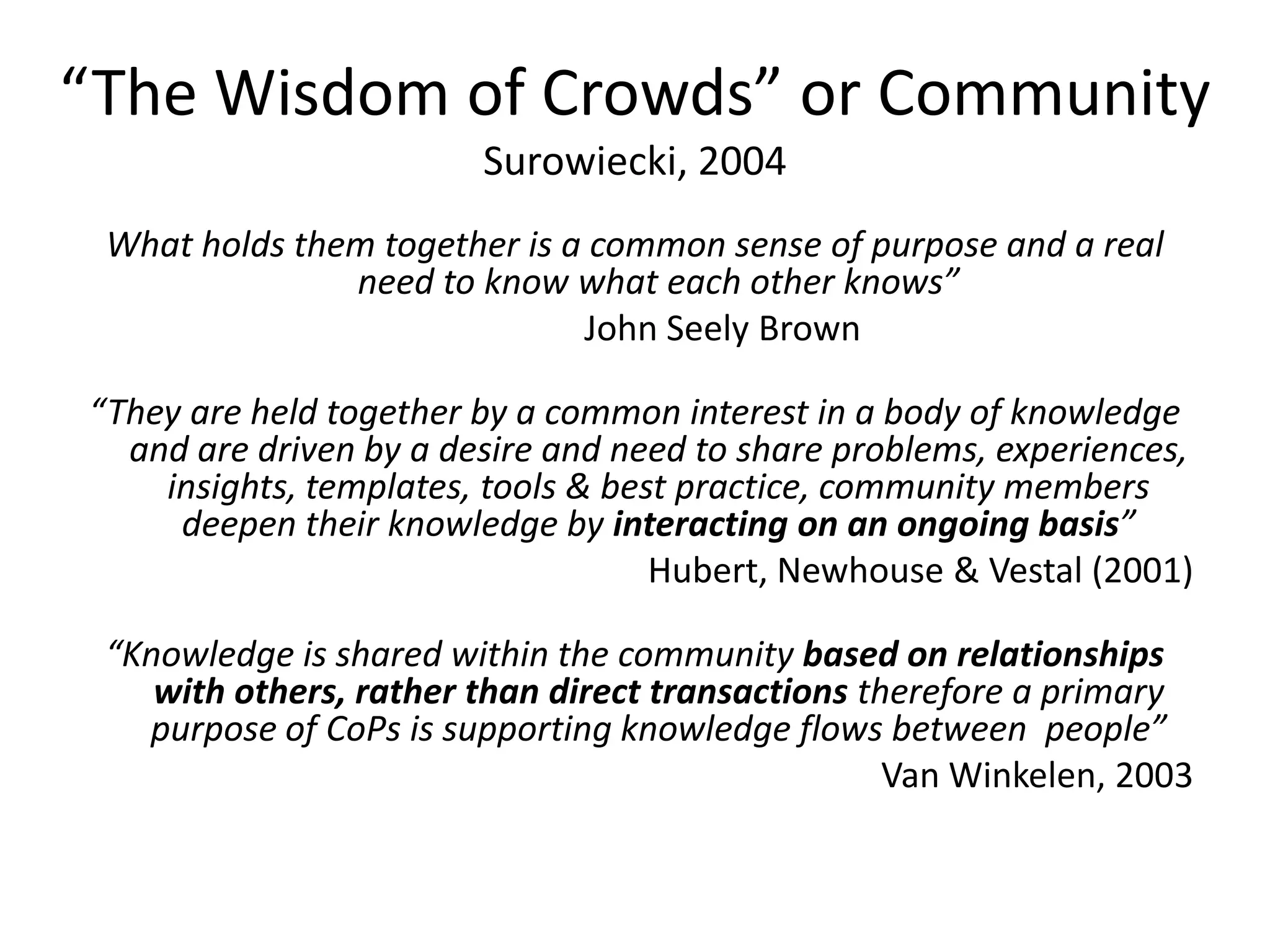
“The Wisdom of Crowds” or Community
                        Surowiecki, 2004
 What holds them together is a common sense of purpose and a real
               need to know what each other knows”
                              John Seely Brown

“They are held together by a common interest in a body of knowledge
  and are driven by a desire and need to share problems, experiences,
    insights, templates, tools & best practice, community members
     deepen their knowledge by interacting on an ongoing basis”
                                    Hubert, Newhouse & Vestal (2001)

 “Knowledge is shared within the community based on relationships
    with others, rather than direct transactions therefore a primary
   purpose of CoPs is supporting knowledge flows between people”
                                                   Van Winkelen, 2003
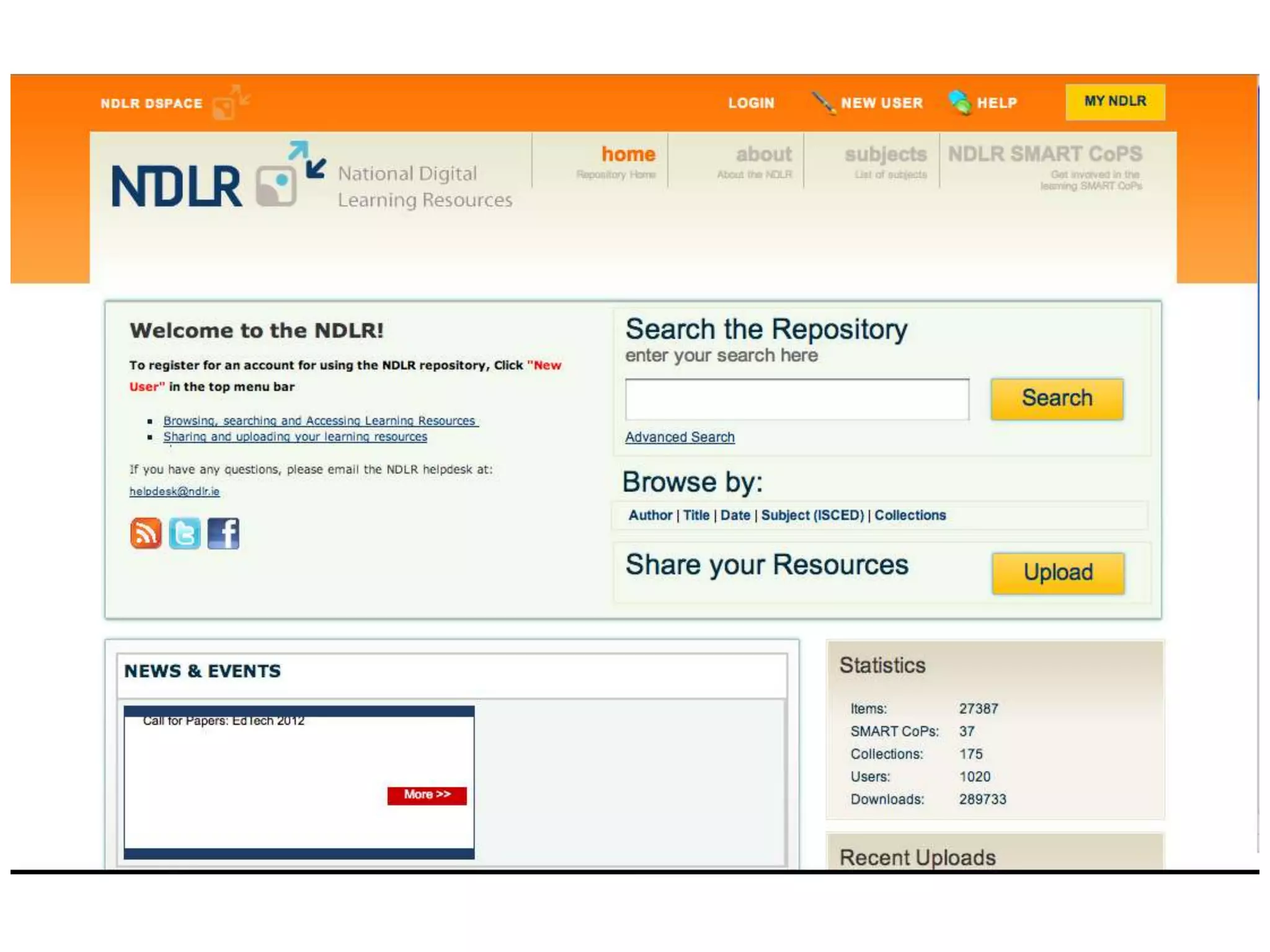
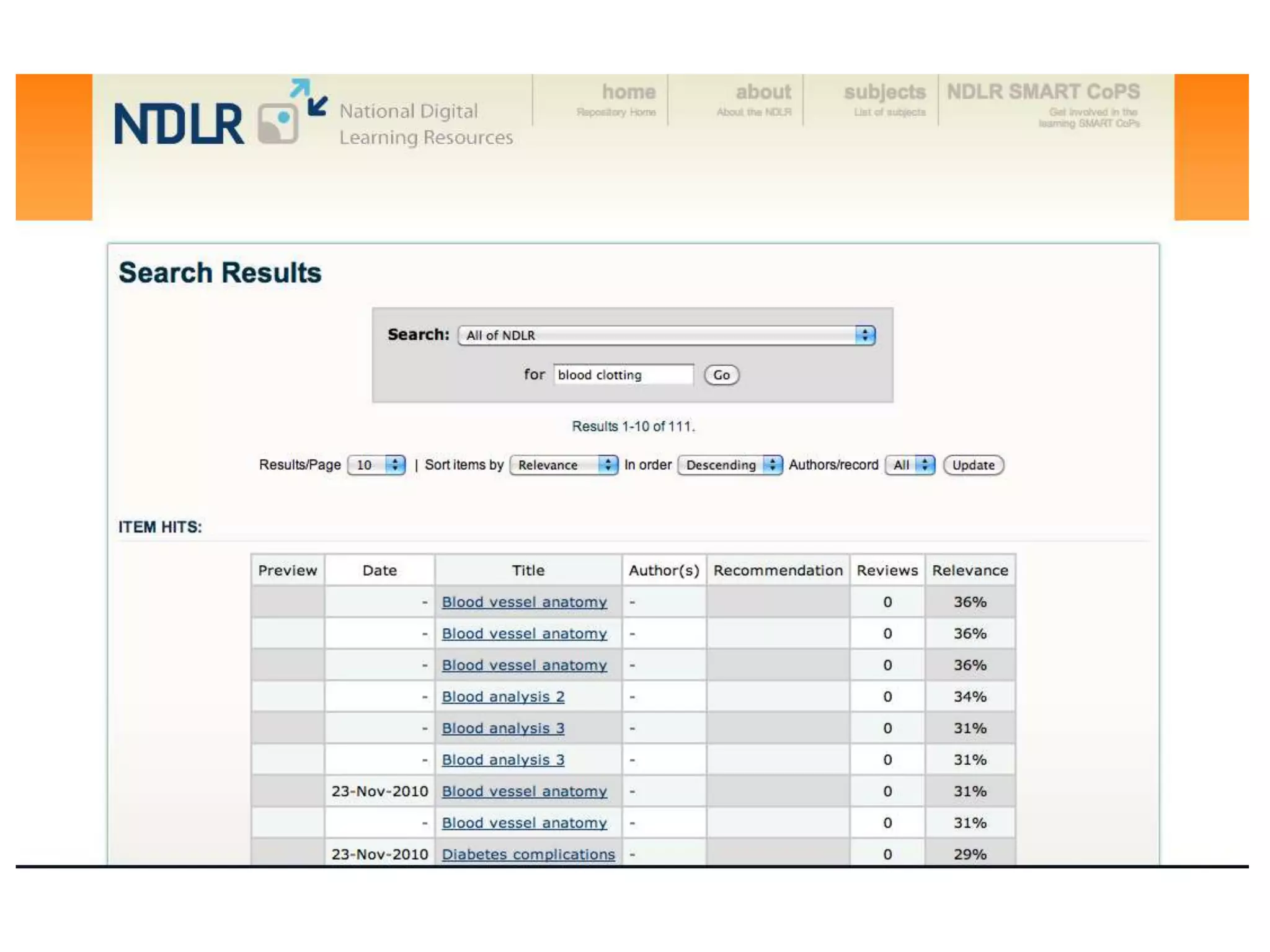
What is DSpace
• OS institutional repository
  – http://dspace.org
• Manage cataloguing, workflow, access to
  digital assets
• NDLR use it to store reusable teaching and
  learning resources for universities and ITs
  – https://dspace.ndlr.ie
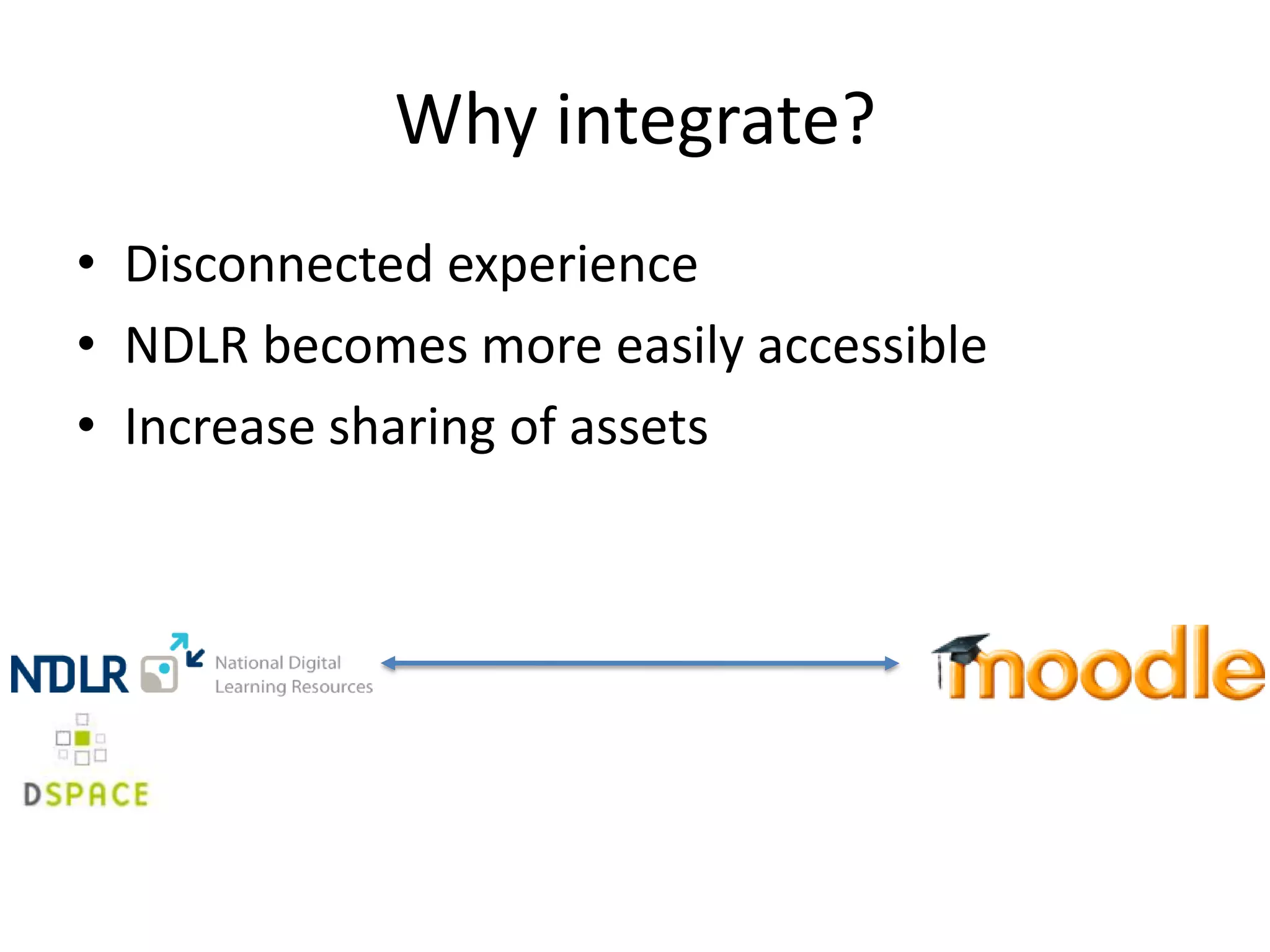
Why integrate?
• Disconnected experience
• NDLR becomes more easily accessible
• Increase sharing of assets
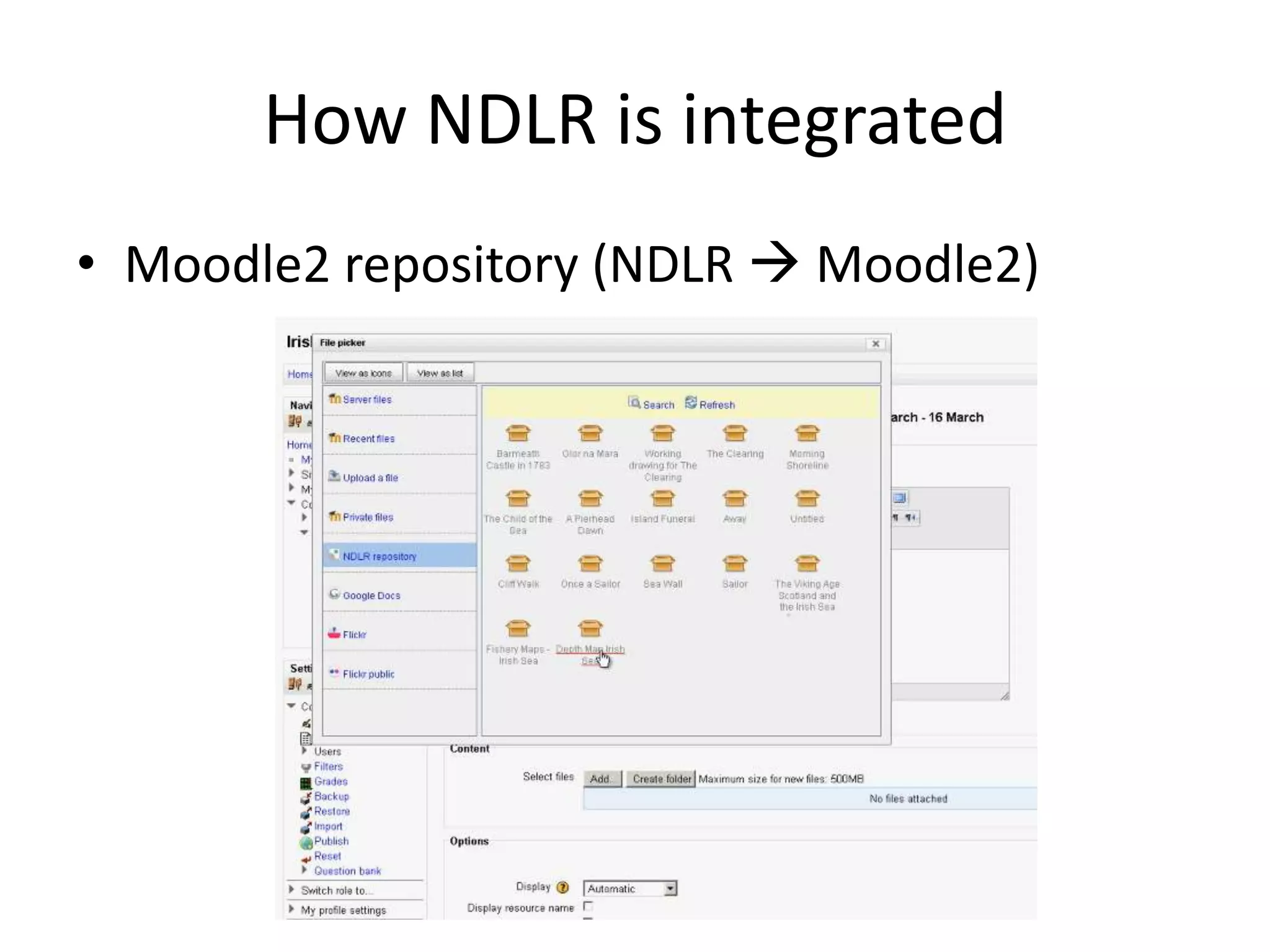
How NDLR is integrated
• Moodle2 repository (NDLR  Moodle2)
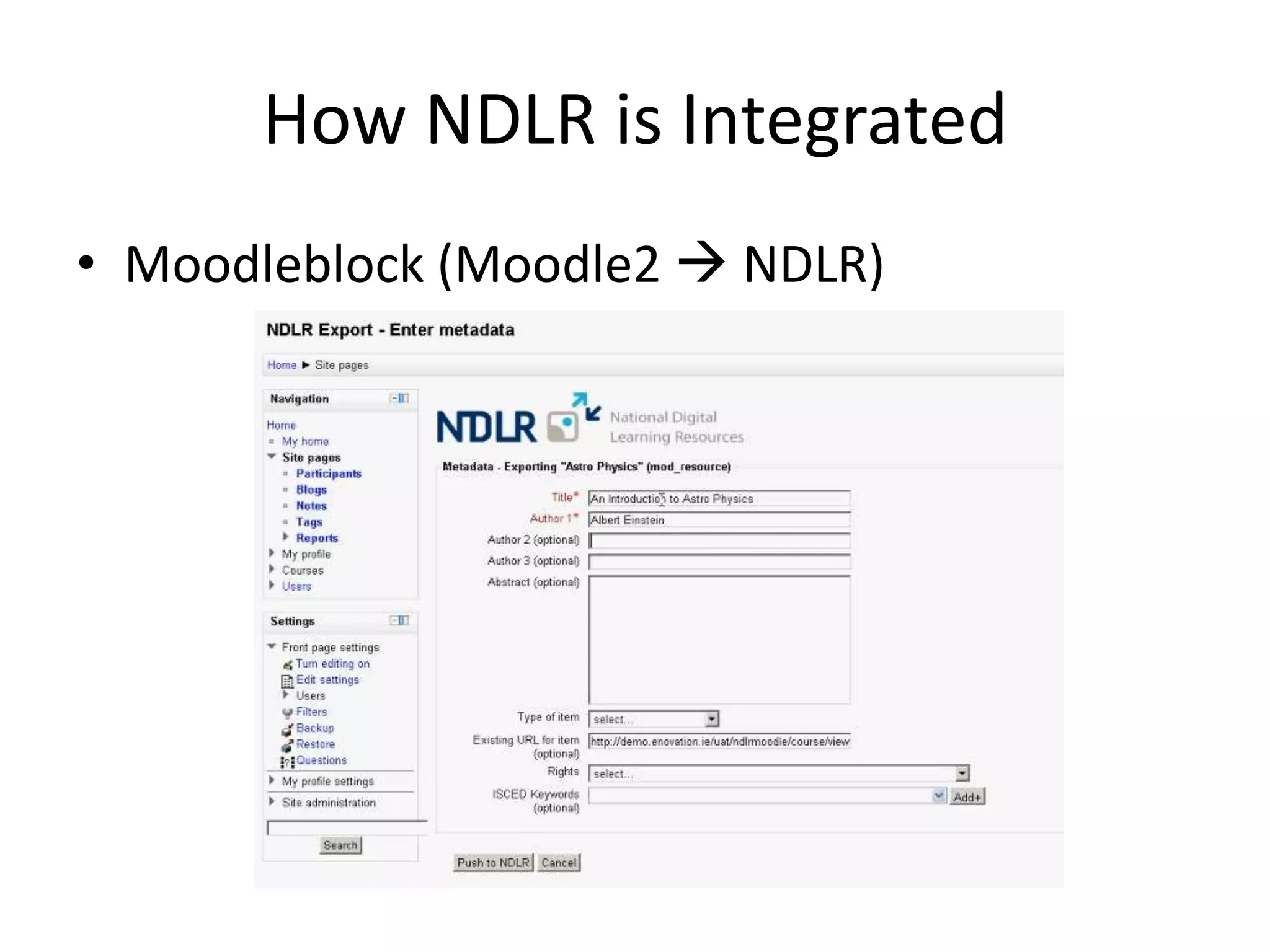
How NDLR is Integrated
• Moodleblock (Moodle2  NDLR)
Getting resources from NDLR in Moodle

   Pushing resources to NDLR from
               Moodle
Sligo IT Trial
• We are currently trialingthe technology with
  Sligo IT
• Preliminary feedback is:
     • Very useful
     • Very easy
     • More metadata when displaying items
Integrating NDLR with your Moodle
• NDLR will be announcing where to get it and
  how to install on their webpage
  – http://www.ndlr.ie
• More info can also be sought by contacting
  NDLR
  – helpdesk@ndlr.ie
• Similar venture?
  – mark.melia@enovation.ie

DSpace integration with Moodle2: Integrating the NDLR with Moodle2

  • 1.
    Push & Pull DSpace integration with Moodle2: Integrating the NDLR with Moodle2 Catherine Bruen – NDLR Manager Mark Melia – Enovation Solutions
  • 2.
    Agenda • BACKGROUND & RATIONALE • What is DSpace? • Why integrate Moodle with DSpace • How do we integrate • Next steps - Sligo IT trial • How to integrate NDLR with your Moodle
  • 3.
    NDLR provides amedium through which to interact and collaborate nationally in a community involved in the teaching of your subject area. • Can save you time by using or repurposing existing material • Is legal to use • Can be integrated into your own courses without significant effort • Is contextually relevant to Irish HE • Is developed by you or your peers in other institutions • The NDLR actively supports the dissemination of your research and teaching discipline through the repository but also through its training and events
  • 4.
    10 things youcan do with the NDLR service 1. Find and share learning resources for your teaching 2. Get in touch with other academics in your subject area 3. See what initiatives are taking place in Higher Education 4. Present your teaching experiences and research to a national audience 5. View the NDLR national funded digital resource projects 6. Join a SMART Community of Practice 7. Get support and help developing learning resources for your subject 8. Find out about national events and training 9. Know your rights – copyright and IP 10.Funding opportunities and NDLR Publications
  • 5.
    'If the mountain will not come to Muhammad, then Muhammad must go to the mountain’ Francis Bacon, Essays, 1625 Dion Hinchcliffe. Available online at: httpweb2.wsj2.com
  • 6.
    “The Wisdom ofCrowds” or Community Surowiecki, 2004 What holds them together is a common sense of purpose and a real need to know what each other knows” John Seely Brown “They are held together by a common interest in a body of knowledge and are driven by a desire and need to share problems, experiences, insights, templates, tools & best practice, community members deepen their knowledge by interacting on an ongoing basis” Hubert, Newhouse & Vestal (2001) “Knowledge is shared within the community based on relationships with others, rather than direct transactions therefore a primary purpose of CoPs is supporting knowledge flows between people” Van Winkelen, 2003
  • 8.
    What is DSpace •OS institutional repository – http://dspace.org • Manage cataloguing, workflow, access to digital assets • NDLR use it to store reusable teaching and learning resources for universities and ITs – https://dspace.ndlr.ie
  • 11.
    Why integrate? • Disconnectedexperience • NDLR becomes more easily accessible • Increase sharing of assets
  • 12.
    How NDLR isintegrated • Moodle2 repository (NDLR  Moodle2)
  • 13.
    How NDLR isIntegrated • Moodleblock (Moodle2  NDLR)
  • 14.
    Getting resources fromNDLR in Moodle Pushing resources to NDLR from Moodle
  • 15.
    Sligo IT Trial •We are currently trialingthe technology with Sligo IT • Preliminary feedback is: • Very useful • Very easy • More metadata when displaying items
  • 16.
    Integrating NDLR withyour Moodle • NDLR will be announcing where to get it and how to install on their webpage – http://www.ndlr.ie • More info can also be sought by contacting NDLR – helpdesk@ndlr.ie • Similar venture? – mark.melia@enovation.ie

Editor's Notes

  • #7 http://web2.wsj2.com/FC – possible now to self publish – consumer controlled / academic controlledWhy people can self publish / self archive
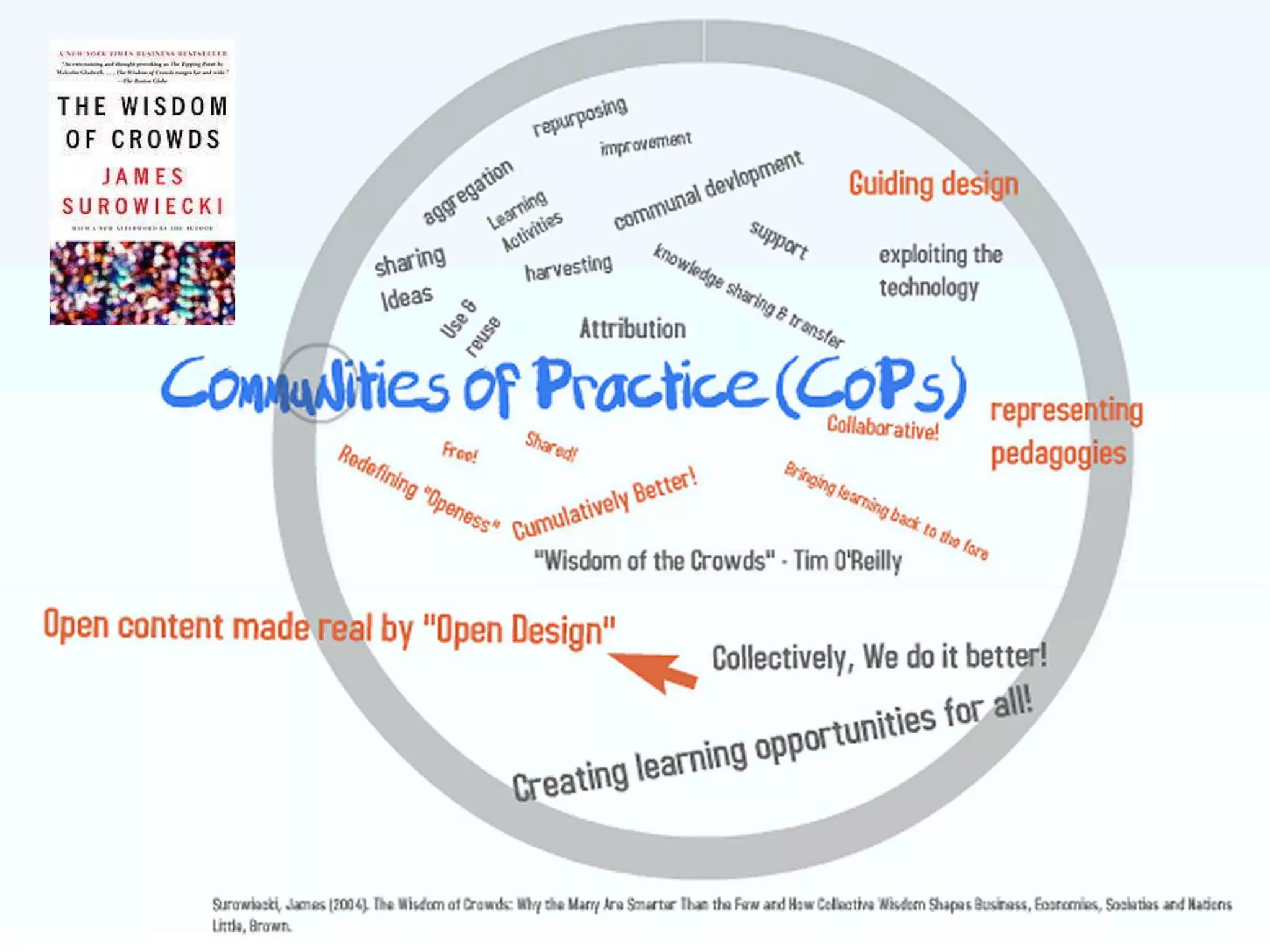
  • #8 The Wisdom of Crowds: Why the Many Are Smarter Than the Few and How Collective Wisdom Shapes Business, Economies, Societies and Nations, published in 2004, is a book written by James Surowiecki
  • #9 The Wisdom of Crowds: Why the Many Are Smarter Than the Few and How Collective Wisdom Shapes Business, Economies, Societies and Nations, published in 2004, is a book written by James Surowiecki
  • #10 The Wisdom of Crowds: Why the Many Are Smarter Than the Few and How Collective Wisdom Shapes Business, Economies, Societies and Nations, published in 2004, is a book written by James Surowiecki
  • #17 **ACTION** Decide on live demo or use Captivate videos.
  • #18 **ACTION** We may need to put a little pressure on Sligo to come back to us with their feedback.
  • #19 **ACTION** We need to decide where and how people will get the NDLR plugins.