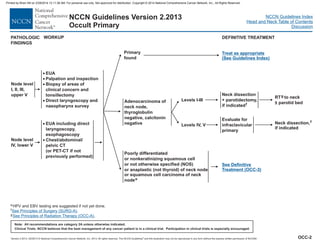
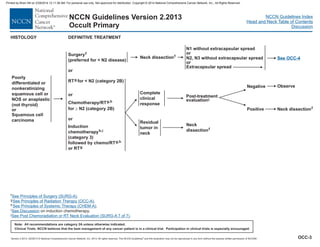
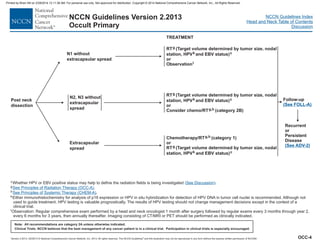
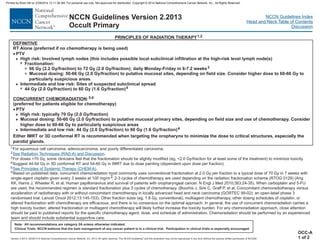
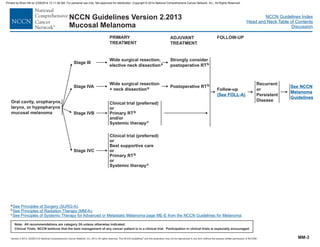
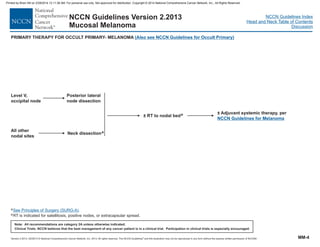
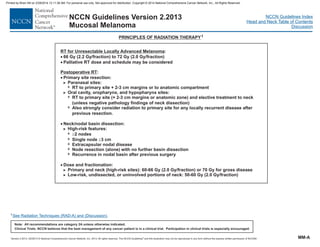
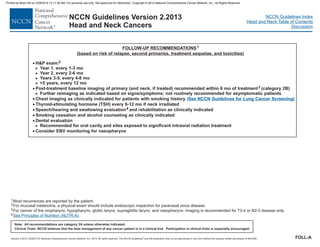
Version 2.2013, 05/29/13 © National Comprehensive Cancer Network, Inc. 2013, All rights reserved. The NCCN Guidelines and this illustration may not be reproduced in any form without the express written permission of NCCN®.
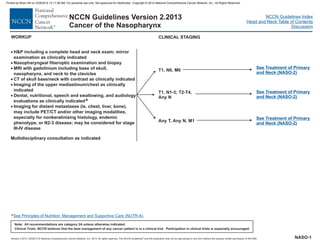
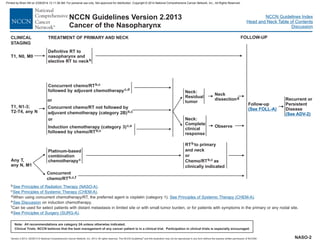
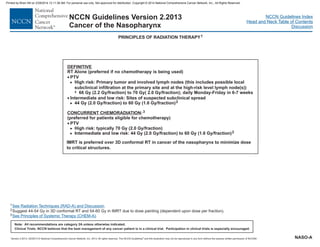
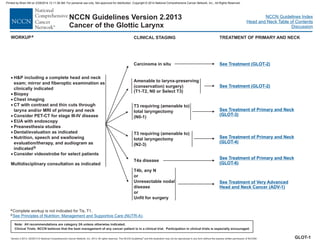
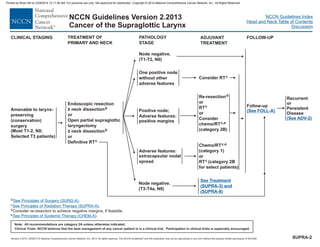
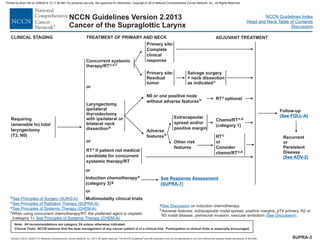
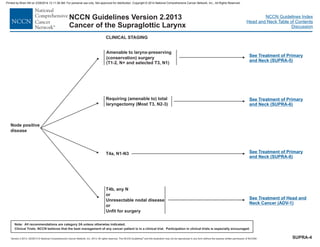
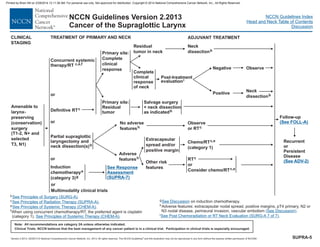
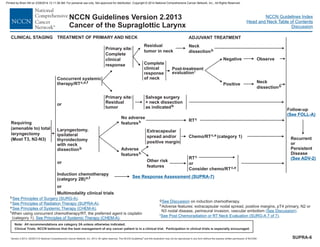
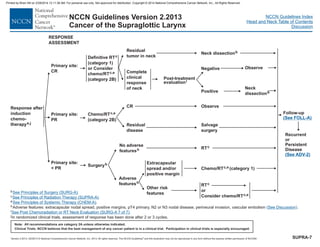
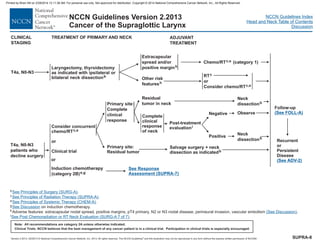
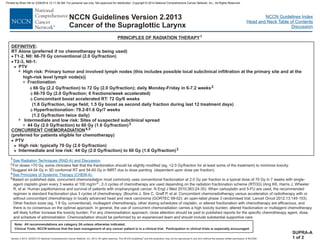
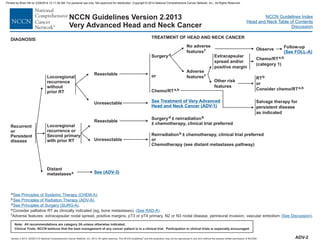
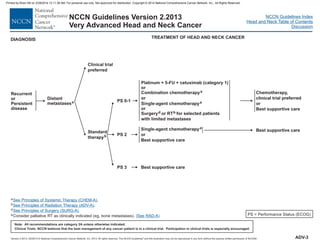
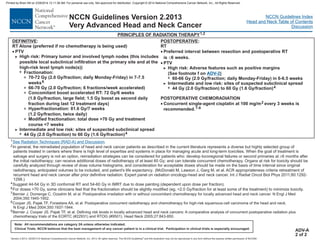
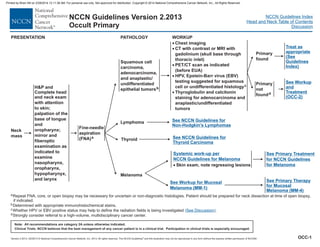
®
NCCN Guidelines Index
Head and Neck Table of Contents
Discussion
NCCN.org
Continue
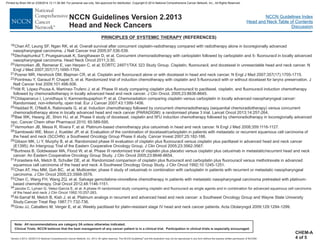
NCCN Clinical Practice Guidelines in Oncology (NCCN Guidelines )
®
Head and Neck
Cancers
Version 2.2013
Version 2.2013, 05/29/13 © National Comprehensive Cancer Network, Inc. 2013, All rights reserved. The NCCN Guidelines and this illustration may not be reproduced in any form without the express written permission of NCCN®.
®
NCCN Guidelines Index
Head and Neck Table of Contents
Discussion
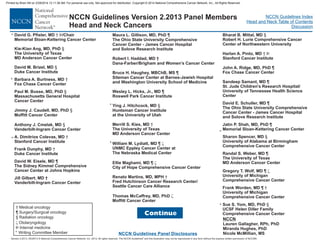
NCCN Guidelines Version 2.2013 Panel Members
Head and Neck Cancers
David G. Pfister, MD /Chair
Memorial Sloan-Kettering Cancer Center
Kie-Kian Ang, MD, PhD
The University of Texas
MD Anderson Cancer Center
David M. Brizel, MD
Duke Cancer Institute
Barbara A. Burtness, MD
Fox Chase Cancer Center
Paul M. Busse, MD, PhD
Massachusetts General Hospital
Cancer Center
Jimmy J. Caudell, MD, PhD
Moffitt Cancer Center
Anthony J. Cmelak, MD
Vanderbilt-Ingram Cancer Center
A. Dimitrios Colevas, MD
Stanford Cancer Institute
Frank Dunphy, MD
Duke Cancer Institute
David W. Eisele, MD
The Sidney Kimmel Comprehensive
Cancer Center at Johns Hopkins
Jill Gilbert, MD
† Þ
§
§
§
†
§
§
†
†
¶
†
Vanderbilt-Ingram Cancer Center
Bharat B. Mittal, MD
Robert H. Lurie Comprehensive Cancer
Center of Northwestern University
Harlan A. Pinto, MD
Stanford Cancer Institute
John A. Ridge, MD, PhD
Fox Chase Cancer Center
Sandeep Samant, MD
St. Jude Children's Research Hospital/
University of Tennessee Health Science
Center
David E. Schuller, MD
The Ohio State University Comprehensive
Cancer Center - James Cancer Hospital
and Solove Research Institute
§
† Þ
¶
¶
¶
¶
§
¶
¶
¶ †
§
Jatin P. Shah, MD, PhD
Memorial Sloan-Kettering Cancer Center
Sharon Spencer, MD
University of Alabama at Birmingham
Comprehensive Cancer Center
Randal S. Weber, MD
The University of Texas
MD Anderson Cancer Center
Gregory T. Wolf, MD
University of Michigan
Comprehensive Cancer Center
Frank Worden, MD
University of Michigan
Comprehensive Cancer Center
Sue S. Yom, MD, PhD
UCSF Helen Diller Family
Comprehensive Cancer Center
z
Maura L. Gillison, MD, PhD
The Ohio State University Comprehensive
Cancer Center - James Cancer Hospital
and Solove Research Institute
Robert I. Haddad, MD †
Dana-Farber/Brigham and Women’s Cancer Center
Bruce H. Haughey, MBChB, MS
Siteman Cancer Center at Barnes-Jewish Hospital
and Washington University School of Medicine
Wesley L. Hicks, Jr., MD
Roswell Park Cancer Institute
¶
¶
¶
§
Ying J. Hitchcock, MD
Huntsman Cancer Institute
at the University of Utah
Merrill S. Kies, MD
The University of Texas
MD Anderson Cancer Center
William M. Lydiatt, MD
UNMC Eppley Cancer Center at
The Nebraska Medical Center
Ellie Maghami, MD
City of Hope Comprehensive Cancer Center
Renato Martins, MD, MPH
Fred Hutchinson Cancer Research Center/
Seattle Cancer Care Alliance
Thomas McCaffrey, MD, PhD
Moffitt Cancer Center
†
¶
¶
†
z
z
z
*
† Medical oncology
¶ Surgery/Surgical oncology
§ Radiation oncology
Otolaryngology
Þ Internal medicine
z
* Writing Committee Member NCCN Guidelines Panel Disclosures
*
Continue
NCCN
Lauren Gallagher, RPh, PhD
Miranda Hughes, PhD
Nicole McMillian, MS
*
*
*
*
*
Printed by Brian Hill on 2/28/2014 12:11:38 AM. For personal use only. Not approved for distribution. Copyright © 2014 National Comprehensive Cancer Network, Inc., All Rights Reserved.
Version 2.2013, 05/29/13 © National Comprehensive Cancer Network, Inc. 2013, All rights reserved. The NCCN Guidelines and this illustration may not be reproduced in any form without the express written permission of NCCN®.
®
NCCN Guidelines Index
Head and Neck Table of Contents
Discussion
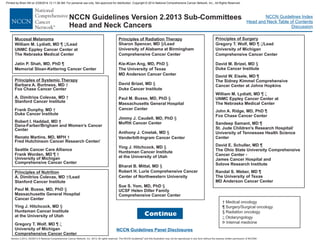
NCCN Guidelines Version 2.2013 Sub-Committees
Head and Neck Cancers
Continue
Mucosal Melanoma
William M. Lydiatt, MD /Lead
UNMC Eppley Cancer Center at
The Nebraska Medical Center
Jatin P. Shah, MD, PhD
Memorial Sloan-Kettering Cancer Center
¶
¶
z
† Medical oncology
¶ Surgery/Surgical oncology
§ Radiation oncology
Otolaryngology
Þ Internal medicine
z
NCCN Guidelines Panel Disclosures
Principles of Radiation Therapy
Sharon Spencer, MD /Lead
University of Alabama at Birmingham
Comprehensive Cancer Center
Kie-Kian Ang, MD, PhD
The University of Texas
MD Anderson Cancer Center
David Brizel, MD
Duke Cancer Institute
Paul M. Busse, MD, PhD
Massachusetts General Hospital
Cancer Center
Jimmy J. Caudell, MD, PhD
Moffitt Cancer Center
Anthony J. Cmelak, MD
Vanderbilt-Ingram Cancer Center
Ying J. Hitchcock, MD
Huntsman Cancer Institute
at the University of Utah
Bharat B. Mittal, MD
Robert H. Lurie Comprehensive Cancer
Center of Northwestern University
Sue S. Yom, MD, PhD
UCSF Helen Diller Family
Comprehensive Cancer Center
§
§
§
§
§
§
§
§
§
Principles of Surgery
Gregory T. Wolf, MD /Lead
University of Michigan
Comprehensive Cancer Center
David M. Brizel, MD
Duke Cancer Institute
David W. Eisele, MD
The Sidney Kimmel Comprehensive
Cancer Center at Johns Hopkins
William M. Lydiatt, MD
UNMC Eppley Cancer Center at
The Nebraska Medical Center
John A. Ridge, MD, PhD
Fox Chase Cancer Center
Sandeep Samant, MD
St. Jude Children's Research Hospital/
University of Tennessee Health Science
Center
David E. Schuller, MD
The Ohio State University Comprehensive
Cancer Center -
James Cancer Hospital and
Solove Research Institute
Randal S. Weber, MD
The University of Texas
MD Anderson Cancer Center
¶
§
¶
¶
¶
¶
¶
¶
z
z
Principles of Systemic Therapy
Barbara A. Burtness, MD
Fox Chase Cancer Center
A. Dimitrios Colevas, MD
Stanford Cancer Institute
Frank Dunphy, MD
Duke Cancer Institute
Robert I. Haddad, MD †
Dana-Farber/Brigham and Women’s Cancer
Center
Renato Martins, MD, MPH
Fred Hutchinson Cancer Research Center/
Seattle Cancer Care Alliance
Frank Worden, MD
University of Michigan
Comprehensive Cancer Center
†
†
†
†
¶ †
Principles of Nutrition
A. Dimitrios Colevas, MD /Lead
Stanford Cancer Institute
Paul M. Busse, MD, PhD
Massachusetts General Hospital
Cancer Center
Ying J. Hitchcock, MD
Huntsman Cancer Institute
at the University of Utah
Gregory T. Wolf, MD
University of Michigan
Comprehensive Cancer Center
†
§
§
¶ z
Printed by Brian Hill on 2/28/2014 12:11:38 AM. For personal use only. Not approved for distribution. Copyright © 2014 National Comprehensive Cancer Network, Inc., All Rights Reserved.
Version 2.2013, 05/29/13 © National Comprehensive Cancer Network, Inc. 2013, All rights reserved. The NCCN Guidelines and this illustration may not be reproduced in any form without the express written permission of NCCN®.
®
NCCN Guidelines Index
Head and Neck Table of Contents
Discussion
NCCN Head Neck Cancers Panel Members
NCCN Head and Cancers Sub-Committee Members
Summary of the Guidelines Updates
Multidisciplinary Team and Support Services (TEAM-1)
Cancer of the Lip (LIP-1)
Cancer of the Oral Cavity (OR-1)
Cancer of the Oropharynx (ORPH-1)
Cancer of the Hypopharynx (HYPO-1)
Cancer of the Nasopharynx (NASO-1)
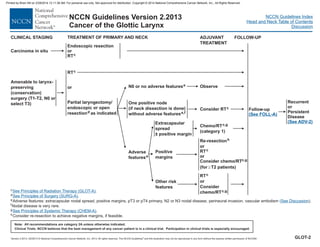
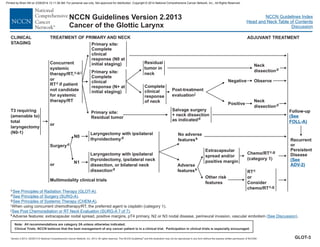
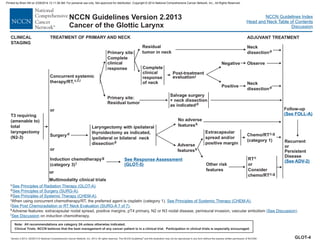
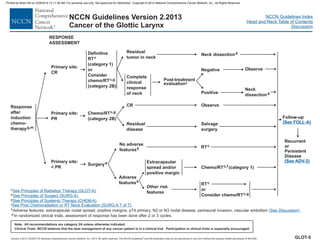
Cancer of the Glottic Larynx (GLOT-1)
Cancer of the Supraglottic Larynx (SUPRA-1)
Ethmoid Sinus Tumors (ETHM-1)
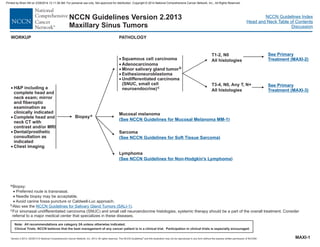
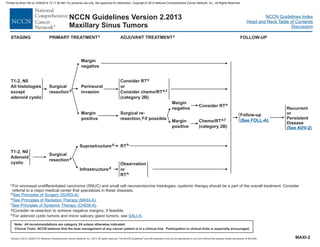
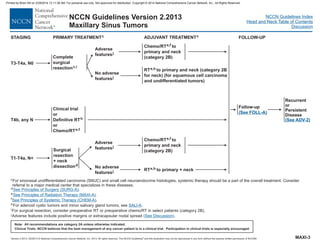
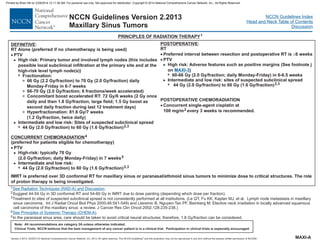
Maxillary Sinus Tumors (MAXI-1)
Very Advanced Head and Neck Cancer (ADV-1)
Recurrent/Persistent Head and Neck Cancer (ADV-2)
Occult Primary (OCC-1)
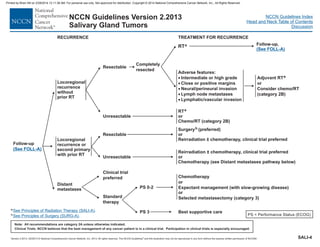
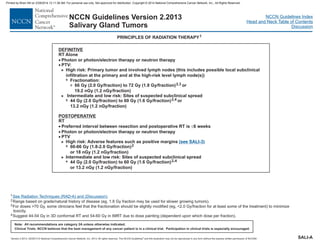
Salivary Gland Tumors (SALI-1)
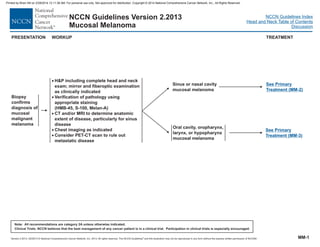
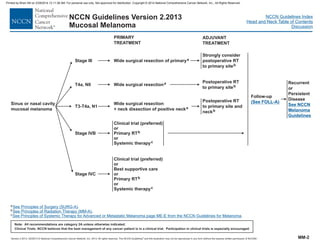
Mucosal Melanoma (MM-1)
Follow-up Recommendations (FOLL-A)
Principles of Surgery (SURG-A)
Radiation Techniques (RAD-A)
Principles of Systemic Therapy (CHEM-A)
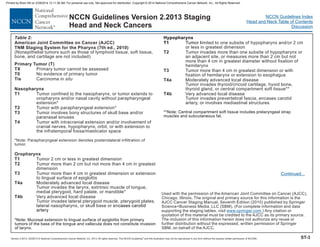
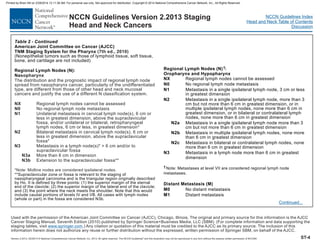
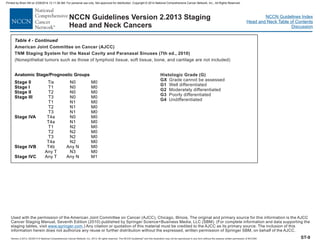
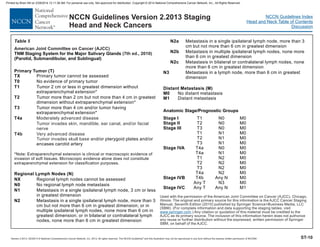
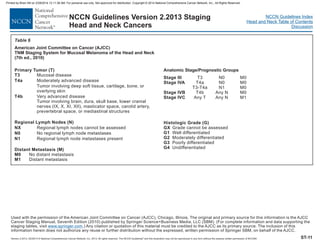
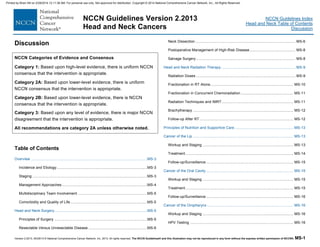
Staging (ST-1)
·
·
·
·
·
·
·
·
·
·
·
·
·
·
·
·
·
·
·
· Principles of Nutrition: Management and Supportive Care (NUTR-A)
Clinical Trials:
Categories of Evidence and
Consensus:
NCCN
believes that
the best management for any cancer
patient is in a clinical trial.
Participation in clinical trials is
especially encouraged.
All recommendations
are category 2A unless otherwise
specified.
NCCN
To find clinical trials online at NCCN
Member Institutions, click here:
nccn.org/clinical_trials/physician.html.
See NCCN Categories of Evidence
and Consensus.
The NCCN Guidelines are a statement of evidence and consensus of the authors regarding their views of currently accepted approaches to treatment.
Any clinician seeking to apply or consult the NCCN Guidelines is expected to use independent medical judgment in the context of individual clinical
circumstances to determine any patient’s care or treatment. The National Comprehensive Cancer Network® (NCCN®) makes no representations or
warranties of any kind regarding their content, use or application and disclaims any responsibility for their application or use in any way. The NCCN
Guidelines are copyrighted by National Comprehensive Cancer Network®. All rights reserved. The NCCN Guidelines and the illustrations herein may
not be reproduced in any form without the express written permission of NCCN. ©2013.
®
NCCN Guidelines Version 2.2013 Table of Contents
Head and Neck Cancers
Printed by Brian Hill on 2/28/2014 12:11:38 AM. For personal use only. Not approved for distribution. Copyright © 2014 National Comprehensive Cancer Network, Inc., All Rights Reserved.
Version 2.2013, 05/29/13 © National Comprehensive Cancer Network, Inc. 2013, All rights reserved. The NCCN Guidelines and this illustration may not be reproduced in any form without the express written permission of NCCN®.
®
NCCN Guidelines Index
Head and Neck Table of Contents
Discussion
NCCN Guidelines Version 2.2013 Updates
Head and Neck Cancers
UPDATES
1 of 4
Global Changes
·
·
·
The recommendation “Concurrent systemic therapy/RT, cisplatin (category 1) preferred” was revised for clarity. It now reads, “Concurrent
systemic therapy/RT” with a corresponding footnote that states, “When using concurrent chemotherapy/RT, the preferred agent is cisplatin
(category 1). See Principles of Systemic Therapy ( )”.
Clinical Staging:
The phrase “not requiring total laryngectomy” changed to “amenable to larynx-preserving (conservation) surgery”.
The phrase “requiring total laryngectomy” changed to “requiring (amenable to) total laryngectomy”.
The “Principles of Radiation” for each site were extensively revised including:
CHEM-A
>
>
>
7
7
The following footnotes were added for most sites:
For doses > 70 Gy, some clinicians feel that the fractionation should be slightly modified (eg, <2.0 Gy/fraction for at least some of the
treatment) to minimize toxicity.
Suggest 44-54 Gy in 3D conformal RT or 54-60 Gy in IMRT due to dose painting (dependent upon dose per fraction).
Cancer of the Lip
Cancer of the Oral Cavity
LIP-1
OR-3
·
·
·
·
·
·
Workup; Third bullet: The recommendation changed to “Chest
imaging ”
Poor surgical risk: The previous recommendations of “
were removed and now the
pathway refers to the “Treatment of Very Advanced Head and Neck
Cancer” algorithm ( ).
Under Adjuvant Treatment: “Surgery/reconstruction” changed to
“Surgical resection/reconstruction.”
The “N1” pathway was combined with the “N2a-b,N3” pathway.
Adverse features pathway:
“Extracapsular spread and/or positive margin” changed to
“Extracapsular spread ± positive margin.” The recommendations
“Re-resection or RT” were removed from this pathway.
“Positive margin” was pulled out as a separate pathway with the
following recommendations: “Re-resection or RT or Consider
chemo/RT (for T2 only).”
“Multimodality clinical trials” was added as a treatment option.
as clinically indicated.
ADV-1
Definitive RT
to primary and nodes or Chemo/RT”
>
>
LIP-2
LIP-3
OR-2
Cancer of the Oropharynx
and
or improved
·
·
·
·
·
³
“Multimodality clinical trials” was added as a treatment option.
Clinical Staging: For clarity, “Selected T2, N0 (requiring laryngectomy)
T1, N+; T2-3, any N (if pharyngectomy with total laryngectomy
required)” changed to “Selected T2, N0 or T2-3, any N (if requiring
[amenable to] pharyngectomy with total laryngectomy); T1, N+.”
Response after induction chemotherapy; Primary site: Partial
response: Surgery was added as an option. Previously only
“Chemo/RT (category 2B)” was listed.
T4a, any N; Induction chemotherapy (category 3) pathway: “Primary
site: CR or PR and stable disease in neck” changed to “... stable
disease in neck.”
Cancer of the Hypopharynx
ORPH-2
HYPO-3
HYPO-4
HYPO-5
ORPH-4
HYPO-2
·Treatment of Primary and Neck for Any T, N2-3: The recommendation
“Induction chemotherapy (category 2B) followed by RT or chemo/RT”
changed to “Induction chemotherapy ( ) followed by RT or
chemo/RT.”
category 3
Updates in Version 1.2013 of the NCCN Guidelines for from Version 1.2012 include:
Head and Neck Cancer
Continued
The 2.2013 version of the NCCN Guidelines for Head and Neck Cancers represents the addition of the Discussion text correspondent to the
changes in the algorithm .
( )
MS-1
Printed by Brian Hill on 2/28/2014 12:11:38 AM. For personal use only. Not approved for distribution. Copyright © 2014 National Comprehensive Cancer Network, Inc., All Rights Reserved.
Version 2.2013, 05/29/13 © National Comprehensive Cancer Network, Inc. 2013, All rights reserved. The NCCN Guidelines and this illustration may not be reproduced in any form without the express written permission of NCCN®.
®
NCCN Guidelines Index
Head and Neck Table of Contents
Discussion
NCCN Guidelines Version 2.2013 Updates
Head and Neck Cancers
UPDATES
2 of 4
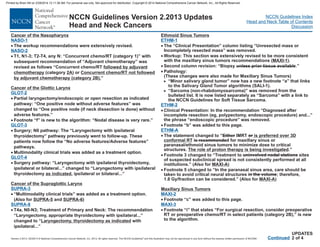
Cancer of the Nasopharynx
followed by adjuvant
chemotherapy 2A Concurrent chemo/RT not followed
by adjuvant chemotherapy (category 2B).
Cancer of the Glottic Larynx
as indicated
SUPRA-5 SUPRA-6
Laryngectomy, thyroidectomy as indicated
·
·
·
·
·
·
T1, N1-3; T2-T4, any N: “Concurrent chemo/RT (category 1)” with
subsequent recommendation of “Adjuvant chemotherapy” was
revised as follows “Concurrent chemo/RT
(category ) or
”
Surgery; N0 pathway: The “Laryngectomy with ipsilateral
thyroidectomy” pathway previously went to follow-up. These
patients now follow the “No adverse features/Adverse features”
pathways.
Multimodality clinical trials was added as a treatment option.
Surgery pathway: “Laryngectomy with ipsilateral thyroidectomy,
ipsilateral or bilateral...” changed to “Laryngectomy with ipsilateral
thyroidectomy , ipsilateral or bilateral...”
“Multimodality clinical trials” was added as a treatment option.
(Also for and )
T4a, N0-N3; Treatment of Primary and Neck: The recommendation
“Laryngectomy, appropriate thyroidectomy with ipsilateral...”
changed to “ with
ipsilateral...”
Cancer of the Supraglottic Larynx
NASO-1
NASO-2
GLOT-2
·
·
·
The workup recommendations were extensively revised.
Partial laryngectomy/endoscopic or open resection as indicated
pathway: “One positive node without adverse features” was
changed to “One positive node (if neck dissection is done) without
adverse features.”
Footnote “f” is new to the algorithm: “Nodal disease is very rare.”
GLOT-3
GLOT-4
SUPRA-3
SUPRA-8
Ethmoid Sinus Tumors
·
·
·
·
Clinical Presentation: In the recommendation “Diagnosed after
incomplete resection (eg, polypectomy, endoscopic procedure) and...”
the phrase “endoscopic procedure” was removed.
Footnote “b” was added to this page.
The statement changed to “Either IMRT
is recommended for maxillary sinus or
paranasal/ethmoid sinus tumors to minimize dose to critical
structures. .”
Footnote 3 changed to “Treatment to uninvolved nodal stations sites
of suspected subclinical spread is not consistently performed at all
institutions.” (Also for )
Footnote 5 changed to “In the paranasal sinus area, care should be
taken to avoid critical neural structures in the volume; therefore,
1.8 Gy/fraction can be considered.” (Also for )
Footnote “c” was added to this page.
Footnote “i” that states “For surgical resection, consider preoperative
RT or preoperative chemo/RT in select patients (category 2B),” is new
to the algorithm.
·
·
·
or is preferred over 3D
conformal RT
The role of proton therapy is being investigated
MAXI-A
MAXI-A
Maxillary Sinus Tumors
ETHM-1
ETHM-2
MAXI-2
MAXI-3
·
·
·
·
The “Clinical Presentation” column listing “Unresected mass or
Incompletely resected mass” was removed.
Workup: This section was extensively revised to be more consistent
with the maxillary sinus tumors recommendations ( ).
Second column revision: “Biopsy unless prior tissue available.”
Pathology:
(These changes were also made for Maxillary Sinus Tumors)
“Minor salivary gland tumor” now has a new footnote “a” that links
to the Salivary Gland Tumor algorithms (SALI-1).
“Sarcoma (non-rhabdomyosarcoma)” was removed from the
bulleted list. It is now listed separately as “Sarcoma” with a link to
the NCCN Guidelines for Soft Tissue Sarcoma.
MAXI-1
>
>
ETHM-A
Continued
Printed by Brian Hill on 2/28/2014 12:11:38 AM. For personal use only. Not approved for distribution. Copyright © 2014 National Comprehensive Cancer Network, Inc., All Rights Reserved.
Version 2.2013, 05/29/13 © National Comprehensive Cancer Network, Inc. 2013, All rights reserved. The NCCN Guidelines and this illustration may not be reproduced in any form without the express written permission of NCCN®.
®
NCCN Guidelines Index
Head and Neck Table of Contents
Discussion
NCCN Guidelines Version 2.2013 Updates
Head and Neck Cancers
UPDATES
3 of 4
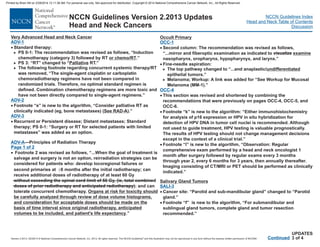
Very Advanced Head and Neck Cancer
Organs at risk for toxicity should
be carefully analyzed through review of dose volume histograms,
and consideration for acceptable doses should be made on the
basis of time interval since original radiotherapy, anticipated
volumes to be included, and patient's life expectancy
·
³
Recurrent or Persistent disease; Distant metastases; Standard
therapy; PS 0-1: “Surgery or RT for selected patients with limited
metastases” was added as an option.
---Principles of Radiation Therapy
Footnote 2 was revised as follows, “...When the goal of treatment is
salvage and surgery is not an option, reirradiation strategies can be
considered for patients who: develop locoregional failures or
second primaries at 6 months after the initial radiotherapy; can
receive additional doses of radiotherapy of at least 60 Gy
without exceeding the spinal cord limit of 50 Gy, (ie, total combined
doses of prior radiotherapy and anticipated radiotherapy); and can
tolerate concurrent chemotherapy.
.”
·
ADV-1
·
·
Standard therapy:
PS 0-1: The recommendation was revised as follows, “Induction
chemotherapy (category 3) followed by RT .”
PS 3: “RT” changed to “ RT.”
The following footnote regarding concurrent systemic therapy/RT
was removed, “The single-agent cisplatin or carboplatin
chemoradiotherapy regimens have not been compared in
randomized trials. Therefore, no optimal standard regimen is
defined. Combination chemotherapy regimens are more toxic and
have not been directly compared to single-agent regimens.”
Footnote “e” , “Consider palliative RT as
clinically indicated (eg, bone metastases) ( ).”
>
>
>
or chemo/RT
Palliative
See RAD-A
is new to the algorithm
ADV-2
ADV-3
ADV-A
Page 1 of 2
Occult Primary
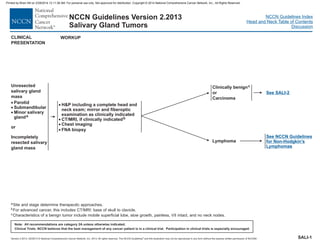
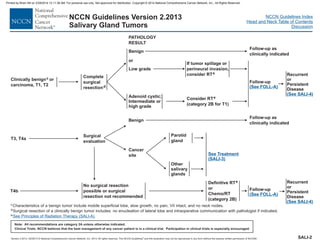
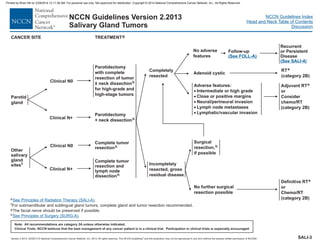
Salivary Gland Tumors
·
·
Second column: The recommendation was revised as follows,
“...mirror and fiberoptic examination as indicated to visualize
nasopharynx, oropharynx, hypopharynyx, and larynx.”
Fine-needle aspiration:
The top pathway changed to “...and anaplastic/
epithelial tumors.”
Melanoma; Workup: A link was added for “See Workup for Mucosal
Melanoma (MM-1).”
examine
undifferentiated
>
>
OCC-1
SALI-3
OCC-4
·
·
·
·
·
This section was revised and shortened by combining the
recommendations that were previously on pages OCC-4, OCC-5, and
OCC-6.
Footnote “k” is new to the algorithm: “Either immunohistochemistry
for analysis of p16 expression or HPV in situ hybridization for
detection of HPV DNA in tumor cell nuclei is recommended. Although
not used to guide treatment, HPV testing is valuable prognostically.
The results of HPV testing should not change management decisions
except in the context of a clinical trial.”
Footnote “l” , “Observation: Regular
comprehensive exam performed by a head and neck oncologist 1
month after surgery followed by regular exams every 3 months
through year 2, every 6 months for 3 years, then annually thereafter.
Imaging consisting of CT/MRI or PET should be performed as clinically
indicated.”
Cancer site: “Parotid and sub-mandibular gland” changed to “Parotid
gland.”
Footnote “f” , “For submandibular and
sublingual gland tumors, complete gland and tumor resection
recommended.”
is new to the algorithm
Continued
Printed by Brian Hill on 2/28/2014 12:11:38 AM. For personal use only. Not approved for distribution. Copyright © 2014 National Comprehensive Cancer Network, Inc., All Rights Reserved.
Version 2.2013, 05/29/13 © National Comprehensive Cancer Network, Inc. 2013, All rights reserved. The NCCN Guidelines and this illustration may not be reproduced in any form without the express written permission of NCCN®.
®
NCCN Guidelines Index
Head and Neck Table of Contents
Discussion
UPDATES
4 of 4
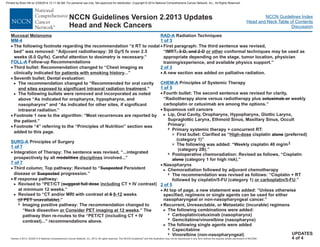
Mucosal Melanoma
Follow-up Recommendations
Principles of Surgery
MM-4
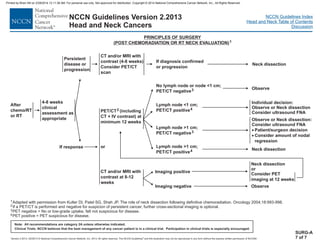
1 of 7
7 of 7
·
·
·
·
·
·
·
·
The following footnote regarding the recommendation “ RT to nodal
bed” was removed: “Adjuvant radiotherapy: 30 Gy/5 fx over 2.5
weeks (6.0 Gy/fx). Careful attention to dosimetry is necessary.”
Third bullet: Recommendation changed to “Chest imaging as
clinically indicated ...”
Seventh bullet; Dental evaluation:
The recommendation changed to “Recommended for oral cavity
.”
The following bullets were removed and incorporated as noted
above “As indicated for oropharynx, hypopharynx, and
nasopharynx” and “As indicated for other sites, if significant
intraoral radiation.”
Footnote 1 “Most recurrences are reported by
the patient.”
Footnote “4” referring to the “Principles of Nutrition” section was
added to this page.
Integration of Therapy: The sentence was revised, “...integrated
prospectively by all modalities involved...”
Third column; Top pathway: Revised to “
Imaging positive pathway: The recommendation changed to
“Neck dissection .” The
pathway then re-routes to the “PET/CT (including CT + IV
contrast)...” recommendations above.
±
new to the algorithm:
Suspected Persistent
disease or Suspected progression.”
If response pathway:
Revised to “PET/CT (suggest full dose CT + IV contrast)
at minimum 12 weeks.”
Revised to “CT and/or MRI with contrast at 6 weeks
(if PET unavailable).”
for patients with smoking history
and sites exposed to significant intraoral radiation treatment
disciplines
or Consider PET imaging at 12 weeks
>
>
>
>
7
including
8-12
FOLL-A
SURG-A
NCCN Guidelines Version 2.2013 Updates
Head and Neck Cancers
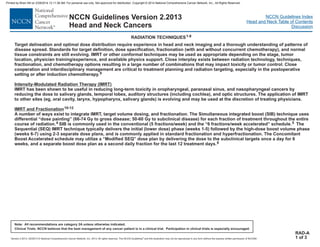
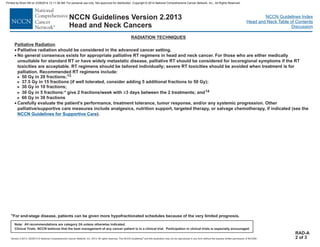
RAD-A
1 of 3
2 of 3
1 of 5
2 of 5
Radiation Techniques
First paragraph: The third sentence was revised,
“IMRT 3-D, and 2-D conformal techniques may be used as
appropriate depending on the stage, tumor location, physician
training/experience, and available physics support.”
A new section was added on palliative radiation.
Principles of Systemic Therapy
Fourth bullet: The second sentence was revised for clarity,
“Radiotherapy alone versus radiotherapy plus cetuximab o weekly
carboplatin or cetuximab are among the options.”
Squamous cell cancers
Primary systemic therapy + concurrent RT:
First bullet: Clarified as “ cisplatin alone (preferred)
(category 1)”
The following was added: “Weekly cisplatin 40 mg/m
(category 2B).”
Cisplatin
alone (category 1 for high risk).”
·
·
·
·
,
r
or other
High-dose
>
7
3
3
7
>
7
Lip, Oral Cavity, Oropharynx, Hypopharynx, Glottic Larynx,
Supraglottic Larynx, Ethmoid Sinus, Maxillary Sinus, Occult
Primary:
Postoperative chemoradiation: Revised as follows, “
Nasopharynx
Chemoradiation followed by adjuvant chemotherapy
The recommendation was revised as follows: “Cisplatin + RT
followed by cisplatin/5-FU (category 1) .”
2
·
or carboplatin/5-FU
CHEM-A
·
·
At top of page, a new statement was added: “Unless otherwise
specified, regimens or single agents can be used for either
nasopharyngeal or non-nasopharyngeal cancer.”
Recurrent, Unresectable, or Metastatic (incurable) regimens
The following combinations were added:
Carboplatin/cetuximab (nasopharynx)
(nasopharynx)
The following single agents were added
Capecitabine
Vinorelbine (non-nasopharyngeal)
>
7
7
>
7
7
Gemcitabine/vinorelbine
Printed by Brian Hill on 2/28/2014 12:11:38 AM. For personal use only. Not approved for distribution. Copyright © 2014 National Comprehensive Cancer Network, Inc., All Rights Reserved.
Version 2.2013, 05/29/13 © National Comprehensive Cancer Network, Inc. 2013, All rights reserved. The NCCN Guidelines and this illustration may not be reproduced in any form without the express written permission of NCCN®.
®
NCCN Guidelines Index
Head and Neck Table of Contents
Discussion
Note: All recommendations are category 2A unless otherwise indicated.
Clinical Trials: NCCN believes that the best management of any cancer patient is in a clinical trial. Participation in clinical trials is especially encouraged.
NCCN Guidelines Version 2.2013
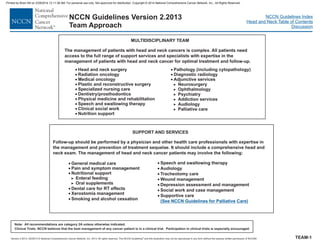
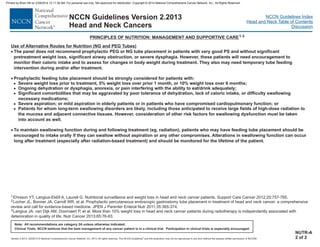
Team Approach
Follow-up should be performed by a physician and other health care professionals with expertise in
the management and prevention of treatment sequelae. It should include a comprehensive head and
neck exam. The management of head and neck cancer patients may involve the following:
SUPPORT AND SERVICES
TEAM-1
·
·
·
·
·
·
·
·
·
·
·
·
·
Head and neck surgery
Radiation oncology
Medical oncology
Plastic and reconstructive surgery
Specialized nursing care
Dentistry/prosthodontics
Physical medicine and rehabilitation
Speech and swallowing therapy
Clinical social work
Nutrition support
Pathology (including cytopathology)
Diagnostic radiology
Adjunctive services
>
>
>
>
>
>
Neurosurgery
Ophthalmology
Psychiatry
Addiction services
Audiology
Palliative care
MULTIDISCIPLINARY TEAM
The management of patients with head and neck cancers is complex. All patients need
access to the full range of support services and specialists
for optimal treatment and follow-up.
with expertise in the
management of patients with head and neck cancer
·
·
·
·
·
General medical care
Pain and symptom management
Nutritional support
Dental care for RT effects
Xerostomia management
Smoking and alcohol cessation
Speech and swallowing therapy
Audiology
Tracheotomy care
Wound management
Depression assessment and management
Social work and case management
Supportive care
>
>
Enteral feeding
Oral supplements
·
·
·
·
·
·
·
·
(See NCCN Guidelines for Palliative Care)
Printed by Brian Hill on 2/28/2014 12:11:38 AM. For personal use only. Not approved for distribution. Copyright © 2014 National Comprehensive Cancer Network, Inc., All Rights Reserved.
Version 2.2013, 05/29/13 © National Comprehensive Cancer Network, Inc. 2013, All rights reserved. The NCCN Guidelines and this illustration may not be reproduced in any form without the express written permission of NCCN®.
®
NCCN Guidelines Index
Head and Neck Table of Contents
Discussion
Note: All recommendations are category 2A unless otherwise indicated.
Clinical Trials: NCCN believes that the best management of any cancer patient is in a clinical trial. Participation in clinical trials is especially encouraged.
NCCN Guidelines Version 2.2013
Cancer of the Lip
·
·
·
·
·
·
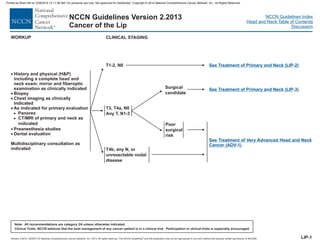
History and physical (H&P)
Biopsy
Chest imaging as clinically
indicated
As indicated for primary evaluation
Preanesthesia studies
Dental evaluation
including a complete head and
neck exam; mirror and fiberoptic
examination as clinically indicated
Panorex
Multidisciplinary consultation as
indicated
>
> CT/MRI of primary and neck as
indicated
WORKUP CLINICAL STAGING
T1-2, N0
T3, T4a, N0
Any T, N1-3
See Treatment of Primary and Neck (LIP-2)
See Treatment of Primary and Neck (LIP-3)
T4b, any N, or
unresectable nodal
disease
See Treatment of Very Advanced Head and Neck
Cancer (ADV-1)
LIP-1
Surgical
candidate
Poor
surgical
risk
Printed by Brian Hill on 2/28/2014 12:11:38 AM. For personal use only. Not approved for distribution. Copyright © 2014 National Comprehensive Cancer Network, Inc., All Rights Reserved.
Version 2.2013, 05/29/13 © National Comprehensive Cancer Network, Inc. 2013, All rights reserved. The NCCN Guidelines and this illustration may not be reproduced in any form without the express written permission of NCCN®.
®
NCCN Guidelines Index
Head and Neck Table of Contents
Discussion
Note: All recommendations are category 2A unless otherwise indicated.
Clinical Trials: NCCN believes that the best management of any cancer patient is in a clinical trial. Participation in clinical trials is especially encouraged.
NCCN Guidelines Version 2.2013
Cancer of the Lip
LIP-2
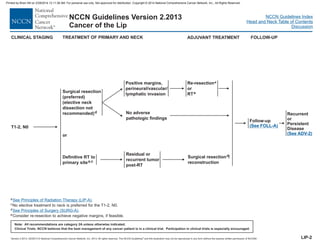
TREATMENT OF PRIMARY AND NECK
CLINICAL STAGING
T1-2, N0
Surgical resection
(preferred)
(elective neck
dissection not
recommended)
or
Definitive RT to
primary site
d
a,c
FOLLOW-UP
Follow-up
(See FOLL-A)
Residual or
recurrent tumor
post-RT
Positive margins,
perineural/vascular/
lymphatic invasion
No adverse
pathologic findings
Re-resection
or
RT
e
a
Surgical resection /
reconstruction
d
ADJUVANT TREATMENT
a
c
d
e
.
No elective treatment to neck is preferred for the T1-2, N0.
Consider re-resection to achieve negative margins, if feasible.
See Principles of Radiation Therapy (LIP-A)
See Principles of Surgery (SURG-A).
Recurrent
or
Persistent
Disease
(See ADV-2)
Printed by Brian Hill on 2/28/2014 12:11:38 AM. For personal use only. Not approved for distribution. Copyright © 2014 National Comprehensive Cancer Network, Inc., All Rights Reserved.
Version 2.2013, 05/29/13 © National Comprehensive Cancer Network, Inc. 2013, All rights reserved. The NCCN Guidelines and this illustration may not be reproduced in any form without the express written permission of NCCN®.
®
NCCN Guidelines Index
Head and Neck Table of Contents
Discussion
Note: All recommendations are category 2A unless otherwise indicated.
Clinical Trials: NCCN believes that the best management of any cancer patient is in a clinical trial. Participation in clinical trials is especially encouraged.
NCCN Guidelines Version 2.2013
Cancer of the Lip
Treatment of Primary and Neck (LIP-4)
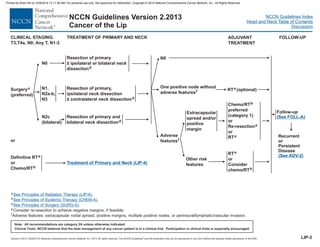
CLINICAL STAGING:
T3,T4a, N0; Any T, N1-3
Resection of primary
± ipsilateral or bilateral neck
dissectiond
N0
Definitive RT
or
a
Chemo/RTb
Resection of primary and
bilateral neck dissectiond
Resection of primary,
ipsilateral neck dissection
± contralateral neck dissectiond
N2c
(bilateral)
N1,
N2a-b,
N3
RT (optional)
a
One positive node without
adverse featuresf
Follow-up
(See FOLL-A)
FOLLOW-UP
a
b
d
f
.
.
eConsider re-resection to achieve negative margins, if feasible.
Adverse features: extracapsular nodal spread, positive margins, multiple positive nodes, or perineural/lymphatic/vascular invasion.
See Principles of Radiation Therapy (LIP-A)
See Principles of (CHEM-A)
See Principles of Surgery (SURG-A)
Systemic Therapy
.
Surgeryd
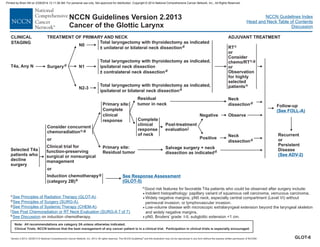
(preferred)
ADJUVANT
TREATMENT
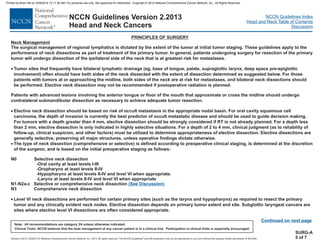
Adverse
featuresf
Other risk
features
RTa
or
Consider
chemo/RTb
or
N0
Chemo/RTb
preferred
(category 1)
RT
or
Re-resection
or
e
a
Extracapsular
spread and/or
positive
margin
TREATMENT OF PRIMARY AND NECK
Recurrent
or
Persistent
Disease
(See ADV-2)
LIP-3
Printed by Brian Hill on 2/28/2014 12:11:38 AM. For personal use only. Not approved for distribution. Copyright © 2014 National Comprehensive Cancer Network, Inc., All Rights Reserved.
Version 2.2013, 05/29/13 © National Comprehensive Cancer Network, Inc. 2013, All rights reserved. The NCCN Guidelines and this illustration may not be reproduced in any form without the express written permission of NCCN®.
®
NCCN Guidelines Index
Head and Neck Table of Contents
Discussion
Note: All recommendations are category 2A unless otherwise indicated.
Clinical Trials: NCCN believes that the best management of any cancer patient is in a clinical trial. Participation in clinical trials is especially encouraged.
NCCN Guidelines Version 2.2013
Cancer of the Lip
TREATMENT OF PRIMARY AND NECK
CLINICAL STAGING:
T3, T4a, N0; Any T, N1-3
Definitive RT
Chemo/RT
a
b
or
Follow-up
(See FOLL-A)
FOLLOW-UP
a
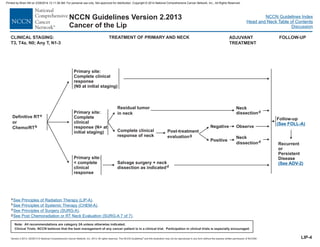
b
d
g
.
.
See Principles of Radiation Therapy (LIP-A)
See Principles of (CHEM-A)
See Principles of Surgery (SURG-A)
See Post Chemoradiation or RT Neck Evaluation (SURG-A 7 of 7)
Systemic Therapy
.
.
Residual tumor
in neck
Complete clinical
response of neck
Primary site:
Complete
clinical
response (N+ at
initial staging)
Primary site:
< complete
clinical
response
Salvage surgery + neck
dissection as indicatedd
Neck
dissectiond
ADJUVANT
TREATMENT
Post-treatment
evaluationg
Negative
Positive
Observe
Neck
dissectiond
Primary site:
Complete clinical
response
(N0 at initial staging)
Recurrent
or
Persistent
Disease
(See ADV-2)
LIP-4
Printed by Brian Hill on 2/28/2014 12:11:38 AM. For personal use only. Not approved for distribution. Copyright © 2014 National Comprehensive Cancer Network, Inc., All Rights Reserved.
Version 2.2013, 05/29/13 © National Comprehensive Cancer Network, Inc. 2013, All rights reserved. The NCCN Guidelines and this illustration may not be reproduced in any form without the express written permission of NCCN®.
®
NCCN Guidelines Index
Head and Neck Table of Contents
Discussion
Note: All recommendations are category 2A unless otherwise indicated.
Clinical Trials: NCCN believes that the best management of any cancer patient is in a clinical trial. Participation in clinical trials is especially encouraged.
NCCN Guidelines Version 2.2013
Cancer of the Lip
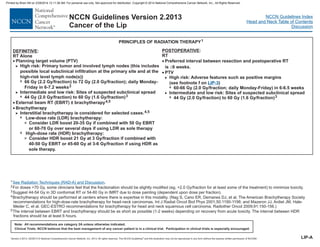
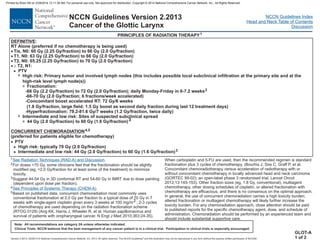
PRINCIPLES OF RADIATION THERAPY1
:
RT Alone
66 Gy (2.2 Gy/fraction) to 72 Gy (2.0 Gy/fraction); daily Monday-
Friday in 6-7.2 weeks
44 Gy (2.0 Gy/fraction) to 60 Gy (1.6 Gy/fraction)
DEFINITIVE
· Planning target volume (PTV)
>
7
>
7
>
7
3
7
3
High risk: Primary tumor and involved lymph nodes (this includes
possible local subclinical infiltration at the primary site and at the
high-risk level lymph node(s))
Intermediate and low risk: Sites of suspected subclinical spread
External beam RT (EBRT) ± brachytherapy
Brachytherapy
Interstitial brachytherapy is considered for selected cases.
Low-dose rate (LDR) brachytherapy:
Consider LDR boost 20-35 Gy if combined with 50 Gy EBRT
or 60-70 Gy over several days if using LDR as sole therapy
High-dose rate (HDR) brachytherapy:
Consider HDR boost 21 Gy at 3 Gy/fraction if combined with
40-50 Gy EBRT or 45-60 Gy at 3-6 Gy/fraction if using HDR as
sole therapy.
2
3
4,5
·
·
4,5
1 .
Nag S, Cano ER, Demanes DJ, et al. The American Brachytherapy Society
recommendations for high-dose-rate brachytherapy for head-neck carcinomas. Int J Radiat Oncol Biol Phys 2001;50:1190-1198; and Mazeron JJ, Ardiet JM, Hale-
Meder C, et al. GEC-ESTRO recommendations for brachytherapy for head and neck squamous cell carcinoma. Radiother Oncol 91:150-156.)
The interval between EBRT and brachytherapy should be as short as possible (1-2 weeks) depending on recovery from acute toxicity. The interval between HDR
fractions should be at least 6 hours.
2
3
For doses >70 Gy, some clinicians feel that the fractionation should be slightly modified (eg, <2.0 Gy/fraction for at least some of the treatment) to minimize toxicity.
Suggest 44-54 Gy in 3D conformal RT or 54-60 Gy in IMRT due to dose painting (dependent upon dose per fraction).
Brachytherapy should be performed at centers where there is expertise in this modality. (
2009;
4
5
See Radiation Techniques (RAD-A) and Discussion
LIP-A
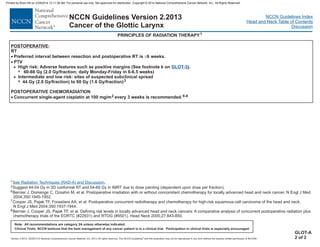
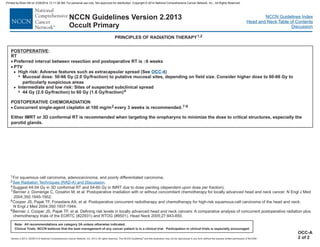
POSTOPERATIVE:
RT
Preferred interval between resection and postoperative RT
is 6 weeks.
PTV
44 Gy (2.0 Gy/fraction) to 60 Gy (1.6 Gy/fraction)
·
£
·
>
7
>
7
High risk: Adverse features such as positive margins
(see footnote f on )
60-66 Gy (2.0 Gy/fraction; daily Monday-Friday) in 6-6.5 weeks
Intermediate and low risk: Sites of suspected subclinical spread
3
LIP-3
Printed by Brian Hill on 2/28/2014 12:11:38 AM. For personal use only. Not approved for distribution. Copyright © 2014 National Comprehensive Cancer Network, Inc., All Rights Reserved.
Version 2.2013, 05/29/13 © National Comprehensive Cancer Network, Inc. 2013, All rights reserved. The NCCN Guidelines and this illustration may not be reproduced in any form without the express written permission of NCCN®.
®
NCCN Guidelines Index
Head and Neck Table of Contents
Discussion
Note: All recommendations are category 2A unless otherwise indicated.
Clinical Trials: NCCN believes that the best management of any cancer patient is in a clinical trial. Participation in clinical trials is especially encouraged.
NCCN Guidelines Version 2.2013
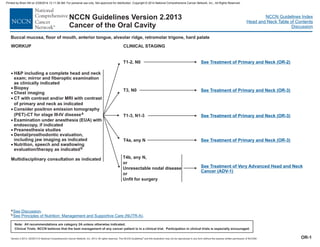
Cancer of the Oral Cavity
·
·
·
·
·
·
·
·
H&P
Biopsy
Chest imaging
Examination under anesthesia (EUA) with
endoscopy, if indicated
Preanesthesia studies
Dental/prosthodontic evaluation,
including jaw imaging as indicated
including a complete head and neck
exam; mirror and fiberoptic examination
as clinically indicated
CT with contrast and/or MRI with contrast
of primary and neck as indicated
Consider positron emission tomography
(PET)-CT for stage III-IV disease
Nutrition, speech and swallowing
evaluation/therapy as indicated
Multidisciplinary consultation as indicated
·
a
b
WORKUP CLINICAL STAGING
T1-2, N0
T3, N0
T1-3, N1-3
T4a, any N
See Treatment of Primary and Neck (OR-2)
See Treatment of Primary and Neck (OR-3)
See Treatment of Very Advanced Head and Neck
Cancer (ADV-1)
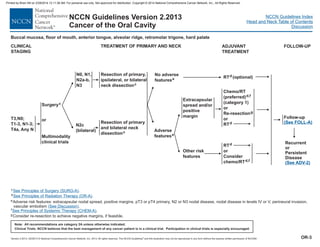
Buccal mucosa, floor of mouth, anterior tongue, alveolar ridge, retromolar trigone, hard palate
T4b, any N,
or
Unresectable nodal disease
or
Unfit for surgery
a
b
See Discussion.
See Principles of Nutrition: Management and Supportive Care (NUTR-A).
OR-1
Printed by Brian Hill on 2/28/2014 12:11:38 AM. For personal use only. Not approved for distribution. Copyright © 2014 National Comprehensive Cancer Network, Inc., All Rights Reserved.
Version 2.2013, 05/29/13 © National Comprehensive Cancer Network, Inc. 2013, All rights reserved. The NCCN Guidelines and this illustration may not be reproduced in any form without the express written permission of NCCN®.
®
NCCN Guidelines Index
Head and Neck Table of Contents
Discussion
Note: All recommendations are category 2A unless otherwise indicated.
Clinical Trials: NCCN believes that the best management of any cancer patient is in a clinical trial. Participation in clinical trials is especially encouraged.
NCCN Guidelines Version 2.2013
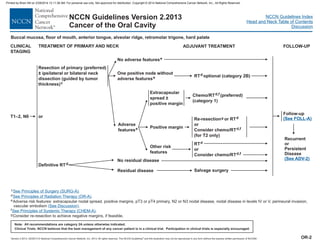
Cancer of the Oral Cavity
Buccal mucosa, floor of mouth, anterior tongue, alveolar ridge, retromolar trigone, hard palate
CLINICAL
STAGING
TREATMENT OF PRIMARY AND NECK
T1–2, N0
Resection of primary (preferred)
± ipsilateral or bilateral neck
dissection (guided by tumor
thickness)c
or
Definitive RTd
One positive node without
adverse featurese RT optional (category 2B)
d
c
d
e
f
Adverse risk features: extracapsular nodal spread, positive margins, pT3 or pT4 primary, N2 or N3 nodal disease, nodal disease in levels IV or V, perineural invasion,
vascular embolism .
Consider re-resection to achieve negative margins, if feasible.
.
g
See Principles of Surgery (SURG-A)
See Principles of Radiation Therapy (OR-A)
See Principles of (CHEM-A)
.
( )
See Discussion
Systemic Therapy
.
FOLLOW-UP
Follow-up
(See FOLL-A)
Recurrent
or
Persistent
Disease
(See ADV-2)
No adverse featurese
ADJUVANT TREATMENT
Adverse
featurese
Residual disease Salvage surgery
No residual disease
Chemo/RTd,f (preferred)
(category 1)
Extracapsular
spread
positive margin
±
Other risk
features
RTd
or
Consider chemo/RTd,f
OR-2
Positive margin
Re-resection or RTd
or
hemo/RT
(for T2 only)
g
Consider c d,f
Printed by Brian Hill on 2/28/2014 12:11:38 AM. For personal use only. Not approved for distribution. Copyright © 2014 National Comprehensive Cancer Network, Inc., All Rights Reserved.
Version 2.2013, 05/29/13 © National Comprehensive Cancer Network, Inc. 2013, All rights reserved. The NCCN Guidelines and this illustration may not be reproduced in any form without the express written permission of NCCN®.
®
NCCN Guidelines Index
Head and Neck Table of Contents
Discussion
Note: All recommendations are category 2A unless otherwise indicated.
Clinical Trials: NCCN believes that the best management of any cancer patient is in a clinical trial. Participation in clinical trials is especially encouraged.
NCCN Guidelines Version 2.2013
Cancer of the Oral Cavity
Buccal mucosa, floor of mouth, anterior tongue, alveolar ridge, retromolar trigone, hard palate
T3,N0;
T1-3, N1-3;
T4a, Any N
Resection of primary
and bilateral neck
dissectionc
N2c
(bilateral)
Resection of primary,
ipsilateral, or bilateral
neck dissectionc
N0, N1,
N2a-b,
N3
CLINICAL
STAGING
TREATMENT OF PRIMARY AND NECK FOLLOW-UP
Surgeryc
ADJUVANT
TREATMENT
No adverse
featurese RT (optional)
d
Adverse
featurese
Other risk
features
RTd
d,f
or
Consider
chemo/RT
Chemo/RT
(preferred)
Re-resection
d,f
g
d
(category 1)
or
RT
or
c
d
e
f
Adverse risk features: extracapsular nodal spread, positive margins, pT3 or pT4 primary, N2 or N3 nodal disease, nodal disease in levels IV or V, perineural invasion,
vascular embolism .
Consider re-resection to achieve negative margins, if feasible.
g
See Principles of Surgery (SURG-A)
See Principles of Radiation Therapy (OR-A)
See Principles of (CHEM-A)
.
.
.
Systemic Therapy
( )
See Discussion
Extracapsular
spread and/or
positive
margin Follow-up
(See FOLL-A)
Recurrent
or
Persistent
Disease
(See ADV-2)
OR-3
Multimodality
clinical trials
or
Printed by Brian Hill on 2/28/2014 12:11:38 AM. For personal use only. Not approved for distribution. Copyright © 2014 National Comprehensive Cancer Network, Inc., All Rights Reserved.
Version 2.2013, 05/29/13 © National Comprehensive Cancer Network, Inc. 2013, All rights reserved. The NCCN Guidelines and this illustration may not be reproduced in any form without the express written permission of NCCN®.
®
NCCN Guidelines Index
Head and Neck Table of Contents
Discussion
Note: All recommendations are category 2A unless otherwise indicated.
Clinical Trials: NCCN believes that the best management of any cancer patient is in a clinical trial. Participation in clinical trials is especially encouraged.
NCCN Guidelines Version 2.2013
Cancer of the Oral Cavity
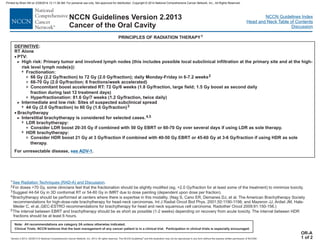
PRINCIPLES OF RADIATION THERAPY1
DEFINITIVE:
RT Alone
High risk: Primary tumor and involved lymph nodes (this includes possible local subclinical infiltration at the primary site and at the high-
risk level lymph node(s))
66 Gy (2.2 Gy/fraction) to 72 Gy (2.0 Gy/fraction); daily Monday-Friday in 6-7.2 weeks
44 Gy (2.0 Gy/fraction) to 60 Gy (1.6 Gy/fraction)
For unresectable disease, .
·
·
PTV:
:
66-70 Gy (2.0 Gy/fraction; 6 fractions/week accelerated)
Concomitant boost accelerated RT: 72 Gy/6 weeks (1.8 Gy/fraction, large field; 1.5 Gy boost as second daily
fraction during last 12 treatment days)
Hyperfractionation: 81.6 Gy/7 weeks (1.2 Gy/fraction, twice daily)
Intermediate and low risk: Sites of suspected subclinical spread
Brachytherapy
Interstitial brachytherapy is considered for selected cases.
LDR brachytherapy:
Consider LDR boost 20-35 Gy if combined with 50 Gy EBRT or 60-70 Gy over several days if using LDR as sole therapy.
Consider HDR boost 21 Gy at 3 Gy/fraction if combined with 40-50 Gy EBRT or 45-60 Gy at 3-6 Gy/fraction if using HDR as sole
therapy.
>
3 2
3
3
3
3
>
7
>
7
3
3
4,5
7
7
Fractionation:
HDR brachytherapy:
see ADV-1
OR-A
1 of 2
1
2
3
4
5
For doses >70 Gy, some clinicians feel that the fractionation should be slightly modified (eg, <2.0 Gy/fraction for at least some of the treatment) to minimize toxicity.
Suggest 44-54 Gy in 3D conformal RT or 54-60 Gy in IMRT due to dose painting (dependent upon dose per fraction).
Brachytherapy should be performed at centers where there is expertise in this modality. (Nag S, Cano ER, Demanes DJ, et al. The American Brachytherapy Society
recommendations for high-dose-rate brachytherapy for head-neck carcinomas. Int J Radiat Oncol Biol Phys. 2001;50:1190-1198; and Mazeron JJ, Ardiet JM, Hale-
Meder C, et al.,GEC-ESTRO recommendations for brachytherapy for head and neck squamous cell carcinoma. Radiother Oncol 2009;91:150-156.)
The interval between EBRT and brachytherapy should be as short as possible (1-2 weeks) depending on recovery from acute toxicity. The interval between HDR
fractions should be at least 6 hours.
See Radiation Techniques (RAD-A) and Discussion.
Printed by Brian Hill on 2/28/2014 12:11:38 AM. For personal use only. Not approved for distribution. Copyright © 2014 National Comprehensive Cancer Network, Inc., All Rights Reserved.
Version 2.2013, 05/29/13 © National Comprehensive Cancer Network, Inc. 2013, All rights reserved. The NCCN Guidelines and this illustration may not be reproduced in any form without the express written permission of NCCN®.
®
NCCN Guidelines Index
Head and Neck Table of Contents
Discussion
Note: All recommendations are category 2A unless otherwise indicated.
Clinical Trials: NCCN believes that the best management of any cancer patient is in a clinical trial. Participation in clinical trials is especially encouraged.
NCCN Guidelines Version 2.2013
Cancer of the Oral Cavity
1
3
6
7
8
Suggest 44-54 Gy in 3D conformal RT or 54-60 Gy in IMRT due to dose painting (dependent upon dose per fraction).
Bernier J, Domenge C, Ozsahin M, et al. Postoperative irradiation with or without concomitant chemotherapy for locally advanced head and neck cancer. N Engl J Med
2004;350:1945-1952.
Cooper JS, Pajak TF, Forastiere AA, et al. Postoperative concurrent radiotherapy and chemotherapy for high-risk squamous-cell carcinoma of the head and neck. N
Engl J Med 2004;350:1937-1944.
Bernier J, Cooper JS, Pajak TF, et al. Defining risk levels in locally advanced head and neck cancers: A comparative analysis of concurrent postoperative radiation plus
chemotherapy trials of the EORTC (#22931) and RTOG (#9501). Head Neck 2005;27:843-850.
See Radiation Techniques (RAD-A) and Discussion.
OR-A
2 of 2
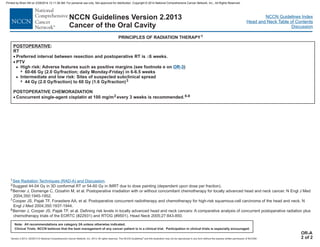
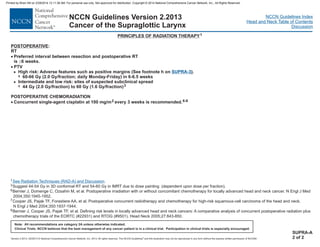
POSTOPERATIVE:
RT
Preferred interval between resection and postoperative RT is 6 weeks.
; daily Monday-Friday
44 Gy (2.0 Gy/fraction) to 60 Gy (1.6 Gy/fraction)
POSTOPERATIVE CHEMORADIATION
Concurrent single-agent cisplatin at 100 mg/m every 3 weeks is recommended.
· £
·
·
PTV
>
>
7
High risk: Adverse features such as positive margins (see footnote e on
) in 6-6.5 weeks
Intermediate and low risk: Sites of suspected subclinical spread
3
6-8
2
OR-3)
60-66 Gy (2.0 Gy/fraction
7
PRINCIPLES OF RADIATION THERAPY1
Printed by Brian Hill on 2/28/2014 12:11:38 AM. For personal use only. Not approved for distribution. Copyright © 2014 National Comprehensive Cancer Network, Inc., All Rights Reserved.
Version 2.2013, 05/29/13 © National Comprehensive Cancer Network, Inc. 2013, All rights reserved. The NCCN Guidelines and this illustration may not be reproduced in any form without the express written permission of NCCN®.
®
NCCN Guidelines Index
Head and Neck Table of Contents
Discussion
Note: All recommendations are category 2A unless otherwise indicated.
Clinical Trials: NCCN believes that the best management of any cancer patient is in a clinical trial. Participation in clinical trials is especially encouraged.
NCCN Guidelines Version 2.2013
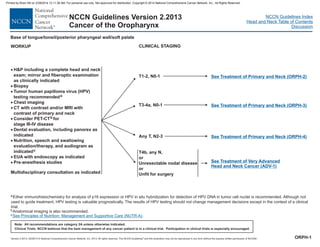
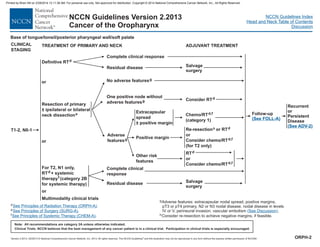
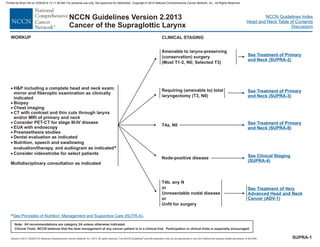
Cancer of the Oropharynx
Base of tongue/tonsil/posterior pharyngeal wall/soft palate
CLINICAL STAGING
T1-2, N0-1
Any T, N2-3
T3-4a, N0-1
WORKUP
·
·
·
·
·
·
·
·
H&P including a complete head and neck
exam; mirror and fiberoptic examination
as clinically indicated
Biopsy
Tumor human papilloma virus (HPV)
testing recommended
Chest imaging
CT with contrast and/or MRI with
contrast of primary and neck
Consider PET-CT for
stage III-IV disease
Dental evaluation, including panorex as
indicated
Nutrition, speech and swallowing
evaluation/therapy, and audiogram as
indicated
EUA with endoscopy as indicated
Pre-anesthesia studies
a
·
·
b
c
Multidisciplinary consultation as indicated
See Treatment of Primary and Neck (ORPH-2)
See Treatment of Primary and Neck (ORPH-3)
See Treatment of Primary and Neck (ORPH-4)
T4b, any N,
or
Unresectable nodal disease
or
Unfit for surgery
See Treatment of Very Advanced
Head and Neck Cancer (ADV-1)
a
b
Although not
used to guide treatment, HPV testing is valuable prognostically. The results of HPV testing should not change management decisions except in the context of a clinical
trial.
Anatomical imaging is also recommended.
Either immunohistochemistry for analysis of p16 expression or HPV in situ hybridization for detection of HPV DNA in tumor cell nuclei is recommended.
cSee Principles of Nutrition: Management and Supportive Care (NUTR-A).
ORPH-1
Printed by Brian Hill on 2/28/2014 12:11:38 AM. For personal use only. Not approved for distribution. Copyright © 2014 National Comprehensive Cancer Network, Inc., All Rights Reserved.
Version 2.2013, 05/29/13 © National Comprehensive Cancer Network, Inc. 2013, All rights reserved. The NCCN Guidelines and this illustration may not be reproduced in any form without the express written permission of NCCN®.
®
NCCN Guidelines Index
Head and Neck Table of Contents
Discussion
Note: All recommendations are category 2A unless otherwise indicated.
Clinical Trials: NCCN believes that the best management of any cancer patient is in a clinical trial. Participation in clinical trials is especially encouraged.
NCCN Guidelines Version 2.2013
Cancer of the Oropharynx
CLINICAL
STAGING
T1-2, N0-1
TREATMENT OF PRIMARY AND NECK
No adverse featuresg
One positive node without
adverse featuresg Consider RTd
Complete clinical response
Residual disease Salvage
surgery
Definitive RTd
d
e
f .
See Principles of Radiation Therapy (ORPH-A).
See Principles of Surgery (SURG-A).
See Principles of Systemic Therapy (CHEM-A)
Resection of primary
± ipsilateral or bilateral
neck dissectione
or
RT + systemic
therapy (category 2B
for systemic therapy)
For T2, N1 only,
d
f
Residual disease Salvage
surgery
ADJUVANT TREATMENT
Adverse
featuresg
Other risk
features
RTd
or
Consider chemo/RTd,f
Complete clinical
response
Follow-up
(See FOLL-A)
Chemo/RTd,f
(category 1)
Positive margin
Re-resection or RTd
h
or
hemo/RT
(for T2 only)
Consider c d,f
Extracapsular
spread
positive margin
±
or
Recurrent
or
Persistent
Disease
(See ADV-2)
Base of tongue/tonsil/posterior pharyngeal wall/soft palate
ORPH-2
Multimodality clinical trials
or
g
h
Adverse features: extracapsular nodal spread, positive margins,
pT3 or pT4 primary, N2 or N3 nodal disease, nodal disease in levels
IV or V, perineural invasion, vascular embolism .
Consider re-resection to achieve negative margins, if feasible.
( )
See Discussion
Printed by Brian Hill on 2/28/2014 12:11:38 AM. For personal use only. Not approved for distribution. Copyright © 2014 National Comprehensive Cancer Network, Inc., All Rights Reserved.
Version 2.2013, 05/29/13 © National Comprehensive Cancer Network, Inc. 2013, All rights reserved. The NCCN Guidelines and this illustration may not be reproduced in any form without the express written permission of NCCN®.
®
NCCN Guidelines Index
Head and Neck Table of Contents
Discussion
Note: All recommendations are category 2A unless otherwise indicated.
Clinical Trials: NCCN believes that the best management of any cancer patient is in a clinical trial. Participation in clinical trials is especially encouraged.
NCCN Guidelines Version 2.2013
Cancer of the Oropharynx
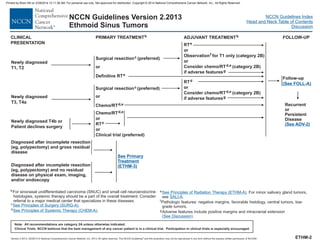
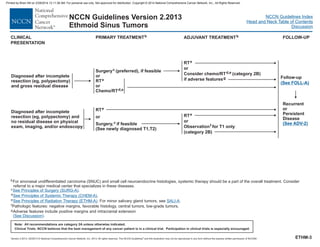
T3-4a,
N0-1
Salvage
surgery
Residual disease
Complete clinical response
Surgery for
primary and
necke
CLINICAL
STAGING
TREATMENT OF PRIMARY AND NECK
No adverse featuresg
Concurrent systemic
therapy/RT,d,f,i
or
or
ADJUVANT TREATMENT
Induction chemotherapy
(category 3)
followed by RT or
chemo/RT
f,j
d
d,f
Multimodality clinical trials
or
Salvage
surgery
Residual disease
Complete clinical response
RTg
Adverse
featuresg
Other risk
features
RTd
or
Consider chemo/RTd,f
Extracapsular
spread and/or
positive margin
Chemo/RTd,f
(category 1)
d
e
f
g
i
j
.
Adverse features: extracapsular nodal spread, positive margins, pT3 or pT4 primary, N2 or N3 nodal disease, nodal disease in levels IV or V, perineural invasion,
vascular embolism .
When using concurrent chemotherapy/RT, the preferred agent is cisplatin (category 1). .
on induction chemotherapy.
See Principles of Radiation Therapy (ORPH-A).
See Principles of Surgery (SURG-A).
See Principles of Systemic Therapy (CHEM-A)
See Discussion
( )
See Discussion
See Principles of Systemic Therapy (CHEM-A)
Follow-up
(See FOLL-A)
Recurrent
or
Persistent
Disease
(See ADV-2)
Base of tongue/tonsil/posterior pharyngeal wall/soft palate
ORPH-3
Printed by Brian Hill on 2/28/2014 12:11:38 AM. For personal use only. Not approved for distribution. Copyright © 2014 National Comprehensive Cancer Network, Inc., All Rights Reserved.
Version 2.2013, 05/29/13 © National Comprehensive Cancer Network, Inc. 2013, All rights reserved. The NCCN Guidelines and this illustration may not be reproduced in any form without the express written permission of NCCN®.
®
NCCN Guidelines Index
Head and Neck Table of Contents
Discussion
Note: All recommendations are category 2A unless otherwise indicated.
Clinical Trials: NCCN believes that the best management of any cancer patient is in a clinical trial. Participation in clinical trials is especially encouraged.
NCCN Guidelines Version 2.2013
Cancer of the Oropharynx
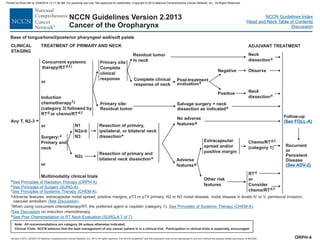
Any T, N2-3
CLINICAL
STAGING
TREATMENT OF PRIMARY AND NECK
or
N2c
Resection of primary,
ipsilateral, or bilateral neck
dissectione
Resection of primary and
bilateral neck dissectione
N1
N2a-b
N3
Surgery:
Primary and
neck
e
or
ADJUVANT TREATMENT
Induction
chemotherapy
(category 3) followed by
RT or chemo/RT
f,j
d d,f
or
Multimodality clinical trials
Residual tumor
in neck
Complete clinical
response of neck
Primary site:
Complete
clinical
response
Primary site:
Residual tumor
Salvage surgery + neck
dissection as indicatede
Neck
dissectione
Negative
Positive
Observe
Neck
dissectione
No adverse
featuresg
Adverse
featuresg
Extracapsular
spread and/or
positive margin
Other risk
features
RTd
or
Consider
chemo/RTd,f
d
e
f
g
i
j
k
.
Adverse features: extracapsular nodal spread, positive margins, pT3 or pT4 primary, N2 or N3 nodal disease, nodal disease in levels IV or V, perineural invasion,
vascular embolism .
When using concurrent chemotherapy/RT, the preferred agent is cisplatin (category 1). .
on induction chemotherapy.
See Principles of Radiation Therapy (ORPH-A).
See Principles of Surgery (SURG-A)
See Post Chemoradiation or RT Neck Evaluation (SURG-A 7 of 7)
.
.
See Principles of Systemic Therapy (CHEM-A)
See Discussion
( )
See Discussion
See Principles of Systemic Therapy (CHEM-A)
Chemo/RTd,f
(category 1)
Follow-up
(See FOLL-A)
Post-treatment
evaluationk
Recurrent
or
Persistent
Disease
(See ADV-2)
Base of tongue/tonsil/posterior pharyngeal wall/soft palate
ORPH-4
Concurrent systemic
therapy/RTd,f,i
Printed by Brian Hill on 2/28/2014 12:11:38 AM. For personal use only. Not approved for distribution. Copyright © 2014 National Comprehensive Cancer Network, Inc., All Rights Reserved.
Version 2.2013, 05/29/13 © National Comprehensive Cancer Network, Inc. 2013, All rights reserved. The NCCN Guidelines and this illustration may not be reproduced in any form without the express written permission of NCCN®.
®
NCCN Guidelines Index
Head and Neck Table of Contents
Discussion
Note: All recommendations are category 2A unless otherwise indicated.
Clinical Trials: NCCN believes that the best management of any cancer patient is in a clinical trial. Participation in clinical trials is especially encouraged.
NCCN Guidelines Version 2.2013
Cancer of the Oropharynx
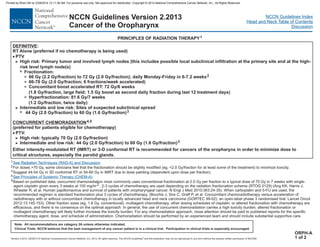
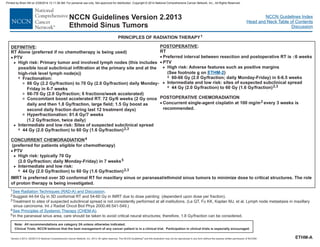
PRINCIPLES OF RADIATION THERAPY1
1
2
3
4
5
For doses >70 Gy, some clinicians feel that the fractionation should be slightly modified (eg, <2.0 Gy/fraction for at least some of the treatment) to minimize toxicity.
Suggest 44-54 Gy in 3D conformal RT or 54-60 Gy in IMRT due to dose painting (dependent upon dose per fraction).
Based on published data, concurrent chemoradiation most commonly uses conventional fractionation at 2.0 Gy per fraction to a typical dose of 70 Gy in 7 weeks with single-
agent cisplatin given every 3 weeks at 100 mg/m2 ; 2-3 cycles of chemotherapy are used depending on the radiation fractionation scheme (RTOG 0129) (Ang KK, Harris J,
Wheeler R, et al. Human papillomavirus and survival of patients with oropharyngeal cancer. N Engl J Med 2010;363:24-35) When carboplatin and 5-FU are used, the
recommended regimen is standard fractionation plus 3 cycles of chemotherapy. (Bourhis J, Sire C, Graff P, et al. Concomitant chemoradiotherapy versus acceleration of
radiotherapy with or without concomitant chemotherapy in locally advanced head and neck carcinoma (GORTEC 99-02): an open-label phase 3 randomised trial. Lancet Oncol
2012;13:145-153). Other fraction sizes (eg, 1.8 Gy, conventional), multiagent chemotherapy, other dosing schedules of cisplatin, or altered fractionation with chemotherapy are
efficacious, and there is no consensus on the optimal approach. In general, the use of concurrent chemoradiation carries a high toxicity burden; altered fractionation or
multiagent chemotherapy will likely further increase the toxicity burden. For any chemoradiation approach, close attention should be paid to published reports for the specific
chemotherapy agent, dose, and schedule of administration. Chemoradiation should be performed by an experienced team and should include substantial supportive care.
See Radiation Techniques (RAD-A) and Discussion.
See Principles of Systemic Therapy (CHEM-A).
.
Either intensity-modulated RT (IMRT) or 3-D conformal RT is recommended for cancers of the oropharynx in order to minimize dose to
critical structures, especially the parotid glands.
ORPH-A
1 of 2
DEFINITIVE
CONCURRENT CHEMORADIATION
:
RT Alone (preferred if no chemotherapy is being used)
66 Gy (2.2 Gy/fraction) to 72 Gy (2.0 Gy/fraction); daily Monday-Friday in 6-7.2 weeks
44 Gy (2.0 Gy/fraction) to 60 Gy (1.6 Gy/fraction)
(preferred for patients eligible for chemotherapy)
PTV:
High risk: typically 70 Gy (2.0 Gy/fraction)
Intermediate and low risk: 44 Gy (2.0 Gy/fraction) to 60 Gy (1.6 Gy/fraction)
· PTV
High risk: Primary tumor and involved lymph nodes (this includes possible local subclinical infiltration at the primary site and at the high-
risk level lymph node(s)
66-70 Gy (2.0 Gy/fraction; 6 fractions/week accelerated)
Concomitant boost accelerated RT: 72 Gy/6 weeks
(1.8 Gy/fraction, large field; 1.5 Gy boost as second daily fraction during last 12 treatment days)
Hyperfractionation: 81.6 Gy/7 weeks
(1.2 Gy/fraction, twice daily)
Intermediate and low risk: Sites of suspected subclinical spread
>
3
3
3
>
7
3
>
>
2
3
4,5
3
·
7 Fractionation:
Printed by Brian Hill on 2/28/2014 12:11:38 AM. For personal use only. Not approved for distribution. Copyright © 2014 National Comprehensive Cancer Network, Inc., All Rights Reserved.
Version 2.2013, 05/29/13 © National Comprehensive Cancer Network, Inc. 2013, All rights reserved. The NCCN Guidelines and this illustration may not be reproduced in any form without the express written permission of NCCN®.
®
NCCN Guidelines Index
Head and Neck Table of Contents
Discussion
Note: All recommendations are category 2A unless otherwise indicated.
Clinical Trials: NCCN believes that the best management of any cancer patient is in a clinical trial. Participation in clinical trials is especially encouraged.
NCCN Guidelines Version 2.2013
Cancer of the Oropharynx
1
3
8
Suggest 44-54 Gy in 3D conformal RT or 54-60 Gy in IMRT due to dose painting (dependent upon dose per fraction).
Bernier J, Cooper JS, Pajak TF, et al. Defining risk levels in locally advanced head and neck cancers: A comparative analysis of concurrent postoperative radiation plus
chemotherapy trials of the EORTC (#22931) and RTOG (#9501). Head Neck 2005;27:843-850.
6
7
Bernier J, Domenge C, Ozsahin M, et al. Postoperative irradiation with or without concomitant chemotherapy for locally advanced head and neck cancer. N Engl J Med
2004;350:1945-1952.
Cooper JS, Pajak TF, Forastiere AA, et al. Postoperative concurrent radiotherapy and chemotherapy for high-risk squamous-cell carcinoma of the head and neck.
N Engl J Med 2004;350:1937-1944.
See Radiation Techniques (RAD-A) and Discussion.
ORPH-A
2 of 2
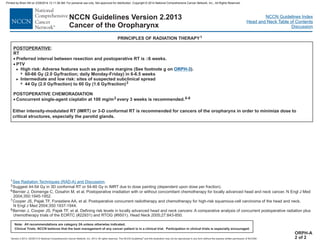
POSTOPERATIVE:
RT
Preferred interval between resection and postoperative RT is 6 weeks.
PTV
Adverse features such as positive margins (See footnote g on ).
44 Gy (2.0 Gy/fraction) to 60 Gy (1.6 Gy/fraction)
POSTOPERATIVE CHEMORADIATION
Concurrent single-agent cisplatin at 100 mg/m every 3 weeks is recommended.
· £
·
·
>
7
>
7
High risk:
60-66 Gy (2.0 Gy/fraction; daily Monday-Friday) in 6-6.5 weeks
Intermediate and low risk: sites of suspected subclinical spread
3
2 6-8
ORPH-3
PRINCIPLES OF RADIATION THERAPY1
Either intensity-modulated RT (IMRT) or 3-D conformal RT is recommended for cancers of the oropharynx in order to minimize dose to
critical structures, especially the parotid glands.
Printed by Brian Hill on 2/28/2014 12:11:38 AM. For personal use only. Not approved for distribution. Copyright © 2014 National Comprehensive Cancer Network, Inc., All Rights Reserved.
Version 2.2013, 05/29/13 © National Comprehensive Cancer Network, Inc. 2013, All rights reserved. The NCCN Guidelines and this illustration may not be reproduced in any form without the express written permission of NCCN®.
®
NCCN Guidelines Index
Head and Neck Table of Contents
Discussion
Note: All recommendations are category 2A unless otherwise indicated.
Clinical Trials: NCCN believes that the best management of any cancer patient is in a clinical trial. Participation in clinical trials is especially encouraged.
NCCN Guidelines Version 2.2013
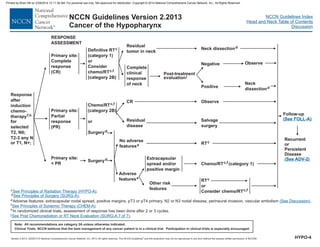
Cancer of the Hypopharynx
HYPO-1
T1, N+;
T2-3, Any N
T4a, Any N
WORKUP CLINICAL STAGING
Advanced cancer
pharyngectomy
with total laryngectomy
requiring
(amenable to)
·
·
·
·
·
·
·
·
·
·
H&P including a complete
head and neck exam; mirror
and fiberoptic examination as
clinically indicated
Biopsy
Chest imaging
CT with contrast and/or MRI
with contrast of primary and
neck
Consider PET-CT for stage
III-IV disease
EUA with endoscopy
Preanesthesia studies
Nutrition, speech and
swallowing
evaluation/therapy, and
audiogram as indicated
Dental evaluation
Consider videostrobe for
select patients
a
b
Multidisciplinary consultation
as indicated
See Treatment of Primary and
Neck (HYPO-2)
See Treatment of Primary and
Neck (HYPO-3)
See Treatment of Primary and
Neck (HYPO-5)
See Treatment of Very
Advanced Head and Neck
Cancer (ADV-1)
a
b
Anatomical imaging is also recommended.
See Principles of Nutrition: Management and Supportive Care (NUTR-A).
T4b, any N
or
Unresectable nodal disease
or
Unfit for surgery
Most T1, N0, selected T2, N0
(amenable to larynx-preserving
[conservation] surgery)
Printed by Brian Hill on 2/28/2014 12:11:38 AM. For personal use only. Not approved for distribution. Copyright © 2014 National Comprehensive Cancer Network, Inc., All Rights Reserved.
Version 2.2013, 05/29/13 © National Comprehensive Cancer Network, Inc. 2013, All rights reserved. The NCCN Guidelines and this illustration may not be reproduced in any form without the express written permission of NCCN®.
®
NCCN Guidelines Index
Head and Neck Table of Contents
Discussion
Note: All recommendations are category 2A unless otherwise indicated.
Clinical Trials: NCCN believes that the best management of any cancer patient is in a clinical trial. Participation in clinical trials is especially encouraged.
NCCN Guidelines Version 2.2013
Cancer of the Hypopharynx
Primary site:
Complete
clinical
response
Primary site:
Residual
tumor
Salvage surgery
+ neck dissection
as indicatedd
Most T1, N0,
selected T2, N0
(amenable to
larynx-
preserving
[conservation]
surgery)
Definitive RTc
CLINICAL
STAGING
TREATMENT OF PRIMARY AND NECK
Surgery: Partial
laryngopharyngectomy
(open or endoscopic)
+ ipsilateral or bilateral
neck dissectiond
or
No adverse
featurese
c .
d
f
g
eAdverse features: extracapsular nodal spread, positive margins, pT3 or pT4 primary, N2 or N3 nodal disease, perineural invasion, vascular embolism .
.
Consider re-resection to achieve negative margins, if feasible.
See Principles of Radiation Therapy
See Principles of Systemic Therapy (CHEM-A)
(HYPO-A)
See Principles of Surgery (SURG-A).
( )
See Discussion
ADJUVANT
TREATMENT
Adverse
featurese
Other risk
features
RTc
or
Consider
chemo/RTc,f
Follow-up
(See FOLL-A)
Extracapsular
spread
positive margin
±
Chemo/RTc,f
(category 1)
Positive margins
Re-resection or RT
or
Consider chemo/RT
(for T2 only)
g c
c,f
Recurrent
or
Persistent
Disease
(See ADV-2)
HYPO-2
Multimodality clinical trials
or
Printed by Brian Hill on 2/28/2014 12:11:38 AM. For personal use only. Not approved for distribution. Copyright © 2014 National Comprehensive Cancer Network, Inc., All Rights Reserved.
Version 2.2013, 05/29/13 © National Comprehensive Cancer Network, Inc. 2013, All rights reserved. The NCCN Guidelines and this illustration may not be reproduced in any form without the express written permission of NCCN®.
®
NCCN Guidelines Index
Head and Neck Table of Contents
Discussion
Note: All recommendations are category 2A unless otherwise indicated.
Clinical Trials: NCCN believes that the best management of any cancer patient is in a clinical trial. Participation in clinical trials is especially encouraged.
NCCN Guidelines Version 2.2013
Cancer of the Hypopharynx
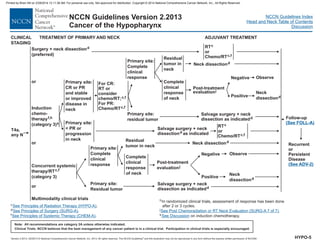
Induction chemotherapyf,h See Response After Induction
Chemotherapy (HYPO-4)
CLINICAL
STAGING
TREATMENT OF PRIMARY AND NECK ADJUVANT TREATMENT
Residual tumor
in neck
Complete
clinical
response
of neck
Primary site:
complete
clinical
response
Primary site:
residual
tumor
Salvage surgery + neck
dissection as indicatedd
Neck dissectiond
Multimodality clinical trials
Laryngopharyngectomy
+ neck dissection,
including level VI
d
Concurrent systemic
therapy/RTc,f,i
or
or
or
c .
d
e
f
i
j
Adverse features: extracapsular nodal spread, positive margins, pT3 or pT4 primary, N2 or N3 nodal disease, perineural invasion, vascular embolism .
.
When using concurrent chemotherapy/RT, the preferred agent is cisplatin (category 1).
hIn randomized clinical trials, assessment of response has been done after 2 or 3 cycles.
See Principles of Radiation Therapy
See Principles of Systemic Therapy (CHEM-A)
(HYPO-A)
See Principles of Surgery (SURG-A)
See Post Chemoradiation or RT Neck Evaluation (SURG-A 7 of 7)
.
.
.
(See Discussion)
See Principles of Systemic Therapy (CHEM-A)
No adverse
featurese
Adverse
featurese
Other risk
features
RTc
or
Consider chemo/RTc,f
Extracapsular
spread and/or
positive margin
Chemo/RTc,f (category 1)
Negative
Positive
Observe
Neck
dissectiond
Follow-up
(See FOLL-A)
Recurrent
or
Persistent
Disease
(See ADV-2)
Post-treatment
evaluationj
HYPO-3
Selected T2, N0
or T2-3, any N
if requiring
[amenable to]
pharyngectomy
with total
laryngectomy);
T1, N+
Printed by Brian Hill on 2/28/2014 12:11:38 AM. For personal use only. Not approved for distribution. Copyright © 2014 National Comprehensive Cancer Network, Inc., All Rights Reserved.
Version 2.2013, 05/29/13 © National Comprehensive Cancer Network, Inc. 2013, All rights reserved. The NCCN Guidelines and this illustration may not be reproduced in any form without the express written permission of NCCN®.
®
NCCN Guidelines Index
Head and Neck Table of Contents
Discussion
Note: All recommendations are category 2A unless otherwise indicated.
Clinical Trials: NCCN believes that the best management of any cancer patient is in a clinical trial. Participation in clinical trials is especially encouraged.
NCCN Guidelines Version 2.2013
Cancer of the Hypopharynx
c
d
e
f
h
j
Adverse features: extracapsular nodal spread, positive margins, pT3 or pT4 primary, N2 or N3 nodal disease, perineural invasion, vascular embolism .
In randomized clinical trials, assessment of response has been done after 2 or 3 cycles.
See Principles of Radiation Therapy (HYPO-A)
(See Discussion)
.
See Principles of Surgery (SURG-A)
See Post Chemoradiation or RT Neck Evaluation (SURG-A 7 of 7)
.
.
See Principles of Systemic Therapy (CHEM-A).
Response
after
induction
chemo-
therapy
for
selected
T2, N0;
f,h
T2-3 any N
or T1, N+;
Primary site:
Partial
response
(PR)
Primary site:
< PR
Surgeryd
Definitive RTc
c,f
(category 1)
or
Consider
chemo/RT
(category 2B)
Residual
tumor in neck
Complete
clinical
response
of neck
Neck dissectiond
Primary site:
Complete
response
(CR)
Chemo/RTc,f
d
(category 2B)
or
Surgery
CR Observe
Salvage
surgery
Residual
disease
Negative
Positive
Observe
Neck
dissectiond
No adverse
featurese
Adverse
featurese
RTc
c,f
or
Consider chemo/RT
Extracapsular
spread and/or
positive margin
Chemo/RTc,f (category 1)
RTc
Post-treatment
evaluationj
RESPONSE
ASSESSMENT
Other risk
features
Follow-up
(See FOLL-A)
Recurrent
or
Persistent
Disease
(See ADV-2)
HYPO-4
Printed by Brian Hill on 2/28/2014 12:11:38 AM. For personal use only. Not approved for distribution. Copyright © 2014 National Comprehensive Cancer Network, Inc., All Rights Reserved.
Version 2.2013, 05/29/13 © National Comprehensive Cancer Network, Inc. 2013, All rights reserved. The NCCN Guidelines and this illustration may not be reproduced in any form without the express written permission of NCCN®.
®
NCCN Guidelines Index
Head and Neck Table of Contents
Discussion
Note: All recommendations are category 2A unless otherwise indicated.
Clinical Trials: NCCN believes that the best management of any cancer patient is in a clinical trial. Participation in clinical trials is especially encouraged.
NCCN Guidelines Version 2.2013
Cancer of the Hypopharynx
Surgery + neck dissection
(preferred)
d
CLINICAL
STAGING
TREATMENT OF PRIMARY AND NECK
RT
or
Chemo/RT
c
c,f
ADJUVANT TREATMENT
T4a,
any N
Residual
tumor in neck
Primary site:
Complete
clinical
response
Primary site:
Residual tumor
Salvage surgery + neck
dissection as indicatedd
Neck dissectiond
Multimodality clinical trials
or
or
Concurrent systemic
therapy/RT
(category 3)
c,f
Induction
chemo-
therapy
(category 3)
f,h
k
or
c .
d
f .
See Principles of Radiation Therapy
See Principles of Systemic Therapy (CHEM-A)
(HYPO-A)
See Principles of Surgery (SURG-A).
Complete
clinical
response
of neck
Negative
Positive
Observe
Neck
dissectiond
Primary site:
CR or PR
and stable
or improved
disease in
neck
Primary site:
< PR or
progression
in neck
Salvage surgery + neck
dissection as indicated
d
For CR:
For PR:
RT or
consider
chemo/RT;
Chemo/RT
c,f
c,f
Residual
tumor in
neck
Primary site:
Complete
response
clinical
Primary site:
residual tumor
Salvage surgery + neck
dissection as indicatedd
Neck dissectiond
Complete
clinical
response
of neck
Negative
Positive
Observe
Neck
dissectiond
RT
or
Chemo/RT
c
c,f
Recurrent
or
Persistent
Disease
(See ADV-2)
Post-treatment
evaluationj
Follow-up
(See FOLL-A)
Post-treatment
evaluationj
h
j
k
In randomized clinical trials, assessment of response has been done
after 2 or 3 cycles.
on induction chemotherapy.
See Post Chemoradiation or RT Neck Evaluation (SURG-A 7 of 7).
See Discussion
HYPO-5
Printed by Brian Hill on 2/28/2014 12:11:38 AM. For personal use only. Not approved for distribution. Copyright © 2014 National Comprehensive Cancer Network, Inc., All Rights Reserved.
Version 2.2013, 05/29/13 © National Comprehensive Cancer Network, Inc. 2013, All rights reserved. The NCCN Guidelines and this illustration may not be reproduced in any form without the express written permission of NCCN®.
®
NCCN Guidelines Index
Head and Neck Table of Contents
Discussion
Note: All recommendations are category 2A unless otherwise indicated.
Clinical Trials: NCCN believes that the best management of any cancer patient is in a clinical trial. Participation in clinical trials is especially encouraged.
NCCN Guidelines Version 2.2013
Cancer of the Hypopharynx
:
RT Alone (preferred if no chemotherapy is being used)
High risk: Primary tumor and involved lymph nodes (this includes possible local subclinical infiltration at the primary site and at the high-
risk level lymph node(s))
66 Gy (2.2 Gy/fraction) to 72 Gy (2.0 Gy/fraction); daily Monday-Friday in 6-7.2 weeks
66-70 Gy
44 Gy (2.0 Gy/fraction) to 60 Gy (1.6 Gy/fraction)
(preferred for patients eligible for chemotherapy)
High risk: typically 70 Gy (2.0 Gy/fraction)
Intermediate and low risk: 44 Gy (2.0 Gy/fraction) to 60 Gy (1.6 Gy/fraction)
DEFINITIVE
CONCURRENT CHEMORADIATION
·
·
PTV
(2.0 Gy/fraction; 6 fractions/week accelerated)
Concomitant boost accelerated RT: 72 Gy/6 weeks
(1.8 Gy/fraction, large field; 1.5 Gy boost as second daily fraction during last 12 treatment days)
Hyperfractionation: 81.6 Gy/7 weeks
(1.2 Gy/fraction, twice daily)
Intermediate and low risk: Sites of suspected subclinical spread
PTV
>
>
>
3
3
3
3
>
7
3
4
5,6
4
7 Fractionation:
PRINCIPLES OF RADIATION THERAPY1,2
HYPO-A
1 of 2
1
2
3
4
5
6
.
Particular attention to speech and swallowing is needed during therapy.
For doses >70 Gy, some clinicians feel that the fractionation should be slightly modified (eg, <2.0 Gy/fraction for at least some of the treatment) to minimize toxicity.
Suggest 44-54 Gy in 3D conformal RT and 54-60 Gy in IMRT due to dose painting (dependent upon dose per fraction).
Based on published data, concurrent chemoradiation most commonly uses conventional fractionation at 2.0 Gy per fraction to a typical dose of 70 Gy in 7 weeks with
single-agent cisplatin given every 3 weeks at 100 mg/m2; 2-3 cycles of chemotherapy are used depending on the radiation fractionation scheme (RTOG 0129) (Ang
KK, Harris J, Wheeler R, et al. Human papillomavirus and survival of patients with oropharyngeal cancer. N Engl J Med 2010;363:24-35). When carboplatin and 5-FU
are used, the recommended regimen is standard fractionation plus 3 cycles of chemotherapy. (Bourhis J, Sire C, Graff P, et al. Concomitant chemoradiotherapy versus
acceleration of radiotherapy with or without concomitant chemotherapy in locally advanced head and neck carcinoma (GORTEC 99-02): an open-label phase 3
randomised trial. Lancet Oncol 2012;13:145-153) Other fraction sizes (eg, 1.8 Gy, conventional), multiagent chemotherapy, other dosing schedules of cisplatin, or
altered fractionation with chemotherapy are efficacious, and there is no consensus on the optimal approach. In general, the use of concurrent chemoradiation carries a
high toxicity burden; altered fractionation or multiagent chemotherapy will likely further increase the toxicity burden. For any chemoradiation approach, close attention
should be paid to published reports for the specific chemotherapy agent, dose, and schedule of administration. Chemoradiation should be performed by an
experienced team and should include substantial supportive care.
See Radiation Techniques (RAD-A) and Discussion
See Principles of Systemic Therapy (CHEM-A).
.
Printed by Brian Hill on 2/28/2014 12:11:38 AM. For personal use only. Not approved for distribution. Copyright © 2014 National Comprehensive Cancer Network, Inc., All Rights Reserved.
Version 2.2013, 05/29/13 © National Comprehensive Cancer Network, Inc. 2013, All rights reserved. The NCCN Guidelines and this illustration may not be reproduced in any form without the express written permission of NCCN®.
®
NCCN Guidelines Index
Head and Neck Table of Contents
Discussion
Note: All recommendations are category 2A unless otherwise indicated.
Clinical Trials: NCCN believes that the best management of any cancer patient is in a clinical trial. Participation in clinical trials is especially encouraged.
NCCN Guidelines Version 2.2013
Cancer of the Hypopharynx
1
2
4
7
8
9
.
Particular attention to speech and swallowing is needed during therapy.
Suggest 44-54 Gy in 3D conformal RT and 54-60 Gy in IMRT due to dose painting (dependent upon dose per fraction).
Bernier J, Domenge C, Ozsahin M, et al. Postoperative irradiation with or without concomitant chemotherapy for locally advanced head and neck cancer. N Engl J Med
2004;350:1945-1952.
Cooper JS, Pajak TF, Forastiere AA, et al. Postoperative concurrent radiotherapy and chemotherapy for high-risk squamous-cell carcinoma of the head and neck.
N Engl J Med 2004;350:1937-1944.
Bernier J, Cooper JS, Pajak TF, et al. Defining risk levels in locally advanced head and neck cancers: A comparative analysis of concurrent postoperative radiation plus
chemotherapy trials of the EORTC (#22931) and RTOG (#9501). Head Neck 2005;27:843-850.
See Radiation Techniques (RAD-A) and Discussion
HYPO-A
2 of 2
POSTOPERATIVE
)
:
RT
Preferred interval between resection and postoperative RT is 6 weeks.
PTV
High risk: Adverse features such as positive margins (See footnote e on .
44 Gy (2.0 Gy/fraction) to 60 Gy (1.6 Gy/fraction)
Concurrent single-agent cisplatin at 100 mg/m every 3 weeks is recommended.
· £
·
·
>
7
>
7
60-66 Gy (2.0 Gy/fraction; daily Monday-Friday) in 6-6.5 weeks
Intermediate and low risk: sites of suspected subclinical spread
POSTOPERATIVE CHEMORADIATION
4
2 7-9
HYPO-3
PRINCIPLES OF RADIATION THERAPY1,2
Printed by Brian Hill on 2/28/2014 12:11:38 AM. For personal use only. Not approved for distribution. Copyright © 2014 National Comprehensive Cancer Network, Inc., All Rights Reserved.
Version 2.2013, 05/29/13 © National Comprehensive Cancer Network, Inc. 2013, All rights reserved. The NCCN Guidelines and this illustration may not be reproduced in any form without the express written permission of NCCN®.
®
NCCN Guidelines Index
Head and Neck Table of Contents
Discussion
Note: All recommendations are category 2A unless otherwise indicated.
Clinical Trials: NCCN believes that the best management of any cancer patient is in a clinical trial. Participation in clinical trials is especially encouraged.
NCCN Guidelines Version 2.2013
Cancer of the Nasopharynx
T1, N0, M0
T1, N1-3; T2-T4,
Any N
Any T, Any N, M1
WORKUP CLINICAL STAGING
See Treatment of Primary
and Neck (NASO-2)
See Treatment of Primary
and Neck (NASO-2)
See Treatment of Primary
and Neck (NASO-2)
NASO-1
aSee Principles of Nutrition: Management and Supportive Care (NUTR-A).
·
·
·
·
·
·
·
H&P including a complete head and neck exam;
Nasopharyngeal fiberoptic examination and biopsy
MRI with gadolinium including base of skull,
nasopharynx, and neck to the clavicles
CT of skull base/neck with contrast as clinically indicated
Imaging of the upper mediastinum/chest as clinically
indicated
Dental, nutritional, speech and swallowing, and audiology
evaluations as clinically indicated
Imaging for distant metastases (ie, chest, liver, bone),
may include PET/CT and/or other imaging modalities,
especially for nonkeratinizing histology, endemic
phenotype, or N2-3 disease; may be considered for stage
III-IV disease
mirror
examination as clinically indicated
Multidisciplinary consultation as indicated
a
Printed by Brian Hill on 2/28/2014 12:11:38 AM. For personal use only. Not approved for distribution. Copyright © 2014 National Comprehensive Cancer Network, Inc., All Rights Reserved.
Version 2.2013, 05/29/13 © National Comprehensive Cancer Network, Inc. 2013, All rights reserved. The NCCN Guidelines and this illustration may not be reproduced in any form without the express written permission of NCCN®.
®
NCCN Guidelines Index
Head and Neck Table of Contents
Discussion
Note: All recommendations are category 2A unless otherwise indicated.
Clinical Trials: NCCN believes that the best management of any cancer patient is in a clinical trial. Participation in clinical trials is especially encouraged.
NCCN Guidelines Version 2.2013
Cancer of the Nasopharynx
T1, N0, M0
Definitive RT to
nasopharynx and
elective RT to neckb
CLINICAL
STAGING
TREATMENT OF PRIMARY AND NECK
Follow-up
(See FOLL-A)
FOLLOW-UP
b
f
g
c
d
e
.
When using concurrent chemotherapy/RT, the preferred agent is cisplatin (category 1).
on induction chemotherapy.
Can be used for select patients with distant metastasis in limited site or with small tumor burden, or for patients with symptoms in the primary or any nodal site.
See Principles of Radiation Therapy
See Principles of Systemic Therapy (CHEM-A)
(NASO-A)
See Principles of Surgery (SURG-A)
.
.
See Principles of Systemic Therapy (CHEM-A)
See Discussion
.
Concurrent chemo/RT
followed by adjuvant chemotherapy
b,c
c,d
or
Induction chemotherapy (category 3)
followed by chemo/RT
c,e
b,c
Neck:
Residual
tumor
Neck:
Complete
clinical
response
Neck
dissectiong
Platinum-based
combination
chemotherapyc
RT to primary
and neck
or
Chemo/RT as
clinically indicated
b
b,c
Any T,
any N, M1
Observe
T1, N1-3;
T2-T4, any N
Recurrent or
Persistent
Disease
(See ADV-2)
Concurrent
chemo/RTb,c,f
NASO-2
or
Concurrent chemo/RT not followed by
adjuvant chemotherapy (category 2B)b,c
Printed by Brian Hill on 2/28/2014 12:11:38 AM. For personal use only. Not approved for distribution. Copyright © 2014 National Comprehensive Cancer Network, Inc., All Rights Reserved.
Version 2.2013, 05/29/13 © National Comprehensive Cancer Network, Inc. 2013, All rights reserved. The NCCN Guidelines and this illustration may not be reproduced in any form without the express written permission of NCCN®.
®
NCCN Guidelines Index
Head and Neck Table of Contents
Discussion
Note: All recommendations are category 2A unless otherwise indicated.
Clinical Trials: NCCN believes that the best management of any cancer patient is in a clinical trial. Participation in clinical trials is especially encouraged.
NCCN Guidelines Version 2.2013
Cancer of the Nasopharynx
DEFINITIVE
RT Alone (preferred if no chemotherapy is being used)
High risk: Primary tumor and involved lymph nodes (this includes possible local
subclinical infiltration at the primary site and at the high-risk level lymph node(s))
44 Gy (2.0 Gy/fraction) to 60 Gy (1.6 Gy/fraction)
(preferred for patients eligible for chemotherapy)
44 Gy (2.0 Gy/fraction) to 60 Gy (1.6 Gy/fraction)
·
·
PTV
66 Gy (2.2 Gy/fraction) to 70 Gy( 2.0 Gy/fraction); daily Monday-Friday in 6-7 weeks
:
PTV
High risk: typically 70 Gy (2.0 Gy/fraction)
Intermediate and low risk:
>
7
>
>
>
· Intermediate and low risk: Sites of suspected subclinical spread
2
3
2
CONCURRENT CHEMORADIATION
PRINCIPLES OF RADIATION THERAPY1
1
2
3
Suggest 44-54 Gy in 3D conformal RT and 54-60 Gy in IMRT due to dose painting (dependent upon dose per fraction).
See Radiation Techniques (RAD-A) and Discussion.
See Principles of Systemic Therapy (CHEM-A).
IMRT is preferred over 3D conformal RT in cancer of the nasopharynx to minimize dose
to critical structures.
NASO-A
Printed by Brian Hill on 2/28/2014 12:11:38 AM. For personal use only. Not approved for distribution. Copyright © 2014 National Comprehensive Cancer Network, Inc., All Rights Reserved.
Version 2.2013, 05/29/13 © National Comprehensive Cancer Network, Inc. 2013, All rights reserved. The NCCN Guidelines and this illustration may not be reproduced in any form without the express written permission of NCCN®.
®
NCCN Guidelines Index
Head and Neck Table of Contents
Discussion
Note: All recommendations are category 2A unless otherwise indicated.
Clinical Trials: NCCN believes that the best management of any cancer patient is in a clinical trial. Participation in clinical trials is especially encouraged.
NCCN Guidelines Version 2.2013
Cancer of the Glottic Larynx
WORKUPa
Amenable to larynx-preserving
(conservation) surgery)
(T1-T2, N0 or Select T3)
T3
total laryngectomy
(N0-1)
requiring (amenable to)
Carcinoma in situ
T4a disease
·
·
·
·
·
·
·
·
·
H&P
Biopsy
Chest imaging
CT with contrast and thin cuts through
larynx and/or MRI of primary and neck
Consider PET-CT for stage III-IV disease
EUA with endoscopy
Preanesthesia studies
Dental/evaluation as indicated
Multidisciplinary consultation as indicated
including a complete head and neck
exam; mirror and fiberoptic examination as
clinically indicated
Nutrition, speech and swallowing
evaluation/therapy, and audiogram as
indicated
Consider videostrobe for select patients
b
·
CLINICAL STAGING TREATMENT OF PRIMARY AND NECK
See Treatment (GLOT-2)
See Treatment of Primary and Neck
(GLOT-6)
aComplete workup is not indicated for Tis, T1.
bSee Principles of Nutrition: Management and Supportive Care (NUTR-A).
See Treatment of Primary and Neck
(GLOT-3)
See Treatment of Very Advanced
Head and Neck Cancer (ADV-1)
T3
total laryngectomy
(N2-3)
requiring (amenable to)
See Treatment of Primary and Neck
(GLOT-4)
T4b, any N
or
Unresectable nodal
disease
or
Unfit for surgery
GLOT-1
Printed by Brian Hill on 2/28/2014 12:11:38 AM. For personal use only. Not approved for distribution. Copyright © 2014 National Comprehensive Cancer Network, Inc., All Rights Reserved.
Version 2.2013, 05/29/13 © National Comprehensive Cancer Network, Inc. 2013, All rights reserved. The NCCN Guidelines and this illustration may not be reproduced in any form without the express written permission of NCCN®.
®
NCCN Guidelines Index
Head and Neck Table of Contents
Discussion
Note: All recommendations are category 2A unless otherwise indicated.
Clinical Trials: NCCN believes that the best management of any cancer patient is in a clinical trial. Participation in clinical trials is especially encouraged.
NCCN Guidelines Version 2.2013
Cancer of the Glottic Larynx
CLINICAL STAGING TREATMENT OF PRIMARY AND NECK
N0 or no adverse featurese Observe
Amenable to larynx-
preserving
(conservation)
surgery , N0
(T1-T2 or
select T3)
Carcinoma in situ
Endoscopic resection
or
RTc
RT
or
Partial laryngectomy/
endoscopic or open
resection as indicated
c
d
FOLLOW-UP
Follow-up
(See FOLL-A)
c
d
e
f
g
h
.
Adverse features: extracapsular nodal spread, positive margins, pT3 or pT4 primary, N2 or N3 nodal disease, perineural invasion, vascular embolism ).
Nodal disease is very rare.
Consider re-resection to achieve negative margins, if feasible.
See Principles of Radiation Therapy (GLOT-A)
See Principles of Surgery (SURG-A).
(
.
See Discussion
See Principles of Systemic Therapy (CHEM-A)
Recurrent
or
Persistent
Disease
(See ADV-2)
GLOT-2
Adverse
featurese
Other risk
features
RTc
or
Consider
chemo/RTc,g
Extracapsular
spread
positive margin
±
Chemo/RTc,g
(category 1)
Positive
margins
Re-resection
or
RT
or
Consider chemo/RT
(for T2 patients)
h
c
c,g
³
ADJUVANT
TREATMENT
One positive node
(
without adverse features
if neck dissection is done)
e,f
Consider RTc
Printed by Brian Hill on 2/28/2014 12:11:38 AM. For personal use only. Not approved for distribution. Copyright © 2014 National Comprehensive Cancer Network, Inc., All Rights Reserved.
Version 2.2013, 05/29/13 © National Comprehensive Cancer Network, Inc. 2013, All rights reserved. The NCCN Guidelines and this illustration may not be reproduced in any form without the express written permission of NCCN®.
®
NCCN Guidelines Index
Head and Neck Table of Contents
Discussion
Note: All recommendations are category 2A unless otherwise indicated.
Clinical Trials: NCCN believes that the best management of any cancer patient is in a clinical trial. Participation in clinical trials is especially encouraged.
NCCN Guidelines Version 2.2013
Cancer of the Glottic Larynx
Residual
tumor in
neck
Complete
clinical
response
of neck
Primary site:
Residual tumor
Salvage surgery
+ neck dissection
as indicatedd
Neck
dissectiond
T3
total
laryngectomy
(N0-1)
requiring
(amenable to)
CLINICAL
STAGING
TREATMENT OF PRIMARY AND NECK
Surgeryd
Laryngectomy with ipsilateral
thyroidectomyd
N1
N0
Laryngectomy with ipsilateral
thyroidectomy, ipsilateral neck
dissection, bilateral neck
dissection
or
d
c .
d
g
i
j
k
.
When using concurrent chemotherapy/RT, the preferred agent is cisplatin (category 1).
Adverse features: extracapsular nodal spread, positive margins, pT4 primary, N2 or N3 nodal disease, perineural invasion, vascular embolism .
See Principles of Radiation Therapy
See Principles of Surgery (SURG-A)
See Principles of Systemic Therapy (CHEM-A)
See Discussion
(GLOT-A)
.
( )
See Post Chemoradiation or RT Neck Evaluation (SURG-A 7 of 7).
ADJUVANT TREATMENT
or
Concurrent
systemic
therapy/RT,c,g,i
or
RT if patient
not candidate
for systemic
therapy/RT
c
Follow-up
(See
FOLL-A)
Negative
Positive
Observe
Neck
dissectiond
No adverse
featuresk
Adverse
featuresk
Other risk
features
RTc
or
Consider
chemo/RTc,g
Extracapsular
spread and/or
positive margin
Chemo/RTc,g
(category 1)
Primary site:
Complete
clinical
response (N+ at
initial staging)
Primary site:
Complete
clinical
response (N0 at
initial staging)
Recurrent
or
Persistent
Disease
(See
ADV-2)
Post-treatment
evaluationj
GLOT-3
Multimodality clinical trials
or
Printed by Brian Hill on 2/28/2014 12:11:38 AM. For personal use only. Not approved for distribution. Copyright © 2014 National Comprehensive Cancer Network, Inc., All Rights Reserved.
Version 2.2013, 05/29/13 © National Comprehensive Cancer Network, Inc. 2013, All rights reserved. The NCCN Guidelines and this illustration may not be reproduced in any form without the express written permission of NCCN®.
®
NCCN Guidelines Index
Head and Neck Table of Contents
Discussion
Note: All recommendations are category 2A unless otherwise indicated.
Clinical Trials: NCCN believes that the best management of any cancer patient is in a clinical trial. Participation in clinical trials is especially encouraged.
NCCN Guidelines Version 2.2013
Cancer of the Glottic Larynx
Residual
tumor in neck
Complete
clinical
response
of neck
Primary site:
Complete
clinical
response
Primary site:
Residual tumor
Salvage surgery
+ neck dissection
as indicatedd
Neck
dissectiond
T3
total
laryngectomy
(N2-3)
requiring
(amenable to)
Surgeryd
Laryngectomy with ipsilateral
thyroidectomy as indicated,
ipsilateral or bilateral neck
dissectiond
or
Concurrent systemic
therapy/RT,c,f,i
Negative
Positive
Observe
Neck
dissectiond
CLINICAL
STAGING
TREATMENT OF PRIMARY AND NECK ADJUVANT TREATMENT
or
No adverse
featuresk
Adverse
featuresk
Other risk
features
RTc
or
Consider
chemo/RTc,g
Extracapsular
spread and/or
positive margin
Chemo/RTc,g
(category 1)
Induction chemotherapy
(category 3)
g
l
See Response Assessment
(GLOT-5)
c
d
g
i
j
k
l
When using concurrent chemotherapy/RT, the preferred agent is cisplatin (category 1).
Adverse features: extracapsular nodal spread, positive margins, pT4 primary, N2 or N3 nodal disease, perineural invasion, vascular embolism .
on induction chemotherapy.
See Principles of Radiation Therapy
See Principles of Surgery (SURG-A)
See Principles of Systemic Therapy (CHEM-A)
See Discussion
(GLOT-A)
.
See Post Chemoradiation or RT Neck Evaluation (SURG-A 7 of 7).
.
.
.
( )
See Principles of Systemic Therapy (CHEM-A)
See Discussion
Recurrent
or
Persistent
Disease
(See ADV-2)
Follow-up
(See FOLL-A)
Post-treatment
evaluationj
GLOT-4
Multimodality clinical trials
or
Printed by Brian Hill on 2/28/2014 12:11:38 AM. For personal use only. Not approved for distribution. Copyright © 2014 National Comprehensive Cancer Network, Inc., All Rights Reserved.
Version 2.2013, 05/29/13 © National Comprehensive Cancer Network, Inc. 2013, All rights reserved. The NCCN Guidelines and this illustration may not be reproduced in any form without the express written permission of NCCN®.
®
NCCN Guidelines Index
Head and Neck Table of Contents
Discussion
Note: All recommendations are category 2A unless otherwise indicated.
Clinical Trials: NCCN believes that the best management of any cancer patient is in a clinical trial. Participation in clinical trials is especially encouraged.
NCCN Guidelines Version 2.2013
Cancer of the Glottic Larynx
Response
after
induction
chemo-
therapyg,m
c
d
g
j
k
m
Adverse features: extracapsular nodal spread, positive margins, pT4 primary, N2 or N3 nodal disease, perineural invasion, vascular embolism
In randomized clinical trials, assessment of response has been done after 2 or 3 cycles.
See Principles of Radiation Therapy (GLOT-A)
See Discussion
.
( ).
See Principles of Surgery (SURG-A)
See Principles of Systemic Therapy (CHEM-A)
.
.
See Post Chemoradiation or RT Neck Evaluation (SURG-A 7 of 7).
Primary site:
PR
Primary site:
< PR
Surgeryd
Definitive
RTc
(category 1)
or
Consider
chemo/RT
(category 2B)
c,g
Residual
tumor in neck
Complete
clinical
response
of neck
Neck dissectiond
Primary site:
CR
Chemo/RTc,g
(category 2B)
CR Observe
Salvage
surgery
Residual
disease
Negative
Positive
Observe
Neck
dissectiond
No adverse
featuresk
Adverse
featuresk
RTc
or
Consider chemo/RTc,g
Extracapsular
spread and/or
positive margin
Chemo/RTc,f (category 1)
RTc
Follow-up
(See FOLL-A)
Recurrent
or
Persistent
Disease
(See ADV-2)
Post-treatment
evaluationj
RESPONSE
ASSESSMENT
Other risk
features
GLOT-5
Printed by Brian Hill on 2/28/2014 12:11:38 AM. For personal use only. Not approved for distribution. Copyright © 2014 National Comprehensive Cancer Network, Inc., All Rights Reserved.
Version 2.2013, 05/29/13 © National Comprehensive Cancer Network, Inc. 2013, All rights reserved. The NCCN Guidelines and this illustration may not be reproduced in any form without the express written permission of NCCN®.
®
NCCN Guidelines Index
Head and Neck Table of Contents
Discussion
Note: All recommendations are category 2A unless otherwise indicated.
Clinical Trials: NCCN believes that the best management of any cancer patient is in a clinical trial. Participation in clinical trials is especially encouraged.
NCCN Guidelines Version 2.2013
Cancer of the Glottic Larynx
CLINICAL
STAGING
TREATMENT OF PRIMARY AND NECK
Selected T4a
patients who
decline
surgery
Consider concurrent
chemoradiationc,g
T4a, Any N
ADJUVANT TREATMENT
RT
or
Consider
chemo/RT
or
Observation
for highly
selected
patients
c
n
c,g
Total laryngectomy with thyroidectomy as indicated
unilateral or bilateral neck dissection
± d
N2-3
N1
N0
Total laryngectomy with thyroidectomy as indicated,
ipsilateral or bilateral neck dissectiond
Total laryngectomy with thyroidectomy as indicated,
ipsilateral neck dissection
± contralateral neck dissectiond
or
Induction chemotherapy
(category 2B)
g
k
Residual
tumor in neck
Complete
clinical
response
of neck
Primary site:
Complete
clinical
response
Primary site:
Residual tumor
Salvage surgery + neck
dissection as indicatedd
Neck
dissectiond
Post-treatment
evaluationj
Negative
Positive
Observe
Neck
dissectiond
Surgeryd
See Response Assessment
(GLOT-5)
c .
d
g
j
k
.
on induction chemotherapy.
.
See Principles of Radiation Therapy
See Principles of Surgery (SURG-A)
See Principles of Systemic Therapy (CHEM-A)
See Discussion
(GLOT-A)
.
See Post Chemoradiation or RT Neck Evaluation (SURG-A 7 of 7)
Follow-up
(See FOLL-A)
Recurrent
or
Persistent
Disease
(See ADV-2)
Clinical trial for
function-preserving
surgical or nonsurgical
management
or
GLOT-6
nGood risk features for favorable T4a patients who could be observed after surgery include:
Indolent histopathology: papillary variant of squamous cell carcinoma, verrucous carcinoma.
Widely negative margins, pN0 neck, especially central compartment (Level VI) without
perineural invasion, or lymphovascular invasion.
Low-volume disease with microscopic extralaryngeal extension beyond the laryngeal skeleton
and widely negative margins.
pN0, Broders’ grade I-II, subglottic extension <1 cm.
·
·
·
·
Printed by Brian Hill on 2/28/2014 12:11:38 AM. For personal use only. Not approved for distribution. Copyright © 2014 National Comprehensive Cancer Network, Inc., All Rights Reserved.
Version 2.2013, 05/29/13 © National Comprehensive Cancer Network, Inc. 2013, All rights reserved. The NCCN Guidelines and this illustration may not be reproduced in any form without the express written permission of NCCN®.
®
NCCN Guidelines Index
Head and Neck Table of Contents
Discussion
Note: All recommendations are category 2A unless otherwise indicated.
Clinical Trials: NCCN believes that the best management of any cancer patient is in a clinical trial. Participation in clinical trials is especially encouraged.
NCCN Guidelines Version 2.2013
Cancer of the Glottic Larynx
:
RT Alone (preferred if no chemotherapy is being used)
-66 Gy (2.2 Gy/fraction) to 72 Gy (2.0 Gy/fraction); daily Monday-Friday in 6-7.2 weeks
PTV
High risk: typically 70 Gy (2.0 Gy/fraction)
Intermediate and low risk: 44 Gy (2.0 Gy/fraction) to 60 Gy (1.6 Gy/fraction)
DEFINITIVE
CONCURRENT CHEMORADIATION
·
·
·
·
·
Tis, N0: 60 Gy (2.25 Gy/fraction) to 66 Gy (2.0 Gy/fraction)
T1, N0: 63 Gy (2.25 Gy/fraction) to 66 Gy (2.0 Gy/fraction)
T2, N0: 65.25 (2.25 Gy/fraction) to 70 Gy (2.0 Gy/fraction)
T2, N1:
³
3
3
Fractionation:
-66-70 Gy (2.0 Gy/fraction; 6 fractions/week accelerated)
-Concomitant boost accelerated RT: 72 Gy/6 weeks
(1.8 Gy/fraction, large field; 1.5 Gy boost as second daily fraction during last 12 treatment days)
-Hyperfractionation: 79.2-81.6 Gy/7 weeks (1.2 Gy/fraction, twice daily)
44 Gy (2.0 Gy/fraction) to 60 Gy (1.6 Gy/fraction)3
(preferred for patients eligible for chemotherapy)
2
4,5
3
>
>
>
7
7
PTV
High risk: Primary tumor and involved lymph nodes (this includes possible local subclinical infiltration at the primary site and at the
high-risk level lymph node(s))
Intermediate and low risk: Sites of suspected subclinical spread
PRINCIPLES OF RADIATION THERAPY1
1
2
3
4
5
For doses >70 Gy, some clinicians feel that the fractionation should be slightly
modified (eg, <2.0 Gy/fraction for at least some of the treatment) to minimize
toxicity.
Suggest 44-54 Gy in 3D conformal RT and 54-60 Gy in IMRT due to dose painting
(dependent upon dose per fraction).
Based on published data, concurrent chemoradiation most commonly uses
conventional fractionation at 2.0 Gy per fraction to a typical dose of 70 Gy in 7
weeks with single-agent cisplatin given every 3 weeks at 100 mg/m2 ; 2-3 cycles
of chemotherapy are used depending on the radiation fractionation scheme
(RTOG 0129) (Ang KK, Harris J, Wheeler R, et al. Human papillomavirus and
survival of patients with oropharyngeal cancer. N Engl J Med 2010;363:24-35).
When carboplatin and 5-FU are used, then the recommended regimen is standard
fractionation plus 3 cycles of chemotherapy. (Bourhis J, Sire C, Graff P, et al.
Concomitant chemoradiotherapy versus acceleration of radiotherapy with or
without concomitant chemotherapy in locally advanced head and neck carcinoma
(GORTEC 99-02): an open-label phase 3 randomised trial. Lancet Oncol
2012;13:145-153). Other fraction sizes (eg, 1.8 Gy, conventional), multiagent
chemotherapy, other dosing schedules of cisplatin, or altered fractionation with
chemotherapy are efficacious, and there is no consensus on the optimal approach.
In general, the use of concurrent chemoradiation carries a high toxicity burden;
altered fractionation or multiagent chemotherapy will likely further increase the
toxicity burden. For any chemoradiation approach, close attention should be paid
to published reports for the specific chemotherapy agent, dose, and schedule of
administration. Chemoradiation should be performed by an experienced team and
should include substantial supportive care.
See Radiation Techniques (RAD-A) and Discussion.
See Principles of Systemic Therapy (CHEM-A).
GLOT-A
1 of 2
Printed by Brian Hill on 2/28/2014 12:11:38 AM. For personal use only. Not approved for distribution. Copyright © 2014 National Comprehensive Cancer Network, Inc., All Rights Reserved.
Version 2.2013, 05/29/13 © National Comprehensive Cancer Network, Inc. 2013, All rights reserved. The NCCN Guidelines and this illustration may not be reproduced in any form without the express written permission of NCCN®.
®
NCCN Guidelines Index
Head and Neck Table of Contents
Discussion
Note: All recommendations are category 2A unless otherwise indicated.
Clinical Trials: NCCN believes that the best management of any cancer patient is in a clinical trial. Participation in clinical trials is especially encouraged.
NCCN Guidelines Version 2.2013
Cancer of the Glottic Larynx
1
3
8
Suggest 44-54 Gy in 3D conformal RT and 54-60 Gy in IMRT due to dose painting (dependent upon dose per fraction).
Bernier J, Cooper JS, Pajak TF, et al. Defining risk levels in locally advanced head and neck cancers: A comparative analysis of concurrent postoperative radiation plus
chemotherapy trials of the EORTC (#22931) and RTOG (#9501). Head Neck 2005;27:843-850.
6
7
Bernier J, Domenge C, Ozsahin M, et al. Postoperative irradiation with or without concomitant chemotherapy for locally advanced head and neck cancer. N Engl J Med
2004;350:1945-1952.
Cooper JS, Pajak TF, Forastiere AA, et al. Postoperative concurrent radiotherapy and chemotherapy for high-risk squamous-cell carcinoma of the head and neck.
N Engl J Med 2004;350:1937-1944.
See Radiation Techniques (RAD-A) and Discussion.
GLOT-A
2 of 2
PRINCIPLES OF RADIATION THERAPY1
POSTOPERATIVE
)
:
RT
Preferred interval between resection and postoperative RT is 6 weeks.
Adverse features such as positive margins (See footnote k on .
· £
· PTV
> High risk: GLOT-3
7
>
60-66 Gy (2.0 Gy/fraction; daily Monday-Friday in 6-6.5 weeks)
Intermediate and low risk: sites of suspected subclinical spread
POSTOPERATIVE CHEMORADIATION
7 44 Gy (2.0 Gy/fraction) to 60 Gy (1.6 Gy/fraction)
Concurrent single-agent cisplatin at 100 mg/m every 3 weeks is recommended.
3
2 6-8
·
Printed by Brian Hill on 2/28/2014 12:11:38 AM. For personal use only. Not approved for distribution. Copyright © 2014 National Comprehensive Cancer Network, Inc., All Rights Reserved.
Version 2.2013, 05/29/13 © National Comprehensive Cancer Network, Inc. 2013, All rights reserved. The NCCN Guidelines and this illustration may not be reproduced in any form without the express written permission of NCCN®.
®
NCCN Guidelines Index
Head and Neck Table of Contents
Discussion
Note: All recommendations are category 2A unless otherwise indicated.
Clinical Trials: NCCN believes that the best management of any cancer patient is in a clinical trial. Participation in clinical trials is especially encouraged.
NCCN Guidelines Version 2.2013
Cancer of the Supraglottic Larynx
WORKUP CLINICAL STAGING
·
·
·
·
·
·
·
·
·
·
H&P
Biopsy
Chest imaging
EUA with endoscopy
Preanesthesia studies
including a complete head and neck exam;
mirror and fiberoptic examination as clinically
indicated
CT with contrast and thin cuts through larynx
and/or MRI of primary and neck
Consider PET-CT for stage III-IV disease
Dental evaluation as indicated
Nutrition, speech and swallowing
evaluation/therapy, and audiogram as indicated
Consider videostrobe for select patients
Multidisciplinary consultation as indicated
a
Amenable to larynx-preserving
(conservation) surgery
(Most T1-2, N0; Selected T3)
See Treatment of Primary
and Neck (SUPRA-2)
Requiring total
laryngectomy (T3, N0)
(amenable to) See Treatment of Primary
and Neck (SUPRA-3)
T4a, N0 See Treatment of Primary
and Neck (SUPRA-8)
Node-positive disease See Clinical Staging
(SUPRA-4)
See Treatment of Very
Advanced Head and Neck
Cancer (ADV-1)
T4b, any N
or
Unresectable nodal disease
or
Unfit for surgery
SUPRA-1
aSee Principles of Nutrition: Management and Supportive Care (NUTR-A).
Printed by Brian Hill on 2/28/2014 12:11:38 AM. For personal use only. Not approved for distribution. Copyright © 2014 National Comprehensive Cancer Network, Inc., All Rights Reserved.
Version 2.2013, 05/29/13 © National Comprehensive Cancer Network, Inc. 2013, All rights reserved. The NCCN Guidelines and this illustration may not be reproduced in any form without the express written permission of NCCN®.
®
NCCN Guidelines Index
Head and Neck Table of Contents
Discussion
Note: All recommendations are category 2A unless otherwise indicated.
Clinical Trials: NCCN believes that the best management of any cancer patient is in a clinical trial. Participation in clinical trials is especially encouraged.
NCCN Guidelines Version 2.2013
Cancer of the Supraglottic Larynx
TREATMENT OF
PRIMARY AND NECK
One positive node
without other
adverse features
Consider RTc
Chemo/RT
(category 1)
or
RT (category 2B
for select patients)
c,e
c
CLINICAL STAGING
Amenable to larynx-
preserving
(conservation)
surgery
(Most T1-2, N0;
Selected T3 patients)
Endoscopic resection
± neck dissection
or
Open partial supraglottic
laryngectomy
± neck dissection
or
Definitive RT
b
c
b
Adverse features:
extracapsular nodal
spread
b
d
e
c .
Consider re-resection to achieve negative margins, if feasible.
.
See Principles of Surgery (SURG-A).
See Principles of Radiation Therapy
See Principles of Systemic Therapy (CHEM-A)
(SUPRA-A)
Follow-up
(See FOLL-A)
FOLLOW-UP
ADJUVANT
TREATMENT
Positive node;
Adverse features:
positive margins
Re-resection
or
RT
d
c
c,e
or
Consider
chemo/RT
(category 2B)
Node negative,
(T1-T2, N0)
PATHOLOGY
STAGE
Node negative,
(T3-T4a, N0)
See Treatment
(SUPRA-3) and
(SUPRA-8)
Recurrent
or
Persistent
Disease
(See ADV-2)
SUPRA-2
Printed by Brian Hill on 2/28/2014 12:11:38 AM. For personal use only. Not approved for distribution. Copyright © 2014 National Comprehensive Cancer Network, Inc., All Rights Reserved.
Version 2.2013, 05/29/13 © National Comprehensive Cancer Network, Inc. 2013, All rights reserved. The NCCN Guidelines and this illustration may not be reproduced in any form without the express written permission of NCCN®.
®
NCCN Guidelines Index
Head and Neck Table of Contents
Discussion
Note: All recommendations are category 2A unless otherwise indicated.
Clinical Trials: NCCN believes that the best management of any cancer patient is in a clinical trial. Participation in clinical trials is especially encouraged.
NCCN Guidelines Version 2.2013
Cancer of the Supraglottic Larynx
TREATMENT OF PRIMARY AND NECK
CLINICAL STAGING
N0 or one positive node
without adverse featuresh RT optional
c
Laryngectomy,
ipsilateral
thyroidectomy
with ipsilateral or
bilateral neck
dissectionb
Requiring
(amenable to) total
laryngectomy
(T3, N0)
Primary site:
Complete
clinical
response
Primary site:
Residual
tumor
Salvage surgery
+ neck dissection
as indicatedc
Concurrent systemic
therapy/RTc,e,f
or
b
e
f
c .
.
When using concurrent chemotherapy/RT, the preferred agent is cisplatin
(category 1). .
See Principles of Surgery (SURG-A)
See Principles of Radiation Therapy
See Principles of Systemic Therapy (CHEM-A)
.
(SUPRA-A)
ADJUVANT TREATMENT
Adverse
featuresh
RT if patient not medical
candidate for concurrent
systemic therapy/RT
c
Other risk
features
RTc
or
Consider
chemo/RTc,e
Extracapsular
spread and/or
positive margin
Chemo/RTc,e
(category 1)
or
Follow-up
(See FOLL-A)
Induction chemotherapy
(category 3)
e
g
or
See Response Assessment
(SUPRA-7)
Recurrent
or
Persistent
Disease
(See ADV-2)
g
h
on induction chemotherapy.
Adverse features: extracapsular nodal spread, positive margins, pT4 primary, N2 or
N3 nodal disease, perineural invasion, vascular embolism .
See Discussion
See Discussion
( )
SUPRA-3
Multimodality clinical trials
or
Printed by Brian Hill on 2/28/2014 12:11:38 AM. For personal use only. Not approved for distribution. Copyright © 2014 National Comprehensive Cancer Network, Inc., All Rights Reserved.
Version 2.2013, 05/29/13 © National Comprehensive Cancer Network, Inc. 2013, All rights reserved. The NCCN Guidelines and this illustration may not be reproduced in any form without the express written permission of NCCN®.
®
NCCN Guidelines Index
Head and Neck Table of Contents
Discussion
Note: All recommendations are category 2A unless otherwise indicated.
Clinical Trials: NCCN believes that the best management of any cancer patient is in a clinical trial. Participation in clinical trials is especially encouraged.
NCCN Guidelines Version 2.2013
Cancer of the Supraglottic Larynx
CLINICAL STAGING
Amenable to larynx-preserving
(conservation) surgery
(T1-2, N+ and selected T3, N1)
See Treatment of Primary
and Neck (SUPRA-5)
Requiring total
laryngectomy (Most T3, N2-3)
(amenable to) See Treatment of Primary
and Neck (SUPRA-6)
T4a, N1-N3 See Treatment of Primary
and Neck (SUPRA-8)
See Treatment of Head and
Neck Cancer (ADV-1)
Node positive
disease
T4b, any N
or
Unresectable nodal disease
or
Unfit for surgery
SUPRA-4
Printed by Brian Hill on 2/28/2014 12:11:38 AM. For personal use only. Not approved for distribution. Copyright © 2014 National Comprehensive Cancer Network, Inc., All Rights Reserved.
Version 2.2013, 05/29/13 © National Comprehensive Cancer Network, Inc. 2013, All rights reserved. The NCCN Guidelines and this illustration may not be reproduced in any form without the express written permission of NCCN®.
®
NCCN Guidelines Index
Head and Neck Table of Contents
Discussion
Note: All recommendations are category 2A unless otherwise indicated.
Clinical Trials: NCCN believes that the best management of any cancer patient is in a clinical trial. Participation in clinical trials is especially encouraged.
NCCN Guidelines Version 2.2013
Cancer of the Supraglottic Larynx
Amenable to
larynx-
preserving
(conservation)
surgery
(T1-2, N+ and
selected
T3, N1)
TREATMENT OF PRIMARY AND NECK
CLINICAL
STAGING
Observe
or RTc
Partial supraglottic
laryngectomy and
neck dissection(s)b
or
Definitive RTc
Primary site:
Complete
clinical
response
Primary site:
Residual
tumor
Salvage surgery
+ neck dissection
as indicatedb
Concurrent systemic
therapy/RT c,e,f
or
Recurrent
or
Persistent
Disease
(See ADV-2)
ADJUVANT TREATMENT
No adverse
featuresh
Adverse
featuresh
Other risk
features
RTc
or
Consider chemo/RTc,e
Extracapsular
spread and/or
positive margin
Chemo/RTc,e
(category 1)
Residual
tumor in neck
Complete
clinical
response
of neck
Neck
dissectionb
Negative
Positive
Observe
Neck
dissectionb
b
c .
e
f
.
When using concurrent chemotherapy/RT, the preferred agent is cisplatin
(category 1). .
See Principles of Surgery (SURG-A)
See Principles of Radiation Therapy
See Principles of Systemic Therapy (CHEM-A)
.
(SUPRA-A)
Induction
chemotherapy
(category 3)
e
g
or
Follow-up
(See FOLL-A)
Post-treatment
evaluationi
See Response
Assessment
(SUPRA-7)
g
h
i
on induction chemotherapy.
Adverse features: extracapsular nodal spread, positive margins, pT4 primary, N2 or
N3 nodal disease, perineural invasion, vascular embolism .
See Discussion
See Discussion
( )
See Post Chemoradiation or RT Neck Evaluation (SURG-A 7 of 7).
SUPRA-5
Multimodality clinical trials
or
Printed by Brian Hill on 2/28/2014 12:11:38 AM. For personal use only. Not approved for distribution. Copyright © 2014 National Comprehensive Cancer Network, Inc., All Rights Reserved.
Version 2.2013, 05/29/13 © National Comprehensive Cancer Network, Inc. 2013, All rights reserved. The NCCN Guidelines and this illustration may not be reproduced in any form without the express written permission of NCCN®.
®
NCCN Guidelines Index
Head and Neck Table of Contents
Discussion
Note: All recommendations are category 2A unless otherwise indicated.
Clinical Trials: NCCN believes that the best management of any cancer patient is in a clinical trial. Participation in clinical trials is especially encouraged.
NCCN Guidelines Version 2.2013
Cancer of the Supraglottic Larynx
Post-treatment
evaluationi
Requiring
total
laryngectomy
(Most T3, N2-N3)
(amenable to)
TREATMENT OF PRIMARY AND NECK
CLINICAL STAGING
Residual
tumor in neck
Complete
clinical
response
of neck
Primary site:
Complete
clinical
response
Primary site:
Residual
tumor
Neck
dissectionb
Concurrent systemic
therapy/RTc,e,f
Salvage surgery
+ neck dissection
as indicatedb
ADJUVANT TREATMENT
Induction chemotherapy
(category 2B)e,f
or
Laryngectomy,
ipsilateral
thyroidectomy
with neck
dissectionb
or
RTc
No adverse
featuresh
Adverse
featuresh
Recurrent
or
Persistent
Disease
(See ADV-2)
Other risk
features
RTc
or
Consider chemo/RTc,e
Extracapsular
spread and/or
positive margin
Chemo/RTc,e (category 1)
Negative
Positive
Observe
Neck
dissectionb
See Response Assessment (SUPRA-7)
Follow-up
(See FOLL-A)
b
c .
e
f
.
When using concurrent chemotherapy/RT, the preferred agent is cisplatin
(category 1). .
See Principles of Surgery (SURG-A)
See Principles of Radiation Therapy
See Principles of Systemic Therapy (CHEM-A)
.
(SUPRA-A)
SUPRA-6
Multimodality clinical trials
or
g
h
i
on induction chemotherapy.
Adverse features: extracapsular nodal spread, positive margins, pT4 primary, N2 or
N3 nodal disease, perineural invasion, vascular embolism .
See Discussion
See Discussion
( )
See Post Chemoradiation or RT Neck Evaluation (SURG-A 7 of 7).
Printed by Brian Hill on 2/28/2014 12:11:38 AM. For personal use only. Not approved for distribution. Copyright © 2014 National Comprehensive Cancer Network, Inc., All Rights Reserved.
Version 2.2013, 05/29/13 © National Comprehensive Cancer Network, Inc. 2013, All rights reserved. The NCCN Guidelines and this illustration may not be reproduced in any form without the express written permission of NCCN®.
®
NCCN Guidelines Index
Head and Neck Table of Contents
Discussion
Note: All recommendations are category 2A unless otherwise indicated.
Clinical Trials: NCCN believes that the best management of any cancer patient is in a clinical trial. Participation in clinical trials is especially encouraged.
NCCN Guidelines Version 2.2013
Cancer of the Supraglottic Larynx
Response after
induction
chemo-
therapye,j
Primary site:
PR
Primary site:
< PR
Surgeryb
Definitive RTc
(category 1)
or Consider
chemo/RT
(category 2B)
c,e
Residual
tumor in neck
Complete
clinical
response
of neck
Neck dissectionb
Primary site:
CR
Chemo/RTc,e
(category 2B)
CR Observe
Salvage
surgery
Residual
disease
Negative
Positive
Observe
Neck
dissectionb
No adverse
featuresh
Adverse
featuresh
Other risk
features
RTc
or
Consider chemo/RTc,e
Extracapsular
spread and/or
positive margin
Chemo/RTc,e (category 1)
RTc
Follow-up
(See FOLL-A)
Recurrent
or
Persistent
Disease
(See ADV-2)
Post-treatment
evaluationi
RESPONSE
ASSESSMENT
b
c
e
h
i
j
Adverse features: extracapsular nodal spread, positive margins, pT4 primary, N2 or N3 nodal disease, perineural invasion, vascular embolism .
In randomized clinical trials, assessment of response has been done after 2 or 3 cycles.
See Principles of Surgery (SURG-A)
See Principles of Systemic Therapy (CHEM-A)
.
.
See Post Chemoradiation or RT Neck Evaluation (SURG-A 7 of 7).
See Principles of Radiation Therapy (SUPRA-A)
See Discussion
.
( )
SUPRA-7
Printed by Brian Hill on 2/28/2014 12:11:38 AM. For personal use only. Not approved for distribution. Copyright © 2014 National Comprehensive Cancer Network, Inc., All Rights Reserved.
Version 2.2013, 05/29/13 © National Comprehensive Cancer Network, Inc. 2013, All rights reserved. The NCCN Guidelines and this illustration may not be reproduced in any form without the express written permission of NCCN®.
®
NCCN Guidelines Index
Head and Neck Table of Contents
Discussion
Note: All recommendations are category 2A unless otherwise indicated.
Clinical Trials: NCCN believes that the best management of any cancer patient is in a clinical trial. Participation in clinical trials is especially encouraged.
NCCN Guidelines Version 2.2013
Cancer of the Supraglottic Larynx
Laryngectomy, thyroidectomy
as indicated with ipsilateral or
bilateral neck dissectionb
T4a, N0-N3
TREATMENT OF PRIMARY AND NECK
CLINICAL
STAGING
ADJUVANT
TREATMENT
Recurrent
or
Persistent
Disease
(See ADV-2)
Follow-up
(See FOLL-A)
T4a, N0-N3
patients who
decline surgery
Consider concurrent
chemo/RT
or
Clinical trial
c,e
Induction chemotherapy
(category 2B)e,g
Residual
tumor in neck
Complete
clinical
response
of neck
Primary site:
Complete
clinical
response
Primary site:
Residual tumor
Salvage surgery + neck
dissection as indicatedb
Neck
dissectionb
Post-treatment
evaluationi
Negative
Positive
Observe
Neck
dissectionb
See Response
Assessment (SUPRA-7)
or
b
g
c
e
h
i
on induction chemotherapy.
Adverse features: extracapsular nodal spread, positive margins, pT4 primary, N2 or N3 nodal disease, perineural invasion, vascular embolism .
See Principles of Surgery (SURG-A)
See Principles of Radiation Therapy
See Principles of Systemic Therapy (CHEM-A)
See Discussion
.
.
(SUPRA-A).
See Post Chemoradiation or RT Neck Evaluation (SURG-A 7 of 7).
(See Discussion)
Other risk
featuresh
RTc
c,e
or
Consider chemo/RT
Extracapsular
spread and/or
positive marginh
Chemo/RTc,e (category 1)
SUPRA-8
Printed by Brian Hill on 2/28/2014 12:11:38 AM. For personal use only. Not approved for distribution. Copyright © 2014 National Comprehensive Cancer Network, Inc., All Rights Reserved.
Version 2.2013, 05/29/13 © National Comprehensive Cancer Network, Inc. 2013, All rights reserved. The NCCN Guidelines and this illustration may not be reproduced in any form without the express written permission of NCCN®.
®
NCCN Guidelines Index
Head and Neck Table of Contents
Discussion
Note: All recommendations are category 2A unless otherwise indicated.
Clinical Trials: NCCN believes that the best management of any cancer patient is in a clinical trial. Participation in clinical trials is especially encouraged.
NCCN Guidelines Version 2.2013
Cancer of the Supraglottic Larynx
:
RT Alone (preferred if no chemotherapy is being used)
High risk: Primary tumor and involved lymph nodes (this includes possible local subclinical infiltration at the primary site and at the
high-risk level lymph node(s))
DEFINITIVE
·
·
T1-2, N0: 66-70 Gy conventional (2.0 Gy/fraction)
T2-3, N0-1:
PTV
>
7
3
7
3
>
Fractionation
2.0 Gy/fraction; 6 fractions/week accelerated)
Concomitant boost accelerated RT: 72 Gy/6 weeks
(1.8 Gy/fraction, large field; 1.5 Gy boost as second daily fraction during last 12 treatment days)
Hyperfractionation: 79.2-81.6 Gy/7 weeks
(1.2 Gy/fraction twice daily)
Intermediate and low risk: Sites of suspected subclinical spread
(preferred for patients eligible for chemotherapy)
High risk: typically 70 Gy (2.0 Gy/fraction)
f
f
f
f
66 Gy (2.2 Gy/fraction) to 72 Gy (2.0 Gy/fraction); daily Monday-Friday in 6-7.2 weeks
66-70 Gy (
44 Gy (2.0 Gy/fraction) to 60 Gy (1.6 Gy/fraction)
PTV
Intermediate and low risk: 44 Gy (2.0 Gy/fraction) to 60 Gy (1.6 Gy/fraction)
2
3
4,5
3
CONCURRENT CHEMORADIATION
·
>
PRINCIPLES OF RADIATION THERAPY1
SUPRA-A
1 of 2
1
For doses >70 Gy, some clinicians feel that the fractionation should be slightly modified (eg, <2.0 Gy/fraction for at least some of the treatment) to minimize toxicity.
Suggest 44-54 Gy in 3D conformal RT and 54-60 Gy in IMRT due to dose painting (dependent upon dose per fraction).
Based on published data, concurrent chemoradiation most commonly uses conventional fractionation at 2.0 Gy per fraction to a typical dose of 70 Gy in 7 weeks with single-
agent cisplatin given every 3 weeks at 100 mg/m2 ; 2-3 cycles of chemotherapy are used depending on the radiation fractionation scheme (RTOG) (Ang KK, Harris J, Wheeler
R, et al. Human papillomavirus and survival of patients with oropharyngeal cancer. N Engl J Med 2010;363:24-35). When carboplatin and 5-FU are used, the recommended
regimen is standard fractionation plus 3 cycles of chemotherapy. (Bourhis J, Sire C, Graff P, et al. Concomitant chemoradiotherapy versus acceleration of radiotherapy with or
without concomitant chemotherapy in locally advanced head and neck carcinoma (GORTEC 99-02): an open-label phase 3 randomised trial. Lancet Oncol 2012;13:145-153)
Other fraction sizes (eg, 1.8 Gy, conventional), multiagent chemotherapy, other dosing schedules of cisplatin, or altered fractionation with chemotherapy are efficacious, and
there is no consensus on the optimal approach. In general, the use of concurrent chemoradiation carries a high toxicity burden; altered fractionation or multiagent chemotherapy
will likely further increase the toxicity burden. For any chemoradiation approach, close attention should be paid to published reports for the specific chemotherapy agent, dose,
and schedule of administration. Chemoradiation should be performed by an experienced team and should include substantial supportive care.
2
3
4
5
See Radiation Techniques (RAD-A) and Discussion.
See Principles of Systemic Therapy (CHEM-A).
.
Printed by Brian Hill on 2/28/2014 12:11:38 AM. For personal use only. Not approved for distribution. Copyright © 2014 National Comprehensive Cancer Network, Inc., All Rights Reserved.
Version 2.2013, 05/29/13 © National Comprehensive Cancer Network, Inc. 2013, All rights reserved. The NCCN Guidelines and this illustration may not be reproduced in any form without the express written permission of NCCN®.
®
NCCN Guidelines Index
Head and Neck Table of Contents
Discussion
Note: All recommendations are category 2A unless otherwise indicated.
Clinical Trials: NCCN believes that the best management of any cancer patient is in a clinical trial. Participation in clinical trials is especially encouraged.
NCCN Guidelines Version 2.2013
Cancer of the Supraglottic Larynx
SUPRA-A
2 of 2
1
3
6
7
8
Suggest 44-54 Gy in 3D conformal RT and 54-60 Gy in IMRT due to dose painting (dependent upon dose per fraction).
Bernier J, Domenge C, Ozsahin M, et al. Postoperative irradiation with or without concomitant chemotherapy for locally advanced head and neck cancer. N Engl J Med
2004;350:1945-1952.
Cooper JS, Pajak TF, Forastiere AA, et al. Postoperative concurrent radiotherapy and chemotherapy for high-risk squamous-cell carcinoma of the head and neck.
N Engl J Med 2004;350:1937-1944.
Bernier J, Cooper JS, Pajak TF, et al. Defining risk levels in locally advanced head and neck cancers: A comparative analysis of concurrent postoperative radiation plus
chemotherapy trials of the EORTC (#22931) and RTOG (#9501). Head Neck 2005;27:843-850.
See Radiation Techniques (RAD-A) and Discussion.
POSTOPERATIVE:
RT
Preferred interval between resection and postoperative RT
is 6 weeks.
PTV
44 Gy (2.0 Gy/fraction) to 60 Gy (1.6 Gy/fraction)
POSTOPERATIVE CHEMORADIATION
Concurrent single-agent cisplatin at 100 mg/m every 3 weeks is recommended.
·
£
·
·
>
7
>
7
High risk: Adverse features such as positive margins (See footnote h on .
60-66 Gy (2.0 Gy/fraction; daily Monday-Friday) in 6-6.5 weeks
Intermediate and low risk: sites of suspected subclinical spread
)
3
2 6-8
SUPRA-3
PRINCIPLES OF RADIATION THERAPY1
Printed by Brian Hill on 2/28/2014 12:11:38 AM. For personal use only. Not approved for distribution. Copyright © 2014 National Comprehensive Cancer Network, Inc., All Rights Reserved.
Version 2.2013, 05/29/13 © National Comprehensive Cancer Network, Inc. 2013, All rights reserved. The NCCN Guidelines and this illustration may not be reproduced in any form without the express written permission of NCCN®.
®
NCCN Guidelines Index
Head and Neck Table of Contents
Discussion
Note: All recommendations are category 2A unless otherwise indicated.
Clinical Trials: NCCN believes that the best management of any cancer patient is in a clinical trial. Participation in clinical trials is especially encouraged.
NCCN Guidelines Version 2.2013
Ethmoid Sinus Tumors
WORKUP
·
·
·
·
·
Squamous cell carcinoma
Adenocarcinoma
Minor salivary gland tumor
Esthesioneuroblastomas
Undifferentiated carcinoma (sinonasal
undifferentiated carcinoma [
a
b
SNUC],
small cell neuroendocrine)
Biopsy
Lymphoma
( )
See NCCN Guidelines for Non-Hodgkin's Lymphoma
See Primary
Treatment
(ETHM-2)
PATHOLOGY
a
b
Also see the
For sinonasal undifferentiated carcinoma (SNUC) and small cell neuroendocrine histologies, systemic therapy should be a part of the overall treatment. Consider
referral to a major medical center that specializes in these diseases.
.
NCCN Guidelines for Salivary Gland Tumors (SALI-1)
ETHM-1
·
·
·
·
H&P
CT or MRI skull base through
thoracic inlet
Dental consultation as
indicated
Chest imaging
including a complete
head and neck exam; mirror
and fiberoptic examination as
clinically indicated Mucosal melanoma
( )
See NCCN Guidelines for Mucosal Melanoma MM-1
Sarcoma
( )
See NCCN Guidelines for Soft Tissue Sarcoma
Printed by Brian Hill on 2/28/2014 12:11:38 AM. For personal use only. Not approved for distribution. Copyright © 2014 National Comprehensive Cancer Network, Inc., All Rights Reserved.
Version 2.2013, 05/29/13 © National Comprehensive Cancer Network, Inc. 2013, All rights reserved. The NCCN Guidelines and this illustration may not be reproduced in any form without the express written permission of NCCN®.
®
NCCN Guidelines Index
Head and Neck Table of Contents
Discussion
Note: All recommendations are category 2A unless otherwise indicated.
Clinical Trials: NCCN believes that the best management of any cancer patient is in a clinical trial. Participation in clinical trials is especially encouraged.
NCCN Guidelines Version 2.2013
Ethmoid Sinus Tumors
PRIMARY TREATMENTb FOLLOW-UP
Newly diagnosed T4b or
Patient declines surgery
Chemo/RT
or
RT
or
Clinical trial (preferred)
d,e
e
Surgical resection (preferred)
c
or
Definitive RTe
RT
or
Observation for T1 only (category 2B)
or
Consider chemo/RT (category 2B)
if adverse features
e
f
g
d,e
Newly diagnosed
T1, T2
Surgical resectionc (preferred)
or
Chemo/RTd,e
Newly diagnosed
T3, T4a
Diagnosed after incomplete resection
(eg, polypectomy) and gross residual
disease
Diagnosed after incomplete resection
and no residual
disease on physical exam, imaging,
and/or endoscopy
(eg, polypectomy)
ADJUVANT TREATMENTb
Recurrent
or
Persistent
Disease
(See ADV-2)
CLINICAL
PRESENTATION
RT
or
Consider chemo/RT (category 2B)
if adverse features
d
g
d,e
Follow-up
(See FOLL-A)
e
f
g
For minor salivary gland tumors,
see
Pathologic features: negative margins, favorable histology, central tumors, low-
grade tumors.
Adverse features include positive margins and intracranial extension
See Principles of Radiation Therapy (ETHM-A)
SALI-A
See Discussion
.
.
( ).
ETHM-2
bFor sinonasal undifferentiated carcinoma (SNUC) and small cell neuroendocrine
histologies, systemic therapy should be a part of the overall treatment. Consider
referral to a major medical center that specializes in these diseases.
c
d .
See Principles of Surgery (SURG-A)
See Principles of (CHEM-A)
.
Systemic Therapy
See Primary
Treatment
(ETHM-3)
Printed by Brian Hill on 2/28/2014 12:11:38 AM. For personal use only. Not approved for distribution. Copyright © 2014 National Comprehensive Cancer Network, Inc., All Rights Reserved.
Version 2.2013, 05/29/13 © National Comprehensive Cancer Network, Inc. 2013, All rights reserved. The NCCN Guidelines and this illustration may not be reproduced in any form without the express written permission of NCCN®.
®
NCCN Guidelines Index
Head and Neck Table of Contents
Discussion
Note: All recommendations are category 2A unless otherwise indicated.
Clinical Trials: NCCN believes that the best management of any cancer patient is in a clinical trial. Participation in clinical trials is especially encouraged.
NCCN Guidelines Version 2.2013
Ethmoid Sinus Tumors
PRIMARY TREATMENTb FOLLOW-UP
Surgery (preferred), if feasible
or
RT
or
Chemo/RT
c
e
d,e
Diagnosed after incomplete
resection (eg, polypectomy)
and gross residual disease
Diagnosed after incomplete
resection and
no residual disease on physical
exam, imaging, and/or endoscopy
(eg, polypectomy)
RTe
or
Surgery, if feasible
(See newly diagnosed T1,T2)
c
ADJUVANT TREATMENTb
Recurrent
or
Persistent
Disease
(See ADV-2)
CLINICAL
PRESENTATION
RT
or
Consider chemo/RT (category 2B)
if adverse features
e
g
d,e
RT
or
e
Observation for T1 only
(category 2B)
f
Follow-up
(See FOLL-A)
ETHM-3
bFor sinonasal undifferentiated carcinoma (SNUC) and small cell neuroendocrine histologies, systemic therapy should be a part of the overall treatment. Consider
referral to a major medical center that specializes in these diseases.
c
d
e
f
g
.
For minor salivary gland tumors, see
Pathologic features: negative margins, favorable histology, central tumors, low-grade tumors.
Adverse features include positive margins and intracranial extension
See Principles of Surgery (SURG-A)
See Principles of (CHEM-A)
ee Principles of Radiation Therapy (ETHM-A) SALI-A
See Discussion
.
. .
( ).
Systemic Therapy
S
Printed by Brian Hill on 2/28/2014 12:11:38 AM. For personal use only. Not approved for distribution. Copyright © 2014 National Comprehensive Cancer Network, Inc., All Rights Reserved.
Version 2.2013, 05/29/13 © National Comprehensive Cancer Network, Inc. 2013, All rights reserved. The NCCN Guidelines and this illustration may not be reproduced in any form without the express written permission of NCCN®.
®
NCCN Guidelines Index
Head and Neck Table of Contents
Discussion
Note: All recommendations are category 2A unless otherwise indicated.
Clinical Trials: NCCN believes that the best management of any cancer patient is in a clinical trial. Participation in clinical trials is especially encouraged.
NCCN Guidelines Version 2.2013
Ethmoid Sinus Tumors
1
2
3
4
5
Suggest 44-54 Gy in 3D conformal RT and 54-60 Gy in IMRT due to dose painting (dependent upon dose per fraction).
Treatment to sites of suspected subclinical spread is not consistently performed at all institutions. (Le QT, Fu KK, Kaplan MJ, et al. Lymph node metastasis in maxillary
sinus carcinoma. Int J Radiat Oncol Biol Phys 2000;46:541-549.)
In the paranasal sinus area, care should be taken to avoid critical neural structures; therefore, 1.8 Gy/fraction can be considered.
See Radiation Techniques (RAD-A) and Discussion.
See Principles of Systemic Therapy (CHEM-A).
ETHM-A
PRINCIPLES OF RADIATION THERAPY1
DEFINITIVE
CONCURRENT CHEMORADIATION
:
RT Alone (preferred if no chemotherapy is being used)
PTV
44 Gy (2.0 Gy/fraction) to 60 Gy (1.6 Gy/fraction)
(preferred for patients eligible for chemotherapy)
PTV
·
>
3
3
3
3
>
7
>
>
7
High risk: Primary tumor and involved lymph nodes (this includes
possible local subclinical infiltration at the primary site and at the
high-risk level lymph node(s))
66 Gy (2.2 Gy/fraction) to 70 Gy (2.0 Gy/fraction) daily Monday-
Friday in 6-7 weeks
66-70 Gy (2.0 Gy/fraction; 6 fractions/week accelerated)
Concomitant boost accelerated RT: 72 Gy/6 weeks (2 Gy once
daily and then 1.8 Gy/fraction, large field; 1.5 Gy boost as
second daily fraction during last 12 treatment days)
Hyperfractionation: 81.6 Gy/7 weeks
(1.2 Gy/fraction, twice daily)
Intermediate and low risk: Sites of suspected subclinical spread
High risk: typically 70 Gy
(2.0 Gy/fraction; daily Monday-Friday) in 7 weeks
Intermediate and low risk:
44 Gy (2.0 Gy/fraction) to 60 Gy (1.6 Gy/fraction)
2,3
4
·
5
2,3
7 Fractionation:
POSTOPERATIVE:
RT
44 Gy (2.0 Gy/fraction) to 60 Gy (1.6 Gy/fraction)
Concurrent single-agent cisplatin at 100 mg/m every 3 weeks is
recommended.
· £
·
Preferred interval between resection and postoperative RT is 6 weeks
High risk: Adverse features such as positive margins
(See footnote g on )
60-66 Gy (2.0 Gy/fraction; daily Monday-Friday) in 6-6.5 weeks
Intermediate and low risk: sites of suspected subclinical spread
POSTOPERATIVE CHEMORADIATION
· PTV
>
7
>
7 2,3
2
ETHM-2
IMRT is preferred over 3D conformal RT for maxillary sinus or paranasal/ethmoid sinus tumors to minimize dose to critical structures. The role
of proton therapy is being investigated.
Printed by Brian Hill on 2/28/2014 12:11:38 AM. For personal use only. Not approved for distribution. Copyright © 2014 National Comprehensive Cancer Network, Inc., All Rights Reserved.
Version 2.2013, 05/29/13 © National Comprehensive Cancer Network, Inc. 2013, All rights reserved. The NCCN Guidelines and this illustration may not be reproduced in any form without the express written permission of NCCN®.
®
NCCN Guidelines Index
Head and Neck Table of Contents
Discussion
Note: All recommendations are category 2A unless otherwise indicated.
Clinical Trials: NCCN believes that the best management of any cancer patient is in a clinical trial. Participation in clinical trials is especially encouraged.
NCCN Guidelines Version 2.2013
Maxillary Sinus Tumors
WORKUP PATHOLOGY
aBiopsy:
Preferred route is transnasal.
Needle biopsy may be acceptable.
Avoid canine fossa puncture or Caldwell-Luc approach.
·
·
·
b
c
Also see the
For sinonasal undifferentiated carcinoma (SNUC) and small cell neuroendocrine histologies, systemic therapy should be a part of the overall treatment. Consider
referral to a major medical center that specializes in these diseases.
NCCN Guidelines for Salivary Gland Tumors (SALI-1).
·
·
·
·
H&P
Complete head and
neck CT with
contrast and/or MRI
Dental/prosthetic
consultation as
indicated
Chest imaging
including a
complete head and
neck exam; mirror
and fiberoptic
examination as
clinically indicated
Biopsya
· Squamous cell carcinoma
·
·
·
·
Adenocarcinoma
Minor salivary gland tumor
Esthesioneuroblastoma
Undifferentiated carcinoma
(SNUC, small cell
neuroendocrine)
b
c
T1-2, N0
All histologies
T3-4, N0, Any T, N+
All histologies
See Primary
Treatment (MAXI-2)
See Primary
Treatment (MAXI-3)
MAXI-1
Lymphoma
( )
See NCCN Guidelines for Non-Hodgkin's Lymphoma
Mucosal melanoma
( )
See NCCN Guidelines for Mucosal Melanoma MM-1
Sarcoma
( )
See NCCN Guidelines for Soft Tissue Sarcoma
Printed by Brian Hill on 2/28/2014 12:11:38 AM. For personal use only. Not approved for distribution. Copyright © 2014 National Comprehensive Cancer Network, Inc., All Rights Reserved.
Version 2.2013, 05/29/13 © National Comprehensive Cancer Network, Inc. 2013, All rights reserved. The NCCN Guidelines and this illustration may not be reproduced in any form without the express written permission of NCCN®.
®
NCCN Guidelines Index
Head and Neck Table of Contents
Discussion
Note: All recommendations are category 2A unless otherwise indicated.
Clinical Trials: NCCN believes that the best management of any cancer patient is in a clinical trial. Participation in clinical trials is especially encouraged.
NCCN Guidelines Version 2.2013
Maxillary Sinus Tumors
PRIMARY TREATMENTc ADJUVANT TREATMENTc
STAGING
T1-2, N0
Adenoid
cystic
Surgical
resectiond
RTh
T1-2, N0
All histologies
except
adenoid cystic
Surgical
resectiond
Margin
negative
Perineural
invasion
Consider RT
or
Consider chemo/RT
e
e,f
(category 2B)
Margin
positive
Surgical re-
resection, if possible
g
Chemo/RT
(category 2B)
e,f
FOLLOW-UP
Follow-up
(See FOLL-A)
c
d
e
f
g
h
For sinonasal undifferentiated carcinoma (SNUC) and small cell neuroendocrine histologies, systemic therapy should be a part of the overall treatment. Consider
referral to a major medical center that specializes in these diseases.
Consider re-resection to achieve negative margins, if feasible.
.
For adenoid cystic tumors and minor salivary gland tumors, see .
See Principles of Surgery (SURG-A)
See Principles of (CHEM-A)
.
See Principles of Radiation Therapy (MAXI-A)
SALI-A
Systemic Therapy
.
Margin
negative
Margin
positive
Consider RTe
Suprastructured
Infrastructured
Observation
or
RTh
Recurrent
or
Persistent
Disease
(See ADV-2)
MAXI-2
Printed by Brian Hill on 2/28/2014 12:11:38 AM. For personal use only. Not approved for distribution. Copyright © 2014 National Comprehensive Cancer Network, Inc., All Rights Reserved.
Version 2.2013, 05/29/13 © National Comprehensive Cancer Network, Inc. 2013, All rights reserved. The NCCN Guidelines and this illustration may not be reproduced in any form without the express written permission of NCCN®.
®
NCCN Guidelines Index
Head and Neck Table of Contents
Discussion
Note: All recommendations are category 2A unless otherwise indicated.
Clinical Trials: NCCN believes that the best management of any cancer patient is in a clinical trial. Participation in clinical trials is especially encouraged.
NCCN Guidelines Version 2.2013
Maxillary Sinus Tumors
PRIMARY TREATMENTc ADJUVANT TREATMENTc
STAGING FOLLOW-UP
Follow-up
(See FOLL-A)
T1-T4a, N+
Surgical
resection
+ neck
dissectiond
RT to primary + neck
e,h
T4b, N
any
Clinical trial
or
Definitive RT
or
Chemo/RT
h
e.f
T3-T4a, N0
Complete
surgical
resectionc,i
RT to primary and neck (category 2B
for neck) (for squamous cell carcinoma
and undifferentiated tumors)
e,h
Adverse
featuresj
No adverse
featuresj
Chemo/RT to
primary and neck
(category 2B)
e,f
Adverse
featuresj
No adverse
featuresj
c
d
e
f
h
i
j
For sinonasal undifferentiated carcinoma (SNUC) and small cell neuroendocrine histologies, systemic therapy should be a part of the overall treatment. Consider
referral to a major medical center that specializes in these diseases.
For surgical resection, consider preoperative RT or preoperative chemo/RT in select patients (category 2B).
.
Adverse features include positive margins or extracapsular nodal spread .
For adenoid cystic tumors and minor salivary gland tumors, see .
See Principles of Surgery (SURG-A)
See Principles of (CHEM-A)
See Discussion
.
( )
See Principles of Radiation Therapy (MAXI-A).
Systemic Therapy
SALI-A
Chemo/RT to
primary and neck
(category 2B)
e,f
Recurrent
or
Persistent
Disease
(See ADV-2)
MAXI-3
Printed by Brian Hill on 2/28/2014 12:11:38 AM. For personal use only. Not approved for distribution. Copyright © 2014 National Comprehensive Cancer Network, Inc., All Rights Reserved.
Version 2.2013, 05/29/13 © National Comprehensive Cancer Network, Inc. 2013, All rights reserved. The NCCN Guidelines and this illustration may not be reproduced in any form without the express written permission of NCCN®.
®
NCCN Guidelines Index
Head and Neck Table of Contents
Discussion
Note: All recommendations are category 2A unless otherwise indicated.
Clinical Trials: NCCN believes that the best management of any cancer patient is in a clinical trial. Participation in clinical trials is especially encouraged.
NCCN Guidelines Version 2.2013
Maxillary Sinus Tumors
1
2
3
4
5
Suggest 44-54 Gy in 3D conformal RT and 54-60 Gy in IMRT due to dose painting (depending which dose per fraction).
Treatment to sites of suspected subclinical spread is not consistently performed at all institutions. (Le QT, Fu KK, Kaplan MJ, et al. Lymph node metastasis in maxillary
sinus carcinoma. Int J Radiat Oncol Biol Phys 2000;46:541-549) and (Jeremic B, Nguyen-Tan PF, Bamberg M. Elective neck irradiation in locally advanced squamous
cell carcinoma of the maxillary sinus: a review. J Cancer Res Clin Oncol 2002;128:235-238.)
In the paranasal sinus area, care should be taken to avoid critical neural structures; therefore, 1.8 Gy/fraction can be considered.
See Radiation Techniques (RAD-A) and Discussion.
See Principles of Systemic Therapy (CHEM-A).
MAXI-A
PRINCIPLES OF RADIATION THERAPY1
:
RT Alone (preferred if no chemotherapy is being used)
66 Gy (2.2 Gy/fraction) to 70 Gy (2.0 Gy/fraction) daily
Monday-Friday in 6-7 weeks
66-70 Gy (
44 Gy (2.0 Gy/fraction) to 60 Gy (1.6 Gy/fraction)
PTV
DEFINITIVE
CONCURRENT CHEMORADIATION
· PTV
High risk: Primary tumor and involved lymph nodes (this includes
possible local subclinical infiltration at the primary site and at the
high-risk level lymph node(s))
Fractionation:
2.0 Gy/fraction; 6 fractions/week accelerated)
Concomitant boost accelerated RT: 72 Gy/6 weeks (2 Gy once
daily and then 1.8 Gy/fraction, large field; 1.5 Gy boost as
second daily fraction during last 12 treatment days)
Hyperfractionation: 81.6 Gy/7 weeks
(1.2 Gy/fraction, twice daily)
Intermediate and low risk: Sites of suspected subclinical spread
(preferred for patients eligible for chemotherapy)
High-risk: typically 70 Gy
(2.0 Gy/fraction; daily Monday-Friday) in 7 weeks
Intermediate and low risk:
44 Gy (2.0 Gy/fraction) to 60 Gy (1.6 Gy/fraction)
>
7
3
3
3
>
7
>
>
7
3
2,3
4
·
5
2,3
IMRT is preferred over 3D conformal RT for maxillary sinus or paranasal/ethmoid sinus tumors to minimize dose to critical structures. The role
of proton therapy is being investigated.
POSTOPERATIVE:
RT
44 Gy (2.0 Gy/fraction) to 60 Gy (1.6 Gy/fraction)
POSTOPERATIVE CHEMORADIATION
Concurrent single-agent cisplatin at
100 mg/m every 3 weeks is recommended.
· £
·
Preferred interval between resection and postoperative RT is 6 weeks
PTV
High risk: Adverse features such as positive margins (See footnote j
on
>
)
2,3
2
·
MAXI-3
7
>
7
60-66 Gy (2.0 Gy/fraction; daily Monday-Friday) in 6-6.5 weeks
Intermediate and low risk: sites of suspected subclinical spread
Printed by Brian Hill on 2/28/2014 12:11:38 AM. For personal use only. Not approved for distribution. Copyright © 2014 National Comprehensive Cancer Network, Inc., All Rights Reserved.
Version 2.2013, 05/29/13 © National Comprehensive Cancer Network, Inc. 2013, All rights reserved. The NCCN Guidelines and this illustration may not be reproduced in any form without the express written permission of NCCN®.
®
NCCN Guidelines Index
Head and Neck Table of Contents
Discussion
Note: All recommendations are category 2A unless otherwise indicated.
Clinical Trials: NCCN believes that the best management of any cancer patient is in a clinical trial. Participation in clinical trials is especially encouraged.
NCCN Guidelines Version 2.2013
Very Advanced Head and Neck Cancer
TREATMENT OF HEAD AND NECK CANCER
Newly diagnosed (M0)
T4b, any N
or
Unresectable nodal
disease
or
Unfit for surgery
Clinical trial preferred
Standard
therapy
Concurrent systemic therapy/RT
or
Induction chemotherapy (category 3)
followed by RT or chemo/RT
a,b,c
d
a,b
b
Definitive RT
± concurrent systemic
therapy
b
a
PS 0-1
PS 2
a
b
c
d
.
When using concurrent chemotherapy/RT, the preferred agent is cisplatin (category 1). .
See Principles of Systemic Therapy (CHEM-A)
See Principles of Radiation Therapy
See Principles of Systemic Therapy (CHEM-A)
(ADV-A).
See Principles of Surgery (SURG-A).
Palliative RT
or
Best supportive care
b
or
Single-agent
chemotherapya
PS 3
Residual neck
disease + primary
site controlled:
Neck dissection,
if feasible
d
DIAGNOSIS
Follow-up
(See FOLL-A)
Recurrent
or
Persistent
Disease
(See ADV-2)
PS = Performance Status
(Eastern Cooperative Oncology Group [ECOG])
ADV-1
Printed by Brian Hill on 2/28/2014 12:11:38 AM. For personal use only. Not approved for distribution. Copyright © 2014 National Comprehensive Cancer Network, Inc., All Rights Reserved.
Version 2.2013, 05/29/13 © National Comprehensive Cancer Network, Inc. 2013, All rights reserved. The NCCN Guidelines and this illustration may not be reproduced in any form without the express written permission of NCCN®.
®
NCCN Guidelines Index
Head and Neck Table of Contents
Discussion
Note: All recommendations are category 2A unless otherwise indicated.
Clinical Trials: NCCN believes that the best management of any cancer patient is in a clinical trial. Participation in clinical trials is especially encouraged.
NCCN Guidelines Version 2.2013
Very Advanced Head and Neck Cancer
TREATMENT OF HEAD AND NECK CANCER
DIAGNOSIS
Recurrent
or
Persistent
disease
Locoregional
recurrence or
Second primary
with prior RT
Locoregional
recurrence
without
prior RT
Resectable
Unresectable
Surgery
clinical trial preferred
d ± reirradiation
± chemotherapy,
b
Resectable
Unresectable
Surgeryd
or
Chemo/RTa,b
Reirradiation , clinical trial preferred
or
Chemotherapy (see distant metastases pathway)
b ± chemotherapy
a
b
d
e
f
.
.
Consider palliative RT as clinically indicated (eg, bone metastases).
Adverse features: extracapsular nodal spread, positive margins, pT3 or pT4 primary, N2 or N3 nodal disease, perineural invasion, vascular embolism .
See Principles of (CHEM-A)
(ADV-A)
See Principles of Surgery (SURG-A)
Systemic Therapy
See Principles of Radiation Therapy
See Discussion
.
( )
( ).
See RAD-A
See Treatment of Very Advanced
Head and Neck Cancer (ADV-1)
No adverse
featuresf
Adverse
featuresf
Other risk
features
RTb
a,b
or
Consider chemo/RT
Extracapsular
spread and/or
positive margin
Chemo/RTa,b
(category 1)
Observe
Salvage therapy for
persistent disease
as indicated
Follow-up
(See FOLL-A)
ADV-2
Distant
metastasese See (ADV-3)
Printed by Brian Hill on 2/28/2014 12:11:38 AM. For personal use only. Not approved for distribution. Copyright © 2014 National Comprehensive Cancer Network, Inc., All Rights Reserved.
Version 2.2013, 05/29/13 © National Comprehensive Cancer Network, Inc. 2013, All rights reserved. The NCCN Guidelines and this illustration may not be reproduced in any form without the express written permission of NCCN®.
®
NCCN Guidelines Index
Head and Neck Table of Contents
Discussion
Note: All recommendations are category 2A unless otherwise indicated.
Clinical Trials: NCCN believes that the best management of any cancer patient is in a clinical trial. Participation in clinical trials is especially encouraged.
NCCN Guidelines Version 2.2013
Very Advanced Head and Neck Cancer
TREATMENT OF HEAD AND NECK CANCER
DIAGNOSIS
Recurrent
or
Persistent
disease
Standard
therapyb
Clinical trial
preferred
PS 0-1
PS 2
PS 3 Best supportive care
Chemotherapy,
clinical trial preferred
or
Best supportive care
Platinum + 5-FU + cetuximab (category 1)
or
Combination chemotherapy
or
Single-agent chemotherapy
or
Surgery or RT for selected patients
with limited metastases
a
a
d b
Single-agent chemotherapy
or
Best supportive care
a
PS = Performance Status (ECOG)
ADV-3
Distant
metastasese
a
b
d
e
.
.
Consider palliative RT as clinically indicated (eg, bone metastases).
See Principles of (CHEM-A)
(ADV-A)
See Principles of Surgery (SURG-A)
Systemic Therapy
See Principles of Radiation Therapy
.
( ).
See RAD-A
Printed by Brian Hill on 2/28/2014 12:11:38 AM. For personal use only. Not approved for distribution. Copyright © 2014 National Comprehensive Cancer Network, Inc., All Rights Reserved.
Version 2.2013, 05/29/13 © National Comprehensive Cancer Network, Inc. 2013, All rights reserved. The NCCN Guidelines and this illustration may not be reproduced in any form without the express written permission of NCCN®.
®
NCCN Guidelines Index
Head and Neck Table of Contents
Discussion
Note: All recommendations are category 2A unless otherwise indicated.
Clinical Trials: NCCN believes that the best management of any cancer patient is in a clinical trial. Participation in clinical trials is especially encouraged.
NCCN Guidelines Version 2.2013
Very Advanced Head and Neck Cancer
PRINCIPLES OF RADIATION THERAPY1,2
ADV-A
1 of 2
Continue
CONCURRENT CHEMORADIATION (preferred for patients eligible for chemotherapy)
CHEMORADIATION
3
4
5
:
PTV
44 Gy (2.0 Gy/fraction) to 60 Gy (1.6 Gy/fraction)
Based on published data, concurrent chemoradiation most commonly uses conventional fractionation at 2.0 Gy per fraction to
a typical dose of 70 Gy in 7 weeks with single-agent cisplatin given every 3 weeks at 100 mg/m ; 2-3 cycles of chemotherapy are used
depending on the radiation fractionation scheme (RTOG 0129) (Ang KK, Harris J, Wheeler R, et al. Human papillomavirus and survival of
patients with oropharyngeal cancer. N Engl J Med 2010;363:24-35). When carboplatin and 5-FU are used, then the recommended regimen is
standard fractionation plus 3 cycles of chemotherapy (Bourhis J, Sire C, Graff P, et al. Concomitant chemoradiotherapy versus acceleration
of radiotherapy with or without concomitant chemotherapy in locally advanced head and neck carcinoma (GORTEC 99-02): an open-label
phase 3 randomised trial. Lancet Oncol 2012;13:145-53). Other fraction sizes (eg, 1.8 Gy, conventional), multiagent chemotherapy, other
dosing schedules of cisplatin, or altered fractionation with chemotherapy are efficacious, and there is no consensus on the optimal
approach. In general, the use of concurrent chemoradiation carries a high toxicity burden; altered fractionation or multiagent chemotherapy
will likely further increase the toxicity burden. For any chemoradiation approach, close attention should be paid to published reports for the
specific chemotherapy agent, dose, and schedule of administration. Chemoradiation should be performed by an experienced team and
should include substantial supportive care.
·
>
>
7
High risk: typically 70 Gy (2.0 Gy/fraction)
Intermediate and low risk: Sites of suspected subclinical spread
2
1
2
3
4
In general, the reirradiated population of head and neck cancer patients as described in the current literature represents a diverse but highly selected group of
patients treated in centers where there is high level of expertise and systems in place for managing acute and long-term toxicities. When the goal of treatment is
salvage and surgery is not an option, reirradiation strategies can be considered for patients who: develop locoregional failures or second primaries at 6 months after
the initial radiotherapy; can receive additional doses of radiotherapy of at least 60 Gy; and can tolerate concurrent chemotherapy.
RTOG 0522: a randomized phase III trial of concurrent accelerated radiation and cisplatin versus concurrent accelerated radiation, cisplatin, and cetuximab [followed
by surgery for selected patients] for stage III and IV head and neck carcinomas. Clin Adv Hematol Oncol 2007;5:79-81.
³
Organs at risk for toxicity should be
carefully analyzed through review of dose volume histograms, and consideration for acceptable doses should be made on the basis of time interval since original
radiotherapy, anticipated volumes to be included, and patient's life expectancy (McDonald M, Lawson J, Garg M, et al. ACR appropriateness criteria retreatment of
recurrent head and neck cancer after prior definitive radiation. Expert panel on radiation oncology-head and neck cancer. Int J Radiat Oncol Biol Phys 2011;80:1292-
1298.)
Suggest 44-54 Gy in 3D conformal RT and 54-60 Gy in IMRT due to dose painting (dependent upon dose per fraction).
.
5
See Radiation Techniques (RAD-A) and Discussion.
See Principles of Systemic Therapy (CHEM-A).
Printed by Brian Hill on 2/28/2014 12:11:38 AM. For personal use only. Not approved for distribution. Copyright © 2014 National Comprehensive Cancer Network, Inc., All Rights Reserved.
Version 2.2013, 05/29/13 © National Comprehensive Cancer Network, Inc. 2013, All rights reserved. The NCCN Guidelines and this illustration may not be reproduced in any form without the express written permission of NCCN®.
®
NCCN Guidelines Index
Head and Neck Table of Contents
Discussion
Note: All recommendations are category 2A unless otherwise indicated.
Clinical Trials: NCCN believes that the best management of any cancer patient is in a clinical trial. Participation in clinical trials is especially encouraged.
NCCN Guidelines Version 2.2013
Very Advanced Head and Neck Cancer
1
2
4
In general, the reirradiated population of head and neck cancer patients as described in the current literature represents a diverse but highly selected group of
patients treated in centers where there is high level of expertise and systems in place for managing acute and long-term toxicities. When the goal of treatment is
salvage and surgery is not an option, reirradiation strategies can be considered for patients who: develop locoregional failures or second primaries at 6 months after
the initial radiotherapy; can receive additional doses of radiotherapy of at least 60 Gy; and can tolerate concurrent chemotherapy.
³
Organs at risk for toxicity should be
carefully analyzed through review of dose volume histograms, and consideration for acceptable doses should be made on the basis of time interval since original
radiotherapy, anticipated volumes to be included, and patient's life expectancy (McDonald M, Lawson J, Garg M, et al. ACR appropriateness criteria retreatment of
recurrent head and neck cancer after prior definitive radiation. Expert panel on radiation oncology-head and neck cancer. Int J Radiat Oncol Biol Phys 2011;80:1292-
1298.)
Suggest 44-54 Gy in 3D conformal RT and 54-60 Gy in IMRT due to dose painting (dependent upon dose per fraction).
For doses >70 Gy, some clinicians feel that the fractionation should be slightly modified (eg, <2.0 Gy/fraction for at least some of the treatment) to minimize toxicity.
.
6
7
8
9
Bernier J, Domenge C, Ozsahin M, et al. Postoperative irradiation with or without concomitant chemotherapy for locally advanced head and neck cancer. N Engl J Med
2004;350:1945-1952.
Cooper JS, Pajak TF, Forastiere AA, et al. Postoperative concurrent radiotherapy and chemotherapy for high-risk squamous-cell carcinoma of the head and neck.
N Engl J Med 2004;350:1937-1944.
Bernier J, Cooper JS, Pajak TF, et al. Defining risk levels in locally advanced head and neck cancers: A comparative analysis of concurrent postoperative radiation plus
chemotherapy trials of the EORTC (#22931) and RTOG (#9501). Head Neck 2005;27:843-850.
See Radiation Techniques (RAD-A) and Discussion.
ADV-A
2 of 2
DEFINITIVE:
RT Alone (preferred if no chemotherapy is being used)
PTV
44 Gy (2.0 Gy/fraction) to 60 Gy (1.6 Gy/fraction)
·
>
3
3
3
3
3
>
7
High risk: Primary tumor and involved lymph nodes (this includes
possible local subclinical infiltration at the primary site and at the
high-risk level lymph node(s))
70-72 Gy (2.0 Gy/fraction; daily Monday-Friday) in 7-7.5
weeks
66-70 Gy (2.0 Gy/fraction; 6 fractions/week accelerated)
Concomitant boost accelerated RT: 72 Gy/6 weeks
(1.8 Gy/fraction, large field; 1.5 Gy boost as second daily
fraction during last 12 treatment days)
Hyperfractionation: 81.6 Gy/7 weeks
(1.2 Gy/fraction, twice daily)
Modified fractionation: total dose >70 Gy and treatment
course <7 weeks
Intermediate and low risk: sites of suspected subclinical spread
6
4
7 Fractionation:
POSTOPERATIVE
)
:
RT
Preferred interval between resection and postoperative RT
is 6 weeks.
High risk: Adverse features such as positive margins
(See footnote f on
60-66 Gy (2.0 Gy/fraction; daily Monday-Friday) in 6-6.5 weeks
Intermediate and low risk: sites of suspected subclinical spread
44 Gy (2.0 Gy/fraction) to 60 Gy (1.6 Gy/fraction)
POSTOPERATIVE CHEMORADIATION
Concurrent single-agent cisplatin at 100 mg/m every 3 weeks is
recommended.
·
£
·
·
PTV
>
7
>
7 4
2
7-9
ADV-2
PRINCIPLES OF RADIATION THERAPY1,2
Printed by Brian Hill on 2/28/2014 12:11:38 AM. For personal use only. Not approved for distribution. Copyright © 2014 National Comprehensive Cancer Network, Inc., All Rights Reserved.
Version 2.2013, 05/29/13 © National Comprehensive Cancer Network, Inc. 2013, All rights reserved. The NCCN Guidelines and this illustration may not be reproduced in any form without the express written permission of NCCN®.
®
NCCN Guidelines Index
Head and Neck Table of Contents
Discussion
Note: All recommendations are category 2A unless otherwise indicated.
Clinical Trials: NCCN believes that the best management of any cancer patient is in a clinical trial. Participation in clinical trials is especially encouraged.
NCCN Guidelines Version 2.2013
Occult Primary
WORKUP
PRESENTATION
Neck
mass
Fine-needle
aspiration
(FNA)a
Lymphoma
Melanoma
See NCCN
Non-Hodgkin’s Lymphomas
Guidelines for
Squamous cell
carcinoma,
adenocarcinoma,
and anaplastic/
undifferentiated
epithelial tumorsb
·
·
·
·
·
Chest imaging
CT with contrast or MRI with
gadolinium (skull base through
thoracic inlet)
PET/CT scan as indicated
(before EUA)
HPV, Epstein-Barr virus (EBV)
testing suggested for squamous
cell or undifferentiated histology
Thyroglobulin and calcitonin
staining for adenocarcinoma and
anaplastic/undifferentiated
tumors
c
Systemic work-up per
NCCN Melanoma
Guidelines for
· Skin exam, note regressing lesions
See Workup
and
Treatment
(OCC-2)
See Primary Therapy
for Mucosal
Melanoma (MM-4)
aRepeat FNA, core, or open biopsy may be necessary for uncertain or non-diagnostic histologies. Patient should be prepared for neck dissection at time of open biopsy,
if indicated.
b
c
d
Determined with appropriate immunohistochemical stains.
Whether HPV or EBV positive status may help to define the radiation fields is being investigated .
Strongly consider referral to a high-volume, multidisciplinary cancer center.
( )
See Discussion
Thyroid See NCCN
Thyroid Carcinoma
Guidelines for
Primary
found
Primary
not
foundd
Treat as
appropriate
(See
Guidelines
Index)
H&P and
Complete head
and neck exam
with attention
to skin;
palpation of the
base of tongue
and
oropharynx;
mirror and
fiberoptic
examination as
indicated to
examine
nasopharynx,
oropharynx,
hypopharynyx,
and larynx
OCC-1
See Workup for Mucosal
Melanoma (MM-1)
See Primary Treatment
for NCCN Guidelines
for Melanoma
PATHOLOGY
Printed by Brian Hill on 2/28/2014 12:11:38 AM. For personal use only. Not approved for distribution. Copyright © 2014 National Comprehensive Cancer Network, Inc., All Rights Reserved.
Version 2.2013, 05/29/13 © National Comprehensive Cancer Network, Inc. 2013, All rights reserved. The NCCN Guidelines and this illustration may not be reproduced in any form without the express written permission of NCCN®.
®
NCCN Guidelines Index
Head and Neck Table of Contents
Discussion
Note: All recommendations are category 2A unless otherwise indicated.
Clinical Trials: NCCN believes that the best management of any cancer patient is in a clinical trial. Participation in clinical trials is especially encouraged.
NCCN Guidelines Version 2.2013
Occult Primary
PATHOLOGIC
FINDINGS
Node level
I, II, III,
upper V
Node level
IV, lower V
·
·
EUA including direct
laryngoscopy,
esophagoscopy
Chest/abdominal/
pelvic CT
(or PET-CT if not
previously performed)
·
·
·
·
EUA
Palpation and inspection
Biopsy of areas of
clinical concern and
tonsillectomy
Direct laryngoscopy and
nasopharynx survey
Adenocarcinoma of
neck node,
thyroglobulin
negative, calcitonin
negative
Poorly differentiated
or nonkeratinizing squamous cell
or not otherwise specified (NOS)
or anaplastic (not thyroid) of neck node
or squamous cell carcinoma of neck
nodee
Neck dissection
+ parotidectomy,
if indicatedf
WORKUP DEFINITIVE TREATMENT
e
f
g
HPV and EBV testing are suggested if not yet done.
.
See Principles of Surgery (SURG-A)
(OCC-A)
.
See Principles of Radiation Therapy
RT to neck
± parotid bed
g
Primary
found
Treat as appropriate
(See Guidelines Index)
Levels IV, V Neck dissection,
if indicated
f
Evaluate for
infraclavicular
primary
Levels I-III
See Definitive
Treatment (OCC-3)
OCC-2
Printed by Brian Hill on 2/28/2014 12:11:38 AM. For personal use only. Not approved for distribution. Copyright © 2014 National Comprehensive Cancer Network, Inc., All Rights Reserved.
Version 2.2013, 05/29/13 © National Comprehensive Cancer Network, Inc. 2013, All rights reserved. The NCCN Guidelines and this illustration may not be reproduced in any form without the express written permission of NCCN®.
®
NCCN Guidelines Index
Head and Neck Table of Contents
Discussion
Note: All recommendations are category 2A unless otherwise indicated.
Clinical Trials: NCCN believes that the best management of any cancer patient is in a clinical trial. Participation in clinical trials is especially encouraged.
NCCN Guidelines Version 2.2013
Occult Primary
Neck dissectionf
Residual
tumor in
neck
Complete
clinical
response
Neck
dissectionf
N1 without extracapsular spread
or
or
Extracapsular spread
N2, N3 without extracapsular spread
Surgery
(preferred for < N2 disease)
f
or
Induction
chemotherapy
(category 3)
followed by chemo/RT
or RT
h,i
g,h
g
Negative
Positive
Observe
Neck dissectionf
f
g
i
j
.
on induction chemotherapy.
h
See Principles of Surgery (SURG-A)
See Principles of Radiation Therapy (OCC-A)
See Discussion
.
See Principles of Systemic Therapy (CHEM-A).
See Post Chemoradiation or RT Neck Evaluation (SURG-A 7 of 7).
Poorly
differentiated or
nonkeratinizing
squamous cell or
NOS or anaplastic
(not thyroid)
or
Squamous cell
carcinoma
DEFINITIVE TREATMENT
HISTOLOGY
Post-treatment
evaluationj
See OCC-4
Chemotherapy/RT
for N2 (category 2B)
g,h
³
or
OCC-3
RT for < N2 (category 2B)
g
or
Printed by Brian Hill on 2/28/2014 12:11:38 AM. For personal use only. Not approved for distribution. Copyright © 2014 National Comprehensive Cancer Network, Inc., All Rights Reserved.
Version 2.2013, 05/29/13 © National Comprehensive Cancer Network, Inc. 2013, All rights reserved. The NCCN Guidelines and this illustration may not be reproduced in any form without the express written permission of NCCN®.
®
NCCN Guidelines Index
Head and Neck Table of Contents
Discussion
Note: All recommendations are category 2A unless otherwise indicated.
Clinical Trials: NCCN believes that the best management of any cancer patient is in a clinical trial. Participation in clinical trials is especially encouraged.
NCCN Guidelines Version 2.2013
Occult Primary
Extracapsular
spread
or
RT (Target volume determined by tumor size, nodal
station, HPV and EBV status)
Observation
g
k c
l
RT (Target volume determined by tumor size, nodal
station, HPV and EBV status)
or
Consider chemo/RT (category 2B)
g
k c
g,h
Chemotherapy/RT (category 1)
or
RT (Target volume determined by tumor size, nodal
station, HPV and EBV status)
g,h
g
k c
Post neck
dissection
Follow-up
(See FOLL-A)
Recurrent
or
Persistent
Disease
(See ADV-2)
TREATMENT
OCC-4
c
k
l
Whether HPV or EBV positive status may help to define the radiation fields is being investigated
Either immunohistochemistry for analysis of p16 expression or HPV in situ hybridization for detection of HPV DNA in tumor cell nuclei is recommended. Although not
used to guide treatment, HPV testing is valuable prognostically. The results of HPV testing should not change management decisions except in the context of a
clinical trial.
g
h
.
.
Observation: Regular comprehensive exam performed by a head and neck oncologist 1 month after surgery followed by regular exams every 3 months through year 2,
every 6 months for 3 years, then annually thereafter. Imaging consisting of CT/MRI or PET should be performed as clinically indicated.
( ).
See Discussion
See Principles of Radiation Therapy
Systemic Therapy
(OCC-A)
See Principles of (CHEM-A)
extracapsular
spread
N2, N3 without
N1 without
extracapsular spread
Printed by Brian Hill on 2/28/2014 12:11:38 AM. For personal use only. Not approved for distribution. Copyright © 2014 National Comprehensive Cancer Network, Inc., All Rights Reserved.
Version 2.2013, 05/29/13 © National Comprehensive Cancer Network, Inc. 2013, All rights reserved. The NCCN Guidelines and this illustration may not be reproduced in any form without the express written permission of NCCN®.
®
NCCN Guidelines Index
Head and Neck Table of Contents
Discussion
Note: All recommendations are category 2A unless otherwise indicated.
Clinical Trials: NCCN believes that the best management of any cancer patient is in a clinical trial. Participation in clinical trials is especially encouraged.
NCCN Guidelines Version 2.2013
Occult Primary
PRINCIPLES OF RADIATION THERAPY1,2
DEFINITIVE
CONCURRENT CHEMORADIATION
RT Alone (preferred if no chemotherapy is being used)
PTV
High risk: Involved lymph nodes (this includes possible local subclinical infiltration at the high-risk level lymph node(s)
Mucosal dosing: 50-66 Gy (2.0 Gy/ ) to putative mucosal sites, depending on field size. Consider higher dose to 60-66 Gy to
particularly suspicious areas
and low risk: Sites of suspected subclinical spread
:
(preferred for patients eligible for chemotherapy)
PTV
·
·
>
3
3
>
7
>
66 Gy (2.2 Gy/fraction) to 72 Gy (2.0 Gy/fraction); daily Monday-Friday in 6-7.2 weeks
Intermediate
44 Gy (2.0 Gy/fraction) to 60 Gy (1.6 Gy/fraction)
High risk: typically 70 Gy (2.0 Gy/fraction)
Mucosal dosing: 50-60 Gy (2.0 Gy/fraction) to putative mucosal primary sites, depending on field size and use of chemotherapy. Consider
higher dose to 60-66 Gy to particularly suspicious areas
44 Gy (2.0 Gy/fraction) to 60 Gy (1.6 Gy/fraction)
3
4
5,6
4
fraction
Intermediate and low risk:
>
>
7 Fractionation:
1
2
6
For squamous cell carcinoma, adenocarcinoma, and poorly differentiated carcinoma.
3
4
5
For doses >70 Gy, some clinicians feel that the fractionation should be slightly modified (eg, <2.0 Gy/fraction for at least some of the treatment) to minimize toxicity.
Suggest 44-54 Gy in 3D conformal RT and 54-60 Gy in IMRT due to dose painting (dependent upon dose per fraction)
Based on published data, concurrent chemoradiation most commonly uses conventional fractionation at 2.0 Gy per fraction to a typical dose of 70 Gy in 7 weeks with
single-agent cisplatin given every 3 weeks at 100 mg/m2; 2-3 cycles of chemotherapy are used depending on the radiation fractionation scheme (RTOG 0129) (Ang
KK, Harris J, Wheeler R, et al. Human papillomavirus and survival of patients with oropharyngeal cancer. N Engl J Med 2010;363:24-35). When carboplatin and 5-FU
are used, the recommended regimen is standard fractionation plus 3 cycles of chemotherapy. (Bourhis J, Sire C, Graff P, et al. Concomitant chemoradiotherapy versus
acceleration of radiotherapy with or without concomitant chemotherapy in locally advanced head and neck carcinoma (GORTEC 99-02): an open-label phase 3
randomised trial. Lancet Oncol 2012;13:145-153). Other fraction sizes (eg, 1.8 Gy, conventional), multiagent chemotherapy, other dosing schedules of cisplatin, or
altered fractionation with chemotherapy are efficacious, and there is no consensus on the optimal approach. In general, the use of concurrent chemoradiation carries a
high toxicity burden; altered fractionation or multiagent chemotherapy will likely further increase the toxicity burden. For any chemoradiation approach, close attention
should be paid to published reports for the specific chemotherapy agent, dose, and schedule of administration. Chemoradiation should be performed by an experienced
team and should include substantial supportive care.
See Radiation Techniques (RAD-A) and Discussion.
.
See Principles of Systemic Therapy (CHEM-A).
OCC-A
1 of 2
Either IMRT or 3D conformal RT is recommended when targeting the oropharynx to minimize the dose to critical structures, especially the
parotid glands.
Printed by Brian Hill on 2/28/2014 12:11:38 AM. For personal use only. Not approved for distribution. Copyright © 2014 National Comprehensive Cancer Network, Inc., All Rights Reserved.
Version 2.2013, 05/29/13 © National Comprehensive Cancer Network, Inc. 2013, All rights reserved. The NCCN Guidelines and this illustration may not be reproduced in any form without the express written permission of NCCN®.
®
NCCN Guidelines Index
Head and Neck Table of Contents
Discussion
Note: All recommendations are category 2A unless otherwise indicated.
Clinical Trials: NCCN believes that the best management of any cancer patient is in a clinical trial. Participation in clinical trials is especially encouraged.
NCCN Guidelines Version 2.2013
Occult Primary
PRINCIPLES OF RADIATION THERAPY1,2
1
2
4
7
8
9
For squamous cell carcinoma, adenocarcinoma, and poorly differentiated carcinoma.
Suggest 44-54 Gy in 3D conformal RT and 54-60 Gy in IMRT due to dose painting (dependent upon dose per fraction).
Bernier J, Domenge C, Ozsahin M, et al. Postoperative irradiation with or without concomitant chemotherapy for locally advanced head and neck cancer. N Engl J Med
2004;350:1945-1952.
Cooper JS, Pajak TF, Forastiere AA, et al. Postoperative concurrent radiotherapy and chemotherapy for high-risk squamous-cell carcinoma of the head and neck.
N Engl J Med 2004;350:1937-1944.
Bernier J, Cooper JS, Pajak TF, et al. Defining risk levels in locally advanced head and neck cancers: A comparative analysis of concurrent postoperative radiation plus
chemotherapy trials of the EORTC (#22931) and RTOG (#9501). Head Neck 2005;27:843-850.
See Radiation Techniques (RAD-A) and Discussion.
OCC-A
2 of 2
POSTOPERATIVE:
RT
·
·
Preferred interval between resection and postoperative RT is 6 weeks
PTV
High risk: Adverse features such as extracapsular spread (See )
Mucosal dose: 50-66 Gy (2.0 Gy/fraction) to putative mucosal sites, depending on field size. Consider higher dose to 60-66 Gy to
particularly suspicious areas
Intermediate and low risk: Sites of suspected subclinical spread
£
·
>
7
>
7 44 Gy (2.0 Gy/fraction) to 60 Gy (1.6 Gy/fraction)
POSTOPERATIVE CHEMORADIATION
Concurrent single-agent cisplatin at 100 mg/m every 3 weeks is recommended.
4
2 7-9
OCC-4
Either IMRT or 3D conformal RT is recommended when targeting the oropharynx to minimize the dose to critical structures, especially the
parotid glands.
Printed by Brian Hill on 2/28/2014 12:11:38 AM. For personal use only. Not approved for distribution. Copyright © 2014 National Comprehensive Cancer Network, Inc., All Rights Reserved.
Version 2.2013, 05/29/13 © National Comprehensive Cancer Network, Inc. 2013, All rights reserved. The NCCN Guidelines and this illustration may not be reproduced in any form without the express written permission of NCCN®.
®
NCCN Guidelines Index
Head and Neck Table of Contents
Discussion
Note: All recommendations are category 2A unless otherwise indicated.
Clinical Trials: NCCN believes that the best management of any cancer patient is in a clinical trial. Participation in clinical trials is especially encouraged.
NCCN Guidelines Version 2.2013
Salivary Gland Tumors
a
b
c
Site and stage determine therapeutic approaches.
For advanced cancer, this includes CT/MRI: base of skull to clavicle.
Characteristics of a benign tumor include mobile superficial lobe, slow growth, painless, VII intact, and no neck nodes.
Unresected
salivary gland
mass
Parotid
Submandibular
Minor salivary
gland
·
·
·
a
or
Incompletely
resected salivary
gland mass
CLINICAL
PRESENTATION
·
·
·
H&P
CT/MRI, if clinically indicated
Chest imaging
including a complete head and
neck exam; mirror and fiberoptic
examination as clinically indicated
b
· FNA biopsy
WORKUP
Lymphoma
See NCCN
Non-Hodgkin’s
Lymphomas
Guidelines
for
Clinically benign
or
Carcinoma
c
See SALI-2
SALI-1
Printed by Brian Hill on 2/28/2014 12:11:38 AM. For personal use only. Not approved for distribution. Copyright © 2014 National Comprehensive Cancer Network, Inc., All Rights Reserved.
Version 2.2013, 05/29/13 © National Comprehensive Cancer Network, Inc. 2013, All rights reserved. The NCCN Guidelines and this illustration may not be reproduced in any form without the express written permission of NCCN®.
®
NCCN Guidelines Index
Head and Neck Table of Contents
Discussion
Note: All recommendations are category 2A unless otherwise indicated.
Clinical Trials: NCCN believes that the best management of any cancer patient is in a clinical trial. Participation in clinical trials is especially encouraged.
NCCN Guidelines Version 2.2013
Salivary Gland Tumors
c
d
e
Characteristics of a benign tumor include mobile superficial lobe, slow growth, no pain, VII intact, and no neck nodes.
Surgical resection of a clinically benign tumor includes: no enucleation of lateral lobe and intraoperative communication with pathologist if indicated.
See Principles of Radiation Therapy (SALI-A).
Complete
surgical
resectiond
Benign
or
Low grade
Adenoid cystic;
Intermediate or
high grade
Consider RT
(category 2B for T1)
e
Benign
Surgical
evaluation
Cancer
site
Parotid
gland
Other
salivary
glands
T3, T4a
See Treatment
(SALI-3)
Clinically benign or
carcinoma, T1, T2
c
T4b
PATHOLOGY
RESULT
No surgical resection
possible or surgical
resection not recommended
Definitive RT
or
Chemo/RT
(category 2B)
e
Follow-up
(See FOLL-A)
Follow-up as
clinically indicated
Follow-up
(See FOLL-A)
Follow-up as
clinically indicated
Recurrent
or
Persistent
Disease
(See SALI-4)
If tumor spillage or
perineural invasion,
consider RTe
Recurrent
or
Persistent
Disease
(See SALI-4)
SALI-2
Printed by Brian Hill on 2/28/2014 12:11:38 AM. For personal use only. Not approved for distribution. Copyright © 2014 National Comprehensive Cancer Network, Inc., All Rights Reserved.
Version 2.2013, 05/29/13 © National Comprehensive Cancer Network, Inc. 2013, All rights reserved. The NCCN Guidelines and this illustration may not be reproduced in any form without the express written permission of NCCN®.
®
NCCN Guidelines Index
Head and Neck Table of Contents
Discussion
Note: All recommendations are category 2A unless otherwise indicated.
Clinical Trials: NCCN believes that the best management of any cancer patient is in a clinical trial. Participation in clinical trials is especially encouraged.
NCCN Guidelines Version 2.2013
Salivary Gland Tumors
Other
salivary
gland
sitesf
Complete tumor
resectionh
Complete
and
lymph node
dissection
tumor
resection
h
Parotid
gland
Clinical N0
Clinical N+
Completely
resected
Incompletely
, gross
residual disease
resected
No adverse
features
Adjuvant RTe
or
Consider
chemo/RT
(category 2B)
Definitive RT
or
Chemo/RT
(category 2B)
e
Follow-up
(See FOLL-A)
TREATMENTg
Clinical N0
Clinical N+
Parotidectomy
with complete
resection of tumor
neck dissection
for high-grade and
high-stage tumors
± h
Parotidectomy
+ neck dissectionh
Adverse features:
·
·
·
·
·
Intermediate or high grade
Close or positive margins
Neural/perineural invasion
Lymph node metastases
Lymphatic/vascular invasion
.
For submandibular and sublingual gland tumors, complete gland and tumor resection recommended.
The facial nerve should be preserved if possible.
e
f
g
h
See Principles of Radiation Therapy (SALI-A)
See Principles of Surgery (SURG-A).
Adenoid cystic
RT
(category 2B)
e
Surgical
resection,
if possible
h
CANCER SITE
No further surgical
resection possible
Recurrent
or Persistent
Disease
(See SALI-4)
SALI-3
Printed by Brian Hill on 2/28/2014 12:11:38 AM. For personal use only. Not approved for distribution. Copyright © 2014 National Comprehensive Cancer Network, Inc., All Rights Reserved.
Version 2.2013, 05/29/13 © National Comprehensive Cancer Network, Inc. 2013, All rights reserved. The NCCN Guidelines and this illustration may not be reproduced in any form without the express written permission of NCCN®.
®
NCCN Guidelines Index
Head and Neck Table of Contents
Discussion
Note: All recommendations are category 2A unless otherwise indicated.
Clinical Trials: NCCN believes that the best management of any cancer patient is in a clinical trial. Participation in clinical trials is especially encouraged.
NCCN Guidelines Version 2.2013
Salivary Gland Tumors
Follow-up
(See FOLL-A)
RECURRENCE
e
h
See Principles of Radiation Therapy (SALI-A)
See Principles of Surgery (SURG-A)
.
.
Standard
therapy
Distant
metastases
Locoregional
recurrence or
second primary
with prior RT
Locoregional
recurrence
without
prior RT
Resectable
Unresectable
Resectable
Unresectable
RT
or
Chemo/RT (category 2B)
e
Surgery (preferred)
or
Reirradiation chemotherapy, clinical trial preferred
h
±
Reirradiation ± chemotherapy, clinical trial preferred
or
Chemotherapy (see Distant metastases pathway below)
Clinical trial
preferred Chemotherapy
Expectant management (with slow-growing disease)
or
or
Selected metastasectomy (category 3)
Best supportive care
TREATMENT FOR RECURRENCE
Completely
resected
Adjuvant RTe
or
Consider chemo/RT
(category 2B)
Follow-up,
(See FOLL-A)
Adverse features:
·
·
·
·
·
Intermediate or high grade
Close or positive margins
Neural/perineural invasion
Lymph node metastases
Lymphatic/vascular invasion
PS 3
PS 0-2
RTe
PS = Performance Status (ECOG)
SALI-4
Printed by Brian Hill on 2/28/2014 12:11:38 AM. For personal use only. Not approved for distribution. Copyright © 2014 National Comprehensive Cancer Network, Inc., All Rights Reserved.
Version 2.2013, 05/29/13 © National Comprehensive Cancer Network, Inc. 2013, All rights reserved. The NCCN Guidelines and this illustration may not be reproduced in any form without the express written permission of NCCN®.
®
NCCN Guidelines Index
Head and Neck Table of Contents
Discussion
Note: All recommendations are category 2A unless otherwise indicated.
Clinical Trials: NCCN believes that the best management of any cancer patient is in a clinical trial. Participation in clinical trials is especially encouraged.
NCCN Guidelines Version 2.2013
Salivary Gland Tumors
DEFINITIVE
RT Alone
·
·
·
·
Photon or photon/electron therapy or neutron therapy
PTV
PTV:
66 Gy (2.0 Gy/fraction) to 72 Gy (1.8 Gy/fraction)
Intermediate and low risk Sites of suspected subclinical spread
44 Gy (2.0 Gy/fraction) to 60 Gy (1.6 Gy/fraction)
RT
High risk: Adverse features such as positive margins
44 Gy (2.0 Gy/fraction) to 60 Gy (1.6 Gy/fraction)
>
3
>
7
>
>
High risk: Primary tumor and involved lymph nodes (this includes possible local subclinical
infiltration at the primary and at the high-risk level lymph node(s))
or
19.2 nGy (1.2 nGy/fraction)
:
o
Preferred interval between resection and postoperative RT is 6 weeks
Intermediate and low risk: Sites of suspected subclinical spread
,
or 13.2 nGy (1.2 nGy/fraction)
2,3
2,4
2 4
POSTOPERATIVE
· £
7
7
7
Fractionation:
r
13.2 nGy (1.2 nGy/fraction)
60-66 Gy (1.8-2.0 Gy/fraction)
or 18 nGy (1.2 nGy/fraction)
2
(see SALI-3)
PRINCIPLES OF RADIATION THERAPY1
1
2
3
4
Range based on grade/natural history of disease (eg, 1.8 Gy fraction may be used for slower growing tumors).
For doses >70 Gy, some clinicians feel that the fractionation should be slightly modified (eg, <2.0 Gy/fraction for at least some of the treatment) to minimize
toxicity.
Suggest 44-54 Gy in 3D conformal RT and 54-60 Gy in IMRT due to dose painting (dependent upon which dose per fraction).
See Radiation Techniques (RAD-A) and (Discussion).
SALI-A
Printed by Brian Hill on 2/28/2014 12:11:38 AM. For personal use only. Not approved for distribution. Copyright © 2014 National Comprehensive Cancer Network, Inc., All Rights Reserved.
Version 2.2013, 05/29/13 © National Comprehensive Cancer Network, Inc. 2013, All rights reserved. The NCCN Guidelines and this illustration may not be reproduced in any form without the express written permission of NCCN®.
®
NCCN Guidelines Index
Head and Neck Table of Contents
Discussion
Note: All recommendations are category 2A unless otherwise indicated.
Clinical Trials: NCCN believes that the best management of any cancer patient is in a clinical trial. Participation in clinical trials is especially encouraged.
NCCN Guidelines Version 2.2013
Mucosal Melanoma
Biopsy
confirms
diagnosis of
mucosal
malignant
melanoma
PRESENTATION WORKUP
·
·
·
·
·
H&P including complete head and neck
exam; mirror and fiberoptic examination
as clinically indicated
Verification of pathology using
appropriate staining
(HMB-45, S-100, Melan-A)
CT and/or MRI to determine anatomic
extent of disease, particularly for sinus
disease
Chest imaging as indicated
Consider PET-CT scan to rule out
metastatic disease
TREATMENT
Sinus or nasal cavity
mucosal melanoma
Oral cavity, oropharynx,
larynx, or hypopharynx
mucosal melanoma
See Primary
Treatment (MM-2)
See Primary
Treatment (MM-3)
MM-1
Printed by Brian Hill on 2/28/2014 12:11:38 AM. For personal use only. Not approved for distribution. Copyright © 2014 National Comprehensive Cancer Network, Inc., All Rights Reserved.
Version 2.2013, 05/29/13 © National Comprehensive Cancer Network, Inc. 2013, All rights reserved. The NCCN Guidelines and this illustration may not be reproduced in any form without the express written permission of NCCN®.
®
NCCN Guidelines Index
Head and Neck Table of Contents
Discussion
Note: All recommendations are category 2A unless otherwise indicated.
Clinical Trials: NCCN believes that the best management of any cancer patient is in a clinical trial. Participation in clinical trials is especially encouraged.
NCCN Guidelines Version 2.2013
Mucosal Melanoma
PRIMARY
TREATMENT
Stage III
T4a, N0
T3-T4a, N1
Stage IVB
Sinus or nasal cavity
mucosal melanoma
Stage IVC
Wide surgical resection of primarya
ADJUVANT
TREATMENT
Wide surgical resectiona Postoperative RT
to primary siteb
Wide surgical resection
+ neck dissection of positive necka
Postoperative RT
to primary site and
neckb
Strongly consider
postoperative RT
to primary siteb
Clinical trial (preferred)
or
Primary RT
or
Systemic therapy
b
c
Clinical trial (preferred)
or
Best supportive care
or
Primary RT
or
Systemic therapy
b
c
a
b
c
See Principles of Surgery (SURG-A).
See Principles of Radiation Therapy (MM-A)
See Principles of Systemic Therapy for Advanced or Metastatic Melanoma page ME-E from the NCCN Guidelines for Melanoma
.
.
Follow-up
(See FOLL-A)
Recurrent
or
Persistent
Disease
See NCCN
Melanoma
Guidelines
MM-2
Printed by Brian Hill on 2/28/2014 12:11:38 AM. For personal use only. Not approved for distribution. Copyright © 2014 National Comprehensive Cancer Network, Inc., All Rights Reserved.
Version 2.2013, 05/29/13 © National Comprehensive Cancer Network, Inc. 2013, All rights reserved. The NCCN Guidelines and this illustration may not be reproduced in any form without the express written permission of NCCN®.
®
NCCN Guidelines Index
Head and Neck Table of Contents
Discussion
Note: All recommendations are category 2A unless otherwise indicated.
Clinical Trials: NCCN believes that the best management of any cancer patient is in a clinical trial. Participation in clinical trials is especially encouraged.
NCCN Guidelines Version 2.2013
Mucosal Melanoma
PRIMARY
TREATMENT
Stage III
Stage IVA
Stage IVB
Stage IVC
Wide surgical resection,
elective neck dissectiona
ADJUVANT
TREATMENT
Wide surgical resection
+ neck dissectiona Postoperative RTb
Strongly consider
postoperative RTb
Clinical trial (preferred)
or
Best supportive care
or
Primary RT
or
Systemic therapy
b
c
Oral cavity, oropharynx,
larynx, or hypopharynx
mucosal melanoma
Clinical trial (preferred)
or
Primary RT
and/or
Systemic therapy
b
c
Follow-up
(See FOLL-A)
Recurrent
or
Persistent
Disease
See NCCN
Melanoma
Guidelines
FOLLOW-UP
a
b
c
See Principles of Surgery (SURG-A).
See Principles of Radiation Therapy (MM-A)
See Principles of Systemic Therapy for Advanced or Metastatic Melanoma page ME-E from the NCCN Guidelines for Melanoma
.
.
MM-3
Printed by Brian Hill on 2/28/2014 12:11:38 AM. For personal use only. Not approved for distribution. Copyright © 2014 National Comprehensive Cancer Network, Inc., All Rights Reserved.
Version 2.2013, 05/29/13 © National Comprehensive Cancer Network, Inc. 2013, All rights reserved. The NCCN Guidelines and this illustration may not be reproduced in any form without the express written permission of NCCN®.
®
NCCN Guidelines Index
Head and Neck Table of Contents
Discussion
Note: All recommendations are category 2A unless otherwise indicated.
Clinical Trials: NCCN believes that the best management of any cancer patient is in a clinical trial. Participation in clinical trials is especially encouraged.
NCCN Guidelines Version 2.2013
Mucosal Melanoma
Level V,
occipital node
All other
nodal sites
Posterior lateral
node dissection
Neck dissectiona
± RT to nodal bede ± Adjuvant systemic therapy, per
NCCN Melanoma
Guidelines for
a
eRT is indicated for satellitosis, positive nodes, or extracapsular spread.
See Principles of Surgery (SURG-A).
PRIMARY THERAPY FOR OCCULT PRIMARY- MELANOMA (Also see NCCN Guidelines for Occult Primary)
MM-4
Printed by Brian Hill on 2/28/2014 12:11:38 AM. For personal use only. Not approved for distribution. Copyright © 2014 National Comprehensive Cancer Network, Inc., All Rights Reserved.
Version 2.2013, 05/29/13 © National Comprehensive Cancer Network, Inc. 2013, All rights reserved. The NCCN Guidelines and this illustration may not be reproduced in any form without the express written permission of NCCN®.
®
NCCN Guidelines Index
Head and Neck Table of Contents
Discussion
Note: All recommendations are category 2A unless otherwise indicated.
Clinical Trials: NCCN believes that the best management of any cancer patient is in a clinical trial. Participation in clinical trials is especially encouraged.
NCCN Guidelines Version 2.2013
Mucosal Melanoma
PRINCIPLES OF RADIATION THERAPY1
1See Radiation Techniques (RAD-A) and (Discussion).
MM-A
RT for Unresectable Locally Advanced Melanoma:
66 Gy (2.2 Gy/fraction) to 72 Gy (2.0 Gy/fraction)
Palliative RT dose and schedule may be considered
·
·
Postoperative RT:
Primary site resection:
Paranasal sites:
RT to primary site + 2-3 cm margins or to anatomic compartment
Oral cavity, oropharynx, and hypopharynx sites:
RT to primary site (+ 2-3 cm margins or anatomic zone) and elective treatment to neck
(unless negative pathology findings of neck dissection)
Also strongly consider radiation to primary site for any locally recurrent disease after
previous resection.
Neck/nodal basin dissection:
High-risk features:
2 nodes
Single node 3 cm
Extracapsular nodal disease
Node (alone) with no further basin dissection
Recurrence in nodal basin after previous surgery
Dose and fractionation:
Primary and neck (high-risk sites): 60-66 Gy (2.0 Gy/fraction) or 70 Gy for gross disease
Low-risk, undissected, or uninvolved portions of neck: 50-60 Gy (2.0 Gy/fraction)
·
·
³
³
·
>
7
>
7
7
>
7
7
7
7
7
>
>
resection
Printed by Brian Hill on 2/28/2014 12:11:38 AM. For personal use only. Not approved for distribution. Copyright © 2014 National Comprehensive Cancer Network, Inc., All Rights Reserved.
Version 2.2013, 05/29/13 © National Comprehensive Cancer Network, Inc. 2013, All rights reserved. The NCCN Guidelines and this illustration may not be reproduced in any form without the express written permission of NCCN®.
®
NCCN Guidelines Index
Head and Neck Table of Contents
Discussion
Note: All recommendations are category 2A unless otherwise indicated.
Clinical Trials: NCCN believes that the best management of any cancer patient is in a clinical trial. Participation in clinical trials is especially encouraged.
NCCN Guidelines Version 2.2013
Head and Neck Cancers
FOLLOW-UP RECOMMENDATIONS
(based on risk of relapse, second primaries, treatment sequelae, and toxicities)
1
1
2
3
4
Most recurrences are reported by the patient.
For mucosal melanoma, a physical exam should include endoscopic inspection for paranasal sinus disease.
For cancer of the oropharynx, hypopharynx, glottic larynx, supraglottic larynx, and nasopharynx: imaging is recommended for T3-4 or N2-3 disease only.
See Principles of Nutrition (NUTR-A).
·
·
H&P exam:
Year 1, every 1-3 mo
Year 2, every 2-6 mo
Years 3-5, every 4-8 mo
>5 years, every 12 mo
Post-treatment baseline imaging of primary (and neck, if treated) recommended within 6 mo of treatment (category 2B)
Further reimaging as indicated based on signs/symptoms; not routinely recommended for asymptomatic patients
Chest imaging as clinically indicated for patients with smoking history
Thyroid-stimulating hormone (TSH) every 6-12 mo if neck irradiated
Speech/hearing and swallowing evaluation and rehabilitation as clinically indicated
Smoking cessation and alcohol counseling as clinically indicated
Dental evaluation
Consider EBV monitoring for nasopharynx
2
3
4
>
>
>
>
>
>
·
·
·
·
·
·
Recommended for oral cavity and sites exposed to significant intraoral radiation treatment
( )
See NCCN Guidelines for Lung Cancer Screening
FOLL-A
Printed by Brian Hill on 2/28/2014 12:11:38 AM. For personal use only. Not approved for distribution. Copyright © 2014 National Comprehensive Cancer Network, Inc., All Rights Reserved.
Version 2.2013, 05/29/13 © National Comprehensive Cancer Network, Inc. 2013, All rights reserved. The NCCN Guidelines and this illustration may not be reproduced in any form without the express written permission of NCCN®.
®
NCCN Guidelines Index
Head and Neck Table of Contents
Discussion
Note: All recommendations are category 2A unless otherwise indicated.
Clinical Trials: NCCN believes that the best management of any cancer patient is in a clinical trial. Participation in clinical trials is especially encouraged.
NCCN Guidelines Version 2.2013
Head and Neck Cancers
PRINCIPLES OF SURGERY
Evaluation
Integration of Therapy
Assessment of Resectability
All patients should be evaluated by a head and neck surgical oncologist prior to treatment to assure the following:
Review the adequacy of biopsy material, review staging and imaging to determine the extent of disease, exclude the presence of a
synchronous primary tumor, assess current functional status, and evaluate for potential surgical salvage if initial treatment is non-
surgical.
Participate in the multidisciplinary team discussions regarding patient treatment options with the goal of maximizing survival with
preservation of form and function.
Develop a prospective surveillance plan that includes adequate dental, nutritional, and health behavior evaluation and intervention and
any other ancillary evaluations that would provide for comprehensive rehabilitation.
For patients undergoing an operation, the surgical procedure, margins, and reconstructive plan should be developed and designed to
resect all gross tumors with adequate tumor-free surgical margins. The surgical procedure should not be modified based upon any
response observed as a result of prior therapy except in instances of tumor progression that mandate a more extensive procedure in
order to encompass the tumor at the time of definitive resection.
It is critical that multidisciplinary evaluation and treatment be coordinated and integrated prospectively by all disciplines involved in
patient care before the initiation of any treatment.
Tumor involvement of the following sites is associated with poor prognosis or function or with T4b cancer (ie, unresectable based on
technical ability to obtain clear margins):
Involvement of the pterygoid muscles, particularly when associated with severe trismus or pterygopalatine fossa involvement with cranial
neuropathy;
Gross extension of the tumor to the skull base (eg, erosion of the pterygoid plates or sphenoid bone, widening of the foramen ovale);
Direct extension to the superior nasopharynx or deep extension into the Eustachian tube and lateral nasopharyngeal walls;
Invasion (encasement) of the common or internal carotid artery. Encasement is usually assessed radiographically and defined as a tumor
surrounding the carotid artery by 270 degrees or greater;
Direct extension of neck disease to involve the external skin;
Direct extension to mediastinal structures, prevertebral fascia, or cervical vertebrae; and
Presence of subdermal metastases.
·
·
·
·
·
·
·
·
·
·
·
·
1
1
1
1
1In selected cases, surgery might still be considered.
Continued on next page
SURG-A
1 of 7
Printed by Brian Hill on 2/28/2014 12:11:38 AM. For personal use only. Not approved for distribution. Copyright © 2014 National Comprehensive Cancer Network, Inc., All Rights Reserved.
Version 2.2013, 05/29/13 © National Comprehensive Cancer Network, Inc. 2013, All rights reserved. The NCCN Guidelines and this illustration may not be reproduced in any form without the express written permission of NCCN®.
®
NCCN Guidelines Index
Head and Neck Table of Contents
Discussion
Note: All recommendations are category 2A unless otherwise indicated.
Clinical Trials: NCCN believes that the best management of any cancer patient is in a clinical trial. Participation in clinical trials is especially encouraged.
NCCN Guidelines Version 2.2013
Head and Neck Cancers
Primary Tumor Resection
The resection of advanced tumors of the oral cavity, oropharynx, hypopharynx, larynx, or paranasal sinus will vary in extent depending on the
structures involved. The primary tumor should be considered surgically curable by using accepted criteria for adequate
excision, depending on the region involved.
En bloc resection of the primary tumor should be attempted whenever feasible.
In-continuity neck dissection is necessary when there is direct extension of the primary tumor into the neck.
Surgical resection should be planned based upon the extent of the primary tumor as ascertained by clinical examination and careful
interpretation of appropriate radiographic images.
Perineural invasion should be suspected when tumors are adjacent to motor or sensory nerves. When invasion is suspected, the nerve
should be dissected both proximally and distally and should be resected to obtain clearance of disease. Frozen section determination of the
proximal and distal nerve margins may prove helpful to facilitate tumor clearance.
Partial or segmental resection of the mandible may be necessary to encompass the cancer with adequate tumor-free margins.
Adequate resection may require partial, horizontal, or sagittal resection of the mandible for tumors involving or adherent to mandibular
periosteum. Segmental resection should be considered in tumors that grossly involve mandibular periosteum (as determined by tumor
fixation to the mandible) or show evidence of direct tumor involvement of the bone at the time of operation or through preoperative imaging.
The extent of mandibular resection will depend on the degree of involvement accessed clinically and in the operating room.
For tumors of the larynx, the decision to perform either total laryngectomy or conservation laryngeal surgery (eg, transoral resection,
hemilaryngectomy, supraglottic laryngectomy) will be decided by the surgeon but should adhere to the principles of complete tumor
extirpation with curative intent.
appropriate resection
·
·
·
·
·
·
·
·
For oral cavity cancers, as thickness of the lesion increases, the risk of regional metastases and the need for adjuvant elective neck
dissection also increases.
adequately
For maxillary sinus tumors, note that “Ohngren's line" runs from the medial canthus of the eye to the angle of the mandible, helping to define
a plane passing through the maxillary sinus. Tumors "below" or "before" this line involve the maxillary infrastructure. Those "above" or
"behind" Ohngren's line involve the suprastructure.
PRINCIPLES OF SURGERY
Continued on next page
SURG-A
2 of 7
Printed by Brian Hill on 2/28/2014 12:11:38 AM. For personal use only. Not approved for distribution. Copyright © 2014 National Comprehensive Cancer Network, Inc., All Rights Reserved.
Version 2.2013, 05/29/13 © National Comprehensive Cancer Network, Inc. 2013, All rights reserved. The NCCN Guidelines and this illustration may not be reproduced in any form without the express written permission of NCCN®.
®
NCCN Guidelines Index
Head and Neck Table of Contents
Discussion
Note: All recommendations are category 2A unless otherwise indicated.
Clinical Trials: NCCN believes that the best management of any cancer patient is in a clinical trial. Participation in clinical trials is especially encouraged.
NCCN Guidelines Version 2.2013
Head and Neck Cancers
Margins
An overarching goal of oncologic surgery is complete tumor resection with histologic verification of tumor-free margins. Margin assessment may
be in real time by frozen section or by assessment of formalin-fixed tissues. Tumor-free margins are an essential surgical strategy for diminishing
the risk for local tumor recurrence. Conversely, positive margins increase the risk for local relapse and are an indication for postoperative
adjuvant therapy. Clinical pathologic studies have demonstrated the significance of close or positive margins and their relationship with local
tumor recurrence. When there is an initial cut-through with an invasive tumor at the surgical margin, obtaining additional adjacent margins from
the patient may also be associated with a higher risk for local relapse. Obtaining additional margins from the patient is subject to ambiguity
regarding whether the tissue taken from the surgical bed corresponds to the actual site of margin positivity.
Frozen section margin assessment is always at the discretion of the surgeon and should be considered when it will facilitate complete tumor
removal. The achievement of adequate wide margins may require resection of an adjacent structure in the oral cavity or laryngopharynx such as
the base of tongue and/or anterior tongue, mandible, larynx, or portions of the cervical esophagus.
Adequate is defined as clear resection margins with at least enough clearance from the gross tumor to obtain clear frozen section and
permanent margins (often 1.5-2 cm of visible and palpable normal mucosa). In general, frozen section examination of the margins will usually be
undertaken intraoperatively, and importantly, when a line of resection has uncertain clearance because of indistinct tumor margins, or there is
suspected residual disease (ie, soft tissue, cartilage, carotid artery, or mucosal irregularity).
The details of resection margins should be included in the operative dictation. The margins may be assessed on the resected specimen or
alternatively from the surgical bed with proper orientation.
A clear margin is defined as the distance from the invasive tumor front that is 5 mm or more from the resected margin.
A close margin is defined as the distance from the invasive tumor front to the resected margin that is less than 5 mm.
A positive margin is defined as carcinoma in situ or as invasive carcinoma at the margin of resection.
The primary tumor should be marked in a fashion adequate for orientation by the surgical pathologist. The primary tumor should be assessed
histologically for depth of invasion and for distance from the invasive portion of the tumor to the margin of resection, including the peripheral
and deep margins. The pathology report should be template driven and describe how the margins were assessed. The report should provide
information regarding the primary specimen to include the distance from the invasive portion of the tumor to the peripheral and deep margin. If
the surgeon obtains additional margins from the patient, the new margins should refer back to the geometric orientation of the resected tumor
specimen with a statement by the pathologist that this is the final margin of resection and its histologic status.
The neck dissection should be oriented or sectioned in order to identify levels of lymph nodes encompassed in the dissection.
Reconstruction of surgical defects should be performed using conventional techniques at the discretion of the surgeon. Primary closure is
recommended when appropriate but should not be pursued at the expense of obtaining wide, tumor-free margins. Reconstructive closure with
local/regional flaps, free-tissue transfer, or split-thickness skin or other grafts with or without mandibular reconstruction is performed at the
discretion of the surgeon.
2
3
·
·
·
·
·
·
·
·
resection
PRINCIPLES OF SURGERY
Continued on next page
SURG-A
3 of 7
2Looser KG, Shah JP, Strong EW. The significance of "positive" margins in surgically resected epidermoid carcinomas. Head Neck Surg 1978;1:107-111.
Scholl P, Byers RM, Batsakis JG, et al. Microscopic cut-through of cancer in the surgical treatment of squamous carcinoma of the tongue. Prognostic and therapeutic
implications. Am J Surg 1986;152:354-360.
3
Printed by Brian Hill on 2/28/2014 12:11:38 AM. For personal use only. Not approved for distribution. Copyright © 2014 National Comprehensive Cancer Network, Inc., All Rights Reserved.
Version 2.2013, 05/29/13 © National Comprehensive Cancer Network, Inc. 2013, All rights reserved. The NCCN Guidelines and this illustration may not be reproduced in any form without the express written permission of NCCN®.
®
NCCN Guidelines Index
Head and Neck Table of Contents
Discussion
Note: All recommendations are category 2A unless otherwise indicated.
Clinical Trials: NCCN believes that the best management of any cancer patient is in a clinical trial. Participation in clinical trials is especially encouraged.
NCCN Guidelines Version 2.2013
Head and Neck Cancers
Surgical Management of Cranial Nerves VII, X (including the recurrent laryngeal nerve), XI, and XII
Operative management of the facial nerve and other major cranial nerves during primary or regional node resection is influenced by the
preoperative clinical function of the nerve.
When the nerve is functioning, thorough efforts should be made to preserve the structure and function of the nerve (main trunk and/or
branches)--even if otherwise adequate tumor margins are not achieved--recognizing that the surgeon should leave no gross residual disease.
Adjuvant postoperative radiation or chemoradiation is generally prescribed when a microscopic residual or gross residual tumor is
suspected.
Direct nerve invasion by a tumor and/or preoperative paralysis of the nerve may warrant segmental resection (and sometimes nerve grafting)
at the discretion of the surgeon if tumor-free margins are assured throughout the remainder of the procedure.
·
·
·
PRINCIPLES OF SURGERY
Continued on next page
SURG-A
4 of 7
Printed by Brian Hill on 2/28/2014 12:11:38 AM. For personal use only. Not approved for distribution. Copyright © 2014 National Comprehensive Cancer Network, Inc., All Rights Reserved.
Version 2.2013, 05/29/13 © National Comprehensive Cancer Network, Inc. 2013, All rights reserved. The NCCN Guidelines and this illustration may not be reproduced in any form without the express written permission of NCCN®.
®
NCCN Guidelines Index
Head and Neck Table of Contents
Discussion
Note: All recommendations are category 2A unless otherwise indicated.
Clinical Trials: NCCN believes that the best management of any cancer patient is in a clinical trial. Participation in clinical trials is especially encouraged.
NCCN Guidelines Version 2.2013
Head and Neck Cancers
Neck Management
The surgical management of regional lymphatics is dictated by the extent of the tumor at initial tumor staging. These guidelines apply to the
performance of neck dissections as part of treatment of the primary tumor. In general, patients undergoing surgery for resection of the primary
tumor will undergo dissection of the ipsilateral side of the neck that is at greatest risk for metastases.
Tumor sites that frequently have bilateral lymphatic drainage (eg, base of tongue, palate, supraglottic larynx, deep space pre-epiglottic
involvement) should have both sides of the neck dissected with the extent of dissection determined as suggested below. For those
patients with tumors at or approaching the midline, both sides of the neck are at risk for metastases, and bilateral neck dissections should
be performed. Elective neck dissection may not be recommended if postoperative radiation is planned.
Patients with advanced lesions involving the anterior tongue or floor of the mouth that approximate or cross the midline should undergo
contralateral submandibular dissection as necessary to achieve adequate tumor resection.
Elective neck dissection should be based on risk of occult metastasis in the appropriate nodal basin. For oral cavity squamous cell
carcinoma, the depth of invasion is currently the best predictor of occult metastatic disease and should be used to guide decision making.
For tumors with a depth greater than 4 mm, elective dissection should be strongly considered if RT is not already planned. For a depth less
than 2 mm, elective dissection is only indicated in highly selective situations. For a depth of 2 to 4 mm, clinical judgment (as to reliability of
follow-up, clinical suspicion, and other factors) must be utilized to determine appropriateness of elective dissection. Elective dissections are
generally selective, preserving all major structures, unless operative findings dictate otherwise.
The type of neck dissection (comprehensive or selective) is defined according to preoperative clinical staging, is determined at the discretion
of the surgeon, and is based on the initial preoperative staging as follows:
N0 Selective neck dissection
-Oral cavity at least levels I-III
-Oropharynx at least levels II-IV
-Larynx at least levels II-IV and level VI when appropriate
Level VI neck dissections are performed for certain primary sites (such as the larynx and hypopharynx) as required to resect the primary
tumor and any clinically evident neck nodes. Elective dissection depends on primary tumor extent and site. Subglottic laryngeal cancers are
sites where elective level VI dissections are often considered appropriate.
·
·
·
·
often
-Hypopharynx at least levels II-IV and level VI when appropriate.
N1-N2a-c Selective or comprehensive neck dissection
N3 Comprehensive neck dissection
(See Discussion)
PRINCIPLES OF SURGERY
Continued on next page
SURG-A
5 of 7
Printed by Brian Hill on 2/28/2014 12:11:38 AM. For personal use only. Not approved for distribution. Copyright © 2014 National Comprehensive Cancer Network, Inc., All Rights Reserved.
Version 2.2013, 05/29/13 © National Comprehensive Cancer Network, Inc. 2013, All rights reserved. The NCCN Guidelines and this illustration may not be reproduced in any form without the express written permission of NCCN®.
®
NCCN Guidelines Index
Head and Neck Table of Contents
Discussion
Note: All recommendations are category 2A unless otherwise indicated.
Clinical Trials: NCCN believes that the best management of any cancer patient is in a clinical trial. Participation in clinical trials is especially encouraged.
NCCN Guidelines Version 2.2013
Head and Neck Cancers
Management of Recurrences
Surveillance
Surgically resectable primary cancers should be re-resected with curative intent if feasible, and recurrences in a previously treated neck
should undergo surgical salvage, as well. Neck disease in an untreated neck should be addressed by formal neck dissection or modification
depending on the clinical situation. Non-surgical therapy may also be utilized as clinically appropriate.
All patients should have regular follow-up visits to assess for symptoms and possible tumor recurrence, health behaviors, nutrition, dental
health, and speech and swallowing function.
Tumor evaluations must be performed by specialists skilled in head and neck clinical examination.
The frequency of evaluation is summarized elsewhere in the NCCN Guidelines for Head and Neck Cancers
For post chemoradiation or RT neck evaluations
·
·
·
( .
.
See Follow-up Recommendations [FOLL-A])
Principles of Surgery: [Post Chemoradiation or RT Neck Evaluation [SURG-A 7 of 7])
(See
PRINCIPLES OF SURGERY
Continued on next page
SURG-A
6 of 7
Printed by Brian Hill on 2/28/2014 12:11:38 AM. For personal use only. Not approved for distribution. Copyright © 2014 National Comprehensive Cancer Network, Inc., All Rights Reserved.
Version 2.2013, 05/29/13 © National Comprehensive Cancer Network, Inc. 2013, All rights reserved. The NCCN Guidelines and this illustration may not be reproduced in any form without the express written permission of NCCN®.
®
NCCN Guidelines Index
Head and Neck Table of Contents
Discussion
Note: All recommendations are category 2A unless otherwise indicated.
Clinical Trials: NCCN believes that the best management of any cancer patient is in a clinical trial. Participation in clinical trials is especially encouraged.
NCCN Guidelines Version 2.2013
Head and Neck Cancers
PRINCIPLES OF SURGERY
(POST CHEMORADIATION OR RT NECK EVALUATION)1
After
chemo/RT
or RT
4-8 weeks
clinical
assessment as
appropriate
CT and/or MRI with
contrast (4-8 weeks)
Consider PET
scan
/CT
PET/CT (including
CT + IV contrast) at
minimum 12 weeks
or
CT and/or MRI with
contrast at 8-12
weeks
2
No lymph node or node <1 cm;
PET negative
/CT 3
Lymph node <1 cm;
PET positive
/CT 4
Lymph node >1 cm;
PET negative
/CT 3
Lymph node >1 cm;
PET positive
/CT 4
Observe
Individual decision:
Observe or Neck dissection
Consider ultrasound FNA
Observe or Neck dissection:
Consider ultrasound FNA
Patient/surgeon decision
Consider amount of nodal
regression
·
·
Neck dissection
1Adapted with permission from Kutler DI, Patel SG, Shah JP. The role of neck dissection following definitive chemoradiation. Oncology 2004;18:993-998.
PET negative = No or low-grade uptake, felt not suspicious for disease.
PET positive = PET suspicious for disease.
2If a PET/CT is performed and negative for suspicion of persistent cancer, further cross-sectional imaging is optional.
3
4
Neck dissection
Imaging positive
Neck dissection
or
Consider PET
imaging at 12 weeks
Persistent
disease or
progression
If response
If diagnosis confirmed
or progression
SURG-A
7 of 7
Imaging negative Observe
Printed by Brian Hill on 2/28/2014 12:11:38 AM. For personal use only. Not approved for distribution. Copyright © 2014 National Comprehensive Cancer Network, Inc., All Rights Reserved.
Version 2.2013, 05/29/13 © National Comprehensive Cancer Network, Inc. 2013, All rights reserved. The NCCN Guidelines and this illustration may not be reproduced in any form without the express written permission of NCCN®.
®
NCCN Guidelines Index
Head and Neck Table of Contents
Discussion
Note: All recommendations are category 2A unless otherwise indicated.
Clinical Trials: NCCN believes that the best management of any cancer patient is in a clinical trial. Participation in clinical trials is especially encouraged.
NCCN Guidelines Version 2.2013
Head and Neck Cancers
RADIATION TECHNIQUES1-8
RAD-A
1 of 3
Target delineation and optimal dose distribution require experience in head and neck imaging and a thorough understanding of patterns of
disease spread. Standards for target definition, dose specification, fractionation (with and without concurrent chemotherapy), and normal
tissue constraints are still evolving. IMRT or other conformal techniques may be used as appropriate depending on the stage, tumor
location, physician training/experience, and available physics support. Close interplay exists between radiation technology, techniques,
fractionation, and chemotherapy options resulting in a large number of combinations that may impact toxicity or tumor control.
IMRT has been shown to be useful in reducing long-term toxicity in oropharyngeal, paranasal sinus, and nasopharyngeal cancers by
reducing the dose to salivary glands, temporal lobes, auditory structures (including cochlea), and optic structures. The application of IMRT
to other sites (eg, oral cavity, larynx, hypopharynx, salivary glands) is evolving and may be used at the discretion of treating physicians.
A number of ways exist to integrate IMRT, target volume dosing, and fractionation. The Simultaneous integrated boost (SIB) technique uses
differential “dose painting” (66-74 Gy to gross disease; 50-60 Gy to subclinical disease) for each fraction of treatment throughout the entire
course of radiation. SIB is commonly used in the conventional (5 fractions/week) and the “6 fractions/week accelerated” schedule. The
Sequential (SEQ) IMRT technique typically delivers the initial (lower dose) phase (weeks 1-5) followed by the high-dose boost volume phase
(weeks 6-7) using 2-3 separate dose plans, and is commonly applied in standard fractionation and hyperfractionation. The Concomitant
Boost Accelerated schedule may utilize a “Modified SEQ” dose plan by delivering the dose to the subclinical targets once a day for 6
weeks, and a separate boost dose plan as a second daily fraction for the last 12 treatment days.
Close
cooperation and interdisciplinary management are critical to treatment planning and radiation targeting, especially in the postoperative
setting or after induction chemotherapy.9
Intensity-Modulated Radiation Therapy (IMRT)
IMRT and Fractionation10-12
4 5
6
Printed by Brian Hill on 2/28/2014 12:11:38 AM. For personal use only. Not approved for distribution. Copyright © 2014 National Comprehensive Cancer Network, Inc., All Rights Reserved.
Version 2.2013, 05/29/13 © National Comprehensive Cancer Network, Inc. 2013, All rights reserved. The NCCN Guidelines and this illustration may not be reproduced in any form without the express written permission of NCCN®.
®
NCCN Guidelines Index
Head and Neck Table of Contents
Discussion
Note: All recommendations are category 2A unless otherwise indicated.
Clinical Trials: NCCN believes that the best management of any cancer patient is in a clinical trial. Participation in clinical trials is especially encouraged.
NCCN Guidelines Version 2.2013
Head and Neck Cancers
RADIATION TECHNIQUES
RAD-A
2 of 3
Palliative Radiation
·
·
·
Palliative radiation should be considered in the advanced cancer setting.
No general consensus exists for appropriate palliative RT regimens in head and neck cancer. For those who are either medically
unsuitable for standard RT or have widely metastatic disease, palliative RT should be considered for locoregional symptoms if the RT
toxicities are acceptable. RT regimens should be tailored individually; severe RT toxicities should be avoided when treatment is for
palliation. Recommended RT regimens include:
50 Gy in 20 fractions;
37.5 Gy in 15 fractions (if well tolerated, consider adding 5 additional fractions to 50 Gy);
30 Gy in 10 fractions;
30 Gy in 5 fractions:* give 2 fractions/week with 3 days between the 2 treatments; and
60 Gy in 30 fractions
Carefully evaluate the patient's performance, treatment tolerance, tumor response, and/or any systemic progression. Other
palliative/supportive care measures include analgesics, nutrition support, targeted therapy, or salvage chemotherapy, if indicated (see the
).
>
>
>
>
>
13
14
≥
NCCN Guidelines for Supportive Care
*For end-stage disease, patients can be given more hypofractionated schedules because of the very limited prognosis.
Printed by Brian Hill on 2/28/2014 12:11:38 AM. For personal use only. Not approved for distribution. Copyright © 2014 National Comprehensive Cancer Network, Inc., All Rights Reserved.
Version 2.2013, 05/29/13 © National Comprehensive Cancer Network, Inc. 2013, All rights reserved. The NCCN Guidelines and this illustration may not be reproduced in any form without the express written permission of NCCN®.
®
NCCN Guidelines Index
Head and Neck Table of Contents
Discussion
Note: All recommendations are category 2A unless otherwise indicated.
Clinical Trials: NCCN believes that the best management of any cancer patient is in a clinical trial. Participation in clinical trials is especially encouraged.
NCCN Guidelines Version 2.2013
Head and Neck Cancers
RADIATION TECHNIQUES
(References)
RAD-A
3 of 3
1
2
3
4
5
6
7
8
9
10
11
12
Dogan N, King S, Emami B, et al. Assessment of different IMRT boost delivery methods on target coverage and normal-tissue sparing. Int J Radiat Oncol Biol Phys
2003;57(5):1480-1491.
Lee NY, de Arruda FF, Puri DR, et al. A comparison of intensity-modulated radiation therapy and concomitant boost radiotherapy in the setting of concurrent
chemotherapy for locally advanced oropharyngeal carcinoma. Int J Radiat Oncol Biol Phys 2006;66(4):966-974.
Lee NY, O'Meara W, Chan K, et al. Concurrent chemotherapy and intensity-modulated radiotherapy for locoregionally advanced laryngeal and hypopharyngeal
cancers. Int J Radiat Oncol Biol Phys 2007;69(2):459-468.
Wu Q, Mohan R, Morris M, et al. Simultaneous integrated boost intensity-modulated radiotherapy for locally advanced head-and-neck squamous cell carcinomas. I:
dosimetric results. Int J Radiat Oncol Biol Phys 2003;56:573-585.
Overgaard J, Hansen HS, Specht L, et al. Five compared with six fractions per week of conventional radiotherapy of squamous-cell carcinoma of head and neck:
DAHANCA 6 and 7 randomised controlled trial. Lancet 2003;362(9388):933-940.
Schoenfeld GO, Amdur RJ, Morris CG, et al. Patterns of failure and toxicity after intensity-modulated radiotherapy for head and neck cancer. Int J Radiat Oncol Biol
Phys 2008;71(2):377-385. Epub 2007 Dec 31.
Wolden SL, Chen WC, Pfister DG, et al. Intensity-modulated radiation therapy (IMRT) for nasopharynx cancer: update of the Memorial Sloan-Kettering experience. Int
J Radiat Oncol Biol Phys 2006;64(1):57-62.
Wu Q, Manning M, Schmidt-Ullrich R, Mohan R. The potential for sparing of parotids and escalation of biologically effective dose with intensity-modulated radiation
treatments of head and neck cancers: a treatment design study. Int J Radiat Oncol Biol Phys 2000;46(1):195-205.
Salama JK, Haddad RI, Kies MS, et al. Clinical Practice Recommendations for Radiotherapy Planning following Induction Chemotherapy in Locoregionally Advanced
Head and Neck Cancer. Int J Radiat Oncol Biol Phys 2009 75(3):725-733.
Hartford AC, Palisca MG, Eichler TJ, et al. American Society for Therapeutic Radiology and Oncology (ASTRO) and American College of Radiology (ACR) practice
guidelines for intensity-modulated radiation therapy (IMRT). Int J Radiat Oncol Biol Phys. 2009;73(1):9-14.
IMRT Documentation Working Group, Holmes T, Das R, Low D, et al. American Society of Radiation Oncology recommendations for documenting intensity-
modulated radiation therapy treatments. Int J Radiat Oncol Biol Phys. 2009;74(5):1311-1318.
International Commission on Radiation Units and Measurements. ICRU Report 83: Prescribing, Recording, and Reporting Intensity-Modulated Photon-Beam
Therapy (IMRT). ICRU Report 83: 2010.
Stevens CM, Huang SH, Fung S, et al. Retrospective study of palliative radiotherapy in newly diagnosed head and neck carcinoma. Int J Radiat Oncol Biol Phys
2011; 81:958-963.
Porceddu SV, Rosser B, Burmeister BH, et al. Hypofractioned radiotherapy for the palliation of advanced head and neck cancer in patients unsuitable for curative
treatment-“Hypo Trial”. Radiother Oncol 2007;85:456-462.
13
14
Printed by Brian Hill on 2/28/2014 12:11:38 AM. For personal use only. Not approved for distribution. Copyright © 2014 National Comprehensive Cancer Network, Inc., All Rights Reserved.
Version 2.2013, 05/29/13 © National Comprehensive Cancer Network, Inc. 2013, All rights reserved. The NCCN Guidelines and this illustration may not be reproduced in any form without the express written permission of NCCN®.
®
NCCN Guidelines Index
Head and Neck Table of Contents
Discussion
Note: All recommendations are category 2A unless otherwise indicated.
Clinical Trials: NCCN believes that the best management of any cancer patient is in a clinical trial. Participation in clinical trials is especially encouraged.
NCCN Guidelines Version 2.2013
Head and Neck Cancers
PRINCIPLES OF SYSTEMIC THERAPY
See References on
page CHEM-A 3 of 3
*Induction chemotherapy should only be done in a tertiary setting.
CHEM-A
1 of 5
Continued on next page
The choice of chemotherapy should be individualized based on patient characteristics (PS, goals of therapy).
Lip, Oral Cavity, Oropharynx, Hypopharynx, Glottic Larynx,
Supraglottic Larynx, Ethmoid Sinus, Maxillary Sinus, Occult Primary:
Nasopharynx:
· Chemoradiation followed by adjuvant chemotherapy
Cisplatin + RT followed by cisplatin/5-FU (category 1) or
carboplatin/5-FU
> 17,18
19
Squamous Cell Cancers
·
·
·
·
The standard therapy for fit patients with locally advanced disease remains concurrent cisplatin and radiotherapy.
Cisplatin-based induction chemotherapy can be used, followed by radiation-based locoregional treatment (ie, sequential chemoRT).
However, an improvement in overall survival with the incorporation of induction chemotherapy compared to proceeding directly to state of
the art concurrent chemoRT (cisplatin preferred, category 1) has not been established. Randomized phase III studies comparing
sequential chemotherapy/RT to concurrent chemotherapy/RT alone are ongoing.
followed by high-dose, every-3-week cisplatin chemoradiotherapy is not recommended due to
toxicity concerns.
After induction chemotherapy, multiple options can be used for the radiation-based portion of therapy. Radiotherapy alone versus
radiotherapy plus weekly carboplatin or cetuximab are among the options.
Cisplatin-based induction chemotherapy
1,2
· Induction*/Sequential chemotherapy
Docetaxel/cisplatin/5-FU (category 1 if induction is chosen)
Paclitaxel/cisplatin/infusional 5-FU
Following induction, agents to be used with concurrent
chemoradiation typically include weekly carboplatin or
cetuximab.
>
>
>
20-22
1,24,25
23
Lip, Oral Cavity, Oropharynx, Hypopharynx, Glottic Larynx,
Supraglottic Larynx, Ethmoid Sinus, Maxillary Sinus, Occult Primary:
· Induction*/Sequential chemotherapy
Following induction, agents to be used with concurrent
chemoradiation typically include weekly cisplatin or
carboplatin.
>
>
>
Docetaxel/cisplatin/5-FU
Cisplatin/5-FU
Cisplatin/epirubicin/paclitaxel
26
21
18
24
>
Nasopharynx:
·
·
Primary systemic therapy + concurrent RT
High-dose cisplatin (preferred) (category 1)
Cetuximab (category 1)
5-FU/hydroxyurea
Cisplatin/paclitaxel
Cisplatin/infusional 5-FU
Carboplatin/paclitaxel (category 2B)
Weekly cisplatin 40 mg/m (category 2B)
Postoperative chemoradiation
Cisplatin (category 1 for high risk)
>
>
>
>
>
>
>
>
>
3,4
5
8
8
9
10
2
13-16
Carboplatin/infusional 5-FU (category 1)6,7
11,12
Printed by Brian Hill on 2/28/2014 12:11:38 AM. For personal use only. Not approved for distribution. Copyright © 2014 National Comprehensive Cancer Network, Inc., All Rights Reserved.
Version 2.2013, 05/29/13 © National Comprehensive Cancer Network, Inc. 2013, All rights reserved. The NCCN Guidelines and this illustration may not be reproduced in any form without the express written permission of NCCN®.
®
NCCN Guidelines Index
Head and Neck Table of Contents
Discussion
Note: All recommendations are category 2A unless otherwise indicated.
Clinical Trials: NCCN believes that the best management of any cancer patient is in a clinical trial. Participation in clinical trials is especially encouraged.
NCCN Guidelines Version 2.2013
Head and Neck Cancers
PRINCIPLES OF SYSTEMIC THERAPY
·
·
The choice of chemotherapy should be individualized based on patient characteristics (PS, goals of therapy).
Unless otherwise specified, regimens listed below can be used for either nasopharyngeal or non-nasopharyngeal cancer.
· Combination therapy
Cisplatin or carboplatin + 5-FU + cetuximab (non-nasopharyngeal) (category 1)
Cisplatin or carboplatin + docetaxel or paclitaxel
Cisplatin/cetuximab (non-nasopharyngeal)
Cisplatin/5-FU
Carboplatin/cetuximab (nasopharyngeal)
Gemcitabine/vinorelbine (nasopharyngeal)
>
>
>
>
>
>
27
30
32
33
28 29
29,31
Recurrent, Unresectable, or Metastatic (incurable)
See References on
page CHEM-A 3 of 3
· Single agents
Cisplatin
Carboplatin
Paclitaxel
Docetaxel
5-FU
Methotrexate
Cetuximab (non-nasopharyngeal)
Ifosfamide
Bleomycin
Gemcitabine (nasopharyngeal)
Capecitabine
Vinorelbine
>
>
>
>
>
>
>
>
>
>
>
>
30,34
35
36
37,38
34
39,40
41
42
43,44
46
47,48
45
(non-nasopharyngeal)
CHEM-A
2 of 5
Printed by Brian Hill on 2/28/2014 12:11:38 AM. For personal use only. Not approved for distribution. Copyright © 2014 National Comprehensive Cancer Network, Inc., All Rights Reserved.
Version 2.2013, 05/29/13 © National Comprehensive Cancer Network, Inc. 2013, All rights reserved. The NCCN Guidelines and this illustration may not be reproduced in any form without the express written permission of NCCN®.
®
NCCN Guidelines Index
Head and Neck Table of Contents
Discussion
Note: All recommendations are category 2A unless otherwise indicated.
Clinical Trials: NCCN believes that the best management of any cancer patient is in a clinical trial. Participation in clinical trials is especially encouraged.
NCCN Guidelines Version 2.2013
Head and Neck Cancers
PRINCIPLES OF SYSTEMIC THERAPY (REFERENCES)
1
2
3
11
12
13
14
15
16
17
Lefebvre JL, Pointreau Y, Rolland F, et al. Induction chemotherapy followed by either chemoradiotherapy or bioradiotherapy for larynx preservation: the TREMPLIN
randomized phase II study. J Clin Oncol 2013;31:853-859.
Adelstein DJ, Moon J, Hanna E, et al. Docetaxel, cisplatin, and fluorouracil induction chemotherapy followed by accelerated fractionation/concomitant boost radiation
and concurrent cisplatin in patients with advanced squamous cell head and neck cancer: A Southwest Oncology Group phase II trial (S0216). Head Neck. 2010;32:221-
228.
Forastiere AA, Zhang Q, Weber RS, et al. Long-term results of RTOG 91-11: a comparison of three nonsurgical treatment strategies to preserve the larynx in patients
with locally advanced larynx cancer. J Clin Oncol. 2013;31:845-852.
Adelstein DJ, Li Y, Adams GL, et al. An intergroup phase III comparison of standard radiation therapy and two schedules of concurrent chemoradiotherapy in patients
with unresectable squamous cell head and neck cancer. J Clin Oncol 2003;21(1):92-98.
Bonner JA, Harari PM, Giralt J, et al. Radiotherapy plus cetuximab for locoregionally advanced head and neck cancer: 5-year survival data from a phase 3 randomised
trial, and relation between cetuximab-induced rash and survival. Lancet Oncol 2010;11:21-28.
Denis F, Garaud P, Bardet E, et al. Final results of the 94-01 French Head and Neck Oncology and Radiotherapy Group randomized trial comparing radiotherapy alone
with concomitant radiochemotherapy in advanced-stage oropharynx carcinoma. J Clin Oncol 2004;22:69-76.
Bourhis J, Sire C, Graff P, et al. Concomitant chemoradiotherapy versus acceleration of radiotherapy with or without concomitant chemotherapy in locally advanced
head and neck carcinoma (GORTEC 99-02): an open-label phase 3 randomised trial. Lancet Oncol. 2012;13:145-153.
Garden AS, Harris J, Vokes EE, et al. Preliminary results of Radiation Therapy Oncology Group 97-03: A randomized phase II trial of concurrent radiation and
chemotherapy for advanced squamous cell carcinomas of the head and neck.
J Clin Oncol 2004;22:2856-2864.
Taylor S, Murthy A, Vannetzel J, et al. Randomized comparison of neoadjuvant cisplatin and fluorouracil infusion followed by radiation versus concomitant treatment in
advanced head and neck cancer. J Clin Oncol 1994;12:385-395.
Suntharalingam M, Haas ML, Conley BA, et al. The use of carboplatin and paclitaxel with daily radiotherapy in patients with locally advanced squamous cell
carcinomas of the head and neck. Int J Radiat Oncol Biol Phys 2000;47:49-56.
Beckmann GK, Hoppe F, Pfreundner L, et al. Hyperfractionated accelerated radiotherapy in combination with weekly cisplatin for locally advanced head and neck
cancer. Head Neck 2005;27:36-43.
Medina JA, Rueda A, de Pasos AS, et al. A phase II study of concomitant boost radiation plus concurrent weekly cisplatin for locally advanced unresectable head and
neck carcinomas. Radiother Oncol 2006;79:34-38.
Cooper JS, Pajak TF, Forastiere AA, et al. Postoperative concurrent radiotherapy and chemotherapy for high-risk squamous-cell carcinoma of the head and neck. N
Engl J Med 2004;350:1937-1944.
Bernier J, Domenge C, Ozsahin M, et al. Postoperative irradiation with or without concomitant chemotherapy for locally advanced head and neck cancer. N Engl J Med
2004;350:1945-1952.
Bernier J, Cooper JS, Pajak TF, et al. Defining risk levels in locally advanced head and neck cancers: A comparative analysis of concurrent postoperative radiation plus
chemotherapy trials of the EORTC (#22931) and RTOG (# 9501). Head Neck 2005;27:843-850.
Bachaud JM, Cohen-Jonathan E, Alzieu C, et al. Combined postoperative radiotherapy and weekly cisplatin infusion for locally advanced head and neck carcinoma:
final report of a randomized trial. Int J Radiat Oncol Biol Phys 1996 Dec 1;36:999-1004.
Al-Sarraf M, LeBlanc M, Giri PG, et al. Chemoradiotherapy versus radiotherapy in patients with advanced nasopharyngeal cancer: phase III randomized Intergroup
study 0099. J Clin Oncol 1998;16:1310-1317.
4
5
6
7
8
9
10
CHEM-A
3 of 5
Printed by Brian Hill on 2/28/2014 12:11:38 AM. For personal use only. Not approved for distribution. Copyright © 2014 National Comprehensive Cancer Network, Inc., All Rights Reserved.
Version 2.2013, 05/29/13 © National Comprehensive Cancer Network, Inc. 2013, All rights reserved. The NCCN Guidelines and this illustration may not be reproduced in any form without the express written permission of NCCN®.
®
NCCN Guidelines Index
Head and Neck Table of Contents
Discussion
Note: All recommendations are category 2A unless otherwise indicated.
Clinical Trials: NCCN believes that the best management of any cancer patient is in a clinical trial. Participation in clinical trials is especially encouraged.
NCCN Guidelines Version 2.2013
Head and Neck Cancers
PRINCIPLES OF SYSTEMIC THERAPY (REFERENCES)
18
19
20
21
22
23
24
25
32
33
34
35
36
Chan AT, Leung SF, Ngan RK, et al. Overall survival after concurrent cisplatin-radiotherapy compared with radiotherapy alone in locoregionally advanced
nasopharyngeal carcinoma. J Natl Cancer Inst 2005;97:536-539.
Dechaphunkul T, Pruegsanusak K, Sangthawan D, et al. Concurrent chemoradiotherapy with carboplatin followed by carboplatin and 5- fluorouracil in locally advanced
nasopharyngeal carcinoma. Head Neck Oncol 2011;3:30.
Vermorken JB, Remenar E, van Herpen C, et al; EORTC 24971/TAX 323 Study Group. Cisplatin, fluorouracil, and docetaxel in unresectable head and neck cancer. N
Engl J Med 2007;357(17):1695-1704.
Posner MR, Hershock DM, Blajman CR, et al. Cisplatin and fluorouracil alone or with docetaxel in head and neck cancer. N Engl J Med 2007;357(17):1705-1715.
Pointreau Y, Garaud P, Chapet S, et al. Randomized trial of induction chemotherapy with cisplatin and 5-fluorouracil with or without docetaxel for larynx preservation. J
Natl Cancer Inst 2009;101:498-506.
Hitt R, López-Pousa A, Martínez-Trufero J, et al. Phase III study comparing cisplatin plus fluorouracil to paclitaxel, cisplatin, and fluorouracil induction chemotherapy
followed by chemoradiotherapy in locally advanced head and neck cancer. J Clin Oncol. 2005;23:8636-8645.
Chitapanarux I, Lorvidhaya V, Kamnerdsupaphon P, et al. Chemoradiation comparing cisplatin versus carboplatin in locally advanced nasopharyngeal cancer:
Randomised, non-inferiority, open trial. Eur J Cancer 2007;43:1399-1406.
Bae WK, Hwang JE, Shim HJ, et al. Phase II study of docetaxel, cisplatin and 5FU induction chemotherapy followed by chemoradiotherapy in locoregionally advanced
npc. Cancer Chem other Pharmacol 2010; 65:589-595.
Vermorken JB, Mesia R, Rivera F, et al. Platinum-based chemotherapy plus cetuximab in head and neck cancer. N Engl J Med 2008;359:1116-1127.
Samlowski WE, Moon J, Kuebler JP, et al. Evaluation of the combination of docetaxel/carboplatin in patients with metastatic or recurrent squamous cell carcinoma of
the head and neck (SCCHN): a Southwest Oncology Group Phase II study. Cancer Invest 2007;25:182-188.
Gibson MK, Li Y, Murphy B, et al. Randomized phase III evaluation of cisplatin plus fluorouracil versus cisplatin plus paclitaxel in advanced head and neck cancer
(E1395): An Intergroup Trial of the Eastern Cooperative Oncology Group. J Clin Oncol 2005;23:3562-3567.
Burtness B, Goldwasser MA, Flood W, et al. Phase III randomized trial of cisplatin plus placebo versus cisplatin plus cetuximab in metastatic/recurrent head and neck
cancer: An Eastern Cooperative Oncology Group Study. J Clin Oncol 2005;23:8646-8654.
Forastiere AA, Metch B, Schuller DE, et al. Randomized comparison of cisplatin plus flurouracil and carboplatin plus fluorouracil versus methotrexate in advanced
squamous cell carcinoma of the head and neck: A Southwest Oncology Group Study. J Clin Oncol 1992;10:1245-1251.
Chan AT, Hsu MM, Goh BC, et al. Multicenter, phase II study of cetuximab in combination with carboplatin in patients with recurrent or metastatic nasopharyngeal
carcinoma. J Clin Oncol 2005;23:3568-3576.
Chen C, Wang FH, Wang ZQ, et al. Salvage gemcitabine-vinorelbine chemotherapy in patients with metastatic nasopharyngeal carcinoma pretreated with platinum-
based chemotherapy. Oral Oncol 2012;48:1146-1151.
Al-Sarraf M, Metch B, Kish J, et al. Platinum analogs in recurrent and advanced head and neck cancer: a Southwest Oncology Group and Wayne State University
Study.Cancer Treat Rep 1987;71:732-736.
Grau JJ, Caballero M, Verger E, et al. Weekly paclitaxel for platin-resistant stage IV head and neck cancer patients. Acta Otolaryngol 2009;129:1294-1299.
Haddad R, O'Neill A, Rabinowits G, et al. Induction chemotherapy followed by concurrent chemoradiotherapy (sequential chemoradiotherapy) versus concurrent
chemoradiotherapy alone in locally advanced head and neck cancer (PARADIGM): a randomised phase 3 trial. Lancet Oncol 2013;14:257-264.
26
27
28
29
30
31
Jacobs C, Lyman G, Velez-García E, et al. A phase III randomized study comparing cisplatin and fluorouracil as single agents and in combination for advanced squamous cell carcinoma
of the head and neck J Clin Oncol 1992;10:257-263.
CHEM-A
4 of 5
Printed by Brian Hill on 2/28/2014 12:11:38 AM. For personal use only. Not approved for distribution. Copyright © 2014 National Comprehensive Cancer Network, Inc., All Rights Reserved.
Version 2.2013, 05/29/13 © National Comprehensive Cancer Network, Inc. 2013, All rights reserved. The NCCN Guidelines and this illustration may not be reproduced in any form without the express written permission of NCCN®.
®
NCCN Guidelines Index
Head and Neck Table of Contents
Discussion
Note: All recommendations are category 2A unless otherwise indicated.
Clinical Trials: NCCN believes that the best management of any cancer patient is in a clinical trial. Participation in clinical trials is especially encouraged.
NCCN Guidelines Version 2.2013
Head and Neck Cancers
PRINCIPLES OF SYSTEMIC THERAPY (REFERENCES)
CHEM-A
5 of 5
37
38
39
40
41
42
43
44
45
46
47
48
Catimel G, Verweij J, Mattijssen V, et al. Docetaxel (Taxotere): an active drug for the treatment of patients with advanced squamous cell carcinoma of the head and
neck. EORTC Early Clinical Trials Group. Ann Oncol 1994;5:533-537.
Guardiola E, Peyrade F, Chaigneau L, et al. Results of a randomised phase II study comparing docetaxel with methotrexate in patients with recurrent head and neck
cancer. Eur J Cancer 2004;40:2071-2076.
Stewart JS, Cohen EE, Licitra L, et al. Phase III study of gefitinib compared with intravenous methotrexate for recurrent squamous cell carcinoma of the head and neck
[corrected]. J Clin Oncol 2009;27:1864-1871.
Forastiere AA, Metch B, Schuller DE, et al. Randomized comparison of cisplatin plus fluorouracil and carboplatin plus fluorouracil versus methotrexate in advanced
squamous-cell carcinoma of the head and neck: a Southwest Oncology Group study. J Clin Oncol 1992;10:1245-1251.
Vermorken JB, Trigo J, Hitt R, et al. Open-label, uncontrolled, multicenter phase II study to evaluate the efficacy and toxicity of cetuximab as a single agent in patients
with recurrent and/or metastatic squamous cell carcinoma of the head and neck who failed to respond to platinum-based therapy. J Clin Oncol 2007;25:2171-2177.
Martín M, Diaz-Rubio E, González Larriba JL, et al. Ifosfamide in advanced epidermoid head and neck cancer. Cancer Chemother Pharmacol 1993;31:340-342.
Eschwege F, Sancho-Garnier H, Gerard JP, et al. Ten-year results of randomized trial comparing radiotherapy and concomitant bleomycin to radiotherapy alone in
epidermoid carcinomas of the oropharynx: experience of the European Organization for Research and Treatment of Cancer. NCI Monogr 1988;(6):275-278.
Minatel E, Gigante M, Franchin G, et al. Combined radiotherapy and bleomycin in patients with inoperable head and neck cancer with unfavourable prognostic factors
and severe symptoms. Oral Oncol 1998;34:119-122.
Zhang L, Zhang Y, Huang PY, et al. Phase II clinical study of gemcitabine in the treatment of patients with advanced nasopharyngeal carcinoma after the failure of
platinum-based chemotherapy. Cancer Chemother Pharmacol 2008;61:33-38. Epub 2007 Mar 20.
Martinez-Trufero J, Isla D, Adansa JC, et al. Phase II study of capecitabine as palliative treatment for patients with recurrent and metastatic squamous head and neck
cancer after previous platinum-based treatment. Br J Cancer 2010;102:1687-1691.)
Degardin M, Oliveira J, Geoffrois L, et al. An EORTC-ECSG phase II study of vinorelbine in patients with recurrent and/or metastatic squamous cell carcinoma of the
head and neck. Ann Oncol 1998;9:1103-1107.
Saxman S, Mann B, Canfield V, et al. A phase II trial of vinorelbine in patients with recurrent or metastatic squamous cell carcinoma of the head and neck. Am J Clin
Oncol 1998;21:398-400.
Printed by Brian Hill on 2/28/2014 12:11:38 AM. For personal use only. Not approved for distribution. Copyright © 2014 National Comprehensive Cancer Network, Inc., All Rights Reserved.
Version 2.2013, 05/29/13 © National Comprehensive Cancer Network, Inc. 2013, All rights reserved. The NCCN Guidelines and this illustration may not be reproduced in any form without the express written permission of NCCN®.
®
NCCN Guidelines Index
Head and Neck Table of Contents
Discussion
Note: All recommendations are category 2A unless otherwise indicated.
Clinical Trials: NCCN believes that the best management of any cancer patient is in a clinical trial. Participation in clinical trials is especially encouraged.
NCCN Guidelines Version 2.2013
Head and Neck Cancers
PRINCIPLES OF NUTRITION: MANAGEMENT AND SUPPORTIVE CARE1-3
NUTR-A
1 of 2
Most head and neck cancer patients lose weight as a result of their disease, health behaviors, and treatment-related toxicities. Nutritional
management is very important in head and neck cancer patients to improve outcomes and to minimize significant temporary or permanent
treatment-related complications (eg, severe weight loss). It is recommended that the multidisciplinary evaluation of head and neck cancer
patients include a registered dietitian and a speech-language/swallowing therapist.
Assessment and Management
·
·
Nutrition
Close monitoring of nutritional status is recommended in patients who have: 1) significant weight loss (>10% ideal body weight); and/or
2) difficulty swallowing because of pain or tumor involvement prior to treatment. All patients should be evaluated for nutritional risks
and should receive nutrition counseling by a registered dietitian and/or indicated treatment with various nutrition interventions, such as
feeding tubes (eg, nasogastric [NG] tubes, percutaneous endoscopic gastrostomy [PEG] tubes) or intravenous nutrition support (but
only if enteral support is not feasible).
Pre- and post-treatment functional evaluation including nutritional status should be undertaken using either subjective or objective
assessment tools. All patients should receive dietary counseling with the initiation of treatment, especially with radiotherapy-based
treatments. Follow-up with the registered dietitian should continue at least until the patient has achieved a nutritionally stable baseline
following treatment. For some patients with chronic nutritional challenges, this follow-up should be ongoing.
Speech and Swallowing
A formal speech and swallowing evaluation at baseline is recommended: 1) for patients with speech and/or swallowing dysfunction; or
2) for patients whose treatment is likely to affect speech and/or swallowing. Patients with ongoing abnormal function should be seen
regularly by speech-language pathologists. Dysphagia and swallowing function can be measured by clinical swallowing assessments or
by videofluoroscopic swallowing studies. Patient quality-of-life evaluations should also include assessment for any changes in speech
and communication; changes in taste; and assessment for xerostomia, pain, and trismus. Follow-up with the speech-language
pathologist should continue at least until the patient has achieved a stable baseline following treatment. For some patients with chronic
speech and swallowing challenges, this follow-up may need to be indefinite.
>
>
>
1Ehrsson YT, Langius-Eklöf A, Laurell G. Nutritional surveillance and weight loss in head and neck cancer patients. Support Care Cancer 2012;20:757-765.
Locher JL, Bonner JA, Carroll WR, et al. Prophylactic percutaneous endoscopic gastrostomy tube placement in treatment of head and neck cancer: a comprehensive
review and call for evidence-based medicine. JPEN J Parenter Enteral Nutr 2011;35:365-374.
Langius JA, van Dijk AM, Doornaert P, et al. More than 10% weight loss in head and neck cancer patients during radiotherapy is independently associated with
deterioration in quality of life. Nutr Cancer 2013;65:76-83.
2
3
Printed by Brian Hill on 2/28/2014 12:11:38 AM. For personal use only. Not approved for distribution. Copyright © 2014 National Comprehensive Cancer Network, Inc., All Rights Reserved.
Version 2.2013, 05/29/13 © National Comprehensive Cancer Network, Inc. 2013, All rights reserved. The NCCN Guidelines and this illustration may not be reproduced in any form without the express written permission of NCCN®.
®
NCCN Guidelines Index
Head and Neck Table of Contents
Discussion
Note: All recommendations are category 2A unless otherwise indicated.
Clinical Trials: NCCN believes that the best management of any cancer patient is in a clinical trial. Participation in clinical trials is especially encouraged.
NCCN Guidelines Version 2.2013
Head and Neck Cancers
PRINCIPLES OF NUTRITION: MANAGEMENT AND SUPPORTIVE CARE1-3
NUTR-A
2 of 2
Use of Alternative Routes for Nutrition (NG and PEG Tubes)
·
·
·
The panel does not recommend prophylactic PEG or NG tube placement in patients with very good PS and without significant
pretreatment weight loss, significant airway obstruction, or severe dysphagia. However, these patients will need encouragement to
monitor their caloric intake and to assess for changes in body weight during treatment. They also may need temporary tube feeding
intervention during and/or after treatment.
Prophylactic feeding tube placement should be strongly considered for patients with:
Severe weight loss prior to treatment, 5% weight loss over prior 1 month, or 10% weight loss over 6 months;
Ongoing dehydration or dysphagia, anorexia, or pain interfering with the ability to eat/drink adequately;
Significant comorbidities that may be aggravated by poor tolerance of dehydration, lack of caloric intake, or difficulty swallowing
necessary medications;
Severe aspiration; or mild aspiration in elderly patients or in patients who have compromised cardiopulmonary function; or
Patients for whom long-term swallowing disorders are likely, including those anticipated to receive large fields of high-dose radiation to
the mucosa and adjacent connective tissues. However, consideration of other risk factors for swallowing dysfunction must be taken
into account as well.
To maintain swallowing function during and following treatment (eg, radiation), patients who may have feeding tube placement should be
encouraged to intake orally if they can swallow without aspiration or any other compromises. Alterations in swallowing function can occur
long after treatment (especially after radiation-based treatment) and should be monitored for the lifetime of the patient.
>
>
>
>
>
1Ehrsson YT, Langius-Eklöf A, Laurell G. Nutritional surveillance and weight loss in head and neck cancer patients. Support Care Cancer 2012;20:757-765.
Locher JL, Bonner JA, Carroll WR, et al. Prophylactic percutaneous endoscopic gastrostomy tube placement in treatment of head and neck cancer: a comprehensive
review and call for evidence-based medicine. JPEN J Parenter Enteral Nutr 2011;35:365-374.
Langius JA, van Dijk AM, Doornaert P, et al. More than 10% weight loss in head and neck cancer patients during radiotherapy is independently associated with
deterioration in quality of life. Nutr Cancer 2013;65:76-83.
2
3
Printed by Brian Hill on 2/28/2014 12:11:38 AM. For personal use only. Not approved for distribution. Copyright © 2014 National Comprehensive Cancer Network, Inc., All Rights Reserved.
Version 2.2013, 05/29/13 © National Comprehensive Cancer Network, Inc. 2013, All rights reserved. The NCCN Guidelines and this illustration may not be reproduced in any form without the express written permission of NCCN®.
®
NCCN Guidelines Index
Head and Neck Table of Contents
Discussion
NCCN Guidelines Version 2.2013
Head and Neck Cancers
Staging
Table 1
American Joint Committee on Cancer (AJCC)
TNM Staging Classification for
Primary Tumor (T)
TX
T0
Tis
T1
T2
T3
T4a
T4b
Regional Lymph Nodes (N)
NX
N0
N1
N2
N2a
N2b
N2c
N3
Distant Metastasis (M)
M0
M1
the Lip and Oral Cavity
(Nonepithelial tumors such as those of lymphoid tissue, soft tissue,
bone, and cartilage are not included)
Primary tumor cannot be assessed
No evidence of primary tumor
Carcinoma
Tumor 2 cm or less in greatest dimension
Tumor more than 2 cm but not more than 4 cm in greatest
dimension
Tumor more than 4 cm in greatest dimension
Tumor invades adjacent structures (eg,
through cortical bone [mandible or maxilla] into deep
[extrinsic] muscle of tongue [genioglossus, hyoglossus,
palatoglossus, and styloglossus], maxillary sinus, skin of
face)
Very advanced local disease
Tumor invades masticator space, pterygoid plates, or skull
base and/or encases internal carotid artery
Regional lymph nodes cannot be assessed
No regional lymph node metastasis
Metastasis in a single ipsilateral lymph node, 3 cm or
less in greatest dimension
Metastasis in a single ipsilateral lymph node, more than
3 cm but not more than 6 cm in greatest dimension; or in
multiple ipsilateral lymph nodes, none more than 6 cm in
greatest dimension; or in bilateral or contralateral lymph
nodes, none more than 6 cm in greatest dimension
Metastasis in single ipsilateral lymph node more than 3
cm but not more than 6 cm in greatest dimension
Metastasis in multiple ipsilateral lymph nodes, none
more than 6 cm in greatest dimension
Metastasis in bilateral or contralateral lymph nodes,
none more than 6 cm in greatest dimension
Metastasis in a lymph node more than 6 cm in greatest
dimension
No distant metastasis
Distant metastasis
in situ
*Note: Superficial erosion alone of bone/tooth socket by gingival primary is
not sufficient to classify a tumor as T4.
(7th ed., 2010)
Moderately advanced local disease*
(lip) Tumor invades through cortical bone, inferior alveolar
nerve, floor of mouth, or skin of face, that is, chin or nose
(oral cavity)
Histologic Grade (G)
GX
G1
G2
G3
G4
Grade cannot be assessed
Well differentiated
Moderately differentiated
Poorly differentiated
Undifferentiated
Continued...
Used with the permission of the American Joint Committee on Cancer (AJCC), Chicago, Illinois. The original and primary source for this information is the AJCC
Cancer Staging Manual, Seventh Edition (2010) published by Springer Science+Business Media, LLC (SBM). (For complete information and data supporting the
staging tables, visit .) Any citation or quotation of this material must be credited to the AJCC as its primary source. The inclusion of this
information herein does not authorize any reuse or further distribution without the expressed, written permission of Springer SBM, on behalf of the AJCC.
www.springer.com
ST-1
Printed by Brian Hill on 2/28/2014 12:11:38 AM. For personal use only. Not approved for distribution. Copyright © 2014 National Comprehensive Cancer Network, Inc., All Rights Reserved.
Version 2.2013, 05/29/13 © National Comprehensive Cancer Network, Inc. 2013, All rights reserved. The NCCN Guidelines and this illustration may not be reproduced in any form without the express written permission of NCCN®.
®
NCCN Guidelines Index
Head and Neck Table of Contents
Discussion
Used with the permission of the American Joint Committee on Cancer (AJCC), Chicago, Illinois. The original and primary source for this information is the AJCC
Cancer Staging Manual, Seventh Edition (2010) published by Springer Science+Business Media, LLC (SBM). (For complete information and data supporting the
staging tables, visit .) Any citation or quotation of this material must be credited to the AJCC as its primary source. The inclusion of this
information herein does not authorize any reuse or further distribution without the expressed, written permission of Springer SBM, on behalf of the AJCC.
www.springer.com
NCCN Guidelines Version 2.2013
Head and Neck Cancers
Staging
Table 1 - Continued
American Joint Committee on Cancer (AJCC)
TNM Staging Classification for
Anatomic Stage/Prognostic Groups
Stage 0
Stage I
Stage II
Stage III
Stage IVA
Stage IVB
Stage IVC
the Lip and Oral Cavity
(Nonepithelial tumors such as those of lymphoid tissue, soft tissue,
bone, and cartilage are not included)
Tis N0 M0
T1 N0 M0
T2 N0 M0
T3 N0 M0
T1 N1 M0
T2 N1 M0
T3 N1 M0
T4a N0 M0
T4a N1 M0
T1 N2 M0
T2 N2 M0
T3 N2 M0
T4a N2 M0
Any T N3 M0
T4b Any N M0
Any T Any N M1
(7th ed., 2010)
ST-2
Printed by Brian Hill on 2/28/2014 12:11:38 AM. For personal use only. Not approved for distribution. Copyright © 2014 National Comprehensive Cancer Network, Inc., All Rights Reserved.
Version 2.2013, 05/29/13 © National Comprehensive Cancer Network, Inc. 2013, All rights reserved. The NCCN Guidelines and this illustration may not be reproduced in any form without the express written permission of NCCN®.
®
NCCN Guidelines Index
Head and Neck Table of Contents
Discussion
ST-3
NCCN Guidelines Version 2.2013
Head and Neck Cancers
Staging
Table 2:
American Joint Committee on Cancer (AJCC)
(7th ed., 2010)
TNM Staging System for the Pharynx
(Nonepithelial tumors such as those of lymphoid tissue, soft tissue,
bone, and cartilage are not included)
Primary Tumor (T)
TX
T0
Tis
Nasopharynx
T1
T2
T3
T4
Oropharynx
T1
T2
T3
T4a
T4b
T2
T3
T4a
T4b
Primary tumor cannot be assessed
No evidence of primary tumor
Carcinoma
Tumor confined to the nasopharynx, or tumor extends to
oropharynx and/or nasal cavity without parapharyngeal
extension*
Tumor with parapharyngeal extension*
Tumor involves bony structures of skull base and/or
paranasal sinuses
Tumor with intracranial extension and/or involvement of
cranial nerves, hypopharynx, orbit, or with extension to
the infratemporal fossa/masticator space
Tumor 2 cm or less in greatest dimension
Tumor more than 2 cm but not more than 4 cm in greatest
dimension
Tumor more than 4 cm in greatest dimension or extension
to lingual surface of epiglottis
Moderately advanced local disease
Tumor invades the larynx, extrinsic muscle of tongue,
medial pterygoid, hard palate, or mandible*
Very advanced local disease
Tumor invades lateral pterygoid muscle, pterygoid plates,
lateral nasopharynx, or skull base or en
mited to one subsite of hypopharynx and/or 2 cm
or less in greatest dimension
Tumor invades more than one subsite of hypopharynx or
an adjacent site, or measures more than 2 cm but not
more than 4 cm in greatest diameter without fixation of
hemilarynx
Tumor more than 4 cm in greatest dimension or with
fixation of hemilarynx or extension to esophagus
Moderately advanced local disease
Tumor invades thyroid/cricoid cartilage, hyoid bone,
thyroid gland, or central compartment soft tissue**
Very advanced local disease
Tumor invades prevertebral fascia, encases carotid
artery, or involves mediastinal structures
in situ
*Note: Parapharyngeal extension denotes posterolateral infiltration of
tumor.
cases carotid
artery
Tumor li
*Note: Mucosal extension to lingual surface of epiglottis from primary
tumors of the base of the tongue and vallecula does not constitute invasion
of larynx.
**Note: Central compartment soft tissue includes prelaryngeal strap
muscles and subcutaneous fat.
Hypopharynx
T1
Continued...
Used with the permission of the American Joint Committee on Cancer (AJCC),
Chicago, Illinois. The original and primary source for this information is the
AJCC Cancer Staging Manual, Seventh Edition (2010) published by Springer
Science+Business Media, LLC (SBM). (For complete information and data
supporting the staging tables, visit .) Any citation or
quotation of this material must be credited to the AJCC as its primary source.
The inclusion of this information herein does not authorize any reuse or
further distribution without the expressed, written permission of Springer
SBM, on behalf of the AJCC.
www.springer.com
Printed by Brian Hill on 2/28/2014 12:11:38 AM. For personal use only. Not approved for distribution. Copyright © 2014 National Comprehensive Cancer Network, Inc., All Rights Reserved.
Version 2.2013, 05/29/13 © National Comprehensive Cancer Network, Inc. 2013, All rights reserved. The NCCN Guidelines and this illustration may not be reproduced in any form without the express written permission of NCCN®.
®
NCCN Guidelines Index
Head and Neck Table of Contents
Discussion
ST-4
Used with the permission of the American Joint Committee on Cancer (AJCC), Chicago, Illinois. The original and primary source for this information is the AJCC
Cancer Staging Manual, Seventh Edition (2010) published by Springer Science+Business Media, LLC (SBM). (For complete information and data supporting the
staging tables, visit .) Any citation or quotation of this material must be credited to the AJCC as its primary source. The inclusion of this
information herein does not authorize any reuse or further distribution without the expressed, written permission of Springer SBM, on behalf of the AJCC.
www.springer.com
NCCN Guidelines Version 2.2013
Head and Neck Cancers
Staging
Table 2 - Continued
American Joint Committee on Cancer (AJCC)
Regional Lymph Nodes (N) :
TNM Staging System for the Pharynx
Regional Lymph Nodes (N):
(Nonepithelial tumors such as those of lymphoid tissue, soft tissue,
bone, and cartilage are not included)
Na Oropharynx and Hypopharynx
NX
N0
N1
N2
N2a
N2b
N2c
N3
Distant Metastasis (M)
M0
M1
**Supraclavicular zone or fossa is relevant to the staging of
nasopharyngeal carcinoma and is the triangular region originally described
by Ho. It is defined by three points: (1) the superior margin of the sternal
end of the clavicle; (2) the superior margin of the lateral end of the clavicle;
and (3) the point where the neck meets the shoulder. Note that this would
include caudal portions of levels IV and VB. All cases with lymph nodes
(whole or part) in the fossa are considered N3b.
Regional lymph nodes cannot be assessed
No regional lymph node metastasis
Metastasis in a single ipsilateral lymph node, 3 cm or less
in greatest dimension
Metastasis in a single ipsilateral lymph node, more than 3
cm but not more than 6 cm in greatest dimension, or in
multiple ipsilateral lymph nodes, none more than 6 cm in
greatest dimension, or in bilateral or contralateral lymph
nodes, none more than 6 cm in greatest dimension
Metastasis in a single ipsilateral lymph node more than 3
cm but not more than 6 cm in greatest dimension
Metastasis in multiple ipsilateral lymph nodes, none more
than 6 cm in greatest dimension
Metastasis in bilateral or contralateral lymph nodes, none
more than 6 cm in greatest dimension
Metastasis in a lymph node more than 6 cm in greatest
dimension
No distant metastasis
Distant metastasis
Note: Metastases at level VII are considered regional lymph node
metastases.
(7th ed., 2010)
†
†
sopharynx
NX
N0
N1
N2
N3
N3a
N3b
The distribution and the prognostic impact of regional lymph node
spread from nasopharynx cancer, particularly of the undifferentiated
type, are different from those of other head and neck mucosal
cancers and justify the use of a different N classification system.
Regional lymph nodes cannot be assessed
No regional lymph node metastasis
Unilateral metastasis in cervical lymph node(s), 6 cm or
less in greatest dimension, above the supraclavicular
fossa, and/or unilateral or bilateral, retropharyngeal
lymph nodes, 6 cm or less, in greatest dimension*
Bilateral metastasis in cervical lymph node(s), 6 cm or
less in greatest dimension, above the supraclavicular
fossa*
Metastasis in a lymph node(s)* > 6 cm and/or to
supraclavicular fossa
More than 6 cm in dimension
Extension to the supraclavicular fossa**
*Note: Midline nodes are considered ipsilateral nodes.
Continued...
Printed by Brian Hill on 2/28/2014 12:11:38 AM. For personal use only. Not approved for distribution. Copyright © 2014 National Comprehensive Cancer Network, Inc., All Rights Reserved.
Version 2.2013, 05/29/13 © National Comprehensive Cancer Network, Inc. 2013, All rights reserved. The NCCN Guidelines and this illustration may not be reproduced in any form without the express written permission of NCCN®.
®
NCCN Guidelines Index
Head and Neck Table of Contents
Discussion
ST-5
Used with the permission of the American Joint Committee on Cancer (AJCC), Chicago, Illinois. The original and primary source for this information is the AJCC
Cancer Staging Manual, Seventh Edition (2010) published by Springer Science+Business Media, LLC (SBM). (For complete information and data supporting the
staging tables, visit .) Any citation or quotation of this material must be credited to the AJCC as its primary source. The inclusion of this
information herein does not authorize any reuse or further distribution without the expressed, written permission of Springer SBM, on behalf of the AJCC.
www.springer.com
NCCN Guidelines Version 2.2013
Head and Neck Cancers
Staging
Histologic Grade (G)
GX
G1
G2
G3
G4
Grade cannot be assessed
Well differentiated
Moderately differentiated
Poorly differentiated
Undifferentiated
Anatomic Stage/Prognostic Groups: Nasopharynx
Stage 0
Stage I
Stage II
Stage III
Stage IVA
Stage IVB
Stage IVC
Tis N0 M0
T1 N0 M0
T1 N1 M0
T2 N0 M0
T2 N1 M0
T1 N2 M0
T2 N2 M0
T3 N0 M0
T3 N1 M0
T3 N2 M0
T4 N0 M0
T4 N1 M0
T4 N2 M0
Any T N3 M0
Any T Any N M1
Anatomic Stage/Prognostic Groups: Oropharynx, Hypopharynx
Stage 0
Stage I
Stage II
Stage III
Stage IVA
Stage IVB
Stage IVC
Tis N0 M0
T1 N0 M0
T2 N0 M0
T3 N0 M0
T1 N1 M0
T2 N1 M0
T3 N1 M0
T4a N0 M0
T4a N1 M0
T1 N2 M0
T2 N2 M0
T3 N2 M0
T4a N2 M0
T4b Any N M0
Any T N3 M0
Any T Any N M1
Table 2 - Continued
American Joint Committee on Cancer (AJCC)
TNM Staging System for the Pharynx
(Nonepithelial tumors such as those of lymphoid tissue, soft tissue, bone, and cartilage are not included)
(7th ed., 2010)
Printed by Brian Hill on 2/28/2014 12:11:38 AM. For personal use only. Not approved for distribution. Copyright © 2014 National Comprehensive Cancer Network, Inc., All Rights Reserved.
Version 2.2013, 05/29/13 © National Comprehensive Cancer Network, Inc. 2013, All rights reserved. The NCCN Guidelines and this illustration may not be reproduced in any form without the express written permission of NCCN®.
®
NCCN Guidelines Index
Head and Neck Table of Contents
Discussion
ST-6
Used with the permission of the American Joint Committee on Cancer (AJCC), Chicago, Illinois. The original and primary source for this information is the AJCC
Cancer Staging Manual, Seventh Edition (2010) published by Springer Science+Business Media, LLC (SBM). (For complete information and data supporting the
staging tables, visit .) Any citation or quotation of this material must be credited to the AJCC as its primary source. The inclusion of this
information herein does not authorize any reuse or further distribution without the expressed, written permission of Springer SBM, on behalf of the AJCC.
www.springer.com
NCCN Guidelines Version 2.2013
Head and Neck Cancers
Staging
Table 3
American Joint Committee on Cancer (AJCC) TNM Staging System for the Larynx (7th ed., 2010)
(Nonepithelial tumors such as those of lymphoid tissue, soft tissue, bone, and cartilage are not included)
Glottis
T1
T1a
T1b
T2
T3
T4a
T4b
Subglottis
T1
T2
T3
T4a
T4b
Tumor limited to the vocal cord(s) (may involve anterior or
posterior commissure) with normal mobility
Tumor limited to one vocal cord
Tumor involves both vocal cords
Tumor extends to supraglottis and/or subglottis, and/or with
impaired vocal cord mobility
Tumor limited to the larynx with vocal cord fixation and/or
invasion of paraglottic space, and/or inner cortex of the
thyroid cartilage
Moderately advanced local disease
Tumor invades through the outer cortex of the thyroid
cartilage and/or invades tissues beyond the larynx (eg,
trachea, soft tissues of neck including deep extrinsic
muscle of the tongue, strap muscles, thyroid, or esophagus)
Very advanced local disease
Tumor invades prevertebral space, encases carotid artery,
or invades mediastinal structures
Tumor limited to the subglottis
Tumor extends to vocal cord(s) with normal or impaired
mobility
Tumor limited to larynx with vocal cord fixation
Moderately advanced local disease
Tumor invades cricoid or thyroid cartilage and/or invades
tissues beyond the larynx (eg, trachea, soft tissues of neck
including deep extrinsic muscles of the tongue, strap
muscles, thyroid, or esophagus)
Very advanced local disease
Tumor invades prevertebral space, encases carotid artery,
or invades mediastinal structures
Primary Tumor (T)
TX
T0
Tis
Supraglottis
T1
T2
T3
T4a
T4b
Primary tumor cannot be assessed
No evidence of primary tumor
Carcinoma
Tumor limited to one subsite of supraglottis with normal
vocal cord mobility
Tumor invades mucosa of more than one adjacent subsite of
supraglottis or glottis or region outside the supraglottis (eg,
mucosa of base of tongue, vallecula, medial wall of pyriform
sinus) without fixation of the larynx
Tumor limited to larynx with vocal cord fixation and/or
invades any of the following: postcricoid area, pre-epiglottic
space, paraglottic space, and/or inner cortex of thyroid
cartilage
Moderately advanced local disease
Tumor invades through the thyroid cartilage and/or invades
tissues beyond the larynx (eg, trachea, soft tissues of neck
including deep extrinsic muscle of the tongue, strap
muscles, thyroid, or esophagus)
Very advanced local disease
Tumor invades prevertebral space, encases carotid artery,
or invades mediastinal structures
in situ
Continued on next page
Printed by Brian Hill on 2/28/2014 12:11:38 AM. For personal use only. Not approved for distribution. Copyright © 2014 National Comprehensive Cancer Network, Inc., All Rights Reserved.
Version 2.2013, 05/29/13 © National Comprehensive Cancer Network, Inc. 2013, All rights reserved. The NCCN Guidelines and this illustration may not be reproduced in any form without the express written permission of NCCN®.
®
NCCN Guidelines Index
Head and Neck Table of Contents
Discussion
ST-7
Used with the permission of the American Joint Committee on Cancer (AJCC), Chicago, Illinois. The original and primary source for this information is the AJCC
Cancer Staging Manual, Seventh Edition (2010) published by Springer Science+Business Media, LLC (SBM). (For complete information and data supporting the
staging tables, visit .) Any citation or quotation of this material must be credited to the AJCC as its primary source. The inclusion of this
information herein does not authorize any reuse or further distribution without the expressed, written permission of Springer SBM, on behalf of the AJCC.
www.springer.com
NCCN Guidelines Version 2.2013
Head and Neck Cancers
Staging
Regional Lymph Nodes (N)*
NX
N1
N2
N2a
N2b
N2c
N3
Distant Metastasis (M)
M0
M1
Regional lymph nodes cannot be assessed N0; no
regional lymph node metastasis
Metastasis in a single ipsilateral lymph node, 3 cm or
less in greatest dimension
Metastasis in a single ipsilateral lymph node, more than
3 cm but not more than 6 cm in greatest dimension; or
in multiple ipsilateral lymph nodes, none more than 6
cm in greatest dimension; or in bilateral or contralateral
lymph nodes, none more than 6 cm in greatest
dimension
Metastasis in a single ipsilateral lymph node, more than
3 cm but not more than 6 cm in greatest dimension
Metastasis in multiple ipsilateral lymph nodes, none
more than 6 cm in greatest dimension
Metastasis in bilateral or contralateral lymph nodes,
none more than 6 cm in greatest dimension
Metastasis in a lymph node, more than 6 cm in greatest
dimension
No distant metastasis
Distant metastasis
*Note: Metastases at level VII are considered regional lymph node
metastases.
Table 3 - continued
American Joint Committee on Cancer (AJCC)
TNM Staging System for the Larynx (7th ed., 2010)
(Nonepithelial tumors such as those of lymphoid tissue, soft tissue, bone, and cartilage are not included)
Anatomic Stage/Prognostic Groups
Stage 0
Stage I
Stage II
Stage III
Stage IVA
Stage IVB
Stage IVC
Tis N0 M0
T1 N0 M0
T2 N0 M0
T3 N0 M0
T1 N1 M0
T2 N1 M0
T3 N1 M0
T4a N0 M0
T4a N1 M0
T1 N2 M0
T2 N2 M0
T3 N2 M0
T4a N2 M0
T4b Any N M0
Any T N3 M0
Any T Any N M1
Histologic Grade (G)
GX
G1
G2
G3
G4
Grade cannot be assessed
Well differentiated
Moderately differentiated
Poorly differentiated
Undifferentiated
Printed by Brian Hill on 2/28/2014 12:11:38 AM. For personal use only. Not approved for distribution. Copyright © 2014 National Comprehensive Cancer Network, Inc., All Rights Reserved.
Version 2.2013, 05/29/13 © National Comprehensive Cancer Network, Inc. 2013, All rights reserved. The NCCN Guidelines and this illustration may not be reproduced in any form without the express written permission of NCCN®.
®
NCCN Guidelines Index
Head and Neck Table of Contents
Discussion
ST-8
NCCN Guidelines Version 2.2013
Head and Neck Cancers
Staging
Continued on next page
Table 4
American Joint Committee on Cancer (AJCC)
TNM Staging System for the Nasal Cavity and Paranasal Sinuses
(7th ed., 2010)
(Nonepithelial tumors such as those of lymphoid tissue, soft tissue, bone,
and cartilage are not included)
Primary Tumor (T)
TX
T0
Tis
Maxillary Sinus
T1
T2
T3
T4a
T4b
Nasal Cavity and Ethmoid Sinus
T1
T2
T3
T4a
T4b
Regional Lymph Nodes (N)
NX
N0
N1
N2
N2a
N2b
N2c
N3
Distant Metastasis (M)
M0
M1
Primary tumor cannot be assessed
No evidence of primary tumor
Carcinoma in situ
Tumor limited to maxillary sinus mucosa with no erosion or
destruction of bone
Tumor causing bone erosion or destruction including
extension into the hard palate and/or middle nasal meatus,
except extension to posterior wall of maxillary sinus and
pterygoid plates
Tumor invades any of the following: bone of the posterior
wall of maxillary sinus, subcutaneous tissues, floor or
medial wall of orbit, pterygoid fossa, ethmoid sinuses
Moderately advanced local disease
Tumor invades anterior orbital contents, skin of cheek,
pterygoid plates, infratemporal fossa, cribriform plate,
sphenoid or frontal sinuses
Very advanced local disease
Tumor invades any of the following: orbital apex, dura,
brain, middle cranial fossa, cranial nerves other than
maxillary division of trigeminal nerve (V ), nasopharynx, or
clivus
Tumor restricted to any one subsite, with or without bony
invasion
Tumor invading two subsites in a single region or extending
to involve an adjacent region within the nasoethmoidal
complex, with or without bony invasion
Tumor extends to invade the medial wall or floor of the
orbit, maxillary sinus, palate, or cribriform plate
Moderately advanced local disease
Tumor invades any of the following: anterior orbital
contents, skin of nose or cheek, minimal extension to
anterior cranial fossa, pterygoid plates, sphenoid or
frontal sinuses
Very advanced local disease
Tumor invades any of the following: orbital apex, dura,
brain, middle cranial fossa, cranial nerves other than
(V ), nasopharynx, or clivus
Regional lymph nodes cannot be assessed
No regional lymph node metastasis
Metastasis in a single ipsilateral lymph node, 3 cm or less
in greatest dimension
Metastasis in a single ipsilateral lymph node, more than
3 cm but not more than 6 cm in greatest dimension; or in
multiple ipsilateral lymph nodes, none more than 6 cm in
greatest dimension; or in bilateral or contralateral lymph
nodes, none more than 6 cm in greatest dimension
Metastasis in a single ipsilateral lymph node, more than
3 cm but not more than 6 cm in greatest dimension
Metastasis in multiple ipsilateral lymph nodes, none more
than 6 cm in greatest dimension
Metastasis in bilateral or contralateral lymph nodes, none
more than 6 cm in greatest dimension
Metastasis in a lymph node, more than 6 cm in greatest
dimension
No distant metastasis
Distant metastasis
2
2
Used with the permission of the American Joint Committee on Cancer (AJCC), Chicago, Illinois. The original and primary source for this information is the AJCC Cancer Staging
Manual, Seventh Edition (2010) published by Springer Science+Business Media, LLC (SBM). (For complete information and data supporting the staging tables, visit
.) Any citation or quotation of this material must be credited to the AJCC as its primary source. The inclusion of this information herein does not authorize any
reuse or further distribution without the expressed, written permission of Springer SBM, on behalf of the AJCC.
www.springer.com
Printed by Brian Hill on 2/28/2014 12:11:38 AM. For personal use only. Not approved for distribution. Copyright © 2014 National Comprehensive Cancer Network, Inc., All Rights Reserved.
Version 2.2013, 05/29/13 © National Comprehensive Cancer Network, Inc. 2013, All rights reserved. The NCCN Guidelines and this illustration may not be reproduced in any form without the express written permission of NCCN®.
®
NCCN Guidelines Index
Head and Neck Table of Contents
Discussion
ST-9
Used with the permission of the American Joint Committee on Cancer (AJCC), Chicago, Illinois. The original and primary source for this information is the AJCC
Cancer Staging Manual, Seventh Edition (2010) published by Springer Science+Business Media, LLC (SBM). (For complete information and data supporting the
staging tables, visit .) Any citation or quotation of this material must be credited to the AJCC as its primary source. The inclusion of this
information herein does not authorize any reuse or further distribution without the expressed, written permission of Springer SBM, on behalf of the AJCC.
www.springer.com
NCCN Guidelines Version 2.2013
Head and Neck Cancers
Staging
Histologic Grade (G)
GX
G1
G2
G3
G4
Grade cannot be assessed
Well differentiated
Moderately differentiated
Poorly differentiated
Undifferentiated
Table - Continued
Anatomic Stage/Prognostic Groups
Stage 0
Stage I
Stage II
Stage III
Stage IVA
Stage IVB
Stage IVC
Tis N0 M0
T1 N0 M0
T2 N0 M0
T3 N0 M0
T1 N1 M0
T2 N1 M0
T3 N1 M0
T4a N0 M0
T4a N1 M0
T1 N2 M0
T2 N2 M0
T3 N2 M0
T4a N2 M0
T4b Any N M0
Any T N3 M0
Any T Any N M1
4
American Joint Committee on Cancer (AJCC)
TNM Staging System for the Nasal Cavity and Paranasal Sinuses (7th ed., 2010)
(Nonepithelial tumors such as those of lymphoid tissue, soft tissue, bone, and cartilage are not included)
Printed by Brian Hill on 2/28/2014 12:11:38 AM. For personal use only. Not approved for distribution. Copyright © 2014 National Comprehensive Cancer Network, Inc., All Rights Reserved.
Version 2.2013, 05/29/13 © National Comprehensive Cancer Network, Inc. 2013, All rights reserved. The NCCN Guidelines and this illustration may not be reproduced in any form without the express written permission of NCCN®.
®
NCCN Guidelines Index
Head and Neck Table of Contents
Discussion
ST-10
NCCN Guidelines Version 2.2013
Head and Neck Cancers
Staging
Table
TNM Staging System for the Major Salivary Glands
(Parotid, Submandibular, and Sublingual)
Distant Metastasis (M)
Anatomic Stage/Prognostic Groups
Primary Tumor (T)
TX
T0
T1
T2
T3
T4a
Regional Lymph Nodes (N)
NX
N0
N1
N2
N2a
N2b
N2c
N3
M0
M1
Stage I
Stage II
Stage III
Stage IVA
Stage IVB
Stage IVC
Primary tumor cannot be assessed
No evidence of primary tumor
Tumor 2 cm or less in greatest dimension without
extraparenchymal extension*
Tumor more than 2 cm but not more than 4 cm in greatest
dimension without extraparenchymal extension*
Tumor more than 4 cm and/or tumor having
extraparenchymal extension*
d/or pterygoid plates and/or
encases carotid artery
Regional lymph nodes cannot be assessed
No regional lymph node metastasis
Metastasis in a single ipsilateral lymph node, 3 cm or less
in greatest dimension
Metastasis in a single ipsilateral lymph node, more than 3
cm but not more than 6 cm in greatest dimension; or in
multiple ipsilateral lymph nodes, none more than 6 cm in
greatest dimension; or in bilateral or contralateral lymph
nodes, none more than 6 cm in greatest dimension
Metastasis in a single ipsilateral lymph node, more than 3
cm but not more than 6 cm in greatest dimension
Metastasis in multiple ipsilateral lymph nodes, none more
than 6 cm in greatest dimension
Metastasis in bilateral or contralateral lymph nodes, none
more than 6 cm in greatest dimension
Metastasis in a lymph node, more than 6 cm in greatest
dimension
No distant metastasis
Distant metastasis
T1 N0 M0
T2 N0 M0
T3 N0 M0
T1 N1 M0
T2 N1 M0
T3 N1 M0
T4a N0 M0
T4a N1 M0
T1 N2 M0
T2 N2 M0
T3 N2 M0
T4a N2 M0
T4b Any N M0
Any T N3 M0
Any T Any N M1
*Note: Extraparenchymal extension is clinical or macroscopic evidence of
invasion of soft tissues. Microscopic evidence alone does not constitute
extraparenchymal extension for classification purposes.
5
Moderately advanced disease
Tumor invades skin, mandible, ear canal, and/or facial
nerve
Very advanced disease
Tumor invades skull base an
T4b
American Joint Committee on Cancer (AJCC)
(7th ed., 2010)
Used with the permission of the American Joint Committee on Cancer (AJCC), Chicago,
Illinois. The original and primary source for this information is the AJCC Cancer Staging
Manual, Seventh Edition (2010) published by Springer Science+Business Media, LLC
(SBM). (For complete information and data supporting the staging tables, visit
.) Any citation or quotation of this material must be credited to the
AJCC as its primary source. The inclusion of this information herein does not authorize
any reuse or further distribution without the expressed, written permission of Springer
SBM, on behalf of the AJCC.
www.springer.com
Printed by Brian Hill on 2/28/2014 12:11:38 AM. For personal use only. Not approved for distribution. Copyright © 2014 National Comprehensive Cancer Network, Inc., All Rights Reserved.
Version 2.2013, 05/29/13 © National Comprehensive Cancer Network, Inc. 2013, All rights reserved. The NCCN Guidelines and this illustration may not be reproduced in any form without the express written permission of NCCN®.
®
NCCN Guidelines Index
Head and Neck Table of Contents
Discussion
ST-11
Used with the permission of the American Joint Committee on Cancer (AJCC), Chicago, Illinois. The original and primary source for this information is the AJCC
Cancer Staging Manual, Seventh Edition (2010) published by Springer Science+Business Media, LLC (SBM). (For complete information and data supporting the
staging tables, visit .) Any citation or quotation of this material must be credited to the AJCC as its primary source. The inclusion of this
information herein does not authorize any reuse or further distribution without the expressed, written permission of Springer SBM, on behalf of the AJCC.
www.springer.com
NCCN Guidelines Version 2.2013
Head and Neck Cancers
Staging
Table 6
American Joint Committee on Cancer (AJCC)
(7th ed., 2010)
Primary Tumor (T)
T3
T4a
T4b
Regional Lymph Nodes (N)
NX
N0
N1
M0
M1
Stage III
Stage IVA
Stage IVB
Stage IVC
TNM Staging System for Mucosal Melanoma of the Head and Neck
Distant Metastasis (M)
Anatomic Stage/Prognostic Groups
Mucosal disease
Moderately advanced disease
Tumor involving deep soft tissue, cartilage, bone, or
overlying skin
Very advanced disease
Tumor involving brain, dura, skull base, lower cranial
nerves (IX, X, XI, XII), masticator space, carotid artery,
prevertebral space, or mediastinal structures
Regional lymph nodes cannot be assessed
No regional lymph node metastases
Regional lymph node metastases present
No distant metastasis
Distant metastasis
T3 N0 M0
T4a N0 M0
T3-T4a N1 M0
T4b Any N M0
Any T Any N M1
Histologic Grade (G)
GX
G1
G2
G3
G4
Grade cannot be assessed
Well differentiated
Moderately differentiated
Poorly differentiated
Undifferentiated
Printed by Brian Hill on 2/28/2014 12:11:38 AM. For personal use only. Not approved for distribution. Copyright © 2014 National Comprehensive Cancer Network, Inc., All Rights Reserved.
Version 2.2013, 05/29/13 © National Comprehensive Cancer Network, Inc. 2013, All rights reserved. The NCCN Guidelines® and this illustration may not be reproduced in any form without the express written permission of NCCN®. MS-1
NCCN Guidelines Index
Head and Neck Table of Contents
Discussion
NCCN Guidelines Version 2.2013
Head and Neck Cancers
Discussion
NCCN Categories of Evidence and Consensus
Category 1: Based upon high-level evidence, there is uniform NCCN
consensus that the intervention is appropriate.
Category 2A: Based upon lower-level evidence, there is uniform
NCCN consensus that the intervention is appropriate.
Category 2B: Based upon lower-level evidence, there is NCCN
consensus that the intervention is appropriate.
Category 3: Based upon any level of evidence, there is major NCCN
disagreement that the intervention is appropriate.
All recommendations are category 2A unless otherwise noted.
Table of Contents
Overview .............................................................................................................MS-3 
Incidence and Etiology.....................................................................................MS-3 
Staging............................................................................................................MS-3 
Management Approaches................................................................................MS-4 
Multidisciplinary Team Involvement .................................................................MS-5 
Comorbidity and Quality of Life........................................................................MS-5 
Head and Neck Surgery.......................................................................................MS-5 
Principles of Surgery .......................................................................................MS-5 
Resectable Versus Unresectable Disease .......................................................MS-6 
Neck Dissection.............................................................................................. MS-6 
Postoperative Management of High-Risk Disease........................................... MS-8 
Salvage Surgery ............................................................................................. MS-8 
Head and Neck Radiation Therapy...................................................................... MS-9 
Radiation Doses ............................................................................................. MS-9 
Fractionation in RT Alone.............................................................................. MS-10 
Fractionation in Concurrent Chemoradiation ................................................. MS-11 
Radiation Techniques and IMRT................................................................... MS-11 
Brachytherapy .............................................................................................. MS-12 
Follow-up After RT........................................................................................ MS-12 
Principles of Nutrition and Supportive Care ....................................................... MS-13 
Cancer of the Lip .............................................................................................. MS-13 
Workup and Staging ..................................................................................... MS-13 
Treatment ..................................................................................................... MS-14 
Follow-up/Surveillance.................................................................................. MS-15 
Cancer of the Oral Cavity.................................................................................. MS-15 
Workup and Staging ..................................................................................... MS-15 
Treatment ..................................................................................................... MS-15 
Follow-up/Surveillance.................................................................................. MS-16 
Cancer of the Oropharynx................................................................................. MS-16 
Workup and Staging ..................................................................................... MS-16 
HPV Testing ................................................................................................. MS-16 
Printed by Brian Hill on 2/28/2014 12:11:38 AM. For personal use only. Not approved for distribution. Copyright © 2014 National Comprehensive Cancer Network, Inc., All Rights Reserved.
Version 2.2013, 05/29/13 © National Comprehensive Cancer Network, Inc. 2013, All rights reserved. The NCCN Guidelines® and this illustration may not be reproduced in any form without the express written permission of NCCN®. MS-2
NCCN Guidelines Index
Head and Neck Table of Contents
Discussion
NCCN Guidelines Version 2.2013
Head and Neck Cancers
Treatment......................................................................................................MS-17 
Follow-up/Surveillance...................................................................................MS-20 
Cancer of the Hypopharynx ...............................................................................MS-20 
Workup and Staging ......................................................................................MS-20 
Treatment......................................................................................................MS-20 
Follow-up/Surveillance...................................................................................MS-21 
Cancer of the Nasopharynx ...............................................................................MS-22 
Workup and Staging ......................................................................................MS-22 
Treatment......................................................................................................MS-22 
Follow-up/Surveillance...................................................................................MS-23 
Cancer of the Larynx .........................................................................................MS-24 
Workup and Staging ......................................................................................MS-24 
Treatment......................................................................................................MS-24 
Follow-up/Surveillance...................................................................................MS-26 
Paranasal Tumors (Maxillary and Ethmoid Sinus Tumors) .................................MS-26 
Ethmoid Sinus Tumors ..................................................................................MS-26 
Maxillary Sinus Tumors .................................................................................MS-27 
Follow-up.......................................................................................................MS-27 
Very Advanced Head and Neck Cancers ...........................................................MS-27 
Treatment......................................................................................................MS-27 
Occult Primary Cancer.......................................................................................MS-29 
Workup..........................................................................................................MS-30 
Treatment ..................................................................................................... MS-30 
Salivary Gland Tumors...................................................................................... MS-31 
Treatment ..................................................................................................... MS-31 
Follow-up...................................................................................................... MS-32 
Mucosal Melanoma of the Head and Neck ........................................................ MS-32 
Workup and Staging ..................................................................................... MS-32 
Treatment ..................................................................................................... MS-32 
Follow-up...................................................................................................... MS-34 
Recommended Reading List ............................................................................. MS-34 
Figure 1: Anatomic Sites and Subsites of the Head and Neck ........................... MS-36 
Figure 2: Level Designation for Cervical Lymphatics in the Right Neck.............. MS-36 
References ....................................................................................................... MS-37 
Printed by Brian Hill on 2/28/2014 12:11:38 AM. For personal use only. Not approved for distribution. Copyright © 2014 National Comprehensive Cancer Network, Inc., All Rights Reserved.
Version 2.2013, 05/29/13 © National Comprehensive Cancer Network, Inc. 2013, All rights reserved. The NCCN Guidelines® and this illustration may not be reproduced in any form without the express written permission of NCCN®. MS-3
NCCN Guidelines Index
Head and Neck Table of Contents
Discussion
NCCN Guidelines Version 2.2013
Head and Neck Cancers
Overview
The NCCN Guidelines for Head and Neck Cancers address tumors
arising in the lip, oral cavity, pharynx, larynx, and paranasal sinuses
(see Figure 1); occult primary cancer, salivary gland cancer, and
mucosal melanoma are also addressed.1,2
The Updates section in the
algorithm briefly describes the new changes for 2013, which include
revisions to the Principles of Radiology for each site (see the NCCN
Guidelines for Head and Neck Cancers). A new section on Principles of
Nutrition was recently added (see this Discussion and the algorithm). A
brief overview of the epidemiology and management of head and neck
(H&N) cancers is provided in the following section. A recent review
discusses the progress that has been made during the last 10 years in
understanding the epidemiology, pathogenesis, and management of
H&N cancers.3
By definition, the NCCN Guidelines cannot incorporate all possible
clinical variations and are not intended to replace good clinical judgment
or individualization of treatments. Exceptions to the rule were discussed
among the panel members while developing these NCCN Guidelines. A
5% rule (omitting clinical scenarios that comprise less than 5% of all
cases) was used to eliminate uncommon clinical occurrences or
conditions from these NCCN Guidelines.
Incidence and Etiology
In 2013, it is estimated that about 53,640 new cases of oral cavity,
pharyngeal, and laryngeal cancers will occur, which account for about
3% of new cancer cases in the United States. An estimated 11,520
deaths from H&N cancers will occur during the same time period.4
Squamous cell carcinoma or a variant is the histologic type in more than
90% of these tumors. Alcohol and tobacco abuse are common etiologic
factors in cancers of the oral cavity, oropharynx, hypopharynx, and
larynx. Because the entire aerodigestive tract epithelium may be
exposed to these carcinogens, patients with H&N cancers are at risk for
developing second primary neoplasms of the H&N, lung, esophagus,
and other sites that share these risk factors.
Human papillomavirus (HPV) infection is now well accepted as a risk
factor for the development of squamous cancers of the oropharynx
(particularly cancers of the lingual and palatine tonsils, and base of the
tongue).5-11
The overall incidence of HPV-positive H&N cancers is
increasing in the United States, while the incidence of HPV-negative
(primarily tobacco- and alcohol-related) cancer is decreasing.12
A strong
causal relationship has been established between HPV type 16 and
development of oropharyngeal cancer (see HPV Testing in this
Discussion).5
It has not yet been shown whether HPV vaccination will
decrease the incidence of HPV-positive oropharyngeal cancer. Cancer
of the oral tongue also seems to be increasing in young white women,
(+1%/year among young women); however, the etiology is unclear.13-15
Staging
Stage at diagnosis predicts survival rates and guides management in
patients with H&N cancers. The 2010 AJCC staging classification (7th
edition) was used as a basis for NCCN's treatment recommendations
for H&N cancers.16,17
The TNM staging systems developed by the AJCC
for the lip and oral cavity, pharynx (nasopharynx, oropharynx, and
hypopharynx), larynx (glottis and supraglottis), paranasal sinuses
(ethmoid and maxillary), major salivary glands (parotid, submandibular,
and sublingual), and mucosal melanoma are shown in Tables 1 to 6,
respectively.17
Definitions for regional lymph node (N) involvement and
spread to distant metastatic sites (M) are uniform except for N staging
of nasopharyngeal carcinoma (see Table 2). Definitions for staging the
primary tumor (T), based on its size, are uniform for the lip, oral cavity,
Printed by Brian Hill on 2/28/2014 12:11:38 AM. For personal use only. Not approved for distribution. Copyright © 2014 National Comprehensive Cancer Network, Inc., All Rights Reserved.
Version 2.2013, 05/29/13 © National Comprehensive Cancer Network, Inc. 2013, All rights reserved. The NCCN Guidelines® and this illustration may not be reproduced in any form without the express written permission of NCCN®. MS-4
NCCN Guidelines Index
Head and Neck Table of Contents
Discussion
NCCN Guidelines Version 2.2013
Head and Neck Cancers
and oropharynx. In contrast, T stage is based on subsite involvement
and is specific to each subsite for the glottic larynx, supraglottic larynx,
hypopharynx, and nasopharynx. In general, stage I or II disease defines
a relatively small primary tumor with no nodal involvement. Stage III or
IV cancers include larger primary tumors, which may invade underlying
structures and/or spread to regional nodes. Distant metastases are
uncommon at presentation. More advanced TNM stages are associated
with worse survival. Protocols for the specific sites from the College of
American Pathologists may also be useful
(http://www.cap.org/apps/cap.portal?_nfpb=true&cntvwrPtlt_actionOverr
ide=%2Fportlets%2FcontentViewer%2Fshow&_windowLabel=cntvwrPtl
t&cntvwrPtlt%7BactionForm.contentReference%7D=committees%2Fca
ncer%2Fcancer_protocols%2Fprotocols_index.html&_state=maximized
&_pageLabel=cntvwr).
In the 7th
edition of the AJCC staging manual, the words resectable
(T4a) and unresectable (T4b) were replaced by the terms moderately
advanced (T4a) and very advanced (T4b).16
These changes were
deemed necessary, because a substantial proportion of
advanced-stage malignancies of the H&N, although resectable, are
being treated non-surgically. Furthermore, a clear consensus in criteria
for resectability can be difficult to obtain. For example, some tumors
deemed unresectable are in fact anatomically resectable, but surgery is
not pursued because of medical contraindications to surgery or because
it is anticipated that surgery will not improve prognosis (see Resectable
versus Unresectable Disease in this Discussion). This change in
terminology allows revising of stage IV disease into moderately
advanced local/regional disease (stage IVA), very advanced
local/regional disease (stage IVB), and distant metastatic disease
(stage IVC) for many sites (ie, lip, oral cavity, oropharynx, hypopharynx,
larynx, paranasal sinuses, major salivary glands, mucosal melanoma).
Of note, a designation of stage IV disease does not necessarily mean
the disease is incurable, particularly in the absence of distant
metastases. Mucosal melanomas are rare, very aggressive tumors that
mainly affect the nasal cavity and paranasal sinuses. Thus, melanomas
confined to the mucosa only are T3; those with moderately advanced
lesions (involving underlying cartilage or bone) are T4a, and very
advanced primary tumors are T4b (see Table 6).
Management Approaches
Treatment is complex for patients with H&N cancers. The specific site of
disease, stage, and pathologic findings guide treatment (ie, the
appropriate surgical procedure, radiation targets, dose and
fractionation, indications for chemotherapy). Single-modality treatment
with surgery or radiation therapy (RT) is generally recommended for the
approximately 30% to 40% of patients who present with early-stage
disease (stage I or II). The 2 modalities result in similar survival in these
individuals. In contrast, combined modality therapy is generally
recommended for the approximately 60% of patients with locally or
regionally advanced disease at diagnosis.
The treatment of patients with locally advanced T4b or unresectable
nodal disease, metastatic disease, or recurrent disease for the following
sites (ie, lip, oral cavity, pharynx, larynx, paranasal sinus) and for occult
primary cancer is addressed in the algorithm (see the NCCN Guidelines
for Very Advanced Head and Neck Cancers). Participation in clinical
trials is a preferred or recommended treatment option in many
situations. In formulating these NCCN Guidelines, panel members have
tried to make them evidence-based while providing a statement of
consensus as to the acceptable range of treatment options.
Printed by Brian Hill on 2/28/2014 12:11:38 AM. For personal use only. Not approved for distribution. Copyright © 2014 National Comprehensive Cancer Network, Inc., All Rights Reserved.
Version 2.2013, 05/29/13 © National Comprehensive Cancer Network, Inc. 2013, All rights reserved. The NCCN Guidelines® and this illustration may not be reproduced in any form without the express written permission of NCCN®. MS-5
NCCN Guidelines Index
Head and Neck Table of Contents
Discussion
NCCN Guidelines Version 2.2013
Head and Neck Cancers
Multidisciplinary Team Involvement
The initial evaluation and development of a plan for treating the patient
with H&N cancer requires a multidisciplinary team of health care
providers with expertise in caring for these patients. Similarly, managing
and preventing sequelae after radical surgery, RT, and chemotherapy
(eg, pain, xerostomia, speech and swallowing problems, depression)
requires professionals familiar with the disease. Follow-up for these
sequelae should include a comprehensive H&N examination. Adequate
nutritional support can help to prevent severe weight loss in patients
receiving treatment for H&N cancers; therefore, patients should be
encouraged to see a dietician.18
The NCCN Panel recently added
recommendations for nutritional support (see Principles of Nutrition:
Management and Supportive Care in the NCCN Guidelines for Head
and Neck Cancers and this Discussion). Patients should also be
encouraged to stop smoking and to modify alcohol consumption if
excessive, because these habits may decrease the efficacy of treatment
and adversely affect other health outcomes.19,20
Programs using
behavioral counseling combined with medications that promote smoking
cessation (approved by the FDA) can be very useful
(http://www.smokefree.gov/). Specific components of patient support
and follow-up are listed in the algorithm (see Team Approach in the
NCCN Guidelines for Head and Neck Cancers). Panel members also
recommend referring to the NCCN Guidelines for Palliative Care.
Comorbidity and Quality of Life
Comorbidity
Comorbidity refers to the presence of concomitant disease (in addition
to H&N cancers) that may affect diagnosis, treatment, and
prognosis.21-23
Documentation of comorbidity is important to facilitate
optimal treatment selection. Comorbidity is known to be a strong
independent predictor for mortality in patients with H&N cancers,23-30
and comorbidity also influences costs of care, utilization, and quality of
life.31-33
Traditional indices of comorbidity include the Charlson index22
and the Kaplan-Feinstein index and its modifications.23,34
The Adult
Comorbidity Evaluation-27 (ACE-27) is specific for H&N cancers and
has excellent emerging reliability and validity.35,36
Quality of Life
Health-related quality-of-life issues are paramount in H&N cancers.
These tumors affect basic physiologic functions (ie, the ability to chew,
swallow, and breathe), the senses (taste, smell, hearing), and uniquely
human characteristics (ie, appearance, voice). Health status describes
an individual’s physical, emotional, and social capabilities and
limitations. Function and performance refer to how well an individual is
able to perform important roles, tasks, or activities. Quality of life differs,
because the central focus is on the value (determined by the patient
alone) that individuals place on their health status and function.37
An NIH–sponsored conference38
recommended the use of
patient-completed scales to measure quality of life. For H&N
cancer-specific issues, the 3 validated and accepted measures are: 1)
the University of Washington Quality of Life scale (UW-QOL);39
2) the
European Organization for Research and Treatment of Cancer Quality
of Life Questionnaire (EORTC-HN35);40
and 3) the Functional
Assessment of Cancer Therapy Head and Neck module (FACT-H&N).41
The Performance Status Scale is a clinician-rated performance scale
that is widely used for patients with H&N cancers.42
Head and Neck Surgery
Principles of Surgery
All patients should be evaluated by an H&N surgical oncologist before
treatment. In addition, it is critical that multidisciplinary evaluation and
Printed by Brian Hill on 2/28/2014 12:11:38 AM. For personal use only. Not approved for distribution. Copyright © 2014 National Comprehensive Cancer Network, Inc., All Rights Reserved.
Version 2.2013, 05/29/13 © National Comprehensive Cancer Network, Inc. 2013, All rights reserved. The NCCN Guidelines® and this illustration may not be reproduced in any form without the express written permission of NCCN®. MS-6
NCCN Guidelines Index
Head and Neck Table of Contents
Discussion
NCCN Guidelines Version 2.2013
Head and Neck Cancers
treatment be well coordinated. Evaluation, integration of therapy,
assessment of resectability, primary tumor resection, margins, surgical
management of cranial nerves (VII, X–XII), neck management,
management of recurrences, and surveillance (including post-treatment
neck evaluation) are discussed in the algorithm (see Principles of
Surgery in the NCCN Guidelines for Head and Neck Cancers).43,44
Resectable disease, neck dissection, postoperative management, and
salvage surgery of high-risk disease are discussed in the following
sections. Minimally invasive surgery may be useful for decreasing
morbidity.45,46
Use of robotic surgery is increasing in the United States.
For H&N cancer surgery, transoral resection using robotic, endoscopic,
or direct access surgery may offer advantages over conventional
methods.47,48
Resectable Versus Unresectable Disease
The term unresectable has resisted formal definition by H&N cancer
specialists. The experience of the surgeon and the support available
from reconstructive surgeons, physiatrists, and prosthodontists often
strongly influence recommendations, especially in institutions where
only a few patients with locally advanced H&N cancers are treated. The
NCCN Member Institutions have teams experienced in the treatment of
H&N cancers and maintain the multidisciplinary infrastructure needed
for reconstruction and rehabilitation. A patient’s cancer is deemed
unresectable if H&N surgeons at NCCN Member Institutions do not
think they can remove all gross tumor on anatomic grounds or if they
are certain local control will not be achieved after surgery (even with the
addition of RT to the treatment approach). Typically, these unresectable
tumors densely involve the cervical vertebrae, brachial plexus, deep
muscles of the neck, or carotid artery (see Principles of Surgery in the
NCCN Guidelines for Head and Neck Cancers). Tumor involvement of
certain sites is associated with poor prognosis (ie, direct extension of
neck disease to involve the external skin; direct extension to mediastinal
structures, prevertebral fascia, or cervical vertebrae).
Unresectable tumors (ie, those tumors that cannot be removed without
causing unacceptable morbidity) should be distinguished from
inoperable tumors in those patients whose constitutional state precludes
an operation (even if the cancer could be readily resected with few
sequelae). Additionally, a subgroup of patients will refuse surgical
management, but their tumors should also not be deemed unresectable.
Although local and regional disease may be surgically treatable,
patients with distant metastases are usually treated as though the
primary tumor was unresectable. Thus, patient choice or a physician’s
expectations regarding cure and morbidity will influence or determine
treatment. Patients with resectable tumors who can also be adequately
treated without surgery represent a very important group. Definitive
treatment with RT alone or RT combined with chemotherapy may
represent equivalent or preferable approaches to surgery in these
individuals. Although such patients may not undergo surgery, their
tumors should not be labeled as unresectable. Their disease is usually
far less extensive than those with disease that truly cannot be removed.
Neck Dissection
Historically, cervical lymph node (ie, neck) dissections have been
classified as radical or modified radical procedures. The less radical
procedures preserved the sternocleidomastoid muscle, jugular vein,
spinal accessory nerve, or selective lymph node levels. The NCCN
Panel prefers to classify cervical lymphadenectomy using contemporary
nomenclature; thus, cervical lymph node dissections are classified as
either comprehensive or selective.49
A comprehensive neck dissection
is one that removes all lymph node groups that would be included in a
classic radical neck dissection. Whether the sternocleidomastoid
Printed by Brian Hill on 2/28/2014 12:11:38 AM. For personal use only. Not approved for distribution. Copyright © 2014 National Comprehensive Cancer Network, Inc., All Rights Reserved.
Version 2.2013, 05/29/13 © National Comprehensive Cancer Network, Inc. 2013, All rights reserved. The NCCN Guidelines® and this illustration may not be reproduced in any form without the express written permission of NCCN®. MS-7
NCCN Guidelines Index
Head and Neck Table of Contents
Discussion
NCCN Guidelines Version 2.2013
Head and Neck Cancers
muscle, jugular vein, or spinal accessory nerve is preserved does not
affect whether the dissection is classified as comprehensive. Depending
on the site, comprehensive neck dissection is often recommended for
N3 disease (see the algorithm for specific sites and Neck Management
in Principles of Surgery in the NCCN Guidelines for Head and Neck
Cancers).
Selective neck dissections have been developed based on the common
pathways for spread of H&N cancers to regional nodes (see Figure
2).50,51
Depending on the site, selective neck dissection is often
recommended for N0 disease (see the algorithm for specific sites and
Neck Management in Principles of Surgery in the NCCN Guidelines for
Head and Neck Cancers). To remove the nodes most commonly
involved with metastases from the oral cavity, a selective neck
dissection is recommended that includes the nodes found above the
omohyoid muscle (levels I–III and sometimes the superior parts of level
V).49,52
Similarly, to remove the nodes most commonly involved with
metastases from the pharynx and larynx, a selective neck dissection is
recommended that includes the nodes in levels II to IV and level VI
when appropriate.49
Elective level VI dissections are often considered
appropriate for infraglottic laryngeal cancers. H&N squamous cell
cancer with no clinical nodal involvement rarely presents with nodal
metastasis beyond the confines of an appropriate selective neck
dissection (<10% of the time).53-55
The chief role of selective neck dissections in these NCCN Guidelines is
to determine which patients are candidates for possible adjuvant
therapy (ie, chemotherapy/RT or RT), although selective neck
dissections may be used as treatment when neck tumor burden is low.56
In general, patients undergoing selective neck dissection should not
have clinical nodal disease; however, selective neck dissection may
prevent morbidity in patients with nodal disease and may be appropriate
in certain patients with N1 to N2 disease.57-59
In the NCCN Guidelines,
patients with cervical node metastases who undergo operations with
therapeutic intent are generally treated with comprehensive neck
dissections, because often they have disease outside the bounds of
selective neck dissections. Determining whether an ipsilateral or
bilateral neck dissection is needed depends on tumor thickness, the
extent of the tumor, and the site of the tumor.43
For example, bilateral
neck dissection is often recommended for tumors at or near the midline
and/or for tumor sites with bilateral drainage.
Careful and regular follow-up examinations by a trained H&N surgical
oncologist are recommended for nonsurgically treated patients so that
any local or regional recurrence is detected early, and salvage surgery
(and neck dissection as indicated) is performed. After either RT or
chemoradiation, post-treatment evaluation with imaging (ie, CT and/or
MRI with contrast, PET-CT) guides the use of neck dissection (see Post
Chemoradiation or RT Neck Evaluation in the Principles of Surgery in
the NCCN Guidelines for Head and Neck Cancers).60-63
If PET-CT is
used for follow-up, the first scan should be performed at a minimum of
12 weeks after treatment to reduce the false-positive rate.61,64
Note that a complete clinical response (ie, clinically negative) may be
defined as no visible or palpable neck disease and no radiographic
findings (ie, the absence of either focally abnormal lymph nodes or large
nodes [>1.5 cm]);60,65
a complete pathologic response requires
pathologic confirmation. If a complete clinical response has been
achieved in patients who were N0 at initial staging, all of the panel
members recommend observing the patient.60,65,66
In patients who have
a clinically negative neck, a negative PET-CT is 90% reliable and
further imaging is optional.67-69
Panel members also concur that any
patient with residual disease or suspected progression in the neck after
RT or chemoradiation should undergo a neck dissection.60
For patients
Printed by Brian Hill on 2/28/2014 12:11:38 AM. For personal use only. Not approved for distribution. Copyright © 2014 National Comprehensive Cancer Network, Inc., All Rights Reserved.
Version 2.2013, 05/29/13 © National Comprehensive Cancer Network, Inc. 2013, All rights reserved. The NCCN Guidelines® and this illustration may not be reproduced in any form without the express written permission of NCCN®. MS-8
NCCN Guidelines Index
Head and Neck Table of Contents
Discussion
NCCN Guidelines Version 2.2013
Head and Neck Cancers
with more equivocal PET-CT scan results in the neck, a recent study
suggests that a repeat PET-CT scan 4 to 6 weeks later may help
identify those patients who can be safely observed without surgery to
the neck.70
Postoperative Management of High-Risk Disease
Many factors influence survival and locoregional tumor control in
patients with H&N cancers. The role of chemotherapy/RT in the
postoperative management of the patient with adverse prognostic risk
factors has been clarified by 2 separate multicenter randomized
trials71,72
and a combined analysis of data from the 2 trials for patients
with high-risk cancers of the oral cavity, oropharynx, larynx, or
hypopharynx.73
The US Intergroup trial (RTOG 9501) randomly assigned patients with 2
or more involved nodes, positive margins, or extracapsular nodal
spread of tumor to receive standard postoperative RT or the same RT
plus cisplatin (100 mg/m2
every 3 weeks for 3 doses).72
Note that
long-term results from RTOG 9501 have recently been published.74
The
European trial (EORTC 22931) was designed using the same
chemotherapy treatment and similar RT dosing but also included as
high-risk factors the presence of perineural or perivascular disease and
nodal involvement at levels 4 and 5 from an oral cavity or oropharyngeal
cancer.71
The RTOG trial showed statistically significant improvement in
locoregional control and disease-free survival but not overall survival,
whereas the EORTC trial found significant improvement in survival and
the other outcome parameters. A schedule using cisplatin at 50 mg
intravenously weekly has also been shown to improve survival in this
setting in a randomized trial.75
To better define risk, a combined analysis of prognostic factors and
outcome from the 2 trials was performed. This analysis showed that
patients in both trials with extracapsular nodal spread of tumor and/or
positive resection margins benefited from the addition of cisplatin to
postoperative RT. For those with multiple involved regional nodes
without extracapsular spread, there was no survival advantage.73
The
NCCN Panel noted that the combined analysis was considered
exploratory by the authors, because it was not part of the initial protocol
design.73
These publications form the basis for the NCCN
recommendations.
In NCCN Member Institutions, patients with extracapsular nodal spread
and/or positive surgical margins receive adjuvant chemoradiotherapy
after surgery.75-81
The presence of other adverse risk factors—multiple
positive nodes (without extracapsular nodal spread),
vascular/lymphatic/perineural invasion, pT3 or pT4 primary, and oral
cavity or oropharyngeal primary cancers with positive level 4 or 5
nodes—are established indications for postoperative RT. Because
patients with these other adverse features were also included in the
EORTC 22931 trial that showed a survival advantage for patients
receiving cisplatin concurrent with postoperative RT compared to RT
alone, the NCCN Panel added consider chemoradiation for these
features.71
Salvage Surgery
Patients with advanced carcinoma (any T, N2–3) who undergo
nonsurgical treatment, such as concurrent chemotherapy and RT, need
very close follow-up both to evaluate for local recurrence and to assess
for ipsilateral or contralateral neck recurrence (see Follow-up
Recommendations in the NCCN Guidelines for Head and Neck
Cancers). For patients who do not have a complete clinical response to
chemotherapy/RT, salvage surgery plus neck dissection is
recommended as indicated. However, all panel members emphasized
Printed by Brian Hill on 2/28/2014 12:11:38 AM. For personal use only. Not approved for distribution. Copyright © 2014 National Comprehensive Cancer Network, Inc., All Rights Reserved.
Version 2.2013, 05/29/13 © National Comprehensive Cancer Network, Inc. 2013, All rights reserved. The NCCN Guidelines® and this illustration may not be reproduced in any form without the express written permission of NCCN®. MS-9
NCCN Guidelines Index
Head and Neck Table of Contents
Discussion
NCCN Guidelines Version 2.2013
Head and Neck Cancers
that it may be difficult to detect local or regional recurrence due to
radiation-related tissue changes, and this may result in a delayed
diagnosis of persistent or recurrent disease.
Panel members also emphasized the increased risk of complications
when salvage surgery is attempted. Some of these patients may require
microvascular free flap reconstruction to cover the defects at the
primary site. The patients undergoing neck dissection may develop
complications related to delayed wound healing, skin necrosis, or
carotid exposure. Laryngectomy may be indicated to obtain clear
surgical margins or to prevent aspiration (eg, in patients with advanced
oropharyngeal cancer). After salvage laryngectomy, patients may have
a higher incidence of pharyngocutaneous fistula and flaps may be
advantageous (either a free flap reconstruction of the
laryngopharyngeal defect, or a myocutaneous flap to buttress the suture
line if the pharynx can be closed primarily).
Head and Neck Radiation Therapy
For 2013, the NCCN Guidelines for Radiation Therapy were revised for
each site (see Principles of Radiation Therapy in the NCCN Guidelines
for Head and Neck Cancers). In brief, the RT sections were revised to
include contemporary nomenclature (eg, planning target volume) and
the fractionation was revised for clarity. Instead of using the phrase
primary and gross adenopathy, the high-risk sites are now specified as
primary tumor and involved lymph nodes. Instead of using the phrase
uninvolved nodal stations, the intermediate-risk and low-risk sites are
now specified as sites of suspected subclinical spread. Minimum and
maximum dose limits are now precisely defined for: 1) high-risk sites;
and 2) intermediate- and low-risk sites. A new section on Palliative RT
was also added (see Radiation Techniques in the NCCN Guidelines for
Head and Neck Cancers and see Palliative RT in this Discussion).
RT for H&N cancers has grown increasingly complex. The availability
and technical precision of intensity-modulated RT (IMRT) has markedly
increased, perhaps beyond our ability to estimate the location of small
subsites of microscopic disease. A thorough understanding of natural
history, anatomy, clinical circumstances, and imaging continue to guide
the use of radiation as primary or adjuvant treatment. The NCCN
Guidelines for Radiation Therapy are not all-inclusive. Although
technical guidelines are rapidly evolving and becoming more specific,
advanced technologies provide much opportunity for variations and
individualization in targeting and dose delivery, challenging traditional
notions of standard fields and targets.
Radiation Doses
Selection of radiation total dose depends on the primary tumor and neck
node size, fractionation, and clinical circumstances, including whether to
use concurrent chemotherapy (see Radiation Techniques in the NCCN
Guidelines for Head and Neck Cancers and see the individual Principles
of Radiation Therapy for each primary site). When using conventional
fractionation, the primary tumor and involved lymph nodes (ie, high-risk
sites) generally require a total of 66 Gy (2.2 Gy/fraction) to 72 Gy (2.0
Gy/fraction). When using hyperfractionation, high-risk sites generally
require up to 81.6 Gy (1.2 Gy/fraction). External beam radiation doses
exceeding 75 Gy using conventional fractionation (2.0 Gy/fraction) may
lead to unacceptable rates of normal tissue injury. For doses greater
than 70 Gy, some clinicians feel that the fractionation should be slightly
modified (eg, <2.0 Gy/fraction for at least some of the treatment) to
minimize toxicity.
In contrast, elective irradiation to low-risk and intermediate-risk sites
requires 44 Gy (2.0 Gy/fraction) to 60 Gy (1.6 Gy/fraction), depending
on the estimated level of tumor burden, and on whether 3-D conformal
Printed by Brian Hill on 2/28/2014 12:11:38 AM. For personal use only. Not approved for distribution. Copyright © 2014 National Comprehensive Cancer Network, Inc., All Rights Reserved.
Version 2.2013, 05/29/13 © National Comprehensive Cancer Network, Inc. 2013, All rights reserved. The NCCN Guidelines® and this illustration may not be reproduced in any form without the express written permission of NCCN®. MS-10
NCCN Guidelines Index
Head and Neck Table of Contents
Discussion
NCCN Guidelines Version 2.2013
Head and Neck Cancers
RT or IMRT is used. For 3-D conformal RT, suggest 44 to 54 Gy. For
IMRT, suggest 54 to 60 Gy. Postoperative irradiation is recommended
based on stage, histology, and surgical-pathologic findings. In general,
postoperative RT is recommended for selected risk factors, including
advanced T-stage, depth of invasion, multiple positive nodes (without
extracapsular nodal spread), or perineural/lymphatic/vascular invasion.
Higher doses of postoperative RT alone (60–66 Gy), or with
chemotherapy, are recommended for the high-risk features of
extracapsular disease and/or positive margins. The preferred interval is
6 weeks or less, between resection and commencement of
postoperative RT.
Fractionation in RT Alone
No single fractionation schedule has proven to be best for all tumors.
Data strongly indicate that squamous cancers of the H&N can grow
rapidly and may compensate for RT-induced cell loss through the
mechanism of accelerated repopulation.82-84
Especially in RT alone
settings, schedules delivering at least 1000 cGy per week are
recommended,85-89
with the exception of salivary gland tumors, which
may have slower cell kinetics. Trials in early-stage glottic laryngeal
cancer have shown higher recurrence rates with daily fraction sizes
<200 cGy where the cumulative weekly dose is <1000 cGy.90,91
Two large, randomized trials from Europe have reported improved
locoregional control using altered fractionation. The EORTC protocol
22791 compared hyperfractionation (1.15 Gy twice daily, or 80.5 Gy
over 7 weeks) with conventional fractionation (2 Gy once daily, or 70 Gy
over 7 weeks) in the treatment of T2, T3, N0–1 oropharyngeal
carcinoma excluding base of tongue primaries. At 5 years, a statistically
significant increase in local control was observed in the
hyperfractionation arm (38% vs. 56%; P = .01) and no increase in late
complications was observed.92
A long-term follow-up analysis has also
shown a small survival advantage for hyperfractionation (P = .05).93
Another EORTC protocol (22851) compared accelerated fractionation
(1.6 Gy 3 times daily, or 72 Gy over 5 weeks) with conventional
fractionation (1.8–2.0 Gy once daily, or 70 Gy over 7–8 weeks) in
various intermediate to advanced H&N cancers (excluding cancers of
the hypopharynx). Patients in the accelerated fractionation arm had
significantly better locoregional control at 5 years (P = .02).
Disease-specific survival showed a trend in favor of the accelerated
fractionation arm (P = .06). Acute and late toxicity were increased with
acceleration, however, raising questions about the net advantages of
accelerated fractionation.94
The RTOG reported the results of a 4-armed, phase III, randomized
clinical trial (RTOG 90-03) comparing hyperfractionation and 2 variants
of accelerated fractionation versus standard fractionation.95,96
After 2
years of follow-up, both accelerated fractionation with a concomitant
boost (AFX-C) and hyperfractionation were associated with improved
locoregional control and disease-free survival compared with standard
fractionation. However, acute toxicity was increased. No significant
difference was shown in the frequency of grade 3 or worse late effects
reported at 6 to 24 months after treatment start, among the various
treatment groups. Long-term follow-up (after a median of 8.5 years)
confirmed a statistically significant improvement in locoregional control
with either AFX-C or hyperfractionation compared to standard
fractionation. However, neither disease-free survival nor overall survival
was significantly improved.
A meta-analysis has been published of updated individual patient data
from 15 randomized trials analyzing the effect of hyperfractionated or
accelerated RT on survival of patients with H&N cancers.97
Standard
fractionation constituted the control arm in all of the trials in this
Printed by Brian Hill on 2/28/2014 12:11:38 AM. For personal use only. Not approved for distribution. Copyright © 2014 National Comprehensive Cancer Network, Inc., All Rights Reserved.
Version 2.2013, 05/29/13 © National Comprehensive Cancer Network, Inc. 2013, All rights reserved. The NCCN Guidelines® and this illustration may not be reproduced in any form without the express written permission of NCCN®. MS-11
NCCN Guidelines Index
Head and Neck Table of Contents
Discussion
NCCN Guidelines Version 2.2013
Head and Neck Cancers
meta-analysis. An absolute survival benefit of 3.4% at 5 years (HR 0.92;
95% CI, 0.86–0.97; P = .003) was reported. This benefit, however, was
limited to patients younger than 60 years of age.97
However, the recent
GORTEC 99-02 trial indicated that altered fractionation did not improve
outcomes when compared with conventional fractionation.98,99
Consensus regarding altered fractionation schedules with concomitant
boost or hyperfractionation for stage III or IV oral cavity, oropharynx,
supraglottic larynx, and hypopharyngeal squamous cell cancers has not
yet emerged among NCCN Member Institutions.96,97,100,101
Fractionation in Concurrent Chemoradiation
Panel members do not agree about the optimal radiation dose
fractionation scheme to use with concurrent chemotherapy. Most
published studies have used conventional fractionation (at 2.0
Gy/fraction to a typical dose of 70 Gy in 7 weeks) with single-agent
high-dose cisplatin (given every 3 weeks at 100 mg/m2
).102
Other
fraction sizes (eg, 1.8 Gy, conventional), other dosing schedules of
cisplatin, other single agents, multiagent chemotherapy, and altered
fractionation with chemotherapy have been evaluated alone or in
combination. Numerous trials have shown that modified fractionation
and concurrent chemotherapy are more efficacious than modified
fractionation alone.101,103-105
RTOG 0129 assessed accelerated
fractionation versus standard fractionation with concurrent cisplatin.
Results suggest that accelerated fractionation does not improve survival
over standard fractionation.102,106
Concurrent chemoradiation increases acute toxicity compared to
radiation alone, although an increase in late toxicity beyond that caused
by RT alone is less clear.107-109
Altered fractionation and/or multiagent
chemotherapy may further increase the toxicity burden.110
For any
chemotherapeutic approach, close attention should be paid to published
reports for the specific chemotherapy agent, dose, and schedule of
administration. Chemoradiation should be performed by an experienced
team and should include substantial supportive care.
Radiation Techniques and IMRT
The intensity of the radiation beam can be modulated to decrease
doses to normal structures without compromising the doses to the
cancer targets.111,112
IMRT is an advanced form of conformal RT
permitting more precise cancer targeting while reducing dose to normal
tissues.113-118
Xerostomia is a common long-term side effect of RT,
which can be reduced with use of IMRT, drug therapy (eg, pilocarpine,
cevimeline), and other novel approaches (eg, acupuncture).119-124
IMRT dose painting refers to the method of assigning different dose
levels to different structures within the same treatment fraction (eg, 2.0
to gross tumor, 1.7 to microscopic tumor, <1.0 Gy to parotid gland)
resulting in different total doses to different targets (eg, 70 Gy, 56 Gy,
<26 Gy).125,126
Although dose painting has been used to simplify
radiation planning, hot spots associated with higher toxicity can
occur.126,127
Alternatively, separate dose plans for the low versus higher
dose targets can be delivered sequentially (reduce target size and
boost) or on the same day as separate fractions in twice-a-day schemas
(see Radiation Techniques in the NCCN Guidelines for Head and Neck
Cancers).117,128
IMRT is now widely used in H&N cancers and is the predominant
technique used at NCCN Member Institutions.129,130
It is useful in
reducing long-term toxicity in oropharyngeal, paranasal sinus, and
nasopharyngeal cancers by reducing the dose to one or more major
salivary glands, temporal lobes, mandible, auditory structures (including
cochlea), and optic structures.120,121,131-139
Overall survival is similar
between patients treated with IMRT and those receiving conventional
Printed by Brian Hill on 2/28/2014 12:11:38 AM. For personal use only. Not approved for distribution. Copyright © 2014 National Comprehensive Cancer Network, Inc., All Rights Reserved.
Version 2.2013, 05/29/13 © National Comprehensive Cancer Network, Inc. 2013, All rights reserved. The NCCN Guidelines® and this illustration may not be reproduced in any form without the express written permission of NCCN®. MS-12
NCCN Guidelines Index
Head and Neck Table of Contents
Discussion
NCCN Guidelines Version 2.2013
Head and Neck Cancers
RT.133,140-142
In-field recurrences, low-grade mucositis in areas away from
the cancer targets, and posterior neck hair loss can occur with
IMRT.143-146
The application of IMRT to other sites (eg, oral cavity,
larynx, hypopharynx, salivary glands) is evolving.147-154
Numerous phase II studies show a decrease in late toxicity (xerostomia)
without compromising tumor control for nasopharyngeal, sinonasal, and
other sites. More recently, 3 randomized trials have supported the
clinical benefits of IMRT in H&N cancers with regard to the reduction in
xerostomia. Pow et al evaluated treatment of early-stage
nasopharyngeal carcinoma with conventional RT techniques versus
with IMRT.120
The results showed a statistical improvement in salivary
flow and in patient-reported quality-of-life parameters.120
In the study by
Kam et al, patients with nasopharyngeal carcinoma were randomly
assigned to either IMRT or conventional 2-D RT.121
At one year after
treatment, patients in the IMRT arm had significantly lower rates of
clinician-rated severe xerostomia than patients in the 2-D RT arm
(39.3% vs. 82.1%; P = .001). Salivary flow rates were also higher with
IMRT. The mean parotid dose was 32 Gy in the IMRT group and 62 Gy
in the conventional group. Although a trend for improvement in
patient-reported dry mouth was observed after IMRT, recovery was
incomplete and there was no significant difference in patient-reported
outcomes between the 2 arms. The authors concluded that other
salivary glands may also be important and merit protection.
A recent review suggests that IMRT may be useful to preserve the optic
pathway in patients with sinonasal malignancies.132
Data from a phase
III randomized trial (PARSPORT) indicate that IMRT decreases
xerostomia when compared with conventional RT in patients with
non-nasopharyngeal carcinoma.140,155,156
In this trial, patients with T1–T4,
N0–N3, M0 disease were treated to a total dose of 60 or 65 Gy in 30
fractions either with conventional RT (ie, parallel opposed technique) or
with IMRT; 80 patients with oropharyngeal and 14 patients with
hypopharyngeal tumors were included. Grade 2 or worse (LENT-SOMA
scale) xerostomia 2 years after treatment was seen in 83% of patients
receiving conventional RT versus 29% of patients in the IMRT group
(P< .0001). No differences were seen in the rates of locoregional control
or survival.
A new section on palliative RT was added to the NCCN Guidelines for
2013 (see Radiation Techniques in the NCCN Guidelines for Head and
Neck Cancers). Although several regimens are provided, no single
regimen is preferred; specific regimens vary widely among NCCN
Member Institutions. Any palliative RT regimen that might cause severe
toxicities should be avoided.157,158
More hypofractionated regimens may
be useful for patients with end-stage disease.159
Brachytherapy
Brachytherapy has been used less often in recent years because of
improved local control obtained with concurrent chemoradiation.
However, brachytherapy still has a role for lip and oral cavity cancers
(see Principles of Radiation Therapy in the NCCN Guidelines for
Cancer of the Lip and Cancer of the Oral Cavity).160
Follow-up After RT
For patients whose cancer has been treated with RT, the recommended
follow-up (see Follow-up Recommendations in the NCCN Guidelines for
Head and Neck Cancers) includes an assessment of thyroid function
(ie, the thyroid stimulating hormone [TSH] level should be determined
every 6–12 months). Increased TSH levels have been detected in 20%
to 25% of patients who received neck irradiation; patients are at
increased risk of hypothyroidism.161-163
Printed by Brian Hill on 2/28/2014 12:11:38 AM. For personal use only. Not approved for distribution. Copyright © 2014 National Comprehensive Cancer Network, Inc., All Rights Reserved.
Version 2.2013, 05/29/13 © National Comprehensive Cancer Network, Inc. 2013, All rights reserved. The NCCN Guidelines® and this illustration may not be reproduced in any form without the express written permission of NCCN®. MS-13
NCCN Guidelines Index
Head and Neck Table of Contents
Discussion
NCCN Guidelines Version 2.2013
Head and Neck Cancers
Principles of Nutrition and Supportive Care
A new section on Principles of Nutrition was recently added to the
NCCN Guidelines. This new section outlines nutritional management
and supportive care for patients with H&N cancers who are prone to
weight loss, which can often be severe, as a result of treatment-related
toxicity, disease, and health behaviors such as poor nutritional habits.164
Patients with H&N cancers are also at risk for dehydration.
Multidisciplinary evaluation is integral to minimizing or decreasing
weight loss and should involve a registered dietitian and a
speech-language/swallowing therapist. Patients who have had
significant weight loss (>10% ideal body weight) clearly need nutritional
evaluation and close monitoring of their weight to prevent further weight
loss.165,166
In addition, all patients should receive nutritional evaluation
before and after treatment to assess the need for interventions (eg,
enteral support via feeding tubes, intravenous nutrition support if enteral
support is not feasible).167,168
Patients are also at risk for problems with
speech. Treatment and/or the progression of their disease may cause
deterioration in their ability to speak and/or swallow.169
Evaluation by a
speech-language/swallowing therapist is valuable before and after
treatment, because it can help mitigate potential problems.
NCCN Panel Members agree that reactive feeding tube placement is
appropriate in selected patients with H&N cancers.164,168
There is no
consensus about whether prophylactic tube placement is appropriate,
although this is commonly done if high-risk patients will be receiving
intense multimodality therapy that is anticipated to cause severe
problems (eg, concurrent chemoradiation).164,166,170
The NCCN
Guidelines provide recommendations for prophylactic tube placement,
which should be strongly considered in high-risk patients (eg, those with
severe pretreatment weight loss, ongoing dehydration or dysphagia,
significant comorbidities, severe aspiration, anticipated swallowing
issues) (see Principles of Nutrition: Management and Supportive Care
in the NCCN Guidelines for Head and Neck Cancers). The NCCN
Guidelines do not recommend prophylactic tube placement in lower-risk
patients (ie, those without significant pretreatment weight loss,
significant aspiration, or severe dysphagia), although these patients
need to carefully monitor their weight.
Cancer of the Lip
The NCCN Guidelines for squamous cell carcinoma of the lip generally
follow accepted clinical practice patterns established over several
decades. No randomized clinical trials have been conducted that can be
used to direct therapy. The incidence of lymph node metastases
(especially in early-stage lower lip cancer) is low, averaging less than
10%. The risk of lymph node metastases is related to the location, size,
and grade of the primary tumor. Elective neck dissection or neck
irradiation can be avoided in patients with early-stage disease and a
clinically negative neck. Treatment recommendations are based on
clinical stage, medical status of the patient, anticipated functional and
cosmetic results, and patient preference.
Workup and Staging
The workup for patients with squamous cell carcinoma of the lip
consists of a complete H&N examination, biopsy, and other appropriate
studies (see Workup in the NCCN Guidelines for Cancer of the Lip).
Dental evaluation (dental panoramic x-ray), CT scan, or MRI is done as
indicated to better assess soft tissue or nodal spread or if bone invasion
is suspected.
The AJCC TNM staging system reflects tumor size, extension, and
nodal disease (see Table 1).16
This system does predict the risk for local
recurrence. The location of the primary tumor also is predictive. Tumors
Printed by Brian Hill on 2/28/2014 12:11:38 AM. For personal use only. Not approved for distribution. Copyright © 2014 National Comprehensive Cancer Network, Inc., All Rights Reserved.
Version 2.2013, 05/29/13 © National Comprehensive Cancer Network, Inc. 2013, All rights reserved. The NCCN Guidelines® and this illustration may not be reproduced in any form without the express written permission of NCCN®. MS-14
NCCN Guidelines Index
Head and Neck Table of Contents
Discussion
NCCN Guidelines Version 2.2013
Head and Neck Cancers
in the upper lip and commissural areas have a higher incidence of
lymph node metastases at the time of diagnosis. Systemic
dissemination is rare, occurring in approximately 10% to 15% of
patients, most often in those with uncontrolled locoregional disease.
Treatment
Treatment of the Primary
The treatment of lip cancer is governed by the stage of the disease. The
choice of a local treatment modality is based on the expected functional
and cosmetic outcome. In early-stage cancers (T1–2, N0), surgery is
preferred and radiation is an option for local control (see the NCCN
Guidelines for Cancer of the Lip).171-173
Some very small or superficial
cancers are managed more expeditiously with a surgical resection
without resultant functional deformity or an undesired cosmetic result. A
superficial cancer that occupies most of the lower lip, however, is best
managed with RT.174
Some advanced lip cancers can cause a great
deal of tissue destruction and secondary deformity; surgery is preferred
in this clinical setting. Surgery is also preferred for advanced cancers
with extension into the bone. Patients with resectable T3–T4a, N0; or
any T, N1–3 disease who have a poor surgical risk should be treated as
for very advanced disease (see the NCCN Guidelines for Very
Advanced Head and Neck Cancers).174
Management of the Neck
The management of the neck is also governed by stage and the
location of the tumor. For example, the lymphatics of the upper lip are
very extensive. Thus, tumors in this location are more apt to spread to
deep superior jugular nodes. The position of the tumor along the lip also
can be helpful in predicting the pattern of lymph node spread. A midline
location can place a patient at higher risk for contralateral disease. For
patients with advanced disease (T3, T4a) and an N0 neck, an ipsilateral
or bilateral neck dissection is an option (see the NCCN Guidelines for
Cancer of the Lip). When a patient presents with palpable disease, all
appropriate nodal levels should be dissected. In patients who appear to
have a complete response after either RT or chemoradiation,
post-treatment evaluation with imaging can be used to guide the use of
neck dissection (see Principles of Surgery in the NCCN Guidelines for
Head and Neck Cancers).
Radiation Therapy
In 2013, extensive revisions were made to the radiation guidelines (see
Principles of Radiology in the NCCN Guidelines for Cancer of the Lip;
see also Head and Neck Radiation Therapy in this Discussion). RT,
when used as definitive treatment, may consist of external-beam RT
with (or without) brachytherapy, depending on the size of the tumor.
Brachytherapy should only be performed at centers with expertise. The
NCCN algorithm provides recommendations for low-dose rate and
high-dose rate brachytherapy (see Principles of Radiation Therapy in
the NCCN Guidelines for Cancer of the Lip).175,176
The conventional
fractionation dose required also depends on tumor size, but doses of 66
to 72 Gy are adequate to control the disease (see Principles of
Radiation Therapy in the NCCN Guidelines for Cancer of the Lip).
In the adjuvant setting, doses of 60 to 66 Gy are required, depending on
the pathologic features. In both definitive and adjuvant settings, the
neck is treated with doses that address adverse features, such as
positive margins or invasion (perineural, vascular, and/or lymphatic).177
The fraction size to the intermediate- and low-risk sites ranges from 44
Gy (2.0 Gy/fraction) to 60 Gy (1.6 Gy fraction.) For these sites of
suspected subclinical spread, suggested doses are 44–54 Gy if 3-D
conformal RT is used or 54–60 Gy if IMRT is used, depending on the
dose/fraction (1.6–2.0 Gy/fraction).
Printed by Brian Hill on 2/28/2014 12:11:38 AM. For personal use only. Not approved for distribution. Copyright © 2014 National Comprehensive Cancer Network, Inc., All Rights Reserved.
Version 2.2013, 05/29/13 © National Comprehensive Cancer Network, Inc. 2013, All rights reserved. The NCCN Guidelines® and this illustration may not be reproduced in any form without the express written permission of NCCN®. MS-15
NCCN Guidelines Index
Head and Neck Table of Contents
Discussion
NCCN Guidelines Version 2.2013
Head and Neck Cancers
Follow-up/Surveillance
Recommendations for surveillance are provided in the algorithm (see
Follow-up Recommendations in the NCCN Guidelines for Head and
Neck Cancers).
Cancer of the Oral Cavity
The oral cavity includes the following subsites: buccal mucosa, upper
and lower alveolar ridge, retromolar trigone, floor of the mouth, hard
palate, and anterior two thirds of the tongue. The area has a rich
lymphatic supply, and initial regional node dissemination is to nodal
groups at levels I to III.
Regional node involvement at presentation is evident in approximately
30% of patients, but the risk varies according to subsite. For example,
primaries of the alveolar ridge and hard palate infrequently involve the
neck, whereas occult neck metastasis is common (50%–60%) in
patients with anterior tongue cancers. In general, many patients
undergo either ipsilateral or bilateral neck dissection, which is guided by
tumor thickness. If definitive RT is chosen for treatment of T1–2, N0
disease, the fraction size to the intermediate- and low-risk sites ranges
from 44 Gy (2.0 Gy/fraction) to 60 Gy (1.6 Gy fraction) (see Principles of
Radiation Therapy in the NCCN Guidelines for Cancer of the Oral
Cavity). For these sites of suspected subclinical spread, suggested
doses are 44–54 Gy if 3-D conformal RT is used or 54–60 Gy if IMRT is
used, depending on the dose/fraction (1.6–2.0 Gy/fraction).
Workup and Staging
Imaging studies to evaluate mandibular involvement and a careful
dental evaluation (including jaw imaging, as indicated) are particularly
important for staging (see Table 1) and planning therapy for oral cavity
cancers in addition to a complete H&N examination, biopsy, and other
appropriate studies (see Workup in the NCCN Guidelines for Cancer of
the Oral Cavity). For patients who appear to have stage III to IV
disease, PET-CT may alter management by upstaging patients.178
Nutrition, speech, and swallowing evaluations are recommended for
selected at-risk patients (see Principles of Nutrition in this Discussion
and in the NCCN Guidelines for Head and Neck Cancers).
Treatment
Surgery and RT represent the standards of care for early-stage and
locally advanced resectable lesions in the oral cavity. The specific
treatment is dictated by the TN stage and, if N0 at diagnosis, by the risk
of nodal involvement (see the NCCN Guidelines for Cancer of the Oral
Cavity). Multidisciplinary team involvement is particularly important for
this site, because critical physiologic functions may be affected such as
mastication, deglutition, and articulation of speech. Most panel
members prefer surgical therapy for resectable oral cavity tumors, even
for more advanced tumors. The functional outcome after primary
surgical management is often quite good, given advances in
reconstruction using microvascular techniques. Therefore, organ
preservation using chemotherapy has received less attention for the
initial management of patients with oral cavity cancers. Definitive RT
may be offered to selected patients who are medically inoperable or
refuse surgery. In 2013, extensive revisions were made to the radiation
guidelines (see Principles of Radiology in the NCCN Guidelines for
Cancer of the Oral Cavity; see also Head and Neck Radiation Therapy
in this Discussion).
For patients with early-stage oral cavity cancers, the recommended
initial options are resection (preferred) or definitive RT. Postsurgical
adjuvant treatment options depend on whether adverse features are
present. For patients with resected oral cavity cancers who have the
Printed by Brian Hill on 2/28/2014 12:11:38 AM. For personal use only. Not approved for distribution. Copyright © 2014 National Comprehensive Cancer Network, Inc., All Rights Reserved.
Version 2.2013, 05/29/13 © National Comprehensive Cancer Network, Inc. 2013, All rights reserved. The NCCN Guidelines® and this illustration may not be reproduced in any form without the express written permission of NCCN®. MS-16
NCCN Guidelines Index
Head and Neck Table of Contents
Discussion
NCCN Guidelines Version 2.2013
Head and Neck Cancers
adverse pathologic features of extracapsular nodal spread with [or
without] a positive mucosal margin, postoperative chemotherapy/RT
(preferred, category 1) is the recommended treatment. For patients with
positive margins, options include: 1) re-resection; 2) RT; or 3) consider
chemotherapy/RT (for T2 only). For patients with other risk features,
options include RT or consider chemotherapy/RT.
For patients with advanced-stage, resected oral cavity cancers who
have the adverse pathologic features of extracapsular nodal spread
and/or a positive mucosal margin, recommended postoperative
adjuvant options include: 1) chemotherapy/RT (preferred, category 1);
2) re-resection of positive margins (if technically feasible); or 3)
RT.71-73,75
For other risk features—such as pT3 or pT4 primary, N2 or N3
nodal disease, nodal disease in levels IV or V, perineural invasion, or
vascular tumor embolism—clinical judgment should be used when
deciding to either use RT alone or add chemotherapy to RT (see the
NCCN Guidelines for Cancer of the Oral Cavity).
Follow-up/Surveillance
Recommendations for surveillance are provided in the algorithm (see
Follow-up Recommendations in the NCCN Guidelines for Head and
Neck Cancers).
Cancer of the Oropharynx
The oropharynx includes the base of the tongue, tonsils, soft palate,
and posterior pharyngeal wall. The oropharynx is extremely rich in
lymphatics. Depending on the subsite involved, 15% to 75% of patients
present with lymph node involvement.
Workup and Staging
A multidisciplinary consultation is encouraged including a registered
dietitian and a speech-language/swallowing therapist (see Principles of
Nutrition in this Discussion and in the NCCN Guidelines for Head and
Neck Cancers). Accurate staging (see Table 2) depends on a complete
H&N examination and appropriate imaging studies (see Workup in
NCCN Guidelines for Cancer of the Oropharynx).16,179
Tumor HPV
testing is recommended for cancers of the oropharynx, because prior
HPV infection is related to the development of a significant proportion of
oropharyngeal cancers (see the next section on HPV Testing).180
HPV Testing
Studies have documented an increase in the incidence of HPV-related
cancer, which is estimated at 60% to 70% of newly diagnosed cancers
of the oropharynx in the United States and parts of the European
Union.12,181-184
HPV type 16 appears to be related to the development of
oropharyngeal cancer.5,185
Analyses of clinical trials indicate that
patients with HPV-positive cancers have improved response to
treatment and survival (overall and progression-free survival) when
compared with HPV-negative tumors.102,186-190
Consensus is increasing
that HPV status should be used as a stratification factor or should be
addressed in separate trials (HPV related vs. unrelated disease) for
which patients with oropharyngeal cancer are eligible. Some clinicians
have recently suggested that less-intense treatment may be adequate
for HPV-positive oropharyngeal cancers (ie, deintensification); however,
the available data supporting this assertion are limited, and this strategy
is not currently recommended by the NCCN Panel.191,192
The NCCN
Panel believes that HPV status should not be a routine consideration in
treatment selection at this time, except for cancers of unknown primary
(see Occult Primary Cancer in this Discussion and Occult Primary in the
NCCN Guidelines for Head and Neck Cancers).193
Additional studies
Printed by Brian Hill on 2/28/2014 12:11:38 AM. For personal use only. Not approved for distribution. Copyright © 2014 National Comprehensive Cancer Network, Inc., All Rights Reserved.
Version 2.2013, 05/29/13 © National Comprehensive Cancer Network, Inc. 2013, All rights reserved. The NCCN Guidelines® and this illustration may not be reproduced in any form without the express written permission of NCCN®. MS-17
NCCN Guidelines Index
Head and Neck Table of Contents
Discussion
NCCN Guidelines Version 2.2013
Head and Neck Cancers
are needed to understand the effect of HPV status on response to
different therapies, treatment outcome, and patterns of failure. Recent
studies have assessed the relation of HPV to other prognostic or
predictive factors such as smoking history and stage.194,195
Clinical trial
groups are reporting retrospective analyses of response to therapy in
HPV-related versus HPV-unrelated oropharyngeal cancers.102,186,187,189,196
Panel members urge that patients with HPV-related cancers be enrolled
in clinical trials evaluating biological and treatment-related questions.197
HPV testing options in a clinical setting include HPV in situ hybridization
and a surrogate marker, p16 immunohistochemistry (which is a more
widely available test that strongly correlates with HPV status and is
similarly associated with improved prognosis).187-189,198,199
Sufficient
pathologic material for HPV testing can be obtained by fine-needle
aspiration (FNA).200
Panel members note that HPV testing may prompt
questions about prognosis (ie, a favorable or a less favorable forecast)
and sexual history that the clinician should be prepared to address.
Thus, without a specific reason for testing, HPV information may add
anxiety and stress for some patients. Alternatively, gaining an
understanding of the etiology for one’s cancer can reduce anxiety for
some patients.
Treatment
The treatment algorithm has been divided into 3 staging categories: 1)
T1–2, N0–1; 2) T3–4a, N0–1; and 3) any T, N2–3. Of note, the following
categories are treated as advanced cancer: 1) T4b, any N; 2)
unresectable nodal disease; or 3) unfit for surgery (see the NCCN
Guidelines for Very Advanced Head and Neck Cancers).
Early-stage (T1–2, N0–1) oropharyngeal cancers may be treated with:
1) primary surgery (with or without neck dissection); or 2) definitive RT.
Panel members felt that the third option of RT plus systemic therapy
(category 2B for systemic therapy) was only appropriate for T2, N1 (see
the NCCN Guidelines for Cancer of the Oropharynx). Note that a
category 2B recommendation indicates that most, but not all, panel
members agree that the intervention is appropriate (>50% but <85%).
Adjuvant chemotherapy/RT is recommended (category 1) for adverse
pathologic features of extracapsular nodal spread with (or without)
positive mucosal margins.71-73
For locally advanced resectable disease (T3–4a, N0–1; or any T, N2–
3), 3 treatment options are recommended (see the NCCN Guidelines for
Cancer of the Oropharynx), in addition to enrollment in multimodality
clinical trials. The 3 options are: 1) concurrent systemic therapy/RT
(salvage surgery is used for managing residual or recurrent disease);107
2) surgery (with appropriate adjuvant therapy [chemotherapy/RT or
RT]); or 3) induction chemotherapy (category 3) (followed by RT or
chemotherapy/RT), although panel members had a major disagreement
for induction.
Concurrent systemic therapy/RT—with high-dose cisplatin as the
preferred (category 1) systemic agent—is recommended for treatment
of locally or regionally advanced (T3–4a, N0–1, or any T, N2–3) cancer
of the oropharynx (see Principles of Systemic Therapy in the NCCN
Guidelines for Head and Neck Cancers). Many panel members did not
agree that induction chemotherapy should be recommended for locally
or regionally advanced cancer of the oropharynx. This disagreement is
reflected by the category 3 recommendations in the algorithms (see the
next section on The Induction Chemotherapy Controversy and the
NCCN Guidelines for Cancer of the Oropharynx).107,201-210
Note that a
category 3 recommendation indicates that only a few panel members
agree (<25%) that the intervention is appropriate; most disagree. Most
panel members agree that concurrent systemic therapy with RT is the
standard therapy for fit patients with locally advanced disease.
Printed by Brian Hill on 2/28/2014 12:11:38 AM. For personal use only. Not approved for distribution. Copyright © 2014 National Comprehensive Cancer Network, Inc., All Rights Reserved.
Version 2.2013, 05/29/13 © National Comprehensive Cancer Network, Inc. 2013, All rights reserved. The NCCN Guidelines® and this illustration may not be reproduced in any form without the express written permission of NCCN®. MS-18
NCCN Guidelines Index
Head and Neck Table of Contents
Discussion
NCCN Guidelines Version 2.2013
Head and Neck Cancers
The Induction Chemotherapy Controversy
Defining the role of induction chemotherapy in the management of
locally or regionally advanced H&N cancers has generated considerable
discussion within the NCCN Panel in recent years. The algorithm for the
management of advanced oropharyngeal cancer (see the NCCN
Guidelines for Cancer of the Oropharynx) illustrates the lack of
consensus among NCCN Member Institutions despite the extensive
discussion. Thus, induction chemotherapy has a category 3
recommendation (ie, major disagreement) for the management of both
locally and regionally advanced oropharyngeal cancer (ie, T3–4a, N0–1,
any T, N2–3).
However, the lack of consensus is not unique to the oropharyngeal
cancer algorithm; it is also apparent in other sites where category 2B
and category 3 recommendations are common (see Cancer of the
Glottic Larynx, Cancer of the Supraglottic Larynx, Cancer of the
Hypopharynx, Cancer of the Nasopharynx, Occult Primary, and Very
Advanced H&N Cancer in the NCCN Guidelines for Head and Neck
Cancers). Panel members feel that induction chemotherapy should only
be done in centers with expertise in these regimens because of
challenges associated with appropriate patient selection and
management of treatment-related toxicities. Residual toxicity from
induction chemotherapy may also complicate the subsequent delivery of
definitive RT or chemotherapy/RT. Only for selected patients with
hypopharyngeal cancers less than T4a in extent (for which total
laryngectomy is indicated, if managed surgically) is the use of induction
chemotherapy—used as part of a larynx preservation strategy—
associated with a higher level of consensus (ie, category 2A) among
panel members.
A summary of the data helps provide some perspective on the NCCN
Panel’s recommendations. Most randomized trials of induction
chemotherapy followed by RT and/or surgery compared to locoregional
treatment alone, which were published in the 1980s and 1990s, did not
show an improvement in overall survival with the incorporation of
chemotherapy.206
However, a change in the pattern of failure with less
distant metastases was noted in some studies.211
Also, a correlation
was noted between response to induction chemotherapy and
subsequent durable response to radiation.211,212
Thus, the concept
developed that in selected patients, induction chemotherapy could
facilitate organ preservation, avoid morbid surgery, and improve overall
quality of life of the patient even though overall survival was not
improved. Because total laryngectomy is among the procedures most
feared by patients,213
larynx preservation was the focus of initial studies.
Two randomized studies—the Veterans Affairs (VA) Laryngeal Cancer
Study Group trial in advanced laryngeal cancer and the EORTC trial
predominantly in advanced hypopharynx cancer—established the role
of induction cisplatin/5-FU chemotherapy followed by definitive RT in
responding patients as an alternative treatment to primary total
laryngectomy and postoperative radiation, offering potential larynx
preservation without compromise in survival (see Cancer of the Larynx
and Cancer of the Hypopharynx in this Discussion).211,212
Yet even in
this setting, the role of induction chemotherapy decreased with time.
Randomized trials and related meta-analyses indicated that concurrent
systemic RT (with cisplatin being the best studied agent) offered
superior locoregional tumor control and survival compared to radiation
alone,214-224
and shorter duration of therapy compared to induction
therapy followed by radiation. Meta-analyses reported that concurrent
systemic RT was more efficacious than an induction chemotherapy
strategy.206,210
In the larynx preservation setting, Intergroup 91-11
compared radiation alone, concurrent cisplatin/radiation, and induction
cisplatin/5-FU followed by radiation; all arms had surgery for salvage.
Printed by Brian Hill on 2/28/2014 12:11:38 AM. For personal use only. Not approved for distribution. Copyright © 2014 National Comprehensive Cancer Network, Inc., All Rights Reserved.
Version 2.2013, 05/29/13 © National Comprehensive Cancer Network, Inc. 2013, All rights reserved. The NCCN Guidelines® and this illustration may not be reproduced in any form without the express written permission of NCCN®. MS-19
NCCN Guidelines Index
Head and Neck Table of Contents
Discussion
NCCN Guidelines Version 2.2013
Head and Neck Cancers
The concurrent arm had the highest larynx preservation rate (see
Cancer of the Larynx in this Discussion).225
A recent long-term follow-up
of 91-11 confirmed that concomitant chemotherapy/RT improved the
larynx preservation rate and that induction chemotherapy was not
superior to RT alone.226
However, overall survival did not differ among
the treatment arms.
Nonetheless, interest in the role of induction chemotherapy was
renewed several years ago for a few reasons. Advances in surgery, RT,
and concurrent systemic therapy/RT have yielded improvements in
local/regional control; thus, the role of distant metastases as a source of
treatment failure has increased and induction chemotherapy allows
greater drug delivery for this purpose.227,228
Clinicians have increasing
concern regarding the long-term morbidity of concurrent systemic
therapy/RT, and thus have increasing interest in exploring alternative
approaches that might have a more favorable side-effect profile.229
Finally, a more effective triplet chemotherapy regimen has been
identified for induction chemotherapy compared to the standard
cisplatin/5-FU used in induction trials of the 1980s and 1990s, and in
the related meta-analyses. Three phase III trials compared induction
cisplatin plus infusional 5-FU with (or without) the addition of a taxane
(docetaxel or paclitaxel) followed by the same locoregional treatment.
Results showed significantly improved outcomes (response rates,
disease-free survival, or overall survival depending on the trial) for
patients in the 3-drug induction group compared to those receiving 2
drugs (cisplatin plus 5-FU).203,205,208,209
A randomized trial in the larynx
preservation setting similarly showed superior larynx preservation
outcome when induction docetaxel/cisplatin/5-FU (TPF) and
cisplatin/5-FU were compared.230
However, a clear advantage in overall survival has not yet been shown
when adding induction chemotherapy to concurrent
chemoradiation.231-233
More recently, both the DeCIDE and the
PARADIGM trials did not convincingly show a survival advantage with
the incorporation of induction chemotherapy.232,233
In patients with stage
III or IV squamous cell H&N cancers, a randomized phase II study—of
induction TPF followed by concurrent cisplatin/5-FU with RT versus
concurrent cisplatin/5-FU with RT alone—reported a higher radiologic
complete response rate with the incorporation of induction
chemotherapy.234
A follow-up and larger study is in progress.
After induction chemotherapy, panel members agree that weekly
cetuximab or carboplatin are reasonable agents to use with concurrent
radiation.232,235-237
Of note, investigators in the DeCIDE trial used the
combination of docetaxel/hydroxyurea/5-FU with RT after induction
chemotherapy in this setting.233
Because of toxicity concerns, high-dose
cisplatin (100 mg/m2
every 21 days × 3) is not recommended after
induction cisplatin-based chemotherapy.231,236,238
Thus, this highlights
concerns that any efficacy gains of induction may be offset by the use of
better tolerated—but potentially less effective—concurrent regimens or
poorer patient compliance with the radiation-based part of treatment. RT
alone after induction chemotherapy is another recommended option,
depending on the extent of response;230
the panel felt that RT alone is
most appropriate for patients who had a complete response to induction
therapy (see NCCN Guidelines for Cancer of the Glottic Larynx, Cancer
of the Supraglottic Larynx, and Cancer of the Hypopharynx). Because of
these uncertainties, enrollment of patients in appropriate clinical trials is
particularly encouraged. Outside of a clinical trial, proceeding directly to
concurrent systemic RT—high-dose cisplatin preferred—is considered
the gold standard by many NCCN Panel Members in several settings
(see Principles of Systemic Therapy in the NCCN Guidelines for Head
and Neck Cancers).71-73,214,239
When induction chemotherapy is used,
data show that the addition of a taxane to cisplatin/5-FU, of which TPF
Printed by Brian Hill on 2/28/2014 12:11:38 AM. For personal use only. Not approved for distribution. Copyright © 2014 National Comprehensive Cancer Network, Inc., All Rights Reserved.
Version 2.2013, 05/29/13 © National Comprehensive Cancer Network, Inc. 2013, All rights reserved. The NCCN Guidelines® and this illustration may not be reproduced in any form without the express written permission of NCCN®. MS-20
NCCN Guidelines Index
Head and Neck Table of Contents
Discussion
NCCN Guidelines Version 2.2013
Head and Neck Cancers
is the most extensively studied, is more efficacious than cisplatin/5-FU.
However, paclitaxel, cisplatin, and 5-FU is also an option for induction
chemotherapy.202
Radiation Therapy Fractionation
In 2013, extensive revisions were made to the radiation guidelines (see
Principles of Radiology in the NCCN Guidelines for Cancer of the
Oropharynx; see also Head and Neck Radiation Therapy in this
Discussion). Standard conventional fractionation is preferred when RT
is used definitively for T1–2, N0 tumors. Altered fractionation is
appropriate for selected T1–2, N1 tumors, particularly if concurrent
chemotherapy is not used. The recommended schedules are shown in
the algorithm (see Principles of Radiation Therapy in the NCCN
Guidelines for Cancer of the Oropharynx). Recent data suggest that
IMRT may be useful for decreasing toxicity.240,241
Follow-up/Surveillance
Recommendations for surveillance are provided in the algorithm (see
Follow-up Recommendations in the NCCN Guidelines for Head and
Neck Cancers).
Cancer of the Hypopharynx
The hypopharynx extends from the superior border of the hyoid bone to
the lower border of the cricoid cartilage and is essentially a muscular,
lined tube extending from the oropharynx to the cervical esophagus. For
staging purposes, the hypopharynx is divided into 3 areas: 1) the
pyriform sinus (the most common site of cancer in the hypopharynx); 2)
the lateral and posterior pharyngeal walls; and 3) the postcricoid area.
Workup and Staging
A multidisciplinary consultation is encouraged. Accurate staging (see
Table 2) depends on a complete H&N examination coupled with
appropriate studies (see Workup in the NCCN Guidelines for Cancer of
the Hypopharynx).16
At the time of diagnosis, approximately 60% of
patients with cancer of the hypopharynx have locally advanced disease
with spread to regional nodes. Furthermore, autopsy series have shown
a high rate of distant metastases (60%) involving virtually every
organ.242
For patients with cancer of the hypopharynx, the prognosis
can be quite poor despite aggressive combined modality treatment.
Treatment
Patients with resectable disease are divided into 2 groups based on the
indicated surgical options: 1) those with early-stage cancer (most T1,
N0; selected T2, N0) amenable to larynx preserving (conservation)
surgery; and 2) those with advanced resectable cancer (T1, N+; T2–4a,
any N) requiring (amenable to) pharyngectomy with total laryngectomy.
The surgery and RT options for the former group (see the NCCN
Guidelines for Cancer of the Hypopharynx) represent a consensus
among the panel members. In 2013, extensive revisions were made to
the radiation guidelines (see Principles of Radiology in the NCCN
Guidelines for Cancer of the Hypopharynx; see also Head and Neck
Radiation Therapy in this Discussion).
Patients with more advanced disease (defined as T1, N+; T2–3, any
N)—for whom the indicated surgical option is total laryngectomy and
partial (or total) pharyngectomy—may be managed with 3 approaches
(see the NCCN Guidelines for Cancer of the Hypopharynx) in addition
to enrollment in multimodality clinical trials: 1) induction chemotherapy
followed by definitive RT (category 1 for RT) if a complete response was
achieved at the primary site211
or followed by other options depending
on the response; 2) surgery with neck dissection and postoperative
radiation or chemoradiation as dictated by pathologic risk features; or 3)
concurrent systemic therapy/RT (see the NCCN Guidelines for Cancer
Printed by Brian Hill on 2/28/2014 12:11:38 AM. For personal use only. Not approved for distribution. Copyright © 2014 National Comprehensive Cancer Network, Inc., All Rights Reserved.
Version 2.2013, 05/29/13 © National Comprehensive Cancer Network, Inc. 2013, All rights reserved. The NCCN Guidelines® and this illustration may not be reproduced in any form without the express written permission of NCCN®. MS-21
NCCN Guidelines Index
Head and Neck Table of Contents
Discussion
NCCN Guidelines Version 2.2013
Head and Neck Cancers
of the Hypopharynx). When using concurrent systemic therapy/RT, the
preferred systemic agent is high-dose cisplatin (category 1) (see
Principles of Systemic Therapy in the NCCN Guidelines for Head and
Neck Cancers). Fractionation for RT is discussed in the algorithm (see
Principles of Radiation Therapy in the NCCN Guidelines for Cancer of
the Hypopharynx). Given the functional loss resulting from this surgery
and the poor prognosis, participation in multimodality clinical trials is
emphasized.
The recommendation of the induction chemotherapy/definitive RT
option is based on an EORTC randomized trial.211
This trial enrolled 194
eligible patients with stage II to IV resectable squamous cell carcinoma
of the pyriform sinus (152 patients) and aryepiglottic fold (42 patients),
excluding patients with T1 or N2c disease. Patients were randomly
assigned either to laryngopharyngectomy and postoperative RT, or to
chemotherapy with cisplatin and 5-FU for a maximum of 3 cycles,
followed by definitive RT. In contrast to a similar approach used for
laryngeal cancer, a complete response to induction chemotherapy was
required before proceeding with definitive RT. The published results
showed equivalent survival, with median survival duration and a 3-year
survival rate of 25 months and 43%, respectively, for the surgery group
versus 44 months and 57%, respectively, for the induction
chemotherapy group.211
A functioning larynx was preserved in 42% of
patients who did not undergo surgery. Local or regional failure rates did
not differ between the surgery-treated patients and
chemotherapy-treated patients, although the chemotherapy recipients
did show a significant reduction in distant metastases as a site of first
failure (P=.041).
For induction chemotherapy as part of a larynx preservation strategy,
inclusion of only patients with the specified TN stages is recommended.
Success on larynx preservation with an induction chemotherapy
strategy is best established for patients who had a complete response
to induction therapy at the primary site. A randomized trial showed that
an alternating regimen of cisplatin/5-FU with RT yielded larynx
preservation, progression-free interval, and overall survival rates
equivalent to those obtained with induction platinum/5-FU followed by
RT.243
Given available randomized data demonstrating the superiority of
TPF compared with PF for induction chemoradiation, the triplet is now
recommended as induction for this approach.149,154,230
As noted in the algorithm, surgery is recommended if less than a partial
response (or a partial response) occurs after induction chemotherapy
(see the NCCN Guidelines for Cancer of the Hypopharynx). The nature
of the operation will depend on the stage and extent of the tumor.
Partial laryngeal surgery may still be considered, although most patients
will require total laryngectomy. In this situation, or when primary surgery
is the selected management path, postoperative chemotherapy/RT is
recommended (category 1) for the adverse pathologic features of
extracapsular nodal spread and/or positive mucosal margin. For other
risk features, clinical judgment should be used when deciding to use RT
alone or when considering adding chemotherapy to RT (see the NCCN
Guidelines for Cancer of the Hypopharynx). Severe late toxicity appears
to be associated with the amount of RT.229
Options for patients with T4a,
any N disease include surgery plus neck dissection (preferred) followed
by adjuvant chemotherapy/RT or RT, multimodality clinical trials, or
several category 3 recommendations (see the NCCN Guidelines for
Cancer of the Hypopharynx).
Follow-up/Surveillance
Recommendations for surveillance are provided in the algorithm (see
Follow-up Recommendations in the NCCN Guidelines for Head and
Neck Cancers).
Printed by Brian Hill on 2/28/2014 12:11:38 AM. For personal use only. Not approved for distribution. Copyright © 2014 National Comprehensive Cancer Network, Inc., All Rights Reserved.
Version 2.2013, 05/29/13 © National Comprehensive Cancer Network, Inc. 2013, All rights reserved. The NCCN Guidelines® and this illustration may not be reproduced in any form without the express written permission of NCCN®. MS-22
NCCN Guidelines Index
Head and Neck Table of Contents
Discussion
NCCN Guidelines Version 2.2013
Head and Neck Cancers
Cancer of the Nasopharynx
Carcinoma of the nasopharynx is uncommon in the United States.
Among H&N cancers, it has among the highest propensity to
metastasize to distant sites. Nasopharyngeal cancer also poses a
significant risk for isolated local recurrences after definitive radiation
(without chemotherapy) for locally advanced disease.244-247
Regional
recurrences are uncommon in this disease, occurring in only 10% to
19% of patients.247,248
The NCCN Guidelines for the evaluation and
management of carcinoma of the nasopharynx attempt to address risk
for both local and distant disease. Stage is accepted as prognostically
important. The prognostic significance of histology is still controversial.
RT was the standard treatment for all stages of this disease, until the
mid-1990s, when trial data showed improved survival for locally
advanced tumors treated with concurrent RT and cisplatin.239
In 2013,
extensive revisions were made to the radiation guidelines (see
Principles of Radiology in the NCCN Guidelines for Cancer of the
Nasopharynx; see also Head and Neck Radiation Therapy in this
Discussion).
Workup and Staging
The workup of nasopharyngeal cancer includes a complete H&N
examination and other studies; it was revised in 2013 for clarification
(see the NCCN Guidelines for Cancer of the Nasopharynx). These
studies are important to determine the full extent of tumor in order to
assign stage appropriately and to design radiation ports that will
encompass all the disease with appropriate doses. Multidisciplinary
consultation is encouraged. The 2010 AJCC staging classification (7th
edition) is used as the basis for treatment recommendations (see Table
2).16
Treatment
Patients with T1, N0, M0 nasopharyngeal tumors may be treated with
definitive RT alone (see the NCCN Guidelines for Cancer of the
Nasopharynx). For early-stage cancer in this setting, radiation doses of
66 to 70 Gy given with standard fractions are necessary for control of
the primary tumor and involved lymph nodes (see Principles of
Radiation Therapy in the NCCN Guidelines for Cancer of the
Nasopharynx). The local control rate for these tumors ranges from 80%
to 90%, whereas T3–4 tumors have a control rate of 30% to 65% with
RT alone.249,250
The combination of RT and concurrent platinum-based chemotherapy
followed by adjuvant cisplatin/5-FU has been shown to increase the
local control rate from 54% to 78%. The Intergroup trial 0099, which
randomly assigned patients to chemotherapy plus external-beam RT
versus external radiation alone, closed early when an interim analysis
disclosed a significant survival advantage favoring the combined
chemotherapy and radiation group.239
The addition of chemotherapy
also decreased local, regional, and distant recurrence rates.
A similar randomized study conducted in Singapore, which was
modeled after the Intergroup treatment regimen, continued to show the
benefit of adding chemotherapy to RT. After combined chemotherapy
and radiation, adjuvant chemotherapy was also given in this trial.251
In
addition, the administration of the cisplatin dose was spread out over
several days, and this regimen appeared to reduce toxicity while still
providing a beneficial antitumor effect.
Another phase III randomized trial showed that concurrent
chemotherapy/RT (using weekly cisplatin) increased survival when
compared with RT alone.252
Five-year overall survival was 70% for the
chemotherapy/RT group versus 59% for the RT group. A randomized
Printed by Brian Hill on 2/28/2014 12:11:38 AM. For personal use only. Not approved for distribution. Copyright © 2014 National Comprehensive Cancer Network, Inc., All Rights Reserved.
Version 2.2013, 05/29/13 © National Comprehensive Cancer Network, Inc. 2013, All rights reserved. The NCCN Guidelines® and this illustration may not be reproduced in any form without the express written permission of NCCN®. MS-23
NCCN Guidelines Index
Head and Neck Table of Contents
Discussion
NCCN Guidelines Version 2.2013
Head and Neck Cancers
trial compared chemotherapy/RT using cisplatin versus carboplatin and
found that the 3-year overall survival rates were similar (78% vs.
79%).237
However, the NCCN Guidelines recommend cisplatin for
chemotherapy/RT in patients who do not have a contraindication to the
drug, because more randomized data support the use of cisplatin in this
setting (see Principles of Systemic Therapy in the NCCN Guidelines for
Head and Neck Cancers).239,252
A recent phase III randomized trial
compared concurrent chemotherapy/RT with (or without) adjuvant
chemotherapy (cisplatin/5-FU).253
The addition of adjuvant
chemotherapy did not lead to a significant improvement in the reported
outcomes including overall survival, although long-term survival data
are not yet available.
The NCCN Guidelines recommend concurrent chemotherapy (cisplatin)
plus RT followed by adjuvant cisplatin/5-FU (category 1 for the entire
regimen) for both T1, N1–3; and for T2–T4, any N lesions (see the
NCCN Guidelines for Cancer of the Nasopharynx).239,252
Adjuvant
carboplatin/5-FU is also an option (see Principles of Systemic Therapy
in the NCCN Guidelines for Head and Neck Cancers).254
Concurrent
chemotherapy/RT alone is also listed as an option (category 2B) for
these patients. The panel is interested in further follow-up to the Chen
et al study to clarify the role of adjuvant chemotherapy in this setting.253
Induction chemotherapy (category 3) (followed by chemotherapy/RT) is
also recommended for patients with nasopharyngeal cancer with either
T1, N1–3 or T2–T4, any N lesions (see the NCCN Guidelines for
Cancer of the Nasopharynx). Panel members had widespread
disagreement regarding whether induction chemotherapy is appropriate,
which is reflected in the category 3 recommendation (see The Induction
Chemotherapy Controversy in this Discussion). Several
induction/sequential chemotherapy options are recommended in the
algorithm for nasopharyngeal cancer (see Principles of Systemic
Therapy in the NCCN Guidelines for Head and Neck
Cancers).205,237,252,255
Although an unusual occurrence, a patient with
residual disease in the neck and a complete response at the primary
should undergo a neck dissection.
For patients who present with metastatic disease, recommended initial
therapy includes either a platinum-based combination chemotherapy
regimen or concurrent chemotherapy/RT; treatment depends on
whether disease is localized or widespread (see NCCN Guidelines for
Cancer of the Nasopharynx).239,252,254
For platinum-based combination
chemotherapy, the different options are listed in the algorithm (see
Principles of Systemic Therapy in the NCCN Guidelines for Head and
Neck Cancers).237,255
The management of patients with recurrent or persistent
nasopharyngeal cancer is described in the algorithm (see NCCN
Guidelines for Cancer of the Nasopharynx). Unless otherwise specified,
regimens or single agents can be used for either nasopharyngeal or
non-nasopharyngeal cancer (see Principles of Systemic Therapy in the
NCCN Guidelines for Head and Neck Cancers). Combination therapy
options include: 1) cisplatin or carboplatin with docetaxel or paclitaxel;
2) cisplatin/5-FU; or 3) cetuximab/carboplatin.256
For those who have
failed platinum-based therapy, options are listed in the algorithm (see
Principles of Systemic Therapy in the NCCN Guidelines for Head and
Neck Cancers).257,258
Follow-up/Surveillance
Recommendations for surveillance are provided in the algorithm (see
Follow-up Recommendations in the NCCN Guidelines for Head and
Neck Cancers).
Printed by Brian Hill on 2/28/2014 12:11:38 AM. For personal use only. Not approved for distribution. Copyright © 2014 National Comprehensive Cancer Network, Inc., All Rights Reserved.
Version 2.2013, 05/29/13 © National Comprehensive Cancer Network, Inc. 2013, All rights reserved. The NCCN Guidelines® and this illustration may not be reproduced in any form without the express written permission of NCCN®. MS-24
NCCN Guidelines Index
Head and Neck Table of Contents
Discussion
NCCN Guidelines Version 2.2013
Head and Neck Cancers
Cancer of the Larynx
The larynx is divided into 3 regions: supraglottis, glottis, and subglottis.
The distribution of cancers is as follows: 30% to 35% in the supraglottic
region, 60% to 65% in the glottic region, and 5% in the subglottic
region. The incidence and pattern of metastatic spread to regional
nodes vary with the primary region. More than 50% of patients with
supraglottic primaries present with spread to regional nodes because of
an abundant lymphatic network that crosses the midline. Bilateral
adenopathy is not uncommon with early-stage supraglottic primaries.
Thus, supraglottic cancer is often locally advanced at diagnosis. In
contrast, the lymphatic drainage of the glottis is sparse and early-stage
primaries rarely spread to regional nodes. Because hoarseness is an
early symptom, most glottic cancer is early stage at diagnosis. Thus,
glottic cancer has an excellent cure rate of 80% to 90%. Nodal
involvement adversely affects survival rates.
Workup and Staging
The evaluation of the patient to determine tumor stage is similar for
glottic and supraglottic primaries (see Cancer of the Glottic Larynx and
Cancer of the Supraglottic Larynx in the NCCN Guidelines for Head and
Neck Cancers). Multidisciplinary consultation is critical for both sites
because of the potential for loss of speech and, in some instances, for
swallowing dysfunction. The 2010 AJCC staging classification (7th
edition) for laryngeal primary tumors is determined by the number of
subsites involved, vocal cord mobility, and the presence of metastases
(see Table 3).16
Treatment
In the NCCN Guidelines, the treatment of patients with laryngeal cancer
is divided into 2 categories: 1) tumors of the glottic larynx; or 2) tumors
of the supraglottic larynx. Subglottic cancer is not discussed, because it
is so uncommon. In 2013, extensive revisions were made to the
radiation guidelines (see Principles of Radiology in the NCCN
Guidelines for Cancer of the Glottic Larynx and for Cancer of the
Supraglottic Larynx).
For patients with carcinoma in situ of the larynx, recommended
treatment options include endoscopic removal (ie, stripping, laser) or
RT.259,260
For early-stage glottic or supraglottic cancer, surgery (partial
laryngectomy) or RT have similar effectiveness (see Cancer of the
Glottic Larynx and Cancer of the Supraglottic Larynx in the NCCN
Guidelines for Head and Neck Cancers).261
The choice of treatment
modality depends on anticipated functional outcome, the patient’s
wishes, reliability of follow-up, and general medical condition. Nodal
disease is very rare for glottic laryngeal cancer. Adjuvant treatment
depends on the presence (or absence) of adverse features.
Resectable, advanced-stage glottic and supraglottic primaries are
usually managed with a combined modality approach (see Cancer of
the Glottic Larynx and Cancer of the Supraglottic Larynx in the NCCN
Guidelines for Head and Neck Cancers). If treated with primary surgery,
total laryngectomy is usually indicated, although selected cases can be
managed with conservation surgical techniques that preserve vocal
function.
If total laryngectomy is indicated but laryngeal preservation is desired,
concurrent systemic therapy/RT is recommended.225,226
When using
systemic therapy/RT, high-dose cisplatin (category 1) is preferred (at
100 mg/m2
on days 1, 22, and 43).226
Induction chemotherapy with
management based on response is an option (either category 2B or 3,
depending on the setting) for all but T1-3, N0–1 glottic cancer. However,
panel members disagreed about the use of induction chemotherapy,
which is reflected in the category 2B and 3 recommendations (see The
Printed by Brian Hill on 2/28/2014 12:11:38 AM. For personal use only. Not approved for distribution. Copyright © 2014 National Comprehensive Cancer Network, Inc., All Rights Reserved.
Version 2.2013, 05/29/13 © National Comprehensive Cancer Network, Inc. 2013, All rights reserved. The NCCN Guidelines® and this illustration may not be reproduced in any form without the express written permission of NCCN®. MS-25
NCCN Guidelines Index
Head and Neck Table of Contents
Discussion
NCCN Guidelines Version 2.2013
Head and Neck Cancers
Induction Chemotherapy Controversy in this Discussion). Definitive RT
(without chemotherapy) is an option for patients with T3 N0-1 disease
who are medically unfit or refuse chemotherapy (see Cancer of the
Glottic Larynx and Cancer of the Supraglottic Larynx in the NCCN
Guidelines for Head and Neck Cancers). Surgery is reserved for
managing the neck as indicated, for those patients whose disease
persists after chemotherapy/RT or RT, or for those patients who
develop a subsequent locoregional recurrence (see
Post-chemoradiation or RT Neck Evaluation in Principles of Surgery in
the NCCN Guidelines for Head and Neck Cancers).
The NCCN recommendations for managing locally advanced,
resectable glottic and supraglottic cancers (in which total laryngectomy
is indicated but laryngeal preservation is desired) with concurrent
cisplatin and radiation are based on Intergroup trial R91-11.225,226
Before
2002, either induction chemotherapy with cisplatin/5-FU followed by RT
(based on the VA Laryngeal Cancer Study Group trial212
) or definitive
RT alone (without chemotherapy) were the standard of care options
recommended in the NCCN Guidelines for Head and Neck Cancers.
However, concurrent RT and systemic therapy (eg, cisplatin 100 mg/m2
preferred [category 1]) is now the recommended option for achieving
laryngeal preservation.225,226
R91-11 was a successor trial to the VA trial and compared 3
non-surgical regimens: 1) induction cisplatin/5-FU followed by RT
(control arm and identical to that in the VA trial); 2) concurrent RT and
high-dose cisplatin 100 mg/m2
days 1, 22, and 43; and 3) RT alone. RT
was uniform in all 3 arms (70 Gy/7 weeks, 2 Gy/fraction), as was the
option of surgery (including total laryngectomy) to salvage treatment
failures in all arms. Stage III and IV (M0) patients were eligible,
excluding T1 primaries and high-volume T4 primaries (tumor extending
more than 1 cm into the base of the tongue or tumor penetrating
through cartilage). The key findings of the R91-11 trial were: 1) a
statistically significant higher 2-year laryngeal preservation (local
control) rate of 88% for concurrent RT with cisplatin, compared to 74%
for induction chemotherapy and 69% for RT alone; 2) no significant
difference in laryngeal preservation between induction and RT alone
treatments; and 3) similar survival for all treatment groups. These
R91-11 results changed the standard of care to concurrent RT and
systemic therapy (cisplatin preferred [category 1]) for achieving
laryngeal preservation for T3, N0 and T4a, N0 supraglottic cancers and
for most T3, any N glottic cancers.225
Recent long-term follow-up (10
years) of R91-11 indicates that laryngeal preservation continues to be
better (ie, statistically different) with concurrent cisplatin/RT when
compared with either induction chemotherapy or RT alone.226
Overall
survival was not statistically different for all treatment groups; there was
more non-cancer–related mortality among patients treated with
concurrent cisplatin/RT.
For patients with glottic and supraglottic T4a tumors, the standard
approach is total laryngectomy with thyroidectomy and neck dissection
as indicated (depending on node involvement) followed by adjuvant
treatment (see Cancer of the Glottic Larynx, Cancer of the Supraglottic
Larynx, and Principles of Surgery in the NCCN Guidelines for Head and
Neck Cancers). For patients with glottic T4a larynx cancer,
postoperative observation is an option for highly selected patients with
good-risk features (eg, indolent histopathology). For selected patients
with T4a tumors who decline surgery, the NCCN Panel recommends: 1)
considering concurrent chemoradiation; 2) clinical trials; or 3) induction
chemotherapy (category 2B) with additional management based on
response.225,226
Printed by Brian Hill on 2/28/2014 12:11:38 AM. For personal use only. Not approved for distribution. Copyright © 2014 National Comprehensive Cancer Network, Inc., All Rights Reserved.
Version 2.2013, 05/29/13 © National Comprehensive Cancer Network, Inc. 2013, All rights reserved. The NCCN Guidelines® and this illustration may not be reproduced in any form without the express written permission of NCCN®. MS-26
NCCN Guidelines Index
Head and Neck Table of Contents
Discussion
NCCN Guidelines Version 2.2013
Head and Neck Cancers
Follow-up/Surveillance
Recommendations for surveillance are provided in the algorithm (see
Follow-up Recommendations in the NCCN Guidelines for Head and
Neck Cancers). Follow-up examinations in many of these patients may
need to be supplemented with serial endoscopy or high-resolution,
advanced radiologic imaging techniques because of the scarring,
edema, and fibrosis that occur in the laryngeal tissues and neck after
high-dose radiation.
Paranasal Tumors (Maxillary and Ethmoid Sinus
Tumors)
Tumors of the paranasal sinuses are rare, and patients are often
asymptomatic until late in the course of their disease. Tumors of the
maxillary sinus are more common than those of the ethmoid sinus or
nasal cavity.16
Note that the workup for patients with suspected
paranasal sinus tumors was revised in 2013 and now includes a
complete H&N CT with contrast and/MRI; dental/prosthetic consultation
is recommended if indicated. Although the most common histology for
these tumors is squamous cell carcinoma, multiple histologies have
been reported including adenocarcinoma, esthesioneuroblastoma (also
known as olfactory neuroblastoma), minor salivary gland tumors, and
undifferentiated carcinoma (eg, sinonasal undifferentiated carcinoma
[SNUC], small cell neuroendocrine).262-265
Locoregional control and
incidence of distant metastasis are dependent on T stage, N stage, and
tumor histology.266
However, T stage remains the most reliable predictor
of survival and local regional control (see Table 4).16
Mucosal
melanoma (MM) also occurs in the paranasal sinus region, nasal cavity,
and oral cavity (see Mucosal Melanoma of the Head and Neck in this
Discussion and the NCCN Guidelines for Mucosal Melanoma). Biopsy
results may also indicate that patients have sarcoma or lymphoma (see
the NCCN Guidelines for Soft Tissue Sarcoma and Non-Hodgkin’s
Lymphoma).267,268
Ethmoid Sinus Tumors
Patients with early-stage cancer of the ethmoid sinus are typically
asymptomatic. These neoplasms are often found after a routine nasal
polypectomy or during the course of a nasal endoscopic procedure. For
a patient with gross residual disease who has had a nasal endoscopic
surgical procedure, the preferred treatment is complete surgical
resection of the residual tumor. This procedure often entails an anterior
craniofacial resection to remove the cribriform plate and to ensure clear
surgical margins.
Most patients with ethmoid sinus cancer present after having had an
incomplete resection. The patient who is diagnosed after incomplete
resection (eg, polypectomy)—and has no documented residual disease
on physical examination, imaging, and/or endoscopy—should be
treated with surgical resection if feasible (see the NCCN Guidelines for
Ethmoid Sinus Tumors). If no adverse pathologic factors are found, this
treatment may obviate the need for postoperative RT in T1 patients only
(category 2B). However, RT may be used as definitive treatment in
patients if pre-biopsy imaging studies and nasal endoscopy show that
the superior extent of the disease does not involve the skull base. Note
that extensive revisions were made to the radiation guidelines (see
Principles of Radiology in the NCCN Guidelines for Ethmoid Sinus
Tumors; see also Head and Neck Radiation Therapy in this Discussion).
Systemic therapy should be part of the overall treatment for patients
with SNUC or small cell neuroendocrine histologies.269-278
Surgery and
RT have been used to treat patients with esthesioneuroblastomas;
chemotherapy has also been incorporated into the local/regional
treatment.277-284
Long-term follow-up is necessary for
Printed by Brian Hill on 2/28/2014 12:11:38 AM. For personal use only. Not approved for distribution. Copyright © 2014 National Comprehensive Cancer Network, Inc., All Rights Reserved.
Version 2.2013, 05/29/13 © National Comprehensive Cancer Network, Inc. 2013, All rights reserved. The NCCN Guidelines® and this illustration may not be reproduced in any form without the express written permission of NCCN®. MS-27
NCCN Guidelines Index
Head and Neck Table of Contents
Discussion
NCCN Guidelines Version 2.2013
Head and Neck Cancers
esthesioneuroblastomas, because recurrence can even occur after 15
years.277,285,286
Maxillary Sinus Tumors
Surgical resection for all T stages (except T4b, any N) followed by
postoperative therapy remains a cornerstone of treatment for maxillary
sinus tumors (see the NCCN Guidelines for Maxillary Sinus
Tumors).287-290
However, definitive RT or chemotherapy/RT is
recommended for T4b, any N, although this is a category 2B
recommendation for patients with T3-4a, N0 disease.291
Recent studies
using IMRT have shown that it reduces the incidence of complications,
such as radiation-induced ophthalmologic toxicity; however, the 5-year
overall survival rate has not improved.138,289,292-295
Extensive revisions
were made to the radiation guidelines (see Principles of Radiology in
the NCCN Guidelines for Maxillary Sinus Tumors; see also Head and
Neck Radiation Therapy in this Discussion). Participation in clinical trials
is recommended for patients with malignant tumors of the paranasal
sinuses.
Follow-up
Recommendations for surveillance are provided in the algorithm (see
Follow-up Recommendations in the NCCN Guidelines for Head and
Neck Cancers).
Very Advanced Head and Neck Cancers
Very advanced H&N cancers include: 1) newly diagnosed locally
advanced T4b (M0); 2) newly diagnosed unresectable nodal disease; 3)
metastatic disease; 4) recurrent or persistent disease; or 5) patients
unfit for surgery. The treatment goal is cure for patients with newly
diagnosed but unresectable disease (see comments about
unresectable disease in the section on Head and Neck Surgery in this
Discussion). For the recurrent disease group, the goal is cure (if surgery
or radiation remains feasible) or palliation (if the patient has received
previous RT and the disease is unresectable). For patients with
metastatic disease, the goal is palliation or prolongation of life.
Treatment
Participation in clinical trials is preferred for all patients with very
advanced H&N cancers. In 2013, extensive revisions were made to the
radiation guidelines (see Principles of Radiology in the NCCN
Guidelines for Very Advanced Head and Neck Cancers; see also Head
and Neck Radiation Therapy in this Discussion).
Newly Diagnosed Advanced Disease
For patients with a PS of 0 or 1, the standard treatment of newly
diagnosed, very advanced disease is concurrent systemic therapy and
RT (with high-dose cisplatin as the preferred [category 1] systemic
agent).214
Other category 1 options include: 1) carboplatin/5-FU, or 2)
cetuximab.98,296
Other systemic therapy/RT options are listed in the
guidelines (see Principles of Systemic Therapy in the NCCN Guidelines
for Head and Neck Cancers). The NCCN Panel had a major
disagreement regarding whether induction chemotherapy (eg, TPF)
followed by RT or chemoradiation should be used for patients with a PS
of 0 or 1, which is reflected in the category 3 recommendation (see also
The Induction Chemotherapy Controversy in this Discussion).205,209
Other options for patients with PS 2–3 are described in the algorithm
(see the NCCN Guidelines for Very Advanced Head and Neck
Cancers).
Many randomized trials75,104,105,214-220
and meta-analyses of clinical
trials206,221-224
show significantly improved overall survival, disease-free
survival, and local control when a concomitant or alternating
chemotherapy and radiation regimen is compared with RT alone for
Printed by Brian Hill on 2/28/2014 12:11:38 AM. For personal use only. Not approved for distribution. Copyright © 2014 National Comprehensive Cancer Network, Inc., All Rights Reserved.
Version 2.2013, 05/29/13 © National Comprehensive Cancer Network, Inc. 2013, All rights reserved. The NCCN Guidelines® and this illustration may not be reproduced in any form without the express written permission of NCCN®. MS-28
NCCN Guidelines Index
Head and Neck Table of Contents
Discussion
NCCN Guidelines Version 2.2013
Head and Neck Cancers
advanced disease. All combined chemoradiotherapy regimens are
associated with mucosal toxicities, which require close patient
monitoring, ideally by a team experienced in treating patients with H&N
cancers. Limited data are available comparing the efficacy of different
chemoradiotherapy regimens. High-dose cisplatin plus RT is effective
and relatively easy to administer and typically uses conventional
fractionation at 2.0 Gy per fraction to 70 Gy or more in 7 weeks with
single-agent cisplatin given every 3 weeks at 100 mg/m2
(see Principles
of Radiation Therapy in the NCCN Guidelines for Very Advanced Head
and Neck Cancers).214
Bonner et al randomly assigned 424 patients with locally advanced and
measurable stage III to IV squamous cell carcinomas of the H&N to
receive definitive RT with or without cetuximab.297
Locoregional control
and median overall survival (49 months vs. 29.3 months, P = .03) were
significantly improved in patients treated with RT and cetuximab
compared to RT alone. RT and cetuximab may provide a therapeutic
option for patients not considered medically fit for standard
chemoradiotherapy regimens. Other chemoradiation options (eg,
carboplatin/5-FU [category 1]) are also recommended by the NCCN
Panel (see Principles of Chemotherapy in the NCCN Guidelines for
Head and Neck Cancers).98,298,299
Limited data are available comparing
combination chemoradiation versus using a single agent concurrently
with RT.
Recurrent or Persistent Disease
Surgery is recommended for resectable recurrent or persistent
locoregional disease; adjuvant therapy depends on the risk factors (see
the NCCN Guidelines for Very Advanced Head and Neck Cancers). If
the recurrence is unresectable and the patient did not have prior RT,
then RT with concurrent systemic therapy is recommended, depending
on the PS (see the NCCN Guidelines for Very Advanced Head and
Neck Cancers). For patients with recurrent disease who are not
amenable to curative-intent radiation or surgery, the treatment approach
is the same as that for patients with metastatic disease; enrollment in a
clinical trial is preferred. Note that the Principles of Radiation Therapy
were extensively revised for patients with very advanced H&N cancers
(see the NCCN Guidelines for Head and Neck Cancers; see also Head
and Neck Radiation Therapy in this Discussion).
Metastatic Disease
Palliative adjunctive measures include RT to areas of symptomatic
disease, analgesics, and other measures to control other manifestations
of disease spread (eg, hypercalcemia). Single agents and combination
systemic chemotherapy regimens are both used (see Principles of
Chemotherapy in the NCCN Guidelines for Head and Neck Cancers).300
Response rates to single agents range from 15% to 35%.180,301,302
The
most active single agents include cisplatin, carboplatin, paclitaxel,
docetaxel, 5-FU, methotrexate, ifosfamide, bleomycin, capecitabine,
vinorelbine, and cetuximab (for non-nasopharyngeal
cancer).180,258,300,303-319
Active combination regimens include: 1) cisplatin
or carboplatin, plus 5-FU with cetuximab (for non-nasopharyngeal
cancer only) (category 1);320
2) cisplatin or carboplatin, plus a
taxane;321,322
3) cisplatin with cetuximab (for non-nasopharyngeal cancer
only);304
or 4) cisplatin with 5-FU.309,322
These combination regimens, on
average, result in a doubling of response rates compared to single
agents. Regimens for metastatic nasopharyngeal cancer are described
in a previous section (see Cancer of the Nasopharynx in this
Discussion). Unless otherwise specified, regimens or single agents can
be used for either nasopharyngeal or non-nasopharyngeal cancer (see
Principles of Systemic Therapy in the NCCN Guidelines for Head and
Neck Cancers). Randomized trials assessing a cisplatin-based
combination regimen (such as cisplatin plus 5-FU) versus single-agent
Printed by Brian Hill on 2/28/2014 12:11:38 AM. For personal use only. Not approved for distribution. Copyright © 2014 National Comprehensive Cancer Network, Inc., All Rights Reserved.
Version 2.2013, 05/29/13 © National Comprehensive Cancer Network, Inc. 2013, All rights reserved. The NCCN Guidelines® and this illustration may not be reproduced in any form without the express written permission of NCCN®. MS-29
NCCN Guidelines Index
Head and Neck Table of Contents
Discussion
NCCN Guidelines Version 2.2013
Head and Neck Cancers
therapy with cisplatin, 5-FU, or methotrexate have shown significantly
higher response rates, but no difference in overall survival, for the
combination regimen.303,309,322-324
Historically, the median survival with
chemotherapy is approximately 6 months, and the 1-year survival rate is
approximately 20%. Complete response is associated with longer
survival and, although infrequent, has been reported more often with
combination regimens.309
A randomized phase III trial in patients with
metastatic or recurrent H&N cancers found no significant difference in
survival when comparing cisplatin plus 5-FU with cisplatin plus
paclitaxel.322
Activation of epidermal growth factor receptor (EGFR)
triggers a cascade of downstream intracellular signaling events
important for regulation of epithelial cell growth. Overexpression of
EGFR and/or common ligands has been observed in greater than 90%
of squamous cell carcinomas of the H&N. This finding has led to the
development of EGFR inhibitors, such as the monoclonal antibody
cetuximab and small molecule tyrosine kinase inhibitors (TKIs) (ie,
erlotinib, gefitinib).
Data from phase II studies indicate that in the cisplatin-refractory
setting, the single-agent response rate of cetuximab is about 12% to
14%. Burtness et al304
compared cisplatin plus cetuximab versus
cisplatin plus placebo as first-line treatment of recurrent disease; they
reported a significant improvement in response rate with cetuximab
(26% vs. 10%, respectively). A phase III randomized trial (EXTREME)
of 442 patients with recurrent or metastatic squamous cell carcinoma
found that cetuximab plus cisplatin/5-FU or carboplatin/5-FU improved
median survival when compared to the standard chemotherapy
doublet (10.1 vs. 7.4 months, P = .04).320
The response rate was also
improved with cetuximab (36% vs. 20% [P < .001]). Available data for
TKIs (such as erlotinib and gefitinib) have not established them as
treatment options for recurrent or metastatic H&N cancers outside of a
clinical trial. In one randomized trial, treatment with 2 different dosing
schedules of gefitinib offered no survival advantage compared to
treatment with methotrexate.308
The standard treatment of patients with
incurable, persistent, recurrent, or metastatic H&N cancers should be
dictated, in large part, by the patient’s PS (see the NCCN Guidelines
for Very Advanced Head and Neck Cancers). Patients should be fully
informed about the goals of treatment, cost of combination
chemotherapy, and potential for added toxicity.
Occult Primary Cancer
When patients present with metastatic tumor in a neck node and no
primary site can be identified after appropriate investigation, the tumor
is defined as an occult or unknown primary cancer; this is an
uncommon disease, accounting for about 5% of patients presenting to
referral centers. Although patients with very small tonsil and tongue
base cancers frequently present with enlarged neck nodes and are
initially classified as an unknown primary, most will eventually be
diagnosed by directed biopsy and tonsillectomy. H&N cancer of
unknown primary site is a highly curable disease. After appropriate
evaluation and treatment, most patients experience low morbidity and
many will be cured. The primary tumor becomes apparent on follow-up
only in a few cases. Patients and oncologists are often concerned when
the primary cancer cannot be found. This concern may lead to
intensive, fruitless, and costly diagnostic maneuvers.
Most patients older than 40 years who present with a neck mass prove
to have metastatic cancer. The source of the lymphadenopathy is
almost always discovered in the course of a complete H&N
examination, which should be performed on all patients with neck
masses before other studies are initiated. The following should be
assessed during office evaluation: 1) risk factors (eg, tobacco or alcohol
Printed by Brian Hill on 2/28/2014 12:11:38 AM. For personal use only. Not approved for distribution. Copyright © 2014 National Comprehensive Cancer Network, Inc., All Rights Reserved.
Version 2.2013, 05/29/13 © National Comprehensive Cancer Network, Inc. 2013, All rights reserved. The NCCN Guidelines® and this illustration may not be reproduced in any form without the express written permission of NCCN®. MS-30
NCCN Guidelines Index
Head and Neck Table of Contents
Discussion
NCCN Guidelines Version 2.2013
Head and Neck Cancers
use); 2) antecedent history of malignancy; and 3) prior resection,
destruction, or regression of cutaneous lesions.
Workup
Patients with a neck mass should have a complete H&N examination.
FNA is preferred (over open biopsy), which generally guides
management and treatment planning. Unless FNA is inconclusive, core
or open biopsy should be avoided because it may alter or interfere with
subsequent treatment. Open biopsy should not be performed unless the
patient is prepared for definitive surgical management of the malignancy
as indicated, if documented in the operating room. This management
may entail a formal neck dissection. Therefore, an open biopsy of an
undiagnosed neck mass should not be undertaken lightly, and patients
should be apprised of treatment decisions and related sequelae.
When a needle biopsy shows squamous cell carcinoma,
adenocarcinoma, or anaplastic/undifferentiated epithelial cancer and no
primary site has been found, additional studies are needed (see Occult
Primary in the NCCN Guidelines for Head and Neck Cancers). A
PET/CT scan should only be done (before biopsy) if other tests do not
reveal a primary. HPV-16 and Epstein Barr Virus (EBV) testing are
suggested for squamous cell or undifferentiated histology.258,325-328
HPV
testing can be useful in workup and management of cancers of the neck
of unknown primary. An HPV-positive test strongly suggests an occult
primary is located in the tonsil or base of tongue regions, permitting one
to customize radiation targets to these mucosal regions.200
When the imaging studies and a complete H&N examination do not
reveal a primary tumor, then an examination under anesthesia should
be performed. Mucosal sites should be inspected and examined.
Appropriate endoscopies with directed biopsies of likely primary sites
are recommended, but they seldom disclose a primary cancer. Many
primary cancers are identified after tonsillectomy. However, the
therapeutic benefit of this surgery is uncertain, because when patients
have been treated without tonsillectomy, only a few develop a clinically
significant primary tumor.
Treatment
Neck dissection is recommended for all patients with
thyroglobulin-negative and calcitonin-negative adenocarcinoma (see
Occult Primary in the NCCN Guidelines for Head and Neck Cancers). If
the metastatic adenocarcinoma presents high in the neck,
parotidectomy may be included with the neck dissection. After neck
dissection, management depends on the findings (ie, N1 without
extracapsular spread, N2 or N3 without extracapsular spread, or
extracapsular spread) (see Occult Primary in the NCCN Guidelines for
Head and Neck Cancers).
Among NCCN Member Institutions, significant variation exists regarding
the management of squamous cell carcinoma, poorly differentiated or
nonkeratinizing squamous cell carcinoma, anaplastic cancer (not
thyroid) of unknown primary site, or other uncommon histologies. Most
panel members believe such patients should be managed with surgery
(which is preferred for <N2 disease) and neck dissection (levels I–V)
followed by RT or chemotherapy/RT. The following options are also
recommended: 1) chemoradiation for those with N2 or greater disease
(category 2B); 2) primary RT for those with less than N2 disease
(category 2B); or 3) induction chemotherapy (category 3) followed by
chemoradiation or RT (see Occult Primary in the NCCN Guidelines for
Head and Neck Cancers). A neck dissection may be recommended
after treatment, depending on the clinical response.
After a neck dissection, recommendations vary depending on the
amount of nodal disease and the presence or absence of extracapsular
Printed by Brian Hill on 2/28/2014 12:11:38 AM. For personal use only. Not approved for distribution. Copyright © 2014 National Comprehensive Cancer Network, Inc., All Rights Reserved.
Version 2.2013, 05/29/13 © National Comprehensive Cancer Network, Inc. 2013, All rights reserved. The NCCN Guidelines® and this illustration may not be reproduced in any form without the express written permission of NCCN®. MS-31
NCCN Guidelines Index
Head and Neck Table of Contents
Discussion
NCCN Guidelines Version 2.2013
Head and Neck Cancers
spread. For N1 disease without extracapsular spread, NCCN Member
Institutions recommend either: 1) radiation that encompasses the target
volume; or 2) careful observation with regular H&N examinations (see
Occult Primary in the NCCN Guidelines for Head and Neck Cancers).
Postoperative radiation or considering concurrent chemoradiation
(category 2B for chemoradiation) is recommended for N2 or N3 disease
without extracapsular spread (see Occult Primary in the NCCN
Guidelines for Head and Neck Cancers). For extracapsular spread,
concurrent chemoradiation is a category 1 recommendation; RT alone
is an option (see Occult Primary in the NCCN Guidelines for Head and
Neck Cancers).71,72
Note that the Principles of Radiation Therapy were
extensively revised for this site (see Occult Primary in the NCCN
Guidelines for Head and Neck Cancers; see also Head and Neck
Radiation Therapy in this Discussion).
Salivary Gland Tumors
Salivary gland tumors can arise in the major salivary glands (ie, parotid,
submandibular, sublingual) or in one of the minor salivary glands, which
are widely spread throughout the aerodigestive tract.329
Many minor
salivary gland tumors are located on the hard palate. Approximately
20% of the parotid gland tumors are malignant; the incidence of
malignancy in submandibular and minor salivary gland tumors is
approximately 50% and 80%, respectively. These malignant tumors
constitute a broad spectrum of histologic types, including
mucoepidermoid, acinic, adenocarcinoma, adenoid cystic carcinoma,
malignant myoepithelial tumors, and squamous carcinoma. The primary
diagnosis of squamous carcinoma of the parotid gland is rare; however,
the parotid is a frequent site of metastasis from skin cancer.330
Prognosis and tendency to metastasize vary among these histologic
types. Major prognostic factors are histologic grade, tumor size, and
local invasion. Staging is done using the AJCC Cancer Staging Manual
(7th
edition) (see Table 5).16
Treatment
The major therapeutic approach for salivary gland tumors is adequate
and appropriate surgical resection.331-334
Surgical intervention requires
careful planning and execution, particularly in parotid tumor surgery
because the facial nerve is in the gland, which should be preserved if
the nerve is not directly involved by the tumor. Most parotid gland
tumors are located in the superficial lobe, and if the facial nerve is
functioning preoperatively, the nerve can be preserved in most
patients.335
The facial nerve should be sacrificed if there is preoperative
facial nerve involvement with facial palsy or if there is direct invasion of
the tumor into the nerve where the tumor cannot be separated from the
nerve. Malignant deep lobe parotid tumors are quite rare; however, they
are generally a challenge for the surgeon because the patient may
require superficial parotidectomy and identification and retraction of the
facial nerve to remove the deep lobe parotid tumor.
Most malignant deep lobe parotid tumors will require postoperative RT
because of adverse features such as the limitations of surgical margins
in the resection of these tumors (see the NCCN Guidelines for Salivary
Gland Tumors).331,333,336
RT is also used in an adjuvant setting for tumors
with other adverse features (eg, intermediate, high grade);332
chemotherapy/RT (category 2B) can also be considered (see the NCCN
Guidelines for Salivary Gland Tumors).337
Efficacy data for
chemotherapy/RT in this setting are limited. Extensive safety data are
available from the management of squamous cell H&N cancers. With
regard to unresectable salivary gland tumors, the NCCN Panel had less
consensus about chemoradiation (which is reflected in the category 2B
recommendations), because there are few published trials. However,
Printed by Brian Hill on 2/28/2014 12:11:38 AM. For personal use only. Not approved for distribution. Copyright © 2014 National Comprehensive Cancer Network, Inc., All Rights Reserved.
Version 2.2013, 05/29/13 © National Comprehensive Cancer Network, Inc. 2013, All rights reserved. The NCCN Guidelines® and this illustration may not be reproduced in any form without the express written permission of NCCN®. MS-32
NCCN Guidelines Index
Head and Neck Table of Contents
Discussion
NCCN Guidelines Version 2.2013
Head and Neck Cancers
data support the use of neutron therapy.338
Chemotherapy may be used
for palliation in advanced disease. Various agents alone or in
combination (eg, cisplatin, cyclophosphamide, doxorubicin; epirubicin;
mitoxantrone; carboplatin and vinorelbine) have been shown in small
series to be active for some salivary gland malignant histologies.339-346
Although targeted therapy is associated with stable disease, it is
minimally active and not recommended outside of clinical trials.343,347
Follow-up
Recommendations for surveillance are in the algorithm (see Follow-up
Recommendations in the NCCN Guidelines for Head and Neck
Cancers).
Mucosal Melanoma of the Head and Neck
MM is a rare but highly aggressive neoplasm with a poor
prognosis.348,349
It mainly occurs throughout the upper aerodigestive
tract.350
Most MM (70%–80%) occurs in the nasal cavity or paranasal
sinus region, and most of the remainder develops in the oral cavity.351
The incidence of nasal cavity MM appears to be increasing.348
Sinonasal MM is typically confined to the primary site at presentation.352
Oral cavity MM more frequently presents with clinically apparent lymph
node metastasis.353
No etiologic risk factors are yet apparent.
Workup and Staging
Workup for MM should include clinical examination and CT and/or MRI
for paranasal sinus disease and appropriate imaging for other mucosal
sites. PET-CT scanning may be considered to define distant disease in
more advanced situations. The AJCC Cancer Staging Manual (7th
edition) includes a staging system for MM (see Table 6).16
The AJCC
staging recognizes 2 key factors specific to MM: 1) the poor prognosis
of MM even with a limited primary burden of disease; and 2) there is still
some gradation of survival based on the burden of disease as reflected
in local, regional, and distant extent. Thus, the AJCC staging system for
MM begins with stage III disease as the most limited form of disease
(similar to anaplastic thyroid carcinoma), and the stages reflect the local
burden of disease, as well as regional and distant extent. In addition,
the AJCC staging system reflects the fact that MM occurs at all mucosal
sites in the H&N. Therefore, rules for classifying, staging, and surgical
principles should be based on the appropriate anatomic site of origin.
Treatment
Although limited data exist on treatment options, primary treatment
should be surgical for stage III to IVA disease; however, surgery is not
recommended for stage IVB to C disease.354
Adjuvant radiation appears
effective in improving local control and survival in most case series.355-357
Postoperative radiation is clearly indicated in more advanced cases.358
The role of radiation in stage III disease is not clear, but it can be
considered on an individual basis by the treating clinicians. NCCN
strongly encourages clinical trials for all patients with MM to better
define treatment choices at all stages of the disease.
Neck dissection and postoperative radiation are recommended for
clinical nodal disease.359,360
The role of elective neck treatment is
unclear. The extension of elective treatment to the neck seems
unwarranted in most cases of N0 paranasal sinus MM (see the NCCN
Guidelines for Mucosal Melanoma). However, for oral cavity disease,
the likelihood of positive disease is significantly higher and the
treatment can be better localized to the ipsilateral neck with both
surgery and radiation (see the NCCN Guidelines for Mucosal
Melanoma). Therefore, elective treatment to the neck for oral cavity MM
appears justifiable.
Printed by Brian Hill on 2/28/2014 12:11:38 AM. For personal use only. Not approved for distribution. Copyright © 2014 National Comprehensive Cancer Network, Inc., All Rights Reserved.
Version 2.2013, 05/29/13 © National Comprehensive Cancer Network, Inc. 2013, All rights reserved. The NCCN Guidelines® and this illustration may not be reproduced in any form without the express written permission of NCCN®. MS-33
NCCN Guidelines Index
Head and Neck Table of Contents
Discussion
NCCN Guidelines Version 2.2013
Head and Neck Cancers
Radiation Therapy
The role of RT in MM has not been evaluated in prospective trials.
However, recently reported results of a randomized trial in cutaneous
melanoma are considered relevant to MM in the postoperative setting
after neck dissection (see third paragraph in this section).361,362
Retrospective studies in MM have shown local recurrence to be
common after surgery alone.363
After using postoperative radiation,
lower rates of local and neck recurrence have been seen in historical
comparison series.357,364-367
Reasonable local control outcomes using RT
alone in unresectable or medically inoperable cases have been
reported in small cohort series of MMs.368-370
RT is often recommended in the postoperative management of MMs.
Primary size or thickness is not used as a risk factor when considering
RT to the primary site; all invasive primaries are considered at high risk
for local recurrence. For sinonasal primary sites, target volumes may
include the primary site without elective treatment of the neck (see the
NCCN Guidelines for Mucosal Melanoma). Because oral cavity primary
sites are felt to be at a higher risk for failure in the neck, elective
management with neck dissection and RT may be applied (see the
NCCN Guidelines for Mucosal Melanoma).
Indications for postoperative radiation to the neck are generally
extrapolated from cutaneous melanoma. Recently, an Australian-New
Zealand consortium reported on a randomized trial (250 patients) of
postoperative RT versus observation in patients with palpable
adenopathy from cutaneous primaries. Postoperative RT was
associated with a significant reduction in relapse in the nodal basin
(19% vs. 31%) and a significant improvement in lymph node field
control.361,362
Only 20 patients relapsed who received RT, whereas 34
patients relapsed who received observation only (P = .04). However, no
significant differences in overall survival were reported.
Considering this trial and retrospective studies in MM, the NCCN Panel
recommends postoperative RT for the following high-risk features:
extracapsular disease, involvement of 2 or more neck or intraparotid
nodes, any node 3 cm or greater, neck dissection (alone) with no further
basin dissection, or recurrence in the neck or soft tissue after initial
surgical resection.371,372
Conventional fractionation is recommended (at
2 Gy per fraction to a total postoperative dose of 60–66 Gy, or to 70 Gy
for gross disease). The Australian-New Zealand randomized trial used
48 Gy in 20 fractions (240 cGy/fraction) to the neck, axilla, or groin.361,362
However, the NCCN Panel prefers conventional fractionation to
somewhat higher total doses (60–66 Gy) in the neck because of
concerns about late effects from larger dose per fraction, which may not
be fully expressed for many years after treatment.
IMRT may be very useful in helping to achieve homogenous dose
distributions and to spare critical organs, especially in paranasal sinus
sites.138,293,373
Reports suggest that the use of hypofractionation in
cutaneous melanomas (which is convenient) is associated with good
outcomes but no clear advantage in cancer control. Little experience is
available using large dose per fraction in mucosal sites. Because of the
close proximity of neural structures and risk of late effects,
hypofractionation (if used) must be carefully planned and delivered.373
Systemic Therapy
Systemic therapy used for cutaneous melanoma (eg, interleukin-2) is
recommended for MM (see Systemic Therapy for Advanced or
Metastatic Melanoma in the NCCN Guidelines for [cutaneous]
Melanoma).352,374
Interferon and interleukin have been used to treat
MM.374,375
Data suggest that c-KIT inhibitors (eg, imatinib) may be useful
in selected patients with metastatic MM and specific mutations.376-378
Therefore, c-KIT inhibitors are reasonable to use in patients with MM
who have c-KIT mutations (ie, exon 11 or 13 mutations).374,379,380
Printed by Brian Hill on 2/28/2014 12:11:38 AM. For personal use only. Not approved for distribution. Copyright © 2014 National Comprehensive Cancer Network, Inc., All Rights Reserved.
Version 2.2013, 05/29/13 © National Comprehensive Cancer Network, Inc. 2013, All rights reserved. The NCCN Guidelines® and this illustration may not be reproduced in any form without the express written permission of NCCN®. MS-34
NCCN Guidelines Index
Head and Neck Table of Contents
Discussion
NCCN Guidelines Version 2.2013
Head and Neck Cancers
Although vemurafenib is recommended for patients with cutaneous
melanoma who have the V600E mutation of the BRAF gene, patients
with MM rarely have this mutation.374,380,381
Follow-up
Recommendations for surveillance are provided in the algorithm (see
Follow-up Recommendations in the NCCN Guidelines for Head and
Neck Cancers). Note that physical examination for MM should include
endoscopic inspection for paranasal sinus disease.
Recommended Reading List
Adelstein DJ, Li Y, Adams GL, et al. An intergroup phase III comparison of standard radiation
therapy and two schedules of concurrent chemoradiotherapy in patients with unresectable
squamous cell head and neck cancer. J Clin Oncol 2003;21:92-98.
Adelstein DJ, Ridge JA, Gillison ML, et al. Head and neck squamous cell cancer and the human
papillomavirus: summary of a National Cancer Institute State of the Science Meeting, November
9-10, 2008, Washington, D.C. Head Neck 2009;31:1393-1422.
Al-Sarraf M, LeBlanc M, Giri PG, et al. Chemoradiotherapy versus radiotherapy in patients with
advanced nasopharyngeal cancer: phase III randomized Intergroup study 0099. J Clin Oncol
1998;16:1310-1317.
Ang KK, Chen A, Curran WJ Jr, et al. Head and neck carcinoma in the United States: first
comprehensive report of the Longitudinal Oncology Registry of Head and Neck Carcinoma
(LORHAN). Cancer 2012;118:5783-5792.
Bernier J, Cooper JS, Pajak TF, et al. Defining risk levels in locally advanced head and neck
cancers: a comparative analysis of concurrent postoperative radiation plus chemotherapy trials
of the EORTC (#22931) and RTOG (# 9501). Head Neck 2005;27:843-850.
Bernier J, Domenge C, Ozsahin M, et al. Postoperative irradiation with or without concomitant
chemotherapy for locally advanced head and neck cancer. N Engl J Med 2004;350:1945-1952.
Bonner JA, Harari PM, Giralt J, et al. Radiotherapy plus cetuximab for locoregionally advanced
head and neck cancer: 5-year survival data from a phase 3 randomised trial, and relation
between cetuximab-induced rash and survival. Lancet Oncol 2010;11:21-28.
Bourhis J, Overgaard J, Audry H, et al. Hyperfractionated or accelerated radiotherapy in head
and neck cancer: a meta-analysis. Lancet 2006;368:843-854.
Bourhis J, Sire C, Graff P, et al. Concomitant chemoradiotherapy versus acceleration of
radiotherapy with or without concomitant chemotherapy in locally advanced head and neck
carcinoma (GORTEC 99-02): an open-label phase 3 randomised trial. Lancet Oncol
2012;13:145-153.
Brizel DM, Albers ME, Fisher SR, et al. Hyperfractionated irradiation with or without concurrent
chemotherapy for locally advanced head and neck cancer. N Engl J Med 1998;338:1798-1804.
Colevas AD. Chemotherapy options for patients with metastatic or recurrent squamous cell
carcinoma of the head and neck. J Clin Oncol 2006;24:2644-2652.
Cooper JS, Pajak TF, Forastiere AA, et al. Postoperative concurrent radiotherapy and
chemotherapy for high-risk squamous-cell carcinoma of the head and neck. N Engl J Med
2004;350:1937-1944.
Cooper JS, Zhang Q, Pajak TF, et al. Long-term follow-up of the RTOG 9501/intergroup phase
III trial: postoperative concurrent radiation therapy and chemotherapy in high-risk squamous cell
carcinoma of the head and neck. Int J Radiat Oncol Biol Phys 2012;84:1198-1205.
DeVita Jr VT, Lawrence TS, Rosenberg SA, eds. DeVita, Hellman, and Rosenberg’s Cancer:
Principles & Practice of Oncology, 9th edition. Philadelphia: Lippincott Williams & Wilkins; 2011.
Forastiere AA, Zhang Q, Weber RS, et al. Long-term results of RTOG 91-11: a comparison of
three nonsurgical treatment strategies to preserve the larynx in patients with locally advanced
larynx cancer. J Clin Oncol 2013;31:845-852.
Fu KK, Pajak TF, Trotti A, et al. A Radiation Therapy Oncology Group (RTOG) phase III
randomized study to compare hyperfractionation and two variants of accelerated fractionation to
standard fractionation radiotherapy for head and neck squamous cell carcinomas: first report of
RTOG 9003. Int J Radiat Oncol Biol Phys 2000;48:7-16.
Furniss CS, McClean MD, Smith JF, et al. Human papillomavirus 16 and head and neck
squamous cell carcinoma. Int J Cancer 2007;120:2386-2392.
Gillison ML, Koch WM, Capone RB, et al. Evidence for a causal association between human
papillomavirus and a subset of head and neck cancers. J Natl Cancer Inst 2000;92:709-720.
Kutler DI, Patel SG, Shah JP. The role of neck dissection following definitive chemoradiation.
Oncology (Williston Park) 2004;18:993-998; discussion 999, 1003-1004, 1007.
Laurie SA, Ho AL, Fury MG, et al. Systemic therapy in the management of metastatic or locally
recurrent adenoid cystic carcinoma of the salivary glands: a systematic review. Lancet Oncol
2011;12:815-824.
Laurie SA, Licitra L. Systemic therapy in the palliative management of advanced salivary gland
cancers. J Clin Oncol 2006;24:2673-2678.
Lefebvre JL, Chevalier D, Luboinski B, Kirkpatrick A, Collette L, Sahmoud T. Larynx
preservation in pyriform sinus cancer: preliminary results of a European Organization for
Research and Treatment of Cancer phase III trial. EORTC Head and Neck Cancer Cooperative
Group. J Natl Cancer Inst 1996;88:890-899.
Piccirillo JF. Importance of comorbidity in head and neck cancer. Laryngoscope
2000;110:593-602.
Pignon JP, Bourhis J, Domenge C, et al on behalf of the MACH-NC Collaborative Group.
Chemotherapy added to locoregional treatment for head and neck squamous-cell carcinoma:
Three meta-analyses of updated individual data. Lancet 2000;355:949-955.
Pignon JP, le Maître A, Maillard E, et al. Meta-analysis of chemotherapy in head and neck
cancer (MACH-NC): an update on 93 randomised trials and 17,346 patients. Radiother Oncol
2009;92:4-14.
Printed by Brian Hill on 2/28/2014 12:11:38 AM. For personal use only. Not approved for distribution. Copyright © 2014 National Comprehensive Cancer Network, Inc., All Rights Reserved.
Version 2.2013, 05/29/13 © National Comprehensive Cancer Network, Inc. 2013, All rights reserved. The NCCN Guidelines® and this illustration may not be reproduced in any form without the express written permission of NCCN®. MS-35
NCCN Guidelines Index
Head and Neck Table of Contents
Discussion
NCCN Guidelines Version 2.2013
Head and Neck Cancers
Rosenthal DI, Trotti A. Strategies for managing radiation-induced mucositis in head and neck
cancer. Semin Radiat Oncol 2009;19:29-34.
Vermorken JB, Mesia R, Rivera F, et al. Platinum-based chemotherapy plus cetuximab in head
and neck cancer. N Engl J Med 2008;359:1116-1127.
Printed by Brian Hill on 2/28/2014 12:11:38 AM. For personal use only. Not approved for distribution. Copyright © 2014 National Comprehensive Cancer Network, Inc., All Rights Reserved.
Version 2.2013, 05/29/13 © National Comprehensive Cancer Network, Inc. 2013, All rights reserved. The NCCN Guidelines® and this illustration may not be reproduced in any form without the express written permission of NCCN®. MS-36
NCCN Guidelines Index
Head and Neck Table of Contents
Discussion
NCCN Guidelines Version 2.2013
Head and Neck Cancers
Figure 1: Anatomic Sites and Subsites of the Head and
Neck
Reprinted with permission, from CMP Healthcare Media. Source: Cancer Management: A
Multidisciplinary Approach, 9th ed. Pazdur R, Coia L, Hoskins W, et al (eds), Chapter 4.
Copyright 2005, All rights reserved.
Figure 2: Level Designation for Cervical Lymphatics in
the Right Neck
Reprinted with permission, from CMP Healthcare Media. Source: Cancer Management: A
Multidisciplinary Approach, 9th ed. Pazdur R, Coia L, Hoskins W, et al (eds), Chapter 4.
Copyright 2005, All rights reserved.
Printed by Brian Hill on 2/28/2014 12:11:38 AM. For personal use only. Not approved for distribution. Copyright © 2014 National Comprehensive Cancer Network, Inc., All Rights Reserved.
Version 2.2013, 05/29/13 © National Comprehensive Cancer Network, Inc. 2013, All rights reserved. The NCCN Guidelines® and this illustration may not be reproduced in any form without the express written permission of NCCN®. MS-37
NCCN Guidelines Index
Head and Neck Table of Contents
Discussion
NCCN Guidelines Version 2.2013
Head and Neck Cancers
References
1. Mendenhall WM, Werning JW, Pfister DG. Treatment of head and
neck cancer. In: DeVita Jr. VT, Lawrence TS, Rosenberg SA, eds.
DeVita, Hellman, and Rosenberg's Cancer: Principles and Practice of
Oncology. Philadelphia: Lippincott Williams & Wilkins; 2011.
2. DeVita Jr V, Lawrence T, Rosenberg S. DeVita, Hellman, and
Rosenberg’s Cancer: Principles & Practice of Oncology, 9th edition.
Philadelphia: Lippincott Williams & Wilkins; 2011.
3. Baxi S, Fury M, Ganly I, et al. Ten years of progress in head and
neck cancers. J Natl Compr Canc Netw 2012;10:806-810. Available at:
http://www.ncbi.nlm.nih.gov/pubmed/22773796.
4. Siegel R, Naishadham D, Jemal A. Cancer statistics, 2013. CA
Cancer J Clin 2013;63:11-30. Available at:
http://www.ncbi.nlm.nih.gov/pubmed/23335087.
5. Gillison ML, Koch WM, Capone RB, et al. Evidence for a causal
association between human papillomavirus and a subset of head and
neck cancers. J Natl Cancer Inst 2000;92:709-720. Available at:
http://www.ncbi.nlm.nih.gov/pubmed/10793107.
6. Kreimer AR, Clifford GM, Boyle P, Franceschi S. Human
papillomavirus types in head and neck squamous cell carcinomas
worldwide: a systematic review. Cancer Epidemiol Biomarkers Prev
2005;14:467-475. Available at:
http://www.ncbi.nlm.nih.gov/pubmed/15734974.
7. Applebaum KM, Furniss CS, Zeka A, et al. Lack of association of
alcohol and tobacco with HPV16-associated head and neck cancer. J
Natl Cancer Inst 2007;99:1801-1810. Available at:
http://www.ncbi.nlm.nih.gov/pubmed/18042931.
8. D'Souza G, Kreimer AR, Viscidi R, et al. Case-control study of human
papillomavirus and oropharyngeal cancer. N Engl J Med
2007;356:1944-1956. Available at:
http://www.ncbi.nlm.nih.gov/pubmed/17494927.
9. Schlecht NF, Burk RD, Adrien L, et al. Gene expression profiles in
HPV-infected head and neck cancer. J Pathol 2007;213:283-293.
Available at: http://www.ncbi.nlm.nih.gov/pubmed/17893858.
10. Sturgis EM, Cinciripini PM. Trends in head and neck cancer
incidence in relation to smoking prevalence: an emerging epidemic of
human papillomavirus-associated cancers? Cancer
2007;110:1429-1435. Available at:
http://www.ncbi.nlm.nih.gov/pubmed/17724670.
11. Adelstein DJ, Ridge JA, Gillison ML, et al. Head and neck
squamous cell cancer and the human papillomavirus: summary of a
National Cancer Institute State of the Science Meeting, November 9-10,
2008, Washington, D.C. Head Neck 2009;31:1393-1422. Available at:
http://www.ncbi.nlm.nih.gov/pubmed/19787782.
12. Chaturvedi AK, Engels EA, Anderson WF, Gillison ML. Incidence
trends for human papillomavirus-related and -unrelated oral squamous
cell carcinomas in the United States. J Clin Oncol 2008;26:612-619.
Available at: http://www.ncbi.nlm.nih.gov/pubmed/18235120.
13. Patel SC, Carpenter WR, Tyree S, et al. Increasing incidence of oral
tongue squamous cell carcinoma in young white women, age 18 to 44
years. J Clin Oncol 2011;29:1488-1494. Available at:
http://www.ncbi.nlm.nih.gov/pubmed/21383286.
14. Brown LM, Check DP, Devesa SS. Oral cavity and pharynx cancer
incidence trends by subsite in the United States: changing gender
patterns. J Oncol 2012;2012:649498. Available at:
http://www.ncbi.nlm.nih.gov/pubmed/22577381.
15. Saba NF, Goodman M, Ward K, et al. Gender and ethnic disparities
in incidence and survival of squamous cell carcinoma of the oral tongue,
base of tongue, and tonsils: a surveillance, epidemiology and end
Printed by Brian Hill on 2/28/2014 12:11:38 AM. For personal use only. Not approved for distribution. Copyright © 2014 National Comprehensive Cancer Network, Inc., All Rights Reserved.
Version 2.2013, 05/29/13 © National Comprehensive Cancer Network, Inc. 2013, All rights reserved. The NCCN Guidelines® and this illustration may not be reproduced in any form without the express written permission of NCCN®. MS-38
NCCN Guidelines Index
Head and Neck Table of Contents
Discussion
NCCN Guidelines Version 2.2013
Head and Neck Cancers
results program-based analysis. Oncology 2011;81:12-20. Available at:
http://www.ncbi.nlm.nih.gov/pubmed/21912193.
16. Edge S, Byrd D, Compton C, et al. AJCC Cancer Staging Manual,
7th ed. New York: Springer; 2010.
17. Greene F, Page D, Fleming I, et al. AJCC Cancer Staging Manual,
6th ed. New York: Springer-Verlag; 2002.
18. Colasanto JM, Prasad P, Nash MA, et al. Nutritional support of
patients undergoing radiation therapy for head and neck cancer.
Oncology (Williston Park) 2005;19:371-379. Available at:
http://www.ncbi.nlm.nih.gov/pubmed/15828552.
19. Schnoll RA, Zhang B, Rue M, et al. Brief physician-initiated
quit-smoking strategies for clinical oncology settings: a trial coordinated
by the Eastern Cooperative Oncology Group. J Clin Oncol
2003;21:355-365. Available at:
http://www.ncbi.nlm.nih.gov/pubmed/12525530.
20. Gritz ER, Carr CR, Rapkin D, et al. Predictors of long-term smoking
cessation in head and neck cancer patients. Cancer Epidemiol
Biomarkers Prev 1993;2:261-270. Available at:
http://www.ncbi.nlm.nih.gov/pubmed/8318879.
21. Feinstein AR. The pre-therapeutic classification of co-morbidity in
chronic disease. Journal of Chronic Diseases 1970;23:455-468.
Available at:
http://www.sciencedirect.com/science/article/B7GH4-4C11F3X-9S/2/93
279d36e5705e1516636407be4c3a2f.
22. Charlson ME, Pompei P, Ales KL, MacKenzie CR. A new method of
classifying prognostic comorbidity in longitudinal studies: development
and validation. J Chronic Dis 1987;40:373-383. Available at:
http://www.ncbi.nlm.nih.gov/pubmed/3558716.
23. Piccirillo JF. Importance of comorbidity in head and neck cancer.
Laryngoscope 2000;110:593-602. Available at:
http://www.ncbi.nlm.nih.gov/pubmed/10764003.
24. Piccirillo JF, Lacy PD, Basu A, Spitznagel EL. Development of a
new head and neck cancer-specific comorbidity index. Arch Otolaryngol
Head Neck Surg 2002;128:1172-1179. Available at:
http://www.ncbi.nlm.nih.gov/pubmed/12365889.
25. Piccirillo JF. Impact of comorbidity and symptoms on the prognosis
of patients with oral carcinoma. Arch Otolaryngol Head Neck Surg
2000;126:1086-1088. Available at:
http://www.ncbi.nlm.nih.gov/pubmed/10979121.
26. Chen AY, Matson LK, Roberts D, Goepfert H. The significance of
comorbidity in advanced laryngeal cancer. Head Neck
2001;23:566-572. Available at:
http://www.ncbi.nlm.nih.gov/pubmed/11400245.
27. Singh B, Bhaya M, Stern J, et al. Validation of the Charlson
comorbidity index in patients with head and neck cancer: a
multi-institutional study. Laryngoscope 1997;107:1469-1475. Available
at: http://www.ncbi.nlm.nih.gov/pubmed/9369392.
28. Hall SF, Rochon PA, Streiner DL, et al. Measuring comorbidity in
patients with head and neck cancer. Laryngoscope
2002;112:1988-1996. Available at:
http://www.ncbi.nlm.nih.gov/pubmed/12439168.
29. Hall SF, Groome PA, Rothwell D. The impact of comorbidity on the
survival of patients with squamous cell carcinoma of the head and neck.
Head Neck 2000;22:317-322. Available at:
http://www.ncbi.nlm.nih.gov/pubmed/10862012.
30. Ribeiro KC, Kowalski LP, Latorre MR. Impact of comorbidity,
symptoms, and patients' characteristics on the prognosis of oral
carcinomas. Arch Otolaryngol Head Neck Surg 2000;126:1079-1085.
Available at: http://www.ncbi.nlm.nih.gov/pubmed/10979120.
Printed by Brian Hill on 2/28/2014 12:11:38 AM. For personal use only. Not approved for distribution. Copyright © 2014 National Comprehensive Cancer Network, Inc., All Rights Reserved.
Version 2.2013, 05/29/13 © National Comprehensive Cancer Network, Inc. 2013, All rights reserved. The NCCN Guidelines® and this illustration may not be reproduced in any form without the express written permission of NCCN®. MS-39
NCCN Guidelines Index
Head and Neck Table of Contents
Discussion
NCCN Guidelines Version 2.2013
Head and Neck Cancers
31. de Graeff A, de Leeuw JR, Ros WJ, et al. Pretreatment factors
predicting quality of life after treatment for head and neck cancer. Head
Neck 2000;22:398-407. Available at:
http://www.ncbi.nlm.nih.gov/pubmed/10862025.
32. Funk GF, Karnell LH, Whitehead S, et al. Free tissue transfer versus
pedicled flap cost in head and neck cancer. Otolaryngol Head Neck
Surg 2002;127:205-212. Available at:
http://www.ncbi.nlm.nih.gov/pubmed/12297811.
33. Farwell DG, Reilly DF, Weymuller EA, et al. Predictors of
perioperative complications in head and neck patients. Arch Otolaryngol
Head Neck Surg 2002;128:505-511. Available at:
http://www.ncbi.nlm.nih.gov/pubmed/12003580.
34. Kaplan MH, Feinstein AR. The importance of classifying initial
co-morbidity in evaluatin the outcome of diabetes mellitus. J Chronic Dis
1974;27:387-404. Available at:
http://www.ncbi.nlm.nih.gov/pubmed/4436428.
35. Bang D, Piccirillo J, Littenberg B, al e. The Adult Comorbidity
Evaluation-27 (ACE-27) test: a new comorbidity index for patients with
cancer [abstract]. J Clin Oncol 2000. Available at:
http://www.asco.org/ASCOv2/Meetings/Abstracts?&vmview=abst_detail
_view&confID=2&abstractID=367.
36. Piccirillo JF, Costas I, Claybour P, et al. The measurement of
comorbidity by cancer registries. Journal of Registry Management
2003;30:8-14. Available at:
http://oto2.wustl.edu/clinepi/PDF/Measurement_Comorbidity_Cancer_R
egistries.pdf.
37. Patrick D, Erickson P. Health status and health policy: quality of life
in health care evaluation and resource allocation. New York: Oxford
University Press; 1993.
38. Yueh B. Measuring and Reporting Quality of Life in Head and Neck
Cancer. McLean, Virginia; 2002.
39. Rogers SN, Gwanne S, Lowe D, et al. The addition of mood and
anxiety domains to the University of Washington quality of life scale.
Head Neck 2002;24:521-529. Available at:
http://www.ncbi.nlm.nih.gov/pubmed/12112548.
40. Bjordal K, Hammerlid E, Ahlner-Elmqvist M, et al. Quality of life in
head and neck cancer patients: validation of the European Organization
for Research and Treatment of Cancer Quality of Life
Questionnaire-H&N35. J Clin Oncol 1999;17:1008-1019. Available at:
http://www.ncbi.nlm.nih.gov/pubmed/10071296.
41. Cella D. Manual for the Functional Assessment of Cancer Therapy
(FACT) Measurement System (version 4). Chicago: Rush Medical
Center; 1997.
42. List MA, D'Antonio LL, Cella DF, et al. The Performance Status
Scale for Head and Neck Cancer Patients and the Functional
Assessment of Cancer Therapy-Head and Neck Scale. A study of utility
and validity. Cancer 1996;77:2294-2301. Available at:
http://www.ncbi.nlm.nih.gov/pubmed/8635098.
43. Harrison L, Sessions R, Hong W. Head and Neck Cancer: A
Multidisciplinary Approach, 3rd edition. Philadelphia, PA: Lippincott
Williams & Wilkins; 2009.
44. DeVita Jr. V, Lawrence T, Rosenberg S, eds. Cancer: Principles &
Practice of Oncology, 8th edition. Philadelphia: Lippincott Williams &
Wilkins; 2008.
45. Adelstein DJ, Ridge JA, Brizel DM, et al. Transoral resection of
pharyngeal cancer: summary of a National Cancer Institute Head and
Neck Cancer Steering Committee Clinical Trials Planning Meeting,
November 6-7, 2011, Arlington, Virginia. Head Neck
2012;34:1681-1703. Available at:
http://www.ncbi.nlm.nih.gov/pubmed/23015475.
Printed by Brian Hill on 2/28/2014 12:11:38 AM. For personal use only. Not approved for distribution. Copyright © 2014 National Comprehensive Cancer Network, Inc., All Rights Reserved.
Version 2.2013, 05/29/13 © National Comprehensive Cancer Network, Inc. 2013, All rights reserved. The NCCN Guidelines® and this illustration may not be reproduced in any form without the express written permission of NCCN®. MS-40
NCCN Guidelines Index
Head and Neck Table of Contents
Discussion
NCCN Guidelines Version 2.2013
Head and Neck Cancers
46. Arens C. Transoral treatment strategies for head and neck tumors.
GMS Curr Top Otorhinolaryngol Head Neck Surg 2012;11:Doc05.
Available at: http://www.ncbi.nlm.nih.gov/pubmed/23320057.
47. Weinstein GS, O'Malley BW, Jr., Magnuson JS, et al. Transoral
robotic surgery: a multicenter study to assess feasibility, safety, and
surgical margins. Laryngoscope 2012;122:1701-1707. Available at:
http://www.ncbi.nlm.nih.gov/pubmed/22752997.
48. Li RJ, Richmon JD. Transoral endoscopic surgery: new surgical
techniques for oropharyngeal cancer. Otolaryngol Clin North Am
2012;45:823-844. Available at:
http://www.ncbi.nlm.nih.gov/pubmed/22793855.
49. Robbins KT, Shaha AR, Medina JE, et al. Consensus statement on
the classification and terminology of neck dissection. Arch Otolaryngol
Head Neck Surg 2008;134:536-538. Available at:
http://www.ncbi.nlm.nih.gov/pubmed/18490577.
50. Byers RM. Neck dissection: concepts, controversies, and technique.
Semin Surg Oncol 1991;7:9-13. Available at:
http://www.ncbi.nlm.nih.gov/pubmed/2003186.
51. Stringer SP. Current concepts in surgical management of neck
metastases from head and neck cancer. Oncology (Williston Park)
1995;9:547-554. Available at:
http://www.ncbi.nlm.nih.gov/pubmed/8719100.
52. Robbins KT, Clayman G, Levine PA, et al. Neck dissection
classification update: revisions proposed by the American Head and
Neck Society and the American Academy of Otolaryngology-Head and
Neck Surgery. Arch Otolaryngol Head Neck Surg 2002;128:751-758.
Available at: http://www.ncbi.nlm.nih.gov/pubmed/12117328.
53. Candela FC, Kothari K, Shah JP. Patterns of cervical node
metastases from squamous carcinoma of the oropharynx and
hypopharynx. Head Neck 1990;12:197-203. Available at:
http://www.ncbi.nlm.nih.gov/pubmed/2358329.
54. Candela FC, Shah J, Jaques DP, Shah JP. Patterns of cervical
node metastases from squamous carcinoma of the larynx. Arch
Otolaryngol Head Neck Surg 1990;116:432-435. Available at:
http://www.ncbi.nlm.nih.gov/pubmed/2317325.
55. Shah JP, Candela FC, Poddar AK. The patterns of cervical lymph
node metastases from squamous carcinoma of the oral cavity. Cancer
1990;66:109-113. Available at:
http://www.ncbi.nlm.nih.gov/pubmed/2354399.
56. Ferlito A, Rinaldo A, Silver CE, et al. Elective and therapeutic
selective neck dissection. Oral Oncol 2006;42:14-25. Available at:
http://www.ncbi.nlm.nih.gov/pubmed/15979381.
57. Schmitz S, Machiels JP, Weynand B, et al. Results of selective neck
dissection in the primary management of head and neck squamous cell
carcinoma. Eur Arch Otorhinolaryngol 2009;266:437-443. Available at:
http://www.ncbi.nlm.nih.gov/pubmed/18648835.
58. Patel RS, Clark J, Wyten R, et al. Squamous cell carcinoma from an
unknown head and neck primary site: a "selective treatment" approach.
Arch Otolaryngol Head Neck Surg 2007;133:1282-1287. Available at:
http://www.ncbi.nlm.nih.gov/pubmed/18086973.
59. Sivanandan R, Kaplan MJ, Lee KJ, et al. Long-term results of 100
consecutive comprehensive neck dissections: implications for selective
neck dissections. Arch Otolaryngol Head Neck Surg
2004;130:1369-1373. Available at:
http://www.ncbi.nlm.nih.gov/pubmed/15611394.
60. Liauw SL, Mancuso AA, Amdur RJ, et al. Postradiotherapy neck
dissection for lymph node-positive head and neck cancer: the use of
computed tomography to manage the neck. J Clin Oncol
2006;24:1421-1427. Available at:
http://www.ncbi.nlm.nih.gov/pubmed/16549836.
61. Porceddu SV, Jarmolowski E, Hicks RJ, et al. Utility of positron
emission tomography for the detection of disease in residual neck
Printed by Brian Hill on 2/28/2014 12:11:38 AM. For personal use only. Not approved for distribution. Copyright © 2014 National Comprehensive Cancer Network, Inc., All Rights Reserved.
Version 2.2013, 05/29/13 © National Comprehensive Cancer Network, Inc. 2013, All rights reserved. The NCCN Guidelines® and this illustration may not be reproduced in any form without the express written permission of NCCN®. MS-41
NCCN Guidelines Index
Head and Neck Table of Contents
Discussion
NCCN Guidelines Version 2.2013
Head and Neck Cancers
nodes after (chemo)radiotherapy in head and neck cancer. Head Neck
2005;27:175-181. Available at:
http://www.ncbi.nlm.nih.gov/pubmed/15627258.
62. Yao M, Smith RB, Hoffman HT, et al. Clinical significance of
postradiotherapy [18F]-fluorodeoxyglucose positron emission
tomography imaging in management of head-and-neck cancer-a
long-term outcome report. Int J Radiat Oncol Biol Phys 2009;74:9-14.
Available at: http://www.ncbi.nlm.nih.gov/pubmed/18930358.
63. Lango MN, Myers JN, Garden AS. Controversies in surgical
management of the node-positive neck after chemoradiation. Semin
Radiat Oncol 2009;19:24-28. Available at:
http://www.ncbi.nlm.nih.gov/pubmed/19028342.
64. Isles MG, McConkey C, Mehanna HM. A systematic review and
meta-analysis of the role of positron emission tomography in the follow
up of head and neck squamous cell carcinoma following radiotherapy or
chemoradiotherapy. Clin Otolaryngol 2008;33:210-222. Available at:
http://www.ncbi.nlm.nih.gov/pubmed/18559026.
65. Corry J, Peters L, Fisher R, et al. N2-N3 neck nodal control without
planned neck dissection for clinical/radiologic complete
responders-results of Trans Tasman Radiation Oncology Group Study
98.02. Head Neck 2008;30:737-742. Available at:
http://www.ncbi.nlm.nih.gov/pubmed/18286488.
66. Lau H, Phan T, Mackinnon J, Matthews TW. Absence of planned
neck dissection for the N2-N3 neck after chemoradiation for locally
advanced squamous cell carcinoma of the head and neck. Arch
Otolaryngol Head Neck Surg 2008;134:257-261. Available at:
http://www.ncbi.nlm.nih.gov/pubmed/18347249.
67. Ong SC, Schoder H, Lee NY, et al. Clinical utility of 18F-FDG
PET/CT in assessing the neck after concurrent chemoradiotherapy for
Locoregional advanced head and neck cancer. J Nucl Med
2008;49:532-540. Available at:
http://www.ncbi.nlm.nih.gov/pubmed/18344440.
68. Nayak JV, Walvekar RR, Andrade RS, et al. Deferring planned neck
dissection following chemoradiation for stage IV head and neck cancer:
the utility of PET-CT. Laryngoscope 2007;117:2129-2134. Available at:
http://www.ncbi.nlm.nih.gov/pubmed/17921898.
69. Abgral R, Querellou S, Potard G, et al. Does 18F-FDG PET/CT
improve the detection of posttreatment recurrence of head and neck
squamous cell carcinoma in patients negative for disease on clinical
follow-up? J Nucl Med 2009;50:24-29. Available at:
http://www.ncbi.nlm.nih.gov/pubmed/19091901.
70. Porceddu SV, Pryor DI, Burmeister E, et al. Results of a prospective
study of positron emission tomography-directed management of
residual nodal abnormalities in node-positive head and neck cancer
after definitive radiotherapy with or without systemic therapy. Head
Neck 2011;33:1675-1682. Available at:
http://www.ncbi.nlm.nih.gov/pubmed/22076976.
71. Bernier J, Domenge C, Ozsahin M, et al. Postoperative irradiation
with or without concomitant chemotherapy for locally advanced head
and neck cancer. N Engl J Med 2004;350:1945-1952. Available at:
http://www.ncbi.nlm.nih.gov/pubmed/15128894.
72. Cooper JS, Pajak TF, Forastiere AA, et al. Postoperative concurrent
radiotherapy and chemotherapy for high-risk squamous-cell carcinoma
of the head and neck. N Engl J Med 2004;350:1937-1944. Available at:
http://www.ncbi.nlm.nih.gov/pubmed/15128893.
73. Bernier J, Cooper JS, Pajak TF, et al. Defining risk levels in locally
advanced head and neck cancers: a comparative analysis of concurrent
postoperative radiation plus chemotherapy trials of the EORTC
(#22931) and RTOG (# 9501). Head Neck 2005;27:843-850. Available
at: http://www.ncbi.nlm.nih.gov/pubmed/16161069.
74. Cooper JS, Zhang Q, Pajak TF, et al. Long-term follow-up of the
RTOG 9501/intergroup phase III trial: postoperative concurrent radiation
therapy and chemotherapy in high-risk squamous cell carcinoma of the
Printed by Brian Hill on 2/28/2014 12:11:38 AM. For personal use only. Not approved for distribution. Copyright © 2014 National Comprehensive Cancer Network, Inc., All Rights Reserved.
Version 2.2013, 05/29/13 © National Comprehensive Cancer Network, Inc. 2013, All rights reserved. The NCCN Guidelines® and this illustration may not be reproduced in any form without the express written permission of NCCN®. MS-42
NCCN Guidelines Index
Head and Neck Table of Contents
Discussion
NCCN Guidelines Version 2.2013
Head and Neck Cancers
head and neck. Int J Radiat Oncol Biol Phys 2012;84:1198-1205.
Available at: http://www.ncbi.nlm.nih.gov/pubmed/22749632.
75. Bachaud JM, Cohen-Jonathan E, Alzieu C, et al. Combined
postoperative radiotherapy and weekly cisplatin infusion for locally
advanced head and neck carcinoma: final report of a randomized trial.
Int J Radiat Oncol Biol Phys 1996;36:999-104. Available at:
http://www.ncbi.nlm.nih.gov/pubmed/8985019.
76. Shah JP, Cendon RA, Farr HW, Strong EW. Carcinoma of the oral
cavity. factors affecting treatment failure at the primary site and neck.
Am J Surg 1976;132:504-507. Available at:
http://www.ncbi.nlm.nih.gov/pubmed/1015542.
77. Looser KG, Shah JP, Strong EW. The significance of "positive"
margins in surgically resected epidermoid carcinomas. Head Neck Surg
1978;1:107-111. Available at:
http://www.ncbi.nlm.nih.gov/pubmed/755803.
78. Johnson JT, Barnes EL, Myers EN, et al. The extracapsular spread
of tumors in cervical node metastasis. Arch Otolaryngol
1981;107:725-729. Available at:
http://www.ncbi.nlm.nih.gov/pubmed/7316852.
79. Feldman M, Fletcher GH. Analysis of the parameters relating to
failures above the clavicles in patients treated by postoperative
irradiation for squamous cell carcinomas of the oral cavity or
oropharynx. Int J Radiat Oncol Biol Phys 1982;8:27-30. Available at:
http://www.ncbi.nlm.nih.gov/pubmed/7061253.
80. Mirimanoff RO, Wang CC, Doppke KP. Combined surgery and
postoperative radiation therapy for advanced laryngeal and
hypopharyngeal carcinomas. Int J Radiat Oncol Biol Phys
1985;11:499-504. Available at:
http://www.ncbi.nlm.nih.gov/pubmed/3972662.
81. Peters LJ, Goepfert H, Ang KK, et al. Evaluation of the dose for
postoperative radiation therapy of head and neck cancer: first report of
a prospective randomized trial. Int J Radiat Oncol Biol Phys
1993;26:3-11. Available at:
http://www.ncbi.nlm.nih.gov/pubmed/8482629.
82. Thames HD, Jr., Withers HR, Peters LJ, Fletcher GH. Changes in
early and late radiation responses with altered dose fractionation:
implications for dose-survival relationships. Int J Radiat Oncol Biol Phys
1982;8:219-226. Available at:
http://www.ncbi.nlm.nih.gov/pubmed/7085377.
83. Withers H, Thames H, Peters L. Differences in the fractionation
response of acutely and late-responding tissues In: Kaercher K,
Kogelnik H, Reinartz G, eds, eds. Progress in Radio-Oncology II. Vol.
11. New York: Raven Press; 1982:287-296.
84. Withers HR, Taylor JM, Maciejewski B. The hazard of accelerated
tumor clonogen repopulation during radiotherapy. Acta Oncol
1988;27:131-146. Available at:
http://www.ncbi.nlm.nih.gov/pubmed/3390344.
85. Harwood AR, Beale FA, Cummings BJ, et al. T4NOMO glottic
cancer: an analysis of dose-time volume factors. Int J Radiat Oncol Biol
Phys 1981;7:1507-1512. Available at:
http://www.ncbi.nlm.nih.gov/pubmed/7333899.
86. Amornmarn R, Prempree T, Viravathana T, et al. A therapeutic
approach to early vocal cord carcinoma. Acta Radiol Oncol
1985;24:321-325. Available at:
http://www.ncbi.nlm.nih.gov/pubmed/2994388.
87. Schwaibold F, Scariato A, Nunno M, et al. The effect of fraction size
on control of early glottic cancer. Int J Radiat Oncol Biol Phys
1988;14:451-454. Available at:
http://www.ncbi.nlm.nih.gov/pubmed/3343152.
88. Kim RY, Marks ME, Salter MM. Early-stage glottic cancer:
importance of dose fractionation in radiation therapy. Radiology
Printed by Brian Hill on 2/28/2014 12:11:38 AM. For personal use only. Not approved for distribution. Copyright © 2014 National Comprehensive Cancer Network, Inc., All Rights Reserved.
Version 2.2013, 05/29/13 © National Comprehensive Cancer Network, Inc. 2013, All rights reserved. The NCCN Guidelines® and this illustration may not be reproduced in any form without the express written permission of NCCN®. MS-43
NCCN Guidelines Index
Head and Neck Table of Contents
Discussion
NCCN Guidelines Version 2.2013
Head and Neck Cancers
1992;182:273-275. Available at:
http://www.ncbi.nlm.nih.gov/pubmed/1727295.
89. Parson J. Time-dose-volume relationships in radiation therapy. In:
Million R, Cassisi N, eds. Management of Head and Neck Cancer: A
Multidisciplinary Approach, 2nd ed. Philadelphia: Lippincott Williams &
Wilkins; 1994:203-243.
90. Yamazaki H, Nishiyama K, Tanaka E, et al. Radiotherapy for early
glottic carcinoma (T1N0M0): results of prospective randomized study of
radiation fraction size and overall treatment time. Int J Radiat Oncol Biol
Phys 2006;64:77-82. Available at:
http://www.ncbi.nlm.nih.gov/pubmed/16169681.
91. Yu E, Shenouda G, Beaudet MP, Black MJ. Impact of radiation
therapy fraction size on local control of early glottic carcinoma. Int J
Radiat Oncol Biol Phys 1997;37:587-591. Available at:
http://www.ncbi.nlm.nih.gov/pubmed/9112457.
92. Horiot JC, Le Fur R, N'Guyen T, et al. Hyperfractionation versus
conventional fractionation in oropharyngeal carcinoma: final analysis of
a randomized trial of the EORTC cooperative group of radiotherapy.
Radiother Oncol 1992;25:231-241. Available at:
http://www.ncbi.nlm.nih.gov/pubmed/1480768.
93. Horiot JC. [Controlled clinical trials of hyperfractionated and
accelerated radiotherapy in otorhinolaryngologic cancers]. Bull Acad
Natl Med 1998;182:1247-1260; discussion 1261. Available at:
http://www.ncbi.nlm.nih.gov/pubmed/9812410.
94. Horiot JC, Bontemps P, van den Bogaert W, et al. Accelerated
fractionation (AF) compared to conventional fractionation (CF) improves
loco-regional control in the radiotherapy of advanced head and neck
cancers: results of the EORTC 22851 randomized trial. Radiother Oncol
1997;44:111-121. Available at:
http://www.ncbi.nlm.nih.gov/pubmed/9288839.
95. Fu KK, Pajak TF, Trotti A, et al. A Radiation Therapy Oncology
Group (RTOG) phase III randomized study to compare
hyperfractionation and two variants of accelerated fractionation to
standard fractionation radiotherapy for head and neck squamous cell
carcinomas: first report of RTOG 9003. Int J Radiat Oncol Biol Phys
2000;48:7-16. Available at:
http://www.ncbi.nlm.nih.gov/pubmed/10924966.
96. Trotti A, Fu K, Pajak T, et al. Long term outcomes of RTOG 90-03:
A comparison of hyperfractionation and two variants of accelerated
fractionation to standard fractionation radiotherapy for head and neck
squamous cell carcinoma [Abstract]. Int J Radiat Oncol Biol Phys
2005;63:S70-S71. Available at:
http://www.oncolink.org/conferences/article.cfm?c=3&s=33&ss=197&id=
1290.
97. Bourhis J, Overgaard J, Audry H, et al. Hyperfractionated or
accelerated radiotherapy in head and neck cancer: a meta-analysis.
Lancet 2006;368:843-854. Available at:
http://www.ncbi.nlm.nih.gov/pubmed/16950362.
98. Bourhis J, Sire C, Graff P, et al. Concomitant chemoradiotherapy
versus acceleration of radiotherapy with or without concomitant
chemotherapy in locally advanced head and neck carcinoma (GORTEC
99-02): an open-label phase 3 randomised trial. Lancet Oncol
2012;13:145-153. Available at:
http://www.ncbi.nlm.nih.gov/pubmed/22261362.
99. Haigentz M, Jr., Corry J, Strojan P, Ferlito A. Easing acceleration of
head and neck chemoradiotherapy. Lancet Oncol 2012;13:113-115.
Available at: http://www.ncbi.nlm.nih.gov/pubmed/22261361.
100. Budach V, Stuschke M, Budach W, et al. Hyperfractionated
accelerated chemoradiation with concurrent fluorouracil-mitomycin is
more effective than dose-escalated hyperfractionated accelerated
radiation therapy alone in locally advanced head and neck cancer: final
results of the radiotherapy cooperative clinical trials group of the
German Cancer Society 95-06 Prospective Randomized Trial. J Clin
Printed by Brian Hill on 2/28/2014 12:11:38 AM. For personal use only. Not approved for distribution. Copyright © 2014 National Comprehensive Cancer Network, Inc., All Rights Reserved.
Version 2.2013, 05/29/13 © National Comprehensive Cancer Network, Inc. 2013, All rights reserved. The NCCN Guidelines® and this illustration may not be reproduced in any form without the express written permission of NCCN®. MS-44
NCCN Guidelines Index
Head and Neck Table of Contents
Discussion
NCCN Guidelines Version 2.2013
Head and Neck Cancers
Oncol 2005;23:1125-1135. Available at:
http://www.ncbi.nlm.nih.gov/pubmed/15718308.
101. Budach W, Hehr T, Budach V, et al. A meta-analysis of
hyperfractionated and accelerated radiotherapy and combined
chemotherapy and radiotherapy regimens in unresected locally
advanced squamous cell carcinoma of the head and neck. BMC Cancer
2006;6:28-28. Available at:
http://www.ncbi.nlm.nih.gov/pubmed/16448551.
102. Ang KK, Harris J, Wheeler R, et al. Human papillomavirus and
survival of patients with oropharyngeal cancer. N Engl J Med
2010;363:24-35. Available at:
http://www.ncbi.nlm.nih.gov/pubmed/20530316.
103. Bensadoun R-J, Benezery K, Dassonville O, et al. French
multicenter phase III randomized study testing concurrent twice-a-day
radiotherapy and cisplatin/5-fluorouracil chemotherapy (BiRCF) in
unresectable pharyngeal carcinoma: Results at 2 years
(FNCLCC-GORTEC). Int J Radiat Oncol Biol Phys 2006;64:983-994.
Available at: http://www.ncbi.nlm.nih.gov/pubmed/16376489.
104. Brizel DM, Albers ME, Fisher SR, et al. Hyperfractionated
irradiation with or without concurrent chemotherapy for locally advanced
head and neck cancer. N Engl J Med 1998;338:1798-1804. Available
at: http://www.ncbi.nlm.nih.gov/pubmed/9632446.
105. Jeremic B, Shibamoto Y, Milicic B, et al. Hyperfractionated
radiation therapy with or without concurrent low-dose daily cisplatin in
locally advanced squamous cell carcinoma of the head and neck: a
prospective randomized trial. J Clin Oncol 2000;18:1458-1464.
Available at: http://www.ncbi.nlm.nih.gov/pubmed/10735893.
106. Ang K, Zhang Q, Wheeler RH, et al. A phase III trial (RTOG 0129)
of two radiation-cisplatin regimens for head and neck carcinomas
(HNC): Impact of radiation and cisplatin intensity on outcome [abstract].
J Clin Oncol 2010;28(Suppl 15):Abstract 5507. Available at:
http://meeting.ascopubs.org/cgi/content/abstract/28/15_suppl/5507.
107. Denis F, Garaud P, Bardet E, et al. Final results of the 94-01
French Head and Neck Oncology and Radiotherapy Group randomized
trial comparing radiotherapy alone with concomitant radiochemotherapy
in advanced-stage oropharynx carcinoma. J Clin Oncol 2004;22:69-76.
Available at: http://www.ncbi.nlm.nih.gov/pubmed/14657228.
108. Denis F, Garaud P, Bardet E, et al. Late toxicity results of the
GORTEC 94-01 randomized trial comparing radiotherapy with
concomitant radiochemotherapy for advanced-stage oropharynx
carcinoma: comparison of LENT/SOMA, RTOG/EORTC, and NCI-CTC
scoring systems. Int J Radiat Oncol Biol Phys 2003;55:93-98. Available
at: http://www.ncbi.nlm.nih.gov/pubmed/12504040.
109. Bourhis J, Calais G, Lapeyre M, et al. Concomitant
radiochemotherapy or accelerated radiotherapy: analysis of two
randomized trials of the French Head and Neck Cancer Group
(GORTEC). Semin Oncol 2004;31:822-826. Available at:
http://www.ncbi.nlm.nih.gov/pubmed/15599861.
110. Machtay M, Moughan J, Trotti A, et al. Factors associated with
severe late toxicity after concurrent chemoradiation for locally advanced
head and neck cancer: an RTOG analysis. J Clin Oncol
2008;26:3582-3589. Available at:
http://www.ncbi.nlm.nih.gov/pubmed/18559875.
111. Hartford AC, Palisca MG, Eichler TJ, et al. American Society for
Therapeutic Radiology and Oncology (ASTRO) and American College
of Radiology (ACR) Practice Guidelines for Intensity-Modulated
Radiation Therapy (IMRT). Int J Radiat Oncol Biol Phys 2009;73:9-14.
Available at: http://www.ncbi.nlm.nih.gov/pubmed/19100920.
112. Holmes T, Das R, Low D, et al. American Society of Radiation
Oncology recommendations for documenting intensity-modulated
radiation therapy treatments. Int J Radiat Oncol Biol Phys
2009;74:1311-1318. Available at:
http://www.ncbi.nlm.nih.gov/pubmed/19616738.
Printed by Brian Hill on 2/28/2014 12:11:38 AM. For personal use only. Not approved for distribution. Copyright © 2014 National Comprehensive Cancer Network, Inc., All Rights Reserved.
Version 2.2013, 05/29/13 © National Comprehensive Cancer Network, Inc. 2013, All rights reserved. The NCCN Guidelines® and this illustration may not be reproduced in any form without the express written permission of NCCN®. MS-45
NCCN Guidelines Index
Head and Neck Table of Contents
Discussion
NCCN Guidelines Version 2.2013
Head and Neck Cancers
113. ICRU Report 83: Prescribing, Recording, and Reporting Intensity
Modulated Photon Beam Therapy (IMRT). Journal of the ICRU 2010;10.
Available at: http://jicru.oxfordjournals.org/content/10/1.toc.
114. Gregoire V, Mackie TR. State of the art on dose prescription,
reporting and recording in Intensity-Modulated Radiation Therapy (ICRU
report No. 83). Cancer Radiother 2011;15:555-559. Available at:
http://www.ncbi.nlm.nih.gov/pubmed/21802333.
115. Wu Q, Manning M, Schmidt-Ullrich R, Mohan R. The potential for
sparing of parotids and escalation of biologically effective dose with
intensity-modulated radiation treatments of head and neck cancers: a
treatment design study. Int J Radiat Oncol Biol Phys 2000;46:195-205.
Available at: http://www.ncbi.nlm.nih.gov/pubmed/10656393.
116. Chao KS, Majhail N, Huang CJ, et al. Intensity-modulated radiation
therapy reduces late salivary toxicity without compromising tumor
control in patients with oropharyngeal carcinoma: a comparison with
conventional techniques. Radiother Oncol 2001;61:275-280. Available
at: http://www.ncbi.nlm.nih.gov/pubmed/11730997.
117. Dogan N, King S, Emami B, et al. Assessment of different IMRT
boost delivery methods on target coverage and normal-tissue sparing.
Int J Radiat Oncol Biol Phys 2003;57:1480-1491. Available at:
http://www.ncbi.nlm.nih.gov/pubmed/14630288.
118. Li Y, Taylor JMG, Ten Haken RK, Eisbruch A. The impact of dose
on parotid salivary recovery in head and neck cancer patients treated
with radiation therapy. Int J Radiat Oncol Biol Phys 2007;67:660-669.
Available at: http://www.ncbi.nlm.nih.gov/pubmed/17141973.
119. Vergeer MR, Doornaert PA, Rietveld DH, et al. Intensity-modulated
radiotherapy reduces radiation-induced morbidity and improves
health-related quality of life: results of a nonrandomized prospective
study using a standardized follow-up program. Int J Radiat Oncol Biol
Phys 2009;74:1-8. Available at:
http://www.ncbi.nlm.nih.gov/pubmed/19111400.
120. Pow EHN, Kwong DLW, McMillan AS, et al. Xerostomia and
quality of life after intensity-modulated radiotherapy vs. conventional
radiotherapy for early-stage nasopharyngeal carcinoma: initial report on
a randomized controlled clinical trial. Int J Radiat Oncol Biol Phys
2006;66:981-991. Available at:
http://www.ncbi.nlm.nih.gov/pubmed/17145528.
121. Kam MKM, Leung S-F, Zee B, et al. Prospective randomized study
of intensity-modulated radiotherapy on salivary gland function in
early-stage nasopharyngeal carcinoma patients. J Clin Oncol
2007;25:4873-4879. Available at:
http://www.ncbi.nlm.nih.gov/pubmed/17971582.
122. Pfister D, Cassileth B, Deng G, et al. Acupuncture for pain and
dysfunction after neck dissection: Results of a randomized controlled
trial. J Clin Oncol 2010;28:2565-2570. Available at:
http://www.ncbi.nlm.nih.gov/pubmed/20406930.
123. Scarantino C, LeVeque F, Swann RS, et al. Effect of pilocarpine
during radiation therapy: results of RTOG 97-09, a phase III randomized
study in head and neck cancer patients. J Support Oncol
2006;4:252-258. Available at:
http://www.ncbi.nlm.nih.gov/pubmed/16724649.
124. Petrone D, Condemi JJ, Fife R, et al. A double-blind, randomized,
placebo-controlled study of cevimeline in Sjogren's syndrome patients
with xerostomia and keratoconjunctivitis sicca. Arthritis Rheum
2002;46:748-754. Available at:
http://www.ncbi.nlm.nih.gov/pubmed/11920411.
125. Gregoire V, Jeraj R, Lee JA, O'Sullivan B. Radiotherapy for head
and neck tumours in 2012 and beyond: conformal, tailored, and
adaptive? Lancet Oncol 2012;13:e292-300. Available at:
http://www.ncbi.nlm.nih.gov/pubmed/22748268.
126. Galvin JM, De Neve W. Intensity modulating and other radiation
therapy devices for dose painting. J Clin Oncol 2007;25:924-930.
Available at: http://www.ncbi.nlm.nih.gov/pubmed/17350940.
Printed by Brian Hill on 2/28/2014 12:11:38 AM. For personal use only. Not approved for distribution. Copyright © 2014 National Comprehensive Cancer Network, Inc., All Rights Reserved.
Version 2.2013, 05/29/13 © National Comprehensive Cancer Network, Inc. 2013, All rights reserved. The NCCN Guidelines® and this illustration may not be reproduced in any form without the express written permission of NCCN®. MS-46
NCCN Guidelines Index
Head and Neck Table of Contents
Discussion
NCCN Guidelines Version 2.2013
Head and Neck Cancers
127. Lauve A, Morris M, Schmidt-Ullrich R, et al. Simultaneous
integrated boost intensity-modulated radiotherapy for locally advanced
head-and-neck squamous cell carcinomas: II--clinical results. Int J
Radiat Oncol Biol Phys 2004;60:374-387. Available at:
http://www.ncbi.nlm.nih.gov/pubmed/15380569.
128. Schoenfeld GO, Amdur RJ, Morris CG, et al. Patterns of failure
and toxicity after intensity-modulated radiotherapy for head and neck
cancer. Int J Radiat Oncol Biol Phys 2008;71:377-385. Available at:
http://www.ncbi.nlm.nih.gov/pubmed/18164838.
129. Ang KK, Chen A, Curran WJ, Jr., et al. Head and neck carcinoma
in the United States: first comprehensive report of the Longitudinal
Oncology Registry of Head and Neck Carcinoma (LORHAN). Cancer
2012;118:5783-5792. Available at:
http://www.ncbi.nlm.nih.gov/pubmed/22569917.
130. Guadagnolo BA, Liu CC, Cormier JN, Du XL. Evaluation of trends
in the use of intensity-modulated radiotherapy for head and neck cancer
from 2000 through 2005: socioeconomic disparity and geographic
variation in a large population-based cohort. Cancer
2010;116:3505-3512. Available at:
http://www.ncbi.nlm.nih.gov/pubmed/20564123.
131. Garden AS, Dong L, Morrison WH, et al. Patterns of disease
recurrence following treatment of oropharyngeal cancer with intensity
modulated radiation therapy. Int J Radiat Oncol Biol Phys
2013;85:941-947. Available at:
http://www.ncbi.nlm.nih.gov/pubmed/22975604.
132. Chi A, Nguyen NP, Tse W, et al. Intensity modulated radiotherapy
for sinonasal malignancies with a focus on optic pathway preservation.
J Hematol Oncol 2013;6:4. Available at:
http://www.ncbi.nlm.nih.gov/pubmed/23294673.
133. Lee NY, de Arruda FF, Puri DR, et al. A comparison of
intensity-modulated radiation therapy and concomitant boost
radiotherapy in the setting of concurrent chemotherapy for locally
advanced oropharyngeal carcinoma. Int J Radiat Oncol Biol Phys
2006;66:966-974. Available at:
http://www.ncbi.nlm.nih.gov/pubmed/17145527.
134. de Arruda FF, Puri DR, Zhung J, et al. Intensity-modulated
radiation therapy for the treatment of oropharyngeal carcinoma: the
Memorial Sloan-Kettering Cancer Center experience. Int J Radiat Oncol
Biol Phys 2006;64:363-373. Available at:
http://www.ncbi.nlm.nih.gov/pubmed/15925451.
135. Garden AS, Morrison WH, Wong P-F, et al. Disease-control rates
following intensity-modulated radiation therapy for small primary
oropharyngeal carcinoma. Int J Radiat Oncol Biol Phys
2007;67:438-444. Available at:
http://www.ncbi.nlm.nih.gov/pubmed/17141972.
136. Eisbruch A, Levendag PC, Feng FY, et al. Can IMRT or
brachytherapy reduce dysphagia associated with chemoradiotherapy of
head and neck cancer? The Michigan and Rotterdam experiences. Int J
Radiat Oncol Biol Phys 2007;69:S40-42. Available at:
http://www.ncbi.nlm.nih.gov/pubmed/17848291.
137. Wolden SL, Chen WC, Pfister DG, et al. Intensity-modulated
radiation therapy (IMRT) for nasopharynx cancer: update of the
Memorial Sloan-Kettering experience. Int J Radiat Oncol Biol Phys
2006;64:57-62. Available at:
http://www.ncbi.nlm.nih.gov/pubmed/15936155.
138. Madani I, Bonte K, Vakaet L, et al. Intensity-modulated
radiotherapy for sinonasal tumors: Ghent University Hospital update. Int
J Radiat Oncol Biol Phys 2009;73:424-432. Available at:
http://www.ncbi.nlm.nih.gov/pubmed/18755554.
139. Eisbruch A. Reducing xerostomia by IMRT: what may, and may
not, be achieved. J Clin Oncol 2007;25:4863-4864. Available at:
http://www.ncbi.nlm.nih.gov/pubmed/17971579.
Printed by Brian Hill on 2/28/2014 12:11:38 AM. For personal use only. Not approved for distribution. Copyright © 2014 National Comprehensive Cancer Network, Inc., All Rights Reserved.
Version 2.2013, 05/29/13 © National Comprehensive Cancer Network, Inc. 2013, All rights reserved. The NCCN Guidelines® and this illustration may not be reproduced in any form without the express written permission of NCCN®. MS-47
NCCN Guidelines Index
Head and Neck Table of Contents
Discussion
NCCN Guidelines Version 2.2013
Head and Neck Cancers
140. Nutting CM, Morden JP, Harrington KJ, et al. Parotid-sparing
intensity modulated versus conventional radiotherapy in head and neck
cancer (PARSPORT): a phase 3 multicentre randomised controlled trial.
Lancet Oncol 2011;12:127-136. Available at:
http://www.ncbi.nlm.nih.gov/pubmed/21236730.
141. Hodge CW, Bentzen SM, Wong G, et al. Are we influencing
outcome in oropharynx cancer with intensity-modulated radiotherapy?
An inter-era comparison. Int J Radiat Oncol Biol Phys
2007;69:1032-1041. Available at:
http://www.ncbi.nlm.nih.gov/pubmed/17967300.
142. Veldeman L, Madani I, Hulstaert F, et al. Evidence behind use of
intensity-modulated radiotherapy: a systematic review of comparative
clinical studies. Lancet Oncol 2008;9:367-375. Available at:
http://www.ncbi.nlm.nih.gov/pubmed/18374290.
143. Turaka A, Li T, Sharma NK, et al. Increased recurrences using
intensity-modulated radiation therapy in the postoperative setting. Am J
Clin Oncol 2010;33:599-603. Available at:
http://www.ncbi.nlm.nih.gov/pubmed/21063195.
144. Chen AM, Farwell DG, Luu Q, et al. Marginal misses after
postoperative intensity-modulated radiotherapy for head and neck
cancer. Int J Radiat Oncol Biol Phys 2011;80:1423-1429. Available at:
http://www.ncbi.nlm.nih.gov/pubmed/20656416.
145. Eisbruch A, Marsh LH, Dawson LA, et al. Recurrences near base
of skull after IMRT for head-and-neck cancer: implications for target
delineation in high neck and for parotid gland sparing. Int J Radiat
Oncol Biol Phys 2004;59:28-42. Available at:
http://www.ncbi.nlm.nih.gov/pubmed/15093896.
146. Rosenthal DI, Trotti A. Strategies for managing radiation-induced
mucositis in head and neck cancer. Semin Radiat Oncol 2009;19:29-34.
Available at: http://www.ncbi.nlm.nih.gov/pubmed/19028343.
147. Yao M, Lu M, Savvides PS, et al. Distant metastases in
head-and-neck squamous cell carcinoma treated with
intensity-modulated radiotherapy. Int J Radiat Oncol Biol Phys
2012;83:684-689. Available at:
http://www.ncbi.nlm.nih.gov/pubmed/22169673.
148. Frank SJ, Rosenthal DI, Petsuksiri J, et al. Intensity-modulated
radiotherapy for cervical node squamous cell carcinoma metastases
from unknown head-and-neck primary site: M. D. Anderson Cancer
Center outcomes and patterns of failure. Int J Radiat Oncol Biol Phys
2010;78:1005-1010. Available at:
http://www.ncbi.nlm.nih.gov/pubmed/20207504.
149. Traynor AM, Richards GM, Hartig GK, et al. Comprehensive IMRT
plus weekly cisplatin for advanced head and neck cancer: the University
of Wisconsin experience. Head Neck 2010;32:599-606. Available at:
http://www.ncbi.nlm.nih.gov/pubmed/19757422.
150. Sher DJ, Thotakura V, Balboni TA, et al. Treatment of oral cavity
squamous cell carcinoma with adjuvant or definitive intensity-modulated
radiation therapy. Int J Radiat Oncol Biol Phys 2011;81:e215-222.
Available at: http://www.ncbi.nlm.nih.gov/pubmed/21531515.
151. Geretschlager A, Bojaxhiu B, Crowe S, et al. Outcome and
patterns of failure after postoperative intensity modulated radiotherapy
for locally advanced or high-risk oral cavity squamous cell carcinoma.
Radiat Oncol 2012;7:175. Available at:
http://www.ncbi.nlm.nih.gov/pubmed/23088283.
152. Schoenfeld JD, Sher DJ, Norris CM, Jr., et al. Salivary gland
tumors treated with adjuvant intensity-modulated radiotherapy with or
without concurrent chemotherapy. Int J Radiat Oncol Biol Phys
2012;82:308-314. Available at:
http://www.ncbi.nlm.nih.gov/pubmed/21075557.
153. Gomez DR, Zhung JE, Gomez J, et al. Intensity-modulated
radiotherapy in postoperative treatment of oral cavity cancers. Int J
Printed by Brian Hill on 2/28/2014 12:11:38 AM. For personal use only. Not approved for distribution. Copyright © 2014 National Comprehensive Cancer Network, Inc., All Rights Reserved.
Version 2.2013, 05/29/13 © National Comprehensive Cancer Network, Inc. 2013, All rights reserved. The NCCN Guidelines® and this illustration may not be reproduced in any form without the express written permission of NCCN®. MS-48
NCCN Guidelines Index
Head and Neck Table of Contents
Discussion
NCCN Guidelines Version 2.2013
Head and Neck Cancers
Radiat Oncol Biol Phys 2009;73:1096-1103. Available at:
http://www.ncbi.nlm.nih.gov/pubmed/18707827.
154. Lee NY, O'Meara W, Chan K, et al. Concurrent chemotherapy and
intensity-modulated radiotherapy for locoregionally advanced laryngeal
and hypopharyngeal cancers. Int J Radiat Oncol Biol Phys
2007;69:459-468. Available at:
http://www.ncbi.nlm.nih.gov/pubmed/17493769.
155. Nutting CM, Morden JP, Harrington KJ, et al. Parotid-sparing
intensity modulated versus conventional radiotherapy in head and neck
cancer (PARSPORT): a phase 3 multicentre randomised controlled trial.
Lancet Oncol 2011. Available at:
http://www.ncbi.nlm.nih.gov/pubmed/21236730.
156. Nutting C, A'Hern R, Rogers MS, et al. First results of a phase III
multicenter randomized controlled trial of intensity modulated (IMRT)
versus conventional radiotherapy (RT) in head and neck cancer
(PARSPORT: ISRCTN48243537; CRUK/03/005) [abstract]. J Clin
Oncol 2009;27(Suppl 18):Abstract LBA6006. Available at:
http://meeting.ascopubs.org/cgi/content/abstract/27/18S/LBA6006.
157. Stevens CM, Huang SH, Fung S, et al. Retrospective study of
palliative radiotherapy in newly diagnosed head and neck carcinoma. Int
J Radiat Oncol Biol Phys 2011;81:958-963. Available at:
http://www.ncbi.nlm.nih.gov/pubmed/20950952.
158. Porceddu SV, Rosser B, Burmeister BH, et al. Hypofractionated
radiotherapy for the palliation of advanced head and neck cancer in
patients unsuitable for curative treatment--"Hypo Trial". Radiother Oncol
2007;85:456-462. Available at:
http://www.ncbi.nlm.nih.gov/pubmed/18036689.
159. Corry J, Peters LJ, Costa ID, et al. The 'QUAD SHOT'--a phase II
study of palliative radiotherapy for incurable head and neck cancer.
Radiother Oncol 2005;77:137-142. Available at:
http://www.ncbi.nlm.nih.gov/pubmed/16260054.
160. Pigneux J, Richaud PM, Lagarde C. The place of interstitial
therapy using 192 iridium in the management of carcinoma of the lip.
Cancer 1979;43:1073-1077. Available at:
http://www.ncbi.nlm.nih.gov/pubmed/427714.
161. Colevas AD, Read R, Thornhill J, et al. Hypothyroidism incidence
after multimodality treatment for stage III and IV squamous cell
carcinomas of the head and neck. Int J Radiat Oncol Biol Phys
2001;51:599-604. Available at:
http://www.ncbi.nlm.nih.gov/pubmed/11597798.
162. Tell R, Lundell G, Nilsson B, et al. Long-term incidence of
hypothyroidism after radiotherapy in patients with head-and-neck
cancer. Int J Radiat Oncol Biol Phys 2004;60:395-400. Available at:
http://www.ncbi.nlm.nih.gov/pubmed/15380571.
163. Posner MR, Ervin TJ, Miller D, et al. Incidence of hypothyroidism
following multimodality treatment for advanced squamous cell cancer of
the head and neck. Laryngoscope 1984;94:451-454. Available at:
http://www.ncbi.nlm.nih.gov/pubmed/6708688.
164. Locher JL, Bonner JA, Carroll WR, et al. Prophylactic
percutaneous endoscopic gastrostomy tube placement in treatment of
head and neck cancer: a comprehensive review and call for
evidence-based medicine. JPEN J Parenter Enteral Nutr
2011;35:365-374. Available at:
http://www.ncbi.nlm.nih.gov/pubmed/21527598.
165. Langius JA, van Dijk AM, Doornaert P, et al. More than 10%
weight loss in head and neck cancer patients during radiotherapy is
independently associated with deterioration in quality of life. Nutr
Cancer 2013;65:76-83. Available at:
http://www.ncbi.nlm.nih.gov/pubmed/23368916.
166. August DA, Huhmann MB. A.S.P.E.N. clinical guidelines: nutrition
support therapy during adult anticancer treatment and in hematopoietic
cell transplantation. JPEN J Parenter Enteral Nutr 2009;33:472-500.
Available at: http://www.ncbi.nlm.nih.gov/pubmed/19713551.
Printed by Brian Hill on 2/28/2014 12:11:38 AM. For personal use only. Not approved for distribution. Copyright © 2014 National Comprehensive Cancer Network, Inc., All Rights Reserved.
Version 2.2013, 05/29/13 © National Comprehensive Cancer Network, Inc. 2013, All rights reserved. The NCCN Guidelines® and this illustration may not be reproduced in any form without the express written permission of NCCN®. MS-49
NCCN Guidelines Index
Head and Neck Table of Contents
Discussion
NCCN Guidelines Version 2.2013
Head and Neck Cancers
167. Garg S, Yoo J, Winquist E. Nutritional support for head and neck
cancer patients receiving radiotherapy: a systematic review. Support
Care Cancer 2010;18:667-677. Available at:
http://www.ncbi.nlm.nih.gov/pubmed/19582484.
168. Rabeneck L, McCullough LB, Wray NP. Ethically justified, clinically
comprehensive guidelines for percutaneous endoscopic gastrostomy
tube placement. Lancet 1997;349:496-498. Available at:
http://www.ncbi.nlm.nih.gov/pubmed/9040591.
169. Tschiesner U. Preservation of organ function in head and neck
cancer. GMS Curr Top Otorhinolaryngol Head Neck Surg
2012;11:Doc07. Available at:
http://www.ncbi.nlm.nih.gov/pubmed/23320059.
170. Langendijk JA, Doornaert P, Verdonck-de Leeuw IM, et al. Impact
of late treatment-related toxicity on quality of life among patients with
head and neck cancer treated with radiotherapy. J Clin Oncol
2008;26:3770-3776. Available at:
http://www.ncbi.nlm.nih.gov/pubmed/18669465.
171. McCombe D, MacGill K, Ainslie J, et al. Squamous cell carcinoma
of the lip: a retrospective review of the Peter MacCallum Cancer
Institute experience 1979-88. Aust N Z J Surg 2000;70:358-361.
Available at: http://www.ncbi.nlm.nih.gov/pubmed/10830600.
172. de Visscher JG, van den Elsaker K, Grond AJ, et al. Surgical
treatment of squamous cell carcinoma of the lower lip: evaluation of
long-term results and prognostic factors--a retrospective analysis of 184
patients. J Oral Maxillofac Surg 1998;56:814-820. Available at:
http://www.ncbi.nlm.nih.gov/pubmed/9663570.
173. de Visscher JG, Botke G, Schakenraad JA, van der Waal I. A
comparison of results after radiotherapy and surgery for stage I
squamous cell carcinoma of the lower lip. Head Neck 1999;21:526-530.
Available at: http://www.ncbi.nlm.nih.gov/pubmed/10449668.
174. de Visscher JG, Grond AJ, Botke G, van der Waal I. Results of
radiotherapy for squamous cell carcinoma of the vermilion border of the
lower lip. A retrospective analysis of 108 patients. Radiother Oncol
1996;39:9-14. Available at:
http://www.ncbi.nlm.nih.gov/pubmed/8735488.
175. Nag S, Cano ER, Demanes DJ, et al. The American Brachytherapy
Society recommendations for high-dose-rate brachytherapy for
head-and-neck carcinoma. Int J Radiat Oncol Biol Phys
2001;50:1190-1198. Available at:
http://www.ncbi.nlm.nih.gov/pubmed/11483328.
176. Mazeron JJ, Ardiet JM, Haie-Meder C, et al. GEC-ESTRO
recommendations for brachytherapy for head and neck squamous cell
carcinomas. Radiother Oncol 2009;91:150-156. Available at:
http://www.ncbi.nlm.nih.gov/pubmed/19329209.
177. Babington S, Veness MJ, Cakir B, et al. Squamous cell carcinoma
of the lip: is there a role for adjuvant radiotherapy in improving local
control following incomplete or inadequate excision? ANZ J Surg
2003;73:621-625. Available at:
http://www.ncbi.nlm.nih.gov/pubmed/12887533.
178. Fleming AJ, Jr., Smith SP, Jr., Paul CM, et al. Impact of
[18F]-2-fluorodeoxyglucose-positron emission tomography/computed
tomography on previously untreated head and neck cancer patients.
Laryngoscope 2007;117:1173-1179. Available at:
http://www.ncbi.nlm.nih.gov/pubmed/17603315.
179. Branstetter BF, Blodgett TM, Zimmer LA, et al. Head and neck
malignancy: is PET/CT more accurate than PET or CT alone?
Radiology 2005;235:580-586. Available at:
http://www.ncbi.nlm.nih.gov/pubmed/15858097.
180. Price KA, Cohen EE. Current treatment options for metastatic head
and neck cancer. Curr Treat Options Oncol 2012;13:35-46. Available at:
http://www.ncbi.nlm.nih.gov/pubmed/22252884.
Printed by Brian Hill on 2/28/2014 12:11:38 AM. For personal use only. Not approved for distribution. Copyright © 2014 National Comprehensive Cancer Network, Inc., All Rights Reserved.
Version 2.2013, 05/29/13 © National Comprehensive Cancer Network, Inc. 2013, All rights reserved. The NCCN Guidelines® and this illustration may not be reproduced in any form without the express written permission of NCCN®. MS-50
NCCN Guidelines Index
Head and Neck Table of Contents
Discussion
NCCN Guidelines Version 2.2013
Head and Neck Cancers
181. Chaturvedi AK, Engels EA, Pfeiffer RM, et al. Human
papillomavirus and rising oropharyngeal cancer incidence in the United
States. J Clin Oncol 2011;29:4294-4301. Available at:
http://www.ncbi.nlm.nih.gov/pubmed/21969503.
182. Gillison ML, Broutian T, Pickard RK, et al. Prevalence of oral HPV
infection in the United States, 2009-2010. JAMA 2012;307:693-703.
Available at: http://www.ncbi.nlm.nih.gov/pubmed/22282321.
183. Nasman A, Attner P, Hammarstedt L, et al. Incidence of human
papillomavirus (HPV) positive tonsillar carcinoma in Stockholm,
Sweden: an epidemic of viral-induced carcinoma? Int J Cancer
2009;125:362-366. Available at:
http://www.ncbi.nlm.nih.gov/pubmed/19330833.
184. Hammarstedt L, Lindquist D, Dahlstrand H, et al. Human
papillomavirus as a risk factor for the increase in incidence of tonsillar
cancer. Int J Cancer 2006;119:2620-2623. Available at:
http://www.ncbi.nlm.nih.gov/pubmed/16991119.
185. Gillison ML, Alemany L, Snijders PJ, et al. Human papillomavirus
and diseases of the upper airway: head and neck cancer and
respiratory papillomatosis. Vaccine 2012;30 Suppl 5:F34-54. Available
at: http://www.ncbi.nlm.nih.gov/pubmed/23199965.
186. Fakhry C, Westra WH, Li S, et al. Improved survival of patients
with human papillomavirus-positive head and neck squamous cell
carcinoma in a prospective clinical trial. J Natl Cancer Inst
2008;100:261-269. Available at:
http://www.ncbi.nlm.nih.gov/pubmed/18270337.
187. Gillison ML, Harris J, Westra W, et al. Survival outcomes by tumor
human papillomavirus (HPV) status in stage III-IV oropharyngeal cancer
(OPC) in RTOG 0129 [abstract]. J Clin Oncol 2009;27(Suppl
15):Abstract 6003. Available at:
http://meeting.ascopubs.org/cgi/content/abstract/27/15S/6003.
188. Rischin D, Young R, Fisher R, et al. Prognostic significance of
HPV and p16 status in patients with oropharyngeal cancer treated on a
large international phase III trial [abstract]. J Clin Oncol 2009;27(Suppl
15):Abstract 6004. Available at:
http://meeting.ascopubs.org/cgi/content/abstract/27/15S/6004.
189. Lassen P, Eriksen JG, Hamilton-Dutoit S, et al. Effect of
HPV-associated p16INK4A expression on response to radiotherapy and
survival in squamous cell carcinoma of the head and neck. J Clin Oncol
2009;27:1992-1998. Available at:
http://www.ncbi.nlm.nih.gov/pubmed/19289615.
190. Ragin CCR, Taioli E. Survival of squamous cell carcinoma of the
head and neck in relation to human papillomavirus infection: review and
meta-analysis. Int J Cancer 2007;121:1813-1820. Available at:
http://www.ncbi.nlm.nih.gov/pubmed/17546592.
191. Quon H, Forastiere AA. Controversies in treatment
deintensification of human papillomavirus-associated oropharyngeal
carcinomas: should we, how should we, and for whom? J Clin Oncol
2013;31:520-522. Available at:
http://www.ncbi.nlm.nih.gov/pubmed/23295808.
192. O'Sullivan B, Huang SH, Siu LL, et al. Deintensification candidate
subgroups in human papillomavirus-related oropharyngeal cancer
according to minimal risk of distant metastasis. J Clin Oncol
2013;31:543-550. Available at:
http://www.ncbi.nlm.nih.gov/pubmed/23295795.
193. Sturgis EM, Ang KK. The epidemic of HPV-associated
oropharyngeal cancer is here: is it time to change our treatment
paradigms? J Natl Compr Canc Netw 2011;9:665-673. Available at:
http://www.ncbi.nlm.nih.gov/pubmed/21636538.
194. Gillison ML, Zhang Q, Jordan R, et al. Tobacco smoking and
increased risk of death and progression for patients with p16-positive
and p16-negative oropharyngeal cancer. J Clin Oncol
Printed by Brian Hill on 2/28/2014 12:11:38 AM. For personal use only. Not approved for distribution. Copyright © 2014 National Comprehensive Cancer Network, Inc., All Rights Reserved.
Version 2.2013, 05/29/13 © National Comprehensive Cancer Network, Inc. 2013, All rights reserved. The NCCN Guidelines® and this illustration may not be reproduced in any form without the express written permission of NCCN®. MS-51
NCCN Guidelines Index
Head and Neck Table of Contents
Discussion
NCCN Guidelines Version 2.2013
Head and Neck Cancers
2012;30:2102-2111. Available at:
http://www.ncbi.nlm.nih.gov/pubmed/22565003.
195. Sinha P, Lewis JS, Jr., Piccirillo JF, et al. Extracapsular spread
and adjuvant therapy in human papillomavirus-related, p16-positive
oropharyngeal carcinoma. Cancer 2012;118:3519-3530. Available at:
http://www.ncbi.nlm.nih.gov/pubmed/22086669.
196. Stoehlmacher-Williams J, Villanueva C, Foa P, et al. Safety and
efficacy of panitumumab (pmab) in HPV-positive (+) and HPV-negative
(-) recurrent/metastatic squamous cell carcinoma of the head and neck
(R/M SCCHN): Analysis of the global phase III SPECTRUM trial
[abstract]. J Clin Oncol 2012;30(Suppl 15):Abstract 5504. Available at:
http://meeting.ascopubs.org/cgi/content/abstract/30/15_suppl/5504.
197. Mehra R, Ang KK, Burtness B. Management of human
papillomavirus-positive and human papillomavirus-negative head and
neck cancer. Semin Radiat Oncol 2012;22:194-197. Available at:
http://www.ncbi.nlm.nih.gov/pubmed/22687943.
198. Jordan RC, Lingen MW, Perez-Ordonez B, et al. Validation of
methods for oropharyngeal cancer HPV status determination in US
cooperative group trials. Am J Surg Pathol 2012;36:945-954. Available
at: http://www.ncbi.nlm.nih.gov/pubmed/22743284.
199. Rischin D, Young RJ, Fisher R, et al. Prognostic significance of
p16INK4A and human papillomavirus in patients with oropharyngeal
cancer treated on TROG 02.02 phase III trial. J Clin Oncol
2010;28:4142-4148. Available at:
http://www.ncbi.nlm.nih.gov/pubmed/20697079.
200. Begum S, Gillison ML, Nicol TL, Westra WH. Detection of human
papillomavirus-16 in fine-needle aspirates to determine tumor origin in
patients with metastatic squamous cell carcinoma of the head and neck.
Clin Cancer Res 2007;13:1186-1191. Available at:
http://www.ncbi.nlm.nih.gov/pubmed/17317828.
201. Vokes EE, Stenson K, Rosen FR, et al. Weekly carboplatin and
paclitaxel followed by concomitant paclitaxel, fluorouracil, and
hydroxyurea chemoradiotherapy: curative and organ-preserving therapy
for advanced head and neck cancer. J Clin Oncol 2003;21:320-326.
Available at: http://www.ncbi.nlm.nih.gov/pubmed/12525525.
202. Hitt R, Grau J, Lopez-Pousa A, et al. Phase II/III trial of induction
chemotherapy (ICT) with cisplatin/5-fluorouracil (PF) vs. docetaxel (T)
plus PF (TPF) followed by chemoradiotherapy (CRT) vs. CRT for
unresectable locally advanced head and neck cancer (LAHNC)
[abstract]. J Clin Oncol 2005;23(Suppl 16):Abstract 5578. Available at:
http://meeting.ascopubs.org/cgi/content/abstract/23/16_suppl/5578.
203. Hitt R, Lopez-Pousa A, Martinez-Trufero J, et al. Phase III study
comparing cisplatin plus fluorouracil to paclitaxel, cisplatin, and
fluorouracil induction chemotherapy followed by chemoradiotherapy in
locally advanced head and neck cancer. J Clin Oncol
2005;23:8636-8645. Available at:
http://www.ncbi.nlm.nih.gov/pubmed/16275937.
204. Hitt R, Grau J, Lopez-Pousa A, et al. Randomized phase II/III
clinical trial of induction chemotherapy (ICT) with either
cisplatin/5-fluorouracil (PF) or docetaxel/cisplatin/5-fluorouracil (TPF)
followed by chemoradiotherapy (CRT) vs. crt alone for patients (pts)
with unresectable locally advanced head and neck cancer (LAHNC)
[abstract]. J Clin Oncol 2006;24(Suppl 18):Abstract 5515. Available at:
http://meeting.ascopubs.org/cgi/content/abstract/24/18_suppl/5515.
205. Posner MR, Hershock DM, Blajman CR, et al. Cisplatin and
fluorouracil alone or with docetaxel in head and neck cancer. N Engl J
Med 2007;357:1705-1715. Available at:
http://www.ncbi.nlm.nih.gov/pubmed/17960013.
206. Pignon JP, Bourhis J, Domenge C, Designe L. Chemotherapy
added to locoregional treatment for head and neck squamous-cell
carcinoma: three meta-analyses of updated individual data. MACH-NC
Collaborative Group. Meta-Analysis of Chemotherapy on Head and
Printed by Brian Hill on 2/28/2014 12:11:38 AM. For personal use only. Not approved for distribution. Copyright © 2014 National Comprehensive Cancer Network, Inc., All Rights Reserved.
Version 2.2013, 05/29/13 © National Comprehensive Cancer Network, Inc. 2013, All rights reserved. The NCCN Guidelines® and this illustration may not be reproduced in any form without the express written permission of NCCN®. MS-52
NCCN Guidelines Index
Head and Neck Table of Contents
Discussion
NCCN Guidelines Version 2.2013
Head and Neck Cancers
Neck Cancer. Lancet 2000;355:949-955. Available at:
http://www.ncbi.nlm.nih.gov/pubmed/10768432.
207. Paccagnella A, Orlando A, Marchiori C, et al. Phase III trial of initial
chemotherapy in stage III or IV head and neck cancers: a study by the
Gruppo di Studio sui Tumori della Testa e del Collo. J Natl Cancer Inst
1994;86:265-272. Available at:
http://www.ncbi.nlm.nih.gov/pubmed/8158680.
208. Lorch JH, Goloubeva O, Haddad RI, et al. Induction chemotherapy
with cisplatin and fluorouracil alone or in combination with docetaxel in
locally advanced squamous-cell cancer of the head and neck: long-term
results of the TAX 324 randomised phase 3 trial. Lancet Oncol 2011.
Available at: http://www.ncbi.nlm.nih.gov/pubmed/21233014.
209. Vermorken JB, Remenar E, van Herpen C, et al. Cisplatin,
fluorouracil, and docetaxel in unresectable head and neck cancer. N
Engl J Med 2007;357:1695-1704. Available at:
http://www.ncbi.nlm.nih.gov/pubmed/17960012.
210. Pignon J-P, le Maitre A, Maillard E, Bourhis J. Meta-analysis of
chemotherapy in head and neck cancer (MACH-NC): an update on 93
randomised trials and 17,346 patients. Radiother Oncol 2009;92:4-14.
Available at: http://www.ncbi.nlm.nih.gov/pubmed/19446902.
211. Lefebvre JL, Chevalier D, Luboinski B, et al. Larynx preservation in
pyriform sinus cancer: preliminary results of a European Organization
for Research and Treatment of Cancer phase III trial. EORTC Head and
Neck Cancer Cooperative Group. J Natl Cancer Inst 1996;88:890-899.
Available at: http://www.ncbi.nlm.nih.gov/pubmed/8656441.
212. Induction chemotherapy plus radiation compared with surgery plus
radiation in patients with advanced laryngeal cancer. The Department of
Veterans Affairs Laryngeal Cancer Study Group. N Engl J Med
1991;324:1685-1690. Available at:
http://www.ncbi.nlm.nih.gov/pubmed/2034244.
213. McNeil BJ, Weichselbaum R, Pauker SG. Speech and survival:
tradeoffs between quality and quantity of life in laryngeal cancer. N Engl
J Med 1981;305:982-987. Available at:
http://www.ncbi.nlm.nih.gov/pubmed/7278922.
214. Adelstein DJ, Li Y, Adams GL, et al. An intergroup phase III
comparison of standard radiation therapy and two schedules of
concurrent chemoradiotherapy in patients with unresectable squamous
cell head and neck cancer. J Clin Oncol 2003;21:92-98. Available at:
http://www.ncbi.nlm.nih.gov/pubmed/12506176.
215. Lo TC, Wiley AL, Jr., Ansfield FJ, et al. Combined radiation therapy
and 5-fluorouracil for advanced squamous cell carcinoma of the oral
cavity and oropharynx: a randomized study. AJR Am J Roentgenol
1976;126:229-235. Available at:
http://www.ncbi.nlm.nih.gov/pubmed/175693.
216. Sanchiz F, Milla A, Torner J, et al. Single fraction per day versus
two fractions per day versus radiochemotherapy in the treatment of
head and neck cancer. Int J Radiat Oncol Biol Phys
1990;19:1347-1350. Available at:
http://www.ncbi.nlm.nih.gov/pubmed/2262356.
217. Browman GP, Cripps C, Hodson DI, et al. Placebo-controlled
randomized trial of infusional fluorouracil during standard radiotherapy
in locally advanced head and neck cancer. J Clin Oncol
1994;12:2648-2653. Available at:
http://www.ncbi.nlm.nih.gov/pubmed/7989940.
218. Smid L, Lesnicar H, Zakotnik B, et al. Radiotherapy, combined with
simultaneous chemotherapy with mitomycin C and bleomycin for
inoperable head and neck cancer--preliminary report. Int J Radiat Oncol
Biol Phys 1995;32:769-775. Available at:
http://www.ncbi.nlm.nih.gov/pubmed/7540606.
219. Merlano M, Benasso M, Corvo R, et al. Five-year update of a
randomized trial of alternating radiotherapy and chemotherapy
compared with radiotherapy alone in treatment of unresectable
Printed by Brian Hill on 2/28/2014 12:11:38 AM. For personal use only. Not approved for distribution. Copyright © 2014 National Comprehensive Cancer Network, Inc., All Rights Reserved.
Version 2.2013, 05/29/13 © National Comprehensive Cancer Network, Inc. 2013, All rights reserved. The NCCN Guidelines® and this illustration may not be reproduced in any form without the express written permission of NCCN®. MS-53
NCCN Guidelines Index
Head and Neck Table of Contents
Discussion
NCCN Guidelines Version 2.2013
Head and Neck Cancers
squamous cell carcinoma of the head and neck. J Natl Cancer Inst
1996;88:583-589. Available at:
http://www.ncbi.nlm.nih.gov/pubmed/8609658.
220. Wendt TG, Grabenbauer GG, Rodel CM, et al. Simultaneous
radiochemotherapy versus radiotherapy alone in advanced head and
neck cancer: a randomized multicenter study. J Clin Oncol
1998;16:1318-1324. Available at:
http://www.ncbi.nlm.nih.gov/pubmed/9552032.
221. Munro AJ. An overview of randomised controlled trials of adjuvant
chemotherapy in head and neck cancer. Br J Cancer 1995;71:83-91.
Available at: http://www.ncbi.nlm.nih.gov/pubmed/7819055.
222. El-Sayed S, Nelson N. Adjuvant and adjunctive chemotherapy in
the management of squamous cell carcinoma of the head and neck
region. A meta-analysis of prospective and randomized trials. J Clin
Oncol 1996;14:838-847. Available at:
http://www.ncbi.nlm.nih.gov/pubmed/8622032.
223. Bourhis J, Amand C, Pignon J-P. Update of MACH-NC
(Meta-Analysis of Chemotherapy in Head & Neck Cancer) database
focused on concomitant chemoradiotherapy [abstract]. J Clin Oncol
2004;22(Suppl 14):Abstract 5505. Available at:
http://meeting.ascopubs.org/cgi/content/abstract/22/14_suppl/5505.
224. Pignon JP, le Maitre A, Bourhis J. Meta-Analyses of
Chemotherapy in Head and Neck Cancer (MACH-NC): an update. Int J
Radiat Oncol Biol Phys 2007;69:S112-114. Available at:
http://www.ncbi.nlm.nih.gov/pubmed/17848275.
225. Forastiere AA, Goepfert H, Maor M, et al. Concurrent
chemotherapy and radiotherapy for organ preservation in advanced
laryngeal cancer. N Engl J Med 2003;349:2091-2098. Available at:
http://www.ncbi.nlm.nih.gov/pubmed/14645636.
226. Forastiere AA, Zhang Q, Weber RS, et al. Long-term results of
RTOG 91-11: a comparison of three nonsurgical treatment strategies to
preserve the larynx in patients with locally advanced larynx cancer. J
Clin Oncol 2013;31:845-852. Available at:
http://www.ncbi.nlm.nih.gov/pubmed/23182993.
227. Hanna GJ, Haddad RI, Lorch JH. Induction chemotherapy for
locoregionally advanced head and neck cancer: past, present, future?
Oncologist 2013;18:288-293. Available at:
http://www.ncbi.nlm.nih.gov/pubmed/23442306.
228. Argiris A, Haraf DJ, Kies MS, Vokes EE. Intensive concurrent
chemoradiotherapy for head and neck cancer with 5-Fluorouracil- and
hydroxyurea-based regimens: reversing a pattern of failure. Oncologist
2003;8:350-360. Available at:
http://www.ncbi.nlm.nih.gov/pubmed/12897332.
229. Machtay M, Moughan J, Farach A, et al. Hypopharyngeal dose is
associated with severe late toxicity in locally advanced head-and-neck
cancer: an RTOG analysis. Int J Radiat Oncol Biol Phys
2012;84:983-989. Available at:
http://www.ncbi.nlm.nih.gov/pubmed/23078898.
230. Pointreau Y, Garaud P, Chapet S, et al. Randomized trial of
induction chemotherapy with cisplatin and 5-fluorouracil with or without
docetaxel for larynx preservation. J Natl Cancer Inst 2009;101:498-506.
Available at: http://www.ncbi.nlm.nih.gov/pubmed/19318632.
231. Hitt R, Grau JJ, Lopez-Pousa A, et al. Final results of a
randomized phase III trial comparing induction chemotherapy with
cisplatin/5-FU or docetaxel/cisplatin/5-FU follow by chemoradiotherapy
(CRT) versus CRT alone as first-line treatment of unresectable locally
advanced head and neck cancer (LAHNC) [abstract]. J Clin Oncol
2009;27(Suppl 15):Abstract 6009. Available at:
http://meeting.ascopubs.org/cgi/content/abstract/27/15S/6009.
232. Haddad R, O'Neill A, Rabinowits G, et al. Induction chemotherapy
followed by concurrent chemoradiotherapy (sequential
chemoradiotherapy) versus concurrent chemoradiotherapy alone in
locally advanced head and neck cancer (PARADIGM): a randomised
Printed by Brian Hill on 2/28/2014 12:11:38 AM. For personal use only. Not approved for distribution. Copyright © 2014 National Comprehensive Cancer Network, Inc., All Rights Reserved.
Version 2.2013, 05/29/13 © National Comprehensive Cancer Network, Inc. 2013, All rights reserved. The NCCN Guidelines® and this illustration may not be reproduced in any form without the express written permission of NCCN®. MS-54
NCCN Guidelines Index
Head and Neck Table of Contents
Discussion
NCCN Guidelines Version 2.2013
Head and Neck Cancers
phase 3 trial. Lancet Oncol 2013;14:257-264. Available at:
http://www.ncbi.nlm.nih.gov/pubmed/23414589.
233. Cohen EEW, Karrison T, Kocherginsky M, et al. DeCIDE: A phase
III randomized trial of docetaxel (D), cisplatin (P), 5-fluorouracil (F)
(TPF) induction chemotherapy (IC) in patients with N2/N3 locally
advanced squamous cell carcinoma of the head and neck (SCCHN)
[abstract]. J Clin Oncol 2012;30(Suppl 15):Abstract 5500. Available at:
http://meeting.ascopubs.org/cgi/content/abstract/30/15_suppl/5500.
234. Paccagnella A, Ghi MG, Loreggian L, et al. Concomitant
chemoradiotherapy versus induction docetaxel, cisplatin and 5
fluorouracil (TPF) followed by concomitant chemoradiotherapy in locally
advanced head and neck cancer: a phase II randomized study. Ann
Oncol 2010;21:1515-1522. Available at:
http://www.ncbi.nlm.nih.gov/pubmed/20032123.
235. Buiret G, Combe C, Favrel V, et al. A retrospective, multicenter
study of the tolerance of induction chemotherapy with docetaxel,
Cisplatin, and 5-Fluorouracil followed by radiotherapy with concomitant
cetuximab in 46 cases of squamous cell carcinoma of the head and
neck. Int J Radiat Oncol Biol Phys 2010;77:430-437. Available at:
http://www.ncbi.nlm.nih.gov/pubmed/19775831.
236. Lefebvre JL, Pointreau Y, Rolland F, et al. Induction chemotherapy
followed by either chemoradiotherapy or bioradiotherapy for larynx
preservation: the TREMPLIN randomized phase II study. J Clin Oncol
2013;31:853-859. Available at:
http://www.ncbi.nlm.nih.gov/pubmed/23341517.
237. Chitapanarux I, Lorvidhaya V, Kamnerdsupaphon P, et al.
Chemoradiation comparing cisplatin versus carboplatin in locally
advanced nasopharyngeal cancer: randomised, non-inferiority, open
trial. Eur J Cancer 2007;43:1399-1406. Available at:
http://www.ncbi.nlm.nih.gov/pubmed/17467265.
238. Lefebvre J, Pointreau Y, Rolland F, et al. Sequential
chemoradiotherapy (SCRT) for larynx preservation (LP): Preliminary
results of the randomized phase II TREMPLIN study [abstract]. J Clin
Oncol 2009;27(Suppl 15):Abstract 6010. Available at:
http://meeting.ascopubs.org/cgi/content/abstract/27/15S/6010.
239. Al-Sarraf M, LeBlanc M, Giri PG, et al. Chemoradiotherapy versus
radiotherapy in patients with advanced nasopharyngeal cancer: phase
III randomized Intergroup study 0099. J Clin Oncol 1998;16:1310-1317.
Available at: http://www.ncbi.nlm.nih.gov/pubmed/9552031.
240. Garden AS, Kies MS, Morrison WH, et al. Outcomes and patterns
of care of patients with locally advanced oropharyngeal carcinoma
treated in the early 21st century. Radiat Oncol 2013;8:21. Available at:
http://www.ncbi.nlm.nih.gov/pubmed/23360540.
241. Al-Mamgani A, Van Rooij P, Tans L, et al. Toxicity and outcome of
intensity-modulated radiotherapy versus 3-dimensional conformal
radiotherapy for oropharyngeal cancer: a matched-pair analysis.
Technol Cancer Res Treat 2013;12:123-130. Available at:
http://www.ncbi.nlm.nih.gov/pubmed/23098281.
242. Kotwall C, Sako K, Razack MS, et al. Metastatic patterns in
squamous cell cancer of the head and neck. Am J Surg
1987;154:439-442. Available at:
http://www.ncbi.nlm.nih.gov/pubmed/3661849.
243. Lefebvre JL, Rolland F, Tesselaar M, et al. Phase 3 randomized
trial on larynx preservation comparing sequential vs alternating
chemotherapy and radiotherapy. J Natl Cancer Inst 2009;101:142-152.
Available at: http://www.ncbi.nlm.nih.gov/pubmed/19176454.
244. Cooper JS, del Rowe J, Newall J. Regional Stage IV carcinoma of
the nasopharynx treated by aggressive radiotherapy. Int J Radiat Oncol
Biol Phys 1983;9:1737-1745. Available at:
http://www.ncbi.nlm.nih.gov/pubmed/6417075.
245. Bailet JW, Mark RJ, Abemayor E, et al. Nasopharyngeal
carcinoma: treatment results with primary radiation therapy.
Printed by Brian Hill on 2/28/2014 12:11:38 AM. For personal use only. Not approved for distribution. Copyright © 2014 National Comprehensive Cancer Network, Inc., All Rights Reserved.
Version 2.2013, 05/29/13 © National Comprehensive Cancer Network, Inc. 2013, All rights reserved. The NCCN Guidelines® and this illustration may not be reproduced in any form without the express written permission of NCCN®. MS-55
NCCN Guidelines Index
Head and Neck Table of Contents
Discussion
NCCN Guidelines Version 2.2013
Head and Neck Cancers
Laryngoscope 1992;102:965-972. Available at:
http://www.ncbi.nlm.nih.gov/pubmed/1518360.
246. Johansen LV, Mestre M, Overgaard J. Carcinoma of the
nasopharynx: analysis of treatment results in 167 consecutively
admitted patients. Head Neck 1992;14:200-207. Available at:
http://www.ncbi.nlm.nih.gov/pubmed/1587737.
247. Sanguineti G, Geara FB, Garden AS, et al. Carcinoma of the
nasopharynx treated by radiotherapy alone: determinants of local and
regional control. Int J Radiat Oncol Biol Phys 1997;37:985-996.
Available at: http://www.ncbi.nlm.nih.gov/pubmed/9169804.
248. Wang C. Radiation Therapy for Head and Neck Neoplasms, 3rd
ed. New York: Wiley-Liss; 1997.
249. Mesic JB, Fletcher GH, Goepfert H. Megavoltage irradiation of
epithelial tumors of the nasopharynx. Int J Radiat Oncol Biol Phys
1981;7:447-453. Available at:
http://www.ncbi.nlm.nih.gov/pubmed/6788731.
250. Hoppe RT, Goffinet DR, Bagshaw MA. Carcinoma of the
nasopharynx. Eighteen years' experience with megavoltage radiation
therapy. Cancer 1976;37:2605-2612. Available at:
http://www.ncbi.nlm.nih.gov/pubmed/820419.
251. Wee J, Tan EH, Tai BC, et al. Randomized trial of radiotherapy
versus concurrent chemoradiotherapy followed by adjuvant
chemotherapy in patients with American Joint Committee on
Cancer/International Union against cancer stage III and IV
nasopharyngeal cancer of the endemic variety. J Clin Oncol
2005;23:6730-6738. Available at:
http://www.ncbi.nlm.nih.gov/pubmed/16170180.
252. Chan AT, Leung SF, Ngan RK, et al. Overall survival after
concurrent cisplatin-radiotherapy compared with radiotherapy alone in
locoregionally advanced nasopharyngeal carcinoma. J Natl Cancer Inst
2005;97:536-539. Available at:
http://www.ncbi.nlm.nih.gov/pubmed/15812080.
253. Chen L, Hu CS, Chen XZ, et al. Concurrent chemoradiotherapy
plus adjuvant chemotherapy versus concurrent chemoradiotherapy
alone in patients with locoregionally advanced nasopharyngeal
carcinoma: a phase 3 multicentre randomised controlled trial. Lancet
Oncol 2012;13:163-171. Available at:
http://www.ncbi.nlm.nih.gov/pubmed/22154591.
254. Dechaphunkul T, Pruegsanusak K, Sangthawan D,
Sunpaweravong P. Concurrent chemoradiotherapy with carboplatin
followed by carboplatin and 5-fluorouracil in locally advanced
nasopharyngeal carcinoma. Head Neck Oncol 2011;3:30. Available at:
http://www.ncbi.nlm.nih.gov/pubmed/21639934.
255. Bae WK, Hwang JE, Shim HJ, et al. Phase II study of docetaxel,
cisplatin, and 5-FU induction chemotherapy followed by
chemoradiotherapy in locoregionally advanced nasopharyngeal cancer.
Cancer Chemother Pharmacol 2010;65:589-595. Available at:
http://www.ncbi.nlm.nih.gov/pubmed/19830427.
256. Chan ATC, Hsu M-M, Goh BC, et al. Multicenter, phase II study of
cetuximab in combination with carboplatin in patients with recurrent or
metastatic nasopharyngeal carcinoma. J Clin Oncol
2005;23:3568-3576. Available at:
http://www.ncbi.nlm.nih.gov/pubmed/15809453.
257. Chen C, Wang FH, Wang ZQ, et al. Salvage
gemcitabine-vinorelbine chemotherapy in patients with metastatic
nasopharyngeal carcinoma pretreated with platinum-based
chemotherapy. Oral Oncol 2012;48:1146-1151. Available at:
http://www.ncbi.nlm.nih.gov/pubmed/22748450.
258. Zhang L, Zhang Y, Huang P-Y, et al. Phase II clinical study of
gemcitabine in the treatment of patients with advanced nasopharyngeal
carcinoma after the failure of platinum-based chemotherapy. Cancer
Printed by Brian Hill on 2/28/2014 12:11:38 AM. For personal use only. Not approved for distribution. Copyright © 2014 National Comprehensive Cancer Network, Inc., All Rights Reserved.
Version 2.2013, 05/29/13 © National Comprehensive Cancer Network, Inc. 2013, All rights reserved. The NCCN Guidelines® and this illustration may not be reproduced in any form without the express written permission of NCCN®. MS-56
NCCN Guidelines Index
Head and Neck Table of Contents
Discussion
NCCN Guidelines Version 2.2013
Head and Neck Cancers
Chemother Pharmacol 2008;61:33-38. Available at:
http://www.ncbi.nlm.nih.gov/pubmed/17909810.
259. Rodel RM, Steiner W, Muller RM, et al. Endoscopic laser surgery
of early glottic cancer: involvement of the anterior commissure. Head
Neck 2009;31:583-592. Available at:
http://www.ncbi.nlm.nih.gov/pubmed/19132720.
260. Zouhair A, Azria D, Coucke P, et al. Decreased local control
following radiation therapy alone in early-stage glottic carcinoma with
anterior commissure extension. Strahlenther Onkol 2004;180:84-90.
Available at: http://www.ncbi.nlm.nih.gov/pubmed/14762660.
261. Silver CE, Beitler JJ, Shaha AR, et al. Current trends in initial
management of laryngeal cancer: the declining use of open surgery.
Eur Arch Otorhinolaryngol 2009;266:1333-1352. Available at:
http://www.ncbi.nlm.nih.gov/pubmed/19597837.
262. Katz TS, Mendenhall WM, Morris CG, et al. Malignant tumors of
the nasal cavity and paranasal sinuses. Head Neck 2002;24:821-829.
Available at: http://www.ncbi.nlm.nih.gov/pubmed/12211046.
263. Cohen ZR, Marmor E, Fuller GN, DeMonte F. Misdiagnosis of
olfactory neuroblastoma. Neurosurg Focus 2002;12:e3. Available at:
http://www.ncbi.nlm.nih.gov/pubmed/16119901.
264. Ejaz A, Wenig BM. Sinonasal undifferentiated carcinoma: clinical
and pathologic features and a discussion on classification, cellular
differentiation, and differential diagnosis. Adv Anat Pathol
2005;12:134-143. Available at:
http://www.ncbi.nlm.nih.gov/pubmed/15900114.
265. Iezzoni JC, Mills SE. "Undifferentiated" small round cell tumors of
the sinonasal tract: differential diagnosis update. Am J Clin Pathol
2005;124 Suppl:110-121. Available at:
http://www.ncbi.nlm.nih.gov/pubmed/16468421.
266. Dulguerov P, Jacobsen MS, Allal AS, et al. Nasal and paranasal
sinus carcinoma: are we making progress? A series of 220 patients and
a systematic review. Cancer 2001;92:3012-3029. Available at:
http://www.ncbi.nlm.nih.gov/pubmed/11753979.
267. Munoz J, Kuriakose P. Antibiotic-refractory sinusitis. JAMA
2012;308:2399-2400. Available at:
http://www.ncbi.nlm.nih.gov/pubmed/23232896.
268. Oprea C, Cainap C, Azoulay R, et al. Primary diffuse large B-cell
non-Hodgkin lymphoma of the paranasal sinuses: a report of 14 cases.
Br J Haematol 2005;131:468-471. Available at:
http://www.ncbi.nlm.nih.gov/pubmed/16281936.
269. Al-Mamgani A, van Rooij P, Mehilal R, et al. Combined-modality
treatment improved outcome in sinonasal undifferentiated carcinoma:
single-institutional experience of 21 patients and review of the literature.
Eur Arch Otorhinolaryngol 2013;270:293-299. Available at:
http://www.ncbi.nlm.nih.gov/pubmed/22476411.
270. Mourad WF, Hauerstock D, Shourbaji RA, et al. Trimodality
Management of Sinonasal Undifferentiated Carcinoma and Review of
the Literature. Am J Clin Oncol 2012. Available at:
http://www.ncbi.nlm.nih.gov/pubmed/22992621.
271. Lin EM, Sparano A, Spalding A, et al. Sinonasal undifferentiated
carcinoma: a 13-year experience at a single institution. Skull Base
2010;20:61-67. Available at:
http://www.ncbi.nlm.nih.gov/pubmed/20808529.
272. Babin E, Rouleau V, Vedrine PO, et al. Small cell neuroendocrine
carcinoma of the nasal cavity and paranasal sinuses. J Laryngol Otol
2006;120:289-297. Available at:
http://www.ncbi.nlm.nih.gov/pubmed/16526967.
273. Chen AM, Daly ME, El-Sayed I, et al. Patterns of failure after
combined-modality approaches incorporating radiotherapy for sinonasal
undifferentiated carcinoma of the head and neck. Int J Radiat Oncol Biol
Printed by Brian Hill on 2/28/2014 12:11:38 AM. For personal use only. Not approved for distribution. Copyright © 2014 National Comprehensive Cancer Network, Inc., All Rights Reserved.
Version 2.2013, 05/29/13 © National Comprehensive Cancer Network, Inc. 2013, All rights reserved. The NCCN Guidelines® and this illustration may not be reproduced in any form without the express written permission of NCCN®. MS-57
NCCN Guidelines Index
Head and Neck Table of Contents
Discussion
NCCN Guidelines Version 2.2013
Head and Neck Cancers
Phys 2008;70:338-343. Available at:
http://www.ncbi.nlm.nih.gov/pubmed/18207030.
274. Mendenhall WM, Mendenhall CM, Riggs CE, Jr., et al. Sinonasal
undifferentiated carcinoma. Am J Clin Oncol 2006;29:27-31. Available
at: http://www.ncbi.nlm.nih.gov/pubmed/16462499.
275. Kim BS, Vongtama R, Juillard G. Sinonasal undifferentiated
carcinoma: case series and literature review. Am J Otolaryngol
2004;25:162-166. Available at:
http://www.ncbi.nlm.nih.gov/pubmed/15124164.
276. Smith SR, Som P, Fahmy A, et al. A clinicopathological study of
sinonasal neuroendocrine carcinoma and sinonasal undifferentiated
carcinoma. Laryngoscope 2000;110:1617-1622. Available at:
http://www.ncbi.nlm.nih.gov/pubmed/11037813.
277. Diaz EM, Johnigan RH, Pero C, et al. Olfactory neuroblastoma: the
22-year experience at one comprehensive cancer center. Head Neck
2005;27:138-149. Available at:
http://www.ncbi.nlm.nih.gov/pubmed/15654688.
278. McLean JN, Nunley SR, Klass C, et al. Combined modality therapy
of esthesioneuroblastoma. Otolaryngol Head Neck Surg
2007;136:998-1002. Available at:
http://www.ncbi.nlm.nih.gov/pubmed/17547995.
279. Ow TJ, Bell D, Kupferman ME, et al. Esthesioneuroblastoma.
Neurosurg Clin N Am 2013;24:51-65. Available at:
http://www.ncbi.nlm.nih.gov/pubmed/23174357.
280. Song CM, Won TB, Lee CH, et al. Treatment modalities and
outcomes of olfactory neuroblastoma. Laryngoscope
2012;122:2389-2395. Available at:
http://www.ncbi.nlm.nih.gov/pubmed/23070733.
281. Sohrabi S, Drabick JJ, Crist H, et al. Neoadjuvant concurrent
chemoradiation for advanced esthesioneuroblastoma: a case series and
review of the literature. J Clin Oncol 2011;29:e358-361. Available at:
http://www.ncbi.nlm.nih.gov/pubmed/21282533.
282. Kondo N, Takahashi H, Nii Y, Nagao J. Olfactory neuroblastoma:
15 years of experience. Anticancer Res 2012;32:1697-1703. Available
at: http://www.ncbi.nlm.nih.gov/pubmed/22593448.
283. Ozsahin M, Gruber G, Olszyk O, et al. Outcome and prognostic
factors in olfactory neuroblastoma: a rare cancer network study. Int J
Radiat Oncol Biol Phys 2010;78:992-997. Available at:
http://www.ncbi.nlm.nih.gov/pubmed/20231062.
284. Sohrabi S, Drabick JJ, Crist H, et al. Neoadjuvant Concurrent
Chemoradiation for Advanced Esthesioneuroblastoma: A Case Series
and Review of the Literature. J Clin Oncol 2011. Available at:
http://jco.ascopubs.org/content/early/2011/01/25/JCO.2010.30.9278.sh
ort.
285. de Gabory L, Abdulkhaleq HM, Darrouzet V, et al. Long-term
results of 28 esthesioneuroblastomas managed over 35 years. Head
Neck 2011;33:82-86. Available at:
http://www.ncbi.nlm.nih.gov/pubmed/20848423.
286. Bachar G, Goldstein DP, Shah M, et al. Esthesioneuroblastoma:
The Princess Margaret Hospital experience. Head Neck
2008;30:1607-1614. Available at:
http://www.ncbi.nlm.nih.gov/pubmed/18798301.
287. Dirix P, Nuyts S, Geussens Y, et al. Malignancies of the nasal
cavity and paranasal sinuses: long-term outcome with conventional or
three-dimensional conformal radiotherapy. Int J Radiat Oncol Biol Phys
2007;69:1042-1050. Available at:
http://www.ncbi.nlm.nih.gov/pubmed/17570610.
288. Hoppe BS, Stegman LD, Zelefsky MJ, et al. Treatment of nasal
cavity and paranasal sinus cancer with modern radiotherapy techniques
in the postoperative setting--the MSKCC experience. Int J Radiat Oncol
Printed by Brian Hill on 2/28/2014 12:11:38 AM. For personal use only. Not approved for distribution. Copyright © 2014 National Comprehensive Cancer Network, Inc., All Rights Reserved.
Version 2.2013, 05/29/13 © National Comprehensive Cancer Network, Inc. 2013, All rights reserved. The NCCN Guidelines® and this illustration may not be reproduced in any form without the express written permission of NCCN®. MS-58
NCCN Guidelines Index
Head and Neck Table of Contents
Discussion
NCCN Guidelines Version 2.2013
Head and Neck Cancers
Biol Phys 2007;67:691-702. Available at:
http://www.ncbi.nlm.nih.gov/pubmed/17161557.
289. Chen AM, Daly ME, Bucci MK, et al. Carcinomas of the paranasal
sinuses and nasal cavity treated with radiotherapy at a single institution
over five decades: are we making improvement? Int J Radiat Oncol Biol
Phys 2007;69:141-147. Available at:
http://www.ncbi.nlm.nih.gov/pubmed/17459609.
290. Porceddu S, Martin J, Shanker G, et al. Paranasal sinus tumors:
Peter MacCallum Cancer Institute experience. Head Neck
2004;26:322-330. Available at:
http://www.ncbi.nlm.nih.gov/pubmed/15054735.
291. Le QT, Fu KK, Kaplan MJ, et al. Lymph node metastasis in
maxillary sinus carcinoma. Int J Radiat Oncol Biol Phys
2000;46:541-549. Available at:
http://www.ncbi.nlm.nih.gov/pubmed/10701732.
292. Al-Mamgani A, Monserez D, Rooij P, et al. Highly-conformal
intensity-modulated radiotherapy reduced toxicity without jeopardizing
outcome in patients with paranasal sinus cancer treated by surgery and
radiotherapy or (chemo)radiation. Oral Oncol 2012;48:905-911.
Available at: http://www.ncbi.nlm.nih.gov/pubmed/22584070.
293. Dirix P, Vanstraelen B, Jorissen M, et al. Intensity-modulated
radiotherapy for sinonasal cancer: improved outcome compared to
conventional radiotherapy. Int J Radiat Oncol Biol Phys
2010;78:998-1004. Available at:
http://www.ncbi.nlm.nih.gov/pubmed/20338694.
294. Hoppe BS, Nelson CJ, Gomez DR, et al. Unresectable carcinoma
of the paranasal sinuses: outcomes and toxicities. Int J Radiat Oncol
Biol Phys 2008;72:763-769. Available at:
http://www.ncbi.nlm.nih.gov/pubmed/18395361.
295. Hoppe BS, Wolden SL, Zelefsky MJ, et al. Postoperative
intensity-modulated radiation therapy for cancers of the paranasal
sinuses, nasal cavity, and lacrimal glands: technique, early outcomes,
and toxicity. Head Neck 2008;30:925-932. Available at:
http://www.ncbi.nlm.nih.gov/pubmed/18302261.
296. Bonner JA, Harari PM, Giralt J, et al. Radiotherapy plus cetuximab
for locoregionally advanced head and neck cancer: 5-year survival data
from a phase 3 randomised trial, and relation between
cetuximab-induced rash and survival. Lancet Oncol 2010;11:21-28.
Available at: http://www.ncbi.nlm.nih.gov/pubmed/19897418.
297. Bonner JA, Harari PM, Giralt J, et al. Radiotherapy plus cetuximab
for squamous-cell carcinoma of the head and neck. N Engl J Med
2006;354:567-578. Available at:
http://www.ncbi.nlm.nih.gov/pubmed/16467544.
298. Garden AS, Harris J, Vokes EE, et al. Preliminary results of
Radiation Therapy Oncology Group 97-03: a randomized phase II trial
of concurrent radiation and chemotherapy for advanced squamous cell
carcinomas of the head and neck. J Clin Oncol 2004;22:2856-2864.
Available at: http://www.ncbi.nlm.nih.gov/pubmed/15254053.
299. Garden AS, Harris J, Vokes EE, et al. Results of Radiation
Therapy Oncology Group 97-03—A randomized phase II trial of
concurrent radiation and chemotherapy for advanced squamous cell
carcinomas of the head and neck: Long-term results and late toxicities
[abstract]. Int J Radiat Oncol Biol Phys 2007;69:S140. Available at:
http://linkinghub.elsevier.com/retrieve/pii/S036030160701019X?showall
=true.
300. Fury MG, Pfister DG. Current recommendations for systemic
therapy of recurrent and/or metastatic head and neck squamous cell
cancer. J Natl Compr Canc Netw 2011;9:681-689. Available at:
http://www.ncbi.nlm.nih.gov/pubmed/21636539.
301. Molin Y, Fayette J. Current chemotherapies for
recurrent/metastatic head and neck cancer. Anticancer Drugs
2011;22:621-625. Available at:
http://www.ncbi.nlm.nih.gov/pubmed/21131821.
Printed by Brian Hill on 2/28/2014 12:11:38 AM. For personal use only. Not approved for distribution. Copyright © 2014 National Comprehensive Cancer Network, Inc., All Rights Reserved.
Version 2.2013, 05/29/13 © National Comprehensive Cancer Network, Inc. 2013, All rights reserved. The NCCN Guidelines® and this illustration may not be reproduced in any form without the express written permission of NCCN®. MS-59
NCCN Guidelines Index
Head and Neck Table of Contents
Discussion
NCCN Guidelines Version 2.2013
Head and Neck Cancers
302. Hoffmann TK. Systemic therapy strategies for head-neck
carcinomas: Current status. GMS Curr Top Otorhinolaryngol Head Neck
Surg 2012;11:Doc03. Available at:
http://www.ncbi.nlm.nih.gov/pubmed/23320055.
303. Jacobs C, Lyman G, Velez-Garcia E, et al. A phase III randomized
study comparing cisplatin and fluorouracil as single agents and in
combination for advanced squamous cell carcinoma of the head and
neck. J Clin Oncol 1992;10:257-263. Available at:
http://www.ncbi.nlm.nih.gov/pubmed/1732427.
304. Burtness B, Goldwasser MA, Flood W, et al. Phase III randomized
trial of cisplatin plus placebo compared with cisplatin plus cetuximab in
metastatic/recurrent head and neck cancer: an Eastern Cooperative
Oncology Group study. J Clin Oncol 2005;23:8646-8654. Available at:
http://www.ncbi.nlm.nih.gov/pubmed/16314626.
305. Grau JJ, Caballero M, Verger E, et al. Weekly paclitaxel for
platin-resistant stage IV head and neck cancer patients. Acta
Otolaryngol 2009;129:1294-1299. Available at:
http://www.ncbi.nlm.nih.gov/pubmed/19863327.
306. Guardiola E, Peyrade F, Chaigneau L, et al. Results of a
randomised phase II study comparing docetaxel with methotrexate in
patients with recurrent head and neck cancer. Eur J Cancer
2004;40:2071-2076. Available at:
http://www.ncbi.nlm.nih.gov/pubmed/15341981.
307. Catimel G, Verweij J, Mattijssen V, et al. Docetaxel (Taxotere): an
active drug for the treatment of patients with advanced squamous cell
carcinoma of the head and neck. EORTC Early Clinical Trials Group.
Ann Oncol 1994;5:533-537. Available at:
http://www.ncbi.nlm.nih.gov/pubmed/7918125.
308. Stewart JS, Cohen EE, Licitra L, et al. Phase III study of gefitinib
compared with intravenous methotrexate for recurrent squamous cell
carcinoma of the head and neck [corrected]. J Clin Oncol
2009;27:1864-1871. Available at:
http://www.ncbi.nlm.nih.gov/pubmed/19289630.
309. Forastiere AA, Metch B, Schuller DE, et al. Randomized
comparison of cisplatin plus fluorouracil and carboplatin plus fluorouracil
versus methotrexate in advanced squamous-cell carcinoma of the head
and neck: a Southwest Oncology Group study. J Clin Oncol
1992;10:1245-1251. Available at:
http://www.ncbi.nlm.nih.gov/pubmed/1634913.
310. Haigentz M, Jr., Hartl DM, Silver CE, et al. Distant metastases
from head and neck squamous cell carcinoma. Part III. Treatment. Oral
Oncol 2012;48:787-793. Available at:
http://www.ncbi.nlm.nih.gov/pubmed/22516376.
311. Degardin M, Oliveira J, Geoffrois L, et al. An EORTC-ECSG phase
II study of vinorelbine in patients with recurrent and/or metastatic
squamous cell carcinoma of the head and neck. Ann Oncol
1998;9:1103-1107. Available at:
http://www.ncbi.nlm.nih.gov/pubmed/9834823.
312. Martinez-Trufero J, Isla D, Adansa JC, et al. Phase II study of
capecitabine as palliative treatment for patients with recurrent and
metastatic squamous head and neck cancer after previous
platinum-based treatment. Br J Cancer 2010;102:1687-1691. Available
at: http://www.ncbi.nlm.nih.gov/pubmed/20485287.
313. Eschwege F, Sancho-Garnier H, Gerard JP, et al. Ten-year results
of randomized trial comparing radiotherapy and concomitant bleomycin
to radiotherapy alone in epidermoid carcinomas of the oropharynx:
experience of the European Organization for Research and Treatment
of Cancer. NCI Monogr 1988:275-278. Available at:
http://www.ncbi.nlm.nih.gov/pubmed/2451135.
314. Minatel E, Gigante M, Franchin G, et al. Combined radiotherapy
and bleomycin in patients with inoperable head and neck cancer with
unfavourable prognostic factors and severe symptoms. Oral Oncol
Printed by Brian Hill on 2/28/2014 12:11:38 AM. For personal use only. Not approved for distribution. Copyright © 2014 National Comprehensive Cancer Network, Inc., All Rights Reserved.
Version 2.2013, 05/29/13 © National Comprehensive Cancer Network, Inc. 2013, All rights reserved. The NCCN Guidelines® and this illustration may not be reproduced in any form without the express written permission of NCCN®. MS-60
NCCN Guidelines Index
Head and Neck Table of Contents
Discussion
NCCN Guidelines Version 2.2013
Head and Neck Cancers
1998;34:119-122. Available at:
http://www.ncbi.nlm.nih.gov/pubmed/9682774.
315. Saxman S, Mann B, Canfield V, et al. A phase II trial of vinorelbine
in patients with recurrent or metastatic squamous cell carcinoma of the
head and neck. Am J Clin Oncol 1998;21:398-400. Available at:
http://www.ncbi.nlm.nih.gov/pubmed/9708641.
316. Martin M, Diaz-Rubio E, Gonzalez Larriba JL, et al. Ifosfamide in
advanced epidermoid head and neck cancer. Cancer Chemother
Pharmacol 1993;31:340-342. Available at:
http://www.ncbi.nlm.nih.gov/pubmed/8422700.
317. Vermorken JB, Trigo J, Hitt R, et al. Open-label, uncontrolled,
multicenter phase II study to evaluate the efficacy and toxicity of
cetuximab as a single agent in patients with recurrent and/or metastatic
squamous cell carcinoma of the head and neck who failed to respond to
platinum-based therapy. J Clin Oncol 2007;25:2171-2177. Available at:
http://www.ncbi.nlm.nih.gov/pubmed/17538161.
318. Colevas AD. Chemotherapy options for patients with metastatic or
recurrent squamous cell carcinoma of the head and neck. J Clin Oncol
2006;24:2644-2652. Available at:
http://www.ncbi.nlm.nih.gov/pubmed/16763278.
319. Forastiere AA, Shank D, Neuberg D, et al. Final report of a phase
II evaluation of paclitaxel in patients with advanced squamous cell
carcinoma of the head and neck: an Eastern Cooperative Oncology
Group trial (PA390). Cancer 1998;82:2270-2274. Available at:
http://www.ncbi.nlm.nih.gov/pubmed/9610709.
320. Vermorken JB, Mesia R, Rivera F, et al. Platinum-based
chemotherapy plus cetuximab in head and neck cancer. N Engl J Med
2008;359:1116-1127. Available at:
http://www.ncbi.nlm.nih.gov/pubmed/18784101.
321. Samlowski WE, Moon J, Kuebler JP, et al. Evaluation of the
combination of docetaxel/carboplatin in patients with metastatic or
recurrent squamous cell carcinoma of the head and neck (SCCHN): a
Southwest Oncology Group Phase II study. Cancer Invest
2007;25:182-188. Available at:
http://www.ncbi.nlm.nih.gov/pubmed/17530488.
322. Gibson MK, Li Y, Murphy B, et al. Randomized phase III evaluation
of cisplatin plus fluorouracil versus cisplatin plus paclitaxel in advanced
head and neck cancer (E1395): an intergroup trial of the Eastern
Cooperative Oncology Group. J Clin Oncol 2005;23:3562-3567.
Available at: http://www.ncbi.nlm.nih.gov/pubmed/15908667.
323. Browman GP, Cronin L. Standard chemotherapy in squamous cell
head and neck cancer: what we have learned from randomized trials.
Semin Oncol 1994;21:311-319. Available at:
http://www.ncbi.nlm.nih.gov/pubmed/7516093.
324. Clavel M, Vermorken JB, Cognetti F, et al. Randomized
comparison of cisplatin, methotrexate, bleomycin and vincristine
(CABO) versus cisplatin and 5-fluorouracil (CF) versus cisplatin (C) in
recurrent or metastatic squamous cell carcinoma of the head and neck.
A phase III study of the EORTC Head and Neck Cancer Cooperative
Group. Ann Oncol 1994;5:521-526. Available at:
http://www.ncbi.nlm.nih.gov/pubmed/7522527.
325. Furniss CS, McClean MD, Smith JF, et al. Human papillomavirus
16 and head and neck squamous cell carcinoma. Int J Cancer
2007;120:2386-2392. Available at:
http://www.ncbi.nlm.nih.gov/pubmed/17315185.
326. Fakhry C, Gillison ML. Clinical implications of human
papillomavirus in head and neck cancers. J Clin Oncol
2006;24:2606-2611. Available at:
http://www.ncbi.nlm.nih.gov/pubmed/16763272.
327. Loughrey M, Trivett M, Lade S, et al. Diagnostic application of
Epstein-Barr virus-encoded RNA in situ hybridisation. Pathology
2004;36:301-308. Available at:
http://www.ncbi.nlm.nih.gov/pubmed/15370127.
Printed by Brian Hill on 2/28/2014 12:11:38 AM. For personal use only. Not approved for distribution. Copyright © 2014 National Comprehensive Cancer Network, Inc., All Rights Reserved.
Version 2.2013, 05/29/13 © National Comprehensive Cancer Network, Inc. 2013, All rights reserved. The NCCN Guidelines® and this illustration may not be reproduced in any form without the express written permission of NCCN®. MS-61
NCCN Guidelines Index
Head and Neck Table of Contents
Discussion
NCCN Guidelines Version 2.2013
Head and Neck Cancers
328. Yap Y-Y, Hassan S, Chan M, et al. Epstein-Barr virus DNA
detection in the diagnosis of nasopharyngeal carcinoma. Otolaryngol
Head Neck Surg 2007;136:986-991. Available at:
http://www.ncbi.nlm.nih.gov/pubmed/17547993.
329. Spiro RH. Salivary neoplasms: overview of a 35-year experience
with 2,807 patients. Head Neck Surg 1986;8:177-184. Available at:
http://www.ncbi.nlm.nih.gov/pubmed/3744850.
330. Bron LP, Traynor SJ, McNeil EB, O'Brien CJ. Primary and
metastatic cancer of the parotid: comparison of clinical behavior in 232
cases. Laryngoscope 2003;113:1070-1075. Available at:
http://www.ncbi.nlm.nih.gov/pubmed/12782825.
331. Nagliati M, Bolner A, Vanoni V, et al. Surgery and radiotherapy in
the treatment of malignant parotid tumors: a retrospective multicenter
study. Tumori 2009;95:442-448. Available at:
http://www.ncbi.nlm.nih.gov/pubmed/19856654.
332. Garden AS, Weber RS, Morrison WH, et al. The influence of
positive margins and nerve invasion in adenoid cystic carcinoma of the
head and neck treated with surgery and radiation. Int J Radiat Oncol
Biol Phys 1995;32:619-626. Available at:
http://www.ncbi.nlm.nih.gov/pubmed/7790247.
333. Bell RB, Dierks EJ, Homer L, Potter BE. Management and
outcome of patients with malignant salivary gland tumors. J Oral
Maxillofac Surg 2005;63:917-928. Available at:
http://www.ncbi.nlm.nih.gov/pubmed/16003616.
334. Copelli C, Bianchi B, Ferrari S, et al. Malignant tumors of intraoral
minor salivary glands. Oral Oncol 2008;44:658-663. Available at:
http://www.ncbi.nlm.nih.gov/pubmed/17996484.
335. Vander Poorten V, Bradley PJ, Takes RP, et al. Diagnosis and
management of parotid carcinoma with a special focus on recent
advances in molecular biology. Head Neck 2012;34:429-440. Available
at: http://www.ncbi.nlm.nih.gov/pubmed/21618326.
336. Cederblad L, Johansson S, Enblad G, et al. Cancer of the parotid
gland; long-term follow-up. A single centre experience on recurrence
and survival. Acta Oncol 2009;48:549-555. Available at:
http://www.ncbi.nlm.nih.gov/pubmed/19140053.
337. Tanvetyanon T, Qin D, Padhya T, et al. Outcomes of postoperative
concurrent chemoradiotherapy for locally advanced major salivary gland
carcinoma. Arch Otolaryngol Head Neck Surg 2009;135:687-692.
Available at: http://www.ncbi.nlm.nih.gov/pubmed/19620591.
338. Laramore GE, Krall JM, Griffin TW, et al. Neutron versus photon
irradiation for unresectable salivary gland tumors: final report of an
RTOG-MRC randomized clinical trial. Radiation Therapy Oncology
Group. Medical Research Council. Int J Radiat Oncol Biol Phys
1993;27:235-240. Available at:
http://www.ncbi.nlm.nih.gov/pubmed/8407397.
339. Ross PJ, Teoh EM, A'Hern R P, et al. Epirubicin, cisplatin and
protracted venous infusion 5-Fluorouracil chemotherapy for advanced
salivary adenoid cystic carcinoma. Clin Oncol (R Coll Radiol)
2009;21:311-314. Available at:
http://www.ncbi.nlm.nih.gov/pubmed/19201585.
340. Debaere D, Vander Poorten V, Nuyts S, et al. Cyclophosphamide,
doxorubicin, and cisplatin in advanced salivary gland cancer. B-ENT
2011;7:1-6. Available at:
http://www.ncbi.nlm.nih.gov/pubmed/21563549.
341. Vermorken JB, Verweij J, de Mulder PH, et al. Epirubicin in
patients with advanced or recurrent adenoid cystic carcinoma of the
head and neck: a phase II study of the EORTC Head and Neck Cancer
Cooperative Group. Ann Oncol 1993;4:785-788. Available at:
http://www.ncbi.nlm.nih.gov/pubmed/8280659.
342. Licitra L, Cavina R, Grandi C, et al. Cisplatin, doxorubicin and
cyclophosphamide in advanced salivary gland carcinoma. A phase II
trial of 22 patients. Ann Oncol 1996;7:640-642. Available at:
http://www.ncbi.nlm.nih.gov/pubmed/8879381.
Printed by Brian Hill on 2/28/2014 12:11:38 AM. For personal use only. Not approved for distribution. Copyright © 2014 National Comprehensive Cancer Network, Inc., All Rights Reserved.
Version 2.2013, 05/29/13 © National Comprehensive Cancer Network, Inc. 2013, All rights reserved. The NCCN Guidelines® and this illustration may not be reproduced in any form without the express written permission of NCCN®. MS-62
NCCN Guidelines Index
Head and Neck Table of Contents
Discussion
NCCN Guidelines Version 2.2013
Head and Neck Cancers
343. Laurie SA, Ho AL, Fury MG, et al. Systemic therapy in the
management of metastatic or locally recurrent adenoid cystic carcinoma
of the salivary glands: a systematic review. Lancet Oncol
2011;12:815-824. Available at:
http://www.ncbi.nlm.nih.gov/pubmed/21147032.
344. Laurie SA, Licitra L. Systemic therapy in the palliative management
of advanced salivary gland cancers. J Clin Oncol 2006;24:2673-2678.
Available at: http://www.ncbi.nlm.nih.gov/pubmed/16763282.
345. Gilbert J, Li Y, Pinto HA, et al. Phase II trial of taxol in salivary
gland malignancies (E1394): a trial of the Eastern Cooperative
Oncology Group. Head Neck 2006;28:197-204. Available at:
http://www.ncbi.nlm.nih.gov/pubmed/16470745.
346. Airoldi M, Pedani F, Succo G, et al. Phase II randomized trial
comparing vinorelbine versus vinorelbine plus cisplatin in patients with
recurrent salivary gland malignancies. Cancer 2001;91:541-547.
Available at: http://www.ncbi.nlm.nih.gov/pubmed/11169936.
347. Chau NG, Hotte SJ, Chen EX, et al. A phase II study of sunitinib in
recurrent and/or metastatic adenoid cystic carcinoma (ACC) of the
salivary glands: current progress and challenges in evaluating
molecularly targeted agents in ACC. Ann Oncol 2012;23:1562-1570.
Available at: http://www.ncbi.nlm.nih.gov/pubmed/22080184.
348. Marcus DM, Marcus RP, Prabhu RS, et al. Rising incidence of
mucosal melanoma of the head and neck in the United States. J Skin
Cancer 2012;2012:231693. Available at:
http://www.ncbi.nlm.nih.gov/pubmed/23251803.
349. McLaughlin CC, Wu XC, Jemal A, et al. Incidence of noncutaneous
melanomas in the U.S. Cancer 2005;103:1000-1007. Available at:
http://www.ncbi.nlm.nih.gov/pubmed/15651058.
350. Chang AE, Karnell LH, Menck HR. The National Cancer Data Base
report on cutaneous and noncutaneous melanoma: a summary of
84,836 cases from the past decade. The American College of Surgeons
Commission on Cancer and the American Cancer Society. Cancer
1998;83:1664-1678. Available at:
http://www.ncbi.nlm.nih.gov/pubmed/9781962.
351. Bachar G, Loh KS, O'Sullivan B, et al. Mucosal melanomas of the
head and neck: experience of the Princess Margaret Hospital. Head
Neck 2008;30:1325-1331. Available at:
http://www.ncbi.nlm.nih.gov/pubmed/18704964.
352. McLean N, Tighiouart M, Muller S. Primary mucosal melanoma of
the head and neck. Comparison of clinical presentation and
histopathologic features of oral and sinonasal melanoma. Oral Oncol
2008;44:1039-1046. Available at:
http://www.ncbi.nlm.nih.gov/pubmed/18396446.
353. Patel SG, Prasad ML, Escrig M, et al. Primary mucosal malignant
melanoma of the head and neck. Head Neck 2002;24:247-257.
Available at: http://www.ncbi.nlm.nih.gov/pubmed/11891956.
354. Meleti M, Leemans CR, de Bree R, et al. Head and neck mucosal
melanoma: experience with 42 patients, with emphasis on the role of
postoperative radiotherapy. Head Neck 2008;30:1543-1551. Available
at: http://www.ncbi.nlm.nih.gov/pubmed/18704960.
355. Douglas CM, Malik T, Swindell R, et al. Mucosal melanoma of the
head and neck: radiotherapy or surgery? J Otolaryngol Head Neck Surg
2010;39:385-392. Available at:
http://www.ncbi.nlm.nih.gov/pubmed/20643003.
356. Gavriel H, McArthur G, Sizeland A, Henderson M. Review:
mucosal melanoma of the head and neck. Melanoma Res
2011;21:257-266. Available at:
http://www.ncbi.nlm.nih.gov/pubmed/21540752.
357. Temam S, Mamelle G, Marandas P, et al. Postoperative
radiotherapy for primary mucosal melanoma of the head and neck.
Cancer 2005;103:313-319. Available at:
http://www.ncbi.nlm.nih.gov/pubmed/15578718.
Printed by Brian Hill on 2/28/2014 12:11:38 AM. For personal use only. Not approved for distribution. Copyright © 2014 National Comprehensive Cancer Network, Inc., All Rights Reserved.
Version 2.2013, 05/29/13 © National Comprehensive Cancer Network, Inc. 2013, All rights reserved. The NCCN Guidelines® and this illustration may not be reproduced in any form without the express written permission of NCCN®. MS-63
NCCN Guidelines Index
Head and Neck Table of Contents
Discussion
NCCN Guidelines Version 2.2013
Head and Neck Cancers
358. Trotti A, Peters LJ. Role of radiotherapy in the primary
management of mucosal melanoma of the head and neck. Semin Surg
Oncol 1993;9:246-250. Available at:
http://www.ncbi.nlm.nih.gov/pubmed/8516612.
359. Ang KK, Peters LJ, Weber RS, et al. Postoperative radiotherapy
for cutaneous melanoma of the head and neck region. Int J Radiat
Oncol Biol Phys 1994;30:795-798. Available at:
http://www.ncbi.nlm.nih.gov/pubmed/7960981.
360. Agrawal S, Kane JM, 3rd, Guadagnolo BA, et al. The benefits of
adjuvant radiation therapy after therapeutic lymphadenectomy for
clinically advanced, high-risk, lymph node-metastatic melanoma.
Cancer 2009;115:5836-5844. Available at:
http://www.ncbi.nlm.nih.gov/pubmed/19701906.
361. Burmeister BH, Henderson MA, Ainslie J, et al. Adjuvant
radiotherapy versus observation alone for patients at risk of lymph-node
field relapse after therapeutic lymphadenectomy for melanoma: a
randomised trial. Lancet Oncol 2012;13:589-597. Available at:
http://www.ncbi.nlm.nih.gov/pubmed/22575589.
362. Burmeister B, Henderson M, Thompson J, et al. Adjuvant
radiotherapy improves regional (lymph node field) control in melanoma
patients after lymphadenectomy: Results of an Intergroup Randomized
Trial (TROG 02.01/ANZMTG 01.02) [abstract]. Int J Radiat Oncol Biol
Phys 2009;75:S2. Available at:
http://www.redjournal.org/article/S0360-3016(09)01073-6/fulltext.
363. Moore ES, Martin H. Melanoma of the upper respiratory tract and
oral cavity. Cancer 1955;8:1167-1176. Available at:
http://www.ncbi.nlm.nih.gov/pubmed/13270234.
364. Moreno MA, Roberts DB, Kupferman ME, et al. Mucosal
melanoma of the nose and paranasal sinuses, a contemporary
experience from the M. D. Anderson Cancer Center. Cancer
2010;116:2215-2223. Available at:
http://www.ncbi.nlm.nih.gov/pubmed/20198705.
365. Benlyazid A, Thariat J, Temam S, et al. Postoperative radiotherapy
in head and neck mucosal melanoma: a GETTEC study. Arch
Otolaryngol Head Neck Surg 2010;136:1219-1225. Available at:
http://www.ncbi.nlm.nih.gov/pubmed/21173371.
366. Saigal K, Weed DT, Reis IM, et al. Mucosal melanomas of the
head and neck: the role of postoperative radiation therapy. ISRN Oncol
2012;2012:785131. Available at:
http://www.ncbi.nlm.nih.gov/pubmed/22577582.
367. Owens JM, Roberts DB, Myers JN. The role of postoperative
adjuvant radiation therapy in the treatment of mucosal melanomas of
the head and neck region. Arch Otolaryngol Head Neck Surg
2003;129:864-868. Available at:
http://www.ncbi.nlm.nih.gov/pubmed/12925346.
368. Gilligan D, Slevin NJ. Radical radiotherapy for 28 cases of mucosal
melanoma in the nasal cavity and sinuses. Br J Radiol
1991;64:1147-1150. Available at:
http://www.ncbi.nlm.nih.gov/pubmed/1773274.
369. Shibuya H, Takeda M, Matsumoto S, et al. The efficacy of radiation
therapy for a malignant melanoma in the mucosa of the upper jaw: an
analytic study. Int J Radiat Oncol Biol Phys 1993;25:35-39. Available at:
http://www.ncbi.nlm.nih.gov/pubmed/8416880.
370. Wada H, Nemoto K, Ogawa Y, et al. A multi-institutional
retrospective analysis of external radiotherapy for mucosal melanoma of
the head and neck in Northern Japan. Int J Radiat Oncol Biol Phys
2004;59:495-500. Available at:
http://www.ncbi.nlm.nih.gov/pubmed/15145168.
371. Bonnen MD, Ballo MT, Myers JN, et al. Elective radiotherapy
provides regional control for patients with cutaneous melanoma of the
head and neck. Cancer 2004;100:383-389. Available at:
http://www.ncbi.nlm.nih.gov/pubmed/14716775.
Printed by Brian Hill on 2/28/2014 12:11:38 AM. For personal use only. Not approved for distribution. Copyright © 2014 National Comprehensive Cancer Network, Inc., All Rights Reserved.
Version 2.2013, 05/29/13 © National Comprehensive Cancer Network, Inc. 2013, All rights reserved. The NCCN Guidelines® and this illustration may not be reproduced in any form without the express written permission of NCCN®. MS-64
NCCN Guidelines Index
Head and Neck Table of Contents
Discussion
NCCN Guidelines Version 2.2013
Head and Neck Cancers
372. Ballo MT, Bonnen MD, Garden AS, et al. Adjuvant irradiation for
cervical lymph node metastases from melanoma. Cancer
2003;97:1789-1796. Available at:
http://www.ncbi.nlm.nih.gov/pubmed/12655537.
373. Wu AJ, Gomez J, Zhung JE, et al. Radiotherapy after surgical
resection for head and neck mucosal melanoma. Am J Clin Oncol
2010;33:281-285. Available at:
http://www.ncbi.nlm.nih.gov/pubmed/19823070.
374. Seetharamu N, Ott PA, Pavlick AC. Mucosal melanomas: a
case-based review of the literature. Oncologist 2010;15:772-781.
Available at: http://www.ncbi.nlm.nih.gov/pubmed/20571149.
375. Narasimhan K, Kucuk O, Lin HS, et al. Sinonasal mucosal
melanoma: a 13-year experience at a single institution. Skull Base
2009;19:255-262. Available at:
http://www.ncbi.nlm.nih.gov/pubmed/20046593.
376. Guo J, Si L, Kong Y, et al. Phase II, open-label, single-arm trial of
imatinib mesylate in patients with metastatic melanoma harboring c-Kit
mutation or amplification. J Clin Oncol 2011;29:2904-2909. Available at:
http://www.ncbi.nlm.nih.gov/pubmed/21690468.
377. Carvajal RD, Spencer SA, Lydiatt W. Mucosal melanoma: a
clinically and biologically unique disease entity. J Natl Compr Canc
Netw 2012;10:345-356. Available at:
http://www.ncbi.nlm.nih.gov/pubmed/22393195.
378. Carvajal RD, Antonescu CR, Wolchok JD, et al. KIT as a
therapeutic target in metastatic melanoma. JAMA 2011;305:2327-2334.
Available at: http://www.ncbi.nlm.nih.gov/pubmed/21642685.
379. Torres-Cabala CA, Wang WL, Trent J, et al. Correlation between
KIT expression and KIT mutation in melanoma: a study of 173 cases
with emphasis on the acral-lentiginous/mucosal type. Mod Pathol
2009;22:1446-1456. Available at:
http://www.ncbi.nlm.nih.gov/pubmed/19718013.
380. Curtin JA, Busam K, Pinkel D, Bastian BC. Somatic activation of
KIT in distinct subtypes of melanoma. J Clin Oncol 2006;24:4340-4346.
Available at: http://www.ncbi.nlm.nih.gov/pubmed/16908931.
381. Turri-Zanoni M, Medicina D, Lombardi D, et al. Sinonasal mucosal
melanoma: Molecular profile and therapeutic implications from a series
of 32 cases. Head Neck 2012. Available at:
http://www.ncbi.nlm.nih.gov/pubmed/22791410.
Printed by Brian Hill on 2/28/2014 12:11:38 AM. For personal use only. Not approved for distribution. Copyright © 2014 National Comprehensive Cancer Network, Inc., All Rights Reserved.

NCCN_Guidelines_Head-and-Neck Cancer Version 2.2013 (1).pdf

  • 1.
    Version 2.2013, 05/29/13© National Comprehensive Cancer Network, Inc. 2013, All rights reserved. The NCCN Guidelines and this illustration may not be reproduced in any form without the express written permission of NCCN®. ® NCCN Guidelines Index Head and Neck Table of Contents Discussion NCCN.org Continue NCCN Clinical Practice Guidelines in Oncology (NCCN Guidelines ) ® Head and Neck Cancers Version 2.2013
  • 2.
    Version 2.2013, 05/29/13© National Comprehensive Cancer Network, Inc. 2013, All rights reserved. The NCCN Guidelines and this illustration may not be reproduced in any form without the express written permission of NCCN®. ® NCCN Guidelines Index Head and Neck Table of Contents Discussion NCCN Guidelines Version 2.2013 Panel Members Head and Neck Cancers David G. Pfister, MD /Chair Memorial Sloan-Kettering Cancer Center Kie-Kian Ang, MD, PhD The University of Texas MD Anderson Cancer Center David M. Brizel, MD Duke Cancer Institute Barbara A. Burtness, MD Fox Chase Cancer Center Paul M. Busse, MD, PhD Massachusetts General Hospital Cancer Center Jimmy J. Caudell, MD, PhD Moffitt Cancer Center Anthony J. Cmelak, MD Vanderbilt-Ingram Cancer Center A. Dimitrios Colevas, MD Stanford Cancer Institute Frank Dunphy, MD Duke Cancer Institute David W. Eisele, MD The Sidney Kimmel Comprehensive Cancer Center at Johns Hopkins Jill Gilbert, MD † Þ § § § † § § † † ¶ † Vanderbilt-Ingram Cancer Center Bharat B. Mittal, MD Robert H. Lurie Comprehensive Cancer Center of Northwestern University Harlan A. Pinto, MD Stanford Cancer Institute John A. Ridge, MD, PhD Fox Chase Cancer Center Sandeep Samant, MD St. Jude Children's Research Hospital/ University of Tennessee Health Science Center David E. Schuller, MD The Ohio State University Comprehensive Cancer Center - James Cancer Hospital and Solove Research Institute § † Þ ¶ ¶ ¶ ¶ § ¶ ¶ ¶ † § Jatin P. Shah, MD, PhD Memorial Sloan-Kettering Cancer Center Sharon Spencer, MD University of Alabama at Birmingham Comprehensive Cancer Center Randal S. Weber, MD The University of Texas MD Anderson Cancer Center Gregory T. Wolf, MD University of Michigan Comprehensive Cancer Center Frank Worden, MD University of Michigan Comprehensive Cancer Center Sue S. Yom, MD, PhD UCSF Helen Diller Family Comprehensive Cancer Center z Maura L. Gillison, MD, PhD The Ohio State University Comprehensive Cancer Center - James Cancer Hospital and Solove Research Institute Robert I. Haddad, MD † Dana-Farber/Brigham and Women’s Cancer Center Bruce H. Haughey, MBChB, MS Siteman Cancer Center at Barnes-Jewish Hospital and Washington University School of Medicine Wesley L. Hicks, Jr., MD Roswell Park Cancer Institute ¶ ¶ ¶ § Ying J. Hitchcock, MD Huntsman Cancer Institute at the University of Utah Merrill S. Kies, MD The University of Texas MD Anderson Cancer Center William M. Lydiatt, MD UNMC Eppley Cancer Center at The Nebraska Medical Center Ellie Maghami, MD City of Hope Comprehensive Cancer Center Renato Martins, MD, MPH Fred Hutchinson Cancer Research Center/ Seattle Cancer Care Alliance Thomas McCaffrey, MD, PhD Moffitt Cancer Center † ¶ ¶ † z z z * † Medical oncology ¶ Surgery/Surgical oncology § Radiation oncology Otolaryngology Þ Internal medicine z * Writing Committee Member NCCN Guidelines Panel Disclosures * Continue NCCN Lauren Gallagher, RPh, PhD Miranda Hughes, PhD Nicole McMillian, MS * * * * * Printed by Brian Hill on 2/28/2014 12:11:38 AM. For personal use only. Not approved for distribution. Copyright © 2014 National Comprehensive Cancer Network, Inc., All Rights Reserved.
  • 3.
    Version 2.2013, 05/29/13© National Comprehensive Cancer Network, Inc. 2013, All rights reserved. The NCCN Guidelines and this illustration may not be reproduced in any form without the express written permission of NCCN®. ® NCCN Guidelines Index Head and Neck Table of Contents Discussion NCCN Guidelines Version 2.2013 Sub-Committees Head and Neck Cancers Continue Mucosal Melanoma William M. Lydiatt, MD /Lead UNMC Eppley Cancer Center at The Nebraska Medical Center Jatin P. Shah, MD, PhD Memorial Sloan-Kettering Cancer Center ¶ ¶ z † Medical oncology ¶ Surgery/Surgical oncology § Radiation oncology Otolaryngology Þ Internal medicine z NCCN Guidelines Panel Disclosures Principles of Radiation Therapy Sharon Spencer, MD /Lead University of Alabama at Birmingham Comprehensive Cancer Center Kie-Kian Ang, MD, PhD The University of Texas MD Anderson Cancer Center David Brizel, MD Duke Cancer Institute Paul M. Busse, MD, PhD Massachusetts General Hospital Cancer Center Jimmy J. Caudell, MD, PhD Moffitt Cancer Center Anthony J. Cmelak, MD Vanderbilt-Ingram Cancer Center Ying J. Hitchcock, MD Huntsman Cancer Institute at the University of Utah Bharat B. Mittal, MD Robert H. Lurie Comprehensive Cancer Center of Northwestern University Sue S. Yom, MD, PhD UCSF Helen Diller Family Comprehensive Cancer Center § § § § § § § § § Principles of Surgery Gregory T. Wolf, MD /Lead University of Michigan Comprehensive Cancer Center David M. Brizel, MD Duke Cancer Institute David W. Eisele, MD The Sidney Kimmel Comprehensive Cancer Center at Johns Hopkins William M. Lydiatt, MD UNMC Eppley Cancer Center at The Nebraska Medical Center John A. Ridge, MD, PhD Fox Chase Cancer Center Sandeep Samant, MD St. Jude Children's Research Hospital/ University of Tennessee Health Science Center David E. Schuller, MD The Ohio State University Comprehensive Cancer Center - James Cancer Hospital and Solove Research Institute Randal S. Weber, MD The University of Texas MD Anderson Cancer Center ¶ § ¶ ¶ ¶ ¶ ¶ ¶ z z Principles of Systemic Therapy Barbara A. Burtness, MD Fox Chase Cancer Center A. Dimitrios Colevas, MD Stanford Cancer Institute Frank Dunphy, MD Duke Cancer Institute Robert I. Haddad, MD † Dana-Farber/Brigham and Women’s Cancer Center Renato Martins, MD, MPH Fred Hutchinson Cancer Research Center/ Seattle Cancer Care Alliance Frank Worden, MD University of Michigan Comprehensive Cancer Center † † † † ¶ † Principles of Nutrition A. Dimitrios Colevas, MD /Lead Stanford Cancer Institute Paul M. Busse, MD, PhD Massachusetts General Hospital Cancer Center Ying J. Hitchcock, MD Huntsman Cancer Institute at the University of Utah Gregory T. Wolf, MD University of Michigan Comprehensive Cancer Center † § § ¶ z Printed by Brian Hill on 2/28/2014 12:11:38 AM. For personal use only. Not approved for distribution. Copyright © 2014 National Comprehensive Cancer Network, Inc., All Rights Reserved.
  • 4.
    Version 2.2013, 05/29/13© National Comprehensive Cancer Network, Inc. 2013, All rights reserved. The NCCN Guidelines and this illustration may not be reproduced in any form without the express written permission of NCCN®. ® NCCN Guidelines Index Head and Neck Table of Contents Discussion NCCN Head Neck Cancers Panel Members NCCN Head and Cancers Sub-Committee Members Summary of the Guidelines Updates Multidisciplinary Team and Support Services (TEAM-1) Cancer of the Lip (LIP-1) Cancer of the Oral Cavity (OR-1) Cancer of the Oropharynx (ORPH-1) Cancer of the Hypopharynx (HYPO-1) Cancer of the Nasopharynx (NASO-1) Cancer of the Glottic Larynx (GLOT-1) Cancer of the Supraglottic Larynx (SUPRA-1) Ethmoid Sinus Tumors (ETHM-1) Maxillary Sinus Tumors (MAXI-1) Very Advanced Head and Neck Cancer (ADV-1) Recurrent/Persistent Head and Neck Cancer (ADV-2) Occult Primary (OCC-1) Salivary Gland Tumors (SALI-1) Mucosal Melanoma (MM-1) Follow-up Recommendations (FOLL-A) Principles of Surgery (SURG-A) Radiation Techniques (RAD-A) Principles of Systemic Therapy (CHEM-A) Staging (ST-1) · · · · · · · · · · · · · · · · · · · · Principles of Nutrition: Management and Supportive Care (NUTR-A) Clinical Trials: Categories of Evidence and Consensus: NCCN believes that the best management for any cancer patient is in a clinical trial. Participation in clinical trials is especially encouraged. All recommendations are category 2A unless otherwise specified. NCCN To find clinical trials online at NCCN Member Institutions, click here: nccn.org/clinical_trials/physician.html. See NCCN Categories of Evidence and Consensus. The NCCN Guidelines are a statement of evidence and consensus of the authors regarding their views of currently accepted approaches to treatment. Any clinician seeking to apply or consult the NCCN Guidelines is expected to use independent medical judgment in the context of individual clinical circumstances to determine any patient’s care or treatment. The National Comprehensive Cancer Network® (NCCN®) makes no representations or warranties of any kind regarding their content, use or application and disclaims any responsibility for their application or use in any way. The NCCN Guidelines are copyrighted by National Comprehensive Cancer Network®. All rights reserved. The NCCN Guidelines and the illustrations herein may not be reproduced in any form without the express written permission of NCCN. ©2013. ® NCCN Guidelines Version 2.2013 Table of Contents Head and Neck Cancers Printed by Brian Hill on 2/28/2014 12:11:38 AM. For personal use only. Not approved for distribution. Copyright © 2014 National Comprehensive Cancer Network, Inc., All Rights Reserved.
  • 5.
    Version 2.2013, 05/29/13© National Comprehensive Cancer Network, Inc. 2013, All rights reserved. The NCCN Guidelines and this illustration may not be reproduced in any form without the express written permission of NCCN®. ® NCCN Guidelines Index Head and Neck Table of Contents Discussion NCCN Guidelines Version 2.2013 Updates Head and Neck Cancers UPDATES 1 of 4 Global Changes · · · The recommendation “Concurrent systemic therapy/RT, cisplatin (category 1) preferred” was revised for clarity. It now reads, “Concurrent systemic therapy/RT” with a corresponding footnote that states, “When using concurrent chemotherapy/RT, the preferred agent is cisplatin (category 1). See Principles of Systemic Therapy ( )”. Clinical Staging: The phrase “not requiring total laryngectomy” changed to “amenable to larynx-preserving (conservation) surgery”. The phrase “requiring total laryngectomy” changed to “requiring (amenable to) total laryngectomy”. The “Principles of Radiation” for each site were extensively revised including: CHEM-A > > > 7 7 The following footnotes were added for most sites: For doses > 70 Gy, some clinicians feel that the fractionation should be slightly modified (eg, <2.0 Gy/fraction for at least some of the treatment) to minimize toxicity. Suggest 44-54 Gy in 3D conformal RT or 54-60 Gy in IMRT due to dose painting (dependent upon dose per fraction). Cancer of the Lip Cancer of the Oral Cavity LIP-1 OR-3 · · · · · · Workup; Third bullet: The recommendation changed to “Chest imaging ” Poor surgical risk: The previous recommendations of “ were removed and now the pathway refers to the “Treatment of Very Advanced Head and Neck Cancer” algorithm ( ). Under Adjuvant Treatment: “Surgery/reconstruction” changed to “Surgical resection/reconstruction.” The “N1” pathway was combined with the “N2a-b,N3” pathway. Adverse features pathway: “Extracapsular spread and/or positive margin” changed to “Extracapsular spread ± positive margin.” The recommendations “Re-resection or RT” were removed from this pathway. “Positive margin” was pulled out as a separate pathway with the following recommendations: “Re-resection or RT or Consider chemo/RT (for T2 only).” “Multimodality clinical trials” was added as a treatment option. as clinically indicated. ADV-1 Definitive RT to primary and nodes or Chemo/RT” > > LIP-2 LIP-3 OR-2 Cancer of the Oropharynx and or improved · · · · · ³ “Multimodality clinical trials” was added as a treatment option. “Multimodality clinical trials” was added as a treatment option. Clinical Staging: For clarity, “Selected T2, N0 (requiring laryngectomy) T1, N+; T2-3, any N (if pharyngectomy with total laryngectomy required)” changed to “Selected T2, N0 or T2-3, any N (if requiring [amenable to] pharyngectomy with total laryngectomy); T1, N+.” Response after induction chemotherapy; Primary site: Partial response: Surgery was added as an option. Previously only “Chemo/RT (category 2B)” was listed. T4a, any N; Induction chemotherapy (category 3) pathway: “Primary site: CR or PR and stable disease in neck” changed to “... stable disease in neck.” Cancer of the Hypopharynx ORPH-2 HYPO-3 HYPO-4 HYPO-5 ORPH-4 HYPO-2 ·Treatment of Primary and Neck for Any T, N2-3: The recommendation “Induction chemotherapy (category 2B) followed by RT or chemo/RT” changed to “Induction chemotherapy ( ) followed by RT or chemo/RT.” category 3 Updates in Version 1.2013 of the NCCN Guidelines for from Version 1.2012 include: Head and Neck Cancer Continued The 2.2013 version of the NCCN Guidelines for Head and Neck Cancers represents the addition of the Discussion text correspondent to the changes in the algorithm . ( ) MS-1 Printed by Brian Hill on 2/28/2014 12:11:38 AM. For personal use only. Not approved for distribution. Copyright © 2014 National Comprehensive Cancer Network, Inc., All Rights Reserved.
  • 6.
    Version 2.2013, 05/29/13© National Comprehensive Cancer Network, Inc. 2013, All rights reserved. The NCCN Guidelines and this illustration may not be reproduced in any form without the express written permission of NCCN®. ® NCCN Guidelines Index Head and Neck Table of Contents Discussion NCCN Guidelines Version 2.2013 Updates Head and Neck Cancers UPDATES 2 of 4 Cancer of the Nasopharynx followed by adjuvant chemotherapy 2A Concurrent chemo/RT not followed by adjuvant chemotherapy (category 2B). Cancer of the Glottic Larynx as indicated SUPRA-5 SUPRA-6 Laryngectomy, thyroidectomy as indicated · · · · · · T1, N1-3; T2-T4, any N: “Concurrent chemo/RT (category 1)” with subsequent recommendation of “Adjuvant chemotherapy” was revised as follows “Concurrent chemo/RT (category ) or ” Surgery; N0 pathway: The “Laryngectomy with ipsilateral thyroidectomy” pathway previously went to follow-up. These patients now follow the “No adverse features/Adverse features” pathways. Multimodality clinical trials was added as a treatment option. Surgery pathway: “Laryngectomy with ipsilateral thyroidectomy, ipsilateral or bilateral...” changed to “Laryngectomy with ipsilateral thyroidectomy , ipsilateral or bilateral...” “Multimodality clinical trials” was added as a treatment option. (Also for and ) T4a, N0-N3; Treatment of Primary and Neck: The recommendation “Laryngectomy, appropriate thyroidectomy with ipsilateral...” changed to “ with ipsilateral...” Cancer of the Supraglottic Larynx NASO-1 NASO-2 GLOT-2 · · · The workup recommendations were extensively revised. Partial laryngectomy/endoscopic or open resection as indicated pathway: “One positive node without adverse features” was changed to “One positive node (if neck dissection is done) without adverse features.” Footnote “f” is new to the algorithm: “Nodal disease is very rare.” GLOT-3 GLOT-4 SUPRA-3 SUPRA-8 Ethmoid Sinus Tumors · · · · Clinical Presentation: In the recommendation “Diagnosed after incomplete resection (eg, polypectomy, endoscopic procedure) and...” the phrase “endoscopic procedure” was removed. Footnote “b” was added to this page. The statement changed to “Either IMRT is recommended for maxillary sinus or paranasal/ethmoid sinus tumors to minimize dose to critical structures. .” Footnote 3 changed to “Treatment to uninvolved nodal stations sites of suspected subclinical spread is not consistently performed at all institutions.” (Also for ) Footnote 5 changed to “In the paranasal sinus area, care should be taken to avoid critical neural structures in the volume; therefore, 1.8 Gy/fraction can be considered.” (Also for ) Footnote “c” was added to this page. Footnote “i” that states “For surgical resection, consider preoperative RT or preoperative chemo/RT in select patients (category 2B),” is new to the algorithm. · · · or is preferred over 3D conformal RT The role of proton therapy is being investigated MAXI-A MAXI-A Maxillary Sinus Tumors ETHM-1 ETHM-2 MAXI-2 MAXI-3 · · · · The “Clinical Presentation” column listing “Unresected mass or Incompletely resected mass” was removed. Workup: This section was extensively revised to be more consistent with the maxillary sinus tumors recommendations ( ). Second column revision: “Biopsy unless prior tissue available.” Pathology: (These changes were also made for Maxillary Sinus Tumors) “Minor salivary gland tumor” now has a new footnote “a” that links to the Salivary Gland Tumor algorithms (SALI-1). “Sarcoma (non-rhabdomyosarcoma)” was removed from the bulleted list. It is now listed separately as “Sarcoma” with a link to the NCCN Guidelines for Soft Tissue Sarcoma. MAXI-1 > > ETHM-A Continued Printed by Brian Hill on 2/28/2014 12:11:38 AM. For personal use only. Not approved for distribution. Copyright © 2014 National Comprehensive Cancer Network, Inc., All Rights Reserved.
  • 7.
    Version 2.2013, 05/29/13© National Comprehensive Cancer Network, Inc. 2013, All rights reserved. The NCCN Guidelines and this illustration may not be reproduced in any form without the express written permission of NCCN®. ® NCCN Guidelines Index Head and Neck Table of Contents Discussion NCCN Guidelines Version 2.2013 Updates Head and Neck Cancers UPDATES 3 of 4 Very Advanced Head and Neck Cancer Organs at risk for toxicity should be carefully analyzed through review of dose volume histograms, and consideration for acceptable doses should be made on the basis of time interval since original radiotherapy, anticipated volumes to be included, and patient's life expectancy · ³ Recurrent or Persistent disease; Distant metastases; Standard therapy; PS 0-1: “Surgery or RT for selected patients with limited metastases” was added as an option. ---Principles of Radiation Therapy Footnote 2 was revised as follows, “...When the goal of treatment is salvage and surgery is not an option, reirradiation strategies can be considered for patients who: develop locoregional failures or second primaries at 6 months after the initial radiotherapy; can receive additional doses of radiotherapy of at least 60 Gy without exceeding the spinal cord limit of 50 Gy, (ie, total combined doses of prior radiotherapy and anticipated radiotherapy); and can tolerate concurrent chemotherapy. .” · ADV-1 · · Standard therapy: PS 0-1: The recommendation was revised as follows, “Induction chemotherapy (category 3) followed by RT .” PS 3: “RT” changed to “ RT.” The following footnote regarding concurrent systemic therapy/RT was removed, “The single-agent cisplatin or carboplatin chemoradiotherapy regimens have not been compared in randomized trials. Therefore, no optimal standard regimen is defined. Combination chemotherapy regimens are more toxic and have not been directly compared to single-agent regimens.” Footnote “e” , “Consider palliative RT as clinically indicated (eg, bone metastases) ( ).” > > > or chemo/RT Palliative See RAD-A is new to the algorithm ADV-2 ADV-3 ADV-A Page 1 of 2 Occult Primary Salivary Gland Tumors · · Second column: The recommendation was revised as follows, “...mirror and fiberoptic examination as indicated to visualize nasopharynx, oropharynx, hypopharynyx, and larynx.” Fine-needle aspiration: The top pathway changed to “...and anaplastic/ epithelial tumors.” Melanoma; Workup: A link was added for “See Workup for Mucosal Melanoma (MM-1).” examine undifferentiated > > OCC-1 SALI-3 OCC-4 · · · · · This section was revised and shortened by combining the recommendations that were previously on pages OCC-4, OCC-5, and OCC-6. Footnote “k” is new to the algorithm: “Either immunohistochemistry for analysis of p16 expression or HPV in situ hybridization for detection of HPV DNA in tumor cell nuclei is recommended. Although not used to guide treatment, HPV testing is valuable prognostically. The results of HPV testing should not change management decisions except in the context of a clinical trial.” Footnote “l” , “Observation: Regular comprehensive exam performed by a head and neck oncologist 1 month after surgery followed by regular exams every 3 months through year 2, every 6 months for 3 years, then annually thereafter. Imaging consisting of CT/MRI or PET should be performed as clinically indicated.” Cancer site: “Parotid and sub-mandibular gland” changed to “Parotid gland.” Footnote “f” , “For submandibular and sublingual gland tumors, complete gland and tumor resection recommended.” is new to the algorithm is new to the algorithm Continued Printed by Brian Hill on 2/28/2014 12:11:38 AM. For personal use only. Not approved for distribution. Copyright © 2014 National Comprehensive Cancer Network, Inc., All Rights Reserved.
  • 8.
    Version 2.2013, 05/29/13© National Comprehensive Cancer Network, Inc. 2013, All rights reserved. The NCCN Guidelines and this illustration may not be reproduced in any form without the express written permission of NCCN®. ® NCCN Guidelines Index Head and Neck Table of Contents Discussion UPDATES 4 of 4 Mucosal Melanoma Follow-up Recommendations Principles of Surgery MM-4 1 of 7 7 of 7 · · · · · · · · The following footnote regarding the recommendation “ RT to nodal bed” was removed: “Adjuvant radiotherapy: 30 Gy/5 fx over 2.5 weeks (6.0 Gy/fx). Careful attention to dosimetry is necessary.” Third bullet: Recommendation changed to “Chest imaging as clinically indicated ...” Seventh bullet; Dental evaluation: The recommendation changed to “Recommended for oral cavity .” The following bullets were removed and incorporated as noted above “As indicated for oropharynx, hypopharynx, and nasopharynx” and “As indicated for other sites, if significant intraoral radiation.” Footnote 1 “Most recurrences are reported by the patient.” Footnote “4” referring to the “Principles of Nutrition” section was added to this page. Integration of Therapy: The sentence was revised, “...integrated prospectively by all modalities involved...” Third column; Top pathway: Revised to “ Imaging positive pathway: The recommendation changed to “Neck dissection .” The pathway then re-routes to the “PET/CT (including CT + IV contrast)...” recommendations above. ± new to the algorithm: Suspected Persistent disease or Suspected progression.” If response pathway: Revised to “PET/CT (suggest full dose CT + IV contrast) at minimum 12 weeks.” Revised to “CT and/or MRI with contrast at 6 weeks (if PET unavailable).” for patients with smoking history and sites exposed to significant intraoral radiation treatment disciplines or Consider PET imaging at 12 weeks > > > > 7 including 8-12 FOLL-A SURG-A NCCN Guidelines Version 2.2013 Updates Head and Neck Cancers RAD-A 1 of 3 2 of 3 1 of 5 2 of 5 Radiation Techniques First paragraph: The third sentence was revised, “IMRT 3-D, and 2-D conformal techniques may be used as appropriate depending on the stage, tumor location, physician training/experience, and available physics support.” A new section was added on palliative radiation. Principles of Systemic Therapy Fourth bullet: The second sentence was revised for clarity, “Radiotherapy alone versus radiotherapy plus cetuximab o weekly carboplatin or cetuximab are among the options.” Squamous cell cancers Primary systemic therapy + concurrent RT: First bullet: Clarified as “ cisplatin alone (preferred) (category 1)” The following was added: “Weekly cisplatin 40 mg/m (category 2B).” Cisplatin alone (category 1 for high risk).” · · · · , r or other High-dose > 7 3 3 7 > 7 Lip, Oral Cavity, Oropharynx, Hypopharynx, Glottic Larynx, Supraglottic Larynx, Ethmoid Sinus, Maxillary Sinus, Occult Primary: Postoperative chemoradiation: Revised as follows, “ Nasopharynx Chemoradiation followed by adjuvant chemotherapy The recommendation was revised as follows: “Cisplatin + RT followed by cisplatin/5-FU (category 1) .” 2 · or carboplatin/5-FU CHEM-A · · At top of page, a new statement was added: “Unless otherwise specified, regimens or single agents can be used for either nasopharyngeal or non-nasopharyngeal cancer.” Recurrent, Unresectable, or Metastatic (incurable) regimens The following combinations were added: Carboplatin/cetuximab (nasopharynx) (nasopharynx) The following single agents were added Capecitabine Vinorelbine (non-nasopharyngeal) > 7 7 > 7 7 Gemcitabine/vinorelbine Printed by Brian Hill on 2/28/2014 12:11:38 AM. For personal use only. Not approved for distribution. Copyright © 2014 National Comprehensive Cancer Network, Inc., All Rights Reserved.
  • 9.
    Version 2.2013, 05/29/13© National Comprehensive Cancer Network, Inc. 2013, All rights reserved. The NCCN Guidelines and this illustration may not be reproduced in any form without the express written permission of NCCN®. ® NCCN Guidelines Index Head and Neck Table of Contents Discussion Note: All recommendations are category 2A unless otherwise indicated. Clinical Trials: NCCN believes that the best management of any cancer patient is in a clinical trial. Participation in clinical trials is especially encouraged. NCCN Guidelines Version 2.2013 Team Approach Follow-up should be performed by a physician and other health care professionals with expertise in the management and prevention of treatment sequelae. It should include a comprehensive head and neck exam. The management of head and neck cancer patients may involve the following: SUPPORT AND SERVICES TEAM-1 · · · · · · · · · · · · · Head and neck surgery Radiation oncology Medical oncology Plastic and reconstructive surgery Specialized nursing care Dentistry/prosthodontics Physical medicine and rehabilitation Speech and swallowing therapy Clinical social work Nutrition support Pathology (including cytopathology) Diagnostic radiology Adjunctive services > > > > > > Neurosurgery Ophthalmology Psychiatry Addiction services Audiology Palliative care MULTIDISCIPLINARY TEAM The management of patients with head and neck cancers is complex. All patients need access to the full range of support services and specialists for optimal treatment and follow-up. with expertise in the management of patients with head and neck cancer · · · · · General medical care Pain and symptom management Nutritional support Dental care for RT effects Xerostomia management Smoking and alcohol cessation Speech and swallowing therapy Audiology Tracheotomy care Wound management Depression assessment and management Social work and case management Supportive care > > Enteral feeding Oral supplements · · · · · · · · (See NCCN Guidelines for Palliative Care) Printed by Brian Hill on 2/28/2014 12:11:38 AM. For personal use only. Not approved for distribution. Copyright © 2014 National Comprehensive Cancer Network, Inc., All Rights Reserved.
  • 10.
    Version 2.2013, 05/29/13© National Comprehensive Cancer Network, Inc. 2013, All rights reserved. The NCCN Guidelines and this illustration may not be reproduced in any form without the express written permission of NCCN®. ® NCCN Guidelines Index Head and Neck Table of Contents Discussion Note: All recommendations are category 2A unless otherwise indicated. Clinical Trials: NCCN believes that the best management of any cancer patient is in a clinical trial. Participation in clinical trials is especially encouraged. NCCN Guidelines Version 2.2013 Cancer of the Lip · · · · · · History and physical (H&P) Biopsy Chest imaging as clinically indicated As indicated for primary evaluation Preanesthesia studies Dental evaluation including a complete head and neck exam; mirror and fiberoptic examination as clinically indicated Panorex Multidisciplinary consultation as indicated > > CT/MRI of primary and neck as indicated WORKUP CLINICAL STAGING T1-2, N0 T3, T4a, N0 Any T, N1-3 See Treatment of Primary and Neck (LIP-2) See Treatment of Primary and Neck (LIP-3) T4b, any N, or unresectable nodal disease See Treatment of Very Advanced Head and Neck Cancer (ADV-1) LIP-1 Surgical candidate Poor surgical risk Printed by Brian Hill on 2/28/2014 12:11:38 AM. For personal use only. Not approved for distribution. Copyright © 2014 National Comprehensive Cancer Network, Inc., All Rights Reserved.
  • 11.
    Version 2.2013, 05/29/13© National Comprehensive Cancer Network, Inc. 2013, All rights reserved. The NCCN Guidelines and this illustration may not be reproduced in any form without the express written permission of NCCN®. ® NCCN Guidelines Index Head and Neck Table of Contents Discussion Note: All recommendations are category 2A unless otherwise indicated. Clinical Trials: NCCN believes that the best management of any cancer patient is in a clinical trial. Participation in clinical trials is especially encouraged. NCCN Guidelines Version 2.2013 Cancer of the Lip LIP-2 TREATMENT OF PRIMARY AND NECK CLINICAL STAGING T1-2, N0 Surgical resection (preferred) (elective neck dissection not recommended) or Definitive RT to primary site d a,c FOLLOW-UP Follow-up (See FOLL-A) Residual or recurrent tumor post-RT Positive margins, perineural/vascular/ lymphatic invasion No adverse pathologic findings Re-resection or RT e a Surgical resection / reconstruction d ADJUVANT TREATMENT a c d e . No elective treatment to neck is preferred for the T1-2, N0. Consider re-resection to achieve negative margins, if feasible. See Principles of Radiation Therapy (LIP-A) See Principles of Surgery (SURG-A). Recurrent or Persistent Disease (See ADV-2) Printed by Brian Hill on 2/28/2014 12:11:38 AM. For personal use only. Not approved for distribution. Copyright © 2014 National Comprehensive Cancer Network, Inc., All Rights Reserved.
  • 12.
    Version 2.2013, 05/29/13© National Comprehensive Cancer Network, Inc. 2013, All rights reserved. The NCCN Guidelines and this illustration may not be reproduced in any form without the express written permission of NCCN®. ® NCCN Guidelines Index Head and Neck Table of Contents Discussion Note: All recommendations are category 2A unless otherwise indicated. Clinical Trials: NCCN believes that the best management of any cancer patient is in a clinical trial. Participation in clinical trials is especially encouraged. NCCN Guidelines Version 2.2013 Cancer of the Lip Treatment of Primary and Neck (LIP-4) CLINICAL STAGING: T3,T4a, N0; Any T, N1-3 Resection of primary ± ipsilateral or bilateral neck dissectiond N0 Definitive RT or a Chemo/RTb Resection of primary and bilateral neck dissectiond Resection of primary, ipsilateral neck dissection ± contralateral neck dissectiond N2c (bilateral) N1, N2a-b, N3 RT (optional) a One positive node without adverse featuresf Follow-up (See FOLL-A) FOLLOW-UP a b d f . . eConsider re-resection to achieve negative margins, if feasible. Adverse features: extracapsular nodal spread, positive margins, multiple positive nodes, or perineural/lymphatic/vascular invasion. See Principles of Radiation Therapy (LIP-A) See Principles of (CHEM-A) See Principles of Surgery (SURG-A) Systemic Therapy . Surgeryd (preferred) ADJUVANT TREATMENT Adverse featuresf Other risk features RTa or Consider chemo/RTb or N0 Chemo/RTb preferred (category 1) RT or Re-resection or e a Extracapsular spread and/or positive margin TREATMENT OF PRIMARY AND NECK Recurrent or Persistent Disease (See ADV-2) LIP-3 Printed by Brian Hill on 2/28/2014 12:11:38 AM. For personal use only. Not approved for distribution. Copyright © 2014 National Comprehensive Cancer Network, Inc., All Rights Reserved.
  • 13.
    Version 2.2013, 05/29/13© National Comprehensive Cancer Network, Inc. 2013, All rights reserved. The NCCN Guidelines and this illustration may not be reproduced in any form without the express written permission of NCCN®. ® NCCN Guidelines Index Head and Neck Table of Contents Discussion Note: All recommendations are category 2A unless otherwise indicated. Clinical Trials: NCCN believes that the best management of any cancer patient is in a clinical trial. Participation in clinical trials is especially encouraged. NCCN Guidelines Version 2.2013 Cancer of the Lip TREATMENT OF PRIMARY AND NECK CLINICAL STAGING: T3, T4a, N0; Any T, N1-3 Definitive RT Chemo/RT a b or Follow-up (See FOLL-A) FOLLOW-UP a b d g . . See Principles of Radiation Therapy (LIP-A) See Principles of (CHEM-A) See Principles of Surgery (SURG-A) See Post Chemoradiation or RT Neck Evaluation (SURG-A 7 of 7) Systemic Therapy . . Residual tumor in neck Complete clinical response of neck Primary site: Complete clinical response (N+ at initial staging) Primary site: < complete clinical response Salvage surgery + neck dissection as indicatedd Neck dissectiond ADJUVANT TREATMENT Post-treatment evaluationg Negative Positive Observe Neck dissectiond Primary site: Complete clinical response (N0 at initial staging) Recurrent or Persistent Disease (See ADV-2) LIP-4 Printed by Brian Hill on 2/28/2014 12:11:38 AM. For personal use only. Not approved for distribution. Copyright © 2014 National Comprehensive Cancer Network, Inc., All Rights Reserved.
  • 14.
    Version 2.2013, 05/29/13© National Comprehensive Cancer Network, Inc. 2013, All rights reserved. The NCCN Guidelines and this illustration may not be reproduced in any form without the express written permission of NCCN®. ® NCCN Guidelines Index Head and Neck Table of Contents Discussion Note: All recommendations are category 2A unless otherwise indicated. Clinical Trials: NCCN believes that the best management of any cancer patient is in a clinical trial. Participation in clinical trials is especially encouraged. NCCN Guidelines Version 2.2013 Cancer of the Lip PRINCIPLES OF RADIATION THERAPY1 : RT Alone 66 Gy (2.2 Gy/fraction) to 72 Gy (2.0 Gy/fraction); daily Monday- Friday in 6-7.2 weeks 44 Gy (2.0 Gy/fraction) to 60 Gy (1.6 Gy/fraction) DEFINITIVE · Planning target volume (PTV) > 7 > 7 > 7 3 7 3 High risk: Primary tumor and involved lymph nodes (this includes possible local subclinical infiltration at the primary site and at the high-risk level lymph node(s)) Intermediate and low risk: Sites of suspected subclinical spread External beam RT (EBRT) ± brachytherapy Brachytherapy Interstitial brachytherapy is considered for selected cases. Low-dose rate (LDR) brachytherapy: Consider LDR boost 20-35 Gy if combined with 50 Gy EBRT or 60-70 Gy over several days if using LDR as sole therapy High-dose rate (HDR) brachytherapy: Consider HDR boost 21 Gy at 3 Gy/fraction if combined with 40-50 Gy EBRT or 45-60 Gy at 3-6 Gy/fraction if using HDR as sole therapy. 2 3 4,5 · · 4,5 1 . Nag S, Cano ER, Demanes DJ, et al. The American Brachytherapy Society recommendations for high-dose-rate brachytherapy for head-neck carcinomas. Int J Radiat Oncol Biol Phys 2001;50:1190-1198; and Mazeron JJ, Ardiet JM, Hale- Meder C, et al. GEC-ESTRO recommendations for brachytherapy for head and neck squamous cell carcinoma. Radiother Oncol 91:150-156.) The interval between EBRT and brachytherapy should be as short as possible (1-2 weeks) depending on recovery from acute toxicity. The interval between HDR fractions should be at least 6 hours. 2 3 For doses >70 Gy, some clinicians feel that the fractionation should be slightly modified (eg, <2.0 Gy/fraction for at least some of the treatment) to minimize toxicity. Suggest 44-54 Gy in 3D conformal RT or 54-60 Gy in IMRT due to dose painting (dependent upon dose per fraction). Brachytherapy should be performed at centers where there is expertise in this modality. ( 2009; 4 5 See Radiation Techniques (RAD-A) and Discussion LIP-A POSTOPERATIVE: RT Preferred interval between resection and postoperative RT is 6 weeks. PTV 44 Gy (2.0 Gy/fraction) to 60 Gy (1.6 Gy/fraction) · £ · > 7 > 7 High risk: Adverse features such as positive margins (see footnote f on ) 60-66 Gy (2.0 Gy/fraction; daily Monday-Friday) in 6-6.5 weeks Intermediate and low risk: Sites of suspected subclinical spread 3 LIP-3 Printed by Brian Hill on 2/28/2014 12:11:38 AM. For personal use only. Not approved for distribution. Copyright © 2014 National Comprehensive Cancer Network, Inc., All Rights Reserved.
  • 15.
    Version 2.2013, 05/29/13© National Comprehensive Cancer Network, Inc. 2013, All rights reserved. The NCCN Guidelines and this illustration may not be reproduced in any form without the express written permission of NCCN®. ® NCCN Guidelines Index Head and Neck Table of Contents Discussion Note: All recommendations are category 2A unless otherwise indicated. Clinical Trials: NCCN believes that the best management of any cancer patient is in a clinical trial. Participation in clinical trials is especially encouraged. NCCN Guidelines Version 2.2013 Cancer of the Oral Cavity · · · · · · · · H&P Biopsy Chest imaging Examination under anesthesia (EUA) with endoscopy, if indicated Preanesthesia studies Dental/prosthodontic evaluation, including jaw imaging as indicated including a complete head and neck exam; mirror and fiberoptic examination as clinically indicated CT with contrast and/or MRI with contrast of primary and neck as indicated Consider positron emission tomography (PET)-CT for stage III-IV disease Nutrition, speech and swallowing evaluation/therapy as indicated Multidisciplinary consultation as indicated · a b WORKUP CLINICAL STAGING T1-2, N0 T3, N0 T1-3, N1-3 T4a, any N See Treatment of Primary and Neck (OR-2) See Treatment of Primary and Neck (OR-3) See Treatment of Primary and Neck (OR-3) See Treatment of Primary and Neck (OR-3) See Treatment of Very Advanced Head and Neck Cancer (ADV-1) Buccal mucosa, floor of mouth, anterior tongue, alveolar ridge, retromolar trigone, hard palate T4b, any N, or Unresectable nodal disease or Unfit for surgery a b See Discussion. See Principles of Nutrition: Management and Supportive Care (NUTR-A). OR-1 Printed by Brian Hill on 2/28/2014 12:11:38 AM. For personal use only. Not approved for distribution. Copyright © 2014 National Comprehensive Cancer Network, Inc., All Rights Reserved.
  • 16.
    Version 2.2013, 05/29/13© National Comprehensive Cancer Network, Inc. 2013, All rights reserved. The NCCN Guidelines and this illustration may not be reproduced in any form without the express written permission of NCCN®. ® NCCN Guidelines Index Head and Neck Table of Contents Discussion Note: All recommendations are category 2A unless otherwise indicated. Clinical Trials: NCCN believes that the best management of any cancer patient is in a clinical trial. Participation in clinical trials is especially encouraged. NCCN Guidelines Version 2.2013 Cancer of the Oral Cavity Buccal mucosa, floor of mouth, anterior tongue, alveolar ridge, retromolar trigone, hard palate CLINICAL STAGING TREATMENT OF PRIMARY AND NECK T1–2, N0 Resection of primary (preferred) ± ipsilateral or bilateral neck dissection (guided by tumor thickness)c or Definitive RTd One positive node without adverse featurese RT optional (category 2B) d c d e f Adverse risk features: extracapsular nodal spread, positive margins, pT3 or pT4 primary, N2 or N3 nodal disease, nodal disease in levels IV or V, perineural invasion, vascular embolism . Consider re-resection to achieve negative margins, if feasible. . g See Principles of Surgery (SURG-A) See Principles of Radiation Therapy (OR-A) See Principles of (CHEM-A) . ( ) See Discussion Systemic Therapy . FOLLOW-UP Follow-up (See FOLL-A) Recurrent or Persistent Disease (See ADV-2) No adverse featurese ADJUVANT TREATMENT Adverse featurese Residual disease Salvage surgery No residual disease Chemo/RTd,f (preferred) (category 1) Extracapsular spread positive margin ± Other risk features RTd or Consider chemo/RTd,f OR-2 Positive margin Re-resection or RTd or hemo/RT (for T2 only) g Consider c d,f Printed by Brian Hill on 2/28/2014 12:11:38 AM. For personal use only. Not approved for distribution. Copyright © 2014 National Comprehensive Cancer Network, Inc., All Rights Reserved.
  • 17.
    Version 2.2013, 05/29/13© National Comprehensive Cancer Network, Inc. 2013, All rights reserved. The NCCN Guidelines and this illustration may not be reproduced in any form without the express written permission of NCCN®. ® NCCN Guidelines Index Head and Neck Table of Contents Discussion Note: All recommendations are category 2A unless otherwise indicated. Clinical Trials: NCCN believes that the best management of any cancer patient is in a clinical trial. Participation in clinical trials is especially encouraged. NCCN Guidelines Version 2.2013 Cancer of the Oral Cavity Buccal mucosa, floor of mouth, anterior tongue, alveolar ridge, retromolar trigone, hard palate T3,N0; T1-3, N1-3; T4a, Any N Resection of primary and bilateral neck dissectionc N2c (bilateral) Resection of primary, ipsilateral, or bilateral neck dissectionc N0, N1, N2a-b, N3 CLINICAL STAGING TREATMENT OF PRIMARY AND NECK FOLLOW-UP Surgeryc ADJUVANT TREATMENT No adverse featurese RT (optional) d Adverse featurese Other risk features RTd d,f or Consider chemo/RT Chemo/RT (preferred) Re-resection d,f g d (category 1) or RT or c d e f Adverse risk features: extracapsular nodal spread, positive margins, pT3 or pT4 primary, N2 or N3 nodal disease, nodal disease in levels IV or V, perineural invasion, vascular embolism . Consider re-resection to achieve negative margins, if feasible. g See Principles of Surgery (SURG-A) See Principles of Radiation Therapy (OR-A) See Principles of (CHEM-A) . . . Systemic Therapy ( ) See Discussion Extracapsular spread and/or positive margin Follow-up (See FOLL-A) Recurrent or Persistent Disease (See ADV-2) OR-3 Multimodality clinical trials or Printed by Brian Hill on 2/28/2014 12:11:38 AM. For personal use only. Not approved for distribution. Copyright © 2014 National Comprehensive Cancer Network, Inc., All Rights Reserved.
  • 18.
    Version 2.2013, 05/29/13© National Comprehensive Cancer Network, Inc. 2013, All rights reserved. The NCCN Guidelines and this illustration may not be reproduced in any form without the express written permission of NCCN®. ® NCCN Guidelines Index Head and Neck Table of Contents Discussion Note: All recommendations are category 2A unless otherwise indicated. Clinical Trials: NCCN believes that the best management of any cancer patient is in a clinical trial. Participation in clinical trials is especially encouraged. NCCN Guidelines Version 2.2013 Cancer of the Oral Cavity PRINCIPLES OF RADIATION THERAPY1 DEFINITIVE: RT Alone High risk: Primary tumor and involved lymph nodes (this includes possible local subclinical infiltration at the primary site and at the high- risk level lymph node(s)) 66 Gy (2.2 Gy/fraction) to 72 Gy (2.0 Gy/fraction); daily Monday-Friday in 6-7.2 weeks 44 Gy (2.0 Gy/fraction) to 60 Gy (1.6 Gy/fraction) For unresectable disease, . · · PTV: : 66-70 Gy (2.0 Gy/fraction; 6 fractions/week accelerated) Concomitant boost accelerated RT: 72 Gy/6 weeks (1.8 Gy/fraction, large field; 1.5 Gy boost as second daily fraction during last 12 treatment days) Hyperfractionation: 81.6 Gy/7 weeks (1.2 Gy/fraction, twice daily) Intermediate and low risk: Sites of suspected subclinical spread Brachytherapy Interstitial brachytherapy is considered for selected cases. LDR brachytherapy: Consider LDR boost 20-35 Gy if combined with 50 Gy EBRT or 60-70 Gy over several days if using LDR as sole therapy. Consider HDR boost 21 Gy at 3 Gy/fraction if combined with 40-50 Gy EBRT or 45-60 Gy at 3-6 Gy/fraction if using HDR as sole therapy. > 3 2 3 3 3 3 > 7 > 7 3 3 4,5 7 7 Fractionation: HDR brachytherapy: see ADV-1 OR-A 1 of 2 1 2 3 4 5 For doses >70 Gy, some clinicians feel that the fractionation should be slightly modified (eg, <2.0 Gy/fraction for at least some of the treatment) to minimize toxicity. Suggest 44-54 Gy in 3D conformal RT or 54-60 Gy in IMRT due to dose painting (dependent upon dose per fraction). Brachytherapy should be performed at centers where there is expertise in this modality. (Nag S, Cano ER, Demanes DJ, et al. The American Brachytherapy Society recommendations for high-dose-rate brachytherapy for head-neck carcinomas. Int J Radiat Oncol Biol Phys. 2001;50:1190-1198; and Mazeron JJ, Ardiet JM, Hale- Meder C, et al.,GEC-ESTRO recommendations for brachytherapy for head and neck squamous cell carcinoma. Radiother Oncol 2009;91:150-156.) The interval between EBRT and brachytherapy should be as short as possible (1-2 weeks) depending on recovery from acute toxicity. The interval between HDR fractions should be at least 6 hours. See Radiation Techniques (RAD-A) and Discussion. Printed by Brian Hill on 2/28/2014 12:11:38 AM. For personal use only. Not approved for distribution. Copyright © 2014 National Comprehensive Cancer Network, Inc., All Rights Reserved.
  • 19.
    Version 2.2013, 05/29/13© National Comprehensive Cancer Network, Inc. 2013, All rights reserved. The NCCN Guidelines and this illustration may not be reproduced in any form without the express written permission of NCCN®. ® NCCN Guidelines Index Head and Neck Table of Contents Discussion Note: All recommendations are category 2A unless otherwise indicated. Clinical Trials: NCCN believes that the best management of any cancer patient is in a clinical trial. Participation in clinical trials is especially encouraged. NCCN Guidelines Version 2.2013 Cancer of the Oral Cavity 1 3 6 7 8 Suggest 44-54 Gy in 3D conformal RT or 54-60 Gy in IMRT due to dose painting (dependent upon dose per fraction). Bernier J, Domenge C, Ozsahin M, et al. Postoperative irradiation with or without concomitant chemotherapy for locally advanced head and neck cancer. N Engl J Med 2004;350:1945-1952. Cooper JS, Pajak TF, Forastiere AA, et al. Postoperative concurrent radiotherapy and chemotherapy for high-risk squamous-cell carcinoma of the head and neck. N Engl J Med 2004;350:1937-1944. Bernier J, Cooper JS, Pajak TF, et al. Defining risk levels in locally advanced head and neck cancers: A comparative analysis of concurrent postoperative radiation plus chemotherapy trials of the EORTC (#22931) and RTOG (#9501). Head Neck 2005;27:843-850. See Radiation Techniques (RAD-A) and Discussion. OR-A 2 of 2 POSTOPERATIVE: RT Preferred interval between resection and postoperative RT is 6 weeks. ; daily Monday-Friday 44 Gy (2.0 Gy/fraction) to 60 Gy (1.6 Gy/fraction) POSTOPERATIVE CHEMORADIATION Concurrent single-agent cisplatin at 100 mg/m every 3 weeks is recommended. · £ · · PTV > > 7 High risk: Adverse features such as positive margins (see footnote e on ) in 6-6.5 weeks Intermediate and low risk: Sites of suspected subclinical spread 3 6-8 2 OR-3) 60-66 Gy (2.0 Gy/fraction 7 PRINCIPLES OF RADIATION THERAPY1 Printed by Brian Hill on 2/28/2014 12:11:38 AM. For personal use only. Not approved for distribution. Copyright © 2014 National Comprehensive Cancer Network, Inc., All Rights Reserved.
  • 20.
    Version 2.2013, 05/29/13© National Comprehensive Cancer Network, Inc. 2013, All rights reserved. The NCCN Guidelines and this illustration may not be reproduced in any form without the express written permission of NCCN®. ® NCCN Guidelines Index Head and Neck Table of Contents Discussion Note: All recommendations are category 2A unless otherwise indicated. Clinical Trials: NCCN believes that the best management of any cancer patient is in a clinical trial. Participation in clinical trials is especially encouraged. NCCN Guidelines Version 2.2013 Cancer of the Oropharynx Base of tongue/tonsil/posterior pharyngeal wall/soft palate CLINICAL STAGING T1-2, N0-1 Any T, N2-3 T3-4a, N0-1 WORKUP · · · · · · · · H&P including a complete head and neck exam; mirror and fiberoptic examination as clinically indicated Biopsy Tumor human papilloma virus (HPV) testing recommended Chest imaging CT with contrast and/or MRI with contrast of primary and neck Consider PET-CT for stage III-IV disease Dental evaluation, including panorex as indicated Nutrition, speech and swallowing evaluation/therapy, and audiogram as indicated EUA with endoscopy as indicated Pre-anesthesia studies a · · b c Multidisciplinary consultation as indicated See Treatment of Primary and Neck (ORPH-2) See Treatment of Primary and Neck (ORPH-3) See Treatment of Primary and Neck (ORPH-4) T4b, any N, or Unresectable nodal disease or Unfit for surgery See Treatment of Very Advanced Head and Neck Cancer (ADV-1) a b Although not used to guide treatment, HPV testing is valuable prognostically. The results of HPV testing should not change management decisions except in the context of a clinical trial. Anatomical imaging is also recommended. Either immunohistochemistry for analysis of p16 expression or HPV in situ hybridization for detection of HPV DNA in tumor cell nuclei is recommended. cSee Principles of Nutrition: Management and Supportive Care (NUTR-A). ORPH-1 Printed by Brian Hill on 2/28/2014 12:11:38 AM. For personal use only. Not approved for distribution. Copyright © 2014 National Comprehensive Cancer Network, Inc., All Rights Reserved.
  • 21.
    Version 2.2013, 05/29/13© National Comprehensive Cancer Network, Inc. 2013, All rights reserved. The NCCN Guidelines and this illustration may not be reproduced in any form without the express written permission of NCCN®. ® NCCN Guidelines Index Head and Neck Table of Contents Discussion Note: All recommendations are category 2A unless otherwise indicated. Clinical Trials: NCCN believes that the best management of any cancer patient is in a clinical trial. Participation in clinical trials is especially encouraged. NCCN Guidelines Version 2.2013 Cancer of the Oropharynx CLINICAL STAGING T1-2, N0-1 TREATMENT OF PRIMARY AND NECK No adverse featuresg One positive node without adverse featuresg Consider RTd Complete clinical response Residual disease Salvage surgery Definitive RTd d e f . See Principles of Radiation Therapy (ORPH-A). See Principles of Surgery (SURG-A). See Principles of Systemic Therapy (CHEM-A) Resection of primary ± ipsilateral or bilateral neck dissectione or RT + systemic therapy (category 2B for systemic therapy) For T2, N1 only, d f Residual disease Salvage surgery ADJUVANT TREATMENT Adverse featuresg Other risk features RTd or Consider chemo/RTd,f Complete clinical response Follow-up (See FOLL-A) Chemo/RTd,f (category 1) Positive margin Re-resection or RTd h or hemo/RT (for T2 only) Consider c d,f Extracapsular spread positive margin ± or Recurrent or Persistent Disease (See ADV-2) Base of tongue/tonsil/posterior pharyngeal wall/soft palate ORPH-2 Multimodality clinical trials or g h Adverse features: extracapsular nodal spread, positive margins, pT3 or pT4 primary, N2 or N3 nodal disease, nodal disease in levels IV or V, perineural invasion, vascular embolism . Consider re-resection to achieve negative margins, if feasible. ( ) See Discussion Printed by Brian Hill on 2/28/2014 12:11:38 AM. For personal use only. Not approved for distribution. Copyright © 2014 National Comprehensive Cancer Network, Inc., All Rights Reserved.
  • 22.
    Version 2.2013, 05/29/13© National Comprehensive Cancer Network, Inc. 2013, All rights reserved. The NCCN Guidelines and this illustration may not be reproduced in any form without the express written permission of NCCN®. ® NCCN Guidelines Index Head and Neck Table of Contents Discussion Note: All recommendations are category 2A unless otherwise indicated. Clinical Trials: NCCN believes that the best management of any cancer patient is in a clinical trial. Participation in clinical trials is especially encouraged. NCCN Guidelines Version 2.2013 Cancer of the Oropharynx T3-4a, N0-1 Salvage surgery Residual disease Complete clinical response Surgery for primary and necke CLINICAL STAGING TREATMENT OF PRIMARY AND NECK No adverse featuresg Concurrent systemic therapy/RT,d,f,i or or ADJUVANT TREATMENT Induction chemotherapy (category 3) followed by RT or chemo/RT f,j d d,f Multimodality clinical trials or Salvage surgery Residual disease Complete clinical response RTg Adverse featuresg Other risk features RTd or Consider chemo/RTd,f Extracapsular spread and/or positive margin Chemo/RTd,f (category 1) d e f g i j . Adverse features: extracapsular nodal spread, positive margins, pT3 or pT4 primary, N2 or N3 nodal disease, nodal disease in levels IV or V, perineural invasion, vascular embolism . When using concurrent chemotherapy/RT, the preferred agent is cisplatin (category 1). . on induction chemotherapy. See Principles of Radiation Therapy (ORPH-A). See Principles of Surgery (SURG-A). See Principles of Systemic Therapy (CHEM-A) See Discussion ( ) See Discussion See Principles of Systemic Therapy (CHEM-A) Follow-up (See FOLL-A) Recurrent or Persistent Disease (See ADV-2) Base of tongue/tonsil/posterior pharyngeal wall/soft palate ORPH-3 Printed by Brian Hill on 2/28/2014 12:11:38 AM. For personal use only. Not approved for distribution. Copyright © 2014 National Comprehensive Cancer Network, Inc., All Rights Reserved.
  • 23.
    Version 2.2013, 05/29/13© National Comprehensive Cancer Network, Inc. 2013, All rights reserved. The NCCN Guidelines and this illustration may not be reproduced in any form without the express written permission of NCCN®. ® NCCN Guidelines Index Head and Neck Table of Contents Discussion Note: All recommendations are category 2A unless otherwise indicated. Clinical Trials: NCCN believes that the best management of any cancer patient is in a clinical trial. Participation in clinical trials is especially encouraged. NCCN Guidelines Version 2.2013 Cancer of the Oropharynx Any T, N2-3 CLINICAL STAGING TREATMENT OF PRIMARY AND NECK or N2c Resection of primary, ipsilateral, or bilateral neck dissectione Resection of primary and bilateral neck dissectione N1 N2a-b N3 Surgery: Primary and neck e or ADJUVANT TREATMENT Induction chemotherapy (category 3) followed by RT or chemo/RT f,j d d,f or Multimodality clinical trials Residual tumor in neck Complete clinical response of neck Primary site: Complete clinical response Primary site: Residual tumor Salvage surgery + neck dissection as indicatede Neck dissectione Negative Positive Observe Neck dissectione No adverse featuresg Adverse featuresg Extracapsular spread and/or positive margin Other risk features RTd or Consider chemo/RTd,f d e f g i j k . Adverse features: extracapsular nodal spread, positive margins, pT3 or pT4 primary, N2 or N3 nodal disease, nodal disease in levels IV or V, perineural invasion, vascular embolism . When using concurrent chemotherapy/RT, the preferred agent is cisplatin (category 1). . on induction chemotherapy. See Principles of Radiation Therapy (ORPH-A). See Principles of Surgery (SURG-A) See Post Chemoradiation or RT Neck Evaluation (SURG-A 7 of 7) . . See Principles of Systemic Therapy (CHEM-A) See Discussion ( ) See Discussion See Principles of Systemic Therapy (CHEM-A) Chemo/RTd,f (category 1) Follow-up (See FOLL-A) Post-treatment evaluationk Recurrent or Persistent Disease (See ADV-2) Base of tongue/tonsil/posterior pharyngeal wall/soft palate ORPH-4 Concurrent systemic therapy/RTd,f,i Printed by Brian Hill on 2/28/2014 12:11:38 AM. For personal use only. Not approved for distribution. Copyright © 2014 National Comprehensive Cancer Network, Inc., All Rights Reserved.
  • 24.
    Version 2.2013, 05/29/13© National Comprehensive Cancer Network, Inc. 2013, All rights reserved. The NCCN Guidelines and this illustration may not be reproduced in any form without the express written permission of NCCN®. ® NCCN Guidelines Index Head and Neck Table of Contents Discussion Note: All recommendations are category 2A unless otherwise indicated. Clinical Trials: NCCN believes that the best management of any cancer patient is in a clinical trial. Participation in clinical trials is especially encouraged. NCCN Guidelines Version 2.2013 Cancer of the Oropharynx PRINCIPLES OF RADIATION THERAPY1 1 2 3 4 5 For doses >70 Gy, some clinicians feel that the fractionation should be slightly modified (eg, <2.0 Gy/fraction for at least some of the treatment) to minimize toxicity. Suggest 44-54 Gy in 3D conformal RT or 54-60 Gy in IMRT due to dose painting (dependent upon dose per fraction). Based on published data, concurrent chemoradiation most commonly uses conventional fractionation at 2.0 Gy per fraction to a typical dose of 70 Gy in 7 weeks with single- agent cisplatin given every 3 weeks at 100 mg/m2 ; 2-3 cycles of chemotherapy are used depending on the radiation fractionation scheme (RTOG 0129) (Ang KK, Harris J, Wheeler R, et al. Human papillomavirus and survival of patients with oropharyngeal cancer. N Engl J Med 2010;363:24-35) When carboplatin and 5-FU are used, the recommended regimen is standard fractionation plus 3 cycles of chemotherapy. (Bourhis J, Sire C, Graff P, et al. Concomitant chemoradiotherapy versus acceleration of radiotherapy with or without concomitant chemotherapy in locally advanced head and neck carcinoma (GORTEC 99-02): an open-label phase 3 randomised trial. Lancet Oncol 2012;13:145-153). Other fraction sizes (eg, 1.8 Gy, conventional), multiagent chemotherapy, other dosing schedules of cisplatin, or altered fractionation with chemotherapy are efficacious, and there is no consensus on the optimal approach. In general, the use of concurrent chemoradiation carries a high toxicity burden; altered fractionation or multiagent chemotherapy will likely further increase the toxicity burden. For any chemoradiation approach, close attention should be paid to published reports for the specific chemotherapy agent, dose, and schedule of administration. Chemoradiation should be performed by an experienced team and should include substantial supportive care. See Radiation Techniques (RAD-A) and Discussion. See Principles of Systemic Therapy (CHEM-A). . Either intensity-modulated RT (IMRT) or 3-D conformal RT is recommended for cancers of the oropharynx in order to minimize dose to critical structures, especially the parotid glands. ORPH-A 1 of 2 DEFINITIVE CONCURRENT CHEMORADIATION : RT Alone (preferred if no chemotherapy is being used) 66 Gy (2.2 Gy/fraction) to 72 Gy (2.0 Gy/fraction); daily Monday-Friday in 6-7.2 weeks 44 Gy (2.0 Gy/fraction) to 60 Gy (1.6 Gy/fraction) (preferred for patients eligible for chemotherapy) PTV: High risk: typically 70 Gy (2.0 Gy/fraction) Intermediate and low risk: 44 Gy (2.0 Gy/fraction) to 60 Gy (1.6 Gy/fraction) · PTV High risk: Primary tumor and involved lymph nodes (this includes possible local subclinical infiltration at the primary site and at the high- risk level lymph node(s) 66-70 Gy (2.0 Gy/fraction; 6 fractions/week accelerated) Concomitant boost accelerated RT: 72 Gy/6 weeks (1.8 Gy/fraction, large field; 1.5 Gy boost as second daily fraction during last 12 treatment days) Hyperfractionation: 81.6 Gy/7 weeks (1.2 Gy/fraction, twice daily) Intermediate and low risk: Sites of suspected subclinical spread > 3 3 3 > 7 3 > > 2 3 4,5 3 · 7 Fractionation: Printed by Brian Hill on 2/28/2014 12:11:38 AM. For personal use only. Not approved for distribution. Copyright © 2014 National Comprehensive Cancer Network, Inc., All Rights Reserved.
  • 25.
    Version 2.2013, 05/29/13© National Comprehensive Cancer Network, Inc. 2013, All rights reserved. The NCCN Guidelines and this illustration may not be reproduced in any form without the express written permission of NCCN®. ® NCCN Guidelines Index Head and Neck Table of Contents Discussion Note: All recommendations are category 2A unless otherwise indicated. Clinical Trials: NCCN believes that the best management of any cancer patient is in a clinical trial. Participation in clinical trials is especially encouraged. NCCN Guidelines Version 2.2013 Cancer of the Oropharynx 1 3 8 Suggest 44-54 Gy in 3D conformal RT or 54-60 Gy in IMRT due to dose painting (dependent upon dose per fraction). Bernier J, Cooper JS, Pajak TF, et al. Defining risk levels in locally advanced head and neck cancers: A comparative analysis of concurrent postoperative radiation plus chemotherapy trials of the EORTC (#22931) and RTOG (#9501). Head Neck 2005;27:843-850. 6 7 Bernier J, Domenge C, Ozsahin M, et al. Postoperative irradiation with or without concomitant chemotherapy for locally advanced head and neck cancer. N Engl J Med 2004;350:1945-1952. Cooper JS, Pajak TF, Forastiere AA, et al. Postoperative concurrent radiotherapy and chemotherapy for high-risk squamous-cell carcinoma of the head and neck. N Engl J Med 2004;350:1937-1944. See Radiation Techniques (RAD-A) and Discussion. ORPH-A 2 of 2 POSTOPERATIVE: RT Preferred interval between resection and postoperative RT is 6 weeks. PTV Adverse features such as positive margins (See footnote g on ). 44 Gy (2.0 Gy/fraction) to 60 Gy (1.6 Gy/fraction) POSTOPERATIVE CHEMORADIATION Concurrent single-agent cisplatin at 100 mg/m every 3 weeks is recommended. · £ · · > 7 > 7 High risk: 60-66 Gy (2.0 Gy/fraction; daily Monday-Friday) in 6-6.5 weeks Intermediate and low risk: sites of suspected subclinical spread 3 2 6-8 ORPH-3 PRINCIPLES OF RADIATION THERAPY1 Either intensity-modulated RT (IMRT) or 3-D conformal RT is recommended for cancers of the oropharynx in order to minimize dose to critical structures, especially the parotid glands. Printed by Brian Hill on 2/28/2014 12:11:38 AM. For personal use only. Not approved for distribution. Copyright © 2014 National Comprehensive Cancer Network, Inc., All Rights Reserved.
  • 26.
    Version 2.2013, 05/29/13© National Comprehensive Cancer Network, Inc. 2013, All rights reserved. The NCCN Guidelines and this illustration may not be reproduced in any form without the express written permission of NCCN®. ® NCCN Guidelines Index Head and Neck Table of Contents Discussion Note: All recommendations are category 2A unless otherwise indicated. Clinical Trials: NCCN believes that the best management of any cancer patient is in a clinical trial. Participation in clinical trials is especially encouraged. NCCN Guidelines Version 2.2013 Cancer of the Hypopharynx HYPO-1 T1, N+; T2-3, Any N T4a, Any N WORKUP CLINICAL STAGING Advanced cancer pharyngectomy with total laryngectomy requiring (amenable to) · · · · · · · · · · H&P including a complete head and neck exam; mirror and fiberoptic examination as clinically indicated Biopsy Chest imaging CT with contrast and/or MRI with contrast of primary and neck Consider PET-CT for stage III-IV disease EUA with endoscopy Preanesthesia studies Nutrition, speech and swallowing evaluation/therapy, and audiogram as indicated Dental evaluation Consider videostrobe for select patients a b Multidisciplinary consultation as indicated See Treatment of Primary and Neck (HYPO-2) See Treatment of Primary and Neck (HYPO-3) See Treatment of Primary and Neck (HYPO-5) See Treatment of Very Advanced Head and Neck Cancer (ADV-1) a b Anatomical imaging is also recommended. See Principles of Nutrition: Management and Supportive Care (NUTR-A). T4b, any N or Unresectable nodal disease or Unfit for surgery Most T1, N0, selected T2, N0 (amenable to larynx-preserving [conservation] surgery) Printed by Brian Hill on 2/28/2014 12:11:38 AM. For personal use only. Not approved for distribution. Copyright © 2014 National Comprehensive Cancer Network, Inc., All Rights Reserved.
  • 27.
    Version 2.2013, 05/29/13© National Comprehensive Cancer Network, Inc. 2013, All rights reserved. The NCCN Guidelines and this illustration may not be reproduced in any form without the express written permission of NCCN®. ® NCCN Guidelines Index Head and Neck Table of Contents Discussion Note: All recommendations are category 2A unless otherwise indicated. Clinical Trials: NCCN believes that the best management of any cancer patient is in a clinical trial. Participation in clinical trials is especially encouraged. NCCN Guidelines Version 2.2013 Cancer of the Hypopharynx Primary site: Complete clinical response Primary site: Residual tumor Salvage surgery + neck dissection as indicatedd Most T1, N0, selected T2, N0 (amenable to larynx- preserving [conservation] surgery) Definitive RTc CLINICAL STAGING TREATMENT OF PRIMARY AND NECK Surgery: Partial laryngopharyngectomy (open or endoscopic) + ipsilateral or bilateral neck dissectiond or No adverse featurese c . d f g eAdverse features: extracapsular nodal spread, positive margins, pT3 or pT4 primary, N2 or N3 nodal disease, perineural invasion, vascular embolism . . Consider re-resection to achieve negative margins, if feasible. See Principles of Radiation Therapy See Principles of Systemic Therapy (CHEM-A) (HYPO-A) See Principles of Surgery (SURG-A). ( ) See Discussion ADJUVANT TREATMENT Adverse featurese Other risk features RTc or Consider chemo/RTc,f Follow-up (See FOLL-A) Extracapsular spread positive margin ± Chemo/RTc,f (category 1) Positive margins Re-resection or RT or Consider chemo/RT (for T2 only) g c c,f Recurrent or Persistent Disease (See ADV-2) HYPO-2 Multimodality clinical trials or Printed by Brian Hill on 2/28/2014 12:11:38 AM. For personal use only. Not approved for distribution. Copyright © 2014 National Comprehensive Cancer Network, Inc., All Rights Reserved.
  • 28.
    Version 2.2013, 05/29/13© National Comprehensive Cancer Network, Inc. 2013, All rights reserved. The NCCN Guidelines and this illustration may not be reproduced in any form without the express written permission of NCCN®. ® NCCN Guidelines Index Head and Neck Table of Contents Discussion Note: All recommendations are category 2A unless otherwise indicated. Clinical Trials: NCCN believes that the best management of any cancer patient is in a clinical trial. Participation in clinical trials is especially encouraged. NCCN Guidelines Version 2.2013 Cancer of the Hypopharynx Induction chemotherapyf,h See Response After Induction Chemotherapy (HYPO-4) CLINICAL STAGING TREATMENT OF PRIMARY AND NECK ADJUVANT TREATMENT Residual tumor in neck Complete clinical response of neck Primary site: complete clinical response Primary site: residual tumor Salvage surgery + neck dissection as indicatedd Neck dissectiond Multimodality clinical trials Laryngopharyngectomy + neck dissection, including level VI d Concurrent systemic therapy/RTc,f,i or or or c . d e f i j Adverse features: extracapsular nodal spread, positive margins, pT3 or pT4 primary, N2 or N3 nodal disease, perineural invasion, vascular embolism . . When using concurrent chemotherapy/RT, the preferred agent is cisplatin (category 1). hIn randomized clinical trials, assessment of response has been done after 2 or 3 cycles. See Principles of Radiation Therapy See Principles of Systemic Therapy (CHEM-A) (HYPO-A) See Principles of Surgery (SURG-A) See Post Chemoradiation or RT Neck Evaluation (SURG-A 7 of 7) . . . (See Discussion) See Principles of Systemic Therapy (CHEM-A) No adverse featurese Adverse featurese Other risk features RTc or Consider chemo/RTc,f Extracapsular spread and/or positive margin Chemo/RTc,f (category 1) Negative Positive Observe Neck dissectiond Follow-up (See FOLL-A) Recurrent or Persistent Disease (See ADV-2) Post-treatment evaluationj HYPO-3 Selected T2, N0 or T2-3, any N if requiring [amenable to] pharyngectomy with total laryngectomy); T1, N+ Printed by Brian Hill on 2/28/2014 12:11:38 AM. For personal use only. Not approved for distribution. Copyright © 2014 National Comprehensive Cancer Network, Inc., All Rights Reserved.
  • 29.
    Version 2.2013, 05/29/13© National Comprehensive Cancer Network, Inc. 2013, All rights reserved. The NCCN Guidelines and this illustration may not be reproduced in any form without the express written permission of NCCN®. ® NCCN Guidelines Index Head and Neck Table of Contents Discussion Note: All recommendations are category 2A unless otherwise indicated. Clinical Trials: NCCN believes that the best management of any cancer patient is in a clinical trial. Participation in clinical trials is especially encouraged. NCCN Guidelines Version 2.2013 Cancer of the Hypopharynx c d e f h j Adverse features: extracapsular nodal spread, positive margins, pT3 or pT4 primary, N2 or N3 nodal disease, perineural invasion, vascular embolism . In randomized clinical trials, assessment of response has been done after 2 or 3 cycles. See Principles of Radiation Therapy (HYPO-A) (See Discussion) . See Principles of Surgery (SURG-A) See Post Chemoradiation or RT Neck Evaluation (SURG-A 7 of 7) . . See Principles of Systemic Therapy (CHEM-A). Response after induction chemo- therapy for selected T2, N0; f,h T2-3 any N or T1, N+; Primary site: Partial response (PR) Primary site: < PR Surgeryd Definitive RTc c,f (category 1) or Consider chemo/RT (category 2B) Residual tumor in neck Complete clinical response of neck Neck dissectiond Primary site: Complete response (CR) Chemo/RTc,f d (category 2B) or Surgery CR Observe Salvage surgery Residual disease Negative Positive Observe Neck dissectiond No adverse featurese Adverse featurese RTc c,f or Consider chemo/RT Extracapsular spread and/or positive margin Chemo/RTc,f (category 1) RTc Post-treatment evaluationj RESPONSE ASSESSMENT Other risk features Follow-up (See FOLL-A) Recurrent or Persistent Disease (See ADV-2) HYPO-4 Printed by Brian Hill on 2/28/2014 12:11:38 AM. For personal use only. Not approved for distribution. Copyright © 2014 National Comprehensive Cancer Network, Inc., All Rights Reserved.
  • 30.
    Version 2.2013, 05/29/13© National Comprehensive Cancer Network, Inc. 2013, All rights reserved. The NCCN Guidelines and this illustration may not be reproduced in any form without the express written permission of NCCN®. ® NCCN Guidelines Index Head and Neck Table of Contents Discussion Note: All recommendations are category 2A unless otherwise indicated. Clinical Trials: NCCN believes that the best management of any cancer patient is in a clinical trial. Participation in clinical trials is especially encouraged. NCCN Guidelines Version 2.2013 Cancer of the Hypopharynx Surgery + neck dissection (preferred) d CLINICAL STAGING TREATMENT OF PRIMARY AND NECK RT or Chemo/RT c c,f ADJUVANT TREATMENT T4a, any N Residual tumor in neck Primary site: Complete clinical response Primary site: Residual tumor Salvage surgery + neck dissection as indicatedd Neck dissectiond Multimodality clinical trials or or Concurrent systemic therapy/RT (category 3) c,f Induction chemo- therapy (category 3) f,h k or c . d f . See Principles of Radiation Therapy See Principles of Systemic Therapy (CHEM-A) (HYPO-A) See Principles of Surgery (SURG-A). Complete clinical response of neck Negative Positive Observe Neck dissectiond Primary site: CR or PR and stable or improved disease in neck Primary site: < PR or progression in neck Salvage surgery + neck dissection as indicated d For CR: For PR: RT or consider chemo/RT; Chemo/RT c,f c,f Residual tumor in neck Primary site: Complete response clinical Primary site: residual tumor Salvage surgery + neck dissection as indicatedd Neck dissectiond Complete clinical response of neck Negative Positive Observe Neck dissectiond RT or Chemo/RT c c,f Recurrent or Persistent Disease (See ADV-2) Post-treatment evaluationj Follow-up (See FOLL-A) Post-treatment evaluationj h j k In randomized clinical trials, assessment of response has been done after 2 or 3 cycles. on induction chemotherapy. See Post Chemoradiation or RT Neck Evaluation (SURG-A 7 of 7). See Discussion HYPO-5 Printed by Brian Hill on 2/28/2014 12:11:38 AM. For personal use only. Not approved for distribution. Copyright © 2014 National Comprehensive Cancer Network, Inc., All Rights Reserved.
  • 31.
    Version 2.2013, 05/29/13© National Comprehensive Cancer Network, Inc. 2013, All rights reserved. The NCCN Guidelines and this illustration may not be reproduced in any form without the express written permission of NCCN®. ® NCCN Guidelines Index Head and Neck Table of Contents Discussion Note: All recommendations are category 2A unless otherwise indicated. Clinical Trials: NCCN believes that the best management of any cancer patient is in a clinical trial. Participation in clinical trials is especially encouraged. NCCN Guidelines Version 2.2013 Cancer of the Hypopharynx : RT Alone (preferred if no chemotherapy is being used) High risk: Primary tumor and involved lymph nodes (this includes possible local subclinical infiltration at the primary site and at the high- risk level lymph node(s)) 66 Gy (2.2 Gy/fraction) to 72 Gy (2.0 Gy/fraction); daily Monday-Friday in 6-7.2 weeks 66-70 Gy 44 Gy (2.0 Gy/fraction) to 60 Gy (1.6 Gy/fraction) (preferred for patients eligible for chemotherapy) High risk: typically 70 Gy (2.0 Gy/fraction) Intermediate and low risk: 44 Gy (2.0 Gy/fraction) to 60 Gy (1.6 Gy/fraction) DEFINITIVE CONCURRENT CHEMORADIATION · · PTV (2.0 Gy/fraction; 6 fractions/week accelerated) Concomitant boost accelerated RT: 72 Gy/6 weeks (1.8 Gy/fraction, large field; 1.5 Gy boost as second daily fraction during last 12 treatment days) Hyperfractionation: 81.6 Gy/7 weeks (1.2 Gy/fraction, twice daily) Intermediate and low risk: Sites of suspected subclinical spread PTV > > > 3 3 3 3 > 7 3 4 5,6 4 7 Fractionation: PRINCIPLES OF RADIATION THERAPY1,2 HYPO-A 1 of 2 1 2 3 4 5 6 . Particular attention to speech and swallowing is needed during therapy. For doses >70 Gy, some clinicians feel that the fractionation should be slightly modified (eg, <2.0 Gy/fraction for at least some of the treatment) to minimize toxicity. Suggest 44-54 Gy in 3D conformal RT and 54-60 Gy in IMRT due to dose painting (dependent upon dose per fraction). Based on published data, concurrent chemoradiation most commonly uses conventional fractionation at 2.0 Gy per fraction to a typical dose of 70 Gy in 7 weeks with single-agent cisplatin given every 3 weeks at 100 mg/m2; 2-3 cycles of chemotherapy are used depending on the radiation fractionation scheme (RTOG 0129) (Ang KK, Harris J, Wheeler R, et al. Human papillomavirus and survival of patients with oropharyngeal cancer. N Engl J Med 2010;363:24-35). When carboplatin and 5-FU are used, the recommended regimen is standard fractionation plus 3 cycles of chemotherapy. (Bourhis J, Sire C, Graff P, et al. Concomitant chemoradiotherapy versus acceleration of radiotherapy with or without concomitant chemotherapy in locally advanced head and neck carcinoma (GORTEC 99-02): an open-label phase 3 randomised trial. Lancet Oncol 2012;13:145-153) Other fraction sizes (eg, 1.8 Gy, conventional), multiagent chemotherapy, other dosing schedules of cisplatin, or altered fractionation with chemotherapy are efficacious, and there is no consensus on the optimal approach. In general, the use of concurrent chemoradiation carries a high toxicity burden; altered fractionation or multiagent chemotherapy will likely further increase the toxicity burden. For any chemoradiation approach, close attention should be paid to published reports for the specific chemotherapy agent, dose, and schedule of administration. Chemoradiation should be performed by an experienced team and should include substantial supportive care. See Radiation Techniques (RAD-A) and Discussion See Principles of Systemic Therapy (CHEM-A). . Printed by Brian Hill on 2/28/2014 12:11:38 AM. For personal use only. Not approved for distribution. Copyright © 2014 National Comprehensive Cancer Network, Inc., All Rights Reserved.
  • 32.
    Version 2.2013, 05/29/13© National Comprehensive Cancer Network, Inc. 2013, All rights reserved. The NCCN Guidelines and this illustration may not be reproduced in any form without the express written permission of NCCN®. ® NCCN Guidelines Index Head and Neck Table of Contents Discussion Note: All recommendations are category 2A unless otherwise indicated. Clinical Trials: NCCN believes that the best management of any cancer patient is in a clinical trial. Participation in clinical trials is especially encouraged. NCCN Guidelines Version 2.2013 Cancer of the Hypopharynx 1 2 4 7 8 9 . Particular attention to speech and swallowing is needed during therapy. Suggest 44-54 Gy in 3D conformal RT and 54-60 Gy in IMRT due to dose painting (dependent upon dose per fraction). Bernier J, Domenge C, Ozsahin M, et al. Postoperative irradiation with or without concomitant chemotherapy for locally advanced head and neck cancer. N Engl J Med 2004;350:1945-1952. Cooper JS, Pajak TF, Forastiere AA, et al. Postoperative concurrent radiotherapy and chemotherapy for high-risk squamous-cell carcinoma of the head and neck. N Engl J Med 2004;350:1937-1944. Bernier J, Cooper JS, Pajak TF, et al. Defining risk levels in locally advanced head and neck cancers: A comparative analysis of concurrent postoperative radiation plus chemotherapy trials of the EORTC (#22931) and RTOG (#9501). Head Neck 2005;27:843-850. See Radiation Techniques (RAD-A) and Discussion HYPO-A 2 of 2 POSTOPERATIVE ) : RT Preferred interval between resection and postoperative RT is 6 weeks. PTV High risk: Adverse features such as positive margins (See footnote e on . 44 Gy (2.0 Gy/fraction) to 60 Gy (1.6 Gy/fraction) Concurrent single-agent cisplatin at 100 mg/m every 3 weeks is recommended. · £ · · > 7 > 7 60-66 Gy (2.0 Gy/fraction; daily Monday-Friday) in 6-6.5 weeks Intermediate and low risk: sites of suspected subclinical spread POSTOPERATIVE CHEMORADIATION 4 2 7-9 HYPO-3 PRINCIPLES OF RADIATION THERAPY1,2 Printed by Brian Hill on 2/28/2014 12:11:38 AM. For personal use only. Not approved for distribution. Copyright © 2014 National Comprehensive Cancer Network, Inc., All Rights Reserved.
  • 33.
    Version 2.2013, 05/29/13© National Comprehensive Cancer Network, Inc. 2013, All rights reserved. The NCCN Guidelines and this illustration may not be reproduced in any form without the express written permission of NCCN®. ® NCCN Guidelines Index Head and Neck Table of Contents Discussion Note: All recommendations are category 2A unless otherwise indicated. Clinical Trials: NCCN believes that the best management of any cancer patient is in a clinical trial. Participation in clinical trials is especially encouraged. NCCN Guidelines Version 2.2013 Cancer of the Nasopharynx T1, N0, M0 T1, N1-3; T2-T4, Any N Any T, Any N, M1 WORKUP CLINICAL STAGING See Treatment of Primary and Neck (NASO-2) See Treatment of Primary and Neck (NASO-2) See Treatment of Primary and Neck (NASO-2) NASO-1 aSee Principles of Nutrition: Management and Supportive Care (NUTR-A). · · · · · · · H&P including a complete head and neck exam; Nasopharyngeal fiberoptic examination and biopsy MRI with gadolinium including base of skull, nasopharynx, and neck to the clavicles CT of skull base/neck with contrast as clinically indicated Imaging of the upper mediastinum/chest as clinically indicated Dental, nutritional, speech and swallowing, and audiology evaluations as clinically indicated Imaging for distant metastases (ie, chest, liver, bone), may include PET/CT and/or other imaging modalities, especially for nonkeratinizing histology, endemic phenotype, or N2-3 disease; may be considered for stage III-IV disease mirror examination as clinically indicated Multidisciplinary consultation as indicated a Printed by Brian Hill on 2/28/2014 12:11:38 AM. For personal use only. Not approved for distribution. Copyright © 2014 National Comprehensive Cancer Network, Inc., All Rights Reserved.
  • 34.
    Version 2.2013, 05/29/13© National Comprehensive Cancer Network, Inc. 2013, All rights reserved. The NCCN Guidelines and this illustration may not be reproduced in any form without the express written permission of NCCN®. ® NCCN Guidelines Index Head and Neck Table of Contents Discussion Note: All recommendations are category 2A unless otherwise indicated. Clinical Trials: NCCN believes that the best management of any cancer patient is in a clinical trial. Participation in clinical trials is especially encouraged. NCCN Guidelines Version 2.2013 Cancer of the Nasopharynx T1, N0, M0 Definitive RT to nasopharynx and elective RT to neckb CLINICAL STAGING TREATMENT OF PRIMARY AND NECK Follow-up (See FOLL-A) FOLLOW-UP b f g c d e . When using concurrent chemotherapy/RT, the preferred agent is cisplatin (category 1). on induction chemotherapy. Can be used for select patients with distant metastasis in limited site or with small tumor burden, or for patients with symptoms in the primary or any nodal site. See Principles of Radiation Therapy See Principles of Systemic Therapy (CHEM-A) (NASO-A) See Principles of Surgery (SURG-A) . . See Principles of Systemic Therapy (CHEM-A) See Discussion . Concurrent chemo/RT followed by adjuvant chemotherapy b,c c,d or Induction chemotherapy (category 3) followed by chemo/RT c,e b,c Neck: Residual tumor Neck: Complete clinical response Neck dissectiong Platinum-based combination chemotherapyc RT to primary and neck or Chemo/RT as clinically indicated b b,c Any T, any N, M1 Observe T1, N1-3; T2-T4, any N Recurrent or Persistent Disease (See ADV-2) Concurrent chemo/RTb,c,f NASO-2 or Concurrent chemo/RT not followed by adjuvant chemotherapy (category 2B)b,c Printed by Brian Hill on 2/28/2014 12:11:38 AM. For personal use only. Not approved for distribution. Copyright © 2014 National Comprehensive Cancer Network, Inc., All Rights Reserved.
  • 35.
    Version 2.2013, 05/29/13© National Comprehensive Cancer Network, Inc. 2013, All rights reserved. The NCCN Guidelines and this illustration may not be reproduced in any form without the express written permission of NCCN®. ® NCCN Guidelines Index Head and Neck Table of Contents Discussion Note: All recommendations are category 2A unless otherwise indicated. Clinical Trials: NCCN believes that the best management of any cancer patient is in a clinical trial. Participation in clinical trials is especially encouraged. NCCN Guidelines Version 2.2013 Cancer of the Nasopharynx DEFINITIVE RT Alone (preferred if no chemotherapy is being used) High risk: Primary tumor and involved lymph nodes (this includes possible local subclinical infiltration at the primary site and at the high-risk level lymph node(s)) 44 Gy (2.0 Gy/fraction) to 60 Gy (1.6 Gy/fraction) (preferred for patients eligible for chemotherapy) 44 Gy (2.0 Gy/fraction) to 60 Gy (1.6 Gy/fraction) · · PTV 66 Gy (2.2 Gy/fraction) to 70 Gy( 2.0 Gy/fraction); daily Monday-Friday in 6-7 weeks : PTV High risk: typically 70 Gy (2.0 Gy/fraction) Intermediate and low risk: > 7 > > > · Intermediate and low risk: Sites of suspected subclinical spread 2 3 2 CONCURRENT CHEMORADIATION PRINCIPLES OF RADIATION THERAPY1 1 2 3 Suggest 44-54 Gy in 3D conformal RT and 54-60 Gy in IMRT due to dose painting (dependent upon dose per fraction). See Radiation Techniques (RAD-A) and Discussion. See Principles of Systemic Therapy (CHEM-A). IMRT is preferred over 3D conformal RT in cancer of the nasopharynx to minimize dose to critical structures. NASO-A Printed by Brian Hill on 2/28/2014 12:11:38 AM. For personal use only. Not approved for distribution. Copyright © 2014 National Comprehensive Cancer Network, Inc., All Rights Reserved.
  • 36.
    Version 2.2013, 05/29/13© National Comprehensive Cancer Network, Inc. 2013, All rights reserved. The NCCN Guidelines and this illustration may not be reproduced in any form without the express written permission of NCCN®. ® NCCN Guidelines Index Head and Neck Table of Contents Discussion Note: All recommendations are category 2A unless otherwise indicated. Clinical Trials: NCCN believes that the best management of any cancer patient is in a clinical trial. Participation in clinical trials is especially encouraged. NCCN Guidelines Version 2.2013 Cancer of the Glottic Larynx WORKUPa Amenable to larynx-preserving (conservation) surgery) (T1-T2, N0 or Select T3) T3 total laryngectomy (N0-1) requiring (amenable to) Carcinoma in situ T4a disease · · · · · · · · · H&P Biopsy Chest imaging CT with contrast and thin cuts through larynx and/or MRI of primary and neck Consider PET-CT for stage III-IV disease EUA with endoscopy Preanesthesia studies Dental/evaluation as indicated Multidisciplinary consultation as indicated including a complete head and neck exam; mirror and fiberoptic examination as clinically indicated Nutrition, speech and swallowing evaluation/therapy, and audiogram as indicated Consider videostrobe for select patients b · CLINICAL STAGING TREATMENT OF PRIMARY AND NECK See Treatment (GLOT-2) See Treatment (GLOT-2) See Treatment of Primary and Neck (GLOT-6) aComplete workup is not indicated for Tis, T1. bSee Principles of Nutrition: Management and Supportive Care (NUTR-A). See Treatment of Primary and Neck (GLOT-3) See Treatment of Very Advanced Head and Neck Cancer (ADV-1) T3 total laryngectomy (N2-3) requiring (amenable to) See Treatment of Primary and Neck (GLOT-4) T4b, any N or Unresectable nodal disease or Unfit for surgery GLOT-1 Printed by Brian Hill on 2/28/2014 12:11:38 AM. For personal use only. Not approved for distribution. Copyright © 2014 National Comprehensive Cancer Network, Inc., All Rights Reserved.
  • 37.
    Version 2.2013, 05/29/13© National Comprehensive Cancer Network, Inc. 2013, All rights reserved. The NCCN Guidelines and this illustration may not be reproduced in any form without the express written permission of NCCN®. ® NCCN Guidelines Index Head and Neck Table of Contents Discussion Note: All recommendations are category 2A unless otherwise indicated. Clinical Trials: NCCN believes that the best management of any cancer patient is in a clinical trial. Participation in clinical trials is especially encouraged. NCCN Guidelines Version 2.2013 Cancer of the Glottic Larynx CLINICAL STAGING TREATMENT OF PRIMARY AND NECK N0 or no adverse featurese Observe Amenable to larynx- preserving (conservation) surgery , N0 (T1-T2 or select T3) Carcinoma in situ Endoscopic resection or RTc RT or Partial laryngectomy/ endoscopic or open resection as indicated c d FOLLOW-UP Follow-up (See FOLL-A) c d e f g h . Adverse features: extracapsular nodal spread, positive margins, pT3 or pT4 primary, N2 or N3 nodal disease, perineural invasion, vascular embolism ). Nodal disease is very rare. Consider re-resection to achieve negative margins, if feasible. See Principles of Radiation Therapy (GLOT-A) See Principles of Surgery (SURG-A). ( . See Discussion See Principles of Systemic Therapy (CHEM-A) Recurrent or Persistent Disease (See ADV-2) GLOT-2 Adverse featurese Other risk features RTc or Consider chemo/RTc,g Extracapsular spread positive margin ± Chemo/RTc,g (category 1) Positive margins Re-resection or RT or Consider chemo/RT (for T2 patients) h c c,g ³ ADJUVANT TREATMENT One positive node ( without adverse features if neck dissection is done) e,f Consider RTc Printed by Brian Hill on 2/28/2014 12:11:38 AM. For personal use only. Not approved for distribution. Copyright © 2014 National Comprehensive Cancer Network, Inc., All Rights Reserved.
  • 38.
    Version 2.2013, 05/29/13© National Comprehensive Cancer Network, Inc. 2013, All rights reserved. The NCCN Guidelines and this illustration may not be reproduced in any form without the express written permission of NCCN®. ® NCCN Guidelines Index Head and Neck Table of Contents Discussion Note: All recommendations are category 2A unless otherwise indicated. Clinical Trials: NCCN believes that the best management of any cancer patient is in a clinical trial. Participation in clinical trials is especially encouraged. NCCN Guidelines Version 2.2013 Cancer of the Glottic Larynx Residual tumor in neck Complete clinical response of neck Primary site: Residual tumor Salvage surgery + neck dissection as indicatedd Neck dissectiond T3 total laryngectomy (N0-1) requiring (amenable to) CLINICAL STAGING TREATMENT OF PRIMARY AND NECK Surgeryd Laryngectomy with ipsilateral thyroidectomyd N1 N0 Laryngectomy with ipsilateral thyroidectomy, ipsilateral neck dissection, bilateral neck dissection or d c . d g i j k . When using concurrent chemotherapy/RT, the preferred agent is cisplatin (category 1). Adverse features: extracapsular nodal spread, positive margins, pT4 primary, N2 or N3 nodal disease, perineural invasion, vascular embolism . See Principles of Radiation Therapy See Principles of Surgery (SURG-A) See Principles of Systemic Therapy (CHEM-A) See Discussion (GLOT-A) . ( ) See Post Chemoradiation or RT Neck Evaluation (SURG-A 7 of 7). ADJUVANT TREATMENT or Concurrent systemic therapy/RT,c,g,i or RT if patient not candidate for systemic therapy/RT c Follow-up (See FOLL-A) Negative Positive Observe Neck dissectiond No adverse featuresk Adverse featuresk Other risk features RTc or Consider chemo/RTc,g Extracapsular spread and/or positive margin Chemo/RTc,g (category 1) Primary site: Complete clinical response (N+ at initial staging) Primary site: Complete clinical response (N0 at initial staging) Recurrent or Persistent Disease (See ADV-2) Post-treatment evaluationj GLOT-3 Multimodality clinical trials or Printed by Brian Hill on 2/28/2014 12:11:38 AM. For personal use only. Not approved for distribution. Copyright © 2014 National Comprehensive Cancer Network, Inc., All Rights Reserved.
  • 39.
    Version 2.2013, 05/29/13© National Comprehensive Cancer Network, Inc. 2013, All rights reserved. The NCCN Guidelines and this illustration may not be reproduced in any form without the express written permission of NCCN®. ® NCCN Guidelines Index Head and Neck Table of Contents Discussion Note: All recommendations are category 2A unless otherwise indicated. Clinical Trials: NCCN believes that the best management of any cancer patient is in a clinical trial. Participation in clinical trials is especially encouraged. NCCN Guidelines Version 2.2013 Cancer of the Glottic Larynx Residual tumor in neck Complete clinical response of neck Primary site: Complete clinical response Primary site: Residual tumor Salvage surgery + neck dissection as indicatedd Neck dissectiond T3 total laryngectomy (N2-3) requiring (amenable to) Surgeryd Laryngectomy with ipsilateral thyroidectomy as indicated, ipsilateral or bilateral neck dissectiond or Concurrent systemic therapy/RT,c,f,i Negative Positive Observe Neck dissectiond CLINICAL STAGING TREATMENT OF PRIMARY AND NECK ADJUVANT TREATMENT or No adverse featuresk Adverse featuresk Other risk features RTc or Consider chemo/RTc,g Extracapsular spread and/or positive margin Chemo/RTc,g (category 1) Induction chemotherapy (category 3) g l See Response Assessment (GLOT-5) c d g i j k l When using concurrent chemotherapy/RT, the preferred agent is cisplatin (category 1). Adverse features: extracapsular nodal spread, positive margins, pT4 primary, N2 or N3 nodal disease, perineural invasion, vascular embolism . on induction chemotherapy. See Principles of Radiation Therapy See Principles of Surgery (SURG-A) See Principles of Systemic Therapy (CHEM-A) See Discussion (GLOT-A) . See Post Chemoradiation or RT Neck Evaluation (SURG-A 7 of 7). . . . ( ) See Principles of Systemic Therapy (CHEM-A) See Discussion Recurrent or Persistent Disease (See ADV-2) Follow-up (See FOLL-A) Post-treatment evaluationj GLOT-4 Multimodality clinical trials or Printed by Brian Hill on 2/28/2014 12:11:38 AM. For personal use only. Not approved for distribution. Copyright © 2014 National Comprehensive Cancer Network, Inc., All Rights Reserved.
  • 40.
    Version 2.2013, 05/29/13© National Comprehensive Cancer Network, Inc. 2013, All rights reserved. The NCCN Guidelines and this illustration may not be reproduced in any form without the express written permission of NCCN®. ® NCCN Guidelines Index Head and Neck Table of Contents Discussion Note: All recommendations are category 2A unless otherwise indicated. Clinical Trials: NCCN believes that the best management of any cancer patient is in a clinical trial. Participation in clinical trials is especially encouraged. NCCN Guidelines Version 2.2013 Cancer of the Glottic Larynx Response after induction chemo- therapyg,m c d g j k m Adverse features: extracapsular nodal spread, positive margins, pT4 primary, N2 or N3 nodal disease, perineural invasion, vascular embolism In randomized clinical trials, assessment of response has been done after 2 or 3 cycles. See Principles of Radiation Therapy (GLOT-A) See Discussion . ( ). See Principles of Surgery (SURG-A) See Principles of Systemic Therapy (CHEM-A) . . See Post Chemoradiation or RT Neck Evaluation (SURG-A 7 of 7). Primary site: PR Primary site: < PR Surgeryd Definitive RTc (category 1) or Consider chemo/RT (category 2B) c,g Residual tumor in neck Complete clinical response of neck Neck dissectiond Primary site: CR Chemo/RTc,g (category 2B) CR Observe Salvage surgery Residual disease Negative Positive Observe Neck dissectiond No adverse featuresk Adverse featuresk RTc or Consider chemo/RTc,g Extracapsular spread and/or positive margin Chemo/RTc,f (category 1) RTc Follow-up (See FOLL-A) Recurrent or Persistent Disease (See ADV-2) Post-treatment evaluationj RESPONSE ASSESSMENT Other risk features GLOT-5 Printed by Brian Hill on 2/28/2014 12:11:38 AM. For personal use only. Not approved for distribution. Copyright © 2014 National Comprehensive Cancer Network, Inc., All Rights Reserved.
  • 41.
    Version 2.2013, 05/29/13© National Comprehensive Cancer Network, Inc. 2013, All rights reserved. The NCCN Guidelines and this illustration may not be reproduced in any form without the express written permission of NCCN®. ® NCCN Guidelines Index Head and Neck Table of Contents Discussion Note: All recommendations are category 2A unless otherwise indicated. Clinical Trials: NCCN believes that the best management of any cancer patient is in a clinical trial. Participation in clinical trials is especially encouraged. NCCN Guidelines Version 2.2013 Cancer of the Glottic Larynx CLINICAL STAGING TREATMENT OF PRIMARY AND NECK Selected T4a patients who decline surgery Consider concurrent chemoradiationc,g T4a, Any N ADJUVANT TREATMENT RT or Consider chemo/RT or Observation for highly selected patients c n c,g Total laryngectomy with thyroidectomy as indicated unilateral or bilateral neck dissection ± d N2-3 N1 N0 Total laryngectomy with thyroidectomy as indicated, ipsilateral or bilateral neck dissectiond Total laryngectomy with thyroidectomy as indicated, ipsilateral neck dissection ± contralateral neck dissectiond or Induction chemotherapy (category 2B) g k Residual tumor in neck Complete clinical response of neck Primary site: Complete clinical response Primary site: Residual tumor Salvage surgery + neck dissection as indicatedd Neck dissectiond Post-treatment evaluationj Negative Positive Observe Neck dissectiond Surgeryd See Response Assessment (GLOT-5) c . d g j k . on induction chemotherapy. . See Principles of Radiation Therapy See Principles of Surgery (SURG-A) See Principles of Systemic Therapy (CHEM-A) See Discussion (GLOT-A) . See Post Chemoradiation or RT Neck Evaluation (SURG-A 7 of 7) Follow-up (See FOLL-A) Recurrent or Persistent Disease (See ADV-2) Clinical trial for function-preserving surgical or nonsurgical management or GLOT-6 nGood risk features for favorable T4a patients who could be observed after surgery include: Indolent histopathology: papillary variant of squamous cell carcinoma, verrucous carcinoma. Widely negative margins, pN0 neck, especially central compartment (Level VI) without perineural invasion, or lymphovascular invasion. Low-volume disease with microscopic extralaryngeal extension beyond the laryngeal skeleton and widely negative margins. pN0, Broders’ grade I-II, subglottic extension <1 cm. · · · · Printed by Brian Hill on 2/28/2014 12:11:38 AM. For personal use only. Not approved for distribution. Copyright © 2014 National Comprehensive Cancer Network, Inc., All Rights Reserved.
  • 42.
    Version 2.2013, 05/29/13© National Comprehensive Cancer Network, Inc. 2013, All rights reserved. The NCCN Guidelines and this illustration may not be reproduced in any form without the express written permission of NCCN®. ® NCCN Guidelines Index Head and Neck Table of Contents Discussion Note: All recommendations are category 2A unless otherwise indicated. Clinical Trials: NCCN believes that the best management of any cancer patient is in a clinical trial. Participation in clinical trials is especially encouraged. NCCN Guidelines Version 2.2013 Cancer of the Glottic Larynx : RT Alone (preferred if no chemotherapy is being used) -66 Gy (2.2 Gy/fraction) to 72 Gy (2.0 Gy/fraction); daily Monday-Friday in 6-7.2 weeks PTV High risk: typically 70 Gy (2.0 Gy/fraction) Intermediate and low risk: 44 Gy (2.0 Gy/fraction) to 60 Gy (1.6 Gy/fraction) DEFINITIVE CONCURRENT CHEMORADIATION · · · · · Tis, N0: 60 Gy (2.25 Gy/fraction) to 66 Gy (2.0 Gy/fraction) T1, N0: 63 Gy (2.25 Gy/fraction) to 66 Gy (2.0 Gy/fraction) T2, N0: 65.25 (2.25 Gy/fraction) to 70 Gy (2.0 Gy/fraction) T2, N1: ³ 3 3 Fractionation: -66-70 Gy (2.0 Gy/fraction; 6 fractions/week accelerated) -Concomitant boost accelerated RT: 72 Gy/6 weeks (1.8 Gy/fraction, large field; 1.5 Gy boost as second daily fraction during last 12 treatment days) -Hyperfractionation: 79.2-81.6 Gy/7 weeks (1.2 Gy/fraction, twice daily) 44 Gy (2.0 Gy/fraction) to 60 Gy (1.6 Gy/fraction)3 (preferred for patients eligible for chemotherapy) 2 4,5 3 > > > 7 7 PTV High risk: Primary tumor and involved lymph nodes (this includes possible local subclinical infiltration at the primary site and at the high-risk level lymph node(s)) Intermediate and low risk: Sites of suspected subclinical spread PRINCIPLES OF RADIATION THERAPY1 1 2 3 4 5 For doses >70 Gy, some clinicians feel that the fractionation should be slightly modified (eg, <2.0 Gy/fraction for at least some of the treatment) to minimize toxicity. Suggest 44-54 Gy in 3D conformal RT and 54-60 Gy in IMRT due to dose painting (dependent upon dose per fraction). Based on published data, concurrent chemoradiation most commonly uses conventional fractionation at 2.0 Gy per fraction to a typical dose of 70 Gy in 7 weeks with single-agent cisplatin given every 3 weeks at 100 mg/m2 ; 2-3 cycles of chemotherapy are used depending on the radiation fractionation scheme (RTOG 0129) (Ang KK, Harris J, Wheeler R, et al. Human papillomavirus and survival of patients with oropharyngeal cancer. N Engl J Med 2010;363:24-35). When carboplatin and 5-FU are used, then the recommended regimen is standard fractionation plus 3 cycles of chemotherapy. (Bourhis J, Sire C, Graff P, et al. Concomitant chemoradiotherapy versus acceleration of radiotherapy with or without concomitant chemotherapy in locally advanced head and neck carcinoma (GORTEC 99-02): an open-label phase 3 randomised trial. Lancet Oncol 2012;13:145-153). Other fraction sizes (eg, 1.8 Gy, conventional), multiagent chemotherapy, other dosing schedules of cisplatin, or altered fractionation with chemotherapy are efficacious, and there is no consensus on the optimal approach. In general, the use of concurrent chemoradiation carries a high toxicity burden; altered fractionation or multiagent chemotherapy will likely further increase the toxicity burden. For any chemoradiation approach, close attention should be paid to published reports for the specific chemotherapy agent, dose, and schedule of administration. Chemoradiation should be performed by an experienced team and should include substantial supportive care. See Radiation Techniques (RAD-A) and Discussion. See Principles of Systemic Therapy (CHEM-A). GLOT-A 1 of 2 Printed by Brian Hill on 2/28/2014 12:11:38 AM. For personal use only. Not approved for distribution. Copyright © 2014 National Comprehensive Cancer Network, Inc., All Rights Reserved.
  • 43.
    Version 2.2013, 05/29/13© National Comprehensive Cancer Network, Inc. 2013, All rights reserved. The NCCN Guidelines and this illustration may not be reproduced in any form without the express written permission of NCCN®. ® NCCN Guidelines Index Head and Neck Table of Contents Discussion Note: All recommendations are category 2A unless otherwise indicated. Clinical Trials: NCCN believes that the best management of any cancer patient is in a clinical trial. Participation in clinical trials is especially encouraged. NCCN Guidelines Version 2.2013 Cancer of the Glottic Larynx 1 3 8 Suggest 44-54 Gy in 3D conformal RT and 54-60 Gy in IMRT due to dose painting (dependent upon dose per fraction). Bernier J, Cooper JS, Pajak TF, et al. Defining risk levels in locally advanced head and neck cancers: A comparative analysis of concurrent postoperative radiation plus chemotherapy trials of the EORTC (#22931) and RTOG (#9501). Head Neck 2005;27:843-850. 6 7 Bernier J, Domenge C, Ozsahin M, et al. Postoperative irradiation with or without concomitant chemotherapy for locally advanced head and neck cancer. N Engl J Med 2004;350:1945-1952. Cooper JS, Pajak TF, Forastiere AA, et al. Postoperative concurrent radiotherapy and chemotherapy for high-risk squamous-cell carcinoma of the head and neck. N Engl J Med 2004;350:1937-1944. See Radiation Techniques (RAD-A) and Discussion. GLOT-A 2 of 2 PRINCIPLES OF RADIATION THERAPY1 POSTOPERATIVE ) : RT Preferred interval between resection and postoperative RT is 6 weeks. Adverse features such as positive margins (See footnote k on . · £ · PTV > High risk: GLOT-3 7 > 60-66 Gy (2.0 Gy/fraction; daily Monday-Friday in 6-6.5 weeks) Intermediate and low risk: sites of suspected subclinical spread POSTOPERATIVE CHEMORADIATION 7 44 Gy (2.0 Gy/fraction) to 60 Gy (1.6 Gy/fraction) Concurrent single-agent cisplatin at 100 mg/m every 3 weeks is recommended. 3 2 6-8 · Printed by Brian Hill on 2/28/2014 12:11:38 AM. For personal use only. Not approved for distribution. Copyright © 2014 National Comprehensive Cancer Network, Inc., All Rights Reserved.
  • 44.
    Version 2.2013, 05/29/13© National Comprehensive Cancer Network, Inc. 2013, All rights reserved. The NCCN Guidelines and this illustration may not be reproduced in any form without the express written permission of NCCN®. ® NCCN Guidelines Index Head and Neck Table of Contents Discussion Note: All recommendations are category 2A unless otherwise indicated. Clinical Trials: NCCN believes that the best management of any cancer patient is in a clinical trial. Participation in clinical trials is especially encouraged. NCCN Guidelines Version 2.2013 Cancer of the Supraglottic Larynx WORKUP CLINICAL STAGING · · · · · · · · · · H&P Biopsy Chest imaging EUA with endoscopy Preanesthesia studies including a complete head and neck exam; mirror and fiberoptic examination as clinically indicated CT with contrast and thin cuts through larynx and/or MRI of primary and neck Consider PET-CT for stage III-IV disease Dental evaluation as indicated Nutrition, speech and swallowing evaluation/therapy, and audiogram as indicated Consider videostrobe for select patients Multidisciplinary consultation as indicated a Amenable to larynx-preserving (conservation) surgery (Most T1-2, N0; Selected T3) See Treatment of Primary and Neck (SUPRA-2) Requiring total laryngectomy (T3, N0) (amenable to) See Treatment of Primary and Neck (SUPRA-3) T4a, N0 See Treatment of Primary and Neck (SUPRA-8) Node-positive disease See Clinical Staging (SUPRA-4) See Treatment of Very Advanced Head and Neck Cancer (ADV-1) T4b, any N or Unresectable nodal disease or Unfit for surgery SUPRA-1 aSee Principles of Nutrition: Management and Supportive Care (NUTR-A). Printed by Brian Hill on 2/28/2014 12:11:38 AM. For personal use only. Not approved for distribution. Copyright © 2014 National Comprehensive Cancer Network, Inc., All Rights Reserved.
  • 45.
    Version 2.2013, 05/29/13© National Comprehensive Cancer Network, Inc. 2013, All rights reserved. The NCCN Guidelines and this illustration may not be reproduced in any form without the express written permission of NCCN®. ® NCCN Guidelines Index Head and Neck Table of Contents Discussion Note: All recommendations are category 2A unless otherwise indicated. Clinical Trials: NCCN believes that the best management of any cancer patient is in a clinical trial. Participation in clinical trials is especially encouraged. NCCN Guidelines Version 2.2013 Cancer of the Supraglottic Larynx TREATMENT OF PRIMARY AND NECK One positive node without other adverse features Consider RTc Chemo/RT (category 1) or RT (category 2B for select patients) c,e c CLINICAL STAGING Amenable to larynx- preserving (conservation) surgery (Most T1-2, N0; Selected T3 patients) Endoscopic resection ± neck dissection or Open partial supraglottic laryngectomy ± neck dissection or Definitive RT b c b Adverse features: extracapsular nodal spread b d e c . Consider re-resection to achieve negative margins, if feasible. . See Principles of Surgery (SURG-A). See Principles of Radiation Therapy See Principles of Systemic Therapy (CHEM-A) (SUPRA-A) Follow-up (See FOLL-A) FOLLOW-UP ADJUVANT TREATMENT Positive node; Adverse features: positive margins Re-resection or RT d c c,e or Consider chemo/RT (category 2B) Node negative, (T1-T2, N0) PATHOLOGY STAGE Node negative, (T3-T4a, N0) See Treatment (SUPRA-3) and (SUPRA-8) Recurrent or Persistent Disease (See ADV-2) SUPRA-2 Printed by Brian Hill on 2/28/2014 12:11:38 AM. For personal use only. Not approved for distribution. Copyright © 2014 National Comprehensive Cancer Network, Inc., All Rights Reserved.
  • 46.
    Version 2.2013, 05/29/13© National Comprehensive Cancer Network, Inc. 2013, All rights reserved. The NCCN Guidelines and this illustration may not be reproduced in any form without the express written permission of NCCN®. ® NCCN Guidelines Index Head and Neck Table of Contents Discussion Note: All recommendations are category 2A unless otherwise indicated. Clinical Trials: NCCN believes that the best management of any cancer patient is in a clinical trial. Participation in clinical trials is especially encouraged. NCCN Guidelines Version 2.2013 Cancer of the Supraglottic Larynx TREATMENT OF PRIMARY AND NECK CLINICAL STAGING N0 or one positive node without adverse featuresh RT optional c Laryngectomy, ipsilateral thyroidectomy with ipsilateral or bilateral neck dissectionb Requiring (amenable to) total laryngectomy (T3, N0) Primary site: Complete clinical response Primary site: Residual tumor Salvage surgery + neck dissection as indicatedc Concurrent systemic therapy/RTc,e,f or b e f c . . When using concurrent chemotherapy/RT, the preferred agent is cisplatin (category 1). . See Principles of Surgery (SURG-A) See Principles of Radiation Therapy See Principles of Systemic Therapy (CHEM-A) See Principles of Systemic Therapy (CHEM-A) . (SUPRA-A) ADJUVANT TREATMENT Adverse featuresh RT if patient not medical candidate for concurrent systemic therapy/RT c Other risk features RTc or Consider chemo/RTc,e Extracapsular spread and/or positive margin Chemo/RTc,e (category 1) or Follow-up (See FOLL-A) Induction chemotherapy (category 3) e g or See Response Assessment (SUPRA-7) Recurrent or Persistent Disease (See ADV-2) g h on induction chemotherapy. Adverse features: extracapsular nodal spread, positive margins, pT4 primary, N2 or N3 nodal disease, perineural invasion, vascular embolism . See Discussion See Discussion ( ) SUPRA-3 Multimodality clinical trials or Printed by Brian Hill on 2/28/2014 12:11:38 AM. For personal use only. Not approved for distribution. Copyright © 2014 National Comprehensive Cancer Network, Inc., All Rights Reserved.
  • 47.
    Version 2.2013, 05/29/13© National Comprehensive Cancer Network, Inc. 2013, All rights reserved. The NCCN Guidelines and this illustration may not be reproduced in any form without the express written permission of NCCN®. ® NCCN Guidelines Index Head and Neck Table of Contents Discussion Note: All recommendations are category 2A unless otherwise indicated. Clinical Trials: NCCN believes that the best management of any cancer patient is in a clinical trial. Participation in clinical trials is especially encouraged. NCCN Guidelines Version 2.2013 Cancer of the Supraglottic Larynx CLINICAL STAGING Amenable to larynx-preserving (conservation) surgery (T1-2, N+ and selected T3, N1) See Treatment of Primary and Neck (SUPRA-5) Requiring total laryngectomy (Most T3, N2-3) (amenable to) See Treatment of Primary and Neck (SUPRA-6) T4a, N1-N3 See Treatment of Primary and Neck (SUPRA-8) See Treatment of Head and Neck Cancer (ADV-1) Node positive disease T4b, any N or Unresectable nodal disease or Unfit for surgery SUPRA-4 Printed by Brian Hill on 2/28/2014 12:11:38 AM. For personal use only. Not approved for distribution. Copyright © 2014 National Comprehensive Cancer Network, Inc., All Rights Reserved.
  • 48.
    Version 2.2013, 05/29/13© National Comprehensive Cancer Network, Inc. 2013, All rights reserved. The NCCN Guidelines and this illustration may not be reproduced in any form without the express written permission of NCCN®. ® NCCN Guidelines Index Head and Neck Table of Contents Discussion Note: All recommendations are category 2A unless otherwise indicated. Clinical Trials: NCCN believes that the best management of any cancer patient is in a clinical trial. Participation in clinical trials is especially encouraged. NCCN Guidelines Version 2.2013 Cancer of the Supraglottic Larynx Amenable to larynx- preserving (conservation) surgery (T1-2, N+ and selected T3, N1) TREATMENT OF PRIMARY AND NECK CLINICAL STAGING Observe or RTc Partial supraglottic laryngectomy and neck dissection(s)b or Definitive RTc Primary site: Complete clinical response Primary site: Residual tumor Salvage surgery + neck dissection as indicatedb Concurrent systemic therapy/RT c,e,f or Recurrent or Persistent Disease (See ADV-2) ADJUVANT TREATMENT No adverse featuresh Adverse featuresh Other risk features RTc or Consider chemo/RTc,e Extracapsular spread and/or positive margin Chemo/RTc,e (category 1) Residual tumor in neck Complete clinical response of neck Neck dissectionb Negative Positive Observe Neck dissectionb b c . e f . When using concurrent chemotherapy/RT, the preferred agent is cisplatin (category 1). . See Principles of Surgery (SURG-A) See Principles of Radiation Therapy See Principles of Systemic Therapy (CHEM-A) See Principles of Systemic Therapy (CHEM-A) . (SUPRA-A) Induction chemotherapy (category 3) e g or Follow-up (See FOLL-A) Post-treatment evaluationi See Response Assessment (SUPRA-7) g h i on induction chemotherapy. Adverse features: extracapsular nodal spread, positive margins, pT4 primary, N2 or N3 nodal disease, perineural invasion, vascular embolism . See Discussion See Discussion ( ) See Post Chemoradiation or RT Neck Evaluation (SURG-A 7 of 7). SUPRA-5 Multimodality clinical trials or Printed by Brian Hill on 2/28/2014 12:11:38 AM. For personal use only. Not approved for distribution. Copyright © 2014 National Comprehensive Cancer Network, Inc., All Rights Reserved.
  • 49.
    Version 2.2013, 05/29/13© National Comprehensive Cancer Network, Inc. 2013, All rights reserved. The NCCN Guidelines and this illustration may not be reproduced in any form without the express written permission of NCCN®. ® NCCN Guidelines Index Head and Neck Table of Contents Discussion Note: All recommendations are category 2A unless otherwise indicated. Clinical Trials: NCCN believes that the best management of any cancer patient is in a clinical trial. Participation in clinical trials is especially encouraged. NCCN Guidelines Version 2.2013 Cancer of the Supraglottic Larynx Post-treatment evaluationi Requiring total laryngectomy (Most T3, N2-N3) (amenable to) TREATMENT OF PRIMARY AND NECK CLINICAL STAGING Residual tumor in neck Complete clinical response of neck Primary site: Complete clinical response Primary site: Residual tumor Neck dissectionb Concurrent systemic therapy/RTc,e,f Salvage surgery + neck dissection as indicatedb ADJUVANT TREATMENT Induction chemotherapy (category 2B)e,f or Laryngectomy, ipsilateral thyroidectomy with neck dissectionb or RTc No adverse featuresh Adverse featuresh Recurrent or Persistent Disease (See ADV-2) Other risk features RTc or Consider chemo/RTc,e Extracapsular spread and/or positive margin Chemo/RTc,e (category 1) Negative Positive Observe Neck dissectionb See Response Assessment (SUPRA-7) Follow-up (See FOLL-A) b c . e f . When using concurrent chemotherapy/RT, the preferred agent is cisplatin (category 1). . See Principles of Surgery (SURG-A) See Principles of Radiation Therapy See Principles of Systemic Therapy (CHEM-A) See Principles of Systemic Therapy (CHEM-A) . (SUPRA-A) SUPRA-6 Multimodality clinical trials or g h i on induction chemotherapy. Adverse features: extracapsular nodal spread, positive margins, pT4 primary, N2 or N3 nodal disease, perineural invasion, vascular embolism . See Discussion See Discussion ( ) See Post Chemoradiation or RT Neck Evaluation (SURG-A 7 of 7). Printed by Brian Hill on 2/28/2014 12:11:38 AM. For personal use only. Not approved for distribution. Copyright © 2014 National Comprehensive Cancer Network, Inc., All Rights Reserved.
  • 50.
    Version 2.2013, 05/29/13© National Comprehensive Cancer Network, Inc. 2013, All rights reserved. The NCCN Guidelines and this illustration may not be reproduced in any form without the express written permission of NCCN®. ® NCCN Guidelines Index Head and Neck Table of Contents Discussion Note: All recommendations are category 2A unless otherwise indicated. Clinical Trials: NCCN believes that the best management of any cancer patient is in a clinical trial. Participation in clinical trials is especially encouraged. NCCN Guidelines Version 2.2013 Cancer of the Supraglottic Larynx Response after induction chemo- therapye,j Primary site: PR Primary site: < PR Surgeryb Definitive RTc (category 1) or Consider chemo/RT (category 2B) c,e Residual tumor in neck Complete clinical response of neck Neck dissectionb Primary site: CR Chemo/RTc,e (category 2B) CR Observe Salvage surgery Residual disease Negative Positive Observe Neck dissectionb No adverse featuresh Adverse featuresh Other risk features RTc or Consider chemo/RTc,e Extracapsular spread and/or positive margin Chemo/RTc,e (category 1) RTc Follow-up (See FOLL-A) Recurrent or Persistent Disease (See ADV-2) Post-treatment evaluationi RESPONSE ASSESSMENT b c e h i j Adverse features: extracapsular nodal spread, positive margins, pT4 primary, N2 or N3 nodal disease, perineural invasion, vascular embolism . In randomized clinical trials, assessment of response has been done after 2 or 3 cycles. See Principles of Surgery (SURG-A) See Principles of Systemic Therapy (CHEM-A) . . See Post Chemoradiation or RT Neck Evaluation (SURG-A 7 of 7). See Principles of Radiation Therapy (SUPRA-A) See Discussion . ( ) SUPRA-7 Printed by Brian Hill on 2/28/2014 12:11:38 AM. For personal use only. Not approved for distribution. Copyright © 2014 National Comprehensive Cancer Network, Inc., All Rights Reserved.
  • 51.
    Version 2.2013, 05/29/13© National Comprehensive Cancer Network, Inc. 2013, All rights reserved. The NCCN Guidelines and this illustration may not be reproduced in any form without the express written permission of NCCN®. ® NCCN Guidelines Index Head and Neck Table of Contents Discussion Note: All recommendations are category 2A unless otherwise indicated. Clinical Trials: NCCN believes that the best management of any cancer patient is in a clinical trial. Participation in clinical trials is especially encouraged. NCCN Guidelines Version 2.2013 Cancer of the Supraglottic Larynx Laryngectomy, thyroidectomy as indicated with ipsilateral or bilateral neck dissectionb T4a, N0-N3 TREATMENT OF PRIMARY AND NECK CLINICAL STAGING ADJUVANT TREATMENT Recurrent or Persistent Disease (See ADV-2) Follow-up (See FOLL-A) T4a, N0-N3 patients who decline surgery Consider concurrent chemo/RT or Clinical trial c,e Induction chemotherapy (category 2B)e,g Residual tumor in neck Complete clinical response of neck Primary site: Complete clinical response Primary site: Residual tumor Salvage surgery + neck dissection as indicatedb Neck dissectionb Post-treatment evaluationi Negative Positive Observe Neck dissectionb See Response Assessment (SUPRA-7) or b g c e h i on induction chemotherapy. Adverse features: extracapsular nodal spread, positive margins, pT4 primary, N2 or N3 nodal disease, perineural invasion, vascular embolism . See Principles of Surgery (SURG-A) See Principles of Radiation Therapy See Principles of Systemic Therapy (CHEM-A) See Discussion . . (SUPRA-A). See Post Chemoradiation or RT Neck Evaluation (SURG-A 7 of 7). (See Discussion) Other risk featuresh RTc c,e or Consider chemo/RT Extracapsular spread and/or positive marginh Chemo/RTc,e (category 1) SUPRA-8 Printed by Brian Hill on 2/28/2014 12:11:38 AM. For personal use only. Not approved for distribution. Copyright © 2014 National Comprehensive Cancer Network, Inc., All Rights Reserved.
  • 52.
    Version 2.2013, 05/29/13© National Comprehensive Cancer Network, Inc. 2013, All rights reserved. The NCCN Guidelines and this illustration may not be reproduced in any form without the express written permission of NCCN®. ® NCCN Guidelines Index Head and Neck Table of Contents Discussion Note: All recommendations are category 2A unless otherwise indicated. Clinical Trials: NCCN believes that the best management of any cancer patient is in a clinical trial. Participation in clinical trials is especially encouraged. NCCN Guidelines Version 2.2013 Cancer of the Supraglottic Larynx : RT Alone (preferred if no chemotherapy is being used) High risk: Primary tumor and involved lymph nodes (this includes possible local subclinical infiltration at the primary site and at the high-risk level lymph node(s)) DEFINITIVE · · T1-2, N0: 66-70 Gy conventional (2.0 Gy/fraction) T2-3, N0-1: PTV > 7 3 7 3 > Fractionation 2.0 Gy/fraction; 6 fractions/week accelerated) Concomitant boost accelerated RT: 72 Gy/6 weeks (1.8 Gy/fraction, large field; 1.5 Gy boost as second daily fraction during last 12 treatment days) Hyperfractionation: 79.2-81.6 Gy/7 weeks (1.2 Gy/fraction twice daily) Intermediate and low risk: Sites of suspected subclinical spread (preferred for patients eligible for chemotherapy) High risk: typically 70 Gy (2.0 Gy/fraction) f f f f 66 Gy (2.2 Gy/fraction) to 72 Gy (2.0 Gy/fraction); daily Monday-Friday in 6-7.2 weeks 66-70 Gy ( 44 Gy (2.0 Gy/fraction) to 60 Gy (1.6 Gy/fraction) PTV Intermediate and low risk: 44 Gy (2.0 Gy/fraction) to 60 Gy (1.6 Gy/fraction) 2 3 4,5 3 CONCURRENT CHEMORADIATION · > PRINCIPLES OF RADIATION THERAPY1 SUPRA-A 1 of 2 1 For doses >70 Gy, some clinicians feel that the fractionation should be slightly modified (eg, <2.0 Gy/fraction for at least some of the treatment) to minimize toxicity. Suggest 44-54 Gy in 3D conformal RT and 54-60 Gy in IMRT due to dose painting (dependent upon dose per fraction). Based on published data, concurrent chemoradiation most commonly uses conventional fractionation at 2.0 Gy per fraction to a typical dose of 70 Gy in 7 weeks with single- agent cisplatin given every 3 weeks at 100 mg/m2 ; 2-3 cycles of chemotherapy are used depending on the radiation fractionation scheme (RTOG) (Ang KK, Harris J, Wheeler R, et al. Human papillomavirus and survival of patients with oropharyngeal cancer. N Engl J Med 2010;363:24-35). When carboplatin and 5-FU are used, the recommended regimen is standard fractionation plus 3 cycles of chemotherapy. (Bourhis J, Sire C, Graff P, et al. Concomitant chemoradiotherapy versus acceleration of radiotherapy with or without concomitant chemotherapy in locally advanced head and neck carcinoma (GORTEC 99-02): an open-label phase 3 randomised trial. Lancet Oncol 2012;13:145-153) Other fraction sizes (eg, 1.8 Gy, conventional), multiagent chemotherapy, other dosing schedules of cisplatin, or altered fractionation with chemotherapy are efficacious, and there is no consensus on the optimal approach. In general, the use of concurrent chemoradiation carries a high toxicity burden; altered fractionation or multiagent chemotherapy will likely further increase the toxicity burden. For any chemoradiation approach, close attention should be paid to published reports for the specific chemotherapy agent, dose, and schedule of administration. Chemoradiation should be performed by an experienced team and should include substantial supportive care. 2 3 4 5 See Radiation Techniques (RAD-A) and Discussion. See Principles of Systemic Therapy (CHEM-A). . Printed by Brian Hill on 2/28/2014 12:11:38 AM. For personal use only. Not approved for distribution. Copyright © 2014 National Comprehensive Cancer Network, Inc., All Rights Reserved.
  • 53.
    Version 2.2013, 05/29/13© National Comprehensive Cancer Network, Inc. 2013, All rights reserved. The NCCN Guidelines and this illustration may not be reproduced in any form without the express written permission of NCCN®. ® NCCN Guidelines Index Head and Neck Table of Contents Discussion Note: All recommendations are category 2A unless otherwise indicated. Clinical Trials: NCCN believes that the best management of any cancer patient is in a clinical trial. Participation in clinical trials is especially encouraged. NCCN Guidelines Version 2.2013 Cancer of the Supraglottic Larynx SUPRA-A 2 of 2 1 3 6 7 8 Suggest 44-54 Gy in 3D conformal RT and 54-60 Gy in IMRT due to dose painting (dependent upon dose per fraction). Bernier J, Domenge C, Ozsahin M, et al. Postoperative irradiation with or without concomitant chemotherapy for locally advanced head and neck cancer. N Engl J Med 2004;350:1945-1952. Cooper JS, Pajak TF, Forastiere AA, et al. Postoperative concurrent radiotherapy and chemotherapy for high-risk squamous-cell carcinoma of the head and neck. N Engl J Med 2004;350:1937-1944. Bernier J, Cooper JS, Pajak TF, et al. Defining risk levels in locally advanced head and neck cancers: A comparative analysis of concurrent postoperative radiation plus chemotherapy trials of the EORTC (#22931) and RTOG (#9501). Head Neck 2005;27:843-850. See Radiation Techniques (RAD-A) and Discussion. POSTOPERATIVE: RT Preferred interval between resection and postoperative RT is 6 weeks. PTV 44 Gy (2.0 Gy/fraction) to 60 Gy (1.6 Gy/fraction) POSTOPERATIVE CHEMORADIATION Concurrent single-agent cisplatin at 100 mg/m every 3 weeks is recommended. · £ · · > 7 > 7 High risk: Adverse features such as positive margins (See footnote h on . 60-66 Gy (2.0 Gy/fraction; daily Monday-Friday) in 6-6.5 weeks Intermediate and low risk: sites of suspected subclinical spread ) 3 2 6-8 SUPRA-3 PRINCIPLES OF RADIATION THERAPY1 Printed by Brian Hill on 2/28/2014 12:11:38 AM. For personal use only. Not approved for distribution. Copyright © 2014 National Comprehensive Cancer Network, Inc., All Rights Reserved.
  • 54.
    Version 2.2013, 05/29/13© National Comprehensive Cancer Network, Inc. 2013, All rights reserved. The NCCN Guidelines and this illustration may not be reproduced in any form without the express written permission of NCCN®. ® NCCN Guidelines Index Head and Neck Table of Contents Discussion Note: All recommendations are category 2A unless otherwise indicated. Clinical Trials: NCCN believes that the best management of any cancer patient is in a clinical trial. Participation in clinical trials is especially encouraged. NCCN Guidelines Version 2.2013 Ethmoid Sinus Tumors WORKUP · · · · · Squamous cell carcinoma Adenocarcinoma Minor salivary gland tumor Esthesioneuroblastomas Undifferentiated carcinoma (sinonasal undifferentiated carcinoma [ a b SNUC], small cell neuroendocrine) Biopsy Lymphoma ( ) See NCCN Guidelines for Non-Hodgkin's Lymphoma See Primary Treatment (ETHM-2) PATHOLOGY a b Also see the For sinonasal undifferentiated carcinoma (SNUC) and small cell neuroendocrine histologies, systemic therapy should be a part of the overall treatment. Consider referral to a major medical center that specializes in these diseases. . NCCN Guidelines for Salivary Gland Tumors (SALI-1) ETHM-1 · · · · H&P CT or MRI skull base through thoracic inlet Dental consultation as indicated Chest imaging including a complete head and neck exam; mirror and fiberoptic examination as clinically indicated Mucosal melanoma ( ) See NCCN Guidelines for Mucosal Melanoma MM-1 Sarcoma ( ) See NCCN Guidelines for Soft Tissue Sarcoma Printed by Brian Hill on 2/28/2014 12:11:38 AM. For personal use only. Not approved for distribution. Copyright © 2014 National Comprehensive Cancer Network, Inc., All Rights Reserved.
  • 55.
    Version 2.2013, 05/29/13© National Comprehensive Cancer Network, Inc. 2013, All rights reserved. The NCCN Guidelines and this illustration may not be reproduced in any form without the express written permission of NCCN®. ® NCCN Guidelines Index Head and Neck Table of Contents Discussion Note: All recommendations are category 2A unless otherwise indicated. Clinical Trials: NCCN believes that the best management of any cancer patient is in a clinical trial. Participation in clinical trials is especially encouraged. NCCN Guidelines Version 2.2013 Ethmoid Sinus Tumors PRIMARY TREATMENTb FOLLOW-UP Newly diagnosed T4b or Patient declines surgery Chemo/RT or RT or Clinical trial (preferred) d,e e Surgical resection (preferred) c or Definitive RTe RT or Observation for T1 only (category 2B) or Consider chemo/RT (category 2B) if adverse features e f g d,e Newly diagnosed T1, T2 Surgical resectionc (preferred) or Chemo/RTd,e Newly diagnosed T3, T4a Diagnosed after incomplete resection (eg, polypectomy) and gross residual disease Diagnosed after incomplete resection and no residual disease on physical exam, imaging, and/or endoscopy (eg, polypectomy) ADJUVANT TREATMENTb Recurrent or Persistent Disease (See ADV-2) CLINICAL PRESENTATION RT or Consider chemo/RT (category 2B) if adverse features d g d,e Follow-up (See FOLL-A) e f g For minor salivary gland tumors, see Pathologic features: negative margins, favorable histology, central tumors, low- grade tumors. Adverse features include positive margins and intracranial extension See Principles of Radiation Therapy (ETHM-A) SALI-A See Discussion . . ( ). ETHM-2 bFor sinonasal undifferentiated carcinoma (SNUC) and small cell neuroendocrine histologies, systemic therapy should be a part of the overall treatment. Consider referral to a major medical center that specializes in these diseases. c d . See Principles of Surgery (SURG-A) See Principles of (CHEM-A) . Systemic Therapy See Primary Treatment (ETHM-3) Printed by Brian Hill on 2/28/2014 12:11:38 AM. For personal use only. Not approved for distribution. Copyright © 2014 National Comprehensive Cancer Network, Inc., All Rights Reserved.
  • 56.
    Version 2.2013, 05/29/13© National Comprehensive Cancer Network, Inc. 2013, All rights reserved. The NCCN Guidelines and this illustration may not be reproduced in any form without the express written permission of NCCN®. ® NCCN Guidelines Index Head and Neck Table of Contents Discussion Note: All recommendations are category 2A unless otherwise indicated. Clinical Trials: NCCN believes that the best management of any cancer patient is in a clinical trial. Participation in clinical trials is especially encouraged. NCCN Guidelines Version 2.2013 Ethmoid Sinus Tumors PRIMARY TREATMENTb FOLLOW-UP Surgery (preferred), if feasible or RT or Chemo/RT c e d,e Diagnosed after incomplete resection (eg, polypectomy) and gross residual disease Diagnosed after incomplete resection and no residual disease on physical exam, imaging, and/or endoscopy (eg, polypectomy) RTe or Surgery, if feasible (See newly diagnosed T1,T2) c ADJUVANT TREATMENTb Recurrent or Persistent Disease (See ADV-2) CLINICAL PRESENTATION RT or Consider chemo/RT (category 2B) if adverse features e g d,e RT or e Observation for T1 only (category 2B) f Follow-up (See FOLL-A) ETHM-3 bFor sinonasal undifferentiated carcinoma (SNUC) and small cell neuroendocrine histologies, systemic therapy should be a part of the overall treatment. Consider referral to a major medical center that specializes in these diseases. c d e f g . For minor salivary gland tumors, see Pathologic features: negative margins, favorable histology, central tumors, low-grade tumors. Adverse features include positive margins and intracranial extension See Principles of Surgery (SURG-A) See Principles of (CHEM-A) ee Principles of Radiation Therapy (ETHM-A) SALI-A See Discussion . . . ( ). Systemic Therapy S Printed by Brian Hill on 2/28/2014 12:11:38 AM. For personal use only. Not approved for distribution. Copyright © 2014 National Comprehensive Cancer Network, Inc., All Rights Reserved.
  • 57.
    Version 2.2013, 05/29/13© National Comprehensive Cancer Network, Inc. 2013, All rights reserved. The NCCN Guidelines and this illustration may not be reproduced in any form without the express written permission of NCCN®. ® NCCN Guidelines Index Head and Neck Table of Contents Discussion Note: All recommendations are category 2A unless otherwise indicated. Clinical Trials: NCCN believes that the best management of any cancer patient is in a clinical trial. Participation in clinical trials is especially encouraged. NCCN Guidelines Version 2.2013 Ethmoid Sinus Tumors 1 2 3 4 5 Suggest 44-54 Gy in 3D conformal RT and 54-60 Gy in IMRT due to dose painting (dependent upon dose per fraction). Treatment to sites of suspected subclinical spread is not consistently performed at all institutions. (Le QT, Fu KK, Kaplan MJ, et al. Lymph node metastasis in maxillary sinus carcinoma. Int J Radiat Oncol Biol Phys 2000;46:541-549.) In the paranasal sinus area, care should be taken to avoid critical neural structures; therefore, 1.8 Gy/fraction can be considered. See Radiation Techniques (RAD-A) and Discussion. See Principles of Systemic Therapy (CHEM-A). ETHM-A PRINCIPLES OF RADIATION THERAPY1 DEFINITIVE CONCURRENT CHEMORADIATION : RT Alone (preferred if no chemotherapy is being used) PTV 44 Gy (2.0 Gy/fraction) to 60 Gy (1.6 Gy/fraction) (preferred for patients eligible for chemotherapy) PTV · > 3 3 3 3 > 7 > > 7 High risk: Primary tumor and involved lymph nodes (this includes possible local subclinical infiltration at the primary site and at the high-risk level lymph node(s)) 66 Gy (2.2 Gy/fraction) to 70 Gy (2.0 Gy/fraction) daily Monday- Friday in 6-7 weeks 66-70 Gy (2.0 Gy/fraction; 6 fractions/week accelerated) Concomitant boost accelerated RT: 72 Gy/6 weeks (2 Gy once daily and then 1.8 Gy/fraction, large field; 1.5 Gy boost as second daily fraction during last 12 treatment days) Hyperfractionation: 81.6 Gy/7 weeks (1.2 Gy/fraction, twice daily) Intermediate and low risk: Sites of suspected subclinical spread High risk: typically 70 Gy (2.0 Gy/fraction; daily Monday-Friday) in 7 weeks Intermediate and low risk: 44 Gy (2.0 Gy/fraction) to 60 Gy (1.6 Gy/fraction) 2,3 4 · 5 2,3 7 Fractionation: POSTOPERATIVE: RT 44 Gy (2.0 Gy/fraction) to 60 Gy (1.6 Gy/fraction) Concurrent single-agent cisplatin at 100 mg/m every 3 weeks is recommended. · £ · Preferred interval between resection and postoperative RT is 6 weeks High risk: Adverse features such as positive margins (See footnote g on ) 60-66 Gy (2.0 Gy/fraction; daily Monday-Friday) in 6-6.5 weeks Intermediate and low risk: sites of suspected subclinical spread POSTOPERATIVE CHEMORADIATION · PTV > 7 > 7 2,3 2 ETHM-2 IMRT is preferred over 3D conformal RT for maxillary sinus or paranasal/ethmoid sinus tumors to minimize dose to critical structures. The role of proton therapy is being investigated. Printed by Brian Hill on 2/28/2014 12:11:38 AM. For personal use only. Not approved for distribution. Copyright © 2014 National Comprehensive Cancer Network, Inc., All Rights Reserved.
  • 58.
    Version 2.2013, 05/29/13© National Comprehensive Cancer Network, Inc. 2013, All rights reserved. The NCCN Guidelines and this illustration may not be reproduced in any form without the express written permission of NCCN®. ® NCCN Guidelines Index Head and Neck Table of Contents Discussion Note: All recommendations are category 2A unless otherwise indicated. Clinical Trials: NCCN believes that the best management of any cancer patient is in a clinical trial. Participation in clinical trials is especially encouraged. NCCN Guidelines Version 2.2013 Maxillary Sinus Tumors WORKUP PATHOLOGY aBiopsy: Preferred route is transnasal. Needle biopsy may be acceptable. Avoid canine fossa puncture or Caldwell-Luc approach. · · · b c Also see the For sinonasal undifferentiated carcinoma (SNUC) and small cell neuroendocrine histologies, systemic therapy should be a part of the overall treatment. Consider referral to a major medical center that specializes in these diseases. NCCN Guidelines for Salivary Gland Tumors (SALI-1). · · · · H&P Complete head and neck CT with contrast and/or MRI Dental/prosthetic consultation as indicated Chest imaging including a complete head and neck exam; mirror and fiberoptic examination as clinically indicated Biopsya · Squamous cell carcinoma · · · · Adenocarcinoma Minor salivary gland tumor Esthesioneuroblastoma Undifferentiated carcinoma (SNUC, small cell neuroendocrine) b c T1-2, N0 All histologies T3-4, N0, Any T, N+ All histologies See Primary Treatment (MAXI-2) See Primary Treatment (MAXI-3) MAXI-1 Lymphoma ( ) See NCCN Guidelines for Non-Hodgkin's Lymphoma Mucosal melanoma ( ) See NCCN Guidelines for Mucosal Melanoma MM-1 Sarcoma ( ) See NCCN Guidelines for Soft Tissue Sarcoma Printed by Brian Hill on 2/28/2014 12:11:38 AM. For personal use only. Not approved for distribution. Copyright © 2014 National Comprehensive Cancer Network, Inc., All Rights Reserved.
  • 59.
    Version 2.2013, 05/29/13© National Comprehensive Cancer Network, Inc. 2013, All rights reserved. The NCCN Guidelines and this illustration may not be reproduced in any form without the express written permission of NCCN®. ® NCCN Guidelines Index Head and Neck Table of Contents Discussion Note: All recommendations are category 2A unless otherwise indicated. Clinical Trials: NCCN believes that the best management of any cancer patient is in a clinical trial. Participation in clinical trials is especially encouraged. NCCN Guidelines Version 2.2013 Maxillary Sinus Tumors PRIMARY TREATMENTc ADJUVANT TREATMENTc STAGING T1-2, N0 Adenoid cystic Surgical resectiond RTh T1-2, N0 All histologies except adenoid cystic Surgical resectiond Margin negative Perineural invasion Consider RT or Consider chemo/RT e e,f (category 2B) Margin positive Surgical re- resection, if possible g Chemo/RT (category 2B) e,f FOLLOW-UP Follow-up (See FOLL-A) c d e f g h For sinonasal undifferentiated carcinoma (SNUC) and small cell neuroendocrine histologies, systemic therapy should be a part of the overall treatment. Consider referral to a major medical center that specializes in these diseases. Consider re-resection to achieve negative margins, if feasible. . For adenoid cystic tumors and minor salivary gland tumors, see . See Principles of Surgery (SURG-A) See Principles of (CHEM-A) . See Principles of Radiation Therapy (MAXI-A) SALI-A Systemic Therapy . Margin negative Margin positive Consider RTe Suprastructured Infrastructured Observation or RTh Recurrent or Persistent Disease (See ADV-2) MAXI-2 Printed by Brian Hill on 2/28/2014 12:11:38 AM. For personal use only. Not approved for distribution. Copyright © 2014 National Comprehensive Cancer Network, Inc., All Rights Reserved.
  • 60.
    Version 2.2013, 05/29/13© National Comprehensive Cancer Network, Inc. 2013, All rights reserved. The NCCN Guidelines and this illustration may not be reproduced in any form without the express written permission of NCCN®. ® NCCN Guidelines Index Head and Neck Table of Contents Discussion Note: All recommendations are category 2A unless otherwise indicated. Clinical Trials: NCCN believes that the best management of any cancer patient is in a clinical trial. Participation in clinical trials is especially encouraged. NCCN Guidelines Version 2.2013 Maxillary Sinus Tumors PRIMARY TREATMENTc ADJUVANT TREATMENTc STAGING FOLLOW-UP Follow-up (See FOLL-A) T1-T4a, N+ Surgical resection + neck dissectiond RT to primary + neck e,h T4b, N any Clinical trial or Definitive RT or Chemo/RT h e.f T3-T4a, N0 Complete surgical resectionc,i RT to primary and neck (category 2B for neck) (for squamous cell carcinoma and undifferentiated tumors) e,h Adverse featuresj No adverse featuresj Chemo/RT to primary and neck (category 2B) e,f Adverse featuresj No adverse featuresj c d e f h i j For sinonasal undifferentiated carcinoma (SNUC) and small cell neuroendocrine histologies, systemic therapy should be a part of the overall treatment. Consider referral to a major medical center that specializes in these diseases. For surgical resection, consider preoperative RT or preoperative chemo/RT in select patients (category 2B). . Adverse features include positive margins or extracapsular nodal spread . For adenoid cystic tumors and minor salivary gland tumors, see . See Principles of Surgery (SURG-A) See Principles of (CHEM-A) See Discussion . ( ) See Principles of Radiation Therapy (MAXI-A). Systemic Therapy SALI-A Chemo/RT to primary and neck (category 2B) e,f Recurrent or Persistent Disease (See ADV-2) MAXI-3 Printed by Brian Hill on 2/28/2014 12:11:38 AM. For personal use only. Not approved for distribution. Copyright © 2014 National Comprehensive Cancer Network, Inc., All Rights Reserved.
  • 61.
    Version 2.2013, 05/29/13© National Comprehensive Cancer Network, Inc. 2013, All rights reserved. The NCCN Guidelines and this illustration may not be reproduced in any form without the express written permission of NCCN®. ® NCCN Guidelines Index Head and Neck Table of Contents Discussion Note: All recommendations are category 2A unless otherwise indicated. Clinical Trials: NCCN believes that the best management of any cancer patient is in a clinical trial. Participation in clinical trials is especially encouraged. NCCN Guidelines Version 2.2013 Maxillary Sinus Tumors 1 2 3 4 5 Suggest 44-54 Gy in 3D conformal RT and 54-60 Gy in IMRT due to dose painting (depending which dose per fraction). Treatment to sites of suspected subclinical spread is not consistently performed at all institutions. (Le QT, Fu KK, Kaplan MJ, et al. Lymph node metastasis in maxillary sinus carcinoma. Int J Radiat Oncol Biol Phys 2000;46:541-549) and (Jeremic B, Nguyen-Tan PF, Bamberg M. Elective neck irradiation in locally advanced squamous cell carcinoma of the maxillary sinus: a review. J Cancer Res Clin Oncol 2002;128:235-238.) In the paranasal sinus area, care should be taken to avoid critical neural structures; therefore, 1.8 Gy/fraction can be considered. See Radiation Techniques (RAD-A) and Discussion. See Principles of Systemic Therapy (CHEM-A). MAXI-A PRINCIPLES OF RADIATION THERAPY1 : RT Alone (preferred if no chemotherapy is being used) 66 Gy (2.2 Gy/fraction) to 70 Gy (2.0 Gy/fraction) daily Monday-Friday in 6-7 weeks 66-70 Gy ( 44 Gy (2.0 Gy/fraction) to 60 Gy (1.6 Gy/fraction) PTV DEFINITIVE CONCURRENT CHEMORADIATION · PTV High risk: Primary tumor and involved lymph nodes (this includes possible local subclinical infiltration at the primary site and at the high-risk level lymph node(s)) Fractionation: 2.0 Gy/fraction; 6 fractions/week accelerated) Concomitant boost accelerated RT: 72 Gy/6 weeks (2 Gy once daily and then 1.8 Gy/fraction, large field; 1.5 Gy boost as second daily fraction during last 12 treatment days) Hyperfractionation: 81.6 Gy/7 weeks (1.2 Gy/fraction, twice daily) Intermediate and low risk: Sites of suspected subclinical spread (preferred for patients eligible for chemotherapy) High-risk: typically 70 Gy (2.0 Gy/fraction; daily Monday-Friday) in 7 weeks Intermediate and low risk: 44 Gy (2.0 Gy/fraction) to 60 Gy (1.6 Gy/fraction) > 7 3 3 3 > 7 > > 7 3 2,3 4 · 5 2,3 IMRT is preferred over 3D conformal RT for maxillary sinus or paranasal/ethmoid sinus tumors to minimize dose to critical structures. The role of proton therapy is being investigated. POSTOPERATIVE: RT 44 Gy (2.0 Gy/fraction) to 60 Gy (1.6 Gy/fraction) POSTOPERATIVE CHEMORADIATION Concurrent single-agent cisplatin at 100 mg/m every 3 weeks is recommended. · £ · Preferred interval between resection and postoperative RT is 6 weeks PTV High risk: Adverse features such as positive margins (See footnote j on > ) 2,3 2 · MAXI-3 7 > 7 60-66 Gy (2.0 Gy/fraction; daily Monday-Friday) in 6-6.5 weeks Intermediate and low risk: sites of suspected subclinical spread Printed by Brian Hill on 2/28/2014 12:11:38 AM. For personal use only. Not approved for distribution. Copyright © 2014 National Comprehensive Cancer Network, Inc., All Rights Reserved.
  • 62.
    Version 2.2013, 05/29/13© National Comprehensive Cancer Network, Inc. 2013, All rights reserved. The NCCN Guidelines and this illustration may not be reproduced in any form without the express written permission of NCCN®. ® NCCN Guidelines Index Head and Neck Table of Contents Discussion Note: All recommendations are category 2A unless otherwise indicated. Clinical Trials: NCCN believes that the best management of any cancer patient is in a clinical trial. Participation in clinical trials is especially encouraged. NCCN Guidelines Version 2.2013 Very Advanced Head and Neck Cancer TREATMENT OF HEAD AND NECK CANCER Newly diagnosed (M0) T4b, any N or Unresectable nodal disease or Unfit for surgery Clinical trial preferred Standard therapy Concurrent systemic therapy/RT or Induction chemotherapy (category 3) followed by RT or chemo/RT a,b,c d a,b b Definitive RT ± concurrent systemic therapy b a PS 0-1 PS 2 a b c d . When using concurrent chemotherapy/RT, the preferred agent is cisplatin (category 1). . See Principles of Systemic Therapy (CHEM-A) See Principles of Radiation Therapy See Principles of Systemic Therapy (CHEM-A) (ADV-A). See Principles of Surgery (SURG-A). Palliative RT or Best supportive care b or Single-agent chemotherapya PS 3 Residual neck disease + primary site controlled: Neck dissection, if feasible d DIAGNOSIS Follow-up (See FOLL-A) Recurrent or Persistent Disease (See ADV-2) PS = Performance Status (Eastern Cooperative Oncology Group [ECOG]) ADV-1 Printed by Brian Hill on 2/28/2014 12:11:38 AM. For personal use only. Not approved for distribution. Copyright © 2014 National Comprehensive Cancer Network, Inc., All Rights Reserved.
  • 63.
    Version 2.2013, 05/29/13© National Comprehensive Cancer Network, Inc. 2013, All rights reserved. The NCCN Guidelines and this illustration may not be reproduced in any form without the express written permission of NCCN®. ® NCCN Guidelines Index Head and Neck Table of Contents Discussion Note: All recommendations are category 2A unless otherwise indicated. Clinical Trials: NCCN believes that the best management of any cancer patient is in a clinical trial. Participation in clinical trials is especially encouraged. NCCN Guidelines Version 2.2013 Very Advanced Head and Neck Cancer TREATMENT OF HEAD AND NECK CANCER DIAGNOSIS Recurrent or Persistent disease Locoregional recurrence or Second primary with prior RT Locoregional recurrence without prior RT Resectable Unresectable Surgery clinical trial preferred d ± reirradiation ± chemotherapy, b Resectable Unresectable Surgeryd or Chemo/RTa,b Reirradiation , clinical trial preferred or Chemotherapy (see distant metastases pathway) b ± chemotherapy a b d e f . . Consider palliative RT as clinically indicated (eg, bone metastases). Adverse features: extracapsular nodal spread, positive margins, pT3 or pT4 primary, N2 or N3 nodal disease, perineural invasion, vascular embolism . See Principles of (CHEM-A) (ADV-A) See Principles of Surgery (SURG-A) Systemic Therapy See Principles of Radiation Therapy See Discussion . ( ) ( ). See RAD-A See Treatment of Very Advanced Head and Neck Cancer (ADV-1) No adverse featuresf Adverse featuresf Other risk features RTb a,b or Consider chemo/RT Extracapsular spread and/or positive margin Chemo/RTa,b (category 1) Observe Salvage therapy for persistent disease as indicated Follow-up (See FOLL-A) ADV-2 Distant metastasese See (ADV-3) Printed by Brian Hill on 2/28/2014 12:11:38 AM. For personal use only. Not approved for distribution. Copyright © 2014 National Comprehensive Cancer Network, Inc., All Rights Reserved.
  • 64.
    Version 2.2013, 05/29/13© National Comprehensive Cancer Network, Inc. 2013, All rights reserved. The NCCN Guidelines and this illustration may not be reproduced in any form without the express written permission of NCCN®. ® NCCN Guidelines Index Head and Neck Table of Contents Discussion Note: All recommendations are category 2A unless otherwise indicated. Clinical Trials: NCCN believes that the best management of any cancer patient is in a clinical trial. Participation in clinical trials is especially encouraged. NCCN Guidelines Version 2.2013 Very Advanced Head and Neck Cancer TREATMENT OF HEAD AND NECK CANCER DIAGNOSIS Recurrent or Persistent disease Standard therapyb Clinical trial preferred PS 0-1 PS 2 PS 3 Best supportive care Chemotherapy, clinical trial preferred or Best supportive care Best supportive care Platinum + 5-FU + cetuximab (category 1) or Combination chemotherapy or Single-agent chemotherapy or Surgery or RT for selected patients with limited metastases a a d b Single-agent chemotherapy or Best supportive care a PS = Performance Status (ECOG) ADV-3 Distant metastasese a b d e . . Consider palliative RT as clinically indicated (eg, bone metastases). See Principles of (CHEM-A) (ADV-A) See Principles of Surgery (SURG-A) Systemic Therapy See Principles of Radiation Therapy . ( ). See RAD-A Printed by Brian Hill on 2/28/2014 12:11:38 AM. For personal use only. Not approved for distribution. Copyright © 2014 National Comprehensive Cancer Network, Inc., All Rights Reserved.
  • 65.
    Version 2.2013, 05/29/13© National Comprehensive Cancer Network, Inc. 2013, All rights reserved. The NCCN Guidelines and this illustration may not be reproduced in any form without the express written permission of NCCN®. ® NCCN Guidelines Index Head and Neck Table of Contents Discussion Note: All recommendations are category 2A unless otherwise indicated. Clinical Trials: NCCN believes that the best management of any cancer patient is in a clinical trial. Participation in clinical trials is especially encouraged. NCCN Guidelines Version 2.2013 Very Advanced Head and Neck Cancer PRINCIPLES OF RADIATION THERAPY1,2 ADV-A 1 of 2 Continue CONCURRENT CHEMORADIATION (preferred for patients eligible for chemotherapy) CHEMORADIATION 3 4 5 : PTV 44 Gy (2.0 Gy/fraction) to 60 Gy (1.6 Gy/fraction) Based on published data, concurrent chemoradiation most commonly uses conventional fractionation at 2.0 Gy per fraction to a typical dose of 70 Gy in 7 weeks with single-agent cisplatin given every 3 weeks at 100 mg/m ; 2-3 cycles of chemotherapy are used depending on the radiation fractionation scheme (RTOG 0129) (Ang KK, Harris J, Wheeler R, et al. Human papillomavirus and survival of patients with oropharyngeal cancer. N Engl J Med 2010;363:24-35). When carboplatin and 5-FU are used, then the recommended regimen is standard fractionation plus 3 cycles of chemotherapy (Bourhis J, Sire C, Graff P, et al. Concomitant chemoradiotherapy versus acceleration of radiotherapy with or without concomitant chemotherapy in locally advanced head and neck carcinoma (GORTEC 99-02): an open-label phase 3 randomised trial. Lancet Oncol 2012;13:145-53). Other fraction sizes (eg, 1.8 Gy, conventional), multiagent chemotherapy, other dosing schedules of cisplatin, or altered fractionation with chemotherapy are efficacious, and there is no consensus on the optimal approach. In general, the use of concurrent chemoradiation carries a high toxicity burden; altered fractionation or multiagent chemotherapy will likely further increase the toxicity burden. For any chemoradiation approach, close attention should be paid to published reports for the specific chemotherapy agent, dose, and schedule of administration. Chemoradiation should be performed by an experienced team and should include substantial supportive care. · > > 7 High risk: typically 70 Gy (2.0 Gy/fraction) Intermediate and low risk: Sites of suspected subclinical spread 2 1 2 3 4 In general, the reirradiated population of head and neck cancer patients as described in the current literature represents a diverse but highly selected group of patients treated in centers where there is high level of expertise and systems in place for managing acute and long-term toxicities. When the goal of treatment is salvage and surgery is not an option, reirradiation strategies can be considered for patients who: develop locoregional failures or second primaries at 6 months after the initial radiotherapy; can receive additional doses of radiotherapy of at least 60 Gy; and can tolerate concurrent chemotherapy. RTOG 0522: a randomized phase III trial of concurrent accelerated radiation and cisplatin versus concurrent accelerated radiation, cisplatin, and cetuximab [followed by surgery for selected patients] for stage III and IV head and neck carcinomas. Clin Adv Hematol Oncol 2007;5:79-81. ³ Organs at risk for toxicity should be carefully analyzed through review of dose volume histograms, and consideration for acceptable doses should be made on the basis of time interval since original radiotherapy, anticipated volumes to be included, and patient's life expectancy (McDonald M, Lawson J, Garg M, et al. ACR appropriateness criteria retreatment of recurrent head and neck cancer after prior definitive radiation. Expert panel on radiation oncology-head and neck cancer. Int J Radiat Oncol Biol Phys 2011;80:1292- 1298.) Suggest 44-54 Gy in 3D conformal RT and 54-60 Gy in IMRT due to dose painting (dependent upon dose per fraction). . 5 See Radiation Techniques (RAD-A) and Discussion. See Principles of Systemic Therapy (CHEM-A). Printed by Brian Hill on 2/28/2014 12:11:38 AM. For personal use only. Not approved for distribution. Copyright © 2014 National Comprehensive Cancer Network, Inc., All Rights Reserved.
  • 66.
    Version 2.2013, 05/29/13© National Comprehensive Cancer Network, Inc. 2013, All rights reserved. The NCCN Guidelines and this illustration may not be reproduced in any form without the express written permission of NCCN®. ® NCCN Guidelines Index Head and Neck Table of Contents Discussion Note: All recommendations are category 2A unless otherwise indicated. Clinical Trials: NCCN believes that the best management of any cancer patient is in a clinical trial. Participation in clinical trials is especially encouraged. NCCN Guidelines Version 2.2013 Very Advanced Head and Neck Cancer 1 2 4 In general, the reirradiated population of head and neck cancer patients as described in the current literature represents a diverse but highly selected group of patients treated in centers where there is high level of expertise and systems in place for managing acute and long-term toxicities. When the goal of treatment is salvage and surgery is not an option, reirradiation strategies can be considered for patients who: develop locoregional failures or second primaries at 6 months after the initial radiotherapy; can receive additional doses of radiotherapy of at least 60 Gy; and can tolerate concurrent chemotherapy. ³ Organs at risk for toxicity should be carefully analyzed through review of dose volume histograms, and consideration for acceptable doses should be made on the basis of time interval since original radiotherapy, anticipated volumes to be included, and patient's life expectancy (McDonald M, Lawson J, Garg M, et al. ACR appropriateness criteria retreatment of recurrent head and neck cancer after prior definitive radiation. Expert panel on radiation oncology-head and neck cancer. Int J Radiat Oncol Biol Phys 2011;80:1292- 1298.) Suggest 44-54 Gy in 3D conformal RT and 54-60 Gy in IMRT due to dose painting (dependent upon dose per fraction). For doses >70 Gy, some clinicians feel that the fractionation should be slightly modified (eg, <2.0 Gy/fraction for at least some of the treatment) to minimize toxicity. . 6 7 8 9 Bernier J, Domenge C, Ozsahin M, et al. Postoperative irradiation with or without concomitant chemotherapy for locally advanced head and neck cancer. N Engl J Med 2004;350:1945-1952. Cooper JS, Pajak TF, Forastiere AA, et al. Postoperative concurrent radiotherapy and chemotherapy for high-risk squamous-cell carcinoma of the head and neck. N Engl J Med 2004;350:1937-1944. Bernier J, Cooper JS, Pajak TF, et al. Defining risk levels in locally advanced head and neck cancers: A comparative analysis of concurrent postoperative radiation plus chemotherapy trials of the EORTC (#22931) and RTOG (#9501). Head Neck 2005;27:843-850. See Radiation Techniques (RAD-A) and Discussion. ADV-A 2 of 2 DEFINITIVE: RT Alone (preferred if no chemotherapy is being used) PTV 44 Gy (2.0 Gy/fraction) to 60 Gy (1.6 Gy/fraction) · > 3 3 3 3 3 > 7 High risk: Primary tumor and involved lymph nodes (this includes possible local subclinical infiltration at the primary site and at the high-risk level lymph node(s)) 70-72 Gy (2.0 Gy/fraction; daily Monday-Friday) in 7-7.5 weeks 66-70 Gy (2.0 Gy/fraction; 6 fractions/week accelerated) Concomitant boost accelerated RT: 72 Gy/6 weeks (1.8 Gy/fraction, large field; 1.5 Gy boost as second daily fraction during last 12 treatment days) Hyperfractionation: 81.6 Gy/7 weeks (1.2 Gy/fraction, twice daily) Modified fractionation: total dose >70 Gy and treatment course <7 weeks Intermediate and low risk: sites of suspected subclinical spread 6 4 7 Fractionation: POSTOPERATIVE ) : RT Preferred interval between resection and postoperative RT is 6 weeks. High risk: Adverse features such as positive margins (See footnote f on 60-66 Gy (2.0 Gy/fraction; daily Monday-Friday) in 6-6.5 weeks Intermediate and low risk: sites of suspected subclinical spread 44 Gy (2.0 Gy/fraction) to 60 Gy (1.6 Gy/fraction) POSTOPERATIVE CHEMORADIATION Concurrent single-agent cisplatin at 100 mg/m every 3 weeks is recommended. · £ · · PTV > 7 > 7 4 2 7-9 ADV-2 PRINCIPLES OF RADIATION THERAPY1,2 Printed by Brian Hill on 2/28/2014 12:11:38 AM. For personal use only. Not approved for distribution. Copyright © 2014 National Comprehensive Cancer Network, Inc., All Rights Reserved.
  • 67.
    Version 2.2013, 05/29/13© National Comprehensive Cancer Network, Inc. 2013, All rights reserved. The NCCN Guidelines and this illustration may not be reproduced in any form without the express written permission of NCCN®. ® NCCN Guidelines Index Head and Neck Table of Contents Discussion Note: All recommendations are category 2A unless otherwise indicated. Clinical Trials: NCCN believes that the best management of any cancer patient is in a clinical trial. Participation in clinical trials is especially encouraged. NCCN Guidelines Version 2.2013 Occult Primary WORKUP PRESENTATION Neck mass Fine-needle aspiration (FNA)a Lymphoma Melanoma See NCCN Non-Hodgkin’s Lymphomas Guidelines for Squamous cell carcinoma, adenocarcinoma, and anaplastic/ undifferentiated epithelial tumorsb · · · · · Chest imaging CT with contrast or MRI with gadolinium (skull base through thoracic inlet) PET/CT scan as indicated (before EUA) HPV, Epstein-Barr virus (EBV) testing suggested for squamous cell or undifferentiated histology Thyroglobulin and calcitonin staining for adenocarcinoma and anaplastic/undifferentiated tumors c Systemic work-up per NCCN Melanoma Guidelines for · Skin exam, note regressing lesions See Workup and Treatment (OCC-2) See Primary Therapy for Mucosal Melanoma (MM-4) aRepeat FNA, core, or open biopsy may be necessary for uncertain or non-diagnostic histologies. Patient should be prepared for neck dissection at time of open biopsy, if indicated. b c d Determined with appropriate immunohistochemical stains. Whether HPV or EBV positive status may help to define the radiation fields is being investigated . Strongly consider referral to a high-volume, multidisciplinary cancer center. ( ) See Discussion Thyroid See NCCN Thyroid Carcinoma Guidelines for Primary found Primary not foundd Treat as appropriate (See Guidelines Index) H&P and Complete head and neck exam with attention to skin; palpation of the base of tongue and oropharynx; mirror and fiberoptic examination as indicated to examine nasopharynx, oropharynx, hypopharynyx, and larynx OCC-1 See Workup for Mucosal Melanoma (MM-1) See Primary Treatment for NCCN Guidelines for Melanoma PATHOLOGY Printed by Brian Hill on 2/28/2014 12:11:38 AM. For personal use only. Not approved for distribution. Copyright © 2014 National Comprehensive Cancer Network, Inc., All Rights Reserved.
  • 68.
    Version 2.2013, 05/29/13© National Comprehensive Cancer Network, Inc. 2013, All rights reserved. The NCCN Guidelines and this illustration may not be reproduced in any form without the express written permission of NCCN®. ® NCCN Guidelines Index Head and Neck Table of Contents Discussion Note: All recommendations are category 2A unless otherwise indicated. Clinical Trials: NCCN believes that the best management of any cancer patient is in a clinical trial. Participation in clinical trials is especially encouraged. NCCN Guidelines Version 2.2013 Occult Primary PATHOLOGIC FINDINGS Node level I, II, III, upper V Node level IV, lower V · · EUA including direct laryngoscopy, esophagoscopy Chest/abdominal/ pelvic CT (or PET-CT if not previously performed) · · · · EUA Palpation and inspection Biopsy of areas of clinical concern and tonsillectomy Direct laryngoscopy and nasopharynx survey Adenocarcinoma of neck node, thyroglobulin negative, calcitonin negative Poorly differentiated or nonkeratinizing squamous cell or not otherwise specified (NOS) or anaplastic (not thyroid) of neck node or squamous cell carcinoma of neck nodee Neck dissection + parotidectomy, if indicatedf WORKUP DEFINITIVE TREATMENT e f g HPV and EBV testing are suggested if not yet done. . See Principles of Surgery (SURG-A) (OCC-A) . See Principles of Radiation Therapy RT to neck ± parotid bed g Primary found Treat as appropriate (See Guidelines Index) Levels IV, V Neck dissection, if indicated f Evaluate for infraclavicular primary Levels I-III See Definitive Treatment (OCC-3) OCC-2 Printed by Brian Hill on 2/28/2014 12:11:38 AM. For personal use only. Not approved for distribution. Copyright © 2014 National Comprehensive Cancer Network, Inc., All Rights Reserved.
  • 69.
    Version 2.2013, 05/29/13© National Comprehensive Cancer Network, Inc. 2013, All rights reserved. The NCCN Guidelines and this illustration may not be reproduced in any form without the express written permission of NCCN®. ® NCCN Guidelines Index Head and Neck Table of Contents Discussion Note: All recommendations are category 2A unless otherwise indicated. Clinical Trials: NCCN believes that the best management of any cancer patient is in a clinical trial. Participation in clinical trials is especially encouraged. NCCN Guidelines Version 2.2013 Occult Primary Neck dissectionf Residual tumor in neck Complete clinical response Neck dissectionf N1 without extracapsular spread or or Extracapsular spread N2, N3 without extracapsular spread Surgery (preferred for < N2 disease) f or Induction chemotherapy (category 3) followed by chemo/RT or RT h,i g,h g Negative Positive Observe Neck dissectionf f g i j . on induction chemotherapy. h See Principles of Surgery (SURG-A) See Principles of Radiation Therapy (OCC-A) See Discussion . See Principles of Systemic Therapy (CHEM-A). See Post Chemoradiation or RT Neck Evaluation (SURG-A 7 of 7). Poorly differentiated or nonkeratinizing squamous cell or NOS or anaplastic (not thyroid) or Squamous cell carcinoma DEFINITIVE TREATMENT HISTOLOGY Post-treatment evaluationj See OCC-4 Chemotherapy/RT for N2 (category 2B) g,h ³ or OCC-3 RT for < N2 (category 2B) g or Printed by Brian Hill on 2/28/2014 12:11:38 AM. For personal use only. Not approved for distribution. Copyright © 2014 National Comprehensive Cancer Network, Inc., All Rights Reserved.
  • 70.
    Version 2.2013, 05/29/13© National Comprehensive Cancer Network, Inc. 2013, All rights reserved. The NCCN Guidelines and this illustration may not be reproduced in any form without the express written permission of NCCN®. ® NCCN Guidelines Index Head and Neck Table of Contents Discussion Note: All recommendations are category 2A unless otherwise indicated. Clinical Trials: NCCN believes that the best management of any cancer patient is in a clinical trial. Participation in clinical trials is especially encouraged. NCCN Guidelines Version 2.2013 Occult Primary Extracapsular spread or RT (Target volume determined by tumor size, nodal station, HPV and EBV status) Observation g k c l RT (Target volume determined by tumor size, nodal station, HPV and EBV status) or Consider chemo/RT (category 2B) g k c g,h Chemotherapy/RT (category 1) or RT (Target volume determined by tumor size, nodal station, HPV and EBV status) g,h g k c Post neck dissection Follow-up (See FOLL-A) Recurrent or Persistent Disease (See ADV-2) TREATMENT OCC-4 c k l Whether HPV or EBV positive status may help to define the radiation fields is being investigated Either immunohistochemistry for analysis of p16 expression or HPV in situ hybridization for detection of HPV DNA in tumor cell nuclei is recommended. Although not used to guide treatment, HPV testing is valuable prognostically. The results of HPV testing should not change management decisions except in the context of a clinical trial. g h . . Observation: Regular comprehensive exam performed by a head and neck oncologist 1 month after surgery followed by regular exams every 3 months through year 2, every 6 months for 3 years, then annually thereafter. Imaging consisting of CT/MRI or PET should be performed as clinically indicated. ( ). See Discussion See Principles of Radiation Therapy Systemic Therapy (OCC-A) See Principles of (CHEM-A) extracapsular spread N2, N3 without N1 without extracapsular spread Printed by Brian Hill on 2/28/2014 12:11:38 AM. For personal use only. Not approved for distribution. Copyright © 2014 National Comprehensive Cancer Network, Inc., All Rights Reserved.
  • 71.
    Version 2.2013, 05/29/13© National Comprehensive Cancer Network, Inc. 2013, All rights reserved. The NCCN Guidelines and this illustration may not be reproduced in any form without the express written permission of NCCN®. ® NCCN Guidelines Index Head and Neck Table of Contents Discussion Note: All recommendations are category 2A unless otherwise indicated. Clinical Trials: NCCN believes that the best management of any cancer patient is in a clinical trial. Participation in clinical trials is especially encouraged. NCCN Guidelines Version 2.2013 Occult Primary PRINCIPLES OF RADIATION THERAPY1,2 DEFINITIVE CONCURRENT CHEMORADIATION RT Alone (preferred if no chemotherapy is being used) PTV High risk: Involved lymph nodes (this includes possible local subclinical infiltration at the high-risk level lymph node(s) Mucosal dosing: 50-66 Gy (2.0 Gy/ ) to putative mucosal sites, depending on field size. Consider higher dose to 60-66 Gy to particularly suspicious areas and low risk: Sites of suspected subclinical spread : (preferred for patients eligible for chemotherapy) PTV · · > 3 3 > 7 > 66 Gy (2.2 Gy/fraction) to 72 Gy (2.0 Gy/fraction); daily Monday-Friday in 6-7.2 weeks Intermediate 44 Gy (2.0 Gy/fraction) to 60 Gy (1.6 Gy/fraction) High risk: typically 70 Gy (2.0 Gy/fraction) Mucosal dosing: 50-60 Gy (2.0 Gy/fraction) to putative mucosal primary sites, depending on field size and use of chemotherapy. Consider higher dose to 60-66 Gy to particularly suspicious areas 44 Gy (2.0 Gy/fraction) to 60 Gy (1.6 Gy/fraction) 3 4 5,6 4 fraction Intermediate and low risk: > > 7 Fractionation: 1 2 6 For squamous cell carcinoma, adenocarcinoma, and poorly differentiated carcinoma. 3 4 5 For doses >70 Gy, some clinicians feel that the fractionation should be slightly modified (eg, <2.0 Gy/fraction for at least some of the treatment) to minimize toxicity. Suggest 44-54 Gy in 3D conformal RT and 54-60 Gy in IMRT due to dose painting (dependent upon dose per fraction) Based on published data, concurrent chemoradiation most commonly uses conventional fractionation at 2.0 Gy per fraction to a typical dose of 70 Gy in 7 weeks with single-agent cisplatin given every 3 weeks at 100 mg/m2; 2-3 cycles of chemotherapy are used depending on the radiation fractionation scheme (RTOG 0129) (Ang KK, Harris J, Wheeler R, et al. Human papillomavirus and survival of patients with oropharyngeal cancer. N Engl J Med 2010;363:24-35). When carboplatin and 5-FU are used, the recommended regimen is standard fractionation plus 3 cycles of chemotherapy. (Bourhis J, Sire C, Graff P, et al. Concomitant chemoradiotherapy versus acceleration of radiotherapy with or without concomitant chemotherapy in locally advanced head and neck carcinoma (GORTEC 99-02): an open-label phase 3 randomised trial. Lancet Oncol 2012;13:145-153). Other fraction sizes (eg, 1.8 Gy, conventional), multiagent chemotherapy, other dosing schedules of cisplatin, or altered fractionation with chemotherapy are efficacious, and there is no consensus on the optimal approach. In general, the use of concurrent chemoradiation carries a high toxicity burden; altered fractionation or multiagent chemotherapy will likely further increase the toxicity burden. For any chemoradiation approach, close attention should be paid to published reports for the specific chemotherapy agent, dose, and schedule of administration. Chemoradiation should be performed by an experienced team and should include substantial supportive care. See Radiation Techniques (RAD-A) and Discussion. . See Principles of Systemic Therapy (CHEM-A). OCC-A 1 of 2 Either IMRT or 3D conformal RT is recommended when targeting the oropharynx to minimize the dose to critical structures, especially the parotid glands. Printed by Brian Hill on 2/28/2014 12:11:38 AM. For personal use only. Not approved for distribution. Copyright © 2014 National Comprehensive Cancer Network, Inc., All Rights Reserved.
  • 72.
    Version 2.2013, 05/29/13© National Comprehensive Cancer Network, Inc. 2013, All rights reserved. The NCCN Guidelines and this illustration may not be reproduced in any form without the express written permission of NCCN®. ® NCCN Guidelines Index Head and Neck Table of Contents Discussion Note: All recommendations are category 2A unless otherwise indicated. Clinical Trials: NCCN believes that the best management of any cancer patient is in a clinical trial. Participation in clinical trials is especially encouraged. NCCN Guidelines Version 2.2013 Occult Primary PRINCIPLES OF RADIATION THERAPY1,2 1 2 4 7 8 9 For squamous cell carcinoma, adenocarcinoma, and poorly differentiated carcinoma. Suggest 44-54 Gy in 3D conformal RT and 54-60 Gy in IMRT due to dose painting (dependent upon dose per fraction). Bernier J, Domenge C, Ozsahin M, et al. Postoperative irradiation with or without concomitant chemotherapy for locally advanced head and neck cancer. N Engl J Med 2004;350:1945-1952. Cooper JS, Pajak TF, Forastiere AA, et al. Postoperative concurrent radiotherapy and chemotherapy for high-risk squamous-cell carcinoma of the head and neck. N Engl J Med 2004;350:1937-1944. Bernier J, Cooper JS, Pajak TF, et al. Defining risk levels in locally advanced head and neck cancers: A comparative analysis of concurrent postoperative radiation plus chemotherapy trials of the EORTC (#22931) and RTOG (#9501). Head Neck 2005;27:843-850. See Radiation Techniques (RAD-A) and Discussion. OCC-A 2 of 2 POSTOPERATIVE: RT · · Preferred interval between resection and postoperative RT is 6 weeks PTV High risk: Adverse features such as extracapsular spread (See ) Mucosal dose: 50-66 Gy (2.0 Gy/fraction) to putative mucosal sites, depending on field size. Consider higher dose to 60-66 Gy to particularly suspicious areas Intermediate and low risk: Sites of suspected subclinical spread £ · > 7 > 7 44 Gy (2.0 Gy/fraction) to 60 Gy (1.6 Gy/fraction) POSTOPERATIVE CHEMORADIATION Concurrent single-agent cisplatin at 100 mg/m every 3 weeks is recommended. 4 2 7-9 OCC-4 Either IMRT or 3D conformal RT is recommended when targeting the oropharynx to minimize the dose to critical structures, especially the parotid glands. Printed by Brian Hill on 2/28/2014 12:11:38 AM. For personal use only. Not approved for distribution. Copyright © 2014 National Comprehensive Cancer Network, Inc., All Rights Reserved.
  • 73.
    Version 2.2013, 05/29/13© National Comprehensive Cancer Network, Inc. 2013, All rights reserved. The NCCN Guidelines and this illustration may not be reproduced in any form without the express written permission of NCCN®. ® NCCN Guidelines Index Head and Neck Table of Contents Discussion Note: All recommendations are category 2A unless otherwise indicated. Clinical Trials: NCCN believes that the best management of any cancer patient is in a clinical trial. Participation in clinical trials is especially encouraged. NCCN Guidelines Version 2.2013 Salivary Gland Tumors a b c Site and stage determine therapeutic approaches. For advanced cancer, this includes CT/MRI: base of skull to clavicle. Characteristics of a benign tumor include mobile superficial lobe, slow growth, painless, VII intact, and no neck nodes. Unresected salivary gland mass Parotid Submandibular Minor salivary gland · · · a or Incompletely resected salivary gland mass CLINICAL PRESENTATION · · · H&P CT/MRI, if clinically indicated Chest imaging including a complete head and neck exam; mirror and fiberoptic examination as clinically indicated b · FNA biopsy WORKUP Lymphoma See NCCN Non-Hodgkin’s Lymphomas Guidelines for Clinically benign or Carcinoma c See SALI-2 SALI-1 Printed by Brian Hill on 2/28/2014 12:11:38 AM. For personal use only. Not approved for distribution. Copyright © 2014 National Comprehensive Cancer Network, Inc., All Rights Reserved.
  • 74.
    Version 2.2013, 05/29/13© National Comprehensive Cancer Network, Inc. 2013, All rights reserved. The NCCN Guidelines and this illustration may not be reproduced in any form without the express written permission of NCCN®. ® NCCN Guidelines Index Head and Neck Table of Contents Discussion Note: All recommendations are category 2A unless otherwise indicated. Clinical Trials: NCCN believes that the best management of any cancer patient is in a clinical trial. Participation in clinical trials is especially encouraged. NCCN Guidelines Version 2.2013 Salivary Gland Tumors c d e Characteristics of a benign tumor include mobile superficial lobe, slow growth, no pain, VII intact, and no neck nodes. Surgical resection of a clinically benign tumor includes: no enucleation of lateral lobe and intraoperative communication with pathologist if indicated. See Principles of Radiation Therapy (SALI-A). Complete surgical resectiond Benign or Low grade Adenoid cystic; Intermediate or high grade Consider RT (category 2B for T1) e Benign Surgical evaluation Cancer site Parotid gland Other salivary glands T3, T4a See Treatment (SALI-3) Clinically benign or carcinoma, T1, T2 c T4b PATHOLOGY RESULT No surgical resection possible or surgical resection not recommended Definitive RT or Chemo/RT (category 2B) e Follow-up (See FOLL-A) Follow-up as clinically indicated Follow-up (See FOLL-A) Follow-up as clinically indicated Recurrent or Persistent Disease (See SALI-4) If tumor spillage or perineural invasion, consider RTe Recurrent or Persistent Disease (See SALI-4) SALI-2 Printed by Brian Hill on 2/28/2014 12:11:38 AM. For personal use only. Not approved for distribution. Copyright © 2014 National Comprehensive Cancer Network, Inc., All Rights Reserved.
  • 75.
    Version 2.2013, 05/29/13© National Comprehensive Cancer Network, Inc. 2013, All rights reserved. The NCCN Guidelines and this illustration may not be reproduced in any form without the express written permission of NCCN®. ® NCCN Guidelines Index Head and Neck Table of Contents Discussion Note: All recommendations are category 2A unless otherwise indicated. Clinical Trials: NCCN believes that the best management of any cancer patient is in a clinical trial. Participation in clinical trials is especially encouraged. NCCN Guidelines Version 2.2013 Salivary Gland Tumors Other salivary gland sitesf Complete tumor resectionh Complete and lymph node dissection tumor resection h Parotid gland Clinical N0 Clinical N+ Completely resected Incompletely , gross residual disease resected No adverse features Adjuvant RTe or Consider chemo/RT (category 2B) Definitive RT or Chemo/RT (category 2B) e Follow-up (See FOLL-A) TREATMENTg Clinical N0 Clinical N+ Parotidectomy with complete resection of tumor neck dissection for high-grade and high-stage tumors ± h Parotidectomy + neck dissectionh Adverse features: · · · · · Intermediate or high grade Close or positive margins Neural/perineural invasion Lymph node metastases Lymphatic/vascular invasion . For submandibular and sublingual gland tumors, complete gland and tumor resection recommended. The facial nerve should be preserved if possible. e f g h See Principles of Radiation Therapy (SALI-A) See Principles of Surgery (SURG-A). Adenoid cystic RT (category 2B) e Surgical resection, if possible h CANCER SITE No further surgical resection possible Recurrent or Persistent Disease (See SALI-4) SALI-3 Printed by Brian Hill on 2/28/2014 12:11:38 AM. For personal use only. Not approved for distribution. Copyright © 2014 National Comprehensive Cancer Network, Inc., All Rights Reserved.
  • 76.
    Version 2.2013, 05/29/13© National Comprehensive Cancer Network, Inc. 2013, All rights reserved. The NCCN Guidelines and this illustration may not be reproduced in any form without the express written permission of NCCN®. ® NCCN Guidelines Index Head and Neck Table of Contents Discussion Note: All recommendations are category 2A unless otherwise indicated. Clinical Trials: NCCN believes that the best management of any cancer patient is in a clinical trial. Participation in clinical trials is especially encouraged. NCCN Guidelines Version 2.2013 Salivary Gland Tumors Follow-up (See FOLL-A) RECURRENCE e h See Principles of Radiation Therapy (SALI-A) See Principles of Surgery (SURG-A) . . Standard therapy Distant metastases Locoregional recurrence or second primary with prior RT Locoregional recurrence without prior RT Resectable Unresectable Resectable Unresectable RT or Chemo/RT (category 2B) e Surgery (preferred) or Reirradiation chemotherapy, clinical trial preferred h ± Reirradiation ± chemotherapy, clinical trial preferred or Chemotherapy (see Distant metastases pathway below) Clinical trial preferred Chemotherapy Expectant management (with slow-growing disease) or or Selected metastasectomy (category 3) Best supportive care TREATMENT FOR RECURRENCE Completely resected Adjuvant RTe or Consider chemo/RT (category 2B) Follow-up, (See FOLL-A) Adverse features: · · · · · Intermediate or high grade Close or positive margins Neural/perineural invasion Lymph node metastases Lymphatic/vascular invasion PS 3 PS 0-2 RTe PS = Performance Status (ECOG) SALI-4 Printed by Brian Hill on 2/28/2014 12:11:38 AM. For personal use only. Not approved for distribution. Copyright © 2014 National Comprehensive Cancer Network, Inc., All Rights Reserved.
  • 77.
    Version 2.2013, 05/29/13© National Comprehensive Cancer Network, Inc. 2013, All rights reserved. The NCCN Guidelines and this illustration may not be reproduced in any form without the express written permission of NCCN®. ® NCCN Guidelines Index Head and Neck Table of Contents Discussion Note: All recommendations are category 2A unless otherwise indicated. Clinical Trials: NCCN believes that the best management of any cancer patient is in a clinical trial. Participation in clinical trials is especially encouraged. NCCN Guidelines Version 2.2013 Salivary Gland Tumors DEFINITIVE RT Alone · · · · Photon or photon/electron therapy or neutron therapy Photon or photon/electron therapy or neutron therapy PTV PTV: 66 Gy (2.0 Gy/fraction) to 72 Gy (1.8 Gy/fraction) Intermediate and low risk Sites of suspected subclinical spread 44 Gy (2.0 Gy/fraction) to 60 Gy (1.6 Gy/fraction) RT High risk: Adverse features such as positive margins 44 Gy (2.0 Gy/fraction) to 60 Gy (1.6 Gy/fraction) > 3 > 7 > > High risk: Primary tumor and involved lymph nodes (this includes possible local subclinical infiltration at the primary and at the high-risk level lymph node(s)) or 19.2 nGy (1.2 nGy/fraction) : o Preferred interval between resection and postoperative RT is 6 weeks Intermediate and low risk: Sites of suspected subclinical spread , or 13.2 nGy (1.2 nGy/fraction) 2,3 2,4 2 4 POSTOPERATIVE · £ 7 7 7 Fractionation: r 13.2 nGy (1.2 nGy/fraction) 60-66 Gy (1.8-2.0 Gy/fraction) or 18 nGy (1.2 nGy/fraction) 2 (see SALI-3) PRINCIPLES OF RADIATION THERAPY1 1 2 3 4 Range based on grade/natural history of disease (eg, 1.8 Gy fraction may be used for slower growing tumors). For doses >70 Gy, some clinicians feel that the fractionation should be slightly modified (eg, <2.0 Gy/fraction for at least some of the treatment) to minimize toxicity. Suggest 44-54 Gy in 3D conformal RT and 54-60 Gy in IMRT due to dose painting (dependent upon which dose per fraction). See Radiation Techniques (RAD-A) and (Discussion). SALI-A Printed by Brian Hill on 2/28/2014 12:11:38 AM. For personal use only. Not approved for distribution. Copyright © 2014 National Comprehensive Cancer Network, Inc., All Rights Reserved.
  • 78.
    Version 2.2013, 05/29/13© National Comprehensive Cancer Network, Inc. 2013, All rights reserved. The NCCN Guidelines and this illustration may not be reproduced in any form without the express written permission of NCCN®. ® NCCN Guidelines Index Head and Neck Table of Contents Discussion Note: All recommendations are category 2A unless otherwise indicated. Clinical Trials: NCCN believes that the best management of any cancer patient is in a clinical trial. Participation in clinical trials is especially encouraged. NCCN Guidelines Version 2.2013 Mucosal Melanoma Biopsy confirms diagnosis of mucosal malignant melanoma PRESENTATION WORKUP · · · · · H&P including complete head and neck exam; mirror and fiberoptic examination as clinically indicated Verification of pathology using appropriate staining (HMB-45, S-100, Melan-A) CT and/or MRI to determine anatomic extent of disease, particularly for sinus disease Chest imaging as indicated Consider PET-CT scan to rule out metastatic disease TREATMENT Sinus or nasal cavity mucosal melanoma Oral cavity, oropharynx, larynx, or hypopharynx mucosal melanoma See Primary Treatment (MM-2) See Primary Treatment (MM-3) MM-1 Printed by Brian Hill on 2/28/2014 12:11:38 AM. For personal use only. Not approved for distribution. Copyright © 2014 National Comprehensive Cancer Network, Inc., All Rights Reserved.
  • 79.
    Version 2.2013, 05/29/13© National Comprehensive Cancer Network, Inc. 2013, All rights reserved. The NCCN Guidelines and this illustration may not be reproduced in any form without the express written permission of NCCN®. ® NCCN Guidelines Index Head and Neck Table of Contents Discussion Note: All recommendations are category 2A unless otherwise indicated. Clinical Trials: NCCN believes that the best management of any cancer patient is in a clinical trial. Participation in clinical trials is especially encouraged. NCCN Guidelines Version 2.2013 Mucosal Melanoma PRIMARY TREATMENT Stage III T4a, N0 T3-T4a, N1 Stage IVB Sinus or nasal cavity mucosal melanoma Stage IVC Wide surgical resection of primarya ADJUVANT TREATMENT Wide surgical resectiona Postoperative RT to primary siteb Wide surgical resection + neck dissection of positive necka Postoperative RT to primary site and neckb Strongly consider postoperative RT to primary siteb Clinical trial (preferred) or Primary RT or Systemic therapy b c Clinical trial (preferred) or Best supportive care or Primary RT or Systemic therapy b c a b c See Principles of Surgery (SURG-A). See Principles of Radiation Therapy (MM-A) See Principles of Systemic Therapy for Advanced or Metastatic Melanoma page ME-E from the NCCN Guidelines for Melanoma . . Follow-up (See FOLL-A) Recurrent or Persistent Disease See NCCN Melanoma Guidelines MM-2 Printed by Brian Hill on 2/28/2014 12:11:38 AM. For personal use only. Not approved for distribution. Copyright © 2014 National Comprehensive Cancer Network, Inc., All Rights Reserved.
  • 80.
    Version 2.2013, 05/29/13© National Comprehensive Cancer Network, Inc. 2013, All rights reserved. The NCCN Guidelines and this illustration may not be reproduced in any form without the express written permission of NCCN®. ® NCCN Guidelines Index Head and Neck Table of Contents Discussion Note: All recommendations are category 2A unless otherwise indicated. Clinical Trials: NCCN believes that the best management of any cancer patient is in a clinical trial. Participation in clinical trials is especially encouraged. NCCN Guidelines Version 2.2013 Mucosal Melanoma PRIMARY TREATMENT Stage III Stage IVA Stage IVB Stage IVC Wide surgical resection, elective neck dissectiona ADJUVANT TREATMENT Wide surgical resection + neck dissectiona Postoperative RTb Strongly consider postoperative RTb Clinical trial (preferred) or Best supportive care or Primary RT or Systemic therapy b c Oral cavity, oropharynx, larynx, or hypopharynx mucosal melanoma Clinical trial (preferred) or Primary RT and/or Systemic therapy b c Follow-up (See FOLL-A) Recurrent or Persistent Disease See NCCN Melanoma Guidelines FOLLOW-UP a b c See Principles of Surgery (SURG-A). See Principles of Radiation Therapy (MM-A) See Principles of Systemic Therapy for Advanced or Metastatic Melanoma page ME-E from the NCCN Guidelines for Melanoma . . MM-3 Printed by Brian Hill on 2/28/2014 12:11:38 AM. For personal use only. Not approved for distribution. Copyright © 2014 National Comprehensive Cancer Network, Inc., All Rights Reserved.
  • 81.
    Version 2.2013, 05/29/13© National Comprehensive Cancer Network, Inc. 2013, All rights reserved. The NCCN Guidelines and this illustration may not be reproduced in any form without the express written permission of NCCN®. ® NCCN Guidelines Index Head and Neck Table of Contents Discussion Note: All recommendations are category 2A unless otherwise indicated. Clinical Trials: NCCN believes that the best management of any cancer patient is in a clinical trial. Participation in clinical trials is especially encouraged. NCCN Guidelines Version 2.2013 Mucosal Melanoma Level V, occipital node All other nodal sites Posterior lateral node dissection Neck dissectiona ± RT to nodal bede ± Adjuvant systemic therapy, per NCCN Melanoma Guidelines for a eRT is indicated for satellitosis, positive nodes, or extracapsular spread. See Principles of Surgery (SURG-A). PRIMARY THERAPY FOR OCCULT PRIMARY- MELANOMA (Also see NCCN Guidelines for Occult Primary) MM-4 Printed by Brian Hill on 2/28/2014 12:11:38 AM. For personal use only. Not approved for distribution. Copyright © 2014 National Comprehensive Cancer Network, Inc., All Rights Reserved.
  • 82.
    Version 2.2013, 05/29/13© National Comprehensive Cancer Network, Inc. 2013, All rights reserved. The NCCN Guidelines and this illustration may not be reproduced in any form without the express written permission of NCCN®. ® NCCN Guidelines Index Head and Neck Table of Contents Discussion Note: All recommendations are category 2A unless otherwise indicated. Clinical Trials: NCCN believes that the best management of any cancer patient is in a clinical trial. Participation in clinical trials is especially encouraged. NCCN Guidelines Version 2.2013 Mucosal Melanoma PRINCIPLES OF RADIATION THERAPY1 1See Radiation Techniques (RAD-A) and (Discussion). MM-A RT for Unresectable Locally Advanced Melanoma: 66 Gy (2.2 Gy/fraction) to 72 Gy (2.0 Gy/fraction) Palliative RT dose and schedule may be considered · · Postoperative RT: Primary site resection: Paranasal sites: RT to primary site + 2-3 cm margins or to anatomic compartment Oral cavity, oropharynx, and hypopharynx sites: RT to primary site (+ 2-3 cm margins or anatomic zone) and elective treatment to neck (unless negative pathology findings of neck dissection) Also strongly consider radiation to primary site for any locally recurrent disease after previous resection. Neck/nodal basin dissection: High-risk features: 2 nodes Single node 3 cm Extracapsular nodal disease Node (alone) with no further basin dissection Recurrence in nodal basin after previous surgery Dose and fractionation: Primary and neck (high-risk sites): 60-66 Gy (2.0 Gy/fraction) or 70 Gy for gross disease Low-risk, undissected, or uninvolved portions of neck: 50-60 Gy (2.0 Gy/fraction) · · ³ ³ · > 7 > 7 7 > 7 7 7 7 7 > > resection Printed by Brian Hill on 2/28/2014 12:11:38 AM. For personal use only. Not approved for distribution. Copyright © 2014 National Comprehensive Cancer Network, Inc., All Rights Reserved.
  • 83.
    Version 2.2013, 05/29/13© National Comprehensive Cancer Network, Inc. 2013, All rights reserved. The NCCN Guidelines and this illustration may not be reproduced in any form without the express written permission of NCCN®. ® NCCN Guidelines Index Head and Neck Table of Contents Discussion Note: All recommendations are category 2A unless otherwise indicated. Clinical Trials: NCCN believes that the best management of any cancer patient is in a clinical trial. Participation in clinical trials is especially encouraged. NCCN Guidelines Version 2.2013 Head and Neck Cancers FOLLOW-UP RECOMMENDATIONS (based on risk of relapse, second primaries, treatment sequelae, and toxicities) 1 1 2 3 4 Most recurrences are reported by the patient. For mucosal melanoma, a physical exam should include endoscopic inspection for paranasal sinus disease. For cancer of the oropharynx, hypopharynx, glottic larynx, supraglottic larynx, and nasopharynx: imaging is recommended for T3-4 or N2-3 disease only. See Principles of Nutrition (NUTR-A). · · H&P exam: Year 1, every 1-3 mo Year 2, every 2-6 mo Years 3-5, every 4-8 mo >5 years, every 12 mo Post-treatment baseline imaging of primary (and neck, if treated) recommended within 6 mo of treatment (category 2B) Further reimaging as indicated based on signs/symptoms; not routinely recommended for asymptomatic patients Chest imaging as clinically indicated for patients with smoking history Thyroid-stimulating hormone (TSH) every 6-12 mo if neck irradiated Speech/hearing and swallowing evaluation and rehabilitation as clinically indicated Smoking cessation and alcohol counseling as clinically indicated Dental evaluation Consider EBV monitoring for nasopharynx 2 3 4 > > > > > > · · · · · · Recommended for oral cavity and sites exposed to significant intraoral radiation treatment ( ) See NCCN Guidelines for Lung Cancer Screening FOLL-A Printed by Brian Hill on 2/28/2014 12:11:38 AM. For personal use only. Not approved for distribution. Copyright © 2014 National Comprehensive Cancer Network, Inc., All Rights Reserved.
  • 84.
    Version 2.2013, 05/29/13© National Comprehensive Cancer Network, Inc. 2013, All rights reserved. The NCCN Guidelines and this illustration may not be reproduced in any form without the express written permission of NCCN®. ® NCCN Guidelines Index Head and Neck Table of Contents Discussion Note: All recommendations are category 2A unless otherwise indicated. Clinical Trials: NCCN believes that the best management of any cancer patient is in a clinical trial. Participation in clinical trials is especially encouraged. NCCN Guidelines Version 2.2013 Head and Neck Cancers PRINCIPLES OF SURGERY Evaluation Integration of Therapy Assessment of Resectability All patients should be evaluated by a head and neck surgical oncologist prior to treatment to assure the following: Review the adequacy of biopsy material, review staging and imaging to determine the extent of disease, exclude the presence of a synchronous primary tumor, assess current functional status, and evaluate for potential surgical salvage if initial treatment is non- surgical. Participate in the multidisciplinary team discussions regarding patient treatment options with the goal of maximizing survival with preservation of form and function. Develop a prospective surveillance plan that includes adequate dental, nutritional, and health behavior evaluation and intervention and any other ancillary evaluations that would provide for comprehensive rehabilitation. For patients undergoing an operation, the surgical procedure, margins, and reconstructive plan should be developed and designed to resect all gross tumors with adequate tumor-free surgical margins. The surgical procedure should not be modified based upon any response observed as a result of prior therapy except in instances of tumor progression that mandate a more extensive procedure in order to encompass the tumor at the time of definitive resection. It is critical that multidisciplinary evaluation and treatment be coordinated and integrated prospectively by all disciplines involved in patient care before the initiation of any treatment. Tumor involvement of the following sites is associated with poor prognosis or function or with T4b cancer (ie, unresectable based on technical ability to obtain clear margins): Involvement of the pterygoid muscles, particularly when associated with severe trismus or pterygopalatine fossa involvement with cranial neuropathy; Gross extension of the tumor to the skull base (eg, erosion of the pterygoid plates or sphenoid bone, widening of the foramen ovale); Direct extension to the superior nasopharynx or deep extension into the Eustachian tube and lateral nasopharyngeal walls; Invasion (encasement) of the common or internal carotid artery. Encasement is usually assessed radiographically and defined as a tumor surrounding the carotid artery by 270 degrees or greater; Direct extension of neck disease to involve the external skin; Direct extension to mediastinal structures, prevertebral fascia, or cervical vertebrae; and Presence of subdermal metastases. · · · · · · · · · · · · 1 1 1 1 1In selected cases, surgery might still be considered. Continued on next page SURG-A 1 of 7 Printed by Brian Hill on 2/28/2014 12:11:38 AM. For personal use only. Not approved for distribution. Copyright © 2014 National Comprehensive Cancer Network, Inc., All Rights Reserved.
  • 85.
    Version 2.2013, 05/29/13© National Comprehensive Cancer Network, Inc. 2013, All rights reserved. The NCCN Guidelines and this illustration may not be reproduced in any form without the express written permission of NCCN®. ® NCCN Guidelines Index Head and Neck Table of Contents Discussion Note: All recommendations are category 2A unless otherwise indicated. Clinical Trials: NCCN believes that the best management of any cancer patient is in a clinical trial. Participation in clinical trials is especially encouraged. NCCN Guidelines Version 2.2013 Head and Neck Cancers Primary Tumor Resection The resection of advanced tumors of the oral cavity, oropharynx, hypopharynx, larynx, or paranasal sinus will vary in extent depending on the structures involved. The primary tumor should be considered surgically curable by using accepted criteria for adequate excision, depending on the region involved. En bloc resection of the primary tumor should be attempted whenever feasible. In-continuity neck dissection is necessary when there is direct extension of the primary tumor into the neck. Surgical resection should be planned based upon the extent of the primary tumor as ascertained by clinical examination and careful interpretation of appropriate radiographic images. Perineural invasion should be suspected when tumors are adjacent to motor or sensory nerves. When invasion is suspected, the nerve should be dissected both proximally and distally and should be resected to obtain clearance of disease. Frozen section determination of the proximal and distal nerve margins may prove helpful to facilitate tumor clearance. Partial or segmental resection of the mandible may be necessary to encompass the cancer with adequate tumor-free margins. Adequate resection may require partial, horizontal, or sagittal resection of the mandible for tumors involving or adherent to mandibular periosteum. Segmental resection should be considered in tumors that grossly involve mandibular periosteum (as determined by tumor fixation to the mandible) or show evidence of direct tumor involvement of the bone at the time of operation or through preoperative imaging. The extent of mandibular resection will depend on the degree of involvement accessed clinically and in the operating room. For tumors of the larynx, the decision to perform either total laryngectomy or conservation laryngeal surgery (eg, transoral resection, hemilaryngectomy, supraglottic laryngectomy) will be decided by the surgeon but should adhere to the principles of complete tumor extirpation with curative intent. appropriate resection · · · · · · · · For oral cavity cancers, as thickness of the lesion increases, the risk of regional metastases and the need for adjuvant elective neck dissection also increases. adequately For maxillary sinus tumors, note that “Ohngren's line" runs from the medial canthus of the eye to the angle of the mandible, helping to define a plane passing through the maxillary sinus. Tumors "below" or "before" this line involve the maxillary infrastructure. Those "above" or "behind" Ohngren's line involve the suprastructure. PRINCIPLES OF SURGERY Continued on next page SURG-A 2 of 7 Printed by Brian Hill on 2/28/2014 12:11:38 AM. For personal use only. Not approved for distribution. Copyright © 2014 National Comprehensive Cancer Network, Inc., All Rights Reserved.
  • 86.
    Version 2.2013, 05/29/13© National Comprehensive Cancer Network, Inc. 2013, All rights reserved. The NCCN Guidelines and this illustration may not be reproduced in any form without the express written permission of NCCN®. ® NCCN Guidelines Index Head and Neck Table of Contents Discussion Note: All recommendations are category 2A unless otherwise indicated. Clinical Trials: NCCN believes that the best management of any cancer patient is in a clinical trial. Participation in clinical trials is especially encouraged. NCCN Guidelines Version 2.2013 Head and Neck Cancers Margins An overarching goal of oncologic surgery is complete tumor resection with histologic verification of tumor-free margins. Margin assessment may be in real time by frozen section or by assessment of formalin-fixed tissues. Tumor-free margins are an essential surgical strategy for diminishing the risk for local tumor recurrence. Conversely, positive margins increase the risk for local relapse and are an indication for postoperative adjuvant therapy. Clinical pathologic studies have demonstrated the significance of close or positive margins and their relationship with local tumor recurrence. When there is an initial cut-through with an invasive tumor at the surgical margin, obtaining additional adjacent margins from the patient may also be associated with a higher risk for local relapse. Obtaining additional margins from the patient is subject to ambiguity regarding whether the tissue taken from the surgical bed corresponds to the actual site of margin positivity. Frozen section margin assessment is always at the discretion of the surgeon and should be considered when it will facilitate complete tumor removal. The achievement of adequate wide margins may require resection of an adjacent structure in the oral cavity or laryngopharynx such as the base of tongue and/or anterior tongue, mandible, larynx, or portions of the cervical esophagus. Adequate is defined as clear resection margins with at least enough clearance from the gross tumor to obtain clear frozen section and permanent margins (often 1.5-2 cm of visible and palpable normal mucosa). In general, frozen section examination of the margins will usually be undertaken intraoperatively, and importantly, when a line of resection has uncertain clearance because of indistinct tumor margins, or there is suspected residual disease (ie, soft tissue, cartilage, carotid artery, or mucosal irregularity). The details of resection margins should be included in the operative dictation. The margins may be assessed on the resected specimen or alternatively from the surgical bed with proper orientation. A clear margin is defined as the distance from the invasive tumor front that is 5 mm or more from the resected margin. A close margin is defined as the distance from the invasive tumor front to the resected margin that is less than 5 mm. A positive margin is defined as carcinoma in situ or as invasive carcinoma at the margin of resection. The primary tumor should be marked in a fashion adequate for orientation by the surgical pathologist. The primary tumor should be assessed histologically for depth of invasion and for distance from the invasive portion of the tumor to the margin of resection, including the peripheral and deep margins. The pathology report should be template driven and describe how the margins were assessed. The report should provide information regarding the primary specimen to include the distance from the invasive portion of the tumor to the peripheral and deep margin. If the surgeon obtains additional margins from the patient, the new margins should refer back to the geometric orientation of the resected tumor specimen with a statement by the pathologist that this is the final margin of resection and its histologic status. The neck dissection should be oriented or sectioned in order to identify levels of lymph nodes encompassed in the dissection. Reconstruction of surgical defects should be performed using conventional techniques at the discretion of the surgeon. Primary closure is recommended when appropriate but should not be pursued at the expense of obtaining wide, tumor-free margins. Reconstructive closure with local/regional flaps, free-tissue transfer, or split-thickness skin or other grafts with or without mandibular reconstruction is performed at the discretion of the surgeon. 2 3 · · · · · · · · resection PRINCIPLES OF SURGERY Continued on next page SURG-A 3 of 7 2Looser KG, Shah JP, Strong EW. The significance of "positive" margins in surgically resected epidermoid carcinomas. Head Neck Surg 1978;1:107-111. Scholl P, Byers RM, Batsakis JG, et al. Microscopic cut-through of cancer in the surgical treatment of squamous carcinoma of the tongue. Prognostic and therapeutic implications. Am J Surg 1986;152:354-360. 3 Printed by Brian Hill on 2/28/2014 12:11:38 AM. For personal use only. Not approved for distribution. Copyright © 2014 National Comprehensive Cancer Network, Inc., All Rights Reserved.
  • 87.
    Version 2.2013, 05/29/13© National Comprehensive Cancer Network, Inc. 2013, All rights reserved. The NCCN Guidelines and this illustration may not be reproduced in any form without the express written permission of NCCN®. ® NCCN Guidelines Index Head and Neck Table of Contents Discussion Note: All recommendations are category 2A unless otherwise indicated. Clinical Trials: NCCN believes that the best management of any cancer patient is in a clinical trial. Participation in clinical trials is especially encouraged. NCCN Guidelines Version 2.2013 Head and Neck Cancers Surgical Management of Cranial Nerves VII, X (including the recurrent laryngeal nerve), XI, and XII Operative management of the facial nerve and other major cranial nerves during primary or regional node resection is influenced by the preoperative clinical function of the nerve. When the nerve is functioning, thorough efforts should be made to preserve the structure and function of the nerve (main trunk and/or branches)--even if otherwise adequate tumor margins are not achieved--recognizing that the surgeon should leave no gross residual disease. Adjuvant postoperative radiation or chemoradiation is generally prescribed when a microscopic residual or gross residual tumor is suspected. Direct nerve invasion by a tumor and/or preoperative paralysis of the nerve may warrant segmental resection (and sometimes nerve grafting) at the discretion of the surgeon if tumor-free margins are assured throughout the remainder of the procedure. · · · PRINCIPLES OF SURGERY Continued on next page SURG-A 4 of 7 Printed by Brian Hill on 2/28/2014 12:11:38 AM. For personal use only. Not approved for distribution. Copyright © 2014 National Comprehensive Cancer Network, Inc., All Rights Reserved.
  • 88.
    Version 2.2013, 05/29/13© National Comprehensive Cancer Network, Inc. 2013, All rights reserved. The NCCN Guidelines and this illustration may not be reproduced in any form without the express written permission of NCCN®. ® NCCN Guidelines Index Head and Neck Table of Contents Discussion Note: All recommendations are category 2A unless otherwise indicated. Clinical Trials: NCCN believes that the best management of any cancer patient is in a clinical trial. Participation in clinical trials is especially encouraged. NCCN Guidelines Version 2.2013 Head and Neck Cancers Neck Management The surgical management of regional lymphatics is dictated by the extent of the tumor at initial tumor staging. These guidelines apply to the performance of neck dissections as part of treatment of the primary tumor. In general, patients undergoing surgery for resection of the primary tumor will undergo dissection of the ipsilateral side of the neck that is at greatest risk for metastases. Tumor sites that frequently have bilateral lymphatic drainage (eg, base of tongue, palate, supraglottic larynx, deep space pre-epiglottic involvement) should have both sides of the neck dissected with the extent of dissection determined as suggested below. For those patients with tumors at or approaching the midline, both sides of the neck are at risk for metastases, and bilateral neck dissections should be performed. Elective neck dissection may not be recommended if postoperative radiation is planned. Patients with advanced lesions involving the anterior tongue or floor of the mouth that approximate or cross the midline should undergo contralateral submandibular dissection as necessary to achieve adequate tumor resection. Elective neck dissection should be based on risk of occult metastasis in the appropriate nodal basin. For oral cavity squamous cell carcinoma, the depth of invasion is currently the best predictor of occult metastatic disease and should be used to guide decision making. For tumors with a depth greater than 4 mm, elective dissection should be strongly considered if RT is not already planned. For a depth less than 2 mm, elective dissection is only indicated in highly selective situations. For a depth of 2 to 4 mm, clinical judgment (as to reliability of follow-up, clinical suspicion, and other factors) must be utilized to determine appropriateness of elective dissection. Elective dissections are generally selective, preserving all major structures, unless operative findings dictate otherwise. The type of neck dissection (comprehensive or selective) is defined according to preoperative clinical staging, is determined at the discretion of the surgeon, and is based on the initial preoperative staging as follows: N0 Selective neck dissection -Oral cavity at least levels I-III -Oropharynx at least levels II-IV -Larynx at least levels II-IV and level VI when appropriate Level VI neck dissections are performed for certain primary sites (such as the larynx and hypopharynx) as required to resect the primary tumor and any clinically evident neck nodes. Elective dissection depends on primary tumor extent and site. Subglottic laryngeal cancers are sites where elective level VI dissections are often considered appropriate. · · · · often -Hypopharynx at least levels II-IV and level VI when appropriate. N1-N2a-c Selective or comprehensive neck dissection N3 Comprehensive neck dissection (See Discussion) PRINCIPLES OF SURGERY Continued on next page SURG-A 5 of 7 Printed by Brian Hill on 2/28/2014 12:11:38 AM. For personal use only. Not approved for distribution. Copyright © 2014 National Comprehensive Cancer Network, Inc., All Rights Reserved.
  • 89.
    Version 2.2013, 05/29/13© National Comprehensive Cancer Network, Inc. 2013, All rights reserved. The NCCN Guidelines and this illustration may not be reproduced in any form without the express written permission of NCCN®. ® NCCN Guidelines Index Head and Neck Table of Contents Discussion Note: All recommendations are category 2A unless otherwise indicated. Clinical Trials: NCCN believes that the best management of any cancer patient is in a clinical trial. Participation in clinical trials is especially encouraged. NCCN Guidelines Version 2.2013 Head and Neck Cancers Management of Recurrences Surveillance Surgically resectable primary cancers should be re-resected with curative intent if feasible, and recurrences in a previously treated neck should undergo surgical salvage, as well. Neck disease in an untreated neck should be addressed by formal neck dissection or modification depending on the clinical situation. Non-surgical therapy may also be utilized as clinically appropriate. All patients should have regular follow-up visits to assess for symptoms and possible tumor recurrence, health behaviors, nutrition, dental health, and speech and swallowing function. Tumor evaluations must be performed by specialists skilled in head and neck clinical examination. The frequency of evaluation is summarized elsewhere in the NCCN Guidelines for Head and Neck Cancers For post chemoradiation or RT neck evaluations · · · ( . . See Follow-up Recommendations [FOLL-A]) Principles of Surgery: [Post Chemoradiation or RT Neck Evaluation [SURG-A 7 of 7]) (See PRINCIPLES OF SURGERY Continued on next page SURG-A 6 of 7 Printed by Brian Hill on 2/28/2014 12:11:38 AM. For personal use only. Not approved for distribution. Copyright © 2014 National Comprehensive Cancer Network, Inc., All Rights Reserved.
  • 90.
    Version 2.2013, 05/29/13© National Comprehensive Cancer Network, Inc. 2013, All rights reserved. The NCCN Guidelines and this illustration may not be reproduced in any form without the express written permission of NCCN®. ® NCCN Guidelines Index Head and Neck Table of Contents Discussion Note: All recommendations are category 2A unless otherwise indicated. Clinical Trials: NCCN believes that the best management of any cancer patient is in a clinical trial. Participation in clinical trials is especially encouraged. NCCN Guidelines Version 2.2013 Head and Neck Cancers PRINCIPLES OF SURGERY (POST CHEMORADIATION OR RT NECK EVALUATION)1 After chemo/RT or RT 4-8 weeks clinical assessment as appropriate CT and/or MRI with contrast (4-8 weeks) Consider PET scan /CT PET/CT (including CT + IV contrast) at minimum 12 weeks or CT and/or MRI with contrast at 8-12 weeks 2 No lymph node or node <1 cm; PET negative /CT 3 Lymph node <1 cm; PET positive /CT 4 Lymph node >1 cm; PET negative /CT 3 Lymph node >1 cm; PET positive /CT 4 Observe Individual decision: Observe or Neck dissection Consider ultrasound FNA Observe or Neck dissection: Consider ultrasound FNA Patient/surgeon decision Consider amount of nodal regression · · Neck dissection 1Adapted with permission from Kutler DI, Patel SG, Shah JP. The role of neck dissection following definitive chemoradiation. Oncology 2004;18:993-998. PET negative = No or low-grade uptake, felt not suspicious for disease. PET positive = PET suspicious for disease. 2If a PET/CT is performed and negative for suspicion of persistent cancer, further cross-sectional imaging is optional. 3 4 Neck dissection Imaging positive Neck dissection or Consider PET imaging at 12 weeks Persistent disease or progression If response If diagnosis confirmed or progression SURG-A 7 of 7 Imaging negative Observe Printed by Brian Hill on 2/28/2014 12:11:38 AM. For personal use only. Not approved for distribution. Copyright © 2014 National Comprehensive Cancer Network, Inc., All Rights Reserved.
  • 91.
    Version 2.2013, 05/29/13© National Comprehensive Cancer Network, Inc. 2013, All rights reserved. The NCCN Guidelines and this illustration may not be reproduced in any form without the express written permission of NCCN®. ® NCCN Guidelines Index Head and Neck Table of Contents Discussion Note: All recommendations are category 2A unless otherwise indicated. Clinical Trials: NCCN believes that the best management of any cancer patient is in a clinical trial. Participation in clinical trials is especially encouraged. NCCN Guidelines Version 2.2013 Head and Neck Cancers RADIATION TECHNIQUES1-8 RAD-A 1 of 3 Target delineation and optimal dose distribution require experience in head and neck imaging and a thorough understanding of patterns of disease spread. Standards for target definition, dose specification, fractionation (with and without concurrent chemotherapy), and normal tissue constraints are still evolving. IMRT or other conformal techniques may be used as appropriate depending on the stage, tumor location, physician training/experience, and available physics support. Close interplay exists between radiation technology, techniques, fractionation, and chemotherapy options resulting in a large number of combinations that may impact toxicity or tumor control. IMRT has been shown to be useful in reducing long-term toxicity in oropharyngeal, paranasal sinus, and nasopharyngeal cancers by reducing the dose to salivary glands, temporal lobes, auditory structures (including cochlea), and optic structures. The application of IMRT to other sites (eg, oral cavity, larynx, hypopharynx, salivary glands) is evolving and may be used at the discretion of treating physicians. A number of ways exist to integrate IMRT, target volume dosing, and fractionation. The Simultaneous integrated boost (SIB) technique uses differential “dose painting” (66-74 Gy to gross disease; 50-60 Gy to subclinical disease) for each fraction of treatment throughout the entire course of radiation. SIB is commonly used in the conventional (5 fractions/week) and the “6 fractions/week accelerated” schedule. The Sequential (SEQ) IMRT technique typically delivers the initial (lower dose) phase (weeks 1-5) followed by the high-dose boost volume phase (weeks 6-7) using 2-3 separate dose plans, and is commonly applied in standard fractionation and hyperfractionation. The Concomitant Boost Accelerated schedule may utilize a “Modified SEQ” dose plan by delivering the dose to the subclinical targets once a day for 6 weeks, and a separate boost dose plan as a second daily fraction for the last 12 treatment days. Close cooperation and interdisciplinary management are critical to treatment planning and radiation targeting, especially in the postoperative setting or after induction chemotherapy.9 Intensity-Modulated Radiation Therapy (IMRT) IMRT and Fractionation10-12 4 5 6 Printed by Brian Hill on 2/28/2014 12:11:38 AM. For personal use only. Not approved for distribution. Copyright © 2014 National Comprehensive Cancer Network, Inc., All Rights Reserved.
  • 92.
    Version 2.2013, 05/29/13© National Comprehensive Cancer Network, Inc. 2013, All rights reserved. The NCCN Guidelines and this illustration may not be reproduced in any form without the express written permission of NCCN®. ® NCCN Guidelines Index Head and Neck Table of Contents Discussion Note: All recommendations are category 2A unless otherwise indicated. Clinical Trials: NCCN believes that the best management of any cancer patient is in a clinical trial. Participation in clinical trials is especially encouraged. NCCN Guidelines Version 2.2013 Head and Neck Cancers RADIATION TECHNIQUES RAD-A 2 of 3 Palliative Radiation · · · Palliative radiation should be considered in the advanced cancer setting. No general consensus exists for appropriate palliative RT regimens in head and neck cancer. For those who are either medically unsuitable for standard RT or have widely metastatic disease, palliative RT should be considered for locoregional symptoms if the RT toxicities are acceptable. RT regimens should be tailored individually; severe RT toxicities should be avoided when treatment is for palliation. Recommended RT regimens include: 50 Gy in 20 fractions; 37.5 Gy in 15 fractions (if well tolerated, consider adding 5 additional fractions to 50 Gy); 30 Gy in 10 fractions; 30 Gy in 5 fractions:* give 2 fractions/week with 3 days between the 2 treatments; and 60 Gy in 30 fractions Carefully evaluate the patient's performance, treatment tolerance, tumor response, and/or any systemic progression. Other palliative/supportive care measures include analgesics, nutrition support, targeted therapy, or salvage chemotherapy, if indicated (see the ). > > > > > 13 14 ≥ NCCN Guidelines for Supportive Care *For end-stage disease, patients can be given more hypofractionated schedules because of the very limited prognosis. Printed by Brian Hill on 2/28/2014 12:11:38 AM. For personal use only. Not approved for distribution. Copyright © 2014 National Comprehensive Cancer Network, Inc., All Rights Reserved.
  • 93.
    Version 2.2013, 05/29/13© National Comprehensive Cancer Network, Inc. 2013, All rights reserved. The NCCN Guidelines and this illustration may not be reproduced in any form without the express written permission of NCCN®. ® NCCN Guidelines Index Head and Neck Table of Contents Discussion Note: All recommendations are category 2A unless otherwise indicated. Clinical Trials: NCCN believes that the best management of any cancer patient is in a clinical trial. Participation in clinical trials is especially encouraged. NCCN Guidelines Version 2.2013 Head and Neck Cancers RADIATION TECHNIQUES (References) RAD-A 3 of 3 1 2 3 4 5 6 7 8 9 10 11 12 Dogan N, King S, Emami B, et al. Assessment of different IMRT boost delivery methods on target coverage and normal-tissue sparing. Int J Radiat Oncol Biol Phys 2003;57(5):1480-1491. Lee NY, de Arruda FF, Puri DR, et al. A comparison of intensity-modulated radiation therapy and concomitant boost radiotherapy in the setting of concurrent chemotherapy for locally advanced oropharyngeal carcinoma. Int J Radiat Oncol Biol Phys 2006;66(4):966-974. Lee NY, O'Meara W, Chan K, et al. Concurrent chemotherapy and intensity-modulated radiotherapy for locoregionally advanced laryngeal and hypopharyngeal cancers. Int J Radiat Oncol Biol Phys 2007;69(2):459-468. Wu Q, Mohan R, Morris M, et al. Simultaneous integrated boost intensity-modulated radiotherapy for locally advanced head-and-neck squamous cell carcinomas. I: dosimetric results. Int J Radiat Oncol Biol Phys 2003;56:573-585. Overgaard J, Hansen HS, Specht L, et al. Five compared with six fractions per week of conventional radiotherapy of squamous-cell carcinoma of head and neck: DAHANCA 6 and 7 randomised controlled trial. Lancet 2003;362(9388):933-940. Schoenfeld GO, Amdur RJ, Morris CG, et al. Patterns of failure and toxicity after intensity-modulated radiotherapy for head and neck cancer. Int J Radiat Oncol Biol Phys 2008;71(2):377-385. Epub 2007 Dec 31. Wolden SL, Chen WC, Pfister DG, et al. Intensity-modulated radiation therapy (IMRT) for nasopharynx cancer: update of the Memorial Sloan-Kettering experience. Int J Radiat Oncol Biol Phys 2006;64(1):57-62. Wu Q, Manning M, Schmidt-Ullrich R, Mohan R. The potential for sparing of parotids and escalation of biologically effective dose with intensity-modulated radiation treatments of head and neck cancers: a treatment design study. Int J Radiat Oncol Biol Phys 2000;46(1):195-205. Salama JK, Haddad RI, Kies MS, et al. Clinical Practice Recommendations for Radiotherapy Planning following Induction Chemotherapy in Locoregionally Advanced Head and Neck Cancer. Int J Radiat Oncol Biol Phys 2009 75(3):725-733. Hartford AC, Palisca MG, Eichler TJ, et al. American Society for Therapeutic Radiology and Oncology (ASTRO) and American College of Radiology (ACR) practice guidelines for intensity-modulated radiation therapy (IMRT). Int J Radiat Oncol Biol Phys. 2009;73(1):9-14. IMRT Documentation Working Group, Holmes T, Das R, Low D, et al. American Society of Radiation Oncology recommendations for documenting intensity- modulated radiation therapy treatments. Int J Radiat Oncol Biol Phys. 2009;74(5):1311-1318. International Commission on Radiation Units and Measurements. ICRU Report 83: Prescribing, Recording, and Reporting Intensity-Modulated Photon-Beam Therapy (IMRT). ICRU Report 83: 2010. Stevens CM, Huang SH, Fung S, et al. Retrospective study of palliative radiotherapy in newly diagnosed head and neck carcinoma. Int J Radiat Oncol Biol Phys 2011; 81:958-963. Porceddu SV, Rosser B, Burmeister BH, et al. Hypofractioned radiotherapy for the palliation of advanced head and neck cancer in patients unsuitable for curative treatment-“Hypo Trial”. Radiother Oncol 2007;85:456-462. 13 14 Printed by Brian Hill on 2/28/2014 12:11:38 AM. For personal use only. Not approved for distribution. Copyright © 2014 National Comprehensive Cancer Network, Inc., All Rights Reserved.
  • 94.
    Version 2.2013, 05/29/13© National Comprehensive Cancer Network, Inc. 2013, All rights reserved. The NCCN Guidelines and this illustration may not be reproduced in any form without the express written permission of NCCN®. ® NCCN Guidelines Index Head and Neck Table of Contents Discussion Note: All recommendations are category 2A unless otherwise indicated. Clinical Trials: NCCN believes that the best management of any cancer patient is in a clinical trial. Participation in clinical trials is especially encouraged. NCCN Guidelines Version 2.2013 Head and Neck Cancers PRINCIPLES OF SYSTEMIC THERAPY See References on page CHEM-A 3 of 3 *Induction chemotherapy should only be done in a tertiary setting. CHEM-A 1 of 5 Continued on next page The choice of chemotherapy should be individualized based on patient characteristics (PS, goals of therapy). Lip, Oral Cavity, Oropharynx, Hypopharynx, Glottic Larynx, Supraglottic Larynx, Ethmoid Sinus, Maxillary Sinus, Occult Primary: Nasopharynx: · Chemoradiation followed by adjuvant chemotherapy Cisplatin + RT followed by cisplatin/5-FU (category 1) or carboplatin/5-FU > 17,18 19 Squamous Cell Cancers · · · · The standard therapy for fit patients with locally advanced disease remains concurrent cisplatin and radiotherapy. Cisplatin-based induction chemotherapy can be used, followed by radiation-based locoregional treatment (ie, sequential chemoRT). However, an improvement in overall survival with the incorporation of induction chemotherapy compared to proceeding directly to state of the art concurrent chemoRT (cisplatin preferred, category 1) has not been established. Randomized phase III studies comparing sequential chemotherapy/RT to concurrent chemotherapy/RT alone are ongoing. followed by high-dose, every-3-week cisplatin chemoradiotherapy is not recommended due to toxicity concerns. After induction chemotherapy, multiple options can be used for the radiation-based portion of therapy. Radiotherapy alone versus radiotherapy plus weekly carboplatin or cetuximab are among the options. Cisplatin-based induction chemotherapy 1,2 · Induction*/Sequential chemotherapy Docetaxel/cisplatin/5-FU (category 1 if induction is chosen) Paclitaxel/cisplatin/infusional 5-FU Following induction, agents to be used with concurrent chemoradiation typically include weekly carboplatin or cetuximab. > > > 20-22 1,24,25 23 Lip, Oral Cavity, Oropharynx, Hypopharynx, Glottic Larynx, Supraglottic Larynx, Ethmoid Sinus, Maxillary Sinus, Occult Primary: · Induction*/Sequential chemotherapy Following induction, agents to be used with concurrent chemoradiation typically include weekly cisplatin or carboplatin. > > > Docetaxel/cisplatin/5-FU Cisplatin/5-FU Cisplatin/epirubicin/paclitaxel 26 21 18 24 > Nasopharynx: · · Primary systemic therapy + concurrent RT High-dose cisplatin (preferred) (category 1) Cetuximab (category 1) 5-FU/hydroxyurea Cisplatin/paclitaxel Cisplatin/infusional 5-FU Carboplatin/paclitaxel (category 2B) Weekly cisplatin 40 mg/m (category 2B) Postoperative chemoradiation Cisplatin (category 1 for high risk) > > > > > > > > > 3,4 5 8 8 9 10 2 13-16 Carboplatin/infusional 5-FU (category 1)6,7 11,12 Printed by Brian Hill on 2/28/2014 12:11:38 AM. For personal use only. Not approved for distribution. Copyright © 2014 National Comprehensive Cancer Network, Inc., All Rights Reserved.
  • 95.
    Version 2.2013, 05/29/13© National Comprehensive Cancer Network, Inc. 2013, All rights reserved. The NCCN Guidelines and this illustration may not be reproduced in any form without the express written permission of NCCN®. ® NCCN Guidelines Index Head and Neck Table of Contents Discussion Note: All recommendations are category 2A unless otherwise indicated. Clinical Trials: NCCN believes that the best management of any cancer patient is in a clinical trial. Participation in clinical trials is especially encouraged. NCCN Guidelines Version 2.2013 Head and Neck Cancers PRINCIPLES OF SYSTEMIC THERAPY · · The choice of chemotherapy should be individualized based on patient characteristics (PS, goals of therapy). Unless otherwise specified, regimens listed below can be used for either nasopharyngeal or non-nasopharyngeal cancer. · Combination therapy Cisplatin or carboplatin + 5-FU + cetuximab (non-nasopharyngeal) (category 1) Cisplatin or carboplatin + docetaxel or paclitaxel Cisplatin/cetuximab (non-nasopharyngeal) Cisplatin/5-FU Carboplatin/cetuximab (nasopharyngeal) Gemcitabine/vinorelbine (nasopharyngeal) > > > > > > 27 30 32 33 28 29 29,31 Recurrent, Unresectable, or Metastatic (incurable) See References on page CHEM-A 3 of 3 · Single agents Cisplatin Carboplatin Paclitaxel Docetaxel 5-FU Methotrexate Cetuximab (non-nasopharyngeal) Ifosfamide Bleomycin Gemcitabine (nasopharyngeal) Capecitabine Vinorelbine > > > > > > > > > > > > 30,34 35 36 37,38 34 39,40 41 42 43,44 46 47,48 45 (non-nasopharyngeal) CHEM-A 2 of 5 Printed by Brian Hill on 2/28/2014 12:11:38 AM. For personal use only. Not approved for distribution. Copyright © 2014 National Comprehensive Cancer Network, Inc., All Rights Reserved.
  • 96.
    Version 2.2013, 05/29/13© National Comprehensive Cancer Network, Inc. 2013, All rights reserved. The NCCN Guidelines and this illustration may not be reproduced in any form without the express written permission of NCCN®. ® NCCN Guidelines Index Head and Neck Table of Contents Discussion Note: All recommendations are category 2A unless otherwise indicated. Clinical Trials: NCCN believes that the best management of any cancer patient is in a clinical trial. Participation in clinical trials is especially encouraged. NCCN Guidelines Version 2.2013 Head and Neck Cancers PRINCIPLES OF SYSTEMIC THERAPY (REFERENCES) 1 2 3 11 12 13 14 15 16 17 Lefebvre JL, Pointreau Y, Rolland F, et al. Induction chemotherapy followed by either chemoradiotherapy or bioradiotherapy for larynx preservation: the TREMPLIN randomized phase II study. J Clin Oncol 2013;31:853-859. Adelstein DJ, Moon J, Hanna E, et al. Docetaxel, cisplatin, and fluorouracil induction chemotherapy followed by accelerated fractionation/concomitant boost radiation and concurrent cisplatin in patients with advanced squamous cell head and neck cancer: A Southwest Oncology Group phase II trial (S0216). Head Neck. 2010;32:221- 228. Forastiere AA, Zhang Q, Weber RS, et al. Long-term results of RTOG 91-11: a comparison of three nonsurgical treatment strategies to preserve the larynx in patients with locally advanced larynx cancer. J Clin Oncol. 2013;31:845-852. Adelstein DJ, Li Y, Adams GL, et al. An intergroup phase III comparison of standard radiation therapy and two schedules of concurrent chemoradiotherapy in patients with unresectable squamous cell head and neck cancer. J Clin Oncol 2003;21(1):92-98. Bonner JA, Harari PM, Giralt J, et al. Radiotherapy plus cetuximab for locoregionally advanced head and neck cancer: 5-year survival data from a phase 3 randomised trial, and relation between cetuximab-induced rash and survival. Lancet Oncol 2010;11:21-28. Denis F, Garaud P, Bardet E, et al. Final results of the 94-01 French Head and Neck Oncology and Radiotherapy Group randomized trial comparing radiotherapy alone with concomitant radiochemotherapy in advanced-stage oropharynx carcinoma. J Clin Oncol 2004;22:69-76. Bourhis J, Sire C, Graff P, et al. Concomitant chemoradiotherapy versus acceleration of radiotherapy with or without concomitant chemotherapy in locally advanced head and neck carcinoma (GORTEC 99-02): an open-label phase 3 randomised trial. Lancet Oncol. 2012;13:145-153. Garden AS, Harris J, Vokes EE, et al. Preliminary results of Radiation Therapy Oncology Group 97-03: A randomized phase II trial of concurrent radiation and chemotherapy for advanced squamous cell carcinomas of the head and neck. J Clin Oncol 2004;22:2856-2864. Taylor S, Murthy A, Vannetzel J, et al. Randomized comparison of neoadjuvant cisplatin and fluorouracil infusion followed by radiation versus concomitant treatment in advanced head and neck cancer. J Clin Oncol 1994;12:385-395. Suntharalingam M, Haas ML, Conley BA, et al. The use of carboplatin and paclitaxel with daily radiotherapy in patients with locally advanced squamous cell carcinomas of the head and neck. Int J Radiat Oncol Biol Phys 2000;47:49-56. Beckmann GK, Hoppe F, Pfreundner L, et al. Hyperfractionated accelerated radiotherapy in combination with weekly cisplatin for locally advanced head and neck cancer. Head Neck 2005;27:36-43. Medina JA, Rueda A, de Pasos AS, et al. A phase II study of concomitant boost radiation plus concurrent weekly cisplatin for locally advanced unresectable head and neck carcinomas. Radiother Oncol 2006;79:34-38. Cooper JS, Pajak TF, Forastiere AA, et al. Postoperative concurrent radiotherapy and chemotherapy for high-risk squamous-cell carcinoma of the head and neck. N Engl J Med 2004;350:1937-1944. Bernier J, Domenge C, Ozsahin M, et al. Postoperative irradiation with or without concomitant chemotherapy for locally advanced head and neck cancer. N Engl J Med 2004;350:1945-1952. Bernier J, Cooper JS, Pajak TF, et al. Defining risk levels in locally advanced head and neck cancers: A comparative analysis of concurrent postoperative radiation plus chemotherapy trials of the EORTC (#22931) and RTOG (# 9501). Head Neck 2005;27:843-850. Bachaud JM, Cohen-Jonathan E, Alzieu C, et al. Combined postoperative radiotherapy and weekly cisplatin infusion for locally advanced head and neck carcinoma: final report of a randomized trial. Int J Radiat Oncol Biol Phys 1996 Dec 1;36:999-1004. Al-Sarraf M, LeBlanc M, Giri PG, et al. Chemoradiotherapy versus radiotherapy in patients with advanced nasopharyngeal cancer: phase III randomized Intergroup study 0099. J Clin Oncol 1998;16:1310-1317. 4 5 6 7 8 9 10 CHEM-A 3 of 5 Printed by Brian Hill on 2/28/2014 12:11:38 AM. For personal use only. Not approved for distribution. Copyright © 2014 National Comprehensive Cancer Network, Inc., All Rights Reserved.
  • 97.
    Version 2.2013, 05/29/13© National Comprehensive Cancer Network, Inc. 2013, All rights reserved. The NCCN Guidelines and this illustration may not be reproduced in any form without the express written permission of NCCN®. ® NCCN Guidelines Index Head and Neck Table of Contents Discussion Note: All recommendations are category 2A unless otherwise indicated. Clinical Trials: NCCN believes that the best management of any cancer patient is in a clinical trial. Participation in clinical trials is especially encouraged. NCCN Guidelines Version 2.2013 Head and Neck Cancers PRINCIPLES OF SYSTEMIC THERAPY (REFERENCES) 18 19 20 21 22 23 24 25 32 33 34 35 36 Chan AT, Leung SF, Ngan RK, et al. Overall survival after concurrent cisplatin-radiotherapy compared with radiotherapy alone in locoregionally advanced nasopharyngeal carcinoma. J Natl Cancer Inst 2005;97:536-539. Dechaphunkul T, Pruegsanusak K, Sangthawan D, et al. Concurrent chemoradiotherapy with carboplatin followed by carboplatin and 5- fluorouracil in locally advanced nasopharyngeal carcinoma. Head Neck Oncol 2011;3:30. Vermorken JB, Remenar E, van Herpen C, et al; EORTC 24971/TAX 323 Study Group. Cisplatin, fluorouracil, and docetaxel in unresectable head and neck cancer. N Engl J Med 2007;357(17):1695-1704. Posner MR, Hershock DM, Blajman CR, et al. Cisplatin and fluorouracil alone or with docetaxel in head and neck cancer. N Engl J Med 2007;357(17):1705-1715. Pointreau Y, Garaud P, Chapet S, et al. Randomized trial of induction chemotherapy with cisplatin and 5-fluorouracil with or without docetaxel for larynx preservation. J Natl Cancer Inst 2009;101:498-506. Hitt R, López-Pousa A, Martínez-Trufero J, et al. Phase III study comparing cisplatin plus fluorouracil to paclitaxel, cisplatin, and fluorouracil induction chemotherapy followed by chemoradiotherapy in locally advanced head and neck cancer. J Clin Oncol. 2005;23:8636-8645. Chitapanarux I, Lorvidhaya V, Kamnerdsupaphon P, et al. Chemoradiation comparing cisplatin versus carboplatin in locally advanced nasopharyngeal cancer: Randomised, non-inferiority, open trial. Eur J Cancer 2007;43:1399-1406. Bae WK, Hwang JE, Shim HJ, et al. Phase II study of docetaxel, cisplatin and 5FU induction chemotherapy followed by chemoradiotherapy in locoregionally advanced npc. Cancer Chem other Pharmacol 2010; 65:589-595. Vermorken JB, Mesia R, Rivera F, et al. Platinum-based chemotherapy plus cetuximab in head and neck cancer. N Engl J Med 2008;359:1116-1127. Samlowski WE, Moon J, Kuebler JP, et al. Evaluation of the combination of docetaxel/carboplatin in patients with metastatic or recurrent squamous cell carcinoma of the head and neck (SCCHN): a Southwest Oncology Group Phase II study. Cancer Invest 2007;25:182-188. Gibson MK, Li Y, Murphy B, et al. Randomized phase III evaluation of cisplatin plus fluorouracil versus cisplatin plus paclitaxel in advanced head and neck cancer (E1395): An Intergroup Trial of the Eastern Cooperative Oncology Group. J Clin Oncol 2005;23:3562-3567. Burtness B, Goldwasser MA, Flood W, et al. Phase III randomized trial of cisplatin plus placebo versus cisplatin plus cetuximab in metastatic/recurrent head and neck cancer: An Eastern Cooperative Oncology Group Study. J Clin Oncol 2005;23:8646-8654. Forastiere AA, Metch B, Schuller DE, et al. Randomized comparison of cisplatin plus flurouracil and carboplatin plus fluorouracil versus methotrexate in advanced squamous cell carcinoma of the head and neck: A Southwest Oncology Group Study. J Clin Oncol 1992;10:1245-1251. Chan AT, Hsu MM, Goh BC, et al. Multicenter, phase II study of cetuximab in combination with carboplatin in patients with recurrent or metastatic nasopharyngeal carcinoma. J Clin Oncol 2005;23:3568-3576. Chen C, Wang FH, Wang ZQ, et al. Salvage gemcitabine-vinorelbine chemotherapy in patients with metastatic nasopharyngeal carcinoma pretreated with platinum- based chemotherapy. Oral Oncol 2012;48:1146-1151. Al-Sarraf M, Metch B, Kish J, et al. Platinum analogs in recurrent and advanced head and neck cancer: a Southwest Oncology Group and Wayne State University Study.Cancer Treat Rep 1987;71:732-736. Grau JJ, Caballero M, Verger E, et al. Weekly paclitaxel for platin-resistant stage IV head and neck cancer patients. Acta Otolaryngol 2009;129:1294-1299. Haddad R, O'Neill A, Rabinowits G, et al. Induction chemotherapy followed by concurrent chemoradiotherapy (sequential chemoradiotherapy) versus concurrent chemoradiotherapy alone in locally advanced head and neck cancer (PARADIGM): a randomised phase 3 trial. Lancet Oncol 2013;14:257-264. 26 27 28 29 30 31 Jacobs C, Lyman G, Velez-García E, et al. A phase III randomized study comparing cisplatin and fluorouracil as single agents and in combination for advanced squamous cell carcinoma of the head and neck J Clin Oncol 1992;10:257-263. CHEM-A 4 of 5 Printed by Brian Hill on 2/28/2014 12:11:38 AM. For personal use only. Not approved for distribution. Copyright © 2014 National Comprehensive Cancer Network, Inc., All Rights Reserved.
  • 98.
    Version 2.2013, 05/29/13© National Comprehensive Cancer Network, Inc. 2013, All rights reserved. The NCCN Guidelines and this illustration may not be reproduced in any form without the express written permission of NCCN®. ® NCCN Guidelines Index Head and Neck Table of Contents Discussion Note: All recommendations are category 2A unless otherwise indicated. Clinical Trials: NCCN believes that the best management of any cancer patient is in a clinical trial. Participation in clinical trials is especially encouraged. NCCN Guidelines Version 2.2013 Head and Neck Cancers PRINCIPLES OF SYSTEMIC THERAPY (REFERENCES) CHEM-A 5 of 5 37 38 39 40 41 42 43 44 45 46 47 48 Catimel G, Verweij J, Mattijssen V, et al. Docetaxel (Taxotere): an active drug for the treatment of patients with advanced squamous cell carcinoma of the head and neck. EORTC Early Clinical Trials Group. Ann Oncol 1994;5:533-537. Guardiola E, Peyrade F, Chaigneau L, et al. Results of a randomised phase II study comparing docetaxel with methotrexate in patients with recurrent head and neck cancer. Eur J Cancer 2004;40:2071-2076. Stewart JS, Cohen EE, Licitra L, et al. Phase III study of gefitinib compared with intravenous methotrexate for recurrent squamous cell carcinoma of the head and neck [corrected]. J Clin Oncol 2009;27:1864-1871. Forastiere AA, Metch B, Schuller DE, et al. Randomized comparison of cisplatin plus fluorouracil and carboplatin plus fluorouracil versus methotrexate in advanced squamous-cell carcinoma of the head and neck: a Southwest Oncology Group study. J Clin Oncol 1992;10:1245-1251. Vermorken JB, Trigo J, Hitt R, et al. Open-label, uncontrolled, multicenter phase II study to evaluate the efficacy and toxicity of cetuximab as a single agent in patients with recurrent and/or metastatic squamous cell carcinoma of the head and neck who failed to respond to platinum-based therapy. J Clin Oncol 2007;25:2171-2177. Martín M, Diaz-Rubio E, González Larriba JL, et al. Ifosfamide in advanced epidermoid head and neck cancer. Cancer Chemother Pharmacol 1993;31:340-342. Eschwege F, Sancho-Garnier H, Gerard JP, et al. Ten-year results of randomized trial comparing radiotherapy and concomitant bleomycin to radiotherapy alone in epidermoid carcinomas of the oropharynx: experience of the European Organization for Research and Treatment of Cancer. NCI Monogr 1988;(6):275-278. Minatel E, Gigante M, Franchin G, et al. Combined radiotherapy and bleomycin in patients with inoperable head and neck cancer with unfavourable prognostic factors and severe symptoms. Oral Oncol 1998;34:119-122. Zhang L, Zhang Y, Huang PY, et al. Phase II clinical study of gemcitabine in the treatment of patients with advanced nasopharyngeal carcinoma after the failure of platinum-based chemotherapy. Cancer Chemother Pharmacol 2008;61:33-38. Epub 2007 Mar 20. Martinez-Trufero J, Isla D, Adansa JC, et al. Phase II study of capecitabine as palliative treatment for patients with recurrent and metastatic squamous head and neck cancer after previous platinum-based treatment. Br J Cancer 2010;102:1687-1691.) Degardin M, Oliveira J, Geoffrois L, et al. An EORTC-ECSG phase II study of vinorelbine in patients with recurrent and/or metastatic squamous cell carcinoma of the head and neck. Ann Oncol 1998;9:1103-1107. Saxman S, Mann B, Canfield V, et al. A phase II trial of vinorelbine in patients with recurrent or metastatic squamous cell carcinoma of the head and neck. Am J Clin Oncol 1998;21:398-400. Printed by Brian Hill on 2/28/2014 12:11:38 AM. For personal use only. Not approved for distribution. Copyright © 2014 National Comprehensive Cancer Network, Inc., All Rights Reserved.
  • 99.
    Version 2.2013, 05/29/13© National Comprehensive Cancer Network, Inc. 2013, All rights reserved. The NCCN Guidelines and this illustration may not be reproduced in any form without the express written permission of NCCN®. ® NCCN Guidelines Index Head and Neck Table of Contents Discussion Note: All recommendations are category 2A unless otherwise indicated. Clinical Trials: NCCN believes that the best management of any cancer patient is in a clinical trial. Participation in clinical trials is especially encouraged. NCCN Guidelines Version 2.2013 Head and Neck Cancers PRINCIPLES OF NUTRITION: MANAGEMENT AND SUPPORTIVE CARE1-3 NUTR-A 1 of 2 Most head and neck cancer patients lose weight as a result of their disease, health behaviors, and treatment-related toxicities. Nutritional management is very important in head and neck cancer patients to improve outcomes and to minimize significant temporary or permanent treatment-related complications (eg, severe weight loss). It is recommended that the multidisciplinary evaluation of head and neck cancer patients include a registered dietitian and a speech-language/swallowing therapist. Assessment and Management · · Nutrition Close monitoring of nutritional status is recommended in patients who have: 1) significant weight loss (>10% ideal body weight); and/or 2) difficulty swallowing because of pain or tumor involvement prior to treatment. All patients should be evaluated for nutritional risks and should receive nutrition counseling by a registered dietitian and/or indicated treatment with various nutrition interventions, such as feeding tubes (eg, nasogastric [NG] tubes, percutaneous endoscopic gastrostomy [PEG] tubes) or intravenous nutrition support (but only if enteral support is not feasible). Pre- and post-treatment functional evaluation including nutritional status should be undertaken using either subjective or objective assessment tools. All patients should receive dietary counseling with the initiation of treatment, especially with radiotherapy-based treatments. Follow-up with the registered dietitian should continue at least until the patient has achieved a nutritionally stable baseline following treatment. For some patients with chronic nutritional challenges, this follow-up should be ongoing. Speech and Swallowing A formal speech and swallowing evaluation at baseline is recommended: 1) for patients with speech and/or swallowing dysfunction; or 2) for patients whose treatment is likely to affect speech and/or swallowing. Patients with ongoing abnormal function should be seen regularly by speech-language pathologists. Dysphagia and swallowing function can be measured by clinical swallowing assessments or by videofluoroscopic swallowing studies. Patient quality-of-life evaluations should also include assessment for any changes in speech and communication; changes in taste; and assessment for xerostomia, pain, and trismus. Follow-up with the speech-language pathologist should continue at least until the patient has achieved a stable baseline following treatment. For some patients with chronic speech and swallowing challenges, this follow-up may need to be indefinite. > > > 1Ehrsson YT, Langius-Eklöf A, Laurell G. Nutritional surveillance and weight loss in head and neck cancer patients. Support Care Cancer 2012;20:757-765. Locher JL, Bonner JA, Carroll WR, et al. Prophylactic percutaneous endoscopic gastrostomy tube placement in treatment of head and neck cancer: a comprehensive review and call for evidence-based medicine. JPEN J Parenter Enteral Nutr 2011;35:365-374. Langius JA, van Dijk AM, Doornaert P, et al. More than 10% weight loss in head and neck cancer patients during radiotherapy is independently associated with deterioration in quality of life. Nutr Cancer 2013;65:76-83. 2 3 Printed by Brian Hill on 2/28/2014 12:11:38 AM. For personal use only. Not approved for distribution. Copyright © 2014 National Comprehensive Cancer Network, Inc., All Rights Reserved.
  • 100.
    Version 2.2013, 05/29/13© National Comprehensive Cancer Network, Inc. 2013, All rights reserved. The NCCN Guidelines and this illustration may not be reproduced in any form without the express written permission of NCCN®. ® NCCN Guidelines Index Head and Neck Table of Contents Discussion Note: All recommendations are category 2A unless otherwise indicated. Clinical Trials: NCCN believes that the best management of any cancer patient is in a clinical trial. Participation in clinical trials is especially encouraged. NCCN Guidelines Version 2.2013 Head and Neck Cancers PRINCIPLES OF NUTRITION: MANAGEMENT AND SUPPORTIVE CARE1-3 NUTR-A 2 of 2 Use of Alternative Routes for Nutrition (NG and PEG Tubes) · · · The panel does not recommend prophylactic PEG or NG tube placement in patients with very good PS and without significant pretreatment weight loss, significant airway obstruction, or severe dysphagia. However, these patients will need encouragement to monitor their caloric intake and to assess for changes in body weight during treatment. They also may need temporary tube feeding intervention during and/or after treatment. Prophylactic feeding tube placement should be strongly considered for patients with: Severe weight loss prior to treatment, 5% weight loss over prior 1 month, or 10% weight loss over 6 months; Ongoing dehydration or dysphagia, anorexia, or pain interfering with the ability to eat/drink adequately; Significant comorbidities that may be aggravated by poor tolerance of dehydration, lack of caloric intake, or difficulty swallowing necessary medications; Severe aspiration; or mild aspiration in elderly patients or in patients who have compromised cardiopulmonary function; or Patients for whom long-term swallowing disorders are likely, including those anticipated to receive large fields of high-dose radiation to the mucosa and adjacent connective tissues. However, consideration of other risk factors for swallowing dysfunction must be taken into account as well. To maintain swallowing function during and following treatment (eg, radiation), patients who may have feeding tube placement should be encouraged to intake orally if they can swallow without aspiration or any other compromises. Alterations in swallowing function can occur long after treatment (especially after radiation-based treatment) and should be monitored for the lifetime of the patient. > > > > > 1Ehrsson YT, Langius-Eklöf A, Laurell G. Nutritional surveillance and weight loss in head and neck cancer patients. Support Care Cancer 2012;20:757-765. Locher JL, Bonner JA, Carroll WR, et al. Prophylactic percutaneous endoscopic gastrostomy tube placement in treatment of head and neck cancer: a comprehensive review and call for evidence-based medicine. JPEN J Parenter Enteral Nutr 2011;35:365-374. Langius JA, van Dijk AM, Doornaert P, et al. More than 10% weight loss in head and neck cancer patients during radiotherapy is independently associated with deterioration in quality of life. Nutr Cancer 2013;65:76-83. 2 3 Printed by Brian Hill on 2/28/2014 12:11:38 AM. For personal use only. Not approved for distribution. Copyright © 2014 National Comprehensive Cancer Network, Inc., All Rights Reserved.
  • 101.
    Version 2.2013, 05/29/13© National Comprehensive Cancer Network, Inc. 2013, All rights reserved. The NCCN Guidelines and this illustration may not be reproduced in any form without the express written permission of NCCN®. ® NCCN Guidelines Index Head and Neck Table of Contents Discussion NCCN Guidelines Version 2.2013 Head and Neck Cancers Staging Table 1 American Joint Committee on Cancer (AJCC) TNM Staging Classification for Primary Tumor (T) TX T0 Tis T1 T2 T3 T4a T4b Regional Lymph Nodes (N) NX N0 N1 N2 N2a N2b N2c N3 Distant Metastasis (M) M0 M1 the Lip and Oral Cavity (Nonepithelial tumors such as those of lymphoid tissue, soft tissue, bone, and cartilage are not included) Primary tumor cannot be assessed No evidence of primary tumor Carcinoma Tumor 2 cm or less in greatest dimension Tumor more than 2 cm but not more than 4 cm in greatest dimension Tumor more than 4 cm in greatest dimension Tumor invades adjacent structures (eg, through cortical bone [mandible or maxilla] into deep [extrinsic] muscle of tongue [genioglossus, hyoglossus, palatoglossus, and styloglossus], maxillary sinus, skin of face) Very advanced local disease Tumor invades masticator space, pterygoid plates, or skull base and/or encases internal carotid artery Regional lymph nodes cannot be assessed No regional lymph node metastasis Metastasis in a single ipsilateral lymph node, 3 cm or less in greatest dimension Metastasis in a single ipsilateral lymph node, more than 3 cm but not more than 6 cm in greatest dimension; or in multiple ipsilateral lymph nodes, none more than 6 cm in greatest dimension; or in bilateral or contralateral lymph nodes, none more than 6 cm in greatest dimension Metastasis in single ipsilateral lymph node more than 3 cm but not more than 6 cm in greatest dimension Metastasis in multiple ipsilateral lymph nodes, none more than 6 cm in greatest dimension Metastasis in bilateral or contralateral lymph nodes, none more than 6 cm in greatest dimension Metastasis in a lymph node more than 6 cm in greatest dimension No distant metastasis Distant metastasis in situ *Note: Superficial erosion alone of bone/tooth socket by gingival primary is not sufficient to classify a tumor as T4. (7th ed., 2010) Moderately advanced local disease* (lip) Tumor invades through cortical bone, inferior alveolar nerve, floor of mouth, or skin of face, that is, chin or nose (oral cavity) Histologic Grade (G) GX G1 G2 G3 G4 Grade cannot be assessed Well differentiated Moderately differentiated Poorly differentiated Undifferentiated Continued... Used with the permission of the American Joint Committee on Cancer (AJCC), Chicago, Illinois. The original and primary source for this information is the AJCC Cancer Staging Manual, Seventh Edition (2010) published by Springer Science+Business Media, LLC (SBM). (For complete information and data supporting the staging tables, visit .) Any citation or quotation of this material must be credited to the AJCC as its primary source. The inclusion of this information herein does not authorize any reuse or further distribution without the expressed, written permission of Springer SBM, on behalf of the AJCC. www.springer.com ST-1 Printed by Brian Hill on 2/28/2014 12:11:38 AM. For personal use only. Not approved for distribution. Copyright © 2014 National Comprehensive Cancer Network, Inc., All Rights Reserved.
  • 102.
    Version 2.2013, 05/29/13© National Comprehensive Cancer Network, Inc. 2013, All rights reserved. The NCCN Guidelines and this illustration may not be reproduced in any form without the express written permission of NCCN®. ® NCCN Guidelines Index Head and Neck Table of Contents Discussion Used with the permission of the American Joint Committee on Cancer (AJCC), Chicago, Illinois. The original and primary source for this information is the AJCC Cancer Staging Manual, Seventh Edition (2010) published by Springer Science+Business Media, LLC (SBM). (For complete information and data supporting the staging tables, visit .) Any citation or quotation of this material must be credited to the AJCC as its primary source. The inclusion of this information herein does not authorize any reuse or further distribution without the expressed, written permission of Springer SBM, on behalf of the AJCC. www.springer.com NCCN Guidelines Version 2.2013 Head and Neck Cancers Staging Table 1 - Continued American Joint Committee on Cancer (AJCC) TNM Staging Classification for Anatomic Stage/Prognostic Groups Stage 0 Stage I Stage II Stage III Stage IVA Stage IVB Stage IVC the Lip and Oral Cavity (Nonepithelial tumors such as those of lymphoid tissue, soft tissue, bone, and cartilage are not included) Tis N0 M0 T1 N0 M0 T2 N0 M0 T3 N0 M0 T1 N1 M0 T2 N1 M0 T3 N1 M0 T4a N0 M0 T4a N1 M0 T1 N2 M0 T2 N2 M0 T3 N2 M0 T4a N2 M0 Any T N3 M0 T4b Any N M0 Any T Any N M1 (7th ed., 2010) ST-2 Printed by Brian Hill on 2/28/2014 12:11:38 AM. For personal use only. Not approved for distribution. Copyright © 2014 National Comprehensive Cancer Network, Inc., All Rights Reserved.
  • 103.
    Version 2.2013, 05/29/13© National Comprehensive Cancer Network, Inc. 2013, All rights reserved. The NCCN Guidelines and this illustration may not be reproduced in any form without the express written permission of NCCN®. ® NCCN Guidelines Index Head and Neck Table of Contents Discussion ST-3 NCCN Guidelines Version 2.2013 Head and Neck Cancers Staging Table 2: American Joint Committee on Cancer (AJCC) (7th ed., 2010) TNM Staging System for the Pharynx (Nonepithelial tumors such as those of lymphoid tissue, soft tissue, bone, and cartilage are not included) Primary Tumor (T) TX T0 Tis Nasopharynx T1 T2 T3 T4 Oropharynx T1 T2 T3 T4a T4b T2 T3 T4a T4b Primary tumor cannot be assessed No evidence of primary tumor Carcinoma Tumor confined to the nasopharynx, or tumor extends to oropharynx and/or nasal cavity without parapharyngeal extension* Tumor with parapharyngeal extension* Tumor involves bony structures of skull base and/or paranasal sinuses Tumor with intracranial extension and/or involvement of cranial nerves, hypopharynx, orbit, or with extension to the infratemporal fossa/masticator space Tumor 2 cm or less in greatest dimension Tumor more than 2 cm but not more than 4 cm in greatest dimension Tumor more than 4 cm in greatest dimension or extension to lingual surface of epiglottis Moderately advanced local disease Tumor invades the larynx, extrinsic muscle of tongue, medial pterygoid, hard palate, or mandible* Very advanced local disease Tumor invades lateral pterygoid muscle, pterygoid plates, lateral nasopharynx, or skull base or en mited to one subsite of hypopharynx and/or 2 cm or less in greatest dimension Tumor invades more than one subsite of hypopharynx or an adjacent site, or measures more than 2 cm but not more than 4 cm in greatest diameter without fixation of hemilarynx Tumor more than 4 cm in greatest dimension or with fixation of hemilarynx or extension to esophagus Moderately advanced local disease Tumor invades thyroid/cricoid cartilage, hyoid bone, thyroid gland, or central compartment soft tissue** Very advanced local disease Tumor invades prevertebral fascia, encases carotid artery, or involves mediastinal structures in situ *Note: Parapharyngeal extension denotes posterolateral infiltration of tumor. cases carotid artery Tumor li *Note: Mucosal extension to lingual surface of epiglottis from primary tumors of the base of the tongue and vallecula does not constitute invasion of larynx. **Note: Central compartment soft tissue includes prelaryngeal strap muscles and subcutaneous fat. Hypopharynx T1 Continued... Used with the permission of the American Joint Committee on Cancer (AJCC), Chicago, Illinois. The original and primary source for this information is the AJCC Cancer Staging Manual, Seventh Edition (2010) published by Springer Science+Business Media, LLC (SBM). (For complete information and data supporting the staging tables, visit .) Any citation or quotation of this material must be credited to the AJCC as its primary source. The inclusion of this information herein does not authorize any reuse or further distribution without the expressed, written permission of Springer SBM, on behalf of the AJCC. www.springer.com Printed by Brian Hill on 2/28/2014 12:11:38 AM. For personal use only. Not approved for distribution. Copyright © 2014 National Comprehensive Cancer Network, Inc., All Rights Reserved.
  • 104.
    Version 2.2013, 05/29/13© National Comprehensive Cancer Network, Inc. 2013, All rights reserved. The NCCN Guidelines and this illustration may not be reproduced in any form without the express written permission of NCCN®. ® NCCN Guidelines Index Head and Neck Table of Contents Discussion ST-4 Used with the permission of the American Joint Committee on Cancer (AJCC), Chicago, Illinois. The original and primary source for this information is the AJCC Cancer Staging Manual, Seventh Edition (2010) published by Springer Science+Business Media, LLC (SBM). (For complete information and data supporting the staging tables, visit .) Any citation or quotation of this material must be credited to the AJCC as its primary source. The inclusion of this information herein does not authorize any reuse or further distribution without the expressed, written permission of Springer SBM, on behalf of the AJCC. www.springer.com NCCN Guidelines Version 2.2013 Head and Neck Cancers Staging Table 2 - Continued American Joint Committee on Cancer (AJCC) Regional Lymph Nodes (N) : TNM Staging System for the Pharynx Regional Lymph Nodes (N): (Nonepithelial tumors such as those of lymphoid tissue, soft tissue, bone, and cartilage are not included) Na Oropharynx and Hypopharynx NX N0 N1 N2 N2a N2b N2c N3 Distant Metastasis (M) M0 M1 **Supraclavicular zone or fossa is relevant to the staging of nasopharyngeal carcinoma and is the triangular region originally described by Ho. It is defined by three points: (1) the superior margin of the sternal end of the clavicle; (2) the superior margin of the lateral end of the clavicle; and (3) the point where the neck meets the shoulder. Note that this would include caudal portions of levels IV and VB. All cases with lymph nodes (whole or part) in the fossa are considered N3b. Regional lymph nodes cannot be assessed No regional lymph node metastasis Metastasis in a single ipsilateral lymph node, 3 cm or less in greatest dimension Metastasis in a single ipsilateral lymph node, more than 3 cm but not more than 6 cm in greatest dimension, or in multiple ipsilateral lymph nodes, none more than 6 cm in greatest dimension, or in bilateral or contralateral lymph nodes, none more than 6 cm in greatest dimension Metastasis in a single ipsilateral lymph node more than 3 cm but not more than 6 cm in greatest dimension Metastasis in multiple ipsilateral lymph nodes, none more than 6 cm in greatest dimension Metastasis in bilateral or contralateral lymph nodes, none more than 6 cm in greatest dimension Metastasis in a lymph node more than 6 cm in greatest dimension No distant metastasis Distant metastasis Note: Metastases at level VII are considered regional lymph node metastases. (7th ed., 2010) † † sopharynx NX N0 N1 N2 N3 N3a N3b The distribution and the prognostic impact of regional lymph node spread from nasopharynx cancer, particularly of the undifferentiated type, are different from those of other head and neck mucosal cancers and justify the use of a different N classification system. Regional lymph nodes cannot be assessed No regional lymph node metastasis Unilateral metastasis in cervical lymph node(s), 6 cm or less in greatest dimension, above the supraclavicular fossa, and/or unilateral or bilateral, retropharyngeal lymph nodes, 6 cm or less, in greatest dimension* Bilateral metastasis in cervical lymph node(s), 6 cm or less in greatest dimension, above the supraclavicular fossa* Metastasis in a lymph node(s)* > 6 cm and/or to supraclavicular fossa More than 6 cm in dimension Extension to the supraclavicular fossa** *Note: Midline nodes are considered ipsilateral nodes. Continued... Printed by Brian Hill on 2/28/2014 12:11:38 AM. For personal use only. Not approved for distribution. Copyright © 2014 National Comprehensive Cancer Network, Inc., All Rights Reserved.
  • 105.
    Version 2.2013, 05/29/13© National Comprehensive Cancer Network, Inc. 2013, All rights reserved. The NCCN Guidelines and this illustration may not be reproduced in any form without the express written permission of NCCN®. ® NCCN Guidelines Index Head and Neck Table of Contents Discussion ST-5 Used with the permission of the American Joint Committee on Cancer (AJCC), Chicago, Illinois. The original and primary source for this information is the AJCC Cancer Staging Manual, Seventh Edition (2010) published by Springer Science+Business Media, LLC (SBM). (For complete information and data supporting the staging tables, visit .) Any citation or quotation of this material must be credited to the AJCC as its primary source. The inclusion of this information herein does not authorize any reuse or further distribution without the expressed, written permission of Springer SBM, on behalf of the AJCC. www.springer.com NCCN Guidelines Version 2.2013 Head and Neck Cancers Staging Histologic Grade (G) GX G1 G2 G3 G4 Grade cannot be assessed Well differentiated Moderately differentiated Poorly differentiated Undifferentiated Anatomic Stage/Prognostic Groups: Nasopharynx Stage 0 Stage I Stage II Stage III Stage IVA Stage IVB Stage IVC Tis N0 M0 T1 N0 M0 T1 N1 M0 T2 N0 M0 T2 N1 M0 T1 N2 M0 T2 N2 M0 T3 N0 M0 T3 N1 M0 T3 N2 M0 T4 N0 M0 T4 N1 M0 T4 N2 M0 Any T N3 M0 Any T Any N M1 Anatomic Stage/Prognostic Groups: Oropharynx, Hypopharynx Stage 0 Stage I Stage II Stage III Stage IVA Stage IVB Stage IVC Tis N0 M0 T1 N0 M0 T2 N0 M0 T3 N0 M0 T1 N1 M0 T2 N1 M0 T3 N1 M0 T4a N0 M0 T4a N1 M0 T1 N2 M0 T2 N2 M0 T3 N2 M0 T4a N2 M0 T4b Any N M0 Any T N3 M0 Any T Any N M1 Table 2 - Continued American Joint Committee on Cancer (AJCC) TNM Staging System for the Pharynx (Nonepithelial tumors such as those of lymphoid tissue, soft tissue, bone, and cartilage are not included) (7th ed., 2010) Printed by Brian Hill on 2/28/2014 12:11:38 AM. For personal use only. Not approved for distribution. Copyright © 2014 National Comprehensive Cancer Network, Inc., All Rights Reserved.
  • 106.
    Version 2.2013, 05/29/13© National Comprehensive Cancer Network, Inc. 2013, All rights reserved. The NCCN Guidelines and this illustration may not be reproduced in any form without the express written permission of NCCN®. ® NCCN Guidelines Index Head and Neck Table of Contents Discussion ST-6 Used with the permission of the American Joint Committee on Cancer (AJCC), Chicago, Illinois. The original and primary source for this information is the AJCC Cancer Staging Manual, Seventh Edition (2010) published by Springer Science+Business Media, LLC (SBM). (For complete information and data supporting the staging tables, visit .) Any citation or quotation of this material must be credited to the AJCC as its primary source. The inclusion of this information herein does not authorize any reuse or further distribution without the expressed, written permission of Springer SBM, on behalf of the AJCC. www.springer.com NCCN Guidelines Version 2.2013 Head and Neck Cancers Staging Table 3 American Joint Committee on Cancer (AJCC) TNM Staging System for the Larynx (7th ed., 2010) (Nonepithelial tumors such as those of lymphoid tissue, soft tissue, bone, and cartilage are not included) Glottis T1 T1a T1b T2 T3 T4a T4b Subglottis T1 T2 T3 T4a T4b Tumor limited to the vocal cord(s) (may involve anterior or posterior commissure) with normal mobility Tumor limited to one vocal cord Tumor involves both vocal cords Tumor extends to supraglottis and/or subglottis, and/or with impaired vocal cord mobility Tumor limited to the larynx with vocal cord fixation and/or invasion of paraglottic space, and/or inner cortex of the thyroid cartilage Moderately advanced local disease Tumor invades through the outer cortex of the thyroid cartilage and/or invades tissues beyond the larynx (eg, trachea, soft tissues of neck including deep extrinsic muscle of the tongue, strap muscles, thyroid, or esophagus) Very advanced local disease Tumor invades prevertebral space, encases carotid artery, or invades mediastinal structures Tumor limited to the subglottis Tumor extends to vocal cord(s) with normal or impaired mobility Tumor limited to larynx with vocal cord fixation Moderately advanced local disease Tumor invades cricoid or thyroid cartilage and/or invades tissues beyond the larynx (eg, trachea, soft tissues of neck including deep extrinsic muscles of the tongue, strap muscles, thyroid, or esophagus) Very advanced local disease Tumor invades prevertebral space, encases carotid artery, or invades mediastinal structures Primary Tumor (T) TX T0 Tis Supraglottis T1 T2 T3 T4a T4b Primary tumor cannot be assessed No evidence of primary tumor Carcinoma Tumor limited to one subsite of supraglottis with normal vocal cord mobility Tumor invades mucosa of more than one adjacent subsite of supraglottis or glottis or region outside the supraglottis (eg, mucosa of base of tongue, vallecula, medial wall of pyriform sinus) without fixation of the larynx Tumor limited to larynx with vocal cord fixation and/or invades any of the following: postcricoid area, pre-epiglottic space, paraglottic space, and/or inner cortex of thyroid cartilage Moderately advanced local disease Tumor invades through the thyroid cartilage and/or invades tissues beyond the larynx (eg, trachea, soft tissues of neck including deep extrinsic muscle of the tongue, strap muscles, thyroid, or esophagus) Very advanced local disease Tumor invades prevertebral space, encases carotid artery, or invades mediastinal structures in situ Continued on next page Printed by Brian Hill on 2/28/2014 12:11:38 AM. For personal use only. Not approved for distribution. Copyright © 2014 National Comprehensive Cancer Network, Inc., All Rights Reserved.
  • 107.
    Version 2.2013, 05/29/13© National Comprehensive Cancer Network, Inc. 2013, All rights reserved. The NCCN Guidelines and this illustration may not be reproduced in any form without the express written permission of NCCN®. ® NCCN Guidelines Index Head and Neck Table of Contents Discussion ST-7 Used with the permission of the American Joint Committee on Cancer (AJCC), Chicago, Illinois. The original and primary source for this information is the AJCC Cancer Staging Manual, Seventh Edition (2010) published by Springer Science+Business Media, LLC (SBM). (For complete information and data supporting the staging tables, visit .) Any citation or quotation of this material must be credited to the AJCC as its primary source. The inclusion of this information herein does not authorize any reuse or further distribution without the expressed, written permission of Springer SBM, on behalf of the AJCC. www.springer.com NCCN Guidelines Version 2.2013 Head and Neck Cancers Staging Regional Lymph Nodes (N)* NX N1 N2 N2a N2b N2c N3 Distant Metastasis (M) M0 M1 Regional lymph nodes cannot be assessed N0; no regional lymph node metastasis Metastasis in a single ipsilateral lymph node, 3 cm or less in greatest dimension Metastasis in a single ipsilateral lymph node, more than 3 cm but not more than 6 cm in greatest dimension; or in multiple ipsilateral lymph nodes, none more than 6 cm in greatest dimension; or in bilateral or contralateral lymph nodes, none more than 6 cm in greatest dimension Metastasis in a single ipsilateral lymph node, more than 3 cm but not more than 6 cm in greatest dimension Metastasis in multiple ipsilateral lymph nodes, none more than 6 cm in greatest dimension Metastasis in bilateral or contralateral lymph nodes, none more than 6 cm in greatest dimension Metastasis in a lymph node, more than 6 cm in greatest dimension No distant metastasis Distant metastasis *Note: Metastases at level VII are considered regional lymph node metastases. Table 3 - continued American Joint Committee on Cancer (AJCC) TNM Staging System for the Larynx (7th ed., 2010) (Nonepithelial tumors such as those of lymphoid tissue, soft tissue, bone, and cartilage are not included) Anatomic Stage/Prognostic Groups Stage 0 Stage I Stage II Stage III Stage IVA Stage IVB Stage IVC Tis N0 M0 T1 N0 M0 T2 N0 M0 T3 N0 M0 T1 N1 M0 T2 N1 M0 T3 N1 M0 T4a N0 M0 T4a N1 M0 T1 N2 M0 T2 N2 M0 T3 N2 M0 T4a N2 M0 T4b Any N M0 Any T N3 M0 Any T Any N M1 Histologic Grade (G) GX G1 G2 G3 G4 Grade cannot be assessed Well differentiated Moderately differentiated Poorly differentiated Undifferentiated Printed by Brian Hill on 2/28/2014 12:11:38 AM. For personal use only. Not approved for distribution. Copyright © 2014 National Comprehensive Cancer Network, Inc., All Rights Reserved.
  • 108.
    Version 2.2013, 05/29/13© National Comprehensive Cancer Network, Inc. 2013, All rights reserved. The NCCN Guidelines and this illustration may not be reproduced in any form without the express written permission of NCCN®. ® NCCN Guidelines Index Head and Neck Table of Contents Discussion ST-8 NCCN Guidelines Version 2.2013 Head and Neck Cancers Staging Continued on next page Table 4 American Joint Committee on Cancer (AJCC) TNM Staging System for the Nasal Cavity and Paranasal Sinuses (7th ed., 2010) (Nonepithelial tumors such as those of lymphoid tissue, soft tissue, bone, and cartilage are not included) Primary Tumor (T) TX T0 Tis Maxillary Sinus T1 T2 T3 T4a T4b Nasal Cavity and Ethmoid Sinus T1 T2 T3 T4a T4b Regional Lymph Nodes (N) NX N0 N1 N2 N2a N2b N2c N3 Distant Metastasis (M) M0 M1 Primary tumor cannot be assessed No evidence of primary tumor Carcinoma in situ Tumor limited to maxillary sinus mucosa with no erosion or destruction of bone Tumor causing bone erosion or destruction including extension into the hard palate and/or middle nasal meatus, except extension to posterior wall of maxillary sinus and pterygoid plates Tumor invades any of the following: bone of the posterior wall of maxillary sinus, subcutaneous tissues, floor or medial wall of orbit, pterygoid fossa, ethmoid sinuses Moderately advanced local disease Tumor invades anterior orbital contents, skin of cheek, pterygoid plates, infratemporal fossa, cribriform plate, sphenoid or frontal sinuses Very advanced local disease Tumor invades any of the following: orbital apex, dura, brain, middle cranial fossa, cranial nerves other than maxillary division of trigeminal nerve (V ), nasopharynx, or clivus Tumor restricted to any one subsite, with or without bony invasion Tumor invading two subsites in a single region or extending to involve an adjacent region within the nasoethmoidal complex, with or without bony invasion Tumor extends to invade the medial wall or floor of the orbit, maxillary sinus, palate, or cribriform plate Moderately advanced local disease Tumor invades any of the following: anterior orbital contents, skin of nose or cheek, minimal extension to anterior cranial fossa, pterygoid plates, sphenoid or frontal sinuses Very advanced local disease Tumor invades any of the following: orbital apex, dura, brain, middle cranial fossa, cranial nerves other than (V ), nasopharynx, or clivus Regional lymph nodes cannot be assessed No regional lymph node metastasis Metastasis in a single ipsilateral lymph node, 3 cm or less in greatest dimension Metastasis in a single ipsilateral lymph node, more than 3 cm but not more than 6 cm in greatest dimension; or in multiple ipsilateral lymph nodes, none more than 6 cm in greatest dimension; or in bilateral or contralateral lymph nodes, none more than 6 cm in greatest dimension Metastasis in a single ipsilateral lymph node, more than 3 cm but not more than 6 cm in greatest dimension Metastasis in multiple ipsilateral lymph nodes, none more than 6 cm in greatest dimension Metastasis in bilateral or contralateral lymph nodes, none more than 6 cm in greatest dimension Metastasis in a lymph node, more than 6 cm in greatest dimension No distant metastasis Distant metastasis 2 2 Used with the permission of the American Joint Committee on Cancer (AJCC), Chicago, Illinois. The original and primary source for this information is the AJCC Cancer Staging Manual, Seventh Edition (2010) published by Springer Science+Business Media, LLC (SBM). (For complete information and data supporting the staging tables, visit .) Any citation or quotation of this material must be credited to the AJCC as its primary source. The inclusion of this information herein does not authorize any reuse or further distribution without the expressed, written permission of Springer SBM, on behalf of the AJCC. www.springer.com Printed by Brian Hill on 2/28/2014 12:11:38 AM. For personal use only. Not approved for distribution. Copyright © 2014 National Comprehensive Cancer Network, Inc., All Rights Reserved.
  • 109.
    Version 2.2013, 05/29/13© National Comprehensive Cancer Network, Inc. 2013, All rights reserved. The NCCN Guidelines and this illustration may not be reproduced in any form without the express written permission of NCCN®. ® NCCN Guidelines Index Head and Neck Table of Contents Discussion ST-9 Used with the permission of the American Joint Committee on Cancer (AJCC), Chicago, Illinois. The original and primary source for this information is the AJCC Cancer Staging Manual, Seventh Edition (2010) published by Springer Science+Business Media, LLC (SBM). (For complete information and data supporting the staging tables, visit .) Any citation or quotation of this material must be credited to the AJCC as its primary source. The inclusion of this information herein does not authorize any reuse or further distribution without the expressed, written permission of Springer SBM, on behalf of the AJCC. www.springer.com NCCN Guidelines Version 2.2013 Head and Neck Cancers Staging Histologic Grade (G) GX G1 G2 G3 G4 Grade cannot be assessed Well differentiated Moderately differentiated Poorly differentiated Undifferentiated Table - Continued Anatomic Stage/Prognostic Groups Stage 0 Stage I Stage II Stage III Stage IVA Stage IVB Stage IVC Tis N0 M0 T1 N0 M0 T2 N0 M0 T3 N0 M0 T1 N1 M0 T2 N1 M0 T3 N1 M0 T4a N0 M0 T4a N1 M0 T1 N2 M0 T2 N2 M0 T3 N2 M0 T4a N2 M0 T4b Any N M0 Any T N3 M0 Any T Any N M1 4 American Joint Committee on Cancer (AJCC) TNM Staging System for the Nasal Cavity and Paranasal Sinuses (7th ed., 2010) (Nonepithelial tumors such as those of lymphoid tissue, soft tissue, bone, and cartilage are not included) Printed by Brian Hill on 2/28/2014 12:11:38 AM. For personal use only. Not approved for distribution. Copyright © 2014 National Comprehensive Cancer Network, Inc., All Rights Reserved.
  • 110.
    Version 2.2013, 05/29/13© National Comprehensive Cancer Network, Inc. 2013, All rights reserved. The NCCN Guidelines and this illustration may not be reproduced in any form without the express written permission of NCCN®. ® NCCN Guidelines Index Head and Neck Table of Contents Discussion ST-10 NCCN Guidelines Version 2.2013 Head and Neck Cancers Staging Table TNM Staging System for the Major Salivary Glands (Parotid, Submandibular, and Sublingual) Distant Metastasis (M) Anatomic Stage/Prognostic Groups Primary Tumor (T) TX T0 T1 T2 T3 T4a Regional Lymph Nodes (N) NX N0 N1 N2 N2a N2b N2c N3 M0 M1 Stage I Stage II Stage III Stage IVA Stage IVB Stage IVC Primary tumor cannot be assessed No evidence of primary tumor Tumor 2 cm or less in greatest dimension without extraparenchymal extension* Tumor more than 2 cm but not more than 4 cm in greatest dimension without extraparenchymal extension* Tumor more than 4 cm and/or tumor having extraparenchymal extension* d/or pterygoid plates and/or encases carotid artery Regional lymph nodes cannot be assessed No regional lymph node metastasis Metastasis in a single ipsilateral lymph node, 3 cm or less in greatest dimension Metastasis in a single ipsilateral lymph node, more than 3 cm but not more than 6 cm in greatest dimension; or in multiple ipsilateral lymph nodes, none more than 6 cm in greatest dimension; or in bilateral or contralateral lymph nodes, none more than 6 cm in greatest dimension Metastasis in a single ipsilateral lymph node, more than 3 cm but not more than 6 cm in greatest dimension Metastasis in multiple ipsilateral lymph nodes, none more than 6 cm in greatest dimension Metastasis in bilateral or contralateral lymph nodes, none more than 6 cm in greatest dimension Metastasis in a lymph node, more than 6 cm in greatest dimension No distant metastasis Distant metastasis T1 N0 M0 T2 N0 M0 T3 N0 M0 T1 N1 M0 T2 N1 M0 T3 N1 M0 T4a N0 M0 T4a N1 M0 T1 N2 M0 T2 N2 M0 T3 N2 M0 T4a N2 M0 T4b Any N M0 Any T N3 M0 Any T Any N M1 *Note: Extraparenchymal extension is clinical or macroscopic evidence of invasion of soft tissues. Microscopic evidence alone does not constitute extraparenchymal extension for classification purposes. 5 Moderately advanced disease Tumor invades skin, mandible, ear canal, and/or facial nerve Very advanced disease Tumor invades skull base an T4b American Joint Committee on Cancer (AJCC) (7th ed., 2010) Used with the permission of the American Joint Committee on Cancer (AJCC), Chicago, Illinois. The original and primary source for this information is the AJCC Cancer Staging Manual, Seventh Edition (2010) published by Springer Science+Business Media, LLC (SBM). (For complete information and data supporting the staging tables, visit .) Any citation or quotation of this material must be credited to the AJCC as its primary source. The inclusion of this information herein does not authorize any reuse or further distribution without the expressed, written permission of Springer SBM, on behalf of the AJCC. www.springer.com Printed by Brian Hill on 2/28/2014 12:11:38 AM. For personal use only. Not approved for distribution. Copyright © 2014 National Comprehensive Cancer Network, Inc., All Rights Reserved.
  • 111.
    Version 2.2013, 05/29/13© National Comprehensive Cancer Network, Inc. 2013, All rights reserved. The NCCN Guidelines and this illustration may not be reproduced in any form without the express written permission of NCCN®. ® NCCN Guidelines Index Head and Neck Table of Contents Discussion ST-11 Used with the permission of the American Joint Committee on Cancer (AJCC), Chicago, Illinois. The original and primary source for this information is the AJCC Cancer Staging Manual, Seventh Edition (2010) published by Springer Science+Business Media, LLC (SBM). (For complete information and data supporting the staging tables, visit .) Any citation or quotation of this material must be credited to the AJCC as its primary source. The inclusion of this information herein does not authorize any reuse or further distribution without the expressed, written permission of Springer SBM, on behalf of the AJCC. www.springer.com NCCN Guidelines Version 2.2013 Head and Neck Cancers Staging Table 6 American Joint Committee on Cancer (AJCC) (7th ed., 2010) Primary Tumor (T) T3 T4a T4b Regional Lymph Nodes (N) NX N0 N1 M0 M1 Stage III Stage IVA Stage IVB Stage IVC TNM Staging System for Mucosal Melanoma of the Head and Neck Distant Metastasis (M) Anatomic Stage/Prognostic Groups Mucosal disease Moderately advanced disease Tumor involving deep soft tissue, cartilage, bone, or overlying skin Very advanced disease Tumor involving brain, dura, skull base, lower cranial nerves (IX, X, XI, XII), masticator space, carotid artery, prevertebral space, or mediastinal structures Regional lymph nodes cannot be assessed No regional lymph node metastases Regional lymph node metastases present No distant metastasis Distant metastasis T3 N0 M0 T4a N0 M0 T3-T4a N1 M0 T4b Any N M0 Any T Any N M1 Histologic Grade (G) GX G1 G2 G3 G4 Grade cannot be assessed Well differentiated Moderately differentiated Poorly differentiated Undifferentiated Printed by Brian Hill on 2/28/2014 12:11:38 AM. For personal use only. Not approved for distribution. Copyright © 2014 National Comprehensive Cancer Network, Inc., All Rights Reserved.
  • 112.
    Version 2.2013, 05/29/13© National Comprehensive Cancer Network, Inc. 2013, All rights reserved. The NCCN Guidelines® and this illustration may not be reproduced in any form without the express written permission of NCCN®. MS-1 NCCN Guidelines Index Head and Neck Table of Contents Discussion NCCN Guidelines Version 2.2013 Head and Neck Cancers Discussion NCCN Categories of Evidence and Consensus Category 1: Based upon high-level evidence, there is uniform NCCN consensus that the intervention is appropriate. Category 2A: Based upon lower-level evidence, there is uniform NCCN consensus that the intervention is appropriate. Category 2B: Based upon lower-level evidence, there is NCCN consensus that the intervention is appropriate. Category 3: Based upon any level of evidence, there is major NCCN disagreement that the intervention is appropriate. All recommendations are category 2A unless otherwise noted. Table of Contents Overview .............................................................................................................MS-3  Incidence and Etiology.....................................................................................MS-3  Staging............................................................................................................MS-3  Management Approaches................................................................................MS-4  Multidisciplinary Team Involvement .................................................................MS-5  Comorbidity and Quality of Life........................................................................MS-5  Head and Neck Surgery.......................................................................................MS-5  Principles of Surgery .......................................................................................MS-5  Resectable Versus Unresectable Disease .......................................................MS-6  Neck Dissection.............................................................................................. MS-6  Postoperative Management of High-Risk Disease........................................... MS-8  Salvage Surgery ............................................................................................. MS-8  Head and Neck Radiation Therapy...................................................................... MS-9  Radiation Doses ............................................................................................. MS-9  Fractionation in RT Alone.............................................................................. MS-10  Fractionation in Concurrent Chemoradiation ................................................. MS-11  Radiation Techniques and IMRT................................................................... MS-11  Brachytherapy .............................................................................................. MS-12  Follow-up After RT........................................................................................ MS-12  Principles of Nutrition and Supportive Care ....................................................... MS-13  Cancer of the Lip .............................................................................................. MS-13  Workup and Staging ..................................................................................... MS-13  Treatment ..................................................................................................... MS-14  Follow-up/Surveillance.................................................................................. MS-15  Cancer of the Oral Cavity.................................................................................. MS-15  Workup and Staging ..................................................................................... MS-15  Treatment ..................................................................................................... MS-15  Follow-up/Surveillance.................................................................................. MS-16  Cancer of the Oropharynx................................................................................. MS-16  Workup and Staging ..................................................................................... MS-16  HPV Testing ................................................................................................. MS-16  Printed by Brian Hill on 2/28/2014 12:11:38 AM. For personal use only. Not approved for distribution. Copyright © 2014 National Comprehensive Cancer Network, Inc., All Rights Reserved.
  • 113.
    Version 2.2013, 05/29/13© National Comprehensive Cancer Network, Inc. 2013, All rights reserved. The NCCN Guidelines® and this illustration may not be reproduced in any form without the express written permission of NCCN®. MS-2 NCCN Guidelines Index Head and Neck Table of Contents Discussion NCCN Guidelines Version 2.2013 Head and Neck Cancers Treatment......................................................................................................MS-17  Follow-up/Surveillance...................................................................................MS-20  Cancer of the Hypopharynx ...............................................................................MS-20  Workup and Staging ......................................................................................MS-20  Treatment......................................................................................................MS-20  Follow-up/Surveillance...................................................................................MS-21  Cancer of the Nasopharynx ...............................................................................MS-22  Workup and Staging ......................................................................................MS-22  Treatment......................................................................................................MS-22  Follow-up/Surveillance...................................................................................MS-23  Cancer of the Larynx .........................................................................................MS-24  Workup and Staging ......................................................................................MS-24  Treatment......................................................................................................MS-24  Follow-up/Surveillance...................................................................................MS-26  Paranasal Tumors (Maxillary and Ethmoid Sinus Tumors) .................................MS-26  Ethmoid Sinus Tumors ..................................................................................MS-26  Maxillary Sinus Tumors .................................................................................MS-27  Follow-up.......................................................................................................MS-27  Very Advanced Head and Neck Cancers ...........................................................MS-27  Treatment......................................................................................................MS-27  Occult Primary Cancer.......................................................................................MS-29  Workup..........................................................................................................MS-30  Treatment ..................................................................................................... MS-30  Salivary Gland Tumors...................................................................................... MS-31  Treatment ..................................................................................................... MS-31  Follow-up...................................................................................................... MS-32  Mucosal Melanoma of the Head and Neck ........................................................ MS-32  Workup and Staging ..................................................................................... MS-32  Treatment ..................................................................................................... MS-32  Follow-up...................................................................................................... MS-34  Recommended Reading List ............................................................................. MS-34  Figure 1: Anatomic Sites and Subsites of the Head and Neck ........................... MS-36  Figure 2: Level Designation for Cervical Lymphatics in the Right Neck.............. MS-36  References ....................................................................................................... MS-37  Printed by Brian Hill on 2/28/2014 12:11:38 AM. For personal use only. Not approved for distribution. Copyright © 2014 National Comprehensive Cancer Network, Inc., All Rights Reserved.
  • 114.
    Version 2.2013, 05/29/13© National Comprehensive Cancer Network, Inc. 2013, All rights reserved. The NCCN Guidelines® and this illustration may not be reproduced in any form without the express written permission of NCCN®. MS-3 NCCN Guidelines Index Head and Neck Table of Contents Discussion NCCN Guidelines Version 2.2013 Head and Neck Cancers Overview The NCCN Guidelines for Head and Neck Cancers address tumors arising in the lip, oral cavity, pharynx, larynx, and paranasal sinuses (see Figure 1); occult primary cancer, salivary gland cancer, and mucosal melanoma are also addressed.1,2 The Updates section in the algorithm briefly describes the new changes for 2013, which include revisions to the Principles of Radiology for each site (see the NCCN Guidelines for Head and Neck Cancers). A new section on Principles of Nutrition was recently added (see this Discussion and the algorithm). A brief overview of the epidemiology and management of head and neck (H&N) cancers is provided in the following section. A recent review discusses the progress that has been made during the last 10 years in understanding the epidemiology, pathogenesis, and management of H&N cancers.3 By definition, the NCCN Guidelines cannot incorporate all possible clinical variations and are not intended to replace good clinical judgment or individualization of treatments. Exceptions to the rule were discussed among the panel members while developing these NCCN Guidelines. A 5% rule (omitting clinical scenarios that comprise less than 5% of all cases) was used to eliminate uncommon clinical occurrences or conditions from these NCCN Guidelines. Incidence and Etiology In 2013, it is estimated that about 53,640 new cases of oral cavity, pharyngeal, and laryngeal cancers will occur, which account for about 3% of new cancer cases in the United States. An estimated 11,520 deaths from H&N cancers will occur during the same time period.4 Squamous cell carcinoma or a variant is the histologic type in more than 90% of these tumors. Alcohol and tobacco abuse are common etiologic factors in cancers of the oral cavity, oropharynx, hypopharynx, and larynx. Because the entire aerodigestive tract epithelium may be exposed to these carcinogens, patients with H&N cancers are at risk for developing second primary neoplasms of the H&N, lung, esophagus, and other sites that share these risk factors. Human papillomavirus (HPV) infection is now well accepted as a risk factor for the development of squamous cancers of the oropharynx (particularly cancers of the lingual and palatine tonsils, and base of the tongue).5-11 The overall incidence of HPV-positive H&N cancers is increasing in the United States, while the incidence of HPV-negative (primarily tobacco- and alcohol-related) cancer is decreasing.12 A strong causal relationship has been established between HPV type 16 and development of oropharyngeal cancer (see HPV Testing in this Discussion).5 It has not yet been shown whether HPV vaccination will decrease the incidence of HPV-positive oropharyngeal cancer. Cancer of the oral tongue also seems to be increasing in young white women, (+1%/year among young women); however, the etiology is unclear.13-15 Staging Stage at diagnosis predicts survival rates and guides management in patients with H&N cancers. The 2010 AJCC staging classification (7th edition) was used as a basis for NCCN's treatment recommendations for H&N cancers.16,17 The TNM staging systems developed by the AJCC for the lip and oral cavity, pharynx (nasopharynx, oropharynx, and hypopharynx), larynx (glottis and supraglottis), paranasal sinuses (ethmoid and maxillary), major salivary glands (parotid, submandibular, and sublingual), and mucosal melanoma are shown in Tables 1 to 6, respectively.17 Definitions for regional lymph node (N) involvement and spread to distant metastatic sites (M) are uniform except for N staging of nasopharyngeal carcinoma (see Table 2). Definitions for staging the primary tumor (T), based on its size, are uniform for the lip, oral cavity, Printed by Brian Hill on 2/28/2014 12:11:38 AM. For personal use only. Not approved for distribution. Copyright © 2014 National Comprehensive Cancer Network, Inc., All Rights Reserved.
  • 115.
    Version 2.2013, 05/29/13© National Comprehensive Cancer Network, Inc. 2013, All rights reserved. The NCCN Guidelines® and this illustration may not be reproduced in any form without the express written permission of NCCN®. MS-4 NCCN Guidelines Index Head and Neck Table of Contents Discussion NCCN Guidelines Version 2.2013 Head and Neck Cancers and oropharynx. In contrast, T stage is based on subsite involvement and is specific to each subsite for the glottic larynx, supraglottic larynx, hypopharynx, and nasopharynx. In general, stage I or II disease defines a relatively small primary tumor with no nodal involvement. Stage III or IV cancers include larger primary tumors, which may invade underlying structures and/or spread to regional nodes. Distant metastases are uncommon at presentation. More advanced TNM stages are associated with worse survival. Protocols for the specific sites from the College of American Pathologists may also be useful (http://www.cap.org/apps/cap.portal?_nfpb=true&cntvwrPtlt_actionOverr ide=%2Fportlets%2FcontentViewer%2Fshow&_windowLabel=cntvwrPtl t&cntvwrPtlt%7BactionForm.contentReference%7D=committees%2Fca ncer%2Fcancer_protocols%2Fprotocols_index.html&_state=maximized &_pageLabel=cntvwr). In the 7th edition of the AJCC staging manual, the words resectable (T4a) and unresectable (T4b) were replaced by the terms moderately advanced (T4a) and very advanced (T4b).16 These changes were deemed necessary, because a substantial proportion of advanced-stage malignancies of the H&N, although resectable, are being treated non-surgically. Furthermore, a clear consensus in criteria for resectability can be difficult to obtain. For example, some tumors deemed unresectable are in fact anatomically resectable, but surgery is not pursued because of medical contraindications to surgery or because it is anticipated that surgery will not improve prognosis (see Resectable versus Unresectable Disease in this Discussion). This change in terminology allows revising of stage IV disease into moderately advanced local/regional disease (stage IVA), very advanced local/regional disease (stage IVB), and distant metastatic disease (stage IVC) for many sites (ie, lip, oral cavity, oropharynx, hypopharynx, larynx, paranasal sinuses, major salivary glands, mucosal melanoma). Of note, a designation of stage IV disease does not necessarily mean the disease is incurable, particularly in the absence of distant metastases. Mucosal melanomas are rare, very aggressive tumors that mainly affect the nasal cavity and paranasal sinuses. Thus, melanomas confined to the mucosa only are T3; those with moderately advanced lesions (involving underlying cartilage or bone) are T4a, and very advanced primary tumors are T4b (see Table 6). Management Approaches Treatment is complex for patients with H&N cancers. The specific site of disease, stage, and pathologic findings guide treatment (ie, the appropriate surgical procedure, radiation targets, dose and fractionation, indications for chemotherapy). Single-modality treatment with surgery or radiation therapy (RT) is generally recommended for the approximately 30% to 40% of patients who present with early-stage disease (stage I or II). The 2 modalities result in similar survival in these individuals. In contrast, combined modality therapy is generally recommended for the approximately 60% of patients with locally or regionally advanced disease at diagnosis. The treatment of patients with locally advanced T4b or unresectable nodal disease, metastatic disease, or recurrent disease for the following sites (ie, lip, oral cavity, pharynx, larynx, paranasal sinus) and for occult primary cancer is addressed in the algorithm (see the NCCN Guidelines for Very Advanced Head and Neck Cancers). Participation in clinical trials is a preferred or recommended treatment option in many situations. In formulating these NCCN Guidelines, panel members have tried to make them evidence-based while providing a statement of consensus as to the acceptable range of treatment options. Printed by Brian Hill on 2/28/2014 12:11:38 AM. For personal use only. Not approved for distribution. Copyright © 2014 National Comprehensive Cancer Network, Inc., All Rights Reserved.
  • 116.
    Version 2.2013, 05/29/13© National Comprehensive Cancer Network, Inc. 2013, All rights reserved. The NCCN Guidelines® and this illustration may not be reproduced in any form without the express written permission of NCCN®. MS-5 NCCN Guidelines Index Head and Neck Table of Contents Discussion NCCN Guidelines Version 2.2013 Head and Neck Cancers Multidisciplinary Team Involvement The initial evaluation and development of a plan for treating the patient with H&N cancer requires a multidisciplinary team of health care providers with expertise in caring for these patients. Similarly, managing and preventing sequelae after radical surgery, RT, and chemotherapy (eg, pain, xerostomia, speech and swallowing problems, depression) requires professionals familiar with the disease. Follow-up for these sequelae should include a comprehensive H&N examination. Adequate nutritional support can help to prevent severe weight loss in patients receiving treatment for H&N cancers; therefore, patients should be encouraged to see a dietician.18 The NCCN Panel recently added recommendations for nutritional support (see Principles of Nutrition: Management and Supportive Care in the NCCN Guidelines for Head and Neck Cancers and this Discussion). Patients should also be encouraged to stop smoking and to modify alcohol consumption if excessive, because these habits may decrease the efficacy of treatment and adversely affect other health outcomes.19,20 Programs using behavioral counseling combined with medications that promote smoking cessation (approved by the FDA) can be very useful (http://www.smokefree.gov/). Specific components of patient support and follow-up are listed in the algorithm (see Team Approach in the NCCN Guidelines for Head and Neck Cancers). Panel members also recommend referring to the NCCN Guidelines for Palliative Care. Comorbidity and Quality of Life Comorbidity Comorbidity refers to the presence of concomitant disease (in addition to H&N cancers) that may affect diagnosis, treatment, and prognosis.21-23 Documentation of comorbidity is important to facilitate optimal treatment selection. Comorbidity is known to be a strong independent predictor for mortality in patients with H&N cancers,23-30 and comorbidity also influences costs of care, utilization, and quality of life.31-33 Traditional indices of comorbidity include the Charlson index22 and the Kaplan-Feinstein index and its modifications.23,34 The Adult Comorbidity Evaluation-27 (ACE-27) is specific for H&N cancers and has excellent emerging reliability and validity.35,36 Quality of Life Health-related quality-of-life issues are paramount in H&N cancers. These tumors affect basic physiologic functions (ie, the ability to chew, swallow, and breathe), the senses (taste, smell, hearing), and uniquely human characteristics (ie, appearance, voice). Health status describes an individual’s physical, emotional, and social capabilities and limitations. Function and performance refer to how well an individual is able to perform important roles, tasks, or activities. Quality of life differs, because the central focus is on the value (determined by the patient alone) that individuals place on their health status and function.37 An NIH–sponsored conference38 recommended the use of patient-completed scales to measure quality of life. For H&N cancer-specific issues, the 3 validated and accepted measures are: 1) the University of Washington Quality of Life scale (UW-QOL);39 2) the European Organization for Research and Treatment of Cancer Quality of Life Questionnaire (EORTC-HN35);40 and 3) the Functional Assessment of Cancer Therapy Head and Neck module (FACT-H&N).41 The Performance Status Scale is a clinician-rated performance scale that is widely used for patients with H&N cancers.42 Head and Neck Surgery Principles of Surgery All patients should be evaluated by an H&N surgical oncologist before treatment. In addition, it is critical that multidisciplinary evaluation and Printed by Brian Hill on 2/28/2014 12:11:38 AM. For personal use only. Not approved for distribution. Copyright © 2014 National Comprehensive Cancer Network, Inc., All Rights Reserved.
  • 117.
    Version 2.2013, 05/29/13© National Comprehensive Cancer Network, Inc. 2013, All rights reserved. The NCCN Guidelines® and this illustration may not be reproduced in any form without the express written permission of NCCN®. MS-6 NCCN Guidelines Index Head and Neck Table of Contents Discussion NCCN Guidelines Version 2.2013 Head and Neck Cancers treatment be well coordinated. Evaluation, integration of therapy, assessment of resectability, primary tumor resection, margins, surgical management of cranial nerves (VII, X–XII), neck management, management of recurrences, and surveillance (including post-treatment neck evaluation) are discussed in the algorithm (see Principles of Surgery in the NCCN Guidelines for Head and Neck Cancers).43,44 Resectable disease, neck dissection, postoperative management, and salvage surgery of high-risk disease are discussed in the following sections. Minimally invasive surgery may be useful for decreasing morbidity.45,46 Use of robotic surgery is increasing in the United States. For H&N cancer surgery, transoral resection using robotic, endoscopic, or direct access surgery may offer advantages over conventional methods.47,48 Resectable Versus Unresectable Disease The term unresectable has resisted formal definition by H&N cancer specialists. The experience of the surgeon and the support available from reconstructive surgeons, physiatrists, and prosthodontists often strongly influence recommendations, especially in institutions where only a few patients with locally advanced H&N cancers are treated. The NCCN Member Institutions have teams experienced in the treatment of H&N cancers and maintain the multidisciplinary infrastructure needed for reconstruction and rehabilitation. A patient’s cancer is deemed unresectable if H&N surgeons at NCCN Member Institutions do not think they can remove all gross tumor on anatomic grounds or if they are certain local control will not be achieved after surgery (even with the addition of RT to the treatment approach). Typically, these unresectable tumors densely involve the cervical vertebrae, brachial plexus, deep muscles of the neck, or carotid artery (see Principles of Surgery in the NCCN Guidelines for Head and Neck Cancers). Tumor involvement of certain sites is associated with poor prognosis (ie, direct extension of neck disease to involve the external skin; direct extension to mediastinal structures, prevertebral fascia, or cervical vertebrae). Unresectable tumors (ie, those tumors that cannot be removed without causing unacceptable morbidity) should be distinguished from inoperable tumors in those patients whose constitutional state precludes an operation (even if the cancer could be readily resected with few sequelae). Additionally, a subgroup of patients will refuse surgical management, but their tumors should also not be deemed unresectable. Although local and regional disease may be surgically treatable, patients with distant metastases are usually treated as though the primary tumor was unresectable. Thus, patient choice or a physician’s expectations regarding cure and morbidity will influence or determine treatment. Patients with resectable tumors who can also be adequately treated without surgery represent a very important group. Definitive treatment with RT alone or RT combined with chemotherapy may represent equivalent or preferable approaches to surgery in these individuals. Although such patients may not undergo surgery, their tumors should not be labeled as unresectable. Their disease is usually far less extensive than those with disease that truly cannot be removed. Neck Dissection Historically, cervical lymph node (ie, neck) dissections have been classified as radical or modified radical procedures. The less radical procedures preserved the sternocleidomastoid muscle, jugular vein, spinal accessory nerve, or selective lymph node levels. The NCCN Panel prefers to classify cervical lymphadenectomy using contemporary nomenclature; thus, cervical lymph node dissections are classified as either comprehensive or selective.49 A comprehensive neck dissection is one that removes all lymph node groups that would be included in a classic radical neck dissection. Whether the sternocleidomastoid Printed by Brian Hill on 2/28/2014 12:11:38 AM. For personal use only. Not approved for distribution. Copyright © 2014 National Comprehensive Cancer Network, Inc., All Rights Reserved.
  • 118.
    Version 2.2013, 05/29/13© National Comprehensive Cancer Network, Inc. 2013, All rights reserved. The NCCN Guidelines® and this illustration may not be reproduced in any form without the express written permission of NCCN®. MS-7 NCCN Guidelines Index Head and Neck Table of Contents Discussion NCCN Guidelines Version 2.2013 Head and Neck Cancers muscle, jugular vein, or spinal accessory nerve is preserved does not affect whether the dissection is classified as comprehensive. Depending on the site, comprehensive neck dissection is often recommended for N3 disease (see the algorithm for specific sites and Neck Management in Principles of Surgery in the NCCN Guidelines for Head and Neck Cancers). Selective neck dissections have been developed based on the common pathways for spread of H&N cancers to regional nodes (see Figure 2).50,51 Depending on the site, selective neck dissection is often recommended for N0 disease (see the algorithm for specific sites and Neck Management in Principles of Surgery in the NCCN Guidelines for Head and Neck Cancers). To remove the nodes most commonly involved with metastases from the oral cavity, a selective neck dissection is recommended that includes the nodes found above the omohyoid muscle (levels I–III and sometimes the superior parts of level V).49,52 Similarly, to remove the nodes most commonly involved with metastases from the pharynx and larynx, a selective neck dissection is recommended that includes the nodes in levels II to IV and level VI when appropriate.49 Elective level VI dissections are often considered appropriate for infraglottic laryngeal cancers. H&N squamous cell cancer with no clinical nodal involvement rarely presents with nodal metastasis beyond the confines of an appropriate selective neck dissection (<10% of the time).53-55 The chief role of selective neck dissections in these NCCN Guidelines is to determine which patients are candidates for possible adjuvant therapy (ie, chemotherapy/RT or RT), although selective neck dissections may be used as treatment when neck tumor burden is low.56 In general, patients undergoing selective neck dissection should not have clinical nodal disease; however, selective neck dissection may prevent morbidity in patients with nodal disease and may be appropriate in certain patients with N1 to N2 disease.57-59 In the NCCN Guidelines, patients with cervical node metastases who undergo operations with therapeutic intent are generally treated with comprehensive neck dissections, because often they have disease outside the bounds of selective neck dissections. Determining whether an ipsilateral or bilateral neck dissection is needed depends on tumor thickness, the extent of the tumor, and the site of the tumor.43 For example, bilateral neck dissection is often recommended for tumors at or near the midline and/or for tumor sites with bilateral drainage. Careful and regular follow-up examinations by a trained H&N surgical oncologist are recommended for nonsurgically treated patients so that any local or regional recurrence is detected early, and salvage surgery (and neck dissection as indicated) is performed. After either RT or chemoradiation, post-treatment evaluation with imaging (ie, CT and/or MRI with contrast, PET-CT) guides the use of neck dissection (see Post Chemoradiation or RT Neck Evaluation in the Principles of Surgery in the NCCN Guidelines for Head and Neck Cancers).60-63 If PET-CT is used for follow-up, the first scan should be performed at a minimum of 12 weeks after treatment to reduce the false-positive rate.61,64 Note that a complete clinical response (ie, clinically negative) may be defined as no visible or palpable neck disease and no radiographic findings (ie, the absence of either focally abnormal lymph nodes or large nodes [>1.5 cm]);60,65 a complete pathologic response requires pathologic confirmation. If a complete clinical response has been achieved in patients who were N0 at initial staging, all of the panel members recommend observing the patient.60,65,66 In patients who have a clinically negative neck, a negative PET-CT is 90% reliable and further imaging is optional.67-69 Panel members also concur that any patient with residual disease or suspected progression in the neck after RT or chemoradiation should undergo a neck dissection.60 For patients Printed by Brian Hill on 2/28/2014 12:11:38 AM. For personal use only. Not approved for distribution. Copyright © 2014 National Comprehensive Cancer Network, Inc., All Rights Reserved.
  • 119.
    Version 2.2013, 05/29/13© National Comprehensive Cancer Network, Inc. 2013, All rights reserved. The NCCN Guidelines® and this illustration may not be reproduced in any form without the express written permission of NCCN®. MS-8 NCCN Guidelines Index Head and Neck Table of Contents Discussion NCCN Guidelines Version 2.2013 Head and Neck Cancers with more equivocal PET-CT scan results in the neck, a recent study suggests that a repeat PET-CT scan 4 to 6 weeks later may help identify those patients who can be safely observed without surgery to the neck.70 Postoperative Management of High-Risk Disease Many factors influence survival and locoregional tumor control in patients with H&N cancers. The role of chemotherapy/RT in the postoperative management of the patient with adverse prognostic risk factors has been clarified by 2 separate multicenter randomized trials71,72 and a combined analysis of data from the 2 trials for patients with high-risk cancers of the oral cavity, oropharynx, larynx, or hypopharynx.73 The US Intergroup trial (RTOG 9501) randomly assigned patients with 2 or more involved nodes, positive margins, or extracapsular nodal spread of tumor to receive standard postoperative RT or the same RT plus cisplatin (100 mg/m2 every 3 weeks for 3 doses).72 Note that long-term results from RTOG 9501 have recently been published.74 The European trial (EORTC 22931) was designed using the same chemotherapy treatment and similar RT dosing but also included as high-risk factors the presence of perineural or perivascular disease and nodal involvement at levels 4 and 5 from an oral cavity or oropharyngeal cancer.71 The RTOG trial showed statistically significant improvement in locoregional control and disease-free survival but not overall survival, whereas the EORTC trial found significant improvement in survival and the other outcome parameters. A schedule using cisplatin at 50 mg intravenously weekly has also been shown to improve survival in this setting in a randomized trial.75 To better define risk, a combined analysis of prognostic factors and outcome from the 2 trials was performed. This analysis showed that patients in both trials with extracapsular nodal spread of tumor and/or positive resection margins benefited from the addition of cisplatin to postoperative RT. For those with multiple involved regional nodes without extracapsular spread, there was no survival advantage.73 The NCCN Panel noted that the combined analysis was considered exploratory by the authors, because it was not part of the initial protocol design.73 These publications form the basis for the NCCN recommendations. In NCCN Member Institutions, patients with extracapsular nodal spread and/or positive surgical margins receive adjuvant chemoradiotherapy after surgery.75-81 The presence of other adverse risk factors—multiple positive nodes (without extracapsular nodal spread), vascular/lymphatic/perineural invasion, pT3 or pT4 primary, and oral cavity or oropharyngeal primary cancers with positive level 4 or 5 nodes—are established indications for postoperative RT. Because patients with these other adverse features were also included in the EORTC 22931 trial that showed a survival advantage for patients receiving cisplatin concurrent with postoperative RT compared to RT alone, the NCCN Panel added consider chemoradiation for these features.71 Salvage Surgery Patients with advanced carcinoma (any T, N2–3) who undergo nonsurgical treatment, such as concurrent chemotherapy and RT, need very close follow-up both to evaluate for local recurrence and to assess for ipsilateral or contralateral neck recurrence (see Follow-up Recommendations in the NCCN Guidelines for Head and Neck Cancers). For patients who do not have a complete clinical response to chemotherapy/RT, salvage surgery plus neck dissection is recommended as indicated. However, all panel members emphasized Printed by Brian Hill on 2/28/2014 12:11:38 AM. For personal use only. Not approved for distribution. Copyright © 2014 National Comprehensive Cancer Network, Inc., All Rights Reserved.
  • 120.
    Version 2.2013, 05/29/13© National Comprehensive Cancer Network, Inc. 2013, All rights reserved. The NCCN Guidelines® and this illustration may not be reproduced in any form without the express written permission of NCCN®. MS-9 NCCN Guidelines Index Head and Neck Table of Contents Discussion NCCN Guidelines Version 2.2013 Head and Neck Cancers that it may be difficult to detect local or regional recurrence due to radiation-related tissue changes, and this may result in a delayed diagnosis of persistent or recurrent disease. Panel members also emphasized the increased risk of complications when salvage surgery is attempted. Some of these patients may require microvascular free flap reconstruction to cover the defects at the primary site. The patients undergoing neck dissection may develop complications related to delayed wound healing, skin necrosis, or carotid exposure. Laryngectomy may be indicated to obtain clear surgical margins or to prevent aspiration (eg, in patients with advanced oropharyngeal cancer). After salvage laryngectomy, patients may have a higher incidence of pharyngocutaneous fistula and flaps may be advantageous (either a free flap reconstruction of the laryngopharyngeal defect, or a myocutaneous flap to buttress the suture line if the pharynx can be closed primarily). Head and Neck Radiation Therapy For 2013, the NCCN Guidelines for Radiation Therapy were revised for each site (see Principles of Radiation Therapy in the NCCN Guidelines for Head and Neck Cancers). In brief, the RT sections were revised to include contemporary nomenclature (eg, planning target volume) and the fractionation was revised for clarity. Instead of using the phrase primary and gross adenopathy, the high-risk sites are now specified as primary tumor and involved lymph nodes. Instead of using the phrase uninvolved nodal stations, the intermediate-risk and low-risk sites are now specified as sites of suspected subclinical spread. Minimum and maximum dose limits are now precisely defined for: 1) high-risk sites; and 2) intermediate- and low-risk sites. A new section on Palliative RT was also added (see Radiation Techniques in the NCCN Guidelines for Head and Neck Cancers and see Palliative RT in this Discussion). RT for H&N cancers has grown increasingly complex. The availability and technical precision of intensity-modulated RT (IMRT) has markedly increased, perhaps beyond our ability to estimate the location of small subsites of microscopic disease. A thorough understanding of natural history, anatomy, clinical circumstances, and imaging continue to guide the use of radiation as primary or adjuvant treatment. The NCCN Guidelines for Radiation Therapy are not all-inclusive. Although technical guidelines are rapidly evolving and becoming more specific, advanced technologies provide much opportunity for variations and individualization in targeting and dose delivery, challenging traditional notions of standard fields and targets. Radiation Doses Selection of radiation total dose depends on the primary tumor and neck node size, fractionation, and clinical circumstances, including whether to use concurrent chemotherapy (see Radiation Techniques in the NCCN Guidelines for Head and Neck Cancers and see the individual Principles of Radiation Therapy for each primary site). When using conventional fractionation, the primary tumor and involved lymph nodes (ie, high-risk sites) generally require a total of 66 Gy (2.2 Gy/fraction) to 72 Gy (2.0 Gy/fraction). When using hyperfractionation, high-risk sites generally require up to 81.6 Gy (1.2 Gy/fraction). External beam radiation doses exceeding 75 Gy using conventional fractionation (2.0 Gy/fraction) may lead to unacceptable rates of normal tissue injury. For doses greater than 70 Gy, some clinicians feel that the fractionation should be slightly modified (eg, <2.0 Gy/fraction for at least some of the treatment) to minimize toxicity. In contrast, elective irradiation to low-risk and intermediate-risk sites requires 44 Gy (2.0 Gy/fraction) to 60 Gy (1.6 Gy/fraction), depending on the estimated level of tumor burden, and on whether 3-D conformal Printed by Brian Hill on 2/28/2014 12:11:38 AM. For personal use only. Not approved for distribution. Copyright © 2014 National Comprehensive Cancer Network, Inc., All Rights Reserved.
  • 121.
    Version 2.2013, 05/29/13© National Comprehensive Cancer Network, Inc. 2013, All rights reserved. The NCCN Guidelines® and this illustration may not be reproduced in any form without the express written permission of NCCN®. MS-10 NCCN Guidelines Index Head and Neck Table of Contents Discussion NCCN Guidelines Version 2.2013 Head and Neck Cancers RT or IMRT is used. For 3-D conformal RT, suggest 44 to 54 Gy. For IMRT, suggest 54 to 60 Gy. Postoperative irradiation is recommended based on stage, histology, and surgical-pathologic findings. In general, postoperative RT is recommended for selected risk factors, including advanced T-stage, depth of invasion, multiple positive nodes (without extracapsular nodal spread), or perineural/lymphatic/vascular invasion. Higher doses of postoperative RT alone (60–66 Gy), or with chemotherapy, are recommended for the high-risk features of extracapsular disease and/or positive margins. The preferred interval is 6 weeks or less, between resection and commencement of postoperative RT. Fractionation in RT Alone No single fractionation schedule has proven to be best for all tumors. Data strongly indicate that squamous cancers of the H&N can grow rapidly and may compensate for RT-induced cell loss through the mechanism of accelerated repopulation.82-84 Especially in RT alone settings, schedules delivering at least 1000 cGy per week are recommended,85-89 with the exception of salivary gland tumors, which may have slower cell kinetics. Trials in early-stage glottic laryngeal cancer have shown higher recurrence rates with daily fraction sizes <200 cGy where the cumulative weekly dose is <1000 cGy.90,91 Two large, randomized trials from Europe have reported improved locoregional control using altered fractionation. The EORTC protocol 22791 compared hyperfractionation (1.15 Gy twice daily, or 80.5 Gy over 7 weeks) with conventional fractionation (2 Gy once daily, or 70 Gy over 7 weeks) in the treatment of T2, T3, N0–1 oropharyngeal carcinoma excluding base of tongue primaries. At 5 years, a statistically significant increase in local control was observed in the hyperfractionation arm (38% vs. 56%; P = .01) and no increase in late complications was observed.92 A long-term follow-up analysis has also shown a small survival advantage for hyperfractionation (P = .05).93 Another EORTC protocol (22851) compared accelerated fractionation (1.6 Gy 3 times daily, or 72 Gy over 5 weeks) with conventional fractionation (1.8–2.0 Gy once daily, or 70 Gy over 7–8 weeks) in various intermediate to advanced H&N cancers (excluding cancers of the hypopharynx). Patients in the accelerated fractionation arm had significantly better locoregional control at 5 years (P = .02). Disease-specific survival showed a trend in favor of the accelerated fractionation arm (P = .06). Acute and late toxicity were increased with acceleration, however, raising questions about the net advantages of accelerated fractionation.94 The RTOG reported the results of a 4-armed, phase III, randomized clinical trial (RTOG 90-03) comparing hyperfractionation and 2 variants of accelerated fractionation versus standard fractionation.95,96 After 2 years of follow-up, both accelerated fractionation with a concomitant boost (AFX-C) and hyperfractionation were associated with improved locoregional control and disease-free survival compared with standard fractionation. However, acute toxicity was increased. No significant difference was shown in the frequency of grade 3 or worse late effects reported at 6 to 24 months after treatment start, among the various treatment groups. Long-term follow-up (after a median of 8.5 years) confirmed a statistically significant improvement in locoregional control with either AFX-C or hyperfractionation compared to standard fractionation. However, neither disease-free survival nor overall survival was significantly improved. A meta-analysis has been published of updated individual patient data from 15 randomized trials analyzing the effect of hyperfractionated or accelerated RT on survival of patients with H&N cancers.97 Standard fractionation constituted the control arm in all of the trials in this Printed by Brian Hill on 2/28/2014 12:11:38 AM. For personal use only. Not approved for distribution. Copyright © 2014 National Comprehensive Cancer Network, Inc., All Rights Reserved.
  • 122.
    Version 2.2013, 05/29/13© National Comprehensive Cancer Network, Inc. 2013, All rights reserved. The NCCN Guidelines® and this illustration may not be reproduced in any form without the express written permission of NCCN®. MS-11 NCCN Guidelines Index Head and Neck Table of Contents Discussion NCCN Guidelines Version 2.2013 Head and Neck Cancers meta-analysis. An absolute survival benefit of 3.4% at 5 years (HR 0.92; 95% CI, 0.86–0.97; P = .003) was reported. This benefit, however, was limited to patients younger than 60 years of age.97 However, the recent GORTEC 99-02 trial indicated that altered fractionation did not improve outcomes when compared with conventional fractionation.98,99 Consensus regarding altered fractionation schedules with concomitant boost or hyperfractionation for stage III or IV oral cavity, oropharynx, supraglottic larynx, and hypopharyngeal squamous cell cancers has not yet emerged among NCCN Member Institutions.96,97,100,101 Fractionation in Concurrent Chemoradiation Panel members do not agree about the optimal radiation dose fractionation scheme to use with concurrent chemotherapy. Most published studies have used conventional fractionation (at 2.0 Gy/fraction to a typical dose of 70 Gy in 7 weeks) with single-agent high-dose cisplatin (given every 3 weeks at 100 mg/m2 ).102 Other fraction sizes (eg, 1.8 Gy, conventional), other dosing schedules of cisplatin, other single agents, multiagent chemotherapy, and altered fractionation with chemotherapy have been evaluated alone or in combination. Numerous trials have shown that modified fractionation and concurrent chemotherapy are more efficacious than modified fractionation alone.101,103-105 RTOG 0129 assessed accelerated fractionation versus standard fractionation with concurrent cisplatin. Results suggest that accelerated fractionation does not improve survival over standard fractionation.102,106 Concurrent chemoradiation increases acute toxicity compared to radiation alone, although an increase in late toxicity beyond that caused by RT alone is less clear.107-109 Altered fractionation and/or multiagent chemotherapy may further increase the toxicity burden.110 For any chemotherapeutic approach, close attention should be paid to published reports for the specific chemotherapy agent, dose, and schedule of administration. Chemoradiation should be performed by an experienced team and should include substantial supportive care. Radiation Techniques and IMRT The intensity of the radiation beam can be modulated to decrease doses to normal structures without compromising the doses to the cancer targets.111,112 IMRT is an advanced form of conformal RT permitting more precise cancer targeting while reducing dose to normal tissues.113-118 Xerostomia is a common long-term side effect of RT, which can be reduced with use of IMRT, drug therapy (eg, pilocarpine, cevimeline), and other novel approaches (eg, acupuncture).119-124 IMRT dose painting refers to the method of assigning different dose levels to different structures within the same treatment fraction (eg, 2.0 to gross tumor, 1.7 to microscopic tumor, <1.0 Gy to parotid gland) resulting in different total doses to different targets (eg, 70 Gy, 56 Gy, <26 Gy).125,126 Although dose painting has been used to simplify radiation planning, hot spots associated with higher toxicity can occur.126,127 Alternatively, separate dose plans for the low versus higher dose targets can be delivered sequentially (reduce target size and boost) or on the same day as separate fractions in twice-a-day schemas (see Radiation Techniques in the NCCN Guidelines for Head and Neck Cancers).117,128 IMRT is now widely used in H&N cancers and is the predominant technique used at NCCN Member Institutions.129,130 It is useful in reducing long-term toxicity in oropharyngeal, paranasal sinus, and nasopharyngeal cancers by reducing the dose to one or more major salivary glands, temporal lobes, mandible, auditory structures (including cochlea), and optic structures.120,121,131-139 Overall survival is similar between patients treated with IMRT and those receiving conventional Printed by Brian Hill on 2/28/2014 12:11:38 AM. For personal use only. Not approved for distribution. Copyright © 2014 National Comprehensive Cancer Network, Inc., All Rights Reserved.
  • 123.
    Version 2.2013, 05/29/13© National Comprehensive Cancer Network, Inc. 2013, All rights reserved. The NCCN Guidelines® and this illustration may not be reproduced in any form without the express written permission of NCCN®. MS-12 NCCN Guidelines Index Head and Neck Table of Contents Discussion NCCN Guidelines Version 2.2013 Head and Neck Cancers RT.133,140-142 In-field recurrences, low-grade mucositis in areas away from the cancer targets, and posterior neck hair loss can occur with IMRT.143-146 The application of IMRT to other sites (eg, oral cavity, larynx, hypopharynx, salivary glands) is evolving.147-154 Numerous phase II studies show a decrease in late toxicity (xerostomia) without compromising tumor control for nasopharyngeal, sinonasal, and other sites. More recently, 3 randomized trials have supported the clinical benefits of IMRT in H&N cancers with regard to the reduction in xerostomia. Pow et al evaluated treatment of early-stage nasopharyngeal carcinoma with conventional RT techniques versus with IMRT.120 The results showed a statistical improvement in salivary flow and in patient-reported quality-of-life parameters.120 In the study by Kam et al, patients with nasopharyngeal carcinoma were randomly assigned to either IMRT or conventional 2-D RT.121 At one year after treatment, patients in the IMRT arm had significantly lower rates of clinician-rated severe xerostomia than patients in the 2-D RT arm (39.3% vs. 82.1%; P = .001). Salivary flow rates were also higher with IMRT. The mean parotid dose was 32 Gy in the IMRT group and 62 Gy in the conventional group. Although a trend for improvement in patient-reported dry mouth was observed after IMRT, recovery was incomplete and there was no significant difference in patient-reported outcomes between the 2 arms. The authors concluded that other salivary glands may also be important and merit protection. A recent review suggests that IMRT may be useful to preserve the optic pathway in patients with sinonasal malignancies.132 Data from a phase III randomized trial (PARSPORT) indicate that IMRT decreases xerostomia when compared with conventional RT in patients with non-nasopharyngeal carcinoma.140,155,156 In this trial, patients with T1–T4, N0–N3, M0 disease were treated to a total dose of 60 or 65 Gy in 30 fractions either with conventional RT (ie, parallel opposed technique) or with IMRT; 80 patients with oropharyngeal and 14 patients with hypopharyngeal tumors were included. Grade 2 or worse (LENT-SOMA scale) xerostomia 2 years after treatment was seen in 83% of patients receiving conventional RT versus 29% of patients in the IMRT group (P< .0001). No differences were seen in the rates of locoregional control or survival. A new section on palliative RT was added to the NCCN Guidelines for 2013 (see Radiation Techniques in the NCCN Guidelines for Head and Neck Cancers). Although several regimens are provided, no single regimen is preferred; specific regimens vary widely among NCCN Member Institutions. Any palliative RT regimen that might cause severe toxicities should be avoided.157,158 More hypofractionated regimens may be useful for patients with end-stage disease.159 Brachytherapy Brachytherapy has been used less often in recent years because of improved local control obtained with concurrent chemoradiation. However, brachytherapy still has a role for lip and oral cavity cancers (see Principles of Radiation Therapy in the NCCN Guidelines for Cancer of the Lip and Cancer of the Oral Cavity).160 Follow-up After RT For patients whose cancer has been treated with RT, the recommended follow-up (see Follow-up Recommendations in the NCCN Guidelines for Head and Neck Cancers) includes an assessment of thyroid function (ie, the thyroid stimulating hormone [TSH] level should be determined every 6–12 months). Increased TSH levels have been detected in 20% to 25% of patients who received neck irradiation; patients are at increased risk of hypothyroidism.161-163 Printed by Brian Hill on 2/28/2014 12:11:38 AM. For personal use only. Not approved for distribution. Copyright © 2014 National Comprehensive Cancer Network, Inc., All Rights Reserved.
  • 124.
    Version 2.2013, 05/29/13© National Comprehensive Cancer Network, Inc. 2013, All rights reserved. The NCCN Guidelines® and this illustration may not be reproduced in any form without the express written permission of NCCN®. MS-13 NCCN Guidelines Index Head and Neck Table of Contents Discussion NCCN Guidelines Version 2.2013 Head and Neck Cancers Principles of Nutrition and Supportive Care A new section on Principles of Nutrition was recently added to the NCCN Guidelines. This new section outlines nutritional management and supportive care for patients with H&N cancers who are prone to weight loss, which can often be severe, as a result of treatment-related toxicity, disease, and health behaviors such as poor nutritional habits.164 Patients with H&N cancers are also at risk for dehydration. Multidisciplinary evaluation is integral to minimizing or decreasing weight loss and should involve a registered dietitian and a speech-language/swallowing therapist. Patients who have had significant weight loss (>10% ideal body weight) clearly need nutritional evaluation and close monitoring of their weight to prevent further weight loss.165,166 In addition, all patients should receive nutritional evaluation before and after treatment to assess the need for interventions (eg, enteral support via feeding tubes, intravenous nutrition support if enteral support is not feasible).167,168 Patients are also at risk for problems with speech. Treatment and/or the progression of their disease may cause deterioration in their ability to speak and/or swallow.169 Evaluation by a speech-language/swallowing therapist is valuable before and after treatment, because it can help mitigate potential problems. NCCN Panel Members agree that reactive feeding tube placement is appropriate in selected patients with H&N cancers.164,168 There is no consensus about whether prophylactic tube placement is appropriate, although this is commonly done if high-risk patients will be receiving intense multimodality therapy that is anticipated to cause severe problems (eg, concurrent chemoradiation).164,166,170 The NCCN Guidelines provide recommendations for prophylactic tube placement, which should be strongly considered in high-risk patients (eg, those with severe pretreatment weight loss, ongoing dehydration or dysphagia, significant comorbidities, severe aspiration, anticipated swallowing issues) (see Principles of Nutrition: Management and Supportive Care in the NCCN Guidelines for Head and Neck Cancers). The NCCN Guidelines do not recommend prophylactic tube placement in lower-risk patients (ie, those without significant pretreatment weight loss, significant aspiration, or severe dysphagia), although these patients need to carefully monitor their weight. Cancer of the Lip The NCCN Guidelines for squamous cell carcinoma of the lip generally follow accepted clinical practice patterns established over several decades. No randomized clinical trials have been conducted that can be used to direct therapy. The incidence of lymph node metastases (especially in early-stage lower lip cancer) is low, averaging less than 10%. The risk of lymph node metastases is related to the location, size, and grade of the primary tumor. Elective neck dissection or neck irradiation can be avoided in patients with early-stage disease and a clinically negative neck. Treatment recommendations are based on clinical stage, medical status of the patient, anticipated functional and cosmetic results, and patient preference. Workup and Staging The workup for patients with squamous cell carcinoma of the lip consists of a complete H&N examination, biopsy, and other appropriate studies (see Workup in the NCCN Guidelines for Cancer of the Lip). Dental evaluation (dental panoramic x-ray), CT scan, or MRI is done as indicated to better assess soft tissue or nodal spread or if bone invasion is suspected. The AJCC TNM staging system reflects tumor size, extension, and nodal disease (see Table 1).16 This system does predict the risk for local recurrence. The location of the primary tumor also is predictive. Tumors Printed by Brian Hill on 2/28/2014 12:11:38 AM. For personal use only. Not approved for distribution. Copyright © 2014 National Comprehensive Cancer Network, Inc., All Rights Reserved.
  • 125.
    Version 2.2013, 05/29/13© National Comprehensive Cancer Network, Inc. 2013, All rights reserved. The NCCN Guidelines® and this illustration may not be reproduced in any form without the express written permission of NCCN®. MS-14 NCCN Guidelines Index Head and Neck Table of Contents Discussion NCCN Guidelines Version 2.2013 Head and Neck Cancers in the upper lip and commissural areas have a higher incidence of lymph node metastases at the time of diagnosis. Systemic dissemination is rare, occurring in approximately 10% to 15% of patients, most often in those with uncontrolled locoregional disease. Treatment Treatment of the Primary The treatment of lip cancer is governed by the stage of the disease. The choice of a local treatment modality is based on the expected functional and cosmetic outcome. In early-stage cancers (T1–2, N0), surgery is preferred and radiation is an option for local control (see the NCCN Guidelines for Cancer of the Lip).171-173 Some very small or superficial cancers are managed more expeditiously with a surgical resection without resultant functional deformity or an undesired cosmetic result. A superficial cancer that occupies most of the lower lip, however, is best managed with RT.174 Some advanced lip cancers can cause a great deal of tissue destruction and secondary deformity; surgery is preferred in this clinical setting. Surgery is also preferred for advanced cancers with extension into the bone. Patients with resectable T3–T4a, N0; or any T, N1–3 disease who have a poor surgical risk should be treated as for very advanced disease (see the NCCN Guidelines for Very Advanced Head and Neck Cancers).174 Management of the Neck The management of the neck is also governed by stage and the location of the tumor. For example, the lymphatics of the upper lip are very extensive. Thus, tumors in this location are more apt to spread to deep superior jugular nodes. The position of the tumor along the lip also can be helpful in predicting the pattern of lymph node spread. A midline location can place a patient at higher risk for contralateral disease. For patients with advanced disease (T3, T4a) and an N0 neck, an ipsilateral or bilateral neck dissection is an option (see the NCCN Guidelines for Cancer of the Lip). When a patient presents with palpable disease, all appropriate nodal levels should be dissected. In patients who appear to have a complete response after either RT or chemoradiation, post-treatment evaluation with imaging can be used to guide the use of neck dissection (see Principles of Surgery in the NCCN Guidelines for Head and Neck Cancers). Radiation Therapy In 2013, extensive revisions were made to the radiation guidelines (see Principles of Radiology in the NCCN Guidelines for Cancer of the Lip; see also Head and Neck Radiation Therapy in this Discussion). RT, when used as definitive treatment, may consist of external-beam RT with (or without) brachytherapy, depending on the size of the tumor. Brachytherapy should only be performed at centers with expertise. The NCCN algorithm provides recommendations for low-dose rate and high-dose rate brachytherapy (see Principles of Radiation Therapy in the NCCN Guidelines for Cancer of the Lip).175,176 The conventional fractionation dose required also depends on tumor size, but doses of 66 to 72 Gy are adequate to control the disease (see Principles of Radiation Therapy in the NCCN Guidelines for Cancer of the Lip). In the adjuvant setting, doses of 60 to 66 Gy are required, depending on the pathologic features. In both definitive and adjuvant settings, the neck is treated with doses that address adverse features, such as positive margins or invasion (perineural, vascular, and/or lymphatic).177 The fraction size to the intermediate- and low-risk sites ranges from 44 Gy (2.0 Gy/fraction) to 60 Gy (1.6 Gy fraction.) For these sites of suspected subclinical spread, suggested doses are 44–54 Gy if 3-D conformal RT is used or 54–60 Gy if IMRT is used, depending on the dose/fraction (1.6–2.0 Gy/fraction). Printed by Brian Hill on 2/28/2014 12:11:38 AM. For personal use only. Not approved for distribution. Copyright © 2014 National Comprehensive Cancer Network, Inc., All Rights Reserved.
  • 126.
    Version 2.2013, 05/29/13© National Comprehensive Cancer Network, Inc. 2013, All rights reserved. The NCCN Guidelines® and this illustration may not be reproduced in any form without the express written permission of NCCN®. MS-15 NCCN Guidelines Index Head and Neck Table of Contents Discussion NCCN Guidelines Version 2.2013 Head and Neck Cancers Follow-up/Surveillance Recommendations for surveillance are provided in the algorithm (see Follow-up Recommendations in the NCCN Guidelines for Head and Neck Cancers). Cancer of the Oral Cavity The oral cavity includes the following subsites: buccal mucosa, upper and lower alveolar ridge, retromolar trigone, floor of the mouth, hard palate, and anterior two thirds of the tongue. The area has a rich lymphatic supply, and initial regional node dissemination is to nodal groups at levels I to III. Regional node involvement at presentation is evident in approximately 30% of patients, but the risk varies according to subsite. For example, primaries of the alveolar ridge and hard palate infrequently involve the neck, whereas occult neck metastasis is common (50%–60%) in patients with anterior tongue cancers. In general, many patients undergo either ipsilateral or bilateral neck dissection, which is guided by tumor thickness. If definitive RT is chosen for treatment of T1–2, N0 disease, the fraction size to the intermediate- and low-risk sites ranges from 44 Gy (2.0 Gy/fraction) to 60 Gy (1.6 Gy fraction) (see Principles of Radiation Therapy in the NCCN Guidelines for Cancer of the Oral Cavity). For these sites of suspected subclinical spread, suggested doses are 44–54 Gy if 3-D conformal RT is used or 54–60 Gy if IMRT is used, depending on the dose/fraction (1.6–2.0 Gy/fraction). Workup and Staging Imaging studies to evaluate mandibular involvement and a careful dental evaluation (including jaw imaging, as indicated) are particularly important for staging (see Table 1) and planning therapy for oral cavity cancers in addition to a complete H&N examination, biopsy, and other appropriate studies (see Workup in the NCCN Guidelines for Cancer of the Oral Cavity). For patients who appear to have stage III to IV disease, PET-CT may alter management by upstaging patients.178 Nutrition, speech, and swallowing evaluations are recommended for selected at-risk patients (see Principles of Nutrition in this Discussion and in the NCCN Guidelines for Head and Neck Cancers). Treatment Surgery and RT represent the standards of care for early-stage and locally advanced resectable lesions in the oral cavity. The specific treatment is dictated by the TN stage and, if N0 at diagnosis, by the risk of nodal involvement (see the NCCN Guidelines for Cancer of the Oral Cavity). Multidisciplinary team involvement is particularly important for this site, because critical physiologic functions may be affected such as mastication, deglutition, and articulation of speech. Most panel members prefer surgical therapy for resectable oral cavity tumors, even for more advanced tumors. The functional outcome after primary surgical management is often quite good, given advances in reconstruction using microvascular techniques. Therefore, organ preservation using chemotherapy has received less attention for the initial management of patients with oral cavity cancers. Definitive RT may be offered to selected patients who are medically inoperable or refuse surgery. In 2013, extensive revisions were made to the radiation guidelines (see Principles of Radiology in the NCCN Guidelines for Cancer of the Oral Cavity; see also Head and Neck Radiation Therapy in this Discussion). For patients with early-stage oral cavity cancers, the recommended initial options are resection (preferred) or definitive RT. Postsurgical adjuvant treatment options depend on whether adverse features are present. For patients with resected oral cavity cancers who have the Printed by Brian Hill on 2/28/2014 12:11:38 AM. For personal use only. Not approved for distribution. Copyright © 2014 National Comprehensive Cancer Network, Inc., All Rights Reserved.
  • 127.
    Version 2.2013, 05/29/13© National Comprehensive Cancer Network, Inc. 2013, All rights reserved. The NCCN Guidelines® and this illustration may not be reproduced in any form without the express written permission of NCCN®. MS-16 NCCN Guidelines Index Head and Neck Table of Contents Discussion NCCN Guidelines Version 2.2013 Head and Neck Cancers adverse pathologic features of extracapsular nodal spread with [or without] a positive mucosal margin, postoperative chemotherapy/RT (preferred, category 1) is the recommended treatment. For patients with positive margins, options include: 1) re-resection; 2) RT; or 3) consider chemotherapy/RT (for T2 only). For patients with other risk features, options include RT or consider chemotherapy/RT. For patients with advanced-stage, resected oral cavity cancers who have the adverse pathologic features of extracapsular nodal spread and/or a positive mucosal margin, recommended postoperative adjuvant options include: 1) chemotherapy/RT (preferred, category 1); 2) re-resection of positive margins (if technically feasible); or 3) RT.71-73,75 For other risk features—such as pT3 or pT4 primary, N2 or N3 nodal disease, nodal disease in levels IV or V, perineural invasion, or vascular tumor embolism—clinical judgment should be used when deciding to either use RT alone or add chemotherapy to RT (see the NCCN Guidelines for Cancer of the Oral Cavity). Follow-up/Surveillance Recommendations for surveillance are provided in the algorithm (see Follow-up Recommendations in the NCCN Guidelines for Head and Neck Cancers). Cancer of the Oropharynx The oropharynx includes the base of the tongue, tonsils, soft palate, and posterior pharyngeal wall. The oropharynx is extremely rich in lymphatics. Depending on the subsite involved, 15% to 75% of patients present with lymph node involvement. Workup and Staging A multidisciplinary consultation is encouraged including a registered dietitian and a speech-language/swallowing therapist (see Principles of Nutrition in this Discussion and in the NCCN Guidelines for Head and Neck Cancers). Accurate staging (see Table 2) depends on a complete H&N examination and appropriate imaging studies (see Workup in NCCN Guidelines for Cancer of the Oropharynx).16,179 Tumor HPV testing is recommended for cancers of the oropharynx, because prior HPV infection is related to the development of a significant proportion of oropharyngeal cancers (see the next section on HPV Testing).180 HPV Testing Studies have documented an increase in the incidence of HPV-related cancer, which is estimated at 60% to 70% of newly diagnosed cancers of the oropharynx in the United States and parts of the European Union.12,181-184 HPV type 16 appears to be related to the development of oropharyngeal cancer.5,185 Analyses of clinical trials indicate that patients with HPV-positive cancers have improved response to treatment and survival (overall and progression-free survival) when compared with HPV-negative tumors.102,186-190 Consensus is increasing that HPV status should be used as a stratification factor or should be addressed in separate trials (HPV related vs. unrelated disease) for which patients with oropharyngeal cancer are eligible. Some clinicians have recently suggested that less-intense treatment may be adequate for HPV-positive oropharyngeal cancers (ie, deintensification); however, the available data supporting this assertion are limited, and this strategy is not currently recommended by the NCCN Panel.191,192 The NCCN Panel believes that HPV status should not be a routine consideration in treatment selection at this time, except for cancers of unknown primary (see Occult Primary Cancer in this Discussion and Occult Primary in the NCCN Guidelines for Head and Neck Cancers).193 Additional studies Printed by Brian Hill on 2/28/2014 12:11:38 AM. For personal use only. Not approved for distribution. Copyright © 2014 National Comprehensive Cancer Network, Inc., All Rights Reserved.
  • 128.
    Version 2.2013, 05/29/13© National Comprehensive Cancer Network, Inc. 2013, All rights reserved. The NCCN Guidelines® and this illustration may not be reproduced in any form without the express written permission of NCCN®. MS-17 NCCN Guidelines Index Head and Neck Table of Contents Discussion NCCN Guidelines Version 2.2013 Head and Neck Cancers are needed to understand the effect of HPV status on response to different therapies, treatment outcome, and patterns of failure. Recent studies have assessed the relation of HPV to other prognostic or predictive factors such as smoking history and stage.194,195 Clinical trial groups are reporting retrospective analyses of response to therapy in HPV-related versus HPV-unrelated oropharyngeal cancers.102,186,187,189,196 Panel members urge that patients with HPV-related cancers be enrolled in clinical trials evaluating biological and treatment-related questions.197 HPV testing options in a clinical setting include HPV in situ hybridization and a surrogate marker, p16 immunohistochemistry (which is a more widely available test that strongly correlates with HPV status and is similarly associated with improved prognosis).187-189,198,199 Sufficient pathologic material for HPV testing can be obtained by fine-needle aspiration (FNA).200 Panel members note that HPV testing may prompt questions about prognosis (ie, a favorable or a less favorable forecast) and sexual history that the clinician should be prepared to address. Thus, without a specific reason for testing, HPV information may add anxiety and stress for some patients. Alternatively, gaining an understanding of the etiology for one’s cancer can reduce anxiety for some patients. Treatment The treatment algorithm has been divided into 3 staging categories: 1) T1–2, N0–1; 2) T3–4a, N0–1; and 3) any T, N2–3. Of note, the following categories are treated as advanced cancer: 1) T4b, any N; 2) unresectable nodal disease; or 3) unfit for surgery (see the NCCN Guidelines for Very Advanced Head and Neck Cancers). Early-stage (T1–2, N0–1) oropharyngeal cancers may be treated with: 1) primary surgery (with or without neck dissection); or 2) definitive RT. Panel members felt that the third option of RT plus systemic therapy (category 2B for systemic therapy) was only appropriate for T2, N1 (see the NCCN Guidelines for Cancer of the Oropharynx). Note that a category 2B recommendation indicates that most, but not all, panel members agree that the intervention is appropriate (>50% but <85%). Adjuvant chemotherapy/RT is recommended (category 1) for adverse pathologic features of extracapsular nodal spread with (or without) positive mucosal margins.71-73 For locally advanced resectable disease (T3–4a, N0–1; or any T, N2– 3), 3 treatment options are recommended (see the NCCN Guidelines for Cancer of the Oropharynx), in addition to enrollment in multimodality clinical trials. The 3 options are: 1) concurrent systemic therapy/RT (salvage surgery is used for managing residual or recurrent disease);107 2) surgery (with appropriate adjuvant therapy [chemotherapy/RT or RT]); or 3) induction chemotherapy (category 3) (followed by RT or chemotherapy/RT), although panel members had a major disagreement for induction. Concurrent systemic therapy/RT—with high-dose cisplatin as the preferred (category 1) systemic agent—is recommended for treatment of locally or regionally advanced (T3–4a, N0–1, or any T, N2–3) cancer of the oropharynx (see Principles of Systemic Therapy in the NCCN Guidelines for Head and Neck Cancers). Many panel members did not agree that induction chemotherapy should be recommended for locally or regionally advanced cancer of the oropharynx. This disagreement is reflected by the category 3 recommendations in the algorithms (see the next section on The Induction Chemotherapy Controversy and the NCCN Guidelines for Cancer of the Oropharynx).107,201-210 Note that a category 3 recommendation indicates that only a few panel members agree (<25%) that the intervention is appropriate; most disagree. Most panel members agree that concurrent systemic therapy with RT is the standard therapy for fit patients with locally advanced disease. Printed by Brian Hill on 2/28/2014 12:11:38 AM. For personal use only. Not approved for distribution. Copyright © 2014 National Comprehensive Cancer Network, Inc., All Rights Reserved.
  • 129.
    Version 2.2013, 05/29/13© National Comprehensive Cancer Network, Inc. 2013, All rights reserved. The NCCN Guidelines® and this illustration may not be reproduced in any form without the express written permission of NCCN®. MS-18 NCCN Guidelines Index Head and Neck Table of Contents Discussion NCCN Guidelines Version 2.2013 Head and Neck Cancers The Induction Chemotherapy Controversy Defining the role of induction chemotherapy in the management of locally or regionally advanced H&N cancers has generated considerable discussion within the NCCN Panel in recent years. The algorithm for the management of advanced oropharyngeal cancer (see the NCCN Guidelines for Cancer of the Oropharynx) illustrates the lack of consensus among NCCN Member Institutions despite the extensive discussion. Thus, induction chemotherapy has a category 3 recommendation (ie, major disagreement) for the management of both locally and regionally advanced oropharyngeal cancer (ie, T3–4a, N0–1, any T, N2–3). However, the lack of consensus is not unique to the oropharyngeal cancer algorithm; it is also apparent in other sites where category 2B and category 3 recommendations are common (see Cancer of the Glottic Larynx, Cancer of the Supraglottic Larynx, Cancer of the Hypopharynx, Cancer of the Nasopharynx, Occult Primary, and Very Advanced H&N Cancer in the NCCN Guidelines for Head and Neck Cancers). Panel members feel that induction chemotherapy should only be done in centers with expertise in these regimens because of challenges associated with appropriate patient selection and management of treatment-related toxicities. Residual toxicity from induction chemotherapy may also complicate the subsequent delivery of definitive RT or chemotherapy/RT. Only for selected patients with hypopharyngeal cancers less than T4a in extent (for which total laryngectomy is indicated, if managed surgically) is the use of induction chemotherapy—used as part of a larynx preservation strategy— associated with a higher level of consensus (ie, category 2A) among panel members. A summary of the data helps provide some perspective on the NCCN Panel’s recommendations. Most randomized trials of induction chemotherapy followed by RT and/or surgery compared to locoregional treatment alone, which were published in the 1980s and 1990s, did not show an improvement in overall survival with the incorporation of chemotherapy.206 However, a change in the pattern of failure with less distant metastases was noted in some studies.211 Also, a correlation was noted between response to induction chemotherapy and subsequent durable response to radiation.211,212 Thus, the concept developed that in selected patients, induction chemotherapy could facilitate organ preservation, avoid morbid surgery, and improve overall quality of life of the patient even though overall survival was not improved. Because total laryngectomy is among the procedures most feared by patients,213 larynx preservation was the focus of initial studies. Two randomized studies—the Veterans Affairs (VA) Laryngeal Cancer Study Group trial in advanced laryngeal cancer and the EORTC trial predominantly in advanced hypopharynx cancer—established the role of induction cisplatin/5-FU chemotherapy followed by definitive RT in responding patients as an alternative treatment to primary total laryngectomy and postoperative radiation, offering potential larynx preservation without compromise in survival (see Cancer of the Larynx and Cancer of the Hypopharynx in this Discussion).211,212 Yet even in this setting, the role of induction chemotherapy decreased with time. Randomized trials and related meta-analyses indicated that concurrent systemic RT (with cisplatin being the best studied agent) offered superior locoregional tumor control and survival compared to radiation alone,214-224 and shorter duration of therapy compared to induction therapy followed by radiation. Meta-analyses reported that concurrent systemic RT was more efficacious than an induction chemotherapy strategy.206,210 In the larynx preservation setting, Intergroup 91-11 compared radiation alone, concurrent cisplatin/radiation, and induction cisplatin/5-FU followed by radiation; all arms had surgery for salvage. Printed by Brian Hill on 2/28/2014 12:11:38 AM. For personal use only. Not approved for distribution. Copyright © 2014 National Comprehensive Cancer Network, Inc., All Rights Reserved.
  • 130.
    Version 2.2013, 05/29/13© National Comprehensive Cancer Network, Inc. 2013, All rights reserved. The NCCN Guidelines® and this illustration may not be reproduced in any form without the express written permission of NCCN®. MS-19 NCCN Guidelines Index Head and Neck Table of Contents Discussion NCCN Guidelines Version 2.2013 Head and Neck Cancers The concurrent arm had the highest larynx preservation rate (see Cancer of the Larynx in this Discussion).225 A recent long-term follow-up of 91-11 confirmed that concomitant chemotherapy/RT improved the larynx preservation rate and that induction chemotherapy was not superior to RT alone.226 However, overall survival did not differ among the treatment arms. Nonetheless, interest in the role of induction chemotherapy was renewed several years ago for a few reasons. Advances in surgery, RT, and concurrent systemic therapy/RT have yielded improvements in local/regional control; thus, the role of distant metastases as a source of treatment failure has increased and induction chemotherapy allows greater drug delivery for this purpose.227,228 Clinicians have increasing concern regarding the long-term morbidity of concurrent systemic therapy/RT, and thus have increasing interest in exploring alternative approaches that might have a more favorable side-effect profile.229 Finally, a more effective triplet chemotherapy regimen has been identified for induction chemotherapy compared to the standard cisplatin/5-FU used in induction trials of the 1980s and 1990s, and in the related meta-analyses. Three phase III trials compared induction cisplatin plus infusional 5-FU with (or without) the addition of a taxane (docetaxel or paclitaxel) followed by the same locoregional treatment. Results showed significantly improved outcomes (response rates, disease-free survival, or overall survival depending on the trial) for patients in the 3-drug induction group compared to those receiving 2 drugs (cisplatin plus 5-FU).203,205,208,209 A randomized trial in the larynx preservation setting similarly showed superior larynx preservation outcome when induction docetaxel/cisplatin/5-FU (TPF) and cisplatin/5-FU were compared.230 However, a clear advantage in overall survival has not yet been shown when adding induction chemotherapy to concurrent chemoradiation.231-233 More recently, both the DeCIDE and the PARADIGM trials did not convincingly show a survival advantage with the incorporation of induction chemotherapy.232,233 In patients with stage III or IV squamous cell H&N cancers, a randomized phase II study—of induction TPF followed by concurrent cisplatin/5-FU with RT versus concurrent cisplatin/5-FU with RT alone—reported a higher radiologic complete response rate with the incorporation of induction chemotherapy.234 A follow-up and larger study is in progress. After induction chemotherapy, panel members agree that weekly cetuximab or carboplatin are reasonable agents to use with concurrent radiation.232,235-237 Of note, investigators in the DeCIDE trial used the combination of docetaxel/hydroxyurea/5-FU with RT after induction chemotherapy in this setting.233 Because of toxicity concerns, high-dose cisplatin (100 mg/m2 every 21 days × 3) is not recommended after induction cisplatin-based chemotherapy.231,236,238 Thus, this highlights concerns that any efficacy gains of induction may be offset by the use of better tolerated—but potentially less effective—concurrent regimens or poorer patient compliance with the radiation-based part of treatment. RT alone after induction chemotherapy is another recommended option, depending on the extent of response;230 the panel felt that RT alone is most appropriate for patients who had a complete response to induction therapy (see NCCN Guidelines for Cancer of the Glottic Larynx, Cancer of the Supraglottic Larynx, and Cancer of the Hypopharynx). Because of these uncertainties, enrollment of patients in appropriate clinical trials is particularly encouraged. Outside of a clinical trial, proceeding directly to concurrent systemic RT—high-dose cisplatin preferred—is considered the gold standard by many NCCN Panel Members in several settings (see Principles of Systemic Therapy in the NCCN Guidelines for Head and Neck Cancers).71-73,214,239 When induction chemotherapy is used, data show that the addition of a taxane to cisplatin/5-FU, of which TPF Printed by Brian Hill on 2/28/2014 12:11:38 AM. For personal use only. Not approved for distribution. Copyright © 2014 National Comprehensive Cancer Network, Inc., All Rights Reserved.
  • 131.
    Version 2.2013, 05/29/13© National Comprehensive Cancer Network, Inc. 2013, All rights reserved. The NCCN Guidelines® and this illustration may not be reproduced in any form without the express written permission of NCCN®. MS-20 NCCN Guidelines Index Head and Neck Table of Contents Discussion NCCN Guidelines Version 2.2013 Head and Neck Cancers is the most extensively studied, is more efficacious than cisplatin/5-FU. However, paclitaxel, cisplatin, and 5-FU is also an option for induction chemotherapy.202 Radiation Therapy Fractionation In 2013, extensive revisions were made to the radiation guidelines (see Principles of Radiology in the NCCN Guidelines for Cancer of the Oropharynx; see also Head and Neck Radiation Therapy in this Discussion). Standard conventional fractionation is preferred when RT is used definitively for T1–2, N0 tumors. Altered fractionation is appropriate for selected T1–2, N1 tumors, particularly if concurrent chemotherapy is not used. The recommended schedules are shown in the algorithm (see Principles of Radiation Therapy in the NCCN Guidelines for Cancer of the Oropharynx). Recent data suggest that IMRT may be useful for decreasing toxicity.240,241 Follow-up/Surveillance Recommendations for surveillance are provided in the algorithm (see Follow-up Recommendations in the NCCN Guidelines for Head and Neck Cancers). Cancer of the Hypopharynx The hypopharynx extends from the superior border of the hyoid bone to the lower border of the cricoid cartilage and is essentially a muscular, lined tube extending from the oropharynx to the cervical esophagus. For staging purposes, the hypopharynx is divided into 3 areas: 1) the pyriform sinus (the most common site of cancer in the hypopharynx); 2) the lateral and posterior pharyngeal walls; and 3) the postcricoid area. Workup and Staging A multidisciplinary consultation is encouraged. Accurate staging (see Table 2) depends on a complete H&N examination coupled with appropriate studies (see Workup in the NCCN Guidelines for Cancer of the Hypopharynx).16 At the time of diagnosis, approximately 60% of patients with cancer of the hypopharynx have locally advanced disease with spread to regional nodes. Furthermore, autopsy series have shown a high rate of distant metastases (60%) involving virtually every organ.242 For patients with cancer of the hypopharynx, the prognosis can be quite poor despite aggressive combined modality treatment. Treatment Patients with resectable disease are divided into 2 groups based on the indicated surgical options: 1) those with early-stage cancer (most T1, N0; selected T2, N0) amenable to larynx preserving (conservation) surgery; and 2) those with advanced resectable cancer (T1, N+; T2–4a, any N) requiring (amenable to) pharyngectomy with total laryngectomy. The surgery and RT options for the former group (see the NCCN Guidelines for Cancer of the Hypopharynx) represent a consensus among the panel members. In 2013, extensive revisions were made to the radiation guidelines (see Principles of Radiology in the NCCN Guidelines for Cancer of the Hypopharynx; see also Head and Neck Radiation Therapy in this Discussion). Patients with more advanced disease (defined as T1, N+; T2–3, any N)—for whom the indicated surgical option is total laryngectomy and partial (or total) pharyngectomy—may be managed with 3 approaches (see the NCCN Guidelines for Cancer of the Hypopharynx) in addition to enrollment in multimodality clinical trials: 1) induction chemotherapy followed by definitive RT (category 1 for RT) if a complete response was achieved at the primary site211 or followed by other options depending on the response; 2) surgery with neck dissection and postoperative radiation or chemoradiation as dictated by pathologic risk features; or 3) concurrent systemic therapy/RT (see the NCCN Guidelines for Cancer Printed by Brian Hill on 2/28/2014 12:11:38 AM. For personal use only. Not approved for distribution. Copyright © 2014 National Comprehensive Cancer Network, Inc., All Rights Reserved.
  • 132.
    Version 2.2013, 05/29/13© National Comprehensive Cancer Network, Inc. 2013, All rights reserved. The NCCN Guidelines® and this illustration may not be reproduced in any form without the express written permission of NCCN®. MS-21 NCCN Guidelines Index Head and Neck Table of Contents Discussion NCCN Guidelines Version 2.2013 Head and Neck Cancers of the Hypopharynx). When using concurrent systemic therapy/RT, the preferred systemic agent is high-dose cisplatin (category 1) (see Principles of Systemic Therapy in the NCCN Guidelines for Head and Neck Cancers). Fractionation for RT is discussed in the algorithm (see Principles of Radiation Therapy in the NCCN Guidelines for Cancer of the Hypopharynx). Given the functional loss resulting from this surgery and the poor prognosis, participation in multimodality clinical trials is emphasized. The recommendation of the induction chemotherapy/definitive RT option is based on an EORTC randomized trial.211 This trial enrolled 194 eligible patients with stage II to IV resectable squamous cell carcinoma of the pyriform sinus (152 patients) and aryepiglottic fold (42 patients), excluding patients with T1 or N2c disease. Patients were randomly assigned either to laryngopharyngectomy and postoperative RT, or to chemotherapy with cisplatin and 5-FU for a maximum of 3 cycles, followed by definitive RT. In contrast to a similar approach used for laryngeal cancer, a complete response to induction chemotherapy was required before proceeding with definitive RT. The published results showed equivalent survival, with median survival duration and a 3-year survival rate of 25 months and 43%, respectively, for the surgery group versus 44 months and 57%, respectively, for the induction chemotherapy group.211 A functioning larynx was preserved in 42% of patients who did not undergo surgery. Local or regional failure rates did not differ between the surgery-treated patients and chemotherapy-treated patients, although the chemotherapy recipients did show a significant reduction in distant metastases as a site of first failure (P=.041). For induction chemotherapy as part of a larynx preservation strategy, inclusion of only patients with the specified TN stages is recommended. Success on larynx preservation with an induction chemotherapy strategy is best established for patients who had a complete response to induction therapy at the primary site. A randomized trial showed that an alternating regimen of cisplatin/5-FU with RT yielded larynx preservation, progression-free interval, and overall survival rates equivalent to those obtained with induction platinum/5-FU followed by RT.243 Given available randomized data demonstrating the superiority of TPF compared with PF for induction chemoradiation, the triplet is now recommended as induction for this approach.149,154,230 As noted in the algorithm, surgery is recommended if less than a partial response (or a partial response) occurs after induction chemotherapy (see the NCCN Guidelines for Cancer of the Hypopharynx). The nature of the operation will depend on the stage and extent of the tumor. Partial laryngeal surgery may still be considered, although most patients will require total laryngectomy. In this situation, or when primary surgery is the selected management path, postoperative chemotherapy/RT is recommended (category 1) for the adverse pathologic features of extracapsular nodal spread and/or positive mucosal margin. For other risk features, clinical judgment should be used when deciding to use RT alone or when considering adding chemotherapy to RT (see the NCCN Guidelines for Cancer of the Hypopharynx). Severe late toxicity appears to be associated with the amount of RT.229 Options for patients with T4a, any N disease include surgery plus neck dissection (preferred) followed by adjuvant chemotherapy/RT or RT, multimodality clinical trials, or several category 3 recommendations (see the NCCN Guidelines for Cancer of the Hypopharynx). Follow-up/Surveillance Recommendations for surveillance are provided in the algorithm (see Follow-up Recommendations in the NCCN Guidelines for Head and Neck Cancers). Printed by Brian Hill on 2/28/2014 12:11:38 AM. For personal use only. Not approved for distribution. Copyright © 2014 National Comprehensive Cancer Network, Inc., All Rights Reserved.
  • 133.
    Version 2.2013, 05/29/13© National Comprehensive Cancer Network, Inc. 2013, All rights reserved. The NCCN Guidelines® and this illustration may not be reproduced in any form without the express written permission of NCCN®. MS-22 NCCN Guidelines Index Head and Neck Table of Contents Discussion NCCN Guidelines Version 2.2013 Head and Neck Cancers Cancer of the Nasopharynx Carcinoma of the nasopharynx is uncommon in the United States. Among H&N cancers, it has among the highest propensity to metastasize to distant sites. Nasopharyngeal cancer also poses a significant risk for isolated local recurrences after definitive radiation (without chemotherapy) for locally advanced disease.244-247 Regional recurrences are uncommon in this disease, occurring in only 10% to 19% of patients.247,248 The NCCN Guidelines for the evaluation and management of carcinoma of the nasopharynx attempt to address risk for both local and distant disease. Stage is accepted as prognostically important. The prognostic significance of histology is still controversial. RT was the standard treatment for all stages of this disease, until the mid-1990s, when trial data showed improved survival for locally advanced tumors treated with concurrent RT and cisplatin.239 In 2013, extensive revisions were made to the radiation guidelines (see Principles of Radiology in the NCCN Guidelines for Cancer of the Nasopharynx; see also Head and Neck Radiation Therapy in this Discussion). Workup and Staging The workup of nasopharyngeal cancer includes a complete H&N examination and other studies; it was revised in 2013 for clarification (see the NCCN Guidelines for Cancer of the Nasopharynx). These studies are important to determine the full extent of tumor in order to assign stage appropriately and to design radiation ports that will encompass all the disease with appropriate doses. Multidisciplinary consultation is encouraged. The 2010 AJCC staging classification (7th edition) is used as the basis for treatment recommendations (see Table 2).16 Treatment Patients with T1, N0, M0 nasopharyngeal tumors may be treated with definitive RT alone (see the NCCN Guidelines for Cancer of the Nasopharynx). For early-stage cancer in this setting, radiation doses of 66 to 70 Gy given with standard fractions are necessary for control of the primary tumor and involved lymph nodes (see Principles of Radiation Therapy in the NCCN Guidelines for Cancer of the Nasopharynx). The local control rate for these tumors ranges from 80% to 90%, whereas T3–4 tumors have a control rate of 30% to 65% with RT alone.249,250 The combination of RT and concurrent platinum-based chemotherapy followed by adjuvant cisplatin/5-FU has been shown to increase the local control rate from 54% to 78%. The Intergroup trial 0099, which randomly assigned patients to chemotherapy plus external-beam RT versus external radiation alone, closed early when an interim analysis disclosed a significant survival advantage favoring the combined chemotherapy and radiation group.239 The addition of chemotherapy also decreased local, regional, and distant recurrence rates. A similar randomized study conducted in Singapore, which was modeled after the Intergroup treatment regimen, continued to show the benefit of adding chemotherapy to RT. After combined chemotherapy and radiation, adjuvant chemotherapy was also given in this trial.251 In addition, the administration of the cisplatin dose was spread out over several days, and this regimen appeared to reduce toxicity while still providing a beneficial antitumor effect. Another phase III randomized trial showed that concurrent chemotherapy/RT (using weekly cisplatin) increased survival when compared with RT alone.252 Five-year overall survival was 70% for the chemotherapy/RT group versus 59% for the RT group. A randomized Printed by Brian Hill on 2/28/2014 12:11:38 AM. For personal use only. Not approved for distribution. Copyright © 2014 National Comprehensive Cancer Network, Inc., All Rights Reserved.
  • 134.
    Version 2.2013, 05/29/13© National Comprehensive Cancer Network, Inc. 2013, All rights reserved. The NCCN Guidelines® and this illustration may not be reproduced in any form without the express written permission of NCCN®. MS-23 NCCN Guidelines Index Head and Neck Table of Contents Discussion NCCN Guidelines Version 2.2013 Head and Neck Cancers trial compared chemotherapy/RT using cisplatin versus carboplatin and found that the 3-year overall survival rates were similar (78% vs. 79%).237 However, the NCCN Guidelines recommend cisplatin for chemotherapy/RT in patients who do not have a contraindication to the drug, because more randomized data support the use of cisplatin in this setting (see Principles of Systemic Therapy in the NCCN Guidelines for Head and Neck Cancers).239,252 A recent phase III randomized trial compared concurrent chemotherapy/RT with (or without) adjuvant chemotherapy (cisplatin/5-FU).253 The addition of adjuvant chemotherapy did not lead to a significant improvement in the reported outcomes including overall survival, although long-term survival data are not yet available. The NCCN Guidelines recommend concurrent chemotherapy (cisplatin) plus RT followed by adjuvant cisplatin/5-FU (category 1 for the entire regimen) for both T1, N1–3; and for T2–T4, any N lesions (see the NCCN Guidelines for Cancer of the Nasopharynx).239,252 Adjuvant carboplatin/5-FU is also an option (see Principles of Systemic Therapy in the NCCN Guidelines for Head and Neck Cancers).254 Concurrent chemotherapy/RT alone is also listed as an option (category 2B) for these patients. The panel is interested in further follow-up to the Chen et al study to clarify the role of adjuvant chemotherapy in this setting.253 Induction chemotherapy (category 3) (followed by chemotherapy/RT) is also recommended for patients with nasopharyngeal cancer with either T1, N1–3 or T2–T4, any N lesions (see the NCCN Guidelines for Cancer of the Nasopharynx). Panel members had widespread disagreement regarding whether induction chemotherapy is appropriate, which is reflected in the category 3 recommendation (see The Induction Chemotherapy Controversy in this Discussion). Several induction/sequential chemotherapy options are recommended in the algorithm for nasopharyngeal cancer (see Principles of Systemic Therapy in the NCCN Guidelines for Head and Neck Cancers).205,237,252,255 Although an unusual occurrence, a patient with residual disease in the neck and a complete response at the primary should undergo a neck dissection. For patients who present with metastatic disease, recommended initial therapy includes either a platinum-based combination chemotherapy regimen or concurrent chemotherapy/RT; treatment depends on whether disease is localized or widespread (see NCCN Guidelines for Cancer of the Nasopharynx).239,252,254 For platinum-based combination chemotherapy, the different options are listed in the algorithm (see Principles of Systemic Therapy in the NCCN Guidelines for Head and Neck Cancers).237,255 The management of patients with recurrent or persistent nasopharyngeal cancer is described in the algorithm (see NCCN Guidelines for Cancer of the Nasopharynx). Unless otherwise specified, regimens or single agents can be used for either nasopharyngeal or non-nasopharyngeal cancer (see Principles of Systemic Therapy in the NCCN Guidelines for Head and Neck Cancers). Combination therapy options include: 1) cisplatin or carboplatin with docetaxel or paclitaxel; 2) cisplatin/5-FU; or 3) cetuximab/carboplatin.256 For those who have failed platinum-based therapy, options are listed in the algorithm (see Principles of Systemic Therapy in the NCCN Guidelines for Head and Neck Cancers).257,258 Follow-up/Surveillance Recommendations for surveillance are provided in the algorithm (see Follow-up Recommendations in the NCCN Guidelines for Head and Neck Cancers). Printed by Brian Hill on 2/28/2014 12:11:38 AM. For personal use only. Not approved for distribution. Copyright © 2014 National Comprehensive Cancer Network, Inc., All Rights Reserved.
  • 135.
    Version 2.2013, 05/29/13© National Comprehensive Cancer Network, Inc. 2013, All rights reserved. The NCCN Guidelines® and this illustration may not be reproduced in any form without the express written permission of NCCN®. MS-24 NCCN Guidelines Index Head and Neck Table of Contents Discussion NCCN Guidelines Version 2.2013 Head and Neck Cancers Cancer of the Larynx The larynx is divided into 3 regions: supraglottis, glottis, and subglottis. The distribution of cancers is as follows: 30% to 35% in the supraglottic region, 60% to 65% in the glottic region, and 5% in the subglottic region. The incidence and pattern of metastatic spread to regional nodes vary with the primary region. More than 50% of patients with supraglottic primaries present with spread to regional nodes because of an abundant lymphatic network that crosses the midline. Bilateral adenopathy is not uncommon with early-stage supraglottic primaries. Thus, supraglottic cancer is often locally advanced at diagnosis. In contrast, the lymphatic drainage of the glottis is sparse and early-stage primaries rarely spread to regional nodes. Because hoarseness is an early symptom, most glottic cancer is early stage at diagnosis. Thus, glottic cancer has an excellent cure rate of 80% to 90%. Nodal involvement adversely affects survival rates. Workup and Staging The evaluation of the patient to determine tumor stage is similar for glottic and supraglottic primaries (see Cancer of the Glottic Larynx and Cancer of the Supraglottic Larynx in the NCCN Guidelines for Head and Neck Cancers). Multidisciplinary consultation is critical for both sites because of the potential for loss of speech and, in some instances, for swallowing dysfunction. The 2010 AJCC staging classification (7th edition) for laryngeal primary tumors is determined by the number of subsites involved, vocal cord mobility, and the presence of metastases (see Table 3).16 Treatment In the NCCN Guidelines, the treatment of patients with laryngeal cancer is divided into 2 categories: 1) tumors of the glottic larynx; or 2) tumors of the supraglottic larynx. Subglottic cancer is not discussed, because it is so uncommon. In 2013, extensive revisions were made to the radiation guidelines (see Principles of Radiology in the NCCN Guidelines for Cancer of the Glottic Larynx and for Cancer of the Supraglottic Larynx). For patients with carcinoma in situ of the larynx, recommended treatment options include endoscopic removal (ie, stripping, laser) or RT.259,260 For early-stage glottic or supraglottic cancer, surgery (partial laryngectomy) or RT have similar effectiveness (see Cancer of the Glottic Larynx and Cancer of the Supraglottic Larynx in the NCCN Guidelines for Head and Neck Cancers).261 The choice of treatment modality depends on anticipated functional outcome, the patient’s wishes, reliability of follow-up, and general medical condition. Nodal disease is very rare for glottic laryngeal cancer. Adjuvant treatment depends on the presence (or absence) of adverse features. Resectable, advanced-stage glottic and supraglottic primaries are usually managed with a combined modality approach (see Cancer of the Glottic Larynx and Cancer of the Supraglottic Larynx in the NCCN Guidelines for Head and Neck Cancers). If treated with primary surgery, total laryngectomy is usually indicated, although selected cases can be managed with conservation surgical techniques that preserve vocal function. If total laryngectomy is indicated but laryngeal preservation is desired, concurrent systemic therapy/RT is recommended.225,226 When using systemic therapy/RT, high-dose cisplatin (category 1) is preferred (at 100 mg/m2 on days 1, 22, and 43).226 Induction chemotherapy with management based on response is an option (either category 2B or 3, depending on the setting) for all but T1-3, N0–1 glottic cancer. However, panel members disagreed about the use of induction chemotherapy, which is reflected in the category 2B and 3 recommendations (see The Printed by Brian Hill on 2/28/2014 12:11:38 AM. For personal use only. Not approved for distribution. Copyright © 2014 National Comprehensive Cancer Network, Inc., All Rights Reserved.
  • 136.
    Version 2.2013, 05/29/13© National Comprehensive Cancer Network, Inc. 2013, All rights reserved. The NCCN Guidelines® and this illustration may not be reproduced in any form without the express written permission of NCCN®. MS-25 NCCN Guidelines Index Head and Neck Table of Contents Discussion NCCN Guidelines Version 2.2013 Head and Neck Cancers Induction Chemotherapy Controversy in this Discussion). Definitive RT (without chemotherapy) is an option for patients with T3 N0-1 disease who are medically unfit or refuse chemotherapy (see Cancer of the Glottic Larynx and Cancer of the Supraglottic Larynx in the NCCN Guidelines for Head and Neck Cancers). Surgery is reserved for managing the neck as indicated, for those patients whose disease persists after chemotherapy/RT or RT, or for those patients who develop a subsequent locoregional recurrence (see Post-chemoradiation or RT Neck Evaluation in Principles of Surgery in the NCCN Guidelines for Head and Neck Cancers). The NCCN recommendations for managing locally advanced, resectable glottic and supraglottic cancers (in which total laryngectomy is indicated but laryngeal preservation is desired) with concurrent cisplatin and radiation are based on Intergroup trial R91-11.225,226 Before 2002, either induction chemotherapy with cisplatin/5-FU followed by RT (based on the VA Laryngeal Cancer Study Group trial212 ) or definitive RT alone (without chemotherapy) were the standard of care options recommended in the NCCN Guidelines for Head and Neck Cancers. However, concurrent RT and systemic therapy (eg, cisplatin 100 mg/m2 preferred [category 1]) is now the recommended option for achieving laryngeal preservation.225,226 R91-11 was a successor trial to the VA trial and compared 3 non-surgical regimens: 1) induction cisplatin/5-FU followed by RT (control arm and identical to that in the VA trial); 2) concurrent RT and high-dose cisplatin 100 mg/m2 days 1, 22, and 43; and 3) RT alone. RT was uniform in all 3 arms (70 Gy/7 weeks, 2 Gy/fraction), as was the option of surgery (including total laryngectomy) to salvage treatment failures in all arms. Stage III and IV (M0) patients were eligible, excluding T1 primaries and high-volume T4 primaries (tumor extending more than 1 cm into the base of the tongue or tumor penetrating through cartilage). The key findings of the R91-11 trial were: 1) a statistically significant higher 2-year laryngeal preservation (local control) rate of 88% for concurrent RT with cisplatin, compared to 74% for induction chemotherapy and 69% for RT alone; 2) no significant difference in laryngeal preservation between induction and RT alone treatments; and 3) similar survival for all treatment groups. These R91-11 results changed the standard of care to concurrent RT and systemic therapy (cisplatin preferred [category 1]) for achieving laryngeal preservation for T3, N0 and T4a, N0 supraglottic cancers and for most T3, any N glottic cancers.225 Recent long-term follow-up (10 years) of R91-11 indicates that laryngeal preservation continues to be better (ie, statistically different) with concurrent cisplatin/RT when compared with either induction chemotherapy or RT alone.226 Overall survival was not statistically different for all treatment groups; there was more non-cancer–related mortality among patients treated with concurrent cisplatin/RT. For patients with glottic and supraglottic T4a tumors, the standard approach is total laryngectomy with thyroidectomy and neck dissection as indicated (depending on node involvement) followed by adjuvant treatment (see Cancer of the Glottic Larynx, Cancer of the Supraglottic Larynx, and Principles of Surgery in the NCCN Guidelines for Head and Neck Cancers). For patients with glottic T4a larynx cancer, postoperative observation is an option for highly selected patients with good-risk features (eg, indolent histopathology). For selected patients with T4a tumors who decline surgery, the NCCN Panel recommends: 1) considering concurrent chemoradiation; 2) clinical trials; or 3) induction chemotherapy (category 2B) with additional management based on response.225,226 Printed by Brian Hill on 2/28/2014 12:11:38 AM. For personal use only. Not approved for distribution. Copyright © 2014 National Comprehensive Cancer Network, Inc., All Rights Reserved.
  • 137.
    Version 2.2013, 05/29/13© National Comprehensive Cancer Network, Inc. 2013, All rights reserved. The NCCN Guidelines® and this illustration may not be reproduced in any form without the express written permission of NCCN®. MS-26 NCCN Guidelines Index Head and Neck Table of Contents Discussion NCCN Guidelines Version 2.2013 Head and Neck Cancers Follow-up/Surveillance Recommendations for surveillance are provided in the algorithm (see Follow-up Recommendations in the NCCN Guidelines for Head and Neck Cancers). Follow-up examinations in many of these patients may need to be supplemented with serial endoscopy or high-resolution, advanced radiologic imaging techniques because of the scarring, edema, and fibrosis that occur in the laryngeal tissues and neck after high-dose radiation. Paranasal Tumors (Maxillary and Ethmoid Sinus Tumors) Tumors of the paranasal sinuses are rare, and patients are often asymptomatic until late in the course of their disease. Tumors of the maxillary sinus are more common than those of the ethmoid sinus or nasal cavity.16 Note that the workup for patients with suspected paranasal sinus tumors was revised in 2013 and now includes a complete H&N CT with contrast and/MRI; dental/prosthetic consultation is recommended if indicated. Although the most common histology for these tumors is squamous cell carcinoma, multiple histologies have been reported including adenocarcinoma, esthesioneuroblastoma (also known as olfactory neuroblastoma), minor salivary gland tumors, and undifferentiated carcinoma (eg, sinonasal undifferentiated carcinoma [SNUC], small cell neuroendocrine).262-265 Locoregional control and incidence of distant metastasis are dependent on T stage, N stage, and tumor histology.266 However, T stage remains the most reliable predictor of survival and local regional control (see Table 4).16 Mucosal melanoma (MM) also occurs in the paranasal sinus region, nasal cavity, and oral cavity (see Mucosal Melanoma of the Head and Neck in this Discussion and the NCCN Guidelines for Mucosal Melanoma). Biopsy results may also indicate that patients have sarcoma or lymphoma (see the NCCN Guidelines for Soft Tissue Sarcoma and Non-Hodgkin’s Lymphoma).267,268 Ethmoid Sinus Tumors Patients with early-stage cancer of the ethmoid sinus are typically asymptomatic. These neoplasms are often found after a routine nasal polypectomy or during the course of a nasal endoscopic procedure. For a patient with gross residual disease who has had a nasal endoscopic surgical procedure, the preferred treatment is complete surgical resection of the residual tumor. This procedure often entails an anterior craniofacial resection to remove the cribriform plate and to ensure clear surgical margins. Most patients with ethmoid sinus cancer present after having had an incomplete resection. The patient who is diagnosed after incomplete resection (eg, polypectomy)—and has no documented residual disease on physical examination, imaging, and/or endoscopy—should be treated with surgical resection if feasible (see the NCCN Guidelines for Ethmoid Sinus Tumors). If no adverse pathologic factors are found, this treatment may obviate the need for postoperative RT in T1 patients only (category 2B). However, RT may be used as definitive treatment in patients if pre-biopsy imaging studies and nasal endoscopy show that the superior extent of the disease does not involve the skull base. Note that extensive revisions were made to the radiation guidelines (see Principles of Radiology in the NCCN Guidelines for Ethmoid Sinus Tumors; see also Head and Neck Radiation Therapy in this Discussion). Systemic therapy should be part of the overall treatment for patients with SNUC or small cell neuroendocrine histologies.269-278 Surgery and RT have been used to treat patients with esthesioneuroblastomas; chemotherapy has also been incorporated into the local/regional treatment.277-284 Long-term follow-up is necessary for Printed by Brian Hill on 2/28/2014 12:11:38 AM. For personal use only. Not approved for distribution. Copyright © 2014 National Comprehensive Cancer Network, Inc., All Rights Reserved.
  • 138.
    Version 2.2013, 05/29/13© National Comprehensive Cancer Network, Inc. 2013, All rights reserved. The NCCN Guidelines® and this illustration may not be reproduced in any form without the express written permission of NCCN®. MS-27 NCCN Guidelines Index Head and Neck Table of Contents Discussion NCCN Guidelines Version 2.2013 Head and Neck Cancers esthesioneuroblastomas, because recurrence can even occur after 15 years.277,285,286 Maxillary Sinus Tumors Surgical resection for all T stages (except T4b, any N) followed by postoperative therapy remains a cornerstone of treatment for maxillary sinus tumors (see the NCCN Guidelines for Maxillary Sinus Tumors).287-290 However, definitive RT or chemotherapy/RT is recommended for T4b, any N, although this is a category 2B recommendation for patients with T3-4a, N0 disease.291 Recent studies using IMRT have shown that it reduces the incidence of complications, such as radiation-induced ophthalmologic toxicity; however, the 5-year overall survival rate has not improved.138,289,292-295 Extensive revisions were made to the radiation guidelines (see Principles of Radiology in the NCCN Guidelines for Maxillary Sinus Tumors; see also Head and Neck Radiation Therapy in this Discussion). Participation in clinical trials is recommended for patients with malignant tumors of the paranasal sinuses. Follow-up Recommendations for surveillance are provided in the algorithm (see Follow-up Recommendations in the NCCN Guidelines for Head and Neck Cancers). Very Advanced Head and Neck Cancers Very advanced H&N cancers include: 1) newly diagnosed locally advanced T4b (M0); 2) newly diagnosed unresectable nodal disease; 3) metastatic disease; 4) recurrent or persistent disease; or 5) patients unfit for surgery. The treatment goal is cure for patients with newly diagnosed but unresectable disease (see comments about unresectable disease in the section on Head and Neck Surgery in this Discussion). For the recurrent disease group, the goal is cure (if surgery or radiation remains feasible) or palliation (if the patient has received previous RT and the disease is unresectable). For patients with metastatic disease, the goal is palliation or prolongation of life. Treatment Participation in clinical trials is preferred for all patients with very advanced H&N cancers. In 2013, extensive revisions were made to the radiation guidelines (see Principles of Radiology in the NCCN Guidelines for Very Advanced Head and Neck Cancers; see also Head and Neck Radiation Therapy in this Discussion). Newly Diagnosed Advanced Disease For patients with a PS of 0 or 1, the standard treatment of newly diagnosed, very advanced disease is concurrent systemic therapy and RT (with high-dose cisplatin as the preferred [category 1] systemic agent).214 Other category 1 options include: 1) carboplatin/5-FU, or 2) cetuximab.98,296 Other systemic therapy/RT options are listed in the guidelines (see Principles of Systemic Therapy in the NCCN Guidelines for Head and Neck Cancers). The NCCN Panel had a major disagreement regarding whether induction chemotherapy (eg, TPF) followed by RT or chemoradiation should be used for patients with a PS of 0 or 1, which is reflected in the category 3 recommendation (see also The Induction Chemotherapy Controversy in this Discussion).205,209 Other options for patients with PS 2–3 are described in the algorithm (see the NCCN Guidelines for Very Advanced Head and Neck Cancers). Many randomized trials75,104,105,214-220 and meta-analyses of clinical trials206,221-224 show significantly improved overall survival, disease-free survival, and local control when a concomitant or alternating chemotherapy and radiation regimen is compared with RT alone for Printed by Brian Hill on 2/28/2014 12:11:38 AM. For personal use only. Not approved for distribution. Copyright © 2014 National Comprehensive Cancer Network, Inc., All Rights Reserved.
  • 139.
    Version 2.2013, 05/29/13© National Comprehensive Cancer Network, Inc. 2013, All rights reserved. The NCCN Guidelines® and this illustration may not be reproduced in any form without the express written permission of NCCN®. MS-28 NCCN Guidelines Index Head and Neck Table of Contents Discussion NCCN Guidelines Version 2.2013 Head and Neck Cancers advanced disease. All combined chemoradiotherapy regimens are associated with mucosal toxicities, which require close patient monitoring, ideally by a team experienced in treating patients with H&N cancers. Limited data are available comparing the efficacy of different chemoradiotherapy regimens. High-dose cisplatin plus RT is effective and relatively easy to administer and typically uses conventional fractionation at 2.0 Gy per fraction to 70 Gy or more in 7 weeks with single-agent cisplatin given every 3 weeks at 100 mg/m2 (see Principles of Radiation Therapy in the NCCN Guidelines for Very Advanced Head and Neck Cancers).214 Bonner et al randomly assigned 424 patients with locally advanced and measurable stage III to IV squamous cell carcinomas of the H&N to receive definitive RT with or without cetuximab.297 Locoregional control and median overall survival (49 months vs. 29.3 months, P = .03) were significantly improved in patients treated with RT and cetuximab compared to RT alone. RT and cetuximab may provide a therapeutic option for patients not considered medically fit for standard chemoradiotherapy regimens. Other chemoradiation options (eg, carboplatin/5-FU [category 1]) are also recommended by the NCCN Panel (see Principles of Chemotherapy in the NCCN Guidelines for Head and Neck Cancers).98,298,299 Limited data are available comparing combination chemoradiation versus using a single agent concurrently with RT. Recurrent or Persistent Disease Surgery is recommended for resectable recurrent or persistent locoregional disease; adjuvant therapy depends on the risk factors (see the NCCN Guidelines for Very Advanced Head and Neck Cancers). If the recurrence is unresectable and the patient did not have prior RT, then RT with concurrent systemic therapy is recommended, depending on the PS (see the NCCN Guidelines for Very Advanced Head and Neck Cancers). For patients with recurrent disease who are not amenable to curative-intent radiation or surgery, the treatment approach is the same as that for patients with metastatic disease; enrollment in a clinical trial is preferred. Note that the Principles of Radiation Therapy were extensively revised for patients with very advanced H&N cancers (see the NCCN Guidelines for Head and Neck Cancers; see also Head and Neck Radiation Therapy in this Discussion). Metastatic Disease Palliative adjunctive measures include RT to areas of symptomatic disease, analgesics, and other measures to control other manifestations of disease spread (eg, hypercalcemia). Single agents and combination systemic chemotherapy regimens are both used (see Principles of Chemotherapy in the NCCN Guidelines for Head and Neck Cancers).300 Response rates to single agents range from 15% to 35%.180,301,302 The most active single agents include cisplatin, carboplatin, paclitaxel, docetaxel, 5-FU, methotrexate, ifosfamide, bleomycin, capecitabine, vinorelbine, and cetuximab (for non-nasopharyngeal cancer).180,258,300,303-319 Active combination regimens include: 1) cisplatin or carboplatin, plus 5-FU with cetuximab (for non-nasopharyngeal cancer only) (category 1);320 2) cisplatin or carboplatin, plus a taxane;321,322 3) cisplatin with cetuximab (for non-nasopharyngeal cancer only);304 or 4) cisplatin with 5-FU.309,322 These combination regimens, on average, result in a doubling of response rates compared to single agents. Regimens for metastatic nasopharyngeal cancer are described in a previous section (see Cancer of the Nasopharynx in this Discussion). Unless otherwise specified, regimens or single agents can be used for either nasopharyngeal or non-nasopharyngeal cancer (see Principles of Systemic Therapy in the NCCN Guidelines for Head and Neck Cancers). Randomized trials assessing a cisplatin-based combination regimen (such as cisplatin plus 5-FU) versus single-agent Printed by Brian Hill on 2/28/2014 12:11:38 AM. For personal use only. Not approved for distribution. Copyright © 2014 National Comprehensive Cancer Network, Inc., All Rights Reserved.
  • 140.
    Version 2.2013, 05/29/13© National Comprehensive Cancer Network, Inc. 2013, All rights reserved. The NCCN Guidelines® and this illustration may not be reproduced in any form without the express written permission of NCCN®. MS-29 NCCN Guidelines Index Head and Neck Table of Contents Discussion NCCN Guidelines Version 2.2013 Head and Neck Cancers therapy with cisplatin, 5-FU, or methotrexate have shown significantly higher response rates, but no difference in overall survival, for the combination regimen.303,309,322-324 Historically, the median survival with chemotherapy is approximately 6 months, and the 1-year survival rate is approximately 20%. Complete response is associated with longer survival and, although infrequent, has been reported more often with combination regimens.309 A randomized phase III trial in patients with metastatic or recurrent H&N cancers found no significant difference in survival when comparing cisplatin plus 5-FU with cisplatin plus paclitaxel.322 Activation of epidermal growth factor receptor (EGFR) triggers a cascade of downstream intracellular signaling events important for regulation of epithelial cell growth. Overexpression of EGFR and/or common ligands has been observed in greater than 90% of squamous cell carcinomas of the H&N. This finding has led to the development of EGFR inhibitors, such as the monoclonal antibody cetuximab and small molecule tyrosine kinase inhibitors (TKIs) (ie, erlotinib, gefitinib). Data from phase II studies indicate that in the cisplatin-refractory setting, the single-agent response rate of cetuximab is about 12% to 14%. Burtness et al304 compared cisplatin plus cetuximab versus cisplatin plus placebo as first-line treatment of recurrent disease; they reported a significant improvement in response rate with cetuximab (26% vs. 10%, respectively). A phase III randomized trial (EXTREME) of 442 patients with recurrent or metastatic squamous cell carcinoma found that cetuximab plus cisplatin/5-FU or carboplatin/5-FU improved median survival when compared to the standard chemotherapy doublet (10.1 vs. 7.4 months, P = .04).320 The response rate was also improved with cetuximab (36% vs. 20% [P < .001]). Available data for TKIs (such as erlotinib and gefitinib) have not established them as treatment options for recurrent or metastatic H&N cancers outside of a clinical trial. In one randomized trial, treatment with 2 different dosing schedules of gefitinib offered no survival advantage compared to treatment with methotrexate.308 The standard treatment of patients with incurable, persistent, recurrent, or metastatic H&N cancers should be dictated, in large part, by the patient’s PS (see the NCCN Guidelines for Very Advanced Head and Neck Cancers). Patients should be fully informed about the goals of treatment, cost of combination chemotherapy, and potential for added toxicity. Occult Primary Cancer When patients present with metastatic tumor in a neck node and no primary site can be identified after appropriate investigation, the tumor is defined as an occult or unknown primary cancer; this is an uncommon disease, accounting for about 5% of patients presenting to referral centers. Although patients with very small tonsil and tongue base cancers frequently present with enlarged neck nodes and are initially classified as an unknown primary, most will eventually be diagnosed by directed biopsy and tonsillectomy. H&N cancer of unknown primary site is a highly curable disease. After appropriate evaluation and treatment, most patients experience low morbidity and many will be cured. The primary tumor becomes apparent on follow-up only in a few cases. Patients and oncologists are often concerned when the primary cancer cannot be found. This concern may lead to intensive, fruitless, and costly diagnostic maneuvers. Most patients older than 40 years who present with a neck mass prove to have metastatic cancer. The source of the lymphadenopathy is almost always discovered in the course of a complete H&N examination, which should be performed on all patients with neck masses before other studies are initiated. The following should be assessed during office evaluation: 1) risk factors (eg, tobacco or alcohol Printed by Brian Hill on 2/28/2014 12:11:38 AM. For personal use only. Not approved for distribution. Copyright © 2014 National Comprehensive Cancer Network, Inc., All Rights Reserved.
  • 141.
    Version 2.2013, 05/29/13© National Comprehensive Cancer Network, Inc. 2013, All rights reserved. The NCCN Guidelines® and this illustration may not be reproduced in any form without the express written permission of NCCN®. MS-30 NCCN Guidelines Index Head and Neck Table of Contents Discussion NCCN Guidelines Version 2.2013 Head and Neck Cancers use); 2) antecedent history of malignancy; and 3) prior resection, destruction, or regression of cutaneous lesions. Workup Patients with a neck mass should have a complete H&N examination. FNA is preferred (over open biopsy), which generally guides management and treatment planning. Unless FNA is inconclusive, core or open biopsy should be avoided because it may alter or interfere with subsequent treatment. Open biopsy should not be performed unless the patient is prepared for definitive surgical management of the malignancy as indicated, if documented in the operating room. This management may entail a formal neck dissection. Therefore, an open biopsy of an undiagnosed neck mass should not be undertaken lightly, and patients should be apprised of treatment decisions and related sequelae. When a needle biopsy shows squamous cell carcinoma, adenocarcinoma, or anaplastic/undifferentiated epithelial cancer and no primary site has been found, additional studies are needed (see Occult Primary in the NCCN Guidelines for Head and Neck Cancers). A PET/CT scan should only be done (before biopsy) if other tests do not reveal a primary. HPV-16 and Epstein Barr Virus (EBV) testing are suggested for squamous cell or undifferentiated histology.258,325-328 HPV testing can be useful in workup and management of cancers of the neck of unknown primary. An HPV-positive test strongly suggests an occult primary is located in the tonsil or base of tongue regions, permitting one to customize radiation targets to these mucosal regions.200 When the imaging studies and a complete H&N examination do not reveal a primary tumor, then an examination under anesthesia should be performed. Mucosal sites should be inspected and examined. Appropriate endoscopies with directed biopsies of likely primary sites are recommended, but they seldom disclose a primary cancer. Many primary cancers are identified after tonsillectomy. However, the therapeutic benefit of this surgery is uncertain, because when patients have been treated without tonsillectomy, only a few develop a clinically significant primary tumor. Treatment Neck dissection is recommended for all patients with thyroglobulin-negative and calcitonin-negative adenocarcinoma (see Occult Primary in the NCCN Guidelines for Head and Neck Cancers). If the metastatic adenocarcinoma presents high in the neck, parotidectomy may be included with the neck dissection. After neck dissection, management depends on the findings (ie, N1 without extracapsular spread, N2 or N3 without extracapsular spread, or extracapsular spread) (see Occult Primary in the NCCN Guidelines for Head and Neck Cancers). Among NCCN Member Institutions, significant variation exists regarding the management of squamous cell carcinoma, poorly differentiated or nonkeratinizing squamous cell carcinoma, anaplastic cancer (not thyroid) of unknown primary site, or other uncommon histologies. Most panel members believe such patients should be managed with surgery (which is preferred for <N2 disease) and neck dissection (levels I–V) followed by RT or chemotherapy/RT. The following options are also recommended: 1) chemoradiation for those with N2 or greater disease (category 2B); 2) primary RT for those with less than N2 disease (category 2B); or 3) induction chemotherapy (category 3) followed by chemoradiation or RT (see Occult Primary in the NCCN Guidelines for Head and Neck Cancers). A neck dissection may be recommended after treatment, depending on the clinical response. After a neck dissection, recommendations vary depending on the amount of nodal disease and the presence or absence of extracapsular Printed by Brian Hill on 2/28/2014 12:11:38 AM. For personal use only. Not approved for distribution. Copyright © 2014 National Comprehensive Cancer Network, Inc., All Rights Reserved.
  • 142.
    Version 2.2013, 05/29/13© National Comprehensive Cancer Network, Inc. 2013, All rights reserved. The NCCN Guidelines® and this illustration may not be reproduced in any form without the express written permission of NCCN®. MS-31 NCCN Guidelines Index Head and Neck Table of Contents Discussion NCCN Guidelines Version 2.2013 Head and Neck Cancers spread. For N1 disease without extracapsular spread, NCCN Member Institutions recommend either: 1) radiation that encompasses the target volume; or 2) careful observation with regular H&N examinations (see Occult Primary in the NCCN Guidelines for Head and Neck Cancers). Postoperative radiation or considering concurrent chemoradiation (category 2B for chemoradiation) is recommended for N2 or N3 disease without extracapsular spread (see Occult Primary in the NCCN Guidelines for Head and Neck Cancers). For extracapsular spread, concurrent chemoradiation is a category 1 recommendation; RT alone is an option (see Occult Primary in the NCCN Guidelines for Head and Neck Cancers).71,72 Note that the Principles of Radiation Therapy were extensively revised for this site (see Occult Primary in the NCCN Guidelines for Head and Neck Cancers; see also Head and Neck Radiation Therapy in this Discussion). Salivary Gland Tumors Salivary gland tumors can arise in the major salivary glands (ie, parotid, submandibular, sublingual) or in one of the minor salivary glands, which are widely spread throughout the aerodigestive tract.329 Many minor salivary gland tumors are located on the hard palate. Approximately 20% of the parotid gland tumors are malignant; the incidence of malignancy in submandibular and minor salivary gland tumors is approximately 50% and 80%, respectively. These malignant tumors constitute a broad spectrum of histologic types, including mucoepidermoid, acinic, adenocarcinoma, adenoid cystic carcinoma, malignant myoepithelial tumors, and squamous carcinoma. The primary diagnosis of squamous carcinoma of the parotid gland is rare; however, the parotid is a frequent site of metastasis from skin cancer.330 Prognosis and tendency to metastasize vary among these histologic types. Major prognostic factors are histologic grade, tumor size, and local invasion. Staging is done using the AJCC Cancer Staging Manual (7th edition) (see Table 5).16 Treatment The major therapeutic approach for salivary gland tumors is adequate and appropriate surgical resection.331-334 Surgical intervention requires careful planning and execution, particularly in parotid tumor surgery because the facial nerve is in the gland, which should be preserved if the nerve is not directly involved by the tumor. Most parotid gland tumors are located in the superficial lobe, and if the facial nerve is functioning preoperatively, the nerve can be preserved in most patients.335 The facial nerve should be sacrificed if there is preoperative facial nerve involvement with facial palsy or if there is direct invasion of the tumor into the nerve where the tumor cannot be separated from the nerve. Malignant deep lobe parotid tumors are quite rare; however, they are generally a challenge for the surgeon because the patient may require superficial parotidectomy and identification and retraction of the facial nerve to remove the deep lobe parotid tumor. Most malignant deep lobe parotid tumors will require postoperative RT because of adverse features such as the limitations of surgical margins in the resection of these tumors (see the NCCN Guidelines for Salivary Gland Tumors).331,333,336 RT is also used in an adjuvant setting for tumors with other adverse features (eg, intermediate, high grade);332 chemotherapy/RT (category 2B) can also be considered (see the NCCN Guidelines for Salivary Gland Tumors).337 Efficacy data for chemotherapy/RT in this setting are limited. Extensive safety data are available from the management of squamous cell H&N cancers. With regard to unresectable salivary gland tumors, the NCCN Panel had less consensus about chemoradiation (which is reflected in the category 2B recommendations), because there are few published trials. However, Printed by Brian Hill on 2/28/2014 12:11:38 AM. For personal use only. Not approved for distribution. Copyright © 2014 National Comprehensive Cancer Network, Inc., All Rights Reserved.
  • 143.
    Version 2.2013, 05/29/13© National Comprehensive Cancer Network, Inc. 2013, All rights reserved. The NCCN Guidelines® and this illustration may not be reproduced in any form without the express written permission of NCCN®. MS-32 NCCN Guidelines Index Head and Neck Table of Contents Discussion NCCN Guidelines Version 2.2013 Head and Neck Cancers data support the use of neutron therapy.338 Chemotherapy may be used for palliation in advanced disease. Various agents alone or in combination (eg, cisplatin, cyclophosphamide, doxorubicin; epirubicin; mitoxantrone; carboplatin and vinorelbine) have been shown in small series to be active for some salivary gland malignant histologies.339-346 Although targeted therapy is associated with stable disease, it is minimally active and not recommended outside of clinical trials.343,347 Follow-up Recommendations for surveillance are in the algorithm (see Follow-up Recommendations in the NCCN Guidelines for Head and Neck Cancers). Mucosal Melanoma of the Head and Neck MM is a rare but highly aggressive neoplasm with a poor prognosis.348,349 It mainly occurs throughout the upper aerodigestive tract.350 Most MM (70%–80%) occurs in the nasal cavity or paranasal sinus region, and most of the remainder develops in the oral cavity.351 The incidence of nasal cavity MM appears to be increasing.348 Sinonasal MM is typically confined to the primary site at presentation.352 Oral cavity MM more frequently presents with clinically apparent lymph node metastasis.353 No etiologic risk factors are yet apparent. Workup and Staging Workup for MM should include clinical examination and CT and/or MRI for paranasal sinus disease and appropriate imaging for other mucosal sites. PET-CT scanning may be considered to define distant disease in more advanced situations. The AJCC Cancer Staging Manual (7th edition) includes a staging system for MM (see Table 6).16 The AJCC staging recognizes 2 key factors specific to MM: 1) the poor prognosis of MM even with a limited primary burden of disease; and 2) there is still some gradation of survival based on the burden of disease as reflected in local, regional, and distant extent. Thus, the AJCC staging system for MM begins with stage III disease as the most limited form of disease (similar to anaplastic thyroid carcinoma), and the stages reflect the local burden of disease, as well as regional and distant extent. In addition, the AJCC staging system reflects the fact that MM occurs at all mucosal sites in the H&N. Therefore, rules for classifying, staging, and surgical principles should be based on the appropriate anatomic site of origin. Treatment Although limited data exist on treatment options, primary treatment should be surgical for stage III to IVA disease; however, surgery is not recommended for stage IVB to C disease.354 Adjuvant radiation appears effective in improving local control and survival in most case series.355-357 Postoperative radiation is clearly indicated in more advanced cases.358 The role of radiation in stage III disease is not clear, but it can be considered on an individual basis by the treating clinicians. NCCN strongly encourages clinical trials for all patients with MM to better define treatment choices at all stages of the disease. Neck dissection and postoperative radiation are recommended for clinical nodal disease.359,360 The role of elective neck treatment is unclear. The extension of elective treatment to the neck seems unwarranted in most cases of N0 paranasal sinus MM (see the NCCN Guidelines for Mucosal Melanoma). However, for oral cavity disease, the likelihood of positive disease is significantly higher and the treatment can be better localized to the ipsilateral neck with both surgery and radiation (see the NCCN Guidelines for Mucosal Melanoma). Therefore, elective treatment to the neck for oral cavity MM appears justifiable. Printed by Brian Hill on 2/28/2014 12:11:38 AM. For personal use only. Not approved for distribution. Copyright © 2014 National Comprehensive Cancer Network, Inc., All Rights Reserved.
  • 144.
    Version 2.2013, 05/29/13© National Comprehensive Cancer Network, Inc. 2013, All rights reserved. The NCCN Guidelines® and this illustration may not be reproduced in any form without the express written permission of NCCN®. MS-33 NCCN Guidelines Index Head and Neck Table of Contents Discussion NCCN Guidelines Version 2.2013 Head and Neck Cancers Radiation Therapy The role of RT in MM has not been evaluated in prospective trials. However, recently reported results of a randomized trial in cutaneous melanoma are considered relevant to MM in the postoperative setting after neck dissection (see third paragraph in this section).361,362 Retrospective studies in MM have shown local recurrence to be common after surgery alone.363 After using postoperative radiation, lower rates of local and neck recurrence have been seen in historical comparison series.357,364-367 Reasonable local control outcomes using RT alone in unresectable or medically inoperable cases have been reported in small cohort series of MMs.368-370 RT is often recommended in the postoperative management of MMs. Primary size or thickness is not used as a risk factor when considering RT to the primary site; all invasive primaries are considered at high risk for local recurrence. For sinonasal primary sites, target volumes may include the primary site without elective treatment of the neck (see the NCCN Guidelines for Mucosal Melanoma). Because oral cavity primary sites are felt to be at a higher risk for failure in the neck, elective management with neck dissection and RT may be applied (see the NCCN Guidelines for Mucosal Melanoma). Indications for postoperative radiation to the neck are generally extrapolated from cutaneous melanoma. Recently, an Australian-New Zealand consortium reported on a randomized trial (250 patients) of postoperative RT versus observation in patients with palpable adenopathy from cutaneous primaries. Postoperative RT was associated with a significant reduction in relapse in the nodal basin (19% vs. 31%) and a significant improvement in lymph node field control.361,362 Only 20 patients relapsed who received RT, whereas 34 patients relapsed who received observation only (P = .04). However, no significant differences in overall survival were reported. Considering this trial and retrospective studies in MM, the NCCN Panel recommends postoperative RT for the following high-risk features: extracapsular disease, involvement of 2 or more neck or intraparotid nodes, any node 3 cm or greater, neck dissection (alone) with no further basin dissection, or recurrence in the neck or soft tissue after initial surgical resection.371,372 Conventional fractionation is recommended (at 2 Gy per fraction to a total postoperative dose of 60–66 Gy, or to 70 Gy for gross disease). The Australian-New Zealand randomized trial used 48 Gy in 20 fractions (240 cGy/fraction) to the neck, axilla, or groin.361,362 However, the NCCN Panel prefers conventional fractionation to somewhat higher total doses (60–66 Gy) in the neck because of concerns about late effects from larger dose per fraction, which may not be fully expressed for many years after treatment. IMRT may be very useful in helping to achieve homogenous dose distributions and to spare critical organs, especially in paranasal sinus sites.138,293,373 Reports suggest that the use of hypofractionation in cutaneous melanomas (which is convenient) is associated with good outcomes but no clear advantage in cancer control. Little experience is available using large dose per fraction in mucosal sites. Because of the close proximity of neural structures and risk of late effects, hypofractionation (if used) must be carefully planned and delivered.373 Systemic Therapy Systemic therapy used for cutaneous melanoma (eg, interleukin-2) is recommended for MM (see Systemic Therapy for Advanced or Metastatic Melanoma in the NCCN Guidelines for [cutaneous] Melanoma).352,374 Interferon and interleukin have been used to treat MM.374,375 Data suggest that c-KIT inhibitors (eg, imatinib) may be useful in selected patients with metastatic MM and specific mutations.376-378 Therefore, c-KIT inhibitors are reasonable to use in patients with MM who have c-KIT mutations (ie, exon 11 or 13 mutations).374,379,380 Printed by Brian Hill on 2/28/2014 12:11:38 AM. For personal use only. Not approved for distribution. Copyright © 2014 National Comprehensive Cancer Network, Inc., All Rights Reserved.
  • 145.
    Version 2.2013, 05/29/13© National Comprehensive Cancer Network, Inc. 2013, All rights reserved. The NCCN Guidelines® and this illustration may not be reproduced in any form without the express written permission of NCCN®. MS-34 NCCN Guidelines Index Head and Neck Table of Contents Discussion NCCN Guidelines Version 2.2013 Head and Neck Cancers Although vemurafenib is recommended for patients with cutaneous melanoma who have the V600E mutation of the BRAF gene, patients with MM rarely have this mutation.374,380,381 Follow-up Recommendations for surveillance are provided in the algorithm (see Follow-up Recommendations in the NCCN Guidelines for Head and Neck Cancers). Note that physical examination for MM should include endoscopic inspection for paranasal sinus disease. Recommended Reading List Adelstein DJ, Li Y, Adams GL, et al. An intergroup phase III comparison of standard radiation therapy and two schedules of concurrent chemoradiotherapy in patients with unresectable squamous cell head and neck cancer. J Clin Oncol 2003;21:92-98. Adelstein DJ, Ridge JA, Gillison ML, et al. Head and neck squamous cell cancer and the human papillomavirus: summary of a National Cancer Institute State of the Science Meeting, November 9-10, 2008, Washington, D.C. Head Neck 2009;31:1393-1422. Al-Sarraf M, LeBlanc M, Giri PG, et al. Chemoradiotherapy versus radiotherapy in patients with advanced nasopharyngeal cancer: phase III randomized Intergroup study 0099. J Clin Oncol 1998;16:1310-1317. Ang KK, Chen A, Curran WJ Jr, et al. Head and neck carcinoma in the United States: first comprehensive report of the Longitudinal Oncology Registry of Head and Neck Carcinoma (LORHAN). Cancer 2012;118:5783-5792. Bernier J, Cooper JS, Pajak TF, et al. Defining risk levels in locally advanced head and neck cancers: a comparative analysis of concurrent postoperative radiation plus chemotherapy trials of the EORTC (#22931) and RTOG (# 9501). Head Neck 2005;27:843-850. Bernier J, Domenge C, Ozsahin M, et al. Postoperative irradiation with or without concomitant chemotherapy for locally advanced head and neck cancer. N Engl J Med 2004;350:1945-1952. Bonner JA, Harari PM, Giralt J, et al. Radiotherapy plus cetuximab for locoregionally advanced head and neck cancer: 5-year survival data from a phase 3 randomised trial, and relation between cetuximab-induced rash and survival. Lancet Oncol 2010;11:21-28. Bourhis J, Overgaard J, Audry H, et al. Hyperfractionated or accelerated radiotherapy in head and neck cancer: a meta-analysis. Lancet 2006;368:843-854. Bourhis J, Sire C, Graff P, et al. Concomitant chemoradiotherapy versus acceleration of radiotherapy with or without concomitant chemotherapy in locally advanced head and neck carcinoma (GORTEC 99-02): an open-label phase 3 randomised trial. Lancet Oncol 2012;13:145-153. Brizel DM, Albers ME, Fisher SR, et al. Hyperfractionated irradiation with or without concurrent chemotherapy for locally advanced head and neck cancer. N Engl J Med 1998;338:1798-1804. Colevas AD. Chemotherapy options for patients with metastatic or recurrent squamous cell carcinoma of the head and neck. J Clin Oncol 2006;24:2644-2652. Cooper JS, Pajak TF, Forastiere AA, et al. Postoperative concurrent radiotherapy and chemotherapy for high-risk squamous-cell carcinoma of the head and neck. N Engl J Med 2004;350:1937-1944. Cooper JS, Zhang Q, Pajak TF, et al. Long-term follow-up of the RTOG 9501/intergroup phase III trial: postoperative concurrent radiation therapy and chemotherapy in high-risk squamous cell carcinoma of the head and neck. Int J Radiat Oncol Biol Phys 2012;84:1198-1205. DeVita Jr VT, Lawrence TS, Rosenberg SA, eds. DeVita, Hellman, and Rosenberg’s Cancer: Principles & Practice of Oncology, 9th edition. Philadelphia: Lippincott Williams & Wilkins; 2011. Forastiere AA, Zhang Q, Weber RS, et al. Long-term results of RTOG 91-11: a comparison of three nonsurgical treatment strategies to preserve the larynx in patients with locally advanced larynx cancer. J Clin Oncol 2013;31:845-852. Fu KK, Pajak TF, Trotti A, et al. A Radiation Therapy Oncology Group (RTOG) phase III randomized study to compare hyperfractionation and two variants of accelerated fractionation to standard fractionation radiotherapy for head and neck squamous cell carcinomas: first report of RTOG 9003. Int J Radiat Oncol Biol Phys 2000;48:7-16. Furniss CS, McClean MD, Smith JF, et al. Human papillomavirus 16 and head and neck squamous cell carcinoma. Int J Cancer 2007;120:2386-2392. Gillison ML, Koch WM, Capone RB, et al. Evidence for a causal association between human papillomavirus and a subset of head and neck cancers. J Natl Cancer Inst 2000;92:709-720. Kutler DI, Patel SG, Shah JP. The role of neck dissection following definitive chemoradiation. Oncology (Williston Park) 2004;18:993-998; discussion 999, 1003-1004, 1007. Laurie SA, Ho AL, Fury MG, et al. Systemic therapy in the management of metastatic or locally recurrent adenoid cystic carcinoma of the salivary glands: a systematic review. Lancet Oncol 2011;12:815-824. Laurie SA, Licitra L. Systemic therapy in the palliative management of advanced salivary gland cancers. J Clin Oncol 2006;24:2673-2678. Lefebvre JL, Chevalier D, Luboinski B, Kirkpatrick A, Collette L, Sahmoud T. Larynx preservation in pyriform sinus cancer: preliminary results of a European Organization for Research and Treatment of Cancer phase III trial. EORTC Head and Neck Cancer Cooperative Group. J Natl Cancer Inst 1996;88:890-899. Piccirillo JF. Importance of comorbidity in head and neck cancer. Laryngoscope 2000;110:593-602. Pignon JP, Bourhis J, Domenge C, et al on behalf of the MACH-NC Collaborative Group. Chemotherapy added to locoregional treatment for head and neck squamous-cell carcinoma: Three meta-analyses of updated individual data. Lancet 2000;355:949-955. Pignon JP, le Maître A, Maillard E, et al. Meta-analysis of chemotherapy in head and neck cancer (MACH-NC): an update on 93 randomised trials and 17,346 patients. Radiother Oncol 2009;92:4-14. Printed by Brian Hill on 2/28/2014 12:11:38 AM. For personal use only. Not approved for distribution. Copyright © 2014 National Comprehensive Cancer Network, Inc., All Rights Reserved.
  • 146.
    Version 2.2013, 05/29/13© National Comprehensive Cancer Network, Inc. 2013, All rights reserved. The NCCN Guidelines® and this illustration may not be reproduced in any form without the express written permission of NCCN®. MS-35 NCCN Guidelines Index Head and Neck Table of Contents Discussion NCCN Guidelines Version 2.2013 Head and Neck Cancers Rosenthal DI, Trotti A. Strategies for managing radiation-induced mucositis in head and neck cancer. Semin Radiat Oncol 2009;19:29-34. Vermorken JB, Mesia R, Rivera F, et al. Platinum-based chemotherapy plus cetuximab in head and neck cancer. N Engl J Med 2008;359:1116-1127. Printed by Brian Hill on 2/28/2014 12:11:38 AM. For personal use only. Not approved for distribution. Copyright © 2014 National Comprehensive Cancer Network, Inc., All Rights Reserved.
  • 147.
    Version 2.2013, 05/29/13© National Comprehensive Cancer Network, Inc. 2013, All rights reserved. The NCCN Guidelines® and this illustration may not be reproduced in any form without the express written permission of NCCN®. MS-36 NCCN Guidelines Index Head and Neck Table of Contents Discussion NCCN Guidelines Version 2.2013 Head and Neck Cancers Figure 1: Anatomic Sites and Subsites of the Head and Neck Reprinted with permission, from CMP Healthcare Media. Source: Cancer Management: A Multidisciplinary Approach, 9th ed. Pazdur R, Coia L, Hoskins W, et al (eds), Chapter 4. Copyright 2005, All rights reserved. Figure 2: Level Designation for Cervical Lymphatics in the Right Neck Reprinted with permission, from CMP Healthcare Media. Source: Cancer Management: A Multidisciplinary Approach, 9th ed. Pazdur R, Coia L, Hoskins W, et al (eds), Chapter 4. Copyright 2005, All rights reserved. Printed by Brian Hill on 2/28/2014 12:11:38 AM. For personal use only. Not approved for distribution. Copyright © 2014 National Comprehensive Cancer Network, Inc., All Rights Reserved.
  • 148.
    Version 2.2013, 05/29/13© National Comprehensive Cancer Network, Inc. 2013, All rights reserved. The NCCN Guidelines® and this illustration may not be reproduced in any form without the express written permission of NCCN®. MS-37 NCCN Guidelines Index Head and Neck Table of Contents Discussion NCCN Guidelines Version 2.2013 Head and Neck Cancers References 1. Mendenhall WM, Werning JW, Pfister DG. Treatment of head and neck cancer. In: DeVita Jr. VT, Lawrence TS, Rosenberg SA, eds. DeVita, Hellman, and Rosenberg's Cancer: Principles and Practice of Oncology. Philadelphia: Lippincott Williams & Wilkins; 2011. 2. DeVita Jr V, Lawrence T, Rosenberg S. DeVita, Hellman, and Rosenberg’s Cancer: Principles & Practice of Oncology, 9th edition. Philadelphia: Lippincott Williams & Wilkins; 2011. 3. Baxi S, Fury M, Ganly I, et al. Ten years of progress in head and neck cancers. J Natl Compr Canc Netw 2012;10:806-810. Available at: http://www.ncbi.nlm.nih.gov/pubmed/22773796. 4. Siegel R, Naishadham D, Jemal A. Cancer statistics, 2013. CA Cancer J Clin 2013;63:11-30. Available at: http://www.ncbi.nlm.nih.gov/pubmed/23335087. 5. Gillison ML, Koch WM, Capone RB, et al. Evidence for a causal association between human papillomavirus and a subset of head and neck cancers. J Natl Cancer Inst 2000;92:709-720. Available at: http://www.ncbi.nlm.nih.gov/pubmed/10793107. 6. Kreimer AR, Clifford GM, Boyle P, Franceschi S. Human papillomavirus types in head and neck squamous cell carcinomas worldwide: a systematic review. Cancer Epidemiol Biomarkers Prev 2005;14:467-475. Available at: http://www.ncbi.nlm.nih.gov/pubmed/15734974. 7. Applebaum KM, Furniss CS, Zeka A, et al. Lack of association of alcohol and tobacco with HPV16-associated head and neck cancer. J Natl Cancer Inst 2007;99:1801-1810. Available at: http://www.ncbi.nlm.nih.gov/pubmed/18042931. 8. D'Souza G, Kreimer AR, Viscidi R, et al. Case-control study of human papillomavirus and oropharyngeal cancer. N Engl J Med 2007;356:1944-1956. Available at: http://www.ncbi.nlm.nih.gov/pubmed/17494927. 9. Schlecht NF, Burk RD, Adrien L, et al. Gene expression profiles in HPV-infected head and neck cancer. J Pathol 2007;213:283-293. Available at: http://www.ncbi.nlm.nih.gov/pubmed/17893858. 10. Sturgis EM, Cinciripini PM. Trends in head and neck cancer incidence in relation to smoking prevalence: an emerging epidemic of human papillomavirus-associated cancers? Cancer 2007;110:1429-1435. Available at: http://www.ncbi.nlm.nih.gov/pubmed/17724670. 11. Adelstein DJ, Ridge JA, Gillison ML, et al. Head and neck squamous cell cancer and the human papillomavirus: summary of a National Cancer Institute State of the Science Meeting, November 9-10, 2008, Washington, D.C. Head Neck 2009;31:1393-1422. Available at: http://www.ncbi.nlm.nih.gov/pubmed/19787782. 12. Chaturvedi AK, Engels EA, Anderson WF, Gillison ML. Incidence trends for human papillomavirus-related and -unrelated oral squamous cell carcinomas in the United States. J Clin Oncol 2008;26:612-619. Available at: http://www.ncbi.nlm.nih.gov/pubmed/18235120. 13. Patel SC, Carpenter WR, Tyree S, et al. Increasing incidence of oral tongue squamous cell carcinoma in young white women, age 18 to 44 years. J Clin Oncol 2011;29:1488-1494. Available at: http://www.ncbi.nlm.nih.gov/pubmed/21383286. 14. Brown LM, Check DP, Devesa SS. Oral cavity and pharynx cancer incidence trends by subsite in the United States: changing gender patterns. J Oncol 2012;2012:649498. Available at: http://www.ncbi.nlm.nih.gov/pubmed/22577381. 15. Saba NF, Goodman M, Ward K, et al. Gender and ethnic disparities in incidence and survival of squamous cell carcinoma of the oral tongue, base of tongue, and tonsils: a surveillance, epidemiology and end Printed by Brian Hill on 2/28/2014 12:11:38 AM. For personal use only. Not approved for distribution. Copyright © 2014 National Comprehensive Cancer Network, Inc., All Rights Reserved.
  • 149.
    Version 2.2013, 05/29/13© National Comprehensive Cancer Network, Inc. 2013, All rights reserved. The NCCN Guidelines® and this illustration may not be reproduced in any form without the express written permission of NCCN®. MS-38 NCCN Guidelines Index Head and Neck Table of Contents Discussion NCCN Guidelines Version 2.2013 Head and Neck Cancers results program-based analysis. Oncology 2011;81:12-20. Available at: http://www.ncbi.nlm.nih.gov/pubmed/21912193. 16. Edge S, Byrd D, Compton C, et al. AJCC Cancer Staging Manual, 7th ed. New York: Springer; 2010. 17. Greene F, Page D, Fleming I, et al. AJCC Cancer Staging Manual, 6th ed. New York: Springer-Verlag; 2002. 18. Colasanto JM, Prasad P, Nash MA, et al. Nutritional support of patients undergoing radiation therapy for head and neck cancer. Oncology (Williston Park) 2005;19:371-379. Available at: http://www.ncbi.nlm.nih.gov/pubmed/15828552. 19. Schnoll RA, Zhang B, Rue M, et al. Brief physician-initiated quit-smoking strategies for clinical oncology settings: a trial coordinated by the Eastern Cooperative Oncology Group. J Clin Oncol 2003;21:355-365. Available at: http://www.ncbi.nlm.nih.gov/pubmed/12525530. 20. Gritz ER, Carr CR, Rapkin D, et al. Predictors of long-term smoking cessation in head and neck cancer patients. Cancer Epidemiol Biomarkers Prev 1993;2:261-270. Available at: http://www.ncbi.nlm.nih.gov/pubmed/8318879. 21. Feinstein AR. The pre-therapeutic classification of co-morbidity in chronic disease. Journal of Chronic Diseases 1970;23:455-468. Available at: http://www.sciencedirect.com/science/article/B7GH4-4C11F3X-9S/2/93 279d36e5705e1516636407be4c3a2f. 22. Charlson ME, Pompei P, Ales KL, MacKenzie CR. A new method of classifying prognostic comorbidity in longitudinal studies: development and validation. J Chronic Dis 1987;40:373-383. Available at: http://www.ncbi.nlm.nih.gov/pubmed/3558716. 23. Piccirillo JF. Importance of comorbidity in head and neck cancer. Laryngoscope 2000;110:593-602. Available at: http://www.ncbi.nlm.nih.gov/pubmed/10764003. 24. Piccirillo JF, Lacy PD, Basu A, Spitznagel EL. Development of a new head and neck cancer-specific comorbidity index. Arch Otolaryngol Head Neck Surg 2002;128:1172-1179. Available at: http://www.ncbi.nlm.nih.gov/pubmed/12365889. 25. Piccirillo JF. Impact of comorbidity and symptoms on the prognosis of patients with oral carcinoma. Arch Otolaryngol Head Neck Surg 2000;126:1086-1088. Available at: http://www.ncbi.nlm.nih.gov/pubmed/10979121. 26. Chen AY, Matson LK, Roberts D, Goepfert H. The significance of comorbidity in advanced laryngeal cancer. Head Neck 2001;23:566-572. Available at: http://www.ncbi.nlm.nih.gov/pubmed/11400245. 27. Singh B, Bhaya M, Stern J, et al. Validation of the Charlson comorbidity index in patients with head and neck cancer: a multi-institutional study. Laryngoscope 1997;107:1469-1475. Available at: http://www.ncbi.nlm.nih.gov/pubmed/9369392. 28. Hall SF, Rochon PA, Streiner DL, et al. Measuring comorbidity in patients with head and neck cancer. Laryngoscope 2002;112:1988-1996. Available at: http://www.ncbi.nlm.nih.gov/pubmed/12439168. 29. Hall SF, Groome PA, Rothwell D. The impact of comorbidity on the survival of patients with squamous cell carcinoma of the head and neck. Head Neck 2000;22:317-322. Available at: http://www.ncbi.nlm.nih.gov/pubmed/10862012. 30. Ribeiro KC, Kowalski LP, Latorre MR. Impact of comorbidity, symptoms, and patients' characteristics on the prognosis of oral carcinomas. Arch Otolaryngol Head Neck Surg 2000;126:1079-1085. Available at: http://www.ncbi.nlm.nih.gov/pubmed/10979120. Printed by Brian Hill on 2/28/2014 12:11:38 AM. For personal use only. Not approved for distribution. Copyright © 2014 National Comprehensive Cancer Network, Inc., All Rights Reserved.
  • 150.
    Version 2.2013, 05/29/13© National Comprehensive Cancer Network, Inc. 2013, All rights reserved. The NCCN Guidelines® and this illustration may not be reproduced in any form without the express written permission of NCCN®. MS-39 NCCN Guidelines Index Head and Neck Table of Contents Discussion NCCN Guidelines Version 2.2013 Head and Neck Cancers 31. de Graeff A, de Leeuw JR, Ros WJ, et al. Pretreatment factors predicting quality of life after treatment for head and neck cancer. Head Neck 2000;22:398-407. Available at: http://www.ncbi.nlm.nih.gov/pubmed/10862025. 32. Funk GF, Karnell LH, Whitehead S, et al. Free tissue transfer versus pedicled flap cost in head and neck cancer. Otolaryngol Head Neck Surg 2002;127:205-212. Available at: http://www.ncbi.nlm.nih.gov/pubmed/12297811. 33. Farwell DG, Reilly DF, Weymuller EA, et al. Predictors of perioperative complications in head and neck patients. Arch Otolaryngol Head Neck Surg 2002;128:505-511. Available at: http://www.ncbi.nlm.nih.gov/pubmed/12003580. 34. Kaplan MH, Feinstein AR. The importance of classifying initial co-morbidity in evaluatin the outcome of diabetes mellitus. J Chronic Dis 1974;27:387-404. Available at: http://www.ncbi.nlm.nih.gov/pubmed/4436428. 35. Bang D, Piccirillo J, Littenberg B, al e. The Adult Comorbidity Evaluation-27 (ACE-27) test: a new comorbidity index for patients with cancer [abstract]. J Clin Oncol 2000. Available at: http://www.asco.org/ASCOv2/Meetings/Abstracts?&vmview=abst_detail _view&confID=2&abstractID=367. 36. Piccirillo JF, Costas I, Claybour P, et al. The measurement of comorbidity by cancer registries. Journal of Registry Management 2003;30:8-14. Available at: http://oto2.wustl.edu/clinepi/PDF/Measurement_Comorbidity_Cancer_R egistries.pdf. 37. Patrick D, Erickson P. Health status and health policy: quality of life in health care evaluation and resource allocation. New York: Oxford University Press; 1993. 38. Yueh B. Measuring and Reporting Quality of Life in Head and Neck Cancer. McLean, Virginia; 2002. 39. Rogers SN, Gwanne S, Lowe D, et al. The addition of mood and anxiety domains to the University of Washington quality of life scale. Head Neck 2002;24:521-529. Available at: http://www.ncbi.nlm.nih.gov/pubmed/12112548. 40. Bjordal K, Hammerlid E, Ahlner-Elmqvist M, et al. Quality of life in head and neck cancer patients: validation of the European Organization for Research and Treatment of Cancer Quality of Life Questionnaire-H&N35. J Clin Oncol 1999;17:1008-1019. Available at: http://www.ncbi.nlm.nih.gov/pubmed/10071296. 41. Cella D. Manual for the Functional Assessment of Cancer Therapy (FACT) Measurement System (version 4). Chicago: Rush Medical Center; 1997. 42. List MA, D'Antonio LL, Cella DF, et al. The Performance Status Scale for Head and Neck Cancer Patients and the Functional Assessment of Cancer Therapy-Head and Neck Scale. A study of utility and validity. Cancer 1996;77:2294-2301. Available at: http://www.ncbi.nlm.nih.gov/pubmed/8635098. 43. Harrison L, Sessions R, Hong W. Head and Neck Cancer: A Multidisciplinary Approach, 3rd edition. Philadelphia, PA: Lippincott Williams & Wilkins; 2009. 44. DeVita Jr. V, Lawrence T, Rosenberg S, eds. Cancer: Principles & Practice of Oncology, 8th edition. Philadelphia: Lippincott Williams & Wilkins; 2008. 45. Adelstein DJ, Ridge JA, Brizel DM, et al. Transoral resection of pharyngeal cancer: summary of a National Cancer Institute Head and Neck Cancer Steering Committee Clinical Trials Planning Meeting, November 6-7, 2011, Arlington, Virginia. Head Neck 2012;34:1681-1703. Available at: http://www.ncbi.nlm.nih.gov/pubmed/23015475. Printed by Brian Hill on 2/28/2014 12:11:38 AM. For personal use only. Not approved for distribution. Copyright © 2014 National Comprehensive Cancer Network, Inc., All Rights Reserved.
  • 151.
    Version 2.2013, 05/29/13© National Comprehensive Cancer Network, Inc. 2013, All rights reserved. The NCCN Guidelines® and this illustration may not be reproduced in any form without the express written permission of NCCN®. MS-40 NCCN Guidelines Index Head and Neck Table of Contents Discussion NCCN Guidelines Version 2.2013 Head and Neck Cancers 46. Arens C. Transoral treatment strategies for head and neck tumors. GMS Curr Top Otorhinolaryngol Head Neck Surg 2012;11:Doc05. Available at: http://www.ncbi.nlm.nih.gov/pubmed/23320057. 47. Weinstein GS, O'Malley BW, Jr., Magnuson JS, et al. Transoral robotic surgery: a multicenter study to assess feasibility, safety, and surgical margins. Laryngoscope 2012;122:1701-1707. Available at: http://www.ncbi.nlm.nih.gov/pubmed/22752997. 48. Li RJ, Richmon JD. Transoral endoscopic surgery: new surgical techniques for oropharyngeal cancer. Otolaryngol Clin North Am 2012;45:823-844. Available at: http://www.ncbi.nlm.nih.gov/pubmed/22793855. 49. Robbins KT, Shaha AR, Medina JE, et al. Consensus statement on the classification and terminology of neck dissection. Arch Otolaryngol Head Neck Surg 2008;134:536-538. Available at: http://www.ncbi.nlm.nih.gov/pubmed/18490577. 50. Byers RM. Neck dissection: concepts, controversies, and technique. Semin Surg Oncol 1991;7:9-13. Available at: http://www.ncbi.nlm.nih.gov/pubmed/2003186. 51. Stringer SP. Current concepts in surgical management of neck metastases from head and neck cancer. Oncology (Williston Park) 1995;9:547-554. Available at: http://www.ncbi.nlm.nih.gov/pubmed/8719100. 52. Robbins KT, Clayman G, Levine PA, et al. Neck dissection classification update: revisions proposed by the American Head and Neck Society and the American Academy of Otolaryngology-Head and Neck Surgery. Arch Otolaryngol Head Neck Surg 2002;128:751-758. Available at: http://www.ncbi.nlm.nih.gov/pubmed/12117328. 53. Candela FC, Kothari K, Shah JP. Patterns of cervical node metastases from squamous carcinoma of the oropharynx and hypopharynx. Head Neck 1990;12:197-203. Available at: http://www.ncbi.nlm.nih.gov/pubmed/2358329. 54. Candela FC, Shah J, Jaques DP, Shah JP. Patterns of cervical node metastases from squamous carcinoma of the larynx. Arch Otolaryngol Head Neck Surg 1990;116:432-435. Available at: http://www.ncbi.nlm.nih.gov/pubmed/2317325. 55. Shah JP, Candela FC, Poddar AK. The patterns of cervical lymph node metastases from squamous carcinoma of the oral cavity. Cancer 1990;66:109-113. Available at: http://www.ncbi.nlm.nih.gov/pubmed/2354399. 56. Ferlito A, Rinaldo A, Silver CE, et al. Elective and therapeutic selective neck dissection. Oral Oncol 2006;42:14-25. Available at: http://www.ncbi.nlm.nih.gov/pubmed/15979381. 57. Schmitz S, Machiels JP, Weynand B, et al. Results of selective neck dissection in the primary management of head and neck squamous cell carcinoma. Eur Arch Otorhinolaryngol 2009;266:437-443. Available at: http://www.ncbi.nlm.nih.gov/pubmed/18648835. 58. Patel RS, Clark J, Wyten R, et al. Squamous cell carcinoma from an unknown head and neck primary site: a "selective treatment" approach. Arch Otolaryngol Head Neck Surg 2007;133:1282-1287. Available at: http://www.ncbi.nlm.nih.gov/pubmed/18086973. 59. Sivanandan R, Kaplan MJ, Lee KJ, et al. Long-term results of 100 consecutive comprehensive neck dissections: implications for selective neck dissections. Arch Otolaryngol Head Neck Surg 2004;130:1369-1373. Available at: http://www.ncbi.nlm.nih.gov/pubmed/15611394. 60. Liauw SL, Mancuso AA, Amdur RJ, et al. Postradiotherapy neck dissection for lymph node-positive head and neck cancer: the use of computed tomography to manage the neck. J Clin Oncol 2006;24:1421-1427. Available at: http://www.ncbi.nlm.nih.gov/pubmed/16549836. 61. Porceddu SV, Jarmolowski E, Hicks RJ, et al. Utility of positron emission tomography for the detection of disease in residual neck Printed by Brian Hill on 2/28/2014 12:11:38 AM. For personal use only. Not approved for distribution. Copyright © 2014 National Comprehensive Cancer Network, Inc., All Rights Reserved.
  • 152.
    Version 2.2013, 05/29/13© National Comprehensive Cancer Network, Inc. 2013, All rights reserved. The NCCN Guidelines® and this illustration may not be reproduced in any form without the express written permission of NCCN®. MS-41 NCCN Guidelines Index Head and Neck Table of Contents Discussion NCCN Guidelines Version 2.2013 Head and Neck Cancers nodes after (chemo)radiotherapy in head and neck cancer. Head Neck 2005;27:175-181. Available at: http://www.ncbi.nlm.nih.gov/pubmed/15627258. 62. Yao M, Smith RB, Hoffman HT, et al. Clinical significance of postradiotherapy [18F]-fluorodeoxyglucose positron emission tomography imaging in management of head-and-neck cancer-a long-term outcome report. Int J Radiat Oncol Biol Phys 2009;74:9-14. Available at: http://www.ncbi.nlm.nih.gov/pubmed/18930358. 63. Lango MN, Myers JN, Garden AS. Controversies in surgical management of the node-positive neck after chemoradiation. Semin Radiat Oncol 2009;19:24-28. Available at: http://www.ncbi.nlm.nih.gov/pubmed/19028342. 64. Isles MG, McConkey C, Mehanna HM. A systematic review and meta-analysis of the role of positron emission tomography in the follow up of head and neck squamous cell carcinoma following radiotherapy or chemoradiotherapy. Clin Otolaryngol 2008;33:210-222. Available at: http://www.ncbi.nlm.nih.gov/pubmed/18559026. 65. Corry J, Peters L, Fisher R, et al. N2-N3 neck nodal control without planned neck dissection for clinical/radiologic complete responders-results of Trans Tasman Radiation Oncology Group Study 98.02. Head Neck 2008;30:737-742. Available at: http://www.ncbi.nlm.nih.gov/pubmed/18286488. 66. Lau H, Phan T, Mackinnon J, Matthews TW. Absence of planned neck dissection for the N2-N3 neck after chemoradiation for locally advanced squamous cell carcinoma of the head and neck. Arch Otolaryngol Head Neck Surg 2008;134:257-261. Available at: http://www.ncbi.nlm.nih.gov/pubmed/18347249. 67. Ong SC, Schoder H, Lee NY, et al. Clinical utility of 18F-FDG PET/CT in assessing the neck after concurrent chemoradiotherapy for Locoregional advanced head and neck cancer. J Nucl Med 2008;49:532-540. Available at: http://www.ncbi.nlm.nih.gov/pubmed/18344440. 68. Nayak JV, Walvekar RR, Andrade RS, et al. Deferring planned neck dissection following chemoradiation for stage IV head and neck cancer: the utility of PET-CT. Laryngoscope 2007;117:2129-2134. Available at: http://www.ncbi.nlm.nih.gov/pubmed/17921898. 69. Abgral R, Querellou S, Potard G, et al. Does 18F-FDG PET/CT improve the detection of posttreatment recurrence of head and neck squamous cell carcinoma in patients negative for disease on clinical follow-up? J Nucl Med 2009;50:24-29. Available at: http://www.ncbi.nlm.nih.gov/pubmed/19091901. 70. Porceddu SV, Pryor DI, Burmeister E, et al. Results of a prospective study of positron emission tomography-directed management of residual nodal abnormalities in node-positive head and neck cancer after definitive radiotherapy with or without systemic therapy. Head Neck 2011;33:1675-1682. Available at: http://www.ncbi.nlm.nih.gov/pubmed/22076976. 71. Bernier J, Domenge C, Ozsahin M, et al. Postoperative irradiation with or without concomitant chemotherapy for locally advanced head and neck cancer. N Engl J Med 2004;350:1945-1952. Available at: http://www.ncbi.nlm.nih.gov/pubmed/15128894. 72. Cooper JS, Pajak TF, Forastiere AA, et al. Postoperative concurrent radiotherapy and chemotherapy for high-risk squamous-cell carcinoma of the head and neck. N Engl J Med 2004;350:1937-1944. Available at: http://www.ncbi.nlm.nih.gov/pubmed/15128893. 73. Bernier J, Cooper JS, Pajak TF, et al. Defining risk levels in locally advanced head and neck cancers: a comparative analysis of concurrent postoperative radiation plus chemotherapy trials of the EORTC (#22931) and RTOG (# 9501). Head Neck 2005;27:843-850. Available at: http://www.ncbi.nlm.nih.gov/pubmed/16161069. 74. Cooper JS, Zhang Q, Pajak TF, et al. Long-term follow-up of the RTOG 9501/intergroup phase III trial: postoperative concurrent radiation therapy and chemotherapy in high-risk squamous cell carcinoma of the Printed by Brian Hill on 2/28/2014 12:11:38 AM. For personal use only. Not approved for distribution. Copyright © 2014 National Comprehensive Cancer Network, Inc., All Rights Reserved.
  • 153.
    Version 2.2013, 05/29/13© National Comprehensive Cancer Network, Inc. 2013, All rights reserved. The NCCN Guidelines® and this illustration may not be reproduced in any form without the express written permission of NCCN®. MS-42 NCCN Guidelines Index Head and Neck Table of Contents Discussion NCCN Guidelines Version 2.2013 Head and Neck Cancers head and neck. Int J Radiat Oncol Biol Phys 2012;84:1198-1205. Available at: http://www.ncbi.nlm.nih.gov/pubmed/22749632. 75. Bachaud JM, Cohen-Jonathan E, Alzieu C, et al. Combined postoperative radiotherapy and weekly cisplatin infusion for locally advanced head and neck carcinoma: final report of a randomized trial. Int J Radiat Oncol Biol Phys 1996;36:999-104. Available at: http://www.ncbi.nlm.nih.gov/pubmed/8985019. 76. Shah JP, Cendon RA, Farr HW, Strong EW. Carcinoma of the oral cavity. factors affecting treatment failure at the primary site and neck. Am J Surg 1976;132:504-507. Available at: http://www.ncbi.nlm.nih.gov/pubmed/1015542. 77. Looser KG, Shah JP, Strong EW. The significance of "positive" margins in surgically resected epidermoid carcinomas. Head Neck Surg 1978;1:107-111. Available at: http://www.ncbi.nlm.nih.gov/pubmed/755803. 78. Johnson JT, Barnes EL, Myers EN, et al. The extracapsular spread of tumors in cervical node metastasis. Arch Otolaryngol 1981;107:725-729. Available at: http://www.ncbi.nlm.nih.gov/pubmed/7316852. 79. Feldman M, Fletcher GH. Analysis of the parameters relating to failures above the clavicles in patients treated by postoperative irradiation for squamous cell carcinomas of the oral cavity or oropharynx. Int J Radiat Oncol Biol Phys 1982;8:27-30. Available at: http://www.ncbi.nlm.nih.gov/pubmed/7061253. 80. Mirimanoff RO, Wang CC, Doppke KP. Combined surgery and postoperative radiation therapy for advanced laryngeal and hypopharyngeal carcinomas. Int J Radiat Oncol Biol Phys 1985;11:499-504. Available at: http://www.ncbi.nlm.nih.gov/pubmed/3972662. 81. Peters LJ, Goepfert H, Ang KK, et al. Evaluation of the dose for postoperative radiation therapy of head and neck cancer: first report of a prospective randomized trial. Int J Radiat Oncol Biol Phys 1993;26:3-11. Available at: http://www.ncbi.nlm.nih.gov/pubmed/8482629. 82. Thames HD, Jr., Withers HR, Peters LJ, Fletcher GH. Changes in early and late radiation responses with altered dose fractionation: implications for dose-survival relationships. Int J Radiat Oncol Biol Phys 1982;8:219-226. Available at: http://www.ncbi.nlm.nih.gov/pubmed/7085377. 83. Withers H, Thames H, Peters L. Differences in the fractionation response of acutely and late-responding tissues In: Kaercher K, Kogelnik H, Reinartz G, eds, eds. Progress in Radio-Oncology II. Vol. 11. New York: Raven Press; 1982:287-296. 84. Withers HR, Taylor JM, Maciejewski B. The hazard of accelerated tumor clonogen repopulation during radiotherapy. Acta Oncol 1988;27:131-146. Available at: http://www.ncbi.nlm.nih.gov/pubmed/3390344. 85. Harwood AR, Beale FA, Cummings BJ, et al. T4NOMO glottic cancer: an analysis of dose-time volume factors. Int J Radiat Oncol Biol Phys 1981;7:1507-1512. Available at: http://www.ncbi.nlm.nih.gov/pubmed/7333899. 86. Amornmarn R, Prempree T, Viravathana T, et al. A therapeutic approach to early vocal cord carcinoma. Acta Radiol Oncol 1985;24:321-325. Available at: http://www.ncbi.nlm.nih.gov/pubmed/2994388. 87. Schwaibold F, Scariato A, Nunno M, et al. The effect of fraction size on control of early glottic cancer. Int J Radiat Oncol Biol Phys 1988;14:451-454. Available at: http://www.ncbi.nlm.nih.gov/pubmed/3343152. 88. Kim RY, Marks ME, Salter MM. Early-stage glottic cancer: importance of dose fractionation in radiation therapy. Radiology Printed by Brian Hill on 2/28/2014 12:11:38 AM. For personal use only. Not approved for distribution. Copyright © 2014 National Comprehensive Cancer Network, Inc., All Rights Reserved.
  • 154.
    Version 2.2013, 05/29/13© National Comprehensive Cancer Network, Inc. 2013, All rights reserved. The NCCN Guidelines® and this illustration may not be reproduced in any form without the express written permission of NCCN®. MS-43 NCCN Guidelines Index Head and Neck Table of Contents Discussion NCCN Guidelines Version 2.2013 Head and Neck Cancers 1992;182:273-275. Available at: http://www.ncbi.nlm.nih.gov/pubmed/1727295. 89. Parson J. Time-dose-volume relationships in radiation therapy. In: Million R, Cassisi N, eds. Management of Head and Neck Cancer: A Multidisciplinary Approach, 2nd ed. Philadelphia: Lippincott Williams & Wilkins; 1994:203-243. 90. Yamazaki H, Nishiyama K, Tanaka E, et al. Radiotherapy for early glottic carcinoma (T1N0M0): results of prospective randomized study of radiation fraction size and overall treatment time. Int J Radiat Oncol Biol Phys 2006;64:77-82. Available at: http://www.ncbi.nlm.nih.gov/pubmed/16169681. 91. Yu E, Shenouda G, Beaudet MP, Black MJ. Impact of radiation therapy fraction size on local control of early glottic carcinoma. Int J Radiat Oncol Biol Phys 1997;37:587-591. Available at: http://www.ncbi.nlm.nih.gov/pubmed/9112457. 92. Horiot JC, Le Fur R, N'Guyen T, et al. Hyperfractionation versus conventional fractionation in oropharyngeal carcinoma: final analysis of a randomized trial of the EORTC cooperative group of radiotherapy. Radiother Oncol 1992;25:231-241. Available at: http://www.ncbi.nlm.nih.gov/pubmed/1480768. 93. Horiot JC. [Controlled clinical trials of hyperfractionated and accelerated radiotherapy in otorhinolaryngologic cancers]. Bull Acad Natl Med 1998;182:1247-1260; discussion 1261. Available at: http://www.ncbi.nlm.nih.gov/pubmed/9812410. 94. Horiot JC, Bontemps P, van den Bogaert W, et al. Accelerated fractionation (AF) compared to conventional fractionation (CF) improves loco-regional control in the radiotherapy of advanced head and neck cancers: results of the EORTC 22851 randomized trial. Radiother Oncol 1997;44:111-121. Available at: http://www.ncbi.nlm.nih.gov/pubmed/9288839. 95. Fu KK, Pajak TF, Trotti A, et al. A Radiation Therapy Oncology Group (RTOG) phase III randomized study to compare hyperfractionation and two variants of accelerated fractionation to standard fractionation radiotherapy for head and neck squamous cell carcinomas: first report of RTOG 9003. Int J Radiat Oncol Biol Phys 2000;48:7-16. Available at: http://www.ncbi.nlm.nih.gov/pubmed/10924966. 96. Trotti A, Fu K, Pajak T, et al. Long term outcomes of RTOG 90-03: A comparison of hyperfractionation and two variants of accelerated fractionation to standard fractionation radiotherapy for head and neck squamous cell carcinoma [Abstract]. Int J Radiat Oncol Biol Phys 2005;63:S70-S71. Available at: http://www.oncolink.org/conferences/article.cfm?c=3&s=33&ss=197&id= 1290. 97. Bourhis J, Overgaard J, Audry H, et al. Hyperfractionated or accelerated radiotherapy in head and neck cancer: a meta-analysis. Lancet 2006;368:843-854. Available at: http://www.ncbi.nlm.nih.gov/pubmed/16950362. 98. Bourhis J, Sire C, Graff P, et al. Concomitant chemoradiotherapy versus acceleration of radiotherapy with or without concomitant chemotherapy in locally advanced head and neck carcinoma (GORTEC 99-02): an open-label phase 3 randomised trial. Lancet Oncol 2012;13:145-153. Available at: http://www.ncbi.nlm.nih.gov/pubmed/22261362. 99. Haigentz M, Jr., Corry J, Strojan P, Ferlito A. Easing acceleration of head and neck chemoradiotherapy. Lancet Oncol 2012;13:113-115. Available at: http://www.ncbi.nlm.nih.gov/pubmed/22261361. 100. Budach V, Stuschke M, Budach W, et al. Hyperfractionated accelerated chemoradiation with concurrent fluorouracil-mitomycin is more effective than dose-escalated hyperfractionated accelerated radiation therapy alone in locally advanced head and neck cancer: final results of the radiotherapy cooperative clinical trials group of the German Cancer Society 95-06 Prospective Randomized Trial. J Clin Printed by Brian Hill on 2/28/2014 12:11:38 AM. For personal use only. Not approved for distribution. Copyright © 2014 National Comprehensive Cancer Network, Inc., All Rights Reserved.
  • 155.
    Version 2.2013, 05/29/13© National Comprehensive Cancer Network, Inc. 2013, All rights reserved. The NCCN Guidelines® and this illustration may not be reproduced in any form without the express written permission of NCCN®. MS-44 NCCN Guidelines Index Head and Neck Table of Contents Discussion NCCN Guidelines Version 2.2013 Head and Neck Cancers Oncol 2005;23:1125-1135. Available at: http://www.ncbi.nlm.nih.gov/pubmed/15718308. 101. Budach W, Hehr T, Budach V, et al. A meta-analysis of hyperfractionated and accelerated radiotherapy and combined chemotherapy and radiotherapy regimens in unresected locally advanced squamous cell carcinoma of the head and neck. BMC Cancer 2006;6:28-28. Available at: http://www.ncbi.nlm.nih.gov/pubmed/16448551. 102. Ang KK, Harris J, Wheeler R, et al. Human papillomavirus and survival of patients with oropharyngeal cancer. N Engl J Med 2010;363:24-35. Available at: http://www.ncbi.nlm.nih.gov/pubmed/20530316. 103. Bensadoun R-J, Benezery K, Dassonville O, et al. French multicenter phase III randomized study testing concurrent twice-a-day radiotherapy and cisplatin/5-fluorouracil chemotherapy (BiRCF) in unresectable pharyngeal carcinoma: Results at 2 years (FNCLCC-GORTEC). Int J Radiat Oncol Biol Phys 2006;64:983-994. Available at: http://www.ncbi.nlm.nih.gov/pubmed/16376489. 104. Brizel DM, Albers ME, Fisher SR, et al. Hyperfractionated irradiation with or without concurrent chemotherapy for locally advanced head and neck cancer. N Engl J Med 1998;338:1798-1804. Available at: http://www.ncbi.nlm.nih.gov/pubmed/9632446. 105. Jeremic B, Shibamoto Y, Milicic B, et al. Hyperfractionated radiation therapy with or without concurrent low-dose daily cisplatin in locally advanced squamous cell carcinoma of the head and neck: a prospective randomized trial. J Clin Oncol 2000;18:1458-1464. Available at: http://www.ncbi.nlm.nih.gov/pubmed/10735893. 106. Ang K, Zhang Q, Wheeler RH, et al. A phase III trial (RTOG 0129) of two radiation-cisplatin regimens for head and neck carcinomas (HNC): Impact of radiation and cisplatin intensity on outcome [abstract]. J Clin Oncol 2010;28(Suppl 15):Abstract 5507. Available at: http://meeting.ascopubs.org/cgi/content/abstract/28/15_suppl/5507. 107. Denis F, Garaud P, Bardet E, et al. Final results of the 94-01 French Head and Neck Oncology and Radiotherapy Group randomized trial comparing radiotherapy alone with concomitant radiochemotherapy in advanced-stage oropharynx carcinoma. J Clin Oncol 2004;22:69-76. Available at: http://www.ncbi.nlm.nih.gov/pubmed/14657228. 108. Denis F, Garaud P, Bardet E, et al. Late toxicity results of the GORTEC 94-01 randomized trial comparing radiotherapy with concomitant radiochemotherapy for advanced-stage oropharynx carcinoma: comparison of LENT/SOMA, RTOG/EORTC, and NCI-CTC scoring systems. Int J Radiat Oncol Biol Phys 2003;55:93-98. Available at: http://www.ncbi.nlm.nih.gov/pubmed/12504040. 109. Bourhis J, Calais G, Lapeyre M, et al. Concomitant radiochemotherapy or accelerated radiotherapy: analysis of two randomized trials of the French Head and Neck Cancer Group (GORTEC). Semin Oncol 2004;31:822-826. Available at: http://www.ncbi.nlm.nih.gov/pubmed/15599861. 110. Machtay M, Moughan J, Trotti A, et al. Factors associated with severe late toxicity after concurrent chemoradiation for locally advanced head and neck cancer: an RTOG analysis. J Clin Oncol 2008;26:3582-3589. Available at: http://www.ncbi.nlm.nih.gov/pubmed/18559875. 111. Hartford AC, Palisca MG, Eichler TJ, et al. American Society for Therapeutic Radiology and Oncology (ASTRO) and American College of Radiology (ACR) Practice Guidelines for Intensity-Modulated Radiation Therapy (IMRT). Int J Radiat Oncol Biol Phys 2009;73:9-14. Available at: http://www.ncbi.nlm.nih.gov/pubmed/19100920. 112. Holmes T, Das R, Low D, et al. American Society of Radiation Oncology recommendations for documenting intensity-modulated radiation therapy treatments. Int J Radiat Oncol Biol Phys 2009;74:1311-1318. Available at: http://www.ncbi.nlm.nih.gov/pubmed/19616738. Printed by Brian Hill on 2/28/2014 12:11:38 AM. For personal use only. Not approved for distribution. Copyright © 2014 National Comprehensive Cancer Network, Inc., All Rights Reserved.
  • 156.
    Version 2.2013, 05/29/13© National Comprehensive Cancer Network, Inc. 2013, All rights reserved. The NCCN Guidelines® and this illustration may not be reproduced in any form without the express written permission of NCCN®. MS-45 NCCN Guidelines Index Head and Neck Table of Contents Discussion NCCN Guidelines Version 2.2013 Head and Neck Cancers 113. ICRU Report 83: Prescribing, Recording, and Reporting Intensity Modulated Photon Beam Therapy (IMRT). Journal of the ICRU 2010;10. Available at: http://jicru.oxfordjournals.org/content/10/1.toc. 114. Gregoire V, Mackie TR. State of the art on dose prescription, reporting and recording in Intensity-Modulated Radiation Therapy (ICRU report No. 83). Cancer Radiother 2011;15:555-559. Available at: http://www.ncbi.nlm.nih.gov/pubmed/21802333. 115. Wu Q, Manning M, Schmidt-Ullrich R, Mohan R. The potential for sparing of parotids and escalation of biologically effective dose with intensity-modulated radiation treatments of head and neck cancers: a treatment design study. Int J Radiat Oncol Biol Phys 2000;46:195-205. Available at: http://www.ncbi.nlm.nih.gov/pubmed/10656393. 116. Chao KS, Majhail N, Huang CJ, et al. Intensity-modulated radiation therapy reduces late salivary toxicity without compromising tumor control in patients with oropharyngeal carcinoma: a comparison with conventional techniques. Radiother Oncol 2001;61:275-280. Available at: http://www.ncbi.nlm.nih.gov/pubmed/11730997. 117. Dogan N, King S, Emami B, et al. Assessment of different IMRT boost delivery methods on target coverage and normal-tissue sparing. Int J Radiat Oncol Biol Phys 2003;57:1480-1491. Available at: http://www.ncbi.nlm.nih.gov/pubmed/14630288. 118. Li Y, Taylor JMG, Ten Haken RK, Eisbruch A. The impact of dose on parotid salivary recovery in head and neck cancer patients treated with radiation therapy. Int J Radiat Oncol Biol Phys 2007;67:660-669. Available at: http://www.ncbi.nlm.nih.gov/pubmed/17141973. 119. Vergeer MR, Doornaert PA, Rietveld DH, et al. Intensity-modulated radiotherapy reduces radiation-induced morbidity and improves health-related quality of life: results of a nonrandomized prospective study using a standardized follow-up program. Int J Radiat Oncol Biol Phys 2009;74:1-8. Available at: http://www.ncbi.nlm.nih.gov/pubmed/19111400. 120. Pow EHN, Kwong DLW, McMillan AS, et al. Xerostomia and quality of life after intensity-modulated radiotherapy vs. conventional radiotherapy for early-stage nasopharyngeal carcinoma: initial report on a randomized controlled clinical trial. Int J Radiat Oncol Biol Phys 2006;66:981-991. Available at: http://www.ncbi.nlm.nih.gov/pubmed/17145528. 121. Kam MKM, Leung S-F, Zee B, et al. Prospective randomized study of intensity-modulated radiotherapy on salivary gland function in early-stage nasopharyngeal carcinoma patients. J Clin Oncol 2007;25:4873-4879. Available at: http://www.ncbi.nlm.nih.gov/pubmed/17971582. 122. Pfister D, Cassileth B, Deng G, et al. Acupuncture for pain and dysfunction after neck dissection: Results of a randomized controlled trial. J Clin Oncol 2010;28:2565-2570. Available at: http://www.ncbi.nlm.nih.gov/pubmed/20406930. 123. Scarantino C, LeVeque F, Swann RS, et al. Effect of pilocarpine during radiation therapy: results of RTOG 97-09, a phase III randomized study in head and neck cancer patients. J Support Oncol 2006;4:252-258. Available at: http://www.ncbi.nlm.nih.gov/pubmed/16724649. 124. Petrone D, Condemi JJ, Fife R, et al. A double-blind, randomized, placebo-controlled study of cevimeline in Sjogren's syndrome patients with xerostomia and keratoconjunctivitis sicca. Arthritis Rheum 2002;46:748-754. Available at: http://www.ncbi.nlm.nih.gov/pubmed/11920411. 125. Gregoire V, Jeraj R, Lee JA, O'Sullivan B. Radiotherapy for head and neck tumours in 2012 and beyond: conformal, tailored, and adaptive? Lancet Oncol 2012;13:e292-300. Available at: http://www.ncbi.nlm.nih.gov/pubmed/22748268. 126. Galvin JM, De Neve W. Intensity modulating and other radiation therapy devices for dose painting. J Clin Oncol 2007;25:924-930. Available at: http://www.ncbi.nlm.nih.gov/pubmed/17350940. Printed by Brian Hill on 2/28/2014 12:11:38 AM. For personal use only. Not approved for distribution. Copyright © 2014 National Comprehensive Cancer Network, Inc., All Rights Reserved.
  • 157.
    Version 2.2013, 05/29/13© National Comprehensive Cancer Network, Inc. 2013, All rights reserved. The NCCN Guidelines® and this illustration may not be reproduced in any form without the express written permission of NCCN®. MS-46 NCCN Guidelines Index Head and Neck Table of Contents Discussion NCCN Guidelines Version 2.2013 Head and Neck Cancers 127. Lauve A, Morris M, Schmidt-Ullrich R, et al. Simultaneous integrated boost intensity-modulated radiotherapy for locally advanced head-and-neck squamous cell carcinomas: II--clinical results. Int J Radiat Oncol Biol Phys 2004;60:374-387. Available at: http://www.ncbi.nlm.nih.gov/pubmed/15380569. 128. Schoenfeld GO, Amdur RJ, Morris CG, et al. Patterns of failure and toxicity after intensity-modulated radiotherapy for head and neck cancer. Int J Radiat Oncol Biol Phys 2008;71:377-385. Available at: http://www.ncbi.nlm.nih.gov/pubmed/18164838. 129. Ang KK, Chen A, Curran WJ, Jr., et al. Head and neck carcinoma in the United States: first comprehensive report of the Longitudinal Oncology Registry of Head and Neck Carcinoma (LORHAN). Cancer 2012;118:5783-5792. Available at: http://www.ncbi.nlm.nih.gov/pubmed/22569917. 130. Guadagnolo BA, Liu CC, Cormier JN, Du XL. Evaluation of trends in the use of intensity-modulated radiotherapy for head and neck cancer from 2000 through 2005: socioeconomic disparity and geographic variation in a large population-based cohort. Cancer 2010;116:3505-3512. Available at: http://www.ncbi.nlm.nih.gov/pubmed/20564123. 131. Garden AS, Dong L, Morrison WH, et al. Patterns of disease recurrence following treatment of oropharyngeal cancer with intensity modulated radiation therapy. Int J Radiat Oncol Biol Phys 2013;85:941-947. Available at: http://www.ncbi.nlm.nih.gov/pubmed/22975604. 132. Chi A, Nguyen NP, Tse W, et al. Intensity modulated radiotherapy for sinonasal malignancies with a focus on optic pathway preservation. J Hematol Oncol 2013;6:4. Available at: http://www.ncbi.nlm.nih.gov/pubmed/23294673. 133. Lee NY, de Arruda FF, Puri DR, et al. A comparison of intensity-modulated radiation therapy and concomitant boost radiotherapy in the setting of concurrent chemotherapy for locally advanced oropharyngeal carcinoma. Int J Radiat Oncol Biol Phys 2006;66:966-974. Available at: http://www.ncbi.nlm.nih.gov/pubmed/17145527. 134. de Arruda FF, Puri DR, Zhung J, et al. Intensity-modulated radiation therapy for the treatment of oropharyngeal carcinoma: the Memorial Sloan-Kettering Cancer Center experience. Int J Radiat Oncol Biol Phys 2006;64:363-373. Available at: http://www.ncbi.nlm.nih.gov/pubmed/15925451. 135. Garden AS, Morrison WH, Wong P-F, et al. Disease-control rates following intensity-modulated radiation therapy for small primary oropharyngeal carcinoma. Int J Radiat Oncol Biol Phys 2007;67:438-444. Available at: http://www.ncbi.nlm.nih.gov/pubmed/17141972. 136. Eisbruch A, Levendag PC, Feng FY, et al. Can IMRT or brachytherapy reduce dysphagia associated with chemoradiotherapy of head and neck cancer? The Michigan and Rotterdam experiences. Int J Radiat Oncol Biol Phys 2007;69:S40-42. Available at: http://www.ncbi.nlm.nih.gov/pubmed/17848291. 137. Wolden SL, Chen WC, Pfister DG, et al. Intensity-modulated radiation therapy (IMRT) for nasopharynx cancer: update of the Memorial Sloan-Kettering experience. Int J Radiat Oncol Biol Phys 2006;64:57-62. Available at: http://www.ncbi.nlm.nih.gov/pubmed/15936155. 138. Madani I, Bonte K, Vakaet L, et al. Intensity-modulated radiotherapy for sinonasal tumors: Ghent University Hospital update. Int J Radiat Oncol Biol Phys 2009;73:424-432. Available at: http://www.ncbi.nlm.nih.gov/pubmed/18755554. 139. Eisbruch A. Reducing xerostomia by IMRT: what may, and may not, be achieved. J Clin Oncol 2007;25:4863-4864. Available at: http://www.ncbi.nlm.nih.gov/pubmed/17971579. Printed by Brian Hill on 2/28/2014 12:11:38 AM. For personal use only. Not approved for distribution. Copyright © 2014 National Comprehensive Cancer Network, Inc., All Rights Reserved.
  • 158.
    Version 2.2013, 05/29/13© National Comprehensive Cancer Network, Inc. 2013, All rights reserved. The NCCN Guidelines® and this illustration may not be reproduced in any form without the express written permission of NCCN®. MS-47 NCCN Guidelines Index Head and Neck Table of Contents Discussion NCCN Guidelines Version 2.2013 Head and Neck Cancers 140. Nutting CM, Morden JP, Harrington KJ, et al. Parotid-sparing intensity modulated versus conventional radiotherapy in head and neck cancer (PARSPORT): a phase 3 multicentre randomised controlled trial. Lancet Oncol 2011;12:127-136. Available at: http://www.ncbi.nlm.nih.gov/pubmed/21236730. 141. Hodge CW, Bentzen SM, Wong G, et al. Are we influencing outcome in oropharynx cancer with intensity-modulated radiotherapy? An inter-era comparison. Int J Radiat Oncol Biol Phys 2007;69:1032-1041. Available at: http://www.ncbi.nlm.nih.gov/pubmed/17967300. 142. Veldeman L, Madani I, Hulstaert F, et al. Evidence behind use of intensity-modulated radiotherapy: a systematic review of comparative clinical studies. Lancet Oncol 2008;9:367-375. Available at: http://www.ncbi.nlm.nih.gov/pubmed/18374290. 143. Turaka A, Li T, Sharma NK, et al. Increased recurrences using intensity-modulated radiation therapy in the postoperative setting. Am J Clin Oncol 2010;33:599-603. Available at: http://www.ncbi.nlm.nih.gov/pubmed/21063195. 144. Chen AM, Farwell DG, Luu Q, et al. Marginal misses after postoperative intensity-modulated radiotherapy for head and neck cancer. Int J Radiat Oncol Biol Phys 2011;80:1423-1429. Available at: http://www.ncbi.nlm.nih.gov/pubmed/20656416. 145. Eisbruch A, Marsh LH, Dawson LA, et al. Recurrences near base of skull after IMRT for head-and-neck cancer: implications for target delineation in high neck and for parotid gland sparing. Int J Radiat Oncol Biol Phys 2004;59:28-42. Available at: http://www.ncbi.nlm.nih.gov/pubmed/15093896. 146. Rosenthal DI, Trotti A. Strategies for managing radiation-induced mucositis in head and neck cancer. Semin Radiat Oncol 2009;19:29-34. Available at: http://www.ncbi.nlm.nih.gov/pubmed/19028343. 147. Yao M, Lu M, Savvides PS, et al. Distant metastases in head-and-neck squamous cell carcinoma treated with intensity-modulated radiotherapy. Int J Radiat Oncol Biol Phys 2012;83:684-689. Available at: http://www.ncbi.nlm.nih.gov/pubmed/22169673. 148. Frank SJ, Rosenthal DI, Petsuksiri J, et al. Intensity-modulated radiotherapy for cervical node squamous cell carcinoma metastases from unknown head-and-neck primary site: M. D. Anderson Cancer Center outcomes and patterns of failure. Int J Radiat Oncol Biol Phys 2010;78:1005-1010. Available at: http://www.ncbi.nlm.nih.gov/pubmed/20207504. 149. Traynor AM, Richards GM, Hartig GK, et al. Comprehensive IMRT plus weekly cisplatin for advanced head and neck cancer: the University of Wisconsin experience. Head Neck 2010;32:599-606. Available at: http://www.ncbi.nlm.nih.gov/pubmed/19757422. 150. Sher DJ, Thotakura V, Balboni TA, et al. Treatment of oral cavity squamous cell carcinoma with adjuvant or definitive intensity-modulated radiation therapy. Int J Radiat Oncol Biol Phys 2011;81:e215-222. Available at: http://www.ncbi.nlm.nih.gov/pubmed/21531515. 151. Geretschlager A, Bojaxhiu B, Crowe S, et al. Outcome and patterns of failure after postoperative intensity modulated radiotherapy for locally advanced or high-risk oral cavity squamous cell carcinoma. Radiat Oncol 2012;7:175. Available at: http://www.ncbi.nlm.nih.gov/pubmed/23088283. 152. Schoenfeld JD, Sher DJ, Norris CM, Jr., et al. Salivary gland tumors treated with adjuvant intensity-modulated radiotherapy with or without concurrent chemotherapy. Int J Radiat Oncol Biol Phys 2012;82:308-314. Available at: http://www.ncbi.nlm.nih.gov/pubmed/21075557. 153. Gomez DR, Zhung JE, Gomez J, et al. Intensity-modulated radiotherapy in postoperative treatment of oral cavity cancers. Int J Printed by Brian Hill on 2/28/2014 12:11:38 AM. For personal use only. Not approved for distribution. Copyright © 2014 National Comprehensive Cancer Network, Inc., All Rights Reserved.
  • 159.
    Version 2.2013, 05/29/13© National Comprehensive Cancer Network, Inc. 2013, All rights reserved. The NCCN Guidelines® and this illustration may not be reproduced in any form without the express written permission of NCCN®. MS-48 NCCN Guidelines Index Head and Neck Table of Contents Discussion NCCN Guidelines Version 2.2013 Head and Neck Cancers Radiat Oncol Biol Phys 2009;73:1096-1103. Available at: http://www.ncbi.nlm.nih.gov/pubmed/18707827. 154. Lee NY, O'Meara W, Chan K, et al. Concurrent chemotherapy and intensity-modulated radiotherapy for locoregionally advanced laryngeal and hypopharyngeal cancers. Int J Radiat Oncol Biol Phys 2007;69:459-468. Available at: http://www.ncbi.nlm.nih.gov/pubmed/17493769. 155. Nutting CM, Morden JP, Harrington KJ, et al. Parotid-sparing intensity modulated versus conventional radiotherapy in head and neck cancer (PARSPORT): a phase 3 multicentre randomised controlled trial. Lancet Oncol 2011. Available at: http://www.ncbi.nlm.nih.gov/pubmed/21236730. 156. Nutting C, A'Hern R, Rogers MS, et al. First results of a phase III multicenter randomized controlled trial of intensity modulated (IMRT) versus conventional radiotherapy (RT) in head and neck cancer (PARSPORT: ISRCTN48243537; CRUK/03/005) [abstract]. J Clin Oncol 2009;27(Suppl 18):Abstract LBA6006. Available at: http://meeting.ascopubs.org/cgi/content/abstract/27/18S/LBA6006. 157. Stevens CM, Huang SH, Fung S, et al. Retrospective study of palliative radiotherapy in newly diagnosed head and neck carcinoma. Int J Radiat Oncol Biol Phys 2011;81:958-963. Available at: http://www.ncbi.nlm.nih.gov/pubmed/20950952. 158. Porceddu SV, Rosser B, Burmeister BH, et al. Hypofractionated radiotherapy for the palliation of advanced head and neck cancer in patients unsuitable for curative treatment--"Hypo Trial". Radiother Oncol 2007;85:456-462. Available at: http://www.ncbi.nlm.nih.gov/pubmed/18036689. 159. Corry J, Peters LJ, Costa ID, et al. The 'QUAD SHOT'--a phase II study of palliative radiotherapy for incurable head and neck cancer. Radiother Oncol 2005;77:137-142. Available at: http://www.ncbi.nlm.nih.gov/pubmed/16260054. 160. Pigneux J, Richaud PM, Lagarde C. The place of interstitial therapy using 192 iridium in the management of carcinoma of the lip. Cancer 1979;43:1073-1077. Available at: http://www.ncbi.nlm.nih.gov/pubmed/427714. 161. Colevas AD, Read R, Thornhill J, et al. Hypothyroidism incidence after multimodality treatment for stage III and IV squamous cell carcinomas of the head and neck. Int J Radiat Oncol Biol Phys 2001;51:599-604. Available at: http://www.ncbi.nlm.nih.gov/pubmed/11597798. 162. Tell R, Lundell G, Nilsson B, et al. Long-term incidence of hypothyroidism after radiotherapy in patients with head-and-neck cancer. Int J Radiat Oncol Biol Phys 2004;60:395-400. Available at: http://www.ncbi.nlm.nih.gov/pubmed/15380571. 163. Posner MR, Ervin TJ, Miller D, et al. Incidence of hypothyroidism following multimodality treatment for advanced squamous cell cancer of the head and neck. Laryngoscope 1984;94:451-454. Available at: http://www.ncbi.nlm.nih.gov/pubmed/6708688. 164. Locher JL, Bonner JA, Carroll WR, et al. Prophylactic percutaneous endoscopic gastrostomy tube placement in treatment of head and neck cancer: a comprehensive review and call for evidence-based medicine. JPEN J Parenter Enteral Nutr 2011;35:365-374. Available at: http://www.ncbi.nlm.nih.gov/pubmed/21527598. 165. Langius JA, van Dijk AM, Doornaert P, et al. More than 10% weight loss in head and neck cancer patients during radiotherapy is independently associated with deterioration in quality of life. Nutr Cancer 2013;65:76-83. Available at: http://www.ncbi.nlm.nih.gov/pubmed/23368916. 166. August DA, Huhmann MB. A.S.P.E.N. clinical guidelines: nutrition support therapy during adult anticancer treatment and in hematopoietic cell transplantation. JPEN J Parenter Enteral Nutr 2009;33:472-500. Available at: http://www.ncbi.nlm.nih.gov/pubmed/19713551. Printed by Brian Hill on 2/28/2014 12:11:38 AM. For personal use only. Not approved for distribution. Copyright © 2014 National Comprehensive Cancer Network, Inc., All Rights Reserved.
  • 160.
    Version 2.2013, 05/29/13© National Comprehensive Cancer Network, Inc. 2013, All rights reserved. The NCCN Guidelines® and this illustration may not be reproduced in any form without the express written permission of NCCN®. MS-49 NCCN Guidelines Index Head and Neck Table of Contents Discussion NCCN Guidelines Version 2.2013 Head and Neck Cancers 167. Garg S, Yoo J, Winquist E. Nutritional support for head and neck cancer patients receiving radiotherapy: a systematic review. Support Care Cancer 2010;18:667-677. Available at: http://www.ncbi.nlm.nih.gov/pubmed/19582484. 168. Rabeneck L, McCullough LB, Wray NP. Ethically justified, clinically comprehensive guidelines for percutaneous endoscopic gastrostomy tube placement. Lancet 1997;349:496-498. Available at: http://www.ncbi.nlm.nih.gov/pubmed/9040591. 169. Tschiesner U. Preservation of organ function in head and neck cancer. GMS Curr Top Otorhinolaryngol Head Neck Surg 2012;11:Doc07. Available at: http://www.ncbi.nlm.nih.gov/pubmed/23320059. 170. Langendijk JA, Doornaert P, Verdonck-de Leeuw IM, et al. Impact of late treatment-related toxicity on quality of life among patients with head and neck cancer treated with radiotherapy. J Clin Oncol 2008;26:3770-3776. Available at: http://www.ncbi.nlm.nih.gov/pubmed/18669465. 171. McCombe D, MacGill K, Ainslie J, et al. Squamous cell carcinoma of the lip: a retrospective review of the Peter MacCallum Cancer Institute experience 1979-88. Aust N Z J Surg 2000;70:358-361. Available at: http://www.ncbi.nlm.nih.gov/pubmed/10830600. 172. de Visscher JG, van den Elsaker K, Grond AJ, et al. Surgical treatment of squamous cell carcinoma of the lower lip: evaluation of long-term results and prognostic factors--a retrospective analysis of 184 patients. J Oral Maxillofac Surg 1998;56:814-820. Available at: http://www.ncbi.nlm.nih.gov/pubmed/9663570. 173. de Visscher JG, Botke G, Schakenraad JA, van der Waal I. A comparison of results after radiotherapy and surgery for stage I squamous cell carcinoma of the lower lip. Head Neck 1999;21:526-530. Available at: http://www.ncbi.nlm.nih.gov/pubmed/10449668. 174. de Visscher JG, Grond AJ, Botke G, van der Waal I. Results of radiotherapy for squamous cell carcinoma of the vermilion border of the lower lip. A retrospective analysis of 108 patients. Radiother Oncol 1996;39:9-14. Available at: http://www.ncbi.nlm.nih.gov/pubmed/8735488. 175. Nag S, Cano ER, Demanes DJ, et al. The American Brachytherapy Society recommendations for high-dose-rate brachytherapy for head-and-neck carcinoma. Int J Radiat Oncol Biol Phys 2001;50:1190-1198. Available at: http://www.ncbi.nlm.nih.gov/pubmed/11483328. 176. Mazeron JJ, Ardiet JM, Haie-Meder C, et al. GEC-ESTRO recommendations for brachytherapy for head and neck squamous cell carcinomas. Radiother Oncol 2009;91:150-156. Available at: http://www.ncbi.nlm.nih.gov/pubmed/19329209. 177. Babington S, Veness MJ, Cakir B, et al. Squamous cell carcinoma of the lip: is there a role for adjuvant radiotherapy in improving local control following incomplete or inadequate excision? ANZ J Surg 2003;73:621-625. Available at: http://www.ncbi.nlm.nih.gov/pubmed/12887533. 178. Fleming AJ, Jr., Smith SP, Jr., Paul CM, et al. Impact of [18F]-2-fluorodeoxyglucose-positron emission tomography/computed tomography on previously untreated head and neck cancer patients. Laryngoscope 2007;117:1173-1179. Available at: http://www.ncbi.nlm.nih.gov/pubmed/17603315. 179. Branstetter BF, Blodgett TM, Zimmer LA, et al. Head and neck malignancy: is PET/CT more accurate than PET or CT alone? Radiology 2005;235:580-586. Available at: http://www.ncbi.nlm.nih.gov/pubmed/15858097. 180. Price KA, Cohen EE. Current treatment options for metastatic head and neck cancer. Curr Treat Options Oncol 2012;13:35-46. Available at: http://www.ncbi.nlm.nih.gov/pubmed/22252884. Printed by Brian Hill on 2/28/2014 12:11:38 AM. For personal use only. Not approved for distribution. Copyright © 2014 National Comprehensive Cancer Network, Inc., All Rights Reserved.
  • 161.
    Version 2.2013, 05/29/13© National Comprehensive Cancer Network, Inc. 2013, All rights reserved. The NCCN Guidelines® and this illustration may not be reproduced in any form without the express written permission of NCCN®. MS-50 NCCN Guidelines Index Head and Neck Table of Contents Discussion NCCN Guidelines Version 2.2013 Head and Neck Cancers 181. Chaturvedi AK, Engels EA, Pfeiffer RM, et al. Human papillomavirus and rising oropharyngeal cancer incidence in the United States. J Clin Oncol 2011;29:4294-4301. Available at: http://www.ncbi.nlm.nih.gov/pubmed/21969503. 182. Gillison ML, Broutian T, Pickard RK, et al. Prevalence of oral HPV infection in the United States, 2009-2010. JAMA 2012;307:693-703. Available at: http://www.ncbi.nlm.nih.gov/pubmed/22282321. 183. Nasman A, Attner P, Hammarstedt L, et al. Incidence of human papillomavirus (HPV) positive tonsillar carcinoma in Stockholm, Sweden: an epidemic of viral-induced carcinoma? Int J Cancer 2009;125:362-366. Available at: http://www.ncbi.nlm.nih.gov/pubmed/19330833. 184. Hammarstedt L, Lindquist D, Dahlstrand H, et al. Human papillomavirus as a risk factor for the increase in incidence of tonsillar cancer. Int J Cancer 2006;119:2620-2623. Available at: http://www.ncbi.nlm.nih.gov/pubmed/16991119. 185. Gillison ML, Alemany L, Snijders PJ, et al. Human papillomavirus and diseases of the upper airway: head and neck cancer and respiratory papillomatosis. Vaccine 2012;30 Suppl 5:F34-54. Available at: http://www.ncbi.nlm.nih.gov/pubmed/23199965. 186. Fakhry C, Westra WH, Li S, et al. Improved survival of patients with human papillomavirus-positive head and neck squamous cell carcinoma in a prospective clinical trial. J Natl Cancer Inst 2008;100:261-269. Available at: http://www.ncbi.nlm.nih.gov/pubmed/18270337. 187. Gillison ML, Harris J, Westra W, et al. Survival outcomes by tumor human papillomavirus (HPV) status in stage III-IV oropharyngeal cancer (OPC) in RTOG 0129 [abstract]. J Clin Oncol 2009;27(Suppl 15):Abstract 6003. Available at: http://meeting.ascopubs.org/cgi/content/abstract/27/15S/6003. 188. Rischin D, Young R, Fisher R, et al. Prognostic significance of HPV and p16 status in patients with oropharyngeal cancer treated on a large international phase III trial [abstract]. J Clin Oncol 2009;27(Suppl 15):Abstract 6004. Available at: http://meeting.ascopubs.org/cgi/content/abstract/27/15S/6004. 189. Lassen P, Eriksen JG, Hamilton-Dutoit S, et al. Effect of HPV-associated p16INK4A expression on response to radiotherapy and survival in squamous cell carcinoma of the head and neck. J Clin Oncol 2009;27:1992-1998. Available at: http://www.ncbi.nlm.nih.gov/pubmed/19289615. 190. Ragin CCR, Taioli E. Survival of squamous cell carcinoma of the head and neck in relation to human papillomavirus infection: review and meta-analysis. Int J Cancer 2007;121:1813-1820. Available at: http://www.ncbi.nlm.nih.gov/pubmed/17546592. 191. Quon H, Forastiere AA. Controversies in treatment deintensification of human papillomavirus-associated oropharyngeal carcinomas: should we, how should we, and for whom? J Clin Oncol 2013;31:520-522. Available at: http://www.ncbi.nlm.nih.gov/pubmed/23295808. 192. O'Sullivan B, Huang SH, Siu LL, et al. Deintensification candidate subgroups in human papillomavirus-related oropharyngeal cancer according to minimal risk of distant metastasis. J Clin Oncol 2013;31:543-550. Available at: http://www.ncbi.nlm.nih.gov/pubmed/23295795. 193. Sturgis EM, Ang KK. The epidemic of HPV-associated oropharyngeal cancer is here: is it time to change our treatment paradigms? J Natl Compr Canc Netw 2011;9:665-673. Available at: http://www.ncbi.nlm.nih.gov/pubmed/21636538. 194. Gillison ML, Zhang Q, Jordan R, et al. Tobacco smoking and increased risk of death and progression for patients with p16-positive and p16-negative oropharyngeal cancer. J Clin Oncol Printed by Brian Hill on 2/28/2014 12:11:38 AM. For personal use only. Not approved for distribution. Copyright © 2014 National Comprehensive Cancer Network, Inc., All Rights Reserved.
  • 162.
    Version 2.2013, 05/29/13© National Comprehensive Cancer Network, Inc. 2013, All rights reserved. The NCCN Guidelines® and this illustration may not be reproduced in any form without the express written permission of NCCN®. MS-51 NCCN Guidelines Index Head and Neck Table of Contents Discussion NCCN Guidelines Version 2.2013 Head and Neck Cancers 2012;30:2102-2111. Available at: http://www.ncbi.nlm.nih.gov/pubmed/22565003. 195. Sinha P, Lewis JS, Jr., Piccirillo JF, et al. Extracapsular spread and adjuvant therapy in human papillomavirus-related, p16-positive oropharyngeal carcinoma. Cancer 2012;118:3519-3530. Available at: http://www.ncbi.nlm.nih.gov/pubmed/22086669. 196. Stoehlmacher-Williams J, Villanueva C, Foa P, et al. Safety and efficacy of panitumumab (pmab) in HPV-positive (+) and HPV-negative (-) recurrent/metastatic squamous cell carcinoma of the head and neck (R/M SCCHN): Analysis of the global phase III SPECTRUM trial [abstract]. J Clin Oncol 2012;30(Suppl 15):Abstract 5504. Available at: http://meeting.ascopubs.org/cgi/content/abstract/30/15_suppl/5504. 197. Mehra R, Ang KK, Burtness B. Management of human papillomavirus-positive and human papillomavirus-negative head and neck cancer. Semin Radiat Oncol 2012;22:194-197. Available at: http://www.ncbi.nlm.nih.gov/pubmed/22687943. 198. Jordan RC, Lingen MW, Perez-Ordonez B, et al. Validation of methods for oropharyngeal cancer HPV status determination in US cooperative group trials. Am J Surg Pathol 2012;36:945-954. Available at: http://www.ncbi.nlm.nih.gov/pubmed/22743284. 199. Rischin D, Young RJ, Fisher R, et al. Prognostic significance of p16INK4A and human papillomavirus in patients with oropharyngeal cancer treated on TROG 02.02 phase III trial. J Clin Oncol 2010;28:4142-4148. Available at: http://www.ncbi.nlm.nih.gov/pubmed/20697079. 200. Begum S, Gillison ML, Nicol TL, Westra WH. Detection of human papillomavirus-16 in fine-needle aspirates to determine tumor origin in patients with metastatic squamous cell carcinoma of the head and neck. Clin Cancer Res 2007;13:1186-1191. Available at: http://www.ncbi.nlm.nih.gov/pubmed/17317828. 201. Vokes EE, Stenson K, Rosen FR, et al. Weekly carboplatin and paclitaxel followed by concomitant paclitaxel, fluorouracil, and hydroxyurea chemoradiotherapy: curative and organ-preserving therapy for advanced head and neck cancer. J Clin Oncol 2003;21:320-326. Available at: http://www.ncbi.nlm.nih.gov/pubmed/12525525. 202. Hitt R, Grau J, Lopez-Pousa A, et al. Phase II/III trial of induction chemotherapy (ICT) with cisplatin/5-fluorouracil (PF) vs. docetaxel (T) plus PF (TPF) followed by chemoradiotherapy (CRT) vs. CRT for unresectable locally advanced head and neck cancer (LAHNC) [abstract]. J Clin Oncol 2005;23(Suppl 16):Abstract 5578. Available at: http://meeting.ascopubs.org/cgi/content/abstract/23/16_suppl/5578. 203. Hitt R, Lopez-Pousa A, Martinez-Trufero J, et al. Phase III study comparing cisplatin plus fluorouracil to paclitaxel, cisplatin, and fluorouracil induction chemotherapy followed by chemoradiotherapy in locally advanced head and neck cancer. J Clin Oncol 2005;23:8636-8645. Available at: http://www.ncbi.nlm.nih.gov/pubmed/16275937. 204. Hitt R, Grau J, Lopez-Pousa A, et al. Randomized phase II/III clinical trial of induction chemotherapy (ICT) with either cisplatin/5-fluorouracil (PF) or docetaxel/cisplatin/5-fluorouracil (TPF) followed by chemoradiotherapy (CRT) vs. crt alone for patients (pts) with unresectable locally advanced head and neck cancer (LAHNC) [abstract]. J Clin Oncol 2006;24(Suppl 18):Abstract 5515. Available at: http://meeting.ascopubs.org/cgi/content/abstract/24/18_suppl/5515. 205. Posner MR, Hershock DM, Blajman CR, et al. Cisplatin and fluorouracil alone or with docetaxel in head and neck cancer. N Engl J Med 2007;357:1705-1715. Available at: http://www.ncbi.nlm.nih.gov/pubmed/17960013. 206. Pignon JP, Bourhis J, Domenge C, Designe L. Chemotherapy added to locoregional treatment for head and neck squamous-cell carcinoma: three meta-analyses of updated individual data. MACH-NC Collaborative Group. Meta-Analysis of Chemotherapy on Head and Printed by Brian Hill on 2/28/2014 12:11:38 AM. For personal use only. Not approved for distribution. Copyright © 2014 National Comprehensive Cancer Network, Inc., All Rights Reserved.
  • 163.
    Version 2.2013, 05/29/13© National Comprehensive Cancer Network, Inc. 2013, All rights reserved. The NCCN Guidelines® and this illustration may not be reproduced in any form without the express written permission of NCCN®. MS-52 NCCN Guidelines Index Head and Neck Table of Contents Discussion NCCN Guidelines Version 2.2013 Head and Neck Cancers Neck Cancer. Lancet 2000;355:949-955. Available at: http://www.ncbi.nlm.nih.gov/pubmed/10768432. 207. Paccagnella A, Orlando A, Marchiori C, et al. Phase III trial of initial chemotherapy in stage III or IV head and neck cancers: a study by the Gruppo di Studio sui Tumori della Testa e del Collo. J Natl Cancer Inst 1994;86:265-272. Available at: http://www.ncbi.nlm.nih.gov/pubmed/8158680. 208. Lorch JH, Goloubeva O, Haddad RI, et al. Induction chemotherapy with cisplatin and fluorouracil alone or in combination with docetaxel in locally advanced squamous-cell cancer of the head and neck: long-term results of the TAX 324 randomised phase 3 trial. Lancet Oncol 2011. Available at: http://www.ncbi.nlm.nih.gov/pubmed/21233014. 209. Vermorken JB, Remenar E, van Herpen C, et al. Cisplatin, fluorouracil, and docetaxel in unresectable head and neck cancer. N Engl J Med 2007;357:1695-1704. Available at: http://www.ncbi.nlm.nih.gov/pubmed/17960012. 210. Pignon J-P, le Maitre A, Maillard E, Bourhis J. Meta-analysis of chemotherapy in head and neck cancer (MACH-NC): an update on 93 randomised trials and 17,346 patients. Radiother Oncol 2009;92:4-14. Available at: http://www.ncbi.nlm.nih.gov/pubmed/19446902. 211. Lefebvre JL, Chevalier D, Luboinski B, et al. Larynx preservation in pyriform sinus cancer: preliminary results of a European Organization for Research and Treatment of Cancer phase III trial. EORTC Head and Neck Cancer Cooperative Group. J Natl Cancer Inst 1996;88:890-899. Available at: http://www.ncbi.nlm.nih.gov/pubmed/8656441. 212. Induction chemotherapy plus radiation compared with surgery plus radiation in patients with advanced laryngeal cancer. The Department of Veterans Affairs Laryngeal Cancer Study Group. N Engl J Med 1991;324:1685-1690. Available at: http://www.ncbi.nlm.nih.gov/pubmed/2034244. 213. McNeil BJ, Weichselbaum R, Pauker SG. Speech and survival: tradeoffs between quality and quantity of life in laryngeal cancer. N Engl J Med 1981;305:982-987. Available at: http://www.ncbi.nlm.nih.gov/pubmed/7278922. 214. Adelstein DJ, Li Y, Adams GL, et al. An intergroup phase III comparison of standard radiation therapy and two schedules of concurrent chemoradiotherapy in patients with unresectable squamous cell head and neck cancer. J Clin Oncol 2003;21:92-98. Available at: http://www.ncbi.nlm.nih.gov/pubmed/12506176. 215. Lo TC, Wiley AL, Jr., Ansfield FJ, et al. Combined radiation therapy and 5-fluorouracil for advanced squamous cell carcinoma of the oral cavity and oropharynx: a randomized study. AJR Am J Roentgenol 1976;126:229-235. Available at: http://www.ncbi.nlm.nih.gov/pubmed/175693. 216. Sanchiz F, Milla A, Torner J, et al. Single fraction per day versus two fractions per day versus radiochemotherapy in the treatment of head and neck cancer. Int J Radiat Oncol Biol Phys 1990;19:1347-1350. Available at: http://www.ncbi.nlm.nih.gov/pubmed/2262356. 217. Browman GP, Cripps C, Hodson DI, et al. Placebo-controlled randomized trial of infusional fluorouracil during standard radiotherapy in locally advanced head and neck cancer. J Clin Oncol 1994;12:2648-2653. Available at: http://www.ncbi.nlm.nih.gov/pubmed/7989940. 218. Smid L, Lesnicar H, Zakotnik B, et al. Radiotherapy, combined with simultaneous chemotherapy with mitomycin C and bleomycin for inoperable head and neck cancer--preliminary report. Int J Radiat Oncol Biol Phys 1995;32:769-775. Available at: http://www.ncbi.nlm.nih.gov/pubmed/7540606. 219. Merlano M, Benasso M, Corvo R, et al. Five-year update of a randomized trial of alternating radiotherapy and chemotherapy compared with radiotherapy alone in treatment of unresectable Printed by Brian Hill on 2/28/2014 12:11:38 AM. For personal use only. Not approved for distribution. Copyright © 2014 National Comprehensive Cancer Network, Inc., All Rights Reserved.
  • 164.
    Version 2.2013, 05/29/13© National Comprehensive Cancer Network, Inc. 2013, All rights reserved. The NCCN Guidelines® and this illustration may not be reproduced in any form without the express written permission of NCCN®. MS-53 NCCN Guidelines Index Head and Neck Table of Contents Discussion NCCN Guidelines Version 2.2013 Head and Neck Cancers squamous cell carcinoma of the head and neck. J Natl Cancer Inst 1996;88:583-589. Available at: http://www.ncbi.nlm.nih.gov/pubmed/8609658. 220. Wendt TG, Grabenbauer GG, Rodel CM, et al. Simultaneous radiochemotherapy versus radiotherapy alone in advanced head and neck cancer: a randomized multicenter study. J Clin Oncol 1998;16:1318-1324. Available at: http://www.ncbi.nlm.nih.gov/pubmed/9552032. 221. Munro AJ. An overview of randomised controlled trials of adjuvant chemotherapy in head and neck cancer. Br J Cancer 1995;71:83-91. Available at: http://www.ncbi.nlm.nih.gov/pubmed/7819055. 222. El-Sayed S, Nelson N. Adjuvant and adjunctive chemotherapy in the management of squamous cell carcinoma of the head and neck region. A meta-analysis of prospective and randomized trials. J Clin Oncol 1996;14:838-847. Available at: http://www.ncbi.nlm.nih.gov/pubmed/8622032. 223. Bourhis J, Amand C, Pignon J-P. Update of MACH-NC (Meta-Analysis of Chemotherapy in Head & Neck Cancer) database focused on concomitant chemoradiotherapy [abstract]. J Clin Oncol 2004;22(Suppl 14):Abstract 5505. Available at: http://meeting.ascopubs.org/cgi/content/abstract/22/14_suppl/5505. 224. Pignon JP, le Maitre A, Bourhis J. Meta-Analyses of Chemotherapy in Head and Neck Cancer (MACH-NC): an update. Int J Radiat Oncol Biol Phys 2007;69:S112-114. Available at: http://www.ncbi.nlm.nih.gov/pubmed/17848275. 225. Forastiere AA, Goepfert H, Maor M, et al. Concurrent chemotherapy and radiotherapy for organ preservation in advanced laryngeal cancer. N Engl J Med 2003;349:2091-2098. Available at: http://www.ncbi.nlm.nih.gov/pubmed/14645636. 226. Forastiere AA, Zhang Q, Weber RS, et al. Long-term results of RTOG 91-11: a comparison of three nonsurgical treatment strategies to preserve the larynx in patients with locally advanced larynx cancer. J Clin Oncol 2013;31:845-852. Available at: http://www.ncbi.nlm.nih.gov/pubmed/23182993. 227. Hanna GJ, Haddad RI, Lorch JH. Induction chemotherapy for locoregionally advanced head and neck cancer: past, present, future? Oncologist 2013;18:288-293. Available at: http://www.ncbi.nlm.nih.gov/pubmed/23442306. 228. Argiris A, Haraf DJ, Kies MS, Vokes EE. Intensive concurrent chemoradiotherapy for head and neck cancer with 5-Fluorouracil- and hydroxyurea-based regimens: reversing a pattern of failure. Oncologist 2003;8:350-360. Available at: http://www.ncbi.nlm.nih.gov/pubmed/12897332. 229. Machtay M, Moughan J, Farach A, et al. Hypopharyngeal dose is associated with severe late toxicity in locally advanced head-and-neck cancer: an RTOG analysis. Int J Radiat Oncol Biol Phys 2012;84:983-989. Available at: http://www.ncbi.nlm.nih.gov/pubmed/23078898. 230. Pointreau Y, Garaud P, Chapet S, et al. Randomized trial of induction chemotherapy with cisplatin and 5-fluorouracil with or without docetaxel for larynx preservation. J Natl Cancer Inst 2009;101:498-506. Available at: http://www.ncbi.nlm.nih.gov/pubmed/19318632. 231. Hitt R, Grau JJ, Lopez-Pousa A, et al. Final results of a randomized phase III trial comparing induction chemotherapy with cisplatin/5-FU or docetaxel/cisplatin/5-FU follow by chemoradiotherapy (CRT) versus CRT alone as first-line treatment of unresectable locally advanced head and neck cancer (LAHNC) [abstract]. J Clin Oncol 2009;27(Suppl 15):Abstract 6009. Available at: http://meeting.ascopubs.org/cgi/content/abstract/27/15S/6009. 232. Haddad R, O'Neill A, Rabinowits G, et al. Induction chemotherapy followed by concurrent chemoradiotherapy (sequential chemoradiotherapy) versus concurrent chemoradiotherapy alone in locally advanced head and neck cancer (PARADIGM): a randomised Printed by Brian Hill on 2/28/2014 12:11:38 AM. For personal use only. Not approved for distribution. Copyright © 2014 National Comprehensive Cancer Network, Inc., All Rights Reserved.
  • 165.
    Version 2.2013, 05/29/13© National Comprehensive Cancer Network, Inc. 2013, All rights reserved. The NCCN Guidelines® and this illustration may not be reproduced in any form without the express written permission of NCCN®. MS-54 NCCN Guidelines Index Head and Neck Table of Contents Discussion NCCN Guidelines Version 2.2013 Head and Neck Cancers phase 3 trial. Lancet Oncol 2013;14:257-264. Available at: http://www.ncbi.nlm.nih.gov/pubmed/23414589. 233. Cohen EEW, Karrison T, Kocherginsky M, et al. DeCIDE: A phase III randomized trial of docetaxel (D), cisplatin (P), 5-fluorouracil (F) (TPF) induction chemotherapy (IC) in patients with N2/N3 locally advanced squamous cell carcinoma of the head and neck (SCCHN) [abstract]. J Clin Oncol 2012;30(Suppl 15):Abstract 5500. Available at: http://meeting.ascopubs.org/cgi/content/abstract/30/15_suppl/5500. 234. Paccagnella A, Ghi MG, Loreggian L, et al. Concomitant chemoradiotherapy versus induction docetaxel, cisplatin and 5 fluorouracil (TPF) followed by concomitant chemoradiotherapy in locally advanced head and neck cancer: a phase II randomized study. Ann Oncol 2010;21:1515-1522. Available at: http://www.ncbi.nlm.nih.gov/pubmed/20032123. 235. Buiret G, Combe C, Favrel V, et al. A retrospective, multicenter study of the tolerance of induction chemotherapy with docetaxel, Cisplatin, and 5-Fluorouracil followed by radiotherapy with concomitant cetuximab in 46 cases of squamous cell carcinoma of the head and neck. Int J Radiat Oncol Biol Phys 2010;77:430-437. Available at: http://www.ncbi.nlm.nih.gov/pubmed/19775831. 236. Lefebvre JL, Pointreau Y, Rolland F, et al. Induction chemotherapy followed by either chemoradiotherapy or bioradiotherapy for larynx preservation: the TREMPLIN randomized phase II study. J Clin Oncol 2013;31:853-859. Available at: http://www.ncbi.nlm.nih.gov/pubmed/23341517. 237. Chitapanarux I, Lorvidhaya V, Kamnerdsupaphon P, et al. Chemoradiation comparing cisplatin versus carboplatin in locally advanced nasopharyngeal cancer: randomised, non-inferiority, open trial. Eur J Cancer 2007;43:1399-1406. Available at: http://www.ncbi.nlm.nih.gov/pubmed/17467265. 238. Lefebvre J, Pointreau Y, Rolland F, et al. Sequential chemoradiotherapy (SCRT) for larynx preservation (LP): Preliminary results of the randomized phase II TREMPLIN study [abstract]. J Clin Oncol 2009;27(Suppl 15):Abstract 6010. Available at: http://meeting.ascopubs.org/cgi/content/abstract/27/15S/6010. 239. Al-Sarraf M, LeBlanc M, Giri PG, et al. Chemoradiotherapy versus radiotherapy in patients with advanced nasopharyngeal cancer: phase III randomized Intergroup study 0099. J Clin Oncol 1998;16:1310-1317. Available at: http://www.ncbi.nlm.nih.gov/pubmed/9552031. 240. Garden AS, Kies MS, Morrison WH, et al. Outcomes and patterns of care of patients with locally advanced oropharyngeal carcinoma treated in the early 21st century. Radiat Oncol 2013;8:21. Available at: http://www.ncbi.nlm.nih.gov/pubmed/23360540. 241. Al-Mamgani A, Van Rooij P, Tans L, et al. Toxicity and outcome of intensity-modulated radiotherapy versus 3-dimensional conformal radiotherapy for oropharyngeal cancer: a matched-pair analysis. Technol Cancer Res Treat 2013;12:123-130. Available at: http://www.ncbi.nlm.nih.gov/pubmed/23098281. 242. Kotwall C, Sako K, Razack MS, et al. Metastatic patterns in squamous cell cancer of the head and neck. Am J Surg 1987;154:439-442. Available at: http://www.ncbi.nlm.nih.gov/pubmed/3661849. 243. Lefebvre JL, Rolland F, Tesselaar M, et al. Phase 3 randomized trial on larynx preservation comparing sequential vs alternating chemotherapy and radiotherapy. J Natl Cancer Inst 2009;101:142-152. Available at: http://www.ncbi.nlm.nih.gov/pubmed/19176454. 244. Cooper JS, del Rowe J, Newall J. Regional Stage IV carcinoma of the nasopharynx treated by aggressive radiotherapy. Int J Radiat Oncol Biol Phys 1983;9:1737-1745. Available at: http://www.ncbi.nlm.nih.gov/pubmed/6417075. 245. Bailet JW, Mark RJ, Abemayor E, et al. Nasopharyngeal carcinoma: treatment results with primary radiation therapy. Printed by Brian Hill on 2/28/2014 12:11:38 AM. For personal use only. Not approved for distribution. Copyright © 2014 National Comprehensive Cancer Network, Inc., All Rights Reserved.
  • 166.
    Version 2.2013, 05/29/13© National Comprehensive Cancer Network, Inc. 2013, All rights reserved. The NCCN Guidelines® and this illustration may not be reproduced in any form without the express written permission of NCCN®. MS-55 NCCN Guidelines Index Head and Neck Table of Contents Discussion NCCN Guidelines Version 2.2013 Head and Neck Cancers Laryngoscope 1992;102:965-972. Available at: http://www.ncbi.nlm.nih.gov/pubmed/1518360. 246. Johansen LV, Mestre M, Overgaard J. Carcinoma of the nasopharynx: analysis of treatment results in 167 consecutively admitted patients. Head Neck 1992;14:200-207. Available at: http://www.ncbi.nlm.nih.gov/pubmed/1587737. 247. Sanguineti G, Geara FB, Garden AS, et al. Carcinoma of the nasopharynx treated by radiotherapy alone: determinants of local and regional control. Int J Radiat Oncol Biol Phys 1997;37:985-996. Available at: http://www.ncbi.nlm.nih.gov/pubmed/9169804. 248. Wang C. Radiation Therapy for Head and Neck Neoplasms, 3rd ed. New York: Wiley-Liss; 1997. 249. Mesic JB, Fletcher GH, Goepfert H. Megavoltage irradiation of epithelial tumors of the nasopharynx. Int J Radiat Oncol Biol Phys 1981;7:447-453. Available at: http://www.ncbi.nlm.nih.gov/pubmed/6788731. 250. Hoppe RT, Goffinet DR, Bagshaw MA. Carcinoma of the nasopharynx. Eighteen years' experience with megavoltage radiation therapy. Cancer 1976;37:2605-2612. Available at: http://www.ncbi.nlm.nih.gov/pubmed/820419. 251. Wee J, Tan EH, Tai BC, et al. Randomized trial of radiotherapy versus concurrent chemoradiotherapy followed by adjuvant chemotherapy in patients with American Joint Committee on Cancer/International Union against cancer stage III and IV nasopharyngeal cancer of the endemic variety. J Clin Oncol 2005;23:6730-6738. Available at: http://www.ncbi.nlm.nih.gov/pubmed/16170180. 252. Chan AT, Leung SF, Ngan RK, et al. Overall survival after concurrent cisplatin-radiotherapy compared with radiotherapy alone in locoregionally advanced nasopharyngeal carcinoma. J Natl Cancer Inst 2005;97:536-539. Available at: http://www.ncbi.nlm.nih.gov/pubmed/15812080. 253. Chen L, Hu CS, Chen XZ, et al. Concurrent chemoradiotherapy plus adjuvant chemotherapy versus concurrent chemoradiotherapy alone in patients with locoregionally advanced nasopharyngeal carcinoma: a phase 3 multicentre randomised controlled trial. Lancet Oncol 2012;13:163-171. Available at: http://www.ncbi.nlm.nih.gov/pubmed/22154591. 254. Dechaphunkul T, Pruegsanusak K, Sangthawan D, Sunpaweravong P. Concurrent chemoradiotherapy with carboplatin followed by carboplatin and 5-fluorouracil in locally advanced nasopharyngeal carcinoma. Head Neck Oncol 2011;3:30. Available at: http://www.ncbi.nlm.nih.gov/pubmed/21639934. 255. Bae WK, Hwang JE, Shim HJ, et al. Phase II study of docetaxel, cisplatin, and 5-FU induction chemotherapy followed by chemoradiotherapy in locoregionally advanced nasopharyngeal cancer. Cancer Chemother Pharmacol 2010;65:589-595. Available at: http://www.ncbi.nlm.nih.gov/pubmed/19830427. 256. Chan ATC, Hsu M-M, Goh BC, et al. Multicenter, phase II study of cetuximab in combination with carboplatin in patients with recurrent or metastatic nasopharyngeal carcinoma. J Clin Oncol 2005;23:3568-3576. Available at: http://www.ncbi.nlm.nih.gov/pubmed/15809453. 257. Chen C, Wang FH, Wang ZQ, et al. Salvage gemcitabine-vinorelbine chemotherapy in patients with metastatic nasopharyngeal carcinoma pretreated with platinum-based chemotherapy. Oral Oncol 2012;48:1146-1151. Available at: http://www.ncbi.nlm.nih.gov/pubmed/22748450. 258. Zhang L, Zhang Y, Huang P-Y, et al. Phase II clinical study of gemcitabine in the treatment of patients with advanced nasopharyngeal carcinoma after the failure of platinum-based chemotherapy. Cancer Printed by Brian Hill on 2/28/2014 12:11:38 AM. For personal use only. Not approved for distribution. Copyright © 2014 National Comprehensive Cancer Network, Inc., All Rights Reserved.
  • 167.
    Version 2.2013, 05/29/13© National Comprehensive Cancer Network, Inc. 2013, All rights reserved. The NCCN Guidelines® and this illustration may not be reproduced in any form without the express written permission of NCCN®. MS-56 NCCN Guidelines Index Head and Neck Table of Contents Discussion NCCN Guidelines Version 2.2013 Head and Neck Cancers Chemother Pharmacol 2008;61:33-38. Available at: http://www.ncbi.nlm.nih.gov/pubmed/17909810. 259. Rodel RM, Steiner W, Muller RM, et al. Endoscopic laser surgery of early glottic cancer: involvement of the anterior commissure. Head Neck 2009;31:583-592. Available at: http://www.ncbi.nlm.nih.gov/pubmed/19132720. 260. Zouhair A, Azria D, Coucke P, et al. Decreased local control following radiation therapy alone in early-stage glottic carcinoma with anterior commissure extension. Strahlenther Onkol 2004;180:84-90. Available at: http://www.ncbi.nlm.nih.gov/pubmed/14762660. 261. Silver CE, Beitler JJ, Shaha AR, et al. Current trends in initial management of laryngeal cancer: the declining use of open surgery. Eur Arch Otorhinolaryngol 2009;266:1333-1352. Available at: http://www.ncbi.nlm.nih.gov/pubmed/19597837. 262. Katz TS, Mendenhall WM, Morris CG, et al. Malignant tumors of the nasal cavity and paranasal sinuses. Head Neck 2002;24:821-829. Available at: http://www.ncbi.nlm.nih.gov/pubmed/12211046. 263. Cohen ZR, Marmor E, Fuller GN, DeMonte F. Misdiagnosis of olfactory neuroblastoma. Neurosurg Focus 2002;12:e3. Available at: http://www.ncbi.nlm.nih.gov/pubmed/16119901. 264. Ejaz A, Wenig BM. Sinonasal undifferentiated carcinoma: clinical and pathologic features and a discussion on classification, cellular differentiation, and differential diagnosis. Adv Anat Pathol 2005;12:134-143. Available at: http://www.ncbi.nlm.nih.gov/pubmed/15900114. 265. Iezzoni JC, Mills SE. "Undifferentiated" small round cell tumors of the sinonasal tract: differential diagnosis update. Am J Clin Pathol 2005;124 Suppl:110-121. Available at: http://www.ncbi.nlm.nih.gov/pubmed/16468421. 266. Dulguerov P, Jacobsen MS, Allal AS, et al. Nasal and paranasal sinus carcinoma: are we making progress? A series of 220 patients and a systematic review. Cancer 2001;92:3012-3029. Available at: http://www.ncbi.nlm.nih.gov/pubmed/11753979. 267. Munoz J, Kuriakose P. Antibiotic-refractory sinusitis. JAMA 2012;308:2399-2400. Available at: http://www.ncbi.nlm.nih.gov/pubmed/23232896. 268. Oprea C, Cainap C, Azoulay R, et al. Primary diffuse large B-cell non-Hodgkin lymphoma of the paranasal sinuses: a report of 14 cases. Br J Haematol 2005;131:468-471. Available at: http://www.ncbi.nlm.nih.gov/pubmed/16281936. 269. Al-Mamgani A, van Rooij P, Mehilal R, et al. Combined-modality treatment improved outcome in sinonasal undifferentiated carcinoma: single-institutional experience of 21 patients and review of the literature. Eur Arch Otorhinolaryngol 2013;270:293-299. Available at: http://www.ncbi.nlm.nih.gov/pubmed/22476411. 270. Mourad WF, Hauerstock D, Shourbaji RA, et al. Trimodality Management of Sinonasal Undifferentiated Carcinoma and Review of the Literature. Am J Clin Oncol 2012. Available at: http://www.ncbi.nlm.nih.gov/pubmed/22992621. 271. Lin EM, Sparano A, Spalding A, et al. Sinonasal undifferentiated carcinoma: a 13-year experience at a single institution. Skull Base 2010;20:61-67. Available at: http://www.ncbi.nlm.nih.gov/pubmed/20808529. 272. Babin E, Rouleau V, Vedrine PO, et al. Small cell neuroendocrine carcinoma of the nasal cavity and paranasal sinuses. J Laryngol Otol 2006;120:289-297. Available at: http://www.ncbi.nlm.nih.gov/pubmed/16526967. 273. Chen AM, Daly ME, El-Sayed I, et al. Patterns of failure after combined-modality approaches incorporating radiotherapy for sinonasal undifferentiated carcinoma of the head and neck. Int J Radiat Oncol Biol Printed by Brian Hill on 2/28/2014 12:11:38 AM. For personal use only. Not approved for distribution. Copyright © 2014 National Comprehensive Cancer Network, Inc., All Rights Reserved.
  • 168.
    Version 2.2013, 05/29/13© National Comprehensive Cancer Network, Inc. 2013, All rights reserved. The NCCN Guidelines® and this illustration may not be reproduced in any form without the express written permission of NCCN®. MS-57 NCCN Guidelines Index Head and Neck Table of Contents Discussion NCCN Guidelines Version 2.2013 Head and Neck Cancers Phys 2008;70:338-343. Available at: http://www.ncbi.nlm.nih.gov/pubmed/18207030. 274. Mendenhall WM, Mendenhall CM, Riggs CE, Jr., et al. Sinonasal undifferentiated carcinoma. Am J Clin Oncol 2006;29:27-31. Available at: http://www.ncbi.nlm.nih.gov/pubmed/16462499. 275. Kim BS, Vongtama R, Juillard G. Sinonasal undifferentiated carcinoma: case series and literature review. Am J Otolaryngol 2004;25:162-166. Available at: http://www.ncbi.nlm.nih.gov/pubmed/15124164. 276. Smith SR, Som P, Fahmy A, et al. A clinicopathological study of sinonasal neuroendocrine carcinoma and sinonasal undifferentiated carcinoma. Laryngoscope 2000;110:1617-1622. Available at: http://www.ncbi.nlm.nih.gov/pubmed/11037813. 277. Diaz EM, Johnigan RH, Pero C, et al. Olfactory neuroblastoma: the 22-year experience at one comprehensive cancer center. Head Neck 2005;27:138-149. Available at: http://www.ncbi.nlm.nih.gov/pubmed/15654688. 278. McLean JN, Nunley SR, Klass C, et al. Combined modality therapy of esthesioneuroblastoma. Otolaryngol Head Neck Surg 2007;136:998-1002. Available at: http://www.ncbi.nlm.nih.gov/pubmed/17547995. 279. Ow TJ, Bell D, Kupferman ME, et al. Esthesioneuroblastoma. Neurosurg Clin N Am 2013;24:51-65. Available at: http://www.ncbi.nlm.nih.gov/pubmed/23174357. 280. Song CM, Won TB, Lee CH, et al. Treatment modalities and outcomes of olfactory neuroblastoma. Laryngoscope 2012;122:2389-2395. Available at: http://www.ncbi.nlm.nih.gov/pubmed/23070733. 281. Sohrabi S, Drabick JJ, Crist H, et al. Neoadjuvant concurrent chemoradiation for advanced esthesioneuroblastoma: a case series and review of the literature. J Clin Oncol 2011;29:e358-361. Available at: http://www.ncbi.nlm.nih.gov/pubmed/21282533. 282. Kondo N, Takahashi H, Nii Y, Nagao J. Olfactory neuroblastoma: 15 years of experience. Anticancer Res 2012;32:1697-1703. Available at: http://www.ncbi.nlm.nih.gov/pubmed/22593448. 283. Ozsahin M, Gruber G, Olszyk O, et al. Outcome and prognostic factors in olfactory neuroblastoma: a rare cancer network study. Int J Radiat Oncol Biol Phys 2010;78:992-997. Available at: http://www.ncbi.nlm.nih.gov/pubmed/20231062. 284. Sohrabi S, Drabick JJ, Crist H, et al. Neoadjuvant Concurrent Chemoradiation for Advanced Esthesioneuroblastoma: A Case Series and Review of the Literature. J Clin Oncol 2011. Available at: http://jco.ascopubs.org/content/early/2011/01/25/JCO.2010.30.9278.sh ort. 285. de Gabory L, Abdulkhaleq HM, Darrouzet V, et al. Long-term results of 28 esthesioneuroblastomas managed over 35 years. Head Neck 2011;33:82-86. Available at: http://www.ncbi.nlm.nih.gov/pubmed/20848423. 286. Bachar G, Goldstein DP, Shah M, et al. Esthesioneuroblastoma: The Princess Margaret Hospital experience. Head Neck 2008;30:1607-1614. Available at: http://www.ncbi.nlm.nih.gov/pubmed/18798301. 287. Dirix P, Nuyts S, Geussens Y, et al. Malignancies of the nasal cavity and paranasal sinuses: long-term outcome with conventional or three-dimensional conformal radiotherapy. Int J Radiat Oncol Biol Phys 2007;69:1042-1050. Available at: http://www.ncbi.nlm.nih.gov/pubmed/17570610. 288. Hoppe BS, Stegman LD, Zelefsky MJ, et al. Treatment of nasal cavity and paranasal sinus cancer with modern radiotherapy techniques in the postoperative setting--the MSKCC experience. Int J Radiat Oncol Printed by Brian Hill on 2/28/2014 12:11:38 AM. For personal use only. Not approved for distribution. Copyright © 2014 National Comprehensive Cancer Network, Inc., All Rights Reserved.
  • 169.
    Version 2.2013, 05/29/13© National Comprehensive Cancer Network, Inc. 2013, All rights reserved. The NCCN Guidelines® and this illustration may not be reproduced in any form without the express written permission of NCCN®. MS-58 NCCN Guidelines Index Head and Neck Table of Contents Discussion NCCN Guidelines Version 2.2013 Head and Neck Cancers Biol Phys 2007;67:691-702. Available at: http://www.ncbi.nlm.nih.gov/pubmed/17161557. 289. Chen AM, Daly ME, Bucci MK, et al. Carcinomas of the paranasal sinuses and nasal cavity treated with radiotherapy at a single institution over five decades: are we making improvement? Int J Radiat Oncol Biol Phys 2007;69:141-147. Available at: http://www.ncbi.nlm.nih.gov/pubmed/17459609. 290. Porceddu S, Martin J, Shanker G, et al. Paranasal sinus tumors: Peter MacCallum Cancer Institute experience. Head Neck 2004;26:322-330. Available at: http://www.ncbi.nlm.nih.gov/pubmed/15054735. 291. Le QT, Fu KK, Kaplan MJ, et al. Lymph node metastasis in maxillary sinus carcinoma. Int J Radiat Oncol Biol Phys 2000;46:541-549. Available at: http://www.ncbi.nlm.nih.gov/pubmed/10701732. 292. Al-Mamgani A, Monserez D, Rooij P, et al. Highly-conformal intensity-modulated radiotherapy reduced toxicity without jeopardizing outcome in patients with paranasal sinus cancer treated by surgery and radiotherapy or (chemo)radiation. Oral Oncol 2012;48:905-911. Available at: http://www.ncbi.nlm.nih.gov/pubmed/22584070. 293. Dirix P, Vanstraelen B, Jorissen M, et al. Intensity-modulated radiotherapy for sinonasal cancer: improved outcome compared to conventional radiotherapy. Int J Radiat Oncol Biol Phys 2010;78:998-1004. Available at: http://www.ncbi.nlm.nih.gov/pubmed/20338694. 294. Hoppe BS, Nelson CJ, Gomez DR, et al. Unresectable carcinoma of the paranasal sinuses: outcomes and toxicities. Int J Radiat Oncol Biol Phys 2008;72:763-769. Available at: http://www.ncbi.nlm.nih.gov/pubmed/18395361. 295. Hoppe BS, Wolden SL, Zelefsky MJ, et al. Postoperative intensity-modulated radiation therapy for cancers of the paranasal sinuses, nasal cavity, and lacrimal glands: technique, early outcomes, and toxicity. Head Neck 2008;30:925-932. Available at: http://www.ncbi.nlm.nih.gov/pubmed/18302261. 296. Bonner JA, Harari PM, Giralt J, et al. Radiotherapy plus cetuximab for locoregionally advanced head and neck cancer: 5-year survival data from a phase 3 randomised trial, and relation between cetuximab-induced rash and survival. Lancet Oncol 2010;11:21-28. Available at: http://www.ncbi.nlm.nih.gov/pubmed/19897418. 297. Bonner JA, Harari PM, Giralt J, et al. Radiotherapy plus cetuximab for squamous-cell carcinoma of the head and neck. N Engl J Med 2006;354:567-578. Available at: http://www.ncbi.nlm.nih.gov/pubmed/16467544. 298. Garden AS, Harris J, Vokes EE, et al. Preliminary results of Radiation Therapy Oncology Group 97-03: a randomized phase II trial of concurrent radiation and chemotherapy for advanced squamous cell carcinomas of the head and neck. J Clin Oncol 2004;22:2856-2864. Available at: http://www.ncbi.nlm.nih.gov/pubmed/15254053. 299. Garden AS, Harris J, Vokes EE, et al. Results of Radiation Therapy Oncology Group 97-03—A randomized phase II trial of concurrent radiation and chemotherapy for advanced squamous cell carcinomas of the head and neck: Long-term results and late toxicities [abstract]. Int J Radiat Oncol Biol Phys 2007;69:S140. Available at: http://linkinghub.elsevier.com/retrieve/pii/S036030160701019X?showall =true. 300. Fury MG, Pfister DG. Current recommendations for systemic therapy of recurrent and/or metastatic head and neck squamous cell cancer. J Natl Compr Canc Netw 2011;9:681-689. Available at: http://www.ncbi.nlm.nih.gov/pubmed/21636539. 301. Molin Y, Fayette J. Current chemotherapies for recurrent/metastatic head and neck cancer. Anticancer Drugs 2011;22:621-625. Available at: http://www.ncbi.nlm.nih.gov/pubmed/21131821. Printed by Brian Hill on 2/28/2014 12:11:38 AM. For personal use only. Not approved for distribution. Copyright © 2014 National Comprehensive Cancer Network, Inc., All Rights Reserved.
  • 170.
    Version 2.2013, 05/29/13© National Comprehensive Cancer Network, Inc. 2013, All rights reserved. The NCCN Guidelines® and this illustration may not be reproduced in any form without the express written permission of NCCN®. MS-59 NCCN Guidelines Index Head and Neck Table of Contents Discussion NCCN Guidelines Version 2.2013 Head and Neck Cancers 302. Hoffmann TK. Systemic therapy strategies for head-neck carcinomas: Current status. GMS Curr Top Otorhinolaryngol Head Neck Surg 2012;11:Doc03. Available at: http://www.ncbi.nlm.nih.gov/pubmed/23320055. 303. Jacobs C, Lyman G, Velez-Garcia E, et al. A phase III randomized study comparing cisplatin and fluorouracil as single agents and in combination for advanced squamous cell carcinoma of the head and neck. J Clin Oncol 1992;10:257-263. Available at: http://www.ncbi.nlm.nih.gov/pubmed/1732427. 304. Burtness B, Goldwasser MA, Flood W, et al. Phase III randomized trial of cisplatin plus placebo compared with cisplatin plus cetuximab in metastatic/recurrent head and neck cancer: an Eastern Cooperative Oncology Group study. J Clin Oncol 2005;23:8646-8654. Available at: http://www.ncbi.nlm.nih.gov/pubmed/16314626. 305. Grau JJ, Caballero M, Verger E, et al. Weekly paclitaxel for platin-resistant stage IV head and neck cancer patients. Acta Otolaryngol 2009;129:1294-1299. Available at: http://www.ncbi.nlm.nih.gov/pubmed/19863327. 306. Guardiola E, Peyrade F, Chaigneau L, et al. Results of a randomised phase II study comparing docetaxel with methotrexate in patients with recurrent head and neck cancer. Eur J Cancer 2004;40:2071-2076. Available at: http://www.ncbi.nlm.nih.gov/pubmed/15341981. 307. Catimel G, Verweij J, Mattijssen V, et al. Docetaxel (Taxotere): an active drug for the treatment of patients with advanced squamous cell carcinoma of the head and neck. EORTC Early Clinical Trials Group. Ann Oncol 1994;5:533-537. Available at: http://www.ncbi.nlm.nih.gov/pubmed/7918125. 308. Stewart JS, Cohen EE, Licitra L, et al. Phase III study of gefitinib compared with intravenous methotrexate for recurrent squamous cell carcinoma of the head and neck [corrected]. J Clin Oncol 2009;27:1864-1871. Available at: http://www.ncbi.nlm.nih.gov/pubmed/19289630. 309. Forastiere AA, Metch B, Schuller DE, et al. Randomized comparison of cisplatin plus fluorouracil and carboplatin plus fluorouracil versus methotrexate in advanced squamous-cell carcinoma of the head and neck: a Southwest Oncology Group study. J Clin Oncol 1992;10:1245-1251. Available at: http://www.ncbi.nlm.nih.gov/pubmed/1634913. 310. Haigentz M, Jr., Hartl DM, Silver CE, et al. Distant metastases from head and neck squamous cell carcinoma. Part III. Treatment. Oral Oncol 2012;48:787-793. Available at: http://www.ncbi.nlm.nih.gov/pubmed/22516376. 311. Degardin M, Oliveira J, Geoffrois L, et al. An EORTC-ECSG phase II study of vinorelbine in patients with recurrent and/or metastatic squamous cell carcinoma of the head and neck. Ann Oncol 1998;9:1103-1107. Available at: http://www.ncbi.nlm.nih.gov/pubmed/9834823. 312. Martinez-Trufero J, Isla D, Adansa JC, et al. Phase II study of capecitabine as palliative treatment for patients with recurrent and metastatic squamous head and neck cancer after previous platinum-based treatment. Br J Cancer 2010;102:1687-1691. Available at: http://www.ncbi.nlm.nih.gov/pubmed/20485287. 313. Eschwege F, Sancho-Garnier H, Gerard JP, et al. Ten-year results of randomized trial comparing radiotherapy and concomitant bleomycin to radiotherapy alone in epidermoid carcinomas of the oropharynx: experience of the European Organization for Research and Treatment of Cancer. NCI Monogr 1988:275-278. Available at: http://www.ncbi.nlm.nih.gov/pubmed/2451135. 314. Minatel E, Gigante M, Franchin G, et al. Combined radiotherapy and bleomycin in patients with inoperable head and neck cancer with unfavourable prognostic factors and severe symptoms. Oral Oncol Printed by Brian Hill on 2/28/2014 12:11:38 AM. For personal use only. Not approved for distribution. Copyright © 2014 National Comprehensive Cancer Network, Inc., All Rights Reserved.
  • 171.
    Version 2.2013, 05/29/13© National Comprehensive Cancer Network, Inc. 2013, All rights reserved. The NCCN Guidelines® and this illustration may not be reproduced in any form without the express written permission of NCCN®. MS-60 NCCN Guidelines Index Head and Neck Table of Contents Discussion NCCN Guidelines Version 2.2013 Head and Neck Cancers 1998;34:119-122. Available at: http://www.ncbi.nlm.nih.gov/pubmed/9682774. 315. Saxman S, Mann B, Canfield V, et al. A phase II trial of vinorelbine in patients with recurrent or metastatic squamous cell carcinoma of the head and neck. Am J Clin Oncol 1998;21:398-400. Available at: http://www.ncbi.nlm.nih.gov/pubmed/9708641. 316. Martin M, Diaz-Rubio E, Gonzalez Larriba JL, et al. Ifosfamide in advanced epidermoid head and neck cancer. Cancer Chemother Pharmacol 1993;31:340-342. Available at: http://www.ncbi.nlm.nih.gov/pubmed/8422700. 317. Vermorken JB, Trigo J, Hitt R, et al. Open-label, uncontrolled, multicenter phase II study to evaluate the efficacy and toxicity of cetuximab as a single agent in patients with recurrent and/or metastatic squamous cell carcinoma of the head and neck who failed to respond to platinum-based therapy. J Clin Oncol 2007;25:2171-2177. Available at: http://www.ncbi.nlm.nih.gov/pubmed/17538161. 318. Colevas AD. Chemotherapy options for patients with metastatic or recurrent squamous cell carcinoma of the head and neck. J Clin Oncol 2006;24:2644-2652. Available at: http://www.ncbi.nlm.nih.gov/pubmed/16763278. 319. Forastiere AA, Shank D, Neuberg D, et al. Final report of a phase II evaluation of paclitaxel in patients with advanced squamous cell carcinoma of the head and neck: an Eastern Cooperative Oncology Group trial (PA390). Cancer 1998;82:2270-2274. Available at: http://www.ncbi.nlm.nih.gov/pubmed/9610709. 320. Vermorken JB, Mesia R, Rivera F, et al. Platinum-based chemotherapy plus cetuximab in head and neck cancer. N Engl J Med 2008;359:1116-1127. Available at: http://www.ncbi.nlm.nih.gov/pubmed/18784101. 321. Samlowski WE, Moon J, Kuebler JP, et al. Evaluation of the combination of docetaxel/carboplatin in patients with metastatic or recurrent squamous cell carcinoma of the head and neck (SCCHN): a Southwest Oncology Group Phase II study. Cancer Invest 2007;25:182-188. Available at: http://www.ncbi.nlm.nih.gov/pubmed/17530488. 322. Gibson MK, Li Y, Murphy B, et al. Randomized phase III evaluation of cisplatin plus fluorouracil versus cisplatin plus paclitaxel in advanced head and neck cancer (E1395): an intergroup trial of the Eastern Cooperative Oncology Group. J Clin Oncol 2005;23:3562-3567. Available at: http://www.ncbi.nlm.nih.gov/pubmed/15908667. 323. Browman GP, Cronin L. Standard chemotherapy in squamous cell head and neck cancer: what we have learned from randomized trials. Semin Oncol 1994;21:311-319. Available at: http://www.ncbi.nlm.nih.gov/pubmed/7516093. 324. Clavel M, Vermorken JB, Cognetti F, et al. Randomized comparison of cisplatin, methotrexate, bleomycin and vincristine (CABO) versus cisplatin and 5-fluorouracil (CF) versus cisplatin (C) in recurrent or metastatic squamous cell carcinoma of the head and neck. A phase III study of the EORTC Head and Neck Cancer Cooperative Group. Ann Oncol 1994;5:521-526. Available at: http://www.ncbi.nlm.nih.gov/pubmed/7522527. 325. Furniss CS, McClean MD, Smith JF, et al. Human papillomavirus 16 and head and neck squamous cell carcinoma. Int J Cancer 2007;120:2386-2392. Available at: http://www.ncbi.nlm.nih.gov/pubmed/17315185. 326. Fakhry C, Gillison ML. Clinical implications of human papillomavirus in head and neck cancers. J Clin Oncol 2006;24:2606-2611. Available at: http://www.ncbi.nlm.nih.gov/pubmed/16763272. 327. Loughrey M, Trivett M, Lade S, et al. Diagnostic application of Epstein-Barr virus-encoded RNA in situ hybridisation. Pathology 2004;36:301-308. Available at: http://www.ncbi.nlm.nih.gov/pubmed/15370127. Printed by Brian Hill on 2/28/2014 12:11:38 AM. For personal use only. Not approved for distribution. Copyright © 2014 National Comprehensive Cancer Network, Inc., All Rights Reserved.
  • 172.
    Version 2.2013, 05/29/13© National Comprehensive Cancer Network, Inc. 2013, All rights reserved. The NCCN Guidelines® and this illustration may not be reproduced in any form without the express written permission of NCCN®. MS-61 NCCN Guidelines Index Head and Neck Table of Contents Discussion NCCN Guidelines Version 2.2013 Head and Neck Cancers 328. Yap Y-Y, Hassan S, Chan M, et al. Epstein-Barr virus DNA detection in the diagnosis of nasopharyngeal carcinoma. Otolaryngol Head Neck Surg 2007;136:986-991. Available at: http://www.ncbi.nlm.nih.gov/pubmed/17547993. 329. Spiro RH. Salivary neoplasms: overview of a 35-year experience with 2,807 patients. Head Neck Surg 1986;8:177-184. Available at: http://www.ncbi.nlm.nih.gov/pubmed/3744850. 330. Bron LP, Traynor SJ, McNeil EB, O'Brien CJ. Primary and metastatic cancer of the parotid: comparison of clinical behavior in 232 cases. Laryngoscope 2003;113:1070-1075. Available at: http://www.ncbi.nlm.nih.gov/pubmed/12782825. 331. Nagliati M, Bolner A, Vanoni V, et al. Surgery and radiotherapy in the treatment of malignant parotid tumors: a retrospective multicenter study. Tumori 2009;95:442-448. Available at: http://www.ncbi.nlm.nih.gov/pubmed/19856654. 332. Garden AS, Weber RS, Morrison WH, et al. The influence of positive margins and nerve invasion in adenoid cystic carcinoma of the head and neck treated with surgery and radiation. Int J Radiat Oncol Biol Phys 1995;32:619-626. Available at: http://www.ncbi.nlm.nih.gov/pubmed/7790247. 333. Bell RB, Dierks EJ, Homer L, Potter BE. Management and outcome of patients with malignant salivary gland tumors. J Oral Maxillofac Surg 2005;63:917-928. Available at: http://www.ncbi.nlm.nih.gov/pubmed/16003616. 334. Copelli C, Bianchi B, Ferrari S, et al. Malignant tumors of intraoral minor salivary glands. Oral Oncol 2008;44:658-663. Available at: http://www.ncbi.nlm.nih.gov/pubmed/17996484. 335. Vander Poorten V, Bradley PJ, Takes RP, et al. Diagnosis and management of parotid carcinoma with a special focus on recent advances in molecular biology. Head Neck 2012;34:429-440. Available at: http://www.ncbi.nlm.nih.gov/pubmed/21618326. 336. Cederblad L, Johansson S, Enblad G, et al. Cancer of the parotid gland; long-term follow-up. A single centre experience on recurrence and survival. Acta Oncol 2009;48:549-555. Available at: http://www.ncbi.nlm.nih.gov/pubmed/19140053. 337. Tanvetyanon T, Qin D, Padhya T, et al. Outcomes of postoperative concurrent chemoradiotherapy for locally advanced major salivary gland carcinoma. Arch Otolaryngol Head Neck Surg 2009;135:687-692. Available at: http://www.ncbi.nlm.nih.gov/pubmed/19620591. 338. Laramore GE, Krall JM, Griffin TW, et al. Neutron versus photon irradiation for unresectable salivary gland tumors: final report of an RTOG-MRC randomized clinical trial. Radiation Therapy Oncology Group. Medical Research Council. Int J Radiat Oncol Biol Phys 1993;27:235-240. Available at: http://www.ncbi.nlm.nih.gov/pubmed/8407397. 339. Ross PJ, Teoh EM, A'Hern R P, et al. Epirubicin, cisplatin and protracted venous infusion 5-Fluorouracil chemotherapy for advanced salivary adenoid cystic carcinoma. Clin Oncol (R Coll Radiol) 2009;21:311-314. Available at: http://www.ncbi.nlm.nih.gov/pubmed/19201585. 340. Debaere D, Vander Poorten V, Nuyts S, et al. Cyclophosphamide, doxorubicin, and cisplatin in advanced salivary gland cancer. B-ENT 2011;7:1-6. Available at: http://www.ncbi.nlm.nih.gov/pubmed/21563549. 341. Vermorken JB, Verweij J, de Mulder PH, et al. Epirubicin in patients with advanced or recurrent adenoid cystic carcinoma of the head and neck: a phase II study of the EORTC Head and Neck Cancer Cooperative Group. Ann Oncol 1993;4:785-788. Available at: http://www.ncbi.nlm.nih.gov/pubmed/8280659. 342. Licitra L, Cavina R, Grandi C, et al. Cisplatin, doxorubicin and cyclophosphamide in advanced salivary gland carcinoma. A phase II trial of 22 patients. Ann Oncol 1996;7:640-642. Available at: http://www.ncbi.nlm.nih.gov/pubmed/8879381. Printed by Brian Hill on 2/28/2014 12:11:38 AM. For personal use only. Not approved for distribution. Copyright © 2014 National Comprehensive Cancer Network, Inc., All Rights Reserved.
  • 173.
    Version 2.2013, 05/29/13© National Comprehensive Cancer Network, Inc. 2013, All rights reserved. The NCCN Guidelines® and this illustration may not be reproduced in any form without the express written permission of NCCN®. MS-62 NCCN Guidelines Index Head and Neck Table of Contents Discussion NCCN Guidelines Version 2.2013 Head and Neck Cancers 343. Laurie SA, Ho AL, Fury MG, et al. Systemic therapy in the management of metastatic or locally recurrent adenoid cystic carcinoma of the salivary glands: a systematic review. Lancet Oncol 2011;12:815-824. Available at: http://www.ncbi.nlm.nih.gov/pubmed/21147032. 344. Laurie SA, Licitra L. Systemic therapy in the palliative management of advanced salivary gland cancers. J Clin Oncol 2006;24:2673-2678. Available at: http://www.ncbi.nlm.nih.gov/pubmed/16763282. 345. Gilbert J, Li Y, Pinto HA, et al. Phase II trial of taxol in salivary gland malignancies (E1394): a trial of the Eastern Cooperative Oncology Group. Head Neck 2006;28:197-204. Available at: http://www.ncbi.nlm.nih.gov/pubmed/16470745. 346. Airoldi M, Pedani F, Succo G, et al. Phase II randomized trial comparing vinorelbine versus vinorelbine plus cisplatin in patients with recurrent salivary gland malignancies. Cancer 2001;91:541-547. Available at: http://www.ncbi.nlm.nih.gov/pubmed/11169936. 347. Chau NG, Hotte SJ, Chen EX, et al. A phase II study of sunitinib in recurrent and/or metastatic adenoid cystic carcinoma (ACC) of the salivary glands: current progress and challenges in evaluating molecularly targeted agents in ACC. Ann Oncol 2012;23:1562-1570. Available at: http://www.ncbi.nlm.nih.gov/pubmed/22080184. 348. Marcus DM, Marcus RP, Prabhu RS, et al. Rising incidence of mucosal melanoma of the head and neck in the United States. J Skin Cancer 2012;2012:231693. Available at: http://www.ncbi.nlm.nih.gov/pubmed/23251803. 349. McLaughlin CC, Wu XC, Jemal A, et al. Incidence of noncutaneous melanomas in the U.S. Cancer 2005;103:1000-1007. Available at: http://www.ncbi.nlm.nih.gov/pubmed/15651058. 350. Chang AE, Karnell LH, Menck HR. The National Cancer Data Base report on cutaneous and noncutaneous melanoma: a summary of 84,836 cases from the past decade. The American College of Surgeons Commission on Cancer and the American Cancer Society. Cancer 1998;83:1664-1678. Available at: http://www.ncbi.nlm.nih.gov/pubmed/9781962. 351. Bachar G, Loh KS, O'Sullivan B, et al. Mucosal melanomas of the head and neck: experience of the Princess Margaret Hospital. Head Neck 2008;30:1325-1331. Available at: http://www.ncbi.nlm.nih.gov/pubmed/18704964. 352. McLean N, Tighiouart M, Muller S. Primary mucosal melanoma of the head and neck. Comparison of clinical presentation and histopathologic features of oral and sinonasal melanoma. Oral Oncol 2008;44:1039-1046. Available at: http://www.ncbi.nlm.nih.gov/pubmed/18396446. 353. Patel SG, Prasad ML, Escrig M, et al. Primary mucosal malignant melanoma of the head and neck. Head Neck 2002;24:247-257. Available at: http://www.ncbi.nlm.nih.gov/pubmed/11891956. 354. Meleti M, Leemans CR, de Bree R, et al. Head and neck mucosal melanoma: experience with 42 patients, with emphasis on the role of postoperative radiotherapy. Head Neck 2008;30:1543-1551. Available at: http://www.ncbi.nlm.nih.gov/pubmed/18704960. 355. Douglas CM, Malik T, Swindell R, et al. Mucosal melanoma of the head and neck: radiotherapy or surgery? J Otolaryngol Head Neck Surg 2010;39:385-392. Available at: http://www.ncbi.nlm.nih.gov/pubmed/20643003. 356. Gavriel H, McArthur G, Sizeland A, Henderson M. Review: mucosal melanoma of the head and neck. Melanoma Res 2011;21:257-266. Available at: http://www.ncbi.nlm.nih.gov/pubmed/21540752. 357. Temam S, Mamelle G, Marandas P, et al. Postoperative radiotherapy for primary mucosal melanoma of the head and neck. Cancer 2005;103:313-319. Available at: http://www.ncbi.nlm.nih.gov/pubmed/15578718. Printed by Brian Hill on 2/28/2014 12:11:38 AM. For personal use only. Not approved for distribution. Copyright © 2014 National Comprehensive Cancer Network, Inc., All Rights Reserved.
  • 174.
    Version 2.2013, 05/29/13© National Comprehensive Cancer Network, Inc. 2013, All rights reserved. The NCCN Guidelines® and this illustration may not be reproduced in any form without the express written permission of NCCN®. MS-63 NCCN Guidelines Index Head and Neck Table of Contents Discussion NCCN Guidelines Version 2.2013 Head and Neck Cancers 358. Trotti A, Peters LJ. Role of radiotherapy in the primary management of mucosal melanoma of the head and neck. Semin Surg Oncol 1993;9:246-250. Available at: http://www.ncbi.nlm.nih.gov/pubmed/8516612. 359. Ang KK, Peters LJ, Weber RS, et al. Postoperative radiotherapy for cutaneous melanoma of the head and neck region. Int J Radiat Oncol Biol Phys 1994;30:795-798. Available at: http://www.ncbi.nlm.nih.gov/pubmed/7960981. 360. Agrawal S, Kane JM, 3rd, Guadagnolo BA, et al. The benefits of adjuvant radiation therapy after therapeutic lymphadenectomy for clinically advanced, high-risk, lymph node-metastatic melanoma. Cancer 2009;115:5836-5844. Available at: http://www.ncbi.nlm.nih.gov/pubmed/19701906. 361. Burmeister BH, Henderson MA, Ainslie J, et al. Adjuvant radiotherapy versus observation alone for patients at risk of lymph-node field relapse after therapeutic lymphadenectomy for melanoma: a randomised trial. Lancet Oncol 2012;13:589-597. Available at: http://www.ncbi.nlm.nih.gov/pubmed/22575589. 362. Burmeister B, Henderson M, Thompson J, et al. Adjuvant radiotherapy improves regional (lymph node field) control in melanoma patients after lymphadenectomy: Results of an Intergroup Randomized Trial (TROG 02.01/ANZMTG 01.02) [abstract]. Int J Radiat Oncol Biol Phys 2009;75:S2. Available at: http://www.redjournal.org/article/S0360-3016(09)01073-6/fulltext. 363. Moore ES, Martin H. Melanoma of the upper respiratory tract and oral cavity. Cancer 1955;8:1167-1176. Available at: http://www.ncbi.nlm.nih.gov/pubmed/13270234. 364. Moreno MA, Roberts DB, Kupferman ME, et al. Mucosal melanoma of the nose and paranasal sinuses, a contemporary experience from the M. D. Anderson Cancer Center. Cancer 2010;116:2215-2223. Available at: http://www.ncbi.nlm.nih.gov/pubmed/20198705. 365. Benlyazid A, Thariat J, Temam S, et al. Postoperative radiotherapy in head and neck mucosal melanoma: a GETTEC study. Arch Otolaryngol Head Neck Surg 2010;136:1219-1225. Available at: http://www.ncbi.nlm.nih.gov/pubmed/21173371. 366. Saigal K, Weed DT, Reis IM, et al. Mucosal melanomas of the head and neck: the role of postoperative radiation therapy. ISRN Oncol 2012;2012:785131. Available at: http://www.ncbi.nlm.nih.gov/pubmed/22577582. 367. Owens JM, Roberts DB, Myers JN. The role of postoperative adjuvant radiation therapy in the treatment of mucosal melanomas of the head and neck region. Arch Otolaryngol Head Neck Surg 2003;129:864-868. Available at: http://www.ncbi.nlm.nih.gov/pubmed/12925346. 368. Gilligan D, Slevin NJ. Radical radiotherapy for 28 cases of mucosal melanoma in the nasal cavity and sinuses. Br J Radiol 1991;64:1147-1150. Available at: http://www.ncbi.nlm.nih.gov/pubmed/1773274. 369. Shibuya H, Takeda M, Matsumoto S, et al. The efficacy of radiation therapy for a malignant melanoma in the mucosa of the upper jaw: an analytic study. Int J Radiat Oncol Biol Phys 1993;25:35-39. Available at: http://www.ncbi.nlm.nih.gov/pubmed/8416880. 370. Wada H, Nemoto K, Ogawa Y, et al. A multi-institutional retrospective analysis of external radiotherapy for mucosal melanoma of the head and neck in Northern Japan. Int J Radiat Oncol Biol Phys 2004;59:495-500. Available at: http://www.ncbi.nlm.nih.gov/pubmed/15145168. 371. Bonnen MD, Ballo MT, Myers JN, et al. Elective radiotherapy provides regional control for patients with cutaneous melanoma of the head and neck. Cancer 2004;100:383-389. Available at: http://www.ncbi.nlm.nih.gov/pubmed/14716775. Printed by Brian Hill on 2/28/2014 12:11:38 AM. For personal use only. Not approved for distribution. Copyright © 2014 National Comprehensive Cancer Network, Inc., All Rights Reserved.
  • 175.
    Version 2.2013, 05/29/13© National Comprehensive Cancer Network, Inc. 2013, All rights reserved. The NCCN Guidelines® and this illustration may not be reproduced in any form without the express written permission of NCCN®. MS-64 NCCN Guidelines Index Head and Neck Table of Contents Discussion NCCN Guidelines Version 2.2013 Head and Neck Cancers 372. Ballo MT, Bonnen MD, Garden AS, et al. Adjuvant irradiation for cervical lymph node metastases from melanoma. Cancer 2003;97:1789-1796. Available at: http://www.ncbi.nlm.nih.gov/pubmed/12655537. 373. Wu AJ, Gomez J, Zhung JE, et al. Radiotherapy after surgical resection for head and neck mucosal melanoma. Am J Clin Oncol 2010;33:281-285. Available at: http://www.ncbi.nlm.nih.gov/pubmed/19823070. 374. Seetharamu N, Ott PA, Pavlick AC. Mucosal melanomas: a case-based review of the literature. Oncologist 2010;15:772-781. Available at: http://www.ncbi.nlm.nih.gov/pubmed/20571149. 375. Narasimhan K, Kucuk O, Lin HS, et al. Sinonasal mucosal melanoma: a 13-year experience at a single institution. Skull Base 2009;19:255-262. Available at: http://www.ncbi.nlm.nih.gov/pubmed/20046593. 376. Guo J, Si L, Kong Y, et al. Phase II, open-label, single-arm trial of imatinib mesylate in patients with metastatic melanoma harboring c-Kit mutation or amplification. J Clin Oncol 2011;29:2904-2909. Available at: http://www.ncbi.nlm.nih.gov/pubmed/21690468. 377. Carvajal RD, Spencer SA, Lydiatt W. Mucosal melanoma: a clinically and biologically unique disease entity. J Natl Compr Canc Netw 2012;10:345-356. Available at: http://www.ncbi.nlm.nih.gov/pubmed/22393195. 378. Carvajal RD, Antonescu CR, Wolchok JD, et al. KIT as a therapeutic target in metastatic melanoma. JAMA 2011;305:2327-2334. Available at: http://www.ncbi.nlm.nih.gov/pubmed/21642685. 379. Torres-Cabala CA, Wang WL, Trent J, et al. Correlation between KIT expression and KIT mutation in melanoma: a study of 173 cases with emphasis on the acral-lentiginous/mucosal type. Mod Pathol 2009;22:1446-1456. Available at: http://www.ncbi.nlm.nih.gov/pubmed/19718013. 380. Curtin JA, Busam K, Pinkel D, Bastian BC. Somatic activation of KIT in distinct subtypes of melanoma. J Clin Oncol 2006;24:4340-4346. Available at: http://www.ncbi.nlm.nih.gov/pubmed/16908931. 381. Turri-Zanoni M, Medicina D, Lombardi D, et al. Sinonasal mucosal melanoma: Molecular profile and therapeutic implications from a series of 32 cases. Head Neck 2012. Available at: http://www.ncbi.nlm.nih.gov/pubmed/22791410. Printed by Brian Hill on 2/28/2014 12:11:38 AM. For personal use only. Not approved for distribution. Copyright © 2014 National Comprehensive Cancer Network, Inc., All Rights Reserved.