PresentedBy :
M.Nithya Priyadarshni
S.Anusha
K.Maheswaran
M.Anand
V.Sabarish Kumaran
WHO defines Malnutrition as "the
cellular imbalance between the supply of
nutrients and energy and the body's demand
for them to ensure growth, maintenance, and
specific functions.“
Malnutrition is the condition that develops
when the body does not get the right amount of
the vitamins, minerals, and other nutrients it
needs to maintain healthy tissues and organ
function.
36.4
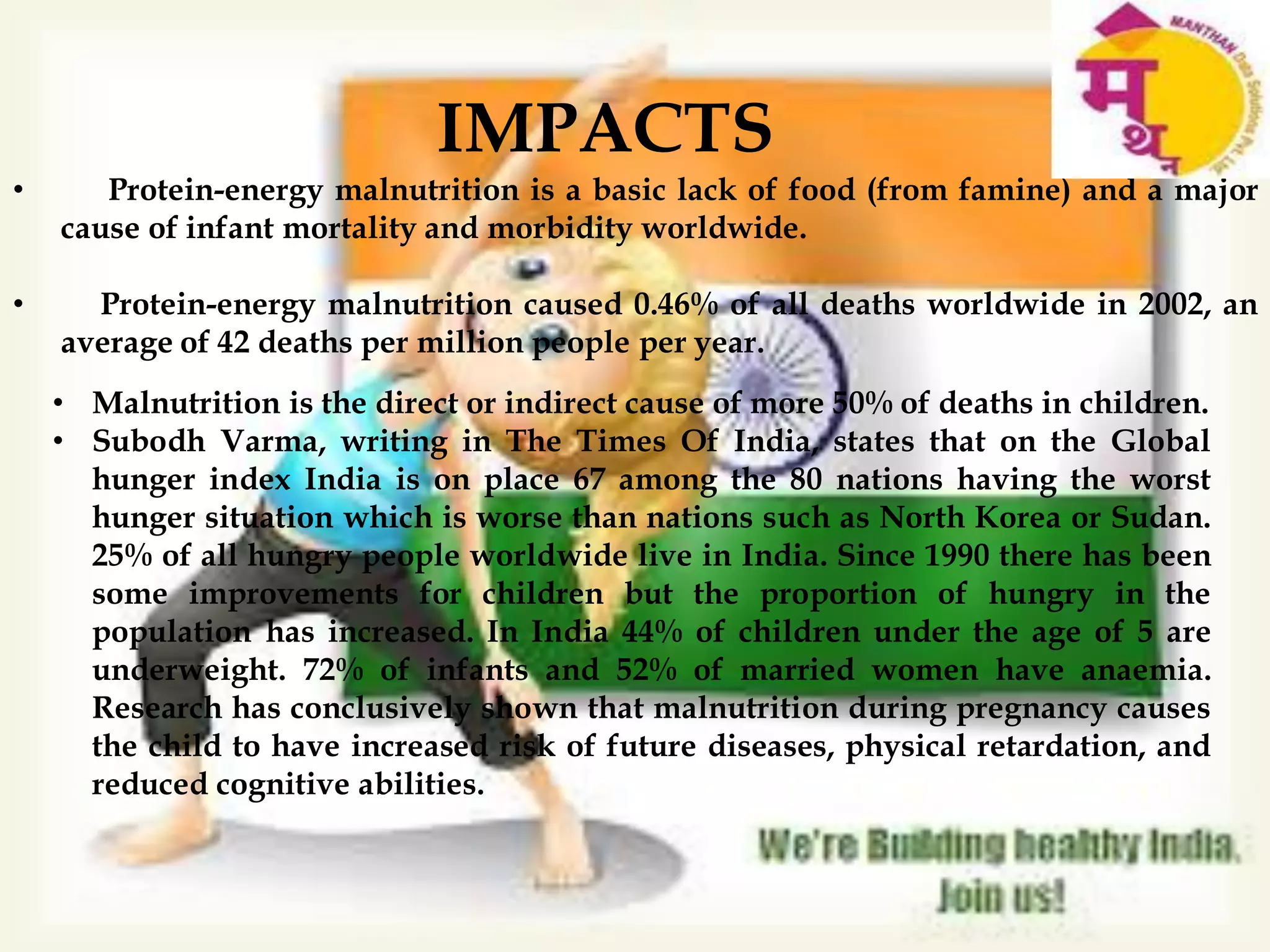
• Malnutrition is the direct or indirect cause of more 50% of deaths in children.
• Subodh Varma, writing in The Times Of India, states that on the Global
hunger index India is on place 67 among the 80 nations having the worst
hunger situation which is worse than nations such as North Korea or Sudan.
25% of all hungry people worldwide live in India. Since 1990 there has been
some improvements for children but the proportion of hungry in the
population has increased. In India 44% of children under the age of 5 are
underweight. 72% of infants and 52% of married women have anaemia.
Research has conclusively shown that malnutrition during pregnancy causes
the child to have increased risk of future diseases, physical retardation, and
reduced cognitive abilities.
• Protein-energy malnutrition is a basic lack of food (from famine) and a major
cause of infant mortality and morbidity worldwide.
• Protein-energy malnutrition caused 0.46% of all deaths worldwide in 2002, an
average of 42 deaths per million people per year.
IMPACTS
 Early diagnosis and treatment
 Promotion of breast feeding
 Development of low cost weaning
 Nutrition education and promotion of correct
feeding practices
 Family planning and spacing of births
 Immunization
 Food fortification
PREVENTION

SOLUTIONS
TREATMENT
STRATEGY
• Resolving life
threatening
conditions
• Restoring
nutritional
status
• Ensuring
nutritional
rehabilitation
BREAST
FEEDING
• Giving
awareness to
the mother in
the
Government
hospitals
through
drama and
short films
NUTRITION
EDUCATION
• The NSS and
NCC
volunteers in
various
colleges can
bring the
awareness in
nutrition
education.

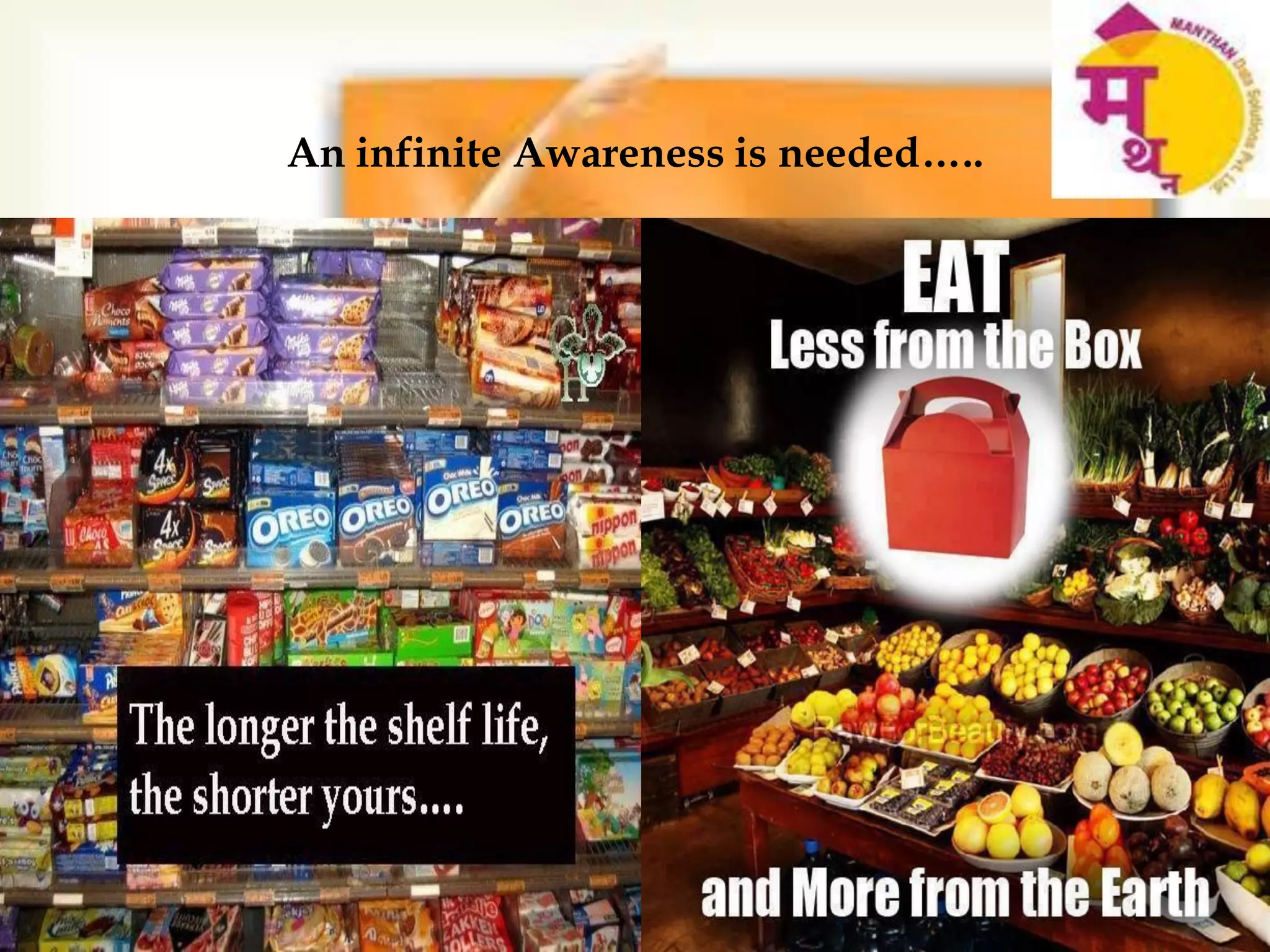
An infinite Awareness is needed…..

NUTRITION REQUIREMENT FOR AN
ORDINARY HUMAN

 Government can provide the nutritious products
along with rice, wheat, etc., in ration according to the
age groups.
for example, our government is providing
protein powder at a lower cost to all. Similarly, they
can give nutritious products also.
ACTIVE PLAN TO BE
IMPLEMENTED

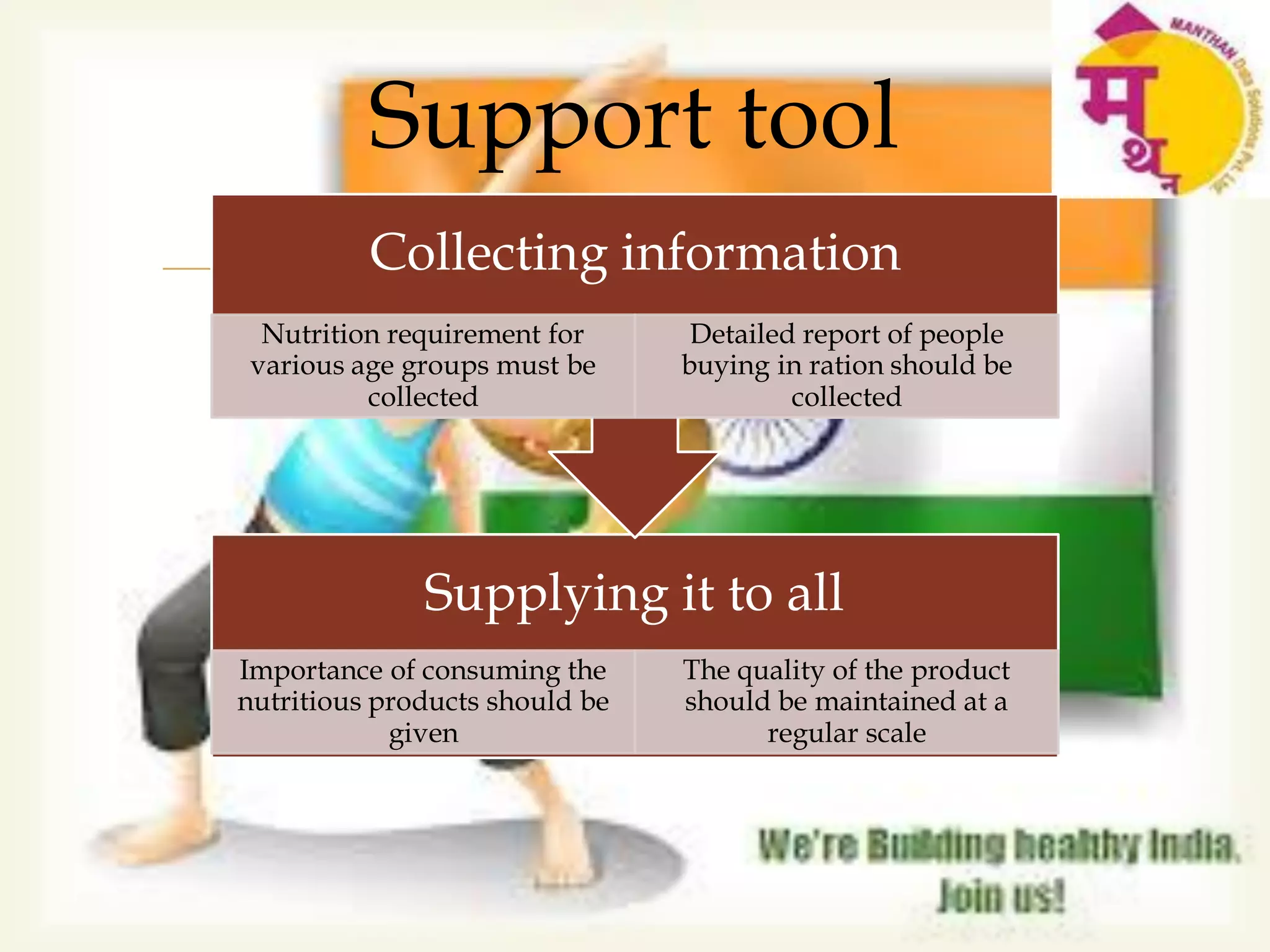
Support tool
Supplying it to all
Importance of consuming the
nutritious products should be
given
The quality of the product
should be maintained at a
regular scale
Collecting information
Nutrition requirement for
various age groups must be
collected
Detailed report of people
buying in ration should be
collected
THANK YOU

NAUSIKHIYANS

  • 1.
  • 2.
    WHO defines Malnutritionas "the cellular imbalance between the supply of nutrients and energy and the body's demand for them to ensure growth, maintenance, and specific functions.“ Malnutrition is the condition that develops when the body does not get the right amount of the vitamins, minerals, and other nutrients it needs to maintain healthy tissues and organ function.
  • 3.
    36.4 • Malnutrition isthe direct or indirect cause of more 50% of deaths in children. • Subodh Varma, writing in The Times Of India, states that on the Global hunger index India is on place 67 among the 80 nations having the worst hunger situation which is worse than nations such as North Korea or Sudan. 25% of all hungry people worldwide live in India. Since 1990 there has been some improvements for children but the proportion of hungry in the population has increased. In India 44% of children under the age of 5 are underweight. 72% of infants and 52% of married women have anaemia. Research has conclusively shown that malnutrition during pregnancy causes the child to have increased risk of future diseases, physical retardation, and reduced cognitive abilities. • Protein-energy malnutrition is a basic lack of food (from famine) and a major cause of infant mortality and morbidity worldwide. • Protein-energy malnutrition caused 0.46% of all deaths worldwide in 2002, an average of 42 deaths per million people per year. IMPACTS
  • 4.
     Early diagnosisand treatment  Promotion of breast feeding  Development of low cost weaning  Nutrition education and promotion of correct feeding practices  Family planning and spacing of births  Immunization  Food fortification PREVENTION
  • 5.
     SOLUTIONS TREATMENT STRATEGY • Resolving life threatening conditions •Restoring nutritional status • Ensuring nutritional rehabilitation BREAST FEEDING • Giving awareness to the mother in the Government hospitals through drama and short films NUTRITION EDUCATION • The NSS and NCC volunteers in various colleges can bring the awareness in nutrition education.
  • 6.
  • 7.
  • 8.
      Government canprovide the nutritious products along with rice, wheat, etc., in ration according to the age groups. for example, our government is providing protein powder at a lower cost to all. Similarly, they can give nutritious products also. ACTIVE PLAN TO BE IMPLEMENTED
  • 9.
     Support tool Supplying itto all Importance of consuming the nutritious products should be given The quality of the product should be maintained at a regular scale Collecting information Nutrition requirement for various age groups must be collected Detailed report of people buying in ration should be collected
  • 10.