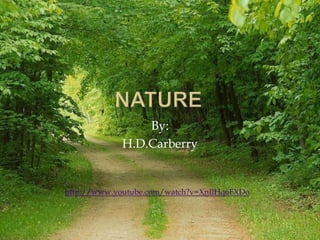
By:
H.D.Carberry
http://www.youtube.com/watch?v=XnIlHq6FXDo
The poem tells of the weather conditions in
Jamaica although it does not have the four
seasons of spring, summer, autumn and
winter. The weather conditions of golden
sunny days and wet rainy days are just as good
and are almost equivalent to the four seasons.
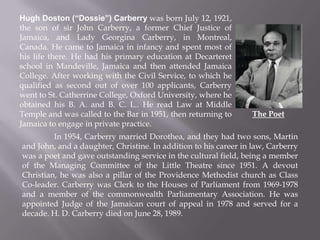
Hugh Doston (“Dossie”) Carberry was born July 12, 1921,
the son of sir John Carberry, a former Chief Justice of
Jamaica, and Lady Georgina Carberry, in Montreal,
Canada. He came to Jamaica in infancy and spent most of
his life there. He had his primary education at Decarteret
school in Mandeville, Jamaica and then attended Jamaica
College. After working with the Civil Service, to which he
qualified as second out of over 100 applicants, Carberry
went to St. Catherrine College, Oxford University, where he
obtained his B. A. and B. C. L.. He read Law at Middle
Temple and was called to the Bar in 1951, then returning to
Jamaica to engage in private practice.
In 1954, Carberry married Dorothea, and they had two sons, Martin
and John, and a daughter, Christine. In addition to his career in law, Carberry
was a poet and gave outstanding service in the cultural field, being a member
of the Managing Committee of the Little Theatre since 1951. A devout
Christian, he was also a pillar of the Providence Methodist church as Class
Co-leader. Carberry was Clerk to the Houses of Parliament from 1969-1978
and a member of the commonwealth Parliamentary Association. He was
appointed Judge of the Jamaican court of appeal in 1978 and served for a
decade. H. D. Carberry died on June 28, 1989.
The Poet
We have neither Summer nor Winter
Neither Autumn nor Spring.
We have instead the days
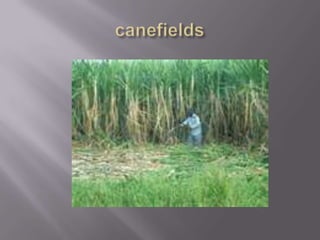
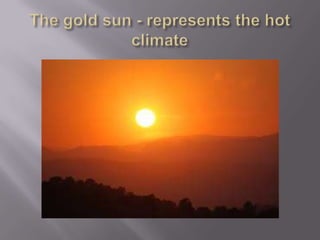
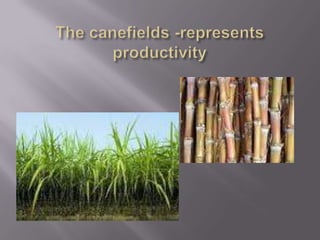
When the gold sun shines on the lush green canefields-Magnificently.
The days when the rain beats like bullet on the roofs
And there is no sound but thee swish of water in the gullies
And trees struggling in the high Jamaica winds.
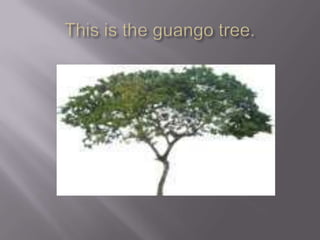
Also there are the days when leaves fade from off guango trees’
And the reaped canefields lie bare and fallow to the sun.
But best of all there are the days when the mango and the logwood
blossom
When bushes are full of the sound of bees and the scent of honey,
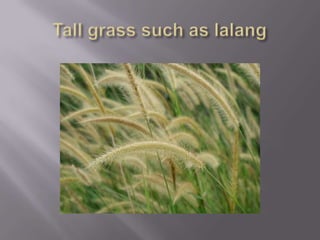
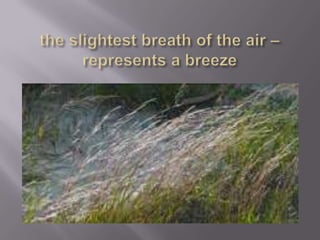
When the tall grass sways and shivers to the slightest breath of air,
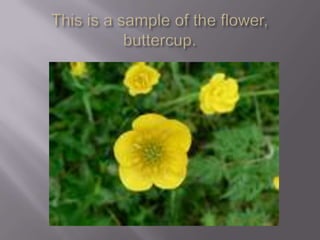
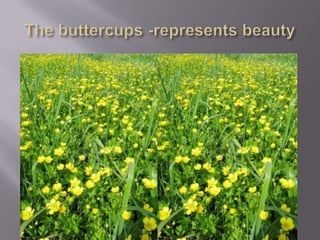
When the buttercups have paved the earth with yellow stars
And beauty comes suddenly and the rains have gone
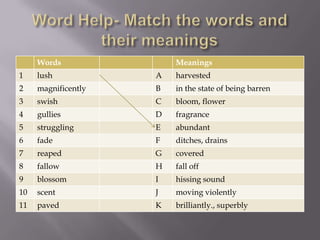
Words Meanings
1 lush A harvested
2 magnificently B in the state of being barren
3 swish C bloom, flower
4 gullies D fragrance
5 struggling E abundant
6 fade F ditches, drains
7 reaped G covered
8 fallow H fall off
9 blossom I hissing sound
10 scent J moving violently
11 paved K brilliantly., superbly
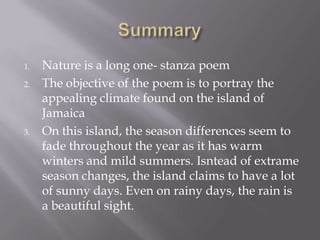
1. Nature is a long one- stanza poem
2. The objective of the poem is to portray the
appealing climate found on the island of
Jamaica
3. On this island, the season differences seem to
fade throughout the year as it has warm
winters and mild summers. Isntead of extrame
season changes, the island claims to have a lot
of sunny days. Even on rainy days, the rain is
a beautiful sight.
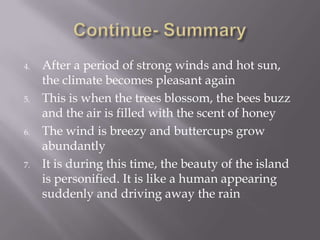
4. After a period of strong winds and hot sun,
the climate becomes pleasant again
5. This is when the trees blossom, the bees buzz
and the air is filled with the scent of honey
6. The wind is breezy and buttercups grow
abundantly
7. It is during this time, the beauty of the island
is personified. It is like a human appearing
suddenly and driving away the rain
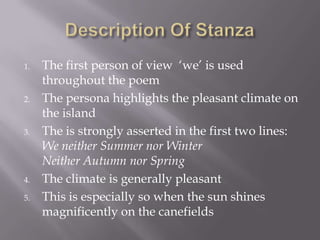
1. The first person of view ‘we’ is used
throughout the poem
2. The persona highlights the pleasant climate on
the island
3. The is strongly asserted in the first two lines:
We neither Summer nor Winter
Neither Autumn nor Spring
4. The climate is generally pleasant
5. This is especially so when the sun shines
magnificently on the canefields
6. On rainy days, the rain ‘ beats like bullets’ on the
roofs
7. However, on days when the wind is strong, the
trees sway and the leaves become fall off
8. The climate becomes pleasant again after the rainy
season
9. This is when the trees blossom
10. Swarms of the bees are in the bushes
11. The air is strongly scented with honey
12. The breezy wind sways the tall grass
13. Buttercups bloom abundantly and cover the
ground with ‘ yellow stars’
14. The climate is described as beauty which is
personified
15. It is treated like a human that comes suddenly to
drive away the rain
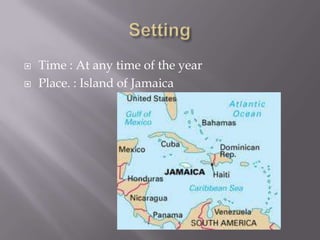
 Time : At any time of the year
 Place. : Island of Jamaica
Lines 1 to 10
The poet tells about his homeland , Jamaica and rejoices the beauty of this
island. Jamaica has no seasonal changes. It has a tropical climate which is
hot and wet throughout the year. The days of golden sunshine are
glorious and magnificent. The are many canefields in Jamaica as sugar is
one of the main exports in this country.
Lines 11 to 15
In the ending of the poem, the poet tells us his favourite time – days
when the flowers of mango trees and logwood blossom. He uses imagery
of sound and smell to illustrate abundant life and activity in the bushes
when the ‘sound of bees and the scent of honey’ add to the charm and
beauty if Jamaica. He describes the fields filled with lovely yellow
buttercups. All this happens when the rains have stopped and the beauty
if nature emerges once again.
 Beauty of nature
 Appreciation of one own country
 Appreciate nature
 We should appreciate what we have in our
own country
 We should not long for what we do not have.
 We should appreciate our homeland.
 We should appreciate the beauty of nature.
 Appreciative and happy
 Carefree and light-hearted
 Sense of beauty
 Third person point of view
 Simple and easy to understand the language
 Clear and descriptive
 Simple style with no rhyming scheme
 Imagery – e.g. ‘gold sun’, ‘lush green fields’, ‘trees
struggling’
 Alliteration – e.g. ‘sways and shivers to the slightest breath
of air’
 Symbols – e.g. ‘gold sun’ – symbol of summer, ‘rains’ –
symbol of winter
 Contrast – e.g. ‘beauty’ or summer is compared with ‘rains’
or winter
 Figurative Language – Simile – ‘rain beats like bullets’
 Metaphor – e.g. ‘the buttercups paved the earth with yellow
stars’
 Personafication – ‘buttercups have paved the earth’
… buttercups have been personified as having laid tiles
 Onomatopeia – e’g ‘swish’
 The six metaphors in the poem are:
1. rain beats like bullets - This is compared to the
raindrop like bullets
2. trees struggling – This is compared to the trees
moving violently in the strong wind
3. leaves fade off – This is compared to the leaves
falling off
4. canefields lie bare – This is compared to the
buttercups to become productivity
5. buttercups have paved the earth – This is compared
to the buttercups covering the ground
6. yellow stars – This is compared to the buttercups
looking like yellow stars
Examples Being described like human beings who
perform certain actions
rain - the rain beats
trees - the trees struggle
tall grass - the canefields lie bare
canefields - the tall grass sways and shivers
buttercups - the buttercups pave the earth
beauty - beauty appears suddenly
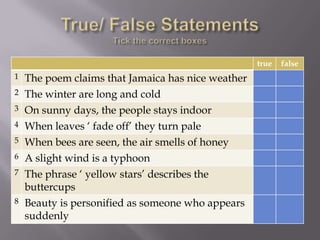
true false
1 The poem claims that Jamaica has nice weather
2 The winter are long and cold
3 On sunny days, the people stays indoor
4 When leaves ‘ fade off’ they turn pale
5 When bees are seen, the air smells of honey
6 A slight wind is a typhoon
7 The phrase ‘ yellow stars’ describes the
buttercups
8 Beauty is personified as someone who appears
suddenly
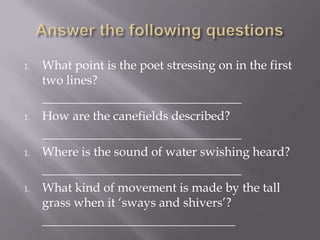
1. What point is the poet stressing on in the first
two lines?
________________________________
1. How are the canefields described?
________________________________
1. Where is the sound of water swishing heard?
________________________________
1. What kind of movement is made by the tall
grass when it ‘sways and shivers’?
_______________________________
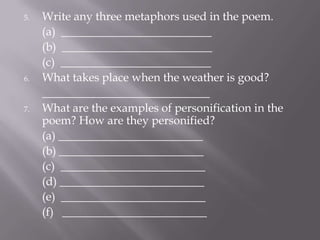
5. Write any three metaphors used in the poem.
(a) __________________________
(b) __________________________
(c) __________________________
6. What takes place when the weather is good?
_____________________________
7. What are the examples of personification in the
poem? How are they personified?
(a) _________________________
(b) _________________________
(c) _________________________
(d) _________________________
(e) _________________________
(f) _________________________
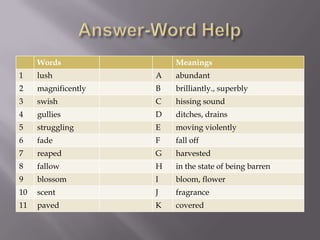
Words Meanings
1 lush A abundant
2 magnificently B brilliantly., superbly
3 swish C hissing sound
4 gullies D ditches, drains
5 struggling E moving violently
6 fade F fall off
7 reaped G harvested
8 fallow H in the state of being barren
9 blossom I bloom, flower
10 scent J fragrance
11 paved K covered
Answers
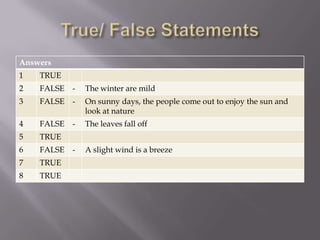
1 TRUE
2 FALSE - The winter are mild
3 FALSE - On sunny days, the people come out to enjoy the sun and
look at nature
4 FALSE - The leaves fall off
5 TRUE
6 FALSE - A slight wind is a breeze
7 TRUE
8 TRUE
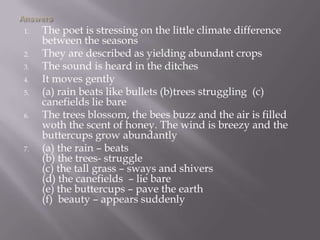
1. The poet is stressing on the little climate difference
between the seasons
2. They are described as yielding abundant crops
3. The sound is heard in the ditches
4. It moves gently
5. (a) rain beats like bullets (b)trees struggling (c)
canefields lie bare
6. The trees blossom, the bees buzz and the air is filled
woth the scent of honey. The wind is breezy and the
buttercups grow abundantly
7. (a) the rain – beats
(b) the trees- struggle
(c) the tall grass – sways and shivers
(d) the canefields – lie bare
(e) the buttercups – pave the earth
(f) beauty – appears suddenly
Try
your
best
and all
the
best
from

Nature by H.D. Carberry

  • 1.
  • 2.
    The poem tellsof the weather conditions in Jamaica although it does not have the four seasons of spring, summer, autumn and winter. The weather conditions of golden sunny days and wet rainy days are just as good and are almost equivalent to the four seasons.
  • 3.
    Hugh Doston (“Dossie”)Carberry was born July 12, 1921, the son of sir John Carberry, a former Chief Justice of Jamaica, and Lady Georgina Carberry, in Montreal, Canada. He came to Jamaica in infancy and spent most of his life there. He had his primary education at Decarteret school in Mandeville, Jamaica and then attended Jamaica College. After working with the Civil Service, to which he qualified as second out of over 100 applicants, Carberry went to St. Catherrine College, Oxford University, where he obtained his B. A. and B. C. L.. He read Law at Middle Temple and was called to the Bar in 1951, then returning to Jamaica to engage in private practice. In 1954, Carberry married Dorothea, and they had two sons, Martin and John, and a daughter, Christine. In addition to his career in law, Carberry was a poet and gave outstanding service in the cultural field, being a member of the Managing Committee of the Little Theatre since 1951. A devout Christian, he was also a pillar of the Providence Methodist church as Class Co-leader. Carberry was Clerk to the Houses of Parliament from 1969-1978 and a member of the commonwealth Parliamentary Association. He was appointed Judge of the Jamaican court of appeal in 1978 and served for a decade. H. D. Carberry died on June 28, 1989. The Poet
  • 4.
    We have neitherSummer nor Winter Neither Autumn nor Spring. We have instead the days When the gold sun shines on the lush green canefields-Magnificently. The days when the rain beats like bullet on the roofs And there is no sound but thee swish of water in the gullies And trees struggling in the high Jamaica winds. Also there are the days when leaves fade from off guango trees’ And the reaped canefields lie bare and fallow to the sun. But best of all there are the days when the mango and the logwood blossom When bushes are full of the sound of bees and the scent of honey, When the tall grass sways and shivers to the slightest breath of air, When the buttercups have paved the earth with yellow stars And beauty comes suddenly and the rains have gone
  • 5.
    Words Meanings 1 lushA harvested 2 magnificently B in the state of being barren 3 swish C bloom, flower 4 gullies D fragrance 5 struggling E abundant 6 fade F ditches, drains 7 reaped G covered 8 fallow H fall off 9 blossom I hissing sound 10 scent J moving violently 11 paved K brilliantly., superbly
  • 6.
    1. Nature isa long one- stanza poem 2. The objective of the poem is to portray the appealing climate found on the island of Jamaica 3. On this island, the season differences seem to fade throughout the year as it has warm winters and mild summers. Isntead of extrame season changes, the island claims to have a lot of sunny days. Even on rainy days, the rain is a beautiful sight.
  • 7.
    4. After aperiod of strong winds and hot sun, the climate becomes pleasant again 5. This is when the trees blossom, the bees buzz and the air is filled with the scent of honey 6. The wind is breezy and buttercups grow abundantly 7. It is during this time, the beauty of the island is personified. It is like a human appearing suddenly and driving away the rain
  • 8.
    1. The firstperson of view ‘we’ is used throughout the poem 2. The persona highlights the pleasant climate on the island 3. The is strongly asserted in the first two lines: We neither Summer nor Winter Neither Autumn nor Spring 4. The climate is generally pleasant 5. This is especially so when the sun shines magnificently on the canefields
  • 9.
    6. On rainydays, the rain ‘ beats like bullets’ on the roofs 7. However, on days when the wind is strong, the trees sway and the leaves become fall off 8. The climate becomes pleasant again after the rainy season 9. This is when the trees blossom 10. Swarms of the bees are in the bushes 11. The air is strongly scented with honey 12. The breezy wind sways the tall grass 13. Buttercups bloom abundantly and cover the ground with ‘ yellow stars’ 14. The climate is described as beauty which is personified 15. It is treated like a human that comes suddenly to drive away the rain
  • 10.
     Time :At any time of the year  Place. : Island of Jamaica
  • 11.
    Lines 1 to10 The poet tells about his homeland , Jamaica and rejoices the beauty of this island. Jamaica has no seasonal changes. It has a tropical climate which is hot and wet throughout the year. The days of golden sunshine are glorious and magnificent. The are many canefields in Jamaica as sugar is one of the main exports in this country. Lines 11 to 15 In the ending of the poem, the poet tells us his favourite time – days when the flowers of mango trees and logwood blossom. He uses imagery of sound and smell to illustrate abundant life and activity in the bushes when the ‘sound of bees and the scent of honey’ add to the charm and beauty if Jamaica. He describes the fields filled with lovely yellow buttercups. All this happens when the rains have stopped and the beauty if nature emerges once again.
  • 12.
     Beauty ofnature  Appreciation of one own country  Appreciate nature
  • 13.
     We shouldappreciate what we have in our own country  We should not long for what we do not have.  We should appreciate our homeland.  We should appreciate the beauty of nature.
  • 14.
     Appreciative andhappy  Carefree and light-hearted  Sense of beauty
  • 15.
     Third personpoint of view
  • 16.
     Simple andeasy to understand the language  Clear and descriptive  Simple style with no rhyming scheme
  • 17.
     Imagery –e.g. ‘gold sun’, ‘lush green fields’, ‘trees struggling’  Alliteration – e.g. ‘sways and shivers to the slightest breath of air’  Symbols – e.g. ‘gold sun’ – symbol of summer, ‘rains’ – symbol of winter  Contrast – e.g. ‘beauty’ or summer is compared with ‘rains’ or winter  Figurative Language – Simile – ‘rain beats like bullets’  Metaphor – e.g. ‘the buttercups paved the earth with yellow stars’  Personafication – ‘buttercups have paved the earth’ … buttercups have been personified as having laid tiles  Onomatopeia – e’g ‘swish’
  • 27.
     The sixmetaphors in the poem are: 1. rain beats like bullets - This is compared to the raindrop like bullets 2. trees struggling – This is compared to the trees moving violently in the strong wind 3. leaves fade off – This is compared to the leaves falling off 4. canefields lie bare – This is compared to the buttercups to become productivity 5. buttercups have paved the earth – This is compared to the buttercups covering the ground 6. yellow stars – This is compared to the buttercups looking like yellow stars
  • 28.
    Examples Being describedlike human beings who perform certain actions rain - the rain beats trees - the trees struggle tall grass - the canefields lie bare canefields - the tall grass sways and shivers buttercups - the buttercups pave the earth beauty - beauty appears suddenly
  • 30.
    true false 1 Thepoem claims that Jamaica has nice weather 2 The winter are long and cold 3 On sunny days, the people stays indoor 4 When leaves ‘ fade off’ they turn pale 5 When bees are seen, the air smells of honey 6 A slight wind is a typhoon 7 The phrase ‘ yellow stars’ describes the buttercups 8 Beauty is personified as someone who appears suddenly
  • 31.
    1. What pointis the poet stressing on in the first two lines? ________________________________ 1. How are the canefields described? ________________________________ 1. Where is the sound of water swishing heard? ________________________________ 1. What kind of movement is made by the tall grass when it ‘sways and shivers’? _______________________________
  • 32.
    5. Write anythree metaphors used in the poem. (a) __________________________ (b) __________________________ (c) __________________________ 6. What takes place when the weather is good? _____________________________ 7. What are the examples of personification in the poem? How are they personified? (a) _________________________ (b) _________________________ (c) _________________________ (d) _________________________ (e) _________________________ (f) _________________________
  • 33.
    Words Meanings 1 lushA abundant 2 magnificently B brilliantly., superbly 3 swish C hissing sound 4 gullies D ditches, drains 5 struggling E moving violently 6 fade F fall off 7 reaped G harvested 8 fallow H in the state of being barren 9 blossom I bloom, flower 10 scent J fragrance 11 paved K covered
  • 34.
    Answers 1 TRUE 2 FALSE- The winter are mild 3 FALSE - On sunny days, the people come out to enjoy the sun and look at nature 4 FALSE - The leaves fall off 5 TRUE 6 FALSE - A slight wind is a breeze 7 TRUE 8 TRUE
  • 35.
    1. The poetis stressing on the little climate difference between the seasons 2. They are described as yielding abundant crops 3. The sound is heard in the ditches 4. It moves gently 5. (a) rain beats like bullets (b)trees struggling (c) canefields lie bare 6. The trees blossom, the bees buzz and the air is filled woth the scent of honey. The wind is breezy and the buttercups grow abundantly 7. (a) the rain – beats (b) the trees- struggle (c) the tall grass – sways and shivers (d) the canefields – lie bare (e) the buttercups – pave the earth (f) beauty – appears suddenly
  • 36.