Exploring Natural
Disasters!
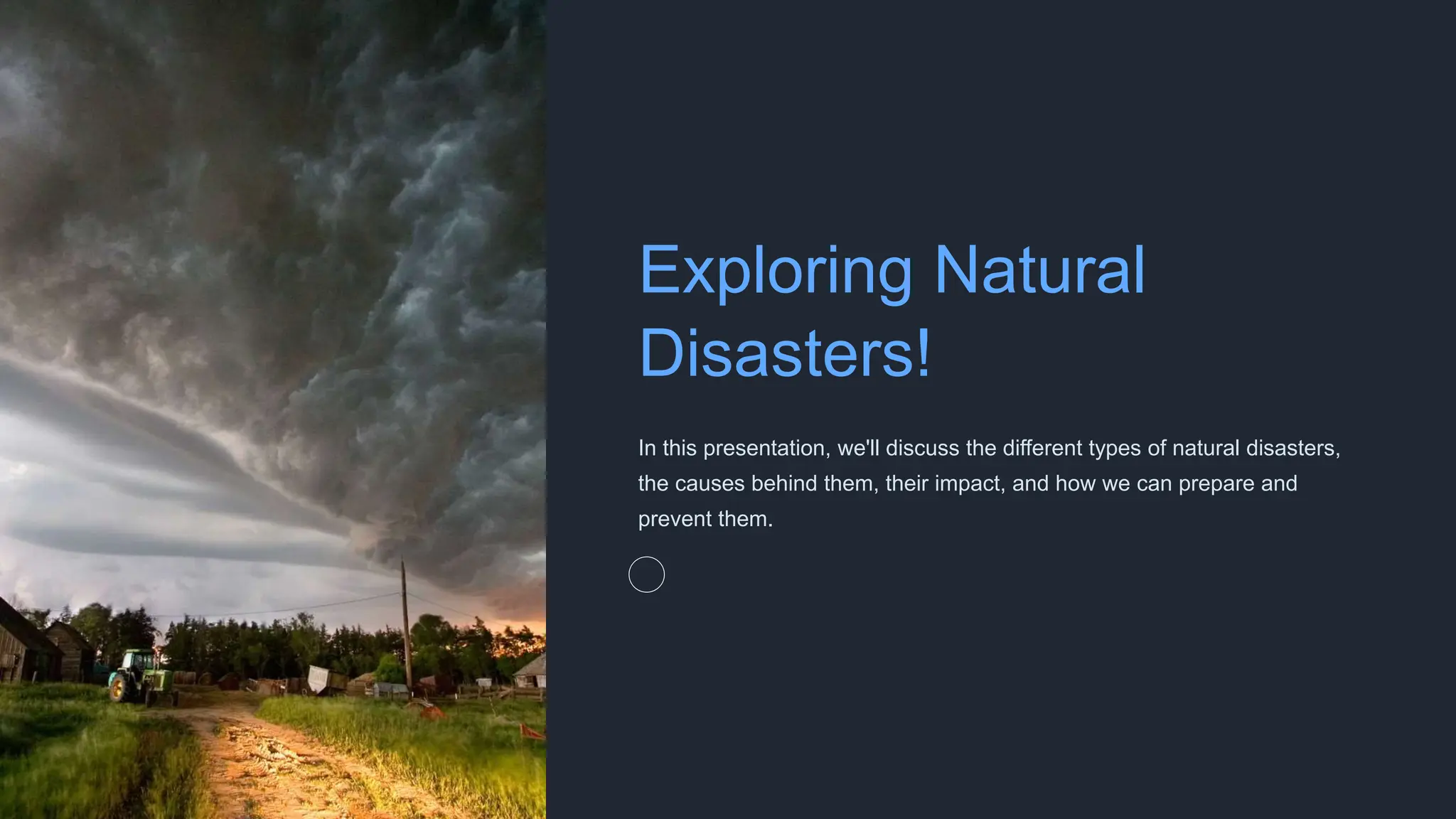
In this presentation, we'll discuss the different types of natural disasters,
the causes behind them, their impact, and how we can prepare and
prevent them.
What Are Natural Disasters?
1 Definition
Natural disasters refer to catastrophic
events caused by natural phenomena such
as earthquakes, hurricanes, and floods.
These can result in property damage, loss
of life and significant economic loss.
2 Types
There are several types of natural
disasters including geological events like
earthquakes and volcanic eruptions,
weather events like hurricanes and
tornadoes, and hydrological events like
floods and tsunamis.
Causes of Natural Disasters
Plate Tectonics
Movement and displacement of earth's crust
can cause earthquakes, volcanic eruptions,
and tsunamis.
Extreme Weather Conditions
Natural disasters like hurricanes, tornadoes,
and floods are caused by extreme weather
conditions.
Human Activities
Human activities like deforestation,
construction in flood-prone areas, and mining
can weaken the natural environment and
increase the likelihood of natural disasters.
Climate Change
Increased carbon emissions and greenhouse
gases can cause changes in weather patterns
and a subsequent increase in natural
disasters.
Natural Disasters and Climate Change
The Connection
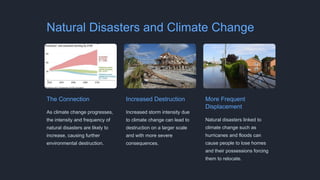
As climate change progresses,
the intensity and frequency of
natural disasters are likely to
increase, causing further
environmental destruction.
Increased Destruction
Increased storm intensity due
to climate change can lead to
destruction on a larger scale
and with more severe
consequences.
More Frequent
Displacement
Natural disasters linked to
climate change such as
hurricanes and floods can
cause people to lose homes
and their possessions forcing
them to relocate.
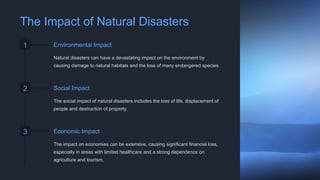
The Impact of Natural Disasters
1 Environmental Impact
Natural disasters can have a devastating impact on the environment by
causing damage to natural habitats and the loss of many endangered species.
2 Social Impact
The social impact of natural disasters includes the loss of life, displacement of
people and destruction of property.
3 Economic Impact
The impact on economies can be extensive, causing significant financial loss,
especially in areas with limited healthcare and a strong dependence on
agriculture and tourism.
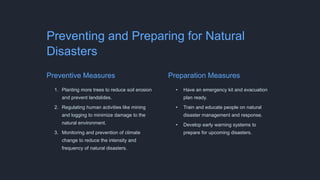
Preventing and Preparing for Natural
Disasters
Preventive Measures
1. Planting more trees to reduce soil erosion
and prevent landslides.
2. Regulating human activities like mining
and logging to minimize damage to the
natural environment.
3. Monitoring and prevention of climate
change to reduce the intensity and
frequency of natural disasters.
Preparation Measures
• Have an emergency kit and evacuation
plan ready.
• Train and educate people on natural
disaster management and response.
• Develop early warning systems to
prepare for upcoming disasters.
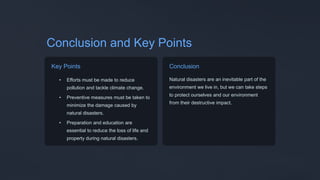
Conclusion and Key Points
Key Points
• Efforts must be made to reduce
pollution and tackle climate change.
• Preventive measures must be taken to
minimize the damage caused by
natural disasters.
• Preparation and education are
essential to reduce the loss of life and
property during natural disasters.
Conclusion
Natural disasters are an inevitable part of the
environment we live in, but we can take steps
to protect ourselves and our environment
from their destructive impact.

Natural-Disasters HOW IS EFFECTING THE ENVIRNOMENT

  • 1.
    Exploring Natural Disasters! In thispresentation, we'll discuss the different types of natural disasters, the causes behind them, their impact, and how we can prepare and prevent them.
  • 2.
    What Are NaturalDisasters? 1 Definition Natural disasters refer to catastrophic events caused by natural phenomena such as earthquakes, hurricanes, and floods. These can result in property damage, loss of life and significant economic loss. 2 Types There are several types of natural disasters including geological events like earthquakes and volcanic eruptions, weather events like hurricanes and tornadoes, and hydrological events like floods and tsunamis.
  • 3.
    Causes of NaturalDisasters Plate Tectonics Movement and displacement of earth's crust can cause earthquakes, volcanic eruptions, and tsunamis. Extreme Weather Conditions Natural disasters like hurricanes, tornadoes, and floods are caused by extreme weather conditions. Human Activities Human activities like deforestation, construction in flood-prone areas, and mining can weaken the natural environment and increase the likelihood of natural disasters. Climate Change Increased carbon emissions and greenhouse gases can cause changes in weather patterns and a subsequent increase in natural disasters.
  • 4.
    Natural Disasters andClimate Change The Connection As climate change progresses, the intensity and frequency of natural disasters are likely to increase, causing further environmental destruction. Increased Destruction Increased storm intensity due to climate change can lead to destruction on a larger scale and with more severe consequences. More Frequent Displacement Natural disasters linked to climate change such as hurricanes and floods can cause people to lose homes and their possessions forcing them to relocate.
  • 5.
    The Impact ofNatural Disasters 1 Environmental Impact Natural disasters can have a devastating impact on the environment by causing damage to natural habitats and the loss of many endangered species. 2 Social Impact The social impact of natural disasters includes the loss of life, displacement of people and destruction of property. 3 Economic Impact The impact on economies can be extensive, causing significant financial loss, especially in areas with limited healthcare and a strong dependence on agriculture and tourism.
  • 6.
    Preventing and Preparingfor Natural Disasters Preventive Measures 1. Planting more trees to reduce soil erosion and prevent landslides. 2. Regulating human activities like mining and logging to minimize damage to the natural environment. 3. Monitoring and prevention of climate change to reduce the intensity and frequency of natural disasters. Preparation Measures • Have an emergency kit and evacuation plan ready. • Train and educate people on natural disaster management and response. • Develop early warning systems to prepare for upcoming disasters.
  • 7.
    Conclusion and KeyPoints Key Points • Efforts must be made to reduce pollution and tackle climate change. • Preventive measures must be taken to minimize the damage caused by natural disasters. • Preparation and education are essential to reduce the loss of life and property during natural disasters. Conclusion Natural disasters are an inevitable part of the environment we live in, but we can take steps to protect ourselves and our environment from their destructive impact.