Downloaded 487 times
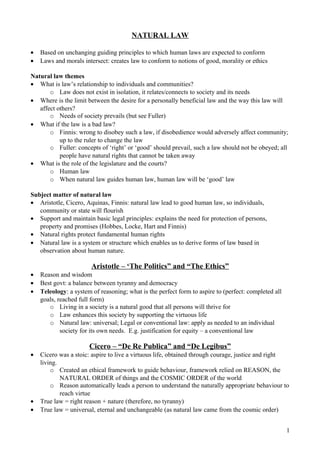
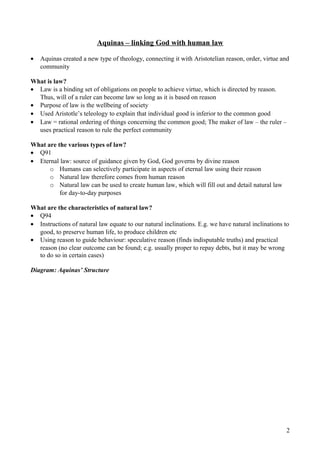
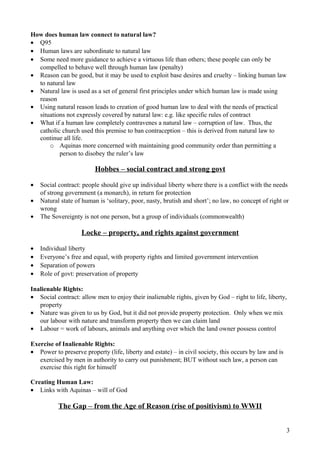
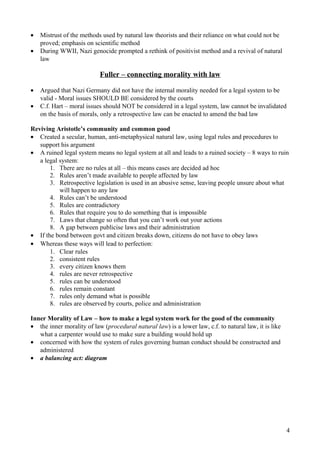

Natural law theories propose that there are objective, universal principles of morality that can be discovered by reason and that inform just positive law. Key thinkers in the natural law tradition include Aristotle, Aquinas, Hobbes, Locke, Fuller, Finnis, and Hart. They variously argue that natural law is derived from human nature, God, or basic human goods. For Aquinas, natural law comes from eternal law and practical reason, and just human laws should conform to natural law. Finnis develops a secular natural law based on seven basic human goods. Critics argue natural law is not objective or universal and simply imposes personal views under the guise of rational principles.


