National Physical Activity
Guidelines
What are they?
• Developed by the Australian Department of
Health and Ageing.
• Realistic strategies for in cooperating physical
activity into our daily lives.
• Minimum levels of physical activity required
for optimum health and bodyweight.
Dimensions of NPAG’s
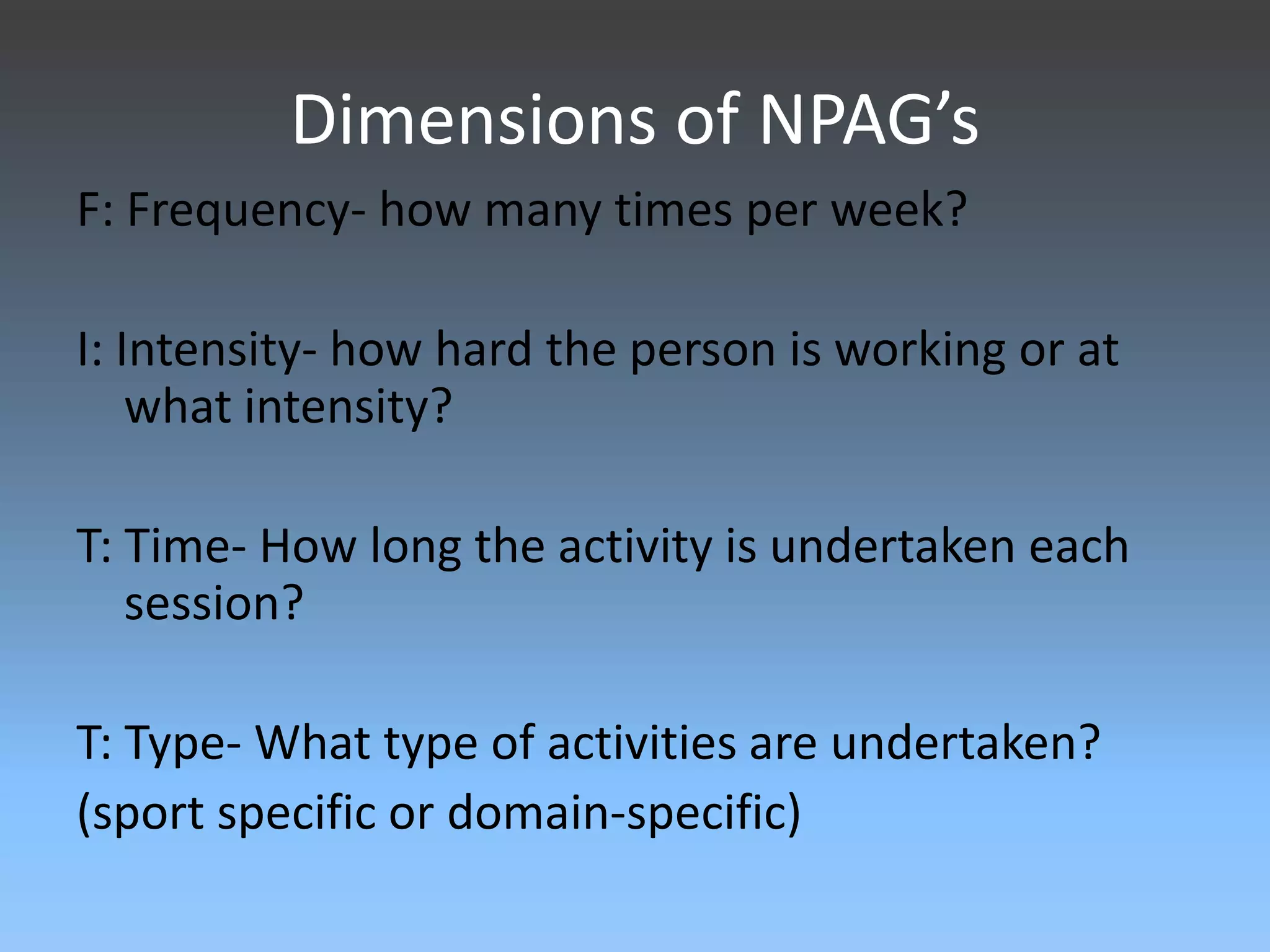
F: Frequency- how many times per week?
I: Intensity- how hard the person is working or at
what intensity?
T: Time- How long the activity is undertaken each
session?
T: Type- What type of activities are undertaken?
(sport specific or domain-specific)
Adult- Guidelines......
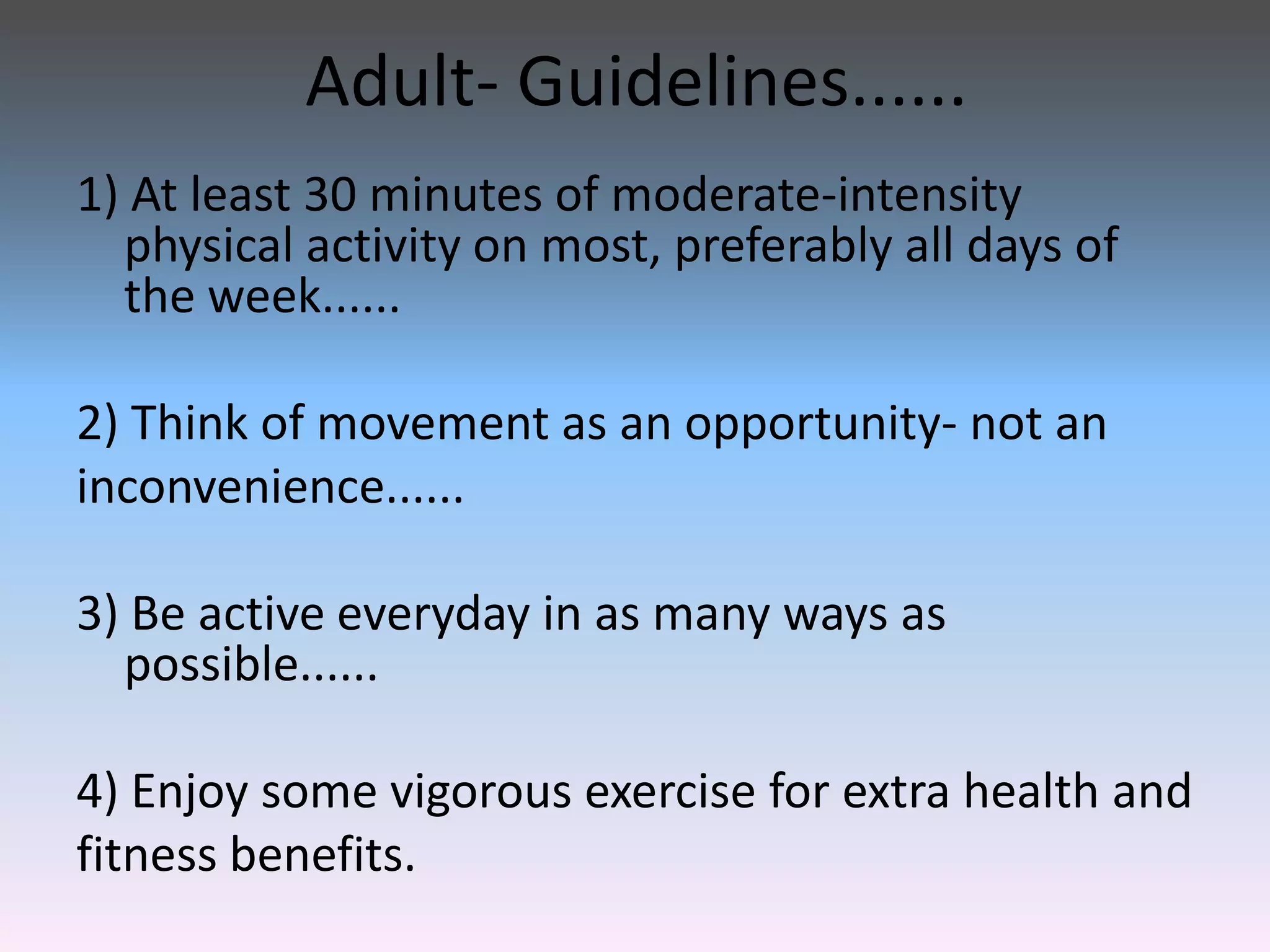
1) At least 30 minutes of moderate-intensity
physical activity on most, preferably all days of
the week......
2) Think of movement as an opportunity- not an
inconvenience......
3) Be active everyday in as many ways as
possible......
4) Enjoy some vigorous exercise for extra health and
fitness benefits.
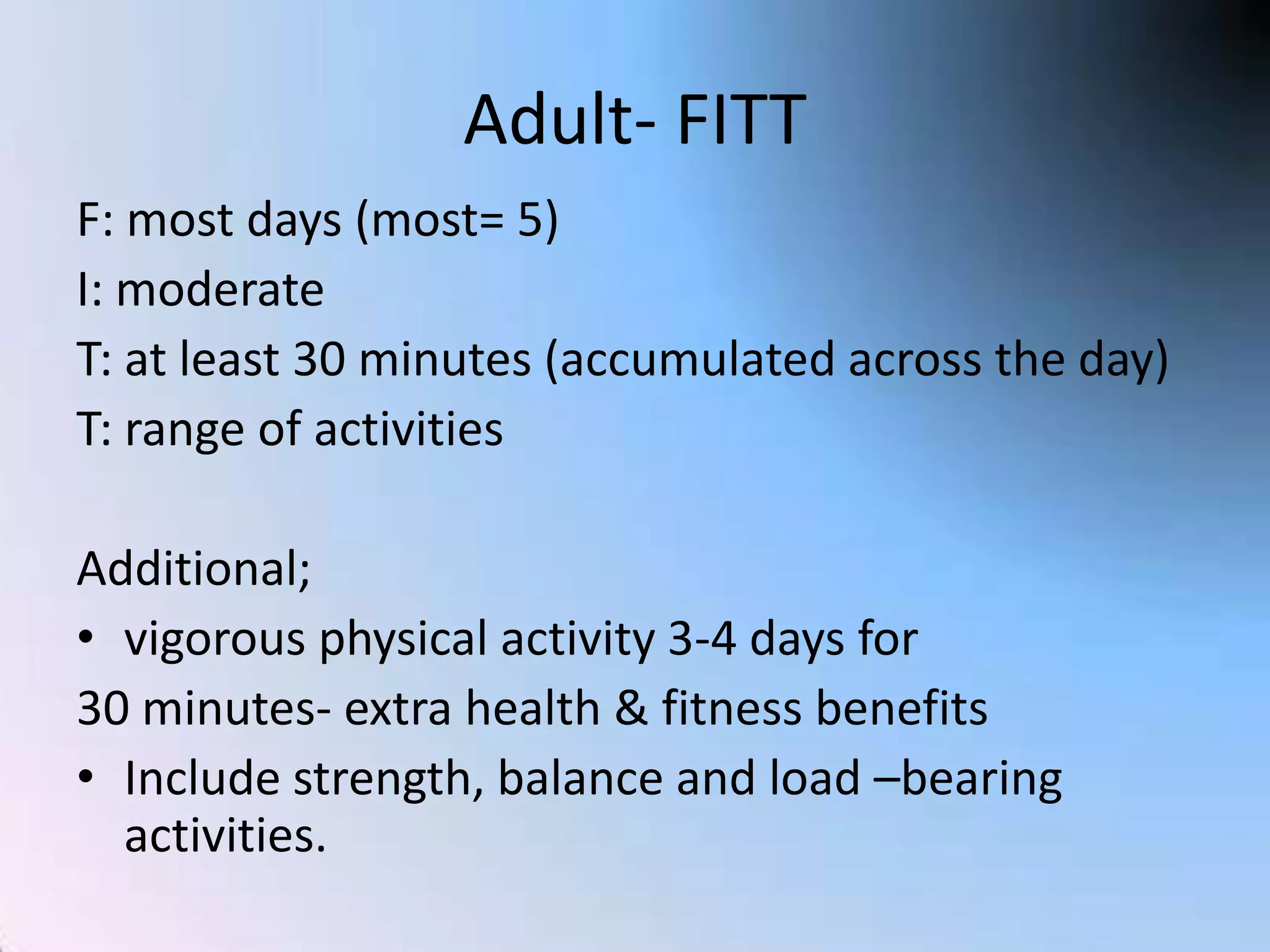
Adult- FITT
F: most days (most= 5)
I: moderate
T: at least 30 minutes (accumulated across the day)
T: range of activities

Additional;
• vigorous physical activity 3-4 days for
30 minutes- extra health & fitness benefits
• Include strength, balance and load –bearing
activities.
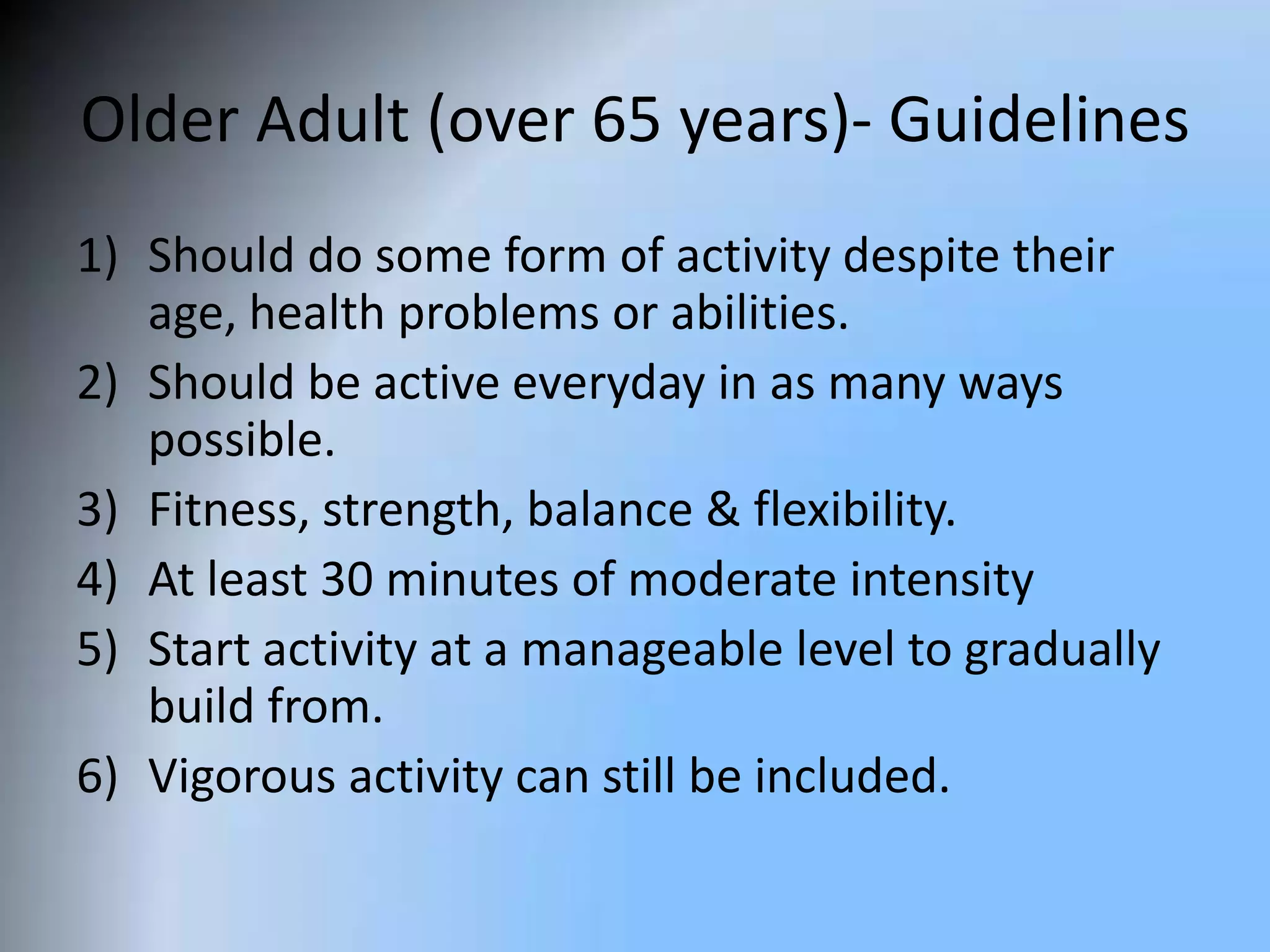
Older Adult (over 65 years)- Guidelines
1) Should do some form of activity despite their
age, health problems or abilities.
2) Should be active everyday in as many ways
possible.
3) Fitness, strength, balance & flexibility.
4) At least 30 minutes of moderate intensity
5) Start activity at a manageable level to gradually
build from.
6) Vigorous activity can still be included.
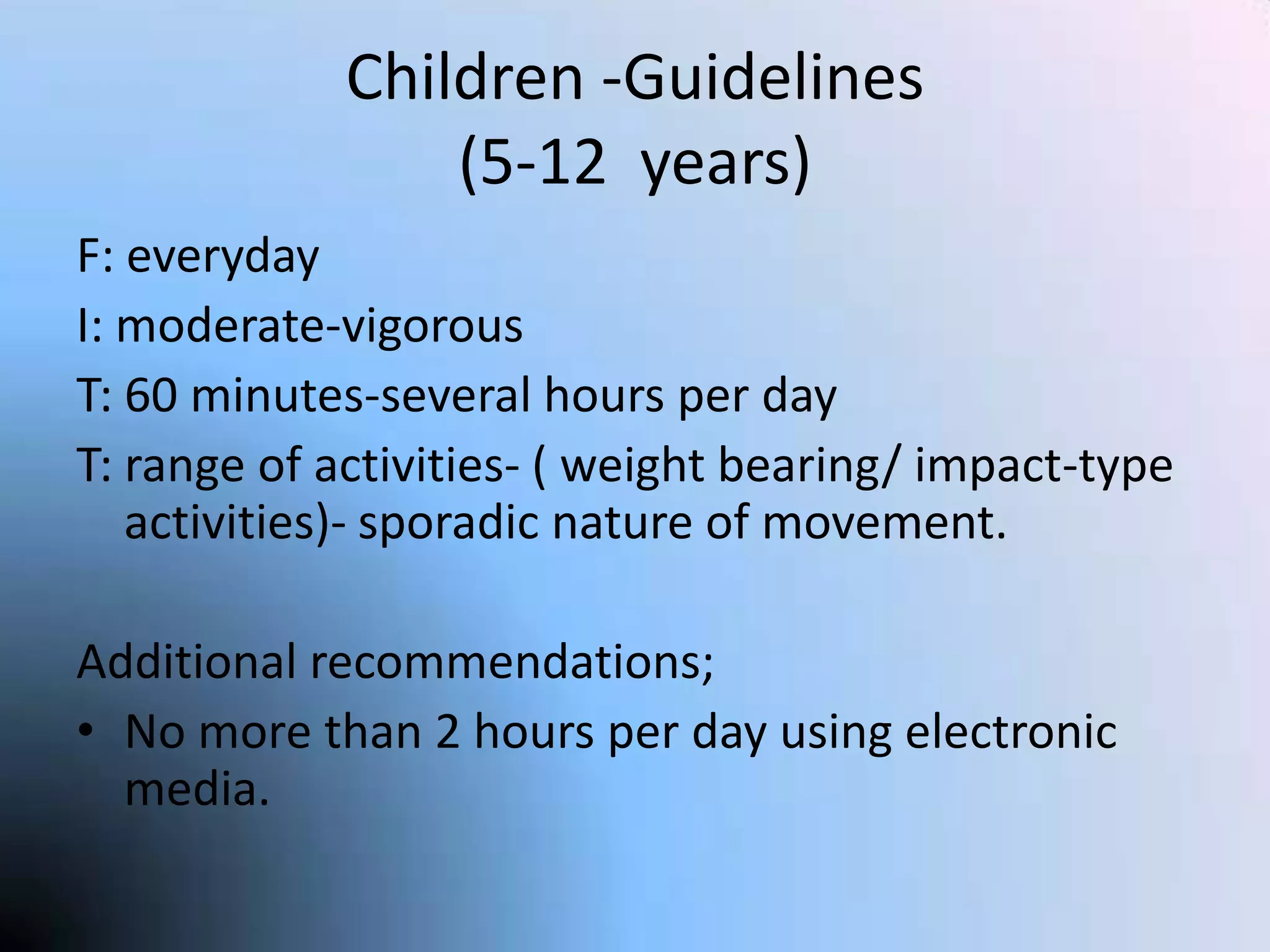
Children -Guidelines
(5-12 years)
F: everyday
I: moderate-vigorous
T: 60 minutes-several hours per day
T: range of activities- ( weight bearing/ impact-type
activities)- sporadic nature of movement.
Additional recommendations;
• No more than 2 hours per day using electronic
media.
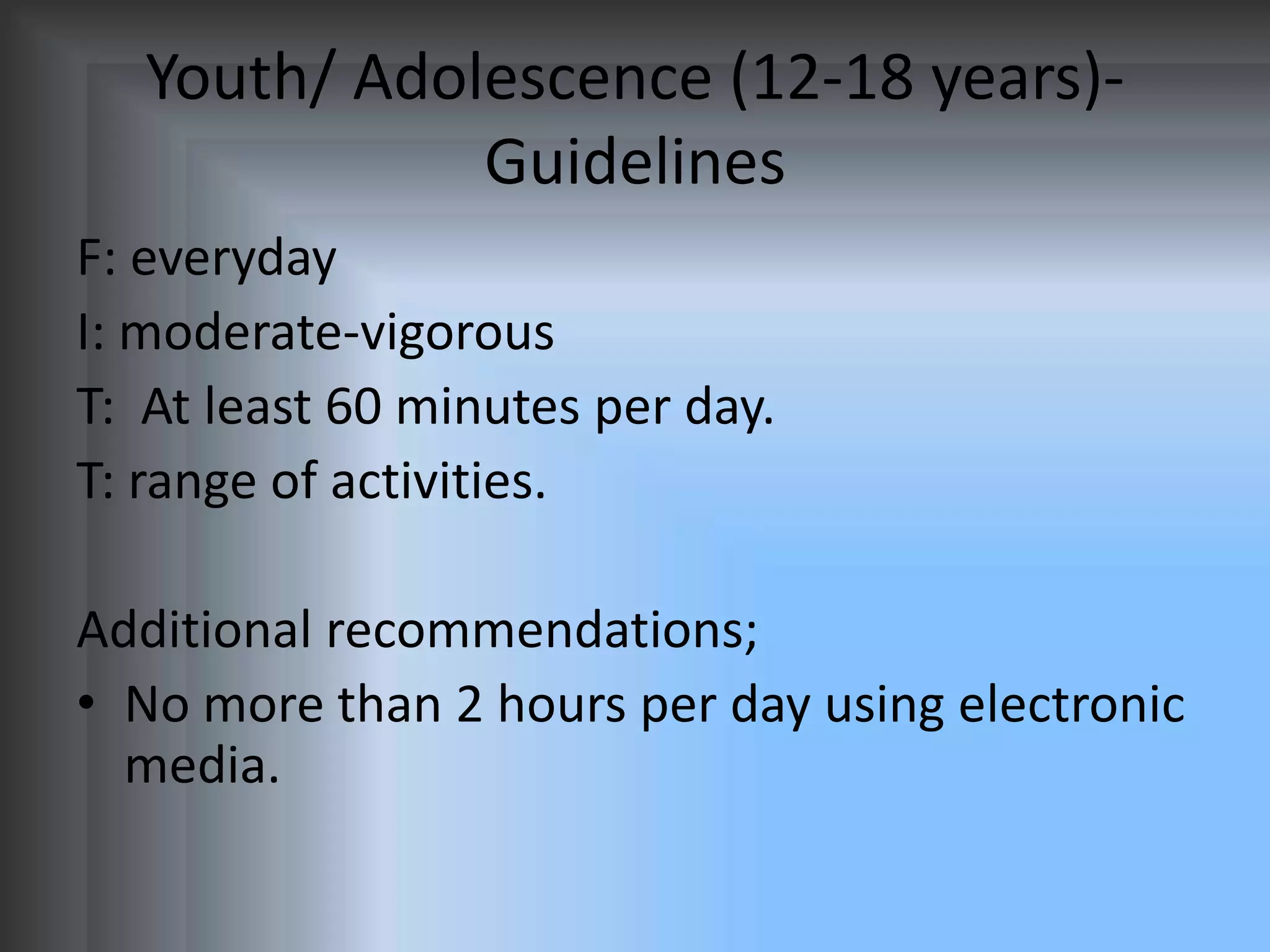
Youth/ Adolescence (12-18 years)Guidelines
F: everyday
I: moderate-vigorous
T: At least 60 minutes per day.
T: range of activities.
Additional recommendations;
• No more than 2 hours per day using electronic
media.
Overweight & Obese Adult
Recommendations
F: everyday
I: low-moderate
T: at least 60 minutes (accumulated across the
day)
T: aerobic -type activities
What are the barriers to physical
activity?
•
•
•
•
•

Children
Youth/Adolescents
Adults
Older Adults
Overweight/ Obese

National physical activity guidelines

  • 1.
  • 2.
    What are they? •Developed by the Australian Department of Health and Ageing. • Realistic strategies for in cooperating physical activity into our daily lives. • Minimum levels of physical activity required for optimum health and bodyweight.
  • 3.
    Dimensions of NPAG’s F:Frequency- how many times per week? I: Intensity- how hard the person is working or at what intensity? T: Time- How long the activity is undertaken each session? T: Type- What type of activities are undertaken? (sport specific or domain-specific)
  • 4.
    Adult- Guidelines...... 1) Atleast 30 minutes of moderate-intensity physical activity on most, preferably all days of the week...... 2) Think of movement as an opportunity- not an inconvenience...... 3) Be active everyday in as many ways as possible...... 4) Enjoy some vigorous exercise for extra health and fitness benefits.
  • 5.
    Adult- FITT F: mostdays (most= 5) I: moderate T: at least 30 minutes (accumulated across the day) T: range of activities Additional; • vigorous physical activity 3-4 days for 30 minutes- extra health & fitness benefits • Include strength, balance and load –bearing activities.
  • 6.
    Older Adult (over65 years)- Guidelines 1) Should do some form of activity despite their age, health problems or abilities. 2) Should be active everyday in as many ways possible. 3) Fitness, strength, balance & flexibility. 4) At least 30 minutes of moderate intensity 5) Start activity at a manageable level to gradually build from. 6) Vigorous activity can still be included.
  • 7.
    Children -Guidelines (5-12 years) F:everyday I: moderate-vigorous T: 60 minutes-several hours per day T: range of activities- ( weight bearing/ impact-type activities)- sporadic nature of movement. Additional recommendations; • No more than 2 hours per day using electronic media.
  • 8.
    Youth/ Adolescence (12-18years)Guidelines F: everyday I: moderate-vigorous T: At least 60 minutes per day. T: range of activities. Additional recommendations; • No more than 2 hours per day using electronic media.
  • 9.
    Overweight & ObeseAdult Recommendations F: everyday I: low-moderate T: at least 60 minutes (accumulated across the day) T: aerobic -type activities
  • 10.
    What are thebarriers to physical activity? • • • • • Children Youth/Adolescents Adults Older Adults Overweight/ Obese