TOPICS
• Introduction
• Scope
•Objectives
• Resource agencies
• Organisation
• Responsibilities of support agencies
• Command and control
• Reporting and alerting procedures
• Assessment
• Regional contingency plan/local contingency plan
• Spill control and clean up procedures
• Record keeping and preparation of claims
• Important information
• Updating of regional/local contingency plans
• Training and joint exercises
• Salvage
• Summary of responsibilities
• International conventions
• Documentation
3.
INTRODUCTION
• Oil spillscan occur anywhere on land or at sea
• Most regions in the world have some oil producing or refining
facilities with the attendant tanker traffic or border on major
tanker and cargo ship routes
• A major spill could affect several areas around the coast making
it desirable to coordinate activities amongst a number of
agencies
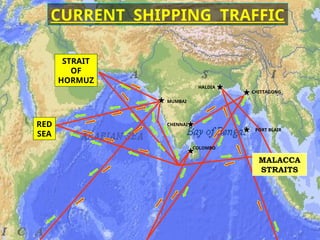
• The density of marine traffic, specially oil tankers, in close
proximity of the Indian coast and offshore petroleum exploration
and production platforms, make our region a high risk area
4.
INTRODUCTION
• The pollutionfrom blow out, collision, stranding,
and other marine accidents can threaten marine life
in the inter-tidal zones, fisheries, sea birds,
recreational beaches and tourism with subsequent
loss of revenue
• The preparation of a National Contingency Plan is
necessary
– to identify the national capabilities and resources in order
– to establish an organizational structure to combat marine
pollution so that
– focal points and lead agencies are identified.
5.
INTRODUCTION
Duties of CoastGuard
• One of the statutory duties of the Indian Coast Guard is marine
environmental preservation,protection, and prevention and control of
pollution in the maritime zones of India
• Coast Guard is also the Central Coordinating Agency for marine pollution
response in the country since March 1986
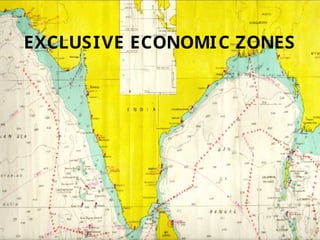
• Coast Guard is engaged in gradually building up pollution response
capability to deal with a major oil spill of approximately 20,000 tonnes in
the Exclusive Economic Zone of India
• Coast Guard is responsible for implementation and enforcement of the
relevant marine pollution laws
6.
INTRODUCTION
• National OilSpill Disaster Contingency Plan
(NOS-DCP) stipulates the organizational and
operational details to effectively combat a
national oil spill contingency
• Indian Coast Guard with the approval of the
Ministry of Defense may seek assistance from
outside resources ( International tier 3
facilities) depending on the oil spill situation
SCOPE
• NOS-DCP covers
–reporting,
– communication,
– alerting,
– assessment,
– operations,
– administration,
– finances,
– public relations and
– arrangements with other contiguous states
• Assigns the responsibility for various tasks to be undertaken by the
relevant government departments and agencies
• Identifies trained personnel, equipment, and resources, and means of
access to the same
10.
SCOPE
• Delineates functionsof various concerned departments and agencies for
the operational responsibility
• Provides the frame work of co-ordination of integrated response
• Promotes the development of Regional and Local Contingency Plans
• The Agencies should have capability to provide first response to an oil
spill in their areas of jurisdiction. The capability includes trained
manpower and equipment
• Assistance to combat a marine oil spill by the neighboring countries in
their areas of jurisdiction
11.
OBJECTIVES
The objectives ofthe plan are :-
• Develop appropriate and effective systems for the detection and reporting of
spillage of oil
• Prompt response to prevent, control, and combat oil pollution
• Adequate protection is provided to the public health and welfare, and the marine
environment
• Appropriate response techniques are employed to prevent, control, and combat oil
pollution, and dispose off recovered material in an environmentally accepted
manner
• Complete and accurate records are maintained of all expenditure to facilitate cost
of recovery
12.
RESOURCE AGENCIES
• IndianNavy (IN)
• Ministry of Shipping (MOS)
• Department of Ocean Development (DOD)
• Ministry of Environment and Forests (MOEF)
• Ministry of Petroleum and Natural Gas (MOPNG)
• Department of Agriculture and Co-operation (DAC)
• Major Port Authorities
• Coastal State Authorities
• Central and Coastal State Pollution Control Boards (CPCB/SPCB)
Contd…
13.
RESOURCE AGENCIES
• Oiland Natural Gas Corporation (ONGC)
• Oil India Limited (OIL)
• Oil Refineries
• Indian Oil Corporation (IOC)
• Mercantile Marine Department (MMD)
• Directorate General of Shipping (DGS)
• Shipping Corporation of India (SCI)
• National Institute of Oceanography (NIO)
• Central Marine Fisheries Research Institute (CMFRI)
• Any other concerned agency
14.
ORGANISATION
• The Ministryof Home will be the nodal ministry
• Home Secretary will be the Chairman of the Crisis Management Group (CMG)
• Other members of the Crisis Management Group
– Foreign Secretary, The secretaries of
– Environment and Forests
– Shipping
– Petroleum and Natural Gas
– Urban Development
– Ocean Development
Contd…
15.
ORGANISATION
– Science andTechnology
– Agriculture and Co-operation
– Chemicals and Petrochemicals
– Industrial Development and
– The Secretary (Security) in the Cabinet Secretariat
– The Director General Coast Guard
– Chairmen of the concerned ports and
– The DG, Hydro Carbon
• The group may co-opt any other concerned heads of department and experts, as it may deem
necessary
• The CMG shall be functional as soon as a crisis situation develops
16.
CENTRAL COORDINATING AUTHORITY(CCA)
• The Director General, Indian Coast Guard (DGCG) is the Central
Coordinating Authority (CCA)
• Overall responsibility to any incidence in the seas around India
• Direct the various aspects of the operations and will be assisted by
the Commanders, Coast Guard Region (West), (East) and (A&N)
(COMCGs) as required
• The Regional Pollution Response Officer (RPRO) will be the On
Scene Commander (OSC) at the scene of pollution through the
relevant District Commander (COMDIS) in the vicinity of the
region/area
Contd…
17.
CENTRAL COORDINATING AUTHORITY(CCA)
• The On Scene Commander will pass on regular reports to
the Regional Headquarters and the Coast Guard
Headquarters, of his assessment, and of resources and
assistance required
• Indian Coast Guard is designated as the competent
national authority for oil spill response in the maritime
zones of India
• All Indian flag ships, oil handling facilities in ports,
coastal oil refineries and offshore oil platforms operating
in the maritime zones of India shall have onboard, the
Coast Guard approved oil pollution emergency plan
18.
CENTRAL COORDINATING AUTHORITY(CCA)
• The Coast Guard District Commanders will designate an officer as
Pollution Response Officer (PRO) for the district who will act as the
Deputy On Scene Commander (DOSC) and lead the initial response
team to the scene of incidence within his area of jurisdiction under the
overall guidance of the Regional Pollution Response Officer. He will be
responsible for the following :-
– Directing the employment of needed resources for prevention of pollution,
containment,cleanup, and disposal of any pollutants, and restoration of the
site
– Providing a focal point of information for all agencies concerned
– Preparing cost analysis and detailed report covering all aspects of the spill
– Collecting samples for possible analysis
19.
RESPONSIBILITIES OF OTHERAGENCIES
• The port authorities will be responsible for the response to accidents within the port
limits
• They will keep the Coast Guard Regional Commanders informed and request for any
additional assistance through the Regional Communication/Operations Center
• The responsibility for combating oil spill contingencies on shore would be that of the
Coastal State for prevention and control of water pollution
• The oil and petroleum exploration and production agencies will be totally responsible
for instituting preventive, precautionary, and other measures for
monitoring,controlling and combating an oil spill contingency in their area of
operations
• Detailed delineation of functional responsibilities allocated to ministries / department
as per decision taken at a meeting of the committee of secretaries on 04 nov 93 is as
given at Appendix A of NOSDCP
20.
MINISTRY OF ENVIRONMENTAND FORESTS
– Enactment of legislation for prevention and control of
Enactment of legislation for prevention and control of
marine pollution from land and sea based sources
marine pollution from land and sea based sources
– Prevention and control of marine pollution at source, on
Prevention and control of marine pollution at source, on
land or at sea
land or at sea
– Monitoring of pollution up to the shore
Monitoring of pollution up to the shore
– Cleaning of beaches affected by oil pollution through
Cleaning of beaches affected by oil pollution through
coastal states and union territories
coastal states and union territories
21.
MINISTRY OF SURFACETRANSPORT
• Prevention and control of pollution
Prevention and control of pollution
arising from ships all over the sea
arising from ships all over the sea
including the major ports areas
including the major ports areas
• Enactment and administration of
Enactment and administration of
legislation related to prevention, control
legislation related to prevention, control
and combating of pollution arising from
and combating of pollution arising from
ships
ships
22.
MINISTRY OF SURFACETRANSPORT
Functions through DG shipping
Functions through DG shipping
• To comply with provision made in section 356 G (1) and
To comply with provision made in section 356 G (1) and
(2) of MS Act 1958 for the purpose of:
(2) of MS Act 1958 for the purpose of:
– Inspection of construction of ships and tankers in order to
Inspection of construction of ships and tankers in order to
comply with provision of MARPOL 73/78 or Of the other
comply with provision of MARPOL 73/78 or Of the other
convention of maritime pollution formulated by IMO and/or
convention of maritime pollution formulated by IMO and/or
other related bodies,Merchant Shipping Act and issue of
other related bodies,Merchant Shipping Act and issue of
necessary Certificate and
necessary Certificate and
– Penalising the offenders apprehended by the ICG and port
Penalising the offenders apprehended by the ICG and port
authorities for violation of the above provisions of the act,
authorities for violation of the above provisions of the act,
including processing of pollution damage claims etc.
including processing of pollution damage claims etc.
23.
MINISTRY OF PETROLEUMAND
NATURAL GAS
• Combating of oil pollution around
Combating of oil pollution around
offshore exploration and production
offshore exploration and production
platforms up to 500 mts
platforms up to 500 mts
• Combating of oil pollution around
Combating of oil pollution around
coastal refineries through the
coastal refineries through the
concerned refineries
concerned refineries
24.
DEPARTMENT OF OCEANDEVELOPMENT
• Scientific monitoring of marine pollution
Scientific monitoring of marine pollution
arising from land based and other
arising from land based and other
sources in various maritime zones
sources in various maritime zones
including coastal waters, but excluding
including coastal waters, but excluding
monitoring of oil pollution within the
monitoring of oil pollution within the
limits of major ports, oil platform,
limits of major ports, oil platform,
installations and structures
installations and structures
25.
MINISTRY OF HOME
ThroughIndian Coast Guard
Through Indian Coast Guard
• Surveillance of maritime zones against oil spills
Surveillance of maritime zones against oil spills
• Combating oil spills in various maritime zones except in the
Combating oil spills in various maritime zones except in the
waters of major ports
waters of major ports
• Central coordinating agency for combating oil spills in
Central coordinating agency for combating oil spills in
various maritime zones except in the water of major ports
various maritime zones except in the water of major ports
• Implementation of National Contingency Plan for oil spill
Implementation of National Contingency Plan for oil spill
disaster
disaster
26.
RESPONSIBILITIES OF SUPPORTAGENCIES
• The Indian Navy/coastal state authorities/port authorities will make
the facilities of their communication/operation centers available to
receive and disseminate reports of marine pollution accidents
• The Indian Navy and the Coast Guard will provide fixed wing
aircrafts or helicopters to conduct aerial surveillance or provide
logistic support in movement of men and materials to the incident
site. They will also provide ground to air communications link at
the site for use by the On Scene Commander.
• The Port Authority will provide tugs and pollution control
equipment at the incident site within port limits
Contd…
27.
RESPONSIBILITIES OF SUPPORTAGENCIES
• Ministry of Finance will provide authorization
for expenditure and funds for initial response
and ensure adequate financial records are
maintained.
• Coastal state authorities / departments / public
works / civil defence corps will provide
personnel and equipment, as required, for
shoreline clean-up and ensure safety and
protection of the local population and
resources.
28.
The Outline Organisationfor Combating a National Oil Spill Contingency
Ministry of Home
DGCG (Central Coordinating Authority)
Department of Ocean Development ______________________________________________
Ministry of Environment & Forests ________________________________________________
Ministry of Shipping ___________________________________________________________
Ministry of Petroleum & Natural Gas ______________________________________________
Ministry of Agriculture _________________________________________________________
Department of Animal Husbandry & Dairying _______________________________________
Department of Space _________________________________________________________
__________________________________________________________________________________________
National Central Major Port IMD MMD SCI ONGC Oil OIL IOC
Institute of Fisheries Authorities Refineries
Oceanography Institute
Central & State Boards for Prevention
and Control of Water Pollution COMMANDER COAST GUARD REGION (WEST/EAST/A&N)
___________________________________________________________________________________________________
Local Naval Local State Civil Defence Local Public Works On Scene Commander
Authorities Authorities Organisation Department (Regional Pollution Response Officer)
Dy on Scene Commander
(District Pollution Response Officer)
29.
THE DETAILED FUNCTIONS
Thedetailed functions of various
concerned departments and agencies
are given at Appendix C of NOSDCP
30.
COMMAND AND CONTROL
Theoverall command and control of
conducting operations to combat a
national oil spill contingency will be
exercised by the Director General, Indian
Coast Guard through Commander,Coast
Guard Region (West), (East) or (A&N), as
appropriate
31.
REPORTING AND ALERTINGPROCEDURES
• Indian Coast Guard is the national operational contact point for receiving reports of
marine pollution
• When an incident occurs which could result in marine pollution, it is to be reported to
the respective Regional Ops Center which will record the details and intimate the
respective agency or departments for necessary action, who will then relay the same
to the Regional Communication Center (RCC)
• The format of the report is at Appendix D(Shown in following slide)
• The Annexure to the appendix gives the pollution report and message report in
accordance with the International Maritime Organization's directives
• Indian flag ship masters, offshore platform operators and pilots of the ports operating
in the maritime zones of India are to report incidents without any delay to the Coast
Guard RCC as per the format in the NOS-DCP
32.
OIL SPILL REPORTFORM
Particulars of Person/Organization
Reporting Incident
a. Title :
b. Company :
c. Telephone/Telex Numbers :
d. Date/Time :
e. Spill Location :
f. Type and Quality of Oil Spill :
g. Cause of Spill :
h. Response to Spillage, if any :
j. Any Other Information :
33.
ASSESSMENT
• The rapidassessment of the threat is essential
• The designated Regional Commander (On Scene Commander) should, if possible, conduct
aerial surveillance of the oil slick and from weather and hydrographic data, predict
probable trajectory of the oil slick
• If the oil slick is moving offshore towards the open sea, then monitoring on a regular basis
is the preferred control option
• If the oil slick is moving onshore, then the response could be either
– containment and recovery,
– chemical dispersion or
– shoreline cleanup.
• The On Scene Commander must evaluate whether the required response is within the local
resource capability or requires resources/equipment from other agencies and accordingly
advise the Director General, Coast Guard
34.
REGIONAL CONTINGENCY PLAN(RCP) / LOCAL
CONTINGENCY PLAN (LCP)
• The Regional Commanders to formulate Regional
Contingency Plans
• Similarly
– Coastal state boards for prevention & control of water
pollution,
– Oil and Natural Gas Corporation,
– Oil India Limited,
– Indian Oil Corporation,
– Ports, and
– Oil Platforms are
required to formulate their Local Contingency Plans
35.
SPILL CONTROL ANDCLEAN UP PROCEDURES
• An accurate assessment of spill incident is essential
• Generally, containment and recovery are preferred
• In some instances it may be necessary to use chemical dispersants
• Details of the various methods of oil spill clean-up are available in manuals and
publications on oil pollution control held with the Regional Pollution Response
centers
• The cleaning up of shoreline beaches will be the responsibility of the respective
coastal states
• The Coast Guard Regional/ District Commanders would, however, advise and
assist the state authorities and local agencies for clean up and disposal of oil as
appropriate
36.
DISPOSAL OF OIL
•Disposal of recovered oil is a difficult
process
• The recovered oil is to be stored in
temporary pits till it is transferred to
reception facilities
37.
IMPORTANT INFORMATION
The details,important telephone numbers, and other relevant
information as listed below are to be updated and kept readily
available
– Important telephone numbers and other details - Appendix E
– Data in respect of vessels available for combating oil spills - Appendix F
– Details of pollution response equipment held by the Coast Guard - Appendix G
– Details of pollution response equipment held by other agencies - Appendix H
– Details of vessels held with other agencies - Appendix J
Contd…
38.
IMPORTANT INFORMATION
– Detailsof aircraft available for combating oil spills -
Appendix K
– Check off lists - Appendix L
– Guidelines for shoreline cleanup - Appendix BP
– Guidelines for use of dispersants - Appendix BQ
– Details of weather in the area - Appendix BR
39.
TRAINING AND JOINTEXERCISES
• The DGCG (CCA) shall conduct joint response
exercises and training programmes among the
resource agencies to maintain the response
preparedness level
• The joint exercises and training programmes
may also be conducted with neighboring
countries to fulfill the requirement of regional
oil spill contingency plan
40.
RECORD KEEPING ANDPREPARATION OF CLAIMS
In order that claims may be processed with minimum
delay, it is essential that
• Accurate records are maintained to support claims
• Claims should be based on expenses actually incurred,
that these are made as a direct result of an incident, and
that the expenses incurred are reasonable.
• In the case of economic loss, documentation supporting
the claims should demonstrate how the claim has been
calculated
41.
RECORD KEEPING ANDPREPARATION OF CLAIMS
The following aspects are to be considered while assessing cost of
an oil spill combating and preparation of claims :-
• Delineation of the area affected
• Summary of events including a description of the work carried out
• Labor costs
• Data on which work was carried out
• Material costs
42.
SALVAGE
• India hasratified the International
convention on salvage 1989 and the date of
entry into force is 14.07.96
• UNCLOS Article 221 and important
provisions of the convention are placed at
Appendix BS
• Important extracts are shown on the next
slide
43.
UNITED NATIONS CONVENTIONON THE
LAW OF THE SEA
Measures to avoid pollution arising from maritime
casualties
Article 221 of United Nation’s Convention on the Law of the
Sea (UNCLOS), gives States the right ,“ pursuant to
International law, both customary and conventional, to take
and enforce measures beyond the territorial sea
proportionate to the actual or threatened damage to protect
their coastlines or related interests, including fishing, from
pollution or threat of casualty, which may reasonably be
expected to result in major harmful consequences”.
44.
INTERNATIONAL CONVENTION ONSALVAGE, 1989
Application of the convention
• International Convention on Salvage, 1989
(1989 Salvage Convention), replaces, for States
which become party to both, the 1910
Convention for the Unification of Certain
Rules of Law relating to Assistance and
Salvage at Sea ( Brussels Convention).
• The Convention does not apply to the sea
only, but also to the inland waters of a State
45.
SUMMARY OF RESPONSIBILITIES
•Port authorities responsible for action within port limits
• Oil industries in and around their area of operation (500
meters)
• Coastal State Pollution Control Boards for inter tidal
zones, beaches and up to depth beyond which Coast
Guard ships and craft cannot operate
• Coast Guard in rest of the sea area in the maritime
zones of India
46.
POLLUTER AND OILSPILL
•Polluter has to clean up any oil spill at sea
• Coast Guard monitors clean up
• Polluter pays if his spill is cleaned up by others
• Potential polluters are to stockpile minimum
inventory to prevent oil from spreading and
clean up to 700 tonnes
47.
INTERNATIONAL CONVENTIONS REGARDING
MARINEOIL SPILL RATIFIED BY INDIA
• MARPOL 73/78 (Annex I &II)
• Civil Liability Convention 1969
• OPRC convention 1990
• 1992 Civil Liability Convention
• 1992 Fund Convention
Ministry of Surface Transport and MEA are the
organizations in liaison and ratification of International
Conventions
48.
CIVIL LIABILITY CONVENTION(CLC)
• Governs compulsory liability of ship owner
• Strict (absence of fault), but limited
liability
• Insurance provided by P & I clubs
49.
FUND CONVENTION
• Providessupplementary
Compensation to that provided
by the CLC
• Financed by levy on companies
receiving persistent oil
DOCUMENTATION
• Most responseaction to oil spills are very costly
• Should be reimbursed to the extent possible,
according to the ‘polluter pays’ principle
• Essential that supporting documentation shows
how the expenses for clean-up operations are
linked with the actions taken at specified work
sites
53.
DOCUMENTATION
• Major expendituresmay be incurred for the use of
aircraft, vessels, specialised equipment, heavy machines,
trucks and personnel
• Some of these may be government -owned ; others may
be subject of contractual arrangements
• Claimants should keep comprehensive records of all
operations and expenditures resulting from an incident
54.
DOCUMENTATION
• Supervisory personnelshould daily record the operations
in progress, the equipment in use, where and how it is
being used, the number of personnel employed, how and
where they are deployed and the materials consumed
• Standard work sheets, designed to the particular
circumstances of the spill and the response organisation
in the country concerned, are useful for such records
• Useful to appoint a financial controller to keep adequate
records and control expenditure
55.
1992 CONVENTIONS
• 1992International convention on Civil
Liability for Oil Pollution Damage(1992 Civil
Liability Convention)
• 1992 International convention on the
Establishment of an International Fund for
Compensation for Oil Pollution
Damage(1992 Fund Convention)
56.
1992 CIVIL LIABILITYCONVENTION
• The ship owner has strict liability for pollution
damage
• Exempted in cases of war,natural disaster,
intentional damage by third party,negligence of
public authorities in maintaining navigational lights
• Entitled to limit his liability
• Obliged to maintain insurance to cover his liability
57.
1992 FUND CONVENTION
•Exists to pay compensation when those suffering oil pollution damage do
not obtain full compensation under the 1992 civil liability convention
• Fund does not pay if
– The damage occurred in a non member State
– Damage resulted from an act of war or spill from a war ship
• Financed by levies on certain types of oil carried by sea.The levies are paid
by entities which receive oil after sea transport, and normally not by States.
• The Fund is administered by a Secretariat, headed by a Director.The
Secretariat is located in London, UK
58.
APPLICATION
• Apply topollution damage caused in the territory or territorial sea and
also the exclusive economic zone of a State which is a party to the
convention
• The Conventions apply to spills of persistent oils,for example crude oil,
fuel oil, heavy diesel oil and lubricating oil
• Damage caused by spills of non persistent oil, such as gasoline, light
diesel oil and kerosene is not compensated under the conventions
• Cover incidents in which persistent oil has escaped or has been
discharged from a sea-going vessel constructed or adapted to carry oil
in bulk as cargo(normally a tanker)
59.
THE CLAIMS MANUAL
•The International Oil Pollution
Compensation Fund 1992 (or IOPC
Fund 1992)- have published a Claims
Manual which is a practical guide to
presenting claims against the
organisation in case of oil pollution
damage resulting from spills of
persistent oil from tankers
60.
DOCUMENTATION
The manual gives
•advise to claim presentation and how they shall
be itemised
• the degree of acceptance of Consequential loss
• the degree of acceptance of Economic loss
Contd…
61.
DOCUMENTATION
• the degreeof admissibility of claims for the cost
of measures to prevent pure economic loss
• the degree of admissibility of claims on
contamination of fisheries and aquaculture
produce
• the degree of admissibility of claims on
Environmental damage
62.
DOCUMENTATION
• Proper presentationof claims is the key element to a
reimbursement of expenses related to an oil spill
incident
• In order to enable the oil spill contingency organisation
to present claims in the prescribed way all levels in the
response organisation must exert proper collection of
data for the claim presentation as a main item of their
activities in the response action from its very beginning
63.
CONCLUSION
• Maritime environmentalpreservation,
protection and pollution prevention and
control is a chartered duty under section
14 of CG Act 1978
• Coast Guard is committed to achieve and
maintain preparedness with co-operation
from all the resource agencies
Editor's Notes
#2 TOPICS
INTRODUCTION
SCOPE
OBJECTIVES
RESOURCE AGENCIES
ORGANISATION
RESPONSIBILITIES OF SUPPORT AGENCIES
COMMAND AND CONTROL
REPORTING AND ALERTING PROCEDURES
ASSESSMENT
REGIONAL CONTINGENCY PLAN/LOCAL CONTINGENCY PLAN
SPILL CONTROL AND CLEAN UP PROCEDURES
RECORD KEEPING AND PREPARATION OF CLAIMS
IMPORTANT INFORMATION
UPDATING OF REGIONAL/LOCAL CONTINGENCY PLANS
TRAINING AND JOINT EXERCISES
SALVAGE
SUMMARY OF RESPONSIBILITIES
INTERNATIONAL CONVENTIONS
CONCLUSION
#3 INTRODUCTION
Oil spills can occur anywhere on land or at sea
Most regions in the world have some oil producing or refining facilities with the attendant tanker traffic or border on major tanker and cargo ship routes
A major spill could affect several areas around the coast making it desirable to coordinate activities amongst a number of agencies
The density of marine traffic, specially oil tankers, in close proximity of the Indian coast and offshore petroleum exploration and production platforms, make our region a high risk area
#4 The pollution from blow out, collision, stranding, and other marine accidents can threaten marine life in the inter-tidal zones, fisheries, sea birds, recreational beaches and tourism with subsequent loss of revenue
The preparation of a National Contingency Plan is, therefore, necessary to identify the national capabilities and resources in order to establish an organisational structure to combat marine pollution so that focal points and lead agencies are identified
#5 Duties of Coast Guard
One of the statutory duties of the Indian Coast Guard is marine environmental preservation,protection, and prevention and control of pollution in the maritime zones of India
Coast Guard is also the Central Coordinating Agency for marine pollution response in the country since March 1986
In execution of these duties the Coast Guard is engaged in gradually building up pollution response capability to deal with a major oil spill of approximately 20,000 tonnes in the Exclusive Economic Zone of India
Indian Coast Guard is responsible for implementation and enforcement of the relevant marine pollution laws
#6 National Oil Spill Disaster Contingency Plan (NOS-DCP) stipulates the organizational and operational details to effectively combat a national oil spill contingency
Indian Coast Guard with the approval of the Ministry of Defence may seek assistance from outside resources ( International tier 3 facilities) depending on the oil spill situation
#9 SCOPE
NOS-DCP covers
reporting,
communication,
alerting,
assessment,
operations,
administration,
finances,
public relations and
arrangements with other contiguous states
Assigns the responsibility for various tasks to be undertaken by the relevant government departments and agencies
Identifies trained personnel, equipment, and resources, and means of access to the same.
#10 Delineates functions of various concerned departments and agencies for the operational responsibility to marine incidents which could result due to spillage of oil into water
Provides the frame work of co-ordination of integrated response by various government departments and agencies
Promotes the development of Regional and Local Contingency Plans in the three Coast Guard regions, various ports, offshore petroleum exploration and production agencies, and coastal state pollution control boards
The Agencies should have capability to provide first response to an oil spill in their areas of jurisdiction. The capability includes trained manpower and equipment
Assistance to combat a marine oil spill by the neighboring countries in their areas of jurisdiction. The operational cost for such assistance in way of equipment and manpower will be reimbursed as mentioned in the Appendix BN of the NOS-DCP.
#11 OBJECTIVES
The objectives of the plan are :-
Develop appropriate and effective systems for the detection and reporting of spillage of oil.
Prompt response to prevent, control, and combat oil pollution.
Adequate protection is provided to the public health and welfare, and the marine environment.
Appropriate response techniques are employed to prevent, control, and combat oil pollution, and dispose off recovered material in an environmentally accepted manner.
Complete and accurate records are maintained of all expenditure to facilitate cost of recovery.
#14 ORGANISATION
The Ministry of Home will be the nodal ministry for crisis management in case of an oil spill disaster,
Home Secretary will be the Chairman of the Crisis Management Group (CMG)
Other members of the Crisis Management Group
Foreign Secretary, The secretaries of
Environment and Forests,
Shipping,
Petroleum and Natural Gas,
Urban Development,
Ocean Development,
Science and Technology,
Agriculture and Co-operation,
Chemicals and Petrochemicals,
Industrial Development, and
The Secretary (Security) in the Cabinet Secretariat
The Director General Coast Guard,
Chairmen of the concerned ports and
The DG, Hydro Carbon
The group may co-opt any other concerned heads of department and experts, as it may deem necessary.
The CMG shall be functional as soon as a crisis situation develops.
#16 CENTRAL COORDINATING AUTHORITY (CCA)
The Director General, Indian Coast Guard, Coast Guard Headquarters, New Delhi,(DGCG) is the Central Coordinating Authority (CCA)
Has the overall responsibility to ensure that appropriate response is made to any incidence in the seas around India.
He will direct the various aspects of the operations and will be assisted by the Commanders, Coast Guard Region (West), (East) and (A&N) (COMCGs) as required, depending on the proximity of the scene of contingency.
The Regional Pollution Response Officer (RPRO) will be the On Scene Commander (OSC) and act as the representative of the Regional Commander to coordinate all activities at the scene of pollution through the relevant District Commander (COMDIS) in the vicinity of the region/area.
The On Scene Commander will pass on regular reports to the Regional Headquarters and the Coast Guard Headquarters, of his assessment, and of resources and assistance required.
Indian Coast Guard is designated as the competent national authority for oil spill response in the maritime zones of India.
All Indian flag ships, oil handling facilities in ports, coastal oil refineries and offshore oil platforms operating in the maritime zones of India shall have onboard, the Coast Guard approved oil pollution emergency plan.
#20 MINISTRY OF ENVIRONMENT AND FORESTS
Environment and ecology including
Environment in coastal waters, in mangroves,
Coral reefs and especially
Enactment of legislation for prevention and
control of marine pollution from land and sea based sources.
Prevention and control of marine pollution at source, on land or at sea.
Monitoring of pollution upto the shore.
Cleaning of beaches affected by oil pollution through costal states and union territories
#22 MINISTRY OF SURFACE TRANSPORT
Functions through DG shipping
To comply with provision made in section 356 G (1) and (2) of MS Act 1958 for the purpose of:
(a) Inspection of construction of ships and tankers
in order to comply with provision of marpol 73/78 or
Of the other convention of maritime pollution
Formulated by imo and/or other related bodies,
Merchant Shipping Act and issue of necessary
Certificate and
(b) Penalising the offenders apprehended by the ICG
and port authorities for violation of the above
provisions ofthe act, including processing of
pollution damage claims etc.
#31 REPORTING AND ALERTING PROCEDURES
Indian Coast Guard is the national operational contact point for receiving reports of marine pollution
When an incident occurs which could result in marine pollution, it is to be reported to the respective Regional Ops Center which will record the details and intimate the respective agency or departments for necessary action, who will then relay the same to the Regional Communication Center (RCC).
The format of the report is at Appendix D(Shown in following slide).
The Annexure to the appendix gives the pollution report and message report in accordance with the International Maritime Organisation’s directives.
Indian flag ship masters, offshore platform operators and pilots of the ports operating in the maritime zones of India are to report incidents without any delay to the Coast Guard RCC as per the format in the NOS-DCP.
#33 ASSESSMENT
The rapid assessment of the threat presented by the marine accident is essential.
If an actual spill has occurred,then the designated Regional Commander (On Scene Commander) should, if possible, conduct aerial surveillance of the oil slick and from weather and hydrographic data, predict probable trajectory of the oil slick.
If the oil slick is moving offshore towards the open sea, then monitoring on a regular basis is the preferred control option.
If the oil slick is moving onshore, then the response could be either
containment and recovery,
chemical dispersion or
shoreline cleanup.
The On Scene Commander must evaluate whether the required response is within the local resource capability or requires resources/equipment from other agencies and accordingly advise the Director General, Coast Guard.
#34 REGIONAL CONTINGENCY PLAN (RCP) / LOCAL CONTINGENCY PLAN (LCP)
The entire maritime area around the Indian coastline and A&N Islands is divided into three Coast Guard Regions, viz West, East, and A&N, with Headquarters at Mumbai, Chennai, and Port Blair respectively.
The regions are further divided into eleven District Headquarters.
The Regional Commanders will be responsible for combating oil spills in their area of responsibility and are, therefore, to formulate Regional Contingency Plans.
Similarly
Coastal state boards for prevention & control of water pollution,
Oil and Natural Gas Corporation,
Oil India Limited,
Indian Oil Corporation,
Ports, and
Oil Platforms are
required to formulate their Local Contingency Plans.
#35 SPILL CONTROL AND CLEAN UP PROCEDURES
An accurate assessment of spill incident is essential before appropriate spill control and clean up procedures can be activated.
Generally, containment and recovery are preferred but in some instances
It may be necessary to use chemical dispersants.
Details of the various methods of oil spill clean-up are available in manuals and publications on oil pollution control held with the Regional Pollution Response officers.
The cleaning up of shoreline beaches will be the responsibility of the respective coastal states.
The Coast Guard Regional/ District Commanders would, however, advise and assist the state authorities and local agencies for clean up and disposal of oil as appropriate.
#37 IMPORTANT INFORMATION
The details, important telephone numbers, and other relevant information as listed below are to be updated and kept readily available for smooth implementation of national/regional/localcontingency plans.
(a) Important telephone numbers and other details - Appendix E
(b) Data in respect of vessels available for combating oil spills - Appendix F
(c) Details of pollution response equipment held by the Coast Guard - Appendix G
(d) Details of pollution response equipment held by other agencies - Appendix H
(e) Details of vessels held with other agencies - Appendix J
(f) Details of aircraft available for combating oil spills - Appendix K
(g) Check off lists - Appendix L
(h) Guidelines for shoreline cleanup - Appendix BP
(j) Guidelines for use of dispersants - Appendix BQ
(k) Details of weather in the area - Appendix BR
#41 The following aspects are to be considered while assessing cost of an oil spill combating and operating, and preparation of claims :-
(a)Delineation of the area affected describing the extent of pollution
and indentifying areas most heavily contaminated. This may
be best presented as a map or chart accompanied by
photographs.
(b) Summary of events including a description of the work carried
out in different areas and of the working methods chosen in
relation to the circumstantial evidence linking an oil pollution with
the ship involved in the incident (e.g. chemical analysis).
(c) Labour costs (numbers and categories of labourers, rates of pay
days, hours worked, total costs etc).
(d) Data on which work was carried out (weekly or daily costs).
(e) Material costs (Consumable materials, utilised fuel, food, shelter
facilities, etc.).
#43 UNITED NATIONS CONVENTION ON THE LAW OF THE SEA
Measures to avoid pollution arising from maritime casualties
Article 221 of United Nation’s Convention on the Law of the Sea (UNCLOS), gives States the right ,“ pursuant to International law, both customary and conventional, to take and enforce measures beyond the territorial sea proportionate to the actual or threatened damage to protect their coastlines or related interests, including fishing, from pollution or threat of casualty, which may reasonably be expected to result in major harmful consequences”.
#44 INTERNATIONAL CONVENTION ON SALVAGE, 1989
Application of the convention
International Convention on Salvage, 1989 (1989 Salvage Convention), replaces, for States which become party to both, the 1910 Convention for the Unification of Certain Rules of Law relating to Assistance and Salvage at Sea ( Brussels Convention).
A salvage operation means any act or activity undertaken to assist a vessel or any other property in danger in navigable waters or in any other waters. Any other property is defined as any property not permanently and intentionally attached to the shoreline and includes freight at risk. Also included in the definition are aircraft used in salvage operations or even wrecks that might be salvaged.
The Convention does not apply to the sea only, but also to the inland waters of a State.
Some of the highlights of the Salvage Convention, 1989, are shown in next slide
#52 DOCUMENTATION
Most response action to oil spills are very costly and should be reimbursed to the extend possible, according to the ‘polluter pays’ principle.
It is essential that supporting documentation shows how the expenses for clean-up operations are linked with the actions taken at specified work sites.
#53 Major expenditures may be incurred for the use of aircraft, vessels, specialised equipment, heavy machines, trucks and personnel. Some of these may be government -owned ; others may be subject of contractual arrangements. Claimants should keep comprehensive records of all operations and expenditures resulting from an incident. Supervisory personnel should daily record the operations in progress, the equipment in use, where and how it is being used, the number of personnel employed, how and where they are deployed and the materials consumed. Standard work sheets, designed to the particular circumstances of the spill and the response organisation in the country concerned, are useful for such records. It is often useful to appoint a financial controller to keep adequate records and control expenditure.
#62 It is very important to pay attention to the fact that the proper presentation of claims is the key element to a reimbursement of expenses related to an oil spill incident.
In order to enable the oil spill contingency organisation to present claims in the prescribed way all levels in the response organisation must exert proper collection of data for the claim presentation as a main item of their activities in the response action from its very beginning.