OurOur
NationalNational
FlagFlag
IntroductionIntroduction
The National flag of India
is a horizontal
rectangular tricolour of
deep saffron, white and
India green; with the
Ashok Chakra, a 24-spoke
wheel, in navy blue at its
centre. It was adopted in
its present form during a
meeting of the Constituent Assembly held on 22 July 1947,
when it became the official flag of the Dominion of India. The
flag was subsequently retained as that of the Republic of India.
Design and SymbolDesign and Symbol
Subsequently, to
avoid sectarian
associations with
the colour scheme,
saffron, white and
green were chosen
for the three bands,
representing
courage and
sacrifice, peace and truth, and faith and chivalry respectively.
A modified version of the Swaraj flag was chosen; the
tricolour remremained the same saffron, white and green.
DescriptionDescription
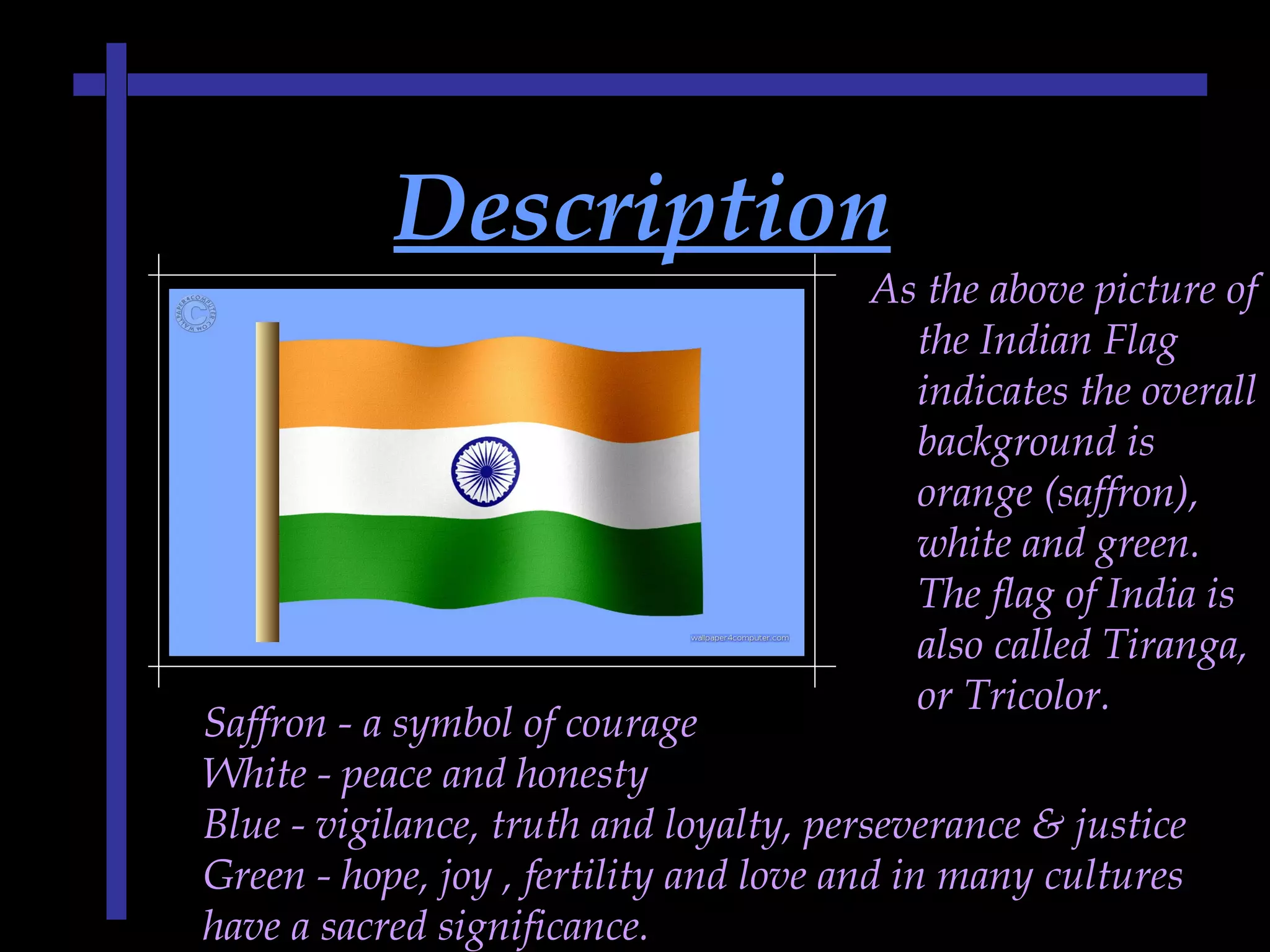
As the above picture of
the Indian Flag
indicates the overall
background is
orange (saffron),
white and green.
The flag of India is
also called Tiranga,
or Tricolor.
Saffron - a symbol of courage
White - peace and honesty
Blue - vigilance, truth and loyalty, perseverance & justice
Green - hope, joy , fertility and love and in many cultures
have a sacred significance.
Laws for FlagLaws for Flag
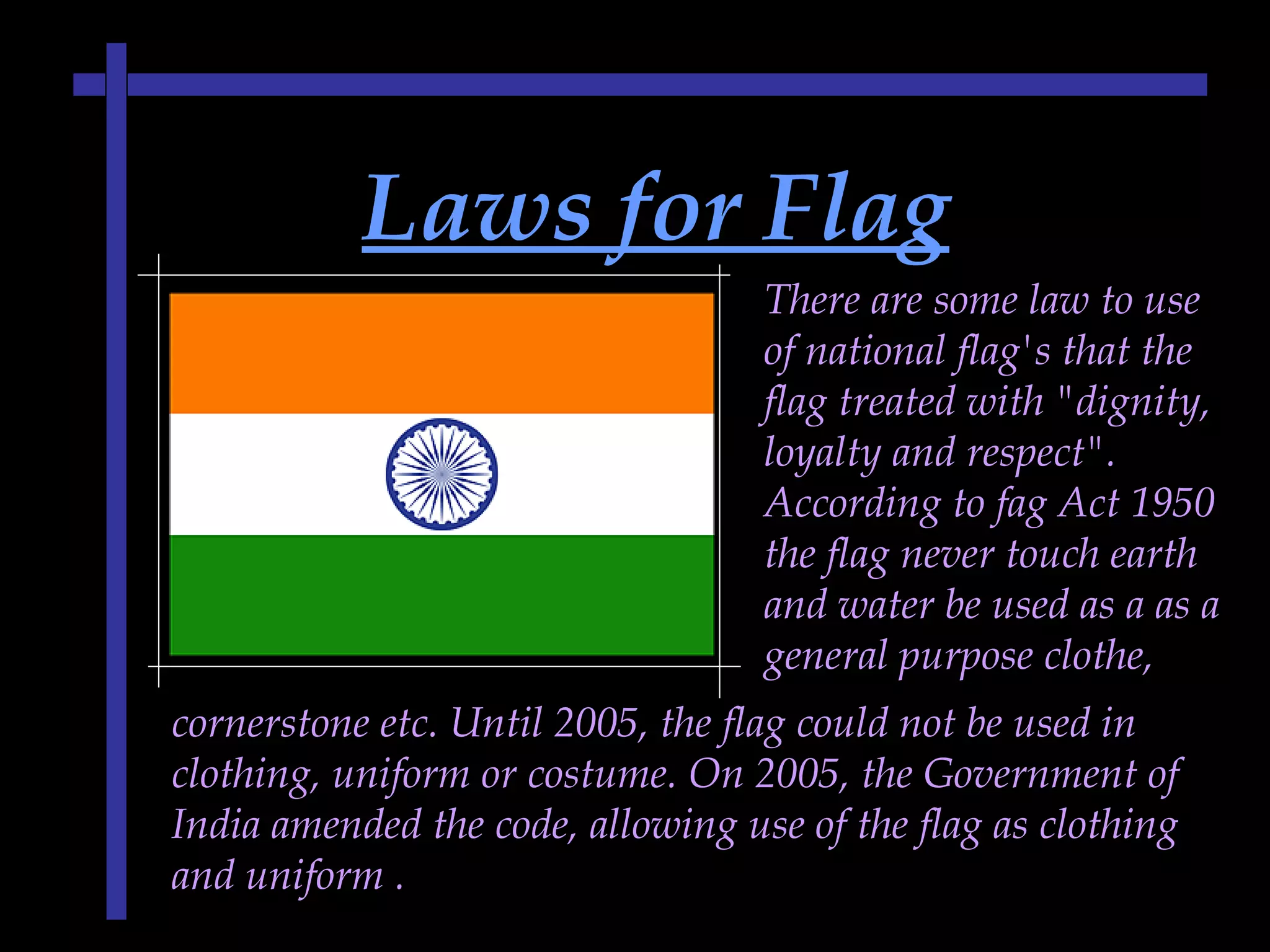
There are some law to use
of national flag's that the
flag treated with "dignity,
loyalty and respect".
According to fag Act 1950
the flag never touch earth
and water be used as a as a
general purpose clothe,
cornerstone etc. Until 2005, the flag could not be used in
clothing, uniform or costume. On 2005, the Government of
India amended the code, allowing use of the flag as clothing
and uniform .
ConclusionConclusion
Usage of the flag is governed
by the Flag Code of India and
other laws relating to the
national emblems. The original
code prohibited use of the flag
by private citizens except on
national days such as the
Independence day and the
Republic Day.
- Presented by
Saikat Rakshit.
ConclusionConclusion
Usage of the flag is governed
by the Flag Code of India and
other laws relating to the
national emblems. The original
code prohibited use of the flag
by private citizens except on
national days such as the
Independence day and the
Republic Day.
- Presented by
Saikat Rakshit.

National flag

  • 1.
  • 2.
    IntroductionIntroduction The National flagof India is a horizontal rectangular tricolour of deep saffron, white and India green; with the Ashok Chakra, a 24-spoke wheel, in navy blue at its centre. It was adopted in its present form during a meeting of the Constituent Assembly held on 22 July 1947, when it became the official flag of the Dominion of India. The flag was subsequently retained as that of the Republic of India.
  • 3.
    Design and SymbolDesignand Symbol Subsequently, to avoid sectarian associations with the colour scheme, saffron, white and green were chosen for the three bands, representing courage and sacrifice, peace and truth, and faith and chivalry respectively. A modified version of the Swaraj flag was chosen; the tricolour remremained the same saffron, white and green.
  • 4.
    DescriptionDescription As the abovepicture of the Indian Flag indicates the overall background is orange (saffron), white and green. The flag of India is also called Tiranga, or Tricolor. Saffron - a symbol of courage White - peace and honesty Blue - vigilance, truth and loyalty, perseverance & justice Green - hope, joy , fertility and love and in many cultures have a sacred significance.
  • 5.
    Laws for FlagLawsfor Flag There are some law to use of national flag's that the flag treated with "dignity, loyalty and respect". According to fag Act 1950 the flag never touch earth and water be used as a as a general purpose clothe, cornerstone etc. Until 2005, the flag could not be used in clothing, uniform or costume. On 2005, the Government of India amended the code, allowing use of the flag as clothing and uniform .
  • 6.
    ConclusionConclusion Usage of theflag is governed by the Flag Code of India and other laws relating to the national emblems. The original code prohibited use of the flag by private citizens except on national days such as the Independence day and the Republic Day. - Presented by Saikat Rakshit.
  • 7.
    ConclusionConclusion Usage of theflag is governed by the Flag Code of India and other laws relating to the national emblems. The original code prohibited use of the flag by private citizens except on national days such as the Independence day and the Republic Day. - Presented by Saikat Rakshit.