Reported Speech
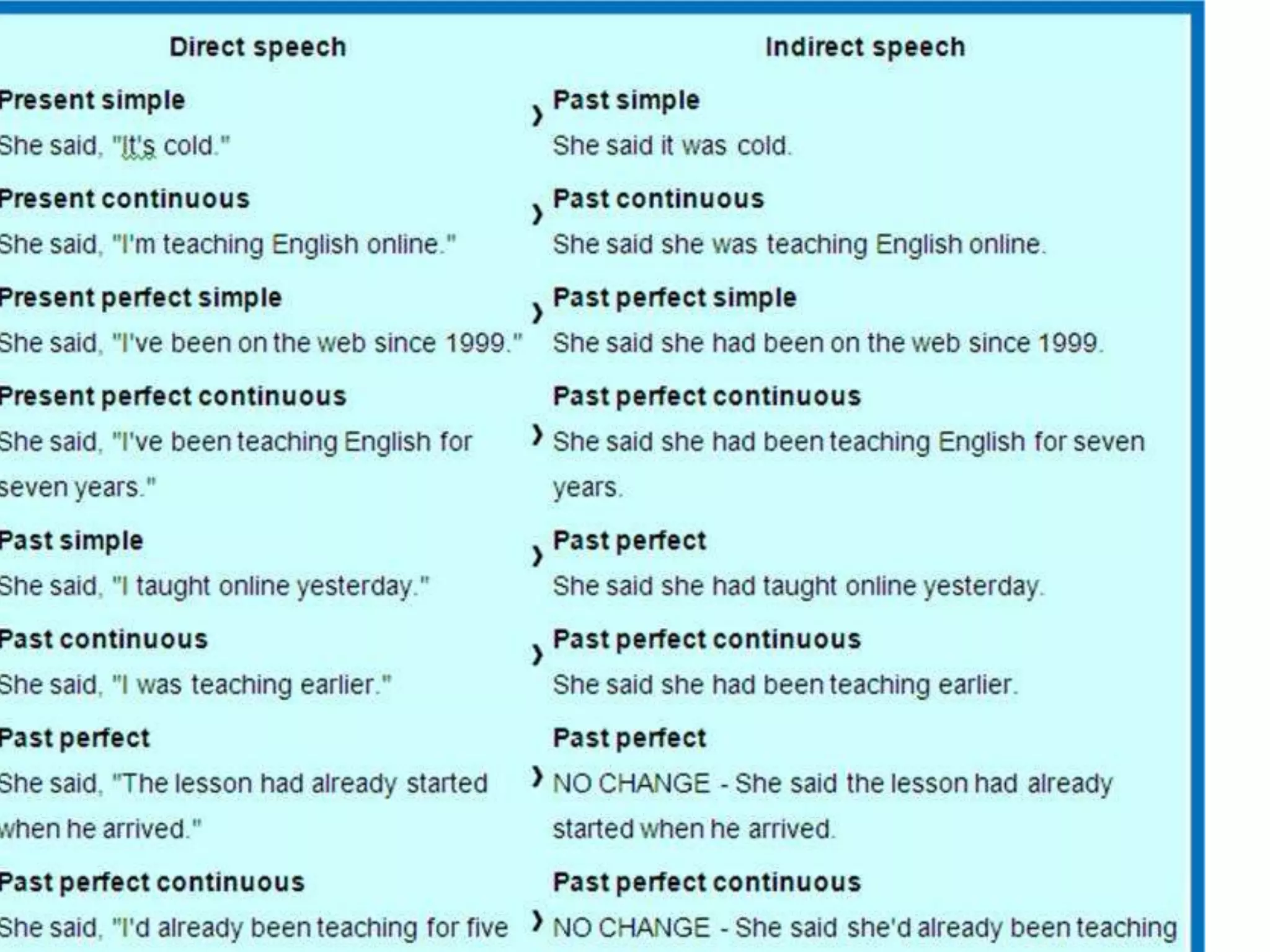
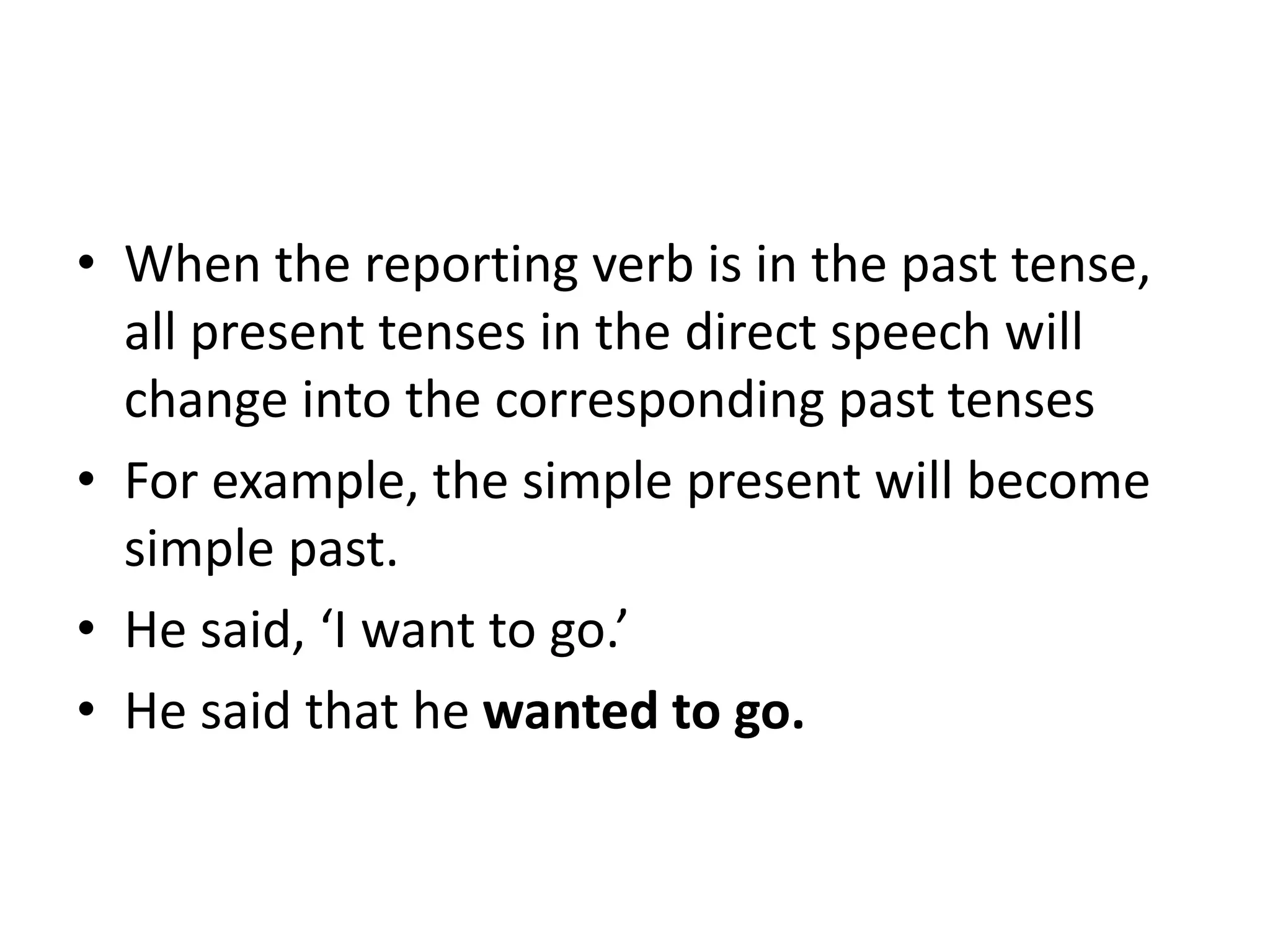
• When the reporting verb is in the past tense,
all present tenses in the direct speech will
change into the corresponding past tenses
• For example, the simple present will become
simple past.
• He said, ‘I want to go.’
• He said that he wanted to go.
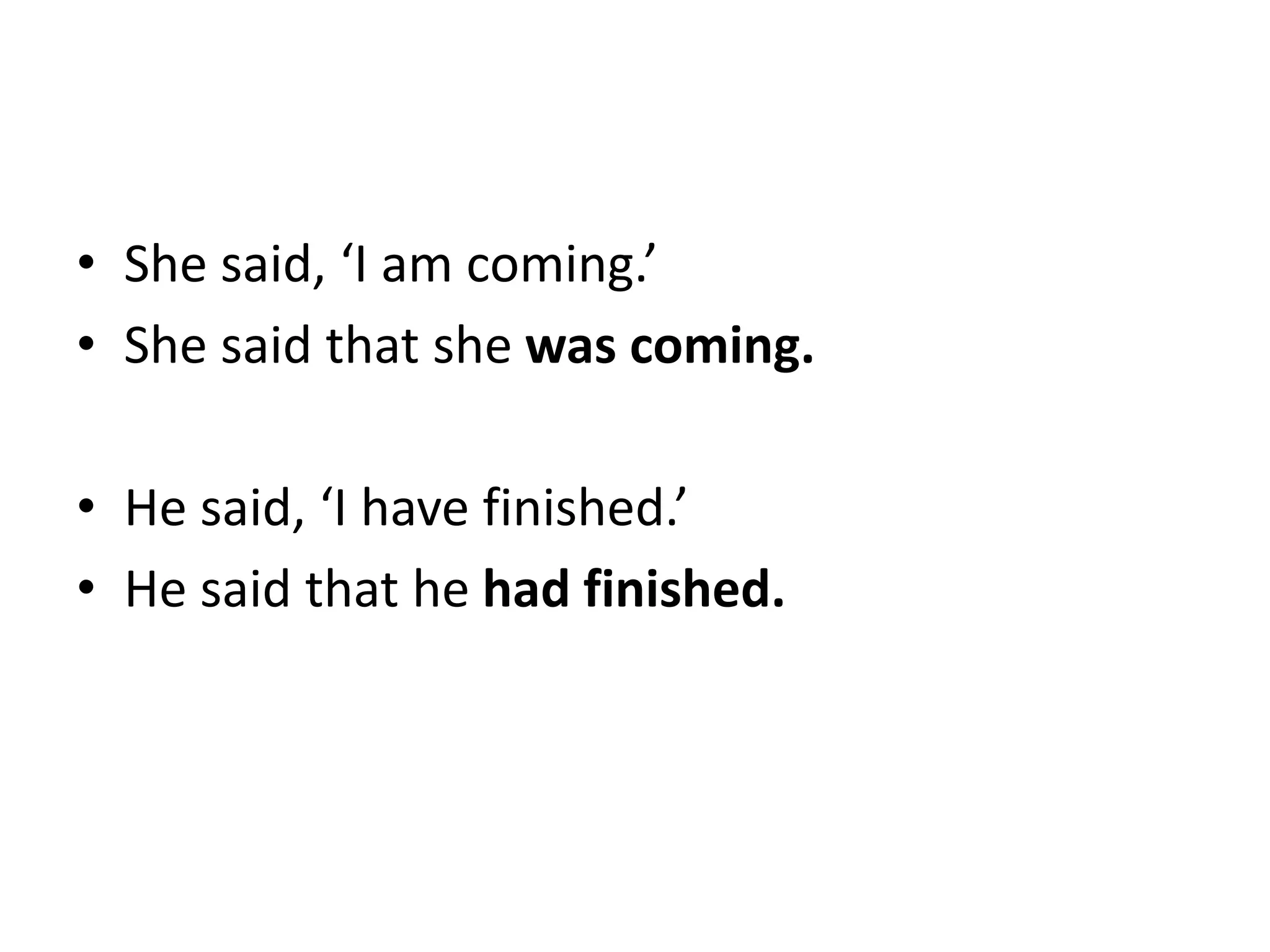
• She said, ‘I am coming.’
• She said that she was coming.
• He said, ‘I have finished.’
• He said that he had finished.
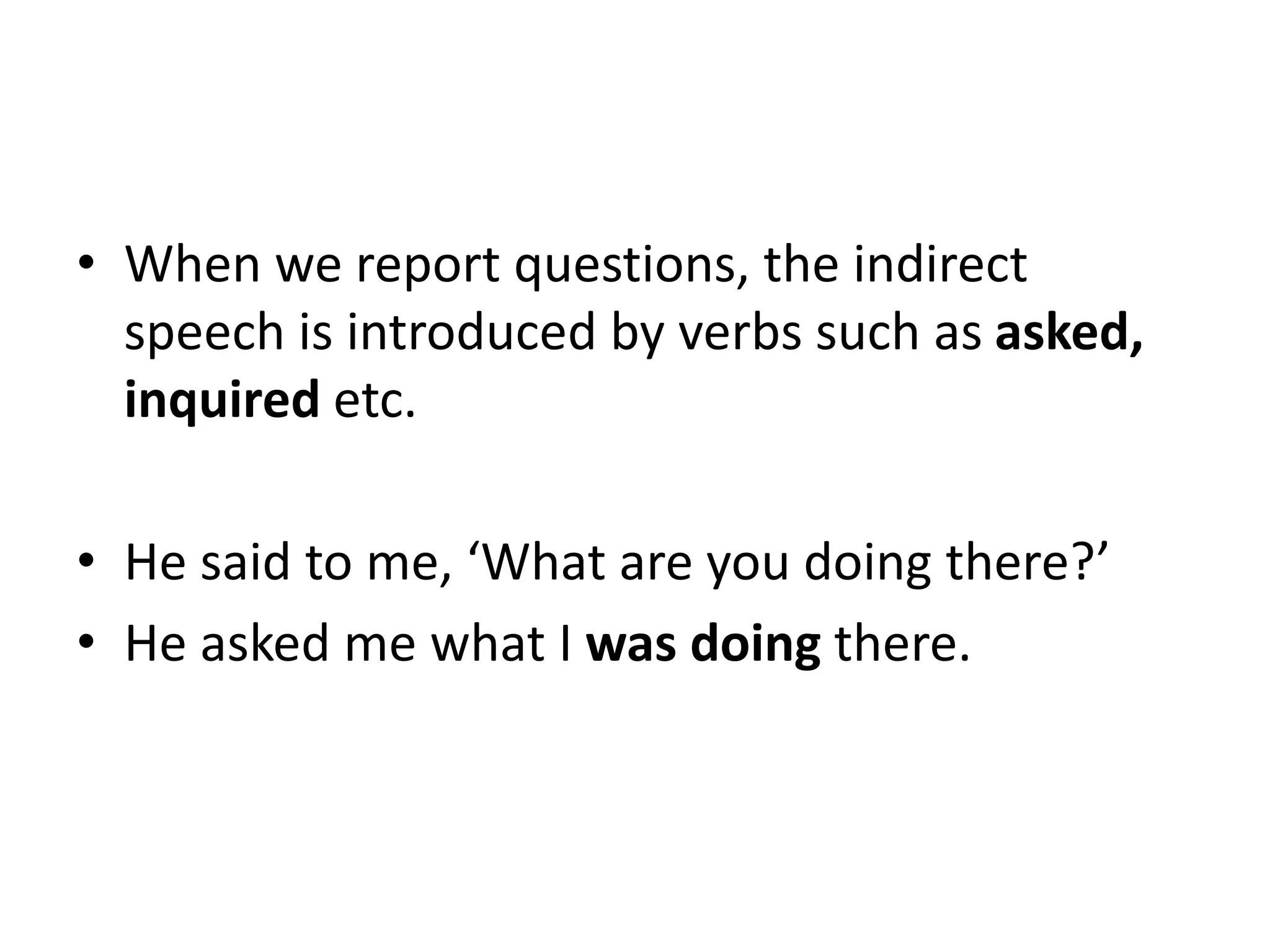
• When we report questions, the indirect
speech is introduced by verbs such as asked,
inquired etc.
• He said to me, ‘What are you doing there?’
• He asked me what I was doing there.
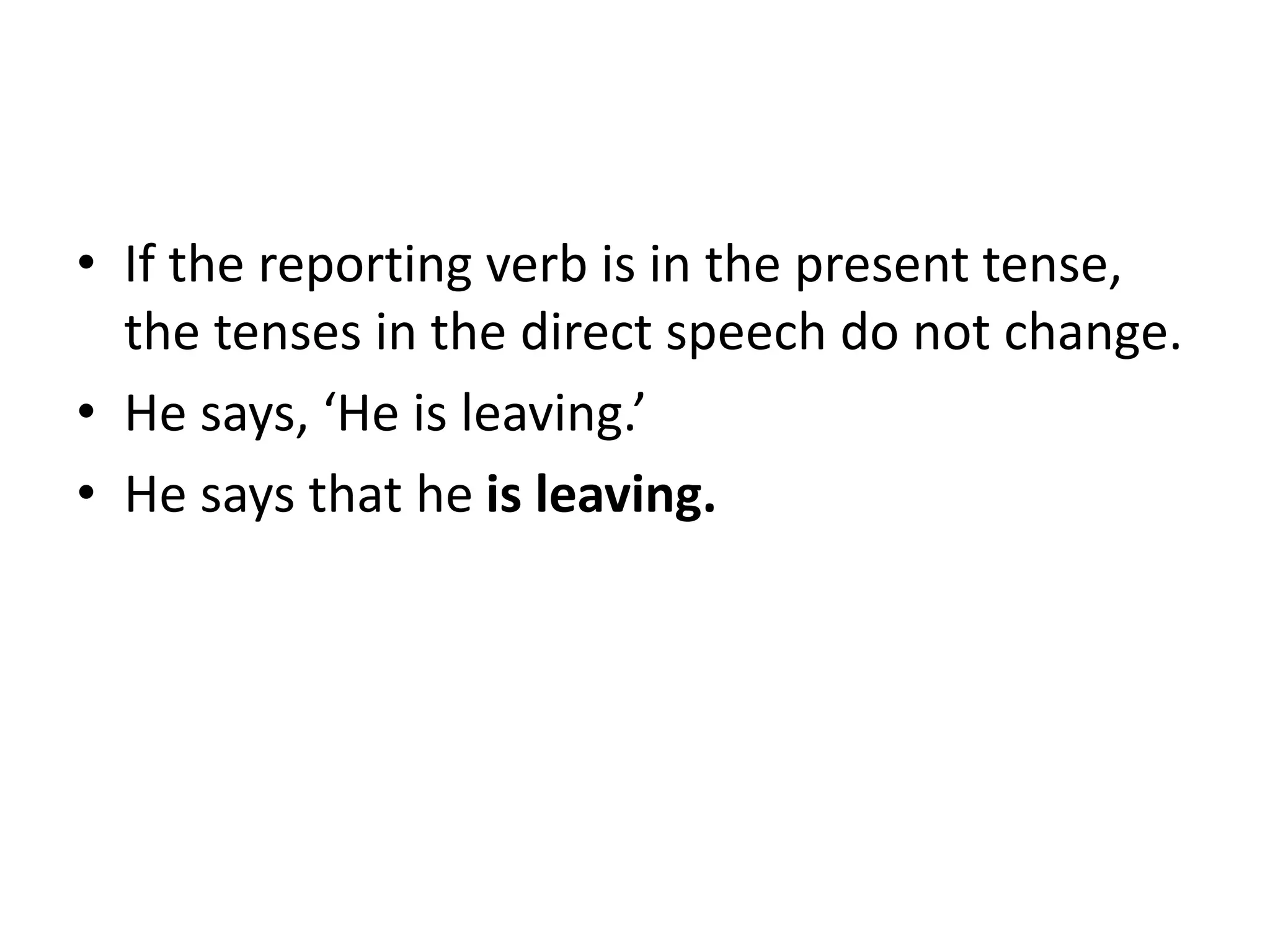
• If the reporting verb is in the present tense,
the tenses in the direct speech do not change.
• He says, ‘He is leaving.’
• He says that he is leaving.
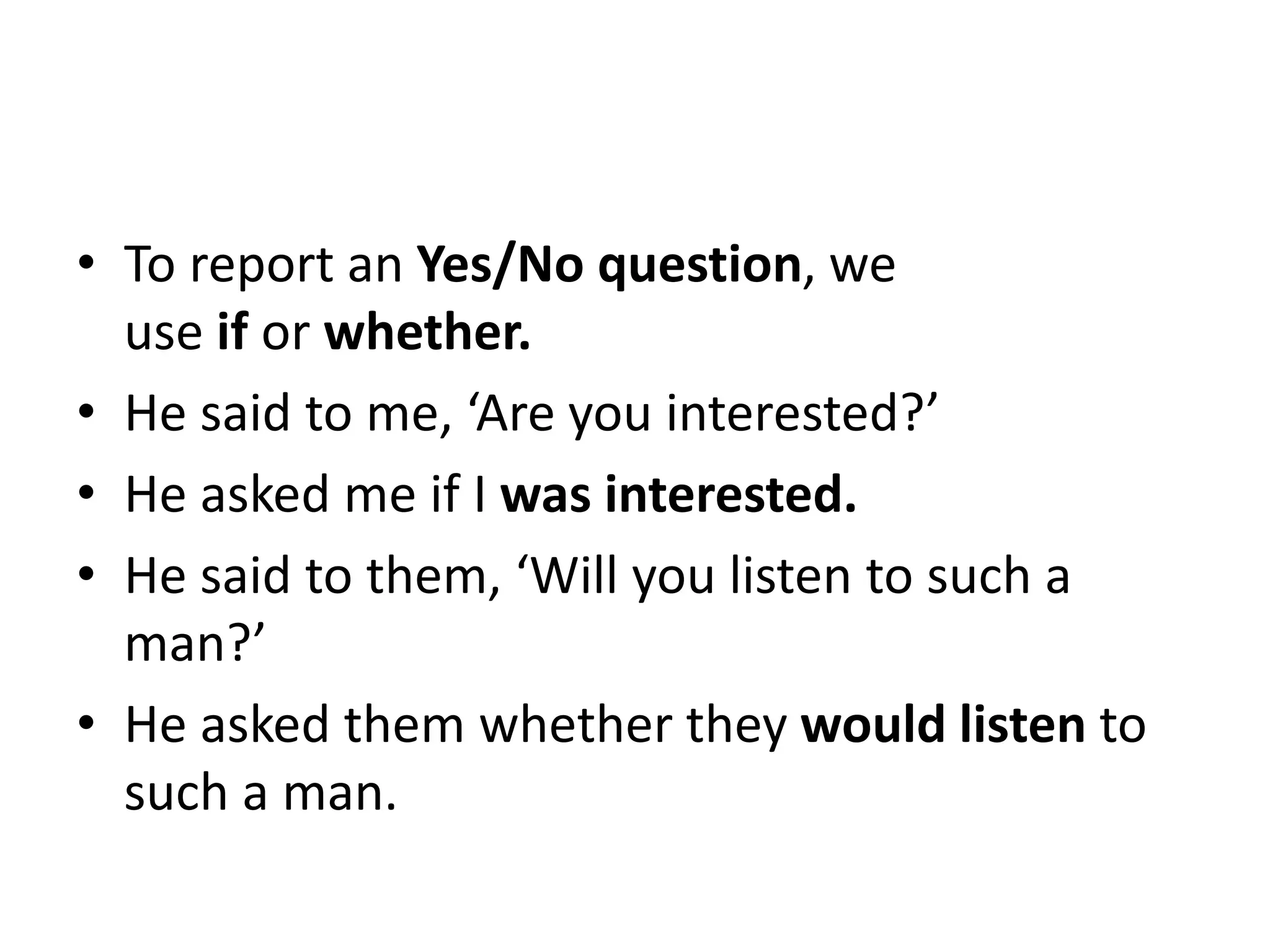
• To report an Yes/No question, we
use if or whether.
• He said to me, ‘Are you interested?’
• He asked me if I was interested.
• He said to them, ‘Will you listen to such a
man?’
• He asked them whether they would listen to
such a man.
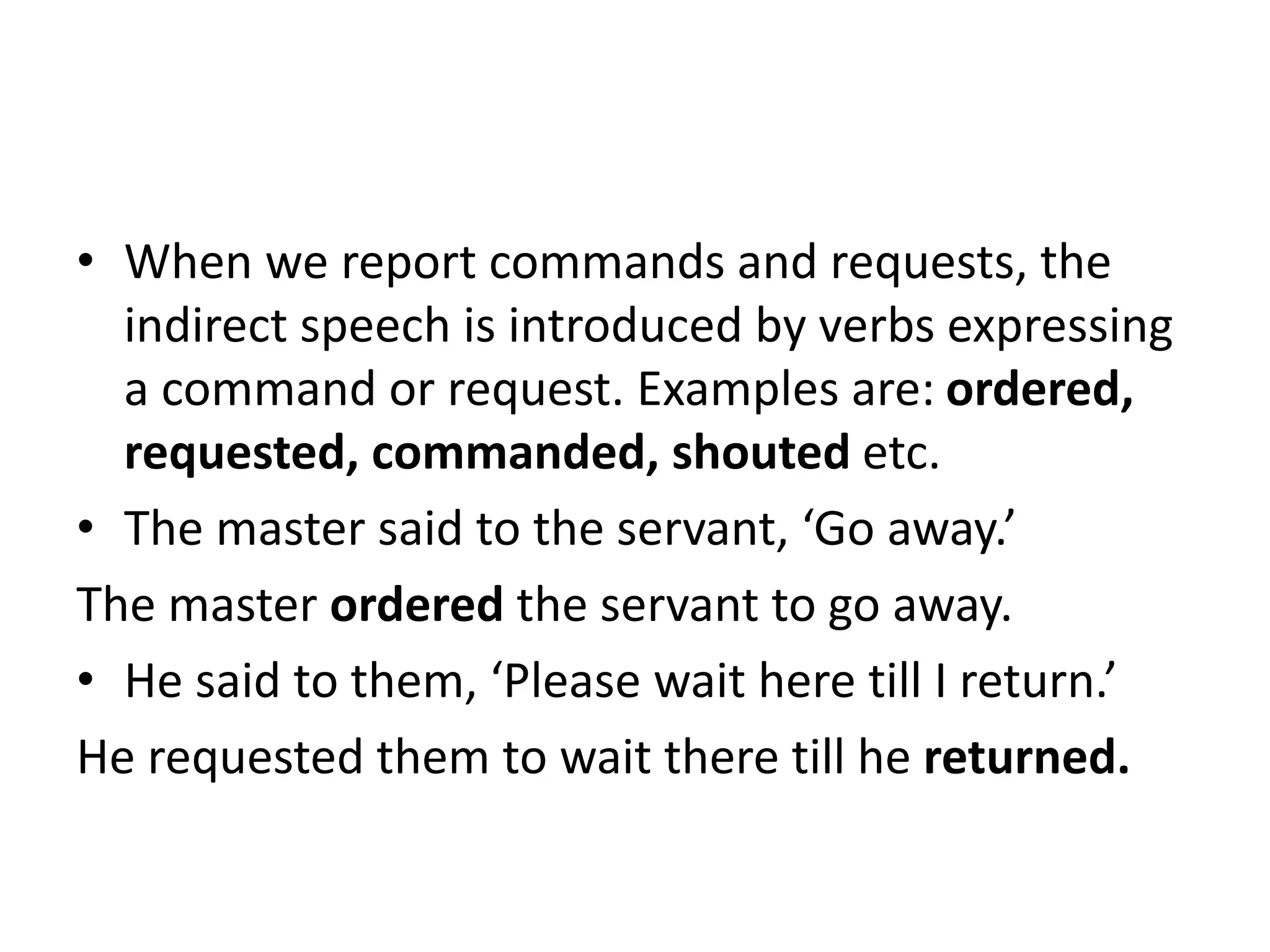
• When we report commands and requests, the
indirect speech is introduced by verbs expressing
a command or request. Examples are: ordered,
requested, commanded, shouted etc.
• The master said to the servant, ‘Go away.’
The master ordered the servant to go away.
• He said to them, ‘Please wait here till I return.’
He requested them to wait there till he returned.

Narration concepts ppt

  • 1.
  • 3.
    • When thereporting verb is in the past tense, all present tenses in the direct speech will change into the corresponding past tenses • For example, the simple present will become simple past. • He said, ‘I want to go.’ • He said that he wanted to go.
  • 4.
    • She said,‘I am coming.’ • She said that she was coming. • He said, ‘I have finished.’ • He said that he had finished.
  • 5.
    • When wereport questions, the indirect speech is introduced by verbs such as asked, inquired etc. • He said to me, ‘What are you doing there?’ • He asked me what I was doing there.
  • 6.
    • If thereporting verb is in the present tense, the tenses in the direct speech do not change. • He says, ‘He is leaving.’ • He says that he is leaving.
  • 7.
    • To reportan Yes/No question, we use if or whether. • He said to me, ‘Are you interested?’ • He asked me if I was interested. • He said to them, ‘Will you listen to such a man?’ • He asked them whether they would listen to such a man.
  • 8.
    • When wereport commands and requests, the indirect speech is introduced by verbs expressing a command or request. Examples are: ordered, requested, commanded, shouted etc. • The master said to the servant, ‘Go away.’ The master ordered the servant to go away. • He said to them, ‘Please wait here till I return.’ He requested them to wait there till he returned.