Dr. A. Lakshmanan
The Professor & Head, DNST
TNAU, Coimbatore
M.S.Kumuthan
Ph.D Scholar
TNAU, Coimbatore
NANOPILLARS
M. Latha
Ph.D Scholar
TNAU, Coimbatore
INTRODUCTION
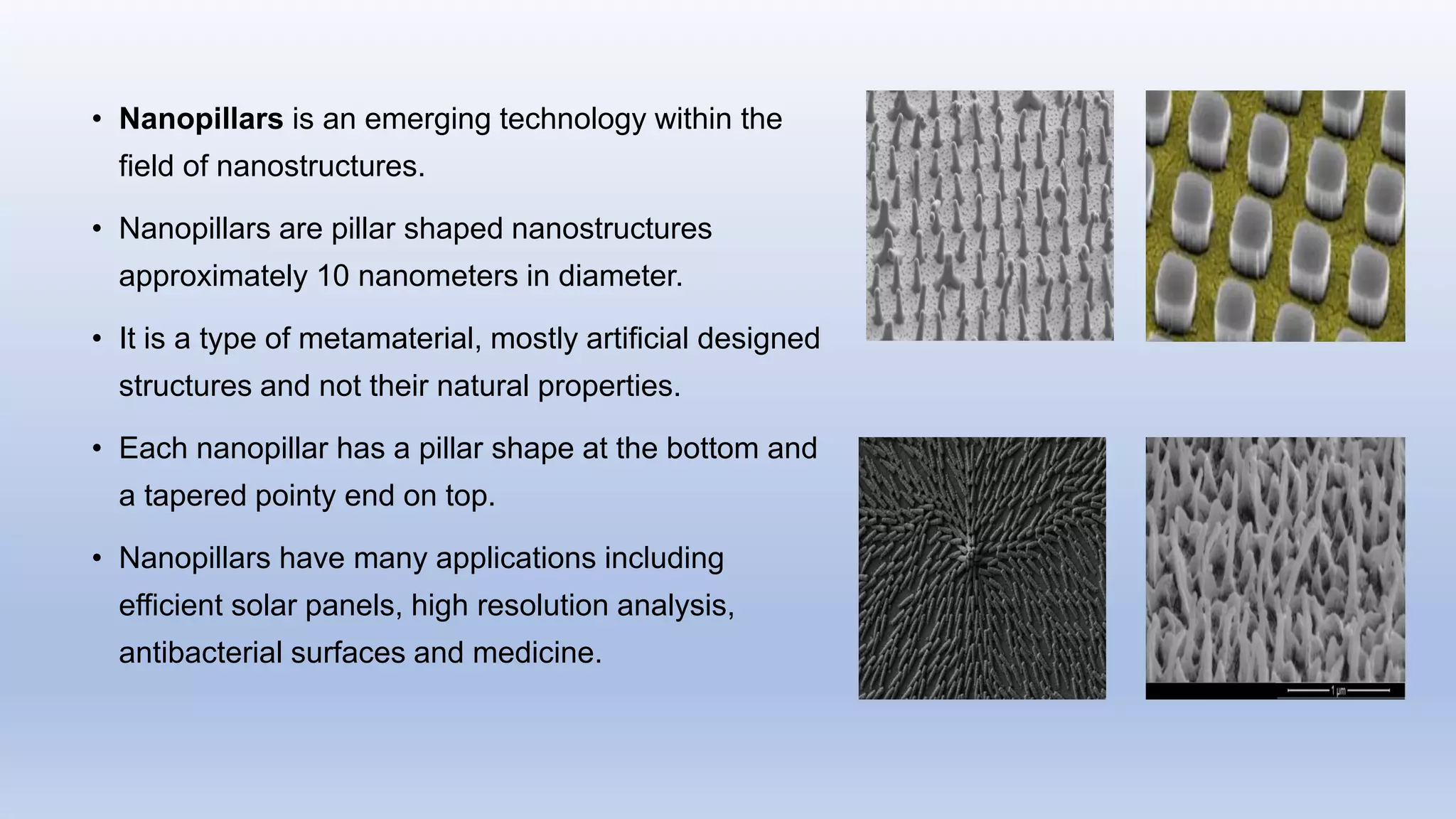
• Nanopillars is an emerging technology within the
field of nanostructures.
• Nanopillars are pillar shaped nanostructures
approximately 10 nanometers in diameter.
• It is a type of metamaterial, mostly artificial designed
structures and not their natural properties.
• Each nanopillar has a pillar shape at the bottom and
a tapered pointy end on top.
• Nanopillars have many applications including
efficient solar panels, high resolution analysis,
antibacterial surfaces and medicine.
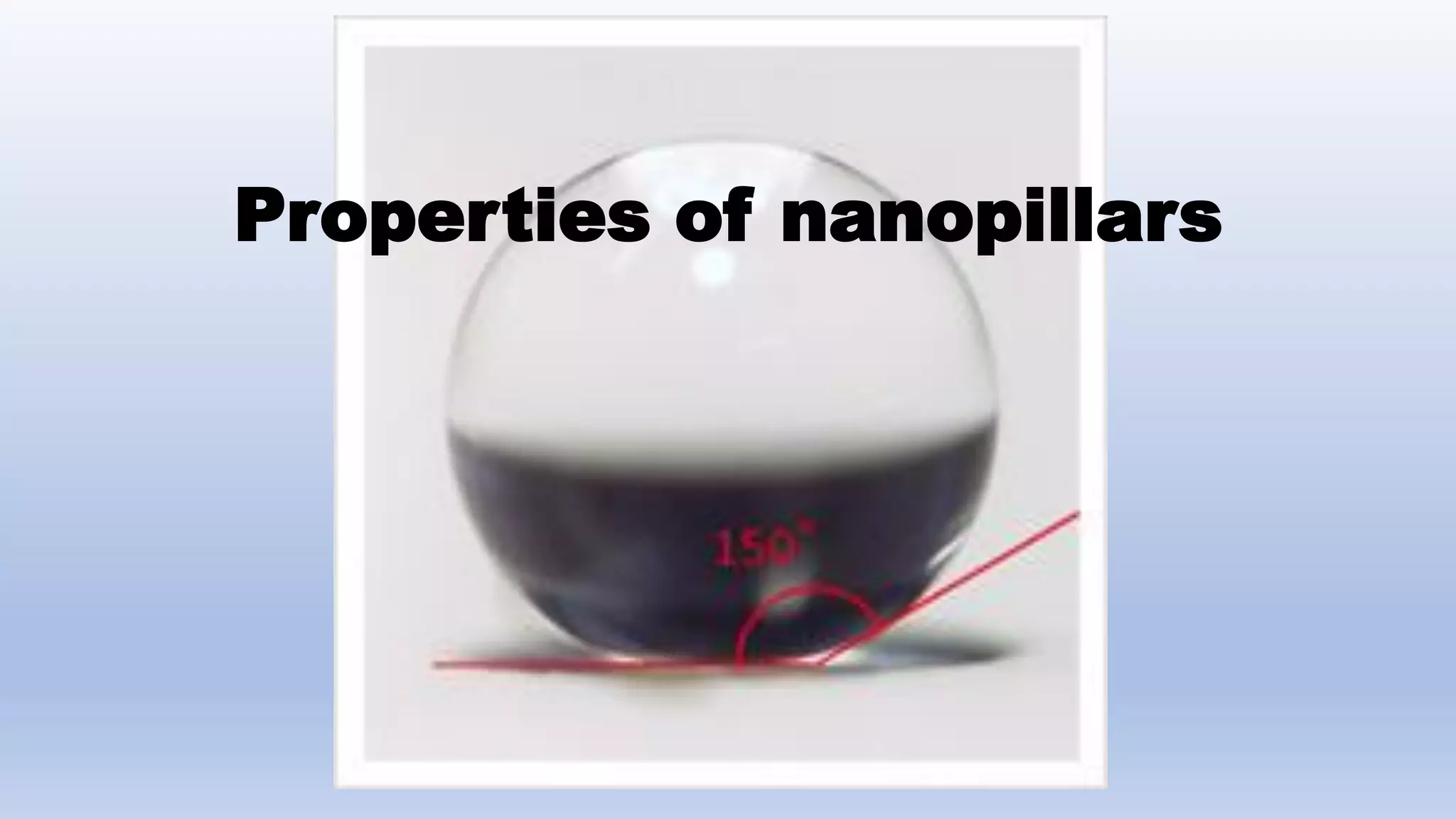
Properties of nanopillars
• The presence of many vertically aligned nanopillars on a flat
surface significantly increases the surface area without
changing the overall dimensions of the original substrate.
• The surface area of a nanopillared surface (S) can be
calculated from the following equation:
S = S0 + n(2rl)
S0 - Area of the original flat surface
r - Radius of each nanopillar
l - Height of the nanopillars
n - Number of nanopillars on the flat surface
• The increased surface area has various bio applications such
as biosensing.
• A sensor based on this surface can interact with more target
analytes, with higher sensitivity.
Surface area
Mechanical Stability
• Smaller is stronger.
• Compression testing -nanoindenter
apparatus.
• Elastic properties increased.
• Plastic deformation reduced.
Scanning electron micrographs - Au nanopillar in an
instrumented nanoindenter (a) prior to, and (b), post compression
Optical Characteristics
• Surface-plasmon resonance - the electrons at the surface oscillate collectively in response to incident light.
• The control over surface-plasmon interaction may be replicated by patterning gold with nanopillars of
various diameters.
• Gold nanopillar surfaces are suitable for forming surface-plasmon traps
Surface-plasmon resonance
Biocompatibility
• Nanopillars also possess a unique geometry that
strengthens their interaction with cells.
• Creates “pinning” effect
• The placement of nanopillars in an ordered array
encourages cells to position themselves in
between pillars while wrapping the ends of their
membranes around the pillars for increased
support.
• Nanopillars improve cell growth and proliferation
Tight adhesion of cells to gold nanopillars. (a) cell-
nanopillar interface. (b) cell membrane protruding into the
inter-pillar regions
• Thermoelectric efficiency is high.
• Short length of the nanopillars leads to
ballistic phonon transport.
• Thermal conductance of nanopillars are
smaller than bulk material.
• Phonon transport only through the pillars.
Electrical property
Electric field distributions in a) planar and b) nanopillar
devices indicating that carriers generated deeper. Trap
occupation (c and d) and Shockley-Read-Hall (SRH)
recombination (e and f)
FABRICATION OF NANOPILLARS
Bottom-up growth techniques
i) Chemical vapor deposition (CVD),
ii) Physical vapor deposition (PVD),
iii) Template synthesis
Top-down approaches
i) Lithography and etching
TOP- DOWN APPROACHES
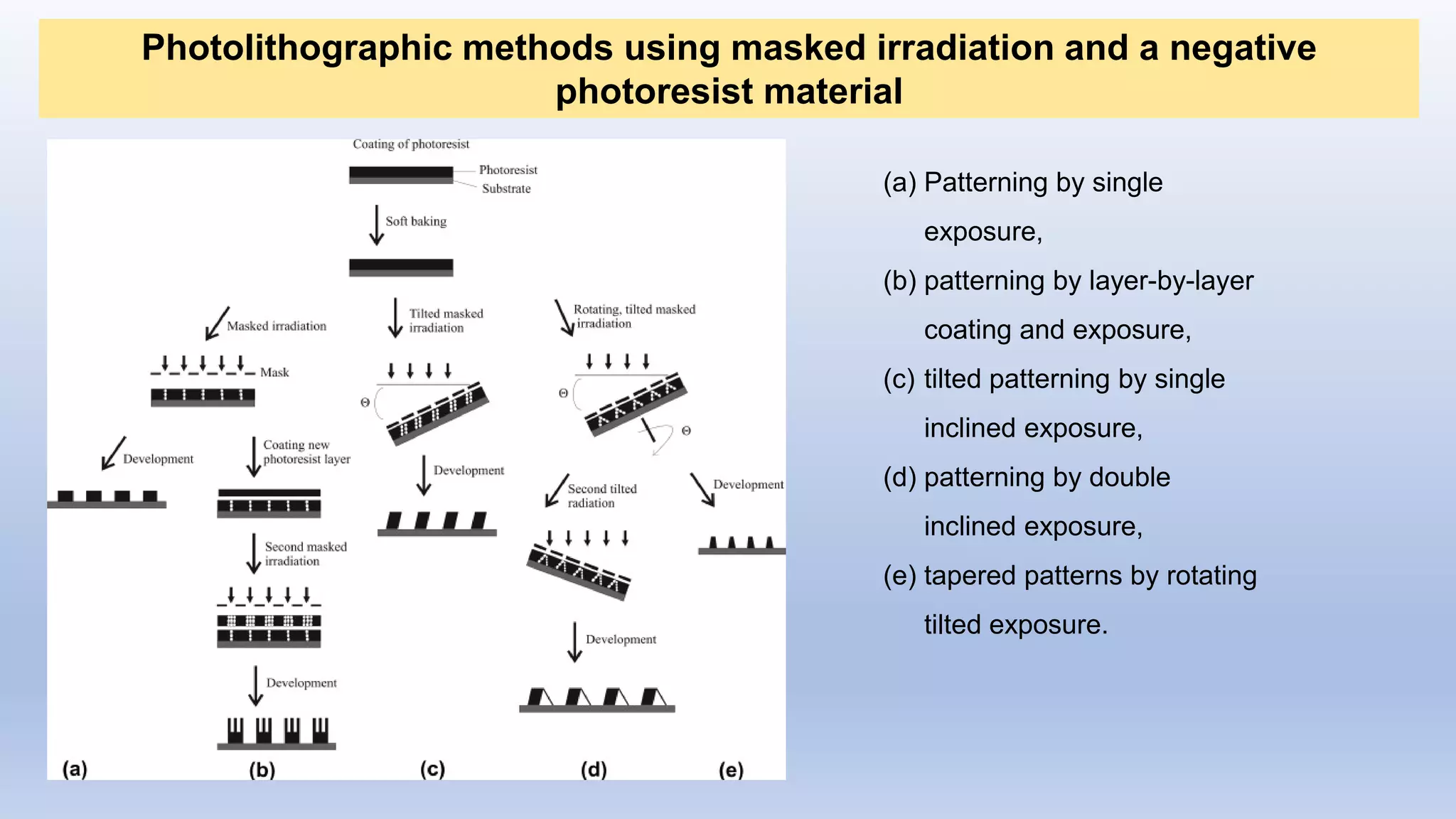
(a) Patterning by single
exposure,
(b) patterning by layer-by-layer
coating and exposure,
(c) tilted patterning by single
inclined exposure,
(d) patterning by double
inclined exposure,
(e) tapered patterns by rotating
tilted exposure.
Photolithographic methods using masked irradiation and a negative
photoresist material
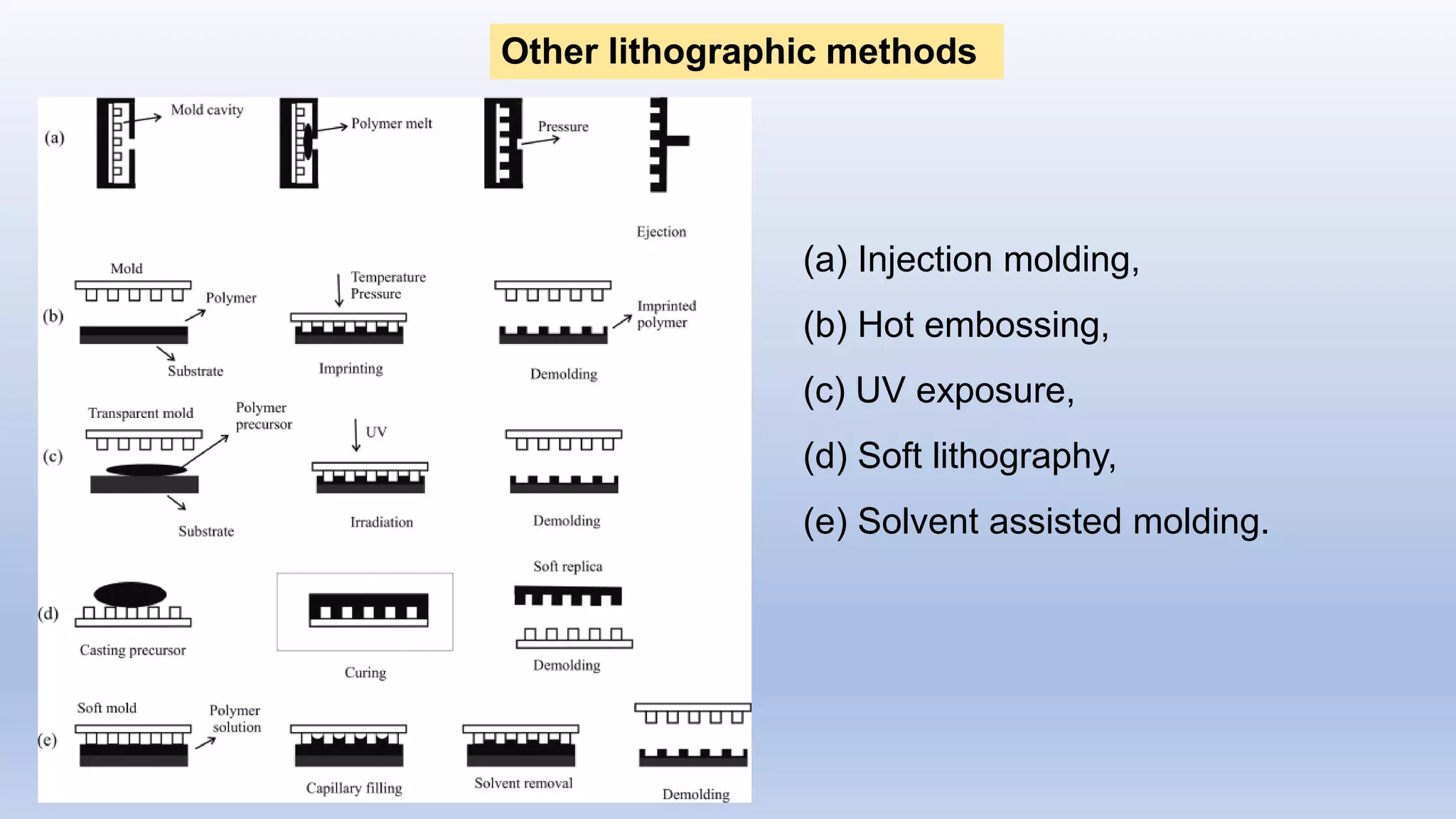
(a) Injection molding,
(b) Hot embossing,
(c) UV exposure,
(d) Soft lithography,
(e) Solvent assisted molding.
Other lithographic methods
CASE STUDY FOR TOP DOWN APPROACH
SYNTHESIS OF NANOPILLARS
Fabrication of nanopillars by nanosphere lithography
Cheung et al., 2006
Step 1: spin coat a hexagonally close packed
monolayer of polystyrene beads on substrates.
Step 2: tailor the size of the beads’ “resist” by oxygen
plasma etching.
Step 3: etch the exposed semiconductor areas by
deep reactive ion etching
SEM image of Silicon nanopillars
Fabrication of Nanopillars based on Silicon Oxide Nanopatterns
Synthesized in Oxygen Plasma Removal of Photoresist
Mao et al., 2006
Creating nanopillar or nanoneedle structures SEM images of nanoresidueson different substrates
Spatioselective fuctionalization of gold nanopillar arrays
SEM images :
(A) Top of the nanopillars grafted
with a thiolactone copolymer
layer
(B) surface entirely grafted with a
thiolactone copolymer
(C)surface entirely functionalized
with a SAM.
Chattaway et al., 2019
BOTTOM-UP GROWTH TECHNIQUES
Imprinting for nanopillar
CVD
PVD
CASE STUDY FOR BOTTOM UP APPROACH
SYNTHESIS OF NANOPILLARS
(a)Si-on-diamond template with 9*9 array of 400 nm holes
produced by FIB
(b)enlarged image of one of the holes.
Growth of diamond nanopillar with imbedded SiV colour
centers
SEM images of diamond nanopillars grown
through the holes for deposition time of 6 min (a)
before and (b)after Si mask removal.
Sovyk et al., 2016
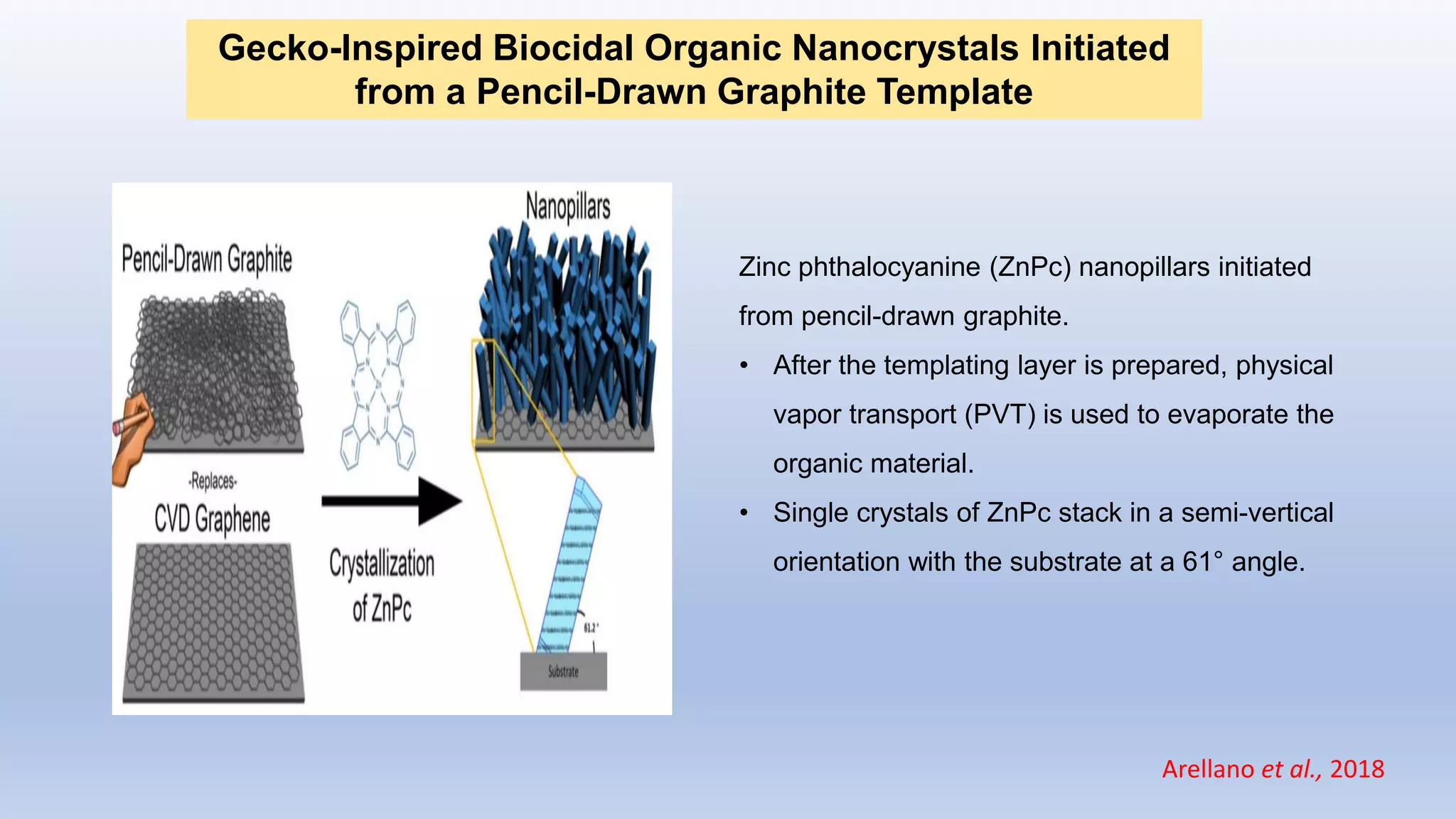
Zinc phthalocyanine (ZnPc) nanopillars initiated
from pencil-drawn graphite.
• After the templating layer is prepared, physical
vapor transport (PVT) is used to evaporate the
organic material.
• Single crystals of ZnPc stack in a semi-vertical
orientation with the substrate at a 61° angle.
Gecko-Inspired Biocidal Organic Nanocrystals Initiated
from a Pencil-Drawn Graphite Template
Arellano et al., 2018
Micrographs of nanopillars initiated from pencil-drawn graphite as a function of evaporation time. (a) ZnPc
film deposited on Si wafer (no nanopillars). (b–f) Cross-sectional micrographs of ZnPc nanopillars initiated
from pencil-drawn graphite grown as a function of evaporation time, from 3.0 min to 5.0 min. All scale bars
are 1 µm.
Arellano et al., 2018
Fabrication of cylindrical and multibranched nanopillars surfaces
(a) cylindrical nanopillar surfaces (CNS) and (b) multibranched
nanopillared surfaces (MNS) film formation from anodized
alumina molds (AAMs) having cylindrical and multibranched
columnar structures, respectively. Polycarbonate was drop casted
on the nanoporous molds.
(a) the standard anodized alumina mold (AAM),
(b) the resultant cylindrical nanopillar surface
films.
Altuntas et al., 2017
APPLICATIONS OF
NANOPILLARS
Optics
Solar panelAntibacterial coating
Biosensors Medicine
ANTIBACTERIAL COATING AND IT’S
CASE STUDY
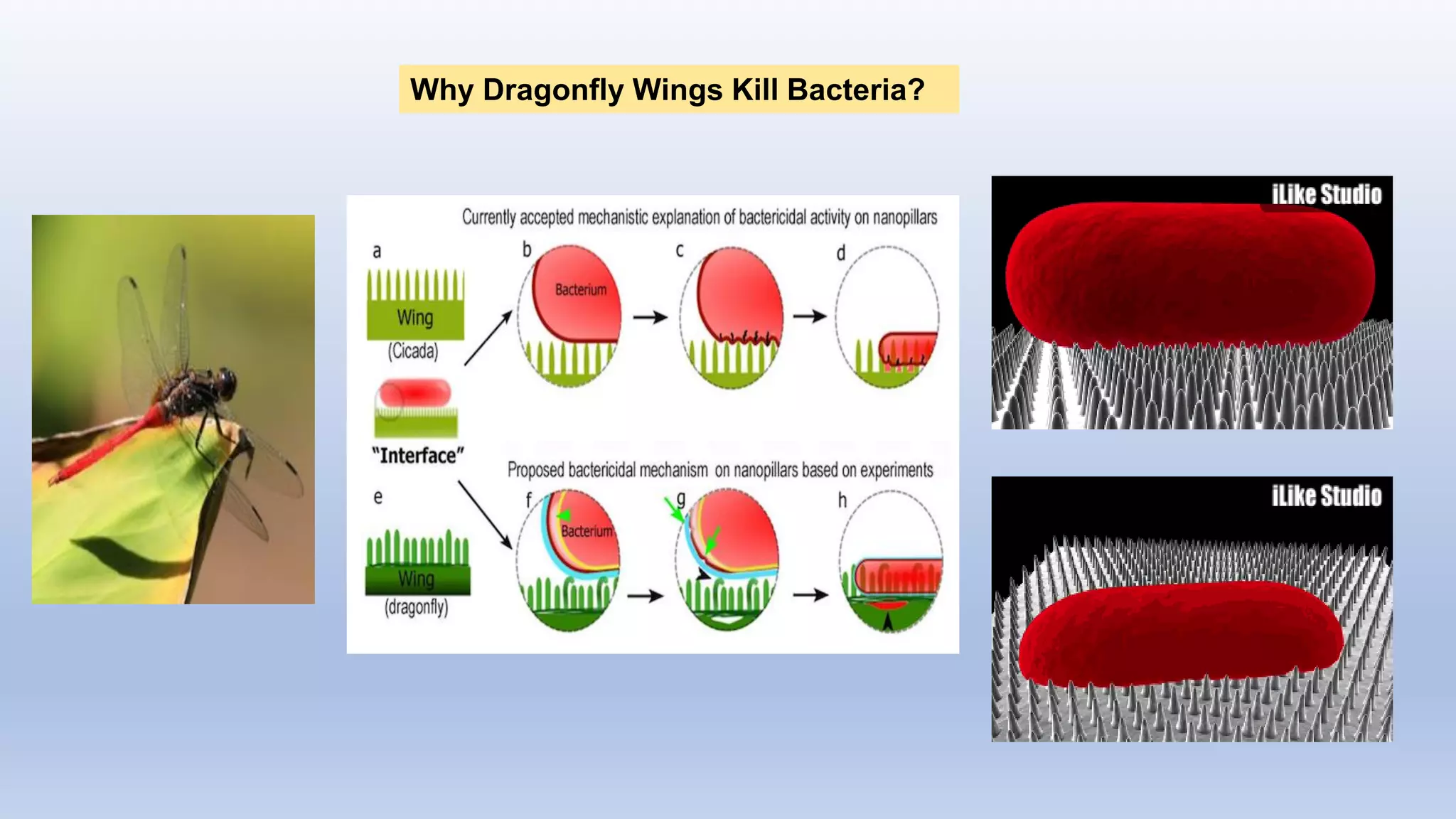
Why Dragonfly Wings Kill Bacteria?
CASE STUDY: Bactericidal activity of black silicon
Ivanova et al., 2013
Characterization of black silicon and D. bipunctata wings
Non-viable bacterial cells and spores were stained
with propidium iodide (red), whereas the living
cells were stained with SYTO 9 (green).
CASE STUDY: ZnO Nanopillar Coated Surfaces with Substrate-Dependent
Superbactericidal Property
Yi et al., 2018
E. coli bacteria destroyed by the
anti-bacterial coating made from
zinc oxide nanopillars
Zinc oxide nanopillars Fluorescent imaging of E. coli
NANOPILLAR IN OPTICS AND IT’S
CASE STUDY
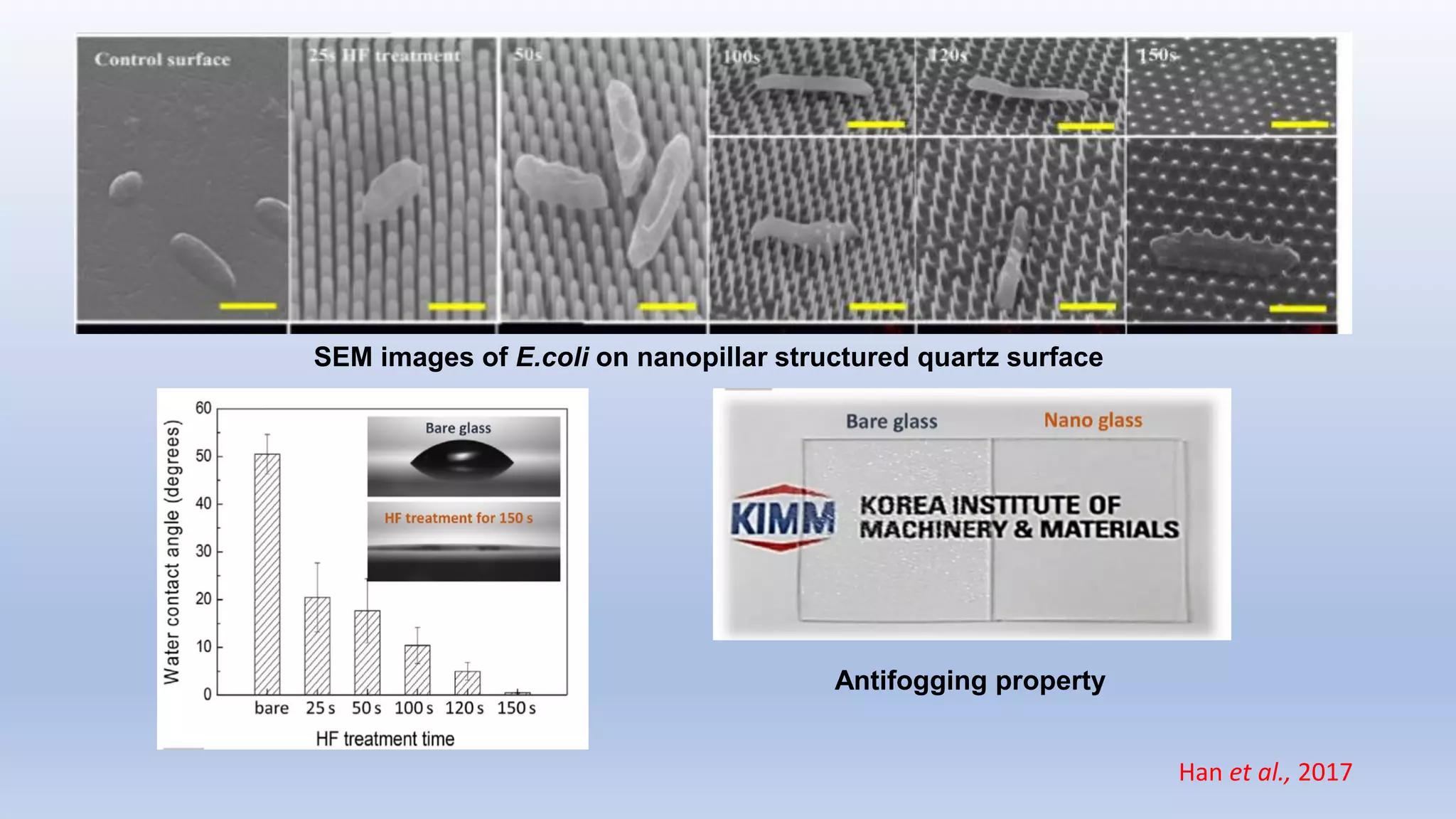
Development of superhydrophilic and transparent optical devices
CASE STUDY: Superhydrophilic nanopillar structured quartz
surfaces for the prevention of biofilm formation of optical devices
SEM images of nanopillarFabrication process
Han et al., 2017
SEM images of E.coli on nanopillar structured quartz surface
Antifogging property
Han et al., 2017
CASE STUDY: Super hydrophobic/Super hydrophilic Transparent
Nanostructured Glass Fabricated by Wet Etching
Kumar et al., 2014
Self-cleaning property by using hydrophilic and hydrophobic
property of glass
NANOPILLARS IN ENERGY
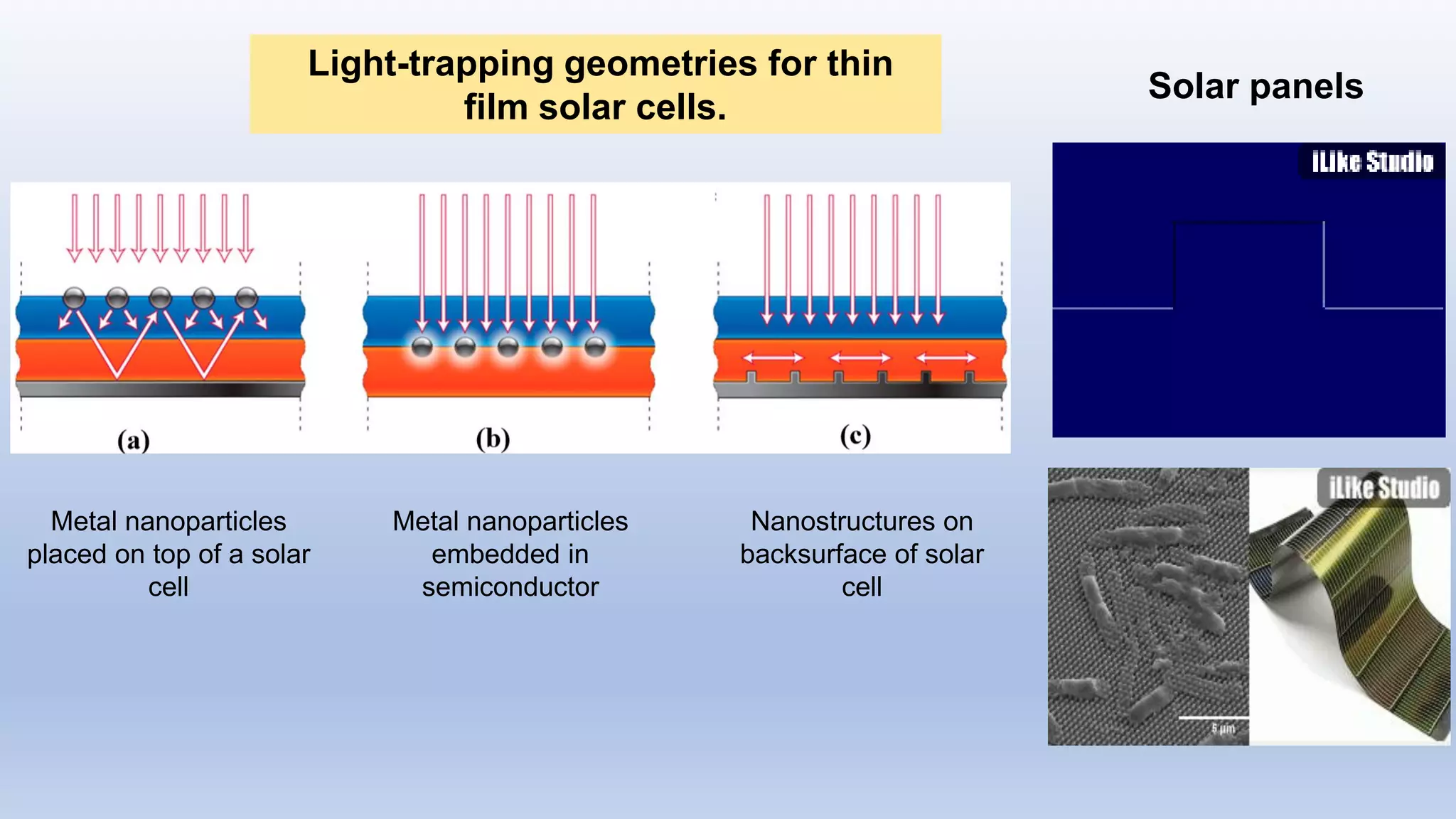
Solar panels
Light-trapping geometries for thin
film solar cells.
Metal nanoparticles
placed on top of a solar
cell
Metal nanoparticles
embedded in
semiconductor
Nanostructures on
backsurface of solar
cell
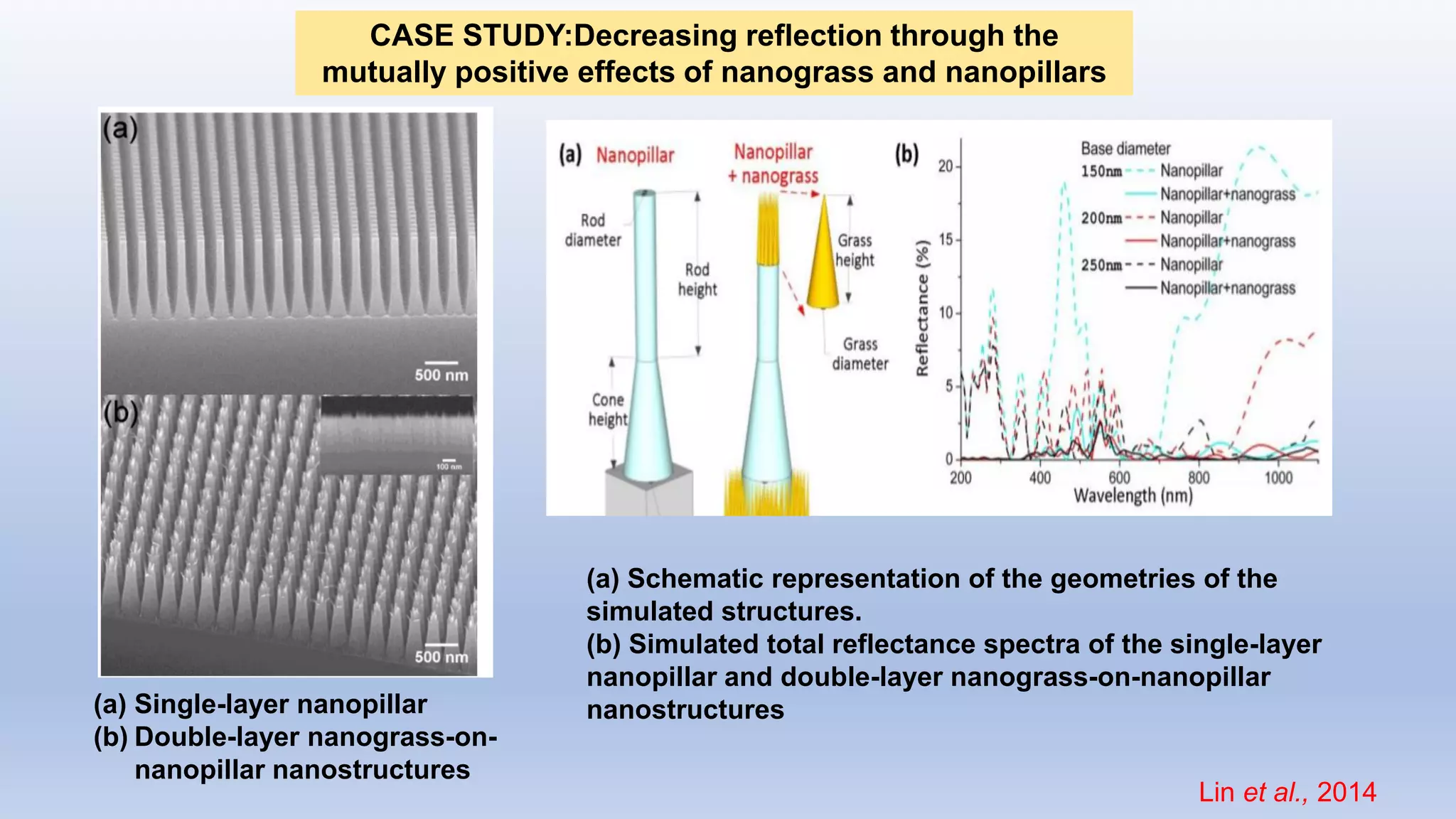
CASE STUDY:Decreasing reflection through the
mutually positive effects of nanograss and nanopillars
Lin et al., 2014
(a) Single-layer nanopillar
(b) Double-layer nanograss-on-
nanopillar nanostructures
(a) Schematic representation of the geometries of the
simulated structures.
(b) Simulated total reflectance spectra of the single-layer
nanopillar and double-layer nanograss-on-nanopillar
nanostructures
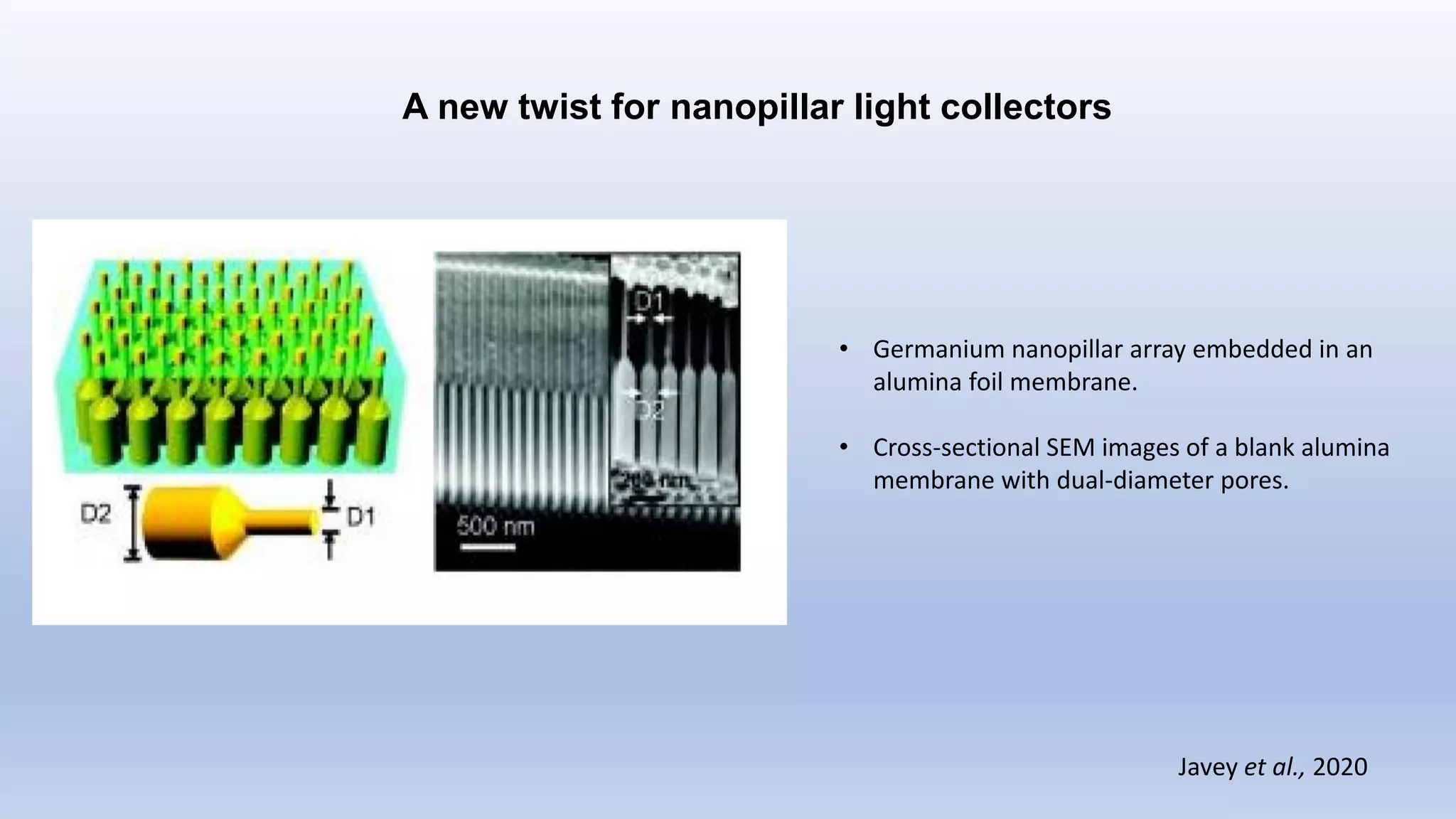
A new twist for nanopillar light collectors
• Germanium nanopillar array embedded in an
alumina foil membrane.
• Cross-sectional SEM images of a blank alumina
membrane with dual-diameter pores.
Javey et al., 2020
NANOPILLARS IN BIOSENSING AND
MEDICINE
Stem cell culturing
DNA separation Neuronal growth and pinning
Enhance the efficacy of drug delivery systems
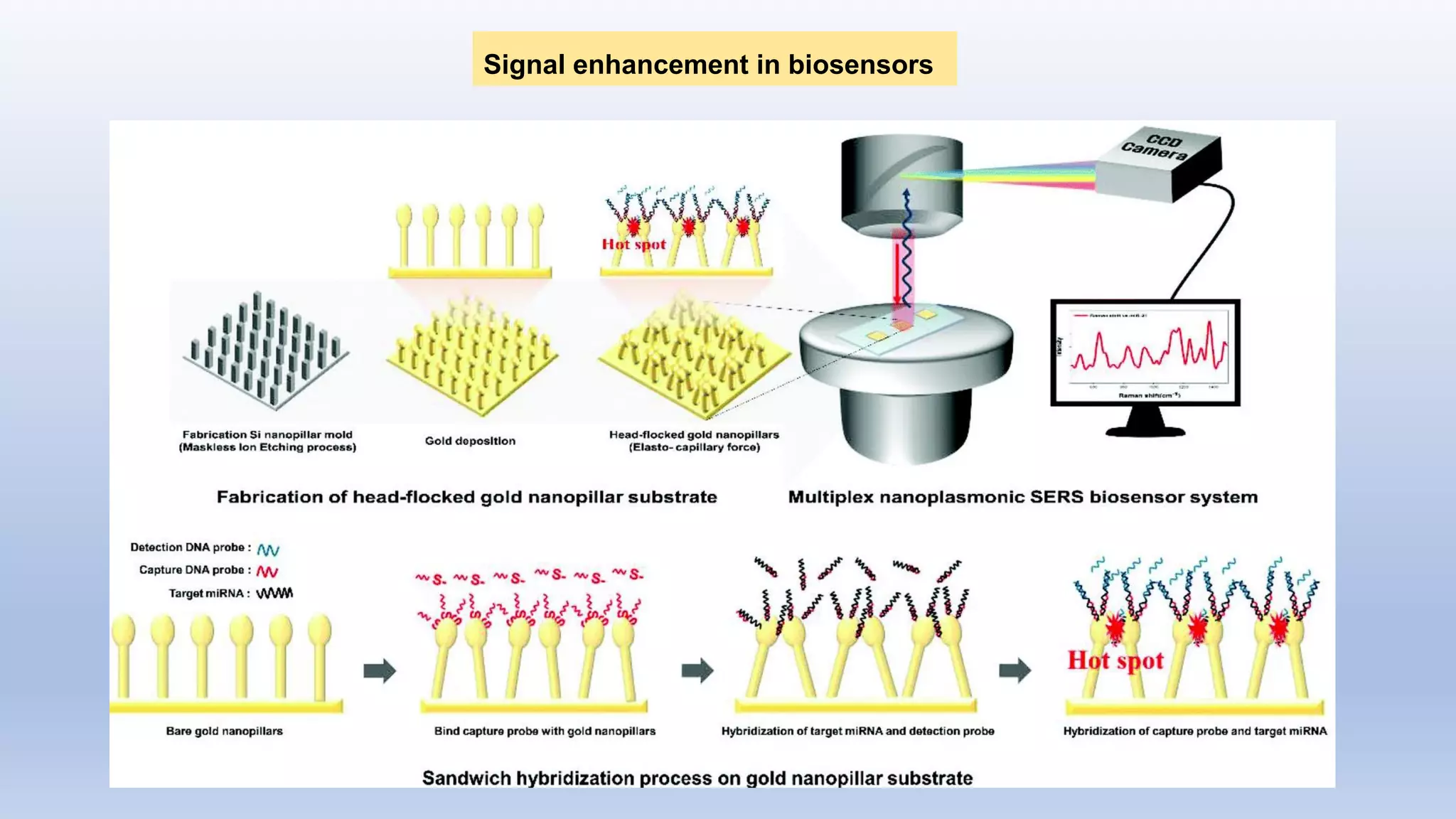
Signal enhancement in biosensors
CASE STUDY: Fine-Tuning the Degree of Stem Cell Alignment on Ordered
Arrays of High-Aspect-Ratio Nanopillars
Bucaro et al., 2012
(A) Cells grown on high-aspect-ratio Si NPs (r = 100 nm, h =
10μm, p =2μm),
(B) Cells grown on Si NPs (r = 200 nm, h =5μm, p =2μm),
(C) Cells grown on an polymer micropillar array (r = 750 nm, h =
10μm, p = 3.5 μm)
(D) Cells grown on a silicon micropost array
NP arrays in controlling the morphology
and alignment of stem cells
CASE STUDY: Biofunctionalized 3D Nanopillar Arrays Fostering Cell
Guidance and Promoting Synapse Stability and Neuronal Activity in
Networks
(A) Cell body are guided by the geometrical pattern of NPs.
(B) Close-up image
(C) Bundle of neuronal axons is precisely guided on PDLO/NPs.
(D) Neuronal axons are guided along a complex circular like
pattern of NPs functionalized with PDLO.
Amin et al., 2018
CASE STUDY: Nanopillar array structures for
enhancing biosensing performance
Gold nanopillar array structures developed using
electrodeposition: immediately after deposition (a) and after
the water droplet test and several electrochemical test runs
(b).
Amperometric responses (a) of gold nanostructured and flat
electrodes in an electrolyte containing various concentrations of
K4Fe(CN)6 in Na2SO4. Calibration curve (b) of steady state
current versus the concentration of K4Fe(CN)6.
(Anandan et al., 2006)
CASE STUDY: Separation of Long DNA Molecules by Quartz
Nanopillar Chips under a Direct Current Electric Field
Kaji et al., 2004
Nanopillar structures fabricated on a
quartz glass plate before
Schematic representation of a microchannel
equipped with nanopillars for a large DNA
separation
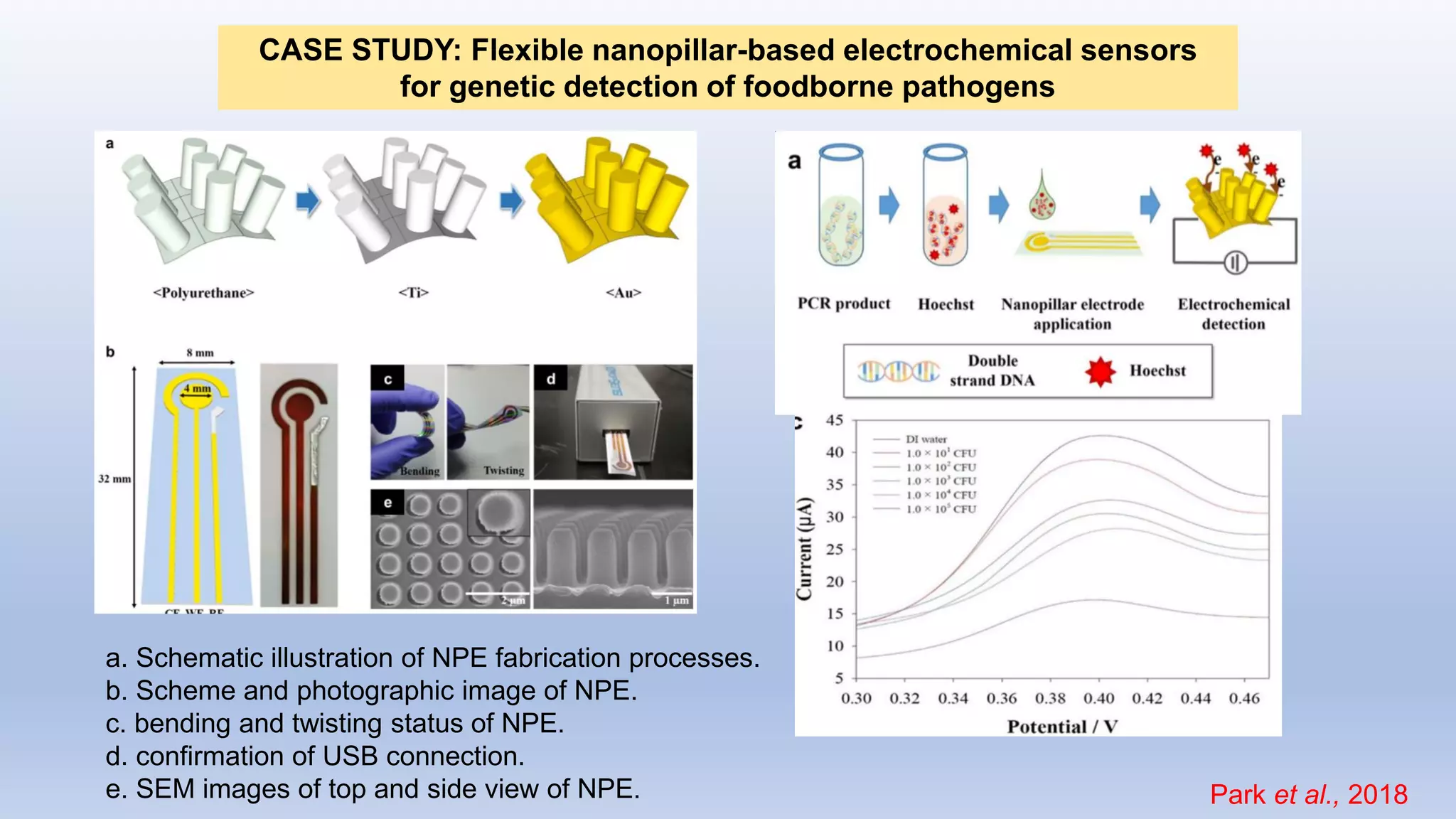
CASE STUDY: Flexible nanopillar-based electrochemical sensors
for genetic detection of foodborne pathogens
a. Schematic illustration of NPE fabrication processes.
b. Scheme and photographic image of NPE.
c. bending and twisting status of NPE.
d. confirmation of USB connection.
e. SEM images of top and side view of NPE. Park et al., 2018
CASE STUDY: Enhanced Humidity Sensitivity
with Silicon Nanopillar Array by UV Light
Li et al., 2018
AFM image of Si nanopillars
Humidity sensor stability
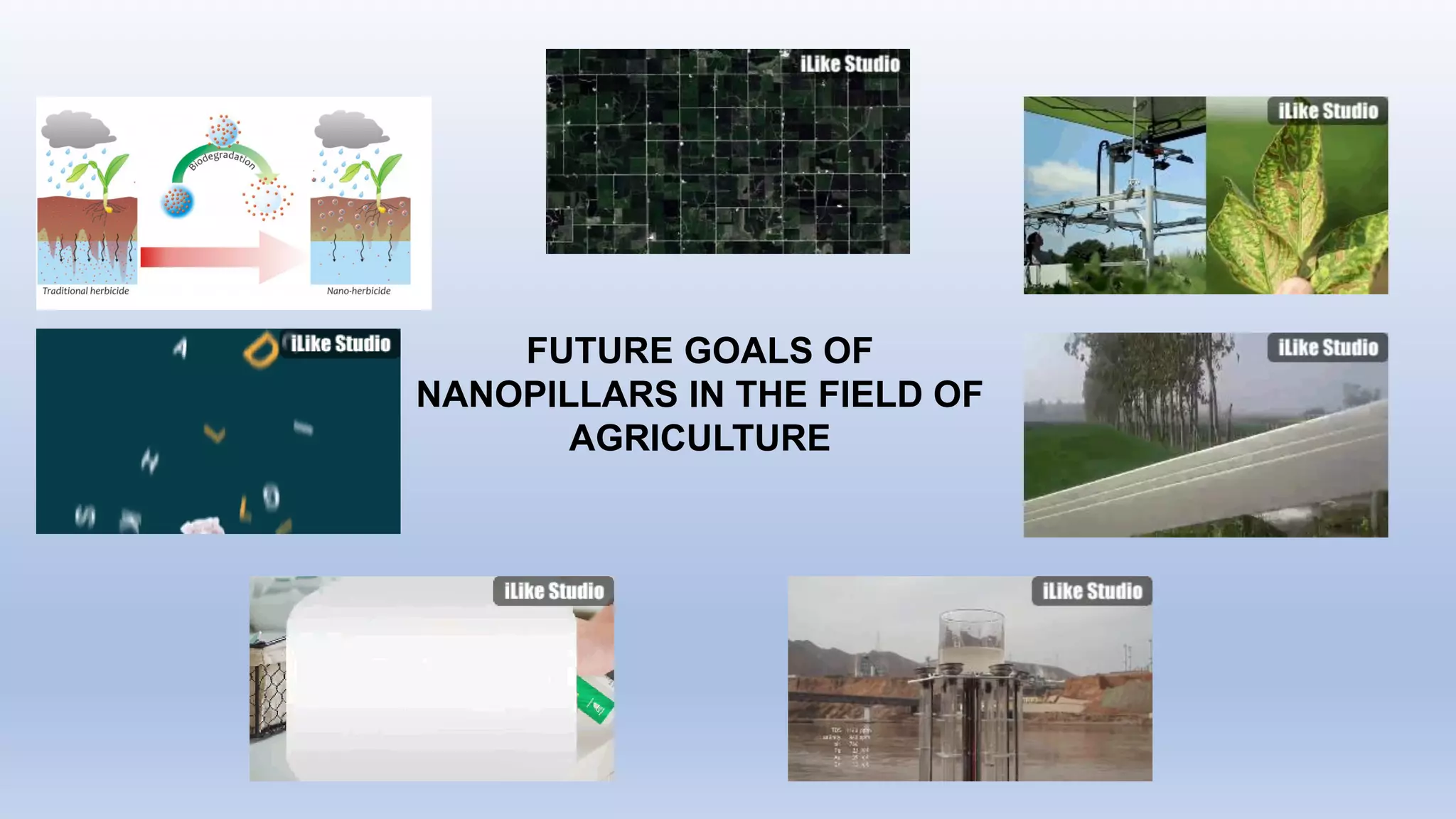
FUTURE GOALS OF
NANOPILLARS IN THE FIELD OF
AGRICULTURE
NOKIA MORPH
• The vertically aligned nature of nanopillars offer significantly greater advantages
than regular, planar surfaces.
• Nanopillars provide many applications in biomedical, energy and agriculture field.
• Fabrication of nanopillars is easy by simple methods.
• High sensitivity and accuracy in detection due to their optical and electrical
properties.
Conclusion
References
1. Yi, G., Yuan, Y., Li, X., & Zhang, Y. (2018). ZnO Nanopillar Coated Surfaces with Substrate‐Dependent
Superbactericidal Property. Small, 14(14), 1703159.
2. Alhmoud, H., Cifuentes-Rius, A., Delalat, B., Lancaster, D. G., & Voelcker, N. H. (2017). Gold-decorated porous silicon
nanopillars for targeted hyperthermal treatment of bacterial infections. ACS applied materials & interfaces, 9(39),
33707-33716.
3. Elbourne, A., Crawford, R. J., & Ivanova, E. P. (2017). Nano-structured antimicrobial surfaces: From nature to
synthetic analogues. Journal of colloid and interface science, 508, 603-616.
4. Xie, C., Hanson, L., Cui, Y., & Cui, B. (2011). Vertical nanopillars for highly localized fluorescence imaging. Proceedings
of the National Academy of Sciences, 108(10), 3894-3899.
5. Amin, H., Dipalo, M., De Angelis, F., & Berdondini, L. (2018). Biofunctionalized 3D Nanopillar Arrays Fostering Cell
Guidance and Promoting Synapse Stability and Neuronal Activity in Networks. ACS applied materials &
interfaces, 10(17), 15207-15215.
6. Ortega, F. J., Bañuls, M. J., Sanza, F. J., Casquel, R., Laguna, M. F., Holgado, M., ... & Puchades, R. (2012). Biomolecular
interaction analysis of gestrinone-anti-gestrinone using arrays of high aspect ratio SU-8 nanopillars. Biosensors, 2(3),
291-304.
7. Kaji, N., Tezuka, Y., Takamura, Y., Ueda, M., Nishimoto, T., Nakanishi, H., ... & Baba, Y. (2004). Separation of long DNA
molecules by quartz nanopillar chips under a direct current electric field. Analytical chemistry, 76(1), 15-22.
8. Park, Y. M., Lim, S. Y., Jeong, S. W., Song, Y., Bae, N. H., Hong, S. B., ... & Lee, K. G. (2018). Flexible nanopillar-based
electrochemical sensors for genetic detection of foodborne pathogens. Nano convergence, 5(1), 15.
9. Li, W., Ding, C., Cai, Y., Liu, J., Wang, L., Ren, Q., & Xu, J. (2018). Enhanced humidity sensitivity with silicon
nanopillar array by UV light. Sensors, 18(2), 660.
10. Choudhury, B. D., Casquel, R., Bañuls, M. J., Sanza, F. J., Laguna, M. F., Holgado, M., ... & Anand, S. (2014). Silicon
nanopillar arrays with SiO 2 overlayer for biosensing application. Optical Materials Express, 4(7), 1345-1354.
11. Han, S., Ji, S., Abdullah, A., Kim, D., Lim, H., & Lee, D. (2018). Superhydrophilic nanopillar-structured quartz
surfaces for the prevention of biofilm formation in optical devices. Applied Surface Science, 429, 244-252.
12. Kumar, A., Kashyap, K., Liao, K. W., Hou, M. T., & Yeh, J. A. (2014, April). Super hydrophobic/super hydrophilic
transparent nanostructured glass fabricated by wet etching. In The 9th IEEE International Conference on
Nano/Micro Engineered and Molecular Systems (NEMS) (pp. 113-116). IEEE.
13. Lin, C. H., Shieh, J., Liang, C. C., Cheng, C. C., & Chen, Y. C. (2014). Decreasing reflection through the mutually
positive effects of nanograss and nanopillars. Journal of Materials Chemistry C, 2(18), 3645-3650.
14. Chandra, N., Overvig, A. C., Tracy, C. J., & Goodnick, S. M. (2012, October). Fabrication and characterization of
vertical silicon nanopillar Schottky diodes. In 2012 IEEE Nanotechnology Materials and Devices Conference
(NMDC2012) (pp. 58-62). IEEE.
15. Peter Amalathas, A., & Alkaisi, M. M. (2019). Nanostructures for Light Trapping in Thin Film Solar
Cells. Micromachines, 10(9), 619.
Thank you…

Nanopillars

  • 1.
    Dr. A. Lakshmanan TheProfessor & Head, DNST TNAU, Coimbatore M.S.Kumuthan Ph.D Scholar TNAU, Coimbatore NANOPILLARS M. Latha Ph.D Scholar TNAU, Coimbatore
  • 2.
  • 3.
    • Nanopillars isan emerging technology within the field of nanostructures. • Nanopillars are pillar shaped nanostructures approximately 10 nanometers in diameter. • It is a type of metamaterial, mostly artificial designed structures and not their natural properties. • Each nanopillar has a pillar shape at the bottom and a tapered pointy end on top. • Nanopillars have many applications including efficient solar panels, high resolution analysis, antibacterial surfaces and medicine.
  • 4.
  • 5.
    • The presenceof many vertically aligned nanopillars on a flat surface significantly increases the surface area without changing the overall dimensions of the original substrate. • The surface area of a nanopillared surface (S) can be calculated from the following equation: S = S0 + n(2rl) S0 - Area of the original flat surface r - Radius of each nanopillar l - Height of the nanopillars n - Number of nanopillars on the flat surface • The increased surface area has various bio applications such as biosensing. • A sensor based on this surface can interact with more target analytes, with higher sensitivity. Surface area
  • 6.
    Mechanical Stability • Smalleris stronger. • Compression testing -nanoindenter apparatus. • Elastic properties increased. • Plastic deformation reduced. Scanning electron micrographs - Au nanopillar in an instrumented nanoindenter (a) prior to, and (b), post compression
  • 7.
    Optical Characteristics • Surface-plasmonresonance - the electrons at the surface oscillate collectively in response to incident light. • The control over surface-plasmon interaction may be replicated by patterning gold with nanopillars of various diameters. • Gold nanopillar surfaces are suitable for forming surface-plasmon traps Surface-plasmon resonance
  • 8.
    Biocompatibility • Nanopillars alsopossess a unique geometry that strengthens their interaction with cells. • Creates “pinning” effect • The placement of nanopillars in an ordered array encourages cells to position themselves in between pillars while wrapping the ends of their membranes around the pillars for increased support. • Nanopillars improve cell growth and proliferation Tight adhesion of cells to gold nanopillars. (a) cell- nanopillar interface. (b) cell membrane protruding into the inter-pillar regions
  • 9.
    • Thermoelectric efficiencyis high. • Short length of the nanopillars leads to ballistic phonon transport. • Thermal conductance of nanopillars are smaller than bulk material. • Phonon transport only through the pillars. Electrical property Electric field distributions in a) planar and b) nanopillar devices indicating that carriers generated deeper. Trap occupation (c and d) and Shockley-Read-Hall (SRH) recombination (e and f)
  • 10.
  • 11.
    Bottom-up growth techniques i)Chemical vapor deposition (CVD), ii) Physical vapor deposition (PVD), iii) Template synthesis Top-down approaches i) Lithography and etching
  • 12.
  • 13.
    (a) Patterning bysingle exposure, (b) patterning by layer-by-layer coating and exposure, (c) tilted patterning by single inclined exposure, (d) patterning by double inclined exposure, (e) tapered patterns by rotating tilted exposure. Photolithographic methods using masked irradiation and a negative photoresist material
  • 14.
    (a) Injection molding, (b)Hot embossing, (c) UV exposure, (d) Soft lithography, (e) Solvent assisted molding. Other lithographic methods
  • 15.
    CASE STUDY FORTOP DOWN APPROACH SYNTHESIS OF NANOPILLARS
  • 16.
    Fabrication of nanopillarsby nanosphere lithography Cheung et al., 2006 Step 1: spin coat a hexagonally close packed monolayer of polystyrene beads on substrates. Step 2: tailor the size of the beads’ “resist” by oxygen plasma etching. Step 3: etch the exposed semiconductor areas by deep reactive ion etching SEM image of Silicon nanopillars
  • 17.
    Fabrication of Nanopillarsbased on Silicon Oxide Nanopatterns Synthesized in Oxygen Plasma Removal of Photoresist Mao et al., 2006 Creating nanopillar or nanoneedle structures SEM images of nanoresidueson different substrates
  • 18.
    Spatioselective fuctionalization ofgold nanopillar arrays SEM images : (A) Top of the nanopillars grafted with a thiolactone copolymer layer (B) surface entirely grafted with a thiolactone copolymer (C)surface entirely functionalized with a SAM. Chattaway et al., 2019
  • 19.
  • 20.
  • 21.
    CASE STUDY FORBOTTOM UP APPROACH SYNTHESIS OF NANOPILLARS
  • 22.
    (a)Si-on-diamond template with9*9 array of 400 nm holes produced by FIB (b)enlarged image of one of the holes. Growth of diamond nanopillar with imbedded SiV colour centers SEM images of diamond nanopillars grown through the holes for deposition time of 6 min (a) before and (b)after Si mask removal. Sovyk et al., 2016
  • 23.
    Zinc phthalocyanine (ZnPc)nanopillars initiated from pencil-drawn graphite. • After the templating layer is prepared, physical vapor transport (PVT) is used to evaporate the organic material. • Single crystals of ZnPc stack in a semi-vertical orientation with the substrate at a 61° angle. Gecko-Inspired Biocidal Organic Nanocrystals Initiated from a Pencil-Drawn Graphite Template Arellano et al., 2018
  • 24.
    Micrographs of nanopillarsinitiated from pencil-drawn graphite as a function of evaporation time. (a) ZnPc film deposited on Si wafer (no nanopillars). (b–f) Cross-sectional micrographs of ZnPc nanopillars initiated from pencil-drawn graphite grown as a function of evaporation time, from 3.0 min to 5.0 min. All scale bars are 1 µm. Arellano et al., 2018
  • 25.
    Fabrication of cylindricaland multibranched nanopillars surfaces (a) cylindrical nanopillar surfaces (CNS) and (b) multibranched nanopillared surfaces (MNS) film formation from anodized alumina molds (AAMs) having cylindrical and multibranched columnar structures, respectively. Polycarbonate was drop casted on the nanoporous molds. (a) the standard anodized alumina mold (AAM), (b) the resultant cylindrical nanopillar surface films. Altuntas et al., 2017
  • 26.
  • 27.
  • 28.
    ANTIBACTERIAL COATING ANDIT’S CASE STUDY
  • 29.
    Why Dragonfly WingsKill Bacteria?
  • 30.
    CASE STUDY: Bactericidalactivity of black silicon Ivanova et al., 2013 Characterization of black silicon and D. bipunctata wings Non-viable bacterial cells and spores were stained with propidium iodide (red), whereas the living cells were stained with SYTO 9 (green).
  • 31.
    CASE STUDY: ZnONanopillar Coated Surfaces with Substrate-Dependent Superbactericidal Property Yi et al., 2018 E. coli bacteria destroyed by the anti-bacterial coating made from zinc oxide nanopillars Zinc oxide nanopillars Fluorescent imaging of E. coli
  • 32.
    NANOPILLAR IN OPTICSAND IT’S CASE STUDY
  • 33.
    Development of superhydrophilicand transparent optical devices
  • 34.
    CASE STUDY: Superhydrophilicnanopillar structured quartz surfaces for the prevention of biofilm formation of optical devices SEM images of nanopillarFabrication process Han et al., 2017
  • 35.
    SEM images ofE.coli on nanopillar structured quartz surface Antifogging property Han et al., 2017
  • 36.
    CASE STUDY: Superhydrophobic/Super hydrophilic Transparent Nanostructured Glass Fabricated by Wet Etching Kumar et al., 2014 Self-cleaning property by using hydrophilic and hydrophobic property of glass
  • 37.
  • 38.
    Solar panels Light-trapping geometriesfor thin film solar cells. Metal nanoparticles placed on top of a solar cell Metal nanoparticles embedded in semiconductor Nanostructures on backsurface of solar cell
  • 39.
    CASE STUDY:Decreasing reflectionthrough the mutually positive effects of nanograss and nanopillars Lin et al., 2014 (a) Single-layer nanopillar (b) Double-layer nanograss-on- nanopillar nanostructures (a) Schematic representation of the geometries of the simulated structures. (b) Simulated total reflectance spectra of the single-layer nanopillar and double-layer nanograss-on-nanopillar nanostructures
  • 40.
    A new twistfor nanopillar light collectors • Germanium nanopillar array embedded in an alumina foil membrane. • Cross-sectional SEM images of a blank alumina membrane with dual-diameter pores. Javey et al., 2020
  • 41.
  • 42.
    Stem cell culturing DNAseparation Neuronal growth and pinning Enhance the efficacy of drug delivery systems
  • 43.
  • 44.
    CASE STUDY: Fine-Tuningthe Degree of Stem Cell Alignment on Ordered Arrays of High-Aspect-Ratio Nanopillars Bucaro et al., 2012 (A) Cells grown on high-aspect-ratio Si NPs (r = 100 nm, h = 10μm, p =2μm), (B) Cells grown on Si NPs (r = 200 nm, h =5μm, p =2μm), (C) Cells grown on an polymer micropillar array (r = 750 nm, h = 10μm, p = 3.5 μm) (D) Cells grown on a silicon micropost array NP arrays in controlling the morphology and alignment of stem cells
  • 45.
    CASE STUDY: Biofunctionalized3D Nanopillar Arrays Fostering Cell Guidance and Promoting Synapse Stability and Neuronal Activity in Networks (A) Cell body are guided by the geometrical pattern of NPs. (B) Close-up image (C) Bundle of neuronal axons is precisely guided on PDLO/NPs. (D) Neuronal axons are guided along a complex circular like pattern of NPs functionalized with PDLO. Amin et al., 2018
  • 46.
    CASE STUDY: Nanopillararray structures for enhancing biosensing performance Gold nanopillar array structures developed using electrodeposition: immediately after deposition (a) and after the water droplet test and several electrochemical test runs (b). Amperometric responses (a) of gold nanostructured and flat electrodes in an electrolyte containing various concentrations of K4Fe(CN)6 in Na2SO4. Calibration curve (b) of steady state current versus the concentration of K4Fe(CN)6. (Anandan et al., 2006)
  • 47.
    CASE STUDY: Separationof Long DNA Molecules by Quartz Nanopillar Chips under a Direct Current Electric Field Kaji et al., 2004 Nanopillar structures fabricated on a quartz glass plate before Schematic representation of a microchannel equipped with nanopillars for a large DNA separation
  • 48.
    CASE STUDY: Flexiblenanopillar-based electrochemical sensors for genetic detection of foodborne pathogens a. Schematic illustration of NPE fabrication processes. b. Scheme and photographic image of NPE. c. bending and twisting status of NPE. d. confirmation of USB connection. e. SEM images of top and side view of NPE. Park et al., 2018
  • 49.
    CASE STUDY: EnhancedHumidity Sensitivity with Silicon Nanopillar Array by UV Light Li et al., 2018 AFM image of Si nanopillars Humidity sensor stability
  • 50.
    FUTURE GOALS OF NANOPILLARSIN THE FIELD OF AGRICULTURE
  • 51.
  • 52.
    • The verticallyaligned nature of nanopillars offer significantly greater advantages than regular, planar surfaces. • Nanopillars provide many applications in biomedical, energy and agriculture field. • Fabrication of nanopillars is easy by simple methods. • High sensitivity and accuracy in detection due to their optical and electrical properties. Conclusion
  • 53.
    References 1. Yi, G.,Yuan, Y., Li, X., & Zhang, Y. (2018). ZnO Nanopillar Coated Surfaces with Substrate‐Dependent Superbactericidal Property. Small, 14(14), 1703159. 2. Alhmoud, H., Cifuentes-Rius, A., Delalat, B., Lancaster, D. G., & Voelcker, N. H. (2017). Gold-decorated porous silicon nanopillars for targeted hyperthermal treatment of bacterial infections. ACS applied materials & interfaces, 9(39), 33707-33716. 3. Elbourne, A., Crawford, R. J., & Ivanova, E. P. (2017). Nano-structured antimicrobial surfaces: From nature to synthetic analogues. Journal of colloid and interface science, 508, 603-616. 4. Xie, C., Hanson, L., Cui, Y., & Cui, B. (2011). Vertical nanopillars for highly localized fluorescence imaging. Proceedings of the National Academy of Sciences, 108(10), 3894-3899. 5. Amin, H., Dipalo, M., De Angelis, F., & Berdondini, L. (2018). Biofunctionalized 3D Nanopillar Arrays Fostering Cell Guidance and Promoting Synapse Stability and Neuronal Activity in Networks. ACS applied materials & interfaces, 10(17), 15207-15215. 6. Ortega, F. J., Bañuls, M. J., Sanza, F. J., Casquel, R., Laguna, M. F., Holgado, M., ... & Puchades, R. (2012). Biomolecular interaction analysis of gestrinone-anti-gestrinone using arrays of high aspect ratio SU-8 nanopillars. Biosensors, 2(3), 291-304. 7. Kaji, N., Tezuka, Y., Takamura, Y., Ueda, M., Nishimoto, T., Nakanishi, H., ... & Baba, Y. (2004). Separation of long DNA molecules by quartz nanopillar chips under a direct current electric field. Analytical chemistry, 76(1), 15-22. 8. Park, Y. M., Lim, S. Y., Jeong, S. W., Song, Y., Bae, N. H., Hong, S. B., ... & Lee, K. G. (2018). Flexible nanopillar-based electrochemical sensors for genetic detection of foodborne pathogens. Nano convergence, 5(1), 15.
  • 54.
    9. Li, W.,Ding, C., Cai, Y., Liu, J., Wang, L., Ren, Q., & Xu, J. (2018). Enhanced humidity sensitivity with silicon nanopillar array by UV light. Sensors, 18(2), 660. 10. Choudhury, B. D., Casquel, R., Bañuls, M. J., Sanza, F. J., Laguna, M. F., Holgado, M., ... & Anand, S. (2014). Silicon nanopillar arrays with SiO 2 overlayer for biosensing application. Optical Materials Express, 4(7), 1345-1354. 11. Han, S., Ji, S., Abdullah, A., Kim, D., Lim, H., & Lee, D. (2018). Superhydrophilic nanopillar-structured quartz surfaces for the prevention of biofilm formation in optical devices. Applied Surface Science, 429, 244-252. 12. Kumar, A., Kashyap, K., Liao, K. W., Hou, M. T., & Yeh, J. A. (2014, April). Super hydrophobic/super hydrophilic transparent nanostructured glass fabricated by wet etching. In The 9th IEEE International Conference on Nano/Micro Engineered and Molecular Systems (NEMS) (pp. 113-116). IEEE. 13. Lin, C. H., Shieh, J., Liang, C. C., Cheng, C. C., & Chen, Y. C. (2014). Decreasing reflection through the mutually positive effects of nanograss and nanopillars. Journal of Materials Chemistry C, 2(18), 3645-3650. 14. Chandra, N., Overvig, A. C., Tracy, C. J., & Goodnick, S. M. (2012, October). Fabrication and characterization of vertical silicon nanopillar Schottky diodes. In 2012 IEEE Nanotechnology Materials and Devices Conference (NMDC2012) (pp. 58-62). IEEE. 15. Peter Amalathas, A., & Alkaisi, M. M. (2019). Nanostructures for Light Trapping in Thin Film Solar Cells. Micromachines, 10(9), 619.
  • 55.